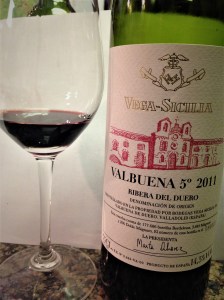
The Gods were looking down upon me that rainy afternoon and they must have smiled in my direction while I was at Fine Wine Source in Livonia. Some days being a Raconteur in person, as well in print brings good fortune and I cannot separate the two. I had just enjoyed a private tasting of Vega-Sicilia wines, two from Hungary and four from Spain and my taste buds were incredibly happy, and I knew that I was going to have to bring them back to reality when I got home. I had selected some wine to purchase and also packing up my wine club selections for the month. As I was at the counter and still talking to the owner about wines and I think we were both enjoying the afternoon chat. I saw a new display of Duckhorn Wine Company’s Three Palms Vineyard Merlot and I mentioned that outside of some Bordeaux wines, that was the wine that sealed my life-long love affair with Merlot.
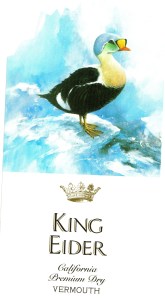
He asked me, if I had ever been there, and I recounted how we had gone there in the early days of the winery, and had arrived during harvest season. One of my clients from years back had been a silent investor with Duckhorn, because one of his sons had gone to college with one of the Duckhorn sons, so he got me a private tour and invitation. Our guide that day was one of the sons and after the tour of the facility and watching all of the excitement of the grapes coming in from the harvest to be processed, we climbed on the back of a huge semi-trailer that was stacked with cases of wine. This was a very impromptu tasting, as our guide was ripping open cases of wine that we were not using as seats and that is how we did the tasting with glasses that we had carried with us into the trailer. Back then, all of the Duckhorn labels were made on the estate; Duckhorn, Migration and Decoy and the Merlot wines were heavenly. I mean we had the Estate Merlot, the Howell Mountain Merlot and the Three Palms Merlot, the perfect trifecta of Merlot wines and all from one house. I was also telling the owner of Fine Wine Source that we bought and still have some of their King Eider Vermouth, which they no longer produce, and I always felt that Dan Duckhorn must have enjoyed Vermouth personally. The owner of the wine shop was not aware that they ever made Vermouth.
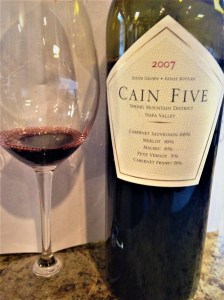
He then asked me, if I had some other great memories from any of the other wineries that I visited. The first winery that I mentioned was Cain Vineyard & Winery, not only because it was a very memorable drive to get there, but watching the organized chaos of harvest time at another location. Cain Vineyard & Winery now offers three wines, but when we were there, they actually had a fourth wine, a white Cain Musqué Sauvignon Blanc 1998, but this was an experimental wine for them as the fruit came from the Ventana Vineyard in Monterey County. I remembered telling the owner of the shop that we were going to splurge and buy a case of the current Cain Five, but they would only sell us two bottles, so I was going to have my Bride buy two bottles in a separate transaction, but the winery declined, claiming that it was only two to a family or address. When the owner heard that, he asked his one employee to bring a fresh wine glass and a special bottle in the back, as he had the good fortune to pick up some Cain Five 2007 and he was going to join me in a taste of that wine as well. When I was first introduced to Cain Vineyard & Winery, they carried a Napa Valley appellation and now they have the smaller Spring Mountain District of Napa Valley. Cain was one of the first Bordeaux styled estate grown and bottled wineries, long before the word Meritage was ever coined. This particular vintage is sixty-eight percent Cabernet Sauvignon, sixteen percent Merlot, six percent Malbec, five percent Petit Verdot and five percent Cabernet Franc. It truly is a shame that not all wines produced are as stellar as the seven wines that I had that afternoon. I mean every wine hit all the high notes and I was enjoying the experience. The Cain Five just hit the ball out of the park and it wasn’t even close to being fully matured, as it was still feisty and delicious, what every Claret wishes to be. Like I say, the Heavens not only opened up that afternoon with rain, but also with the good fortune to allow me to have such spectacular wines all in one day.

 I will mention the first and the last wine of the tasting now, instead of proceeding in a more orderly fashion as I did that afternoon. In 1993, just three years after the world saw that Communism and Socialism did not work in the former Soviet Hungarian Republic, the Alvarez family that had bought Vega-Sicilia founded Tokaji-Oremus, but respecting the time-honored traditions of the district. The region known as Tokaj is actually twenty-seven municipalities and land, but Tokaj is the major city of the area. The history of Oremus goes back to 1620 and they are credited with making the first Aszu wine as well. When I was first learning about wine, I had always wanted to try all the versions of Tokaji wines, but back then it was the Cold War and the Communists ran a monopoly on the wines of all of the countries that they ruled by the jackboot and intimidation. Rumor has it that Pepsi Cola was an un-official conduit for wines and spirits behind the Iron Curtain for years, keeping the United States in Stolichnaya and Monimpex Tokaji. While there are a couple of different varietals that are grown in this region, the main one is Furmint. Furmint produces a highly acidic juice that when nurtured can develop into one of the longest-lived wines known.
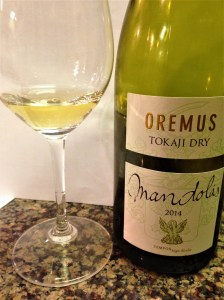 We started with a glass of Oremus Furmint Mandolas Tokaji Dry 2014, a curious wine that has become popular in this century, because it is a dry wine. This wine is named for the vineyard that the grapes come from and it is only planted with Furmint. This is a golden grape that buds late and because of a peculiar trait has one of the potentially longest growing cycles and is very labor intensive. The grapes are delicately pressed and the fermentation process can take eight to ten days and then the wine is aged in small oak barrels, which is the traditional way. Even though this is a dry white wine, and can be enjoyed immediately, it can be aged for about ten years. The wine delivered a curious blend of floral and smoke and was full flavored with a good finish. After four red wines we enjoyed a glass of Oremus Tokaji Aszu 5 Puttonyos 2006. Now here is where the Furmint grape and the wine known as Tokaji are most celebrated. Tokaji Aszu can only be found when Mother Nature allows the elements of weather to be ideal to create an Aszu vintage. The berries swollen due to the humidity split and the “Botrytis cinérea” establishes in its skin and creates the noble rot. This procedure has been going on for hundreds of years. The special grapes with the noble rot are collected in special baskets which are known as Puttonyos, and the number of these special baskets are then added to the already crushed grapes. I have quoted this passage from Oremus to explain the next step “The fermentation of the Aszú must is a slow process that can sometimes last up to two months. It is then put into wood barrels and is left in a protected wine press, waiting for the fermentation to stop by itself. We then add a little Eszencia, which has been collected drop by drop from the Aszú berries. We thus symbolically return its soul, which is embodied in the Eszencia.” The wine is left to age for two to three years and then it is aged in the bottle for an additional year, before it is released. This wine is a blend of several varietals of which the lion’s share is the Furmint. There is also the Harslevelu which adds mildness and floral notes, the Sarga Muskotaly (Yellow Muscat) with its distinctive nose, the Zeta which lends robustness to the blend. They are also traditionalists and are growing some varietals that were prior to the phylloxera blight and that is the Koverszolo and the Goher, but both are in limited areas. There were 23,400 bottles produced of this wine and it could be cellared for forty years. This was just a big wine, it was floral, chewy, robust with enough terroir to please the fussiest taster, with a nice smooth lingering finish and even a bit of pepper at the end to lure one into another taste. And now I can think of the wines that were in between.





 The Wine Raconteur