The Inn at Bay Harbor was a delightful choice for attending a board meeting, but alas those meetings go by so quickly. It sometimes seems like it is go-go-go; and it is for the attendees. I on the other hand did get a chance to wander and roam the Inn and the grounds. There was some time for Social Media and of course The Wine Raconteur, while always keeping an eye on my watch, yes, I am so analog that I still wear a wrist watch, to make sure that I am where I should be. In the afternoon we did get a chance to go walking into the “downtown” area and a walk around the marina, at least the parts that were open to the public. We have a home, but walking around there, one could get “house envy” and then it is even worse, when you realize that these are vacation home. We don’t own a boat, but if we did, there would be plenty of “envy” especially looking at the yachts, not to mention all the boats with four to five huge outboard motors, but it was a nice walk.

Thankfully these board meetings do not occur that often or I would be the size of a wine barrel. The morning started off with breakfast, it was kind of a breakfast buffet, but with a section to make custom omelets. I could also get used to having salmon, eggs and capers every morning, but I think we shall keep that as a treat. A few hours later, we returned to have lunch and the theme of lunch was Tex-Mex with do-it-yourself tacos, with several different chaffing dishes full of choices. One thing that helped, was that from the first board meeting I attended, I learned that one had to pace oneself with all of the food. We came back for dinner and once again we were out on the verandah and this time besides all of the appetizers and finger foods there were chaffing dishes full of entrée choices. I was very thankful that we had that nice walk in the afternoon, to make room for the dinner. At the table where the entrée dishes were featured, there was a sign stating that if one had allergies, to please let a server know, so I thought I would ask, otherwise I was going to be happy with fish and seafood. One of the choices was Wagyu Beef Flank Steaks sliced like London Broil with crumbled Bleu Cheese, so I asked if I could get some without the cheese. About five minutes later, the server found me at a table and handed me a platter of perfectly cooked steak. I mean Flank Steak when cut properly becomes a nice dish and when it is Wagyu, it is even more wonderful. I did pick at some desserts from the sweet table afterwards, but that platter did me in.
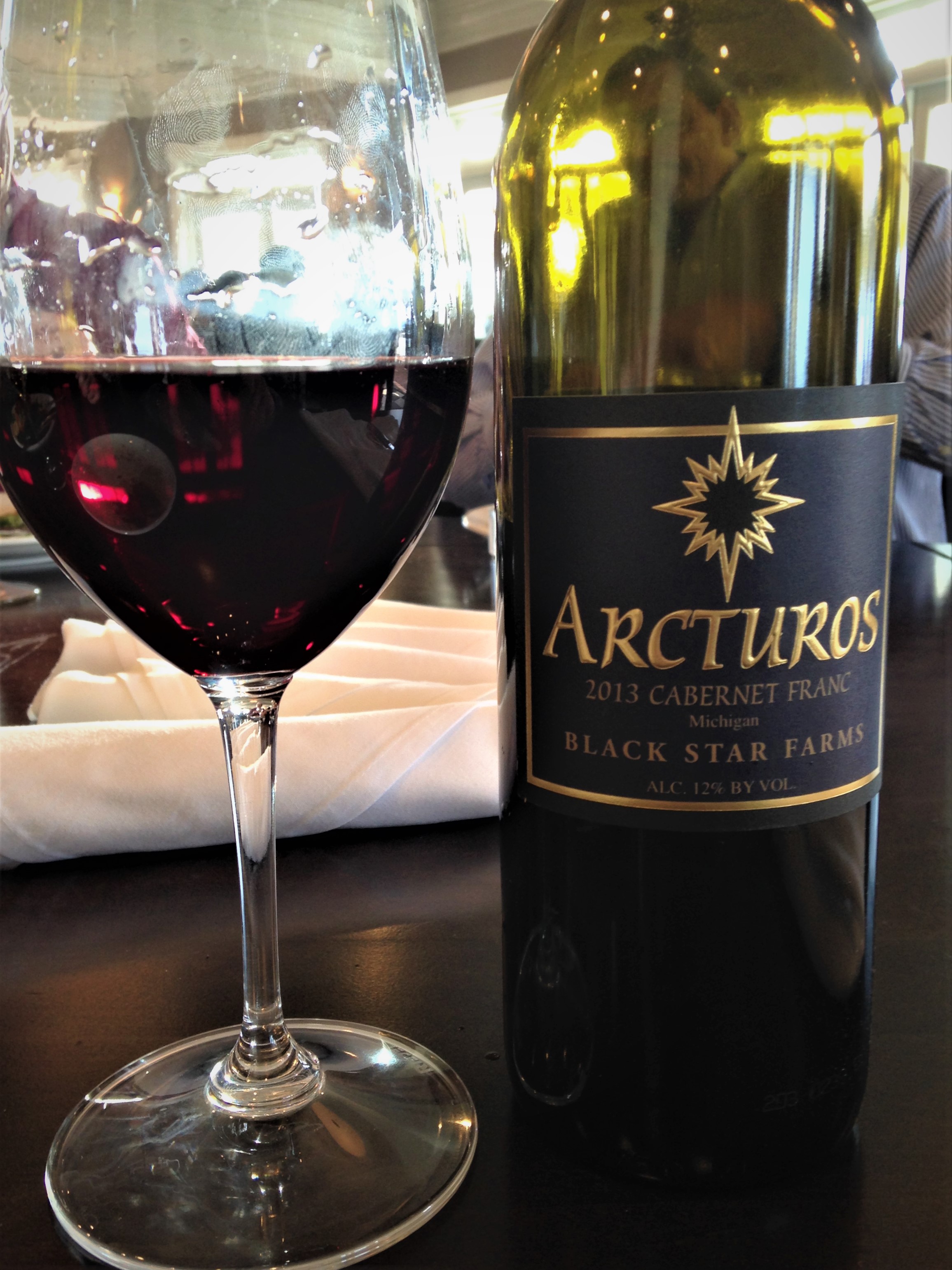
I was anticipating enjoying the same wines that were offered the night before, but I had to get my iPhone out again, because the theme of the beverages was Michigan that evening. They were featuring some of the new Michigan distilled products, some of our huge craft beer industry offerings and of course the always improving Michigan wines, that I like to write about when I have the moment. The three wines that I had the chance to drink with dinner were all from Black Star Farms on Old Mission Peninsula, just north of Traverse City, which we visited a couple of times and enjoyed their wines many more times. All of the wines were also from their Arcturos Collection. In 1998 Black Star Farms purchased Sport Valley Farm which was a one-hundred-twenty-acre equestrian facility, and the stylized black star was part of the architectural décor in the main house. They now have property and production sites on both Old Mission Peninsula and Leelanau Peninsula. The first wine that we had that evening was the Black Star Farms Arcturos Sur Lie Chardonnay 2016. This wine was aged in Stainless Steel, and it offered up some great citrus fruit aromas and tastes with a real crisp finish. I mean this wine was just perfect and I think both my Bride and I decided to add a trip to Black Star Farms, just to buy this wine, as we had originally planned on just going to new wineries that we hadn’t visited before. The next wine that I got for the two of us was the Arcturos Cabernet Franc 2013 with a Michigan AVA, because the fruit came from both peninsulas, which have their own AVA. This wine was aged for ten months in neutral American and Easter European barrels. This wine was delicious and delivered some red and dark fruit flavors and some pepper, and we decided for sure that we had to stop and get some of this wine as well. It was perfect and the finish would make me smile and it was delicious with the Wagyu beef. The final wine that we tasted with our meals was the Arcturos Pinot Noir 2016 also with a Michigan AVA, because the fruit was harvested from both peninsulas. This wine was aged for ten months in French Oak for ten months, of which forty percent was new. This was really a delightful Michigan Pinot Noir, perhaps the best that I have had, as it delivered some plum, but mostly dark cherries to me with a nice finish. All I could think of, was did we have enough trunk room? While I enjoyed some more wine, my Bride went off to find her usual collection of cronies to play some Euchre, it definitely was a Michigan evening. was a Michigan evening.