Acquiesce Ingenue and m2 Vermentino

It was show time at the house and I was set for my third virtual wine tasting courtesy of snooth.com.  I had my laptop fired up at the end of the dining room table and I had six glasses lined up, in front of each bottle of wine.  I opened the red wines almost three hours early, and the white wines were opened about an hour before the show and I had cheese and crackers and water on the side; I also took initial tasting notes on each wine, as I kind of learned something new from each tasting.  The main host for the evening was Leslie Sbrocco, and she is an award-winning author, speaker, wine consultant and television series host.  Her first book was Wine for Women: A Guide to Buying, Pairing and Sharing Wine won the Georges Duboeuf Best Wine Book of the Year award.  Her second book is The Simple and Savvy Wine Guide and she is working on her third book Adventures of a Thirsty Girl.  She was also seen as the host of the PBS restaurant review series Check Please!  She has won a James Beard award, three Taste Awards and three Emmy awards in the span of ten seasons.  The event was going to be interesting and stellar. 
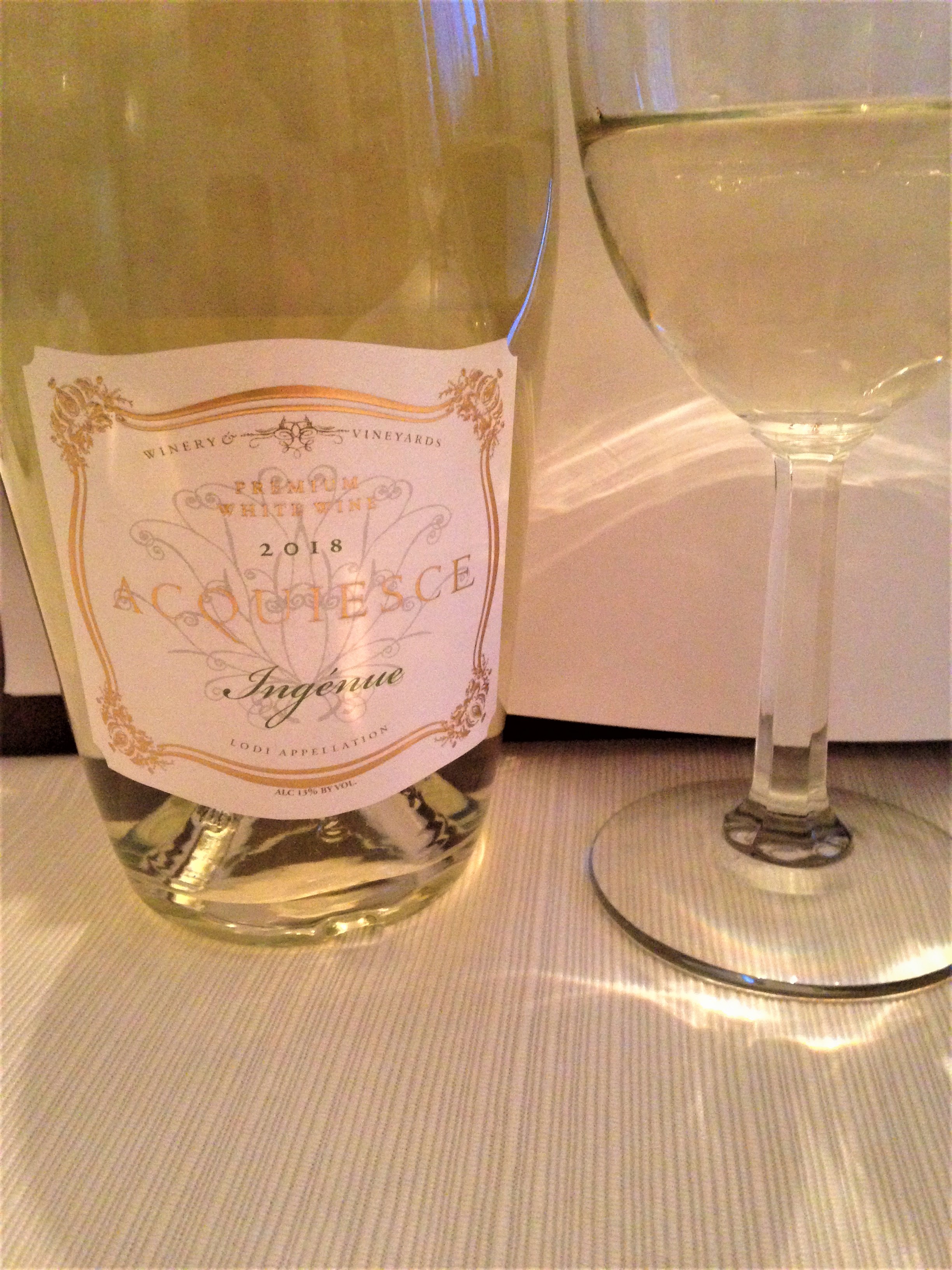
The first wine of the evening was Acquiesce Winery Ingenue Lodi 2018, and this wine will official debut in July of this year, so it was an honor for all of the tasters to be included.  Sue and Rodney Tipton have a very unique reputation in Lodi and in the wine community as a whole.  They only grow and bottle white wines, plus one bone dry Rosé and they use no barrels, only Stainless Steel; all of the aging of the wine occurs in the bottle.  The estate is ten and a half acres and all of the wine is estate grown.  The winery opens in March and usually closes in November, because all of the wine is sold out by then.  This wine is so new, it hasn’t been posted on their website, but through the magic of the Internet, I was able to find out about Acquiesce Ingenue.  Thirty-five percent of this wine is Grenache Blanc, which is also known as Vermentino or Rolle, depending if you are in the Languedoc or Provence, and this grape is known for its floral and lemon citrus notes.  Thirty-five percent of this blend is Clairette Blanch which is seen mostly in the Rhone and the Languedoc, and is known as the “light one” because it has low acidity and can oxidize quickly and it evokes citrus and stone fruit notes.  Twenty percent of this wine is Bourboulenc and is usually found blending with other grapes in the Languedoc, Provence and the Rhone and it is known for its citrus tones and for smoke and spice flavors as well.  Ten percent of the blend was Picpoul Blanc, which literally means “stings the lips,” because of its acidity and is famed in the Languedoc-Roussilon for its herbal and citrus notes.  These four varietals blended expertly together created a beautifully nuanced, complex layers of citrus, spice and a mouth-watering acidity that was extremely refreshing.  My Bride who did not have access to my notes had opined that this must be a Viognier blend, as she loves the floral tones of that grape, and she was a bit disappointed that it was not one of the grapes, but she was enthusiastic about the wine, throughout the evening. 

The second wine of the evening was also a white and it was an m2 Wines Vermentino Mokelumne River-Lodi 2018.  The m2 Wines is a very low-key winery, even on their web site as they state that they create small-lot, artisanal wines that express the character of the vineyards that they source and the nuance of the fruit. As I mentioned earlier Vermentino as it is known in the Languedoc is known for its floral and lemon citrus notes.  The Mokelumne River is a sub-region AVA and covers the southwest portion of the Lodi AVA, including the town of Lodi.  This region is also the first area to be known to be planted with grapes about 120 years ago.  The soil is a sandy loam which is free draining and causes the vines to forego foliage and concentrate on the berries for self-preservation and that makes the grapes concentrated in color and sugar.  I found this wine to have a good floral nose, stone fruit, spice and some mineral terroir in the aftertaste.  I could do this wine with or without food, but with good friends.  This wine just barely was released in time to be sent out for this tasting, so it was extremely fresh. There were two-hundred-fifty cases produced, so even with a varietal that is not as well known here in the States, once tasted, I don’t think this wine will last long at the winery. 

Posted in Wine | Tagged , , , , , , , , , , , | Leave a comment

Dinner Before a Tasting

We were looking forward to another virtual wine tasting courtesy of snooth.com and the house was in kind of a turmoil. I get nervous, because I will be on the same stage more or less with many other wine bloggers that have attended blogging seminars and trade shows and sommelier training.  I am an amateur, albeit with decades of self-taught wine learning, but I was looking forward to it.  I mean there were several writers that I am acquainted with, through their writings, and from past virtual wine tastings I discovered that I knew others who are only interested in the numbers games on Instagram and follow you, just to un-follow you shortly after, in hopes that you won’t discover the deceit.  It takes all types of individuals and since I do not make a living from the industry, I still look at wine as fun and enjoyable.

My Bride had invited a couple over for the dinner before the wine tasting would begin, even though I would not be the most social person, once the virtual taste began, because I would be tasting and typing as fast as I could; while I am a brilliant social drinker (in my humble opinion), I am not a brilliant typist (I self-taught myself during my eighth grade Christmas vacation, because I had found my mother’s old typing textbook from her day’s in high school).  We started in the living room with some appetizers of sliced smoked salmon, cheese and crackers and a liver and mushroom pate.  We then moved to the dining room for the dinner and we started out with my Bride’s fantastic Caesar Salad and onion rolls.  For the entrée she had prepared a roasted pork tenderloin with sides of spaghetti squash and Parmesan roasted potatoes.  She had stopped at a bakery to get some individual sized assorted pastries for dessert. 

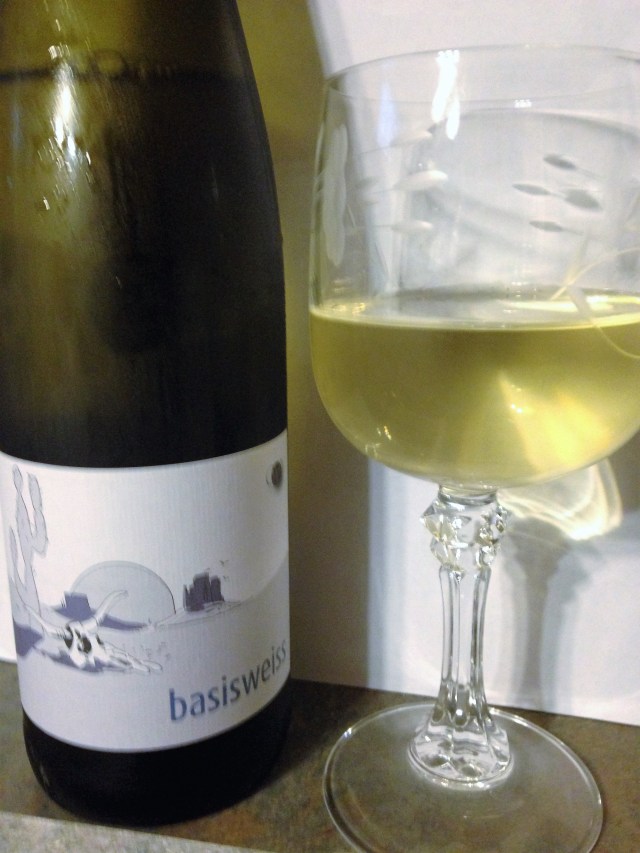
The wines were chosen to accentuate the theme of the evening.  For the appetizer phase we had a bottle of wine that we had purchased after a prior virtual wine tasting that we done with snooth.com.  We opened up a bottle of Weinreich Basisweiss Grauburgunder Trocken 2017.  Grauburgunder is the local name for Pinot Gris, which make sense if you break down the German name into two parts.  If you notice the first three wines all had the term trocken, which just means dry, as the wine has not been sweeten, which can be done.  This wine was another Qualitatswein and it is from the Rheinhessen.  The Rheinhessen starts where the Pfalz ends and between the two districts, it accounts for almost half of the vineyard acreage of Germany, mostly shipper’s blends as in Liebraumilch.  The winery is located in the village of Bechteim and they have fifteen hectares of vines.  I found the wine to have a soft straw color with a soft nose.  The wine as it warmed up a bit, it opened up with some layers of interest, with some good acidity and a nice long finish.  Then for the entrée portion of the meal, we opened up a bottle that we had recently received as a gift from one of my Bride’s cousins and it was from Lodi, and that was very fitting.  We were having Thomas Allen Selections Cabernet Sauvignon Lodi 2016.  Thomas Allen is owned and operated by third generation wine-grape growers, Thomas Michael Stokes and Allen Lombardi.  The Stokes family planted the first forty-five acres of Zinfandel near Lodi in 1954.  Allen Lombardi was a home winemaker in New Jersey and began sourcing from the Stokes in 2001 and thus it began.  I could not find any notes on this wine, even on their website, but whatever they are doing, they are doing it right.  I had opened up the wine when we had started the appetizers and when I poured the wine into the glasses, I could catch the nose even then.  I detected black fruits first from the nose and then during the initial taste with a nice lingering finish of black cherries and a bit of spice.  I normally do not look up the price of a gift bottle of wine, but this wine was so balanced and full-bodied that I think we could use this as a go-to wine, because it delivers and is very well-priced, actually it may be underpriced for the quality.  I had to leave some of the conversation during dessert to get ready for the wines of Lodi coming next. 

Posted in Dining, Wine | Tagged , , , , , , , , , , | 4 Comments

Some Esoteric Wines from Lodi

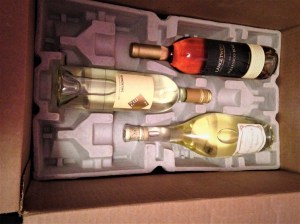
Yesterday, we received a shipment of wines through the auspices of Snooth, yes, they are samples.  I think that some bloggers go out of their way to pander and solicit samples and I haven’t, otherwise in almost seven years I would be running amok with samples.  I hold in honor and esteem some of my fellow wine bloggers, if I may put myself in their ranks, who accept and write about samples as part of their routine; I have disdain for some of the wine bloggers, that I do not want to be in their ranks, who publicly attest how important they are, because they get samples.  I wish to do the right thing at all times and to be fair and honest.  Snooth is conducting another virtual wine tasting that I will be participating with them on 3 April, 2019 at 8:30 PM EDT and you can go to snooth.com to sign in to follow the event live.

All of the wines are from Lodi, California and I would venture to say that for forty-some odd years, Lodi was not even mentioned, though for the first ten years that I drank wine, only Napa Valley was mentioned if California was even brought up.  As I slowly learned that there was a whole world of wines, I tried to discover as many regions and types of wines as I could, and I may say that even being in the un-cosmopolitan environment of a wine apathetic Detroit, I did alright for myself.  I eventually discovered Lodi and realized how much more I had to learn about wines.  Here was a Mediterranean climate region that was land locked in California, east of Sacramento to the Sierra Foothills and enjoying the breezes from the San Francisco Bay.  The more wines that I tried from this area, the more I appreciated it, and the area is so well respected that the Lodi AVA appellation also carries seven sub-regions as well.

I think for years I may have side-stepped Lodi, because I had associated it with Zinfandel and I foolishly always associated Zinfandel with homemade “Dago Red,” and do you see how much I have to learn, in fact I have acquired a new heart-felt appreciation for Zinfandel in my old age.  Lodi, is also known for Cabernet Sauvignon, Syrah, Merlot, Viognier, Chardonnay and Sauvignon Blanc.   Some of the wineries are also making inroads with Petite Sirah, Cabernet Sauvignon, Tempranillo, Graciano, Riesling and Albarino.  This sample collection is already getting me excited, because it is an offering of varietals that are not as common and giving me a chance to really discover some new and interesting wines.  The first wine out of the box is Acquiesce Ingenue Lodi 2018 which is so new, that on the website of Acquiesce, Ingenue was not even listed and I had to do a quick research to find out that this wine is a blend of Grenache Blanc, Clairette Blanch, Bourboulenc and Picpoul Blanc.   The second white wine is m2 Vermentino Mokelumne River-Lodi 2018, a varietal that I normally associate with Italy and this wine was still too new to be listed on their website.  The third wine is Lange Twins Family Winery and Vineyards Aglianico Rosé River Ranch Vineyard Lodi 2018 and I have had this grape once before, but not as a Rosé styled wine.  The first red wine is Mettler Family Vineyards Estate Grown Pinotage Lodi 2016, and this will be my fourth Pinotage and only the second one grown in California.    The second red wine is Prie Vineyards Ancient Vine (1900) Block 4 Spenker Ranch Vineyards Carignane Lodi 2016 and this grape is mostly encountered in the Languedoc-Roussillon region of France and the Priorat region of Spain, and this wine is just hinted at on their website.  The last of the wines offered as a sample for the virtual wine tasting is Michael David Winery Inkblot Cabernet Franc Lodi 2016 which may be the most commonly encountered varietal of the entire group, and I jokingly told my Bride that she couldn’t have any of this wine, because it is her favorite grape, and I sometimes use it as leverage to get a nicer bottle of wine when we are out on the town.  I am really looking forward to this wine tasting, not only to enlarge my knowledge of what Lodi has to offer, but also to try some of these interesting grape varietals that are more off the beaten track.  Once again, I must thank Snooth for this wonderful evening and event coming soon.

Posted in Wine | Tagged , | 7 Comments

Family Time in Louisville

We had a rather historic family get-together in Louisville, it was historic for the fact that all five sisters and spouses plus the matriarch were all there at the same time.  With work schedules and such, there is a better chance of getting everyone together in the Detroit area for one of the holidays.  Somehow, it was achieved and a grand time it was.  There were some harrowing tales of driving in Ohio. Between the construction, the ability of trucks to stay in the passing lane for miles and the ever-vigilant state police who have a mission in life to try to ticket every vehicle from the state of Michigan, especially if one of the varied teams comes in second to any of the teams just north of them.

Cakebread Cellars Cabernet Sauvignon 2013

The reason that we were all getting together was to see the twins probably perform together for the last time, since they will graduate this June and go on to different universities.  The twins had the two leads in the Disney and Cameron Mackintosh production of Mary Poppins Jr.  The difference of Mary Poppins and Mary Poppins Jr. is that the Junior production is for school versions for Kindergarten to Twelfth Grade.   The first wave came on Thursday and the second wave of family came on Friday for the weekend.  In actuality, my Bride and I were probably lucky that she had to attend a conference that day, because we almost got there the same time as some that started several hours earlier, because they hit more construction and rush hour traffic.  Our hosts for the weekend were manning the kitchen island heroically for all the stragglers, as they had dinner ready for everyone, and they had also arranged to get a block of rooms nearby for all of us to stay.

Robert Mondavi Bourbon Barrell Chardonnay 2017

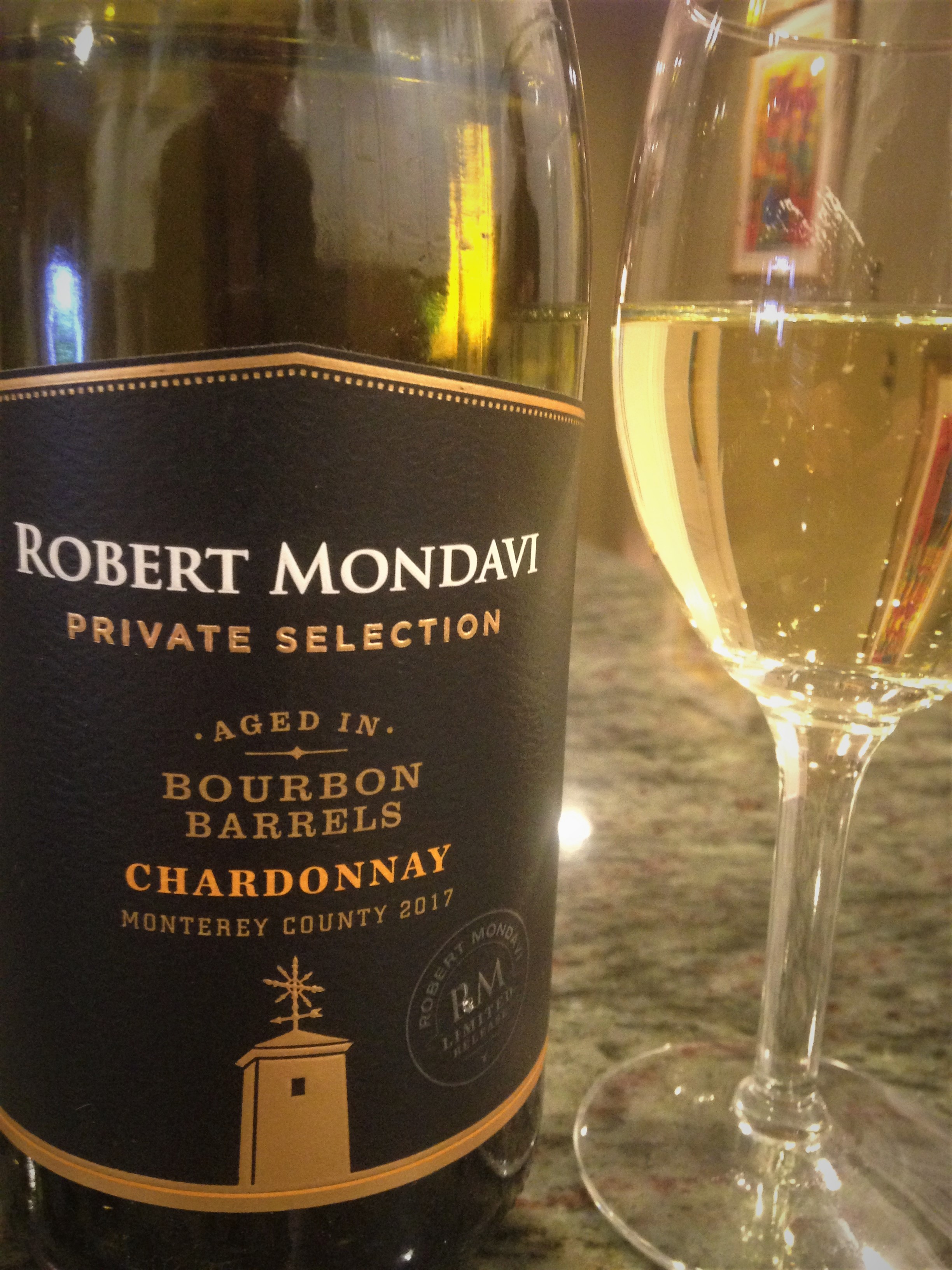
Somehow, my Brother-in-Law saved a very healthy glassful of wine for me, as we walked in, and I might add that it was not a run of the mill variety, but one that he won at a charity event.  He had saved me a glass of Cakebread Cellars Cabernet Sauvignon Napa Valley 2013.  The winery was founded in 1973 by Jack and Dolores Cakebread, and then it expanded in 1982 when they purchased adjacent land.  Cakebread Cellars now has fifteen estate vineyards and have maintained a status quo since 2005.  The wine is eighty-three percent Cabernet Sauvignon and the balance is a careful blend of Merlot, Cabernet Franc and Petit Verdot.  The wine was aged for eighteen months in French Oak, of which sixty percent was new, and fifty-six percent of the fruit came from estate vineyards.  I am not sure if it was the five hours in the car, but that wine just hit the spot, even before I had a chance to eat, it was just a perfectly honed Cabernet Sauvignon and there were no complaints.  After that, and I realize that it is backwards, but it is how things go in life, we finished the evening with a white wine.  We had a most appropriate wine for Kentucky and I think it was the third wine, and a third varietal that was aged this way that I have had.  We were enjoying glasses of Robert Mondavi Private Selection Aged in Bourbon Barrels Chardonnay Monterey County 2017.  Robert Mondavi founded his winery in 1966 and offers wines across the board for all tastes and price points.  I really could not find anything on this particular wine and I don’t know if it was done, as a gimmick, to keep up with some of the other winery offerings, but it was a nice mellow wine and this was the first Chardonnay that I had done this way.  Even my Bride was happy and that is important.  More wine and adventures await from our time in Kentucky.

Posted in Wine | Tagged , , , , , , , , , , , | Leave a comment

Cain Five and King Eider

The Gods were looking down upon me that rainy afternoon and they must have smiled in my direction while I was at Fine Wine Source in Livonia.  Some days being a Raconteur in person, as well in print brings good fortune and I cannot separate the two.  I had just enjoyed a private tasting of Vega-Sicilia wines, two from Hungary and four from Spain and my taste buds were incredibly happy, and I knew that I was going to have to bring them back to reality when I got home.  I had selected some wine to purchase and also packing up my wine club selections for the month.  As I was at the counter and still talking to the owner about wines and I think we were both enjoying the afternoon chat.  I saw a new display of Duckhorn Wine Company’s Three Palms Vineyard Merlot and I mentioned that outside of some Bordeaux wines, that was the wine that sealed my life-long love affair with Merlot.

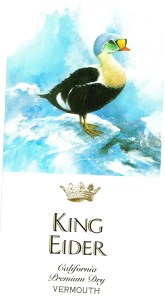
He asked me, if I had ever been there, and I recounted how we had gone there in the early days of the winery, and had arrived during harvest season.  One of my clients from years back had been a silent investor with Duckhorn, because one of his sons had gone to college with one of the Duckhorn sons, so he got me a private tour and invitation.  Our guide that day was one of the sons and after the tour of the facility and watching all of the excitement of the grapes coming in from the harvest to be processed, we climbed on the back of a huge semi-trailer that was stacked with cases of wine.  This was a very impromptu tasting, as our guide was ripping open cases of wine that we were not using as seats and that is how we did the tasting with glasses that we had carried with us into the trailer.  Back then, all of the Duckhorn labels were made on the estate; Duckhorn, Migration and Decoy and the Merlot wines were heavenly.  I mean we had the Estate Merlot, the Howell Mountain Merlot and the Three Palms Merlot, the perfect trifecta of Merlot wines and all from one house.  I was also telling the owner of Fine Wine Source that we bought and still have some of their King Eider Vermouth, which they no longer produce, and I always felt that Dan Duckhorn must have enjoyed Vermouth personally.  The owner of the wine shop was not aware that they ever made Vermouth.

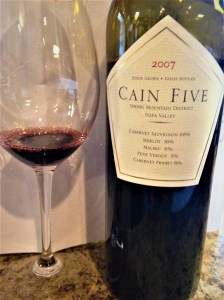
He then asked me, if I had some other great memories from any of the other wineries that I visited.  The first winery that I mentioned was Cain Vineyard & Winery, not only because it was a very memorable drive to get there, but watching the organized chaos of harvest time at another location.  Cain Vineyard & Winery now offers three wines, but when we were there, they actually had a fourth wine, a white Cain Musqué Sauvignon Blanc 1998, but this was an experimental wine for them as the fruit came from the Ventana Vineyard in Monterey County.  I remembered telling the owner of the shop that we were going to splurge and buy a case of the current Cain Five, but they would only sell us two bottles, so I was going to have my Bride buy two bottles in a separate transaction, but the winery declined, claiming that it was only two to a family or address.  When the owner heard that, he asked his one employee to bring a fresh wine glass and a special bottle in the back, as he had the good fortune to pick up some Cain Five 2007 and he was going to join me in a taste of that wine as well.  When I was first introduced to Cain Vineyard & Winery, they carried a Napa Valley appellation and now they have the smaller Spring Mountain District of Napa Valley.  Cain was one of the first Bordeaux styled estate grown and bottled wineries, long before the word Meritage was ever coined.  This particular vintage is sixty-eight percent Cabernet Sauvignon, sixteen percent Merlot, six percent Malbec, five percent Petit Verdot and five percent Cabernet Franc.  It truly is a shame that not all wines produced are as stellar as the seven wines that I had that afternoon.  I mean every wine hit all the high notes and I was enjoying the experience.  The Cain Five just hit the ball out of the park and it wasn’t even close to being fully matured, as it was still feisty and delicious, what every Claret wishes to be.  Like I say, the Heavens not only opened up that afternoon with rain, but also with the good fortune to allow me to have such spectacular wines all in one day.

Posted in Wine | Tagged , , , , , , , , , , , | 3 Comments

Valbuena 5 and Unico

I was just in Seventh Heaven being honored with a special tasting of wines from Vega-Sicilia with the owner of Fine Wine Source.  Not only was I tasting, but the owner and one of his employees was tasting along side of me.  I may have missed the guest speaker, but the company and the information that I was getting was stellar.  I have to admit that in the decades of drinking wines, I have had the good fortune to have had some outstanding wines and vintages, but there were plenty that I have missed and there are plenty that I may never have.  There are two major reasons for my lack of knowledge about some wines, first, Detroit was not that cosmopolitan of a city with large selections of wine shops back in the day, and then also back in the day, most restaurants could get by with a much smaller selection of wines.  The second reason was money, in the beginning I was a high school and then a college student, and then I started a family, and discretionary funds for wines had to be justified, and to this day, they still have to be justified.  Vega-Sicilia was one of the wineries that I thought I was only going to know by name and from reading about, as they are considered one of the premier winemakers in Spain.  Who would have thought that I would be tasting the wines from this winemaker and especially the two “flagships” of the theirs?

Bodegas Vega-Sicilia Valbuena 5 Ribera del Duero 2011 was the first of the final two wines in the tasting that I was enjoying.  Ribera del Duero DO was recognized in 1982, but Bodegas Vega-Sicilia began in 1864 and for years was one of the two prominent winemakers for the region.  The designation is for red wines only, and the main requirement is that seventy-five percent or more must be Tempranillo or the local name of Tinto Fino or Tinta del Pais and the balance can be blended with Cabernet Sauvignon, Merlot or Malbec, and in addition up to five percent can be Albillo or Garnacha (Grenache).  The aging requirements are the same as Rioja.  The Valbuena is blended only with Merlot and each vintage the amount used changes due to the discretion of the winemaker, and this particular vintage is pure Tempranillo.  The fermentation begins in Stainless Steel, but the aging for five years (hence the 5) is a mixture of French and American Oak (new and used), and time in the bottle before it can be released, and it was bottled in 2014.  The aging potential for this wine is twenty to thirty years.  This was a big, heavy Tempranillo with plenty of terroir to be appreciated and a very long finish.

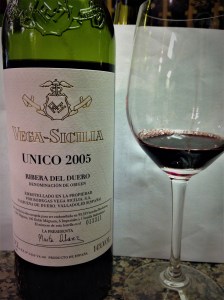
After enjoying that wine, it was hard to think that there would be one more. But there was and it was Bodegas Vega-Sicilia Gran Reserva Unico Ribera del Duero 2005.  This wine is there big one, and where the Valbuena 5, can be blended with Merlot, this wine can be blended with Cabernet Sauvignon and this particular vintage has six percent blended.  This wine even begins differently, because the fermentation is even done in oak tanks.  This wine undergoes one of the longest if not the longest aging periods of almost ten years, with a minimum of six years in a mixture of French and American Oak (both new and used) and a minimum of three years in the bottle, and this vintage was held for five years in glass before being released and it was bottles in 2011.  This wine is expected to cellar for forty to sixty years, long past my years left.  This wine left me shell-shocked as it was silky, it was chewy, it had its own unique taste of terroir with a delightful and surprising taste of pepper, and a finish that just went on and on.  The professionals may have spit, but I enjoyed it to its fullest, each drop until it was gone.

Posted in Wine | Tagged , , , , , , , , , | Leave a comment

Macon and Alion

How do you explain the good fortune of being in the Fine Wine Source on a rainy afternoon and you are tasting and discussing wines with the owner and one of his employees?  I mean I was not happy that there was a dearth of business for them, after all I am an old retailer at heart and I know what a day of rain can do.  I was just enjoying the fact that I had the chance to enjoy the wines from Vega-Sicilia even after the event that they had with the regional sales manager.

Vega-Sicilia is considered by many to be the finest winemaker in Spain and they are based in Ribera del Duero and of course Tempranillo is king at the winery and all of Spain.  They own about a thousand hectares in their domain and more than half is planted with vines and they go back to 1864.  The Alvarez family purchased the estate in 1982 and those that have had a better chance to observe than I, have stated that the quality and the consistency has increased since the new owners have taken charge.  Tempranillo accounts for about eighty percent of the grapes grown on the estate, but the also grow some Cabernet Sauvignon, Merlot and some Malbec.  The first two Spanish wines of theirs that I tasted were not estate grown.

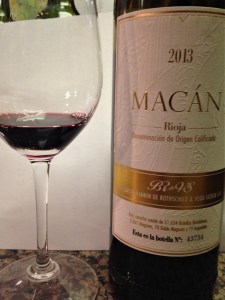
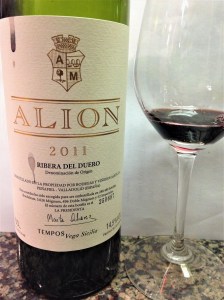
The first of the Spanish wines that I tried was the Vega-Sicilia Bodegas de Rothschild Macan 2013.  Macan is a Rioja estate created in 2009 as a joint-venture with the Compagnie Viticole Baron Edmond de Rothschild. It lies to the northeast of Samaniego and features a gravity-fed winery built over four levels.  There has been French interest in the Rioja for years, but this wine with such a joint endeavor belies most of the wines from the region.  Here is a wine that averages vines that are forty years old and is aged for fourteen months in French Oak and it is touted to be able to handle twenty years in the cellar.  I found this wine to be an elegant Rioja wine delivering plenty of terroir, some pleasurable heat and a very long finish.  Considering that I have been drinking wines from the Rioja with vintages going back to the Fifties, this was totally an eye opener and made me really want some more.  The second of the Spanish wines that I tasted was the Vega-Sicilia Bodegas y Vinedos Alion, Ribera del Duero 2011 and this wine they consider is made for an earlier consumption.  This wine has come from thirty-year-old vines and has been aged in only new French Oak for the average of fifteen months and then another fifteen months in the bottle, before it is sold.  Here was another big wine and from the nose and the first taste I picked up dill, which surprised me, but not in an unpleasant manner and then I also enjoyed another healthy helping of terroir.  Considering that they think this is a wine to be consumed in its youthful age, I was surprised at the amount of complexity and a long finish, that I thought this wine could easily do twenty years in the cellar, but then maybe it is because I have a cellar and I have been known to put wine away and try to forget it for some time.  Here I was enjoying two great wines and I still hadn’t had a chance to try their “flagships” and more to come.

Posted in Wine | Tagged , , , , , , , , , | Leave a comment

Oremus Tokaji Dry and Aszu

As I mentioned it was a bleak and dreary rainy day when I made my way to my local wine shop The Fine Wine Source.  As you can imagine, I am a very quiet and demure individual and most of the time, they never even notice me wandering around.  I didn’t think you would believe it, I don’t even believe that I wrote that.  I guess from working with the public for decades, I am rather gregarious, but in the old school way.  Unfortunately for me, the day before, they had what sounded like a great wine presentation with a representative from the winery and I had to miss it.  Even though I am semi-retired, that day before made the words “work is the curse of the drinking class” so true.  I missed the event, but I was asking questions about it, and they had a very successful day of it, especially because they moved their three and six pack verticals that they were featuring.  I guess my wallet and the Exchequer at home appreciated that fact.   As I said, it was very quiet and the owner joined me, as well as one of his employees that was kept very busy working the day before to relive the wines from the presentation, and may I say I was in heaven.

                                                                                                                                                                    I will mention the first and the last wine of the tasting now, instead of proceeding in a more orderly fashion as I did that afternoon.  In 1993, just three years after the world saw that Communism and Socialism did not work in the former Soviet Hungarian Republic, the Alvarez family that had bought Vega-Sicilia founded Tokaji-Oremus, but respecting the time-honored traditions of the district.  The region known as Tokaj is actually twenty-seven municipalities and land, but Tokaj is the major city of the area.  The history of Oremus goes back to 1620 and they are credited with making the first Aszu wine as well.  When I was first learning about wine, I had always wanted to try all the versions of Tokaji wines, but back then it was the Cold War and the Communists ran a monopoly on the wines of all of the countries that they ruled by the jackboot and intimidation.  Rumor has it that Pepsi Cola was an un-official conduit for wines and spirits behind the Iron Curtain for years, keeping the United States in Stolichnaya and Monimpex Tokaji.  While there are a couple of different varietals that are grown in this region, the main one is Furmint.  Furmint produces a highly acidic juice that when nurtured can develop into one of the longest-lived wines known.
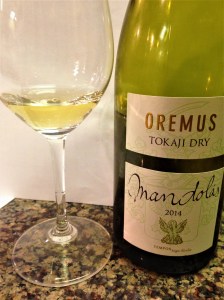
                                                                                                                                                                We started with a glass of Oremus Furmint Mandolas Tokaji Dry 2014, a curious wine that has become popular in this century, because it is a dry wine.  This wine is named for the vineyard that the grapes come from and it is only planted with Furmint.   This is a golden grape that buds late and because of a peculiar trait has one of the potentially longest growing cycles and is very labor intensive.  The grapes are delicately pressed and the fermentation process can take eight to ten days and then the wine is aged in small oak barrels, which is the traditional way.  Even though this is a dry white wine, and can be enjoyed immediately, it can be aged for about ten years.  The wine delivered a curious blend of floral and smoke and was full flavored with a good finish.  After four red wines we enjoyed a glass of Oremus Tokaji Aszu 5 Puttonyos 2006.  Now here is where the Furmint grape and the wine known as Tokaji are most celebrated.  Tokaji Aszu can only be found when Mother Nature allows the elements of weather to be ideal to create an Aszu vintage.  The berries swollen due to the humidity split and the “Botrytis cinérea” establishes in its skin and creates the noble rot.  This procedure has been going on for hundreds of years.  The special grapes with the noble rot are collected in special baskets which are known as Puttonyos, and the number of these special baskets are then added to the already crushed grapes.  I have quoted this passage from Oremus to explain the next step “The fermentation of the Aszú must is a slow process that can sometimes last up to two months. It is then put into wood barrels and is left in a protected wine press, waiting for the fermentation to stop by itself. We then add a little Eszencia, which has been collected drop by drop from the Aszú berries. We thus symbolically return its soul, which is embodied in the Eszencia.”  The wine is left to age for two to three years and then it is aged in the bottle for an additional year, before it is released.  This wine is a blend of several varietals of which the lion’s share is the Furmint.  There is also the Harslevelu which adds mildness and floral notes, the Sarga Muskotaly (Yellow Muscat) with its distinctive nose, the Zeta which lends robustness to the blend.  They are also traditionalists and are growing some varietals that were prior to the phylloxera blight and that is the Koverszolo and the Goher, but both are in limited areas.  There were 23,400 bottles produced of this wine and it could be cellared for forty years.  This was just a big wine, it was floral, chewy, robust with enough terroir to please the fussiest taster, with a nice smooth lingering finish and even a bit of pepper at the end to lure one into another taste.  And now I can think of the wines that were in between.
Posted in Wine | Tagged , , , , , , , , , , , , , , | 3 Comments

A Cab and a Grenache

It was one of those days when it was raining and all I could think of was the old Charles Addams cartoon where Gomez and Morticia looked out the window and opined “what a wonderful day, makes you glad to be alive.”  I had some errands to do, and you know by my age, one would think that errands and bills should somehow be over with.  I thought that I would stop at my local wine shop The Fine Wine Source and see if the new club wines were out, or if they had anything interesting to try.  I guessed right on the both counts, but for now I will discuss the new club selections.

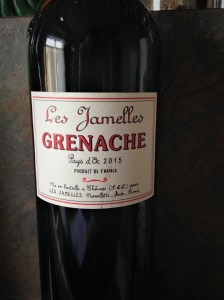
The first bottle was Les Jamelles Grenache Pays d’Oc 2015.  IGP Pays d’Oc is the current form used for the old Vin de Pays d’Oc when I was growing up.  The IGP designation is more in line with the Common Market designations and the blurring of old established country laws.  The Vin de Pays d’Oc referred to “table wines” and I am sure that plenty of people still view that designation in the same light, and the Pays d’Oc basically is the entire Languedoc-Roussillon district in France, and the largest wine production area under one umbrella.  The area is huge and there is not one common terroir or even varietal, so one can find almost any type of wine that they are looking for.  At one time, the area may have been looked at with disdain, but no longer, and there are some wineries that are now achieving price points never conceived of, because the wines they produce are worthy of those prices.  Since 1995, Les Jamelles has been produced by Catherine and Laurent Delaunay, two young winemakers from Burgundy whose family has been producing wine for four generations. After working in California, they both fell under the charm of the Languedoc-Roussillon region in the South of France.  The particular wine is pure Grenache and is grown on twenty-year-old sloping vineyard near the Mediterranean Sea.  Most of the juice is aged in Stainless Steel, I would have to presume, because only about ten percent is aged in oak for about eight months.  The wine is stated to be deep purple in color, fruit forward offering raspberry with spice undertones of pepper, cinnamon and paprika.

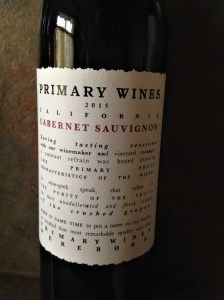
The second wine Primary Wines Cabernet Sauvignon 2015 carries the California AVA.  This wine is offered through a wine distributor and importer Massanois.   There were no technical notes for this wine, and I can find nothing about Massanois.  Cabernet Sauvignon is the most planted varietal across the entire state of California.  Since I have not tried this wine, I will go with the notes supplied to me from the shop.  This wine is a full-bodied with aromas of cassis, plum and berry and slight notes of dried herb and vanilla, with mid-weight tannins on the finish.  I am sure that it is an easy drinking wine with a red meat dinner.

Posted in Wine | Tagged , , , , , , , , | 2 Comments

Carmel Road North Crest Pinot Noir

A lot of things come in threes, and the wines that we receive four times a year from our wine club “A Taste of Monterey” also has three to the carton.  The third wine that I will discuss is from Carmel Road Winery based in Soledad, California.  I have had wine twice before from this winery, once courtesy of the wine club and once with dinner at a restaurant in Pacific Grove.  As I was doing some additional research and I went to their website, and two things I was surprised about, that was glaring by omission was that they have a joint business with the actress Drew Barrymore for her wine line, and that the winery is part of the Jackson Family Wines group.

Carmel Road claims that their name is for the back road that stretches from Carmel-by-the-Sea through the Arroyo Seco and the Santa Lucia Highlands, which I am sure would be a lovely road to discover, when one has a free afternoon for a nice pleasant drive in the country.  The Salinas Valley and Monterey County have long been known to have the coolest climate in California and that is why the Pinot Noir varietal does so well there.  The first vintage for Carmel Road Winery is 1998, so soon they will be celebrating their Twentieth vintage.

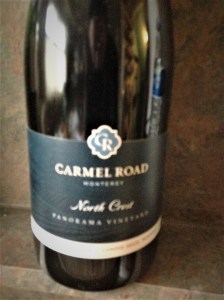
The Carmel Road North Crest Pinot Noir 2015, is the newest wine for me to discover.  The wine is pure Pinot Noir from the Panorama Vineyard in the Arroyo Seco AVA.  The wine spent thirteen months aging in French Oak, of which twenty percent was new.   According to the tasting notes from the winemaker, the wine offers aromatics of cherry, strawberry and framboise, and delivers juicy red fruit flavors on the palate with subtle hints of vanilla bean and cocoa.   Bright acidity leads to a clean and balanced finish.  That is not the way I describe wines, but eventually I will have my chance to do so.  The suggested aging potential for this wine is five to six years.

Posted in Wine | Tagged , , , , , | Leave a comment