Marche Bacchus describes themselves as a touch of France on the lakes edge and that is a perfect description of being in the Desert Shores community. We were having a grand afternoon kibbitzing with the wait staff, the manager and the sommelier.
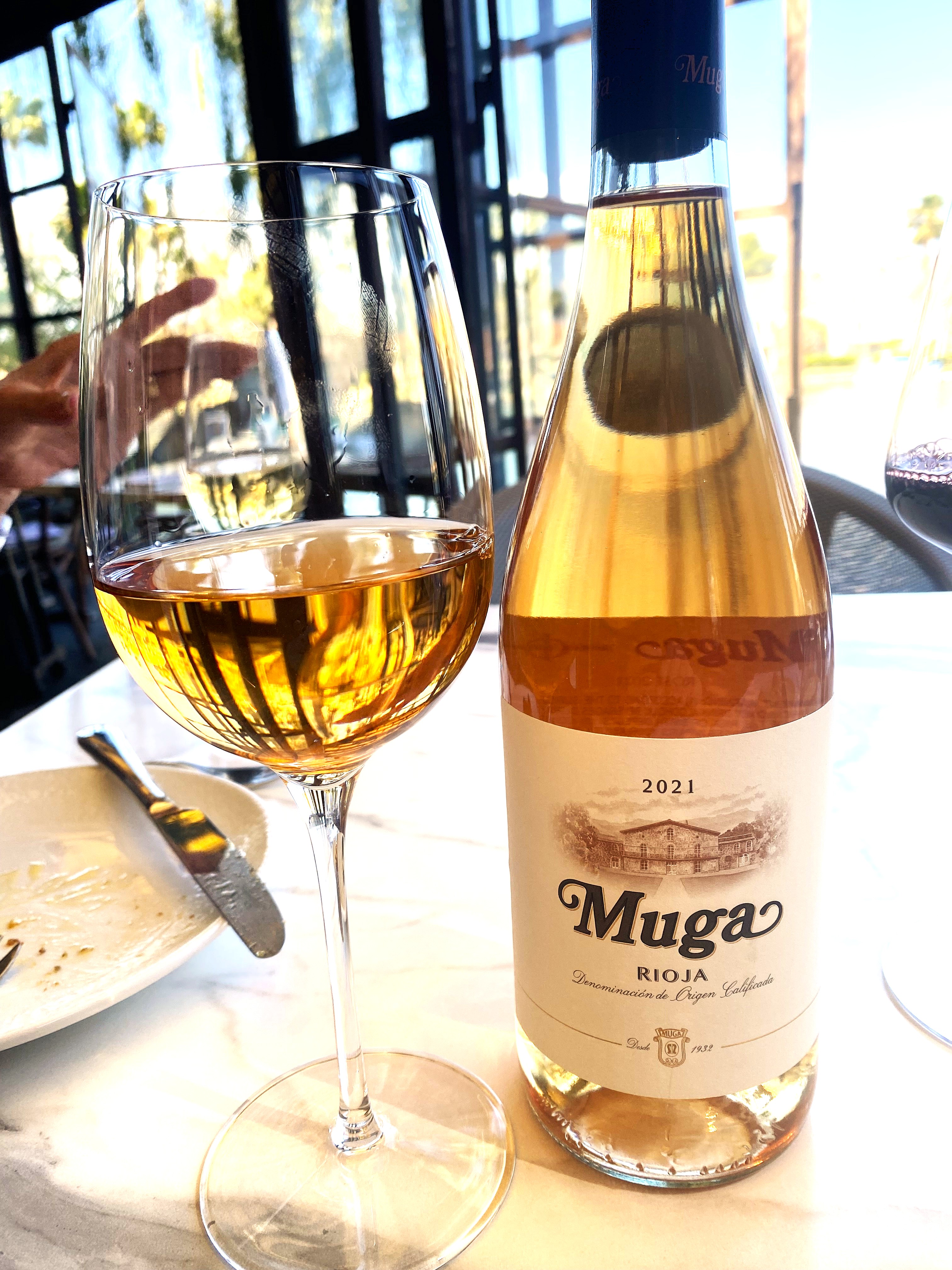
We both decided to continue our light and leisurely lunch by having the Mini Beef Wellington with Truffle Aioli. My Bride went with a glass of Bodegas Muga Rosado Rioja DOCa 2021. Bodegas Muga is a family-owned estate, founded in 1932. The estate is 250 hectares, the majority of which surround the town of Haro. They have four fermentation rooms with wooden vats allowing them to process different parcels of grapes separately; and they are one of the only producers in Spain with their own cooperage. The wine is a blend of sixty percent Grenache, thirty percent Viura and ten percent Tempranillo. The vines for this wine come from two distinct areas. The first is the Valle del Oja on calcareous clay soil, and the second is the Valle de Najerilla on ferrous clay soils. The fruit is hand harvested, undergoes gentle maceration, and then is fermented for about twenty days. Once the fermentation is complete the wine remains on the lees for sixteen weeks to enhance the body, smoothness and finish. This coppery-pink wine offered notes of stone fruit, florals and citrus. On the palate this light-bodied, well-balanced wine displayed tones of subtle peaches, lemon and a touch of pepper blending with some acidity and ending with a medium-count finish of dry and savory fruit, terroir and spices.
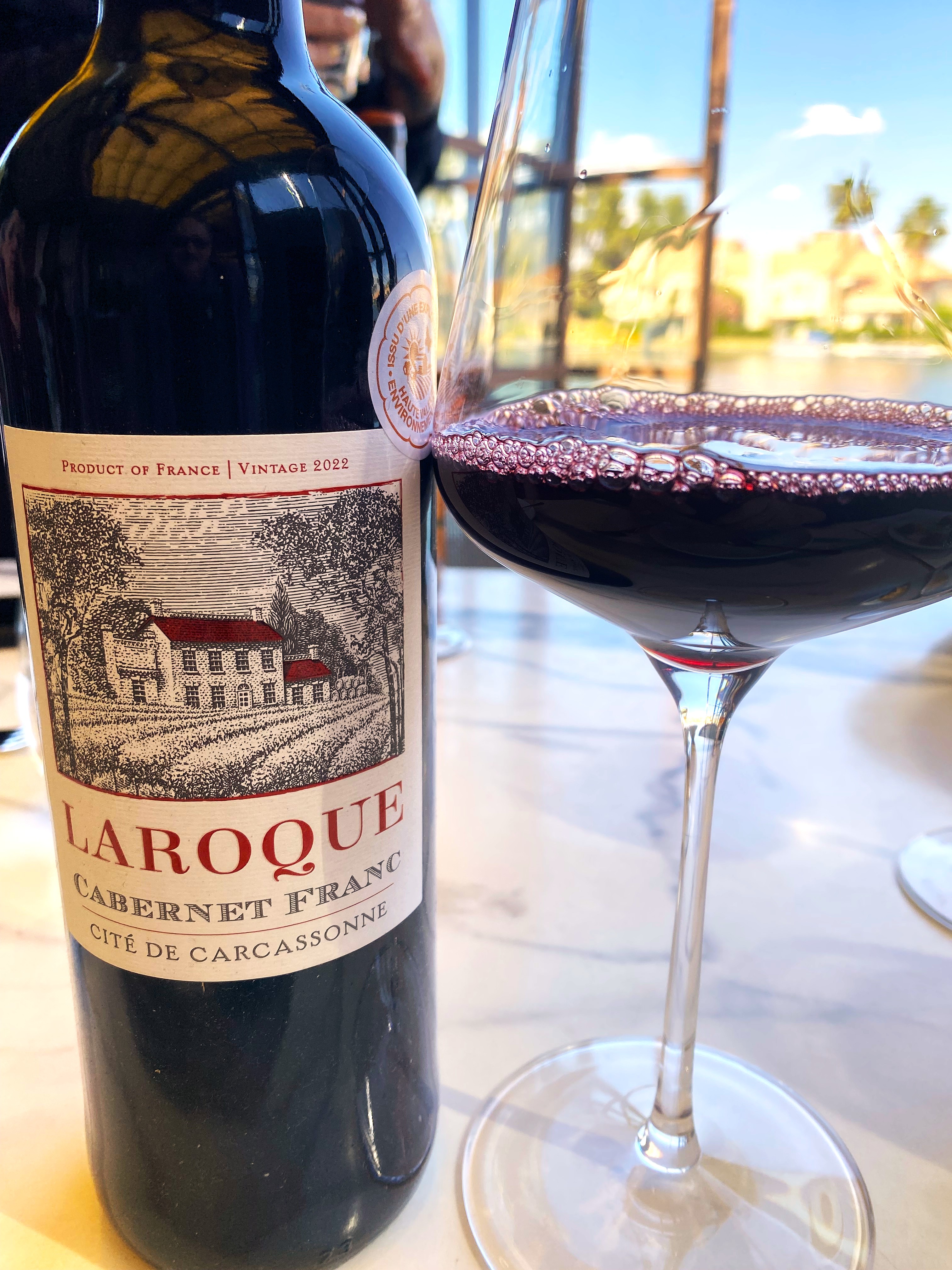
I went with the Domaine Laroque Cabernet Franc, IGP Cite de Carcassonne 2022. The IGP classification replaced the old Vin de Pays to make France align to the other members of the Common Market. The IGP Cite de Carcassonne is a large area in the Languedoc region and encompasses eighteen communes and allows all three colors of wines. The average age of the vines for this wine is thirty years, and this area has been producing wines from the Sixth Century. The soil in this area is clay and limestone and hillside vineyards. A dark garnet-red wine that offered notes of red cherries, raspberries and strawberries along with the funky notes of bell peppers. On the palate this medium-bodied, well-balanced wine displayed soft, mellow red fruits blending with soft tannins and ending with a short-to-medium count finish of fruit.
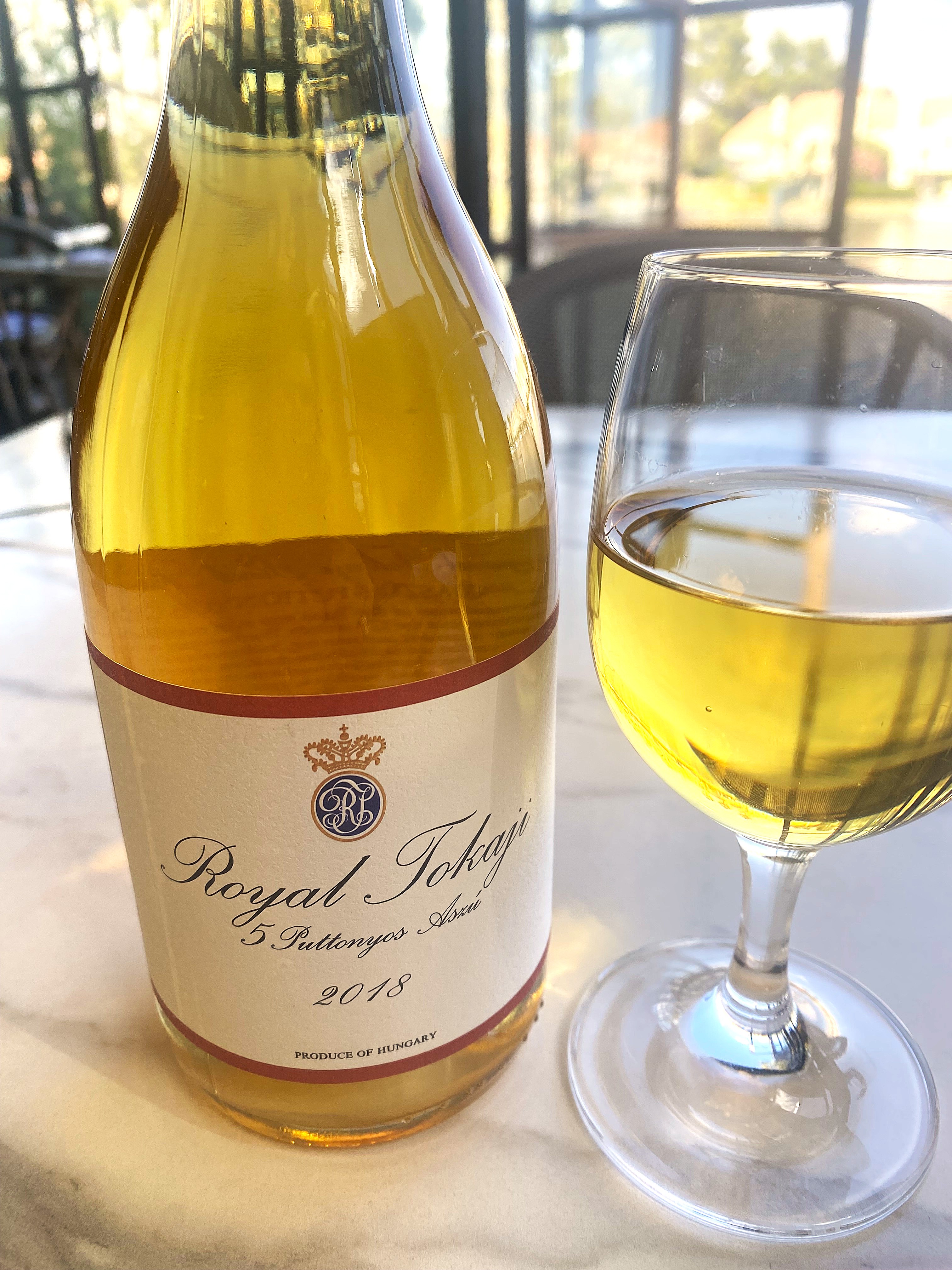
As our charming afternoon was coming to an end, we shared a plate of Chocolate Silk Tart with Blood-Orange Sorbet. My Bride was delighted that they had decaf Cappuccino and I went with (and yes, we shared) a glass of Royal Tokaji Company Royal Tokaji 5 Puttonyos Aszu Hungary 2018 and is a newcomer to the region. The winery was founded in 1990 in the village of Mad by the English wine writer Hugh Johnson, along with the English wine trader Ben Hawkins and Anglo-Danish winemaker Peter Vinding-Diers. The wine is a blend of Furmint, Harslevelu and Muscat and these varietals have been famous for the dessert wine since the classification at the end of the 17th Century. The vineyards are at the convergence of two rivers, that encourage morning mists and the perfect environment for botrytis to flourish. The vines are approximately twenty years in age and have such low yield, that during some vintages one vine may only produce one glass of wine. The Aszu grapes are picked berry by berry and placed in small baskets, where they are crushed and then fermented in large Hungarian Oak barrels with natural yeasts. A 5 Puttonyos basket is about 24kgs of Aszu berries added to each Gonci (136L cask). The wine is aged for twenty-four months in used oak barrels, and then an additional ten months of bottle ageing. A soft amber colored wine that offers notes of peaches, plums, apricots, freesia and jasmine. On the palate this full-bodied wine displayed tones of ripe fruit, crisp acidity, well-balanced and ending with a medium-to-long finish of candied fruit, botrytised fruit and a touch of oxidation. A curiosity about labeling is that wine for the USA still has red borders, while the rest of the world gets a blue border; this is left over from the old Soviet Monimpex days.


