Our first day in Las Vegas was just for the two of us, as the kids were making plans for their mother, and we didn’t want to interfere, but we let them know that we would help them. I suggested that we have lunch at Marche Bacchus, a wine shop, wine bar and restaurant way off The Strip on one of the lakes. If you don’t know that there are lakes in Las Vegas, that is understandable, as Howard Hughes built them.
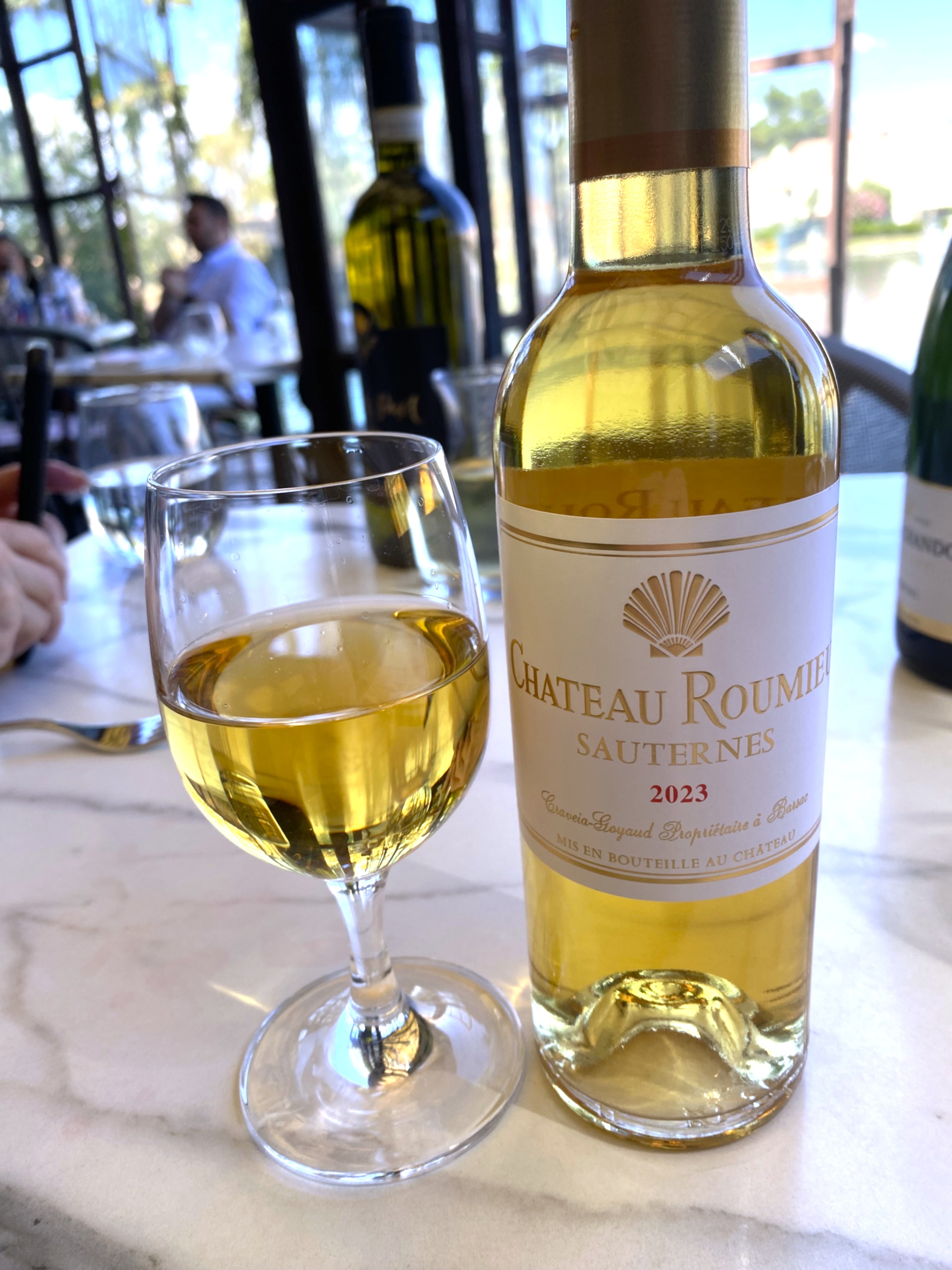
I felt like an historian there as I had mentioned to the staff about the black swans, and about the pickup truck that crashed in their front door. Some had heard about one or the other, but none had been there that long. We started going there in 2017, and it was where we took two of our grandchildren for their high school graduation dinner, and I would let them taste some wine with the meals, like a good grandfather. My Bride insisted that we start out with Seared Fois Gras with a seasonal clafoutis (a custard-like battered pastry with fruit and liqueur). Naturally, we had to pair this dish with Sauternes, and this time it was Chateau Roumieu Sauternes 2023 from the Haut Barsac region. The estate was founded in 1896 and is fifteen hectares in size, nestled in a microclimate influenced by the Ciron River, which creates morning mists ideal for the development of Botrytis Cinerea, the “noble rot” that makes Sauternes famous. The name Roumieu is from medieval times when the Moors referred to the Christians, on their pilgrimages and the shell represent Saint Jacques. The Chateau uses a classic blend of eighty-nine percent Semillon, ten percent Sauvignon Blanc and one percent Muscadelle. The fruit is hand-harvested to select the berries at the height of the noble rot, then gently pressed and then undergoes a slow fermentation and then aged in French Oak for at least eighteen months. A deep golden-yellow colored wine that offered notes of tropical fruits, white flowers, spices and herbs and a whiff of honey. On the palate the medium-to-full bodied, well-balanced wine displayed tones of peach, mango and pineapple, along with mandarin and tangerines, blending with some bright acidity and ending with a nice long-count finish of candied fruit, a whisp of smokiness and chamomile.
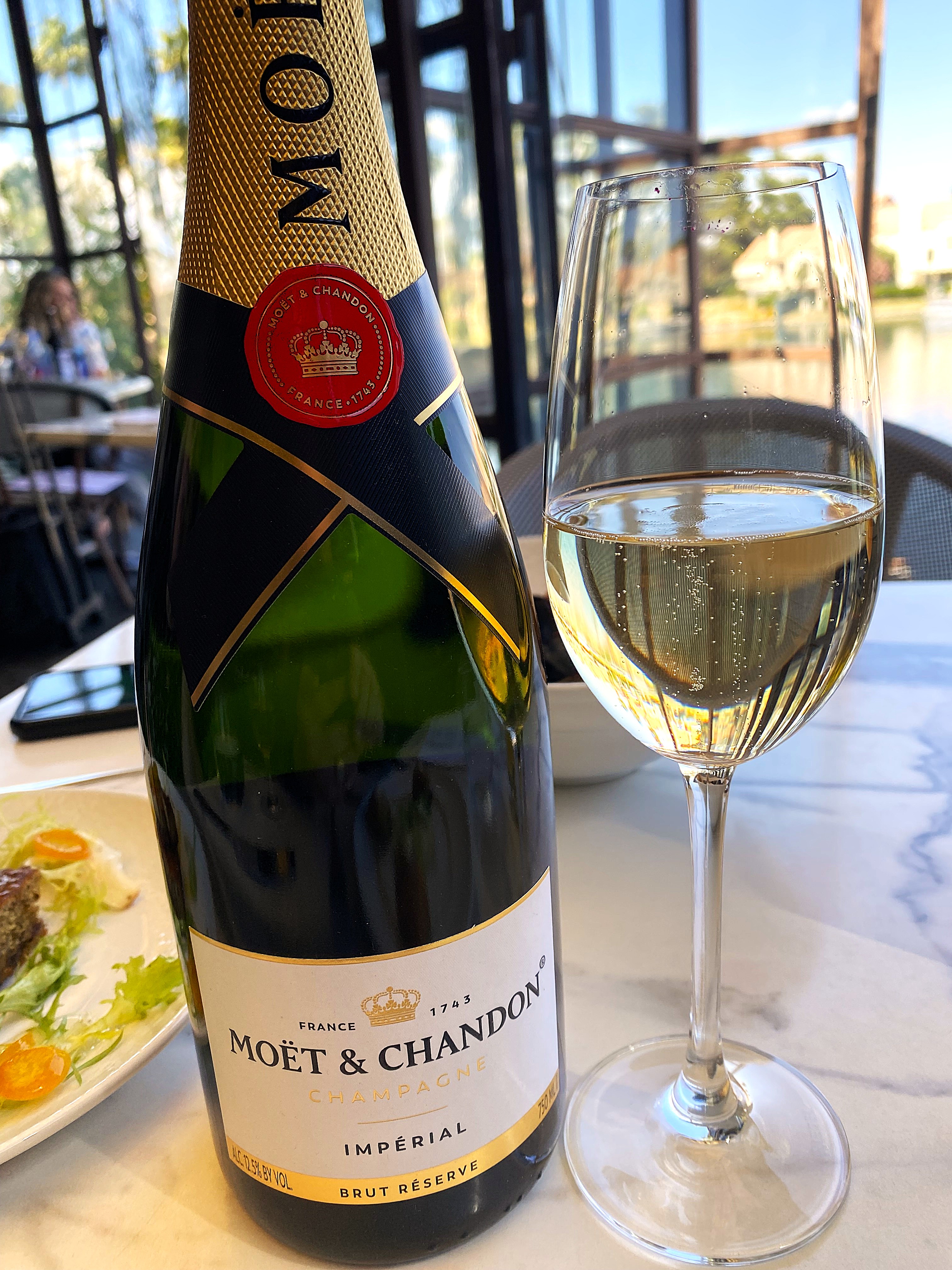
We then went with orders of Steamed Mussels in a spicy coconut broth, Thai chili, Thai basil and Espelette Pepper and the dish offered quite some pep. We differed on what we wanted, so my Bride went with Moet & Chandon Imperial Brut Reserve Champagne NV and in the old days, this wine was known as the White Star. Moet & Chandon is one of the most famous Champagne houses in Epernay as they produce around sixty million bottles a year, and between their estate lands and the contract growers they have 1,150 hectares of vines in the region. The house was founded by Claude Moet in 1743. In the 1970s and 80s, they partnered with the Cognac house of Hennessy and the fashion house of Louis Vuitton, creating the luxury brand of Louis Vuitton Moet Hennessy or LVMH. They also make sparkling wines in California, Argentina, Brazil and Australia and soon in India and China. The wine is a blend of thirty-five percent Pinot Noir, thirty-five percent Chardonnay and thirty percent Pinot Meunier; created from a hundred different wines, of which 20 -30% are reserve wines. This soft golden straw-yellow wine with a steady flow of tiny bubbles offered notes of green apples, citrus, white flowers and brioche. On the palate the full-bodied, well-balanced wine displayed tones of pears, peaches and apples with crisp acidity and a medium-to-long count finish of fruit and brioche.
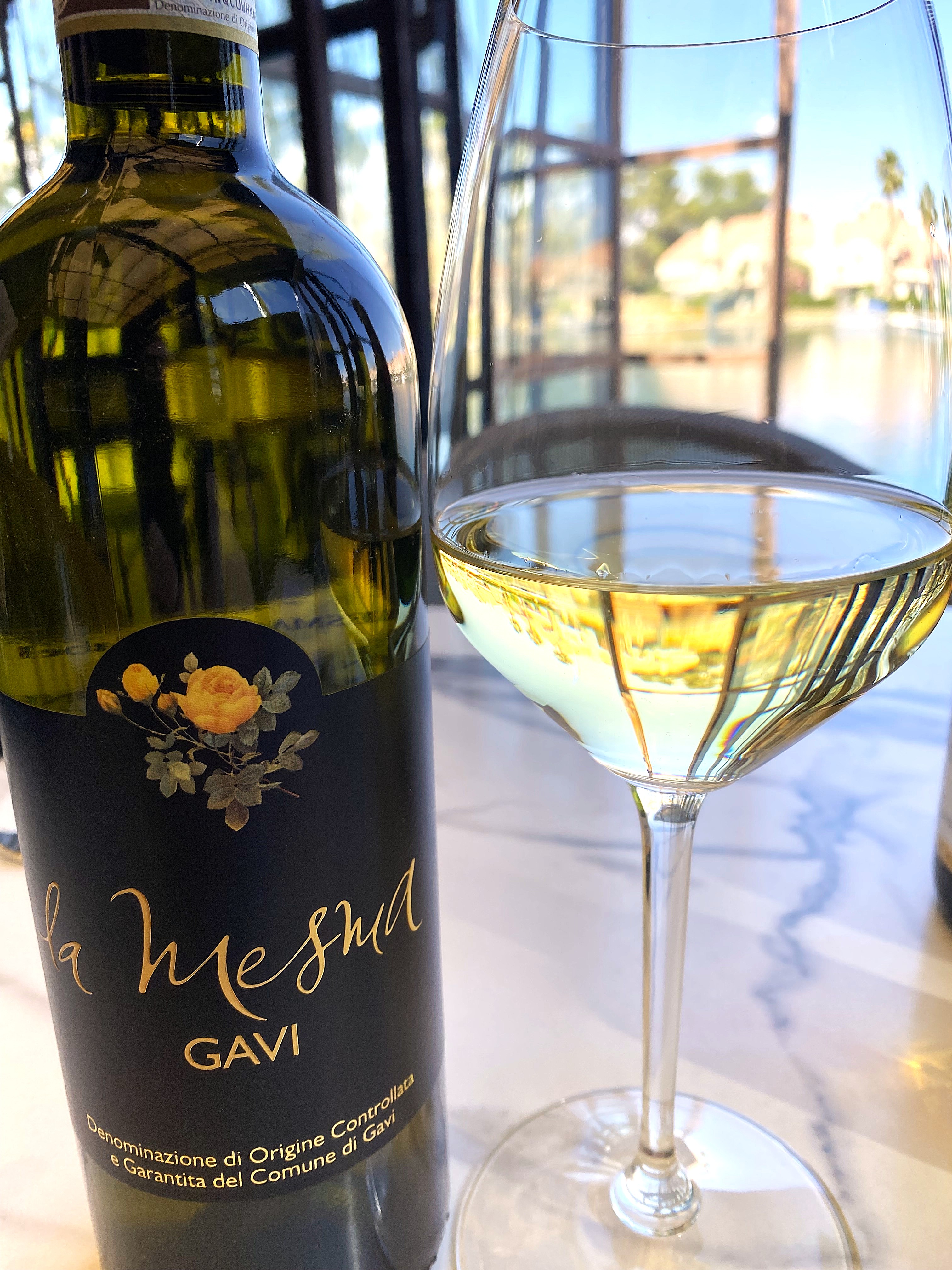
I on the other hand decided to enjoy a glass of La Mesma Etichetta Nera Monterotondo Gavi del Commune di Gavi DOCG 2023. This estate began in 2001, by three sisters, whose mother insisted that if they have a house, they should have a winery in the Gavi region. The land is one hundred hectares, but only twenty-five hectares is vineyards, the rest is a forest. Of the twenty-five hectares, fifteen are in Monterotondo and ten in the Tassarolo. The three Rosina sisters are Paola, an art historian, Francesc, a biologist and Anna, a lawyer. The vineyards are only planted with Cortese. The red soils of Gavi are gravels mixed with clay from ancient alluvial deposits. The vineyards in Tassarolo are aged from 18 to 55 years on slopes, about 300 meters above sea level. Whereas the vineyard in Monterotondo di Gavi has white limestone soil and tuffaceous patches at an altitude of 350 meters above sea level and offers more minerality. The fruit is manually harvested, then undergoes soft pressing and fermentation is done in temperature-controlled cement tanks. After fermentation is complete the wine rests on the lees for at least a year, with batonage aimed at bringing the lees in constant suspension. A deep straw-yellow to golden color, this wine offered notes of peaches, citrus, white florals, hay and wet stones. On the palate this medium-bodied, well-balanced wine displayed notes of white fruits and citrus in a crisp, acidic and dry wine that ends with a good medium-count finish of fruit, terroir, bitter almonds with a touch of honey and lemon zest.


