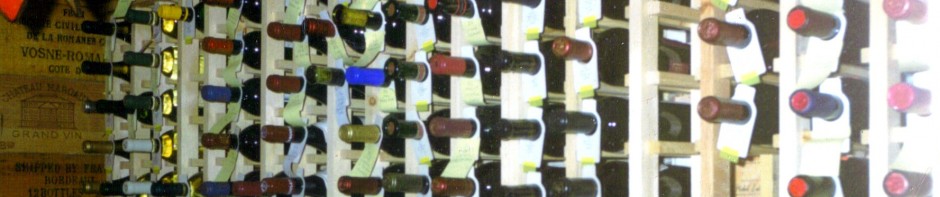
The new room at The Fine Wine Source in Livonia, Michigan was filling up as more and more people were coming in to try the wines. The help was actually setting up additional tasting centers in the original part of the store, and the help were all knowledgeable about the wines being poured.
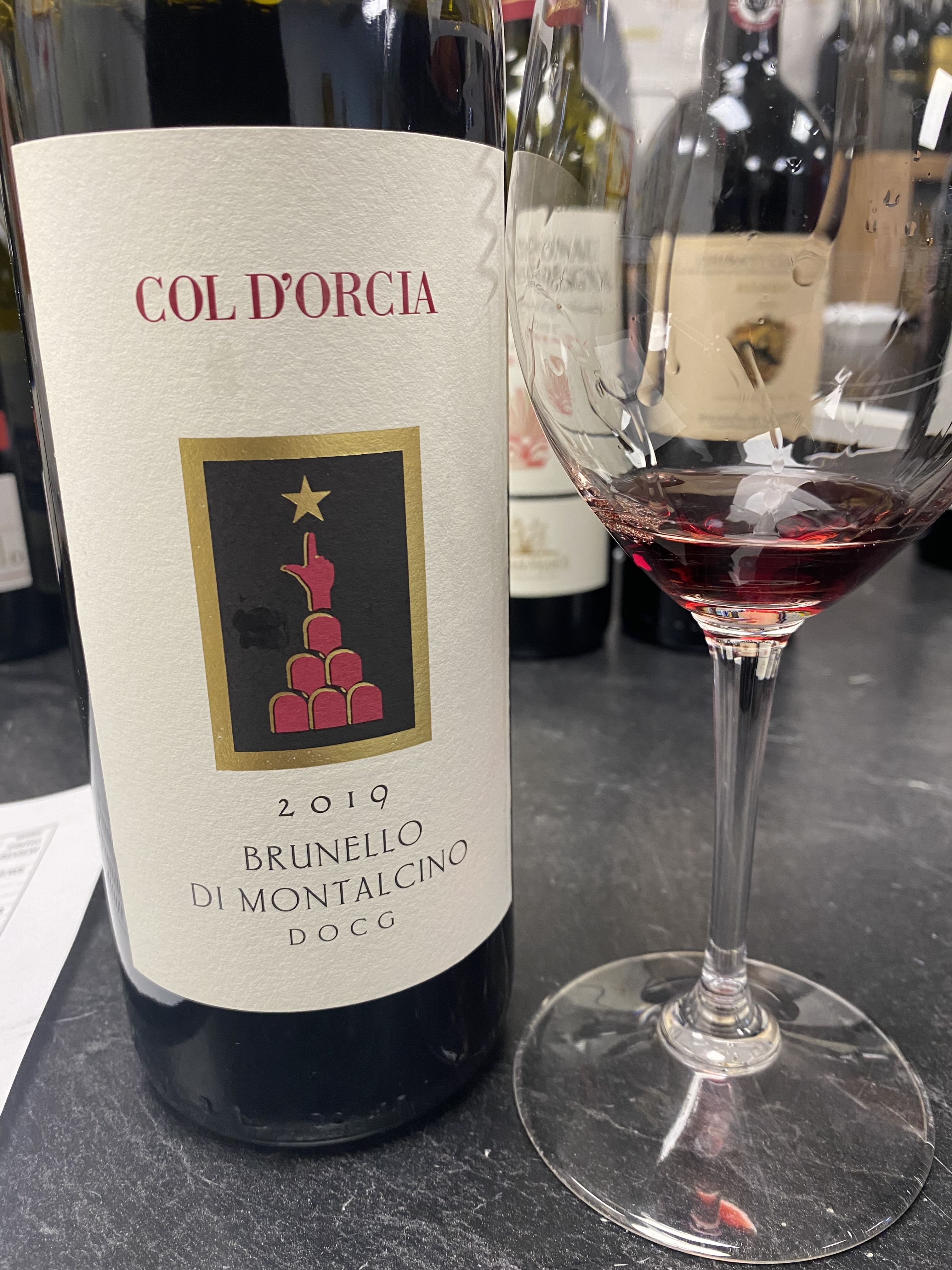
The next wine that was poured was Tenuta Col d’Orcia Brunello Di Montalcino DOCG 2019. The estate on the outskirts of Montalcino in the Siena district of Tuscany was under the ownership of several noble families for several centuries, but significant wine making didn’t begin until the 1900s. In 1933, under the name of Fattoria di Sant’Angelo they showcased three vintages of Brunello at the Wine Exhibition of Siena, Italy’s first wine tradeshow. In 1958, the estate passed to the next generation and was divided, and one section became “Col d’Orcia” after the Orcia River that the estate overlooks. In 1973, the estate was purchased by the Cinzano family, famed for their Vermouth products. The property was then expanded and it now has 540 hectares, of which 142 hectares are devoted to vineyards, of which 108 hectares is planted with Sangiovese, and is the third larges planting in Montalcino. With south-facing slopes, and limestone and marl soil, they now practice organic farming. The fruit is manually harvested, with Initial Fermentation for about twenty days on the skins in specially designed wide and shallow Stainless-Steel tanks to extract tannins and color efficiently and delicately. The wine is then aged for four years, three in Slavonian Oak casks of different sizes; a decision they made years before the debates of traditionalists and modernists in the district. The wines are then bottled and stored in temperature-controlled rooms for an additional year before distribution. A garnet-colored wine that offered notes of red fruits, florals, camphor and sous-bois. On the palate a medium-bodied wine displaying cherry, raspberry and currants, blended with firm tannins and a good smooth finish of fruit, stones and asphalt (the classic terroir of the district).

From there we had another wine from Montalcino, Poggio Antico Brunello Di Montalcino DOCG 2019. The vineyard is on one of the highest ridges in the district and has been recorded since the 1500s. In 1976, Poggio Antico was born from the union of I Poggi, Madre and Le Martine; ten years after the DOCG was granted. The estate was acquired by Marcel van Poecke in 2017 and a new team of agronomists and enologists under Frederico Trost. The estate is 200 hectares and there are fifteen micro terroirs and six macro terroirs with recognized nuances of limestone and marl soils. The soil units are vinified and fermented separately in designated fermentation tanks and barrels, with a plot-by-plot approach. Three years of aging in a mix of French and Slavonian Oak barrels, followed by another year of aging in the bottle before distribution. A deep garnet-colored wine that offered notes of black cherries, balsamic, salt, pepper and a dash of seaweed. On the palate a well-balanced medium-bodied wine that displayed the black cherries mixing with blackberries, pepper, tannins, ethereal earthiness and a nice medium-count finish of fruit and terroir.

After the two different wines from Montalcino we then had Renzo Masi Fattoria di Basciano “Vigne Il Corto” Toscana IGT 2022. The Masi family has been producing their wines for three generations since the early 1900s and located in the heart of the Chianti Rufina district. The estate is seventy hectares, of which thirty hectares is devoted to vineyards on the classic Galestro soil of Tuscany which is a brown soil with clay schist rocks and fine layers of sand. The “cru” vineyard “Il Corto” is on the south-eastern side of the property and is ninety percent Sangiovese and ten percent Cabernet Sauvignon. The two varieties are harvested and vinified together with Initial Fermentation and maceration on the skins for twenty-five days. Malolactic Fermentation is completed in Stainless-Steel vats and followed by eighteen months in French Oak, of which half is new, and then an additional six months in bottles before distribution. The ruby-colored wine offered notes of black cherries, balsamic, dark chocolate, mushrooms and terroir. On the palate this medium-bodied wine displayed tones of black cherry with hints of vanilla, ripe tannins, and a medium-count finish of fruit and terroir.


