A White and a Red from Bordeaux

When I am my local wine shop, the Fine Wine Source, I may get a chance to taste several wines.  It may appear that they monopolize my writings at times, but it is because I taste whatever wines that they think I may like, or that my Bride may like, plus we also get a chance to talk wine with out it always being dollars and cents.  Wine is a product that is retailed, and unless you are buying wine from a governmental agency, that product should be romanced, just like a man’s suit.  It is so boring to buy wine in a grocery store or a convenience store or even nowadays at a gas station.  I want to discuss the wine and get some background and tasting is a real bonus.  I also try not to write about more then two wines at a time, as I am not writing a thesis. This is my fun and hopefully I can pass some useful information about a wine that you might encounter, when I am not discussing some dusty old bottle from the cellar.
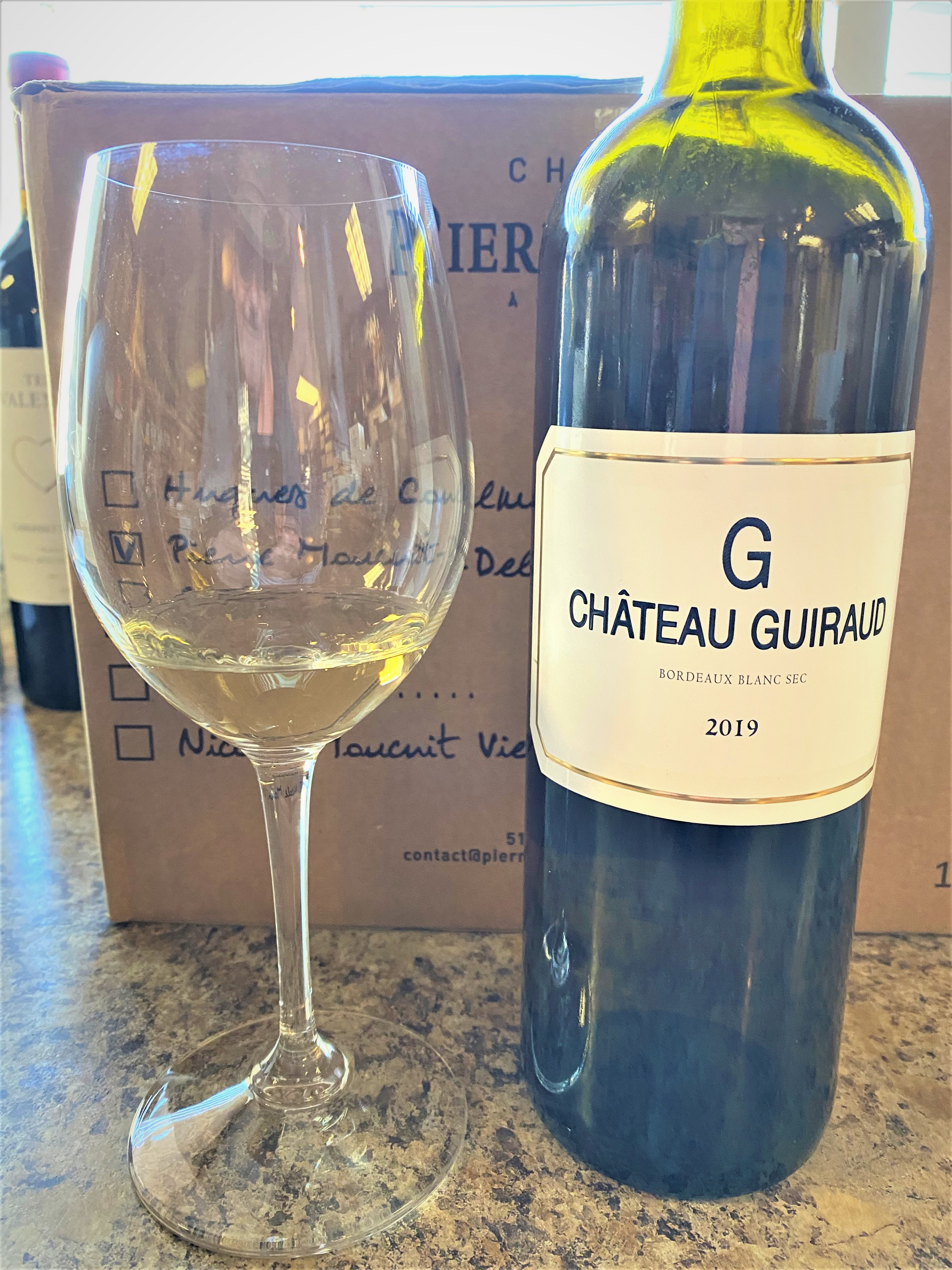
They wanted me to try Le G de Chateau Guiraud Bordeaux Blanc 2019 and I felt like a snail or a slowpoke, because we haven’t even cracked into the six pack of the 2018 and it was as delicious as I can remember the ’18 being.  Chateau Guiraud is classified as a Premier Cru in the 1855 Classification of Sauternes and Barsac.  It was originally known as the Noble House of Bayle, but it was bought by Pierre Guiraud in 1766 and passed through many generations of the family until it was bought by a group of French winemakers in 2006.  The Chateau has two-hundred-ten-acres, of which the majority of the land is planted with Semillon and the balance is Sauvignon Blanc.  Along with the famed Chateau Guiraud, their second wine label is Petit Guiraud which is made from younger vines.  They also produce Le Dauphine de Guiraud (Sauternes) and Chateau Guiraud Pavillon Rouge (Bordeaux).   Then there is Le G de Chateau Guiraud their Bordeaux Blanc Sec or Dry White Bordeaux wine. While most Bordeaux Blanc Sec wines are predominately Sauvignon Blanc, Le G de Chateau Guiraud is fifty/fifty.   The fruit is manually harvested using small baskets and fermentation is for about three weeks.  Eighty percent of the wine is aged in the barrels from the last vintage of Chateau Guiraud and twenty percent is done in Stainless Steel. The average aging in the barrels is seven months with regular stirring of the lees.  This is a very lush and full-bodied white wine with a delicate gold tinge, a very refreshing wine that leaves one chewing the wine to appreciate the suppleness of the fruit and the terroir that lingers and beckons for another taste.  The good news is that we can get more, when we need some and the vintages have been great.
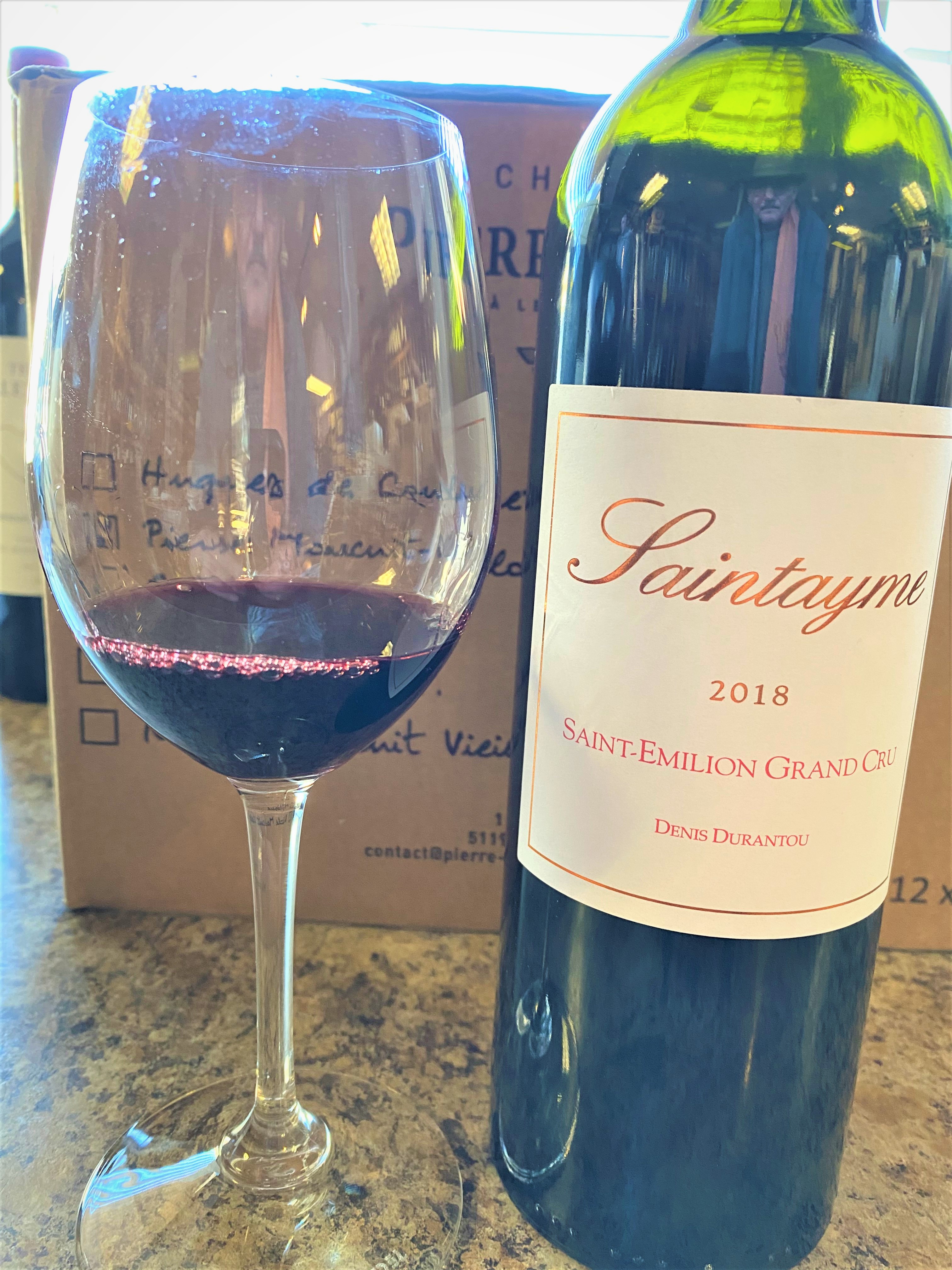
Saintayme Saint-Emilion Grand Cru 2018 by Denis Durantou was a great wine to begin with.  The sad news is that Denis Durantou passed away in May at the young age of 62 and he was the owner and winemaker at Chateau L’Eglise Clinet, La Petite Eglise Cruzelles, Montlandrie, La Chenade and Saintayme.  For a Saint-Emilion Grand Cru this is a very reasonable priced wine and the wine comes from a nine-hectare parcel of thirty-five-year-old Merlot vines.  This wine is pure Merlot and probably aged for nine to ten months in oak, of which thirty percent is new.  The tannins were a bit strong, but with the black fruit and some red fruit already blending, especially with a soft red fruit nose, it was very easy to drink and I think that it would be perfect now or even ten years from now, especially since I am known to forget about wines and let them mellow.  I really can’t think of a better way to spend an hour or so, then with tasting some wines.
Posted in Wine | Tagged , , , , , , , , | Leave a comment

Dining Indoors Again

We waited a couple of days, just to make sure that we could really dine indoors at a restaurant.  It is amazing that California, Illinois, New York and Michigan almost announced that dining indoors was legal at the same time.  It was no longer life threatening for me to have dinner with my Bride or to have a meal with friends.  It is a miracle.  Saints be praised.   Of course, seating capacity at least here in Michigan is down to 25%, because God forbid a small business can still try to make a profit.  I guess they were having problems explaining the science that food from a food court in a major attended box store or mall was safe to consume, but that food from a small meticulously clean small restaurant was not.  I guess future scientists and scholars will have to explain that.  Since, we now have less people working, it is safer to open up the restaurants, and for us, it has been almost three months since the last lockdown.  “Freedom’s just another word for nothing left to lose.”

We went out to celebrate at one of our favorite local independent restaurants that has been basically open about the same time that we got married and bought our house.  We went to Rocky’s of Northville, that was originally “Northville Charley’s” under the guidance of the Corporate Executive Chef of the C.A. Muer Restaurant Corporation and there are still some under that umbrella, even after the sad and mysterious death at sea of “Chuck” Muer.  Charles “Rocky” Rachwitz was that chef and he, as an esteemed protegee to Mr. Muer, helped “Rocky” get his restaurant.   The restaurant still looks and feels like it should be on a lake in Northern Michigan, and the food after twenty-five some-odd years is still great.  I am also proud to say that my Bride even tried something new for her first night out in ages.  We both opted to have the spectacular Black Bean Soup, instead of a salad before dinner, and a bowl of it with the house made bread is really a meal of its own.  My Bride had the Chipotle Honey Glazed Salmon with Pineapple Salsa, Basmati Rice and Asparagus; and when she looked at the size of her entrée, she requested a carry-out box immediately, as the portion was huge.  I should have done the same, though my entrée did not look as intimidating at first, and I did finish it, because it would have been a shame, but I could have happily survived with half of it, for another meal.  I had the Pesto Pan Roast of Sea Scallops, Gulf Shrimp, Artichokes, Sundried Tomatoes in a Creamy Pesto Sauce on Fettucine.  We were both in heaven, and we really didn’t realize how much we missed dining out, even with my Bride being excellent in the kitchen.

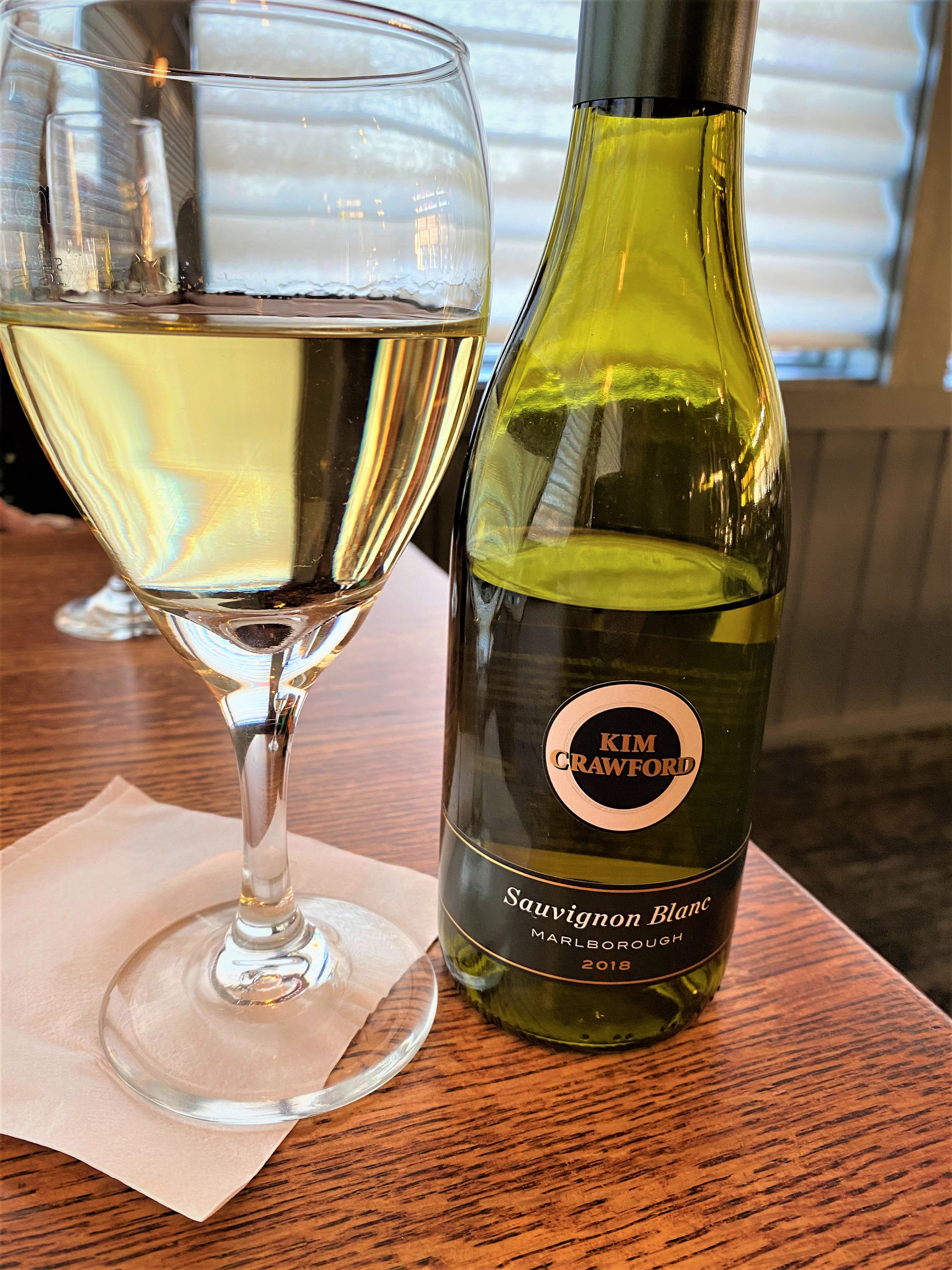
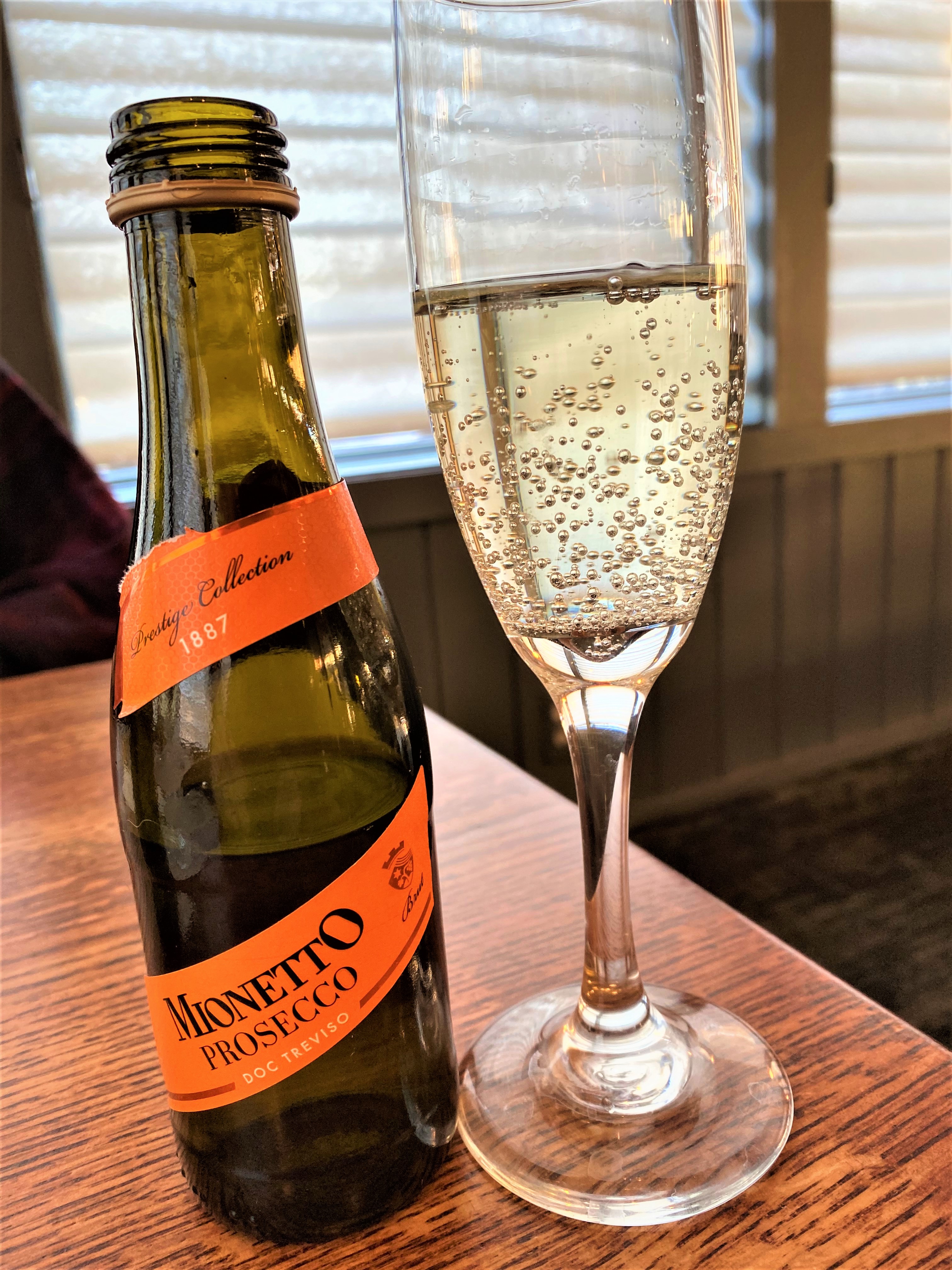
I was all set to get something that I thought would be interesting for both of our dishes, she jumped the gun and wanted a split of bubbly.  So rather than get our poor waitress in the middle of a wine discussion, she got a split of Mionetto Prosecco de Treviso DOC Brut NV.  Prosecco de Treviso DOC is a relatively new designation from 2009 for the Treviso province in Veneto in North East Italy. To get this designation the wine must be made from at least 85% Glera or Prosecco grapes. The other 15% can be Verdiso, Bianchetta, Trevigiana, Perera, Glera Lunga, Chardonnay, Pinot Blanco and/or Pinot Nero.  I really didn’t want to order a bottle of wine, since we have several partially opened bottles already at home, so I found a split that I would be happy with, and in case the Prosecco dried up.  I chose a split of Kim Crawford Sauvignon Blanc Marlborough 2018.  Kim Crawford is probably the most recognized wine producer from New Zealand and its Sauvignon Blanc is the most popular wine from New Zealand sold in the United States of America.  Kim Crawford began in 1996 in Auckland and built a state-of-the-art facility in Marlborough in 2000.  In 2003 the brand was sold to the Canadian firm Vincor and the following year Vincor was acquired by Constellation Brands.  Kim Crawford was also one of the first in New Zealand to produce an unoaked Chardonnay.  Marlborough is the most important wine region in New Zealand and Sauvignon Blanc account for almost eighty percent of the production.  The wine is very fruity with a nose promising passion fruit, melons and some spice, with a taste of fresh fruit and acidity and a pleasant finish that kind of beckons another glassful.

Posted in Dining, Wine | Tagged , , , , , , , , | Leave a comment

Moulin D’Issan

With my honorary title of “Street Somm” I am one of the first to admit that there is still a lot to learn, even after drinking wine for fifty years.  I was at the Fine Wine Source my favorite home away from home, especially during the lockdown.  There are times that I look at a label from a distance and I can identify it, I mean some are that distinct.  Some labels have changed a bit over the years and some have totally changed.  I saw a label and I thought I knew the wine until I looked at the actual wording.  I thought the wine was from Margaux, but it was from the Bordeaux Superior.  A new wine for me from Chateau D’Issan, a Troisiemes Grand Cru or Third Growth, if your French is a little rusty.

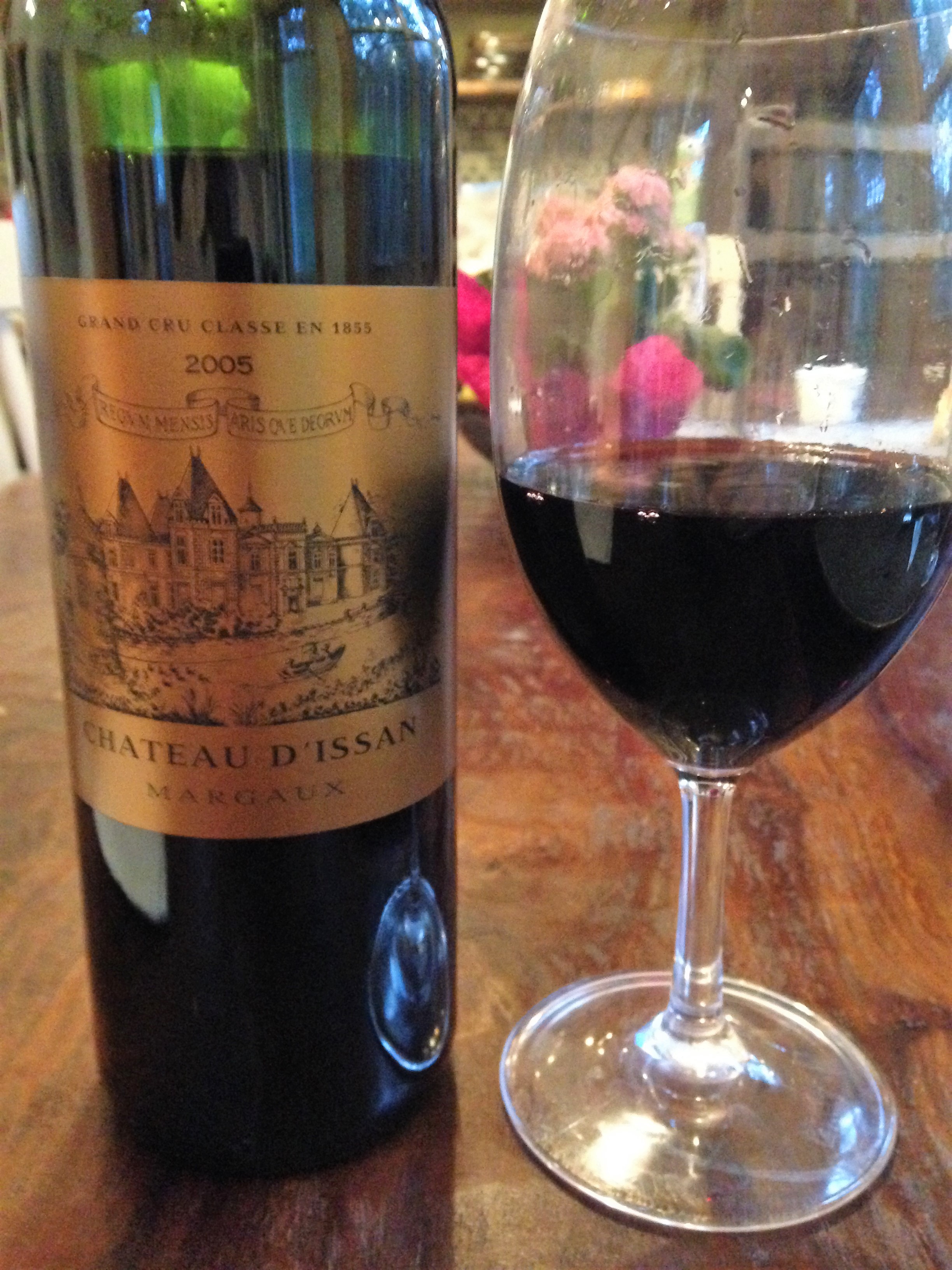
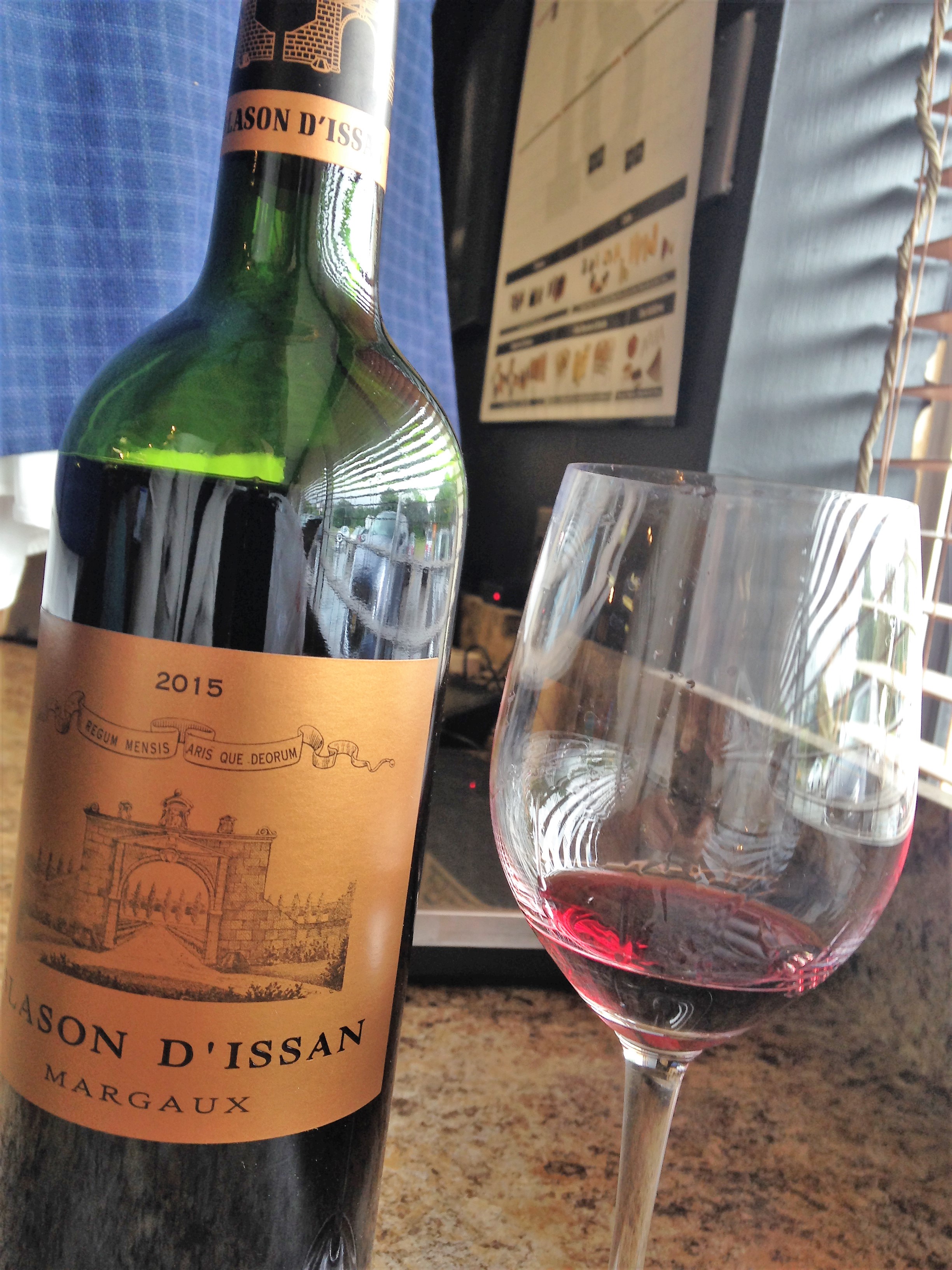
A little background is necessary to discuss this wine, and while I may not like “wine verbiage” I do like history and little tidbits about wines.  Chateau D’Issan Margaux 2005, a Troisiemes Grand Cru Classe en 1855 or in plain English a Third Growth from the great classification of the Medoc. Chateau D’Issan is a legendary estate in Margaux, just south of Chateau Margaux and next door to Chateau Palmer, I mean some great real estate especially if you are into terroir.  The wine is a blend of Cabernet Sauvignon and Merlot, and the fruit from is from the older vines on the estate, the wine was aged for eighteen months in French Oak, of which fifty-five percent was new.  This is a classic Margaux wine with the color and the nose, and the ethereal terms that I tend to use for the wines of this Commune; silk, opulent and elegant. In the past fifty years, I have probably been more fortunate to have enjoyed more wines from Margaux compared to any other of the Communes of the Medoc, which is not bad for a kid from Southwest Detroit. Chateau D’Issan has a second label, which is rather common for the great wines of the Medoc.  Blason D’Issan Margaux is a wine that we tasted at the Fine Wine Source and we were so impressed that we bought a six pack of the wine.  Blason is a French word for “coat of arms” and I guess that is a nice way for them to list the second label from Chateau D’Issan.  The wine was is also a blend of Cabernet Sauvignon and Merlot.  The wine is aged from fourteen to sixteen months in French Oak, of which a third is new.  The major difference between the first label and the second label, is a little shorter aging period and the fruit is harvested from younger vines.

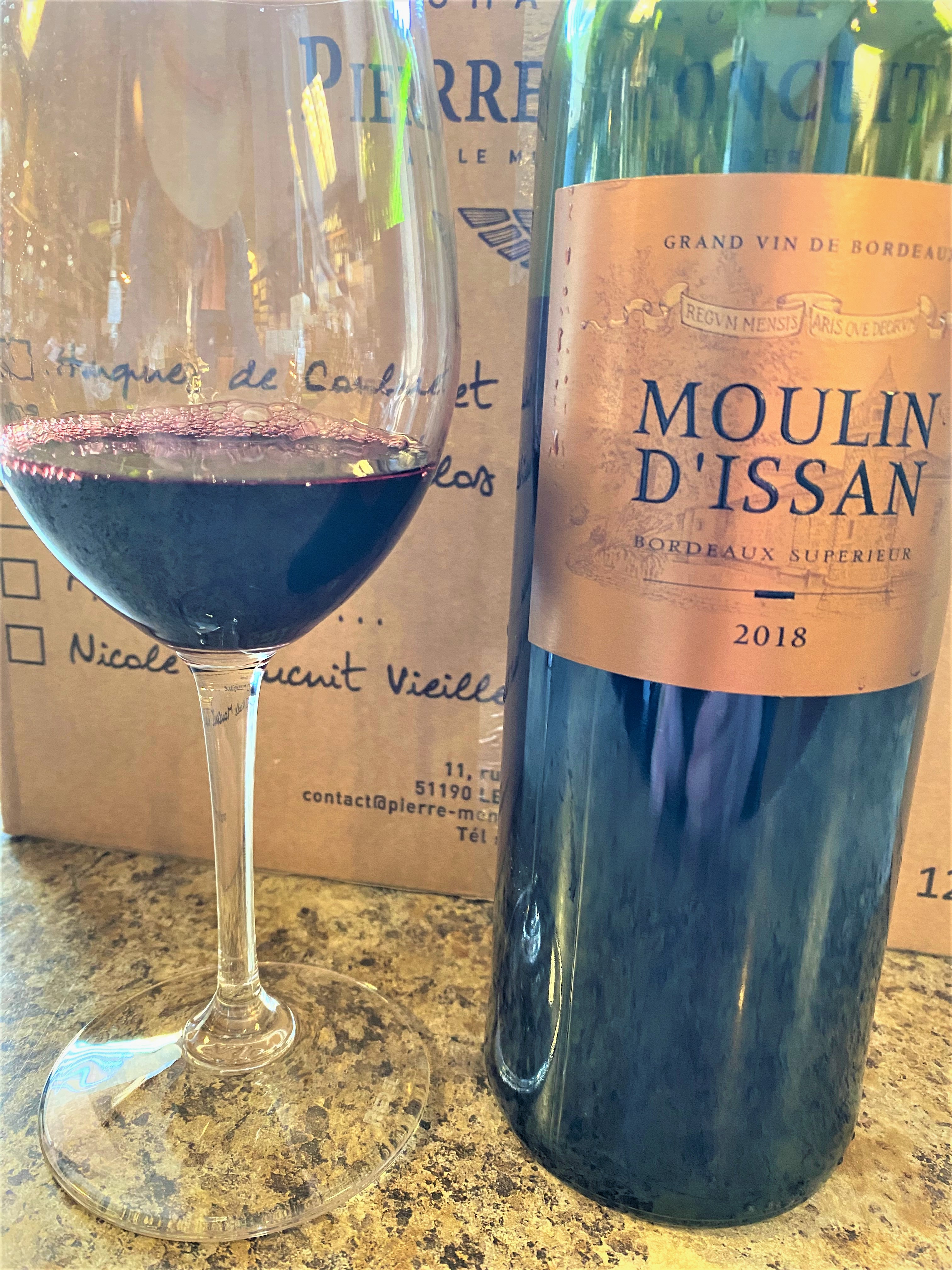
Now getting to their third label Moulin D’Issan Bordeaux Superior 2018, which when I first read the label, I presumed that it was from fruit that they had out sourced, since there are plenty of vines in the entire Bordeaux region.  This is not the case, I have written and hinted at the strange and stringent appellation laws that France defends to the end, since they basically created wine laws.   To the right of the “historic” driveway to the Chateau are vineyards and plots that have been designated as Bordeaux Superior, they are mostly clay and limestone beds located closest to the Gironde estuary, but are not deemed Margaux worthy.  This soil is more suitable for growing Merlot.  The wine is named Moulin in honor of the ancient ruins of a 17th Century windmill that was on the property and is still in the middle of the vineyard.  This wine is about ninety percent Merlot and the balance is Cabernet Sauvignon and they began issuing this wine in 1988.  Even though most Bordeaux Superior wines are Cabernet Sauvignon blends and the Right Bank is more Merlot driven, this is another silky wine and I would say elegant and opulent, especially for the price.  I don’t know too many people, unless they are effete elitist wine snobs that would turn their nose down at an extremely well made and delicious and affordable Bordeaux Superior wine.

Posted in Wine | Tagged , , , , , , , , | 2 Comments

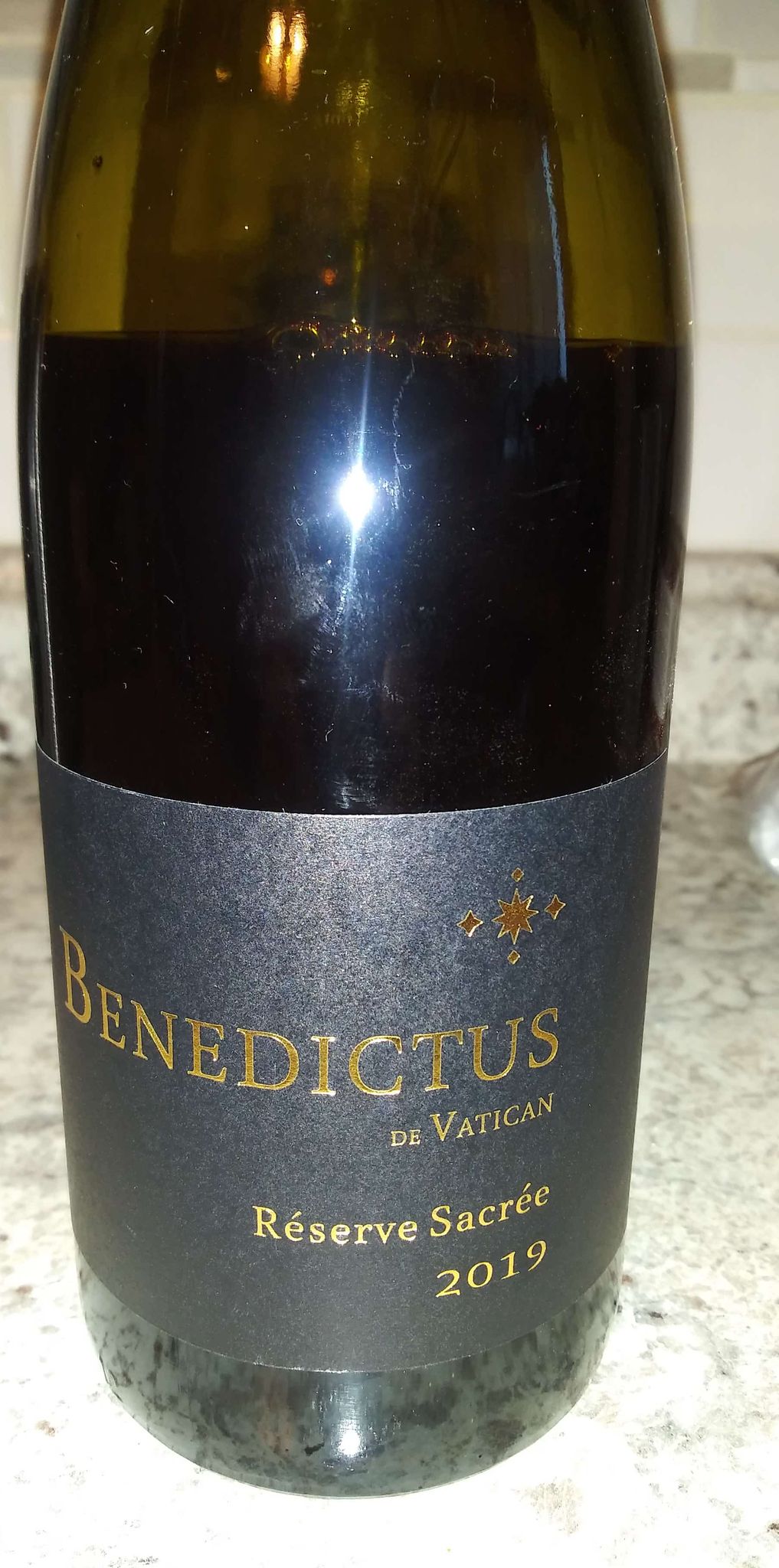
Benedictus de Vatican

At first, I thought perhaps it was the official altar wine at the Vatican and I thought it was perhaps a new Italian wine that I was not aware of.  Before I get way off on a tangent, let me explain that I got a message on one of the Social Media sites from a young lady that lived on the same street I did, back in Detroit, and for her sake, I won’t say how long ago.  She received a gift and sent me a photo and asked if I knew the wine, and I don’t know about others that write about wines, but I get this type of question frequently and most I can answer right off the top of my head. I was taken aback by this wine, and as I said, I immediately thought of an Italian wine, but I forgot my history lessons. 

There is village between the towns of Avignon and Orange in the southern part of France’s Rhone Valley known as Chateauneuf-du-Pape which translates to “new castle of the Pope.” In the early 14th Century, Clement V chose Avignon for his home and for his court, this is the same Pope of the famed Chateau Pape Clement of Graves, in Bordeaux. Originally the wines from this area were just known locally, but in the 1920’s it all changed when a document was created in Chateauneuf-du-Pape which became the precursor of the famed Appellation Controlee laws of France, and Chateauneuf-du-Pape was one of the original appellations and still quite a famous one.  Chateau Sixtine is a wine producer that was founded by the Diffonty family in 1900 and began with two hectares of vines.  The family played a significant role in the creation of the Syndicat de Chateauneuf-du-Pape in 1924, and since 1993 Jean-Mar Diffonty has been in charge of the family estate.  Beyond the two flagship wines, a red and a white, they also produce Manus Dei du Chateau Sixtine and Cuvee du Vatican Chateauneuf-du-Pape and then they produce wines under the appellations of Cotes du Rhone and Cotes du Rhone Villages.

The Diffonty estate also makes Benedictus de Vatican Reserve Sacree 2019.  As to be expected this wine is a blend of Grenache, Syrah and Mourvedre, the famed trio of the Rhone, but this wine is a blend of his finest Cotes du Rhone cuvee and his well regarded Chateauneuf-du-Pape wines for a big bang in value, and the wine is made in a limited production.  Because this wine is a blend from two distinct appellations, it has to be listed under the basic tier of Vin de France, which was originally called Vin de Table or Table Wine.  With increasing competition both from the European markets and the rest of the world, the Vin de Table appellation was losing ground, and areas and districts strove to increase quality and worked towards additional appellations and finally for wines that were considered better than table wines, because of rules that affected their status like this particular wine, the Vin de France appellation was created.  I have seen reviews for this wine that say that one can expect black fruits, spices and tobacco notes along with the velvety finish of Chateauneuf-du-Pape.  My friend told me, that she prefers sweeter wines, but told me that this wine wasn’t too bad.  And before I leave this interesting wine, I will mention one of my favorite peccadillos about this region and I have mentioned it before, that the village of Chateauneuf-du-Pape has a famous municipal decree that bans flying saucers from taking off, landing or flying over the vineyards; and to my knowledge they have been successful with this law for the last seventy years or so.

Posted in Wine | Tagged , , , , , , , , , | 2 Comments

L’Hetre

L’Hetre is named for the beech tree as another winery is named after a pine tree, but I will get to that eventually.  I was doing some errands and I was stopping off at the Fine Wine Source our local wine shop in Livonia as I was going to pick up some more wine, yes, I realize that it sounds unusual for us to buy more wine, but the wines for our daily consumption have drastically increased since the virus from China and the ensuing lockdown; and all I can say is that it is a good thing that my Bride and I get along.  I walked into the shop and somebody joked that I must have smelled a wine tasting, as they were getting ready to taste some new wines for the shop, as well as retasting some wines for their restaurant Vertical in Downtown Detroit, they are not opening on the first wave, because the first wave of openings of restaurants will be at 25% capacity, so they are waiting until the capacity level opens up to half.  It made my day.

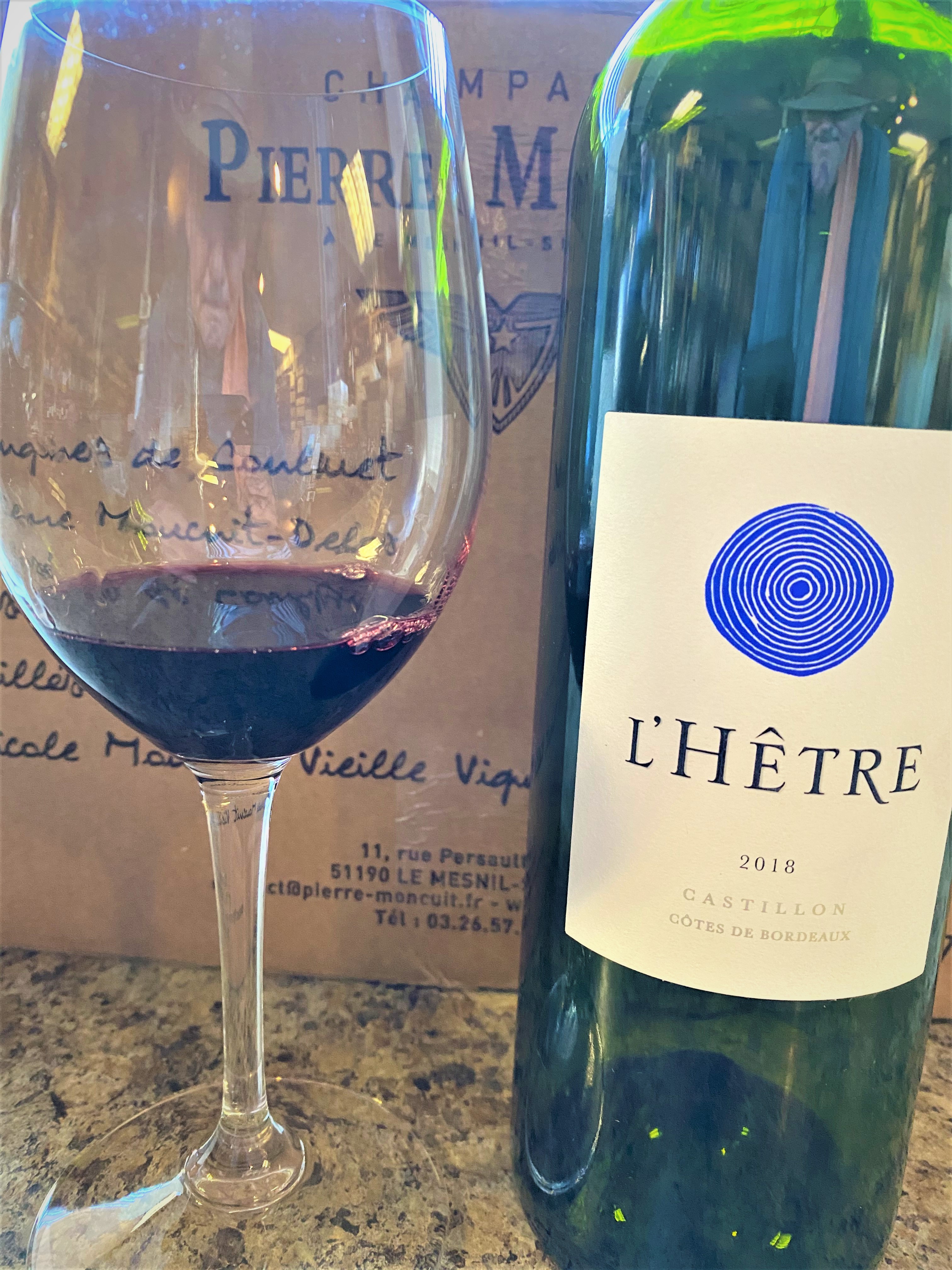
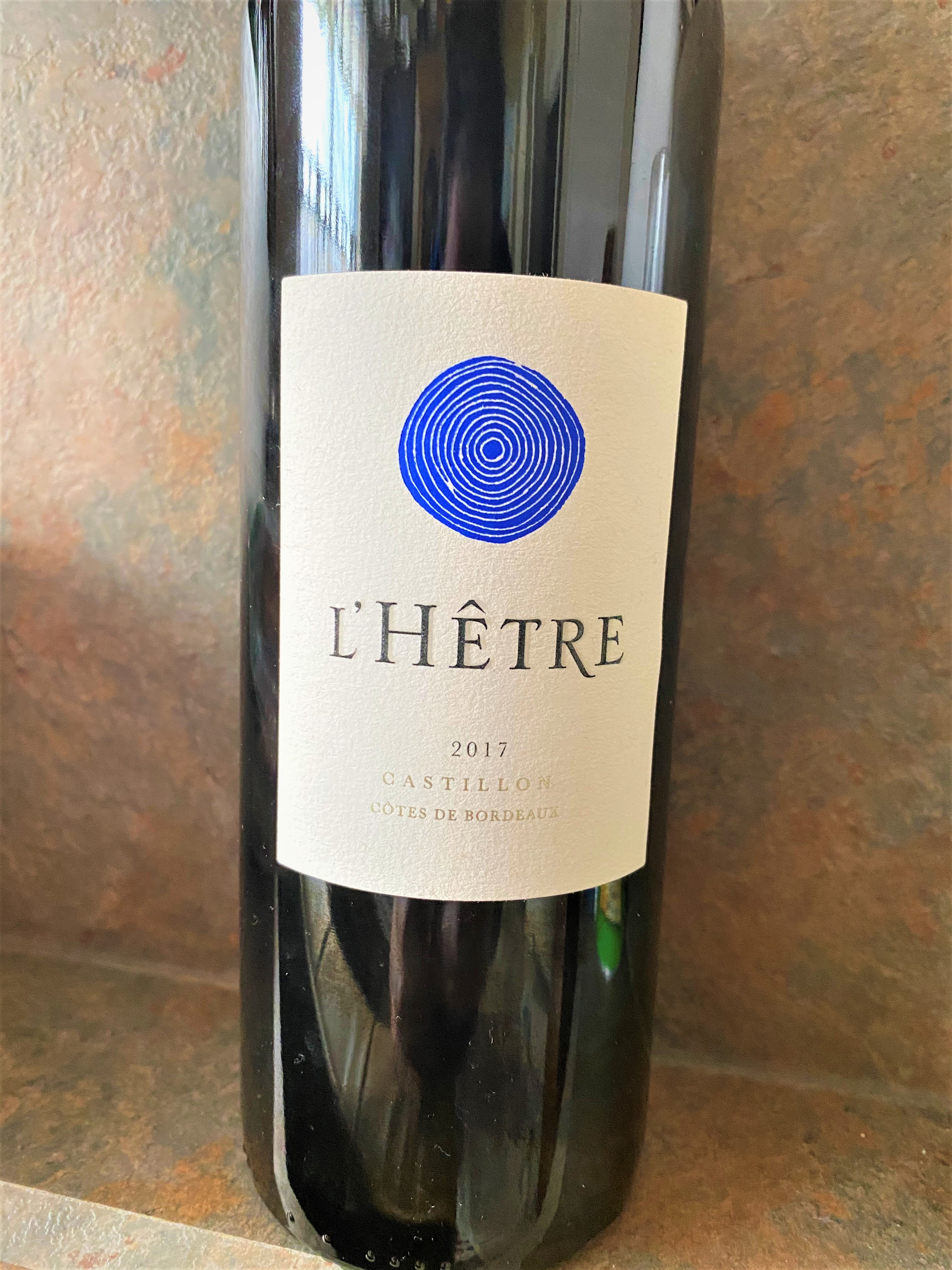
L’Hetre 2018, if you are like me a lay person, was a totally new wine, and I got a great story about the wine after I tasted it.  Jacques Thienpont visited this estate in the Cotes de Castillon during the harvest of 2015.  At that time the land was owned by a Belgian couple and in the ten years that they started Chateau Goubau, they converted the estate to ten hectares of organic farming surrounded by forests and pastures on the highest plateau in the Bordeaux region.  Jacques Thienpont along with his sister bought the property in 2016 and in 2017 bought the adjacent Chateau Montagne, a twenty-five-hectare estate with the potential of adding a further ten hectares if and when needed.  They brought in a nephew Maxine Thienpont from another family estate Chateau Labegorce Zede in Margaux.  The family aged the 2015 vintage, but the 2016 vintage was the first to be made by the new owners.  The families also own Chateau Certan of Pomerol, as well as their property named after a pine tree Le Pin, which is on my unicorn list of wines.

L’Hetre 2018 is a blend of ninety-five percent Merlot and five percent Cabernet Franc.  The wine was aged in oak for fifteen months.  While the wine carries the Castillon Cotes de Bordeaux appellation, when I tasted it, I thought it was a young Pomerol or a Saint-Emilion as it was really lush with a great nose.  The taste was full of red and dark fruit, well balanced with ripe tannins and a finish that gave me spice and a limestone terroir.  It was after the tasting, that I got the “schmoozing” about the background of this wine.  I left with L’Hetre 2017 which the Fine Wine Source had in inventory, the 2018 will be coming.   My Bride did not know that she was getting extra wines when I finally got home.

Posted in Wine | Tagged , , , , , , | Leave a comment

Two Classic Sangiovese Wines

Being in a wine shop is pleasant and a great way to forget the insanity that is outside.  The world seems to be a much nicer place when one is having an assortment of wines and some enjoyable conversation.  Eventually there may even be formal tastings by wineries again, I mean we can always hope.  The hardest part in the winter is getting all bundled up to go out, and during these periods of induced paranoia, the idea is to get as many errands done on a single day as possible.  I try to always have a trip to the Fine Wine Source as my final stop for the day, so that I am not feeling rushed.

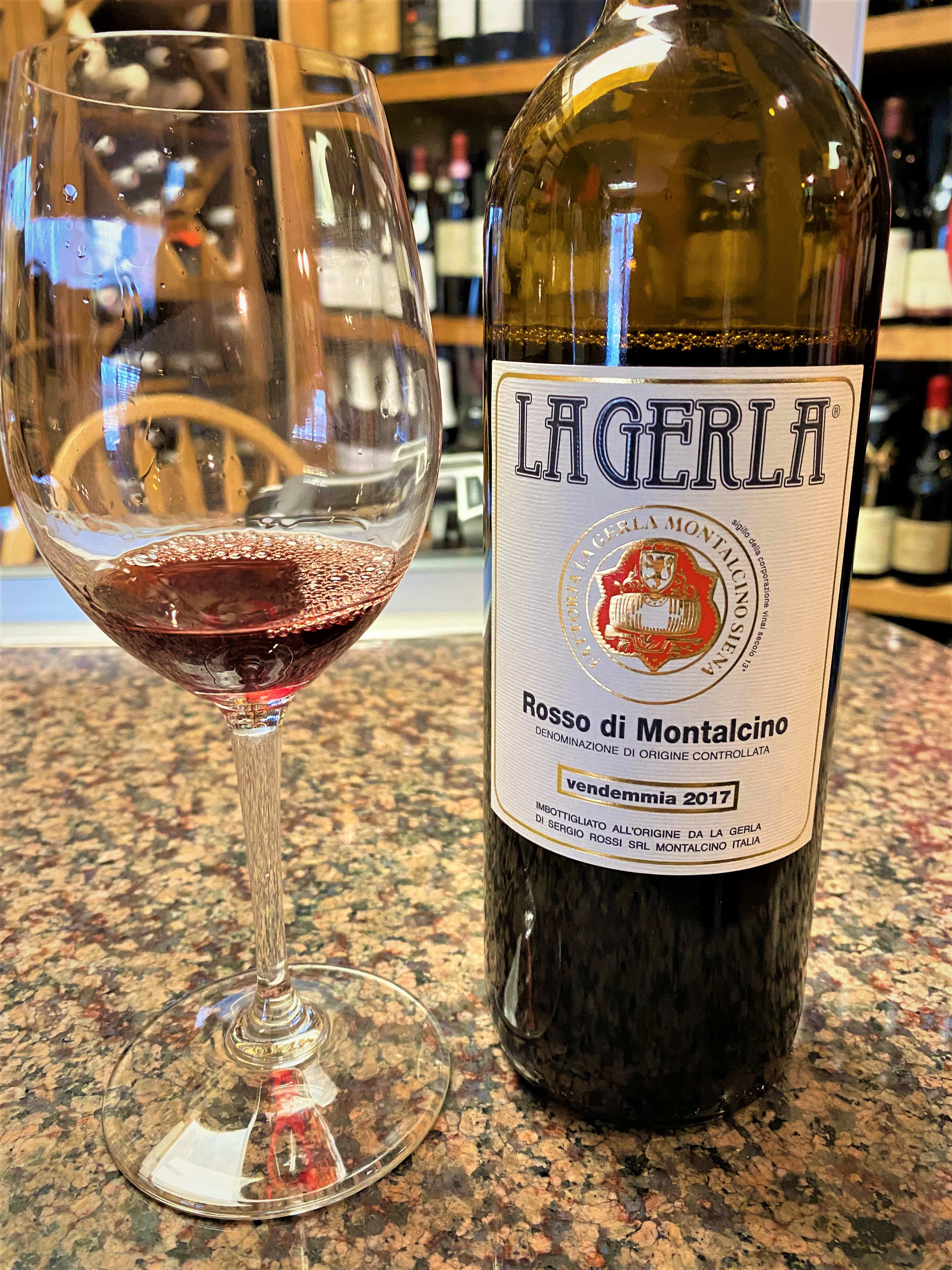
Fattoria La Gerla Rosso di Montalcino 2017 proved to be a charming and delightful wine and evoke plenty of different dishes to pair with it.  Fattoria La Gerla is a winery based in Montalcino, which is in the central portion of the wine region of Tuscany.  Sergio Rossi bought the estate from Biondi Santi in 1976 and it has been in the Rossi family ever since. There are six vineyards planted between 1976 and 1998 exclusively Sangiovese.  Rosso di Montalcino is in the same defined area as its older and bigger brother Brunello di Montalcino DOCG.  Rosso di Montalcino DOC was created in 1984 to take advantage of younger vineyards, and a way to make a fresher and younger style of wine that would not be so invested in time; and also, to bring some money into the coffers of the wineries quicker.  The fruit is hand harvested and after fermentation it is aged for ten months in a mix of Slavonian and French Oak barrels and barriques and then another two months in the bottle before it leaves the winery.  Subtle notes of violets and dark fruit are the first things that were appreciated, along with some softer tannins and velvety chewy wine with a nice medium length finish of spice and terroir.  The wine is not as big and bold as a Brunello, but then neither is its price tag, but it has all the same love and care. 

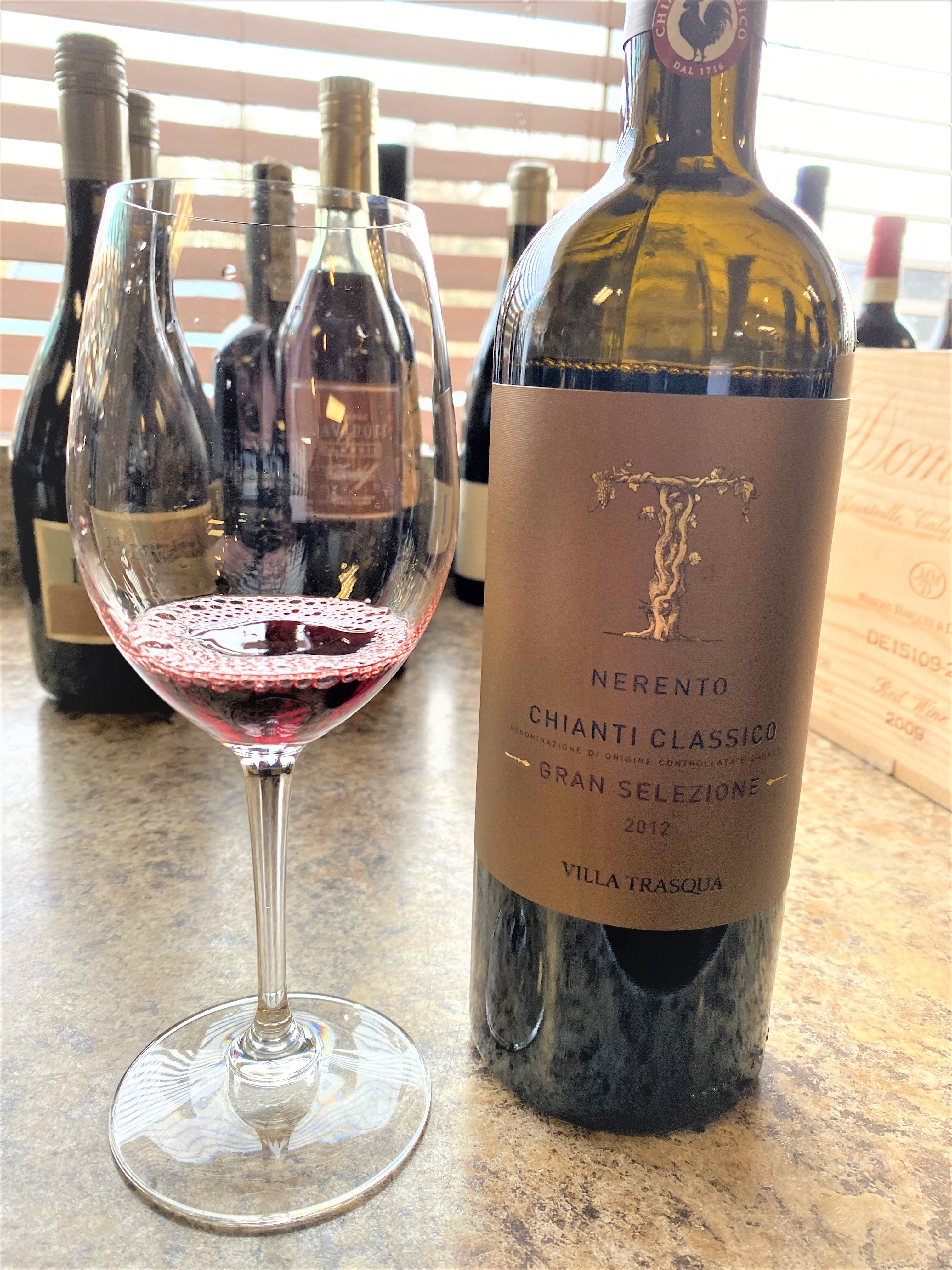
Villa Trasqua Nerento Chianti Classico DOCG Gran Selezzzione 2012 is from fabled historic vineyards which makes there first appearance in the year 1001.  In the year 1000, the land has been recorded ass Trasqua, and currently the one-hundred-twenty-hectare plot was purchased by the Hulsbergen family in 2001.  Nerento was identified back in 1854 as a singular and noted vineyard and because of its terrain it is known as “Black Rocks” and is the flagship for Villa Trasqua.  Chianti Classico is the oldest, most traditional and longest established wine region and known for their Sangiovese wines and the wine that make most people think of Tuscany.  There is a long fabled and romanticized story of how the region was originally created and since the 1920’s the famed Gallo Nero or Black Cockerel adorned the neck of every bottle of wine with three different bands to designate the pedigree, and still does except in the United States after a legal battle in 1991 started by E&J Gallo Winery and they won.  This wine is pure Sangiovese and the juice spends about twenty-five days on skin contact during the maceration period.  The wine is then aged for thirty months in French Oak and finishes with a twelve-month aging period in the bottle, before being released. Black fruit and eucalyptus are what I noticed immediately from the nose.  The black fruit also was there in the taste along with black pepper and spices, and a nice medium finish off terroir to finish.  A lovely example of a classic Chianti and not the Chianti that I grew up with as a child.    

Posted in Wine | Tagged , , , , , , , | Leave a comment

Two Harbingers of Spring

In between this winter weather, I still get a chance to get to my local wine shop the Fine Wine Source, even when it isn’t even time for a club selection.  I am getting antsy, just like the rest of the country for the ruling regimes to deign that the populace can start doing things again.  I guess that I am not the normal shopper, but that could be, because of years of being in retail, but I do miss having conversations, and a wine shop fills that void much better than a young kid trying to tell me how to buy clothes. The other nice thing is, that I may have a chance to taste some wines, which means that I can remove the shackles of the past year, and if I play this right, I will only have two photos from the year with a mask on.  I understand the role that they play, but when I see the people that tell me that I must wear one, and they don’t, somehow, I don’t feel as obliged to listen to them.  They also tell us not to travel and be with people and then they do exactly the opposite. So, I will be Peck’s Bad Boy and hopefully survive and I got off in a tangent again, because my wine shop also sends out notices periodically of new wines and I had to check out a couple of new wines. 

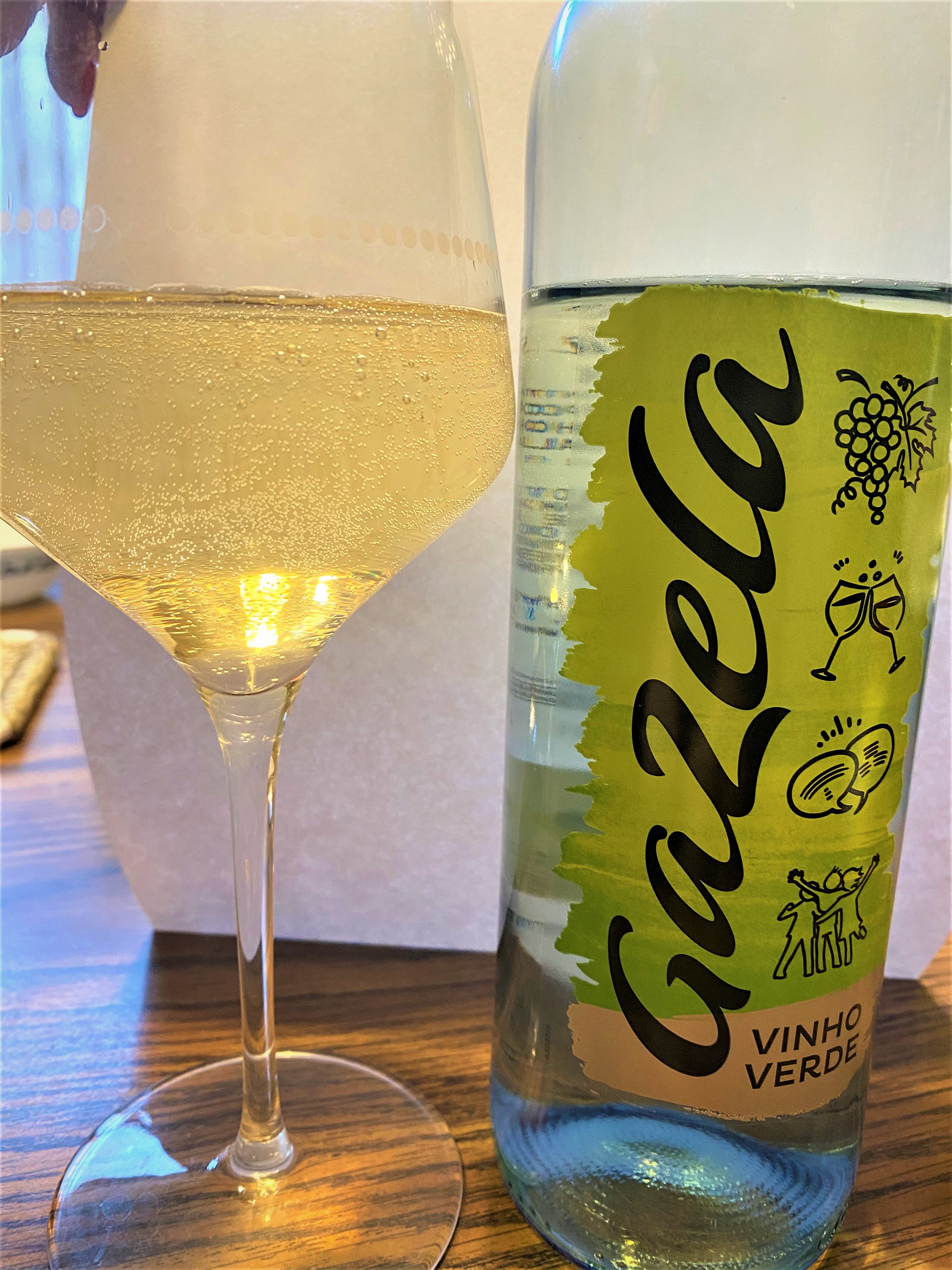
I had to try a bottle of Gazela Vinho Verde DOC Minho 2019 from Portugal and owned by Sogrape Vinhos.  Sogrape Vinhos began in the wartime environment of World War Two and was started in 1942 by a group of friends and the vision of one man to promote Portugal into an international wine making country.  Fernando van Zeller Guedes led the group and the first global brand that they developed was Mateus Rosé which is now sold in over one-hundred-twenty countries and was a total success.  They began as a negocient buying barrels of wine from small producers in the Douro and bottling in a rented facility.  Through wise investments and careful development, they now own over eight-hundred-thirty hectares of vineyards in all the key Portuguese wine regions. In 1982, they acquired Solar and Quinta de Azevedo in the Vinho Verde region and created their brand of Gazela in 1984. Vinho Verde DOC in the Minho region is famous for their straw-colored light, tangy youthful wine, in fact the wine is so youthful, that is how it got the Vinho Verde name, which means “green wine” and it is also used for the small amount of red (tinto) wine from the district as well. The wine is so “green” that there is a natural petulance or effervescent finish, not enough to be considered a sparkling wine, but distinct from a still wine.  This wine is pure Loureiro for a varietal, which is a light skinned grape famed in Minho, it tends to be blended with Albarino, which is thought to be a relative, but the jury is still out.  There are references to Loureiro going back the late 18th Century in Minho of this grape.  I tell you, that this wine was wonderful and like I say I hope it is a harbinger of an early Spring, it was delightful.  I know that my Bride has had Vinho Verde before, but she doesn’t remember it, but she was excited by this wine and she wants me to pick up a case, as soon as possible, and who am I to argue with her.    

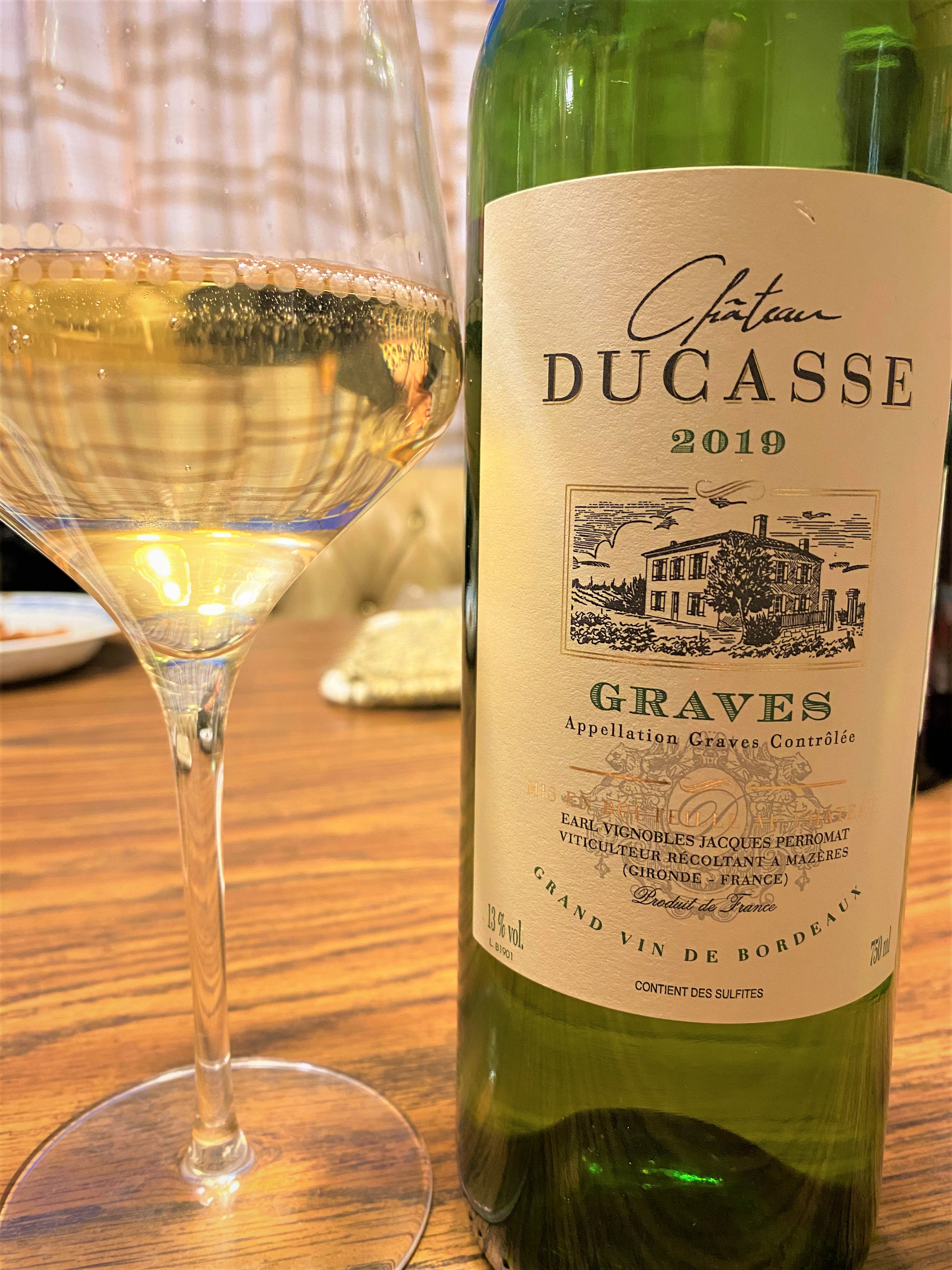
Chateau Ducasse Graves Blanc 2019 was another winner touted at the Fine Wine Source.  This wine and others are made by the fifth-generation winemaker of a family that started in 1890, starting with Roumeu-Lacoste in Haute Barsac, and they have since added more estates to their holdings.  Chateau Ducasse for the Graves Blanc has allocated thirteen hectares of clay and limestone fissured rock, which is basically how the Graves commune got its name, for the gravely soil.  The vines are forty-five years of age or more and this particular wine is a blend of sixty percent Semillon and forty percent Sauvignon Blanc; in past vintages a dash of Muscadelle was blended in the mix as well.  The juice is vinified and aged in Stainless Steel for six months and then is bottled unfiltered.  The total production is eight-thousand-five-hundred cases and sales end of the winery is handled by Kermit Lynch.  This was a beautiful example of a Graves Blanc at a reasonable price point and we had the wine over a couple of nights with different entrées and it was delightful each evening. It has been strongly suggested that I get this wine as well, all the while that I am being told that we really don’t need any wines; yes, it was that good.      

Posted in Wine | Tagged , , , , , , , , , , , , | Leave a comment

Two More Down

I have been writing mostly about the good fortune of our wines in the wine cellar, as we have survived the lockdown.  Just like we have been trying to use up the food in the freezers and the pantries after we attempted to assess what we had, we applied the same concept to the wine cellar and to the wine vault.  I am hoping that we eventually will see the inside of restaurants again, but this is all predicated on the whimsy of our harridan.  She returned from some sort of celebration in the District of Columbia and according to some sources, she didn’t need to wear a mask, just like the others in attendance.  I will be glad to report of a visit or two to a restaurant again, and pray that her largesse is maintained.  “Let them eat cake” as long as only twenty-five percent of the venue is used.  Just like we are losing restaurants in Michigan, we lost two bottles of wine that were in our cellar and now the count is up to five, which is still not bad odds, but I am sure that there are more casualties that will be reported, before all of this is over.  I don’t know where everyone lives, but here in Michigan, it is rather common to find a refrigerator and/or a chest freezer in the garage beyond what is normally found in the kitchen.  I have been trying to stock it with some bubbles and an assortment of white wines, some of questionable age and some more recent. 

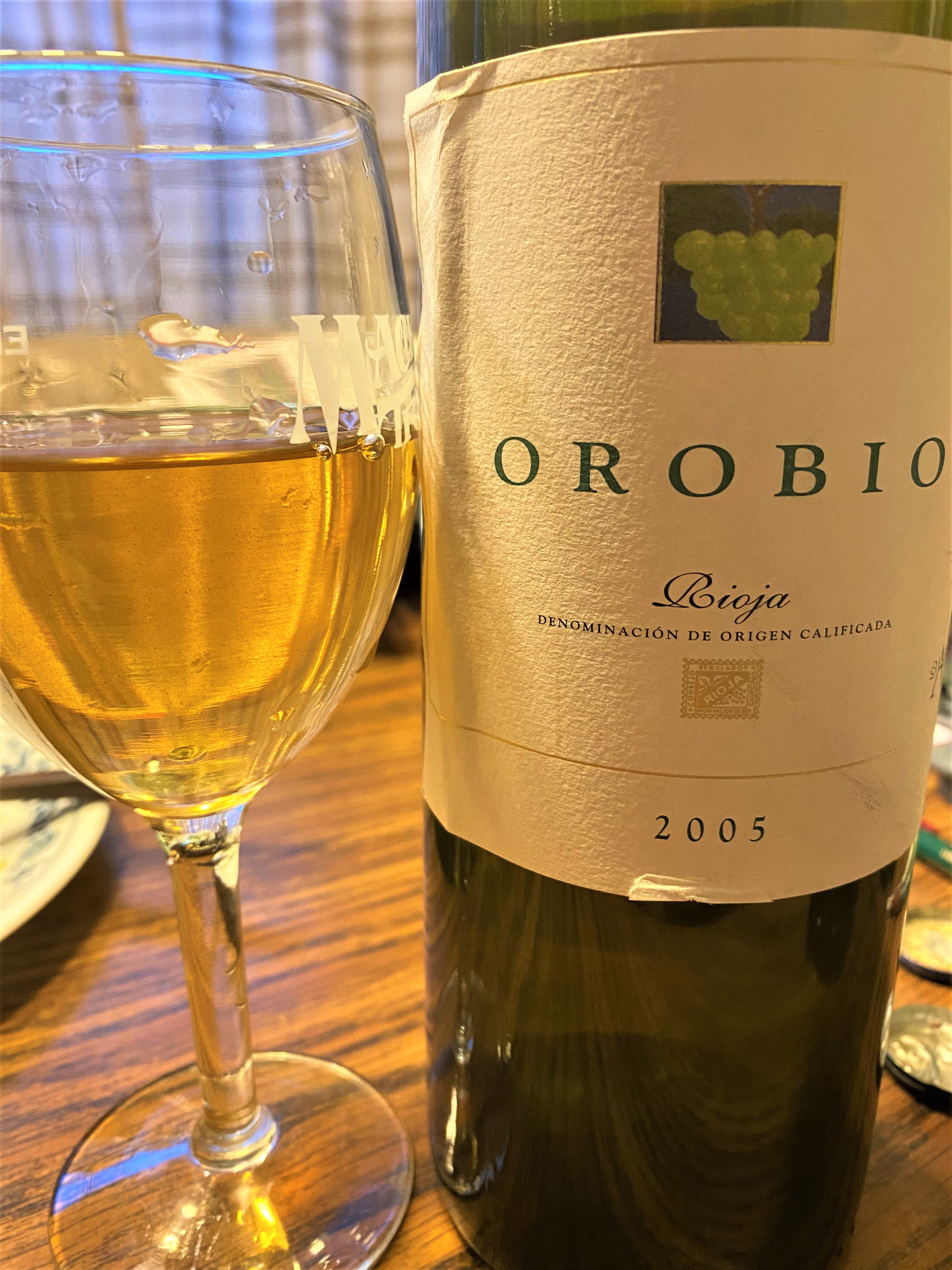
The first wine that I pulled out of the refrigerator, I gave myself maybe fifty/fifty odds that the wine would be good, but I wasn’t going to throw it away with out going through the motions.  All wines are worth a chance.  I had a bottle of wine that I did not recognize, which is not an indication of anything per se, but it was Bodegas y Vinedos Artadi Orobio Viura Rioja Blanc DOC 2005.  Bodegas Artadi is a wine estate in the Alavesa region of Rioja and their single vineyard El Pison 2004 received a perfect score from Robert Parker, but this was not that wine.  Bodegas Artadi began as a co-operative of thirteen growers in 1985.  The vineyards and winery were purchased by Juan Carlos Lopez de Lacalle in 1992, and he also owns estates in Alicante and Navarra. This wine is pure Viura the local name in Rioja for Macabeo, a very versatile grape that is found on both sides of the Pyrenees and is very popular in Spain and southern France. This grape is known for being quite impervious to oxidation, but from most reports that I have read it seems ten years is the life span and this wine was fifteen years old.  Alas, it did not make it.

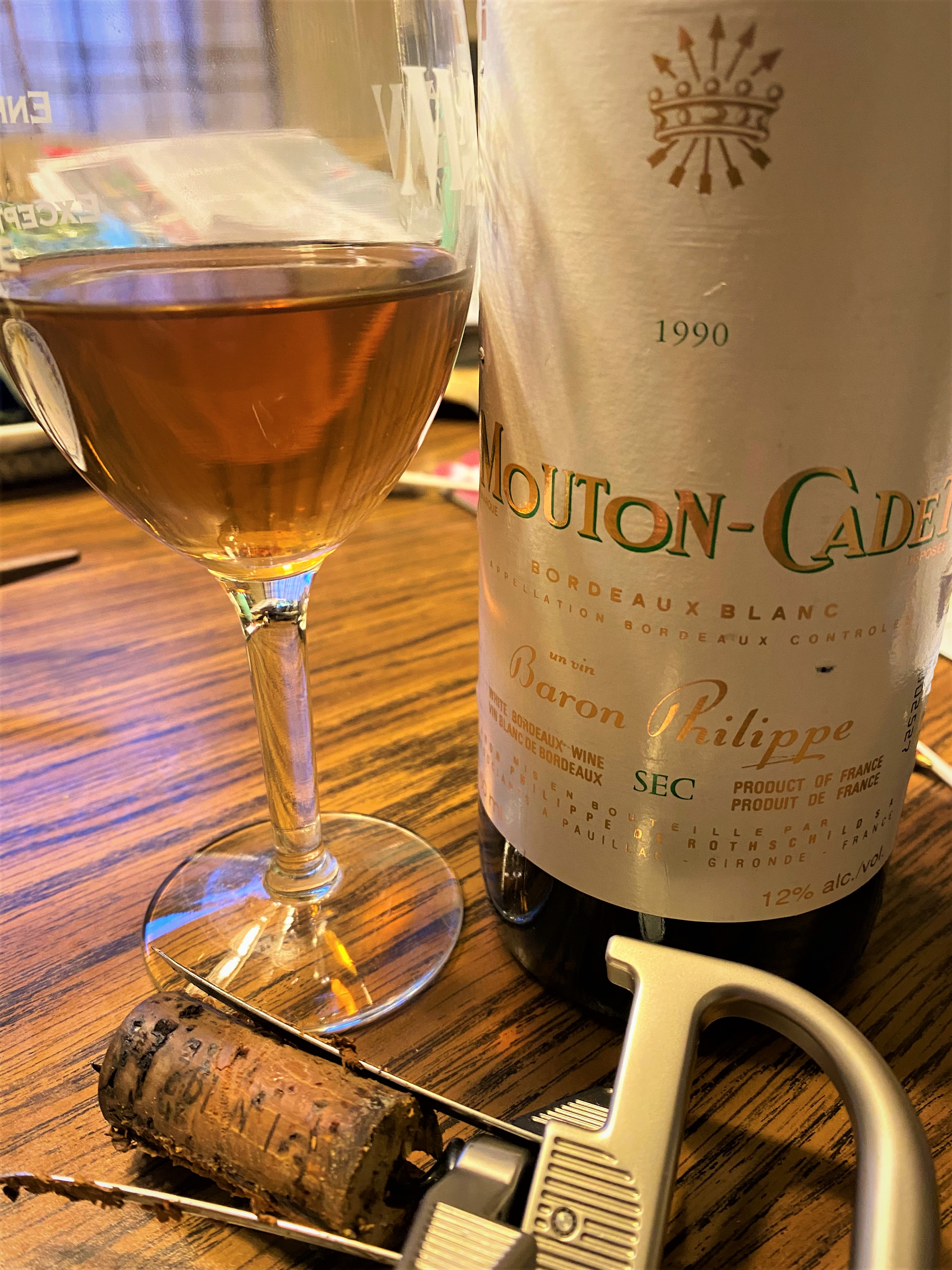
The second wine was one that I knew was just taking up space in the refrigerator and is the biggest selling Bordeaux wine in the world.  Baron Philippe de Rothschild Mouton Cadet Bordeaux Blanc 1990, and evokes Philippe when he took over control of Mouton Rothschild as he was the youngest son, a cadet, and this new wine he started in 1930.  It was originally a way to sell wine that did not meet the criteria of Mouton Rothschild and still a way to sell some wine.  It proved so successful that he eventually began buying fruit from other vineyards in Pauillac, and a few years later from across Bordeaux.  A white wine, Bordeaux Blanc, was introduced in the 1970’s and since 2004 the wine was structured to be more fruit forward with an eye towards the American Market.  The wine is a blend of Semillon, Sauvignon Blanc and Muscadelle.  I knew just by looking at the color of the wine in the bottle that this was a futile gesture on my part, but I proceeded.  When I removed the foil cap, and started to insert the corkscrew into the cork, the cork actually started to slide into the bottle; by using my Durand, I carefully caught the worm of the screw into the cork and then used the Ah So two-part steel ribbons to extricate the cork which was ready to start crumbling.  I poured some of the wine into a glass to take a photo and the nose alerted everyone in the room that this was not a wine to be even tasted and the glass and the bottle were both poured un-ceremonially down the drain.  With a wine cellar, one has to take the good along with the bad at times.

Posted in Wine | Tagged , , , , , , , , , , , , | 2 Comments

An Older and a Younger White

Way back when there were sit-down restaurants, we tended to buy wines for a later day.  I guess that later day finally arrived in the longest original fifteen days or was it a month?  Anyways, we have, just like the rest of the state and most of the country have been homebodies forever and we are waiting for parole or amnesty.  I have actually kind of tamed the inventory of wines to at least see what we have been storing, some we have lost and some have been wonderful stories of great winemaking.  There are some in the refrigerator in the garage that may or may not have been so lucky, eventually we will find out. 

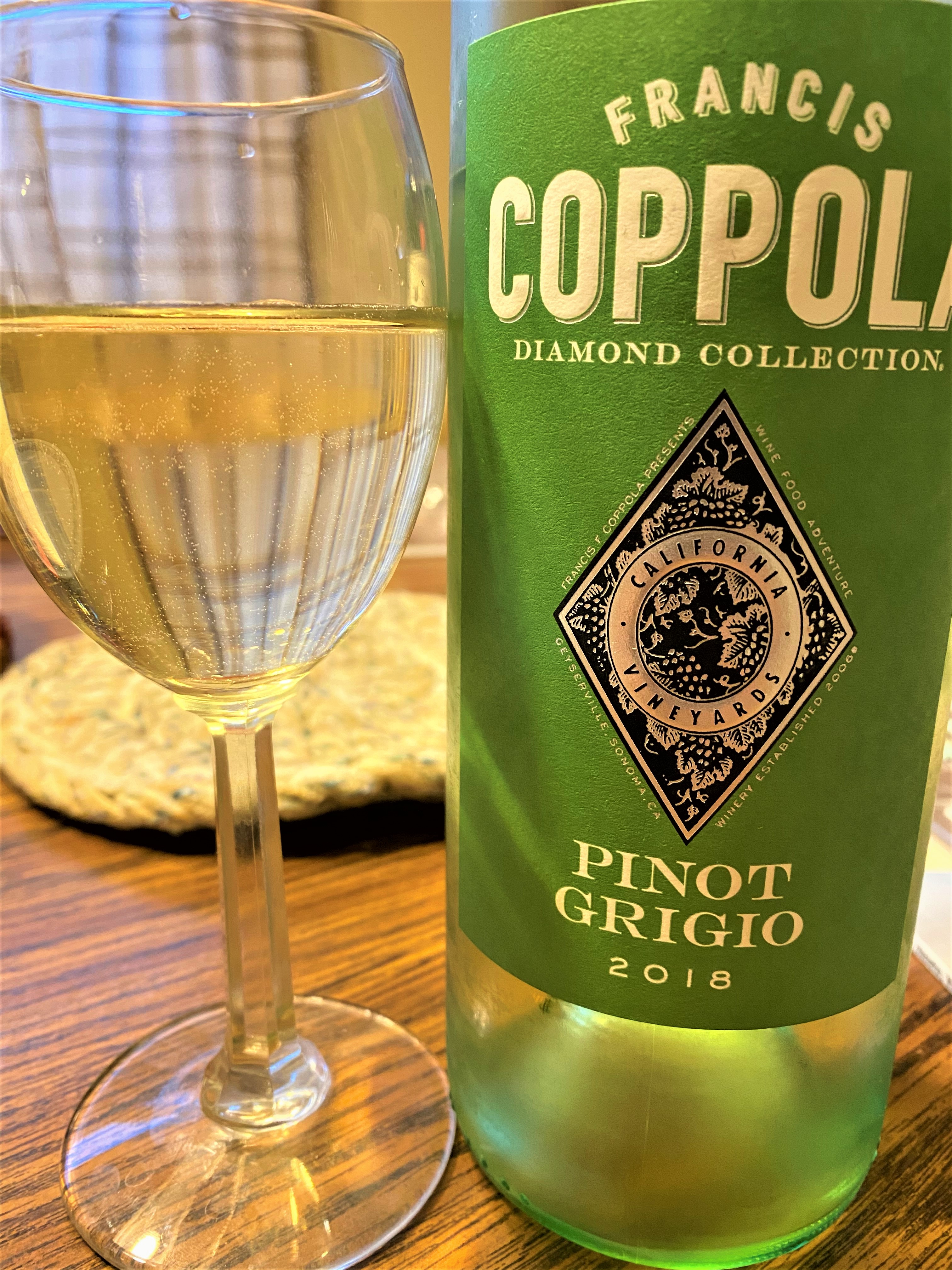
Meanwhile, there have been some newer white wines that have been mixed in with the clutter, especially by our dear shopper, who when she sees something that she thinks we would like in the popular price, she will grab a couple and trust me, I am not talking of wines in the fifty-dollar range.  She has also been partial to white wines, since we met, though she has definitely acquired a true liking and appreciation for red wines and red meats.  Though she is still a big fish and fowl fan, and I can handle most of it, though I still have a real problem with ground turkey, but that is my problem.  I also have not tried or plan on trying any of the “Soylent Green” products that have seemed to take up more real estate in chain grocery stores.  One of the more recent wines that have graced our wine vault has been Francis (Ford) Coppola Diamond Collection Emerald Label Pinot Noir California 2018.  Why his middle name has been omitted, is beyond me, though I do know that he was born in Detroit, and that his father who was with the Detroit Symphony, had his son delivered at Henry Ford Hospital, and the Ford family, even back then were major benefactors of the arts in Detroit, so the middle name is an homage from his father.  I digress as I sometimes do, but lately my Bride has had a penchant for Pinot Grigio wines, I guess because they are easy to drink and really for the most part are not fussy, a few of them are, but not really in her quick, grab and go price points.  All of the Diamond Collection, as well as most of the other affordable wines from the Francis Ford Coppola Winery or The Family Coppola are not handled out of the new complex in Sonoma, so that his classic Rubicon from the old Inglenook Estate in Napa Valley is singular and just a drop in the bucket of his annual wine production; he basically moved all of his museum pieces of cinematic lore to Sonoma as well.  We are talking about a very pleasant and easy to drink Pinot Grigio wine with a generic California appellation, though Monterey County is sited for the majority of the fruit, and there is five percent Chardonnay blended in as well.  This is a wine that is aged in Stainless Steel which keeps the fruit forward finish and is made for early consumption and not really designed for long term storage. 

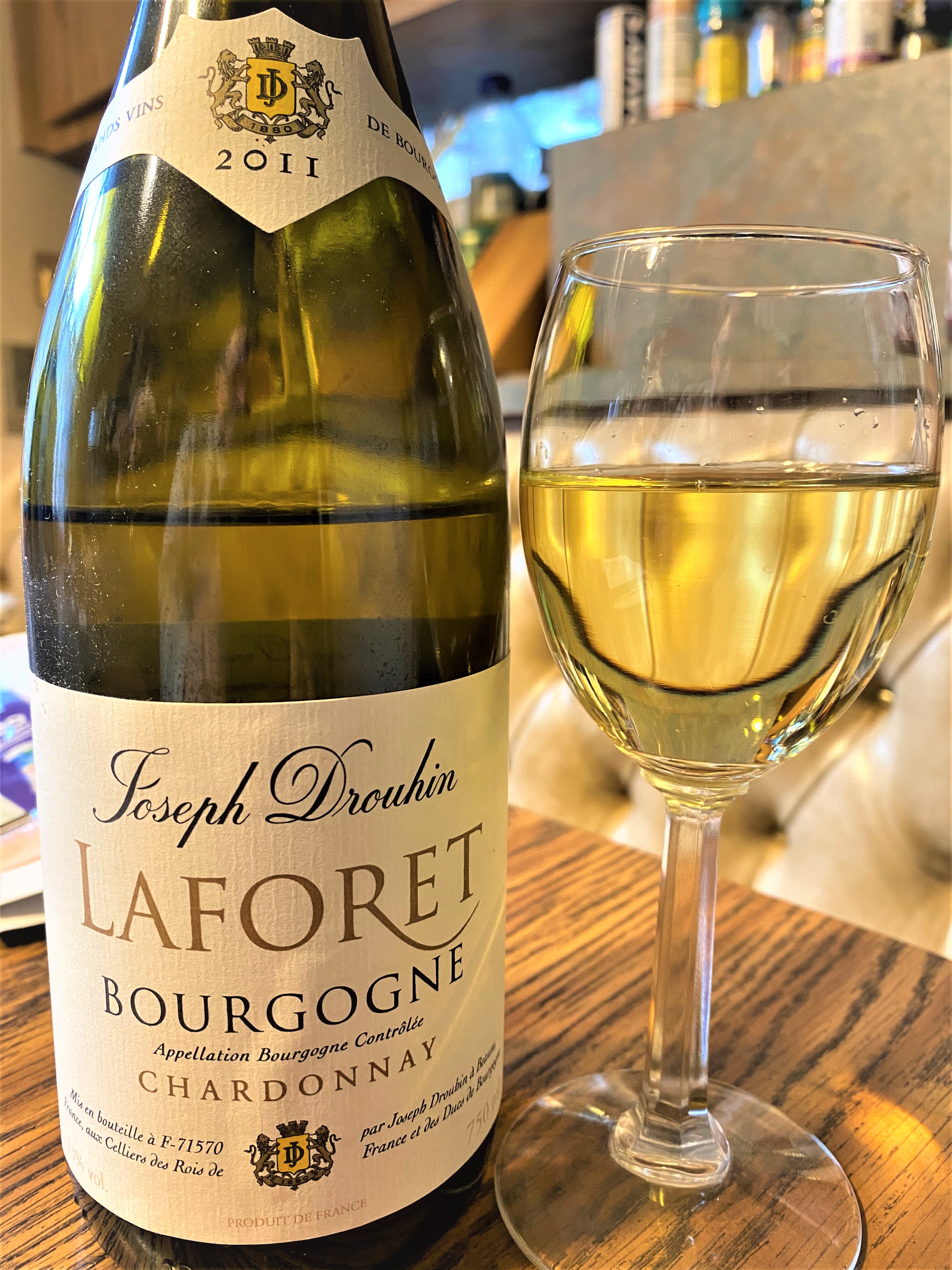
The other wine that I will mention is a Joseph Drouhin Laforet Bourgogne Chardonnay 2011.  I think we actually first had this wine in a restaurant setting, and they have added Chardonnay to the label, as it is probably easier than trying to teach the world that Bourgogne Blanc (White Burgundy) is Chardonnay. Joseph Drouhin is one of leading wine producers in Burgundy.  The company was founded in Beaune in 1880 and the realm of holdings and vineyards grew enormously in the Twentieth Century.  The firm has representation in the Cote de Nuits, the Cote de Beaune, Chablis and the Cote Chalonnaise making wines from simple varietal bottlings, village-level, grand cru and premier cru wines.  This white wine with the most common listing of Bourgogne can be made from the grapes from the three hundred or so communes in Burgundy and they can offer a similar taste style year to year because of the work of the winemaker.  The wine is aged for around seven months in either Stainless Steel or previously used oak barrels.  It is just an easy drinking wine and even as a nine-year-old this wine was still drinking quite well.  It was not fresh, but it was by no means over the hill, so we were happy.     

Posted in Wine | Tagged , , , , , , , , , | Leave a comment

A Couple of Big Reds

When I wander into my local wine shop, the Fine Wine Source, I never know what may happen.  There are times when it is a hive of activity, in which case, sometimes I decide to come back at a later time.  Other times I have been drawn into conversations with others about the nectar of the Gods, that we all thirst after.  I guess I tend to be a rather social individual, and then there are times when I am with my Bride and she gets carried away with all the fun that one should associate with wine.  To me wine is fun, and I am not one that strikes poses constantly with a wine glass, and perhaps I am just a peasant, but I find that individuals that preen and walk with a wine glass by holding the base look pretentious.  There are times for some serious wine tasting and there are times when one has to let their hair down and enjoy the moment.  Two things I have learned over the years is to eat before going to a wine shop, just like one should always eat before going grocery shopping.  The other is to drink water before going, to cleanse one mouth.  The eating part is also basic to me, because in fifty years I have never learned the fine art of wine spitting, perhaps, because most of the wines taste too good, and I am not there to drink. 

The first wine that I will discuss, I have mentioned earlier, only because after my Bride and I tasted this wine, I saw a light bulb light up over her head and she decided that it was going to be a Christmas present for me.  We were each poured a tasting of EL Ixsir Cuvee X’eme Anniversaire Red Non-Vintage using the Coravin system.  Ixsir Winery was founded in 2009 in the northern part of Lebanon in Batroun which is a coastal area.  They are a mountain winery, and one of the highest in elevation for the Northern Hemisphere.  The name Ixsir derives from the Arabic word “Iksir” the original Arabic word for “elixir.” History has recorded that man has searched for the perfect elixir for eternal youth and for love.  The winery is very progressive and has been named one of the greenest buildings in the world.  The winery owns one-hundred-twenty hectares in the Batroun with several different vineyards capitalizing on the terroir.  The winery grows Cabernet Sauvignon, Syrah, Tempranillo, Caladoc, Cinsault, Merlot, Obeidy, Viognier, Muscat, Sauvignon Blanc, Chardonnay and Semillon.  Quite impressive for a young company, as far as I am concerned.  The EL Ixsir Cuvee X’eme Anniversaire Red Non-Vintage is a special bottling of three very recent vintages of their EL, which is their top cuvee and a blend of fifty-five percent Syrah, thirty-five percent Cabernet Sauvignon and ten percent Merlot.  Each of the wines had aged for twenty-four months and then had been blended and aged in French Oak, of which half were new barrels. The concept of having the three bottles in the case was that the first bottle should be tasted in five years, and then at least ten years for the second bottle and the last should be held even longer.  As a reference point, this wine was issued 30 April 2019 and the Wine Advocate awarded it a score of 93 Points and a suggest “Drink Date” of 2022-2040.  When we tasted the wine, we were told that the 2014 vintage which was the real powerhouse of EL was leading this wine and it was big and inky and really overpowering; it was way too young and feisty to be properly enjoyed and there was real merit in cellaring this wine.  Though at this point in my life, I can honestly say that I can tell a future winner, even when it is young.  I can handicap wines, but don’t ask me to handicap horses. 

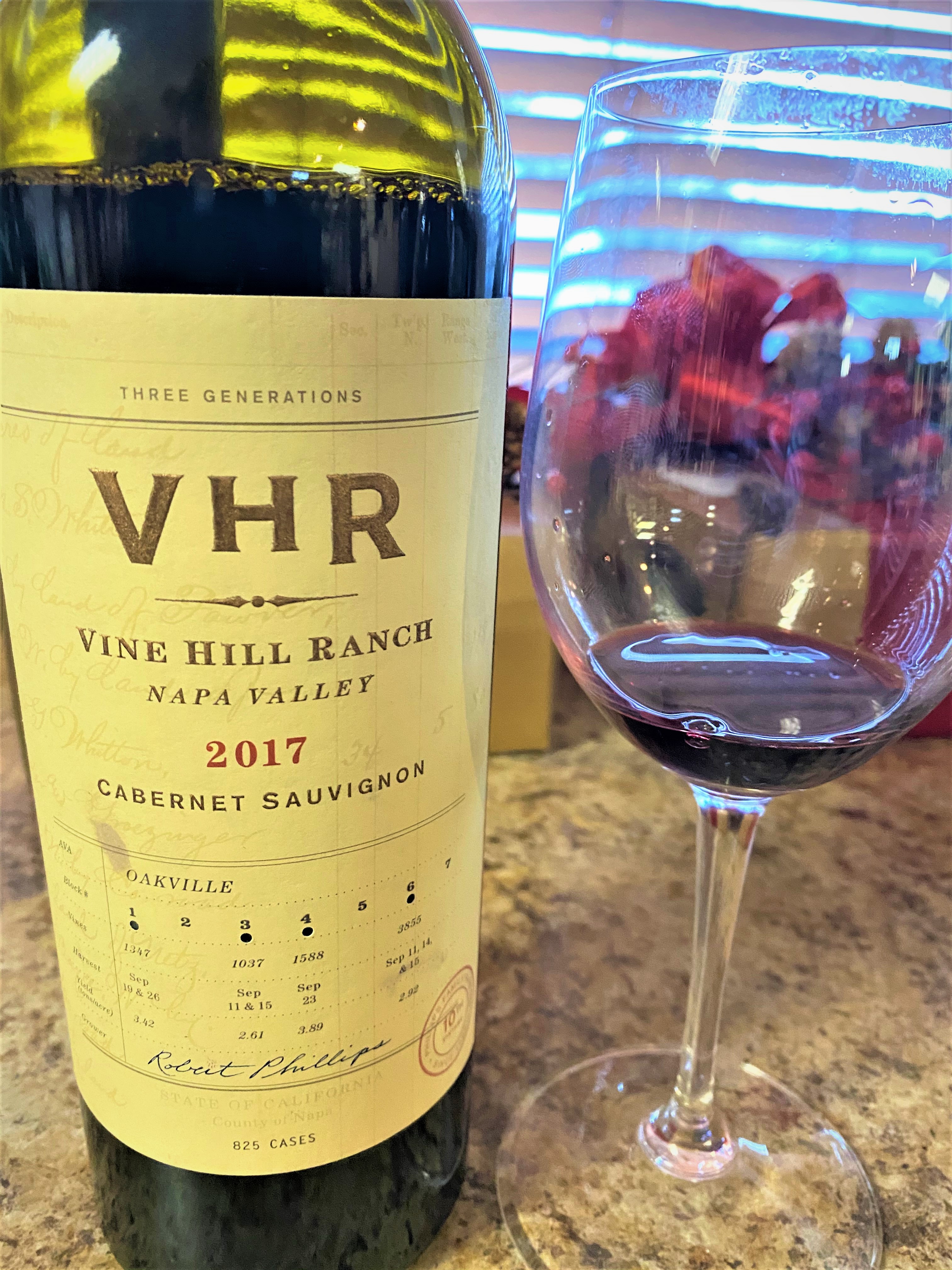
The other wine was from California, and I had never heard of it, but that is totally understandable from my point of view, because I am not a professional and wineries seem to grow exponentially.  Vine Hill Ranch VHR Cabernet Sauvignon Oakville 2017, a family-owned farming estate from the last century.  Alexandra and Robert Phillips in 1978 moved to the family ranch that their grandfather had purchased some twenty years earlier and named it Vine Hill Ranch.  They not only farmed the land, but were dedicated to land preservation and assorted community services, and the tradition continues on with the third generation.  The estate had been documented as a vineyard and other crops since 1884.  They still maintain the old ledger style of documenting the crops in their seven blocks.  This wine was made from predominately twenty-year-old vines that began with three weeks of being on the skins for fermentation and post-fermentation using wild indigenous yeast.  The juice was then aged for twenty months in French Oak, then bottled without fining or filtration.  They produced eight barrels with careful allotments to special restaurants and not a lot to spread around after. A dark garnet color wine with lilacs and violets greeting, before the meeting of all the dark fruits, spices in a totally balanced wine with great tannins and a long finish to enjoy the mix of oak and terroir.  Even fresh from a Coravin pour this wine promises to be wonderful ten to twenty years down the road, though I doubt many bottles will be around that far in the future, the wine is that delicious even now.   

Posted in Wine | Tagged , , , , , , , , , , | Leave a comment