The Night Before St. Valentine’s Day

Since St. Valentine’s Day was on a Sunday this year and we were both itching to go out somewhere.  I suggested a restaurant that we have been to several times before and my Bride decided to have our Son’s family join us, as she was sure that they were just as tired of being under lockdown mode as the rest of the state.  Logistically it was a good match for all of us, but then we had to see if they were open yet, as some restaurants have not opened with only twenty-five percent capacity.  They were open, but they would not accept reservations, it would be first come, first serve, and I could understand that, so our Son and his family had to have an “old people’s” dinner at four o’clock in the afternoon, but I didn’t want to take a chance waiting for a table, especially if people decided to lollygag.  We went to Gravity in Milford and right after we got there, the restaurant started to fill up, so others had the same idea.

The menu was a bit tighter in scope and that is also understandable, as trying to reopen a second time with rules that are in flux can be a total learning experience again, though they did have a couple of specials that sounded interesting, we went off the internet-driven menu that was being offered for the evening. Believe it or not I decided to start the meal off with a house salad, while the others went with shared plates of Calamari and Roasted Cauliflower.  My Bride had an order of Cinnamon Dusted Sea Scallops with Sweet Potato Risotto, Maple Beurre Banc with Apple, Cranberry and Walnut Chutney and I might add that I had to try some of that, and it was delicious, in fact so good, that she did not need to have anything packed up for the return trip.  I had the Lobster Pasta with Spinach, Asparagus and Roasted Tomatoes with a Sherry Cream Sauce, and there was no need for a “doggie bag” either.  After dinner, a couple of desserts were split, but my Bride after a year on her new life-style and successful diet wanted to enjoy a house-made Cream Puff with Ice Cream and Hot Fudge, a true Detroit classic and since it has been a couple of days, I can tell you that the only binging that she is doing is on some television channel called Netflix, so she is good.

I saw a wine on the wine carte that caught my attention, as I think it is the first time that I have even seen it offered anywhere.  We started the dinner off with a split of Champagne Drappier Carte D’Or NV.  Champagne Drappier is a house located in the commune of Urville in the Aube, the southernmost region of Champagne.  The house was founded in 1808 and known for its Pinot Noir dominated wines. Their cellars were built by Cistercian monks from Clairvaux Abbey and are among the oldest in Champagne as they date back to 1152.  The estate owns fifty-three hectares of vineyards and farms another fifty hectares by contract with local farmers.  This wine is a blend of eighty percent Pinot Noir, fifteen percent Chardonnay and five percent Pinot Meunier harvested from limestone soil.  The wine offered stone fruit and spice with a medium long finish. 

We were going to get another split of a different wine, but we had to settle with the smaller individual drink size bottles of Jaume Serra Cristalino Brut Traditional Method Cava NV from J. Garcia Carrion.  J. Garcia Carrion is the largest winery and the second largest fruit juice producer in Europe.  They were founded in 1890 and produce wines in ten different DO regions of Spain, and also more wines and brandies outside of the DO regions.  Their major label is Don Simon was created in 1980 and one of the first box wines in Spain, the label is now used for their Sangria, juices and soft drinks.  Jaume Serra is made in the Traditional Method that is required for Cava and is a blend of Macabeo, Parellada and Xarel-lo. There is not much to go glean from the company, but the wine was very refreshing and very tasty.    
Posted in Dining, Wine | Tagged , , , , , , , , , , , , , | Leave a comment

Two Merlot Based Bordeaux Wines

I just had the good fortune to stop by at the Fine Wine Source when they were revisiting some wines either for the wine shop or for their restaurant Vertical, once the forced mandate of 25% occupancy is raised to 50% or more, or for both.  They were asking my opinion, which made me feel wonderful, but they could easily make the decisions without my input, but as I say, I did feel honored.  The restaurant and the wine shop pride themselves on having interesting wines, as opposed to what every “safe” wine list will carry.  The “unicorn” wines are probably the easiest wines to select, because they are name driven and if one has the income or the expense account, they are extremely easy to sell.  The average person, I would venture to say, doesn’t want to many choices; the wine lover wants to find something new and interesting, to give himself a reason to buy something. After all, not every wine has to be expensive, sometimes it is the affordable ones that we miss. 

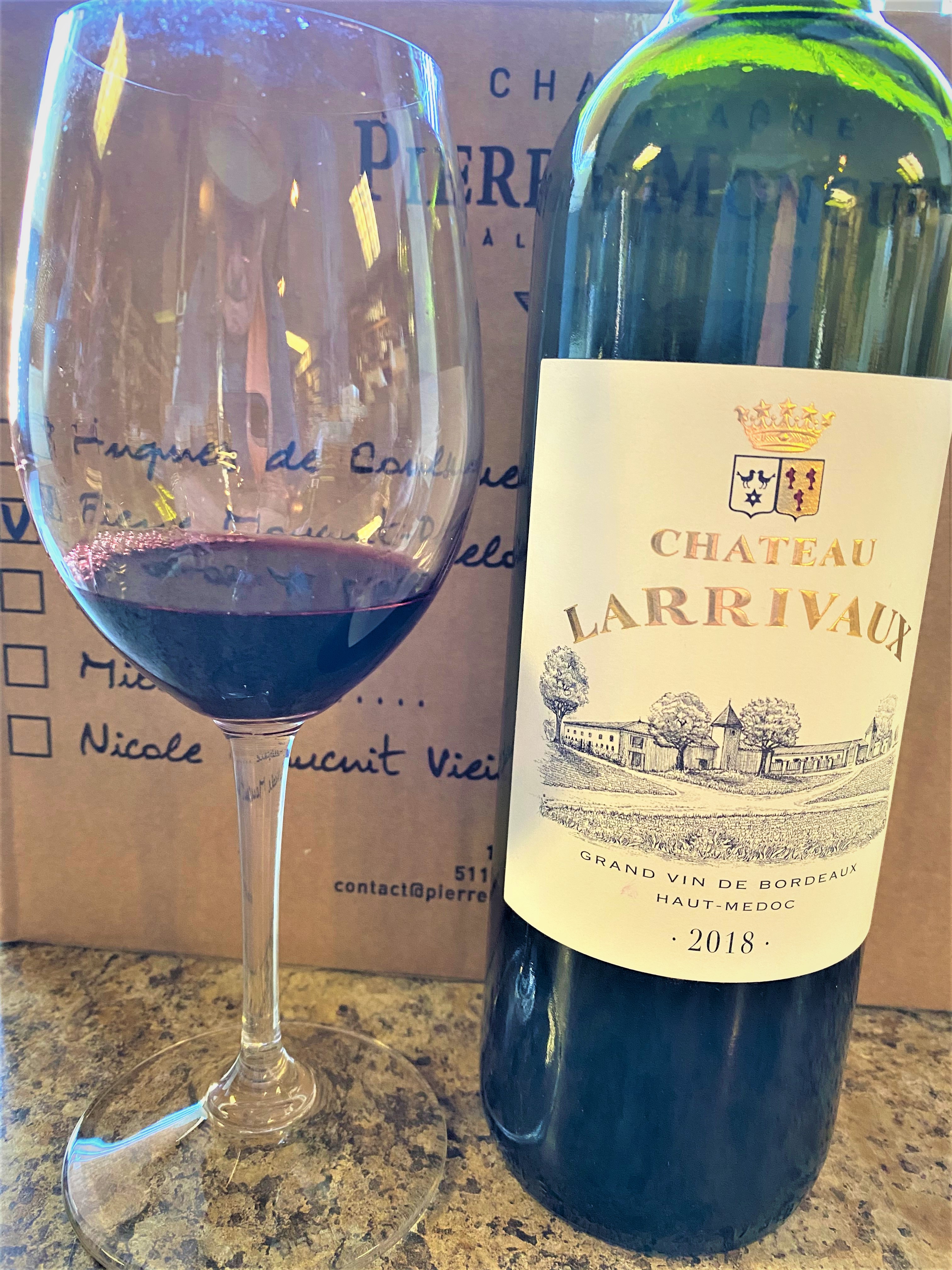
Chateau Larrivaux Haut-Medoc 2018 was one such wine.  In 1581, seventy-five hectares were virgin land and a major project was initially planned with a castle worthy of “fairy tales.” In the end two buildings were erected, and both are still standing, one became the family home and the other became a haystack and barn and later a barrel cellar in 1821, Since 1580, because the husband was an “inveterate gambler” the wife took over, and it has been this way ever since. Today there are three generations of women attending to the estate, in a continuous series of females, and they manage nine hectares of vineyards with the majority in Merlot, followed by Cabernet Sauvignon, Petit Verdot and Cabernet Franc.  The estate is in Cissac, which is part of the Haut-Medoc, and the three planted vineyards are on different grounds, two are on gravelly soil with deep clay and one is of clay and limestone.  The property is adjacent to Saint-Estephe, but because of the terroir, Merlot was the better choice to grow there and the 2018 was sixty-four percent Merlot, twenty-six percent Cabernet Sauvignon, seven percent Petit Verdot and three percent Cabernet Franc with about twelve months in oak.  It was very approachable immediately and the feminine charm of the women produced a nice silky “feminine” Haut-Medoc without overpowering tannins that need some years to mellow.  Since most wines are consumed in their youth, this wine is a winner.

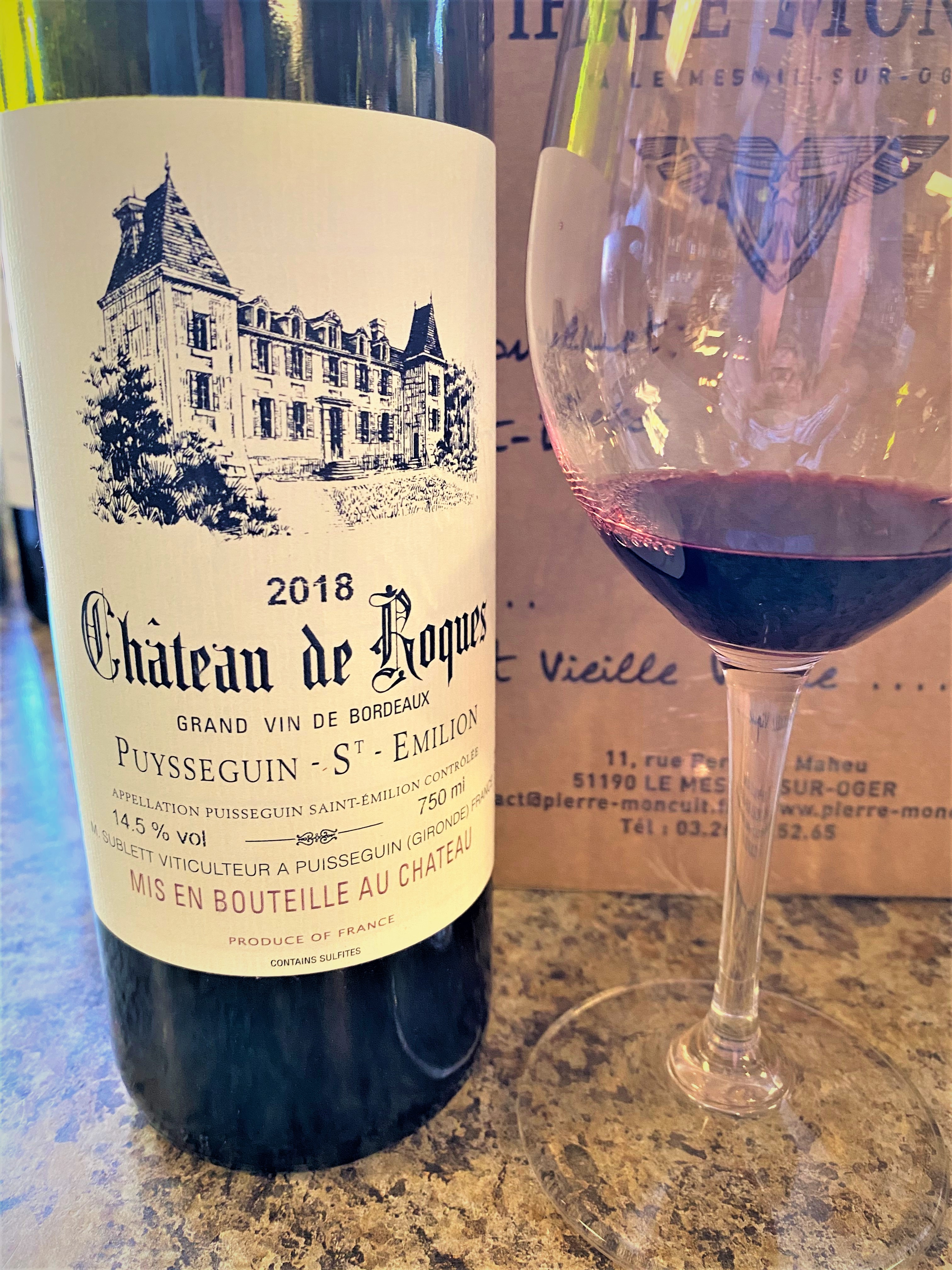
Chateau de Roques Puisseguin-Saint-Emilion 2018 was another wine that I tried at the same time. Puysseguin (Puisseguin)-Saint-Emilion is another of the satellite titles that may append Saint-Emilion to their name; the others are Saint-Georges, Montagne and Lussac.  The appellation is only allowed for red wines and can only be wines made from Merlot, Malbec, Cabernet Franc, Cabernet Sauvignon and Carmenere.  The grounds are known for their clay, limestone and gravel soils. This appellation has the strictest laws pertaining to the production of wine, in regard to density of the vines, residual sugar and final proof measurement. Chateau de Roques has been in the Sublett family for over two-hundred years, and today it is both a winery and a hotel.  The fruit is both manually and mechanically harvested from thirty-year-old vines  and in the course of wine production they use vats, barrels, Concrete and Stainless Steel.  The wine is a blend of seventy percent Merlot, twenty-five percent Cabernet Sauvignon and five percent Cabernet Franc.  The wine is bottles eighteen months after harvest and it spends at least twelve months in a mix of oak vats and oak barrels.  The wine was a nice garnet color, with floral notes and red fruits, softer tannins and a medium finish.  This wine can be enjoyed immediately.  It is always interesting to me, as an amateur to see how similar wines can be so different.     

Posted in Wine | Tagged , , , , , , , , , , | Leave a comment

National Pizza Day

I am not sure, if it was National Pizza Day or International Pizza Day, as I was getting bombarded with photos of some great pizzas on February Ninth.  Now when I was growing up, pizza was still a novelty, believe it or not.  In my old neighborhood in Detroit, we had a sit-down pizzeria, and then there was a pizza carry-out place that used to hand you the pie over the top half of a screen door, and eventually they bought all the buildings on the corner and eventually the neighborhood had another sit-down pizzeria, and there was a carryout joint across the street from my Uncle’s gas station and unfortunately only the latter is still in business.  Now Detroit is actually famed for their” Detroit Style Pizza” and I have been spoiled, and Detroit created two blockbuster international chains that are going strong.  I mention all of this, because there was a fourth pizzeria, that was not actually in the City of Detroit, but was in the suburbs, but it was across the street from “our park” and became part of the neighborhood.  The restaurant was Roman Village and they are still in existence.  I mention all of this, because my Bride had a problem with her car, we took it into the dealership and eventually found out that the catalytic converter was failing, and thankfully it was still under warranty. 

I dropped my Bride off at the dealership and told her to drive over to an Italian restaurant just down the road from where she was and that we would have a pizza, and I think that hit the right note with her.  We went to Antonio’s Piccolo Cucina Italiana and that is the name that the son of Roman Village calls his other locations, though only this place has the Piccolo, because the building is much smaller compare to the other locations, and yes, the original location is still open and extremely busy.  The business is located in a building that used to be another Italian restaurant that my Bride and I have gone to, where the waiters would sing opera in between waiting on tables.  I was a cheap date as we split an Antipasto Salad and an Antonio’s Special Pizza which was loaded, just the way I like a pizza, and we only substituted Anchovies for Italian Sausage.  By happen chance, we (I) ended up chatting with the owner’s Mother who was checking up on us, and we had a great chat about Roman Village, and later on, we found that we had been comped by her for our desserts. 

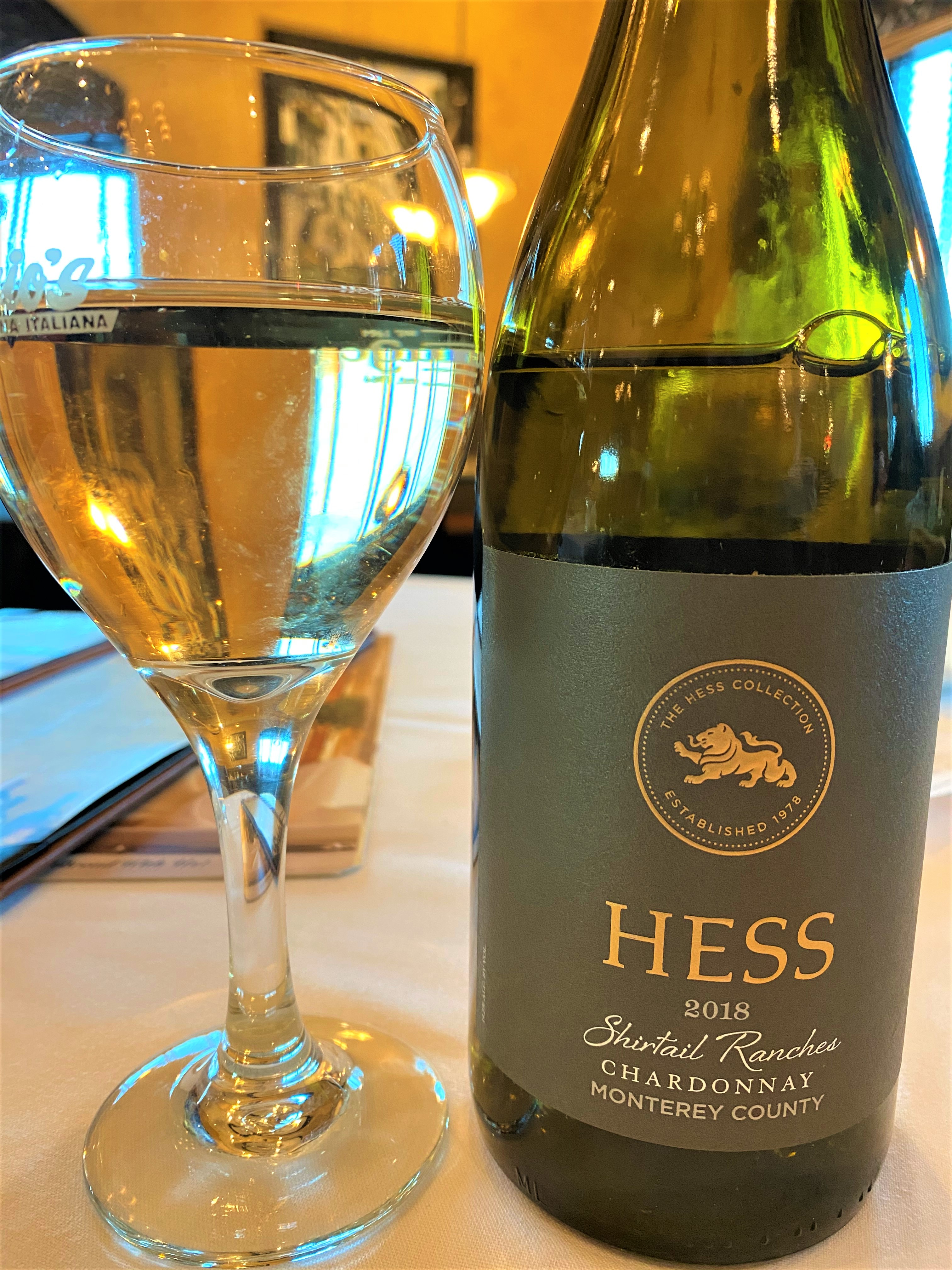
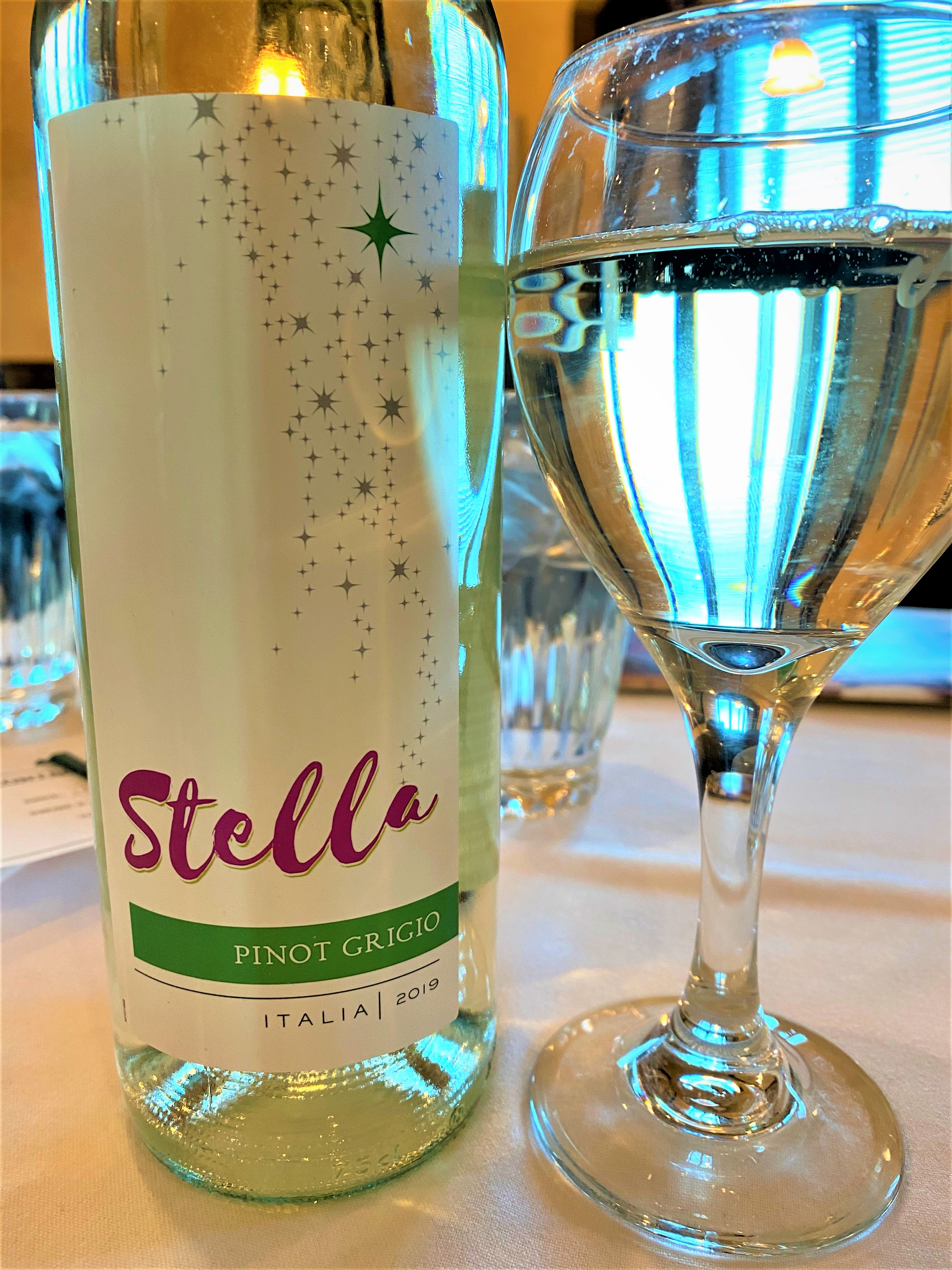
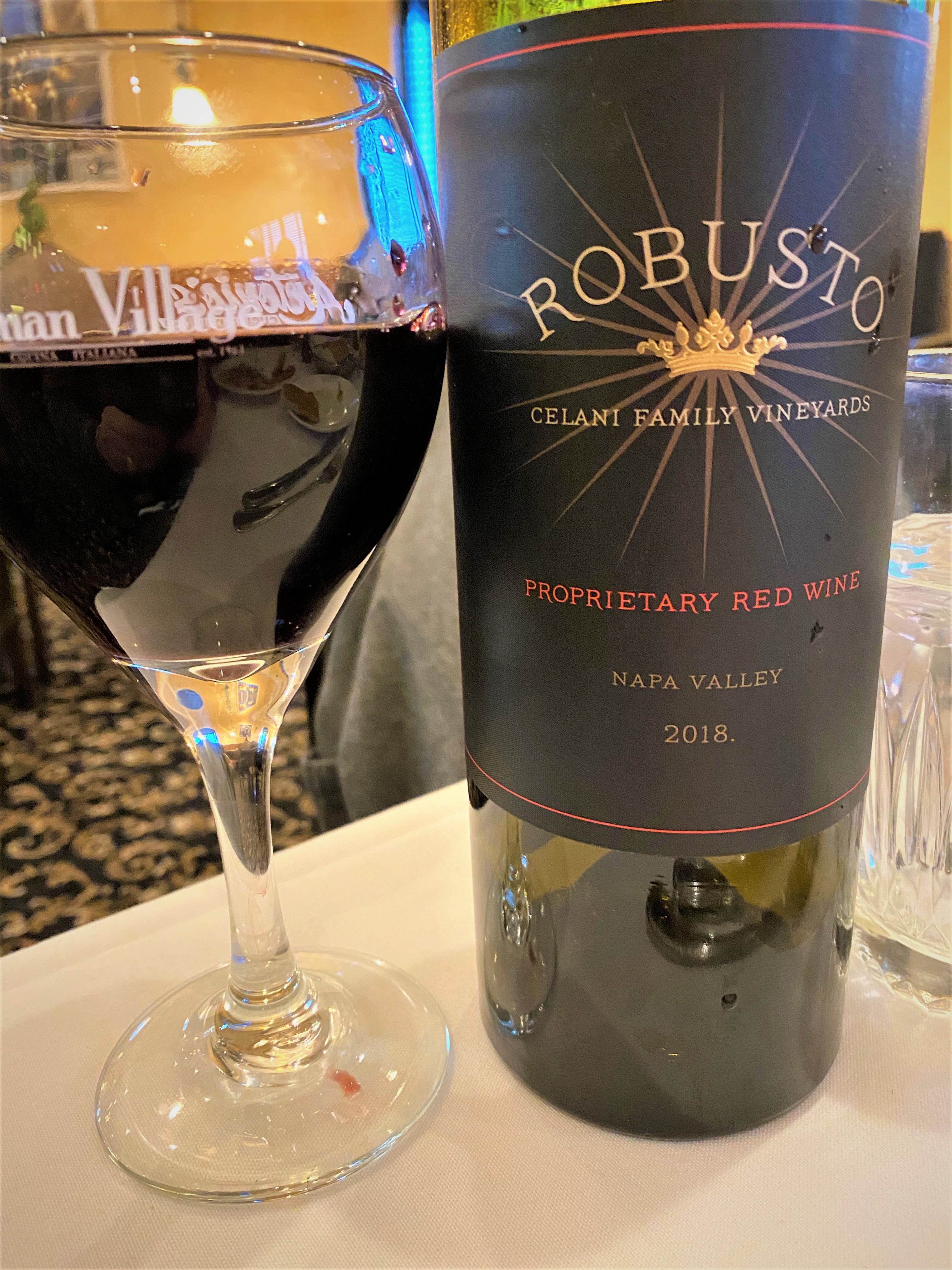
I got to the restaurant first and got us a table, at 25% occupancy, all of the booths were already occupied.  There was also a sheet of paper on the table that has been mandated, that we have to give our information, in case the restaurant that evening becomes the center of a virus outburst and I am always tempted to write down the name of the governor’s husband, because she does not use his last name and to write down the phone number of the governor’s office.  I know that I am such a bad boy, but I couldn’t wait to remove my mask and order a glass of wine.  I had a glass of The Hess Collection Winery Chardonnay Shirtail Ranches Monterey County 2018.  We have enjoyed The Hess Collection since our visit to Napa Valley years ago.  They planted in 1978 and 1982 was there first vintage and then they were noted for Chardonnay and Cabernet Sauvignon, but the land was actually recorded as being used in wine production since the late 19th Century.  The Hess Collection Winery now has wineries and facilities in Argentina and South Africa, as well as other parts of California.  The Shirtail (Creek) Ranches of Monterey County is a three-hundred-fifty-two-acre estate and all the fruit is used for a label that is used exclusively for the restaurant trade.  Only five percent of this wine undergoes malolactic fermentation in new oak, while the balance is done Sur Lie for about six months in Stainless Steel tanks.  A medium bodied wine with notes of green apples, I found this wine to be a bit sweeter than I had anticipated, but it probably works for their target market.  My Bride tried a taste of my wine and wanted something else, so she ended up with Stella Pinot Grigio Italia 2019, though the website says that this wine is made in Sicily.  Stella Wines is a producer aiming for quantity and this particular wine is offered in traditional bottles, magnums and three-liter boxes.  I do not think that I will do much of a stretch to opine that this was made in Stainless Steel tanks.  For what it was, the wine was definitely easy drinking and crisp and it tasted like Pinot Grigio.  We ordered a couple of glasses of Celani Family Vineyards Robusto Proprietary Red Wine Napa Valley 2018 to go with the pizza.  We have gone to Celani Family Vineyards wine tastings and we have some wines resting in our cellar from those events.  Tom Celani is lauded in the Detroit area for his largesse for charitable organizations that he helps in a grand manner.  He and his father ended up creating one of the largest Miller distribution companies in the United States along with other beers and wines.  Tom Celani fell in love with wines, first as a drinker and a collector and finally acquiring a Tuscan-style estate with seventeen acres of grapes and one-hundred-twenty olive trees in the foot hills of the Vaca Mountain range in Napa Valley.  As the proprietor of the Celani Family Vineyards he has chosen to bottle wine without costs becoming a consideration, to him wine is about quality and not quantity.  This is truly a Proprietary Red Blend, as there is no information even on the trade notes, but the winery grows Cabernet Sauvignon, Merlot and Cabernet Franc and they are partial to new French Oak.  This wine has been made to be enjoyed young and it truly is, with a fruit forward taste, but not a jammy Napa Cab, and softer tannins.  We were literally chewing this wine to get all the flavor and the finish was excellent, the perfect wine with our pizza.

Posted in Dining, Wine | Tagged , , , , , , , , , , , , , , | Leave a comment

One from Montagne and One from Saint-Georges

My ears always perk up when I hear Saint-Emilion, especially when I am in a wine shop like the Fine Wine Source.  I really fell in love with the wines from Saint-Emilion during my high school years, because they were such a bargain compared to the Medoc and its Communes.  They were also easier to drink at a younger age, because they were so silky.  When I was young and the world was not “politically correct,” Saint-Emilion wines were referred to as feminine, because they were supple and enticing.  Actually, I think that those were technical terms about wines, when I was learning about wines.   The appellation requires that Saint-Emilion wines be red, white wines from this region are covered at Bordeaux Blanc.  The wines are made predominately from Merlot and Cabernet Franc, though Cabernet Sauvignon, Carmenere, Petit Verdot and Malbec are also permitted. Saint-Emilion also has four satellite regions that are allowed to append their name to Saint Emilion; Lussac, Saint-Georges, Puisseguin and Montagne.   Montagne is the largest satellite and Saint-Georges is the smallest, and a quirk in the appellation laws allows a winery in Saint-Georges-Saint-Emilion to use Montagne-Saint-Emilion.

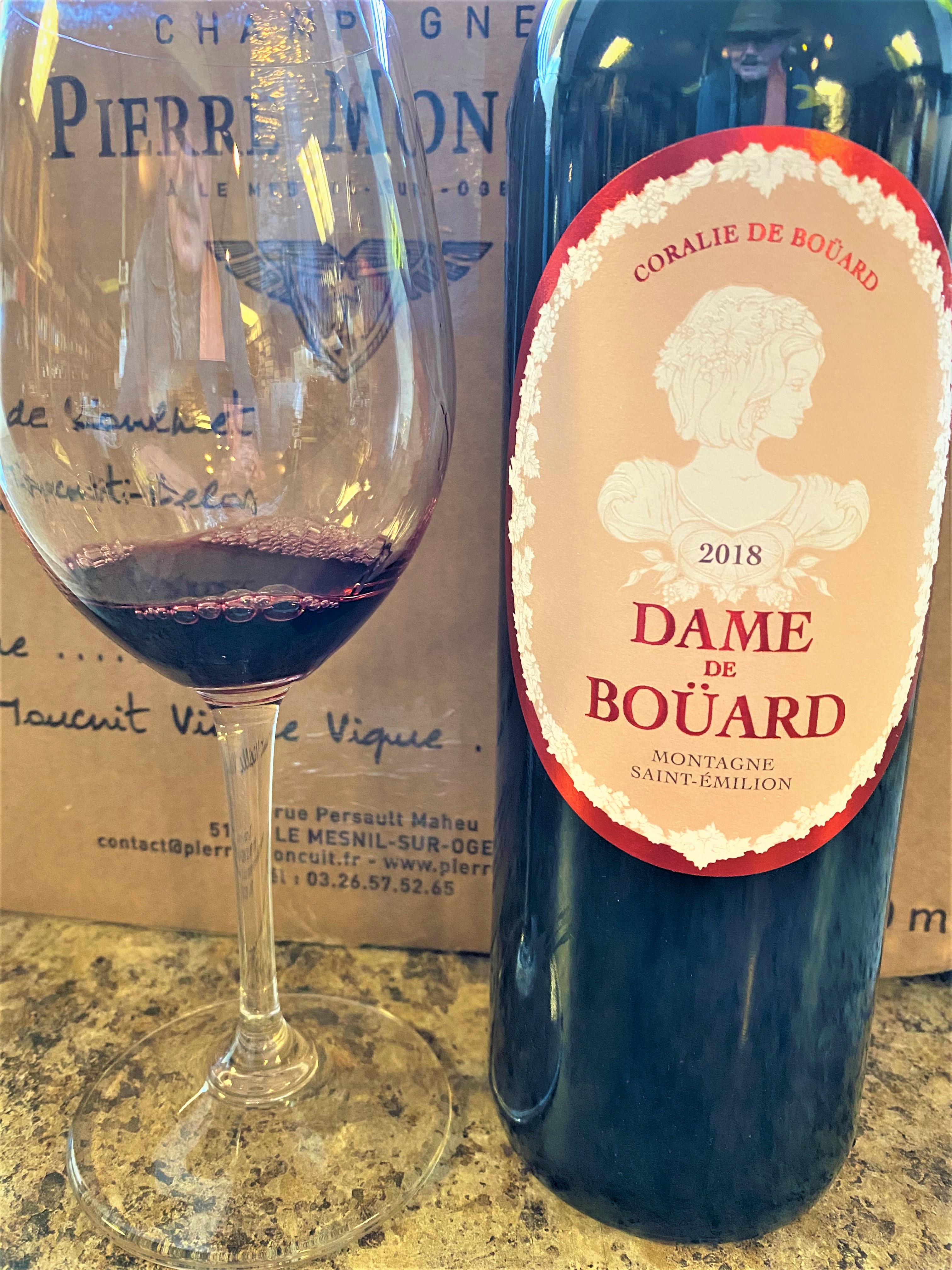
Chateau Clos de Bouard “Dame de Bouard” Montagne-Saint-Emilion 2018 was a charming wine.  Clos de Bouard is the new project for Coralie de Bouard along with her husband Loic Maillet.  Her husband is a negociant at LA Vintage, while she owns another property La Fleur de Bouard in Lalande de Pomerol and her father is Hubert de Bouard of Chateau Angelus.  Clos de Bouard was known prior as Tour Musset and was purchased in 2016.  “Dame de Bouard” is the second label of the winery.  The estate is thirty hectares of clay and limestone soil with a southern exposure.  The average age of the vines are forty years of age, but some are estimated to be over one-hundred years or older.  The fruit is hand harvest, with a maceration period of three to five weeks.  The fruit from the individual plots are vinified separately until the time of blending.  The wine is aged from ten to fourteen months, with thirty percent new barrels.  This vintage is a blend of sixty percent Merlot, thirty percent Cabernet Franc and ten percent Cabernet Sauvignon.  I have read from a couple of sources that this wine should be cellared for a couple of years, and I can appreciate that as I thought that it was quite fruit forward and young.  Ripe fruit and sweet spices with soft tannins was my thoughts on drinking this wine young, and I think that it will mellow and mature into something much more elegant in a couple of years and since it is reasonably priced, I think it is a safe bet

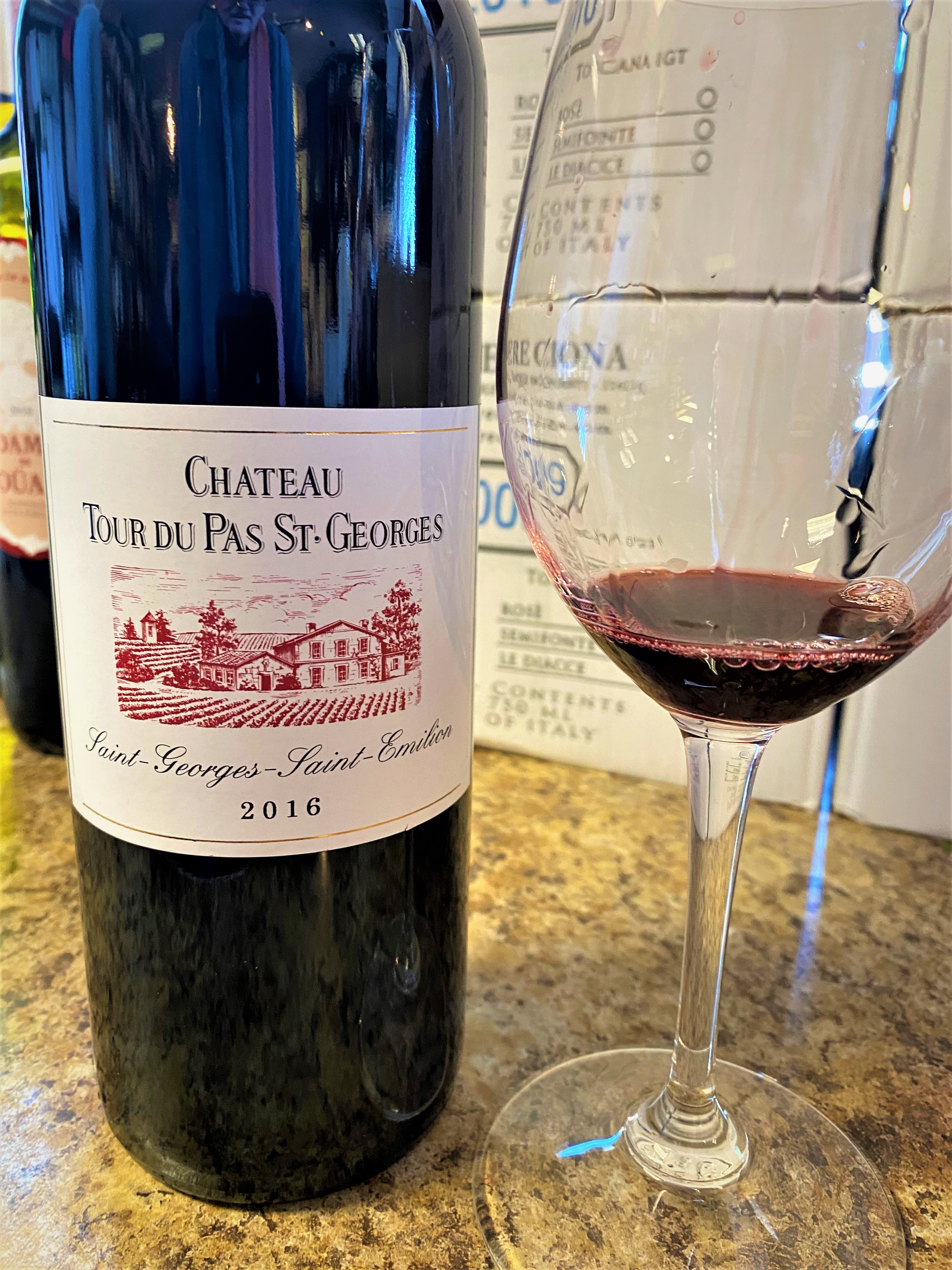
Chateau Tour du Pas Saint-Georges-Saint-Emilion 2010 and is owned by Delbeck Vignobles et Developpements.  This wine is being produced by Pascal Delbeck who for twenty years was at Chateau Ausone.  The property is fourteen hectares of clay and limestone slopes with a southern exposure.  The wine is a blend of sixty percent Merlot, thirty-five percent Cabernet Franc and five percent Cabernet Sauvignon with an average of twenty-five-year-old vines.  The fruit is hand harvested, with maceration done in concrete and inox vats.  The juice is then matured for fifteen months in French oak, of which thirty percent is new.  The wine was a nice deep color with offerings of dark fruit and spice, mellow tannins and a nice lingering finish of terroir.  A few years ago, I had the good fortune to have had the 2010 vintage and it had mellowed and aged very well, and I believe that this wine will best served with a couple of years in the cellar as well.

Posted in Wine | Tagged , , , , , , , , , | Leave a comment

A White and a Red from Bordeaux

When I am my local wine shop, the Fine Wine Source, I may get a chance to taste several wines.  It may appear that they monopolize my writings at times, but it is because I taste whatever wines that they think I may like, or that my Bride may like, plus we also get a chance to talk wine with out it always being dollars and cents.  Wine is a product that is retailed, and unless you are buying wine from a governmental agency, that product should be romanced, just like a man’s suit.  It is so boring to buy wine in a grocery store or a convenience store or even nowadays at a gas station.  I want to discuss the wine and get some background and tasting is a real bonus.  I also try not to write about more then two wines at a time, as I am not writing a thesis. This is my fun and hopefully I can pass some useful information about a wine that you might encounter, when I am not discussing some dusty old bottle from the cellar.

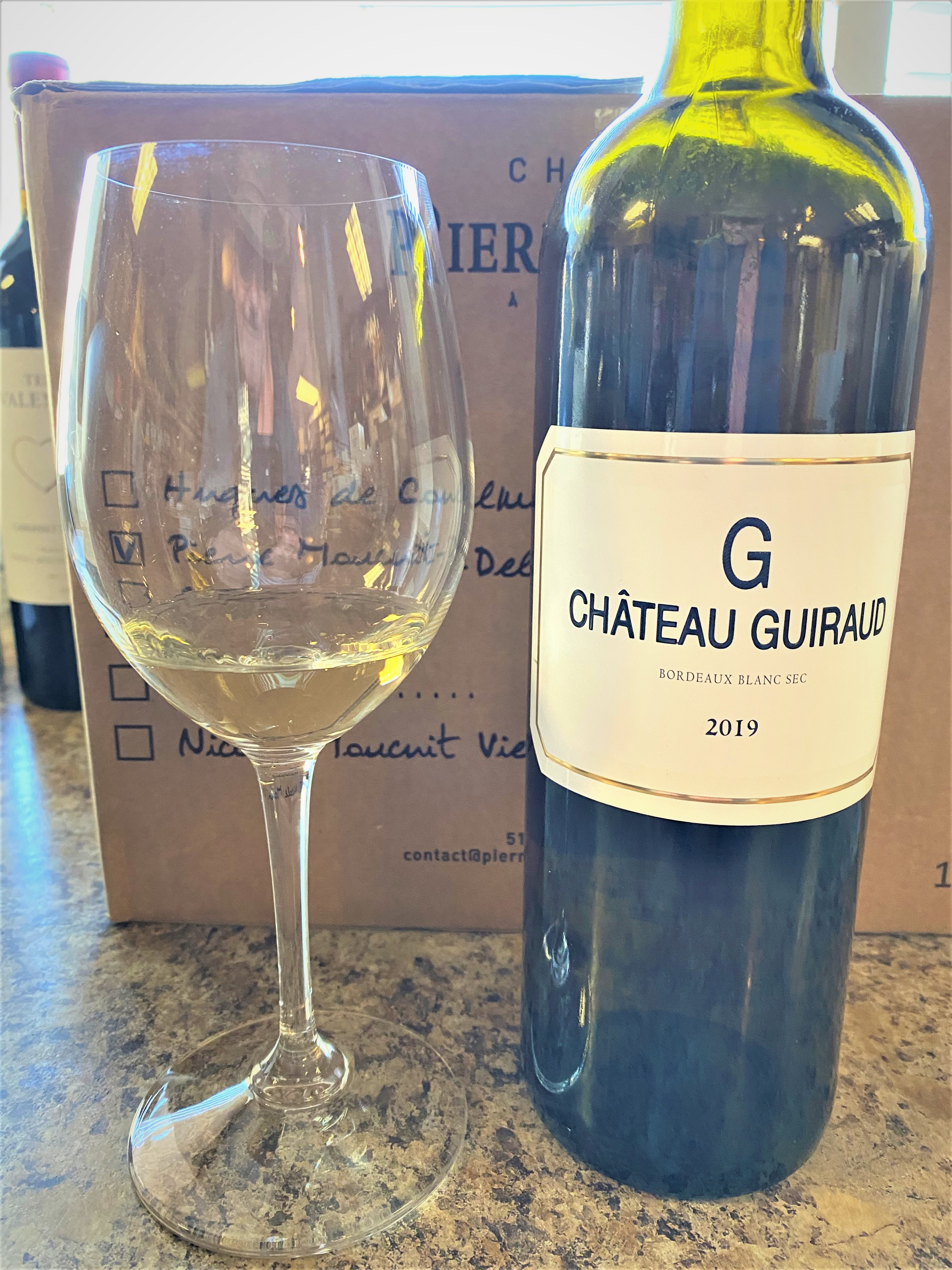
They wanted me to try Le G de Chateau Guiraud Bordeaux Blanc 2019 and I felt like a snail or a slowpoke, because we haven’t even cracked into the six pack of the 2018 and it was as delicious as I can remember the ’18 being.  Chateau Guiraud is classified as a Premier Cru in the 1855 Classification of Sauternes and Barsac.  It was originally known as the Noble House of Bayle, but it was bought by Pierre Guiraud in 1766 and passed through many generations of the family until it was bought by a group of French winemakers in 2006.  The Chateau has two-hundred-ten-acres, of which the majority of the land is planted with Semillon and the balance is Sauvignon Blanc.  Along with the famed Chateau Guiraud, their second wine label is Petit Guiraud which is made from younger vines.  They also produce Le Dauphine de Guiraud (Sauternes) and Chateau Guiraud Pavillon Rouge (Bordeaux).   Then there is Le G de Chateau Guiraud their Bordeaux Blanc Sec or Dry White Bordeaux wine. While most Bordeaux Blanc Sec wines are predominately Sauvignon Blanc, Le G de Chateau Guiraud is fifty/fifty.   The fruit is manually harvested using small baskets and fermentation is for about three weeks.  Eighty percent of the wine is aged in the barrels from the last vintage of Chateau Guiraud and twenty percent is done in Stainless Steel. The average aging in the barrels is seven months with regular stirring of the lees.  This is a very lush and full-bodied white wine with a delicate gold tinge, a very refreshing wine that leaves one chewing the wine to appreciate the suppleness of the fruit and the terroir that lingers and beckons for another taste.  The good news is that we can get more, when we need some and the vintages have been great.

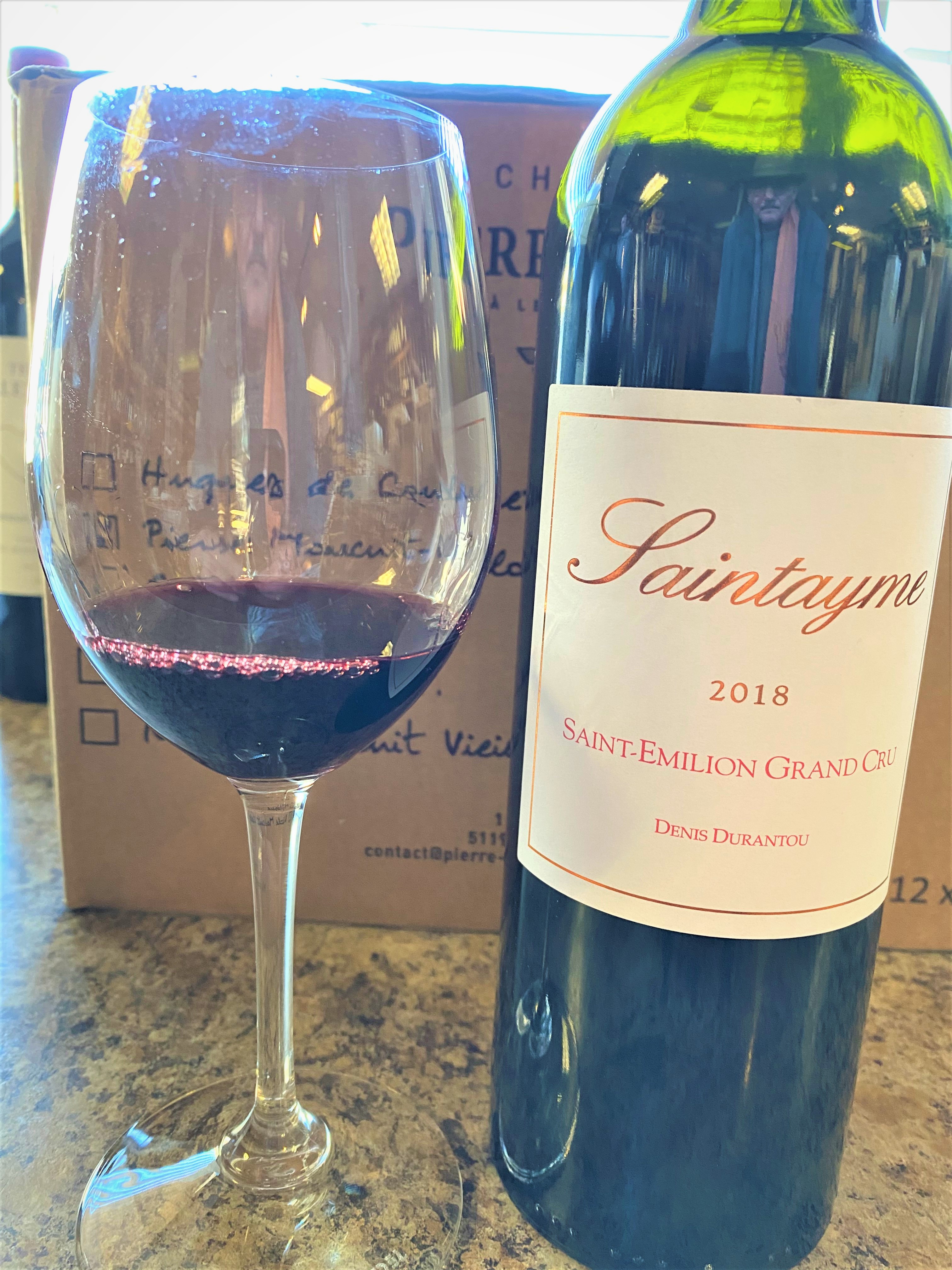
Saintayme Saint-Emilion Grand Cru 2018 by Denis Durantou was a great wine to begin with.  The sad news is that Denis Durantou passed away in May at the young age of 62 and he was the owner and winemaker at Chateau L’Eglise Clinet, La Petite Eglise Cruzelles, Montlandrie, La Chenade and Saintayme.  For a Saint-Emilion Grand Cru this is a very reasonable priced wine and the wine comes from a nine-hectare parcel of thirty-five-year-old Merlot vines.  This wine is pure Merlot and probably aged for nine to ten months in oak, of which thirty percent is new.  The tannins were a bit strong, but with the black fruit and some red fruit already blending, especially with a soft red fruit nose, it was very easy to drink and I think that it would be perfect now or even ten years from now, especially since I am known to forget about wines and let them mellow.  I really can’t think of a better way to spend an hour or so, then with tasting some wines.

Posted in Wine | Tagged , , , , , , , , | Leave a comment

Dining Indoors Again

We waited a couple of days, just to make sure that we could really dine indoors at a restaurant.  It is amazing that California, Illinois, New York and Michigan almost announced that dining indoors was legal at the same time.  It was no longer life threatening for me to have dinner with my Bride or to have a meal with friends.  It is a miracle.  Saints be praised.   Of course, seating capacity at least here in Michigan is down to 25%, because God forbid a small business can still try to make a profit.  I guess they were having problems explaining the science that food from a food court in a major attended box store or mall was safe to consume, but that food from a small meticulously clean small restaurant was not.  I guess future scientists and scholars will have to explain that.  Since, we now have less people working, it is safer to open up the restaurants, and for us, it has been almost three months since the last lockdown.  “Freedom’s just another word for nothing left to lose.”

We went out to celebrate at one of our favorite local independent restaurants that has been basically open about the same time that we got married and bought our house.  We went to Rocky’s of Northville, that was originally “Northville Charley’s” under the guidance of the Corporate Executive Chef of the C.A. Muer Restaurant Corporation and there are still some under that umbrella, even after the sad and mysterious death at sea of “Chuck” Muer.  Charles “Rocky” Rachwitz was that chef and he, as an esteemed protegee to Mr. Muer, helped “Rocky” get his restaurant.   The restaurant still looks and feels like it should be on a lake in Northern Michigan, and the food after twenty-five some-odd years is still great.  I am also proud to say that my Bride even tried something new for her first night out in ages.  We both opted to have the spectacular Black Bean Soup, instead of a salad before dinner, and a bowl of it with the house made bread is really a meal of its own.  My Bride had the Chipotle Honey Glazed Salmon with Pineapple Salsa, Basmati Rice and Asparagus; and when she looked at the size of her entrée, she requested a carry-out box immediately, as the portion was huge.  I should have done the same, though my entrée did not look as intimidating at first, and I did finish it, because it would have been a shame, but I could have happily survived with half of it, for another meal.  I had the Pesto Pan Roast of Sea Scallops, Gulf Shrimp, Artichokes, Sundried Tomatoes in a Creamy Pesto Sauce on Fettucine.  We were both in heaven, and we really didn’t realize how much we missed dining out, even with my Bride being excellent in the kitchen.

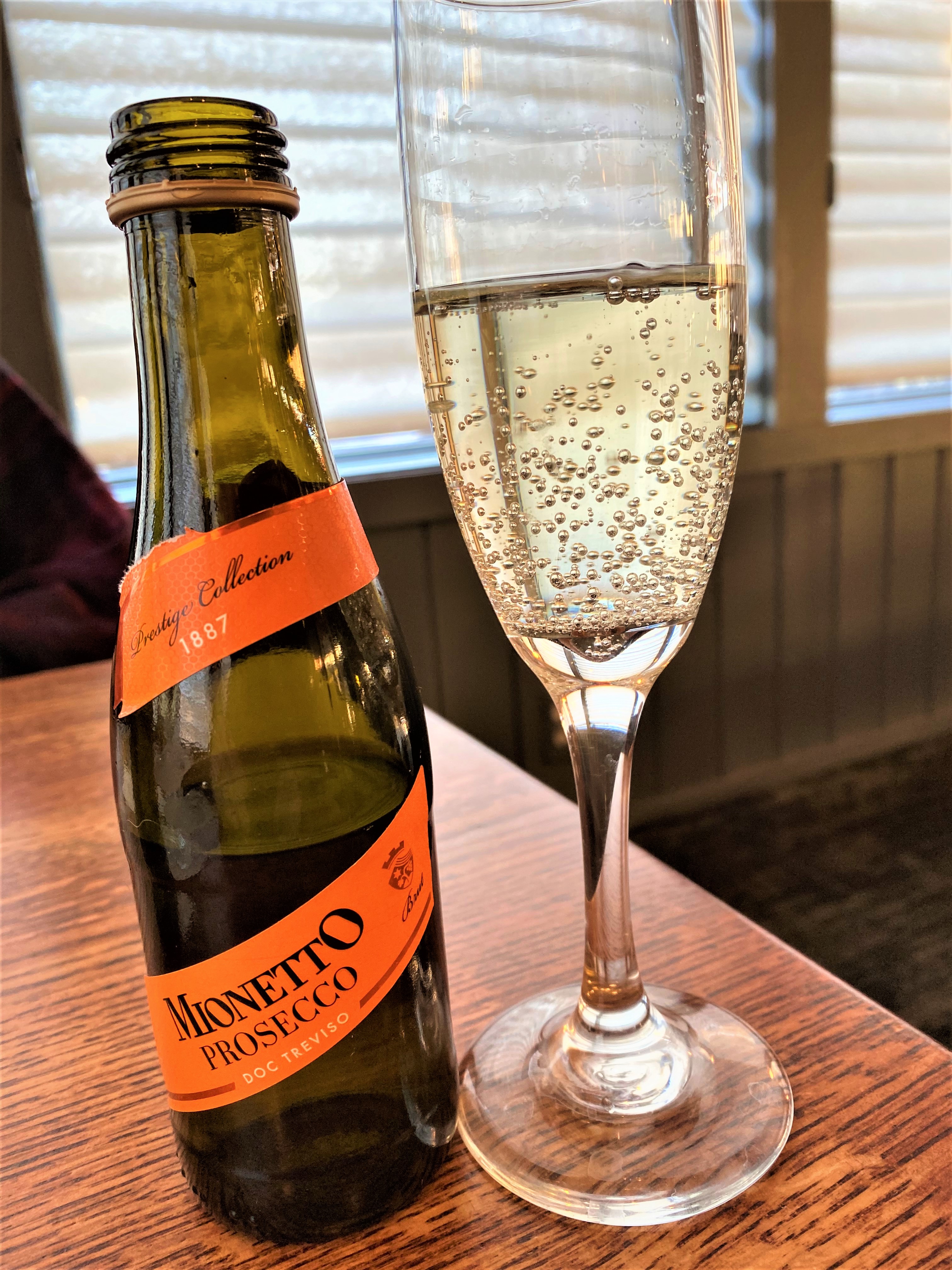
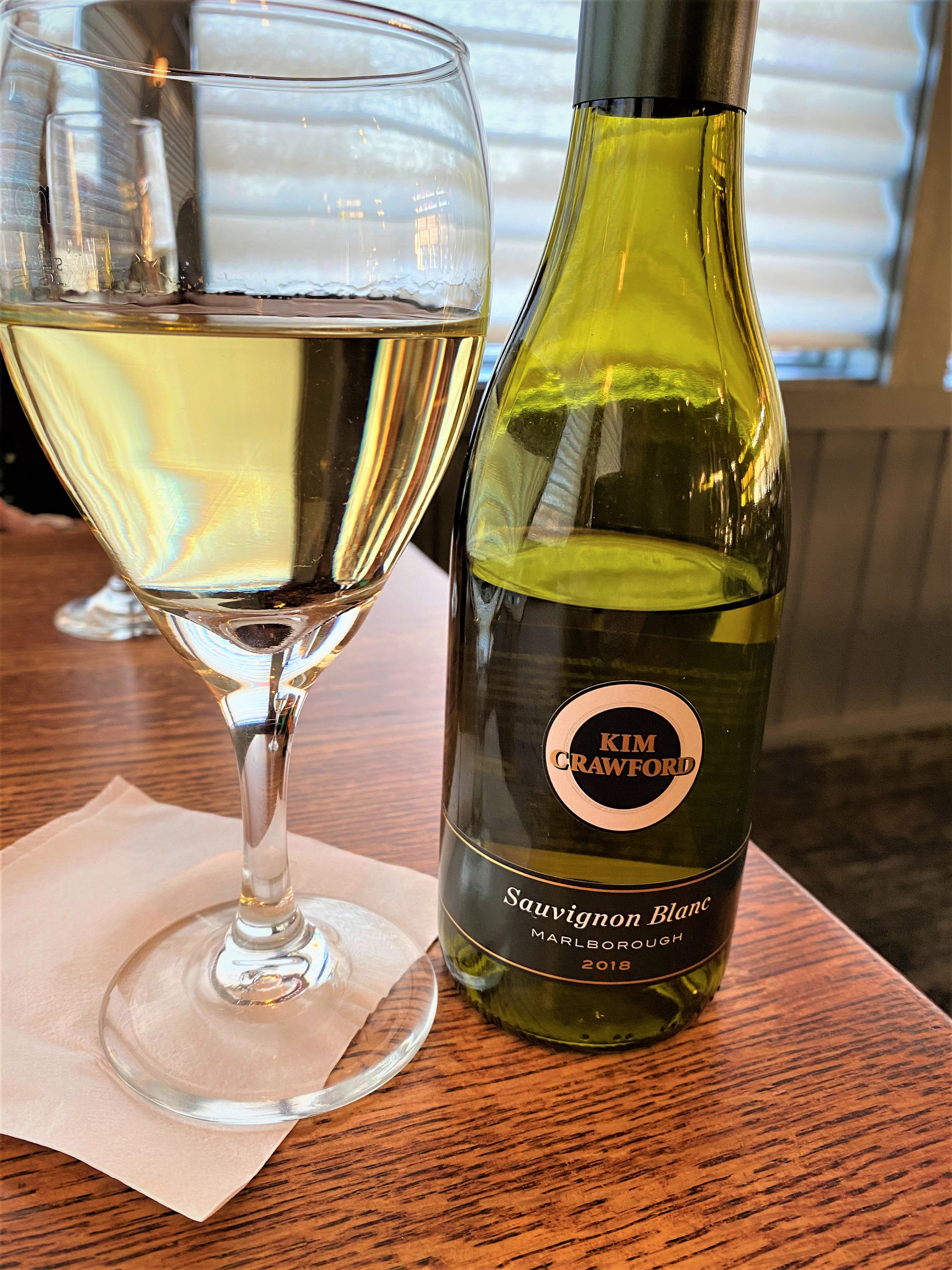
I was all set to get something that I thought would be interesting for both of our dishes, she jumped the gun and wanted a split of bubbly.  So rather than get our poor waitress in the middle of a wine discussion, she got a split of Mionetto Prosecco de Treviso DOC Brut NV.  Prosecco de Treviso DOC is a relatively new designation from 2009 for the Treviso province in Veneto in North East Italy. To get this designation the wine must be made from at least 85% Glera or Prosecco grapes. The other 15% can be Verdiso, Bianchetta, Trevigiana, Perera, Glera Lunga, Chardonnay, Pinot Blanco and/or Pinot Nero.  I really didn’t want to order a bottle of wine, since we have several partially opened bottles already at home, so I found a split that I would be happy with, and in case the Prosecco dried up.  I chose a split of Kim Crawford Sauvignon Blanc Marlborough 2018.  Kim Crawford is probably the most recognized wine producer from New Zealand and its Sauvignon Blanc is the most popular wine from New Zealand sold in the United States of America.  Kim Crawford began in 1996 in Auckland and built a state-of-the-art facility in Marlborough in 2000.  In 2003 the brand was sold to the Canadian firm Vincor and the following year Vincor was acquired by Constellation Brands.  Kim Crawford was also one of the first in New Zealand to produce an unoaked Chardonnay.  Marlborough is the most important wine region in New Zealand and Sauvignon Blanc account for almost eighty percent of the production.  The wine is very fruity with a nose promising passion fruit, melons and some spice, with a taste of fresh fruit and acidity and a pleasant finish that kind of beckons another glassful.

Posted in Dining, Wine | Tagged , , , , , , , , | Leave a comment

Moulin D’Issan

With my honorary title of “Street Somm” I am one of the first to admit that there is still a lot to learn, even after drinking wine for fifty years.  I was at the Fine Wine Source my favorite home away from home, especially during the lockdown.  There are times that I look at a label from a distance and I can identify it, I mean some are that distinct.  Some labels have changed a bit over the years and some have totally changed.  I saw a label and I thought I knew the wine until I looked at the actual wording.  I thought the wine was from Margaux, but it was from the Bordeaux Superior.  A new wine for me from Chateau D’Issan, a Troisiemes Grand Cru or Third Growth, if your French is a little rusty.

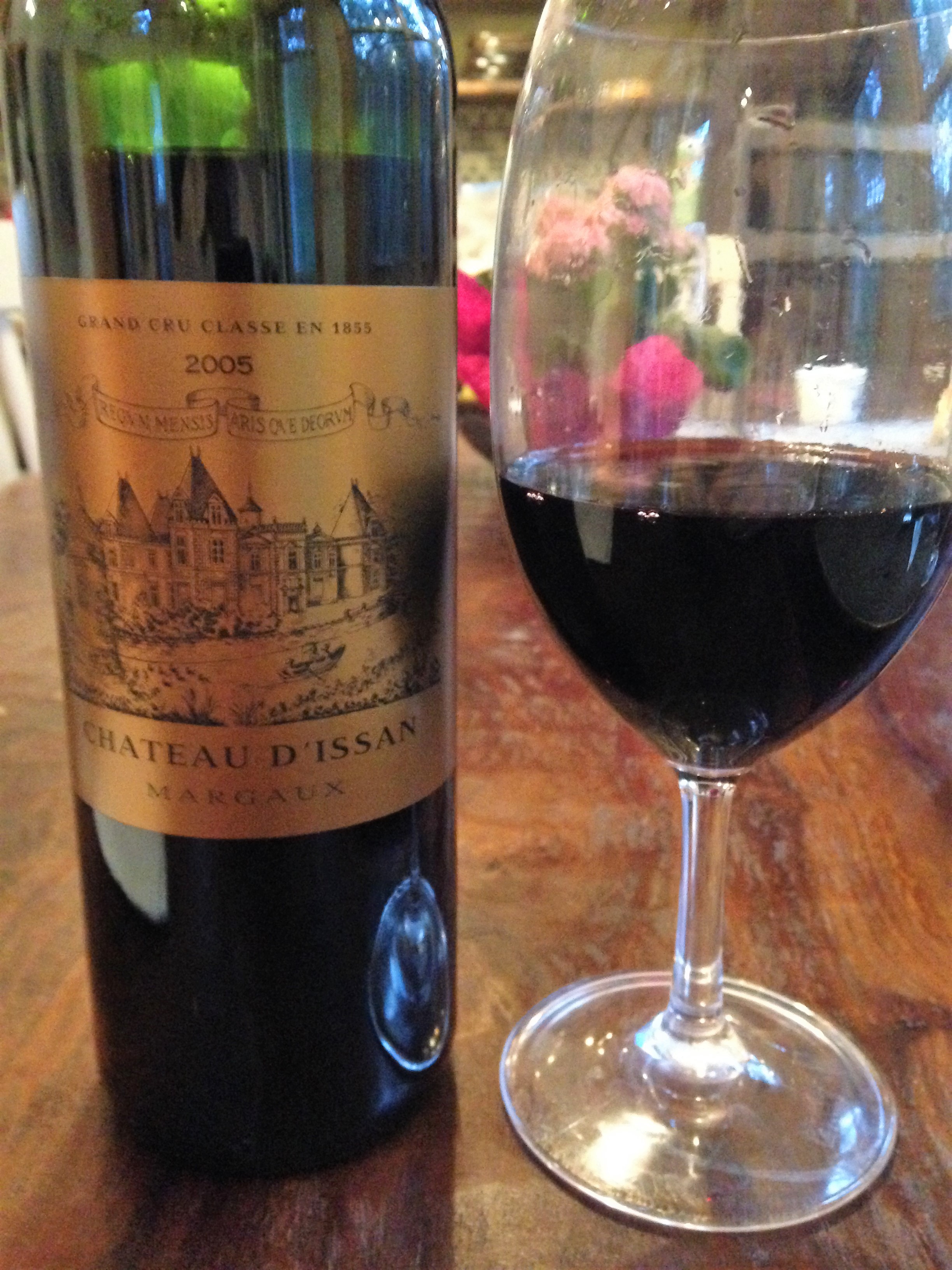
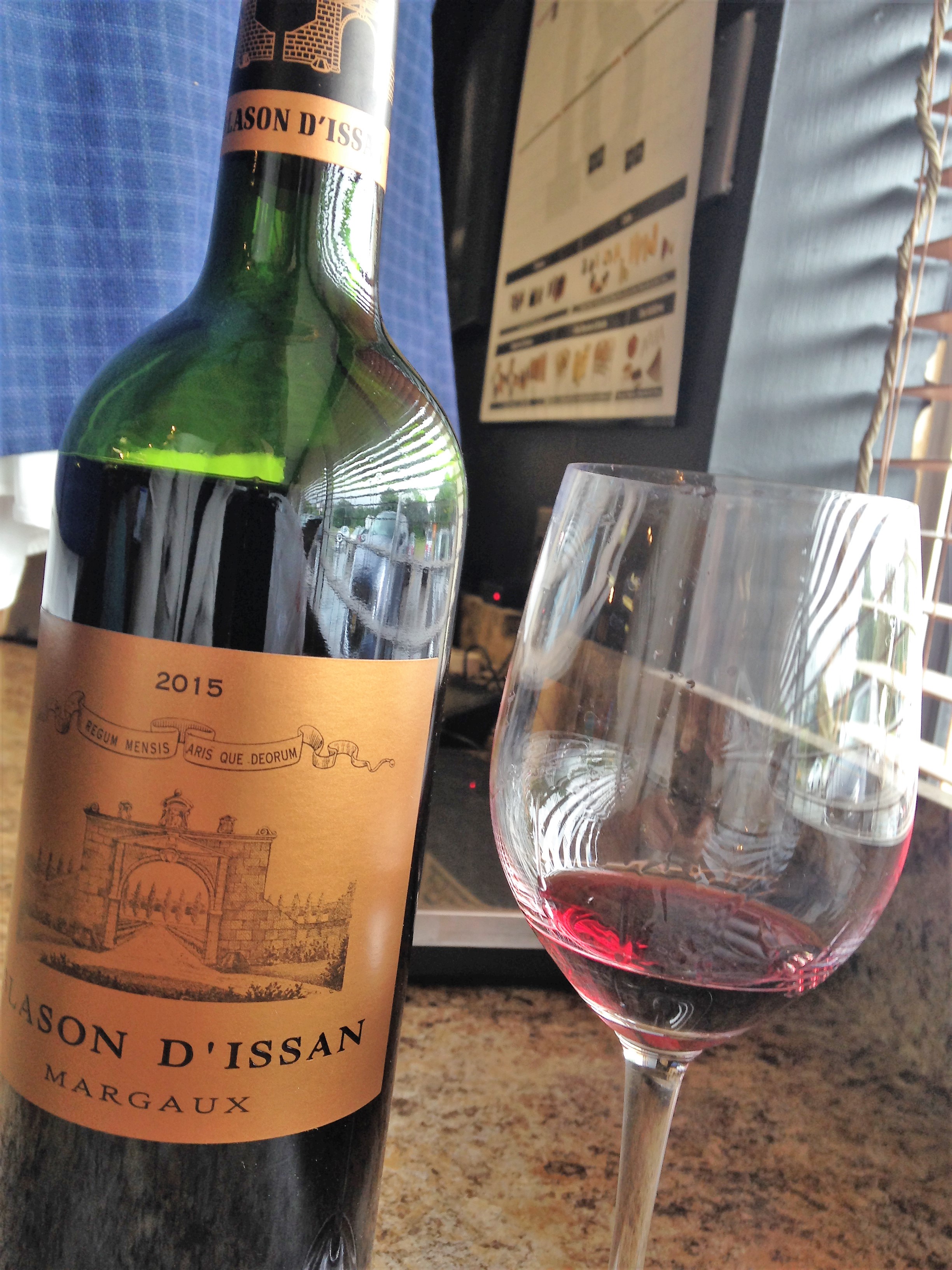
A little background is necessary to discuss this wine, and while I may not like “wine verbiage” I do like history and little tidbits about wines.  Chateau D’Issan Margaux 2005, a Troisiemes Grand Cru Classe en 1855 or in plain English a Third Growth from the great classification of the Medoc. Chateau D’Issan is a legendary estate in Margaux, just south of Chateau Margaux and next door to Chateau Palmer, I mean some great real estate especially if you are into terroir.  The wine is a blend of Cabernet Sauvignon and Merlot, and the fruit from is from the older vines on the estate, the wine was aged for eighteen months in French Oak, of which fifty-five percent was new.  This is a classic Margaux wine with the color and the nose, and the ethereal terms that I tend to use for the wines of this Commune; silk, opulent and elegant. In the past fifty years, I have probably been more fortunate to have enjoyed more wines from Margaux compared to any other of the Communes of the Medoc, which is not bad for a kid from Southwest Detroit. Chateau D’Issan has a second label, which is rather common for the great wines of the Medoc.  Blason D’Issan Margaux is a wine that we tasted at the Fine Wine Source and we were so impressed that we bought a six pack of the wine.  Blason is a French word for “coat of arms” and I guess that is a nice way for them to list the second label from Chateau D’Issan.  The wine was is also a blend of Cabernet Sauvignon and Merlot.  The wine is aged from fourteen to sixteen months in French Oak, of which a third is new.  The major difference between the first label and the second label, is a little shorter aging period and the fruit is harvested from younger vines.

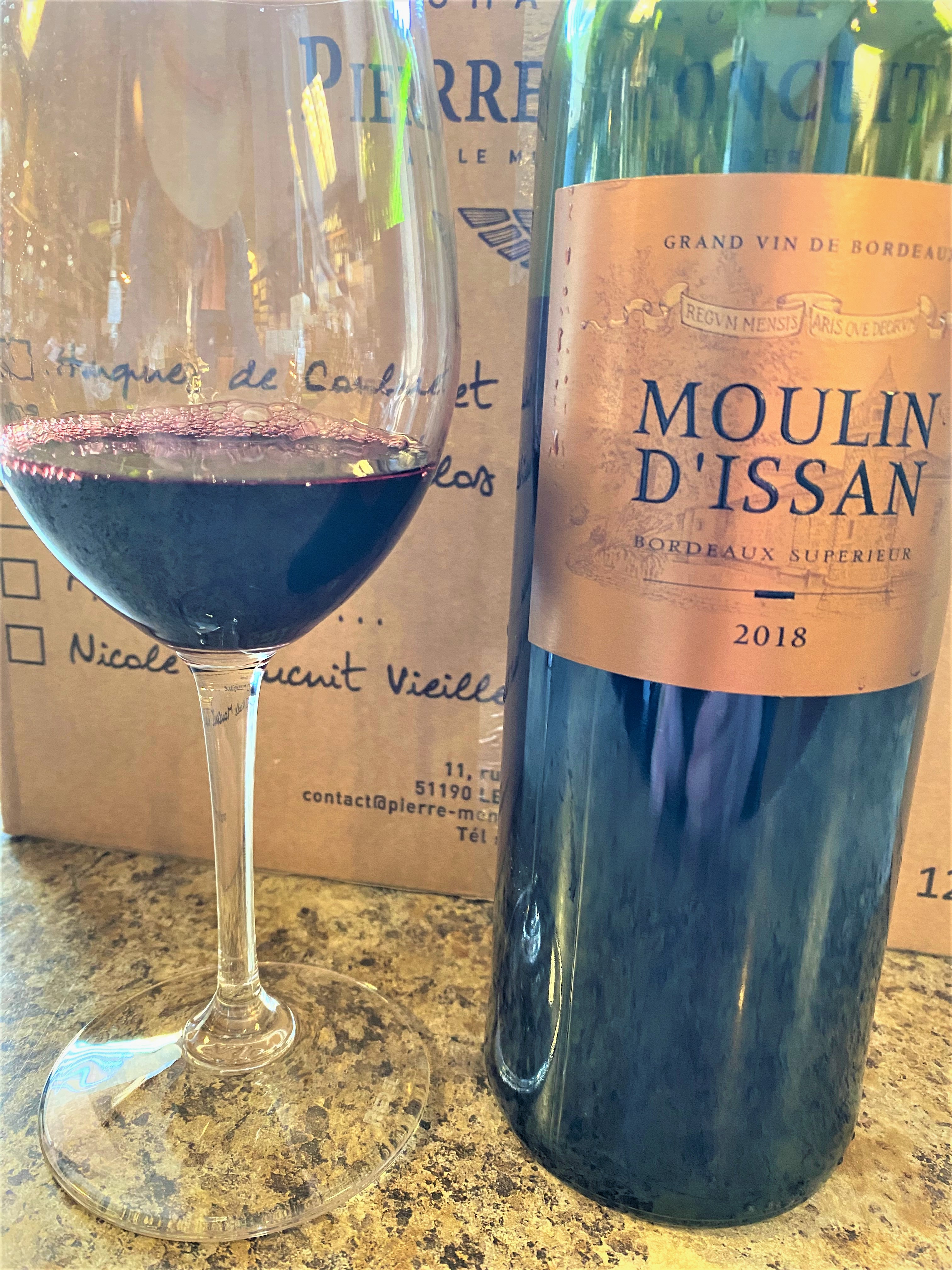
Now getting to their third label Moulin D’Issan Bordeaux Superior 2018, which when I first read the label, I presumed that it was from fruit that they had out sourced, since there are plenty of vines in the entire Bordeaux region.  This is not the case, I have written and hinted at the strange and stringent appellation laws that France defends to the end, since they basically created wine laws.   To the right of the “historic” driveway to the Chateau are vineyards and plots that have been designated as Bordeaux Superior, they are mostly clay and limestone beds located closest to the Gironde estuary, but are not deemed Margaux worthy.  This soil is more suitable for growing Merlot.  The wine is named Moulin in honor of the ancient ruins of a 17th Century windmill that was on the property and is still in the middle of the vineyard.  This wine is about ninety percent Merlot and the balance is Cabernet Sauvignon and they began issuing this wine in 1988.  Even though most Bordeaux Superior wines are Cabernet Sauvignon blends and the Right Bank is more Merlot driven, this is another silky wine and I would say elegant and opulent, especially for the price.  I don’t know too many people, unless they are effete elitist wine snobs that would turn their nose down at an extremely well made and delicious and affordable Bordeaux Superior wine.

Posted in Wine | Tagged , , , , , , , , | 2 Comments

Benedictus de Vatican

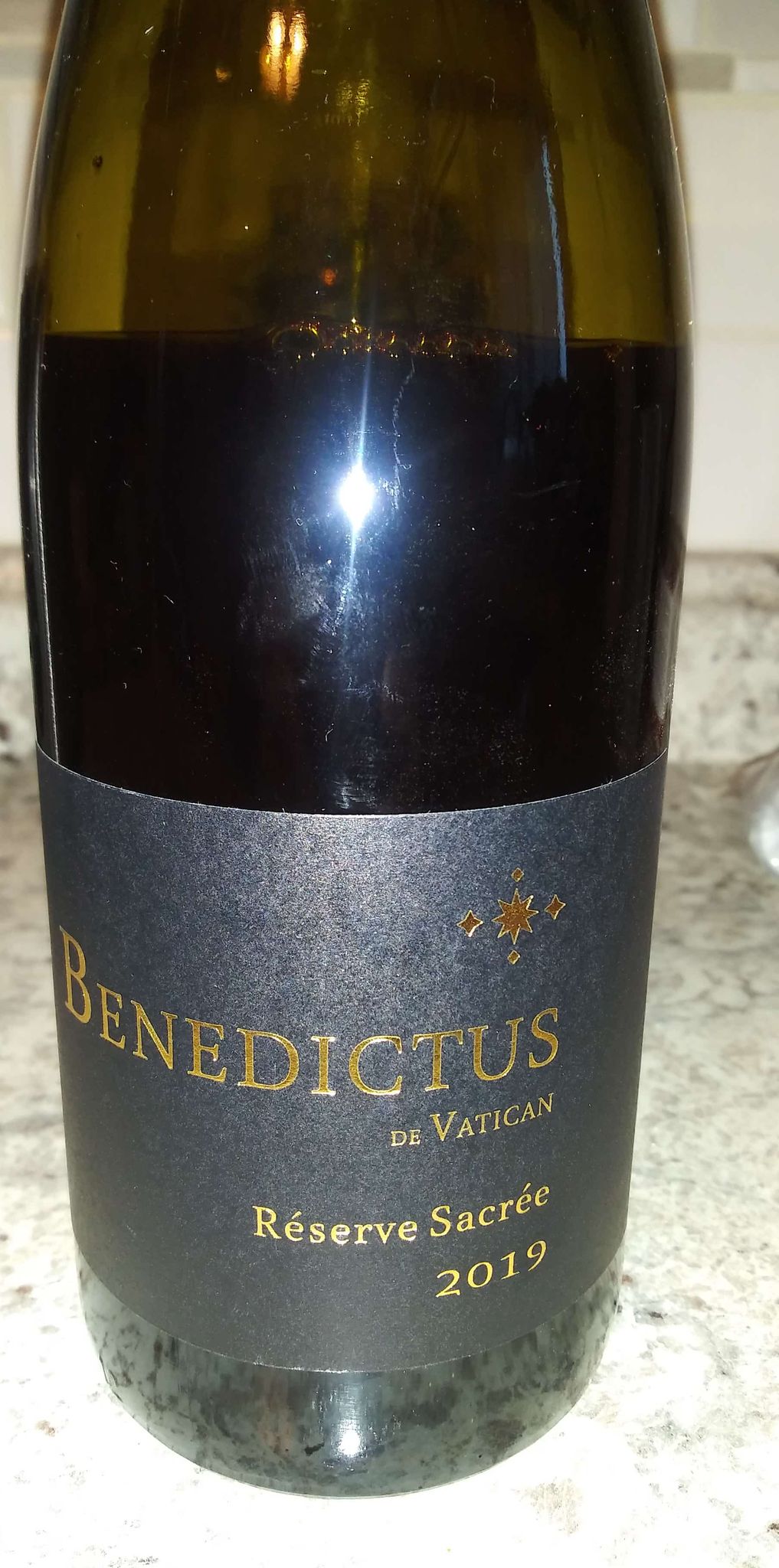
At first, I thought perhaps it was the official altar wine at the Vatican and I thought it was perhaps a new Italian wine that I was not aware of.  Before I get way off on a tangent, let me explain that I got a message on one of the Social Media sites from a young lady that lived on the same street I did, back in Detroit, and for her sake, I won’t say how long ago.  She received a gift and sent me a photo and asked if I knew the wine, and I don’t know about others that write about wines, but I get this type of question frequently and most I can answer right off the top of my head. I was taken aback by this wine, and as I said, I immediately thought of an Italian wine, but I forgot my history lessons. 

There is village between the towns of Avignon and Orange in the southern part of France’s Rhone Valley known as Chateauneuf-du-Pape which translates to “new castle of the Pope.” In the early 14th Century, Clement V chose Avignon for his home and for his court, this is the same Pope of the famed Chateau Pape Clement of Graves, in Bordeaux. Originally the wines from this area were just known locally, but in the 1920’s it all changed when a document was created in Chateauneuf-du-Pape which became the precursor of the famed Appellation Controlee laws of France, and Chateauneuf-du-Pape was one of the original appellations and still quite a famous one.  Chateau Sixtine is a wine producer that was founded by the Diffonty family in 1900 and began with two hectares of vines.  The family played a significant role in the creation of the Syndicat de Chateauneuf-du-Pape in 1924, and since 1993 Jean-Mar Diffonty has been in charge of the family estate.  Beyond the two flagship wines, a red and a white, they also produce Manus Dei du Chateau Sixtine and Cuvee du Vatican Chateauneuf-du-Pape and then they produce wines under the appellations of Cotes du Rhone and Cotes du Rhone Villages.

The Diffonty estate also makes Benedictus de Vatican Reserve Sacree 2019.  As to be expected this wine is a blend of Grenache, Syrah and Mourvedre, the famed trio of the Rhone, but this wine is a blend of his finest Cotes du Rhone cuvee and his well regarded Chateauneuf-du-Pape wines for a big bang in value, and the wine is made in a limited production.  Because this wine is a blend from two distinct appellations, it has to be listed under the basic tier of Vin de France, which was originally called Vin de Table or Table Wine.  With increasing competition both from the European markets and the rest of the world, the Vin de Table appellation was losing ground, and areas and districts strove to increase quality and worked towards additional appellations and finally for wines that were considered better than table wines, because of rules that affected their status like this particular wine, the Vin de France appellation was created.  I have seen reviews for this wine that say that one can expect black fruits, spices and tobacco notes along with the velvety finish of Chateauneuf-du-Pape.  My friend told me, that she prefers sweeter wines, but told me that this wine wasn’t too bad.  And before I leave this interesting wine, I will mention one of my favorite peccadillos about this region and I have mentioned it before, that the village of Chateauneuf-du-Pape has a famous municipal decree that bans flying saucers from taking off, landing or flying over the vineyards; and to my knowledge they have been successful with this law for the last seventy years or so.

Posted in Wine | Tagged , , , , , , , , , | 2 Comments

L’Hetre

L’Hetre is named for the beech tree as another winery is named after a pine tree, but I will get to that eventually.  I was doing some errands and I was stopping off at the Fine Wine Source our local wine shop in Livonia as I was going to pick up some more wine, yes, I realize that it sounds unusual for us to buy more wine, but the wines for our daily consumption have drastically increased since the virus from China and the ensuing lockdown; and all I can say is that it is a good thing that my Bride and I get along.  I walked into the shop and somebody joked that I must have smelled a wine tasting, as they were getting ready to taste some new wines for the shop, as well as retasting some wines for their restaurant Vertical in Downtown Detroit, they are not opening on the first wave, because the first wave of openings of restaurants will be at 25% capacity, so they are waiting until the capacity level opens up to half.  It made my day.

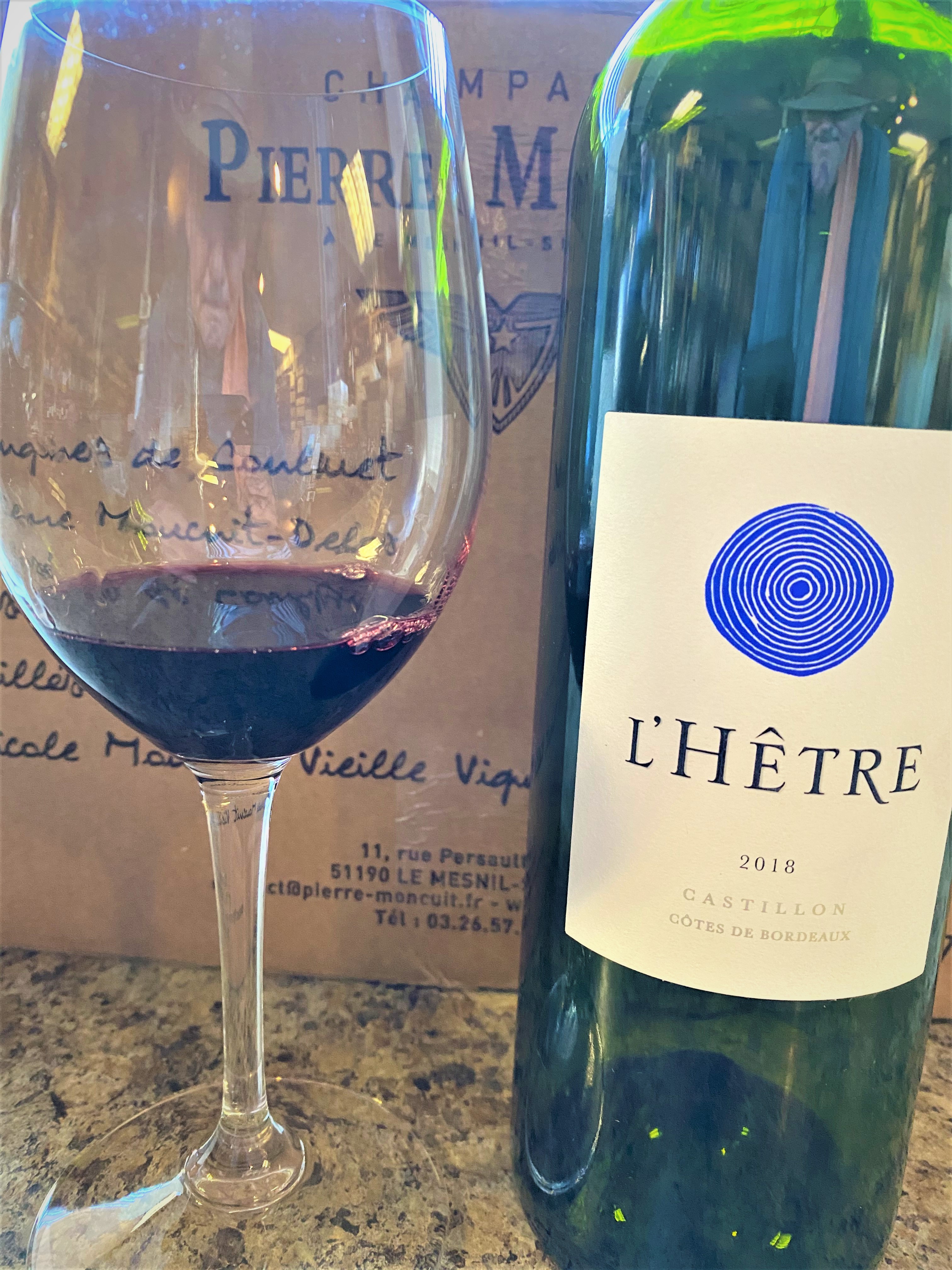
L’Hetre 2018, if you are like me a lay person, was a totally new wine, and I got a great story about the wine after I tasted it.  Jacques Thienpont visited this estate in the Cotes de Castillon during the harvest of 2015.  At that time the land was owned by a Belgian couple and in the ten years that they started Chateau Goubau, they converted the estate to ten hectares of organic farming surrounded by forests and pastures on the highest plateau in the Bordeaux region.  Jacques Thienpont along with his sister bought the property in 2016 and in 2017 bought the adjacent Chateau Montagne, a twenty-five-hectare estate with the potential of adding a further ten hectares if and when needed.  They brought in a nephew Maxine Thienpont from another family estate Chateau Labegorce Zede in Margaux.  The family aged the 2015 vintage, but the 2016 vintage was the first to be made by the new owners.  The families also own Chateau Certan of Pomerol, as well as their property named after a pine tree Le Pin, which is on my unicorn list of wines.

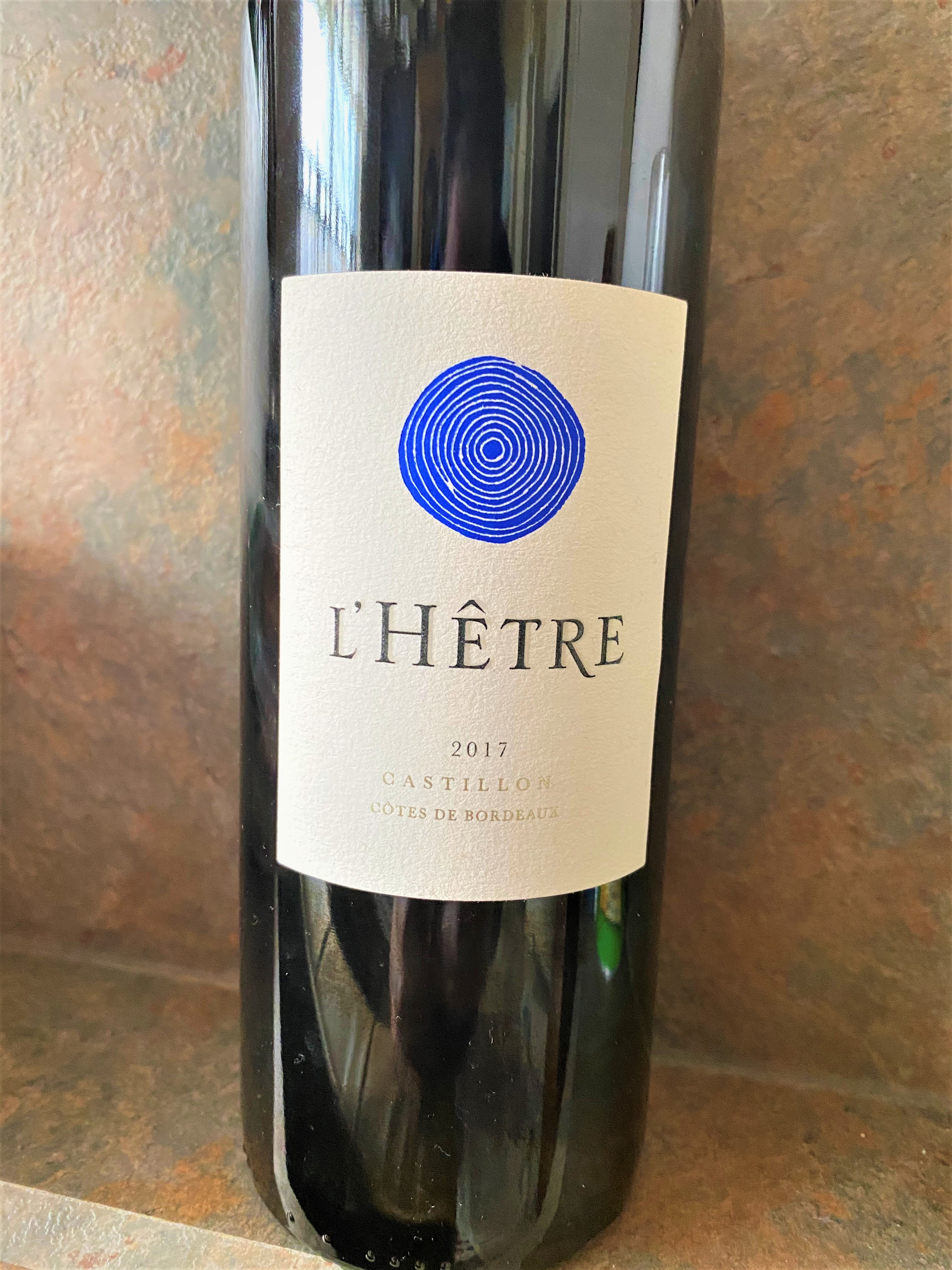
L’Hetre 2018 is a blend of ninety-five percent Merlot and five percent Cabernet Franc.  The wine was aged in oak for fifteen months.  While the wine carries the Castillon Cotes de Bordeaux appellation, when I tasted it, I thought it was a young Pomerol or a Saint-Emilion as it was really lush with a great nose.  The taste was full of red and dark fruit, well balanced with ripe tannins and a finish that gave me spice and a limestone terroir.  It was after the tasting, that I got the “schmoozing” about the background of this wine.  I left with L’Hetre 2017 which the Fine Wine Source had in inventory, the 2018 will be coming.   My Bride did not know that she was getting extra wines when I finally got home.

Posted in Wine | Tagged , , , , , , | Leave a comment

Two Classic Sangiovese Wines

Being in a wine shop is pleasant and a great way to forget the insanity that is outside.  The world seems to be a much nicer place when one is having an assortment of wines and some enjoyable conversation.  Eventually there may even be formal tastings by wineries again, I mean we can always hope.  The hardest part in the winter is getting all bundled up to go out, and during these periods of induced paranoia, the idea is to get as many errands done on a single day as possible.  I try to always have a trip to the Fine Wine Source as my final stop for the day, so that I am not feeling rushed.

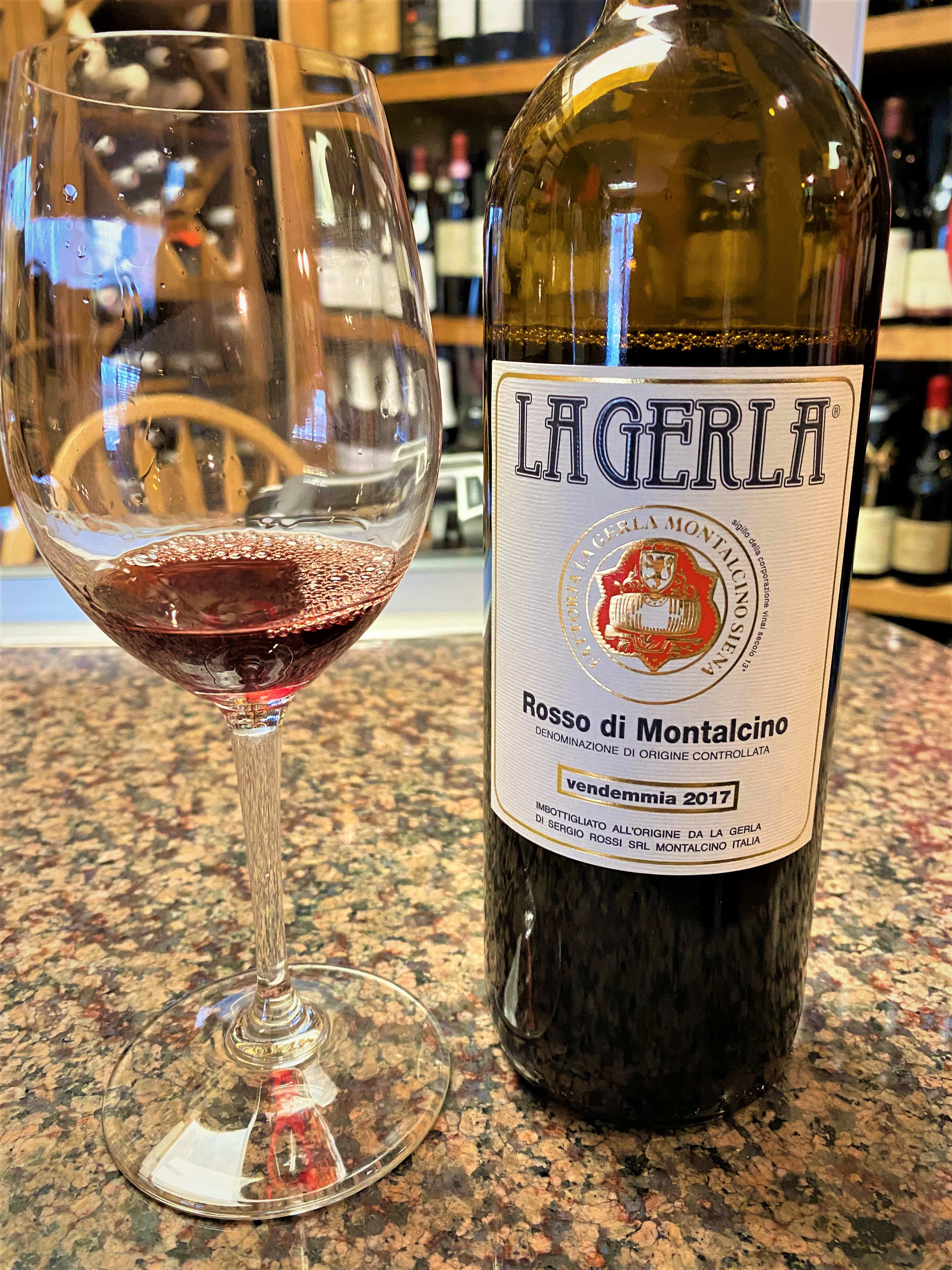
Fattoria La Gerla Rosso di Montalcino 2017 proved to be a charming and delightful wine and evoke plenty of different dishes to pair with it.  Fattoria La Gerla is a winery based in Montalcino, which is in the central portion of the wine region of Tuscany.  Sergio Rossi bought the estate from Biondi Santi in 1976 and it has been in the Rossi family ever since. There are six vineyards planted between 1976 and 1998 exclusively Sangiovese.  Rosso di Montalcino is in the same defined area as its older and bigger brother Brunello di Montalcino DOCG.  Rosso di Montalcino DOC was created in 1984 to take advantage of younger vineyards, and a way to make a fresher and younger style of wine that would not be so invested in time; and also, to bring some money into the coffers of the wineries quicker.  The fruit is hand harvested and after fermentation it is aged for ten months in a mix of Slavonian and French Oak barrels and barriques and then another two months in the bottle before it leaves the winery.  Subtle notes of violets and dark fruit are the first things that were appreciated, along with some softer tannins and velvety chewy wine with a nice medium length finish of spice and terroir.  The wine is not as big and bold as a Brunello, but then neither is its price tag, but it has all the same love and care. 

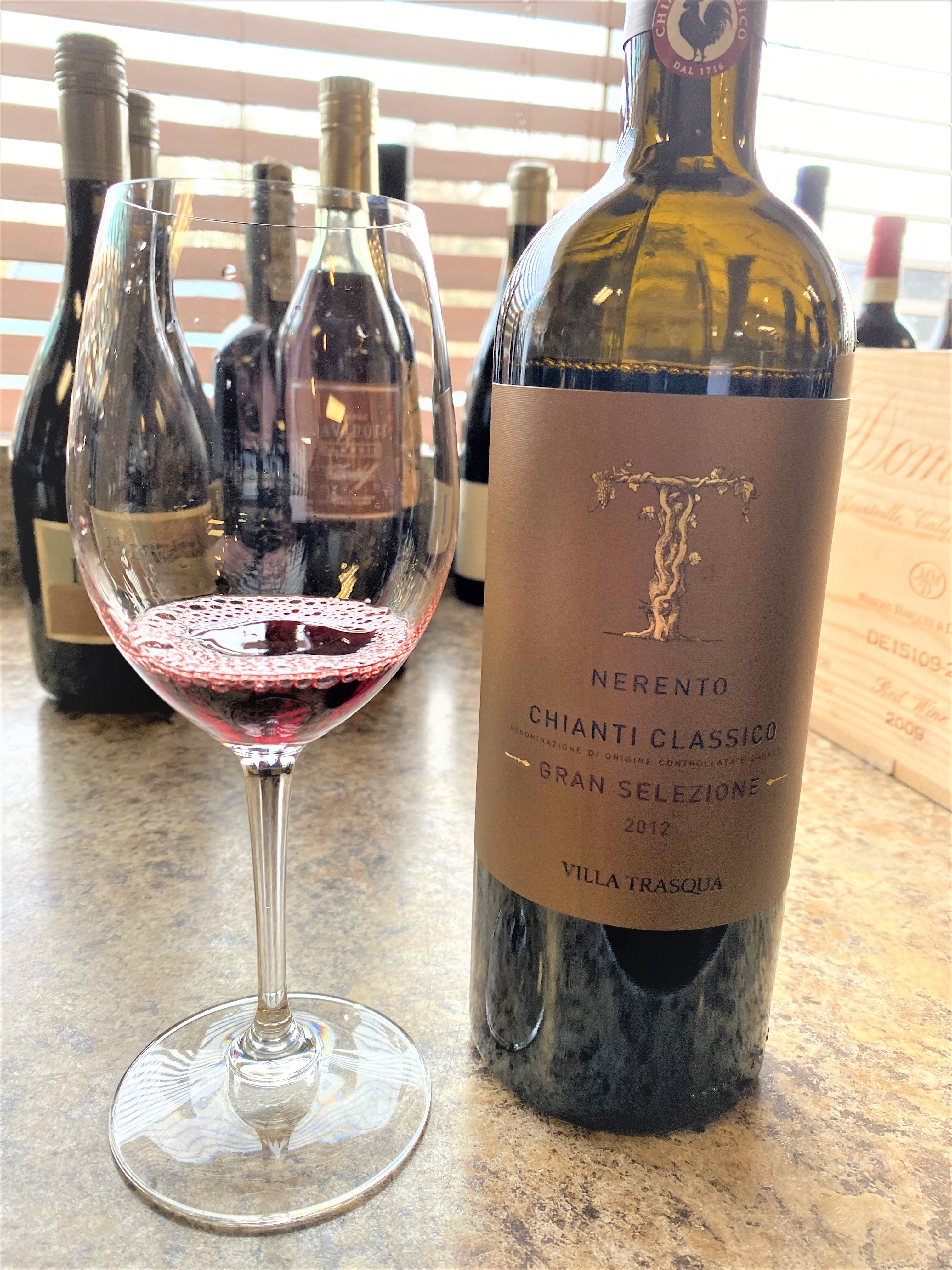
Villa Trasqua Nerento Chianti Classico DOCG Gran Selezzzione 2012 is from fabled historic vineyards which makes there first appearance in the year 1001.  In the year 1000, the land has been recorded ass Trasqua, and currently the one-hundred-twenty-hectare plot was purchased by the Hulsbergen family in 2001.  Nerento was identified back in 1854 as a singular and noted vineyard and because of its terrain it is known as “Black Rocks” and is the flagship for Villa Trasqua.  Chianti Classico is the oldest, most traditional and longest established wine region and known for their Sangiovese wines and the wine that make most people think of Tuscany.  There is a long fabled and romanticized story of how the region was originally created and since the 1920’s the famed Gallo Nero or Black Cockerel adorned the neck of every bottle of wine with three different bands to designate the pedigree, and still does except in the United States after a legal battle in 1991 started by E&J Gallo Winery and they won.  This wine is pure Sangiovese and the juice spends about twenty-five days on skin contact during the maceration period.  The wine is then aged for thirty months in French Oak and finishes with a twelve-month aging period in the bottle, before being released. Black fruit and eucalyptus are what I noticed immediately from the nose.  The black fruit also was there in the taste along with black pepper and spices, and a nice medium finish off terroir to finish.  A lovely example of a classic Chianti and not the Chianti that I grew up with as a child.    

Posted in Wine | Tagged , , , , , , , | Leave a comment