A Great Way to Finish a Tasting

I don’t want anyone to think that I don’t work hard amassing my notes for articles when I am at my local wine shop, The Fine Wine Source in Livonia, Michigan.  I was there meeting an Instagram wine blogger that I had introduced her to the store.  I am sure that she must have thought I was totally eccentric, with my cryptic notes and my amateurish photography.  I have to admit that we had a wonderful tasting session, and she is working on getting a Somm designation, and the store offered to help her try and learn some wines.  As for the Street Somm, life goes on, even without a designation.

To this day I still claim that I can sit back and just enjoy the nose offered from Dominus Estate wines and we were tasting Dominus Estate Christian Moueix Napa Valley 2006.  Christian Moueix has over fifty years of producing Bordeaux’s Right Bank and thirty-eight years in the Napa Valley.  Son of legendary Jean-Pierre Moueix, he completed studies in Paris and at University of California, Davis and returned to France to work with his father. He began a partnership in 1982 on an estate around the Napanook vineyard, which is one of the first sites planted to grapes in 1838 by George Yount (Yountville). Dominus Estate is one of the “cult wines” of Napa Valley.  He ran the estate since 1982 concurrently with the family business in Bordeaux until 2008; he became the sole owner of the estate in 1995.  Dominus Estate is dry-farmed and into crop-thinning, having used these techniques first at Chateau Petrus in the early Seventies.  The 2006 vintage is ninety-one percent Cabernet Sauvignon, six percent Cabernet Franc and three percent Petit Verdot.  About twenty-one months of aging, with forty percent new French Oak, and then an additional eleven months in bottles before the release, and there were six-thousand cases produced.  A very dark red wine with an incredible nose of dark cherries and berries, with additional notes of tobacco and chocolate.  On the palate deep ripe fruit, beautiful elegant tannins, totally balanced with a long count finish of fruit and licorice.
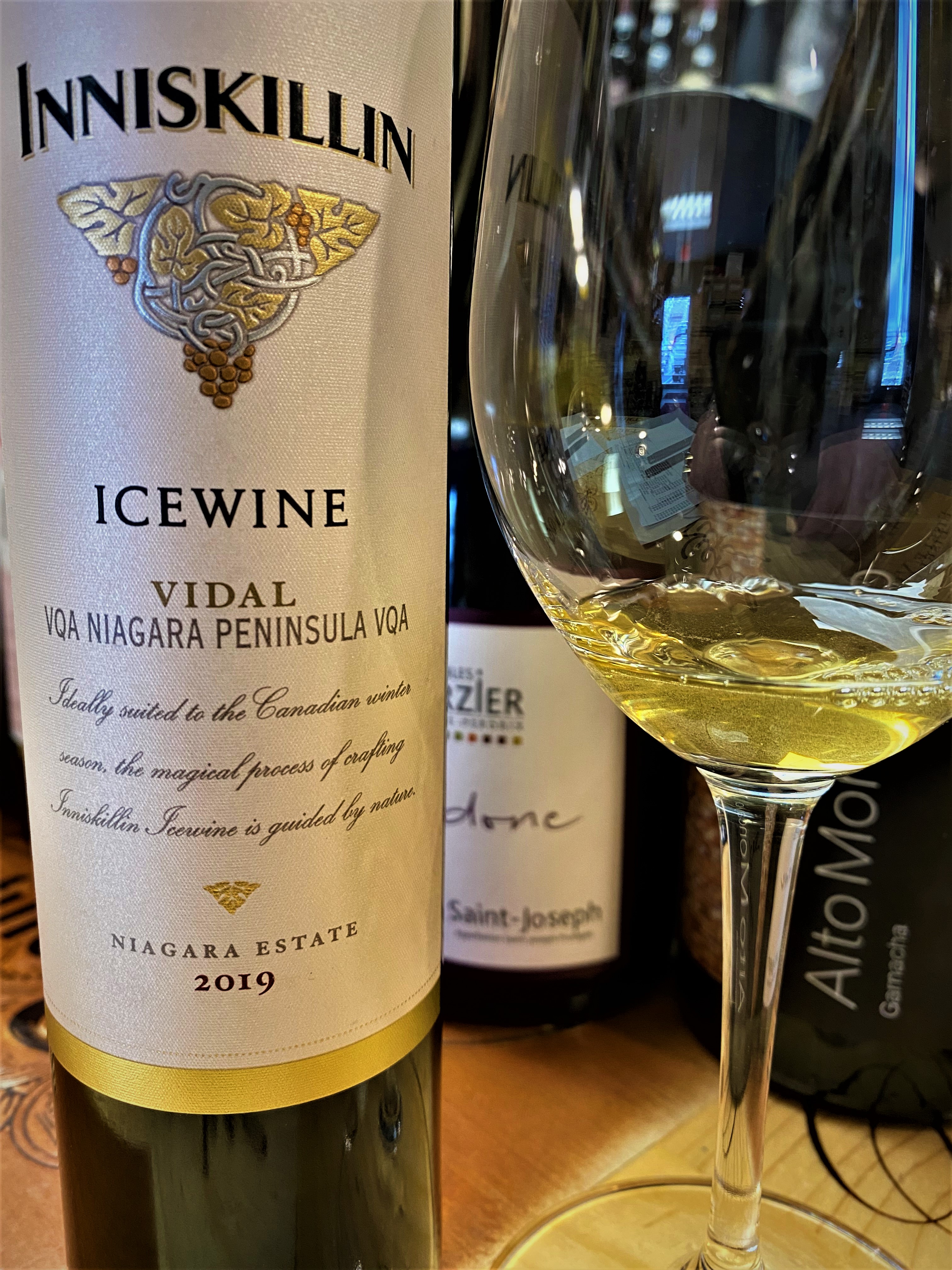
There is always room for Inniskillin Wines Vidal Ice Wine, Niagara Peninsula VQA 2019 and they now also have a winery in the Okanagan Valley in British Columbia.  They have really created a name for themselves and Canada for their ice wines made from Vidal, Riesling and Cabernet Franc.  Inniskillin Wines were granted a winery license in 1977, the last winery licensed was in 1929, and their first vintage was in 1977.  In 1984 they produced their first ice wine from naturally frozen Vidal grapes and won the Grand Prix d’Honneur at Vinexpo in France in 1991 with their Vidal Ice Wine.  Vidal is a hybrid of Ugni Blanc and Seibel that is a Cold-Hardy grape.  The grapes are harvested at night when eighty percent of the water content in each berry is frozen.  The grapes are pressed while still frozen (artificially freezing the grapes is prohibited) and the grapes may be harvested from about December to as late as March, and the juice is highly concentrated, the fermentation is very slow.  The beautiful golden yellow wine offers notes of tropical florals, and on the palate tones of mango and lychee in a rich nectar with a nice long finish of tropical fruits.  An ideal substitute with an appetizer of Foie Gras, or for the perfect dessert wine.     
Posted in Wine | Tagged , , , , , , , , , , , , | Leave a comment

Two from Livio Felluga

While I was doing a wine tasting with an Instagram blogger at my local wine shop, The Fine Wine Source in Livonia, Michigan, we had a chance to try another two wines that were not on the original curated wine carte that we were adhering to.  We had a chance to try two wines from Livio Felluga, an Italian estate nestled in Friuli-Venezia Giulia at the norther tip of the Adriatic Sea.

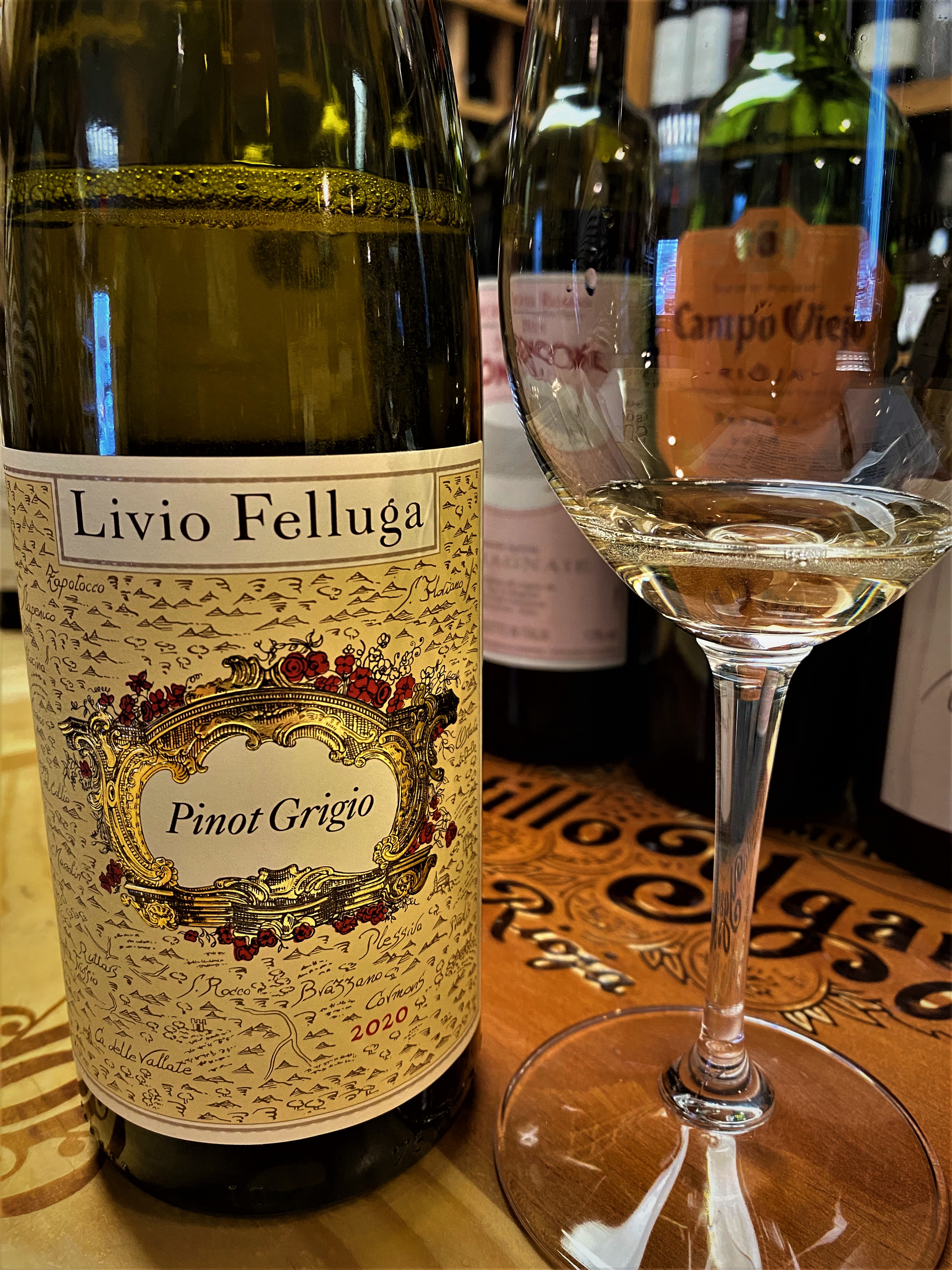
Livio Felluga Pinot Grigio Colli Orientali del Friuli 2020 was the first of the two wines that we tried from this winemaker.  The estate takes its name for the founder Livio Felluga who came to the region in the 1930’s.  The family has been winemakers for six generations in Isola d’Istria in Slovenia.  Today the estate is comprised over one-hundred-eighty-seven-hectares of vines.  The winery is predominately white wines, but they do a few red wines as well.  Friuli Colli Orientali or the “eastern hills of Friuli” was designated in 1970.  This Alpine region naturally has a higher altitude and the vineyards are terraced on basically alternating layers of marl and sandstone.  The fruit for the wine is hand-picked in small crates, and gentle destemming, the fruit is left to macerate for a short period, then softly crushed.  Temperature controlled fermentation follows in Stainless Steel, and then the wine is kept on the lees for a few months, then it is bottled and matured additionally in temperature-controlled rooms.  The wine is straw colored with notes of white and yellow fruits and florals.  On the palate crisp tones of peaches and apples with a tinge of tea, bright and tangy with a nice medium count finish of terroir and a touch of salt, calling for another sip.

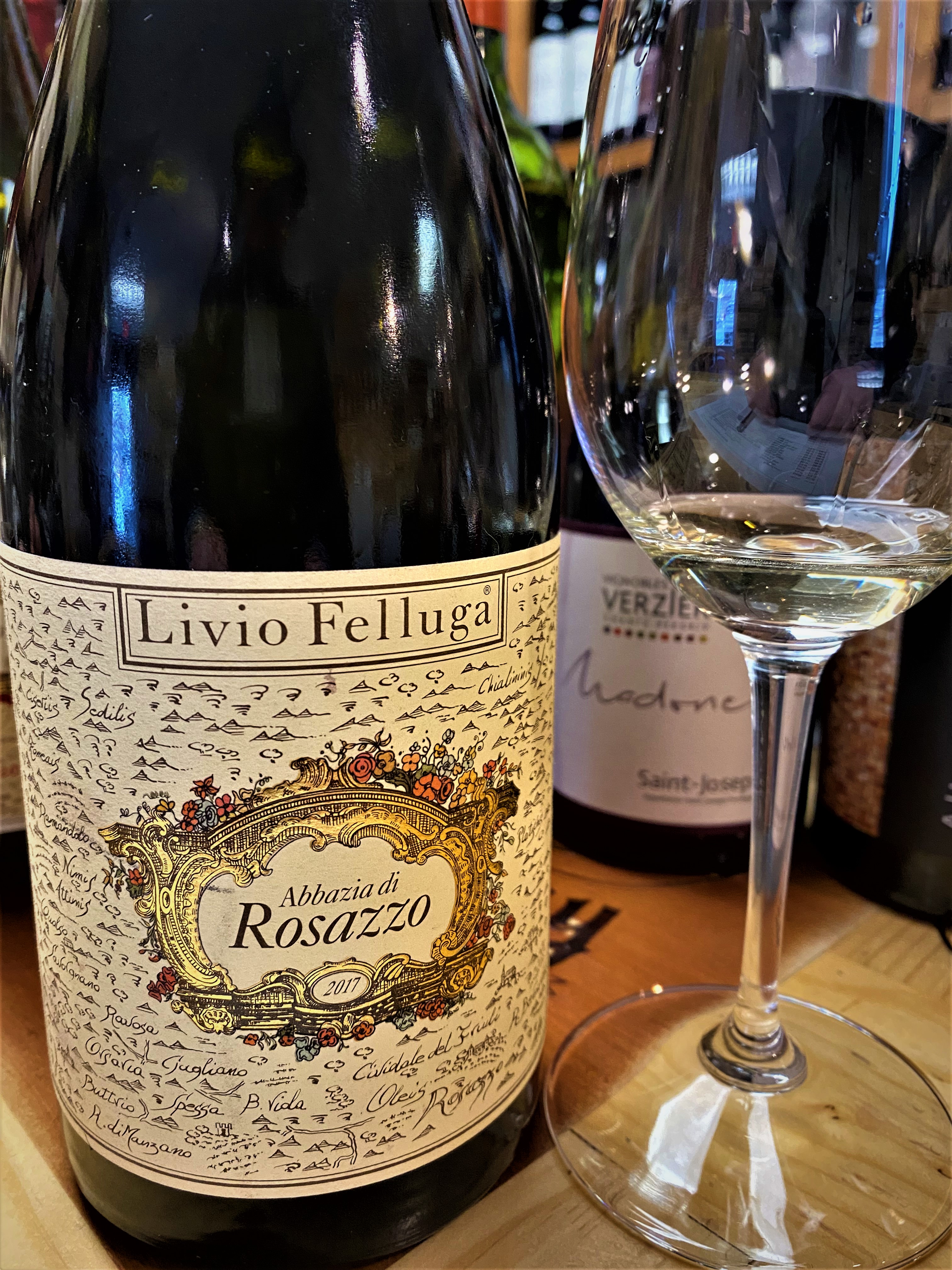
Livio Felluga “Abbazia di Rosazzo” Rosazzo DOCG 2017 was the second wine from this winery.  The winery has encompassed the cellars and vineyards of the historic Abbazia di Rosazzo (Abbey of Rosazzo) and its distinctive white wine blend of Friulano, Pinot Bianco, Sauvignon Blanc, Malvasia Istriana and Ribolla Gialla.  Rosazzo is the most recent DOCG designation (2011) in Friuli-Venezia Giulia and the mineral rich grounds surrounding the Abbey.  Here the vines are older, lower yields and flavor concentrated grapes.  Tradition holds that the area was planted in the Middle Ages and that a local patriarch in the Fourteenth Century declared that anyone not planting vines would be excommunicated.  The blend is celebrating its thousand-year-long history of viticulture.  Friulano must make up fifty to sixty percent of the final wine, Sauvignon and Pinot Bianco both will be twenty to thirty percent and Ribolla Gialla at no more than five percent.  The grapes are hand-picked in small crates and gently destemmed and left to macerate for a short period, then it is soft crushed.  The must ferments in Stainless Steel, then the wine is raced into oak casks on the lees for a minimum of eighteen months.  The wine is a nice yellow color with notes of white fruits, florals, hay, herbs, spices and vanilla.  On the palate there is a richness of Crème Brulee with tones of pineapple and very refreshing with a beautiful finish of spices.             

Posted in Wine | Tagged , , , , , , , , , , , | Leave a comment

A Toscana and an Amarone

For a fellow that grew up drinking and eating Italian cuisine, there are times when I get totally spoiled, actually I get spoiled a lot, at my local wine shop The Fine Wine Source in Livonia, Michigan.  I was actually participating in a wine tasting that was curated for an Instagram blogger that I introduced her to the shop.  She is going to start working on her designations, I imagine, that if I was younger, I might as well, just to have.  Of course, I would probably have to use fancy descriptors to get the designations, and I would probably flunk the course, so I will just enjoy the wines, at my age.

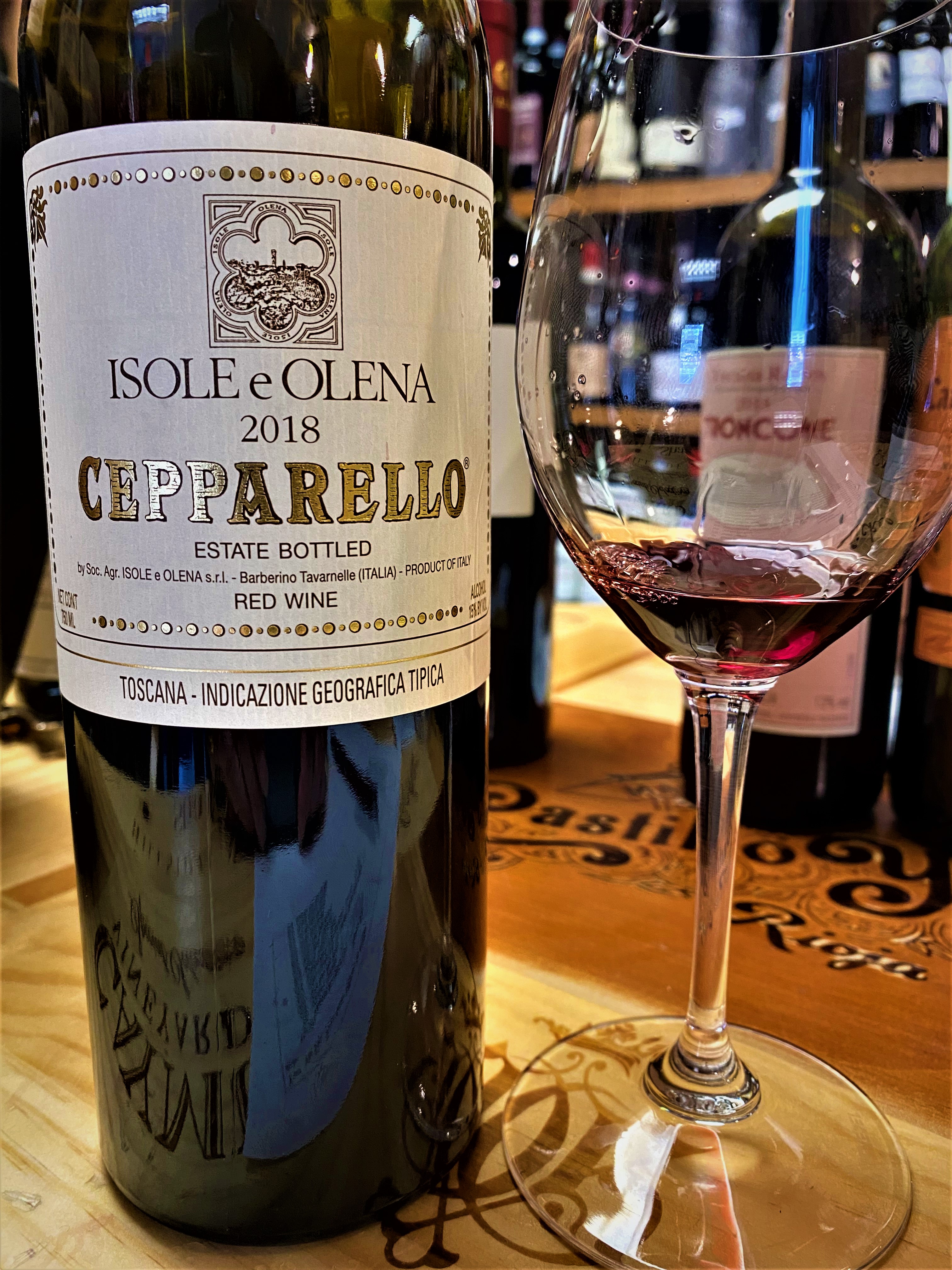
The Isole e Ollena Cepparello Toscana IGT 2018 is the flagship wine of the winery.  The De Marchi family consolidated two neighboring properties back in the Fifties, the estate vineyards of Isole and Olena.  Here is a winery that is from the Tuscan region, made from all Sangiovese and is entirely in the boundaries of the Chianti Classico zone.  You may ask, why isn’t the wine using the more prestigious and readily known Chianti Classico appellation, and it is because they make the wine strictly with Sangiovese and do not blend it, as Chianti laws require.  Since 1980 when they started the Cepparello label they originally had to use the basic Vino da Tavola designation and even then, it was recognized by those in the know, that this was not a table wine, and when the laws changed in 1992 it became a Toscana IGT or popularly now known as Super Tuscan wines, because they do not play by the traditional rules of the region.  The wine is aged for about fourteen months in oak and then about another twenty months in the bottle.  My immediate notes that I wrote down for this wine was “FULL” and “CHEWY,” which I realize is very terse, but for me and my normal disdain for descriptors, it was plenty of information for a future purchase.  I occasionally mention a bit more as this ruby/purple wine has notes of dark fruits and hazelnuts and violets, while on the palate the cherry and cassis and some spices, along with the full tannins and a nice long finish of terroir and spices, makes me think that this wine should be bought and cellared for several years more, for all the complexities and nuances to merge perfectly.

Then we tasted Tommaso Bussola Amarone della Valpolicella Classico DOCG 2016 from Azienda Agricola Tommaso Bussola.  In 1977 Tommaso Bussola took over his uncle’s estate and in the early 1990’s a new winery was constructed.  This wine is made with the classic trio of grapes Corvina, Rondinella and Molinara to get the proper accreditation.   After the harvesting of the grapes, they were allowed to partially dry and were crushed in January.  The wines were racked after sixty days and then again ten days later.  The juice was then aged for twenty-four months in a mixture of a quarter of the new in new Slavonian Oak, a quarter in new American and French Oak, and the balance in second time used barrels.  My notes on this wine were “wonderful” with a great nose and a taste of black cherry and a finish that just lingered on and on.  In fact, another time that I tasted an earlier vintage, the finish lingered and finished so well, that when I got home, I made a special tweet about having the wine, and I usually show more restraint, but I was totally happy with this wine and I think that I may have surprised some of my usual crowd.  This is one to really go looking for, in my humble opinion.

Posted in Wine | Tagged , , , , , , , , , , , | Leave a comment

A Rioja Reserva and a Campo de Borja

It is always a great time when I am at my local wine shop, The Fine Wine Source in Livonia, Michigan.  I was attending a special wine tasting that was set up for an Instagram blogger that I had originally sent to the store, because she had some special requests in wine and I thought this would be the best place for her to go.  

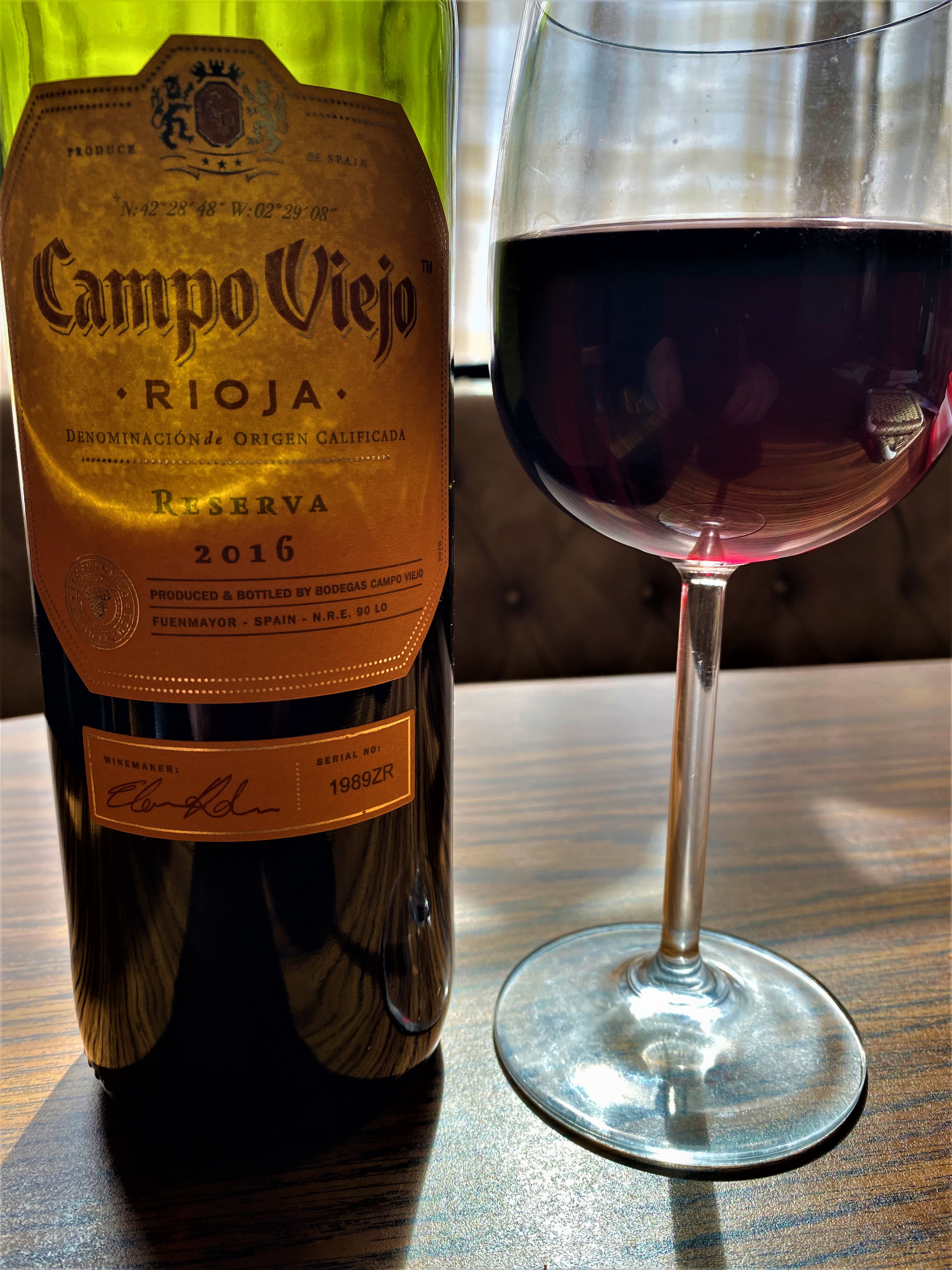
Bodegas Campo Viejo Rioja Reserva 2016 is from a major Spanish wine producer based in Rioja.  Their first vintage was 1959.  Campo Viejo sources their fruit from all three sub-regions of Rioja and of course their principal varietal is Tempranillo, though they also make other wines in an assortment of styles.  In 2009, the Rioja governing board allowed new acreage to be planted with white varieties uncommon to the region.  This project is being extended to some other wineries owned by Viejo’s parent company, Domecq Bodegas, which is owned by Pernod Ricard.  This wine is a blend of Tempranillo with Graciano and Mazuelo.  Since it is a Reserva, it has been aged for four years.  The wine offered notes of black fruit along with vanilla, clove and pepper.  On the palate, the ripe fruit was accompanied with tinges of spices and tobacco, the tannins were elegant and soft; and the wine finished with a nice medium count.  It is a good thing that I bought some of this wine for my Bride to try, as somehow, I neglected to take a photograph of the wine, but I was very impressed, and I still maintain a long-time love affair with Rioja.

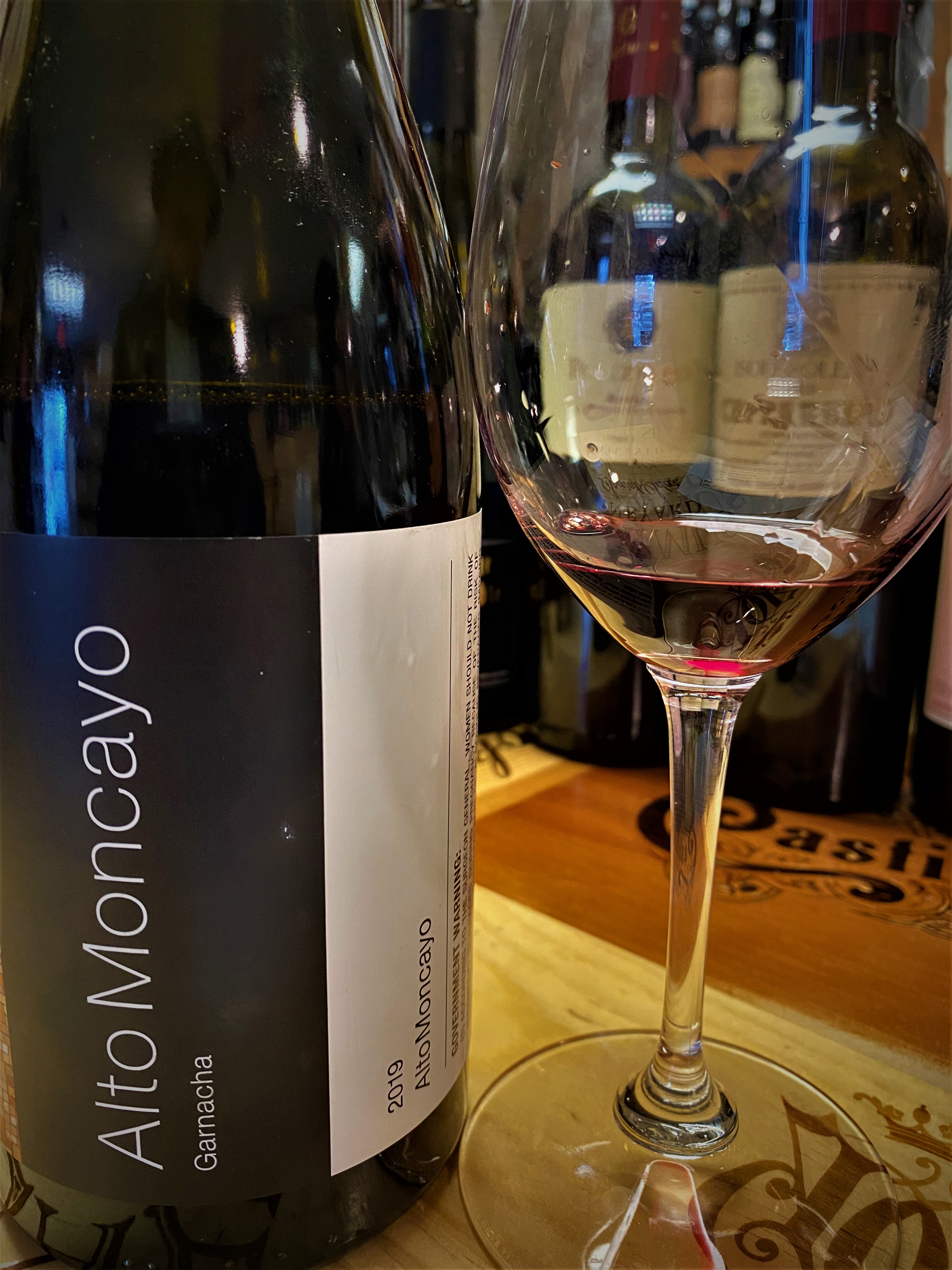
We had a bottle of Bodegas Alto Moncayo Garnacha 2019.  Bodegas Alto Moncayo was founded in 2015 in Campo de Borja DO in the Aragon region of Northern Spain; and Campo de Borja DO was granted in 1980.  While it was recognized fairly recently the area was recognized for wines back in the times of the Roman Empire.  The winery is a partnership of the Andalucía winemaker Jorge Ordenez, the Australian winemaker Chris Ringland and Bodegas Borsao one of the largest and most influential producers in Campo de Borja.  This is a big Grenache (Garnacha) wine that shows off the forty- to seventy-year-old vines and Grenache is the flagship of the winery and it is the King of grapes for this region of Spain.  This wine was aged for twenty months in new barrels and it is a heady 16 proof. I think that I was the most smitten by this wine, but then I have found over the years that not everyone is a fan of Grenache, which is bit harder to appreciate compared to a Cabernet or a Merlot. The wine was offering both a nose and taste of dark fruit with a tinge of Chocolate and a great medium to long finish of terroir. 

Posted in Wine | Tagged , , , , , , , , , , , | Leave a comment

Hautes Cotes de Nuits and a Saint-Joseph

As I am writing this article, I am thinking that I have to stop by my local wine shop, The Fine Wine Source, because we are getting low on basics, which I know that you may find surprising.  My Bride is a creature of habit and when she finds a wine that she loves, and that won’t break the bank, she is always checking to see how much we have in reserve. I mean, can you find a worse errand in the universe, than stopping at a wine shop?

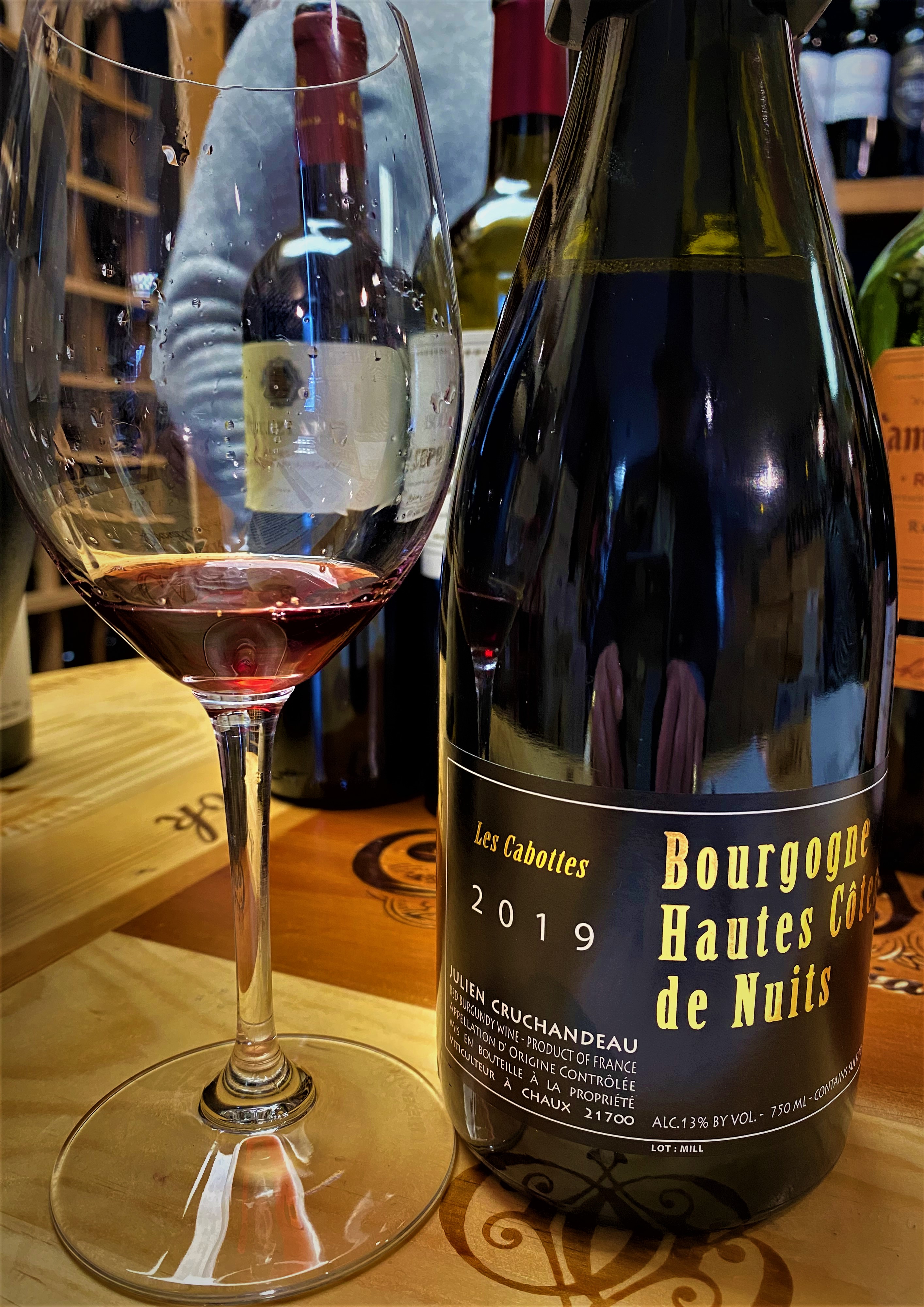
Domaine Julien Cruchandeau Hautes-Cotes de Nuits “Les Cabottes” 2019 was a wine that I recently tasted.  The estate was established in 2003 and currently comprises nine wine appellations from the Burgundy region.  The vigneron Julien Cruchandeau is not from a winemaking family.  He began first with Bouzeron and built his domaine in the Hautes Cotes de Nuits and is working towards sustainable viticulture.  The Bourgogne Hautes Cotes de Nuits appellation was created in 1961 for the high slopes above the famous mid slopes of the eight communal and twenty-three Grand Cru appellations of the Cote de Nuits.  The majority of the wines with this designation is red.  This wine is pure Pinot Noir on basically clay and limestone, and all the harvesting of the fruit is done by hand from twenty-year-old vines.  The grapes undergo cold maceration for ten days and then about fifteen months of aging on the lees in oak, with twenty percent new.  The pretty burgundy wine had notes of red fruit.  On the palate the wine had the red fruit, fine tannins with a trace of rhubarb in the mix, and a nice medium finish of terroir.

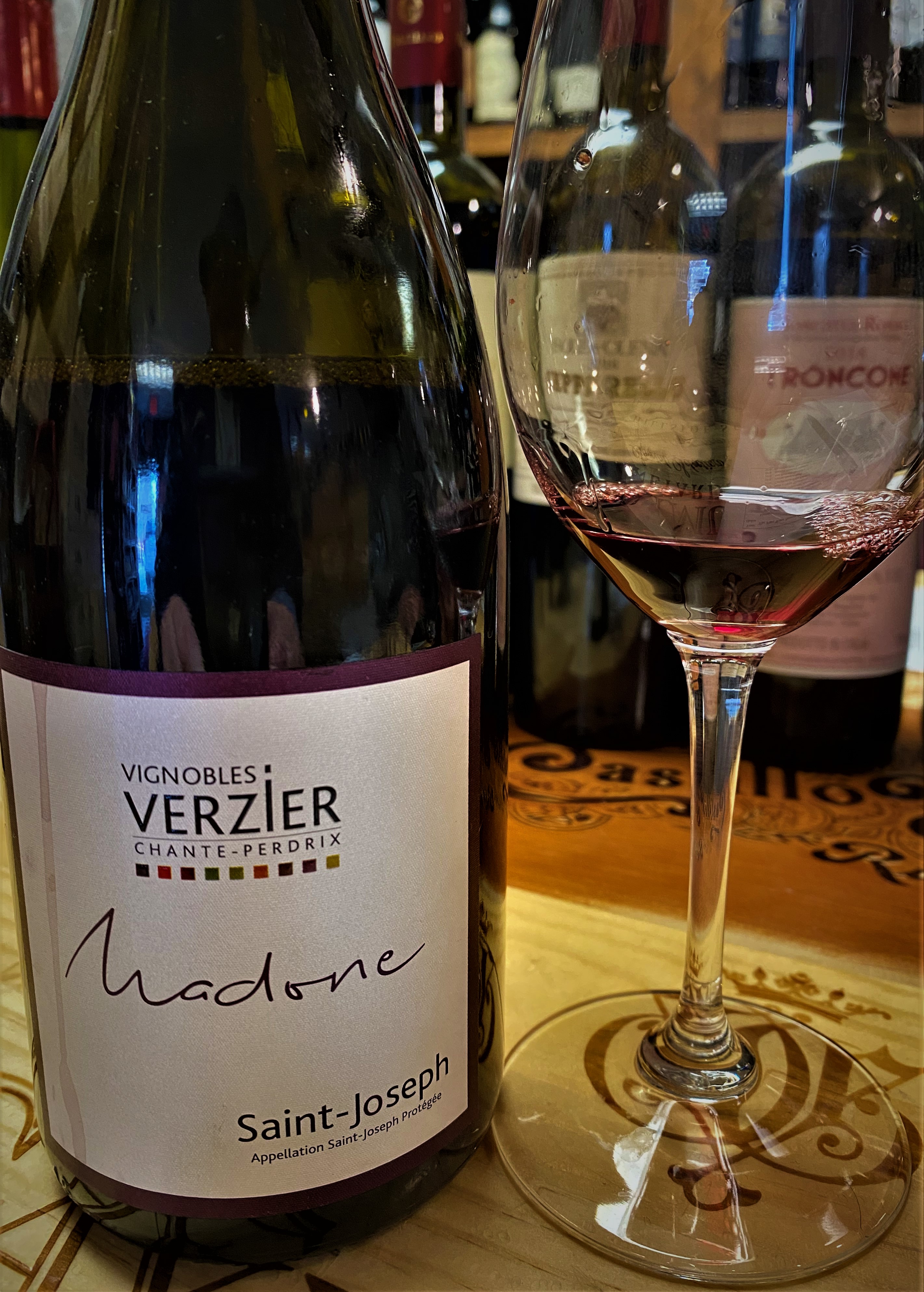
We were enjoying Vignobles Verzier Cave de Chante-Perdrix La Madone Syrah Saint-Joseph 2015.  Saint-Joseph is the largest appellation in the Rhone Valley and encompasses both red and white wines.  It was designated in 1956 and originally had six parishes, and in 1969 the boundaries were extended to twenty-six communes and along thirty miles of the Rhone.  The Verzier family has owned the farm estate since 1828, and of the current family Philippe at the age of nineteen took over the estate and even planted some terraced vines overlooking the Rhone and next to the Madone statue. In 1988 he stopped sending his harvest to the cooperative and created his own wines in his converted cellar.  Now some of the vines in the Madone vineyard are around fifty-years-old. The family plot called Chante-Perdrix, a singing partridge, is where they grow the Viognier.  The fruit is hand-harvested, destemmed for maceration in either concrete or Stainless Steel.  The fermentation takes between eighteen and twenty-eight days using natural yeast.   For La Madone they use a mix of medium and heavy toasting of the barrels for longer aging.  The wine had a nice deep color with floral notes, leather, smoke and pepper.  The flavor was deep with black fruits, earthy and savory with a medium count finish and definitely Old World in taste.

Posted in Wine | Tagged , , , , , , , , | Leave a comment

One From Sicily and One From Tuscany

It is always an enjoyable time when I am doing a wine tasting at The Fine Wine Source and this time with an Instagram blogger that I have finally had a chance to meet.  Life has a way of getting hectic, and sometimes the best thing one can do, is sit back and have a glass of wine.  Actually, this tasting was curated for the other blogger, and it was interesting to observe someone else tasting. 

We had Tenuta delle Terre Nere Etna Rosso DOC 2020 from Sicily.  Tenuta delle Terre Nere is a wine estate that has vineyards on the slopes of Mount Etna, with a high average of older vines, including vines that are pre-phylloxera. These special vines are used for their flagship wine La Vigna di Don Peppino, named after their winemaker of over seven decades.  The winery has fifty-five hectares in four different subregions on the island. This wine is a blend of young and old vines of ninety-five percent Nerello Mascalese and five percent Nerello Cappuccio.  These are actually two mutations of the Nerello and are usually grown and blended together in Sicily; and the grapes do quite well in the volcanic soil.  The grapes are macerated until the end of fermentation and then is aged in wood barrels for about a year.  The wine was much softer than I had anticipated compared to some other wines that I have had from Sicily, and more elegant.  The wine had a soft red color with floral notes and cherries.  On the palate, a nicely balanced wine offering some nice acidity and earthiness that continues through the finish.  I like it for appetizers and cheeses and good conversations.   

Azienda Agricola Poliziano Rosso di Montepulciano DOC 2019 was introduced to us as a “Junior” Vino Nobile Montepulciano from Tuscany.  The winery is celebrating their sixtieth year and they offer several different wines all based on Sangiovese.  The local name for Sangiovese is Prugnolo Gentile.  The winery is named after the Renaissance poet Angel Ambrogini, who is known by his nickname Poliziano.  Rosso di Montepulciano DOC was created in 1989 with amendments in 1999 which really created this wine and is a way of utilizing more of the younger vines to make a softer and fruitier wine that doesn’t need years of cellaring.  The Rosso di Montepulciano only requires six months of aging, whereas the Vino Nobile Montepulciano requires a minimum of twenty-four months.  This wine is a blend of eighty percent Sangiovese and twenty percent Merlot.  The wine is a light garnet color with notes of cherries and hazelnut, on the palate the wine offers red fruits in a medium body with lighter tannins and a bright finish.  Ideal for a first wine with appetizers or with a lighter meal.      

Posted in Wine | Tagged , , , , , , , , , , , | Leave a comment

Xarmont Txakoli

I was doing a special wine tasting at my local shop, The Fine Wine Source in Livonia, Michigan, and I was meeting an Instagram wine blogger for the first time.  I suggested this wine shop as she was looking for some unique vintages and wines.  The second wine that we tasted was very distinct in label design and label information.  The other blogger thought this was a wine from Greece, because of having an X in each word.  From another hobby of mine, I recognized both the wording and the art as being from the Basque region of Spain, where they still maintain their independence and their traditional language.  Beyond that, my knowledge went downhill, but I have to tell you, that from the first sip, I knew that I had to get a couple of bottles of this wine for my Bride to taste.  I thought that the wine was “Xarmant” and the grape was “Txakoli” and I was wrong on both counts, and thankfully I don’t shoot from the hip, when I am writing these wine adventures. 

I had already fallen in love with Artomana Txakolina “Xarmant” Txakoli, Arabako Txakolina, Spain 2020.  I was partly redeemed as Xarmant is the brand label.  Artomana Txakolina, S.L. began in 1988, when the Association of Artisan Producers of Txakoli from Alava (Arabako Txakolina) was founded with the desire to return a wine tradition to this region.  It started with six hectares of hand planting and the vineyard is now up to twenty hectares.  This is now a three-generation family project, now using modern technology to create a wine that they wish to have worldwide distribution.  Arabako Txakolina is a DO wine zone, which was conferred in 2001.  Txakoli is a Basque word meaning “wine from the village” and Arabako is the Basque name for the village of Alava. “Xarmant” means “charming and delicate.”  The region was devastated by phylloxera in the late 1800’s and basically laid dormant until the 1980’s.  The majority of the wines from this region are white made from the Hondarrabi Zuri varietal and also from Petit Courbu.  Hondarrabi is named after the local village and Zuri in Basque means white, and the grape is indigenous to the region and the perfect local pairing for the local cuisine of seafood and hot peppers.  Petit Courbu another white varietal was originally found in the Gascon region of France.

Artomana Txakolina “Xarmant” Txakoli 2020 is a blend of eighty percent Hondarrabi Zuri and twenty percent Petit Courbu.  The wine undergoes cold fermentation and maceration and the juice is left on the lees for a couple of months.  The quick aging allows the wine to offer natural flavors and the wine is actually bottle with the lees, which gives the wine a bit of natural residual carbon dioxide with a lightly sparkling finish similar to a Vinho Verde.  A pale-yellow wine with green tinges, has notes of citrus, florals and cut grass.  On the palate soft flavors of peach and green apple, a bright acidity (that calls for an immediate second sip), balanced with a nice finish of minerals (terroir).  When I got home with the two bottles, they disappeared on the second night, each bottle barely making it through a dinner.  It was requested that I get some more, and there were only five bottles left, and I was told that they didn’t expect such a quick demand for this wine, so I asked if they could get some more.  When the shop called, I asked if they could hold us a case and I would be there the next day.  A new legend and another new go-to wine for our household.        

Posted in Wine | Tagged , , , , , , | Leave a comment

Brunch at the Townhouse

We were wandering around in Birmingham, Michigan a very nice suburb in the Detroit area that has a nice downtown area for shopping, dining and hotels.  Actually, the trip was for me, instead of my Bride, as I did have to get a couple of things taken care of.  We did some walking and my Bride was getting hungry and we called a restaurant and they were not taking any reservations for lunch, so we walked over there and there was a minimum of a half hour wait, so we left our phone number and started to walk around.  My Bride decided to try another restaurant and they had one booth left, and no tables, so we took it, and my Bride called the first restaurant to cancel our list on their queue.  We ended up eating at the Townhouse and we had never eaten there for all of our trips to Birmingham.  They also opened up a second restaurant in Downtown Detroit with a retractable roof for dining under the stars; and we have never eaten there either. 

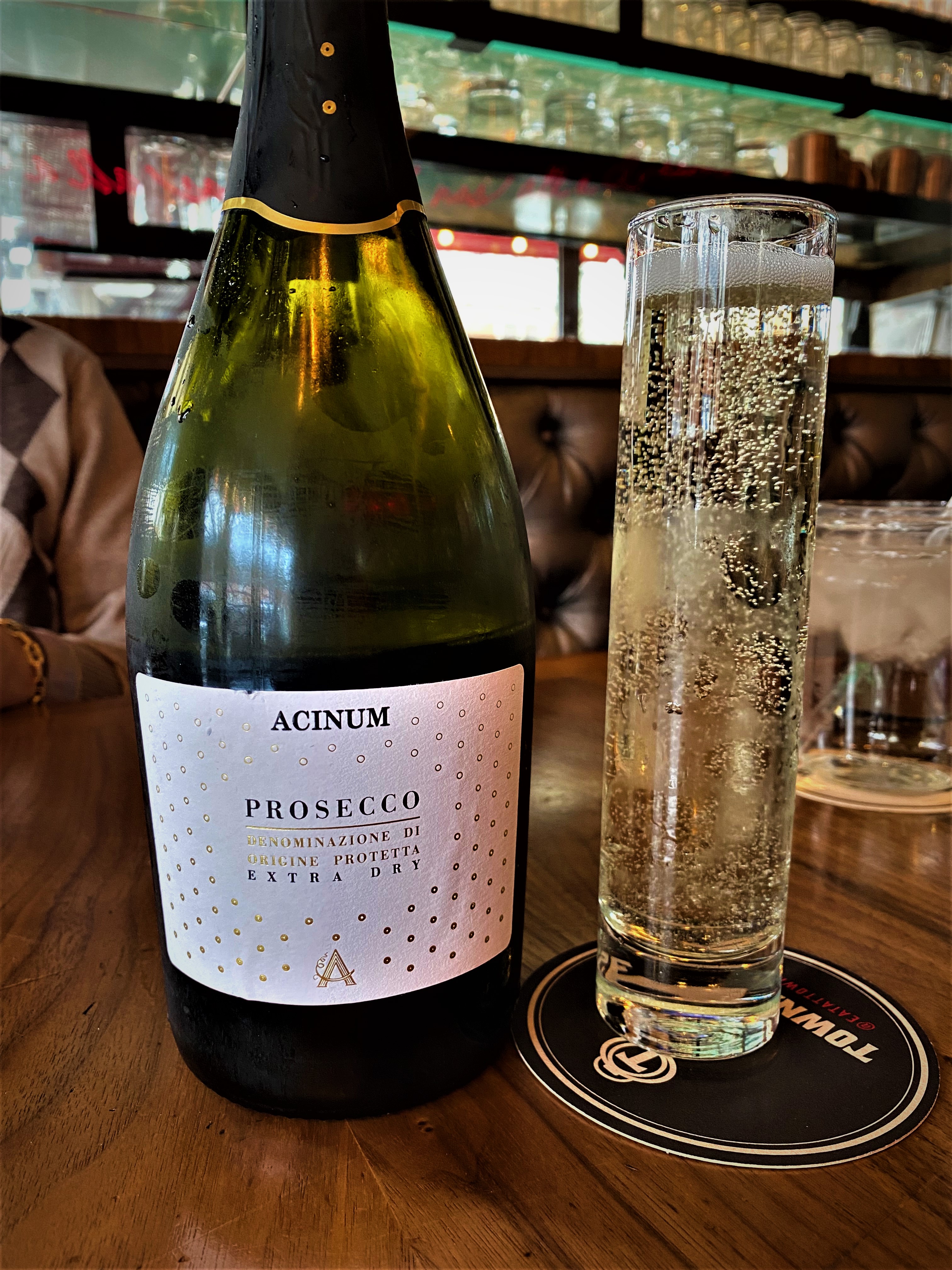
My Bride had her heart set on brunch, and as she went through the menu, she stopped at the House Omelet with Broccolini, Cotswold Double Gloucester and Chives and accompanied by the House Salad.   She also stopped at Acinum Prosecco Extra Dry NV, as she is very predictable.  This is a joint collaboration between Edoardo Montresor from Cantine Giacomo Montresor and Vias Imports.  This wine carries the Denominazione di Origine Protetta (DOP) which is the Italian version of the EU product protection, the same as the AOP in France.  Prosecco is from the Veneto and Friuli-Venezia Giulia wine regions and there are now four sub-classifications and the name still protects the grape, which is Prosecco in the region, otherwise it is Glera in the rest of Italy.  Prosecco can be produced by the Charmat method or by the Methode Traditionelle and this wine was made by the Charmat method or the bulk or tank version.  The wine had a nice yellow color with a greenish tinge and medium size bubbles with notes of citrus fruits.  On the palate there was green apples and pink grapefruit, with a medium count finish and it got better after about ten minutes.

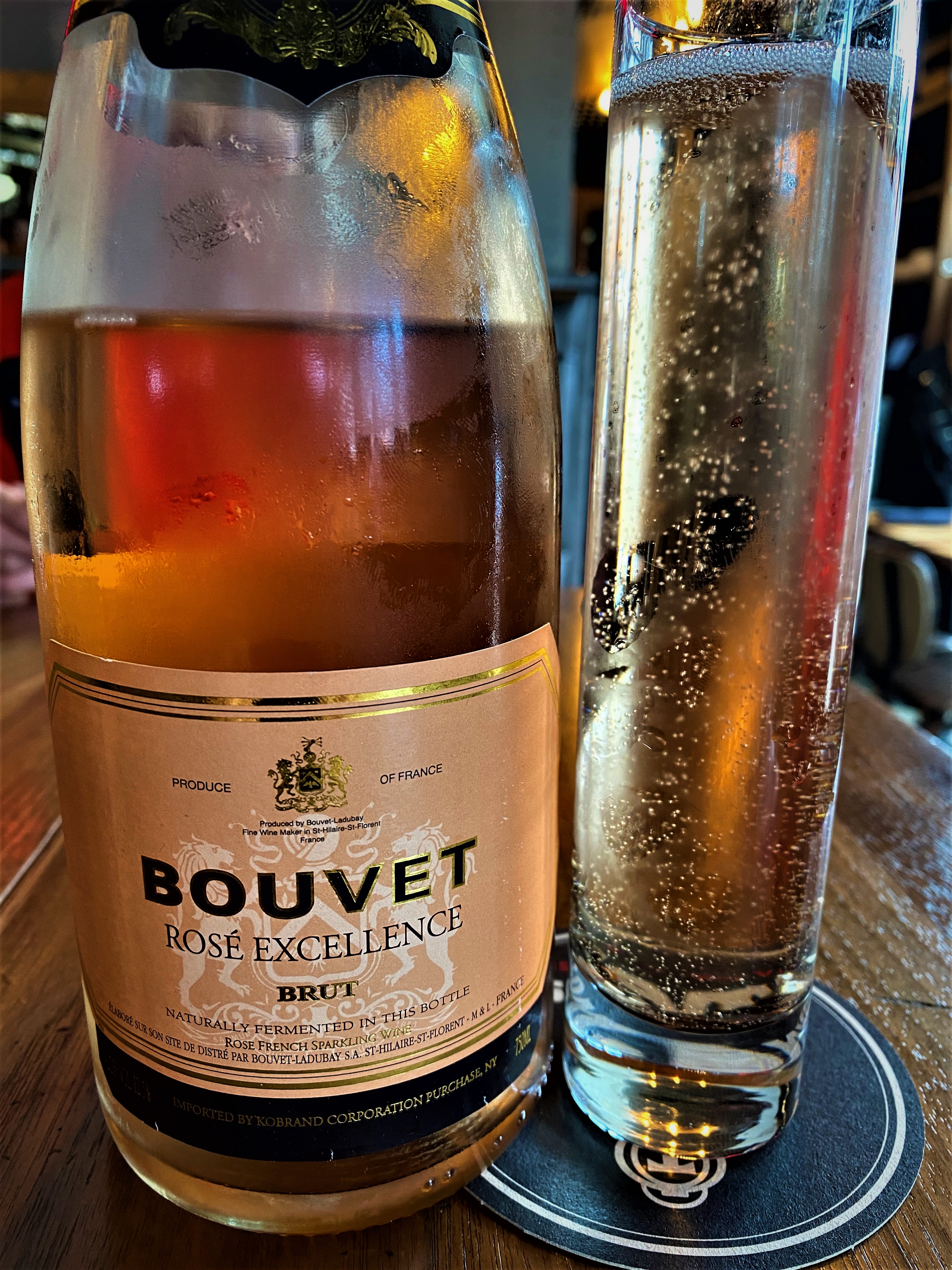
I went with the Townhouse burger that was highly touted by our waitress, it was dry-aged beef and hand formed, with Bourbon Glazed Onions, and White Cheddar on a Brioche Bun and served with their Truffle Fries along with Gremolata and a Rosemary Garlic Aioli.  For not being a steakhouse, it was a very good burger, and I actually ate the fries.  I joined my Bride and had some bubbles as well.  I had Bouvet-Ladubay Excellence Brut Rosé NV from the Loire.  The estate was founded by Etienne Bouvet in 1851, making sparkling wine in the valley.  The fruit is from the Saumur area, which is a mix of clay and limestone.  The wine is made from Cabernet Franc and the color is achieved from a rapid maceration, before the initial fermentation in Stainless Steel.  The second fermentation is done in the bottle and the bottles are automatically riddled by gyro-pallets to speed up the Methode Champenoise.  The wine had a pretty salmon-pink shade with tiny bubbles with notes of cherries and figs.  On the palate a creamy mousse of red fruit, biscuits and a nice terroir driven finish.  My Bride said that I picked the better wine again.     

Posted in Dining, Wine | Tagged , , , , , , , , , , , | Leave a comment

Two Potential for the Cellar

When I stop at my local wine shop, The Fine Wine Source in Livonia, Michigan, I am always hoping to find our next go-to wine.  I am also looking at wines for cellar potential, but my Bride keeps suggesting that concept may be pushing it, at our age.  She says that we have plenty that are cellaring quite nicely, and we should consider more table ready wines.  Does she know something that I don’t?  Actually, she has a point, and we must start thinking about drinking down the collection, but it is always fun to look and to try. 

Jardin en Fleurs Touraine Sauvignon Blanc 2020 was a wine that I was really interested in trying, as this has become one of my Bride’s favorite grapes and I am always interested in a fine wine from the Loire Valley.  Touraine AOC sits in the very heart of the Loire Valley wine region; the main city is Tours which is halfway between Sancerre and Nantes (Muscadet).  The appellation allows for all three types of wines in both still and sparkling.  Without venturing out too far, since, I can find no information, I will venture to say that this wine was aged for a short period in Stainless Steel.  The wine had a pale-yellow color with soft notes of citrus.  On the palate it was green and flinty with decent acidity.  This will not replace my Bride’s go-to Sauvignon Blanc, but I have to check, all in the name of research.

Azienda Agricola Le Ragnaie “Troncone” Rosso Toscana IGT 2018 and the winery is based in Montalcino, Tuscany, Italy.  The estate has twenty-eighty hectares and comprises four distinct parcels solely devoted to the cultivation of Sangiovese.  They have probably the highest altitudes in Montalcino.  The winery uses cement vats for maceration and fermentation which can last up to forty days.  They then use Slovenian and Allier Oak barrels for aging.  The Troncone wine showcases the youngest vines, and is a way to observe the progress of the vines.  It is not stated, but I will venture to say that the wine is probably aged for about eight months and then stored in bottles for another couple of months.  Toscana Rosso IGT is the most popular designations for the region, and the winemakers can enjoy and try different techniques using it.  The wine had a nice garnet color with notes of red fruit.  On the palate the flavor of red cherries and raspberries with softer tannins and a medium finish of terroir.  A softer Sangiovese wine that would work very well with some lighter pasta dishes.

Posted in Wine | Tagged , , , , , , , , , | 2 Comments

Two Different Types of Bubbles

I do enjoy my trips to my local wine shop The Fine Wine Source, because I never know, what I may encounter.   I mean there are some days, when they text me, about a special tasting and other times, I just walk in, sometimes to chat, but mostly to pick up some wine category that we are getting low on.  Then there are times, when they are really busy, and rather interrupt, I just can always come back; it is not that far of a drive.  I am going to compare two distinct sparkling wines, and I will tell you, that I am not a major fan of sparkling wines, but I always make sure that we have some on hand.  Actually, I am probably a wuss, as I prefer a Sec, over a Brut, but then in the old days, they claimed that the not really secret, secret in Champagne was that the import market liked the term Brut, but the wine usually shipped was Sec.  It has probably changed in the last fifty years. 

Champagne Andre Clouet is a producer of grower Champagne in the Grand Cru village of Bouzy, and all of the wines are exclusively Pinot Noir.  The estate actually has eight hectares on the mid slopes in the villages of Bouzy and Ambonnay, all on the famed chalk soils of the region.  Andre Clouet Silver Brut Zero Dosage NV is from an estate going back to the 17th Century and the foundation of the house began in 1741 and over the years they have built up, to what they now hold.  All Champagne must rest on the lees for twelve months and Non-Vintage Champagne must mature in the bottle for fifteen months, plus a minimum of additional three months after the dosage.   On Brut Zero Dosage, the last steps are not required.  The Silver Brut Nature is a blend of thirty-five percent reserve wine, to maintain a consistent flavor year in and year out, this reserve wine is similar to the Solera system that is found in the Sherry houses of Spain.  This wine is a pretty straw yellow color with medium to small bubbles, with notes of apples and pears, on the palate a creamy finish with a nice finish of terroir; but for me, it was just too acidic, while others were totally enjoying this wine (so, it must just be me).

Mascaro Brut Nature Cava Penedes NV is from a family business that in the 19th Century were wine traders.  In 1919 the company was known as Mascaro Widow & Sons and in 1940 they purchased the Mas Miquel vineyards, formerly the property of the Cistercian Monastery in the foothills of Tarragona and in 1946 they created the Montserrat Mascaro brand.   The wine is a blend of eighty percent Parellada and twenty percent Macabeo; the fruit is hand-harvested and pressed without destemming and only the juice from the first pressing and aged for twenty-four months in bottle, after fermentation.  The wine is a pale yellow/golden color with a slight greenish tinge and fine bubbles and notes of stone fruit.  On the palate a creamy finish with apricots and peaches and a dry taste, without being bitter or too acidic, with a nice finish of yeast.  I really enjoyed this wine. 

Posted in Wine | Tagged , , , , , , , , , , , , | Leave a comment