American Prohibition Museum

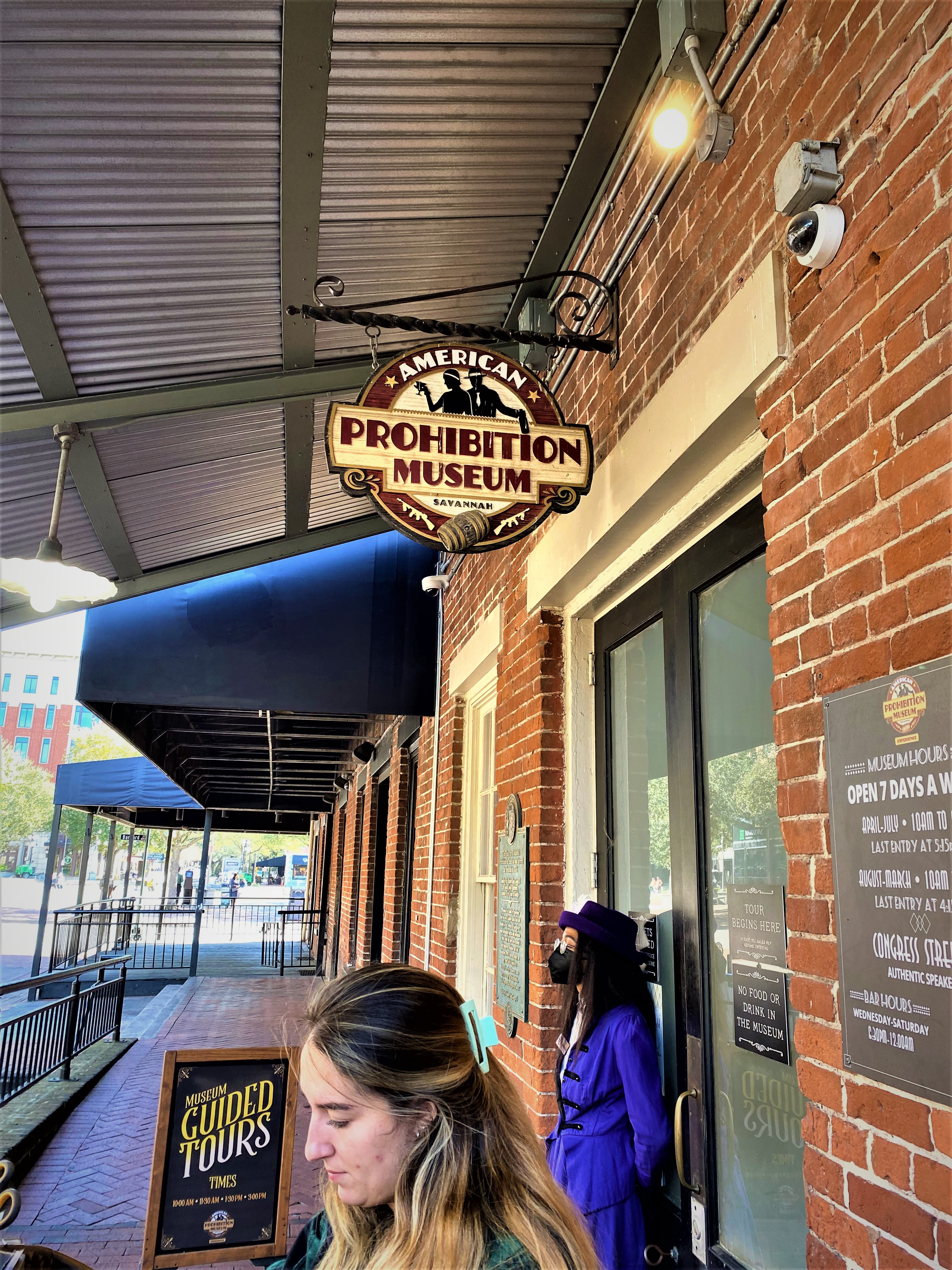
When we are holidays, we like to eat, drink and if possible visit a museum, and we achieved two of the goals together on our walking around Savannah.  We went to the American Prohibition Museum and there were options; guided or self-guided, drinks or no drinks.  We did the self-guided and we had a drink, as we were a bit parched, as we had only enjoyed some Mimosas in Baltimore. 

“Good behavior rarely makes history” is one of the themes of the museum.  The museum starts off with the American Temperance Society movement in the 1860’s and the effect of groups like the Anti-Saloon League and Carrie Nation and her hatchet as she would destroy saloons.  Eventually the loudest voices created the original Nanny State ruling with the passing of the 18th Amendment on January 16, 1919 and took effect one year later, which banned the manufacture, sale and transportation of intoxicating beverages.  History, even when subjected to revisionists, have not been able to prove that this was a popular and successful law.  The exhibits showed how port cities, like Savannah, Charleston and Detroit were major hubs for “businessmen” attempting to please their customers who were citizens that did not appreciate being denied a pleasure that had only recently still been legal.  There were displays showing ways that the populace were able to circumvent this unpopular law, some ways legal and some ways illegally.  Communion wines, and medical scripts for alcohol were legal if used per your doctor’s instructions.  There were also displays of the violence that evolved from this unpopular law, as well as how social mores changed during the decade.  Another curious feature was not only people making illegal alcohol, but the roots of NASCAR came from the necessity of having to have very fast cars to evade the long arm of the long, as they tried to arrest the makers of moonshine.
We eventually in our self-guided tour ended up at a dead-end, but lo and behold, it was at the door of a speakeasy and one had to give the password that “Gus, sent us” to gain admission.  Out of the list of contemporary cocktails I selected the “Chrysanthemum” which was a blend of Dry Vermouth, Benedictine and an Absinthe Rinse; the rinse was a spritz of Absinthe on the lining of the glass, and I told the bartender in my best Groucho that “Absinthe makes the heart grow fonder,” but I think the quote was lost on her.   My Bride had the “Chatham Artillery Punch” which was a blend of Old Forester Bourbon, Bacardi Rum, Brandy, Lemon, Sugar and Sparkling Wine.  The sparkling wine that they used was Los Dos Cava Brut Penedes D.O. NV from Mundovino Winebow Imports (which is not available in Michigan).  The grapes are from a family vineyard and is a blend of Macabeo, Xarel-lo and Parellada.  After a soft press, each grape variety produces a base wine in steel tank, followed by aging on the lees for ten months.  The juice is then blended and the second fermentation is in the bottle.  I cheated a little bit for the sake of this article and had a wee taste.  A straw yellow that offered notes of green apples and pears.  On the palate there were tones of apple and pear, baked nuts and baked bread, nice structure and acidity.  The cocktail was nice, but my Bride preferred my drink better.  Then we went to discover our hotel and went out for dinner in Savannah.   

Posted in Wine | Tagged , , , , , , | Leave a comment

The Start of a Getaway

My poor Bride has been in constant motion, since her Mother died, and even with being the executor, she made arrangements to get away.  With us both being retired, it is a new phase for us, and she is being fiscally responsible.  We had enough “points” to travel to Hilton Head Island, but the airline was always famed for not going as the crow flies, but from one hub to another.  It worked very well, for them for years, until just recently when luggage was a major snafu for them.  It was the first time that we had ever flown with them when the flight wasn’t sold out.  I mean we actually pay a premium with them, to get early seating, as the seats are first come, first taken. They actually had to stagger the seating arrangements, so that the plane could take off properly with weight distribution.  It was also the first time that we only traveled with an overhead bag and a personal under seat bag.  We were up at three in the morning to catch the flight, our usual route was closed due to construction, but we lucked out, as there were not that many crazy people up and at the airport at that hour.  There was not even a place to get coffee at the airport.

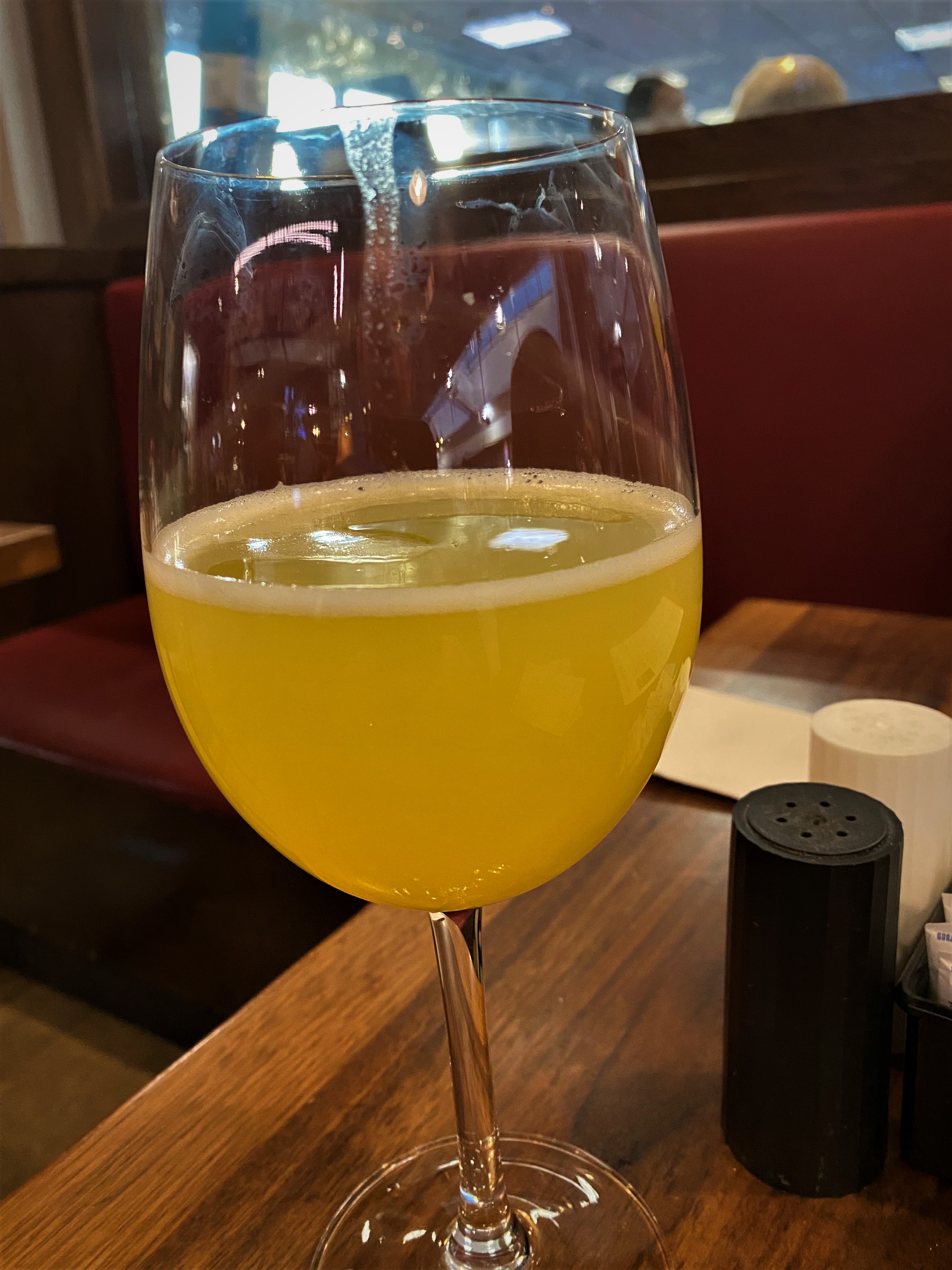
After the first leg of our travel, we were in Baltimore at the airport and had our breakfast at Obrycki’s.  We had Breakfast Wraps and Mimosas, I wanted to take a photo of the bubbly, and I was told that it was a Prosecco, but it was from a keg.  The Mimosas were fine, and then we were getting ready for our next early seating arrangement and she decided that we needed some coffee, so she came back with two Cappuccinos, and we were flying to Savannah.  We were spaced once again on this flight, because of low capacity, and it was funny to hear them keep saying, everyone can have a window or an aisle seat. Years ago, when we were in Charleston, we had planned on going to Savannah, but Mother Nature changed the plans, so my Bride made sure that we would spend a night there.  The airport in Savannah was charming and small, and it was extremely easy to maneuver and getting our car for the trip. 

She had made arrangements for us to spend the first night in the historic section of Savannah, and it was great for walking.  I thought parking was rather extravagantly priced, but we were on holidays. It was great to look at the architecture and think of different times.  We even had a chance to go in and look at the great dome of the City Hall building after we went through yet another TSA type X-ray equipment.  There were twenty-two squares in the historic district to explore and I even found a friend there to commiserate with.  I could go on and on with all of the famous songs that he was either the composer or the lyricist for and he even won four Oscars.  So, rather than attempting to warble “Moon River” I just posed with Johnny Mercer, a famous son of Savannah and enshrined Ellis Square.    

Posted in Dining, Wine | Tagged , | Leave a comment

“Le Petit Cheval” Bordeaux Blanc 2019

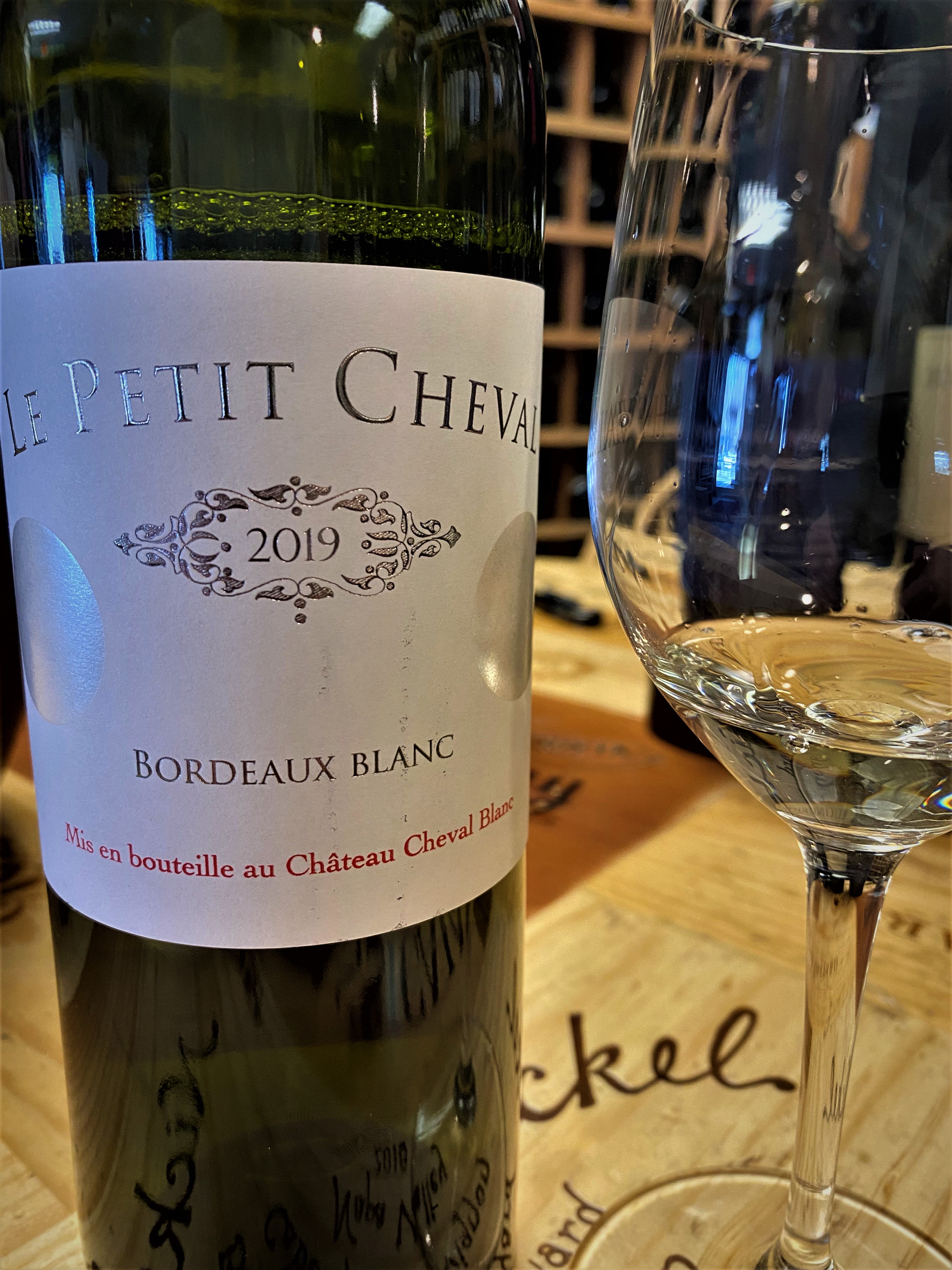
You may be surprised to find out that I stopped by my local wine shop The Fine Wine Source in Livonia, Michigan, before my Bride and I took off for a little getaway.  Immediately, I was spoiled when they poured me some Chateau Cheval Blanc “Le Petit Cheval” Bordeaux Blanc 2019; and they jokingly called it Cheval Blanc Blanc.  Some of you may think of Chateau Cheval Blanc as the star of a film, featuring some rather loathsome characters based in the wine country of central California that lauded Pinot Noir and castigated Merlot.

Chateau Cheval Blanc may be the most famous and prestigious Cabernet Franc and Merlot blend wine in the world.  They also produce a second label red wine “Le Petit Cheval” and then they also have “Le Petit Cheval” Bordeaux Blanc.  Years ago, when I was still in high school, one of my wine mentors told me, that many of the great houses have a wine, that they really only make for themselves and if you ever get a chance, enjoy it.  This was advice given fifty years ago, and it still holds true today.  There are six parcels, almost four hectares on the estate planted with Sauvignon Blanc. After the pressing of the grapes, the musts are fermented in new oak, in demi-muids and wooden vats.  Then the juice that has been stored and racked in these different containers are blended after six months and then they are allowed to age for an additional eighteen months.  The wine was almost crystal in color with yellow and green highlights and offered notes of white fruit, white flowers, herbs and flint.  On the palate tones of peaches and pears, perfect acidity with just the proper amount of sweetness and lilacs.  With the longest count finish for a Sauvignon Blanc that I have ever had with fresh tastes of terroir and more floral tones. It is probably a good thing that my Bride was not with me, as we may have both had to get jobs; I am still enthralled with this wine.

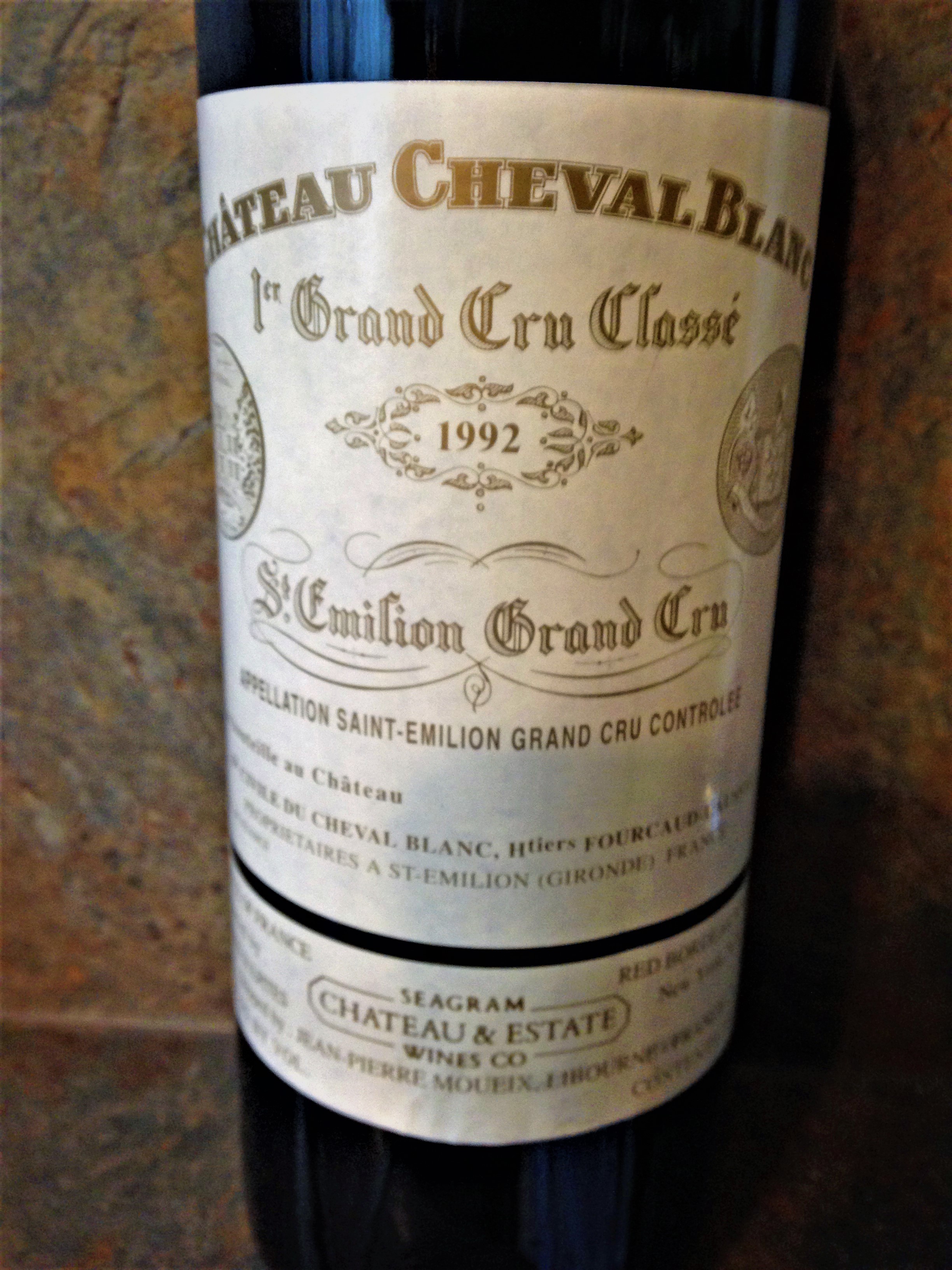
Chateau Cheval Blanc is a Saint-Emilion Premier Grand Cru Classe A and is considered one of the longest-lived wines of Saint-Emilion easily aging for forty to fifty years.  The vineyard abuts to Pomerol and has thirty-nine hectares, divided into forty-five plots; about fifty-two percent Cabernet Franc, forty-three percent Merlot and five percent Cabernet Sauvignon.  The estate is noted for having a fifty/fifty mix of two types of soils, one of clay and the other gravel.  The estate had vineyards since the 14th Century, but it was the 19th Century when it started getting rave reviews, eventually being considered on par with the First Growth of the Medoc.  In 1955, they were awarded Premier Grand Cru Classe A.  After one-hundred-sixty-six years of continuous family ownership, in 1998, the estate was purchased by Bernard Arnault, head of LVMH and the late Albert Frere, a Belgian investor.  In 2011, they opened a new cellar, and they now have production of about eighty-thousand bottles each year.         

Posted in Wine | Tagged , , , , | Leave a comment

“What’s It All About, Alfie”

This is one of those train of consciousness articles, that I write periodically, because I feel like I have to write down my thoughts.  For my generation, Burt Bacharach wrote music that we grew up with, and all with music that is greatly appreciated by musicians, because the keys would change and it could go from major to minor, and with wonderful beats and melodies.  I have to tell you, that I was a fan of his father, as a little kid.  Once, I learned how to read, I read anything that came my way, from cereal boxes in the morning to the evening newspaper.  In grade school, I not only read the funnies, but I used to enjoy the columnists of the day, from the local writers, to the syndicated writers, this was back in the day when there were writers and you didn’t get your news from wire services, like today.  I found the columnists were interesting to an eight-year-old, because they were short little paragraph stories and covered a broad range of topics; Manhattan, Broadways, celebrity sightings and one also wrote besides those topics about food and drinks and little “how-to advice” and that was from Bert Bacharach. 

In 1965 my parents had taken me to see an “adult comedy” called “What’s New Pussycat?” and I was eleven years old, and back then we dressed up to see a movie. Then in 1966, the film Alfie came out starring Michael Caine with the great song “What’s it All About, Alfie?” I was twelve at the time, and it was another “adult comedy.” What these two films had in common were hit songs by Burt Bacharach, the son, who became much more famous than his father, but I guess show business does that. And then I think about the other famous songs that he penned since I was eleven, that became part of my life. 

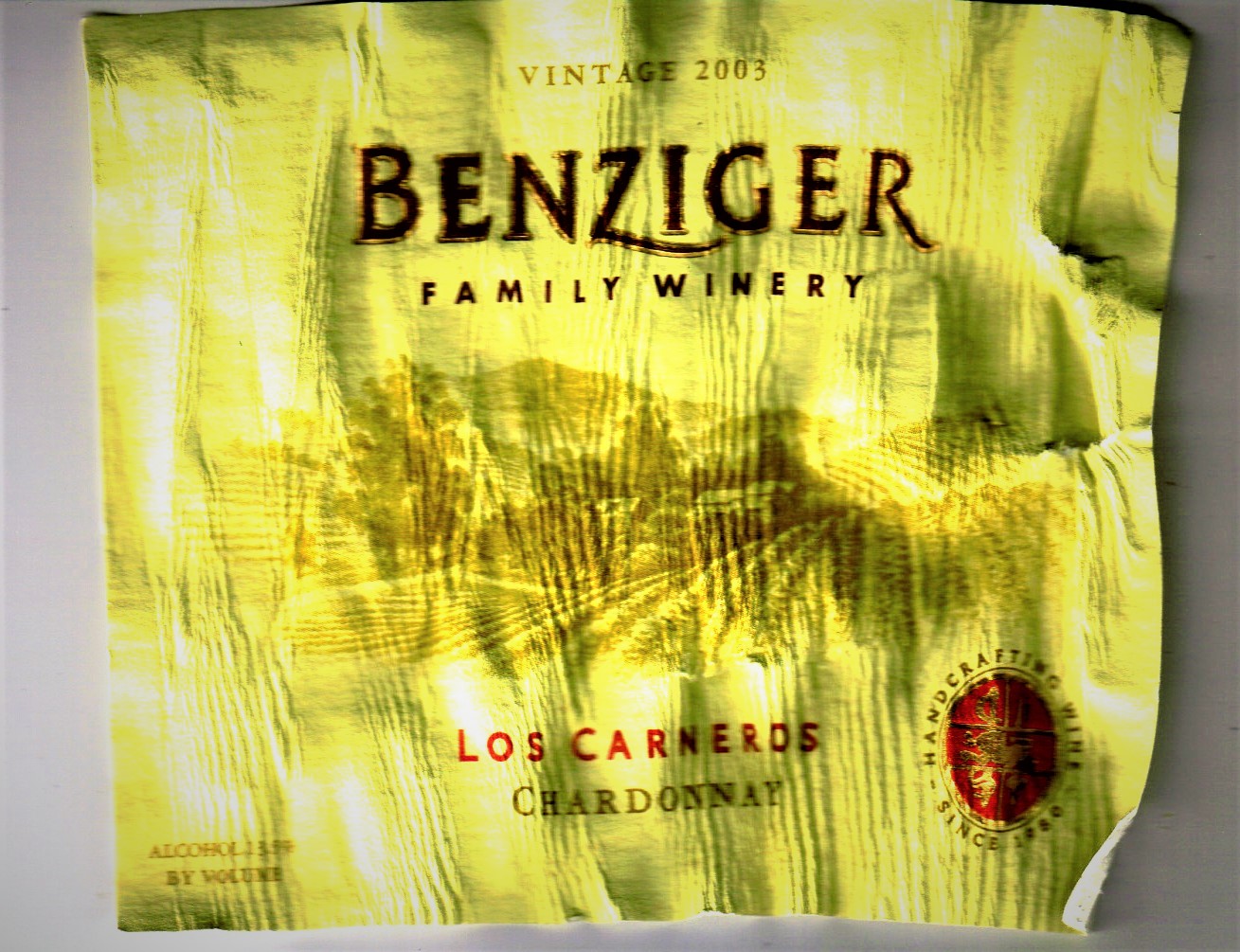
Years later, with my Bride, we dined at the South Beach Brasserie, which was owned by Michael Caine, hence my opening line.  It is in an Art Deco building, as they all seem to be on Lincoln Road about six blocks from the famed Collins Avenue.  The décor had a lot of mirrors, more in keeping with the area, as opposed to what I would consider a proper Englishman’s haunt.  The menu was what I would refer to as “fusion” as there was a mix of European dishes with an Oriental dash of flavor.  There were a couple of classic English dishes, which we passed on.  I had a pan seared Red Snapper that was served with Asian sides, and my Bride had a Seafood stew with Jasmine Rice (that caught her attention).  We had a bottle of Benziger Family Winery Chardonnay Carneros 2003.  The winery began in 1980, when the Benzigers purchased the Wegener Ranch on Sonoma Mountain in Glen Ellen.  The estate property is thirty-five-acres and they have long-term leases in other AVA sites.  They began transitioning to biodynamic farming and released their first certified wine in 2001.  The family owned the winery until 2015, when it was sold to The Wine Group.  A pretty golden wine with notes stone fruits, spices and oak.  On the palate tones of peaches, vanilla, herbs, well balanced with a nice buttery finish, perfect with the fish.  And that is how my brain meanders from one subject to another and finally to wine.              

Posted in Dining, Wine | Tagged , , , , | 2 Comments

Fine Wine Source Club Selections February 2023

With all that is going on around here, it is always a pleasure for me to find time to stop at my local wine shop The Fine Wine Source in Livonia, Michigan.  My Bride knows that it is one of the few places that I will stop at, that requires time.  We can get a week’s grocery shopping quicker than me at the wine shop.  It is an oasis, not only for me, but for most of the regulars that stop there, and I am learning some of them, as they probably see, oh, there is that crazy guy with the hat, that takes photographs of the wines.  But, by this point, we are now comparing notes and discussing wines from non-professional viewpoint and I always enjoy hearing other ideas about wines.

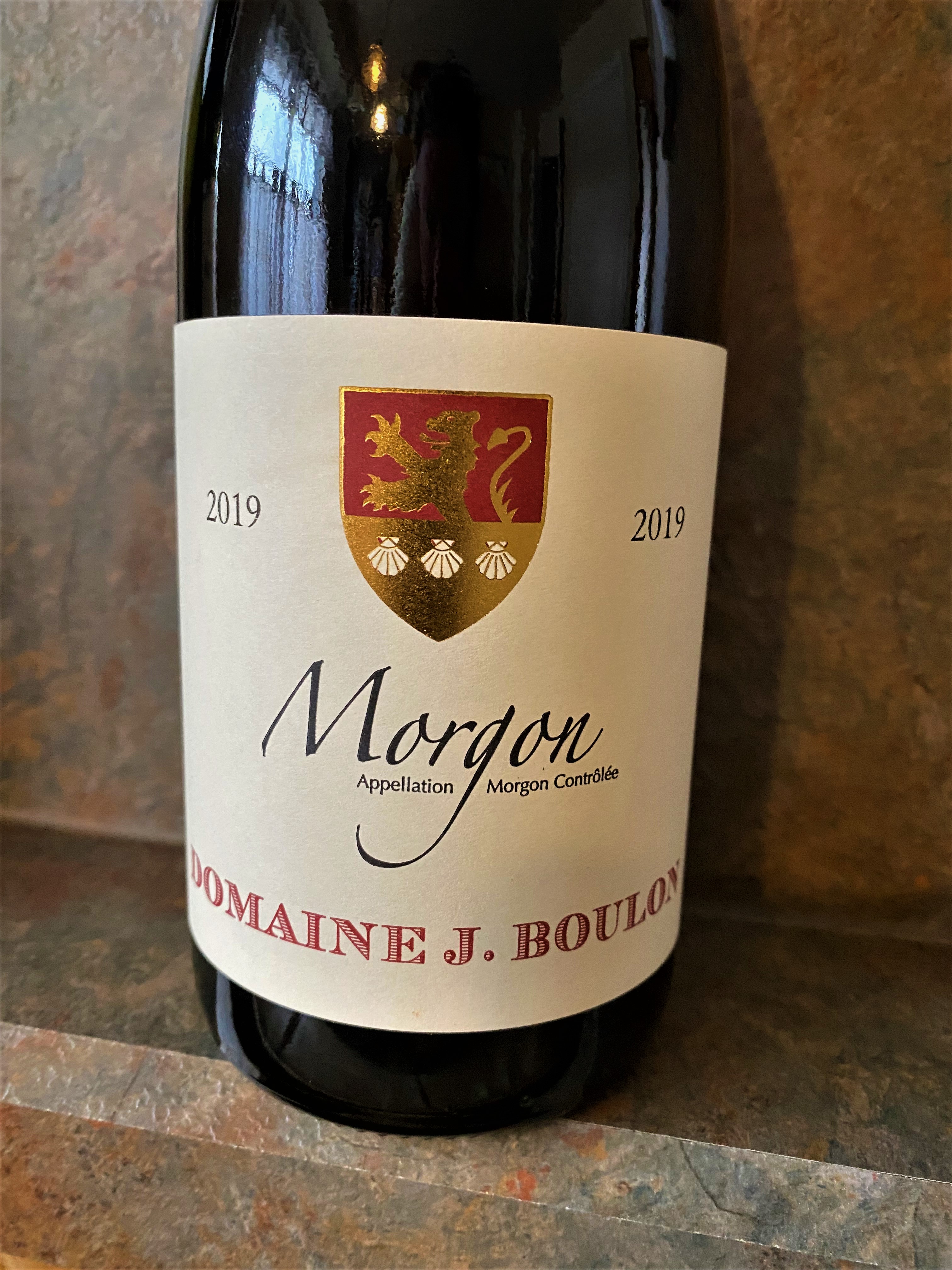
The first club selection and representing the Old World is Domaine J. Boulon Morgon 2019.  In the village of Corcelles-en-Beaujolais, between Lyon and Macon, the Domaine J. Boulon estate of twenty-seven hectares has been situated for seven generations. They produce three Cru wines, a Beaujolais, a Beaujolais Nouveau, a rosé, a white and a “Cremant de Bourgogne.”  Morgon is one of the ten Beaujolais Crus on the slopes of the Beaujolais hills, famed for ancient weathered, volcanic soils of granite and schist with traces of iron; the appellation only applies to red wines and the Gamay varietal.  The vines of the estate average about eighty-five-years of age.  The fruit is hand-harvested, pressed and fermentation and aging are done in Stainless Steel vats to maintain the freshness of the fruit.  The wine is a deep garnet color and offers notes of ripe cherry and plum with a touch of peach and apricot.  On the palate tones of bright cherry and cassis, with herbs and spices and soft tannins with a finish of fruit and some terroir.  Perfect for a dinner on St. Valentine’s Day.

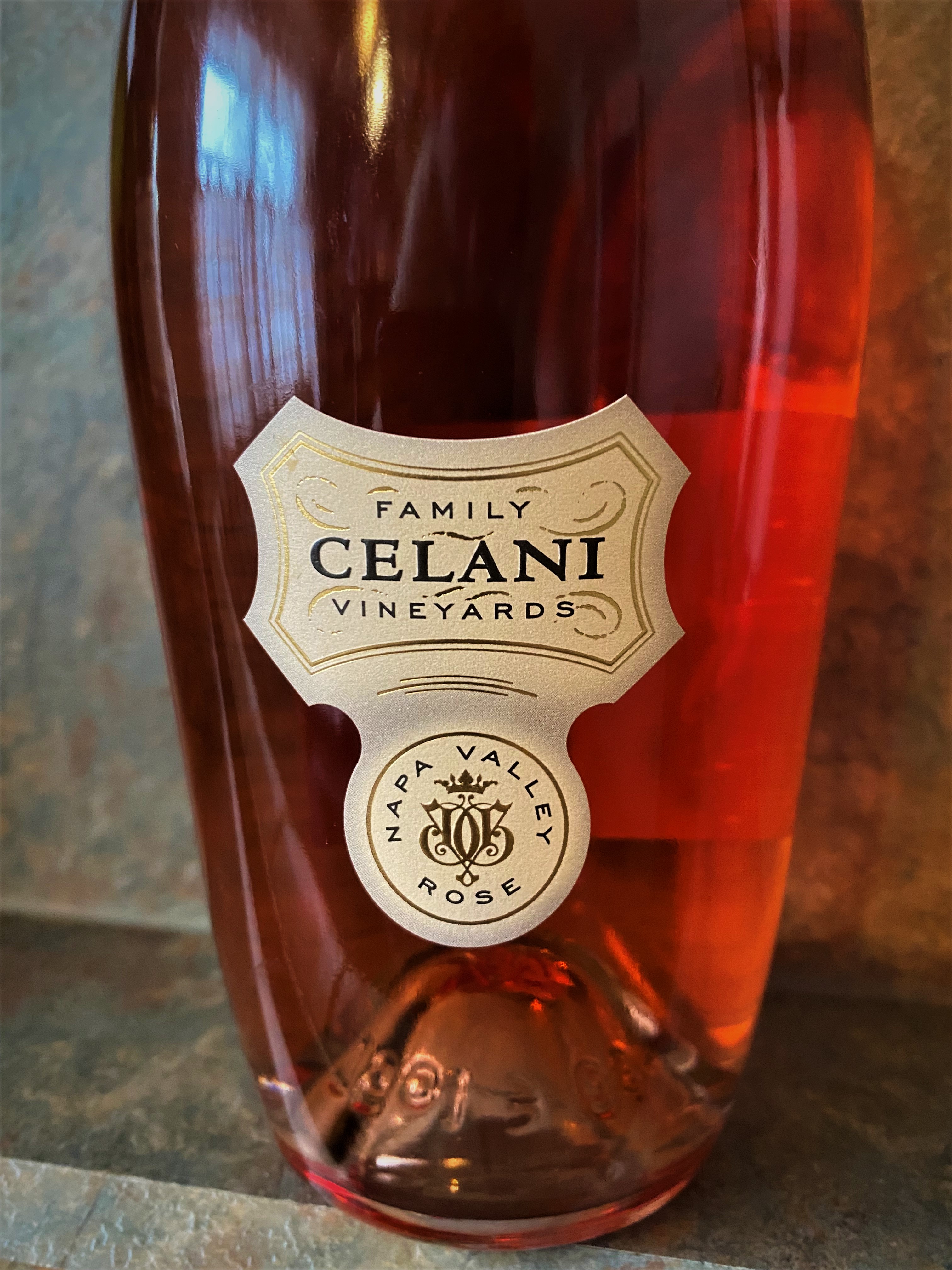
In keeping of the theme of St. Valentine’s Day, the New World selection is Celani Family Vineyards Vincenza Rosé Napa Valley 2021.  I have written many articles about Tom Celani, his ties to Detroit and his continued largesse to his former home of metropolitan Detroit.  Celani Family Vineyards produces about four-thousand cases of wine each year, from their estate grown Merlot, Chardonnay and Cabernet Franc, and their Cabernet Sauvignon is both estates grown and from select vineyards in Coombsville and Mount Veeder. This wine is a blend of Cabernet Sauvignon and Merlot that is fermented in used red French Oak barrels.  A deep pink wine offering notes of cherries, cranberries, melons and white florals.  On the palate watermelon and strawberries with bright acidity that beckons a second and a third taste.           

Posted in Wine | Tagged , , , , , , , , , | Leave a comment

Give Me an Old Neighborhood Pizza, Anytime

I may be considered a heretic, after this article, but I still like an Old-World pizza, or maybe it is called a New York pizza, but I am not partial to a Detroit pizza, and I grew up in the old part of the city.  When I was a kid, back in the dark ages when televisions in Detroit had four stations, because we could pick up Windsor, Ontario, Canada.  The first pizzeria in the neighborhood was a sit-down Italian restaurant on the highway, and some consider it the best, to this day.  Then another pizzeria opened, first as a carryout and then it became a sit-down Italian restaurant as well, and tucked way in the far corner, kind of in the neighborhood, but technically in Dearborn (a suburb) was Roman Village, and then the neighborhood got a couple more carry-out places and one is still going strong.  Why do I go into this litany?  They were all that mysterious delicacy that we called a pizza.  You know that round thing, that you could take home in a square box, and eat in a folded triangle. 

To my dying day, that will be a pizza.  The more toppings the better; a couple of different Italian cheeses, pepperoni, ham, green peppers, mushrooms, olives (your choice), hot peppers and anchovies.  Oh, and a pizza had to be kind of a circular shaped item, it was never perfect, because the dough had to be tossed up in the air and stretched and pulled so that the dough was just thick enough to bake through, but still pliable that with all the gooey cheese that would stretch five or six inches after you tried to cut one piece from another, you could fold in in half to eat, and talk with your other hand.  The other thing is that the pepperoni had to be hand cut and greasy, so that when it is baked, it doesn’t lay flat on the cheese, but curls up and contains a bead of natural grease in the cupped pepperoni.  We wanted to have a pizza, the other day and I really prefer to have a pizza, in a pizzeria or a restaurant.  Roman Village is still going strong in my old neighborhood, but the original family opened up all their newer restaurants as Antonio’s (go figure).  Still the pizza that makes me happy and I have won over my Bride as well. 

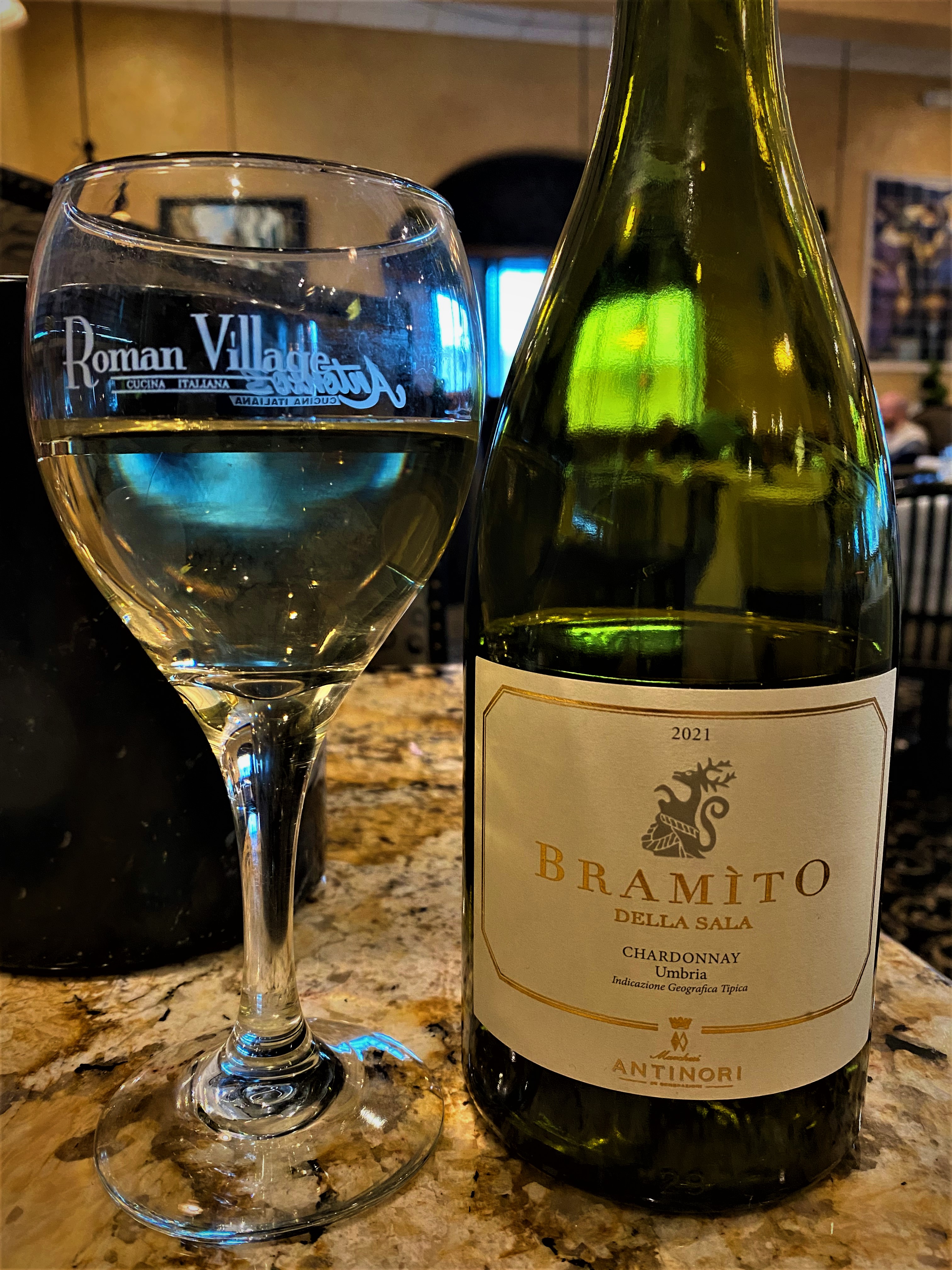
If you think about it, if we ate the pizza at home, the price of the wine would be much better, but I always think that perhaps there will be an interesting new wine to try.  And pizza is an equal-opportunity cuisine, as you can have cocktails, beer, or wine; sparkling, rosé, red or white.  Why white? it is cheese on dough and the meat traditionally is usually the other white meat.  We shared a bottle of Marchesi Antinori Castello della Sala “Bramito della Sala” Chardonnay Umbria IGT 2021.  Now, because I am old school, especially today, Marchesi Antinori is one of the old school wineries that crossed the ocean years ago and they offer from “jug” wine to great wines.  Castello della Sala is one of several estates owned by Antinori.  The winery is named for a Fourteenth Century castle on the grounds, but it wasn’t used as a commercial winery until the last century, when it was bought in 1940 by Antinori.  It was planted with Grechetto and Chardonnay and later on some other whites as well.  In 1985 they created a new state-of-the-art facility for the five-hundred hectare estate of vineyards and eight hectares of olive orchards.  Umbria IGT is a huge region in the middle of Italy that doesn’t have any coastline or international borders, and for years the huge wine producing region was considered Vino de Tavola or table wine for local consumption.  The soils for this wine have sedimentary deposits of marine fossils and veins of clay.  The grapes were destemmed and gently crushed with maceration on the skins for only about four hours and Initial Fermentation in Stainless Steel.  Malolactic Fermentation was only done that went into oak for aging.  Then the wines were blended and bottled. The wine is a soft yellow in color and offers notes of pineapple, apple and vanilla.  On the palate a nice crisp, balanced with of golden apples with a tinge of vanilla and minerals, and a beautiful finish of terroir,  The next day we had the left over pizza with a different  white wine and we both agreed that the Bramito della Sala was the perfect pairing.           

Posted in Dining, Wine | Tagged , , , , , | 1 Comment

Another Dinner at Andiamo Bloomfield

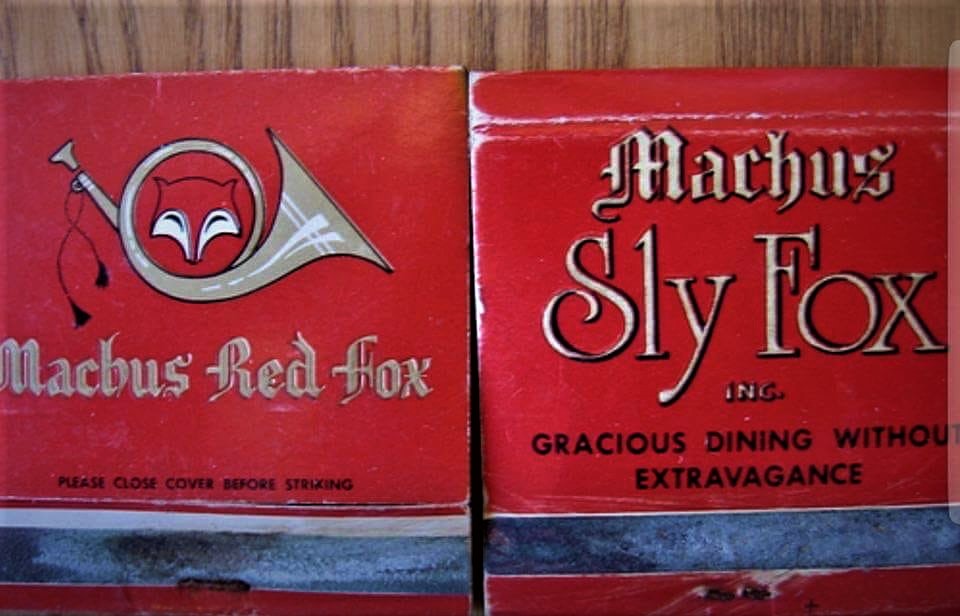
Plenty of times a restaurant’s location determines where we are going to dine, when we are trying to find someplace halfway, since the price of petrol has become expensive again in the last couple of years.  We were meeting at Andiamo Bloomfield, which was the old Machus Red Fox, when I was young.  Harris O. Machus opened the restaurant in 1965.  It became infamous on 30 July, 1975 when James R. Hoffa disappeared, and closed in 1996.  I found some examples of matchbooks from the Machus Red Fox and I still think that they were the best form of advertising to this day;  and they had one of the best pastry shops around.  After renovations Andiamo Bloomfield opened in 1997.  

We were having a nice dinner, and we were the guests, as our son and his wife were treating us for dinner.  We shared a couple of appetizers on the table.  Carciofi alla Giudia or fried long-stem artichoke heart, done in olive oil, garlic aioli and sea salt.  There was also a charcuterie plate, their Salumi e Formaggi Meats and Cheeses with crostini, dried stone fruits, truffled honey, Marcona almonds and an olive tapenade.  My Bride and I both had the same dinner entrée of Pesce Bianco alla Siciliana or Sicilian-style Whitefish, with Italian potatoes, vegetables and an Almandine sauce.  For dessert there was Tiramisu and Macarons. 

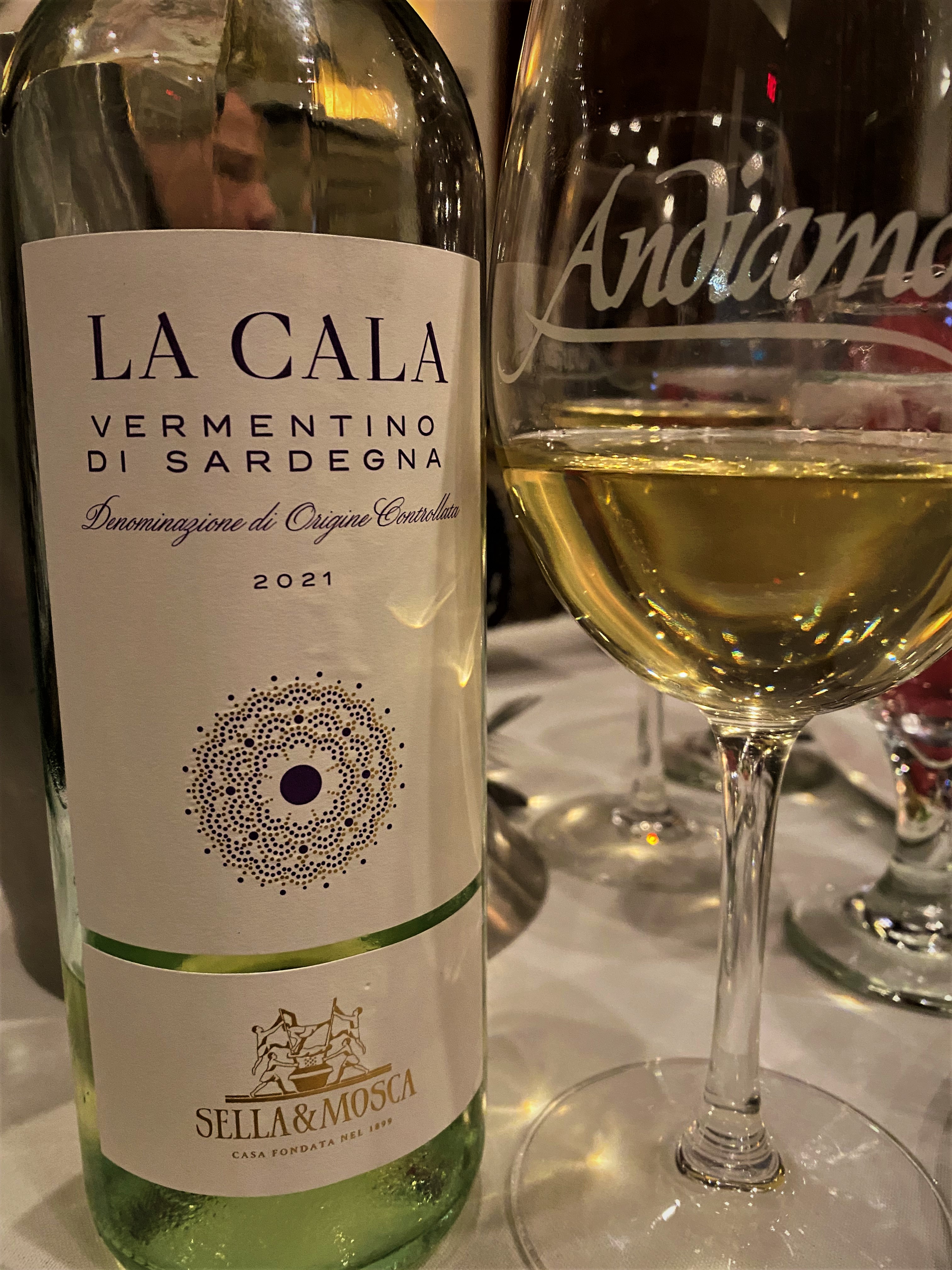
It was easy to select a wine for our dinner and we went with Sella & Mosca La Cala Vermentino di Sardegna DOC 2021.  Sella & Mosca (Sella e Mosca) is the largest wine producer in Sardinia, featuring local varieties and “international” varieties.  The winery was founded in 1899 by two Piedmontese businessmen.  Their I Piani estate is one of the largest wine estates in Europe with five-hundred-twenty hectares of contiguous vineyards.  Vermentino di Sardegna DOC was granted in 1988 and covers the entire island.  The history of Vermentino on Sardinia is vague as to whether it is from Liguria in Italy where it is known as Pigato, Provence and the Languedoc of France where it is known as Rolle or from Spain, where it is barely seen anymore.  Internationally, the lion’s share of Vermentino is Italy.  There is not a lot of information about the wine, outside of soft pressing, cold settling, fermentation and short aging in Stainless Steel.  A pretty golden color offering notes of citrus fruit, florals and minerals.  On the palate the wine has tones of fresh fruit, a soft and balanced wine with a nice finish of terroir and a touch of iodine.  I may be biased, but I thought the Vermentino paired very well with the Whitefish.  


Posted in Dining, Wine | Tagged , , , , , , , | Leave a comment

With The Caller Again at Arta’s

It is always a great evening when we can be with The Caller and his wife.  He received the nom de plume of The Caller, from the early days of my writing this blog, as he was always sending me messages about which wine, while they were out and about, especially when he was on the road for business.  They live out in the hinterland, in fact, Google-Earth or any of the other road apps start questioning where in the world you are, when you start the return trip home.  We try to find someplace interesting and in between our two homes, with the criteria being that the establishment has good food and they have good wines. 

We found ourselves back at Arta’s in Brighton, Michigan and the place is easy to miss, as it is in a medical center complex and looks more like a family lunch restaurant compared to a fine dining establishment; looks can be deceiving.  The restaurant opens at five in the evening, but we found out the last time, that the bar is open earlier and we ended up having cocktails to start the evening off.  We finally got to our table and we started off having some appetizers like Carpaccio di Filetto, soups and salads.  The entrée orders were mixed and so I thought just a couple of different wines that could be enjoyed several ways, so one white and one red.  The Caller had shown me a wine that they had on one of their many adventures from a volcanic island in the Canary Islands.  For the white wine we had Varvaglione 12 e Mezzo Malvasia Bianca Del Salento IGT Fashion Label 2020.  Varvaglione Vigne & Vini srl was established in 1921, located in Puglia and the produce a wide array of assorted wines under multiple DOC and IGT designations; and they are one of the oldest wineries in southern Italy and are now in their fourth generation.  They have one-hundred-fifty hectares of vineyards, and they also have contracts with many of the other vineyards in the area and they specialize in predominately Italian varieties.  Salento IGT is the most commonly used designation in Puglia and technically encompasses all wine types produced, as there are over fifty different varieties that are accepted for the region.  Malvasia Bianca is grown across Italy and is known by various local names and is often blended as well.  The fruit undergoes Maceration and Initial Fermentation in the first twenty-four hours in Stainless Steel and then continues aging for a short period after, to maintain the fruit flavor of the wine.  This very pale-yellow wine offers notes of stone fruit and soft florals.  On the palate, soft fruit and flowers, with a balanced natural acidity and a pleasant finish of limestone.

For the entrée choices, it was seafood, but it was mentioned that some would prefer red to white with their choices.  There was Grilled Bronzini, Classical interpretation of Mussels, and Lobster in a Saffron Crème. So, the hunt was on for a more subtle red wine.   We had a bottle of Arnaud Lambert “Breze” Clos Mazurique – Monopole Saumur 2020 and the wine used to go by the name of Chateau de Breze.  Arnaud Lambert calls himself a “winegrower in Breze” and a “Loire craftsman.”  Yves Lambert created the domaine in 1996, with the desire to exploit the terroir of Saumur-Champigny for both Cabernet Franc and Chenin Blanc. Arnaud joined his father in 2005 and in 2009 began their goal of working organically and they also acquired eight plots in the Monopole of the commune of Breze.  Saumur Rouge is the appellation for the area around Saumur in the central Loire Valley and Cabernet Franc, must be at least eighty-five percent of the wine, but in practice the wine is usually unblended.  The age of the vines in Breze are about forty years of age.  The Maceration, Initial and Malolactic Fermentation are done in Stainless Steel, followed by some aging in Concrete vats.  The wine had a deep-red color and offered notes of red and black fruits, smoke and spices.  On the palate very subtle notes of fresh plums and currants, with a smoky presence, and dry tannins with a softer interpretation of a Cabernet Franc and a nice finish of limestone terroir.

While the others were sharing assorted desserts, I decided to share some of my liquid dessert.  I indulged in a glass of W&J Graham’s Six Grapes Reserve Porto Douro Valley NV.  Graham’s is a prominent Port house in the Douro Valley and originally began as a textile company and were established in 1820.  They received a barrel of Port as payment for a debt, and the business began, and they are now owned by the Symington family of Dow’s and Warre’s.  They have a fine offering of assorted classic Porty wines, vintage and non-vintage.  The seven major varieties found in Port wines are: Touriga Nacional, Touriga Franca, Tinta Barroca, Tinta Roriz (Tempranillo), Tinto Cao, Sousao, Tinta Amarela, and Mourisco Tinto. The old barrels as they aged ended up having from one to six grapes drawn on them indicating complexity, structure and balance and some of the barrels were destined for vintage port.  Six Grapes is a reserve port that is bottled younger and it has become their signature reserve port.  This deep ruby-red wine after its two years in seasoned casks offers notes of blackberries, cassis and licorice.  On the palate, the fresh fruit and subtle spices just beckon one to sit back and enjoy the smokiness, the velvety tannins and finish that even evokes chocolate and terroir to me.  The perfect way to end the evening, until our next dinner.

Posted in Dining, Wine | Tagged , , , , , , , , , , , , , , , , , , , , , , , , , , , | Leave a comment

A Tasting of Two White Graves

It is always fun with a bit of trepidation when my Bride accompanies me to our local wine shop, The Fine Wine Source in Livonia, Michigan.  While I think that they abide me, the enjoy when she comes along.  After all, she is the exchequer of the household and her pen is becoming legendary when it comes to writing orders.  She may not use any of the right words, of course, there are times when I don’t either, the Royal Pass when one is a Street Somm; but she can get quite animated when tasting wines. 

We started a tasting with Chateau Carbonnieux Grand Cru Classe de Graves Pessac-Leognan 2019 from the Famille Perrin.  Most of the finer estates in the Pessac-Leognan region of Graves make red and white wines, sometimes in a couple of tiers.  The estate was founded in the 13th Century and it has passed through many of France’s “bourgeois families: over the centuries.  In the mid 1900’s it was purchased by the Perrin family.  They renovated both the winery and the vineyards and increased the property from forty-five to ninety-two hectares.  By the time of the classification of Graves in 1959, both the red and the white were rated as Grand Cru. The winery is practicing organic and sustainable farming in the vineyards and the soils are rich in gravel, clay, sand and limestone and naturally well-draining.  For the white wines the estate grows Sauvignon Blanc and Semillon.  For the grand vin blanc, Maceration and Initial Fermentation takes place in Stainless Steel and the Malolactic Fermentation takes place in French Oak for ten months.  After blending, the wines are fined before bottling and then allowed to rest for a few months prior to release.  A very pale yellow-green colored wine offering notes of vegetation and spices.  On the palate there were tones of ripe stone fruit, tart with a kiss of sweetness and toasted oak, the acidity is quite fresh and the finish was a mix of wine and terroir.

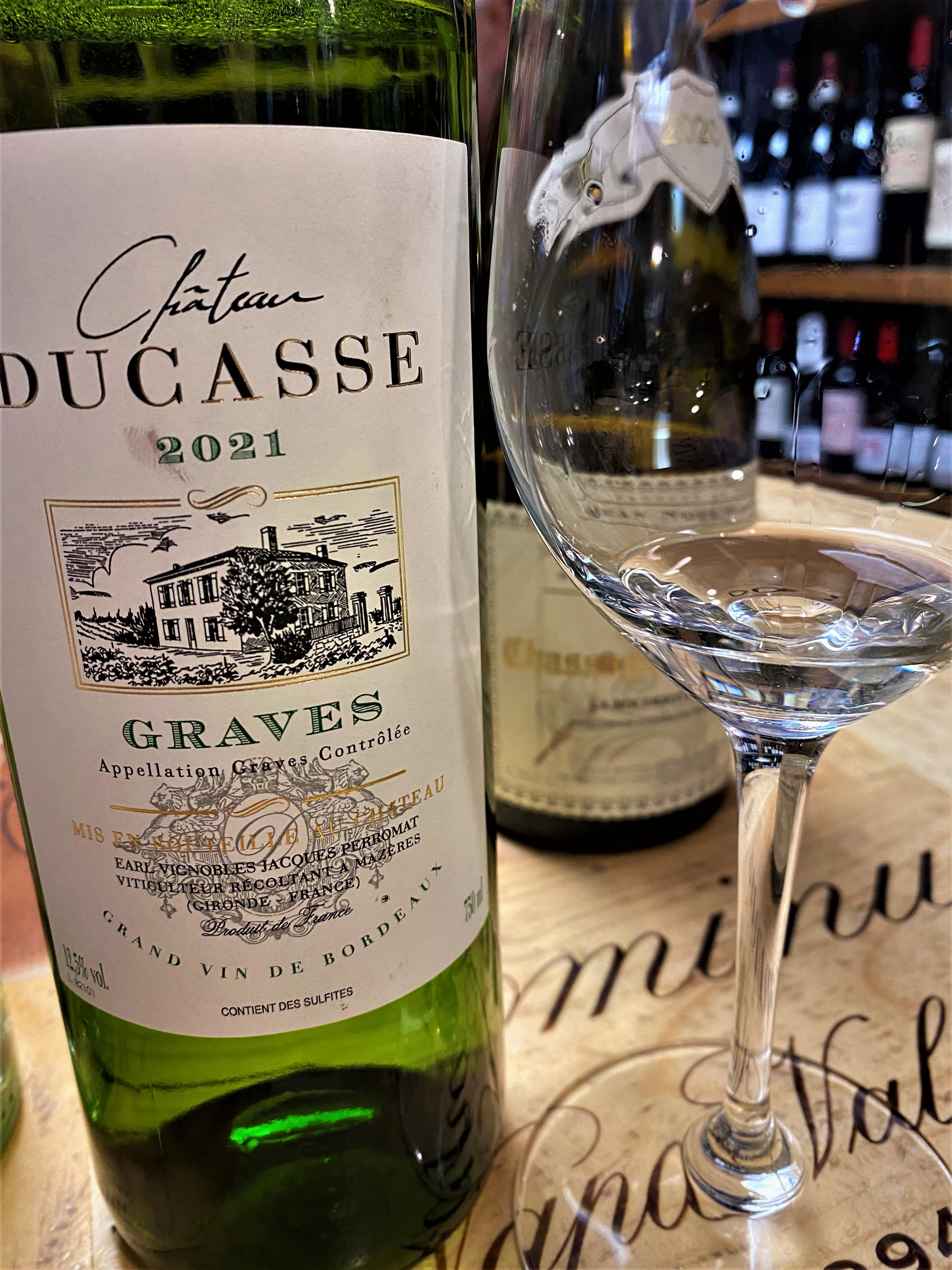
The second wine that we tried was Chateau Ducasse Graves 2021.  The estate makes both dessert and dry white wines and they have been considered great values for decades.  The soil is clay and limestone on fissured bedrock.  The wine is seventy percent of Semillon and thirty percent Sauvignon Blanc and the vines average about thirty-five years of age and is thirteen hectares in size.  The Maceration, Initial Fermentation and Malolactic Fermentation was done in Stainless Steel and then aged for six months in Stainless Steel as well.  The pale straw-colored wine offers the classic notes of grass and some lime.  On the palate fresh citrus and a touch of apple, balanced and dry with a nice finish of terroir.   

Posted in Wine | Tagged , , , , , , , , | Leave a comment

A Couple from Langhe Nebbiolo

Now I have to admit that I enjoy tasting and writing about wines, but the wines that I get from my local wine shop, The Fine Wine Source in Livonia, Michigan, may keep you scrambling to find some of these wines.  Since they curate every wine that they carry and they go out of their way to not compete with chains, department stores, grocery stores, party stores and gas stations; their mix is far superior and not any more expensive.  They are always looking for bargains to pass onto their customers and to their club members.  I recently tried two wines from the Langhe region in the Piedmont area of Italy and using the Nebbiolo grape, the star varietal of the area. Langhe Nebbiolo is considered by many to be a secondary version of Barolo and Barbaresco.  The rules are lax comparing to the first versions, and while fifteen percent of indigenous grapes varieties are permitted, most are pure Nebbiolo.  Winemaking processes tend to be shorter compared to the first versions as well and a lot of time offering a price value, if one can find this designation.  

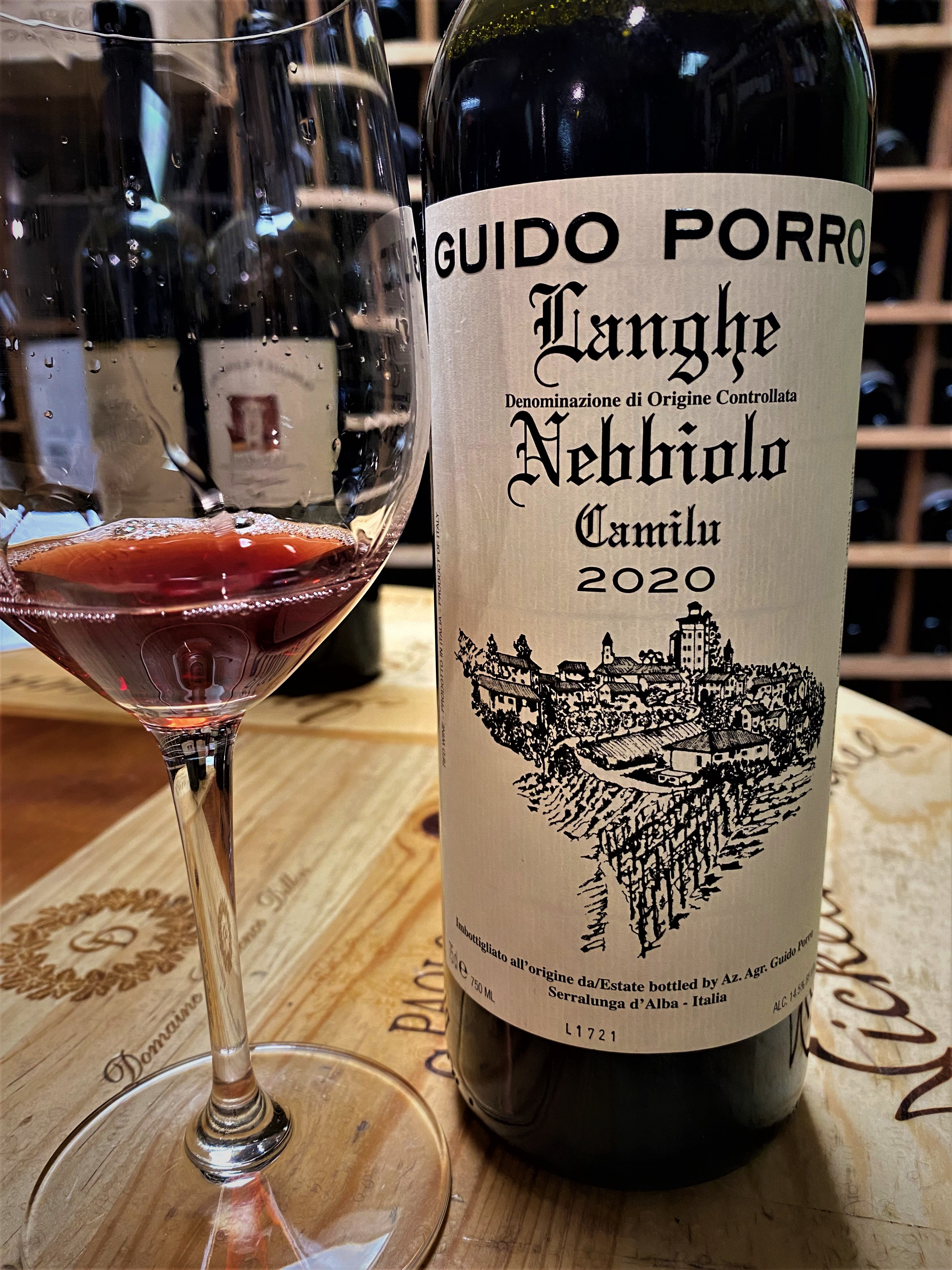
The first wine that I tasted was Guido Porro “Camilu” Langhe Nebbiolo DOC 2020 from Azienda Agricola Guido Porro.  The winery is now in the fourth generation and it is six hectares in size and they produce about twenty-five-thousand bottles in several categories.  This wine comes from a vineyard that is about a third of a hectare in size, and the vines are ten to twenty years of age on limestone and clay soil.  Six to seven months in large tonneau casks for aging.  A bright garnet-red colored wine which offered cherries, roses and spices.  On the palate notes of rich concentrated black cherries and spices, perfect acidity and tight tannins with a nice medium count finish of terroir.

The second wine was Michele Chiarlo “Il Principe” Langhe Nebbiolo DOC 2018.  Michele Chiarlo is a producer in Piedmont and specializes in Barolo, Barbaresco, Asti and Gavi.  The winery was established in 1956 with vintages of Barbera and Moscato from Asti, and the first Barolo in 1958. While the winery is young, he is of the fourth generation of Piedmontese winemakers.  This wine has fruit that is from their Barbaresco vineyards that is adjacent to vineyards of Roero, named after the Roero family, who were powerful bankers in the Middle Ages and the soil is marked by its bluish-gray calcareous-clay marl and loose sandy earth.  Manually harvested, the fruit spent ten days of maceration, Initial Fermentation, and Malolactic Fermentation in Stainless Steel and then was aged in wood for about eleven months and then some time in the bottle, before release.  A pretty bright garnet red-colored wine with notes of red fruit, violets and spices.  On the palate tones of rich black cherries and spices with fine tannins, balanced with great acidity and a nice medium count of fruit and terroir.  This was a real keeper and I had to get some for the cellar.   

Posted in Wine | Tagged , , , , , , , , | Leave a comment