Three Unique Wines from Bordeaux

I received a text message from my local wine shop The Fine Wine Source in Livonia, Michigan inviting me for a special wine tasting.  Sometimes, I have been known to enjoy impromptu wine tastings there as well; and this time I was asked what time would I be arriving.  Now, with all of the wonderful wines that they carry, the shop can feel claustrophobic with a crowd eagerly tasting some wines; so, I responded with a time, a little while later, I was asked if I could come at a different time.  That told me, that it was going to be a wonderful tasting experience, so I let them pick the time, and then I agreed.

The first wine out of the icer, was Chateau Brane-Cantenac Blanc Bordeaux 2021, a white wine from the famed house in Margaux.  Chateau Brane-Cantenac was ranked a Second Growth in the 1855 Classification of the Medoc and Graves.   The estate goes back to the 17th Century, and was purchased after the French Revolution by Baron Jacques-Maxime de Brane.  In the 1950’s the estate was purchased by Lucien Lurton and is now owned by Societe Viticole Henri Lurton and is currently overseen by Henri Lurton.  There are seventy-five hectares of vineyards planted on top of sandy, gravel-bases soil, with an abundance of large pebbles, which are beneficial to the vines for maintaining warms and for excellent water drainage.  Three hectares of vines are planted in the Haut Medoc appellation of their property on gravelly clay soil and it is here that they grow their white Bordeaux wine and the first vintage was in 2019.  The 2021 vintage is a blend of seventy-two percent Sauvignon Blanc and twenty-eight percent Semillon.  The wine is blended and aged in a mix of 225 liters and 500 liters barrels with fifty percent new oak for eight months on fine lees.  The wine is a light yellow in color and offers great aromatic notes of yellow fruits, green apples, cinnamon, and new leather.  On the palette there were tones of candied lemons, tropical fruits, a soupcon of honey, velvety tannins that had a nice long lingering finish of lemon meringue; and I must stress that this wine was dry, even with the lively nuance blend of flavors.
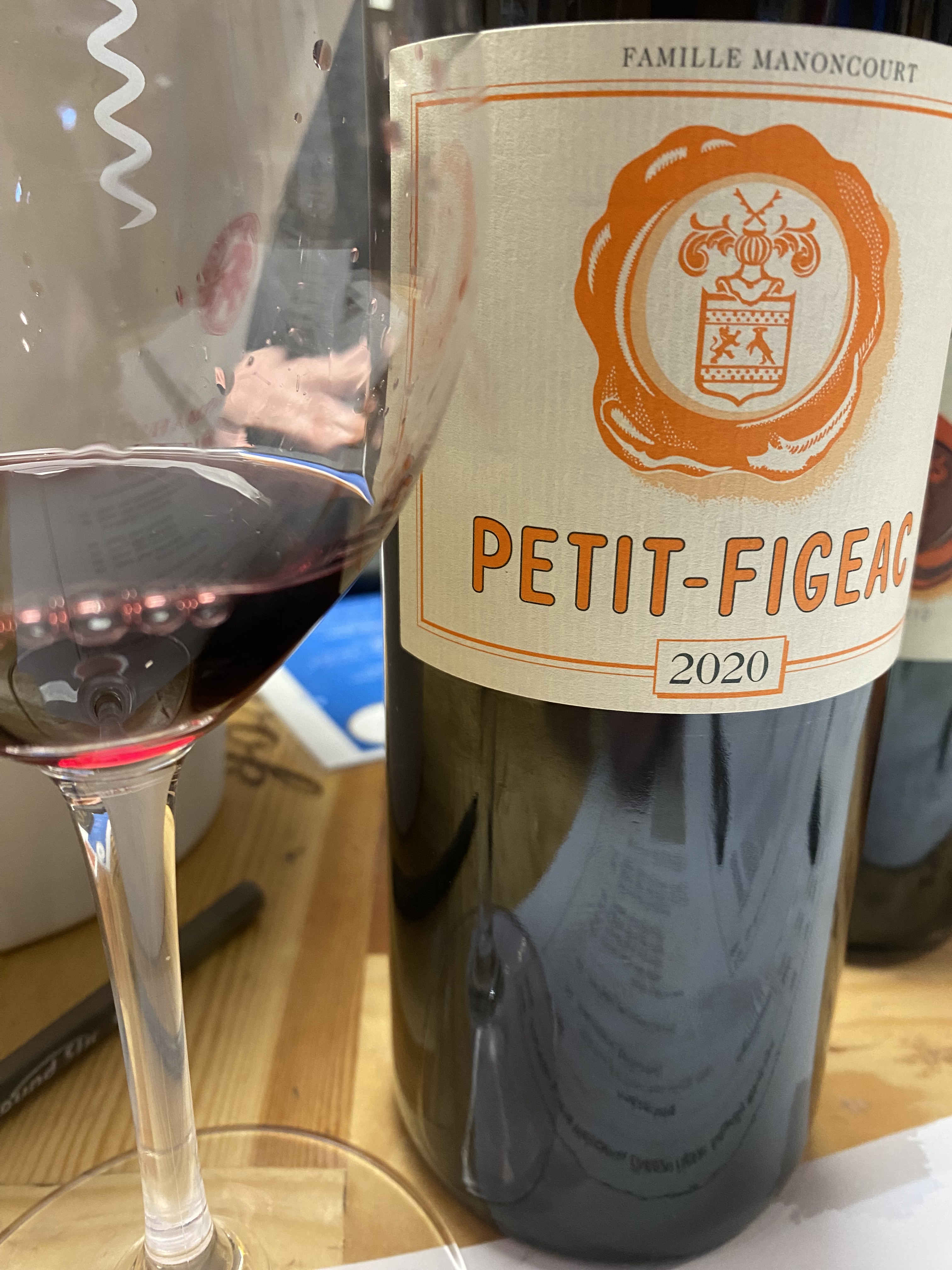
The first red wine of the afternoon was Chateau Petit-Figeac Saint-Emilion Grand Cru 2020.  In 1945, Chateau Figeac was one of the first Bordeaux estates to have a second wine, and it was La Grange Neuve de Figeac, named after a particular plot in the estate.  In 2012, the second wine was labeled Petit-Figeac and is now made from fruit from various plots across the estate.  The production of the Grand Vin is 100, 000 bottles, the production of Petit-Figeac is 40,000 bottles.  Petit-Figeac is harvested, vinified, and bottled to the same standards as Grand Vin, just with younger vines.  The wine is a blend of fifty-eight percent Merlot, thirty-three percent Cabernet Sauvignon, and nine percent Cabernet Franc.  The wine is aged from fifteen to eighteen months in oak, with about twenty percent new.  The deep red wine offers notes of black and red fruit, florals, and spice.  On the palette great tones of cherries, plums, spices blended with polished tannins; a medium-bodied red wine with a good finish of terroir.

Then we started a vertical tasting of Chateau Figeac Saint-Emilion Grand Cru Classe – B 1989.  Chateau Figeac is a forty-two-hectare vineyard that is rather unique as it has a much greater planting of Cabernet Sauvignon, compared to the other vineyards in the Right Bank.  The estate is planted thirty-five percent Cabernet Franc, thirty-five percent Cabernet Sauvignon and thirty percent Merlot.  On the average the vines are forty-five years of age, with some over one-hundred years of age.  The fruit is hand-harvested and then inspected by video-scanning.  After the fermentation process, the wine is aged in all new oak barrels for thirteen to fifteen months.  The wine is a nice ruby-red color offering notes of cherries, plums, florals, tobacco, and earthiness.  On the palate the tones of fruit were a bit feisty or gamey, with that delightful character of an aged Medoc, good acidity, with firm tannins, and ending with a nice decent finish of some cedar, graphite, and fruit.
Posted in Wine | Tagged , , , , , , , , , , , , , | Leave a comment

Fine Wine Source Club Selections – April 2024

Once a month, I go to my local wine shop The Fine Wine Source of Livonia, Michigan to pick up their club selections.  The odds are that I go there more often than that for the camaraderie and the in-house wine tastings.  Another great bonus is that one gets case pricing, even if you only need a bottle or two.  The selections always have one wine representing the Old World and one representing the New World.

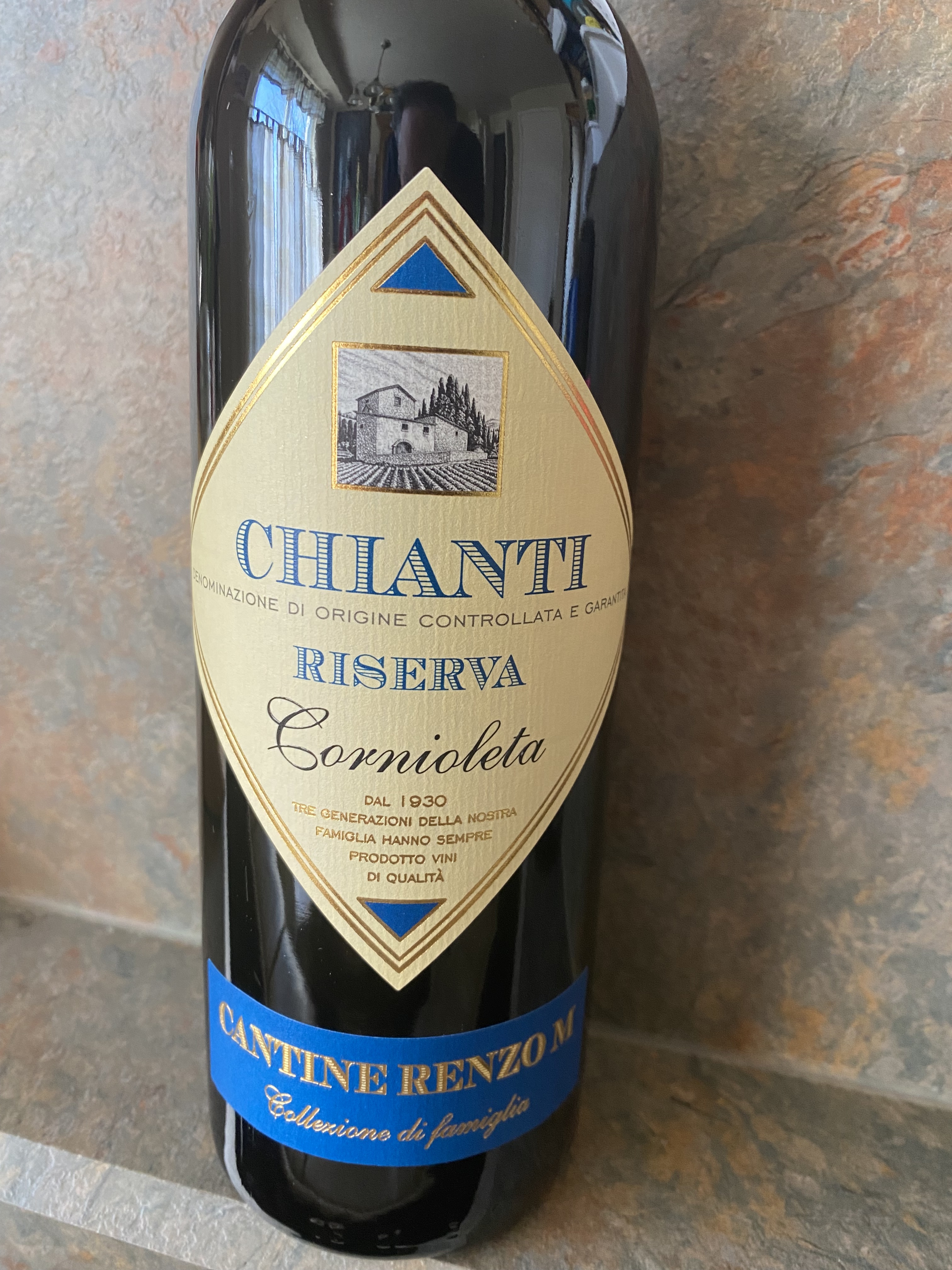
The first bottle is Cantine Renzo M “Cornioleta” Chianti Riserva 2019 from the Fattoria di Basciano which is owned by the Masi family since the beginning of the 1900’s. It is a family-run company that has been making wines for three generations in the Chianti Rufina region of Tuscany.  Chianti Rufina is the second most widely known region after the Chianti Classico district, and it has nothing to do with Ruffino, a wine producer in Tuscany (but people get the two confused, because they sound and look similar).  They have long term relationships with growers, and maintains a consultation on how to maintain the vineyards for the highest quality.  The Rufina region is more mountainous compared to the Classico zone and is known for cooler evenings, allowing the grapes to ripen more slowly.  The Riserva is only made in selected years and this wine is ninety-five percent Sangiovese and five percent Colorino (a minor Italian varietal that is known for its dark-black skin and high tannin levels to give color and character to the Sangiovese grapes in Tuscany).  “Cornioleta” means a small grove of dogwood plants (corniolo in Italian) that grown nearby some of the vineyards.  The wine is aged for thirty months in oak and Paolo Masi is considered a “modern-style” winemaker in the region and known for deep colors and elegant aromas.  The dark wine offers notes of cherries, fennel, sage, rose, tar, and graphite.  On the palette tones of mature cherry fruit, blended with full tannins with substantial acidity against a chocolaty backdrop.

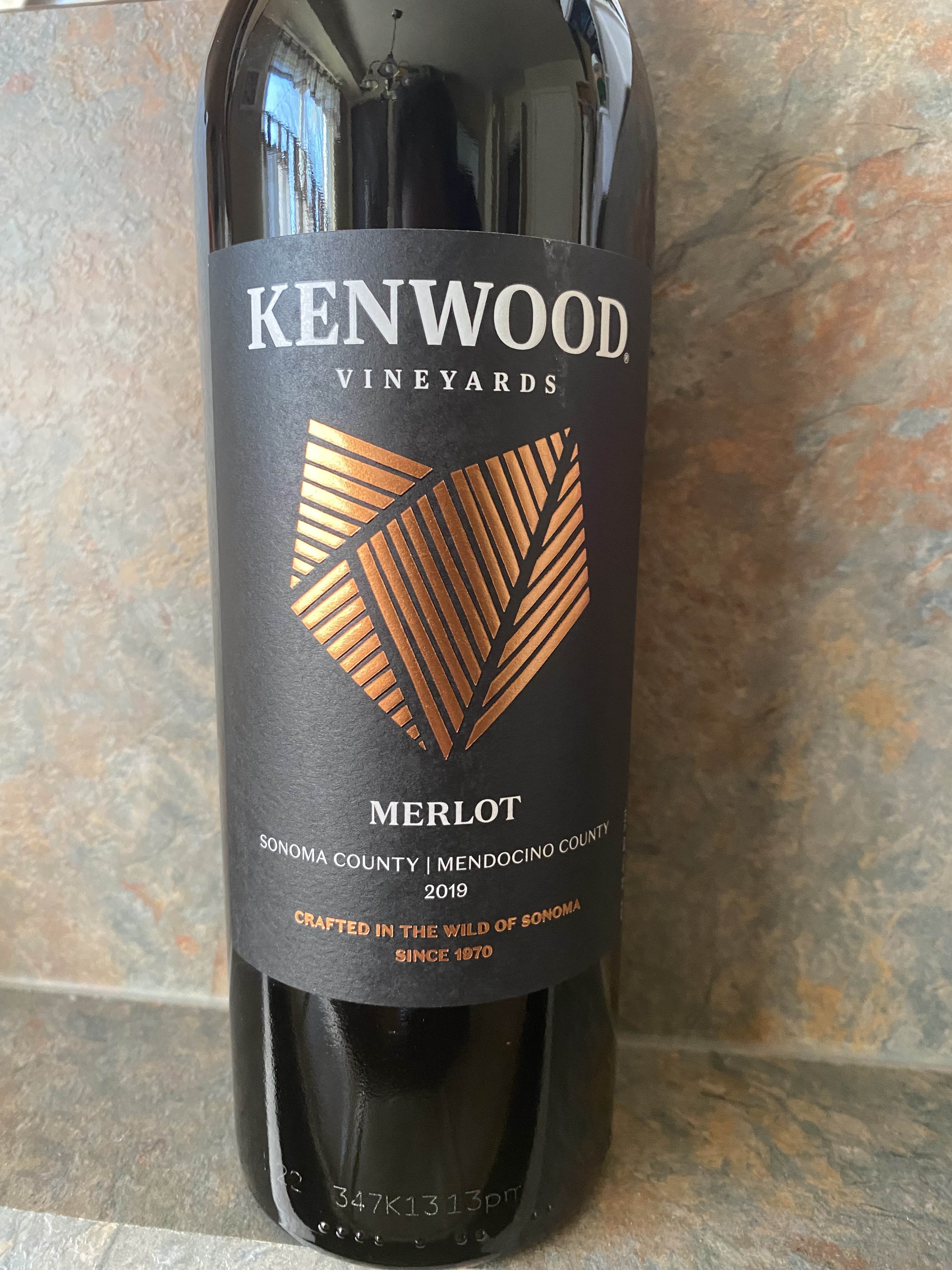
The second wine representing the New World is Kenwood Vineyards Merlot Sonoma and Mendocino Counties 2019.   Kenwood Vineyards was established in 1970 in Sonoma.  It was founded by the Lee family when they purchased the estate and winery of the Pagani Brothers that began in 1906 and were successful until Prohibition.  In 1999 the winery was bought by F. Korbel and Bros. and in 2014 Kenwood was bought by the international beverage concern of Pernod Ricard.  Kenwood Vineyards has twenty-two acres of estate vineyards and also sources fruit from dozens of other growers in Sonoma.  The winery has been known for years for some of their Single-Vineyard wines, as well as some of their other collections.  This wine is from one of their other collections as it also uses fruit harvested from seventy-one percent Sonoma County and twenty-nine percent Mendocino County.  The various blocks of Merlot were picked from September through October and ferment separately, then aged with new oak before the final blending.  The wine is eighty-seven percent Merlot, nine percent Cabernet Sauvignon, and four percent Petit Verdot. The furnished tasting notes describes the dark red wine as having notes of blackberry jam, dark chocolate, blueberry, and touches of toasted oak.  On the palette, tones of black plum, raspberry, cedar, soft tannins, and a long finish.

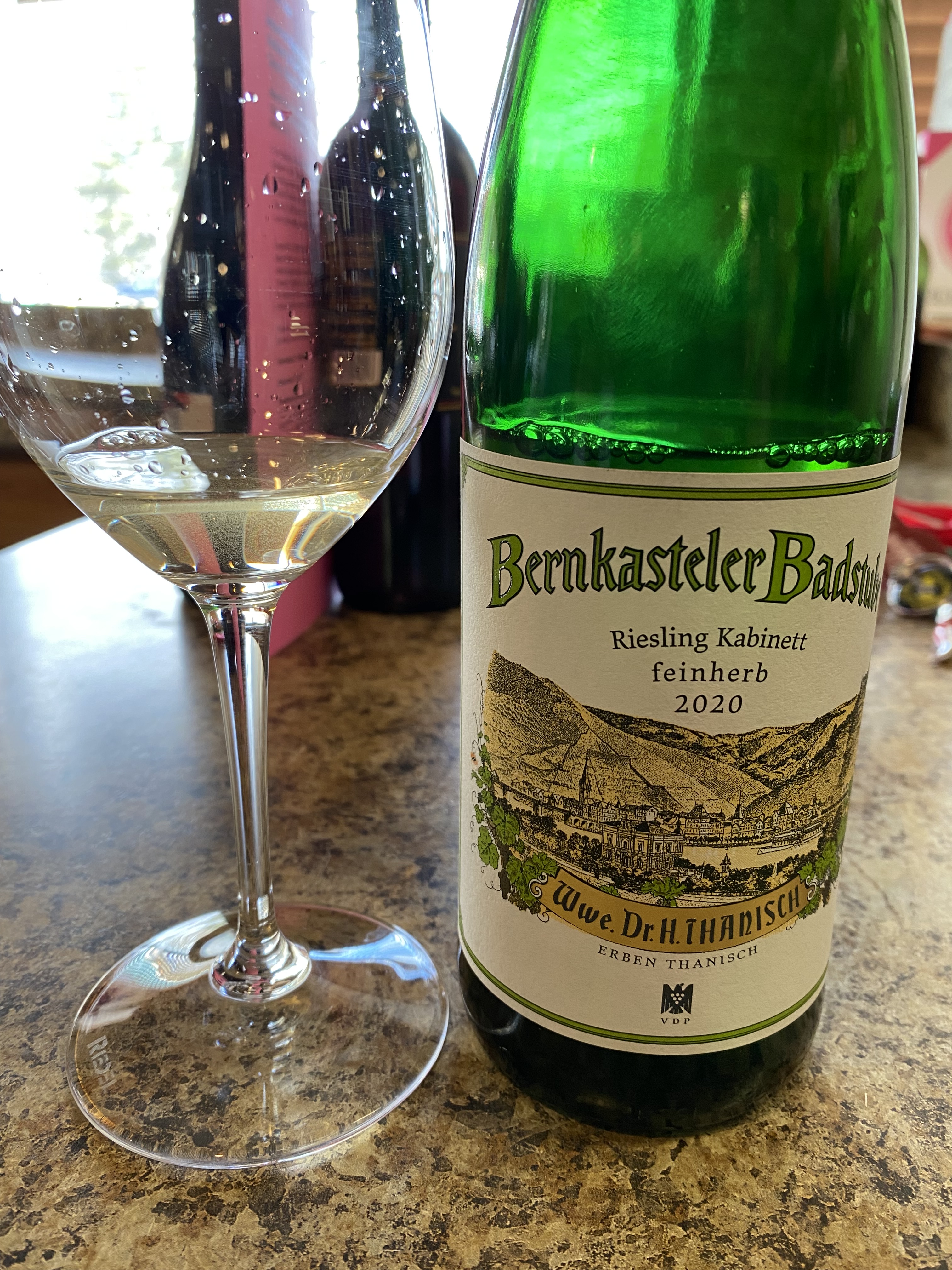
I thought I would also mention a wine that I tasted at Fine Wine Source, that really hasn’t fit conveniently with other wines for an article.   It is Wwe. Dr. H. Thanisch Bernkasteler Badstube Riesling Kabinett 2020.  The winery is currently managed by Sofia and Christina Thanisch and the family goes back to 1636 and covers twelve generations.  The winery first made the attention of the tax men in 1654.  They now have vineyards located in Bernkastel, Kues, Lieser and Brauneberg and all are planted with Riesling; the most famous vineyard is their Bernkasteler Doctor.  Most of their vineyards have been owned by the family for over two-hundred years.  In 1910, they were one of the founding members of the VDP (the Association of Germany’s finest wineries).  The “Villa Thanisch” was built in 1884 and is still the seat of the winery.  This winery is known as a VDP.Grosse Lage (a Grand Cru Vineyard).  The wine is listed as a Riesling Kabinett, which means that the fruit was picked later to ensure richness, and the term is referred to as Mit Pradikat as a designation of further respect, and it is listed as “feinherb” which translates to “semi-dry.”  Riesling wines with Pradikat from Grosse Lage are respected and appreciated and known for long aging potential.  This golden-straw colored wine offered notes of green apples, citrus, and white florals.  On the palette there were crisp tones of green apple, lime, and lemon and a long finish of fruit and minerals; very refreshing.   

Posted in Wine | Tagged , , , , , , , , , , , , , , , , , , , , , | Leave a comment

Easter 2024

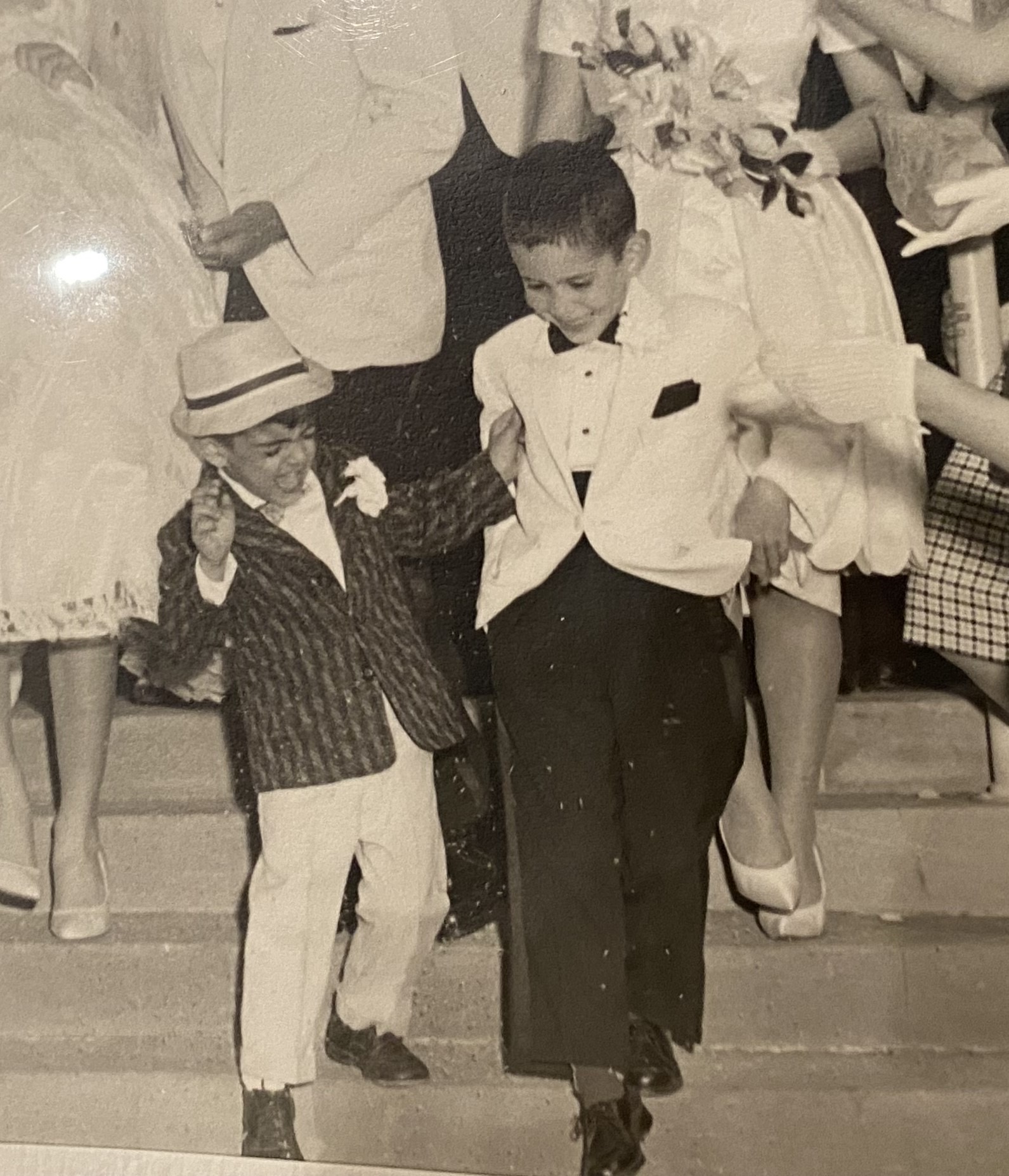
My Bride must have had a premonition, because she started preparations for the dinner, a bit early, as we always have this discussion about the timeliness of the guests.  I had just started my shower when the first of the company started arriving.  My Bride was on her own, but she handled everything with poise and ease.  I as my usual high-maintenance self, arrived downstairs after more of the guests arrived.  I was both pleased and embarrassed, but I survived, as we were getting drinks and appetizers out.  She had gone out earlier in the week to buy all of these ingredients to make a special cocktail that her one sister recently fell in love with, and she was a no show, because of her work.  It happens, and I decided to show everyone a very cute Raconteur when he made an appearance as a Ring-bearer. 

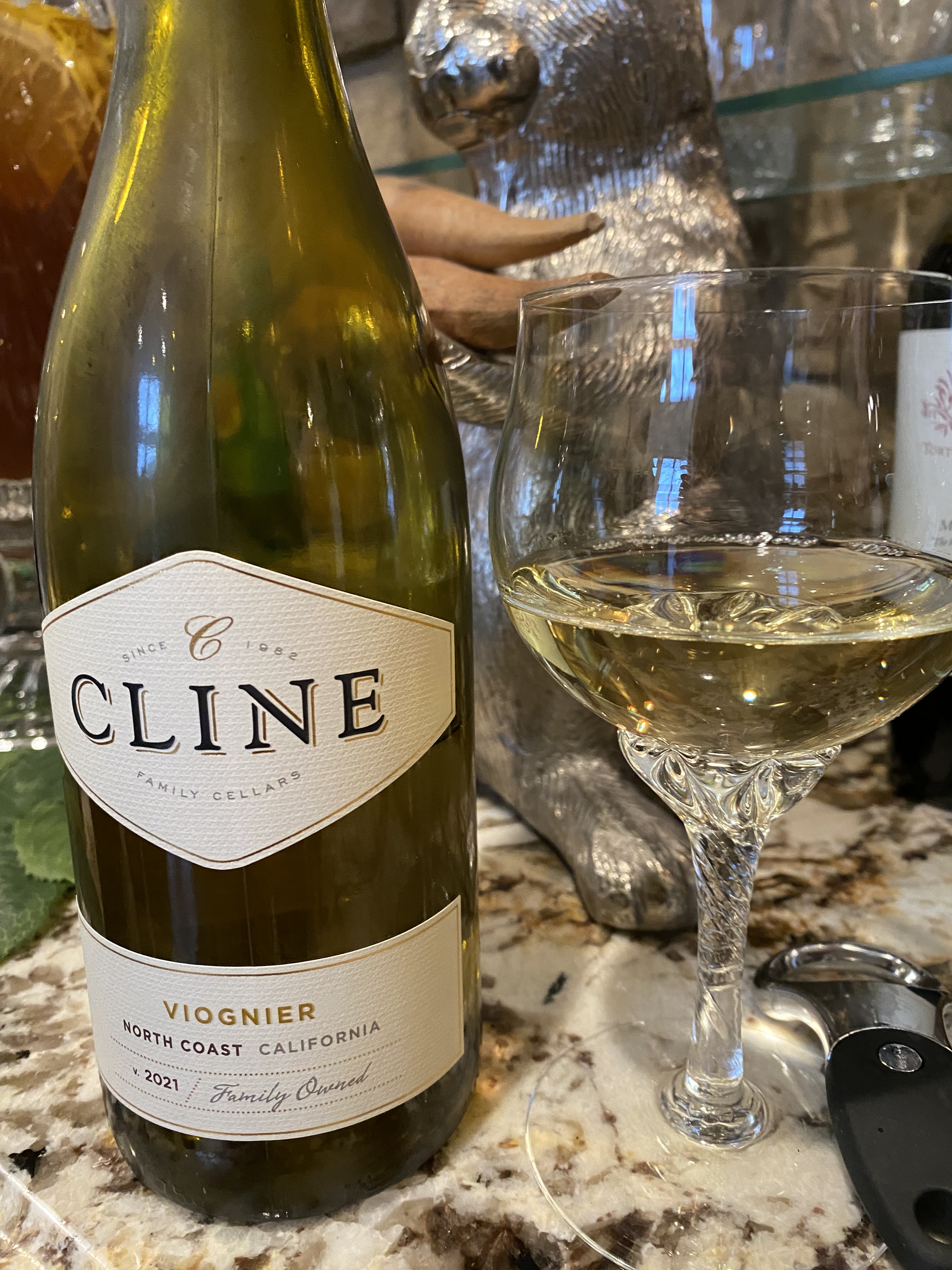
My Bride had started with assorted cheeses and crackers, and she also baked a Brie with Onion Jam, for a more savory finish.  She made Deviled Eggs which I know for a fact is making a comeback, as I even see restaurants making them as appetizers.  We also had shrimp with cocktail sauce, along with fruit plates and vegetable plates.  She is always trying to make everyone eat healthy, and to me that is the antithesis of holiday meals, but what do I know.  I guess even with the sister, that didn’t make it, some of the others wanted to sample the cocktail, so that kept my Bride busy, between courses.  I started pouring Cline Family Cellars “Seven Ranchlands” Viognier North Coast 2021.   Cline Family Cellars is a producer based in Carneros and known for Zinfandel and Rhone varieties and established in 1982 in Oakley.  Fred Cline is one of the original Rhone Rangers of California.  The “Seven Ranchlands” is a way of honoring both the seven children of the Cline family, and the seven vineyard ranches.  The fruit for this wine is from the Catapult Ranch Vineyard in the Petaluma Gap, and the balance is from the Diamond Pile Vineyard at the base of the Wild Cat Mountain.  The grapes are handpicked at night, where they are destemmed and pressed, and allowed to settle for forty-eight hours before racking.  The Catapult portion was inoculated with wild yeast, while the Diamond Pile portion was allowed to ferment naturally in barrels.  After fermentation, the wine was aged in neutral French Oak for six months before blending and bottling.  This was a very soft colored white wine with notes of mango, guava, and pineapple. On the palate tones of dried apricots, pears, and banana in a full-bodied wine with nice acidity and a nice finish. 

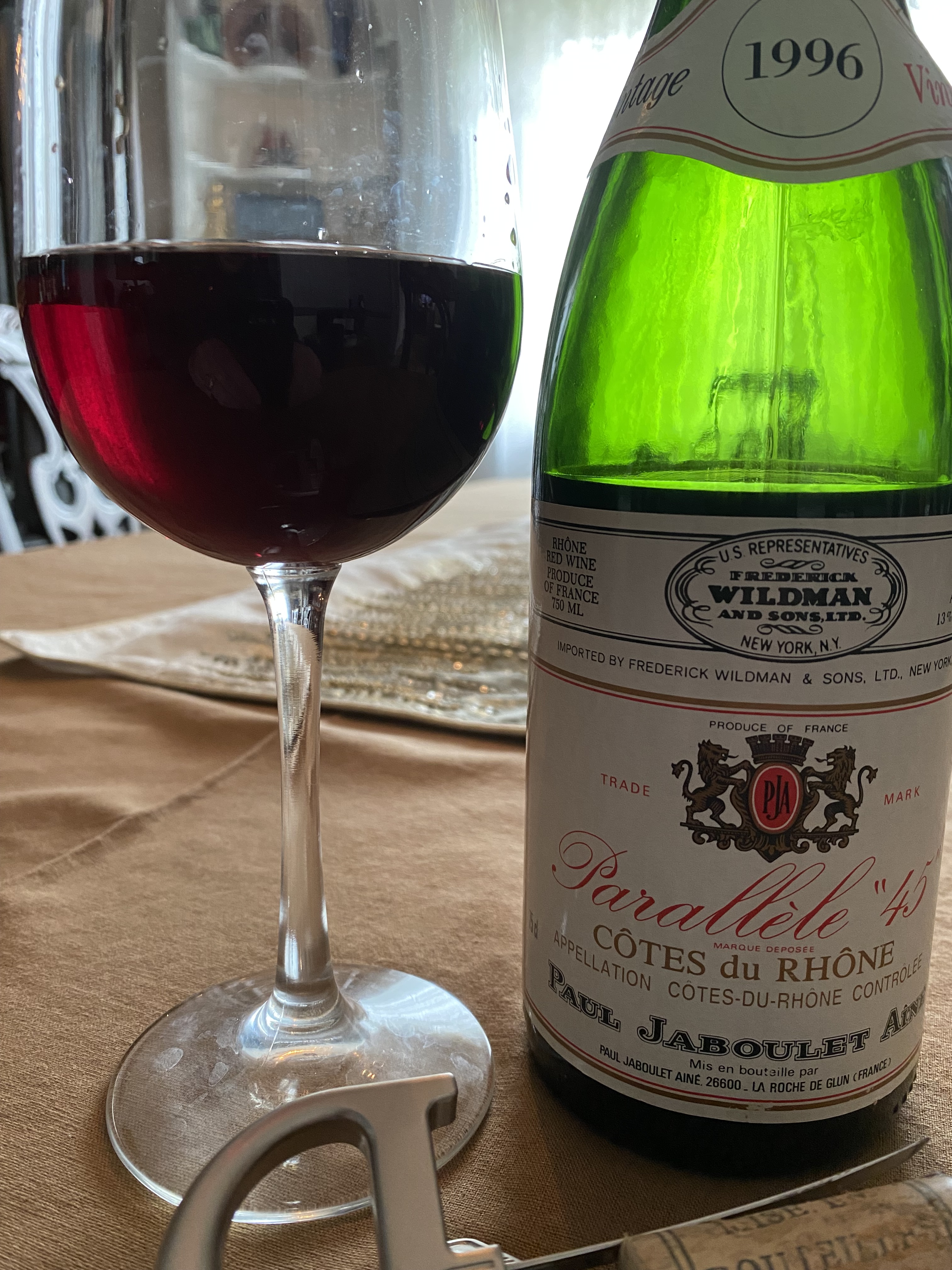
The dinner was focused on Roasted Pork Tenderloins, Breaded Chicken, and Broiled Salmon.  We did have her original Caesar Salad, along with Armenian Pilaf (some of the nephews might do a coup d’etat if we didn’t have it), along with Fennel and Onions, Brussels Sprouts with Bacon, and a Scalloped Potato dish that also had Sweet Potatoes in the mixture.  After dinner there was a huge assortment of desserts, pies, cakes, Paklava, Canolis and I am sure that I am missing something else.  For dinner, I was a bit daring and selected Maison Paul Jaboulet Aine “Parallel 45” Cotes du Rhone 1996, knowing full well, that if there was a problem, I was sure to be able to find another bottle somewhere in the house.  Paul Jaboulet Aine has been part of the Rhone Valley for almost two hundred years.  In 1834, Antonie Jaboulet started with a small vineyard on the hills of Hermitage, and since then, it encompasses over one-hundred-hectares of vineyards from the northern to the southern part of the Rhone Valley.  It was family owned until 2006 when it was purchased by the Franco-Swiss family of Jean-Jacques Frey; with holdings in Bordeaux, Burgundy, and the Valais.  Parallel 45 is in the southern Rhone and named after the famous latitude that spans across France. The grounds are composed of clay, limestone and alluvial deposits and round pebbles.  The grape varieties for this wine are Grenache, Syrah, Mourvedre, Marselan (which is a recent crossing of Grenache and Cabernet Sauvignon), and Carignan and the vines are now about forty years of age, so they were about ten years of age, when this wine was produced.  The fruit is hand-harvested.  The Syrah is vinified separately with maceration and soft extraction for about three weeks, while the other varieties are co-fermented with the Grenache for color and tannins.  The wine was aged for six months in Stainless Steel vats on fine lees.  The wine still had fruit.   It had a deep red color with no apparent foxing and offered very subtle notes of red fruit and spices.  On the palette there were tones of red fruit, soft blended tannins with a soft finish of terroir.  After decanted into the glasses, there was still plenty left in the bottle of sediment and dregs and there were about four full pours of the wine.  I am quite sure that almost all of the wines from the Nineties onward were all purchased and cellared immediately here, with only occasional jostling of the bottles during restocking exercises in futility as I would periodically attempt to keep up to date with the cellar.             

Posted in Dining, Wine | Tagged , , , , , , , , , , , , , , | Leave a comment

Easter Eve – Armenian Style

It has become a tradition that one of my cousins has created a special holiday for all the cousins, called Easter Eve.  She said that she took the mantel from her mother, to keep the family together, as she represented the new generation.  The first one was held at her apartment, after she had just gotten married and was overlooking the Detroit River.  That initial party was a crowd pleaser, as I saw a photo of my Bride and I, sitting on an ice chest, as there were no more chairs in the apartment to sit on.  This has changed to a degree, but still a case of déjà vu as my Bride and I ended up dining at the island table in the kitchen, and I did hear that there were forty-two guests.  She has always begun the dinner, with everyone reciting or reading “Hayr Mer” which is the Armenian version of The Lord’s Prayer, and she now has the prayers laminated and everyone gets an Armenian flag to hold as well, during this part of the evening.  The meal was fantastic starting with a big spread of appetizers, beginning with home-made Lahmajoon, an Armenian “pizza” on very thin dough covered with ground lamb, onions, garlic, parsley and tomato paste.  Jumbo Shrimp cocktail with an amazing horseradish sauce.  I could go on and on, about all of the food that was there, some house-made, some catered, some guest-made, but it was all delicious.  The roast lamb was stellar and if there had been a cover charge, the lamb would have redeemed the charge.  One of the cousins had made “Ace’s Hot Ham” as it is called, a true homage to my father and the dish that he created; a Krakus Polish ham that is stuffed with cloves of garlic and coated with crushed pepper flakes, gently baked and sliced paper thin.  The table could have collapsed with all of the food that was being offered, and then there was desserts.  Somewhere between all of this, there was even the traditional Easter Egg battle, each participant grabs a decorated hard-boiled egg and either holds their egg firmly, or is the one to attack another egg that is held firmly, to see whose egg shell was stronger.  The egg is totally symbolic of Easter, especially to the Armenians; and though I am not sure, I have to believe this custom or something similar is done in other cultures as well. 

The first wine that I will mention is Trinity Canyon Vineyards Dukhov Vayots Dzor Armenia 2017 and Dukhov is one of the slogans of the Armenian Velvet Revolution, a peaceful movement from 1918 that raised hopes for a free election and means “with courage” or “without fear.” Trinity Canyons Vineyards was founded by three wine lovers in 2009 and associated themselves with winegrowers and winemakers in the Vayots Dzor Highlands, near the oldest established wine producing site in the world (Areni).  Vayots Dzor is a mountainous province in southeastern Armenia and the motherland of Areni Noir; and contains the most wineries of any province.  The Areni-1 cave complex is a famous archaeological site containing the oldest discovered winery, over 6,000 years ago.  The vineyards here lie mainly between 950 and 1,200 meters above sea level.  The wine is a blend of sixty-five percent Kakhet, twenty-five percent Cabernet Sauvignon and ten percent Areni Noir.  Kakhet has been recorded since the Fourth Century, but until recently (Soviet Era) was reserved for Port-style sweet wines.  It tends to be berry-forward and terroir driven, and offers tones of blackberry, black currant, fig, and black pepper.  U.C. Davis claims that it is a relative of the French varietal Carbonneau.  Areni Noir is a dark-skinned varietal indigenous to Armenia and then the Transcaucus, that is well adapted to the large temperature swings found in the region.  It is known for its elegance and freshness.  This wine underwent Initial Fermentation in Stainless Steel and then was aged for about fourteen months in Caucasian Oak.  A medium red colored wine that offered notes of currants, strawberries, pomegranates, and pepper.  On the palette it showed tones of red fruits, spices, soft tannins, and I thought some traces of rhubarb, with a short finish.

In keeping with the theme of an Armenian Easter Eve, there on the open bar was a bottle of Ararat Five Star Brandy from the Yerevan Brandy Company of Armenia. All I could find out that the wine is made from small white Armenian grapes, but they were not identified. It is estimated that there are thirty to forty wine varieties that are indigenous to Armenia, perhaps some going back to that vineyard that Noah planted when the Ark landed at Mount Ararat in biblical times. The most notable white grapes from the area are Voskehat, Kangun, Muscat Vardabuyr, Garan Dmak and Chilar; so, I will presume that it is one or more of those used in production. Ararat Brandy is still marketed in the Russian speaking parts of the former Soviet States as Cognac, because the company won the Grand-Prix in competition in France in 1900, and they were legally allowed to call their product “Cognac,” but not with the Origen laws in place in Europe, that is not allowed.  The five starts represent five years of aging.  The brandy is an amber color and offers notes of peaches, plums, vanilla, and cinnamon.  On the palette caramel, toffee, and pastry.  I didn’t imbibe or take a photo, I am slipping, so I had to use a stock photo from the internet.  And of course, it will always get a smile and a nod from everyone, as it is my late father’s name.    

Posted in Dining, Wine | Tagged , , , , , , , , , , , , , | 2 Comments

The Dinner Reception for Clos du Clocher

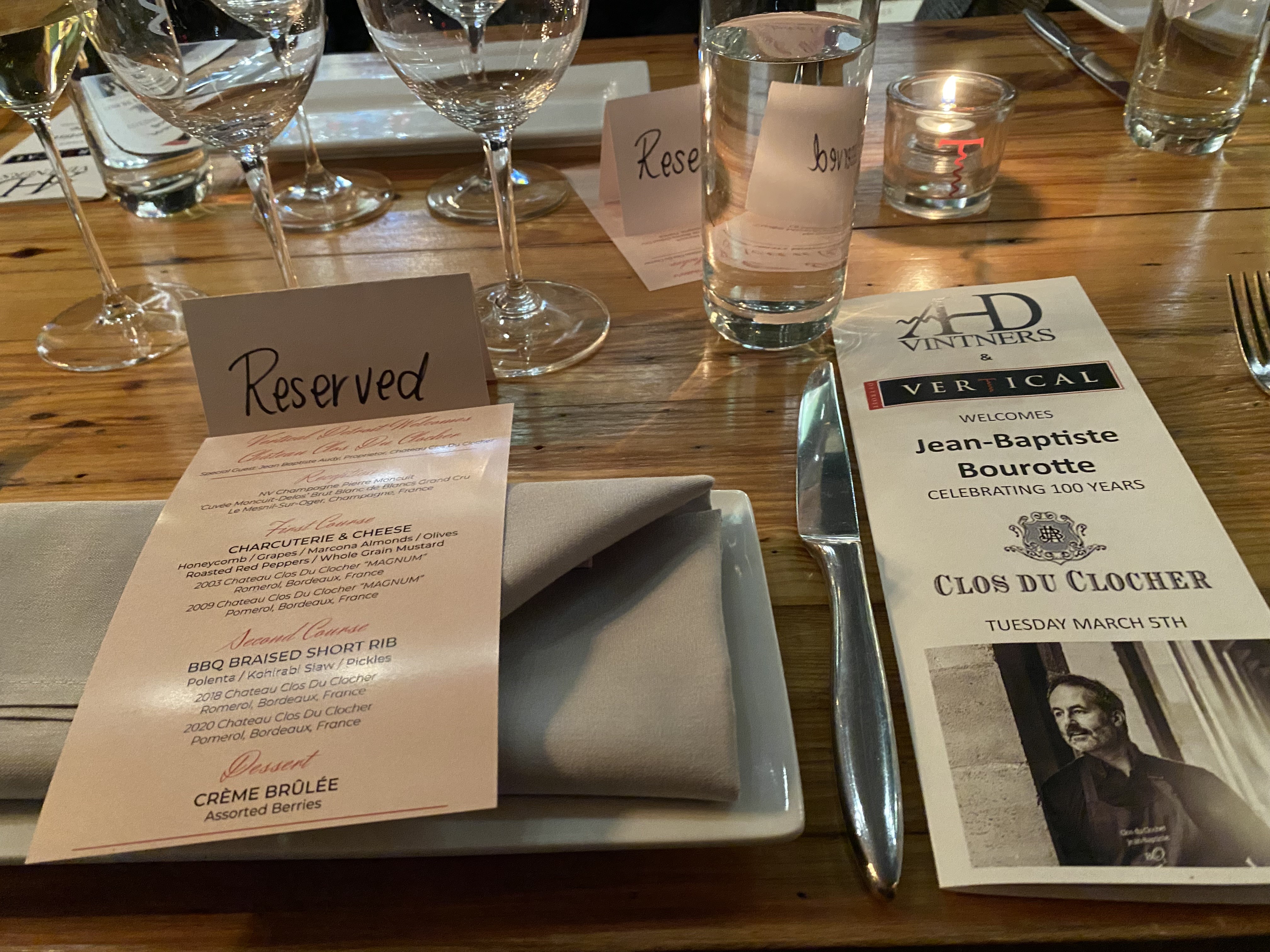
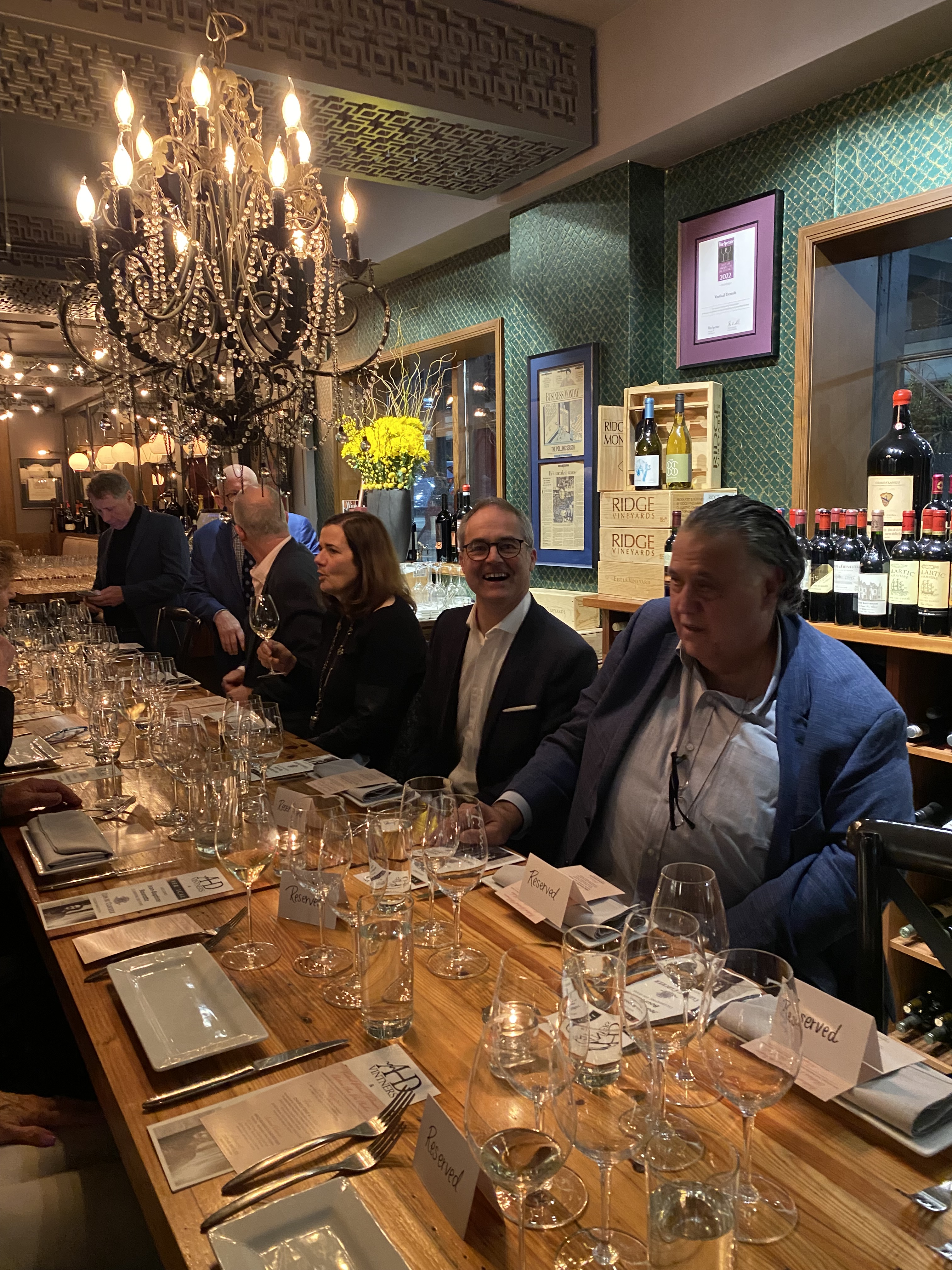
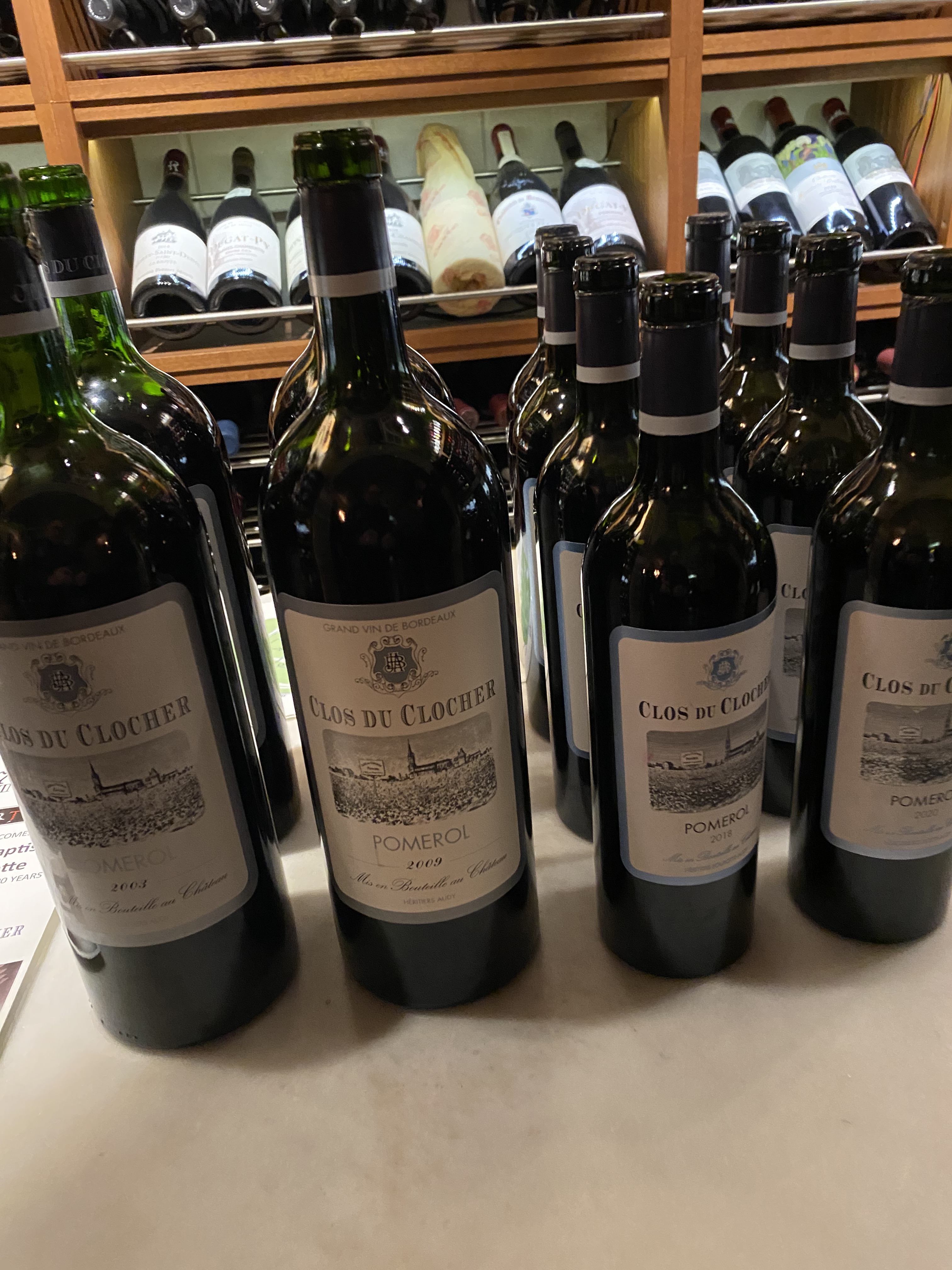
It was quite an evening at Vertical Detroit commemorating the Centenary of vintages for Clos du Clocher of Pomerol, along with The Fine Wine Source of Livonia, and AHD Vintners based in Warren.  Jim and Remy Lutfy were being excellent hosts and making sure everything was going smoothly as they saluted Jean-Baptiste Audy, the great-grandson of the founder and now the proprietor of Clos du Clocher.  After the Champagne reception, all the guests were seated and the dinner began.  A Charcuterie and Cheese Board was placed basically between every two guests with some fine in-house cured meats and some assorted cheeses accompanied with breads, crackers, honeycomb, grapes, Marcona Almonds, olives, roasted red peppers and whole grain mustard; I could have noshed on that all night, but that was served with the first two wines from Clos du Clocher, the magnum bottles of 2003 and 2009 vintages.  The second course was a plate of Barbecued Braised Short Rib with Polenta, Kohlrabi Slaw, and Pickles.  A Crème Brulee and assorted Berries followed. 

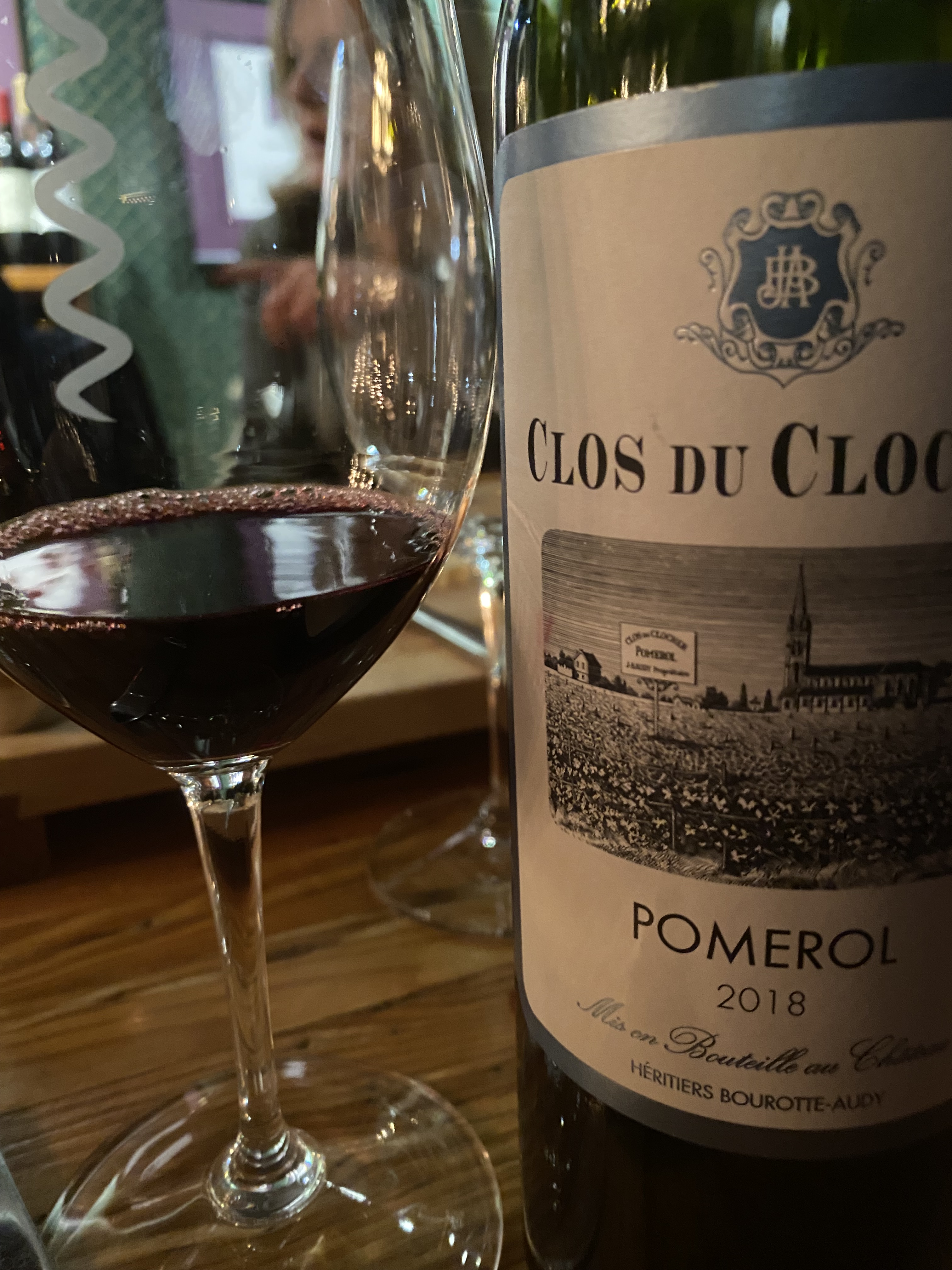
While the preparations were being made for the second course, the third wine was being poured.  We were served Clos du Clocher Pomerol 2018.  Since, I have mentioned the grounds, and the winemaking, this particular wine is also seventy percent Merlot and thirty percent Cabernet Franc.  A deep garnet-purple colored wine that offered notes of black cherries, blackberries, along with traces of menthol and graphite.  On the palette this medium to full-bodied wine offered tones of black fruits, grainy tannins, and a nice finish of fruit and terroir. 

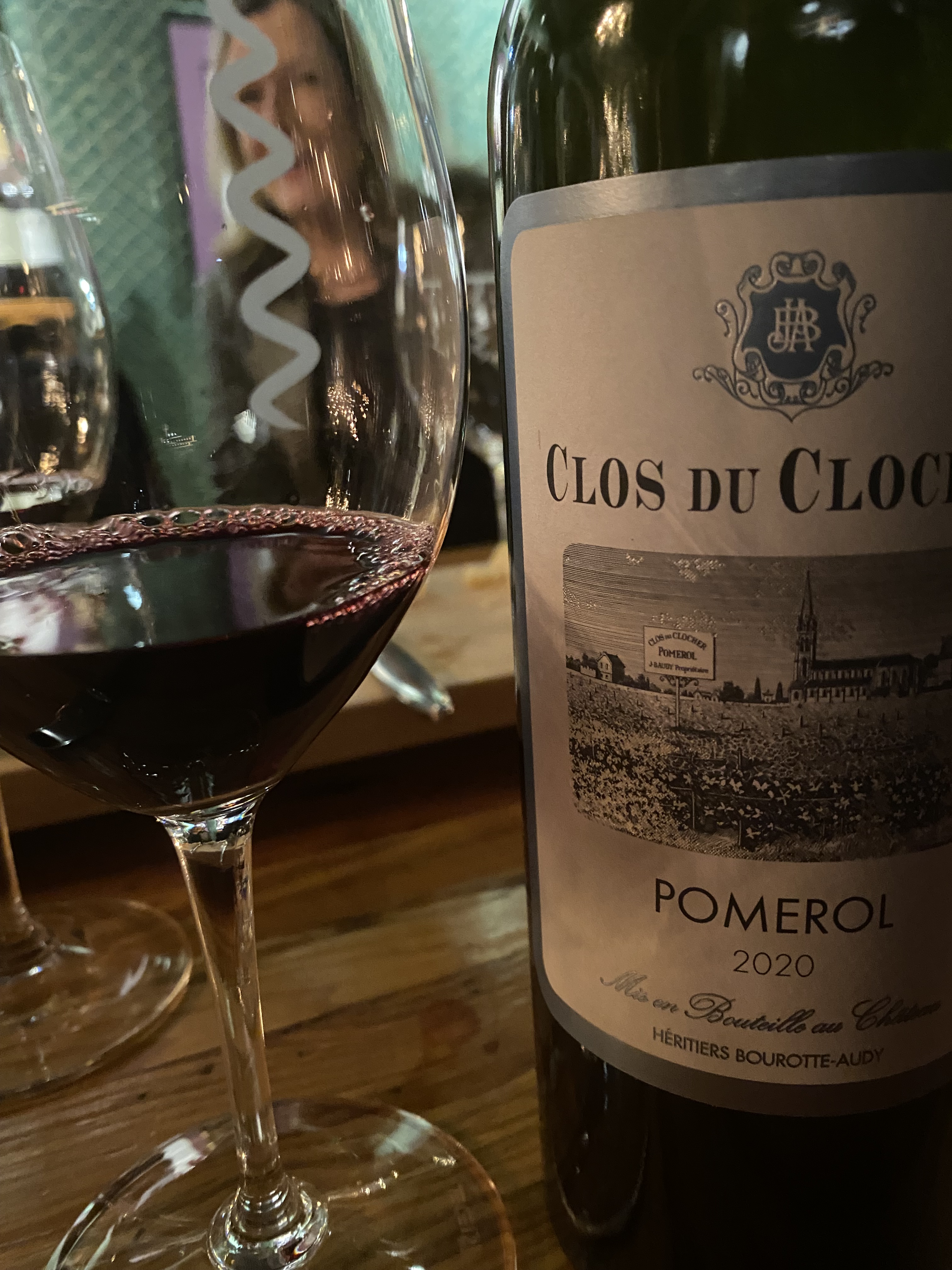
The final wine that was served side by side with the 2018 vintage was the Clos du Clocher Pomerol 2020.  This was the first year that Organic conversion began and was officially instituted in 2021.  This vintage must be indicative of what should be expected from the entire plateau as well as the rest of Pomerol.  Another deep garnet-purple colored wine that offered big notes of black currants, black cherries, violets, and graphite.  On the palette, this was a big wine of black fruits, bold tannins and a great finish emphasizing fruit and terroir.  Since, the last two vintages were offered in classic bottles, we ordered both vintages to lay down in our cellar.    

Posted in Dining, Wine | Tagged , , , , | Leave a comment

A Centenary of Vintages of Clos du Clocher

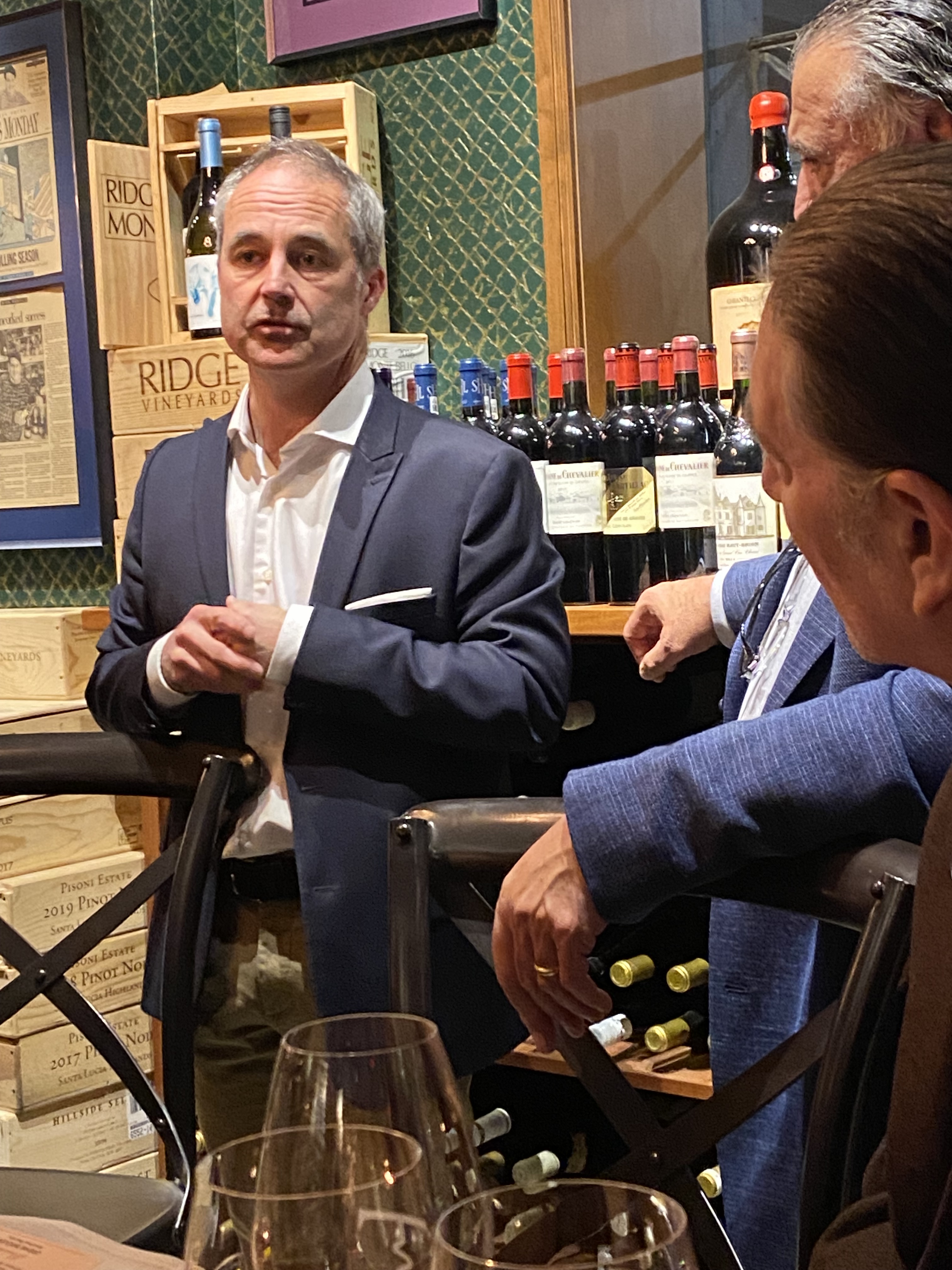
The Fine Wine Source of Livonia, Michigan along with AHD Vintners celebrated a centenary of vintages for Clos du Clocher at Vertical Detroit.  Jean-Baptiste Bourotte was front and center, as the great-grandson of Jean-Baptiste Audy the founder of Clos du Clocher.  The first vintage for this small, but consistent estate in Pomerol was in 1924.  The winery is just shy of six hectares and is home to some truly ancient vines.  The estate is set in four parcels and seventy percent of these parcels are dedicated to Merlot, and the balance is planted with Cabernet Franc.  The average age for the vines is forty years and they are planted on clay and gravel parcels on the Pomerol plateau.  No herbicides are used and organic treatments are implemented where possible.  The fruit is hand harvested, double-sorted with a density bath, de-stemmed to create a homogenous final crop.  Fermentation is done in small Stainless Steel and concrete tanks by parcel; hence the wines reflect the percentages of the grapes grown.  The wine then is aged for eighteen months in French Oak, of which two-thirds are new.

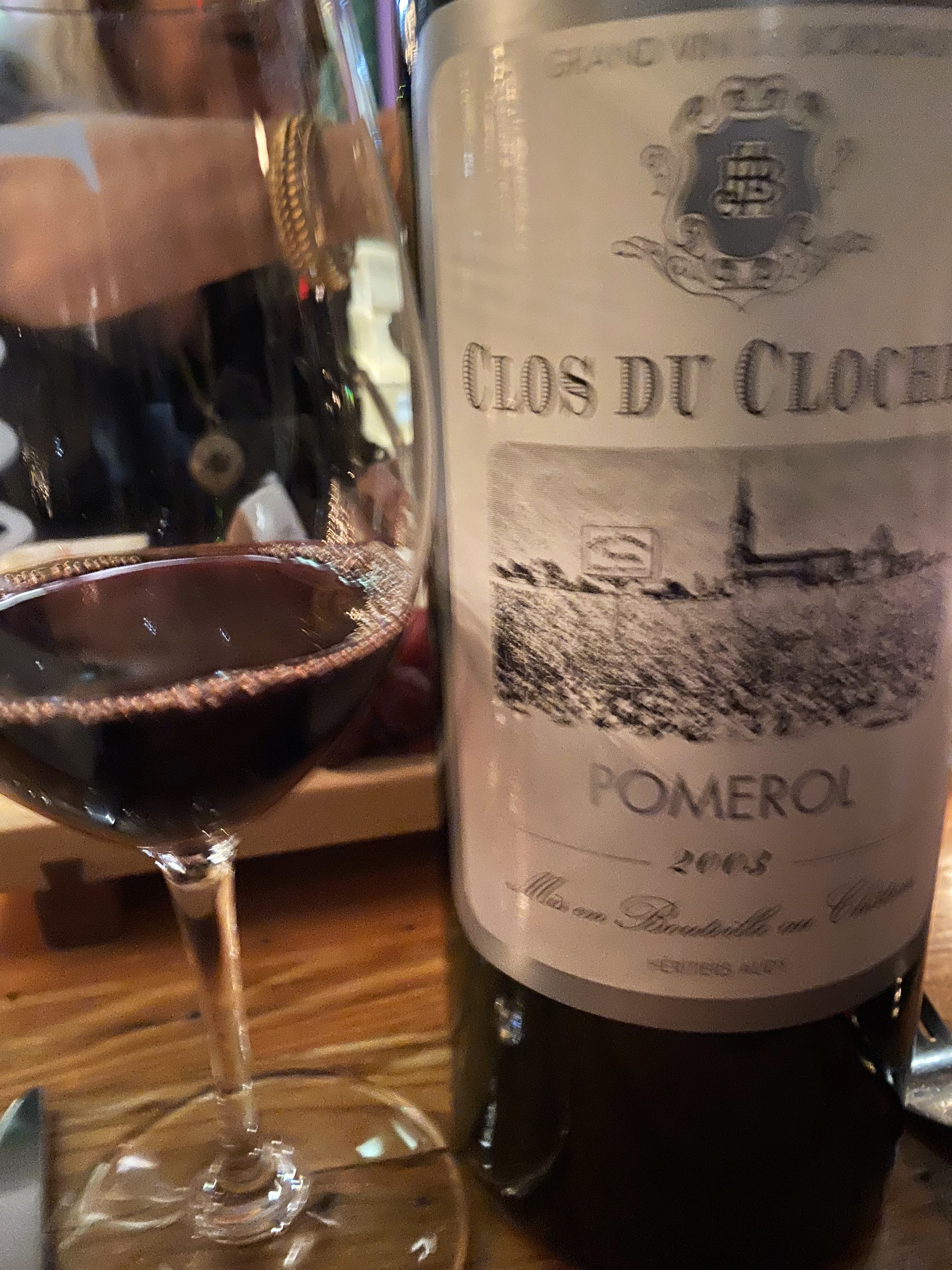
The first two wines that were served came from the estate for this celebration and were in magnum formats, which are revered, because the wine ages slower in the larger bottles.  We began with Clos du Clocher Pomerol 2003.  Pomerol at first glance doesn’t look like a Bordeaux wine, both historically and physically.  There are really not a series of grand structures and it has no formalized wine system like found in the Medoc, Graves, Sauternes and Saint-Emilion.  Despite this, two wines Petrus and Le Pin, both without a chateau title) command higher prices than many of the Cru Classe wines.  This first wine that we had was terroir driven with a deep purple color and offered notes of raspberry, milk-chocolate, and some smokiness.  On the palate there were tones of raspberry, plum, and cherry blended harmoniously with soft tannins and decent finish of fruit and terroir. 

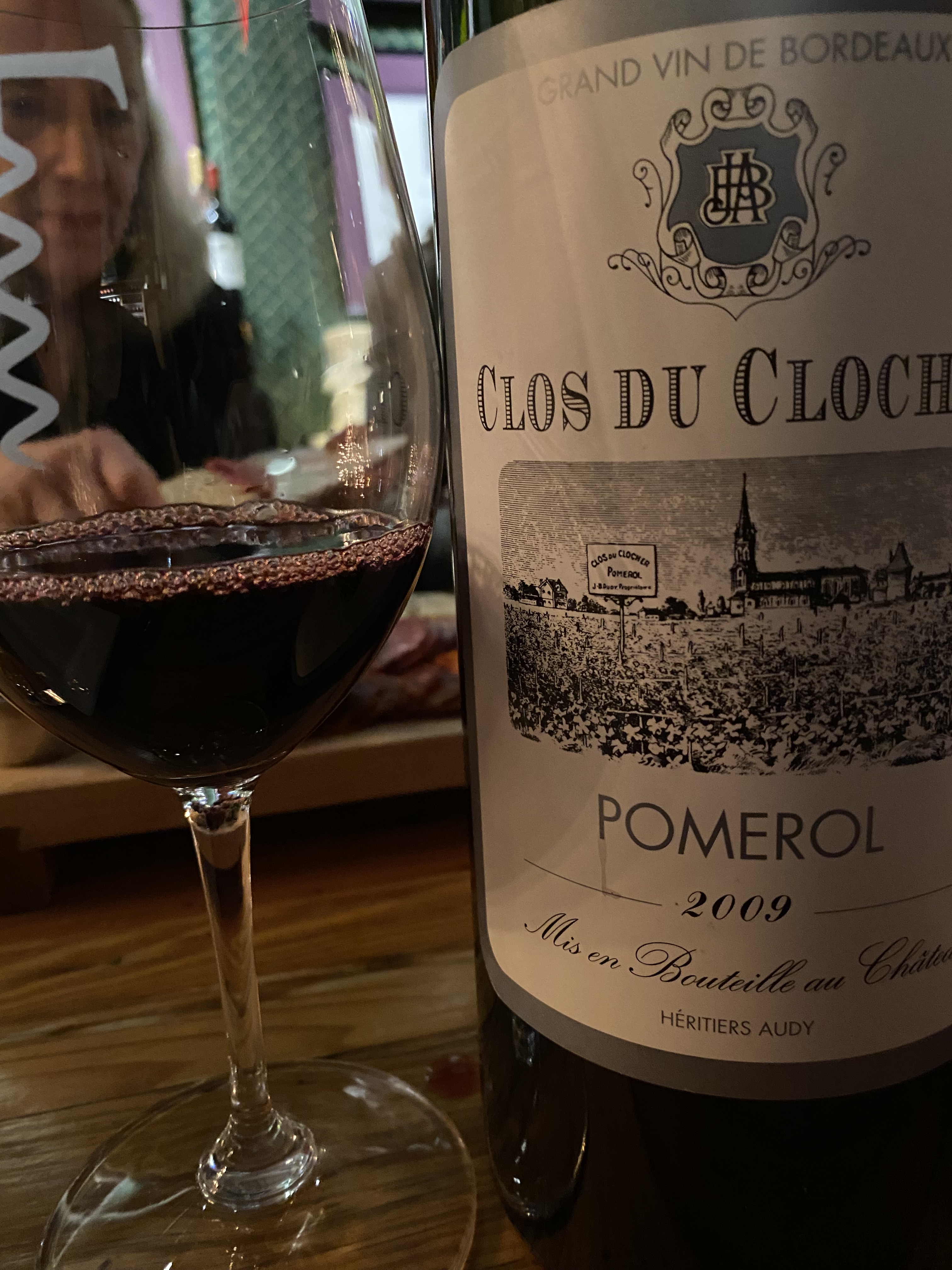
The second wine that we were served along side of the first wine from magnums was Clos du Clocher Pomerol 2009.  The region is sometimes referred to as the Libournais, as the town of Libourne is in the southern part of Pomerol. There is only about a twenty-meter fluctuation of elevation in the district.  Clos du Clocher is found on the marginally higher land on the eastern section where Pomerol meets Saint-Emilion and three of the most famous producers are immediate neighbors (Petrus, Lafleur, and Le Pin) and this wine is considered a value-priced Pomerol.  This wine was a deep inky purple in color and offered notes of raspberry, blackberry, spring florals, and traces of smoke, mocha, and coffee.  On the palette the tones of the red fruit, mingled with soft and sweet tannins, low acidity and a lingering finish of fruit and terroir.     

Posted in Wine | Tagged , , , , | Leave a comment

A Wine Reception at Vertical Detroit

AHD Vintners and Vertical Detroit were the hosts for an evening with Jean-Baptiste Bourotte celebrating the Hundredth Anniversary of Chateau Clos du Clocher of Pomerol.  Now, I will preface this by mentioning that this was by invitation from The Fine Wine Source of Livonia, Michigan.  I do mention this shop often, as sometimes my Bride thinks I have a home away from home.  I do mention the shop constantly, but I guess I should also mention the background of the shop.  Jim Lufty began selling wine at his family’s business called Cloverleaf Market about forty years ago, while he was attending Oakland University, and he eventually took over the business.  Over the years, his knowledge of wine and his fine palate, plus his fine business acumen has brought him accolades from trade publications and local news media.  He and his wife Livvie, are steeped in the wine industry, they have two children Remy and Margaux, and the family dog Piper.  In 1993, he moved to Livonia and opened The Fine Wine Source.  He has since opened the restaurant Vertical Detroit in Downtown Detroit in the historic Harmonie Park district in 2015.  I must stress that every wine in the store and at the restaurant has been curated by Jim and his staff, there are no “popular crowd-pleasing labels” unless they can actually be selected for quality.

The reception was to honor the Hundredth Vintage of Clos du Clocher of Pomerol.  Representing Clos du Clocher was Jean-Baptiste Bourotte, the great-grandson of Jean-Baptiste Audy.  Jean-Baptiste Audy is a family operated negociant firm based in Libourne and owner of a number of chateau estates on Bordeaux’s Right Bank, with properties in Pomerol, Lussac-Saint-Emilion, and Lalande de Pomerol. The firm has ownership of: Clos du Clocher, Chateau Bonalgue, Chateau Monregard La Croix, Chateau du Courlat, and Chateau Les Hauts-Conseillants.  The firm also has negocient labels like Audy Bordeaux Rouge and Jean-Baptiste Audy Brut, a Cremant de Bordeaux.  Michel Rolland is a consultant for some of the estates.

To begin the reception, all of the guests were served glasses of Champagne Pierre Moncuit Grand Cru Cuvee Moncuit-Delos Blanc de Blancs NV.  In 1889 Pierre Moncuit and his wife Odile Moncuit-Delos, established the house of Champagne Pierre Moncuit at Le Mesnil-sur-Oger.  In 1928, they begin making their own wine, with Cuvee Moncuit-Delos paying homage to the beginning.  In 2007, they build a modern new winery.  Le Mesnil-sur-Oger is a sub-region of the Cotes des Blancs, which is a sub-region of Champagne.  This wine is pure Chardonnay from ninety-year-old vines, with about three years of aging in the cellar.  The light gold colored wine offered notes of white fruits, citrous, exotic fruits, white flowers, creamery butter and vanilla.  On the palate a medium-weight wine with brisk acidity offering tones of pear, peach, lemon, pineapple, kiwi, butter, and vanilla with a soft mousse and a nice lingering finish of earthiness, and chalk (terroir).  

Posted in Wine | Tagged , , , , , , , , , | Leave a comment

Le Garenne Vouvray and Cain Concept for Dinner

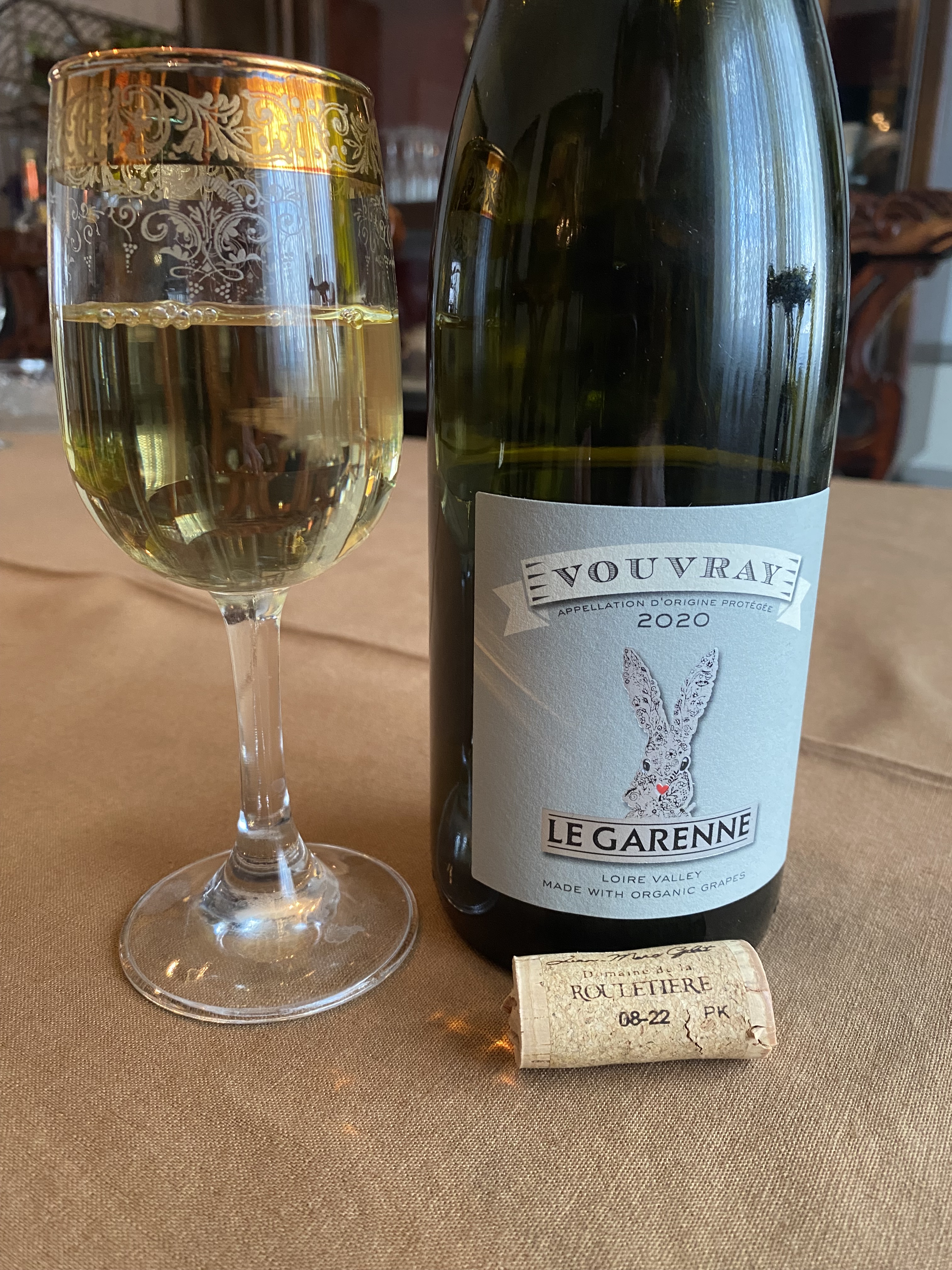
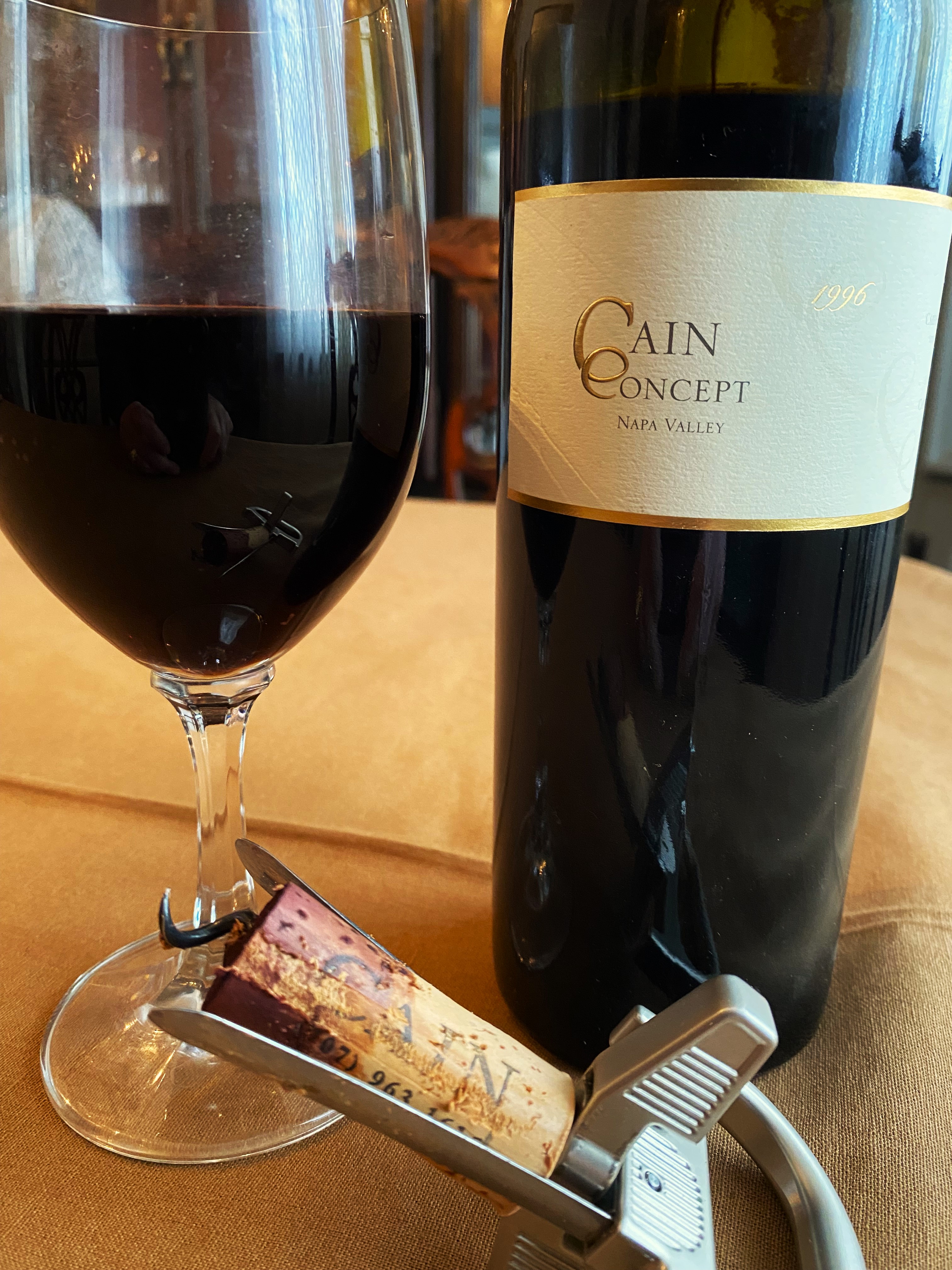
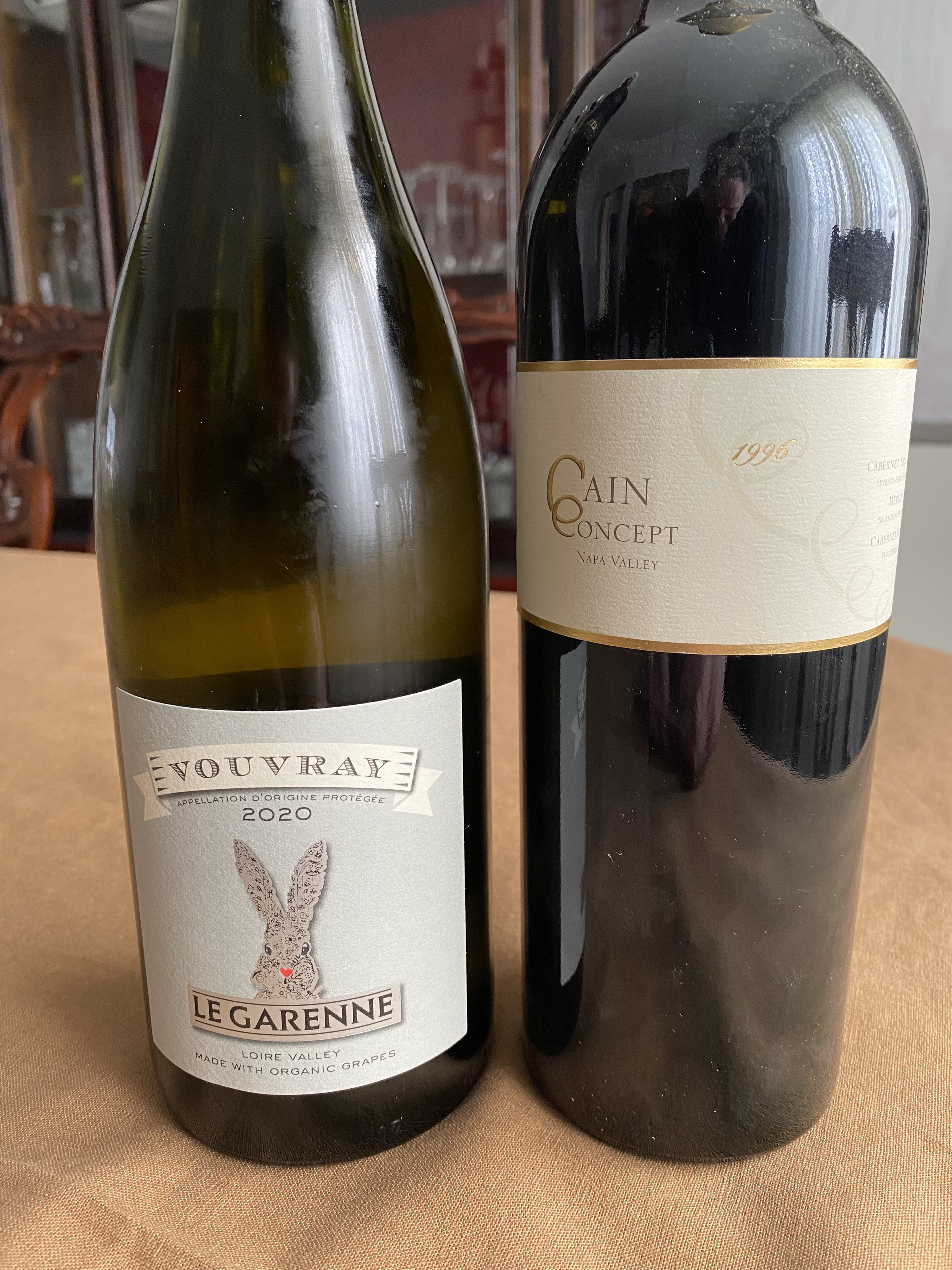
My Bride likes to have company over for dinner, even if they are not related to us.  She always gets a little hyper, she knows how to cook for her family, and she definitely knows how to cook for me, after that it gets a bit dicey, maybe I exaggerate.  My part of the formula is easy, I just have to pick out some wine.  A winery that had previously sent me some wine, asked if I would be interested in a new sample, and since I knew that they had read my caveat on “samples” I felt secure enough to say yes, so we would start with a bottle of Le Garenne Chenin Blanc Vouvray Loire Valley 2020 (and I am also looking forward to the Chocolate Rabbit that they enclosed with the wine on Easter Day).  As for the second wine, I went into our cellar and looked for something interesting that I had more than one bottle left and that was Cain Concept Napa Valley 1996.  I might add, that our friends for the evening are not really into wine, but they do appreciate what we serve.

For appetizers, my Bride did not go crazy, but we had a Cranberry cheese, and we also had a Duck and Chicken Liver Pâté on simple water crackers.  We started with a bottle of Le Garenne Chenin Blanc Vouvray Loire Valley 2020.  This wine is crafted by Jean-Marc Gilet and he now represents the tenth generation of winemakers in Vouvray.  In 2001, he took over responsibility for the twenty-seven-hectare estate La Rouletiere, and he is into organic farming.  Vouvray is one of the oldest and most respected appellations of France, planted back in the Middle Ages and awarded its appellation in 1936.  Chenin Blanc (or locally Pineau de la Loire) is basically the grape of the region, and the appellation covers the various styles of sweet, dry, still. and sparkling wines from eight villages around the medieval town of Vouvray on the northern banks of the Loire River.  The vineyards all enjoy free-draining topsoil, above deep tuffeau (porous limestone created during the Prehistoric age of the earth.  The wine has a pretty golden-yellow color and offered notes of limes, green apples, with traces of honey, bananas, spices, and chalk.  On the palette, this wine was off-dry with medium body and high acidity and offered tones of green apples, citrus fruits (with a soupcon of grapefruit), spices and a nice medium finish of limes and chalk (terroir).

We moved into the dining room for dinner, and began with a Caesar Salad, followed by Roast Beef, with sides of Armenian Pilaf and Sautéed Fennel and Onions.  Since the meal was during Lent, my Bride went to a baker and got an assortment of cookies, so that the heathen would be pleased, as the heathen only gives up, what is missing in the house during Lent.  I was looking forward to the Cain Vineyard and Winery Cain Concept Napa Valley 1996 and I opened the bottle, just prior to our guests arriving and since the wine was thirty-years old, I used my Durand, but the cork was firm and solid.  In 1997 the wine’s label was changed and since then it is Cain Concept “The Benchland” and it is a project to show what Cain Five would be, if it was not a mountain wine.  Cain began in 1980 when Jerry and Joyce Cain purchased 550 acres of the McCormick Ranch on Spring Mountain, where it was a sheep farm.  It is the top of Spring Mountain AVA and adjacent to the Sonoma border.  The first release was 1985. While Cain Vineyard is located at the crest of the Mayacamas Range overlooking Napa Valley, Cain Concept (The Benchland) is at the foot of the mountain side from Yountville to Oakville to Rutherford to St. Helena.  The fruit is harvested from the following vineyards: Beckstoffer, Cain, Claes, Kenefick, Stagecoach and York Creek.  The winery, heritage barn and housing on the property, as well as the 2019 and 2020 wines in the cellar, were entirely destroyed in 2020 by the Glass Fire, one of several wildfires that ripped through parts of Napa Valley.  This vintage was a blend of seventy-eight percent Cabernet Sauvignon, seventeen percent Merlot and five percent Cabernet Franc.  This wine like Cain Five requires over three years of production, before it is released.  The wine was still a deep-inky colored wine with a bright red rim, and no foxing or aging in the color.  The nose was still strong and offered notes of black and red fruits, scented with violets and traces of tobacco and spices.  On the palate, at the age of thirty, there was still fruit, but not as dominate, with tones of cassis, blended with mature tannins, still balanced and with a lingering finish of terroir.  I guess I should open the other bottle of this wine, and enjoy it, later this year.

Posted in Dining, Wine | Tagged , , , , , , , , , , , , , , , , , , | Leave a comment

A Taste of Monterey – Spring 2024 Selections

We have a wine club membership with A Taste of Monterey, it is their “Private Reserve Club” and we went with the gusto.  The idea is that with this classification we would be getting some wines that we definitely won’t see here in Michigan, because the production quantities would be so low that it would preclude shipping nationwide.

The first wine out of the carton was Pianetta Winery and Vineyard “Tuscan Nights” Monterey 2021, it is John Pianetta’s homage to “Super Tuscan” wines and his Italian heritage.  Pianetta Vineyards was started in 1995, when John Pianetta bought a ninety-five-acre ranch and developed it into seventy-acre vineyard.  His family’s background was in the fresh market produce in California going back to the 1920’s.  At one time they even had a small family vineyard in Lodi. The vineyard is in the Southern part of Monterey County in a small valley called “Indian Valley.” The vineyard was basically planted with Cabernet Sauvignon and fifteen acres for Syrah. Originally, they sold their crops to other wineries and in 2002 they had their first vintage of three-hundred-seventy cases of estate wine.  It is now a family business as his daughter Caitlin has joined her father and they now produce about 2500 to 3500 cases of wine annually and only in red wines. They have started sourcing wines from other vineyards and doing single variety wines.  They also produce a “JUG” wine each year as an homage to their Italian heritage.  This wine is sourced from both the Pianetta Estate Vineyard and the White Hawk Vineyard of Santa Barbara.  It is a blend of seventy-two percent Cabernet Sauvignon, twenty-three percent Sangiovese and five percent Petite Sirah.  The wine was aged for twenty-two months in oak and it has an aging potential of six to eight years; with a production of one-hundred-seventy-four cases. The wine is described as having notes of cherry, raspberry, and pomegranate with secondary traces of anise and graphite.  On the palate, tones of the fruit, and warm toast blended with mild tannins.

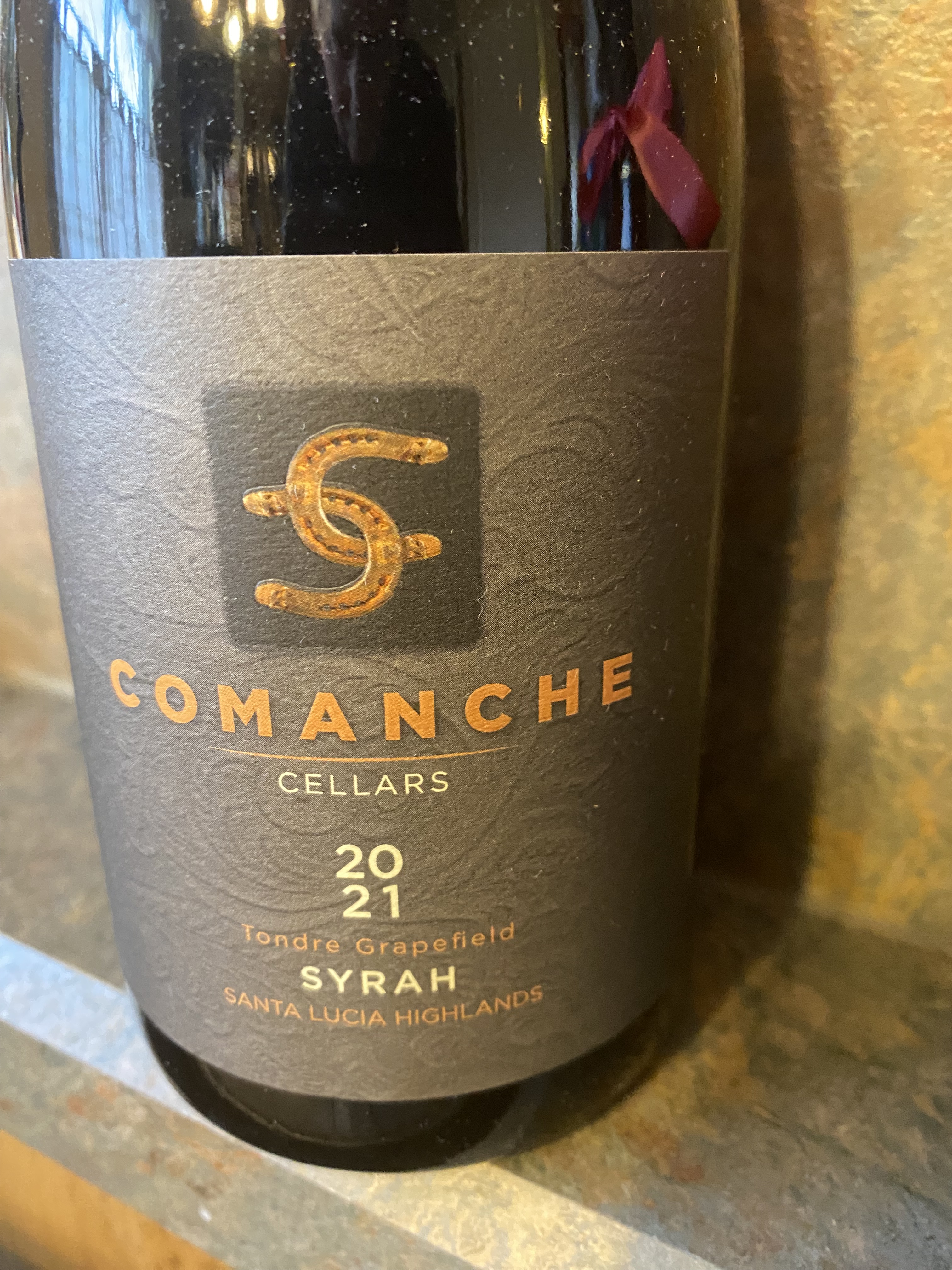
The second bottle out of the case was Comanche Cellars Syrah Tondre Grapefield Santa Lucia Highlands 2021.  Michael Simons, in his own words started as a love affair and turned it into a passion for producing small lots of very handcrafted wines from neighboring vineyards.  The winery is now up to a production of eighteen-hundred-cases of wine.  Comanche was the name of the horse, he used to ride when he was ten years old.  Now, he laments that he hardly has time to ride a bicycle.  But he enjoyed his time with Comanche that much, that he has his name and shoes on every bottle of wine.  In 1997 the Tondre Grapefield was planted, originally at six-and- a-half acres and now is one-hundred-four acres, located in the center of the Santa Lucia Highlands and is planted with Pinot Noir and Chardonnay and a limited amount of Syrah and Riesling.  The wine is described as inky-purple in the glass with notes of exotic spices, blueberry, and vanilla bean.  On the palate the wine is described as the fruit being wrapped in a velvet cloak with bold tannins and a satisfying finish.

The third wine is a bottle of Bernardus Winery Single Vineyard Chardonnay Soberanes Vineyard Santa Lucia Highlands 2021.    Bernardus Winery and Vineyards was founded by Ben Marinus Pon about twenty-five years ago with the intention of creating premier wines in the Carmel Valley.  His intent was to produce single vineyard designated wines and a Bordeaux blended wine.  Bernardus has three estate vineyards: Marinus planted with Cabernet Sauvignon, Merlot, Cabernet Franc, Petit Verdot and Malbec; Featherbow planted with Petit Verdot and Cabernet Sauvignon; and Ingrid’s Vineyard planted with Chardonnay and Pinot Noir.  All fifty-four acres of estate vineyards are in the Carmel Valley AVA.  To compliment the estate vineyards Bernardus also has contracts with vineyards the Arroyo Seco, Santa Lucia Highlands, and others in the Monterey County. I am sorry to say, that Mr. Pon passed away in September of 2019 and his vision will be continued by Robert van der Wallen the current owner, who also understand the passion that Mr. Pon had for his winery.  As a non-wine note, they have recently opened Bernardus Golf in Holland, and it will be the host for the Dutch KLM open.  The wine is pure Chardonnay fermented and aged in the Burgundian tradition.  The fruit is hand-harvested with gentle whole-cluster pressing, barrel fermented using select yeasts.  The wine also undergoes a complete Malolactic Fermentation with hand stirring every two weeks.  The wine is aged for about seven months in French Oak, of which a third is new and just over three-hundred cases were produced.  The wine is described as having notes of white fruits, white florals, and hints of vanilla.  On the palate there are intense tones of ripe peach and yellow cherry, accented by subtle baking spices with a long-count finish.    

Posted in Wine | Tagged , , , , , , , , , , , , , , , | Leave a comment

Fine Wine Source Club Selections – March 2024

 I have some great tastings and events coming down the pike, courtesy of my local wine shop, The Fine Wine Source in Livonia, Michigan.  Some may deride me for belonging to a wine club, but I find it so much fun.  It is wines that I might not even look at in a wine shop, as there are always so many bottles to look at, so little time.  I was probably a bit obnoxious, OK, maybe a bit more when I first walk in there.  I knew of the store for ages, but my work routine was identical to the hours at the shop.  My Bride and I finally got there for an initial visit, after, we had dined at their restaurant Vertical in Downtown Detroit.  Here was a wine shop that was totally curated by the owner and the staff.  I didn’t have to look at shelves and shelves of the same wines that can be found at gas stations, grocery stores, drug stores and big box stores.  Everything was worth trying, and not to mention, they even offered to let you try some of their selections.  One-ounce pours are offered, and one can make some fine selections after a pour.  Two wines are chosen each month, one representing the Old World, and one representing the New World.

The first wine is Nexus One Tempranillo Tinta Fina, Ribera del Duero, Spain 2018.  Nexus & Frontaura was established in 1840 by the Gonzalez family, when the first vineyards were planted in the Toro region.  Bodegas Frontaura and Nexus Bodegas produce wines from the prestigious appellations in Castilla y Leon: Toro, Ribera del Duero, and Rueda.  Camino Pardo Alvarez is from the original Gonzalez family, a union of a Castilian father and an Asturian mother.  Sine 1999, she has been active in production, viticulture, and enology, and in the international marketing of the wines.  In 2004 she became the General Manager of Marques de Valdelecasas, Bodegas Frontaura and Nexus.  Ribera del Duero rose from basic obscurity in the 1980’s to one of the most important wine regions.  For red wines Tempranillo is the main varietal, though some blending is allowed.  The region uses the same aging rules as found in Rioja. The vineyards are planted on sandy-clay and loam.  This wine is pure Tempranillo and has been aged for eight months in French Oak.  The wine is a dark cherry red color with notes of ripe cherries, lavender flowers, balsamic and a touch of menthol.  On the palate there are tones of cherries, vanilla, and caramel blended with sweet and polished tannins and offering a medium count finish of ripe fruit and spices. 

The wine representing the New World is Highlands 41 Cabernet Sauvignon Paso Robles 2021.  The winery is named after the historic Highway 41 and the rugged Creston Highlands.  The Creston Highlands are over 1,300 feet above sea level with limestone-rich soils, which originally were submerged sea beds.  The estate vineyards and winery are Certified Sustainable by CSWA using environmentally friendly farming practices, solar panels, and wastewater treatment and reclamation.  The winery is under the umbrella of Riboli Family Wines, now in their fourth generation of winemaking excellence with estate vineyards in Paso Robles, Monterey, and Napa Valley.  The wine is pure Cabernet Sauvignon from the Creston Highland Vineyard, and barrel aged in oak for ten months.  A deep red wine that offers notes of red fruits, licorice, and chocolate.  On the palate tones of black cherry, plum, cocoa, and dark spices and strongly recommended for grilled meats.  

Posted in Wine | Tagged , , , , , , , , , , , | Leave a comment