Three From the “French Selections”

Three From the “French Selections”

It is always fun to watch my Bride do wine tastings, especially at an event like “Sip & Shop” at Vertical Detroit, the fine wine-centric restaurant in Downtown Detroit which is also owned by The Fine Wine Source in Livonia, Michigan.  I say that it is fun, because at this event, she is wandering the room, not only talking about wines, but generally talking to everyone and having a wonderful time.  When we stopped by the “French Sellections” we enjoyed a few wines.  

We started with Domaine Gilles Noblet “La Collonge” Pouilly-Fuisse 2022.  Pouilly-Fuissé is known for the famous white wines of the Maconnais and the appellation was awarded in 1936, but had actually been structured back in 1922.  It is exclusively Chardonnay and grown on limestone-rich clay over a granite base.  Since the 2020 vintage, a Premier Cru appellation level was approved and there are twenty-two Premier Crus.  Domaine Gilles Noblet was founded in the village of Fuissé since 1927 with a current vineyard of twelve hectares.  It was during the fourth generation led by Gilles Noblet, who began bottling their own wines and moved the estate and new cellar to “En Collonge.” They are now in the fifth generation and in 2019 were certified as a high environmental value operation.  At harvest the bunches undergo pneumatic pressing and settled for twenty-four hours at low temperature, then the juice is placed in casks and oak barrels for both Initial Fermentation and Malolactic Fermentation; with aging on fine lees for twelve months.  A soft-golden-yellow wine that offers notes of lemon and citrus, hazelnuts, and spices.  On the palate beautiful tones of fruit, and spices, big and fresh, balanced, and ending with a splash of salinity, perfect for dinner.  
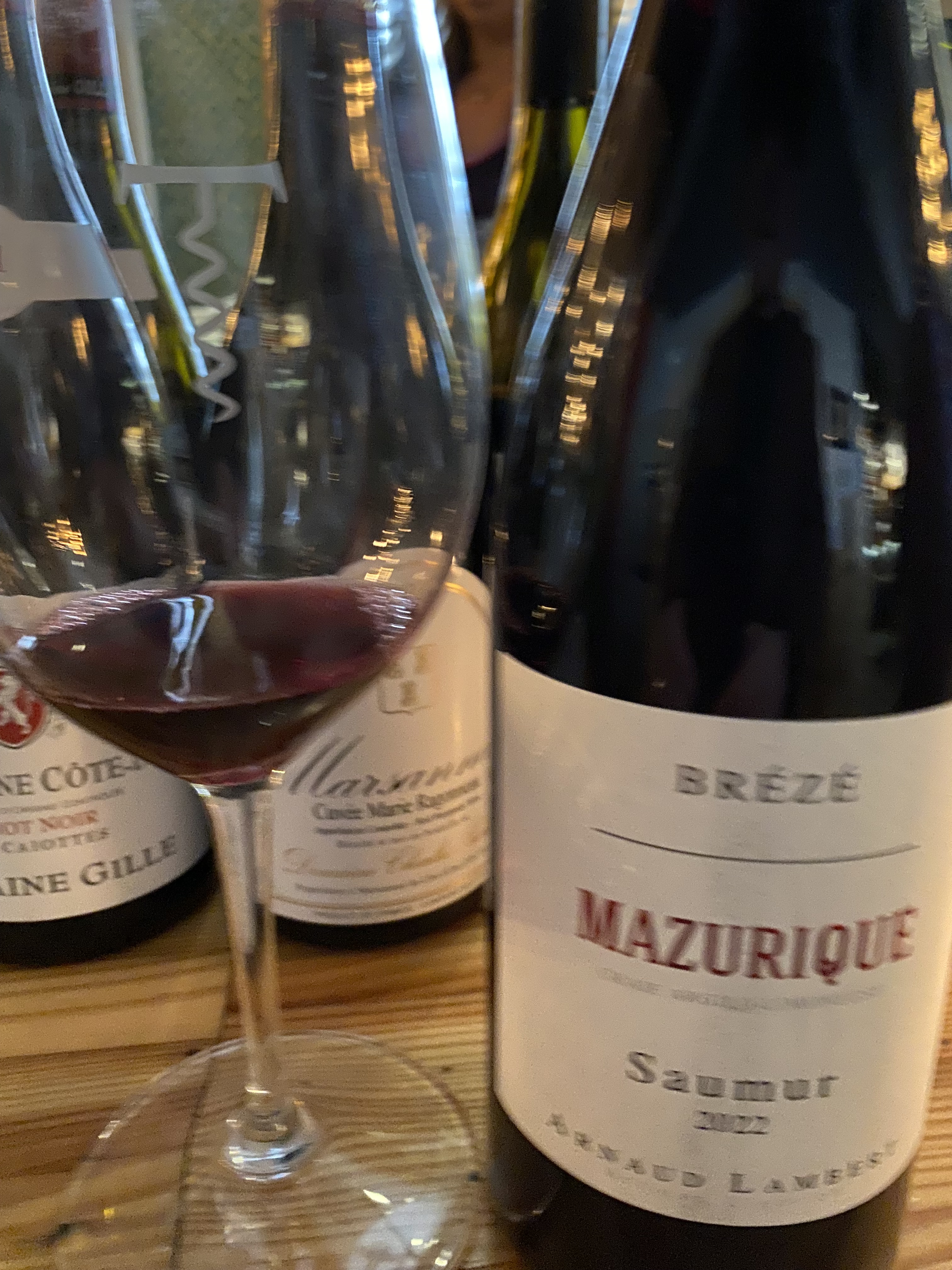
We then enjoyed a tasting of Arnaud Lambert “Breze” Clos Mazurique – Monopole Saumur Rouge 2022 and the wine used to go by the name of Chateau de Breze.  Arnaud Lambert calls himself a “winegrower in Breze” and a “Loire craftsman.”  Yves Lambert created the domaine in 1996, with the desire to exploit the terroir of Saumur-Champigny for both Cabernet Franc and Chenin Blanc. Arnaud joined his father in 2005 and in 2009 began their goal of working organically and they also acquired eight plots in the Monopole of the commune of Breze.  Saumur Rouge is the appellation for the area around Saumur in the central Loire Valley and Cabernet Franc, must be at least eighty-five percent of the wine, but in practice the wine is usually unblended.  The age of the vines in Breze are about forty years of age.  The Maceration, Initial and Malolactic Fermentation are done in Stainless Steel, followed by some aging in Concrete vats.  The wine had a deep-red color and offered notes of red and black fruits, bell pepper, violets, smoke, and spices.  On the palate very subtle notes of fresh plums and currants, with a smoky presence, and dry tannins with a softer interpretation of a Cabernet Franc, higher acidity, and a nice finish of limestone terroir.

Then we tried Esprit de Pavie Bordeaux 2017; produced by Gerard Perse, the owner of Chateau Pavie, Pavie-Decesse, Monbousquet and Bellevue-Mondotte.  Already the owner of the renowned Pavie, Pavie-Decesse, Monbousquet and Bellevue-Mondotte estates.  Chateau Pavie was originally planted during the Roman times and the estate has changed many times both in size and ownership and in 2012 was promoted to Saint-Emilion Premier Grand Cru Classé (A). Gerard Perse, a French supermarket “mogul” who has hired Michel Rolland as his consultant winemaker; Vignobles Perse is the name of the portfolio of his wine estates, including Esprit de Pavie which is his generic Bordeaux wine of Merlot, Cabernet Franc, and Cabernet Sauvignon in similar proportions to Pavie.  The fruit is sourced from across the region and aged in previously used oak from Pavie and Monbousquet.  The wine is a blend of sixty-five percent Merlot, twenty percent Cabernet Franc and fifteen percent Cabernet Sauvignon.  Initial Fermentation and Malolactic Fermentation is accomplished during several weeks in temperature-controlled tanks, after which the juice is aged for fifteen months in previously used barrels.  A nice ruby-red wine and offers notes of black and red fruits, oak, and caramel.  On the palate this wine offered tones of rich fruit, tight tannins, and a medium finish of fruit.  This was a fine medium-bodied, well-structured entry level Bordeaux that I thought was above its classification, not complex, but very satisfying and a great wine to drink for the next several years.            

Posted in Wine | Tagged , , , , , , , , , , , , , , , , | 2 Comments

My Bride at the “Italian Table”

It is always a pleasure to watch my Bride at a wine tasting, when we were at Sip & Shop at Vertical Detroit, a restaurant in Downtown Detroit, and also owned by The Fine Wine Source in Livonia, Michigan.  She doesn’t always get a chance to accompany me to several of the wine tastings, so when she can attend, it is a joy to watch her.  At the “Italian Table” I got to watch her enjoy some Azienda Agricol Benito Ferrara Terra D’Uva Greco di Tufo DOCG 2022.  Benito Ferrara began in the early 1900’s and they now have eight hectares of vineyards.  Terra D’Uva translates to Land of the grapes.  Greco di Tufo DOCG was granted in 2003 and is the most famed white wine of the Campania region.  Tufo not only refers to the village, but also describes the limestone tufa. The grape varietal is also known as Greco, very predominate in Campania, as is believed to have been introduced to the region by one of the ancient tribal groups of Greece from Thessaly.  This particular wine is pure Greco di Tufo, but the classification only requires eighty-five percent. After harvest the grapes are soft pressed, the wine matures in Stainless Steel for about six months on the lees.  The soft golden hued wine offered notes of lemons, pears, and almonds.  A very crisp wine with tones of pears and a nice lingering finish of terroir.  

Then we followed with another wine that reminded me that I once missed having a chance to meet the proprietor and winemaker Riccardo Campinotti, of Le Ragnaie who was stuck in some airport, God only knows; but I remember his wines fondly.  Azienda Agricola Le Ragnaie Brunello di Montalcino DOCG 2017 and this is considered his entry level Brunello.  Le Ragnaie is based in Montalcino, Tuscany and the estate is dedicated solely to growing Sangiovese grapes, which is the most planted grape in Italy and has a major home in Montalcino.  The estate is now twenty-eight hectares and has four distinct vineyards and the winery is one of the leaders of the region for creating cuvee-style wines taking advantage of the distinct vineyard qualities, very Burgundian in concept.  It is also enjoying some of the highest altitudes in Montalcino, in fact some are higher than the allowed height of six-hundred-meters, but he is working on that.  The original winery was started in 1991 in a much smaller estate with one of the original agritourism farmhouses and Riccardo took over and started expanding in 2002.  He was considered more daring and innovative and he has slowly mixed tradition with modernism.  The fruit for this bottle of wine comes from the Ragnaie, Petroso, Loreto, Fornace and Cava vineyards.  The initial fermentation and maceration using native yeast is done in concrete vats and may take up to forty days.  Then the wine is aged for thirty-six months in Slavonian Oak vats and then aged in bottle before release.  A beautiful Sangiovese with notes of red fruits and florals.  On the palate the striking tones of cherries, strawberries, cedar with a nice structured tannins that I am sure will even be more graceful in another ten years.  This was a nice chewy wine, that ends with terroir and spices.  An excellent chewy wine that belies the fact that it is the entry level offering, especially with my Bride continually telling me that she likes this wine.

The last wine we had at the “Italian Table” was Dosio Barolo del Communde di la Mora Piedmont 2019.  Dosio was established in 1974 on the site of an old farmhouse from the 18th Century, and they have about eleven hectares of vineyards mainly between La Morra and Barolo. The property is five-hundred-meters above sea level with a scenic setting.  The winery was sold to new owners in 2010 who restructured and transformed the estate.  Among the communes of La Morra and Barolo there is a high concentration of limestone-rich marl soil, which is respected for the aromatic and fruit-forward style wines; La Morra is considered to be more perfumed and Barolo is considered to be more complex. This wine is pure Nebbiolo and planted on the blue marl soil of La Morra and the average age of the vines are twenty-five-years.  The fruit is hand-harvested, de-stemmed and crushed, maceration, Initial Fermentation and Malolactic Fermentation occurs in temperature-controlled tanks for about the first thirty days; then the wine is aged for a minimum of eighteen months in large casks.  The wine is a garnet red and offers notes of black cherry, roses and violets, tea, and leather.  On the palate a nice balance of acidity and velvety tannins, a nice big chewy wine considering that it is still young offering great tones of black cherries, nutmeg and spices, terroir and ending with a nice finish of fruit and chalk.  A good wine to put away for at least ten to fifteen years and would probably offer some special nuances in the following couple of years.   

Posted in Wine | Tagged , , , , , , , , , , , , , , , , , , , | Leave a comment

Three Sparkling Wines for My Bride

When we were at “Sip & Shop” at Vertical Detroit restaurant, that is owned by my local wine shop The Fine Wine Source in Livonia, Michigan; I was watching my Bride select three sparkling wines from a grouping of seven from the Old World.  Since, there were so many wines, we sometimes even share the same tasting glass, especially since there were fifty-five wines being poured.  It is kind of easy for me to softly suggest some wines, as I have had a chance to try probably half of the wines offered, and I have an idea of what she will like.  Sometimes, I get surprised. 

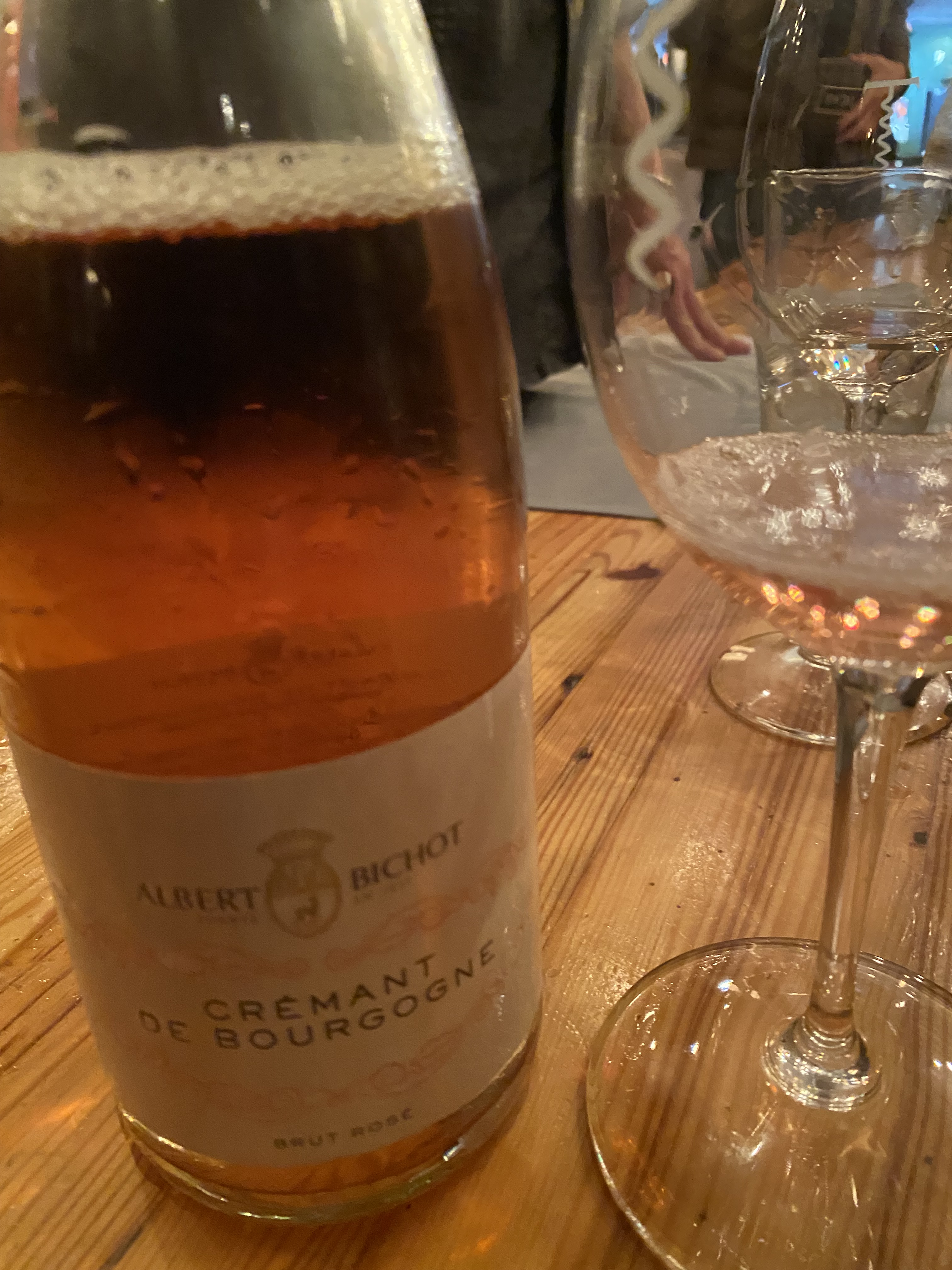
The first of the sparkling wines that we shared was Albert Bichot Cremant de Bourgogne Brut Rose NV.  Domaine Albert Bichot is a major family-owned and run negociant house and estate owner in Burgundy, that began in 1831 and is now based in Beaune.  Their main focus is Pinot Noir and Chardonnay wines and in their more southern holdings they also produce some Gamay in Beaujolais.  Alberic Bichot took over the reins in 1996 and is the sixth generation of family to run the holdings.  They own more than one-hundred hectares of sustainably farmed vineyards divided among six estates, and the majority are run organically.  The wine is eighty percent Pinot Noir from the Cote Chalonnaise, ten percent, and more Chardonnay from Auxerrois and less than ten percent Gamay from the Maconnais.  Each grape variety is vinified separately to enhance the qualities of the varietal.  The base wine is thermoregulated in Stainless Steel vats, then blended and aged for at least twelve months on laths, with three additional months after disgorgement before it is released.  A nice coppery-salmon wine with fine even bubbles and offered notes of currants, raspberry, strawberry, and a touch of lemon citrus.  On the palate a bright, fresh wine that showed tones of the red berries, and ended with a nice dry finish. 

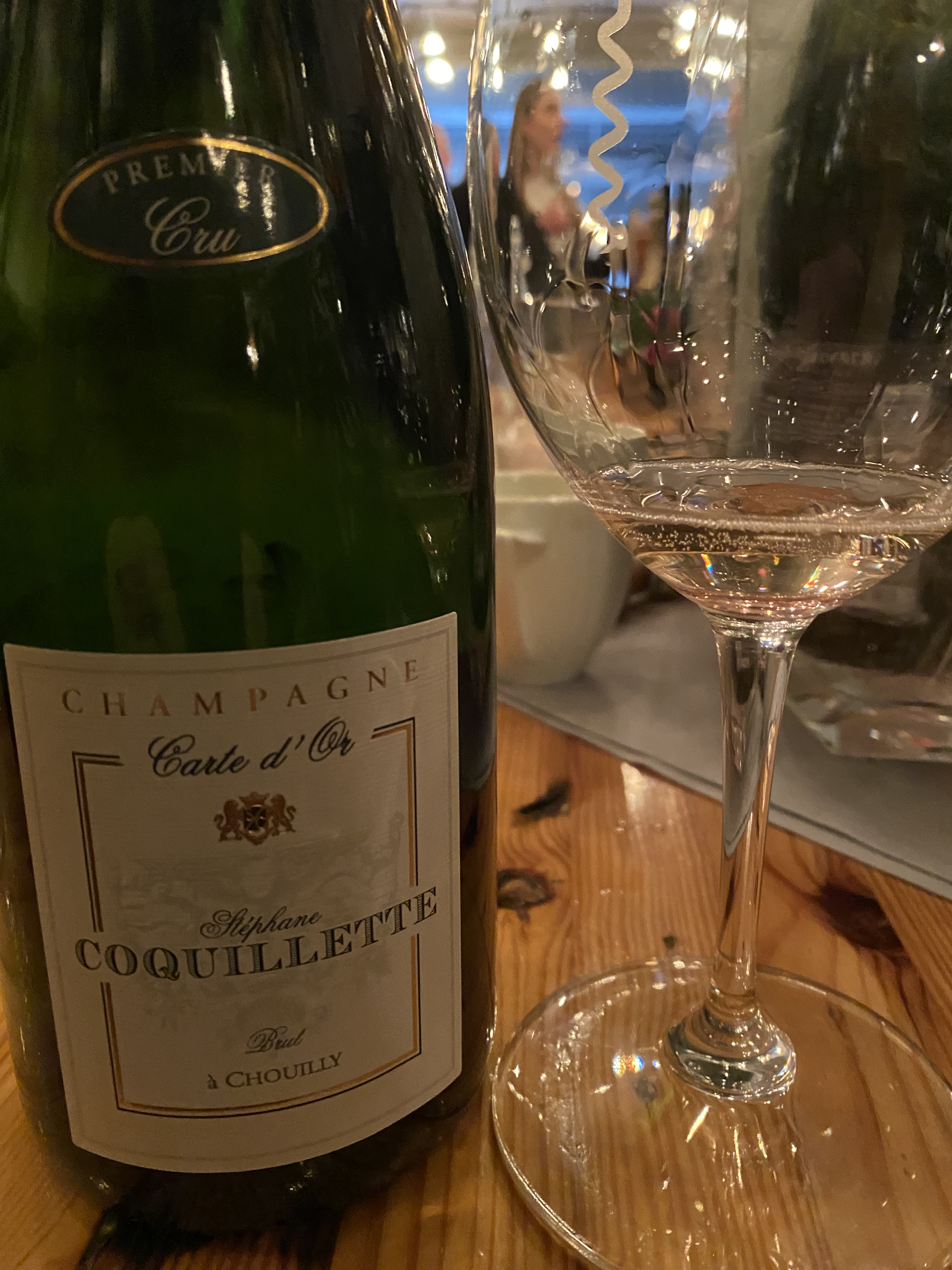
We then had Champagne Stephane Coquillette Brut Carte d’Or Premier Cru NV.  Stephane Coquillette is a fourth-generation winemaker in Champagne.  His grandmother, Helene, was the first grower to domaine-bottle in Chouilly.  His late father, Christian, ran Saint-Chamant from 1950-2020; and he encouraged his son to start his own estate when he turned 25.  He developed his own house with ten different parcels, including a single-vineyard, single-vintage Champagne.  He has parcels in Chouilly (Grand Cru), Cuis (First Cru) for Chardonnay; and d’Ay (Grand Cru) and Mareuil/Ay (First Cru for Pinot Noir; and all of his parcels are on limestone-based soils.  He employs organic practices, including using bark as ground cover to stop erosion, farming by hand, and all of his wines are small-production.  The wine is a blend of sixty-five percent Pinot Noir (d’Ay and Mareuil/Ay) and thirty-five percent Chardonnay (Chouilly and Cuis).  His style is considered to be a little fresher and leaner than the more traditional Saint-Charmant that his father had made legendary for the region.  The fruit is slow-pressed and undergoes Initial Fermentation and Malolactic Fermentation in Stainless Steel tanks.  Reserve wines are not used to adjust the blend of the non-vintage wines, but not marked as such, because they did not sit on lees for the three-year mandatory minimum period.  The wine was a pale yellow with plenty of fine bubbles and offered notes of green apples, peach, lemon, florals, and toasted nuts.  On the palate the tones of fruit, and citrus blended with toasted brioche, big acidity, and a nice medium finish of fruit and minerals.  

We then had the Champagne Laurent-Perrier “Cuvée Rosé” Brut Rosé NV.  Laurent-Perrier was founded in 1812 in the village of Tours-sur-Marne, and is famed Champagne house with emphasis on Chardonnay.  Laurent-Perrier is likened to Veuve Clicquot, as a widow Mathilde Emilie Perrier was the impetus for success.  After the vineyards were established, she gave control to the cellarmaster Eugene Laurent and his wife Perrier.  After his death in 1887, Perrier took over the house and named it for herself and her late husband.  Laurent-Perrier was sold in 1939 to the de Nonancourt family, and Bernard de Nonancourt, a war hero took control of the house in 1948, until his death in 2010.  The house makes two rosé Champagnes, the popular Cuvée Rosé, made from pure Pinot Noir, and the vintage Cuvée Alexandra which has twenty percent Chardonnay.  The wines are all vinified according to their vineyard, and they were one of the first Champagne houses to use Stainless Steel tanks for fermentation.  They have thousands of bottles stored in eleven kilometers of cellars at Tours-sur-Marne.   The property is now part of the Laurent-Perrier Group, which also has Salon and Delamotte among others.  In 1968, developed a particular method of maceration for Pinot Noir grapes, for their two rosé Champagnes.  This wine is pure Pinot Noir from ten different Crus in the Montagne de Reims district.  The grapes are selected by plots and destemmed before vatting.  Maceration can last for three days and the wine spends three days in contact with the skins (Saignée) and then matures for a minimum of sixty months before disgorgement.  The salmon-pink colored wine offers notes of raspberry, currants, strawberry, and black cherry along with some florals and citrus.  On the palate the tones of red fruits are fresh, lively, and crisp, with structured acidity, and blended with a smoky brioche flavor and a nice medium finish of fruit to savor.     

Posted in Wine | Tagged , , , , , , , , , , , , , , , , , , , , , , , | Leave a comment

La Fiorita and Natalie Oliveros

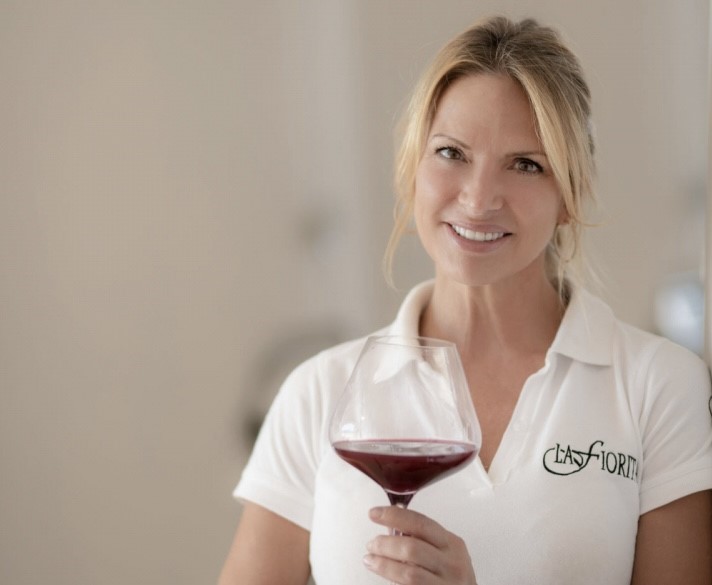
On one of my tasting trips to The Fine Wine Source in Livonia, Michigan I had the chance to enjoy a couple of Italian wines from Fattoria La Fiorita, a wine estate in Montalcino, Tuscany specializing in the Sangiovese varietal.  Founded in the early 1990’s, it was partially owned by Natalie Oliveros in 2011, and fully owned by her since 2014.  Since her takeover, she has shifted the winery to organic viticulture with certification and in 2019 she completed a new winery and cellar.  The estate is nine-hectares in size and has four separate vineyards: La Fiorita, Pian Bossolino, Giardinello and Poggio al Sale; each with its own identity and terroir.  Natalie Oliveros came to wine making naturally in the basement, in northern New York State with her Calabrese Nonna.  She had planned to be in show business, and she did, as a star in the American Adult Film Industry using the name of Savanna Samson.  She began that career in the early 2000’s and at the same time she was introduced to Fattoria La Fiorita, and she began with a collaboration of Italian wines called “Sogno” (Italian for dreams).  She eventually left the film industry for the other, and hasn’t looked back.  The rest as they say is history.

We started with Fattoria La Fiorita Rosso di Montalcino DOC 2018.   The wine is pure Sangiovese and the fruit is harvested from three of their different vineyards with differing terroirs: Poggio al Sole with Tufo and clay (a rarely encountered limestone soil over a clay bedrock), Giardinello which has sandy clay, and Poggio d’Arna which is a clay loam.  The Initial Fermentation and Maceration for eighteen days using indigenous yeasts in Concrete tanks; each parcel has its own concrete tank.  The wine is then aged for twelve months in French Oak, followed by two months in Stainless Steel, and a minimum of two additional months in the bottle before being released; and 18,000 bottles were produced.  A nice garnet-red colored wine offering notes of black cherries, raspberries, sweet tobacco, and spices.  On the palate great tones of cherries, Star Anise, cloves, sous bois, all blended together with velvety tannins and a nice medium finish with some terroir.

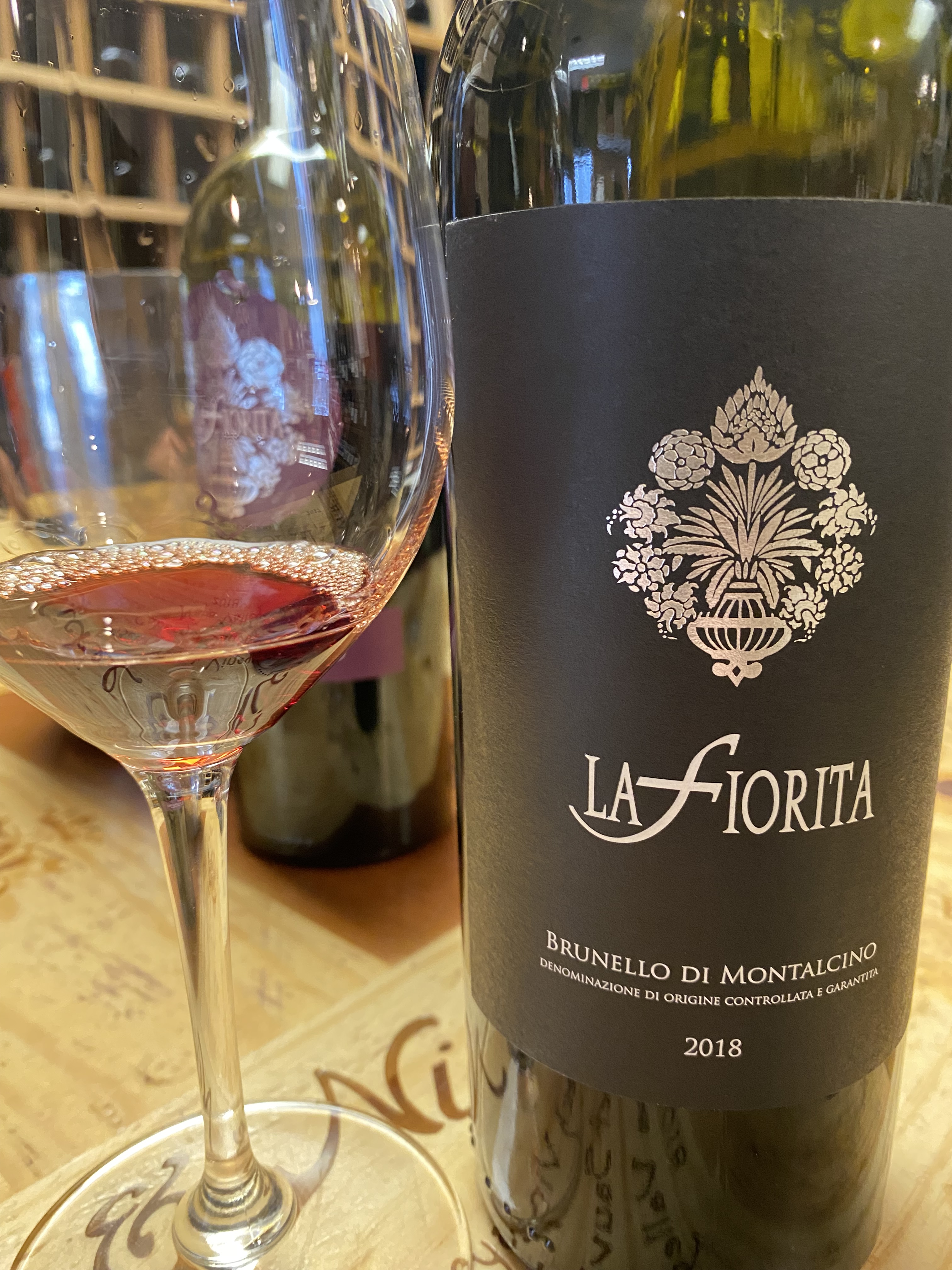
We then had the Fattoria La Fiorita Brunello di Montalcino DOCG 2018.  The wine is pure Sangiovese and the fruit is harvested from three vineyards with differing terroirs: Collosorbo with calcareous gray and red clay, Pian Bossolino with classic clay schist soil, and Giardinello with sandy clay loam.  Initial Fermentation and Maceration is for thirty days with indigenous yeasts in Slavonian Oak casks.  This was followed by thirty-six months in French Oak, followed by two months in Concrete vats before bottling and an additional eight months in the bottle before release; with 22,000 bottles made.  This deep garnet wine offered notes of black cherries, strawberries, florals, spices, sous bois, and cedar.  On the palate there were tones of red and black fruits, savory blend of pepper, rosemary, with soft tannins, ending with a nice medium finish of fruit, spices, and terroir.       

Posted in Wine | Tagged , , , , , , , , , , , , | Leave a comment

Twelve Years of The Wine Raconteur

I am not sure where the time went, but on 4 May 2012 01:10 GMT my first article was published and I questioned why would anyone want to read my ramblings, and I still ask that eternal question.  As I look back, it was terrible, and I am not sure if there is much improvement.  I was never around people that drank wine, I grew up where the drink of choice was a shell of beer or a Seven and Seven, or better yet a Boilermaker.  I liked wine from a standpoint as a kid, if I was on a date and all dressed up; and I ordered a bottle of wine with dinner, no one asked for any identification.  So, at sixteen, I began my quest of wine education in a city that only had a few restaurants that had more than carafes of jug wine.  I just knew that I didn’t want to be a snob, as I didn’t like the way, that a lot of articles about wine, seemed to make it appear that it was an inner circle type of enjoyment.  I tried many ways at first, trying to borrow points from this writer and that writer.  Actually, twelve years ago, there was a group of us that ended up following each other and it was fun, and quite a few of that group are still blogging; a few have become wine journalists and even accredited wine judges on panels.  As for me, it was fun and kept me off the streets.  The first year, I actually published an article every night at 01:10 GMT, just to get in the habit of writing, since it had been a long time since I had been in college.  The second year, I started publishing every other night, and until maybe around two years ago, I became a slacker and started publishing every third night; and it is not because I have run out of ideas or wines.  Somewhere, in the early writings I found my voice, or my conceit of writing, that it is best if I think that I am at a bar or a table, talking to another individual, while we drink wine.  I can’t lecture, but I can talk, tell stories, and make the stories revolve or include wine, and hence I became the Raconteur.

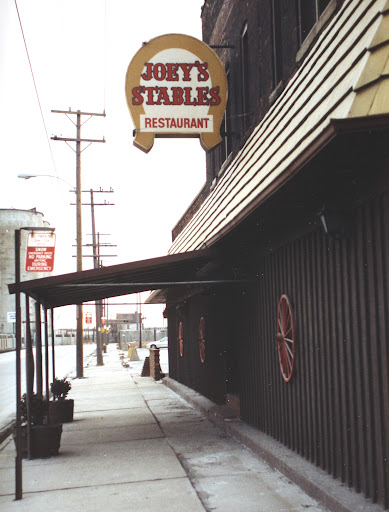
When I was a kid, we went out for dates, and usually at restaurants.  The high school that I attended was what is now called a magnet school, back then it was your grades that got you invited and accepted (who knew).  The only problem was that the school was in Downtown Detroit, and the students could be from all points in the city, so downtown was the most logical place for dates, and my discovery about wines made it all worthwhile, because downtown was where a fine restaurant would carry a selection of wines.   So, besides writing about wines from my memories, I would write about the restaurants that I would frequent, when possible, because minimum wage back then was $1.25 an hour.  Over the years, these articles about Old Detroit are some of my most popular pieces, and have taken on a life of their own, to the point where people have even left messages for others on the thread that grew after publication.  Some may even still think of Detroit as the Automotive Capital of America and back then cars had personalities.  There were restaurants even away from the downtown that cater to the automotive business men and workers, only a couple might have French Cuisine, but you sure could get a great steak with all of the trimmings, and appetizers galore.  I wrote about a place near and dear to my heart, as it was where I grew up, and the last time, I did a Google search, I discovered that I was the second and third listing for the site, and I was even copied to other sites at well.  Joey’s Stables of Detroit (Delray) may be gone on maps, but not in the hearts of my readers, friends and family.  It makes me smile and this is a fluff piece where wine is kind of peripheral.

What always surprises me, is that I have followers, because I have never asked anyone to follow me.  There are always about a thousand readers a week, which includes visitors to my site, and people on Facebook, Twitter or whatever it is now, Instagram and where ever else people find out about my articles.  Yes, I do enjoy wines and I write about them and usually from the viewpoint of the situation.  I am held in low esteem by some (who still follow me though) because I have no designations or wine degrees.  One day, I might do the Century Club, to see how many varietals I have had in the fifty plus years of wine enjoyment.     

My Bride, and everyone of my characters that get mentioned have nom de plumes, as if I was Dashiell Hammet.  She has endured and put up with all of my craziness, in fact, I think she was one of those that pushed for me to start writing.  When we met, she only ate fish and drank white wine, that didn’t last long, and there are times when we end up having a better bottle of wine out for dinner, if there is a great bottle of Cabernet Franc that may have her name on it.  She likes to get dressed and go out for dinner, and alas there really are no more night clubs for dining and dancing.  She realizes that our day trips, dinners, vacations, and any social event may be fodder for an article.  And there are times when she has to put up with my gripes about the quality of the wines offered, but if we can suffer, so can my readers, because it is the real world and I don’t live in a world of only hundred dollar or better wines.  She might also be chomping on the bit, to have a drink, and she has to wait for the world’s worst iPhone photographer.  The queue on my phone is often full and I often get messages that some cloud that I didn’t request can’t handle all of my photos, so I guess I will still be writing until it no longer gets fun anymore.   Now, I will get back to being a Raconteur and publish at 01:10 GMT.

Posted in Uncategorized | 2 Comments

Another Wine Tasting Later That Day

My Bride and I had quite a Saturday together, after Sip & Shop at Vertical Detroit, we had a quick dinner downtown and then off to Livonia, for another wine tasting at The Fine Wine Source.  For those of you that think that Nick and Nora are crazy, there were fifty-five wines offered at the first setting, and eighteen at the second tasting; we did not try tasting all the wines.  This was more for my Bride, as there were plenty that I have already tasted, some I have already wrote about, and still more to be chronicled.  Only so that you don’t worry, we bought two cases at Detroit Vertical and one case at The Fine Wine Source.  Somehow, we will find space.  I will mention three wines for the moment.

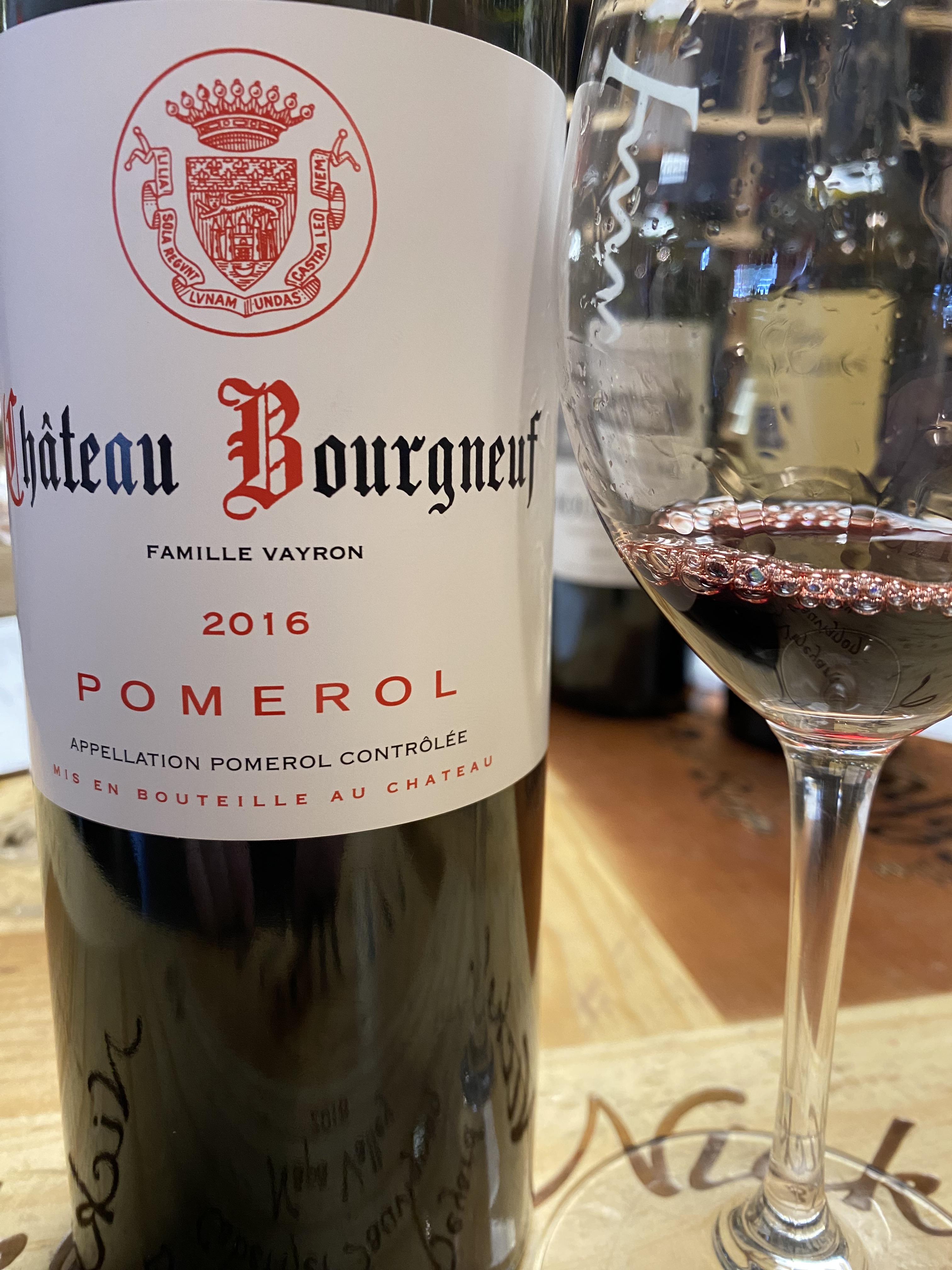
We had Chateau Bourgneuf Pomerol 2016 from Famille Vayron; and until 2012 was often labeled Chateau Bourgneuf Vayron.  The Vayron family has had the estate since the 1840’s, Xavier and Dominique Vayron took over in the 1970’s, but their daughter Frederique is now in charge of the estate and winemaking.  The vineyards are spread over nine hectares on the slope of the Pomerol plateau, neighboring some famous chateaus.  The soil in the various vineyards go from pure clay, to a blend of clay and sand, to gravel.  Ninety percent of the vines are Merlot and ten pen percent is planted with Cabernet Franc.  Each parcel is harvested by hand separately and then they are initially processed in temperature controlled concrete vats, followed by twelve to fourteen months in Oak, with about a third in new oak.  A deep ruby-red colored wine that offers notes of dark fruit, violets and mocha.  On the palate there were tones of black cherry, plums, cassis, and mocha and finishing with a good count of cocoa and terroir.

We enjoyed some Chateau de Pez Saint-Estephe 2016, and Saint-Estephe is one of the Communes that one doesn’t encounter that often.  Chateau de Pez is one of the oldest wines in Bordeaux.  The Domain of Pez was established in the 15th Century, but the vineyards were added by the Pontac family (Chateau Haut-Brion) in 1585; and then lost by them during the French Revolution.  In the 20th Century there was a series of owners until the present Rouzad family of Champagne house Louis Roederer and Pichon Longueville Comtesse de Lalande and others.  There is about forty-two hectares of vineyards with fifty percent Cabernet Sauvignon, forty-three percent Merlot, four percent Petit Verdot and three percent Cabernet Franc.  The vineyard sits on a high plateau (Pez) on soils of about a meter of gravel over a bedrock of limestone and clay.  De Pez was classified as Cru Bourgeois in 1932 and continued through all the revisions to 2003; and then it was one of nine Cru Bourgeois Exceptionnels.  The classification was annulled in 2007 and reintroduced in 2010 as a one-tier system.  De Pez and five of the other Exceptionnels decided to forgo the new classification and they now are called Les Exceptionnels; and they have continued to stay apart even when in 2020, a new three-tier system was created (standard, Superieur, and Exceptionnel).  The cellars were modernized in 2018, to allow for vinification of individual parcels, which are still hand-harvested. The fruit undergoes Fermentation with their skins for about twenty-one days in temperature-controlled oak vats.  The wine is then transferred to oak barrels, of which forty percent is new, for between twelve and eighteen months.  After one year in the barrel, the wine undergoes an egg-white fining, but later the wine is bottled unfiltered.  This dark purple wine offers notes of dark fruits, and traces of mulberry, some licorice, and spices.  On the palate a big wine with tones of black berries, cherries, licorice, tight tannins; a big chewy wine that has a nice long finish of rich fruit and terroir.  

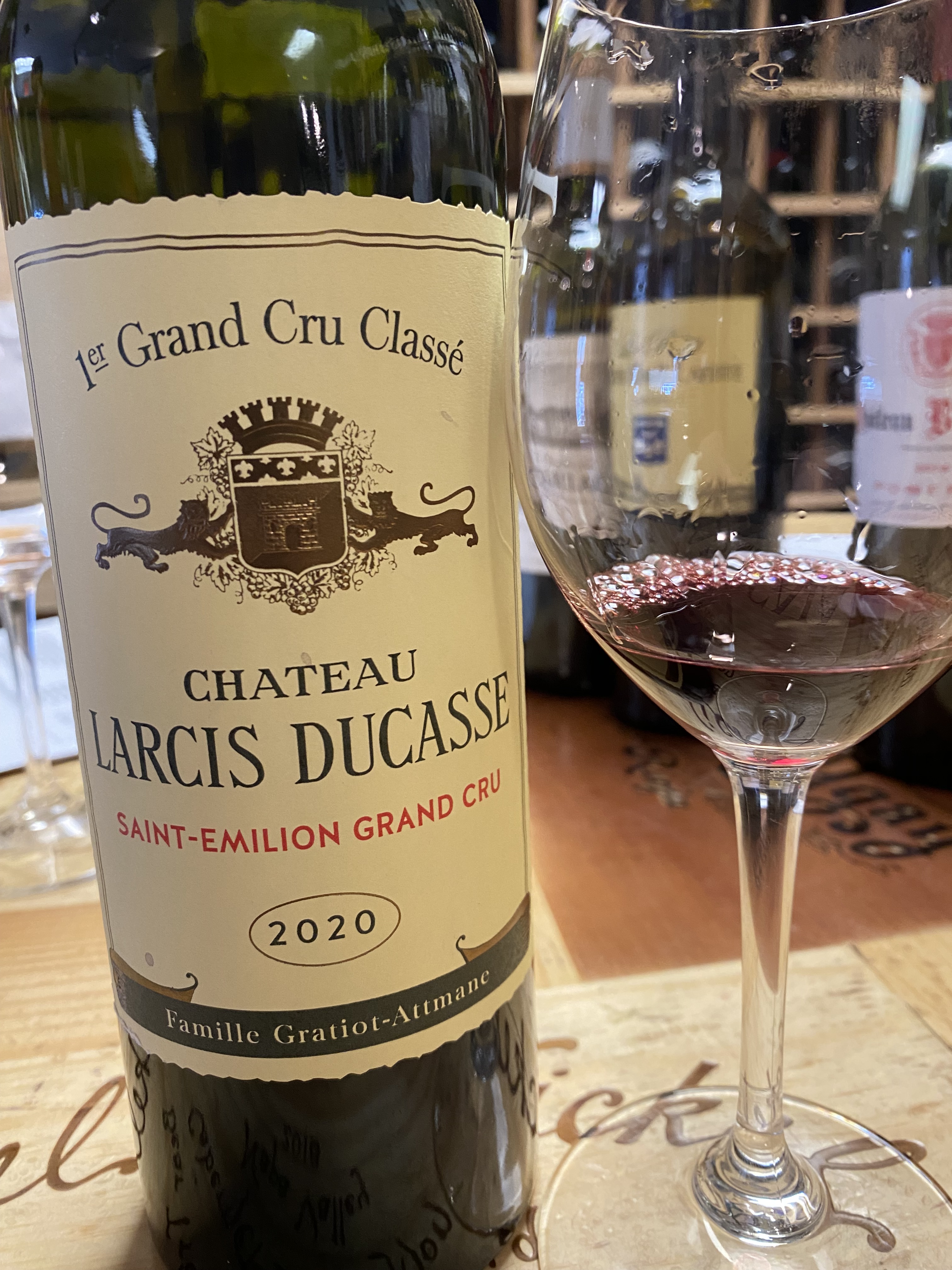
We had Chateau Larcis Ducasse Saint-Emilion Grand Cru – Classe B 2020 from the Famille Gratiot-Attmane.  Chateau Larcis-Ducasse dates back to the 16th Century and is located on the Cote Pavie, adjacent to Chateau Pavie.  It has been owned by the Gratiot-Alphandery family (now Gratiot-Attmane) since the 1940’s.  The estate is about eleven hectares primarily planted with Merlot with a small planting of Cabernet Franc.  The average age of the vines are thirty-five years of age and planted on soils that vary from alluvial sand deposits to limestone, clay, and chalk.  The estate also produces a second wine called Murmure de Larcis Ducasse.  The fruit is hand-harvested, and Initial Fermentation takes place in Concrete Tanks, and Malolactic Fermentation is done in oak barrels, and the wine is then aged for about two years, with two-thirds of the barrels being new.  A dark dense ruby-red colored wine that offers notes of black cherry, spices, and chalk.  On the palate there are tones of red and black cherries, a touch of raisins, some chocolate, with strong tannins, some heat, and finally finishing with a long count of spices, fruit, and terroir.    

Posted in Wine | Tagged , , , , , , , , , , , , , , | Leave a comment

Sip & Shop April 2024

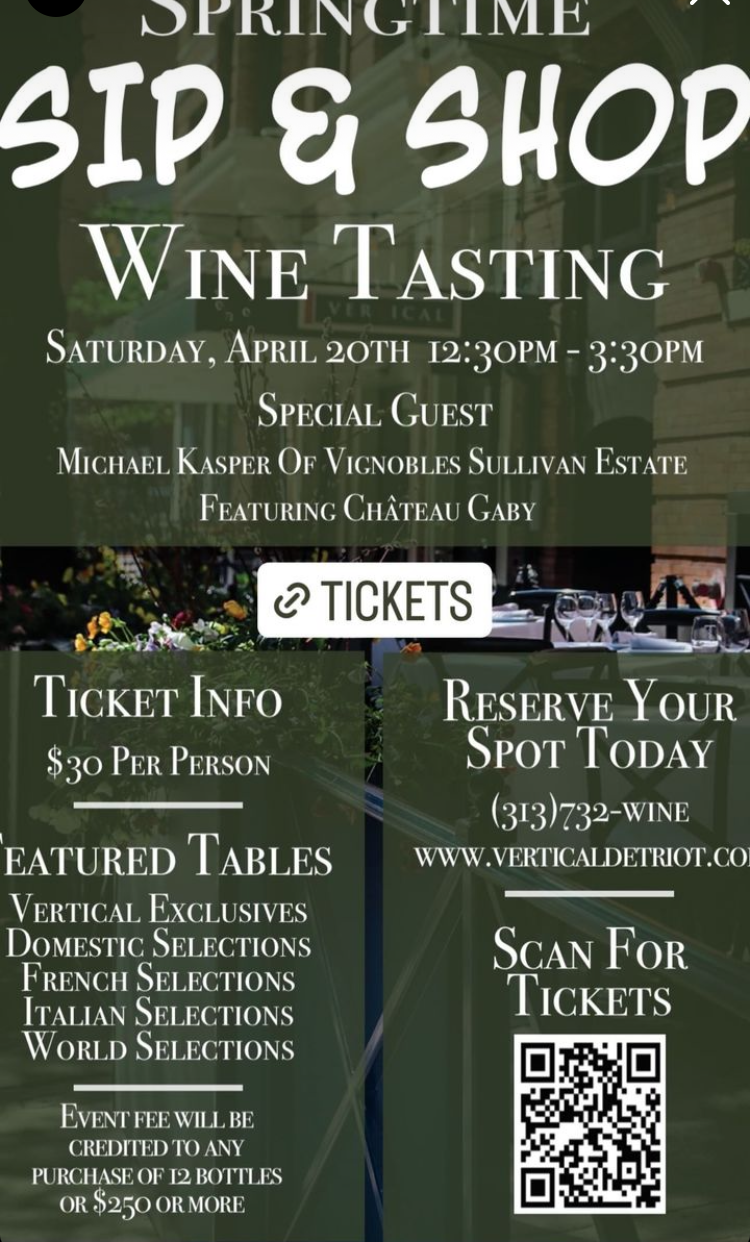
My local wine shop, The Fine Wine Source, held a wine tasting at their restaurant Vertical Detroit and call it “Sip & Shop.” This is the second one that they have held and we have attended.  It was fun, because I could watch my Bride taste some of the wines that I may have tried earlier at the store without her.  The restaurant was rearranged so that there were tasting tables arranged throughout.  There were nine themes per table: Vertical Exclusives, Roberts & Rogers, Korbin Kameron, Champagne & Sparkling, Italian Selections, French Selections, California & Oregon Selections, South America & Other Europe, and Vignobles Sullivan. The entry fee was thirty dollars per person, and the price would be credited to one’s purchase of twelve bottles of wine.  I thought it was very reasonable and we showed up to make the most of the event.  As I looked around, I realized that the people attending were regulars of the restaurant as opposed to the regulars at the wine shop and that made sense. 

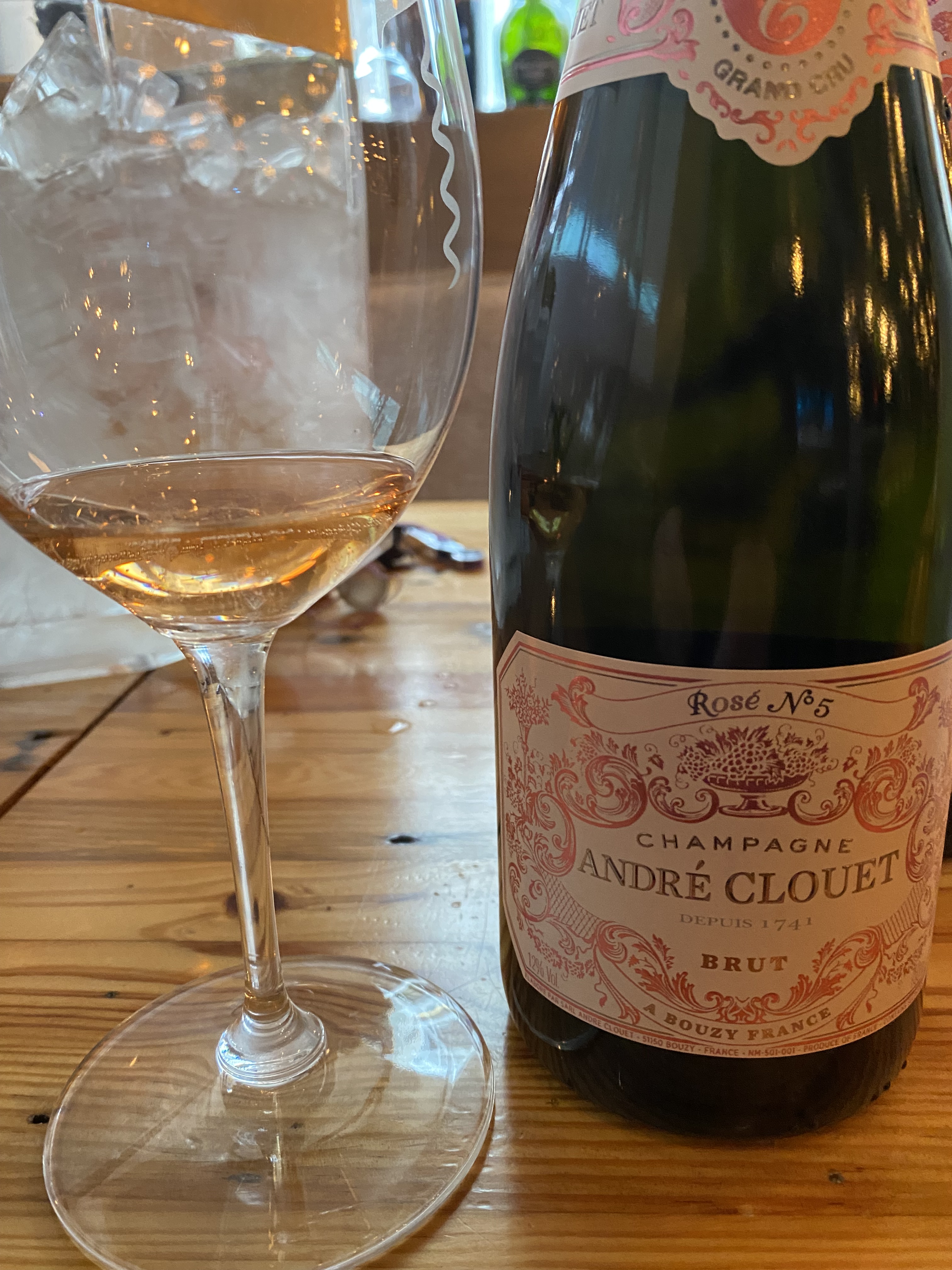
We went to the back of the restaurant, where the bar is and we started there.  We stopped first at the table that were Vertical Exclusives, and that is because between the wine shop and the restaurant, the allotment for the state was purchased.  We started out the festivities with Champagne Andre Clouet “No. 5” Brut Rosé NV.   Champagne Andre Clouet is a grower Champagne in the Grand Cru village of Bouzy and its wines are made exclusively from Pinot Noir on their eight-hectare estate on the famous chalk soils of Champagne.  Jean-Francois Clouet, a Bouzy native with a family history in the region before the Seventeenth Century.  1741 is the year that the foundation of house was built by Andre.  According to their website, “Bouzy Rouge” was created in 1770, by adding a few drops of red wine from Champagne to white wine to create a pink wine. They claim three hundred years later, everyone is still crazy for this Champagne.  This wine comes in different numbered editions.  The wine is blended: with seventy-five percent from 2018, eight percent from 2017, ten percent from 2015 and 2016, and seven percent Rouge de Bouzy 2018. The wine is a medium salmon-pink color with fine bubbles and offered notes of cherries, pomegranates, and brioche.  On the palate there are tones of strawberries, raspberries, and cherries with bright acidity and a fine mousse; ending with a finish of fruit, spice, and a light chalky terroir.

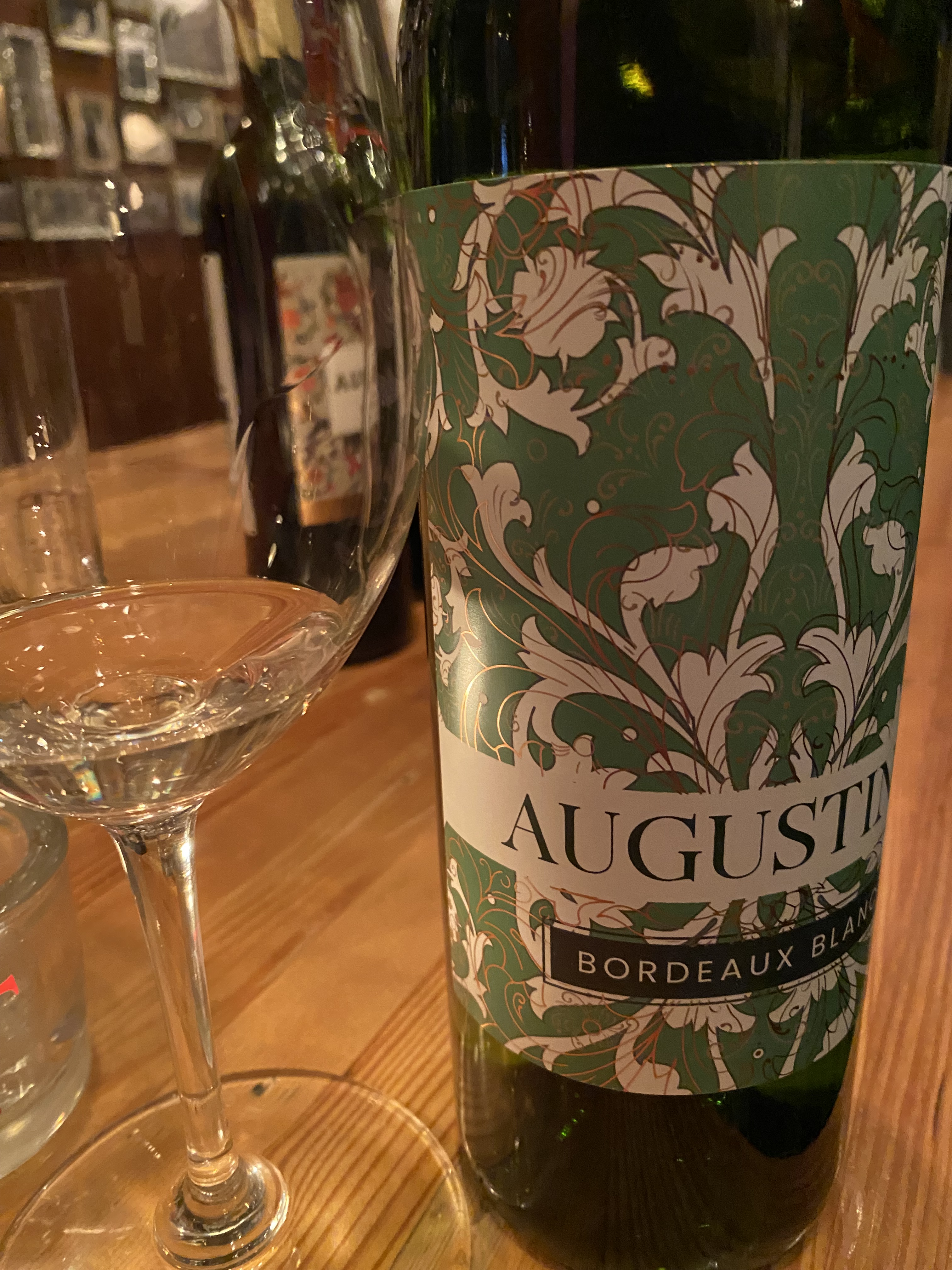
At the table designated as Vignobles Sullivan, while I was chatting with Michael Kasper who came up from Florida for the event as he had been at the wine dinner at Vertical Detroit along with the Directeur General Damien Landouar, the winemaker for Chateau Gaby and the umbrella wineries of Vignobles Sullivan.  My Bride wanted to refresh her memory and to see if we needed more (of course we did, along with the rosé) of the Augustine Bordeaux Blanc 2022 made by Chateau Auguste.   Chateau Auguste is a seventy-four-acre Bordeaux estate located in the Right Bank region of Entre-Deux-Mers, which means between two seas; the Garonne and Dordogne Rivers.  A triangular region of sand and gravel atop layers of limestone, originally planted by the Romans.  Chateau Auguste is owned by Vignobles Sullivan and under the guidance of winemaker Damien Landouar.  An organically made wine of ninety-five percent a blend of Sauvignon Blanc and Semillon and five percent Muscadelle.  This light straw-colored wine offered notes of white fruits and freshly cut grass.  On the palate there were tones of pears, peaches, and almonds in a well-balanced and very easy drinking wine with a nice medium count finish of crispness and terroir.  

Posted in Wine | Tagged , , , , , , , , , , , , , , , | Leave a comment

Thirty-One and Counting

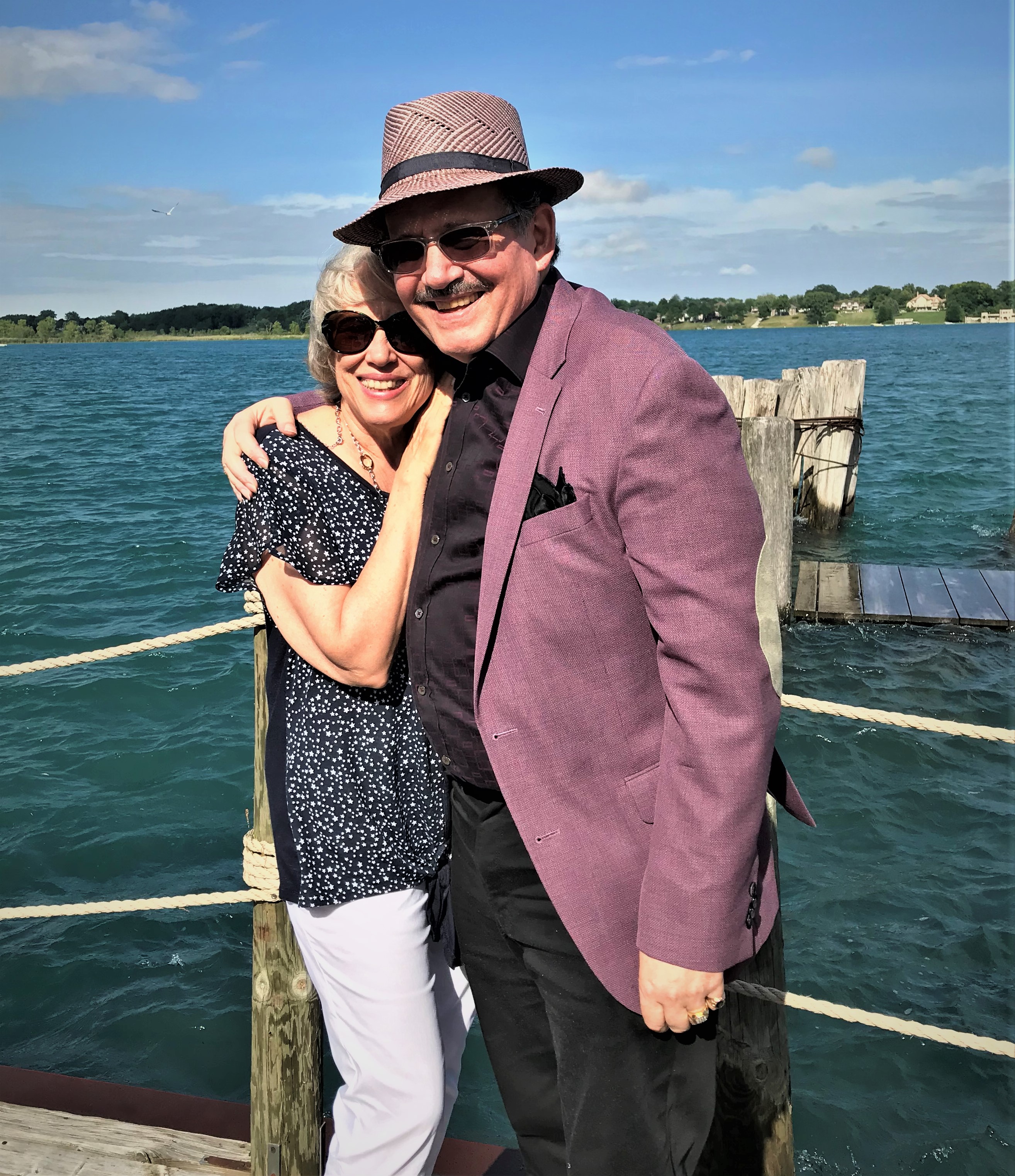
It is hard to believe that my Bride and I met one night, thirty-one years ago at a singles dance.  We have been basically been together every day since.  Of course, I also told her that I was going to marry her, that evening; I guess she didn’t try to run away too hard that night.  It doesn’t seem that long ago, but I know that I would never be able to get into any of the clothes that I had, except for my hats, scarves, ties, hosiery, and jewelry; though my Internist wants me to lose some weight, back then it was easy.   These thoughts I am relaying, is because we were out at Taste Kitchen in Ann Arbor, Michigan celebrating (which makes it even harder to lose weight).

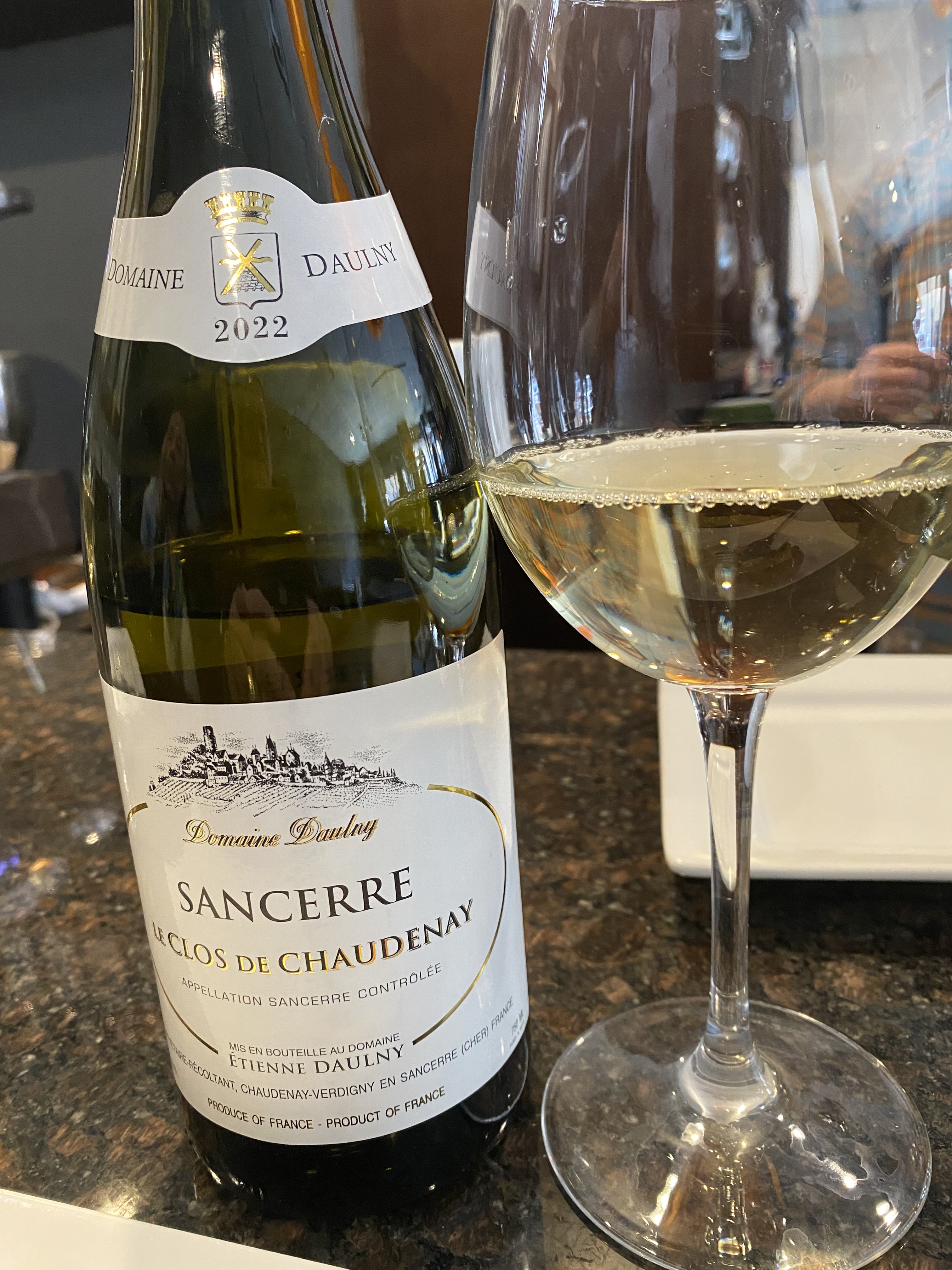
We had moved from the bar, to our table looking out the window at the locals walking by, mostly college students.  Neither of us, ever had a student life, during college, as we were our own scholarship program, and back then we worked.  My Bride had the Miso Glazed Salmon with wild mushrooms, bok choy, Fresno chili peppers, and coconut milk.  I went with the Seared Diver Scallops with Fingerling potatoes, an asparagus salad, pepper coulis, and chive oil.  Our choices for dinner, made the next wine selection a bit easier and I selected Domaine Daulny Sancerre Le Clos de Chaudenay 2022 and Etienne Daulny owns fifteen hectares of vines divided into about fifty different plots within Sancerre and none of these wines see Malolactic fermentation.  Les Clos de Chaudenay is a single vineyard cuvee of Sauvignon Blanc, right next to the winery.  Most of the aging occurs in Stainless Steel, but about twenty percent is aged in well used six-hundred-liter “puncheons” and then the wines are blended at the end.  A nice straw-colored wine that had notes of grapefruit, lemon, and herbs.  On the palate, tones of a classic Sancerre, a bit racy, well balanced with a nice long crisp finish with terroir.  

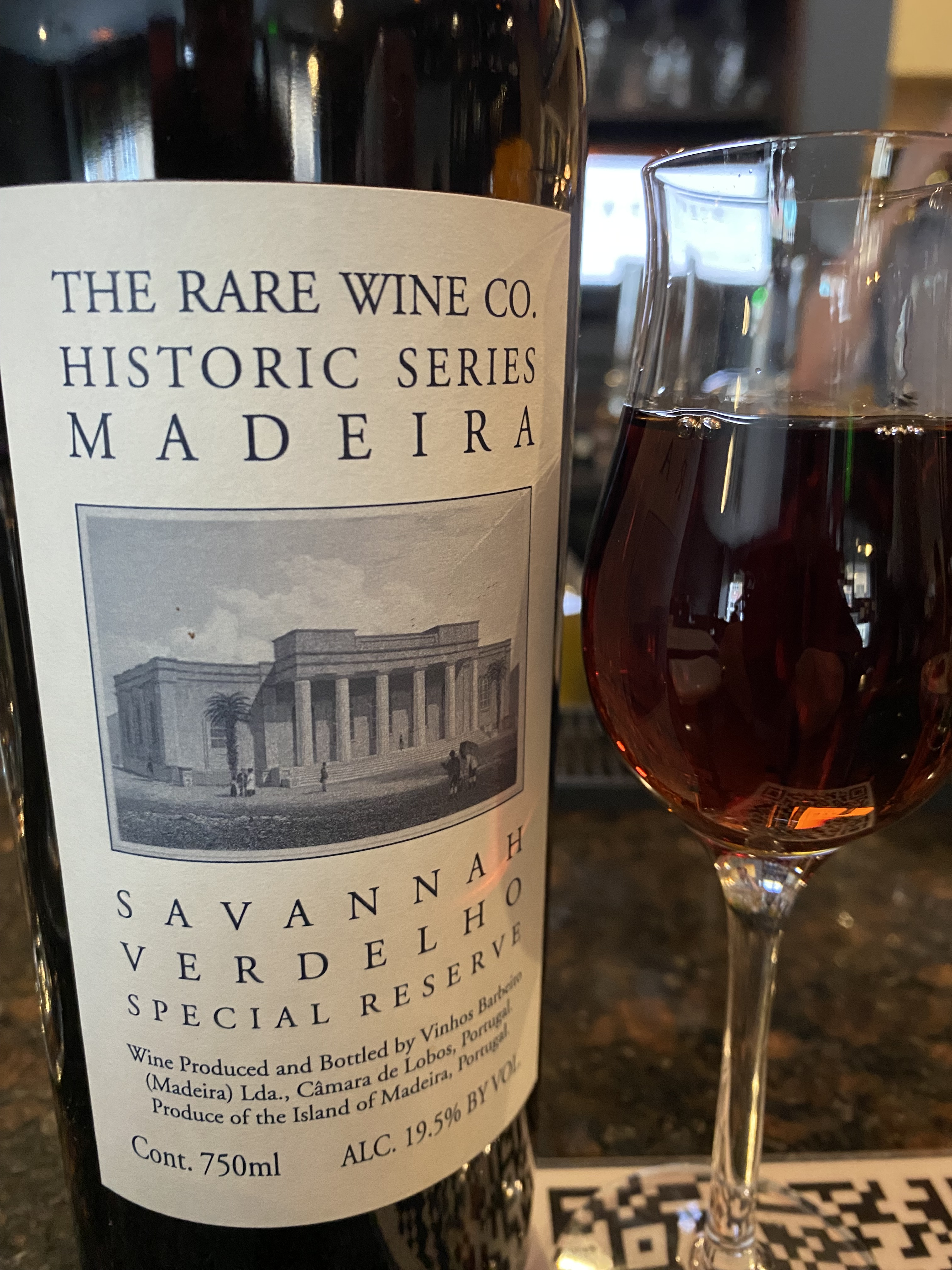
Then my Bride wanted to go back to the bar, for dessert and reminisce again.  I let my Bride select, as I no longer enjoy desserts, like I did at one time, and since Lent was over, she could indulge.  We shared a dish of “Chocolate Delice” with a blackberry-wine reduction, berries, and a cinnamon graham cracker.  She was chomping at the bit, to have their Spanish Coffee, which is made from local products and the restaurant’s house made crème fraiche.  Hyperion Coffee Company of Ann Arbor and Ypsilanti, do their own roasting and blending.  When blended with the Barrel Reserve Spaulding’s Coffee Liqueur made from scratch by the Ann Arbor Distilling Co., she was in heaven. The Spanish Coffee was so great, that my Bride made the poor bartender get us the name of the coffee and the coffee liqueur that was used in the drink, and both were local brands to Ann Arbor.  Hyperion Coffee Company is located in Ann Arbor and in Ypsilanti, and they do their own roasting and blending.  The other ingredient that the bartender shared with us, was the Barrel Reserve Spaulding’s Coffee Liqueur made from scratch by Ann Arbor Distilling Co., founded in 2014. The liqueur is made from cold-brewed coffee and sugar cane and delivered a taste of roasted coffee, almonds, and creamy vanilla.  I was more hedonistic and went with The Rare Wine Co. Historic Series Madeira Savannah Verdelho Special Reserve NV, produced by Barbeito; and they have the longest brand name known to man or woman.  Verdelho is one of the drier and fresher (high acid) of the four varietally labeled, fortified wines of Madeira: Sercial, Bual, Malvasia and Verdelho.  Verdelho Madeira now represents a wine style, as much as the varietal.  After the phylloxera devastation of the 1860’s, Verdelho Madeira almost disappeared as they began using a resistant hybrid Jacquet, now outlawed, and Tinta Negra Mole, but in 1993, legislation was introduced that stipulated at least eighty-five percent of the variety must be used, if it is on the label.  Madeira Verdelho historically is a relatively dry, very fresh, fortified, oxidized white wine.  This wine was released in April 2010 and is still available.  This tawny-amber colored wine offers notes of orange zest, shortbread, ginger, milk chocolate, and almonds.  On the palate the wine is lightly sweet and offers tones of candied citrus, ginger, and some spice honey that ends with a delightfully long finish of spice and citrus sweetness.       

Posted in Dining, Wine | Tagged , , , , , , , , , , , , , | Leave a comment

It Was Thirty-One Years Ago

My Bride and I met thirty-one years ago, and I may have ambushed her about the date, as she was just waking up.  Even though we are retired, she has volunteered to help her sister, who just acquired the company that she has worked at, since I have known her; hence her grogginess.  She got all keyed up and suggested that we go to our local place for dinner, and we have been going there almost as long as we have known each other. 

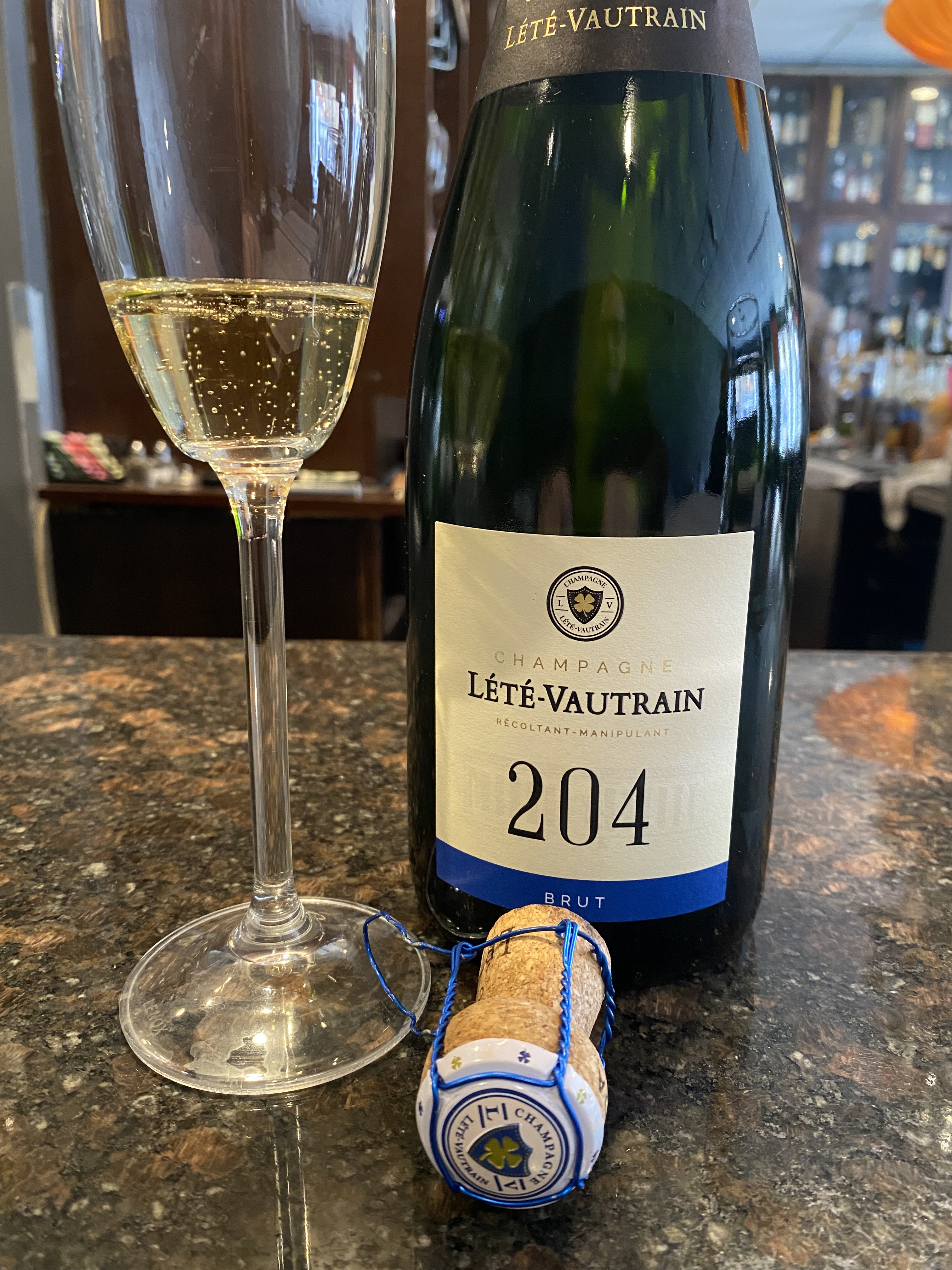
I suggested Taste Kitchen in Ann Arbor, Michigan as we had discovered this restaurant by accident, because I guess they don’t pay off the local world of “food critics” that frequent the internet, because when I was looking for a restaurant in this area, the big bullies of social media, tried to have us believe that we had to be twenty miles away.  We had sat at the bar, shared a dessert and she had the best Spanish Coffee, and I had a Malmsey.  I booked a table, we got there early and she wanted to have a drink at the bar, as she thought the man behind the bar was superb, and he was there.  She wanted something festive, and he poured us two tastes, before we got festive.  The first taste was Champagne Lete-Vautrain 204 Brut NV.  It began at Chateau-Thierry in 1968 when their Maison was founded by Robert Lete and his wife Liliane Vautrain.  They began with a 0.4-hectare plot and progressively until today it is seven-and-a-half-hectare vineyard.  It went to their children and then in 2011 to the Baron-Fuente family in the Marne Valley.  The wine is a blend of fifty percent Pinot Meunier, twenty-five percent Chardonnay, and twenty-five percent Pinot Noir.  It is aged in the cellar for three years.  A nice golden color with fine bubbles, it offered notes of peaches and apricots.  On the palate, tones of peaches and green apple, with bright acidity, minerals and a longer finish of fruit and terroir. 

The second tasting was Veuve Ambal Blanc de Blancs Brut NV.  Anne Marie Ninot was born in Rully in 1859, she met and married Antoine Emile Ambal, a Parisian banker in 1879.  She had two children with Antoine and he died and she moved back to Rully, where she had a brother who was an owner and merchant of Burgundian wines.   She was observant of the beginning of the “Champagne Method” and created her own Maison in 1898 of red and white sparkling wines.  Veuve Ambal has been a family-owned concern and in 1975, they and others saw the designation AOC Cremant de Bourgogne approved.  In 2005 Veuve Ambal Maison built a state-of-the-art premises closer to Beaune.  This wine is a blend of Airen and Ugni Blanc.  Airen is a drought-resistant, white wine grape, that in the 1990’s was the most-planted grape in the world.  It is considered a workhorse grape and along with Ugni Blanc is known as a base for brandy.  The fruit is hand-harvested, and only the first pressing is used and it aged on racks for twelve to eighteen months.  This golden-yellow sparkling wine with fine bubbles offered notes of citrus, lemon, lychee, and white florals.  On the palate there were tones of green apples, plums, and pine nuts.  A nice dry wine, that is very fresh and I thought it would be great as an aperitif, as we were sitting at the bar, and my Bride concurred.

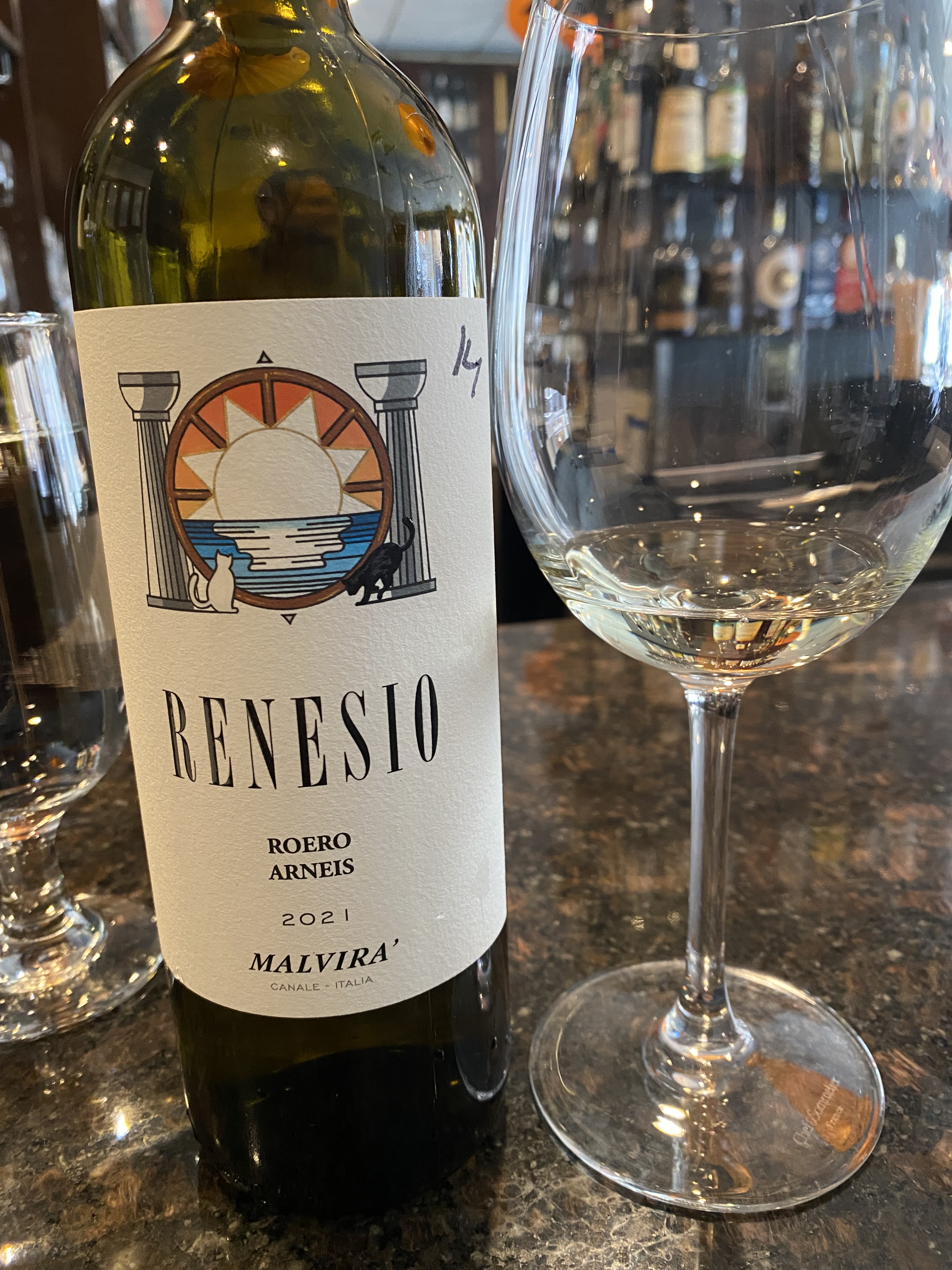
Since we had gotten to the restaurant early and having a drink there, we also enjoyed an appetizer, before we went to our table.  We were going to share an order of Jumbo Lump Crab Cakes with a vegetable escabeche, avocado and Remoulade.  I knew what wine I was going to have, as I enjoy the grape, much more than my Bride does.  I went with Azienda Agricola Malvira Renesio Roero Arneis 2021.  Giuseppe Damonte started to produce wine in the Fifties, in the winery and estate of his family.  In the Seventies the company was renamed Malvira, after the old 19th century building in the center of Canale that became the headquarters of the winery.  The name refers to the exposure of the courtyard which faces north, instead of the traditional south. In 1989, they moved the headquarters again to the foot of one of their Trinita vineyards. Since the harvest of 2017, they have been certified organic.  They are now into the third generation known for their Arneis, but they have also recently began making Barolo wines as well.  This varietal was almost lost in the Piedmont, but through some dedicated winemakers, it has been saved and locally it is also referred to as Nebbiolo Bianco.  This wine comes from their Renesio vineyard.   The wine undergoes fermentation and maturation in Stainless Steel tanks and undergoes about eight months of repeated batonnage to get all the flavor from the grapes.  It is a pale straw-yellow color with a greenish tint and offers notes of white florals, white peaches, and herbs.  On the palate, where one would expect a sweeter wine, this wine is savory and that perhaps is why I am always drawn to it; the wine proclaims freshness and has tones of almonds or hazelnuts, with a nice maybe a kiss of honey at the finish, after being so crisp in the beginning.      

Posted in Dining, Wine | Tagged , , , , , , , , , , , , , , , , , , | Leave a comment

Three from Chateau Figeac

The final notes on a wine tasting at my local wine shop The Fine Wine Source in Livonia, Michigan.   Of the six wines up for tasting, five were from Chateau Figeac.  Chateau Figeac was rated as Premier Grand Cru Classe (B) in the 1955 Saint-Emilion Classification, and this rating is not static, and in 2022, it was elevated to Premier Grand Cru Classe (A).  At the shop they also had some wine from the 1998 and 2020 vintage, that were not for the tasting, but they were sold by the time I got to the shop. 

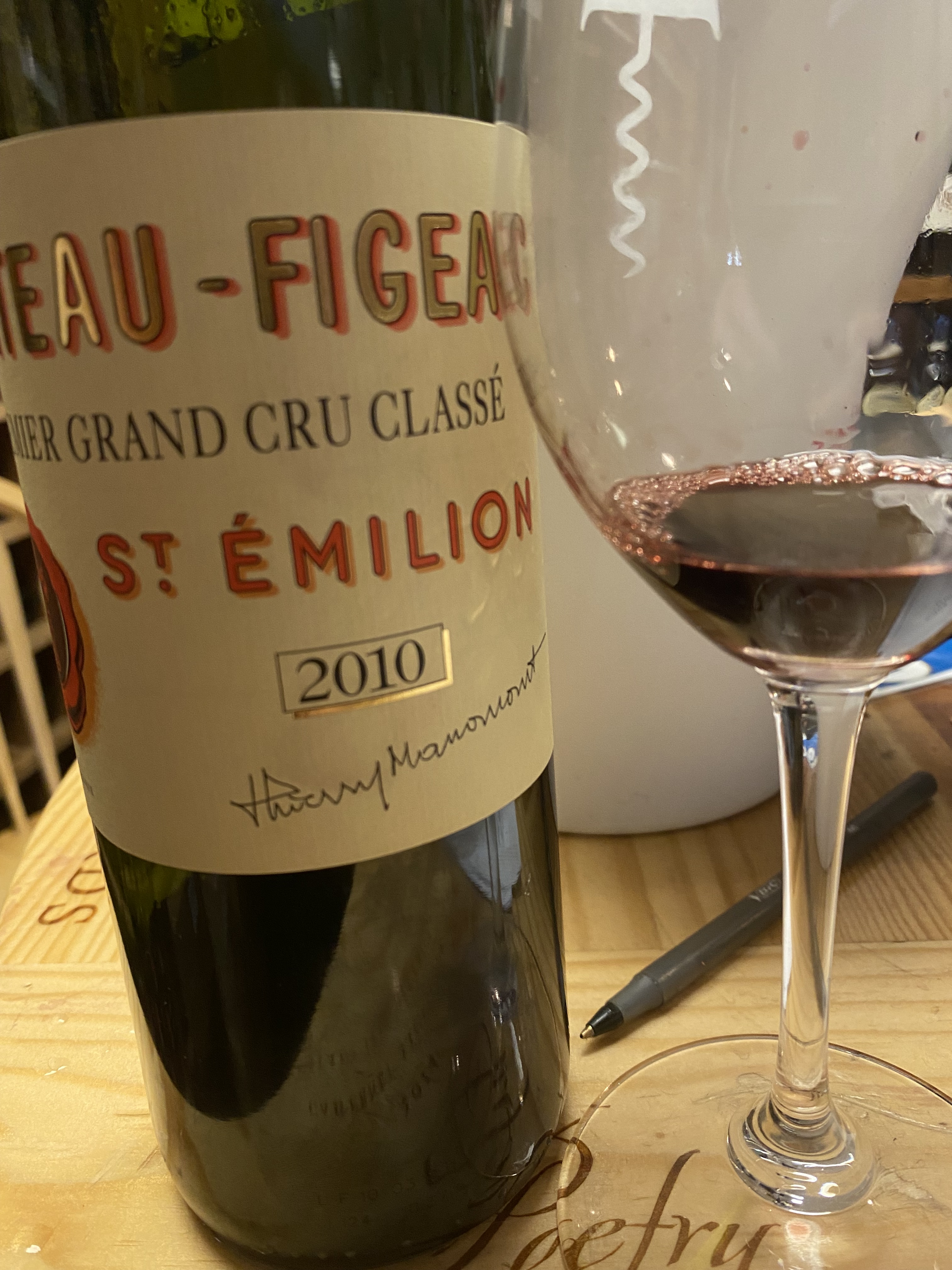
The property has been an estate since Roman times, but in terms of viticulture, the estate became known following The Middle Ages.   In the 18th Century the estate was much larger, but in the 19th Century sections had been sold off, including to Cheval Blanc in 1832.  A couple of other properties that acquired land during dispersals, have appended “Figeac” to their titles.  Most of the region favors Merlot and Cabernet Franc, but at Chateau Figeac the plots are planted thirty-five percent Cabernet Franc, thirty-five percent Cabernet Sauvignon, and thirty percent Merlot.  The current estate is now forty-two-hectares and is known for have three different types of gravel soil.  The fruit is hand-harvested and then inspected by video-scanning.  After the fermentation process, the wine is aged in all new oak barrels for thirteen to fifteen months.  We started this set with Chateau Figeac Saint-Emilion Premier Grand Cru – B 2010.  During the tasting, I was talking to the representative of the wholesaler and he told me that this wine was extremely tight when it was open, but had truly mellowed, by the time I got to the tasting.  The wine was a deep ruby colored wine and offered pure Bordeaux notes of red and black fruits, and ending with the classic expression of pencil shavings.  On the palate the plums and raspberry were prominent, blending with very fine tannins and with a good medium count finish of fruit and terroir.

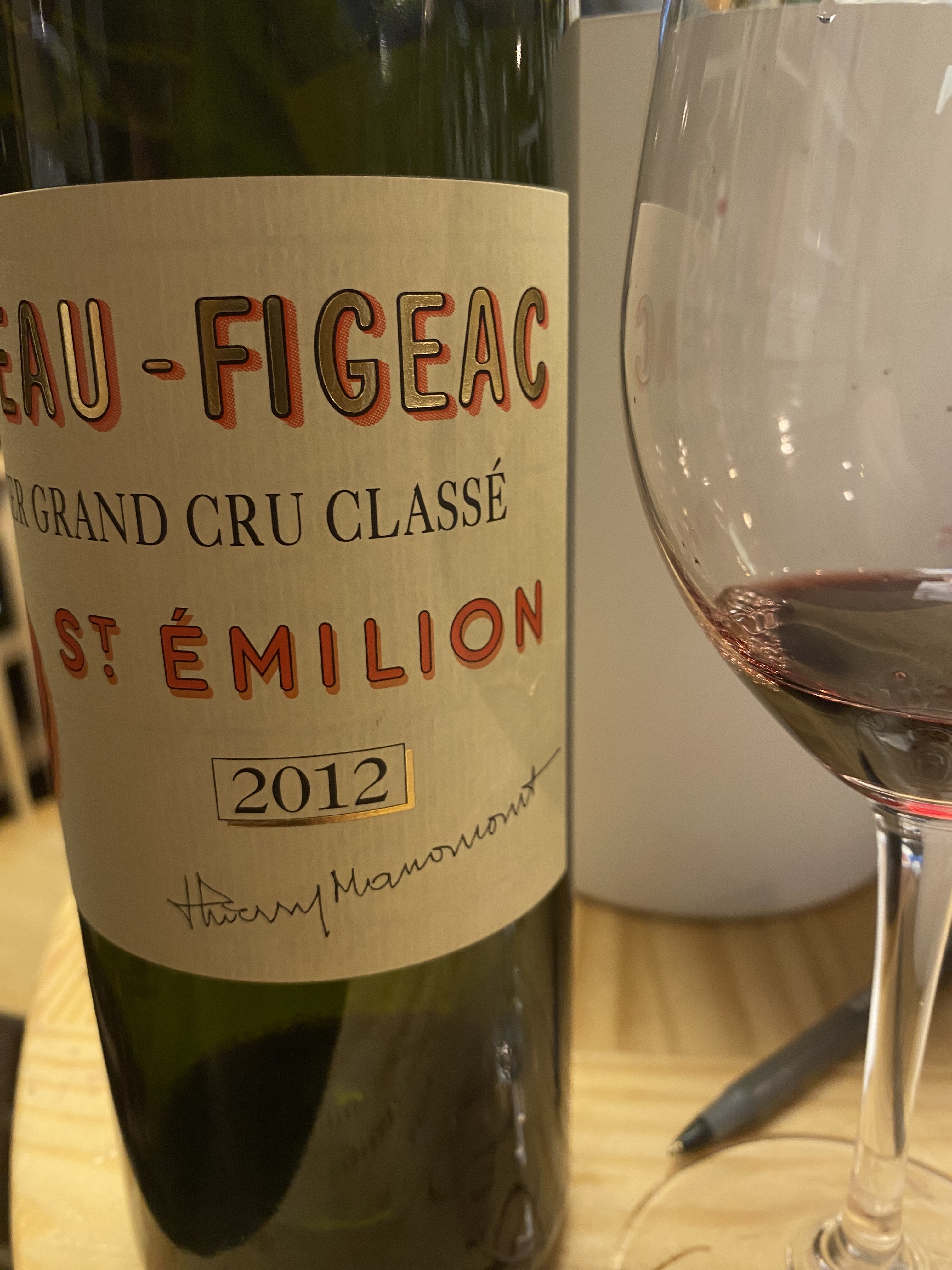
The wine is widely considered to have greatly improved since World War II, under the ownership and guidance of Thierry Manoncourt.  The average age of the vines are probably around fifty years of age, and some are over the century mark, as many of the vines were personally planted by Thierry Manoncourt with some help from Madame Marie France Manoncourt.  We then had Chateau Figeac Saint-Emilion Premier Grand Cru – B 2012.  This dark ruby colored wine offered fresh and vibrant notes of red and black fruits, floral fragrances, and some shades of cedar, and tobacco.  On the palate the tones of red fruit were most prominent, blending with the rounded tannins and finishing with a medium count of fruit and terroir.    

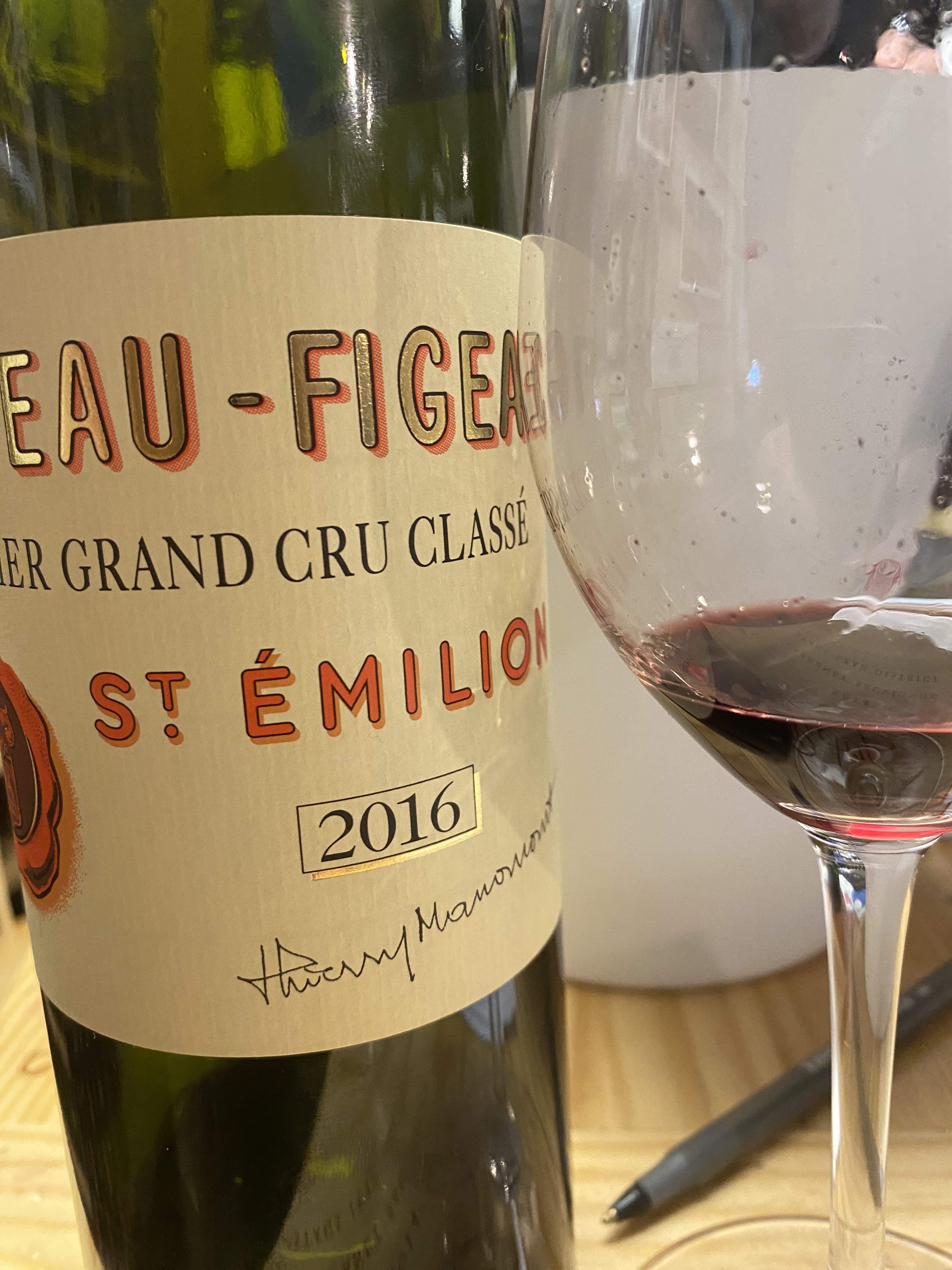
The wines from Saint-Emilion all have the potential through quality work and techniques to become Grand Cru status, as the status since the 1955 Saint-Emilion Wine Classification is an evolving process.  The concept being that the wineries will continually improve the quality of their wine.  The regulations are tighter and have more restrictions in the Grand Cru classification compared to the basic appellation rules.   The Grand Cru Classe designation has been conferred in 1955, updated in 2006, 2012 and 2022.  Three of the four regulations concern the nuts and bolts of viticulture, and the fourth requires an extra fourteen months of storage before being released.  As a side note, I have heard that some of the great houses withdrew from the listing, over requirements of visitations, parking lots and marketing requirements; some did not want to become commercial.  The last wine of the tasting was Chateau Figeac Saint-Emilion Premier Grand Cru – B 2016.  This wine is a blend of thirty-eight percent Cabernet Sauvignon, twenty-six percent Merlot, and twenty-six percent Cabernet Franc.  A deep ruby/purple wine that offers notes of ripe black cherries, cassis, licorice, cloves, cocoa, and cedar.  On the palate the tones are so elegant, and complex that it is breath-taking.  It starts with the ripe fruit, but it is blended with “cashmere-like” tannins and multi-layers of pure joy, which my vocabulary cannot do it justice and it ends with a long count finish of like chocolate covered cherries.  A true seductress, the 2016 vintage has been superlative for Bordeaux and of the four wines, this was tops, followed by the 1989 (which I thought was very chewy), the 2010 which was very mellow and then the 2012 (and there was absolutely nothing wrong with that wine); and that is what can drive me crazy on a vertical tasting, but oh that 2016.  I might add that the 2016 received 98 points by Parker, 99 points by Suckling, and 100 points by Decanter.      

Posted in Wine | Tagged , , , , , , , | Leave a comment