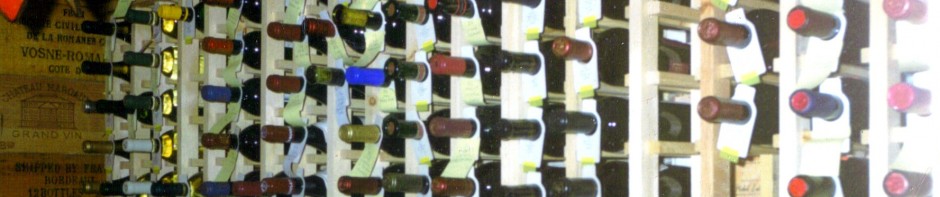
We finally loaded up our plates of food and to sit at a table to relax and discuss the wines that we had tasted at Our Lady of Redemption Melchite Catholic Church sponsored by The Fine Wine Source of Livonia, Michigan. All of a sudden my Bride got up and disappeared and then returned and said that we had one more table to visit, after we finished the food.
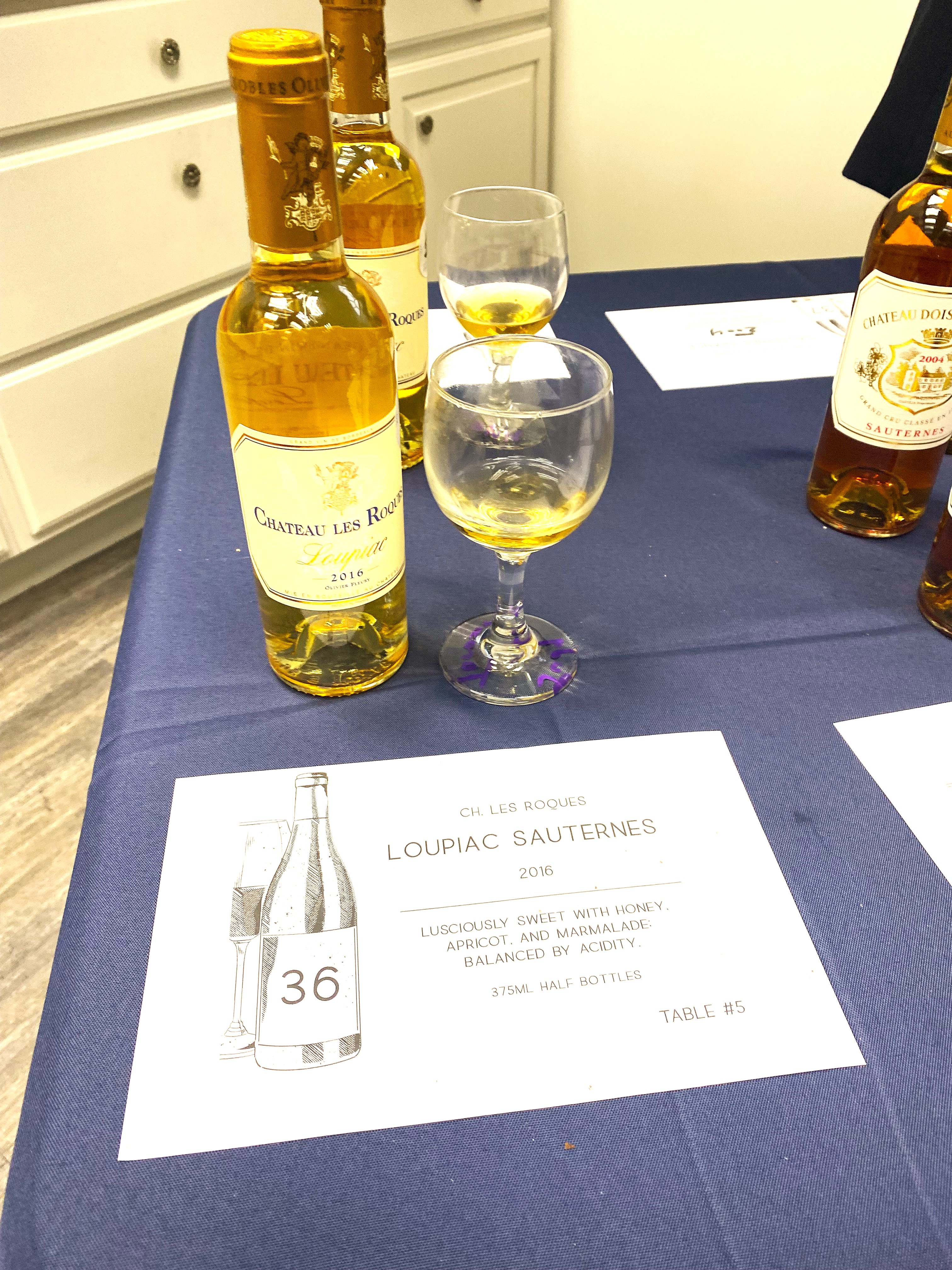
She told me that we missed the dessert wines on a table off the beaten track from the other wine tables. There were five wines and I will discuss three of them. The first wine that we had was Chateau Les Roques Loupiac 2016. Loupiac is one of three dessert wine appellations on the other side of the Garonne River, from Barsac and Sauternes. It is part of the much larger, dry white wine Premieres Cotes de Bordeaux appellation. Loupiac has around three-hundred-forty-four-hectares of vineyards, and the best are from the slopes above the banks of the Garonne; which also has the benefit of night-time and morning mists, that encourage botrytis to develop. The winery is owned by Vivianne Fertal from Chateau du Pavillon. The vineyard began in the Thirteenth Century, when two noblemen, the brothers Jean and Guillaume de la Roque planted on the slopes. The estate has three hectares of forty-year-old vines planted on a clay-limestone soil. The wine is a blend of eighty percent Semillon, eighteen percent Sauvignon Blanc and two percent Muscadelle and fermentation and aging are done in Stainless Steel vats. This amber colored wine offered notes of candied fruits, figs, honey and flowers. On the palate this medium-bodied, well-balanced wine displayed notes of tropical fruits, figs, prunes, and currants in a fine honey-texture with good acidity that ended with a nice long finish of fruit and some terroir.
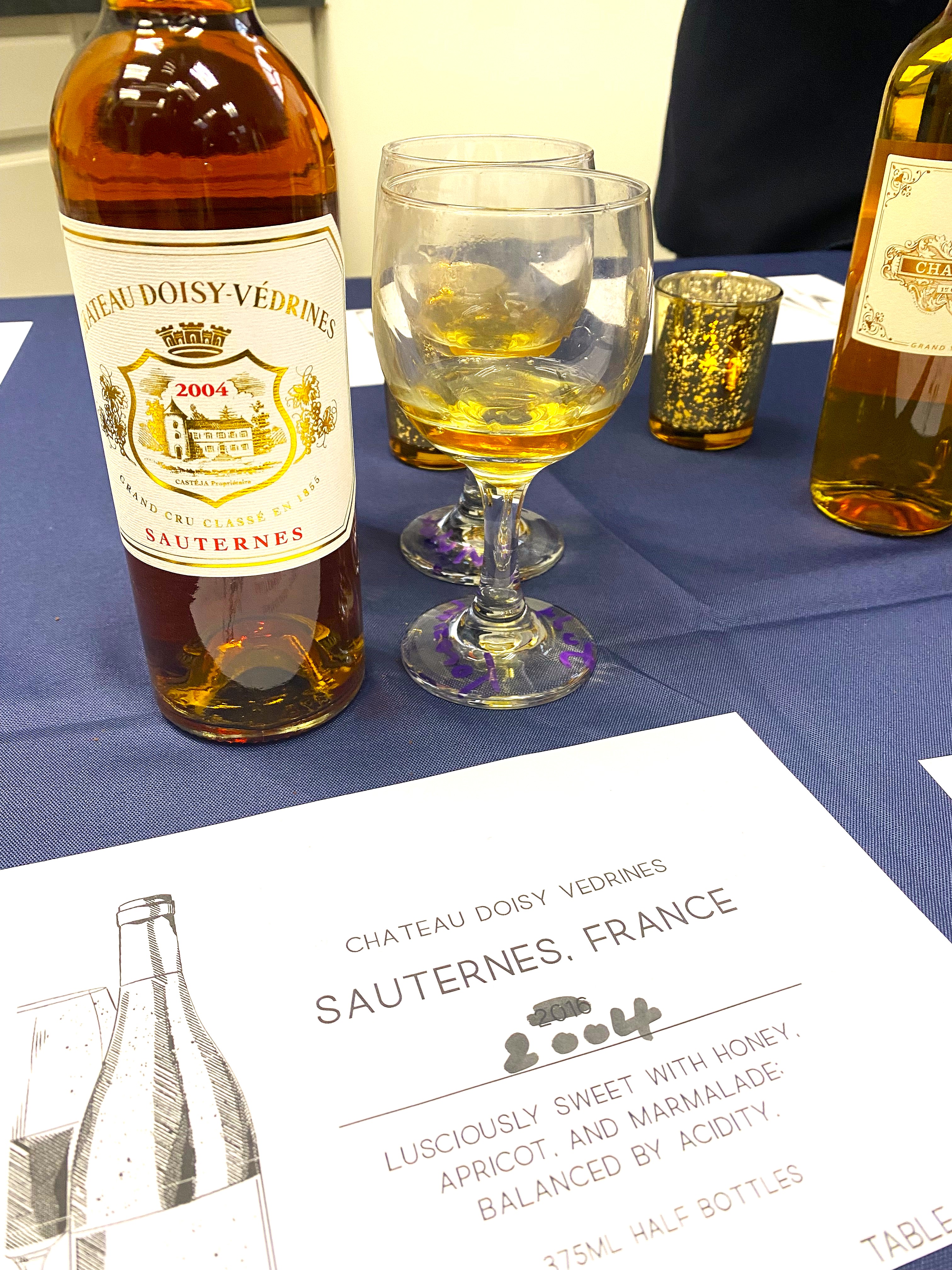
We then had Chateau Doisey-Vedrines Sauternes 2004, a Second Growth (Deuxieme Cru Classe in 1855) done at the same time as the Medoc. It was once part of the large Doisy holdings and estate which also had Chateau Doisy-Daene and Chateau Dubroca. A curious side note is that the property is in Barsac, but the wines can use Sauternes; Chateau Doisy-Vedrines uses Sauternes, and the other two estates use Barsac. The original property founded in 1704 was divided into three parts in 1851, and the Vedrines family was one of the early owners who sold the largest of the three estates, just prior to the 1855 Classification. The estate has twenty-seven hectares of planted vines, and they are on the average of thirty-five years of age on clay and limestone soil. The Casteja family has owned the property since the 19th Century, and they also have Chateau Batailly in Pauillac and Chateau Trotte Vielle in Saint-Emilion. The vineyard is planted with eighty percent Semillon, fifteen percent Sauvignon Blanc and five percent Muscadelle. The fruit is hand harvested in successive waves or tries to only select the most botrytis-affected bunches each time. After fermentation, the wine spends about eighteen months in French Oak, of which sixty percent is new. A deep amber colored wine that offered notes of orange and peach marmalade, dried apricots and raisins and a trace of orange rind and lemon zest. On the palate this medium-bodied, well-balanced wine displayed tones of orange marmalade, dried apricots and raisins, candied pineapple followed by vanilla and citrus blending with some acidity ending with a medium-to-long-count finish of rich fruits, honey and fruit rinds.
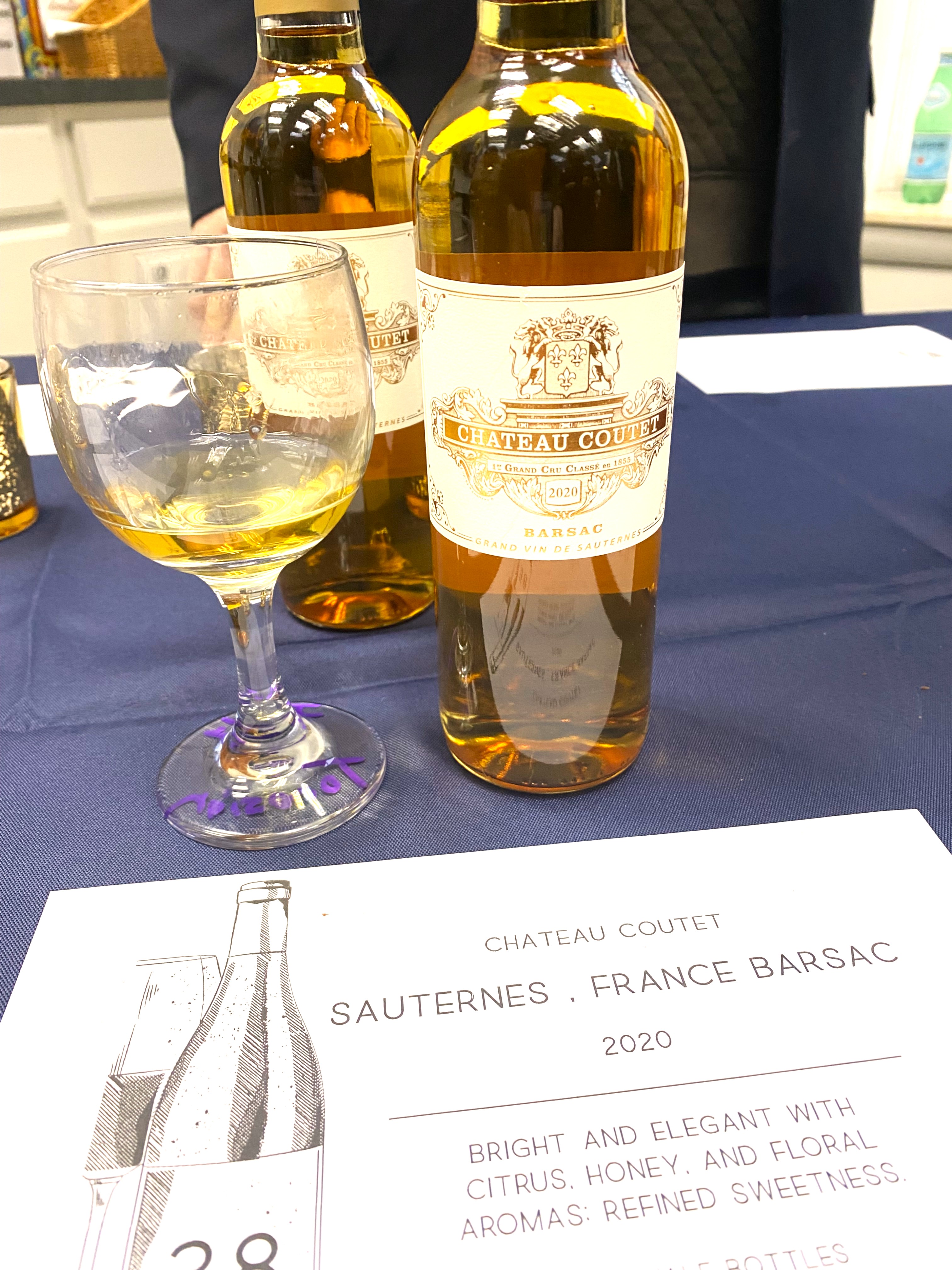
The last of the dessert wines and the one that we placed an order for was Chateau Coutet Barsac 2020 and is a First (Premiere) Growth from the 1855 Classification of Sauternes and Barsac. Chateau Coutet is one of the oldest producers in Sauternes and they are known for having the longest cellar in the region. The word “coutet” is a Gascon term for “knife” and suggests the wine’s crisp acidity. The chateau is an English fortress that was built in the 13th Century. In 1787, Thomas Jefferson proclaimed that it was the best Sauternes from Barsac. During the French Revolution, the estate was seized by the state, and the owner was beheaded. It has changed hands many times over the years and has now been owned by the Baly family since 1977. The wine is a blend of ninety-five percent Semillon, four percent Sauvignon Blanc and one percent Muscadelle; planted on clay and limestone soils. The fruit is hand-harvested over a forty-day period to ensure the grapes are at their maximum desirability. The wine is aged for eighteen months in French Oak of which at least seventy percent is new. A deep golden colored wine that offered notes of tropical fruits, white florals, spices and honey. On the palate this full-bodied, bell balanced wine displayed tones of peach, mango and apricots and spices, that ended with a long-count finish of fruit, vanilla and honey.


Thank you for a great post. The history of the vineyards is ve`ry interesting.
Thank you,
I like to find some historical background and some production notes, if possible, so that I don’t just right about the color, nose and palate of the wines. I want it to feel like a dialogue at a table, while having some wine.
– John