Clara’s Table at the Dearborn Inn

We actually had our glass of wines in hand as we walked from the Four Vagabonds to Clara’s Table for dinner at the Dearborn Inn.  Clara was Henry Ford’s wife and the restaurant in the newly renovated hotel was named in her honor.  The hotel is now managed by Marriot in their “Autograph Collection” series of hotels, which are historic and not cookie-cutter in design.  It was built by Henry Ford, and Alber Kahn designed the building; as a side note he also designed many of the great buildings in the Detroit area, in the heyday of Detroit.  For the historical purists of Detroit, the magnificent checkerboard black and white marble floor, as well as the exterior façade still beckons the traveler to a more genteel era. 

We were escorted to our table with a great view of the bar, which also has seating.  Clara’s table is open for breakfast, lunch and dinner with down times in between, so plan accordingly.  Since we started with shareables at the Four Vagabonds we just had to order our dinners.  My Bride wanted to try their version of a Caesar Salad, as if anyone would be surprised, and the salad had crisp anchovy, grilled escarole, smoke dressing and Pecorino cheese; she smiled and claimed that her version is much better.  My Bride continued with another white wine, Cave de Lugny Macon-Lugny Les Charmes 2023.  Macon-Lugny is part of the much larger district known as the Maconnais, and the commune of Lugny has become very well known because of the hard work of the cooperative Cave de Lugny.  The Macon-Lugny is only used for white wines that are entirely Chardonnay, they also may use the designation for red and rosé wines made from Pinot Noir and Gamay.  Cave de Lugny is the largest producer of White Burgundy in the world, controlling a third of the production of Southern Burgundy and half the total production of the Maconnais.  Founded in 1926, they are a cooperative of family-owned estate, but not a negocient with over two-hundred-thirty estates.  Cave de Lugny claims that they are the home of the birthplace of Chardonnay, and they boast some well-known lieux-dits (or registered localities) like “Les Charmes,” “Les Beluses” and “La Carte.”  Les Charmes comes from the 105 hectare limestone plateau of the same name and is the flagship of the cooperative.  The vines average over forty years of age, and part of the crop is the “Musque” Chardonnay. The fruit is mechanically harvested, and vinification is done in Stainless-Steel tanks.  This golden-yellow wine offered notes of citrus, honey and acacia flowers.  On the palate this medium-bodied wine offered white fruit, with traces of mushrooms and honey in a velvety-smooth wine that had a nice medium-count finish of fruit and savory spices.

I went with an order of Short Ribs with Venetian Polenta and Roasted Carrots. I had Austin by Austin Hope Cabernet Sauvignon Paso Robles NV.  The Hope family has been farming in Paso Robles for over thirty years and they planted apples and grapes.  As more and more people recognized the quality of the terroir, the apple orchards disappeared and now they are enjoying mature vines.  Originally they began with Rhone varieties and recently Cabernet Sauvignon.  Hope Family Wines, now have six individual brands: Liberty School, Treana, Quest, Austin Hope, Troublemaker and Austin.  With the Austin brand, they wanted a Paso Robles Cabernet Sauvignon.  After harvesting, select vineyard lots were fermented individually in Stainless-Steel tanks for about two weeks, with extended macerations and pump overs to enhance the extraction of color and tannin.  Lots aged separately for about eleven months, in a combination of new, and used French Oak barrels.  As a whole the blend is then aged an additional three months in seventy-five percent new and twenty-five percent once-used French Oak.  The deep ruby red wine offered notes of black cherry, burnt sugar and some smokiness.  On the palate, this medium to full-bodied wine displayed tones of black cherry, roasted coffee, vanilla and some cooking spices, with supple tannins, slightly acidic and a medium-count finish of fruit and spice, which work well with food.    

Posted in Dining, Wine | Tagged , , , , , , , , , , | Leave a comment

The Four Vagabonds

We found ourselves at the historic Dearborn Inn, which just recently reopened after about a two-year renovation.  Some say that it is the first airport hotel in America, as right across the street Henry Ford had a private airport and airline for the business.  We got there early for a dinner reservation, so we wandered around a bit and ended up at The Four Vagabonds, which in the last version of the hotel was kind of an afterthought bar, as it was in a walkway to the convention center of the hotel.  It is still a bit of a breezeway, but much more elegant and even with a private dining room adjacent.  Especially for the Detroit historians and others, the Vagabonds were Henry Ford, John Burroughs, Thomas Edison and Harvey Firestone; a nickname they bestowed upon themselves for their getaways and to get away from their businesses.

You may have noticed that we occasionally will just belly-up to the bar for a drink or two, and if there is something to nosh-on, all the better.  We got a charcuterie board and some Smoked Trout Rillettes.  I selected two different white wines for us, the first was Mary Taylor Wine “Jean Marc Barthez” Bordeaux Blanc 2023.  Mary Taylor Wine represents the two decades of working in the European wine industry.  She prefers the European system of “place name” or appellation and tries to offer the terroir of the region.  Jean Marc Barthez, besides being her winemaker for this region, is also the president of a small cooperative winery in the village of Monsegur in the Entre-Deaux-Mers subregion with their alluvial sand and clay-limestone soils.  The wine is ninety-five percent Sauvignon Blanc and five percent Semillon; and the age of the vines are thirty years of age.  The wine undergoes fermentation and aging in Stainless-Steel tanks.  A rather soft-golden yellow wine that offered notes of melons, white fruits, citrus and white florals.  On the palate this medium-bodied wine was well balanced and displayed notes of green apples, pink grapefruit, citrus zest and a nice medium-count finish of fruit and terroir. 

The other white wine that I selected, I knew would bring a smile to her face as she enjoyed a wine tasting at the winery, and we really don’t encounter the wines that often.  We had the St. Supery Estate Vineyards and Winery Sauvignon Blanc Napa Valley 2023, which is one of their estate wines.  Robert Skalli arrived in Napa Valley from Corsica, when his grandparents founded Terra Vecchi.  In 1982, he purchased the Dollarhide estate, a 1500 acre cattle ranch in Napa Valley, and he also purchased 56 acres in Rutherford where the winery is built, and the first vintage was in 1989.  All the wines produced are from their own estate vineyards and are sustainably farmed.  The Skalli family sold their Napa Valley holdings to fashion giant Chanel in 2015.  The fruit for this wine was harvested over a month, to take advantage of the mild weather, with seventy-two percent coming from the Dollarhide Estate Vineyard and twenty-eight percent from the Rutherford Estate Vineyard.  Fermentation and aging were done at cool temperatures in Stainless-Steel tanks to maintain the crispness and delicate acidity.  A soft golden-yellow wine that offered notes of grapefruit, lime zest, gooseberry and fennel.  On the  palate this medium-bodied wine displayed crisp tones of grapefruit, lime, lemon, and a touch of anise with refreshing acidity and ending with a nice medium to long count finish of fruit, capers and a saline vibrancy; for a young wine it showed great complexity.

Posted in Dining, Wine | Tagged , , , , , , , , , , | 3 Comments

Chicane

We were recently invited by some friends to go to a new restaurant, Chicane in the Old Village in Plymouth, Michigan.  They did a magnificent job renovating a restaurant that I haven’t been to, for at least thirty years ago and created a dinner club with music and dancing on certain nights.  A “chicane” is a serpentine curve, usually added by design, demanding skill and precision to navigate as racers gather speed and propel forward through the faster course that lies ahead. 

We started off with Artichoke Fritto Misto with Lemon Thyme Aioli and Salsa Verde and a classic interpretation of Shrimp Cocktail.  We started with The Furst Crémant D’Alsace NV which is produced by Cave Vinicole de Kietzenheim-Kaysersberg.  Cave Vinicole de Kietzenheim-Kaysersberg is a cooperative of one-hundred-thirty landowners in the villages of Ammerschwihr, Kientzheim, Kaysersbert and Sigolsheim and covers one-hundred-seventy hectares of vineyards.  This cooperative is part of a much larger cooperative of successive merger and is now called Bestheim.  Crémant D’Alsace is an appellation created in 1976 covering the sparkling (Methode Traditionelle) white and rosé wines of the Alsace region.  The wines must spend a minimum of nine months maturing on their lees, before disgorgement and the dosage; all vital and required steps to comply with the appellation.  The Furst is produced in concert with the Dopff au Moulin Estate with seventy hectares of vineyards, and currently in the thirteenth generation of wine makers.  The Estate is located in the historic Riquwhir at an altitude of 300 meters in the foothills of the Vosges Mountains.  The Estate is also credited with the creation of Crémant D’Alsace and the creation of the distinctive tall, slender Alsatian wine bottle.  This wine is a blend of fifty percent Pinot Blanc and fifty percent Pinot Auxerrois.  The golden-yellow wine with small to medium size bubbles offered cidery aromas notes.  On the palate there were tones of apple, pear, and lemon zest which complimented a delicate mousse, and ending with a savory finish.

The service was exceptional, but thankfully not hovering over us, as the other couple had cocktails and we enjoyed Domaine Cherrier et Fils Sancerre 2023 from the Loire.   The Cherrier family has been a trusted name in Sancerre since the late 1800s.  Domaine Cherrier was founded in 1930, and since then there has been four generations tending to the Sauvignon Blanc vineyards of limestone and calcareous clay soils.  The estate was founded by Maurice, and his son took over in the Sixties and expanded the estate to about thirty-five acres; his sons and now their children have continued and now use sustainable farming techniques and organic farming procedures.  A pale-yellow wine that offered notes of pineapple, apricots and peaches and chalky terroir.  On the palate this medium bodied wine displayed tones of exotic and white orchard fruit like green apples, white flowers and a nice medium-to-long count finish of fruit and terroir. 
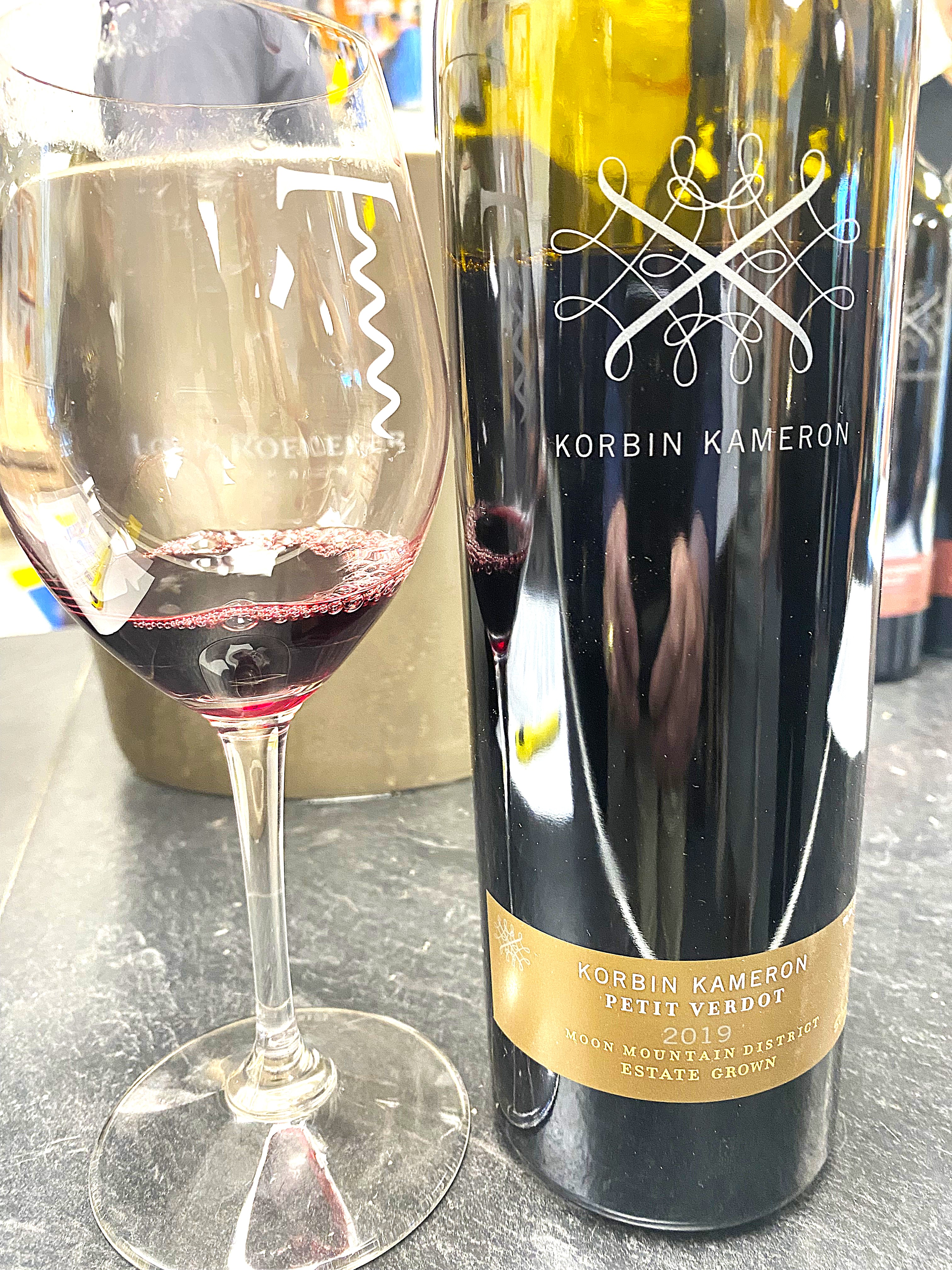
For our entrees, the other couple both had Hoisin Glazed Berkshire Pork Chop with a Cucumber and Radish Salad with Citrus and Ginger Goat Cheese, my Bride had the Braised Lamb Risotto with Peas, Mint Pesto, Parmesan, Crispy Shallot and Crispy Mushroom and I had the Scallops with Leek and Asparagus Risotto, Preserve Lemon, Pickled Fresno and Crispy Leeks.  I took the bullet, because the others wanted a red wine, so I chose the Celani Family Vineyards “Robusto” Proprietary Red Wine Napa Valley 2020. This is truly a Proprietary Red Blend, as there is no information even on the trade notes, but the winery grows Cabernet Sauvignon, Merlot and Cabernet Franc and they are partial to new French Oak.   Though in talks with Tom at a couple of tastings, he told me that this vintage was pure Merlot.  This was now the second 2020 Napa Valley wine that I have had, and I still could not detect any traces of smoke damage. This deep garnet wine offered notes of black plums, black cherries, and blackberries, along with notes of vanilla, tobacco, and chocolate.  On the palate, this is a rather full-bodied wine for being affordable and the tones of the dark fruits, and traces of licorice, and orange peel; blended well with the softer tannins offering a fruit-forward, but not jammy wine that was easy to drink with the food, and ending with a good medium-count finish of fruit and spices and graphite (terroir).

Posted in Dining, Wine | Tagged , , , , , , , , , , , , , , , , | Leave a comment

Fine Wine Source Club Selection – May 2025

Some days, I venture into The Fine Wine Source in Livonia, Michigan just to pick up the monthly club selections.  The two wines arrive at just under thirty dollars and are curated by the owner and his staff, and I have to believe that they are a loss leader and an enticement to visit the shop.  On top of the two wines, the club entitles me to get case discount pricing, even if I only buy one bottle of wine.  Not to mention, that I truly enjoy just spending some time there. 

The first wine always represents the Old World and this wine was Tome Wines  “Tocca Dentro” Pinot Grigio Treviso, Friuli-Venezia Giuli, Veneto 2021.  Robert Tomé is the founder and CEO of Tomebrands. Robert was born in Toronto, Ontario, Canada; his father was an immigrant from Friuli Venezia Giulia home of some of his favorite vineyards, and his mother is a third-generation Canadian of Scottish descent, from where he learned to love golf. His earliest memories of wine are the wines made in his family’s garage by his father and uncles.  Years later he found himself working at a golf club, where he developed a passion for the game, as well as the hospitality industry, where he eventually received a full scholarship and then a degree in hospitality and tourism.  By the nineties he was working full time in the wine industry, and in 2004 he launched his own wine importing agency in Canada.  In 2017, he sold his interest in the agency and fulfilled his dream and created Tomé Group of Brands, making wines from Washington State and in Italy.  As with every wine of his that I have encountered the “name” is from golf lingo and “Tocca Dentro” in Italian means “Tap In.”  The wine is pure Pinot Grigio, and I will venture to say that the wine was vinified in Stainless-Steel.  This straw-yellow colored wine offers notes of apples, pears and almonds.  On the palate this soft summer quencher displays tones of apples, nectarines, pears and almonds with a “twinkle of acidity.” 

The second wine that we received from the club representing the New World is Two Mountain Winery “Show Pony” Yakima Valley NV.  After four generations of Yakima farming, an uncle sold the owner the Schmidt Orchards planted in 1951, and in 2006, it became the Copeland Vineyard, which he and his uncled planted in 2000.  The winery is named after the two mountains seen from their grounds: Mount Adams and Mount Rainier.  The wine is a blend of sixty-eight percent Cabernet Sauvignon, eight percent Merlot and twenty-four percent Cabernet Franc, and the blend is changed each year; as the newest incarnation is listed on their website as having thirteen percent Super-Secret Sauce (which I hope is stated with tongue firmly in the cheek).  The fruit is from the Copeland, Mary Evelyn, Portteus and Marcela Vineyards.  The wine is aged for twenty-two to thirty months in a mix of French and American oak, both new, used and neutral.  There were five-hundred-sixty cases made of this wine.  The wine is described as offering notes of baked cherry, coriander, dried Eucalyptus and coffee grounds.  On the palate the wine displays notes of red and black fruit, followed by cola flavors, fresh fig and baker’s chocolate with lingering soft tannins to leave your mouth salivating for more.    

Posted in Wine | Tagged , , , , , , , , , , | Leave a comment

Another Three Tastings in the Next Room

This last wine tasting was one for the books at The Fine Wine Source in Livonia, Michigan as the selection just kept coming.   When all of the wines are curated by the owner and his staff, there never is a bad wine.

We next enjoyed Clarendelle Rouge Bordeaux 2016, “Inspired by Haut-Brion” by Clarence Dillon Wines in conjunction with the winemaking team from Chateau Haut-Brion.  The wine is created by Prince Robert de Luxembourg and named in honor of Mr. Clarence Dillon, his great-grandfather who acquired Chateau Haut-Brion in 1935.  The family also produces La Mission Haut-Brion and Quintus; and the goal of this wine to produce subtle elegance in age-worthy wines at an affordable price.  The wine is a blend of eighty-four percent Merlot, ten percent Cabernet Sauvignon and six percent Cabernet Franc; and has been aged in oak.  This deep claret wine offered notes of red cherry, raspberry, black currants and violets.  On the palate this medium-bodied wine displayed fruit-forward flavors blended with velvety tannins, well-balanced with a medium count finish of fruit.

We proceeded to Chateau Figeac Petit-Figeac Saint-Emilion Grand Cru 2020.  In 1945, Chateau Figeac was one of the first Bordeaux estates to have a second wine, and it was La Grange Neuve de Figeac, named after a particular plot in the estate.  In 2012, the second wine was labeled Petit-Figeac and is now made from fruit from various plots across the estate.  The production of the Grand Vin is 100, 000 bottles, the production of Petit-Figeac is 40,000 bottles.  Petit-Figeac is harvested, vinified, and bottled to the same standards as Grand Vin, just with younger vines.  The wine is a blend of fifty-eight percent Merlot, thirty-three percent Cabernet Sauvignon, and nine percent Cabernet Franc.  The wine is aged from fifteen to eighteen months in oak, with about twenty percent new.  The deep red wine offers notes of black and red fruit, florals, and spice.  On the palette great tones of cherries, plums, spices blended with polished tannins; a medium-bodied red wine with a good finish of terroir.

We then enjoyed Camp Cabernet Sauvignon North Coast 2022, a part of Hobo Wines.  Hobo Wines began in 2002 with two barrels of Dry Creek Valley Zinfandel; with no business plan and a reckless abandon to be in the business.  By 2020 they were producing a thousand or more barrels of wine, but still with no business plan, but a better grasp on the industry.  The Camp label started in 2011 to showcase Sonoma County, and made with certified organic grapes.  The  Cabernet Sauvignon fruit is sourced from Redwood Valley, Dry Creek Valley and Sonoma Valley and the Merlot is from Hopland and Sonoma County, and all the vineyards are certified organic.  They use indigenous yeasts for Initial Fermentation and for Malolactic Fermentation.  The wine was aged for thirteen months in a mix of Stainless Steel vats and neutral French Oak, with a minimum of twice daily punch downs or pump overs.  A deep red wine that offered notes of black cherry, blackberry and sous bois.  On the palate this medium-bodied wine was not a typical California juice-bomb, but led with dark fruit, then some red fruit, blending with silky tannins and a medium-count finish of fruit and a dash of pepper.     

Posted in Wine | Tagged , , , , , , , , , , , , , , , , , , | 6 Comments

Another Wine Tasting in the Next Room

I had just finished a wine tasting with Podere Ciana at The Fine Wine Source in Livonia, Michigan while in the new addition, I walked into the original part of the shop and another wine tasting was being offered, hosted by the importer of Podere Ciana.  It was a perfect way to finish the trip to the shop.

The first wine being poured was Prime Cellars “District 4” Chardonnay Napa Valley 2018.  Prime Cellars was founded by Ted and Lisa Henry, he a graduate of UC Davis (1999) in winemaking and had positions with Trinchero Family Estates, then head wine making positions at Jarvis, Clos du Val and Groth.  He crafted his first vintage of Prime Cellars in 2005.  Prime Cellars does not own any vineyards; they work with select tiny vineyard sites in both Coombsville and other parts of the valley.  He originally wanted to put Coombsville as a tribute, but because of the AVA rules, he couldn’t; but Napa is designated as “District 4” in the “California Grape Acreage Report” issued by the United States Department of Agriculture.  The winery makes about five different wines and total production for all is about one thousand cases.   The wine is a soft golden color and offered notes of melon, papaya, mango, honeycomb, butter, vanilla and lemon zest.  On the palate the wine displayed tones of Golden Delicious apple, mandarin orange, pear in a well-balance wine with a medium-count finish of fruit and spices.

We followed with another white wine from Matthiasson Wines Vermentino Cressida Vineyard Carneros 2023.  Matthiasson Wines began in 2003 by Steve and Jill Klein Matthiasson.  Steve began as an amateur gardener and farmer and eventually co-authored the California manual on sustainable vineyard practices, as well as mentoring and teaching at UC Davis.  His wife Jill studied at Penn, and did graduated studies at UC Davis and manages the business side of the winery.   They grow both popular and have some esoteric varietals for California, such as this Vermentino.   The Cressida Vineyard is planted on the spine of a ridgetop in the upper section of Los Carneros, overlooking the Bay and the San Francisco skyline.  The soil is shale based from an ancient inland sea, which lend a distinct minerality to the wines.  The fruit was harvested on the early side to maintain the natural acidity and divided into two separate fermentation lots.  The riper portion of the fruit was fermented on the skins, while the less ripe portion was press whole cluster immediately and fermented in neutral barrels.  The lots were then blended after fermentation using only indigenous yeasts.  Seven-hundred-sixty-three cases were produced.   This straw-colored wine with a slight pink cast offered notes of ripe orchard fruits, Mandarin oranges, lemon, spices and sea salt.  On the palate this medium-bodied wine displayed tones of apricots, white peaches and distinct spices with a very pleasant medium-count finish of fruit, terroir and sea-spray with refreshing salinity.  It reminded me of countless Mediterranean Vermentino wines and was very enjoyable.  

We then had our first red wine of this tasting from Chateau La Grande Metairie Bordeaux Rouge 2022 from Vignobles Buffeteau.  Vignobles Buffeteau has two estates and has continued growing with four generations in neighboring villages.  They use traditional vinification methods and go out the day before harvest to eliminate unripe or rotten fruit, and then the next day the fruit is mechanically harvested, separating the grapes from the vines while in the plots and done at night to maintain the freshness and aromatics of the fruit.  They installed a new cellar in 2015 with thermos-regulated Stainless-Steel vats, and with a semi-underground ageing cellar with both concrete vats and traditional oak barrels.  The wine is ninety percent Merlot and ten percent Cabernet Sauvignon.  This wine underwent Initial Fermentation and Malolactic Fermentation and aging for one year in Stainless- Steel vats with periodic stirring with fining and filtering.  This dark claret wine offered notes of ripe red fruits, spices and herbs.  On the palate this medium-bodied wine displayed tones of black and red cherry, blackberry and currants, with good acidity blended with medium tannins and a medium-count finish of fruit and herbs.  

Posted in Wine | Tagged , , , , , , , , , , , , , , | Leave a comment

Semifonte, Le Diacce and Gran Selezione from Podere Ciona

We were getting ready to taste the last three wines from Podere Ciona at The Fine Wine Source in Livonia, Michigan.  Lorenzo and Jennifer Gatteschi were conducting the tasting and the crowd were all waiting for these wines.

The first red of the tasting was the Podere Ciona Semifonte Toscana IGT 2019.  This happens to be one of my favorites consistently from the winery as I think it offers a great bang for the buck, as we used to say when I was young.  The soil of the vineyards is a mix of sandstone, clay schist and marl. Depending on the vineyard the vines are between seven to eighteen years of age.  The wine is seventy-five percent Merlot and twenty-five percent Alicante Bouschet.  They still maintain hand harvesting and Initial Fermentation is in Stainless Steel for about ten days with extended post-fermentation maceration on the skins for about a month, followed by Malolactic Fermentation, and then aged in French Oak for about eighteen months, finally refined for twelve months in the bottle.  This purplish-red colored wine offered notes of red fruits and spices, and on the palate fresh fruit, soft tannins, and a velvety texture from the Merlot with a nice medium finish of fruit and terroir.
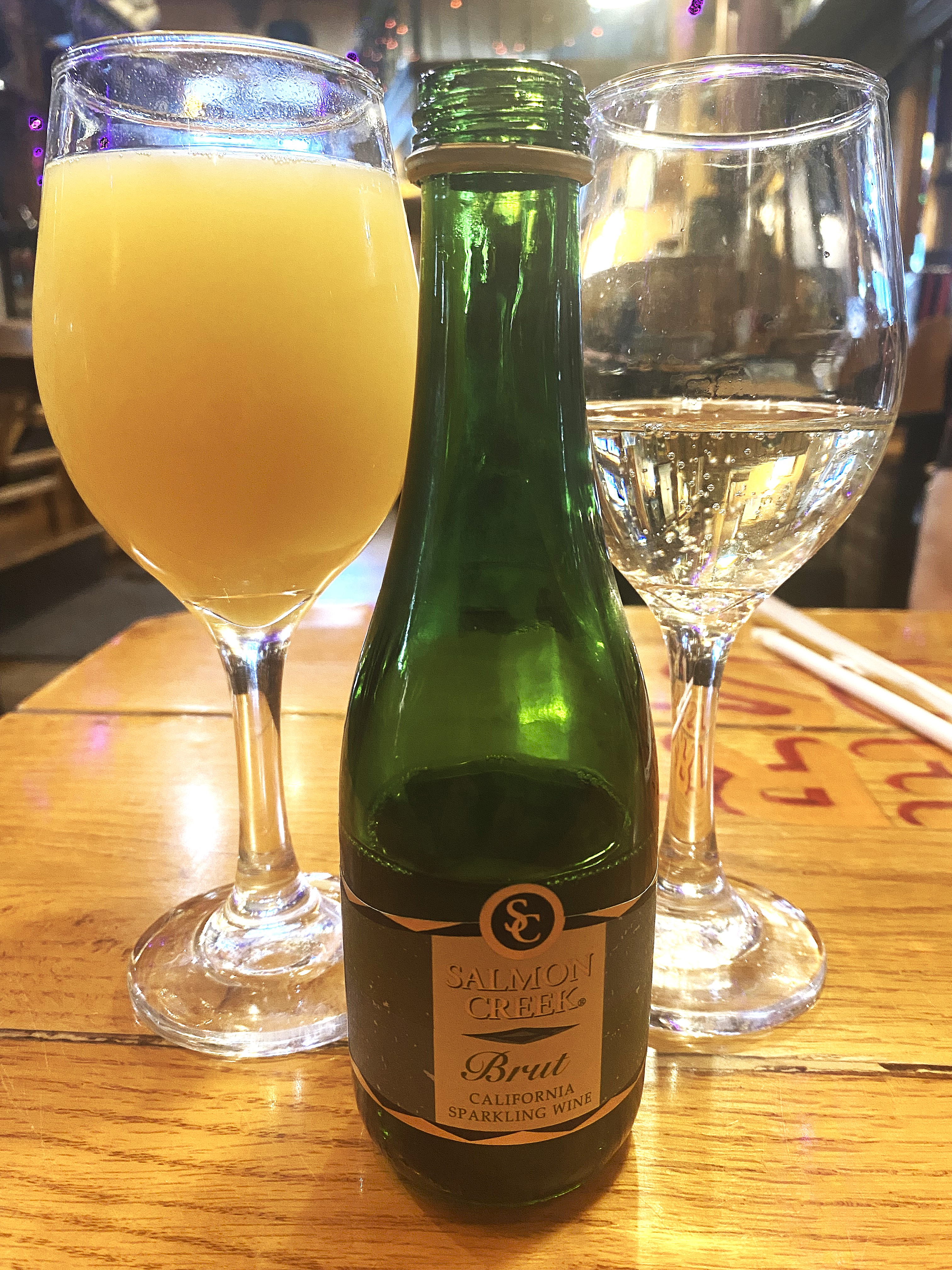
Then I was poured the Podere Ciona Le Diacce Rosso Toscana IGT 2016 and Le Diacce is the estate’s flagship wine featuring their finest Merlot grapes and a touch of Alicante Bouschet.  Outside of Chianti Classico Riserva, Toscana IGT is the other famous designation of Tuscany, and Toscana IGT is the most famous of all the IGT designations in Italy.  Back in 1984 when Sassicaia was granted its very own title of DOC Bolgheri Sassicaia, instead of Vino de Tavola, the floodgates were opened for Toscana IGT and whatever the winemaker can create.  This wine is ninety-seven percent Merlot and three percent Alicante Bouschet.  All hand-harvested and the best grapes are selected for this wine and the Initial Fermentation was for ten days in French Oak.  This was followed by post-fermentation maceration on the skins for about thirty-five days and Malolactic Fermentation in French Oak.  The wine was then aged in French Oak for twenty-four months, and then another twelve months in the bottle.  There were three-hundred-thirty-three cases produced.  A rich deep purple-red wine with notes of red fruit, chocolate and nuts.  On the palate deep tones of cherry and red fruit (very fruit forward), totally balanced and lush with a nice long finish of fruit and terroir.  This was a second tasting of this wine, and my notes were totally appreciative each time.
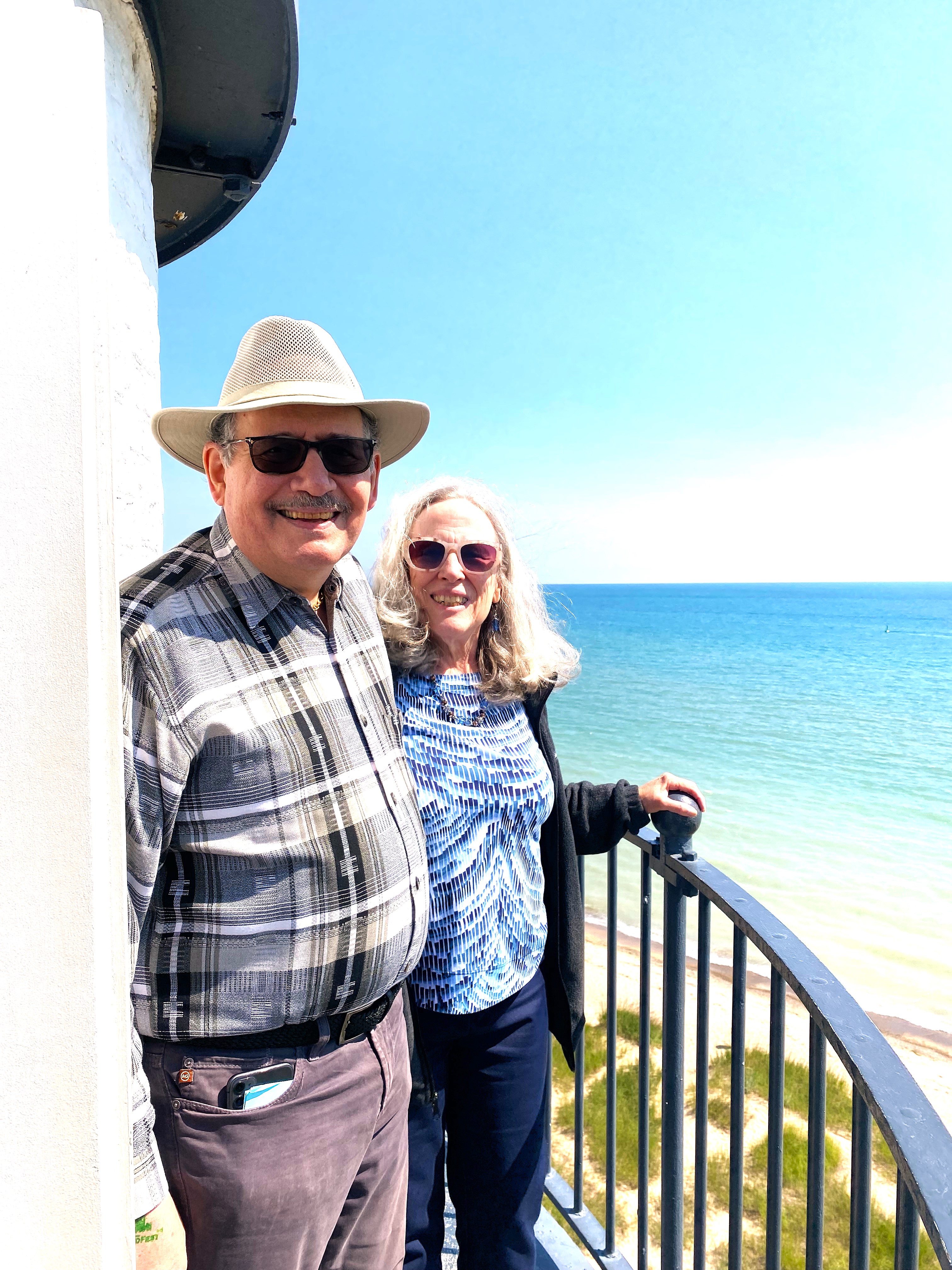
The final wine for the tasting was the Podere Ciona Gran Selezione Chianti Classico 2018.  This new category was approved by the European Commission in early February 2014 and took effect immediately and any wine made starting with the 2010 vintage that met the requirements could go after this new elite designation.  This wine from Podere Ciona is from a single vineyard that they have on a flatter plot.  While the original rule was for ninety percent Sangiovese, this wine is pure Sangiovese.  The wine is made in the traditional Chianti vinification and was aged for forty-two months in barrel and bottle, before being released.  This deep garnet-red wine offered notes of black fruit, herbs, paprika, leather and tobacco, smokiness, sous-bois and terroir.  This full-bodied wine displayed rich tones of black fruit, coffee, chocolate, cedar and smoke, tight tannins, well-balanced, showing heat and a nice long-count finish of fruit, chocolate nuts, earthiness and smoke.  A delightful wine, with no seconds on the tasting as there were only a few bottles available for this tasting, offered as a pre-pay, pre-offer purchase and expected delivery in about forty-five days, and it was a Fine Wine Source exclusive and from the murmurs of the crowd, this initial Gran Selezione will be a sellout. 
Posted in Wine | Tagged , , , , , , , , , | Leave a comment

Lorenzo and Jennifer Gatteschi of Poderi Ciona

I attended another wine tasting at The Fine Wine Source in Livonia, Michigan and the tasting was conducted by Lorenzo and Jennifer Gatteschi of Podere Ciona from Gaiole in Chianti.  I was reading the history of the winery on their website “Franca and Franco Gatteschi were looking for a place in the countryside to retire to, after many years of working in Italy and abroad, when they came across a small, beautiful, albeit run down property: 100 acres of land, mostly wooded with 10 acres set aside for cultivation, of which 2.5 acres already had vineyards; a house from the 18th Century, abandoned for more than 40 years; and, above all, a view without equal on the Chianti hills, with Siena in the distance.”  It really sounds idyllic and makes one ponder how this property was neglected and ignored for years.  “They purchased the estate at the beginning of 1990 and they immediately started the reconstruction work on the main house (it took nearly three years). They also set up a small but well-equipped wine cellar for making wine. In 1996 they permanently moved to live on the estate and the following year, the great 1997 vintage, saw the birth of the first “official” wine of Podere Ciona: A Chianti Classico DOCG Riserva.”

I have met Lorenzo Gatteschi many times at wine tastings, but this was the first time that I had the chance to meet his wife, Jennifer.  In the new part of the shop, they now have a tasting counter, and there is even a computer monitor above to show photos and features of the wines being tasted.  Lorenzo was working one end of the counter and Jennifer was working at the other end, so she had to endure my quirks.  As I started to take my first photo of a glass of wine and the adjacent bottle label, Jennifer surprised me and asked if I was “the Wine Raconteur” as she also handles the social media for the winery.  I was flattered to say the least.  The first wine for the tasting was Podere Ciona Ciona Rosé Toscana IGT 2022.  The Rosé was made entirely of Sangiovese in the saignée method.  The vines are from six to nineteen years of age and planted on quartz, clay schist and marl.  The fruit is manually harvested in small baskets and then de-stemming, berry by berry for a slight crush in Stainless Steel vats for ten to twelve hours of skin contact and no Malolactic Fermentation. The wine is then aged for about six months in Stainless Steel and then further fined and bottle aged for six months before distribution. There were about one hundred-eighty cases produced of this wine.  A pretty salmon-pink color with notes of fruit and spices, just a well-balanced light and easy drinking wine with a nice medium count finish offering terroir.

The next wine poured was Podere Ciona Chianti Classico Riserva 2016. I think that when most people think of Tuscany, their first thoughts are a traditional Chianti Classico and if they can get a Riserva, all that much better. The wine is estate grown on their quartz, clay schist and marl soil.  The wine is a blend of ninety percent Sangiovese, eight percent Merlot and two percent Alicante Bouschet; and the vines are between fifteen and sixteen years of age. The fruit is all hand-harvested and the initial fermentation is for about ten days in Stainless Steel.  Then malolactic fermentation of the juice on the skins is for about a month in French Oak.  With this being a Riserva, the wine is then aged for twenty-four-months in a mix of French Oak of which ten percent are new, and then an additional twelve months in bottles, before being released.  There were about eighteen-hundred six packs of this wine made. This deep ruby-red wine offered notes of plenty of red fruit, bakery aromas and terroir.  On the palate, the cherry and other red fruits were excellent with a refreshing trace of blood orange, it was well balanced and had velvety tannins and a nice lingering finish of chalky terroir.  This bottle will cellar well, and it needs at least an hour to breath before serving.
Posted in Wine | Tagged , , , , , , , , | 3 Comments

Another Blog Anniversary

On 4 May 2012, I began this chapter of my life, writing about my enjoyment of wines.  I realize in the big picture, it doesn’t amount to much, but I have had fun, and hopefully in the now thirteen years, others have found some articles that have made them smile. The first year, I actually wrote an article every day, just to get used to writing since it had been many years when I was a student and had to write. After the first year, I made my life easier and published every other night, and a little over a year ago, I became a slacker and now publish every third night. This will be my 2,455 post on the blog, which is also down on Facebook, and I started an Instagram account and now all the locations get published on the same evening and it will be number 5,057 there.   Now I am still a student, but I am not writing to curry a grade, but for my own satisfaction.  The conceit of my writing is that I envision myself talking to another at a table, as we are sharing a bottle of wine.  I don’t lecture about wine, but I write about how the average person decides on a glass of wine, sometimes very unexciting and sometimes extremely exciting; it just depends on the venue and the mood of the moment.

Over the years I have had plenty of people point out the fact, that I have no credentials or designations, that I have never been in the wine trade; and how dare I write about wine.  Those points are all true, and that is why I have never attempted to lecture to anyone about wines, I will make suggestions, sometimes I may grimace and make faces, and I know that is terrible, but everyone has to learn about wines, in their own manner.  I like to say that even bulk wines can be the steppingstones for the curious to find out what the better wines can taste like.  I certainly did not start drinking wine at the top of the heap, in fact, growing up in Detroit which is a factory town, there were only a handful of restaurants that really had a wine carte in my youth, and I really started my exploration when I was sixteen, it is amazing how a well trim mustache makes one look older.  I remember growing up having the chance to savor home-made “Dago Red” wine made in people’s basements and fined with eggs whites, and for years, that particular after taste haunted me.  And after all of these years, I have bestowed with the honorary title of “Street Somm” as I am sure that I could never pass an exam, as I am too ornery and bit of a curmudgeon at my age to attempt such scholarly pursuits.

Though I am proud of the fact that I am now starting another year of writing my anecdotes and my assessments of wines.  When I grew up, learning from people that had  wine knowledge, a great review was “that is a delightful Medoc” or “that is what every Chianti should taste like.”  People didn’t gush about cocktails, beer or wine, back in the day, as it sounded pretentious or putting on airs.  Actually, growing up, there were probably more beers or glasses of Chevas consumed with a steak, then there were bottles of wine.  I persevered, because as a teenager I was enraptured how wine was presented in cinema, as something special and I thought that I should discover this special Nectar of the Gods.  To this day, I am still learning and discovering, though now I endeavor to pass on my thoughts to others, right, wrong or indifferent.  And there are times, when I even drive my Bride to drink, as she has to wait, until I take that photograph of the bottle and the wine glass for the blog.  

Posted in Uncategorized | 4 Comments

Easter 2025

For years, I have written about the large family gatherings we would have for holidays and birthdays.  It gradually became that way, as my Bride, before we met, was the daughter that was always cooking with her mother for events, and my Bride was the first of the five daughters that bought a house, and she made sure that it was big enough to handle the crowds.  This went on for years, but now, the families are starting to splinter, because our nieces and nephews are getting married and the families are having smaller dinners with just their immediate family.  We ended up having five for dinner, but my Bride still persevered with traditions and she even got me an Easter basket, candies, cookies and all the stuff that disappeared from the house during Lent.  Though she really spoiled me and bought me a set of Laguiole Steak Knives, the ones with a bumblebee at the tang.  I have admired these from the first time we used them at Casanova’s in Carmel-by-the-Sea, and the following year, when we went there, they were using a different set of knives, because the knives had been stolen by patrons, how sad.  Yes, my Bride does spoil me.

We started off in the living room having appetizers, as I am still old-fashioned and like using our living room for family and friends.  She placed some Hummus with garlic, flat bread, crackers and some cheeses.  One of the cheeses, was a big hit, but the label from the shop didn’t reveal much, other than it was cow’s milk, had a hard red rind and it was a “lemon cheese” and no there wasn’t any leftover for me to indulge in, the next day.  We served Domaine Daulny Reserve Sancerre 2022 from the Loire.  Etienne Daulny owns fifteen hectares of vines divided into about fifty different plots within Sancerre and none of these wines see Malolactic fermentation.  Most of the aging occurs in Stainless Steel, but about twenty percent is aged in well used six-hundred-liter “puncheons” and then the wines are blended at the end.  A nice straw-colored wine that had notes of grapefruit, lemon and herbs.  On the palate, tones of a classic Sancerre, a bit racy, well balanced with a nice long crisp finish with terroir.

For the main course, my Bride made my (our) favorite Easter dinner, Roast Lamb with Root Vegetables.  This is really “comfort food” for me and I also enjoy the root vegetables roasted with the meat.  She also made for the first time some Southern Fried Chicken for our one grandson, that doesn’t like lamb.  My Bride doesn’t like fried food or even frying food, but for a grandson, she would even bend her rules.  It didn’t look picture perfect, but it was moist and tender and what more can you ask for; and the strange thing was, the grandson didn’t come for dinner as he was ill, and I was going to share with him a special wine, it will just have to wait, until the next dinner.  With Lent being over, my Bride made dessert especially for herself, but a true classic for the Detroit area.  She made Cream Puffs and served them with ice cream and Sanders Hot Fudge.  I gave my Bride a couple of choices for the wine for dinner and she chose Cain Vineyard & Winery Cain Five Napa Valley 1999, of course nowadays the wine carries the Spring Mountain District AVA, which was granted in 1993, but it was not as well-known as Napa Valley.  Since I first introduced my Bride to Cain Five, it is her first choice for any true celebration.  Cain began in 1980, when Jerry and Joyce Cain purchase the 550 acre McCormick Ranch (sheep) with the intention of making a big mountain “Napa Cabernet blend.”  The first vintage was released in 1985, and all was going great for them until they lost the winery, heritage barn, housing and the 2019 and 2020 wines by the “Glass Fire,” and they have rebuilt.  This wine is a blend of sixty-one percent Cabernet Sauvignon, nineteen percent Cabernet Franc, ten percent Merlot, six percent Petit Verdot and four percent Malbec; of the forty-four lots, twenty lots were selected for this wine. The fruit is hand-harvested, destemmed, whole berries, manual pressing, lot by lot, using indigenous yeast, with maceration going for ten days to five weeks for the lots.  The wine was aged for twenty-one months in French Oak including Malolactic Fermentation, with minimum fining and no filtration.  For a twenty-six-year-old, the wine was a deep black-ruby offering notes of blackberries, cedar, tobacco, sage and sous bois. On the palate after being open for over an hour, this full-bodied wine displayed rich tones of blackberry, spices, still very tight and silky tannins, well-balanced with a very long-count finish of fruit and terroir, we no signs of being old.   

Posted in Dining, Wine | Tagged , , , , , , , , , , , , , | Leave a comment