All good things come to an end, and wine tastings always seem to end to quickly, including this special evening at The Fine Wine Source with Anne Trimbach curating her family’s wines. And this tasting didn’t even get close to all of the offerings from Trimbach.
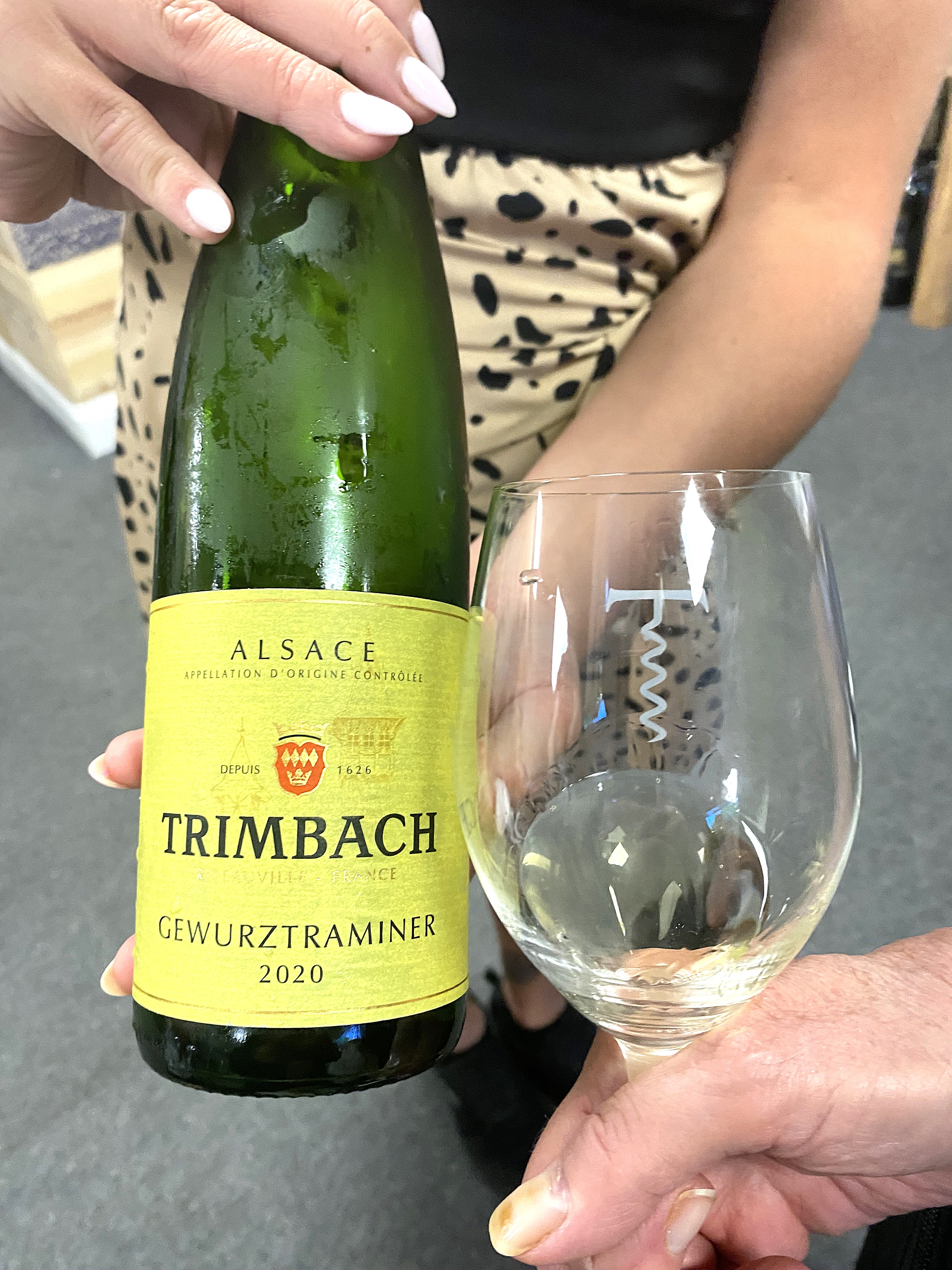
The final white wine of the evening was Maison Trimbach Gewurztraminer Alsace 2020. The fruit for this wine comes from both Trimbach’s estate vineyards and from their partner winegrowers. The soils date from the Triassic period, on Muschelkalk (shell limestone, dolomite and marl) and from the Jurassic period with limestone and marl; and both vineyards have south to southeast exposure. The fruit is selected at maturity, manually harvested, then crushed delicately in a pneumatic press. The juice is then fermented in temperature-controlled Stainless-Steel and concrete vats, with no secondary Malolactic Fermentation or long aging on the lees to maintain the natural acidity, freshness and fruity aromas. The wine is then bottled in the Spring and then a minimum of two years cellaring before being released. A soft golden colored wine that offered rich notes of lychee, tropical fruits, rose petals and spices. On the palate this medium-bodied wine displayed elegant tones of tropical fruits, citrus, ginger, honey in a rather complex and textured wine with crisp acidity that ends with a medium-count finish of sweet and savory along with terroir.
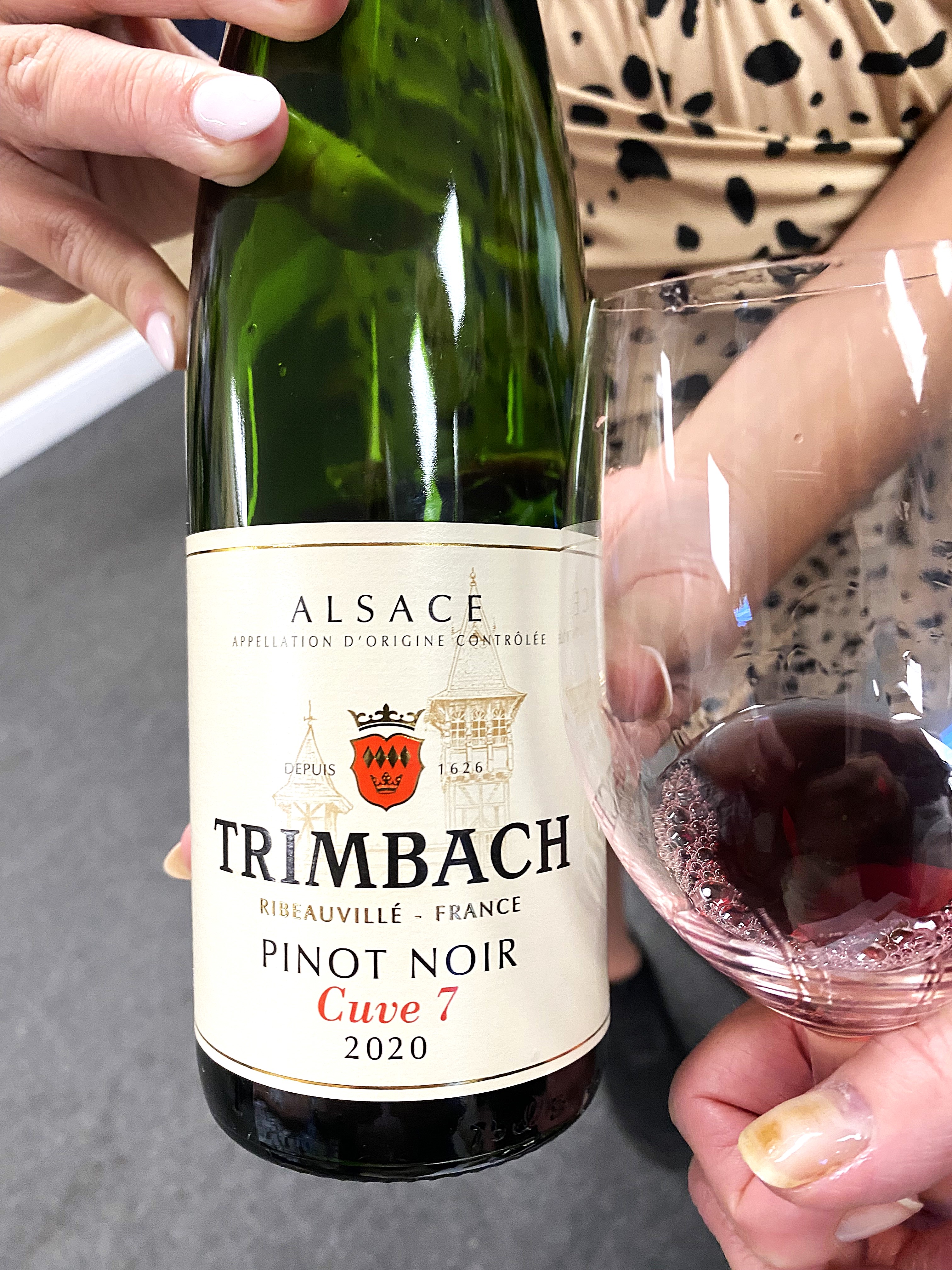
We then had our first red wine, a Maison Trimbach Pinot Noir “Cuve 7” Alsace 2020. “Cuve 7” owes it name to the number of the vat in which it was first produced and is only produced in exceptional years and comes from the best parcels of the Rotenberg Vineyard in Ribeauvillé. The soil of the Rotenberg Vineyard is “red irony clay” and calcareous sandstone which is more Burgundian and the Pinot Noir clones are from a selection of Pommard Clos de Epenots and noted for having a lower yield. The fruit is hand-harvested with a ten day maceration period for the Initial Fermentation and then undergoes Malolactic Fermentation in old casks with six months aging on the lees, bottled and followed by four years in the cellar prior to release. This garnet-colored wine which was served slightly chilled offered notes of sour cherry, strawberries, blackberries, violets, sous-bois and stones. On the palate this medium to full-bodied wine displayed tones of red and black fruits, with silky and understated light tannins and a medium to long finish of currants, licorice, pepper and terroir.
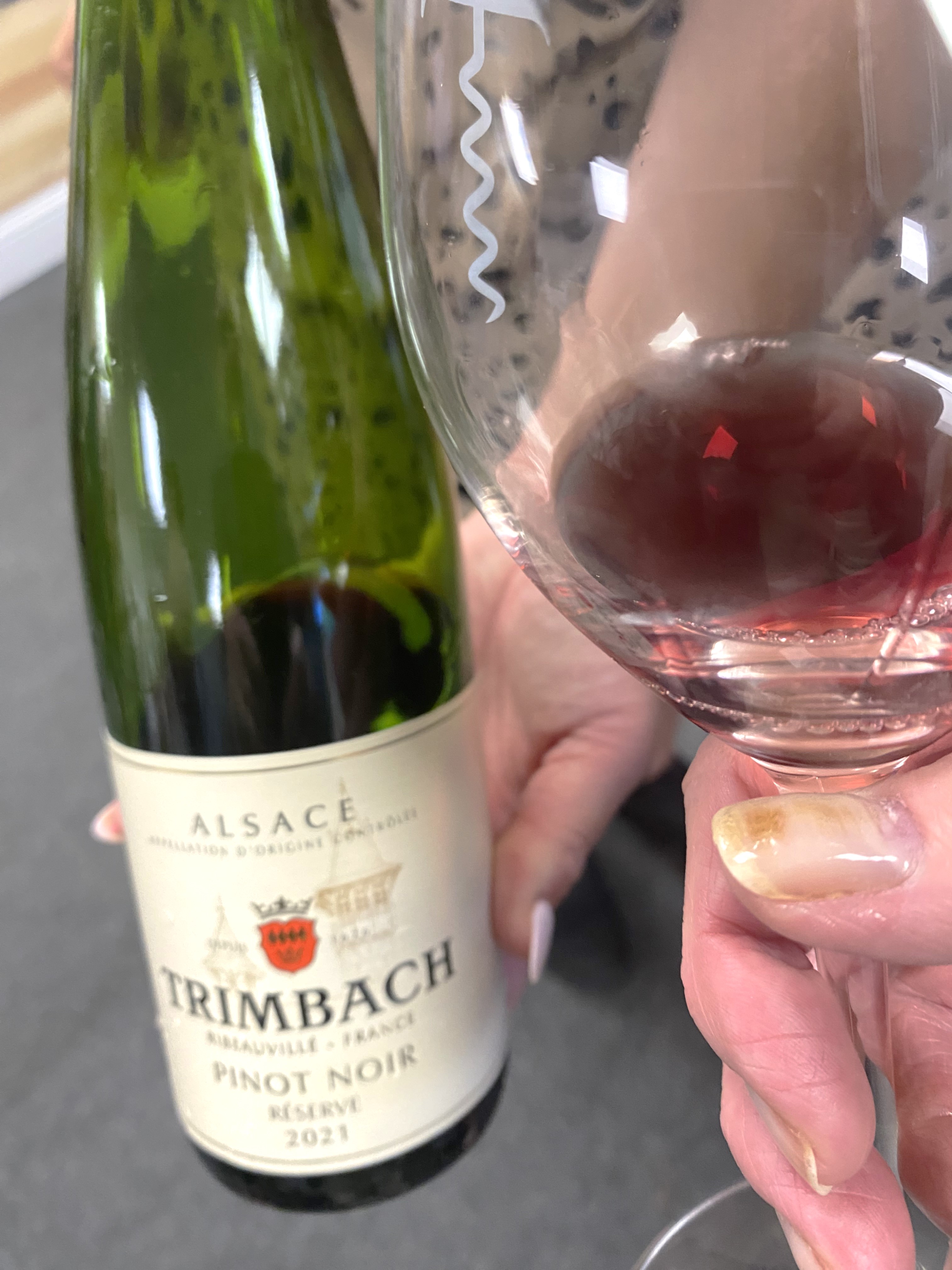
The last wine of the evening was the Maison Trimbach Pinot Noir Reserve Alsace 2021. Pinot Noir Reserve is from Trimbach’s own vineyards and those from their grower partners with the average age of the vines being over forty years of age. The vineyards are located in the southern part of Alsace: Rodern and St. Hippolyte, some based on granite, some on sandstone, and some from marl and limestone soils. Grapes are hand-harvested at maturity and after destemming, they undergo a gentle crush by pneumatic pressing followed by an eight-day cold maceration to extract color and fruit in Stainless-Steel vats for Initial Fermentation. The juices are then blended in the cellar in Stainless-Steel vats and old casks for Malolactic Fermentation. There is no long ageing on the lees, as the wine is bottled after three months and then aged in cellar for a couple of years. The garnet colored wine offered notes of red and black cherries, blackberries, strawberries, red beets, sous-bois, licorice and spices. On the palate this medium-bodied wine with good acidity displayed tones of red and black fruits, kirsch blending with soft velvety tannins and ending with a medium-count finish of fruit, smokiness, terroir and a whiff of iron oxide.


