Easter Sunday 2021

There is nothing like a holiday and a religious one to boot, to create a whole bunch of scofflaws.  It was the first big gathering in over a year and we all practiced common sense, a notion that is lost on our harridan and her brown-shirt minions.  First of all, we all had our vaccines without having the audacity of telling the world on Social Media, some of the youngsters that just got out college did, and we just continued about our business.  From my Mother-in-Law in her nineties down to the infants that haven’t had a chance to be indoctrinated in Nursery School, we were all suffering from Mandated Lockdown Syndrome.  This is a psychological disease caused by listening to self-appointed authorities who cite un-cited scientific facts to keep everyone in isolation.  Though we did it, and we didn’t hide our vehicles and to be truthful when I looked down our street in the subdivision, I decided that we were not the only scofflaws and people wanted to get back with their families.  The theme of “resurrection” in Easter was the perfect holiday to start claiming our independence. 
My Bride was all agog for weeks in the preparations for this dinner.  We (mostly her) gave the house an extra thorough cleaning, not that the house was dirty, after all, it was just basically the two of us here for over a year.  She was buying cheeses to put out, an item that has been kind of taboo, since we are both trying to lose weight, she has been much more successful than I.  She had fruit and vegetables for munchies as well.  I schlepped up one of the roasters from the basement, so that she could make a twenty-six-pound turkey including her legendary stuffing.  She also made a leg of lamb that was stuffed with whole cloves of garlic, so that they would roast along with the lamb surrounded with a medley of root vegetables, which I could have made a meal of, on my own.  She also made a new side dish of diced fennel and onions sauteed in bacon renderings and then the bacon bits were added back in at the end.  Besides the huge tub of stuffing that didn’t make it into the bird, there was also Armenian Pilaf and Mashed Potatoes.  There were plenty of desserts brought in, but my Bride who gave up sweets for Lent, she made her own Cream Puffs to serve with Ice Cream and Hot Caramel Sauce; and who could deny her such a small reward. 
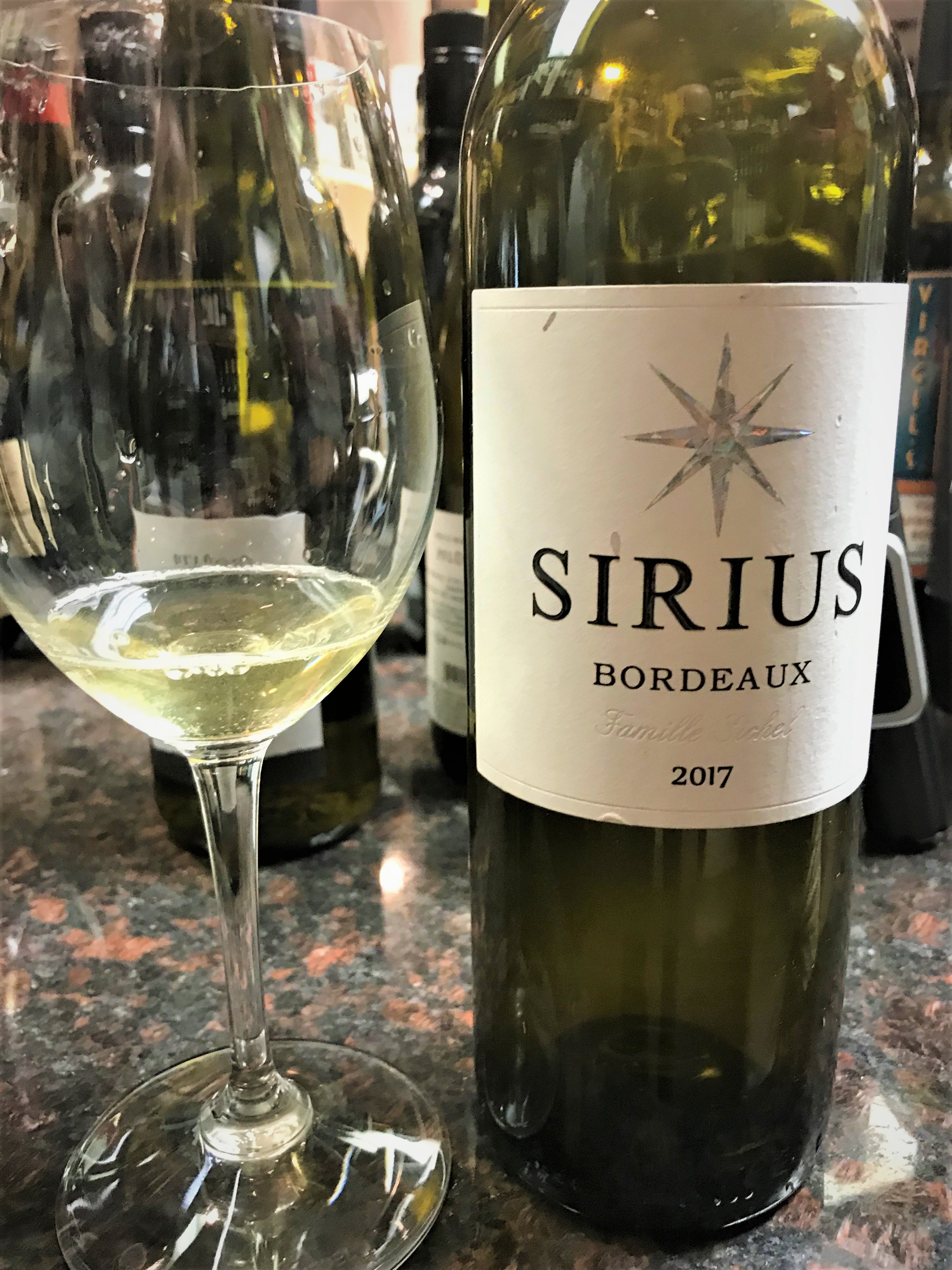
As for the wines, she wanted no surprises and wanted her favorite go-to wines for the past year or two.  The white wine was not a bone-dry wine and everyone that had it, was enjoying the selection.  Famille Sichel Bordeaux Blanc 2017 was the wine that was poured.  Famille Sichel is a family owned negocient firm from 1883 in Bordeaux, as they were in the procurement process for their locations in Mainz, London and New York.  In 1938 they even bought Chateau Palmer, which at the time had fallen on bad times and have since brought it back to all of its glory.  The family does not believe in resting on their laurels as in 2001 they even built a completely new bottling and storage facility in the Bordeaux region.  This particular bottle of wine is a blend of the two leading white grapes of Bordeaux, namely Semillon and Sauvignon Blanc.  I don’t think that I would be amiss to opine that this wine was aged in Stainless Steel as there was plenty of fruit and very refreshing.  It starts off with a nose of citrus fruits and finishes with some terroir with a decent finish.  This was the most popular wine of the day, counting the empties afterwards.
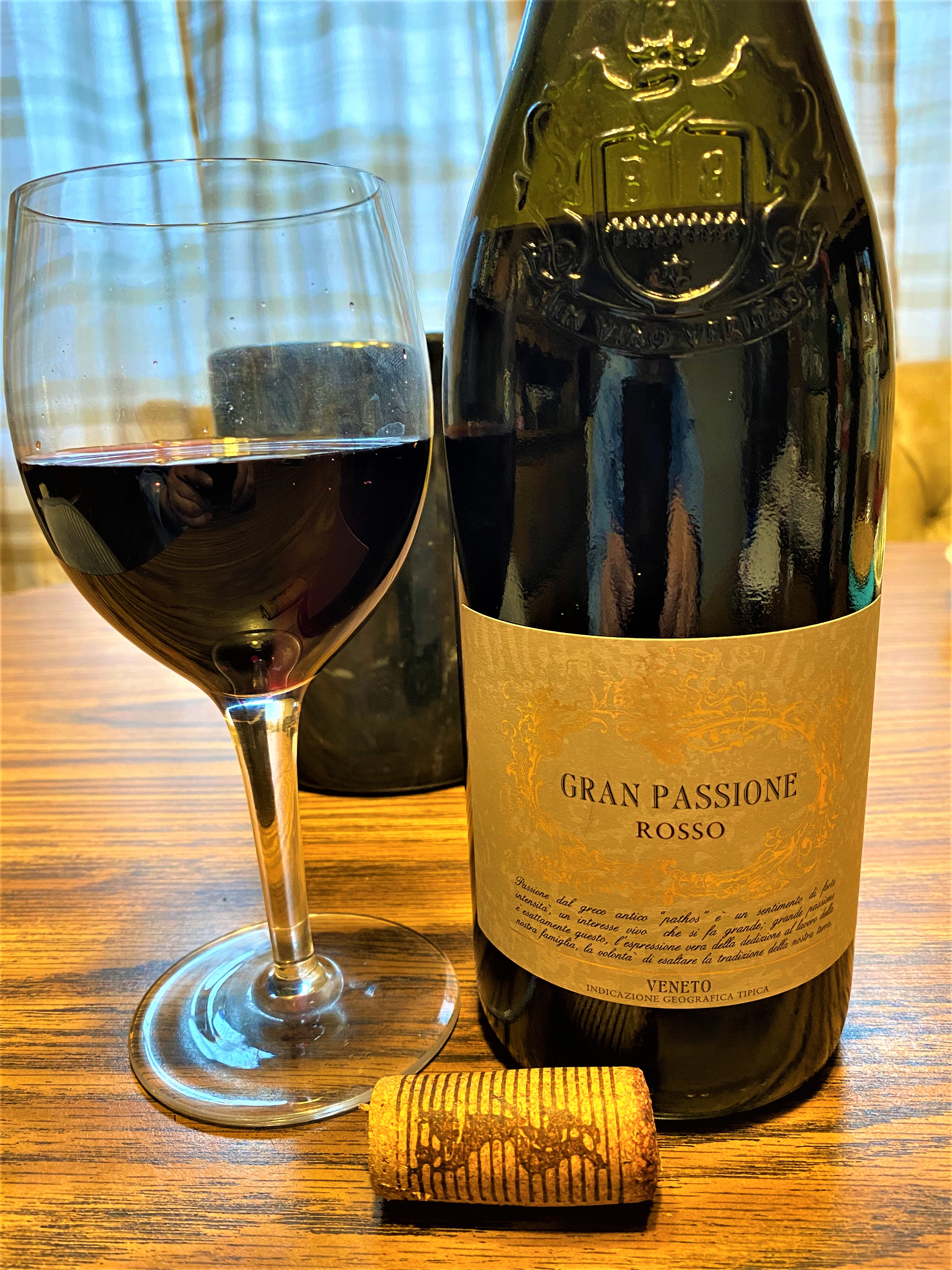
The red wine was also chosen for its fruit and suppleness.  Gran Passione Rosso Veneto IGT 2019 is a limited production wine made by Cantine Bertoldi.  Cantine Bertoldi is known for their Valpolicella and Amarone wines.  They were founded in 1932 and have gone through several generations of the Bertoldi family and they are now in possession of fifty acres of hand cared varietals of Corvina, Rondinella, Molinara, Garganega, Trebbiano and Cortese, while also adding into the mix they have Merlot, Cabernet Sauvignon and Chardonnay.  The grapes selected for their passito wines are sun dried and fermented in Stainless Steel.  The Gran Passione is made from some of these passito grapes and is made from a “rare red blend” which is a way to describe a mixture that either the winery wants to keep secret, or they just are not sure of their proprietary blend and then there are some years when this wine is not made.  While the wine is not as rich and full bodied as an Amarone de Valpolicella, it is a delightful wine.
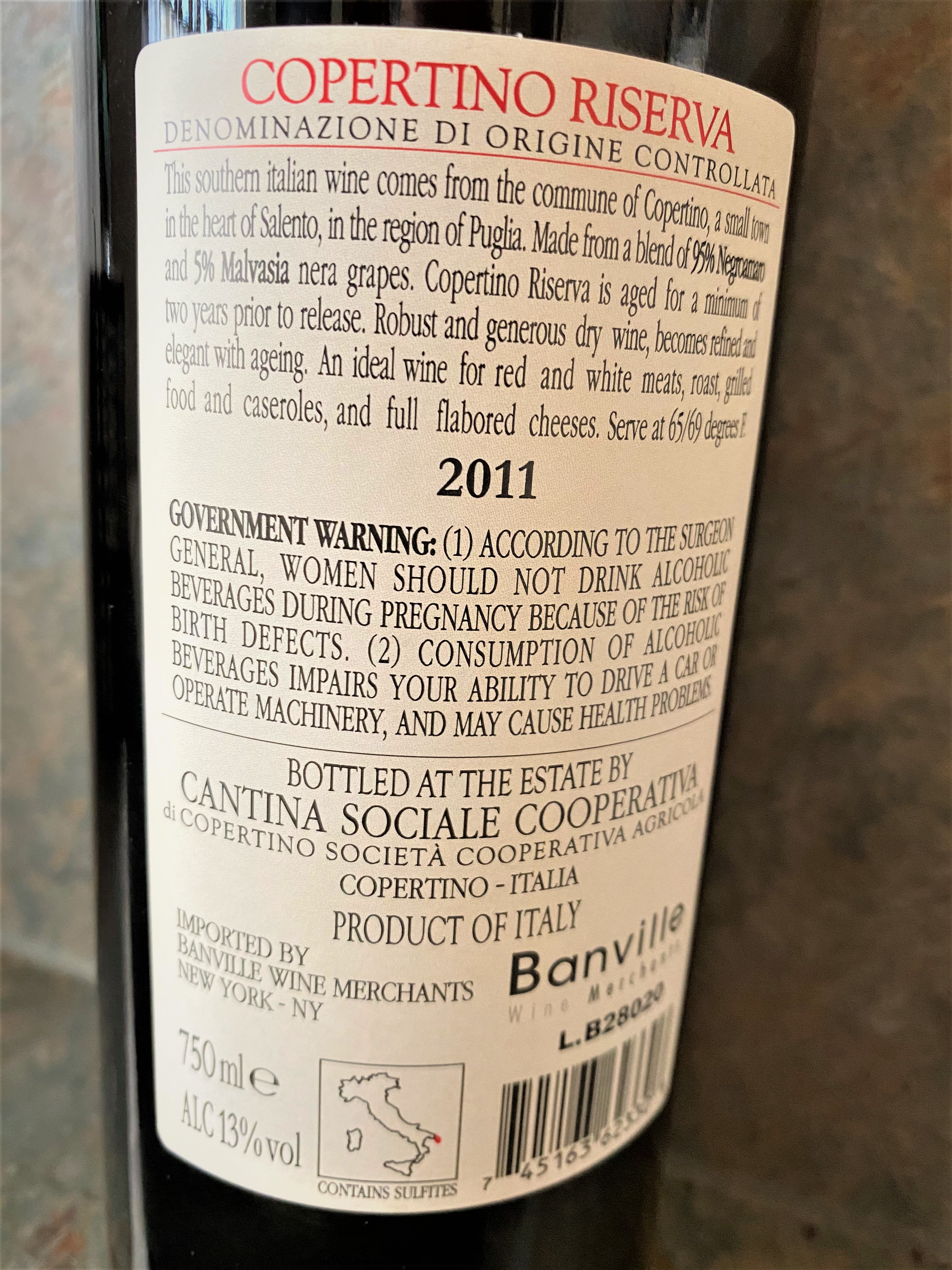
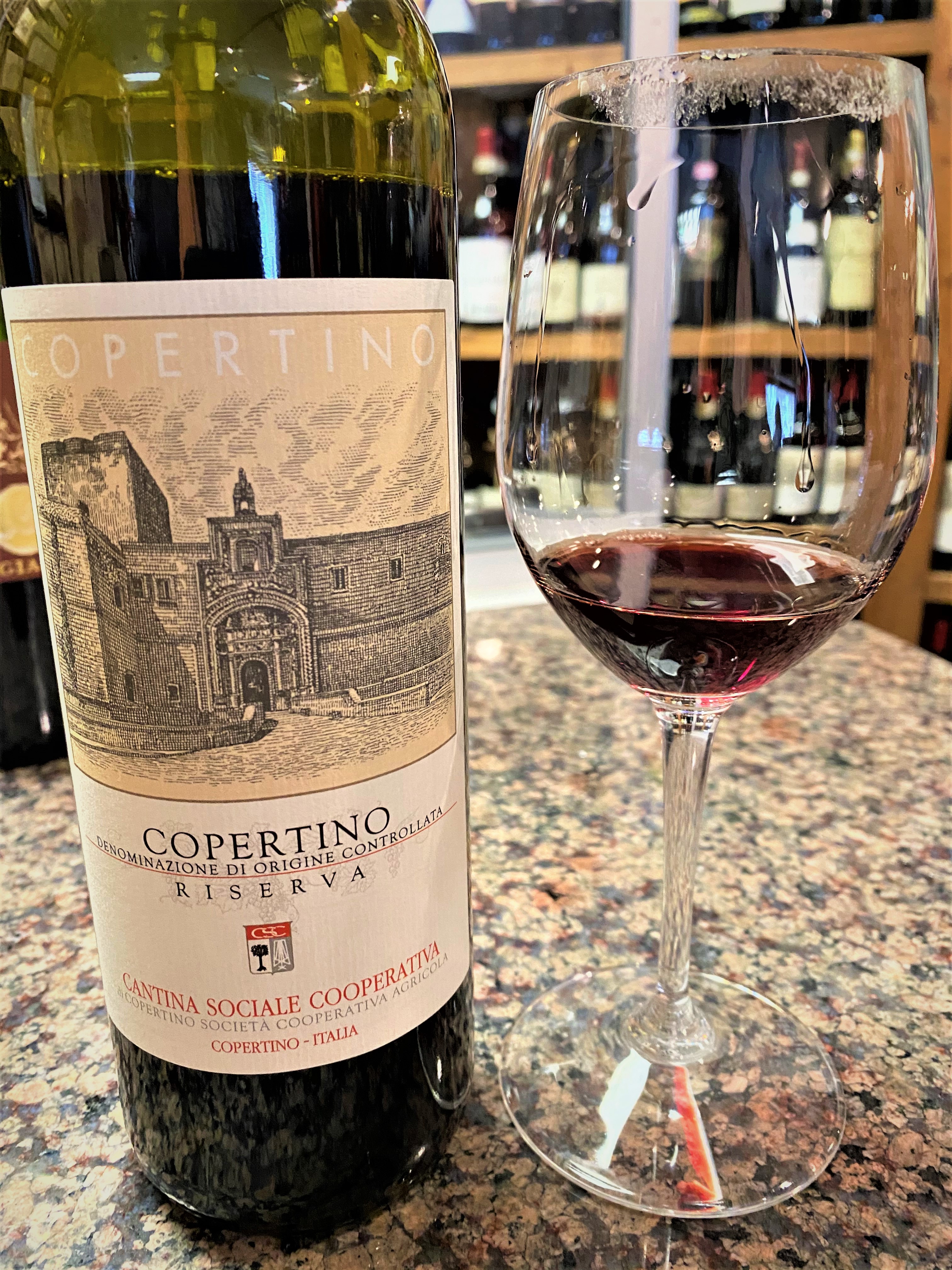
With my eye on the Leg of Lamb, I also went for another sure to please the crowd red wine. The Cupertinum Cantina Social Cooperativa Copertino DOC Riserva 2011 was the wine that I thought of for this dish.  The Cupertinum Cantina Social Cooperativa was founded in 1935, along the lines of many of wine cooperatives that were forming in Italy. The Cupertinum cooperative have even planted a micro vineyard in the ramparts of the old Copertino castle.  Copertino DOC is in the Puglia region of Italy, the area that most people like to refer to it as the boot, for easy visualization. The main grape for Copertino DOC, whether for the Rosso or Rosato is the Negroamaro variety.  Negroamaro must account for seventy percent of the wine, and the balance may have Malvasia Nera, Montepulciano and/or Sangiovese (but only up to fifteen percent Sangiovese). The DOC was classified in 1976 and today there is one-hundred-fifty-eight hectares and about thirty-one-thousand cases of wine are produced.  This wine is a blend of ninety-five percent Negroamaro and five percent Malvasia Nera.  Maceration on the skins takes about seven days, and then because this was their Riserva, the wine was aged for twenty-four months in Stainless Steel.  This wine had the benefit of being an eleven-year-old, so there were already layers of taste to appreciate.  The wine was a nice Ruby red in color with nose of black fruit, the tannin had mellowed and matured and offered still ripe fruit and hints of almonds, black currants and leather, with a nice finish. As everyone finally was leaving after a full meal, my Bride was especially happy, because she thought it was the happiest, she had seen her Mother since the lockdown began, because everyone was together, and that is what holidays are for. 

Posted in Dining, Wine | Tagged , , , , , , , , , , , , , , | Leave a comment

Vigil and Dinner

The walls and roof did not collapse or cave in, because I stepped into a church, which is a good thing. We attended an Easter Vigil Mass, which is also called a Paschal Vigil to watch our nephew finish his vows and take his first communion.  This is the first time that I attended such a service and I survived.  My Bride and I are of different faiths and all is good.  Even though we were in special reserved seating in the church, with all of the social distancing that has been mandated as a way to intimidate the faithful from attending their church, I lucked out and had a huge circle of free air all around, and I didn’t wear my mask, except when there was perchance someone walking by.  I am not that cavalier and dismissive, I have actually had my two vaccines, so I am golden as far as I am concerned. The service was fine, perhaps long winded, but that happens when someone finally gets a crowd to speak in front of.  I am not a fan of modern church architecture, as I am old-fashioned and I adore the solemn appearance of a cathedral, not some big hall, that looks like it was designed to be adapted to some other business at a later date.  I am also of the era when going to church on Easter required wearing your best clothes, and I guess that almost everyone younger than I am did not get the memo.  I am sorry, but I just cannot enter a church without a coat and tie.  I also miss the beautiful floral and poetic wording of the Bible when the Modernists got their comic-book mentality education and ruined a work of art.  I can just imagine what the Modernists could accomplish with the sonnets of Shakespeare.

We finally finished the mass, had a group photo taken, and my Bride informed me afterwards that I was blocked out by someone else, but I know that I was there.  We then went to where our nephew wanted to have dinner following the service, and because of more social distancing rules, we almost could not even all fit in the same restaurant, but my Bride pulled off a miracle and got everyone accepted, though it looked like four of us were going to have to dine away from the party in a balcony, and we were fine with that, as long as everyone was kind of together. When we got to the restaurant, the manager and staff made a few quick changes and we were all kind of socially distanced and in the same back room of the restaurant, so that was wonderful.  My Bride started with a salad and had the French Onion Soup.  She then went on and had Whitefish; and by now you are aware that is one of the main dishes in the State of Michigan.  I went with a half slab of Baby Back Ribs and in hind-sight, I should have ordered the full slab, they were that well done. 

The four of us at our table had to go through two bottles of Chateau Ste. Michelle Chardonnay Columbia Valley 2018 as the first bottle just evaporated.   Chateau Ste. Michelle is the oldest and one of the most prestigious wineries in the State of Washington.  They are known for their Cabernet Sauvignon, Merlot and Chardonnay, but are famed for their Riesling.  It was founded as the American Wine Growers in 1954 by the merger of two that companies that followed the repeal of Prohibition; the National Wine Company and the Pomerelle Wine Company.  The National Wine Company had planted Vitis vinifera grapes in the Columbia Valley, and under the consultation of Andre Tchelistcheff they planted even higher quality grapes in 1967.  These were under the name of Ste. Michelle Vintners and the first wines released were Cabernet Sauvignon, Pinot Noir, Semillon and Grenache.  In 1974 in a blind tasting their Riesling came in first place over Germany and California.  In 1976, they changed the name to Chateau Ste. Michelle.  The wine is aged Sur Lie for six months in a mix of French and American Oak, with ten percent new, and then blended with Chardonnay that was aged in tanks, so that there is a blend of crisp and oaky wine combined.

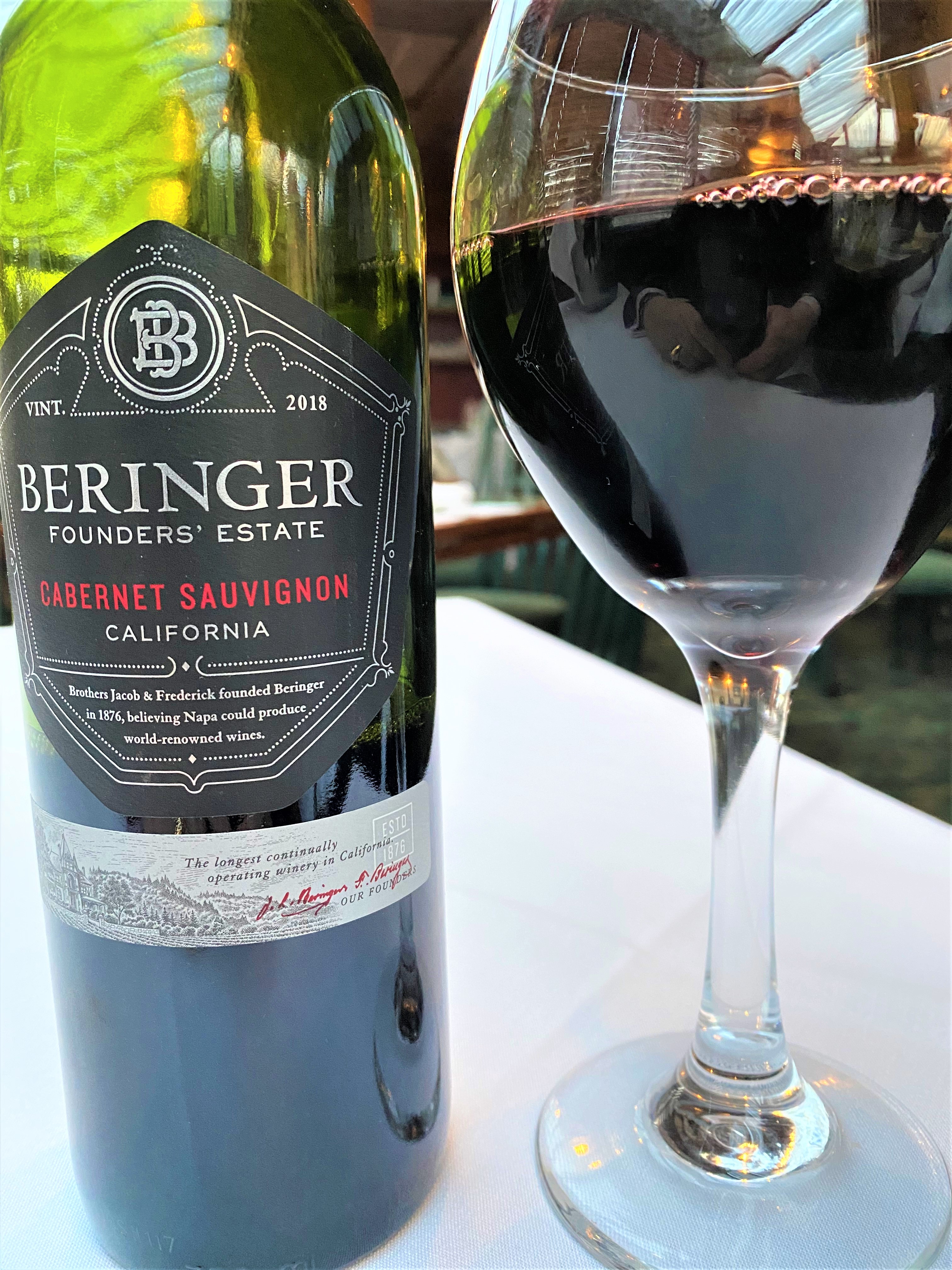
After all of that white wine, I needed to have a red wine and I chose from the list Beringer Vineyards Founders’ Estate Cabernet Sauvignon California 2018.  Beringer has the honor of being the longest continuously operating winery in California.  They have a range of offerings from affordable generic table wines to single-vineyard cuvées and a private reserve label. Brothers Jacob and Frederick Beringer had their first harvest in 1976 in what is now St. Helena AVA.  Frederick built his Rhine House, a Victorian mansion in 1883 which is now the main visitor building at the winery.  This home was added to the US National Register for Historic Places.  They even survived Prohibition, the first dismal nanny-state disaster, by getting a Federal License and producing sacramental altar wine.  After Prohibition, they were the first winery to offer public tours which was the start of making Napa Valley a tourist destination. In the 70’s Beringer was bought by Nestlé, and then it changed hands a couple of more times and is now owned by Treasury Wine Estates, which also owns among other labels Penfolds and Stags’ Leap.  In 2015, Mark Beringer became the Chief Winemaker and he is the great-great-grandson of Jacob Beringer.  While Beringer owns vineyards in Napa and Sonoma as well as their leased vineyards are all certified sustainable.  The Founders’ Estate collection is an introductory line where the fruit is harvested from across California. This was a perfectly acceptable table wine and that is what I was looking for.  A perfect evening with family.

Posted in Dining, Wine | Tagged , , , , , , , | Leave a comment

A Birthday Toast

We had a chance to witness the ravages of utter destruction that occurred to one of our favorite restaurants, because of the harridan’s draconian rules.  We were going to originally have a birthday dinner, but the honoree has been working excessive hours and her family has gotten used to eating late, but my Bride and I have gotten used to eating maybe three hours earlier than their anticipated dinner hour, so we were going to take some wine and toast her, while they ate.  We made plans to go out for an early dinner and then catch up with them.  We were actually quite excited to go back to one of our haunts in another part of tri-county area, we even got dressed up for the occasion and that in itself was fun, and I know that I am “old school.”

I am not going to mention the restaurant by name, because we were both sad when we left the premises.  This non-descript building from the façade, had hid for decades one of the best kept secrets of the Detroit dining area.  The restaurant truly reminded me of a Manhattan local steak house, the place where the staff was well dressed and performed tableside preparations of certain dishes.  With the after affects of the Wuhan flu, it may be sometime before any fine establishment will be doing anything tableside and it probably will make the governor happy, because she has no experience in quality settings, I have to surmise.  After being away for basically a year, we were surprised at how run-down and seedy the dining room was in appearance.  My Bride had ordered one of her favorite entrée orders, Whitefish with Parmesan Breading.  I went with a Half of a Roasted Duck.  We were ready, and were we disappointed, it was so sad.  The fish was bland and the breading was not crisp, and the duck must have been on death march, as there was no meat on the bones, and the steak knife that was furnished with the meal, could not cut anything, even if there had been some meat on the bones.  The only thing that we both enjoyed was the salads.

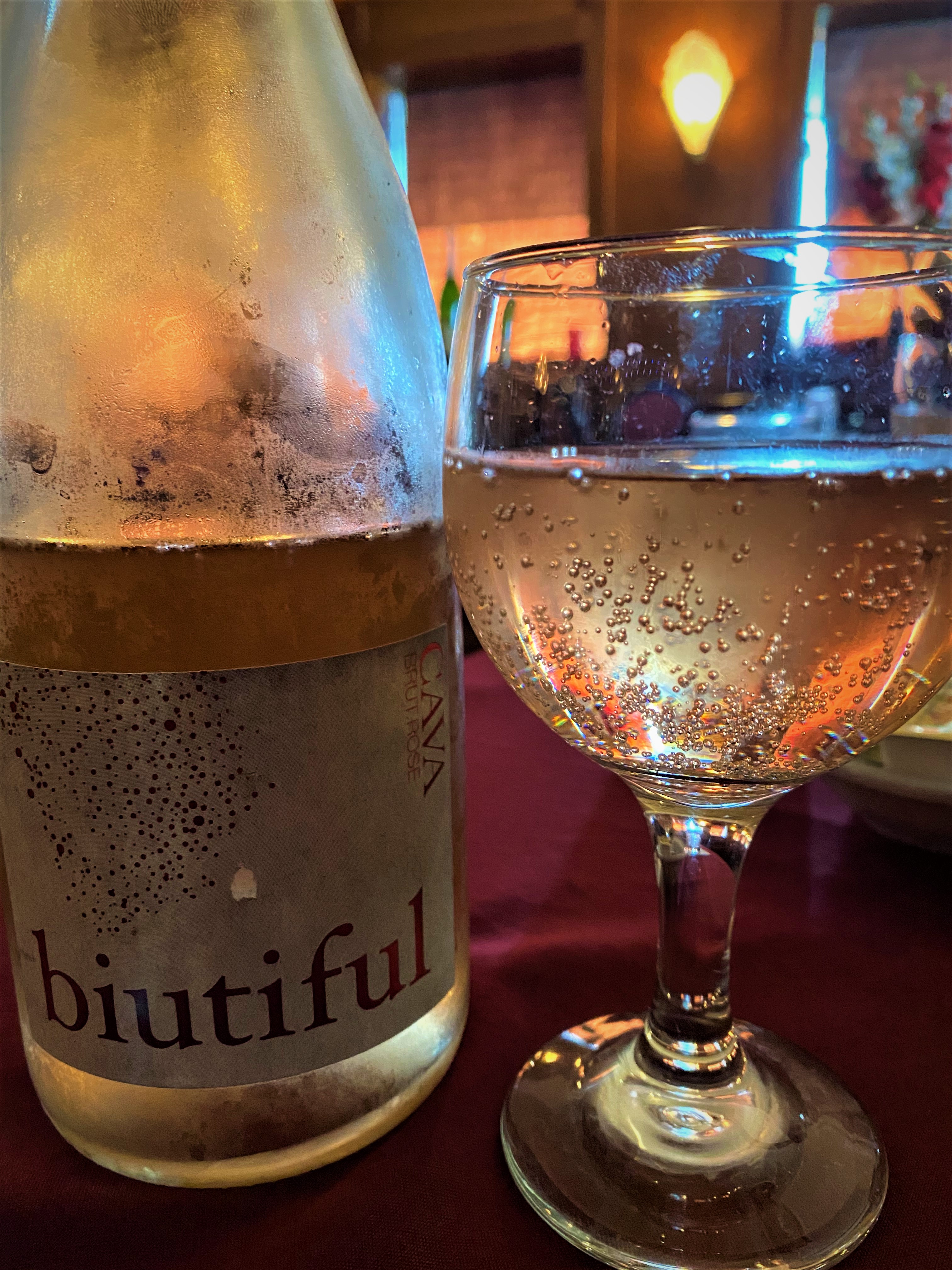
I know that everyone was probably trying to figure out what wine I could come up with.  I am very partial to Pinot Noir with duck, and my Bride would have enjoyed a fine glass or two of Pinot Noir, but alas that was not going to happen with the nights selection and it could be, that there were still in the midst of getting a proper wine carte.  I went with the Isaac Fernandez Seleccion Biutiful Cava Brut Rosé NV, but on the carte, it was just under Sparkling and listed as Biutiful. The Biutiful Cavas are produced at a winery created in 2007 with state-of-the-art technology. The vineyards are based in Requena, a region that has been growing grapes since the 7th Century.  The vineyards grow Macabeo, Chardonnay and Garnacha (Grenache).  This particular wine is pure Grenache and was aged on the lees for about fifteen months. There were five-thousand cases produced.  The wine was very easy to drink, though if I had to guess, I would not have guessed that it was made from Grenache, but it was the high point of the meal.

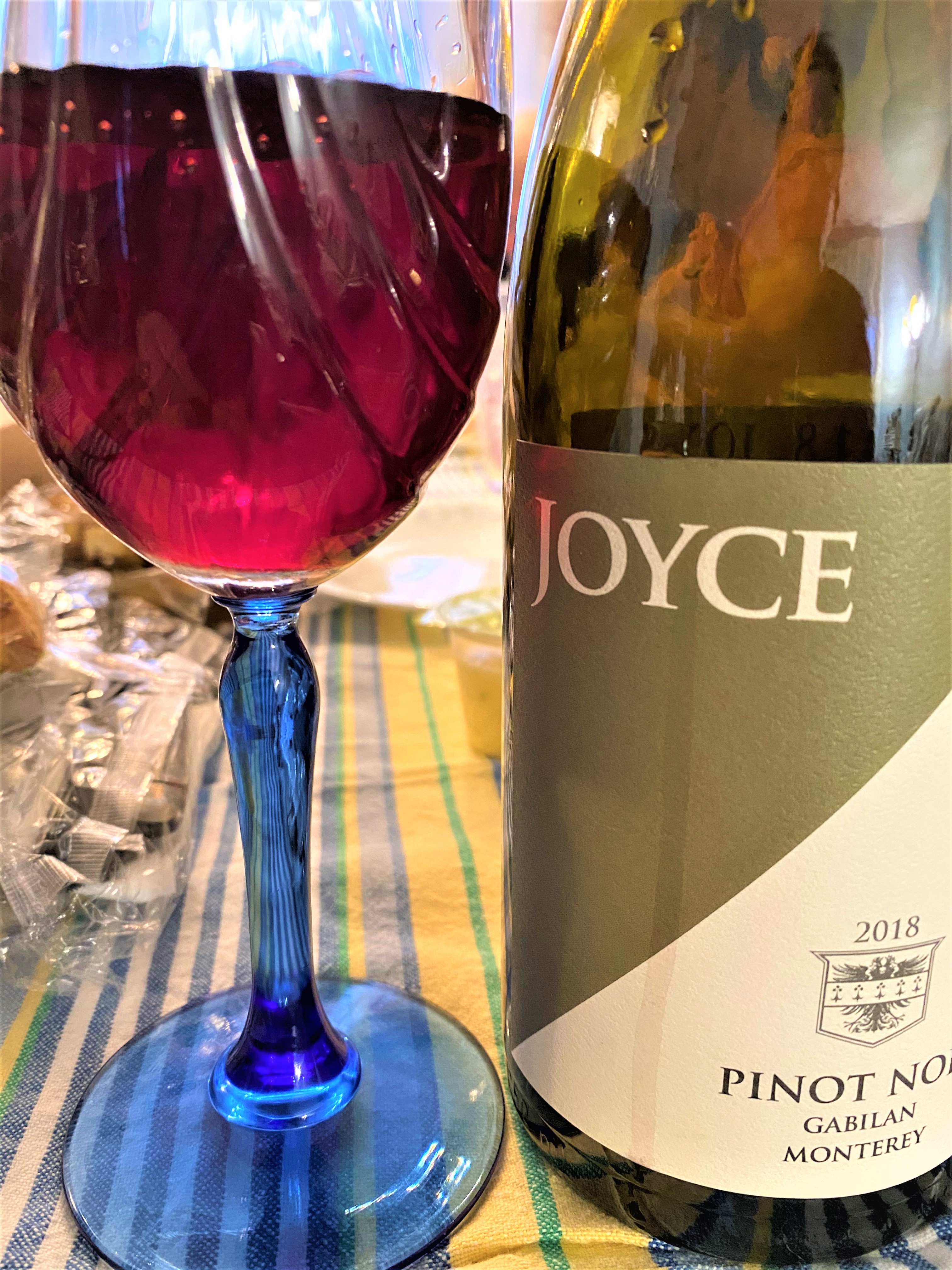
When we got to the birthday dinner, the guest still had not arrived, but in due time the honoree appeared and the take-out dinners that were ordered were picked up. We had brought a bottle of wine to enjoy with them and it worked out well. Joyce Vineyards “Gabilan” Pinot Noir Monterey 2018 was wine that we had recently received from our wine club “A Taste of Monterey.” The winery works with thirteen other vineyards in Monterey, as well as their own vineyard.  Joyce Vineyards began when Francis Joyce planted a vineyard on a steep hillside on his property in Carmel Valley, and was the start of the original six-acre estate.  Joyce Wine Company is now under the supervision of second-generation winemaker Russel Joyce.  They are basically focused on Burgundian style wines and they produce about ten-thousand cases each year. This particular wine has the fruit from “Danny’s Vineyard” which is a special site the Franscioni brothers named after their late father in their Salinas vineyard and the land is basically decomposed granite and limestone. The vines are about twenty-five-years-old and they benefit from the strong marine influences of the Monterey Bay. The wine begins by whole cluster fermentation in open top vats with cold soaking for about five days and primary fermentation lasts for about seventeen days.  The wine is aged sur lie for ten months in neutral French Oak barrels and it is unfined and unfiltered.  There were four-hundred-twenty cases of this wine produced.  The wine offered a nose of dark red fruits and spice, while the taste of cherry and pomegranate with some pepper was the prominent tastes and a nice long finish featuring the chalk terroir.  All in all, it was the wines that saved the night for us, and my Bride also bought a classic Michigan birthday cake, and the favored ice cream flavors for the honoree.

Posted in Dining, Wine | Tagged , , , , , , , , , , , | Leave a comment

“I Will Gladly Pay You Tuesday”

I have been driving my poor Bride crazy, lamenting that I want a burger.  I know that doesn’t sound like a difficult request, but it is; I guess that I am high maintenance.  My Bride has made me numerous different burgers since the lockdown began and they were all excellent, but perhaps it is the ambience.  I know that you will suggest the chains, and to be truthful, I never liked them as a teenager and find them even worse today, though I do tolerate them when we have long motor trips.  I also do not have an affinity for “sliders” as I feel that they pile on fried onions and spray the buns with essence of meat. Growing up, there was a famous bar that made famous burgers, famous enough to have people drive across town for them.  The father of the business was a customer of mine, and he told me that he mixed his burgers in the cellar of the bar using a formula of ground round, ground chuck, ground sirloin, ground veal and ground pork all mixed with either duck fat or goose fat; and the recipe amounts changed depending on which of the last two items were used (alas nowadays, his son lives on his father’s fame and just uses prepared burgers). Since the lockdown has eased up, the steakhouse that I enjoyed their burger when in the bar, has stopped making burgers, until they are back to full capacity, because they want to sell the big-ticket items; and I understand that thinking.

There is a restaurant in a mall near us, that my Bride goes to with some of her girlfriends for quick nights out.  Even during the period when the peasants were only allowed to dine outdoors and in Michigan, I thought that was pure madness.  Now you have to understand that plenty of times, and I am not casting aspersions, women like to make meals out of appetizers and glasses of wine.  She wanted me to try this place, to stave my craving for a burger.  Now you have to understand, that my Bride has gone out of her way to make me eat healthy, so much so, that I can’t eat most bar food, because it is now way too greasy for my “sensitive” stomach.  We went there and had two different choices of their fancy burgers, she had a side of sweet potato fries and I had a side of onion rings.  They tasted great, I have to admit, until later, but I must thank God and the people that created the ulcer medicine that was originally by prescription, until it was discovered that ulcers were being treated the wrong way, and then this medicine overnight, was sold over the counter.

My Bride, if given a chance will try to opt for a split of bubbly.  She had a split of La Marca Prosecco DOC NV. The company was founded in 1968 as a cooperative of wine growers in the Veneto and Friuli-Venezia Giulia region of Italy.  Since its beginning it has now grown and comprises nine cooperative wineries predominately in the Prosecco DOC region. These wine growers comprise some nine-thousand hectares of vineyards of mainly Prosecco (or Glera when the grape is not from the DOC district) as well as a few other grape varietals for some of the other wines that they produce. La Marca uses the Charmat Method and they do a great job with it.  In 2007, Wine Spectator magazine listed La Marca as being one of the “Top 100 Wines of the Year.” The wine is an easy crowd pleaser and never disappoints.  I went for a heavier wine that I have had over the years in a couple of different formats, and this was their basic offering of Dona Paula Los Cardos Malbec Lujan de Cuyo 2018. The company’s first vineyard was in 1997, the winery built in 1998 and the first harvest was 1999. They are based in Mendoza, Argentina and are known for Malbec, with three single vineyard wines down to their entry level Los Cardos line.  They mainly use cement tanks and fermenters.  The majority of their wines are made for the export market. The wine is a nice dark wine, that is made for quick consumption, so it is mellow with some spice and floral notes and is a good introduction of what one can expect from Malbec, the King of Grapes for Argentina. 

Posted in Dining, Wine | Tagged , , , , , , , , , , , | Leave a comment

April 2021 Club Selections

It was a beautiful day in April as I walked in to the Fine Wine Source to pick up the April Wine Club selections.  The weather was totally agreeable, the perfect weather for just a sport coat to go out in the world.  Earlier that morning as the sun was just showing her face during our walk, it was just as enjoyable.  The perfect time to pamper one’s self with a haircut, and a manicure and of course some new wine.  Once a month I go there to pick up the selections, and I know that it sometimes seems that I am living there, but that is really not true.  By being a member of their wine club, one gets case discount price, even if you are just running in to get a couple of bottles.  Each month they offer a wine from the Old World and one from the New World.

From the Old World is a bottle of Chateau Haut Tornezy Bordeaux 2019.  Olivier Bannier, is a fifth-generation winemaker and his family has been there for over one-hundred-twenty years. The vineyard is located in Juliac, a village of 259 people, in the heart of Entre-Deux-Mers.  The land around Juliac is known for their rolling hills, excellent drainage, a mix of different sun exposures and some of the best terroir in the area. The terrain is a mixed soil of sandy-clay.  The wine is a blend of sixty-five percent Merlot, fifteen percent Cabernet Sauvignon, fifteen percent Cabernet Franc and five percent Malbec. The tasting notes for the wine offer note of red current, green olive, licorice and truffle. A classic Bordeaux with full red fruit, soft tannins, balanced and finishing with a spicy cherry finish. It sounds great to me, as I am partial to Merlot based Bordeaux wines.

 The New World offering is Tortoise Creek “The Chelonian” Zinfandel Lodi 2018. This wine is from the people that started Master Wines. The principals were originally from England and grew up as friend since their early teens. They married at the end of their teens, moved to France and started Master Wines, selling lesser-known French wines to America. Back in the Seventies he was a big promoter of Georges Duboeuf in America.  In 1992, he introduced a line of varietals from the Languedoc to the American market under the label of Les Jamelles and sold the label in 1996.  He started Tortoise Creek in 1996. Tortoise Creek Wines is part of Master Wines and hence you will see the Tortoise Creek label some from California and some from France.  Tortoise Creek has partnered with the Chelonian Research Foundation for turtle and tortoise research, and starting with the 2009 vintage they donate a portion of the proceeds to this non-profit foundation.  This wine is made abiding to the Lodi Rules that I tend to believe everyone there now agrees to, and the rules may grow in to other areas as well.  The wine is a blend of eighty-five percent Zinfandel, ten percent Petit Syrah and five percent Tannat from vineyards in the Clement Hills region of Lodi AVA. By using a gravity flow system, the fruit is destemmed, and then crushed and the initial fermentation takes place in Stainless Steel for ten days, with an additional week soaking on the skins. The malolactic fermentation takes place during six months in American Oak. The wine has notes that blackberries are noticed from the nose, right through to the finish, a complex wine of savory spices intermingled. A perfect wine for the up-coming barbecue dinners.

Posted in Wine | Tagged , , , , , , | Leave a comment

Sitting at the Bar

We are still getting used to eating out again, indoors.  We are in one of the states where restaurants really took it on the chin.  For the longest time, restaurants could only do carry-out, which eliminated more jobs.  We really did not avail ourselves of many carry-out dinners, because, it is such a drive from our house to our favorite restaurants, that the food would have to be reheated, and that can become pretty expensive leftovers that aren’t recooked the same way.   I mean we have been having lots of leftovers, because most of the dinners we have had at home were big enough to make at least another night of food from the preparation. It was miraculous that three major states that had major gubernatorial impeachments going on, all basically overnight said that the lockdowns could be eased up.  Restaurants were originally allowed to have indoor seating at twenty-five percent, and it just was raised to fifty percent. The other night, we felt like going out and the first place, we drove to, has not opened yet, which is the case for many eateries, because they have to find and/or replace help. Many restaurants had announced that until there was at least fifty percent seating, that it was not economically feasible to reopen.

We had several other options in the direction that we were driving and we went to a restaurant that we have gone to, a few times and always enjoyed the food and the ambience.  We went to Nico & Vali, which is just on the outer-ring of downtown Plymouth, so we thought we would have a fair chance of getting in, and I might add that we were going out at “senior dining” hour.  The tables were all booked, but they did have two at the bar, and it was not the first time that we had dinner at the bar, so we said yes.  The bartender was a very attentive and she was also the perfect waitress.  My Bride had the special, which was a Seafood Medley; Chilean Sea Bass topped with sauteed shrimp and clams in a white pesto sauce, served over butternut squash risotto tossed with arugula and shallots.  I had the Piedmontese Filet medallions with a Porcini demi-glace, over risotto tossed with wild mushrooms, asparagus and black truffle shavings. Prior to the entrée plates we both had salads and even had seconds on the house made bread.  We both had great choices. 

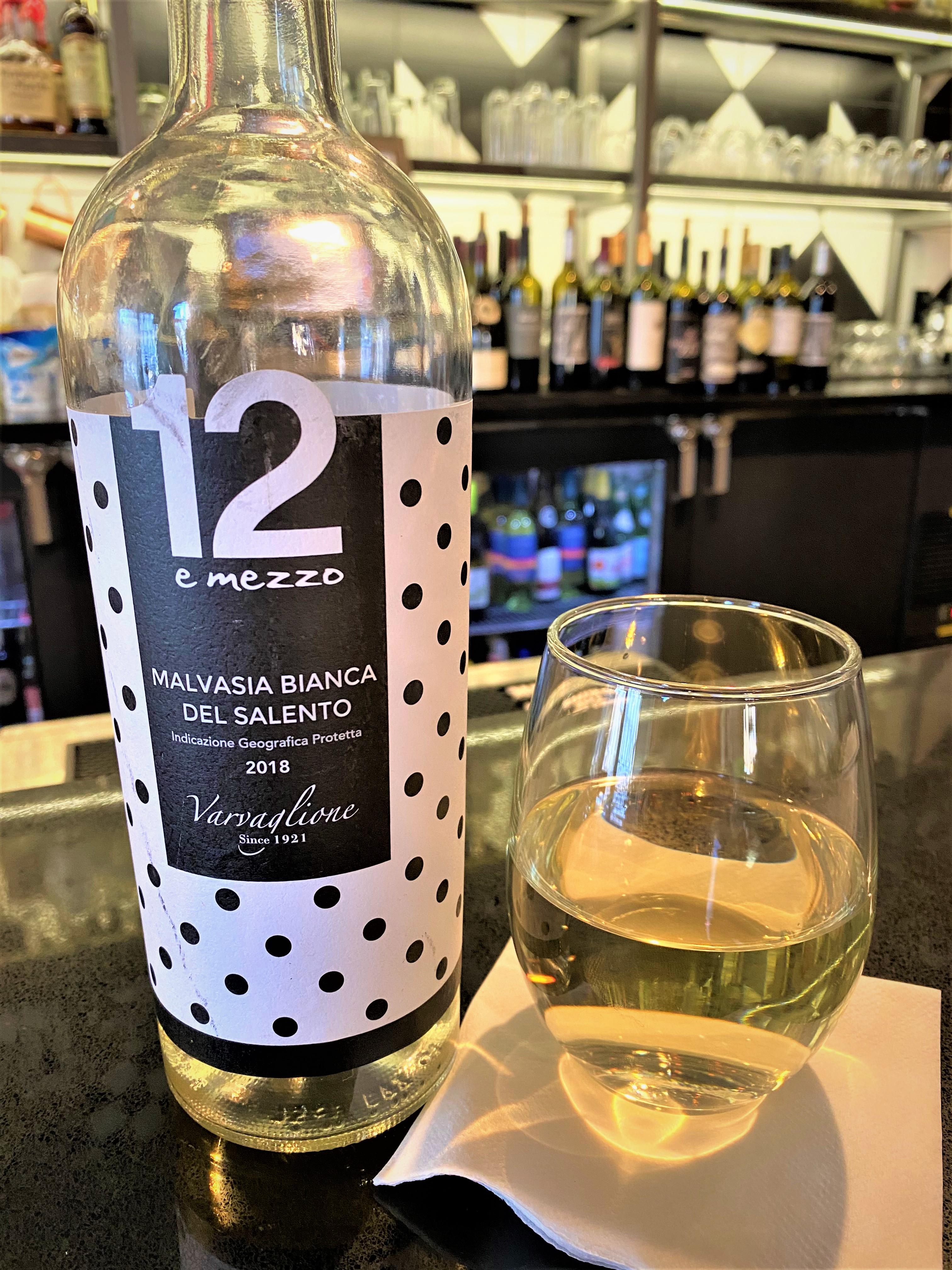
My Bride had Varvaglione 12 e Mezzo Fashion Edition Malvasia Bianca del Salento IGT 2018.  Varvaglione 1921 will be celebrating their hundredth anniversary this year, spanning four generations of the same family and is now one of the largest companies in Puglia. The winery makes red and white wines, and they have one-hundred-fifty hectares of vineyards, plus numerous long-term contracts with other vineyards in the area.  Salento IGT is probably the largest sub-region of Puglia IGT and it covers Red, Rosé, White, Dessert, Still and Sparkling wine.  It also allows for about fifty different varietals to be used from local indigenous grapes, to the famous International stars.  A named variety must contain at least eighty-five percent of the grape to be listed. The terroir is hot, flat and dry.  Malvasia Bianca is used to produce many styles of wine in the Salento IGT.  The vines are controlled to produce medium to high productivity and noted for low to medium acidity.  The grapes get soft pressing, with twenty-four hours of maceration, and cold fermentation, then the juice is aged in Stainless Steel. The wine was a nice golden yellow, with soft fruit aromas, a nice balanced with notes of pears and honey (without being cloying).

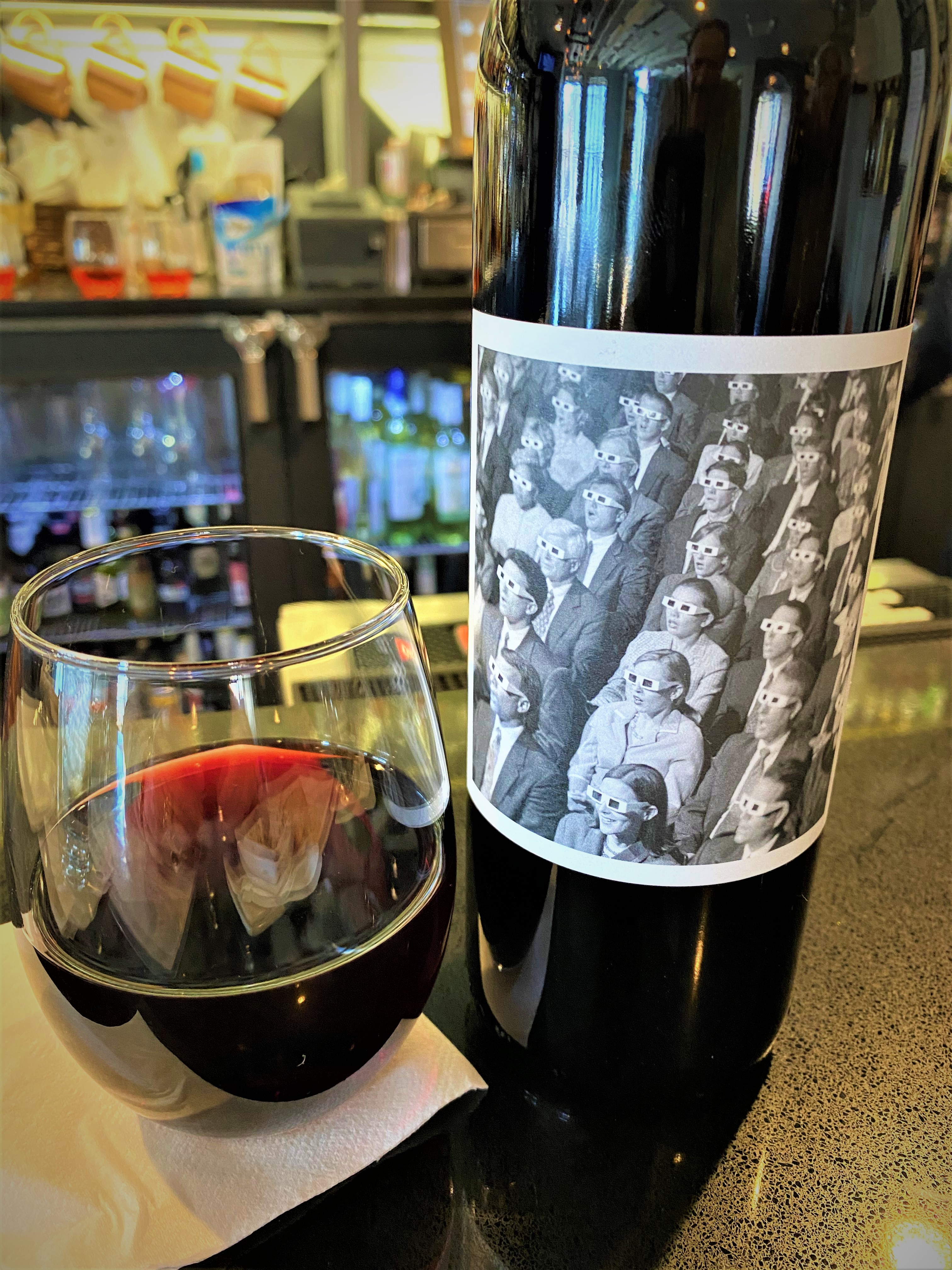
I had The Cult Wine Cabernet Sauvignon Lodi 2017 of Middletown, California.  A very curios modern winery with no history to track.  They use the same label artwork for their three wines, a photo circa 1950’s of a well-dressed audience with the cardboard 3D glasses from the early trial films. The sepia toned label is used both for the Cabernet Sauvignon and for their Sauvignon Blanc, which are both carrying a Napa Valley appellation.  The black and white version label is used for their Cabernet Sauvignon from Lodi. All the wines carry the tag line “Do you see what we see?” The wine is a blend of eighty-six percent Cabernet Sauvignon, eight percent Petit Verdot, four percent Petite Sirah and two percent Merlot.  The wine was aged for fifteen months in French Oak, of which twenty-five percent was new. It was a very nice wine and what I expected from Lodi, as I have been enjoying every wine that I have discovered from there.  It was rather a big, fruit forward Cabernet Sauvignon, medium tannins and a nice finish.  It was a nice night and it felt good to be in a restaurant again.

Posted in Dining, Wine | Tagged , , , , , , , , , , , , | Leave a comment

More Forgotten Wine

The house has been in a bit of upheaval in preparation of Easter.  Some people are truly organized and take everything in stride.  We are reactionaries, I guess, as it was time for some deep cleaning, not that the house isn’t clean, but without having company over all of the time, some areas don’t get as much attention.  Also, the large work area in the kitchen became an extra pantry location for basics to alleviate running up and down from the basement. We also decided to have some plumbing work done, because it is better to have everything done at one time.

The exciting thing is that we also cleared out the main refrigerator.  One of her sisters had bought this new refrigerator that had a computer and monitor screen on it, and it kept track of everything that was put in it, to keep expiration dates current, but they had a problem with the software and it went back to the store, for a more conventional model.  We were going through and tossing items that were in duplication, questionable age, items that could be potential science projects and anything else to make room for the big day of cooking and feasting. Believe it or not there were two bottles of wine that ended up getting hidden, because they were splits or half-bottles and bigger and bulkier items kept them from being seen.

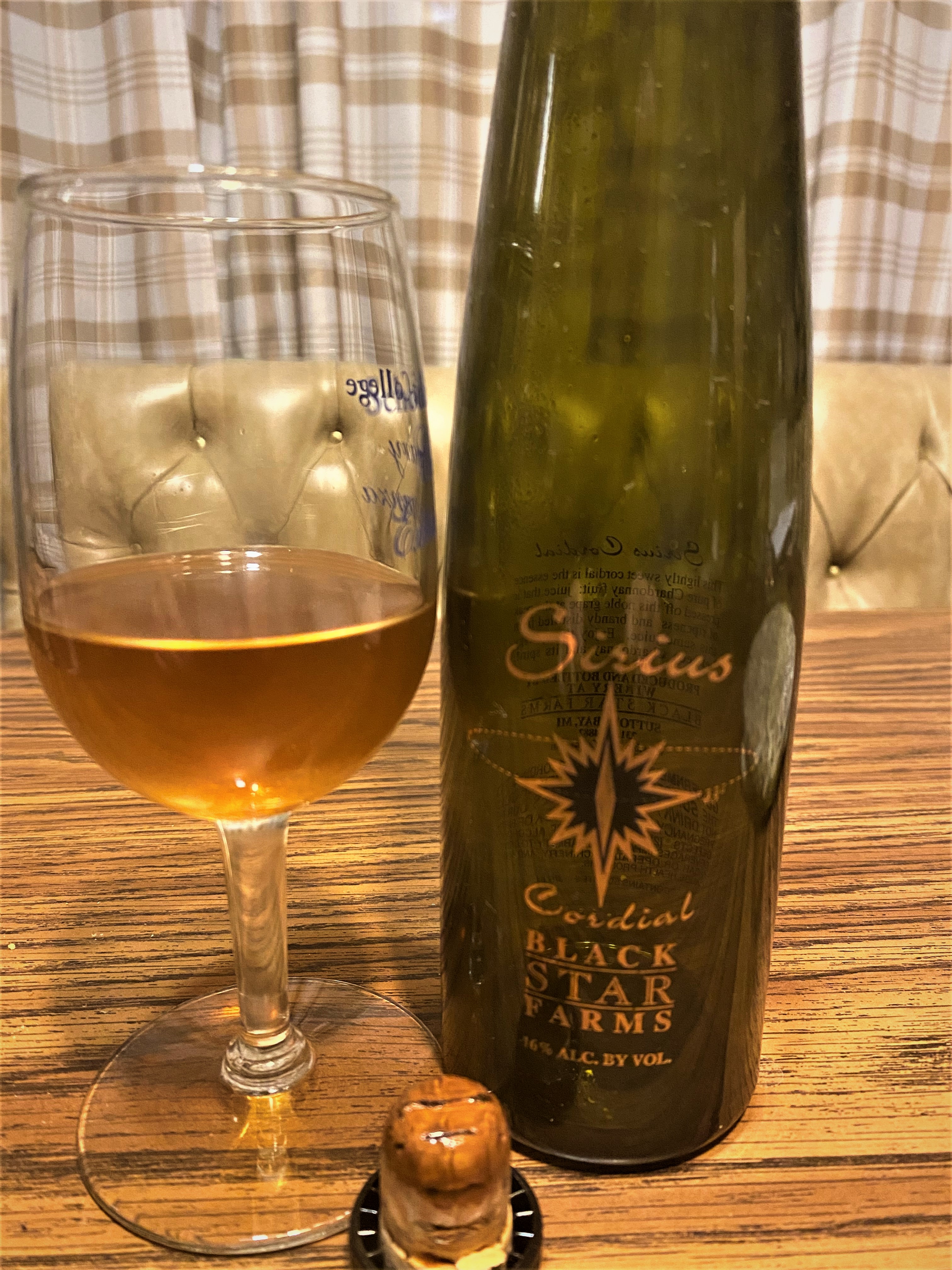
The first bottle that was intricately removed was a fortified wine from Michigan, a Black Star Farms Sirius Cordial NV. Black Star Farms is the winery from Michigan that we now have joined their wine club, but this wine predates that trip and decision.  This wine was created by the winery as their version of a Ratafia wine from Champagne or a Pineau des Charentes of the Loire.  This was made from late picked Chardonnay that is gently pressed and then fortified with a brandy distilled from the same Chardonnay juice. I wasn’t sure what to expect as this wine was put in the refrigerator not with a rubber stopper that had the air pumped out of the bottle, but just with the original cork-seal top from the winery. I am the official guinea-pig and there was only one glass left, I had to know for inquisitive minds.  I think that because it was fortified, it was still excellent and a great way for me to end an evening.  The wine had notes of spice and honey and just drank beautifully.  I did look up to see and this wine is now made with apple juice and maple syrup, so I am glad that I had this wine as I am not partial to apple juice.  The second split had a rubber stopper on the bottle of Jackson-Triggs Niagara Estate Vidal Icewine Niagara Peninsula VQA 2013.  Icewine production has become part of the backbone of the entire Niagara-on-the-Lake region and as always, it is a bit of a crap-shoot on the part of the winery.  In fact, from this region, we have had Icewine with classic varietals that are now being cultivated very successfully there, as well as Vidal which has become a work horse for plenty of the cold-climate wineries.  I am happy to say that this wine also allowed me a second evening of late-night bliss as the wine was still luscious and still fresh and I have no idea when it was originally opened.  Some great wine memories and a refrigerator that has been emptied and ready to be restocked.

Posted in Wine | Tagged , , , , , , , , | Leave a comment

Making Room

By now, some of you may be aware that the Easter Season is upon us, actually when you read this, Easter will have past and that is all well and good, as I do like to get ahead with my writings whenever I can.  Some of you, may also be aware that basically Holidays and family gatherings were taboo, unless you have a private jet and then you can do whatever your heart desires.  For us peons, there was always the concern that the State was hiring an army of Gladys Kravitz’s to snoop and report on neighbors if you had God forbid family or friends visit. Everyone had visions of battering rams and SWAT teams descending on your home for trying to maintain some serenity and sense during this period of lockdown.

As you know, hopefully, I have been making some sense of the wine cellar.  It is amazing at the projects one can find during forced lockdowns.  I had put plenty of white wines in the auxiliary refrigerator in the garage of both wines that I knew were good for immediate consumption and bottles that I wasn’t sure if they were still with us, or among the honored dead. I went out and rearranged the refrigerator, to make better use of the space, and neither of us drink diet pop (or soda for you non-Michigan heathens) and hopefully we will eventually find out, if we have been using valuable real estate for flat-uncarbonated drinks.  I also found an almost empty half-gallon bottled of Margaritas, and for the science-minded, I can report that the Margaritas were still tasty and one less bottle taking up space. I grabbed two bottles that I was pretty sure that they had over-stayed their time in the cellar, just by looking at the color of the wine.  I may be wrong, and it is a bit fuzzy, but it seems to me that fifty years ago, most of the white wines were in colored glass bottles to diminish the effects of light and especially sunlight.

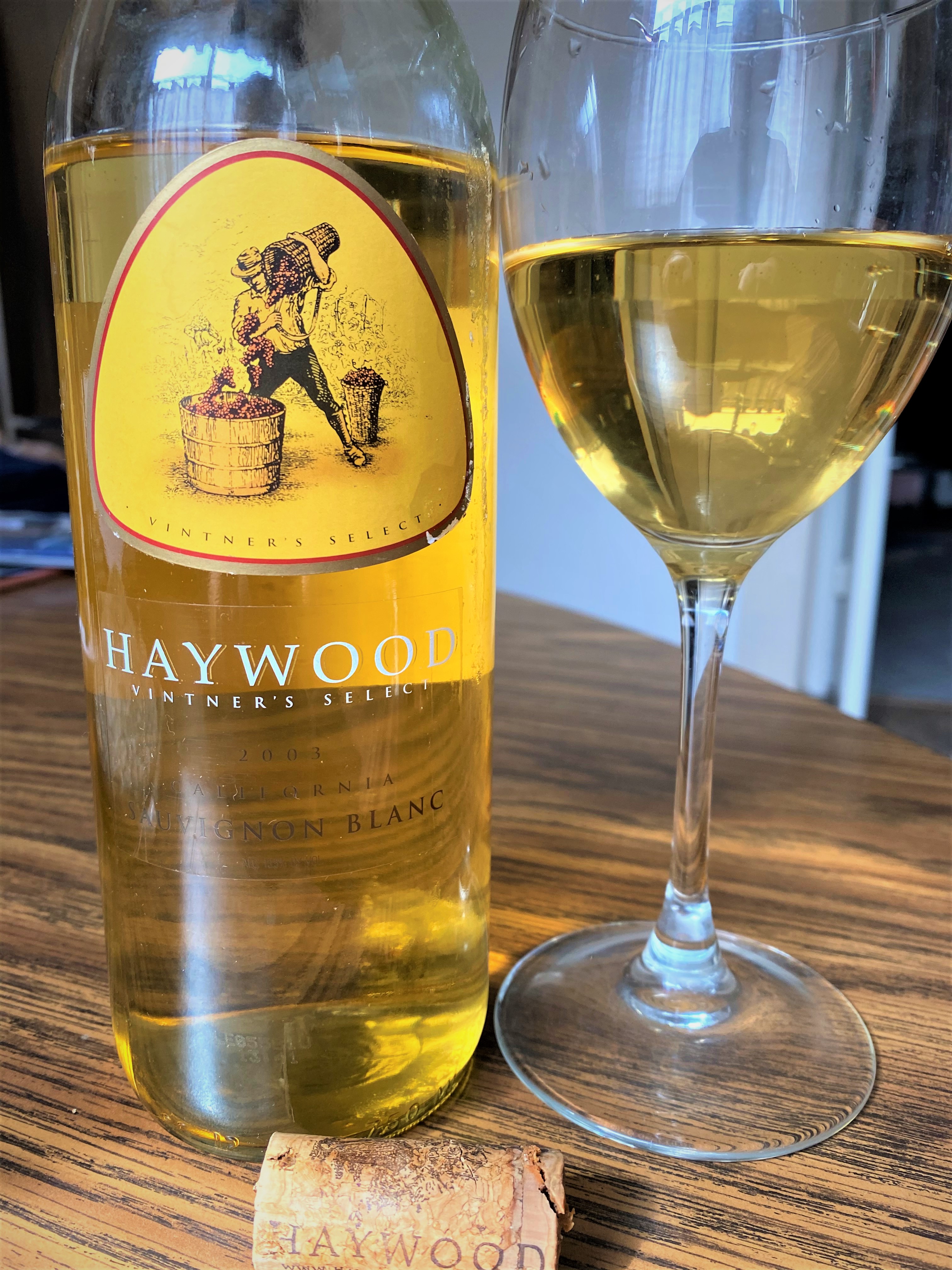
The first bottle that I opened was a Martin Codax Albarino Rias Baixas 2006 from Spain.  Martin Codax is a co-operative of growers in the Rias Baixas.  It was formed in 1986 and is named for a famous troubadour from the 13th Century of old romantic Spain.  The winemaker and one of the original founders of Martin Codax is Luciano Amoedo, who was also one of the most vocal in getting Denominacion de Origen (DO) appellation for Rias Baixas in 1988 and the main varietal for the co-operative is Albarino.  While the orange-amber shade may be an interesting draw for a lager, it was a pretty good visual that the wine had not aged well.  It had a solid synthetic cork that was a devil to remove, but I guess it wasn’t as air-tight as it appeared to be in the struggle to uncork the bottle.  I took one sip and it was enough to let me know that the drain in the sink would appreciate it more than I would. The other bottle was Haywood Estate Winery Vintner’s Select Sauvignon Blanc California 2003. Peter Haywood founded his Haywood Estates Los Chamizal Vineyards and had his first crush in 1980 and he began a history that started with Zinfandel.  The vineyard overlooks the historic town of Sonoma. This particular wine that I had was not an estate wine, it carried the California appellation which meant that the fruit could be sourced from wherever and blended to offer a good opening price wine. Once again, the color was very dark, but since I have had some history of having some older Sauvignon Blanc wines that held up, in spite of the color of the wine, I was willing to try again.  Unfortunately, even with the wine really chilled, I could not drink it, it was passed it time, and several people have written over the years that an over chilled white wine can mask flaws and make the wine palatable, but it didn’t work here.  Thankfully neither of the two wines were that dear in price, to make this a tragedy.      

Posted in Wine | Tagged , , , , , , | Leave a comment

Chateau Musar 2013

The two Raconteurs thought we were done, but we had a lucky thirteenth unlisted wine to taste at the Fine Wine Source.  Neither one of us complained and this was a wine that both of us had heard of, but had never tried and no time like the present.  We had quite a whirl-wind geography lesson from Burgundy and the Medoc to Napa Valley, then off to the Loire and finally to Lebanon. The Bekkaa Valley (Beqaa Valley) is the center of the wine trade, as it accounts for ninety percent and it is also the center for Arak, the lovely, but potentially lethal anise flavored liquor that is the favored drink in the country.  The oldest winery there is Chateau Ksara, which was established by the Jesuits in 1857 with plants brought over from the French colony of Algeria.  The original vines were Cinsaut, and later other wineries followed with Carignan, Grenache, Syrah, Mourvedre, Cabernet Sauvignon, Merlot and by whites of Ugni Blanc, Clairette and Chardonnay; and the indigenous varietals Obaideh and Merwah. While the valley is considered ideal for wine production, the country was originally under the rule of the Ottoman Empire and their Sharia Law, which basically condemned the use of wine except for religious purposes.  After the demise of the Ottoman Empire and the end of World War Two, the Middle East was carved up and the French were awarded a Mandate for Syria and Lebanon.  The French finally left the mandated areas and eventually there was a Lebanese Civil War which began around 1975, with over a one-hundred-thousand fatalities and about a million people that left the country, the Christians became a very small minority and the wine industry can only really rely on export markets, as the local market has basically dried up.

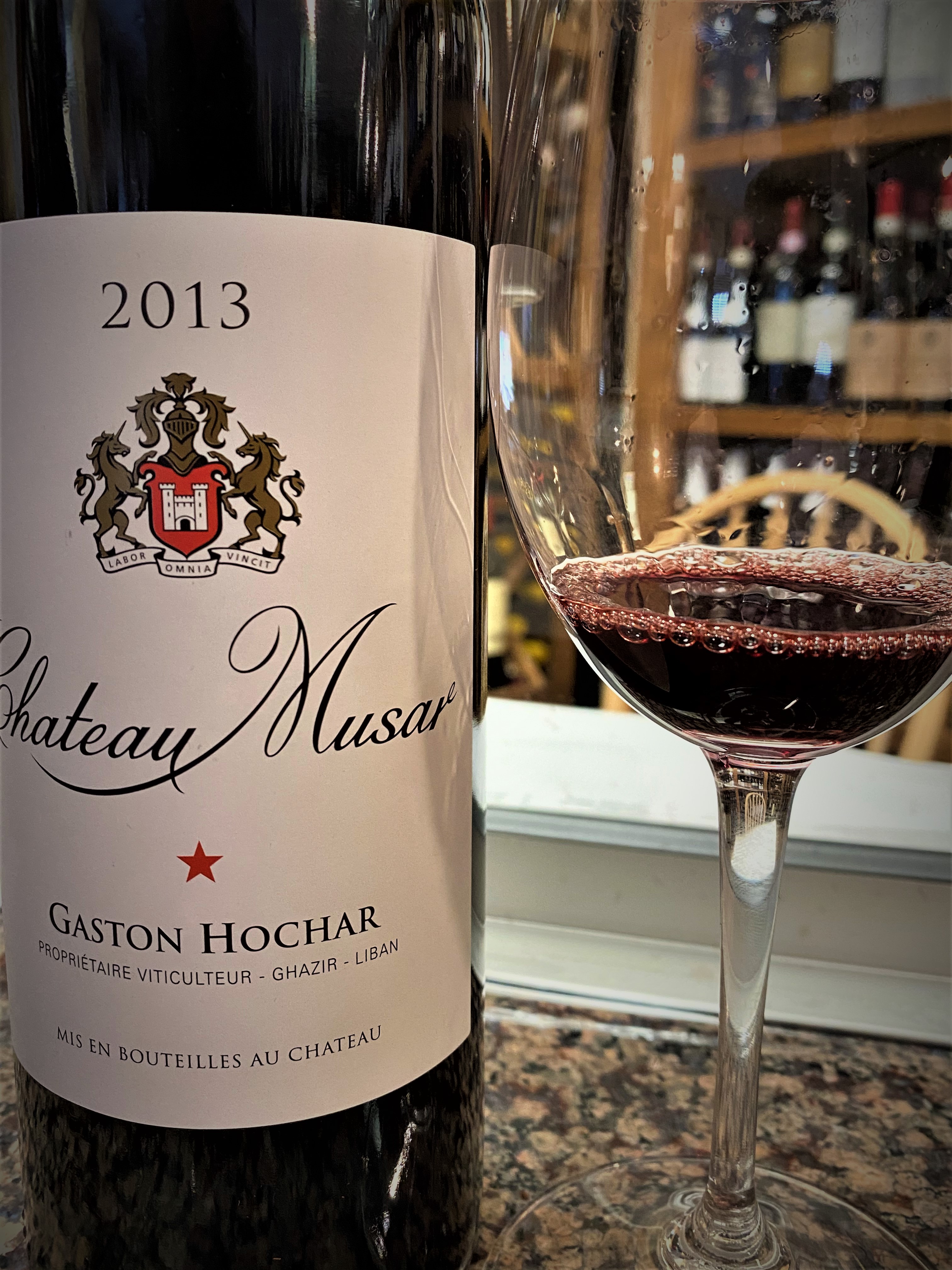
Chateau Musar was founded in 1930 by Gaston Hochar and may be the most famous Lebanese winery on the international scene.  Gaston Hochar developed his winery after traveling in Bordeaux.  In 1959, Hochar’s son Serge took control of the vineyards, having returned from Bordeaux where he was studying enology.  The vineyard suffered during the Lebanese Civil War (two vintages were lost or damaged), and Hochar began to look beyond the domestic market.  The wine began to gain recognition after Michael Broadbent MW wrote about them in Decanter magazine in 1979 and by the time the war ended in 1990, just a tiny fraction of Chateau Musar was sold locally.  The winery produces several collectable wines that are long-lived.  Chateau Musar Red is their flagship wine and is regarded as the most important wine in their portfolio, and it is also regarded as the most important wine of Lebanon.  

Chateau Musar Red Bekkaa Valley 2013 continues to be made in their traditional manner, which requires seven years before it sees the light of day in a retail environment. The wine is a blend of Cabernet Sauvignon, Carignan and Cinsault (and this particular vintage the blend was equal for all three varietals) from vines planted from 1930 and later, on gravel soil over limestone, with the average age of the vines around forty years.  The different juices undergo a long fermentation in cement vats for about six months after the harvest. The individual juices are then transferred to French Oak for one year of aging.  After about two years from harvest, the individual juices are then blended and placed in cement tanks for another twelve months.  The wine is then bottled and stored in their deep, dark stone cellars on their sides for four years.  The wine is bottled unfiltered and unfined for maximum flavor.  The winery recommends standing the wine up, the night before serving, to allow the wine to settle.  They also recommend the use of prongs for opening bottles older than fifteen years of age and have even created a YouTube page for their instructions. This was a beautiful drinking wine and the Cinsault was the prominent wine of note with red fruit and dark fruit, and plenty of spices with cloves, cinnamon, vanilla and licorice.  The wine had a very nice long count in the finish.  Totally drinkable now, or wait another ten or more years and I think the flavors will be totally layered and complex.  Wonderful with a nice Armenian lamb dinner, if I can make a hint to my Bride.

Posted in Wine | Tagged , , , , , , , | Leave a comment

Domaine Huet Cuvée Constance

As we looked at our printed personalized wine tasting list, it appeared that the Wine Raconteur, Jr. and I had come to the end of our visit; and everyone knows that all good things eventually come to an end. It was quite eventful and I know that both of us really enjoyed the tasting, because time really went quickly.  We were approaching our twelfth wine for tasting and after all of these fine red wines, we were going to have a dessert wine to finish the day.

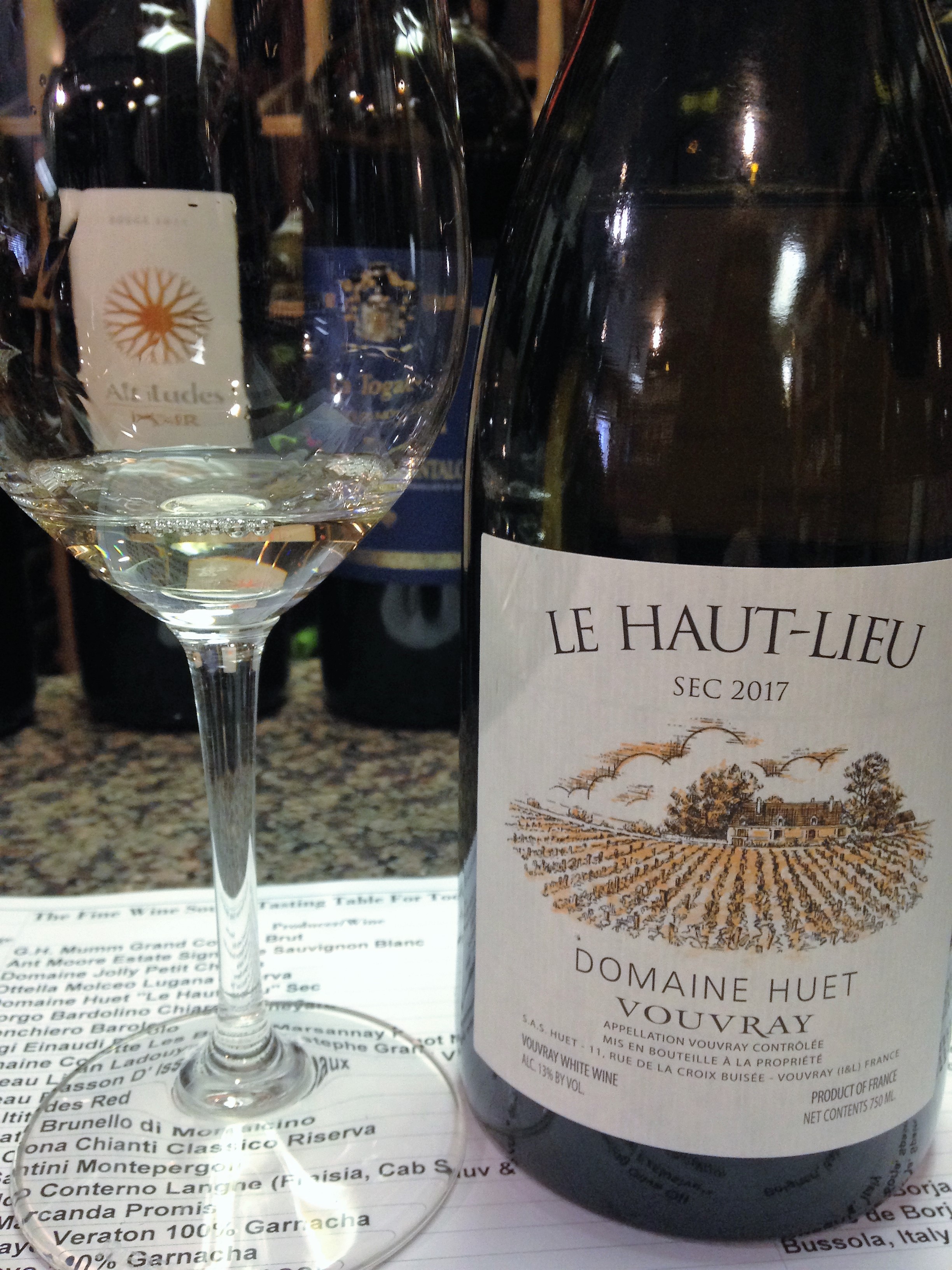
Domaine Huet L’Echansonne or just Domaine Huet is the leading producer in the Vouvray region of the Loire Valley.  They are known for their assorted Chenin Blanc wines, both for their richness and concentration of flavor, but also for their ability to age for a long time.  The thirty-five-hectare estate has three main south-facing vineyards on a plateau above the river and smaller plots as well.  Le Haut-Lieu is around the original house and is on a heavy clay and limestone soil, which produce the most approachable of their wines.  Clos du Bourg is on shallow clay and limestone soils which produce their longest-lived and most structured wines. Le Mont is on pebbly clay and silica and always is the last vineyard to be harvested.  Grapes are harvested manually and usually three passes which may end up in November to take advantage of the levels of sweetness.  The Vouvray appellation was awarded in 1936 and includes all versions of wines produced there from sweet, dry, still and sparkling.  The majority of the wines now from Vouvray are sparkling.  I have had the good fortune to have had and written about Domaine Huet Clos du Bourg Moelleux Vouvray Chenin Blanc 2016.  Vouvray Moelleux are sweet wines made from Chenin Blanc, and similar to the wines of Sauternes, the fruit is harvested three times to get the richest and sweetest grapes. I have also done the same for the Domaine Huet Le Haut-Lieu Sec 2017.

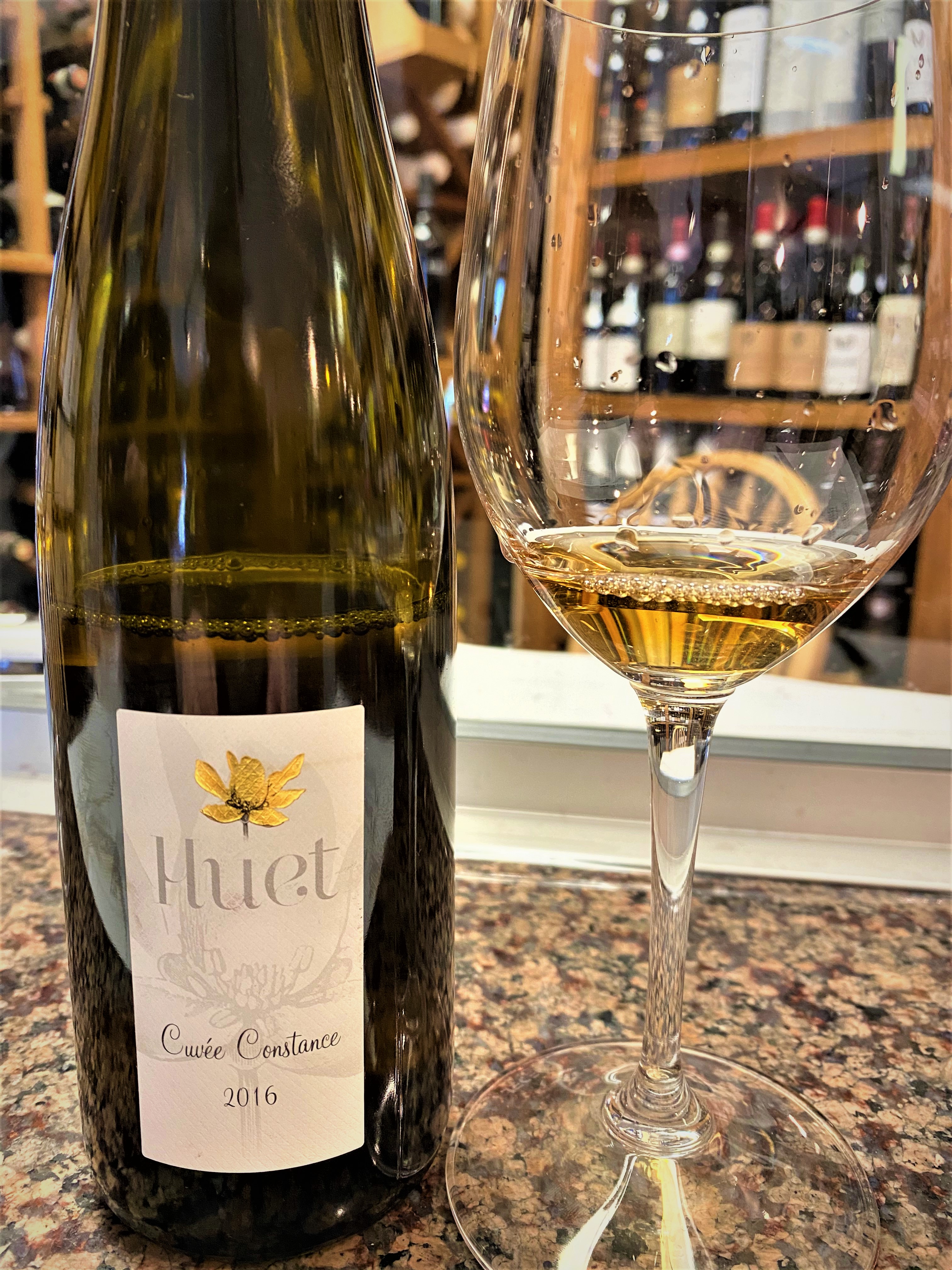
Domaine Huet Cuvée Constance Vouvray 2016 is a tribute to Madame Constance Huet and only uses the late and concentrated grapes from the three main vineyards. This wine is only produced in small quantity and only in years when the high standards for this wine are met.  “Constance” was the result of an accident. In 1989, during the final harvesting of the berries, the grape juice was so exceptional, that the fermentation lasted for months. After consultations, it was decided to blend only these long-fermented juices together and Cuvée Constance was born. Grapes are pressed and fermentation using only natural yeasts with half in demi-muids (600-liter capacity oak barrels typically used in the Rhone Valley) and half in traditional vats for six months and a production of five-hundred cases.  My first thoughts were that this pinkish-gold wine was honey, but then it revealed ripe pears and sweet spices with a delicious and long finish, and yes, I nursed this tasting for all it was worth.

Posted in Wine | Tagged , , , , , , , , | Leave a comment