Chateau Maucaillou

There we were two Raconteurs of different eras, enjoying a private tasting at the Fine Wine Source in Livonia, Michigan.  I have to admit, that learning about wines, is much easier today, even in the Detroit area, compared to when I was starting out.  There were few and far between wine shops that had the caliber of wine selection that I now found at my local shop.  I like to still refer to those days as the Dark Days, when if you wanted to learn, you had your job cut out for you.  Back then Detroit was a cocktail or a beer town and only a few restaurants did more than give lip service to wine, but one could persevere, if there was a desire.  The wine I am going to talk about, the last time I had it, was from a vintage forty years earlier.

The wine is from Moulis-en-Medoc, which is a small village in the Haut-Medoc and is definitely overshadowed by its neighbor Margaux, which is how I first encounter wines from this village. The AOC laws are quite strict, especially governing crop density and other agricultural concerns, as well as the grapes must come from six specific parishes.  There are no classified growths, but offer values that will remind one of a nice Margaux wine, as the wines here are usually a mix of Cabernet Sauvignon with Cabernet Franc, Malbec, Carmenere and Petit Verdot.
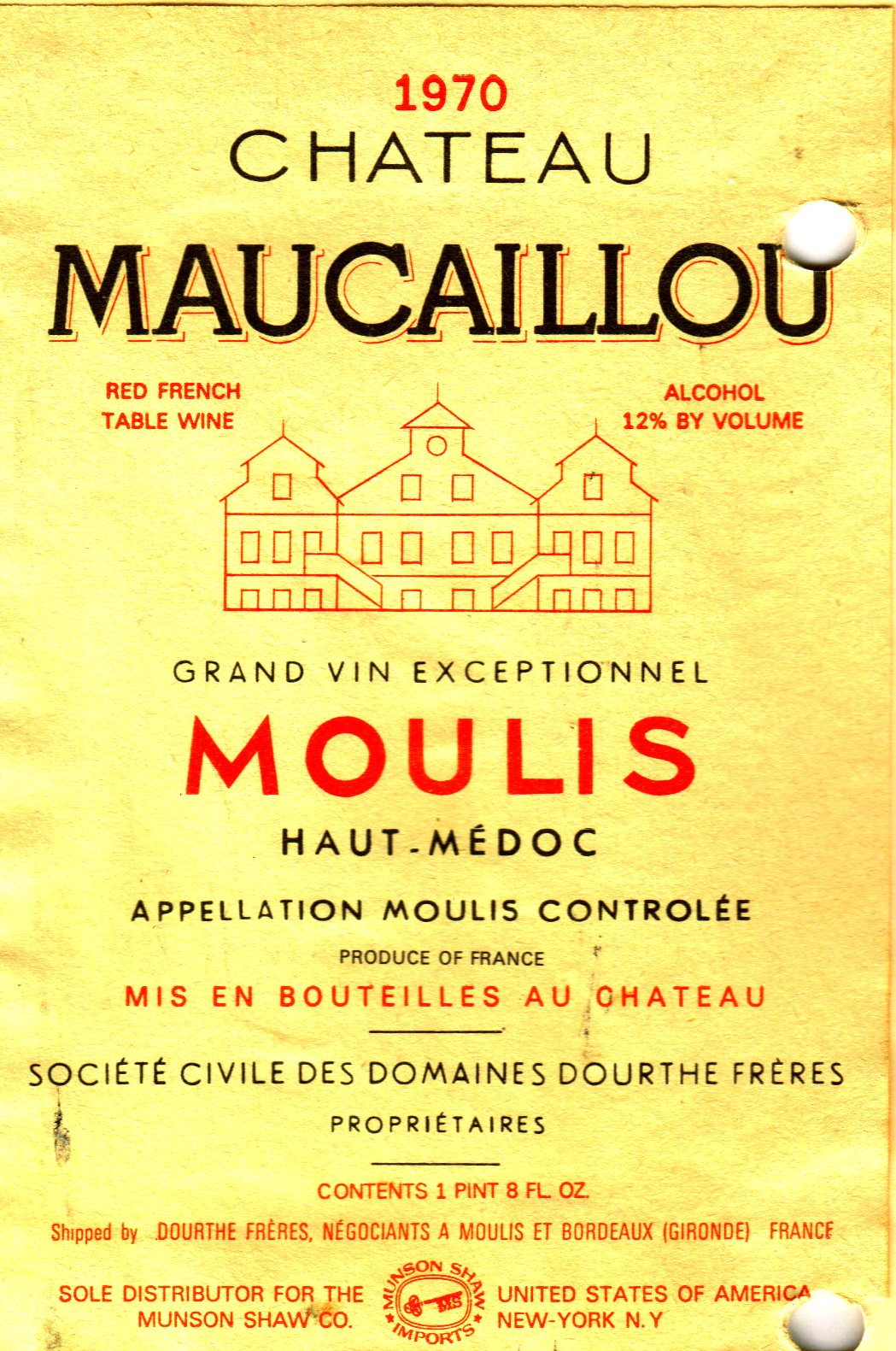
Chateau Maucaillou Moulis 2010 is claimed to have the oldest vineyard in the Medoc with recordings of ownership going back to the 15th Century. Commercially, the history goes back to 1871 when the negocient family Petit-Larouch built cellars there and four years later a chateau. In 1929 the Dourthe family purchased the estate and took the winery from two hectares to eventually thirty-two hectares. The estate is basically ninety percent planted with Cabernet Sauvignon and Merlot and the balance is Petit Verdot and Cabernet Franc. Malolactic fermentation takes place immediately after the initial fermentation while the juice is still in Stainless Steel.  The wines are then aged for eighteen to twenty months in French Oak, of which more than half are new.  The winery also produces several secondary labels to their flagship Chateau Maucaillou.  This was a beautiful and classic glass of Medoc wine, and I am sorry, but that to me, is a great way to describe a wine; that was how I was taught and I will continue to use that as a wonderful descriptor, after all, I am a Street Somm.

Posted in Wine | Tagged , , , , , , , , , | Leave a comment

Claude Dugat Gevrey-Chambertin

The Wine Raconteur and The Wine Raconteur, Jr. were both at the Fine Wine Source doing a special wine tasting.  I was totally intrigued watching him make his quality notes into his iPhone and I am barely able to make phone calls on mine, though I am kind of getting better at using it as a camera.  I was watching my man just typing his notes quicker than I can type on a real keyboard, but it is second nature to the younger generation.  Hell, when I went to school, most boys did not take Typing or Home Economics, just like most girls did not take Wood or Metal Shop, way back in the old days, when they still taught Penmanship, Civics and English.  We had just tasted two different bottles of Gamay wine and the third wine was a name that is famous in Burgundy, and as a side note, there was a famous restaurant in my youth called The Chambertin.

Delving into Burgundy (Bourgogne) is a bit more daunting compared to Bordeaux.  Gevrey-Chambertin is a perfect example of just looking at the tip of the iceberg, as the old saying goes. The village was originally known as Gevrey, but in 1847 the local parish allowed the village to append their most famous, even back then “Le Chambertin” and the village became Gevrey-Chambertin; almost immediately, some of the other villages followed suit and appended their local famous vineyard, and that explains why so many of the villages are hyphenated. Gevrey-Chambertin, which is located in the Cotes de Nuit district, is home to nine Grand Cru vineyards and eight of them have appended “Chambertin” to their name, and the village has the most Grand Crus of any village in Burgundy. Then once you have learned the nine Grand Crus, you then have to realize that there are twenty-six Premier Crus, and one can occasionally witness arguments among some of the more passionate, that some Premier Crus should be elevated to Grand Cru status.  I usually just sit back, sip my wine and observe and listen, and do not attempt to add my two cents. There are about four-hundred-fifty hectares in Gevrey-Chambertin, fifty-five hectares are Grand Cru, eighty-four hectares are Premier Cru and the balance are listed as “village wines.”  Even the village wines get to glow and bask in the sunshine for being part of the “King of Burgundy.”

Claude Dugat Gevrey-Chambertin 2018 is one of the seven wines, all produced using Pinot Noir from this producer. The Domaine was founded in 1955, when Maurice Dugat purchased the Grange de Dimes, a 13th Century structure that had been used to store agricultural tithes for the church, and he converted it to a winery and cellar.  He renamed it the Cellier des Dimes and it is the background on his wine label. I also took the liberty and found a photo on the web of the building. The Domaine is small, as he owns half of its holdings and leases the rest. Claude Dugat runs the Domaine with his family, and his three children run a small negociant business La Gibryotte.  This Domaine should not be confused with his cousin Bernard Dugat who is well regarded and owns Domaine Dugat-Py. The initial process for all his wines begins with complete destemming and fermentation begins relatively quickly.  The cap is punched down twice a day with very little to no pumping during this process. The “village wine” is aged in a mix of new and one-year-old casks. As for the taste, I had forgotten how special and wonderful a classic Burgundy can be.  I have been drinking so many special New World Pinot Noir wines that I was just in awe of this wine, it has been far too long since I had a wine like this and all I could think while I was tasting this, was that I might not be worthy to try his three Grand Cru and two Premier Cru wines, but if I had a chance, I definitely would.

Posted in Wine | Tagged , , , , , , | Leave a comment

Two Gamay Wines

I hardly need any prodding to go to my wine local shop, The Fine Wine Source, but I had promised that I would come back for a real tasting, and they asked if I could bring someone else, since my Bride could not attend.  I called my trusty friend The Wine Raconteur, Jr. (a name that he gave himself) and asked him, if he would like to attend with me.  He answered in the affirmative, though we had to arrange it between times that his Bride and his daughter both wouldn’t need his expertise. We drove up separately and the tasting did take a little longer, as they kept finding some additional wines for us to try, and of course we both left with a cardboard carton to carry our choices with.

The first two wines that we tried were made from the Gamay variety, and neither one was a Beaujolais, the wine that immediately comes to mind when Gamay is mentioned.  The same Beaujolais and Beaujolais Nouveau that became the marketer’s dream in the Seventies to the Nineties.  I remember once attending a restaurant that had a barrel flown in, and the barrel could not be tapped until a certain time; it was a fun evening. While Gamay is thought of, as a French grape, it is believed to have originally come from one of the old Germanic States in the 14th Century.  The Dukes of Burgundy were so unenthused that they tried to outlaw the grape from being grown, because it was so different from the grapes that had brought Burgundy fame, even back then.  They eventually kind of banished the grape to the granite soils just north of Lyon, and that terroir was perfect for Gamay.  There are ten villages or Crus in Beaujolais that do an excellent job with Gamay, as well as some parts of the Maconnais.  The grape also is found in the Upper Loire, Switzerland, some of the former Balkan nations and then has done well in some parts of the New World as well.

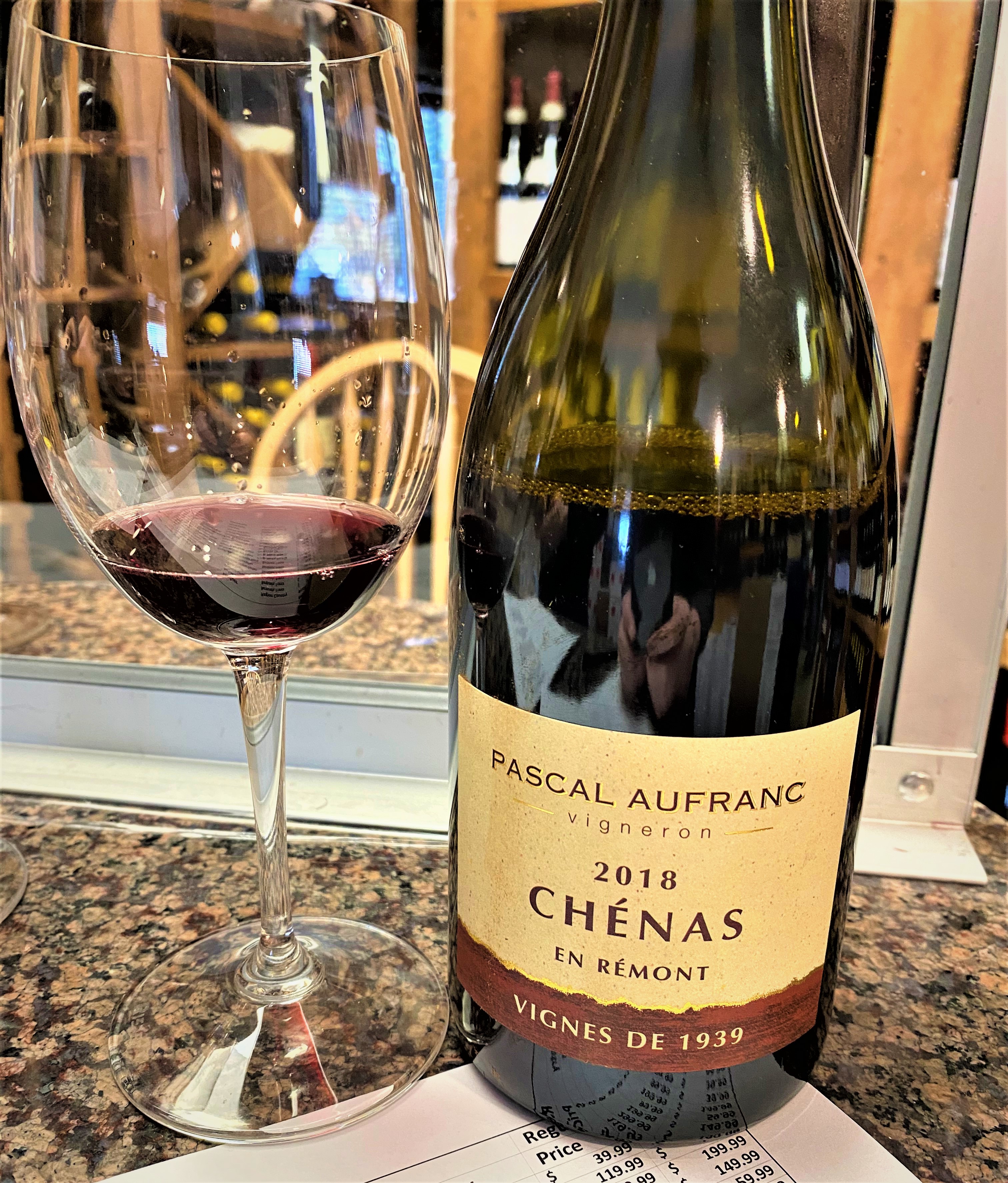
Our first wine was Domaine Pascal Aufranc Chenas Vignes de 1939 2019 from the Terroirs Originels group.  Terroirs Originels unites artisan winemakers to allow them to make their estate made wine from South Burgundy (Cote Beaujolais and Cote Maconnais) and use one central warehouse for sales, logistics, marketing etc. that may prevent a small vigneron from fulfilling his dream of his own winery and they have been doing it for about twenty years.  Pascal Aufranc vineyard “En Remont” is a secluded vineyard at the end of a path and surrounded by woods and fields. Chenas is one of the Crus of Beaujolais, established in 1936, and this vineyard “En Remont” which is less than four acres contains seventy-year-old vines that are grown in a soil of sand, granite and quartz. The wine starts with eight to ten days of maceration with whole clusters, and the juice is then aged for eight months in concrete vats on fine lees with light filtration. There were six-hundred-fifteen cases produced of the wine. A big red garnet colored wine offering red fruit and some spices like cinnamon and a nice finish highlighting the soft tannins and terroir.

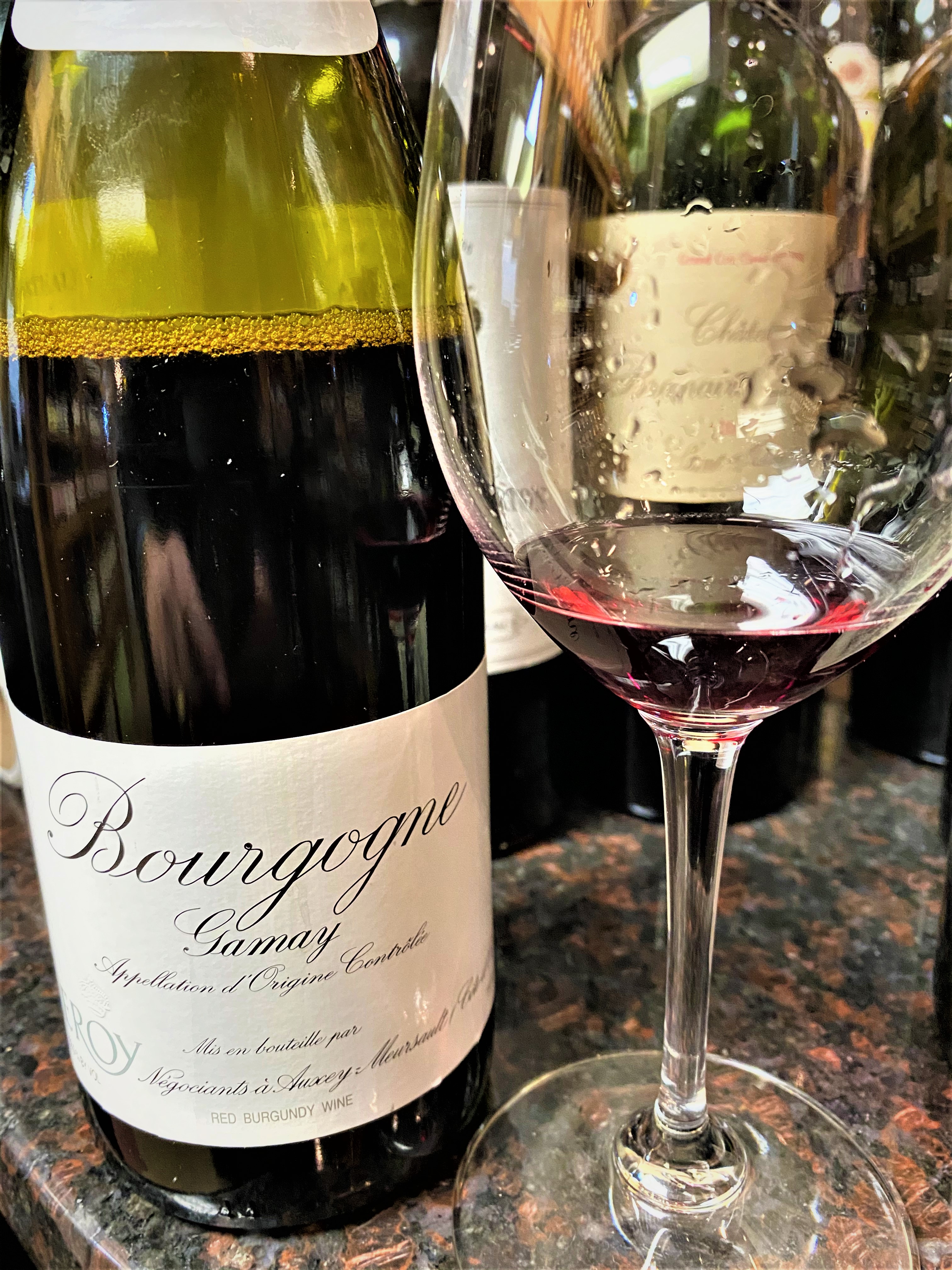
Maison Leroy Bourgogne Gamay 2019 was our second wine that was pure Gamay. Domaine Leroy is both a negociant and a wine producer based in the Cote de Nuits and offers wines from basic representation to some of the most iconic vineyards in the world, second only to Domaine de la Romanée-Conti. The Domaine was founded by Francois Leroy, a wine merchant in 1868 and his heirs have been with the company ever since and involved with the affairs of the Burgundy region. Maison Leroy is used for all non-estate wines, those that are from the negociant side of the business, but still under their watchful eye. This wine was a lighter Gamay wine both in color and in taste and body, a more understated and reserved finish, not the red cherry and strawberry notes that most people associate with Gamay.  A very interesting glass of wine.

Posted in Wine | Tagged , , , , , , , , , , , | Leave a comment

Chateau La Croizille SEGC 1983

Once in a while, out of a clear blue sky, we get really fancy and it is just the two of us.  My Bride has been working daily, in fact she never missed a beat, because she is considered an essential worker.  Of course, she has a job, that makes her a road-warrior, but that has more or less ended in the last year, and I think that may be the hardest part of her acclimating to her new work environment.  She has taken over the library with all of her computers, monitors, telephones and printers.  It looks like another year, of her not physically touching base with her clients in the Upper Peninsula and that was a trip that she really enjoyed.  The good news, is that there may be a real Board Meeting that will be held in the fall, we shall see.

The reason that I said that we were getting fancy, is that she wanted to practice again using her Joule Sous Vide immersion circulator.  The concept is low temperature cooking where the food is placed in a plastic pouch or glass jar and cooked in a water bath for a long period of time to get the meat at the proper temperature and then it is finished using the broiler or a pan.  It was a bit frustrating, because the unit is controlled by a cellular phone, and at first, it wasn’t connecting properly, even after reloading the app and making sure the Bluetooth was set.  I suggested that perhaps she should do a hard close on her phone and then turn it back on, and we were finally in business.  We were going to have Filet Mignon medallions at Medium Rare setting with no guess work.  She took a cooking pouch and made a marinade and the meat had to cook for almost five hours according to the controls that were now on her phone.  She also decided on making a version of Israeli Couscous with mixed vegetables.

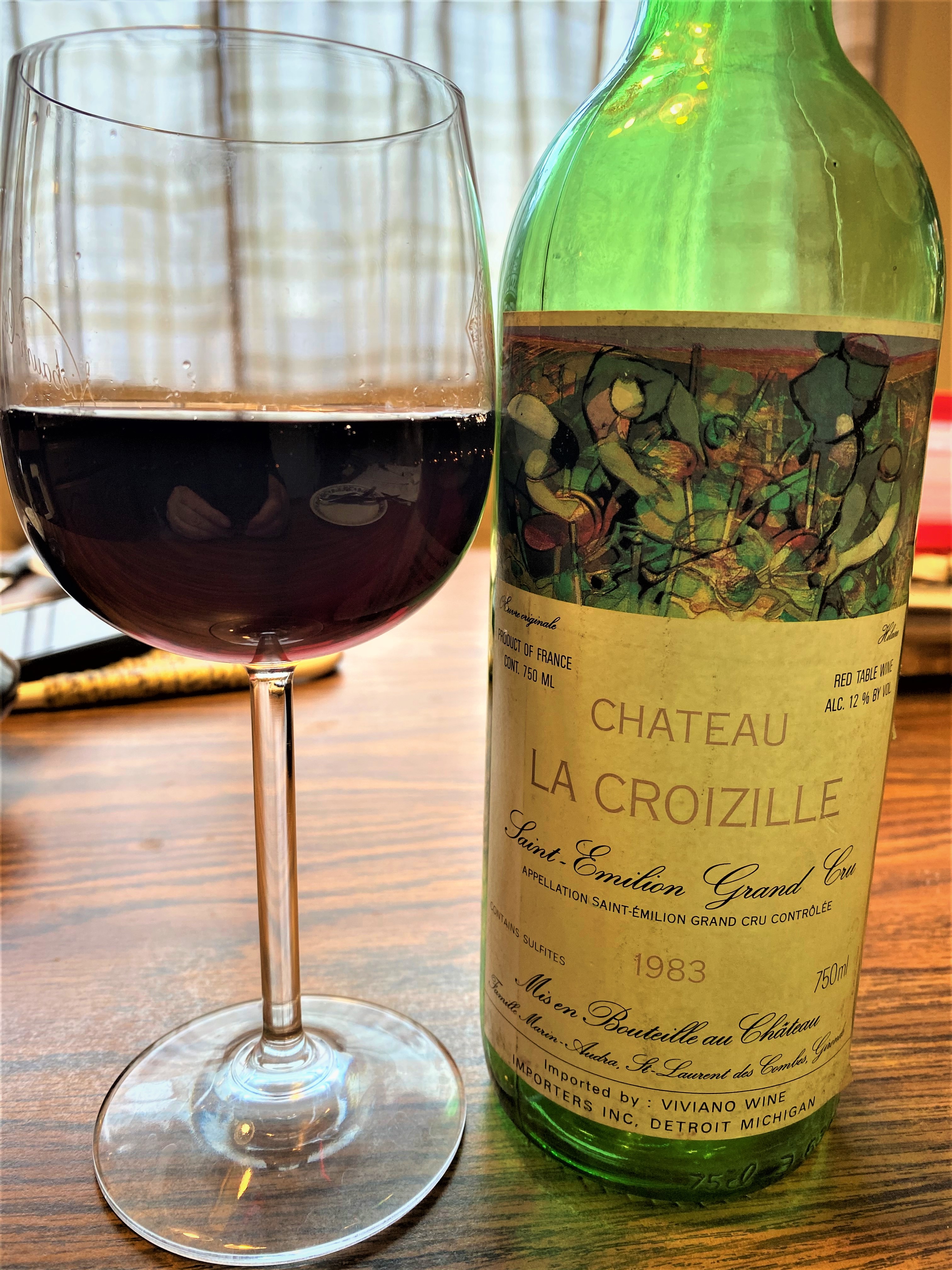
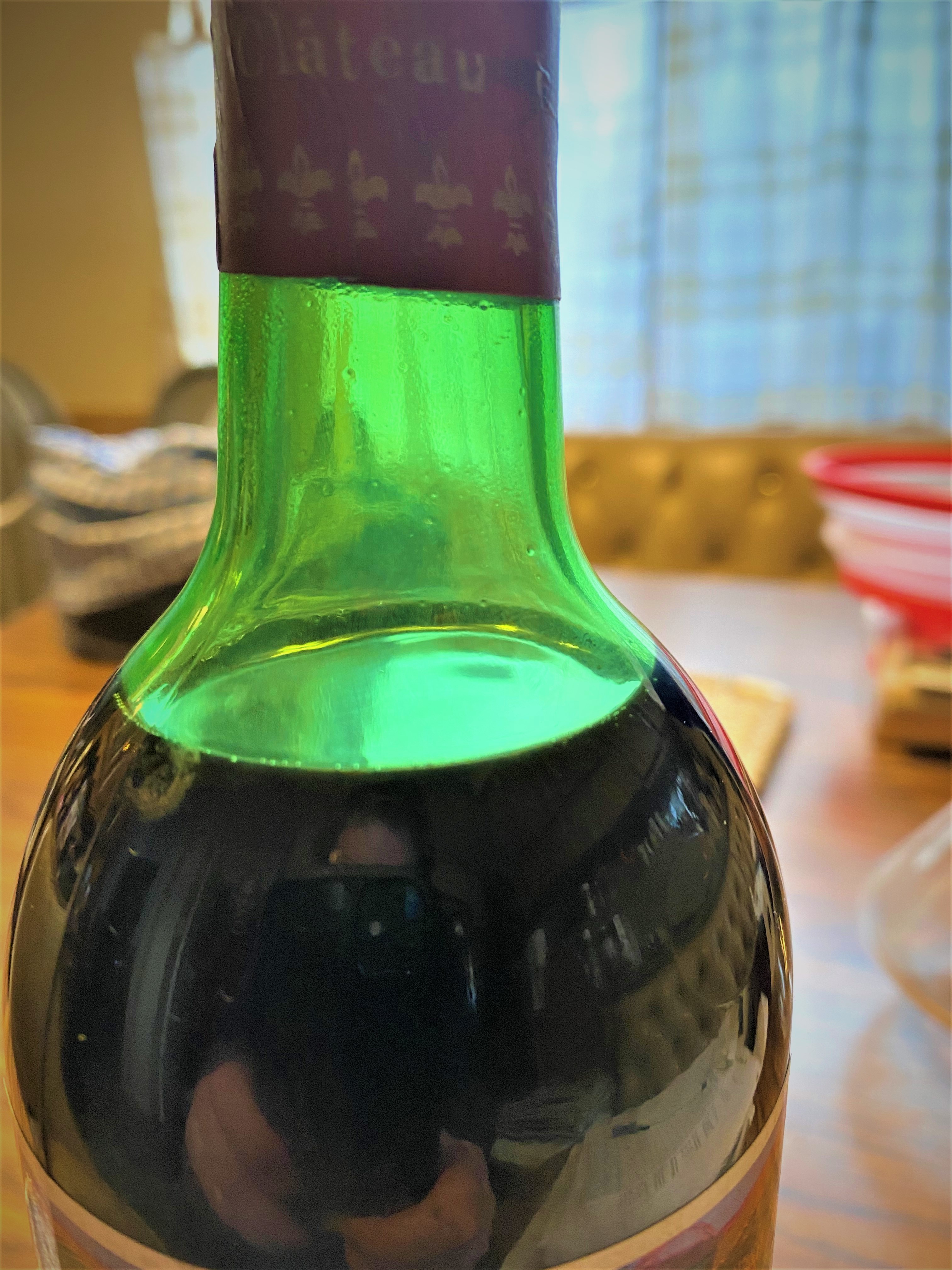
I decided to go down to the cellar and find something interesting for the filets.  I found a bottle of Chateau La Croizille Saint-Emilion Grand Cru 1983.  My thoughts were that this forgotten bottle should be opened up, to see if we had neglected it for too long, since I knew that we had plenty of back-up options.  The other thing that I immediately noticed was that there was still a price tag, the price had been scraped away, but the price tag was from the shop that we bought all of the wine and liquor for our wedding and this bottle would have been perfectly aged for that night of celebration.  Now that I am a pseudo-authority and maven on wines after my crash course on ullage, I used that knowledge to look at the bottle. The capsule top, was a bit spongey (and I am sure that is not the proper term, but it works for me) and the ullage level was low, usually a bottle of wine is filled up to the capsule, this is not always true, because some wineries still fill the bottles manually; whereas this bottle had the wine level now below the shoulder of the glass.  I removed the foil and the top of the cork was blackish, and I wiped it away and did an old fashion smell test and everything seemed proper so far.  I then went and got my Durand corkscrew, because I felt that I needed the best tool for an old cork.  The first step with the screw was fine, but the second stage with the metal foil apparatus was difficult, to insert, as it seemed that the cork was welded to the bottle. I finally got the second part of the tool inserted, and I turned and twisted, finally placing the bottle on the floor and slowly I was getting the cork to uncork.  This was perhaps the hardest cork removal in some fifty years, and when it finally worked free, only part of the cork was removed and it basically crumbled as I was looking at it. The final step was to get a decanter, a funnel and a coffee filter and I poured the wine into the filter, as I had created a hole in the cork, but it was still adhering to the glass in the perimeter.  The good news was that the room was immediately filled with a charming aroma of an aged Bordeaux, and we had wine and not wine-vinegar.  

Chateau La Croizille Saint-Emilion Grand Cru 1983 is one of many of the hundreds of wines that carry the Saint-Emilion Grand Cru designation.  In 1955 Saint-Emilion created four designations, similar to the 1855 Classification of the Medoc.  In Saint-Emilion there are: Premier Grand Cru Classe A with four chateaus, Premier Grand Cru Classe B with fourteen chateaus and Grand Cru Classe with sixty-seven chateaus.  Some wags have opined over the years that there are more Grand Cru designations than there are just standard Saint-Emilion designations. There is not any early history on this chateau that I could find, but it was bought in 1996 by the De Schepper – De Mour family who have had Chateau Tour Baldoz since 1950. The estate has five hectares of vineyards and produce only one wine and the indicative blend is seventy percent Merlot and thirty percent Cabernet Sauvignon. They use new oak barrels every vintage and the wines are aged from eighteen months to twenty-four months.  All I can say, is that we were pleasantly surprised by the mellowness of the wine and so glad that it held up so well.

Posted in Dining, Wine | Tagged , , , , , | 2 Comments

Two Additional Tastings

When I went to pick up the March Wine Club selections from the Fine Wine Source, I actually had my better half with me, as she was running errands and I was tagging along.  After a year of confinement, most reasons are good for a car ride. Unfortunately for both the Fine Wine Source and for us, we were still in the midst of errands, so we couldn’t stay and do any serious tasting, but we did try a couple, but I promised to come back and that I would try to bring a friend, as my Bride is still always busy and still needs a Social Secretary. We were going to pick up the Club selections and then a few more wines that we were low on and go.  Plans never seem to work properly, but that is alright as well.

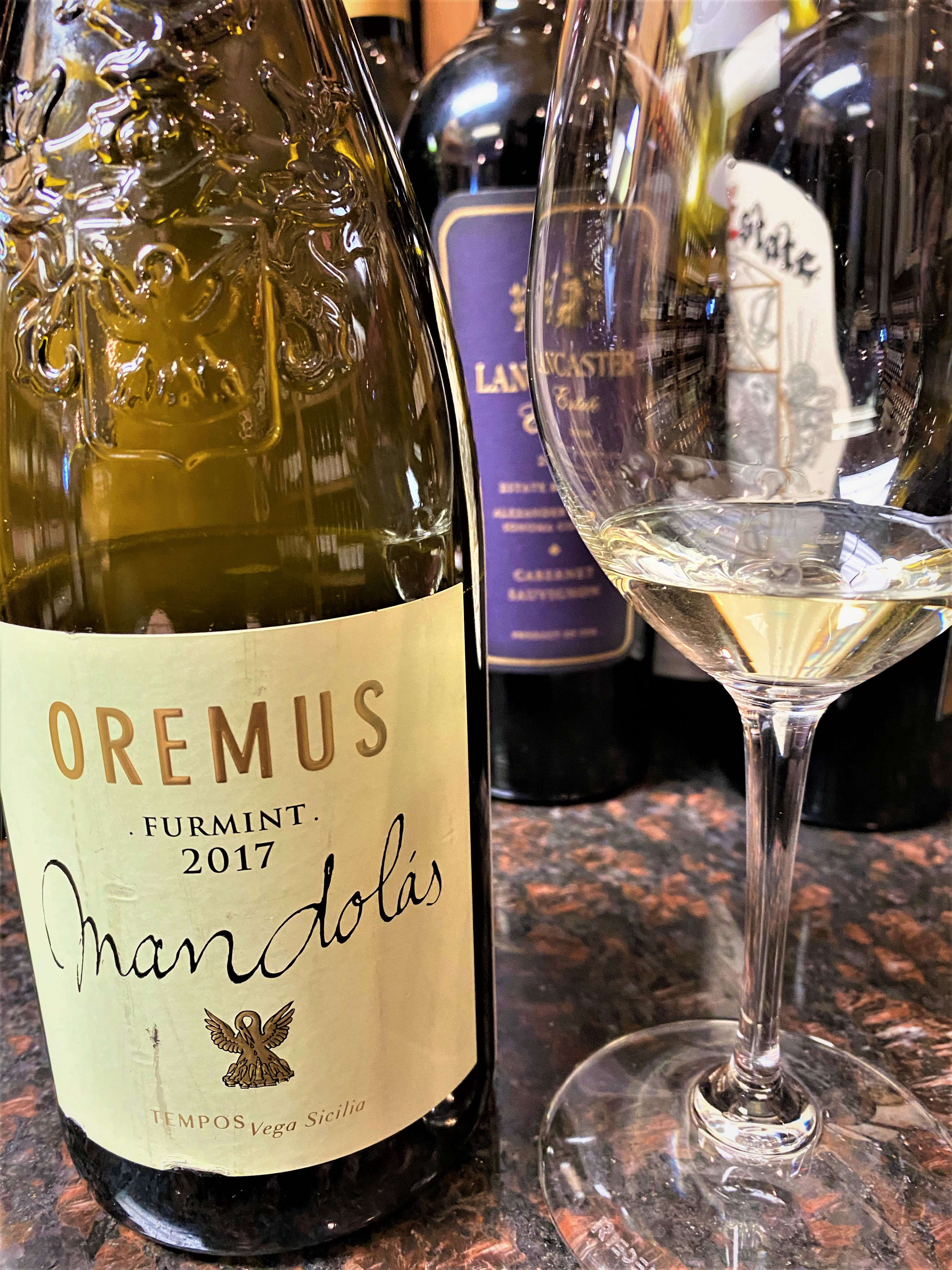
We started off with Oremus Mandolas Furmint 2017.  In 1993, just three years after the world saw that Communism and Socialism did not work in the former Soviet Hungarian Republic, the Alvarez family that had bought Vega-Sicilia founded Tokaji-Oremus, but respecting the time-honored traditions of the district.  The region known as Tokaj is actually twenty-seven municipalities and land, but Tokaj is the major city of the area.  The history of Oremus goes back to 1620 and they are credited with making the first Aszu wine as well.  When I was first learning about wine, I had always wanted to try all the versions of Tokaji wines, but back then it was the Cold War and the Communists ran a monopoly on the wines of all of the countries that they ruled by the jackboot and intimidation.  Rumor has it that Pepsi Cola was an un-official conduit for wines and spirits behind the Iron Curtain for years, keeping the United States in Stolichnaya and Monimpex Tokaji.  While there are a couple of different varietals that are grown in this region, the main one is Furmint.  Furmint produces a highly acidic juice that when nurtured can develop into one of the longest-lived wines known. This wine is named for the vineyard that the grapes come from and it is only planted with Furmint.   This is a golden grape that buds late and because of a peculiar trait has one of the potentially longest growing cycles and is very labor intensive.  The grapes are delicately pressed and the fermentation process can take eight to ten days and then the wine is aged in small oak barrels, which is the traditional way.  Even though this is a dry white wine, and can be enjoyed immediately, it can be aged for about ten years.  The wine delivered a curious blend of floral and smoke and was full flavored with a good finish.

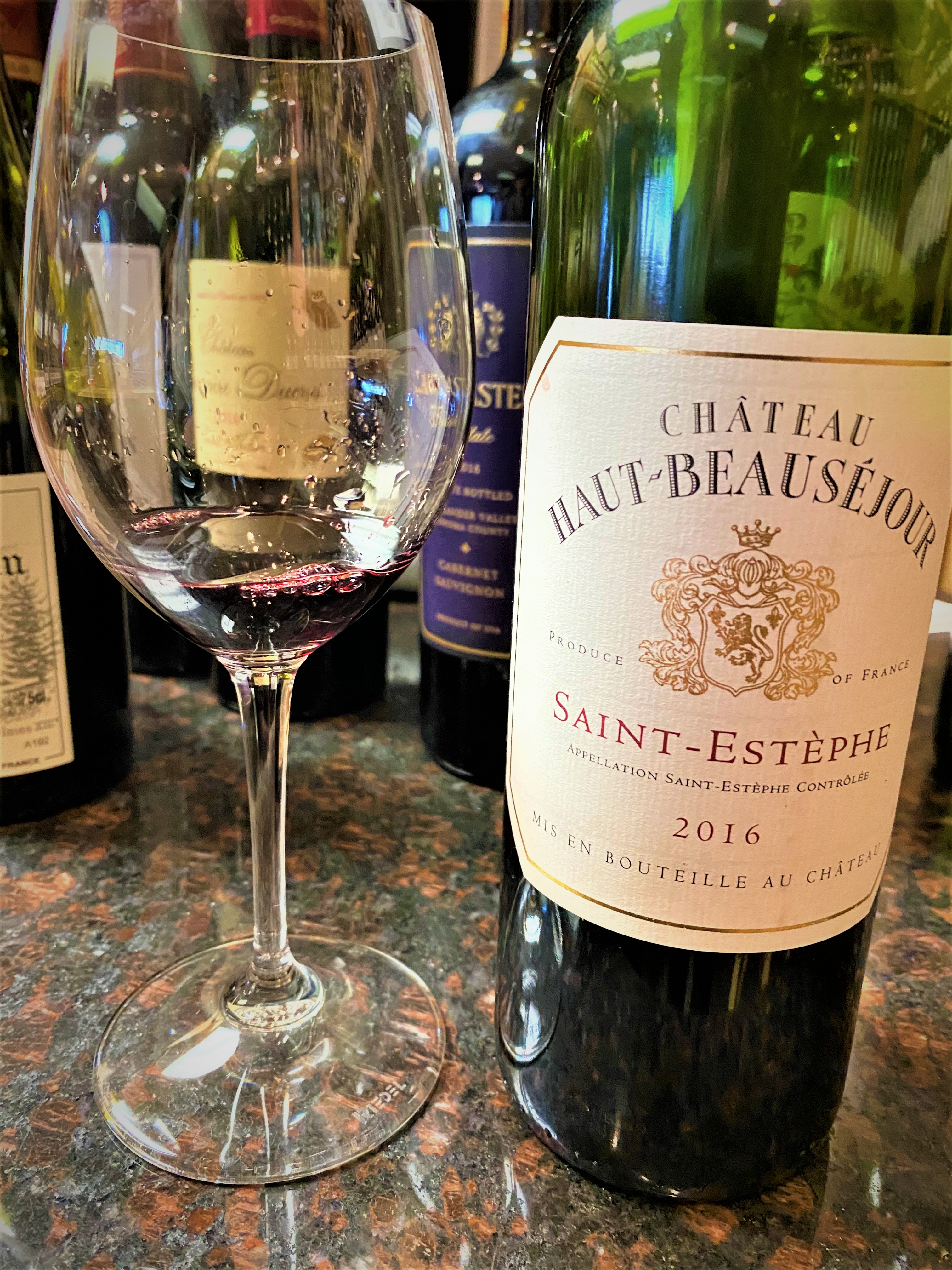
The second wine that we tasted was Chateau Haut-Beausejour Saint-Estephe 2016.  Chateau Haut-Beausejour was purchased by Jean Claude Rouzaud, the owner of the Roederer Champagne house.  The Rouzaud family also owns Chateau Pichon Comtesse de Lalande in Pauillac as well as two other estates in Saint-Estephe; Chateau Bernadotte and Chateau de Pez.  Chateau Haut-Beausejour has a short history for being in the Medoc, when the Rouzaud family purchased two Saint- Estephe properties from the Brossard family; Chateau Picard and Chateau Beausejour.  They created one large estate from the two estates and sold seventeen hectares of what they considered less desirable vineyards.  It is also one of the few estates without a chateau, just some simple buildings used as their cellar. In checking my notes, I found that I actually had a Chateau Haute-Beausejour Saint-Estephe 1993, after their disastrous 1992 vintage, in which they actually declassified their first vintage. They use the same technical wine making team and philosophy as their sister property Chateau de Pez.  The ten-hectare vineyard is planted with fifty-six percent Merlot, thirty-nine percent Cabernet Sauvignon and five percent Petit Verdot. The grounds are a mix of gravel, clay and limestone, and some of the vines are sixty years of age. The wine of Chateau Haut-Beausejour is started in traditional, large oak vats, including the Malolactic fermentation.  The wine is then transferred and aged in French Oak barrels, of which thirty-five percent is new, for about twelve months.  On average they produce about five-thousand cases each year. With Merlot being the lead variety, this medium-bodied wine is what when I was learning was referred to as feminine compared to the bolder Cabernet Sauvignon led Medoc wines. Dark red fruits and spices led the experience for the nose, and there was a noted taste of sweet cherries with softer tannins and a decent medium finish of terroir.  This was an unexpected but delightful purchase for the cellar.      

Posted in Wine | Tagged , , , , , , , , , | 1 Comment

March 2021 Wine Club Selections

It seems like I spend a lot of time at the Fine Wine Source in Livonia and the home of my local wine club.  The matter of fact, it is true, especially for the last year.  Gymnasiums, pools, spas, theaters and off and on restaurants and other public galleries were closed to the public. I have no interest in burning down Federal and State buildings, and supporting a local wine shop, seemed the best place to devote my attention.  Liquor, beer, wine and tobacco were allowed to be sold, because they are all heavily taxed, I imagine that if brothels were legal, they may have been open, depending on the amount of taxable income that they could generate.  The newest high tax item Marijuana was also allowed to be sold in commerce, as an essential business.  Wine is the best solution for me, it allows me to continue learning, plus it makes surviving the lockdown more palatable.

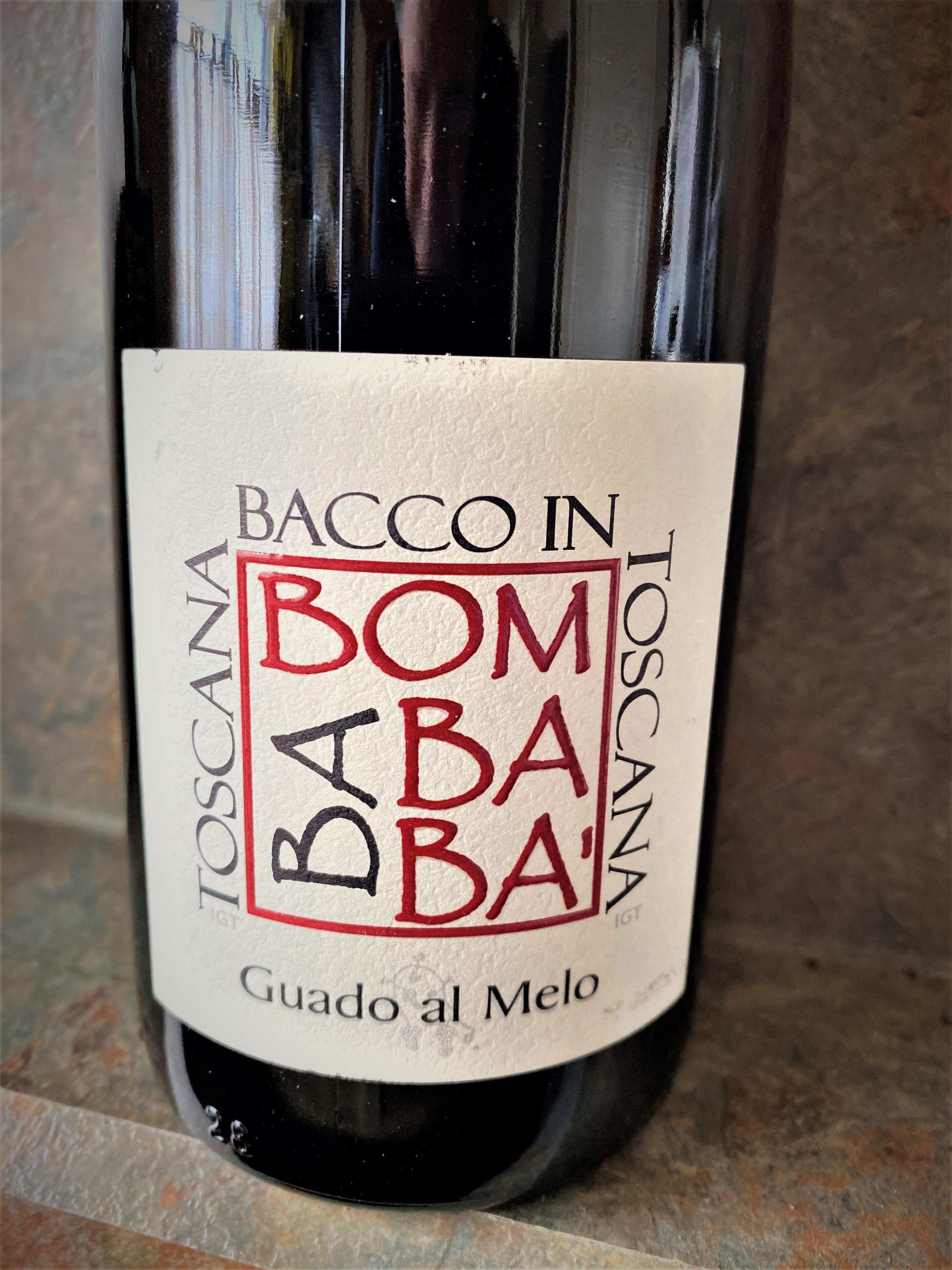
Guado al Melo “Bacco in Toscana” Rosso Toscana IGT 2017 is the selection for the Old World.  Guado al Melo, is a family-owned winery of Annalisa and Michele Scienza whose goal is to create great terroir driven wines, making it artisanal and based on sustainability. They are located in the Bolgheri DOC in the hills facing the Tyrrhenian Sea. Under the vineyards, is the heart of the winery, with a library of several thousand books about wine and a small museum of the history of the land.  The Scienza family has generations of winemakers in Trentino and Michele’s father worked with the local wineries following the changes in the DOC and became rather an authority on the Bolgheri region.  When he found out that the small estate, which had been a dedicated vineyard for almost two-hundred years was for sale, he couldn’t resist and in 1998, he owned property in the Bolgheri DOC.  They attempted to create a name that honored the varied owners of the property, but in the end decided on Guado al Melo (Ford at the Apple Tree). It is from the Fossa di Bolgheri creek, that the vineyard has alluvial soils.  “Bacco in Toscana” is taken from a poem “Bacchus in Tuscan” from the 17th Century and that Bacchus chose Tuscany as his new home, because the best wines were already being made there. The Bombababa was a Tuscan dance in vogue at the time and evokes images of Bacchus, Ariadne and their entourage of satyrs and nymphs frolicking after enjoying the local wine.  There is very little information on the production other than the underground also houses Stainless Steel, and oak barrels in assorted sizes for the aging of the different wines produced on the property. The winery gets ten percent new oak for each vintage, and after maceration, the barrel style is determined as well as the aging, and then the wine is also stored in bottle after, before release.  The wine is half Cabernet Sauvignon and the other half is a mix of Sangiovese and Petit Verdot which is why the wine carries the Toscana IGT, which is a major appellation of the area now, for all the wines produced that do not abide to the traditional appellations already based in the region. The wine is described as being deep purple with an intense bouquet of black fruit, complimented by spices and balsamic notes. It is said to have a pleasant acidity, balanced tannins and a medium length finish.  

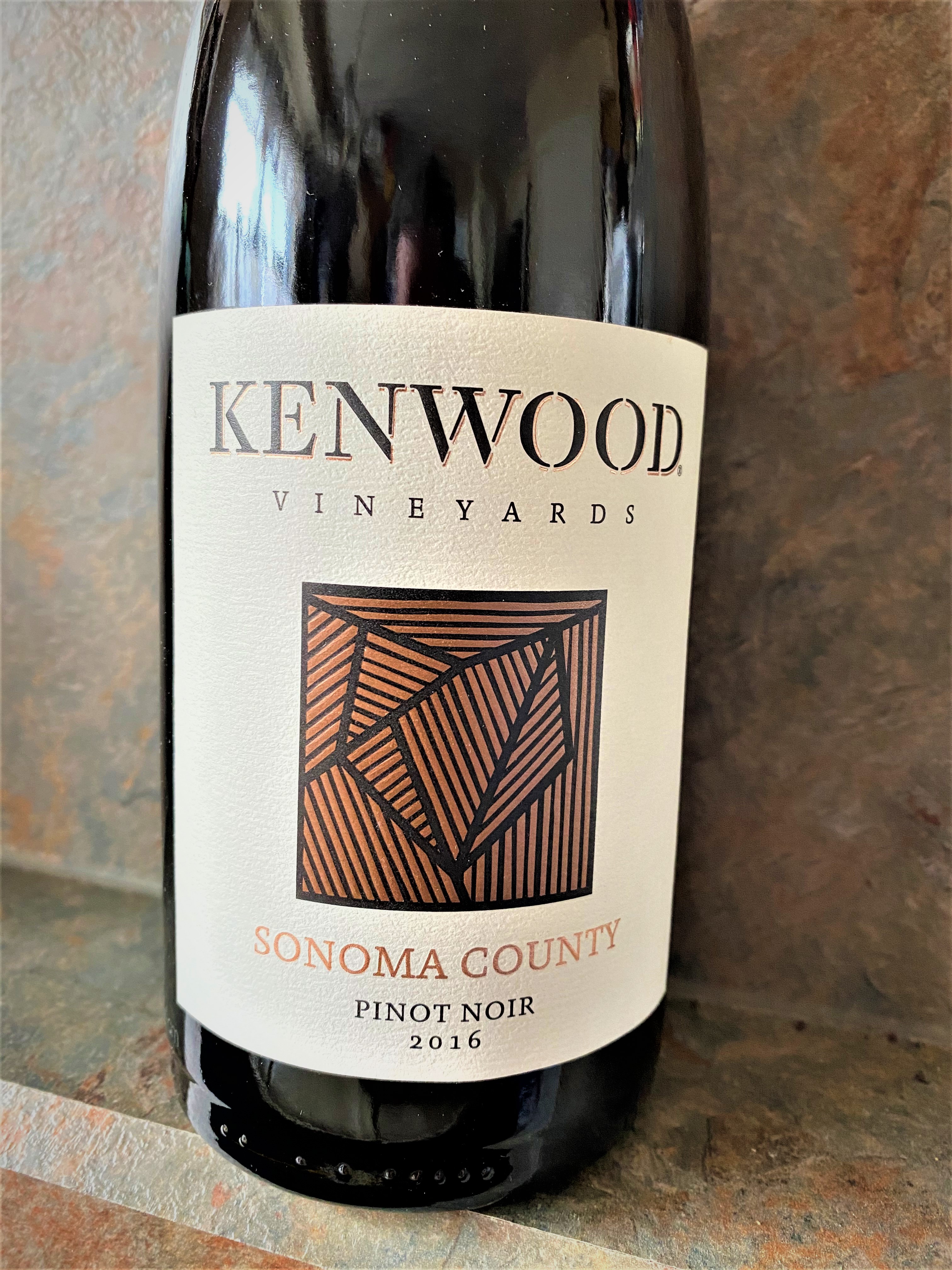
Kenwood Vineyards Pinot Noir Russian River Valley 2016 was the New World selection. Kenwood Vineyards was established in 1970 in Sonoma.  It was founded by the Lee family when they purchased the estate and winery of the Pagani Brothers that began in 1906 and were successful until Prohibition.  In 1999 the winery was bought by F. Korbel and Bros. and in 2014 Kenwood was bought by the international beverage concern of Pernod Ricard.  Kenwood Vineyards has twenty-two acres of estate vineyards and also sources fruit from dozens of other growers in Sonoma.  The winery has been known for years for some of their Single-Vineyard wines, as well as some of their other collections.  The first time that I ever had a wine from Kenwood Vineyards was their famed Jack London Vineyard Cabernet Sauvignon. The winery has been totally refurbished and they maintain one-hundred-twenty-five Stainless Steel fermenting tanks and large oak uprights, as well as about twenty-thousand small French and American Oak barrels for their “small lot” style of winemaking. The “small lot” or “cuvee” style means that every barrel is of one grape and from one vineyard and that it will be blended if and when the winemaker is ready.  This particular wine is ninety-nine percent Pinot Noir and one percent Syrah.  The wine notes say that this wine is offering aromas of cherry and blackberries with notes of nutmeg, vanilla and cloves.  The wine is full bodied with smooth tannins and an elegant finish.

Posted in Wine | Tagged , , , , , , , , , , , , , | Leave a comment

Two I Expected to Lose

As I have reported, I have been clearing out the wine cellar and hopefully finding some gems that survived the fifteen-day lockdown that has morphed into a year and counting.  As I have been reporting, we have found and enjoyed some wines that have even surprised us and some of the friends that I have discussed it with, that anticipated the worse.  I found two bottles that were taking up space and valuable dust, but just in case they were actually put in the garage refrigerator to chill, just for science. Now, I know that neither my Bride or I have purchased these two bottles of wine, I think they were brought as gifts to the house during occasions that we have posted parties, and hopefully, everyone’s memory is strong enough to remember having and hosting parties at a house or elsewhere.

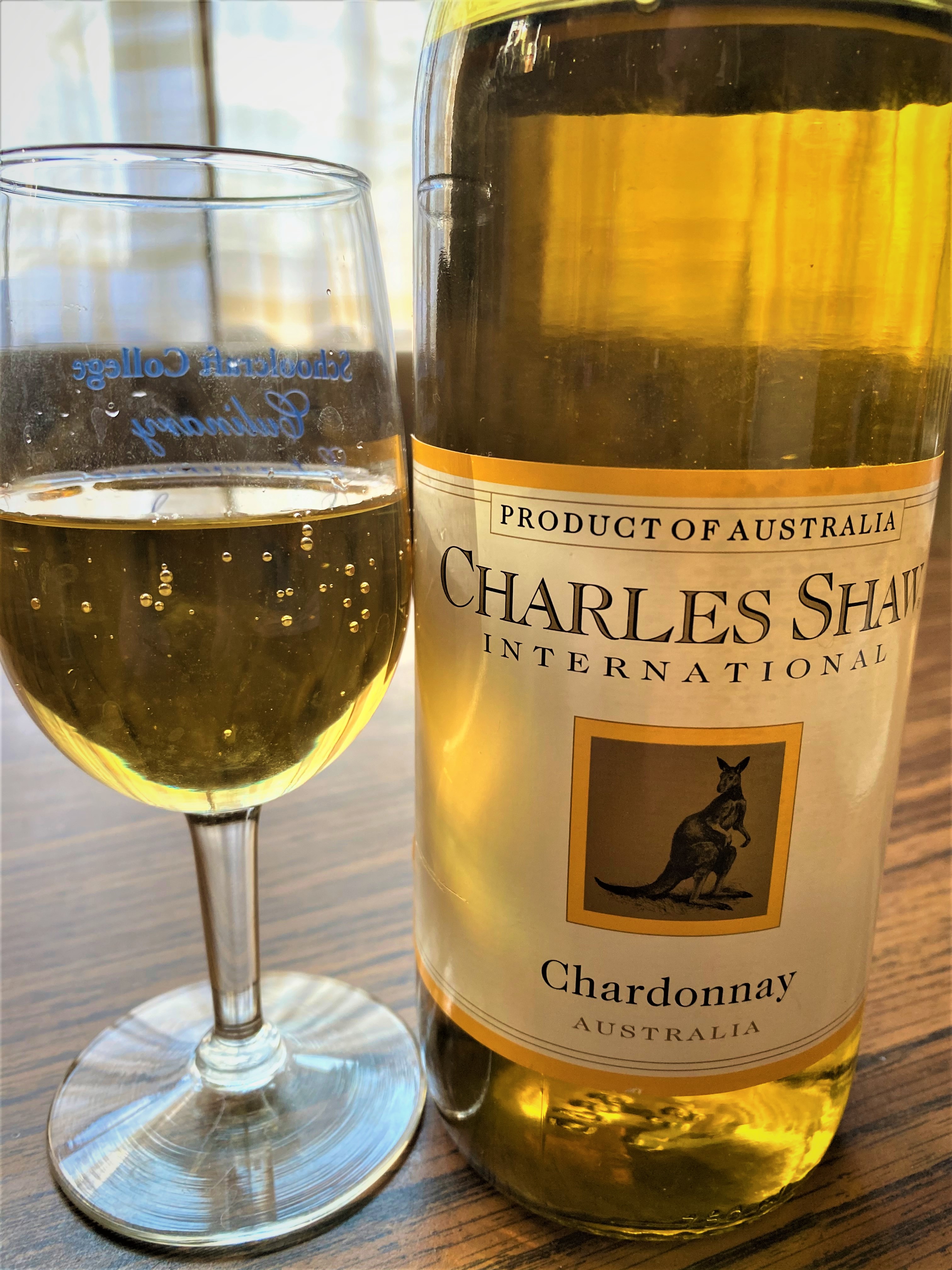
Charles Shaw International Chardonnay Australia NV was introduced in 2009.  Charles Shaw wines were introduced at Trader Joe’s grocery stores originally in California selling for the premium price of $1.99 and that is how it acquired the name of “Two Buck Chuck” and eventually as it was sold at stores East of the Rockies it became “Three Buck Chuck.”  Of course, the price eventually crept up, but the name is remembered.  The wine is part of the Bronco Wine Company, started by Fred Franzia, formerly of Franzia Brothers in California.  This particular bottle has ninety-four percent Australian Chardonnay and six percent California Chardonnay. I am sure that the wine is “aged” in Stainless Steel containers, perhaps on the trip from Australia to California.  The color showed oxidation as it was amber, and looked more like a lager beer and the nose told me, that I shouldn’t even try a taste.  I am sure that perhaps, chilled, a fresh bottle could conceivably offer a taste of an unoaked Chardonnay, perhaps one day, I may opine on a glass. 

Yellow Tail Chardonnay Australia 2008 from Casella Wines was another wine that I refrigerated with the concept that I might have a good report. Yellow Tail is a major single-variety wines, as well as sparkling and rosé wines with value pricing. It is now one of the largest selling wines by volume in the world. The Casella family began history in wines back in Italy in the 1820’s.  They moved to Australia in 1957 and began making wines in the 1960’s. The Yellow Tail brand, which depicts a wallaby was formed in 2000, from the juice that they used to produce and sell to other wineries and the bulk of the wines carry the appellation of South Eastern Australia, but the winery and facilities are located in Yenda, New South Wales. By 2003, Yellow Tail was the number one imported wine to the United States of America. As you can see from the photo, the wine had truly aged and was getting a caramel color and that was its total redeeming quality.  Now in the past, we have had this wine, as it was the Chardonnay wine offered at some restaurants.  It is a bulk wine that is better than having pop with dinner, and to be quite candid, it is what a lot of people equate as a Chardonnay wine, so they have their converts and faithful.

Posted in Wine | Tagged , , , , , , , , | Leave a comment

Lost Another Two

Since for the last year, in case you missed it, everybody has been kind of a homebody, unless you are a politician.  We have been drinking more wine at home, perhaps in the last year, then we have during the other twenty-four years here. The year also gave me time to discover what had been squirreled away, and there are still a couple of small racks that need to be examined, but the big racks have been organized and inventoried, which is the bane of retailers, speaking for one that knows. Out of around fifteen-hundred bottles of wine, yes, we have been replenishing some of the good stuff and lots of the everyday stuff, and I would sound like a broken record, if I discussed the same wines constantly. We have so far lost nine bottles of wine, that we just saved for too long, forgot about, didn’t want to open, because of several reasons, but we are starting to make sense out of it all.

On the inventory of the white wines in the wine vault, I have gone so far as to use a yellow highlighter to identify the wines that I want to try as soon as possible, so there will still be more casualties, to be discovered, but I hope there will also be some more happy moments to record as well. The wine vault is a rather mish-mash stacking of wines, because depending on the size of the bottle, they may be two deep, and some may only be one deep.  I don’t feel like reorganizing it every couple of weeks, it is just easier to make a new chart.  I am also keeping the refrigerator in the garage extra full of white wines, as I know that some will probably not make the cut and I want to have a backup.

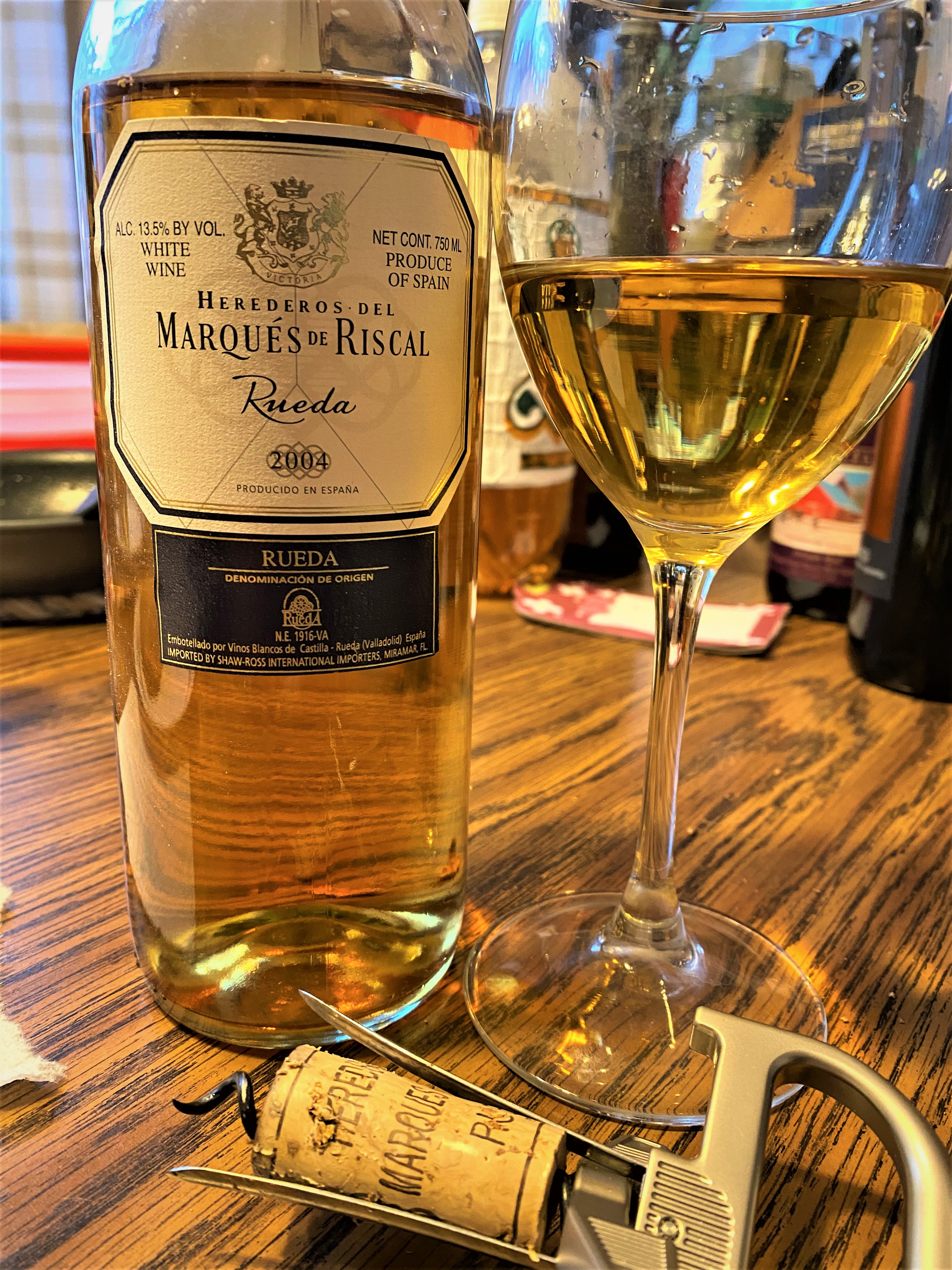
It was two in a row, one night as we were having some dinner. The first was Herederos del Marques de Riscal Rueda Blanco 2004, sometimes it is just referred to a Marques de Riscal Blanco.  Marques de Riscal is one of Rioja’s oldest and most famous wine estates.  The company was founded in 1858, by the Marques de Riscal who was a diplomat and he decided to bring French winemaking techniques back to his estate in Rioja. To this day, the current majority shareholder and winemaker maintains that title. In the 1970’s they expanded to Rueda and they are now the largest winemaker in this region and have been credited with reviving the wine industry in Rueda. The classic blend of Verdejo and Viura (Macabeo) was the common mix for the region, until 2020, when other more consumer recognizable wines were also allowed to be in the mix.  This wine should have been green and flinty.  With it being forgotten about in the cellar, even in a cool atmosphere and away from sunlight, the wine eventually succumbed to old age.  The color was a beautiful golden color, if it had been a Sauternes, it would have been wonderful, unfortunately, the wine had oxidized and skunky, not because it was poorly made, but because it was too old and over the hill.  

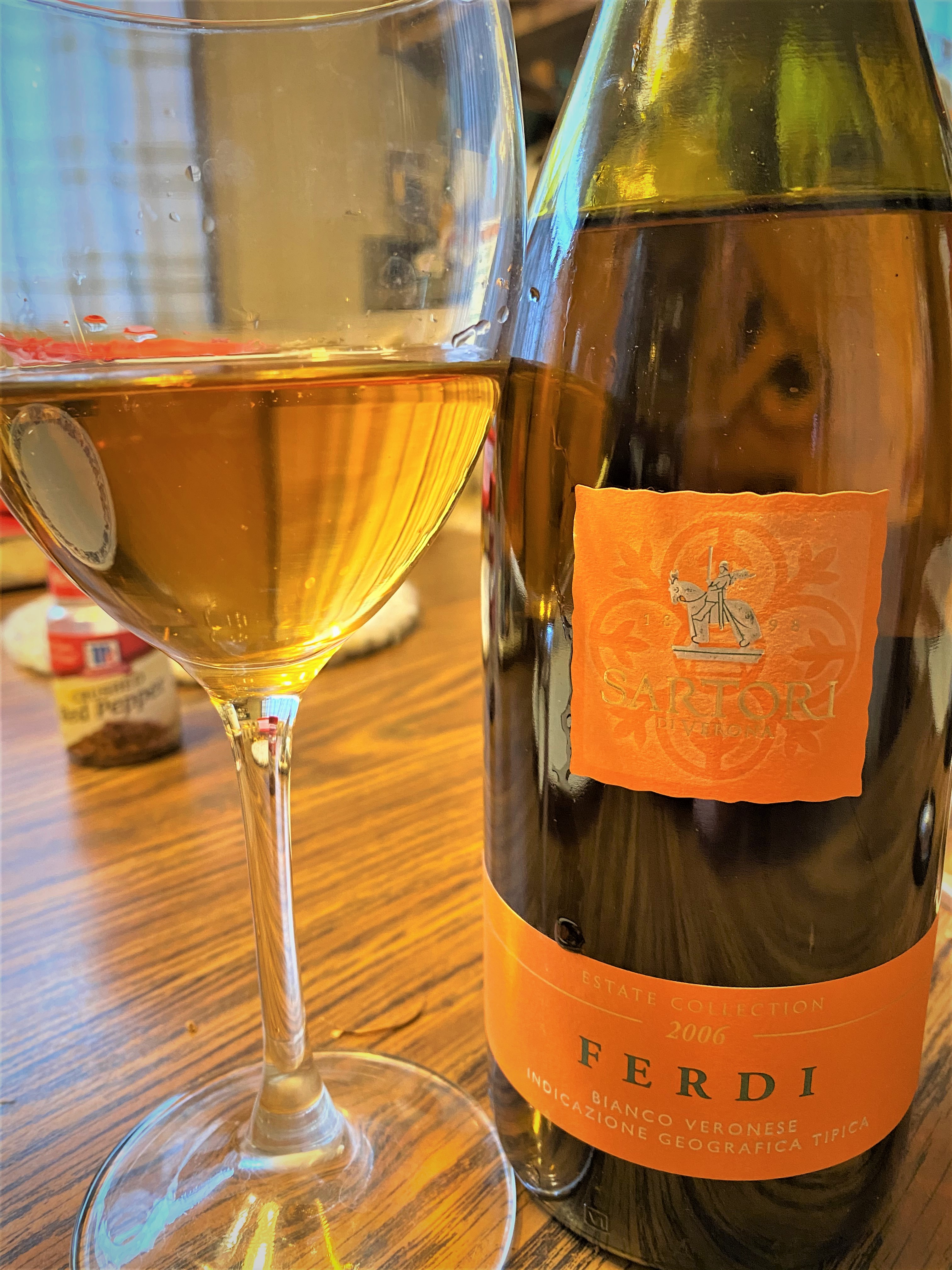
The second bottle was a Sartori di Verona Ferdi Bianco Veronese IGT 2006.  Sartori di Verona specializes in the classic red wines of Verona. The family-owned estate was founded in the latter part of the 19th Century in the center of the Valpolicella wine district. In 2002 they joined together with Cantina Sociale di Colognola and expanded in to the grape varieties of Soave and Valpolicella. The wine is made using the Garganega variety that is the mainstay of Soave, but the grape itself is not that recognizable, even though it is one of the most planted grapes in all of Italy and can be both dry or sweet, and is used by itself or blended, a very versatile grape in Italy. Verona IGT was created in 1995 and encompasses all the wines made in Verona, not covered by their own appellations.  It covers red, white and rosé, still and semi-sparkling, dry or sweet.  As to the white wines, it can be a single variety or blends and the Garganega grape is usually the mainstay. Where this wine should have had aromas of peach, almond, apricot and baked apples, it was totally oxidized and offered a wretched nose. I am not giving up with out a fight, as we have more surprise winners than losers so far.

Posted in Wine | Tagged , , , , , , , , , , | Leave a comment

Two from Arcturos

I was home having dinner alone, because my Bride and all her relatives actually participated in a Bridal Shower and from all reports, everyone enjoyed being a scofflaw and defying our harridan’s around the corner fiats; the women actually felt like a part of their life had been returned though they were technically all illegal, as if they were undocumented aliens.  The door bell rang and I went to see more out of curiosity, anticipating some door-to-door remodeling salesman and instead it was another parcel delivery driver, who graciously signed the pad that he was lugging as well as a carton of wine that he was carrying.  It was a parcel of four wines from our wine club at Black Star Farms in Michigan.  Black Star Farms is rather unique in that it has vineyards and tasting room facilities on both peninsulas, so that they are kind of surrounding Traverse City which is kind of the focal point for all of the wineries in the area.  In 1998 Black Star Farms purchased Sport Valley Farm which was a one-hundred-twenty-acre equestrian facility, and the stylized black star was part of the architectural décor in the main house.  In their Twentieth year, they were honored to receive the 19’th Annual Canberra International Riesling Challenge (CIRC) -Best Wine of the 2018 Challenge and only the second time an American wine came out on top.  There were 567 Rieslings from six countries (Australian, New Zealand, USA, Germany, France and the Czech Republic).  The Black Star Farms Arcturos Dry Riesling 2017 scored 98 points, in addition to taking home Best Dry Riesling and Best American Riesling.  In fact, all six of the Riesling wines that Black Star Farms submitted took home medals, showing a consistency across vintages and styles.  The fruit is sourced from both of the proprietor’s vineyards and from local grower partners in both the Old Mission Peninsula and Leelanau Peninsula.  The winery has three series; the premium Arcturos, A Capella and the Leorie Vineyard labels for sparkling and fruit wines.

It was actually interesting to read the newsletter from the Winemaker about what is going on since the State Health Department (formerly governor’s fiats) and how they are dealing with the one-year anniversary (my editorial insertion) of the fifteen day flatten the curve that we have suffered in Michigan.  They have been able to have indoor tastings since the beginning of February, but at twenty-five percent capacity.  Of course, everyone must be wearing at least one mask, unless the patron is sitting at a designated area for tasting, and then the mask can be removed. All areas will be disinfected after every use, and the winery went and installed a UV filtration system in their central air system to safely and effectively purify the air in the tasting rooms.  “On a lighter note, this past year may have been challenging for humanity, but our vineyards were blessed with a phenomenal growing season: in other words – 2020 was a good year for grapes!”

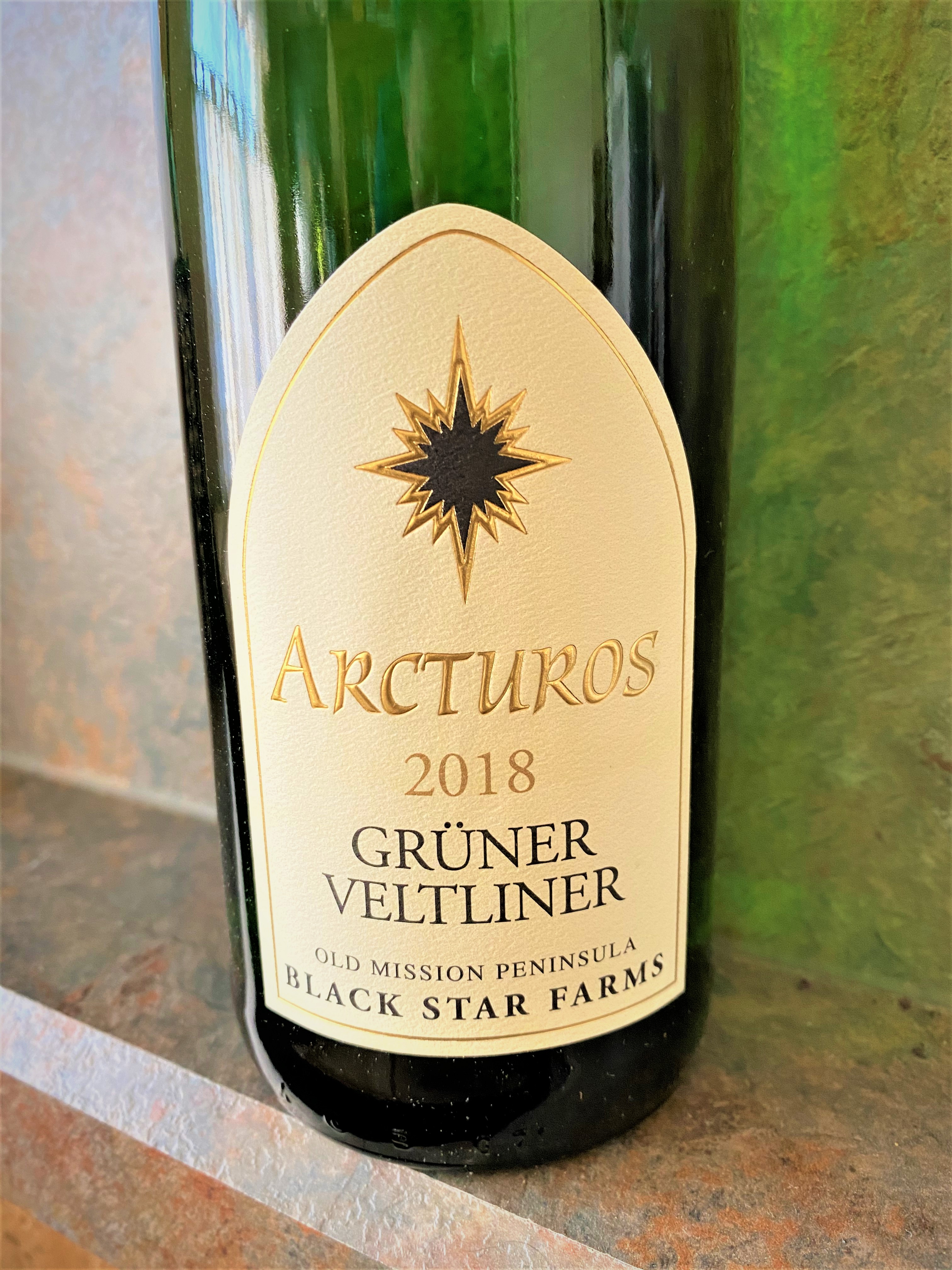
The Black Star Farms “Arcturos” Gruner Veltliner Old Mission Peninsula AVA 2018 was the first wine to come out of the carton.  This is their second release of this famed Austrian variety.  Though it was said, I will venture to opine that this wine was fermented and aged in Stainless Steel and had no residual sugar, so it should finish dry.  According to the notes supplied, the wine offers fruit qualities of ripe golden delicious apples, yellow plums and an herbal quality similar to the grassiness one gets from Sauvignon Blanc, with the added notes of white pepper to add to the complexity.  The Black Star “Arcturos” Cabernet Franc Michigan 2017 if like past vintages of this wine will be excellent and will keep my Bride very happy.  There were no production notes with the newsletter or their website, but from past notes I learned that prior vintages of the Cabernet Franc were aged for ten months in a mix of neutral American and Eastern European Oak barrels.  The grapes were estate harvested at two of their best vineyards, but because each vineyard is in a different peninsula and hence a different AVA, the wine carries a Michigan AVA.  According to the winemaker notes, the wine offers dark fruit aromas and flavors of blackberries, plums, oak and herbal notes in the finish. Their Cabernet Franc was a wine that we enjoyed one evening with dinner at a board meeting at the Inn at Bay Harbor, and that wine plus a Sur Lie Chardonnay that we had earlier during the meeting; gave us the impetus to drive to Traverse City to buy the wines, plus we ended up joining their wine club as well.   

Posted in Wine | Tagged , , , , , | Leave a comment

Pianetta Sangiovese

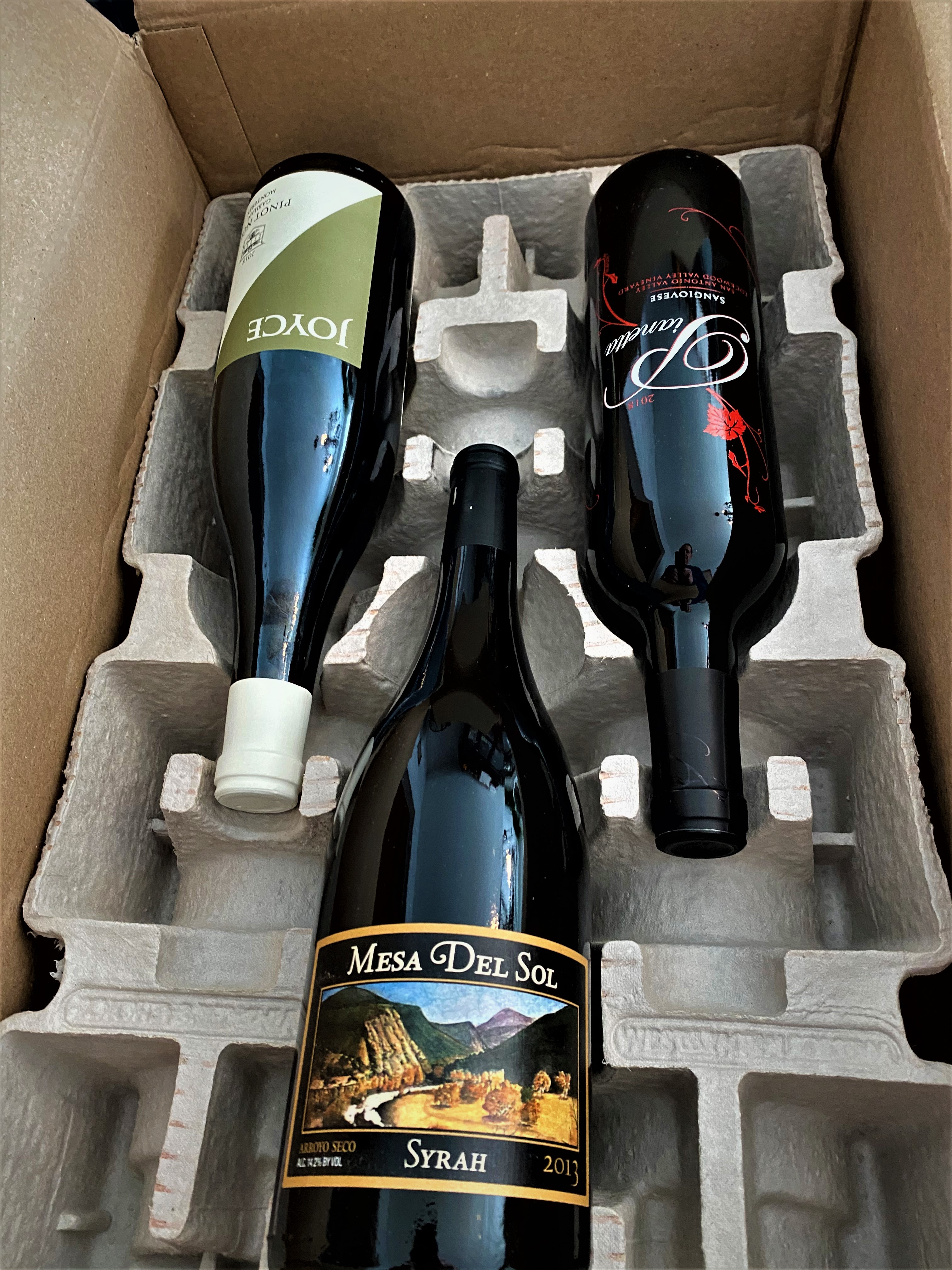
I guess most people these days shop using the internet, except me.  Maybe, because I was a merchant and I liked interacting with customers, I also like to touch the merchandise.  With wine it is a little different, but I still like the one on one with a merchant, though I have to admit that I do enjoy the surprise that I get from opening a carton from a wine club. We belong to three wine clubs, one is “A Taste of Monterey,” a Michigan winery Blackstar and a local wine shop the Fine Wine Source.  I discussed two of the wines that we received from Monterey, but the third wine, I will give a little more information about, as this is the second wine that we have received from this winery. 

Pianetta Vineyards was started in 1995, when John Pianetta bought a ninety-five-acre ranch and developed it into seventy-acre vineyard.  His family’s background was in the fresh market produce in California going back to the 1920’s.  At one time they even had a small family vineyard in Lodi. The vineyard is in the Southern part of Monterey County in a small valley called “Indian Valley.” The vineyard was basically planted with Cabernet Sauvignon and fifteen acres for Syrah. Originally, they sold their crops to other wineries and in 2002 they had their first vintage of three-hundred-seventy cases of estate wine.  It is now a family business as his daughter Caitlin has joined her father and they now produce about 2500 to 3500 cases of wine annually and only in red wines. They have started sourcing wines from other vineyards and doing single variety wines.  They also produce a “JUG” wine each year as an homage to their Italian heritage.  Another new wine for them is their “Altitude” wine which is a blend and they are planning on having an “Estate Altitude” for 2019.

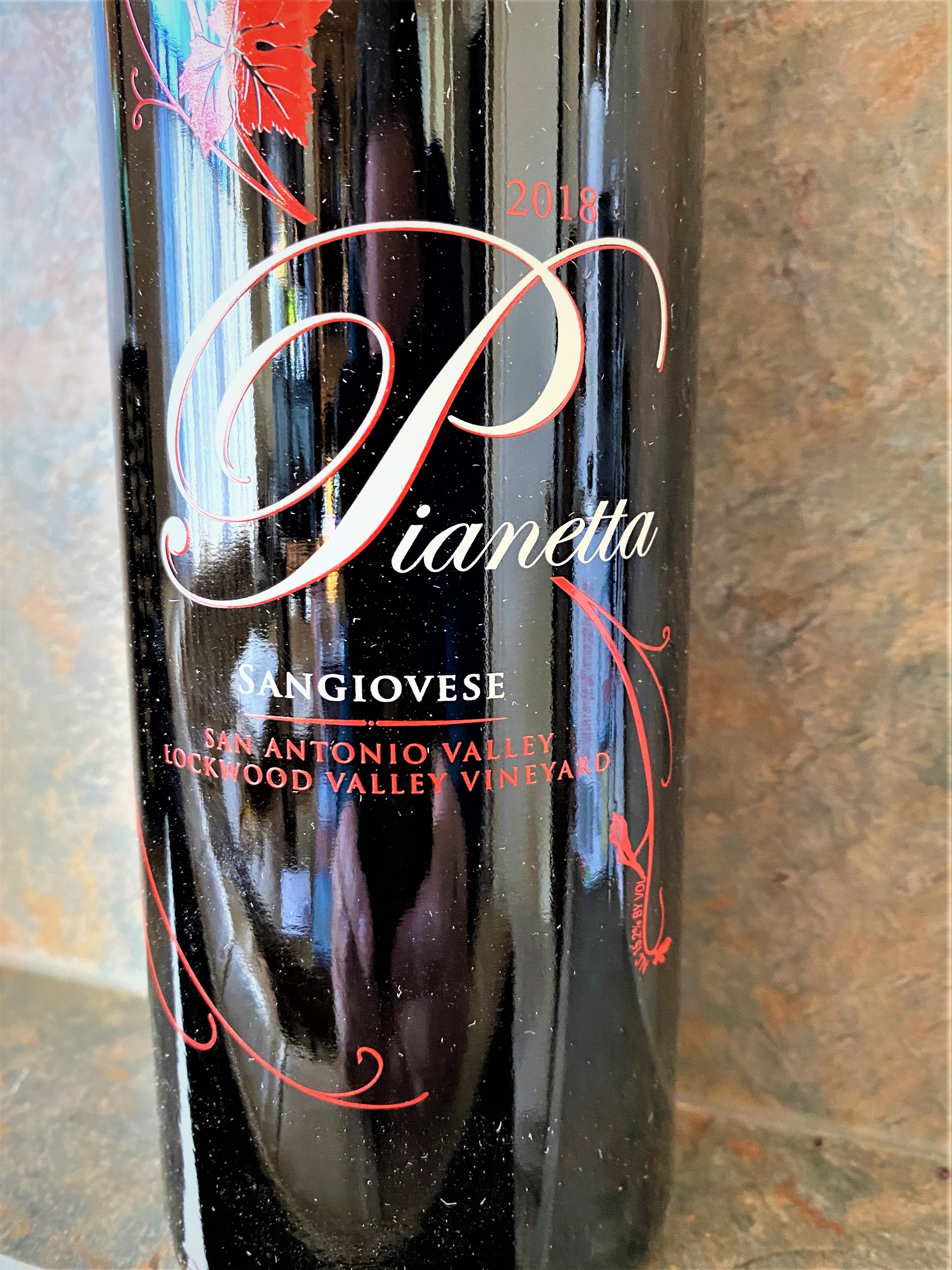
The Pianetta Vineyards Sangiovese Monterey 2018 is from fruit sourced from the Lockwood Valley Vineyards in the San Antonio Valley.  2018 was considered a great year following 2017 with a heavier yield and big flavor.  A mild summer without undue heat aided in making the wine bold and complex.  The wine was aged for twenty months in what I will presume was oak barrels, which would be the classic treatment for this famed Italian variety.  According to the notes, the wine is offering bright cherry on the nose, with notes of roasted nuts and red fruit for taste, with strong acidity on the finish which means that it should be laid down for at least six years to mellow the wine out. I can wait it out. 

Posted in Wine | Tagged , , , , , | Leave a comment