Christmas Dinner With TWR, Jr. – Part Two

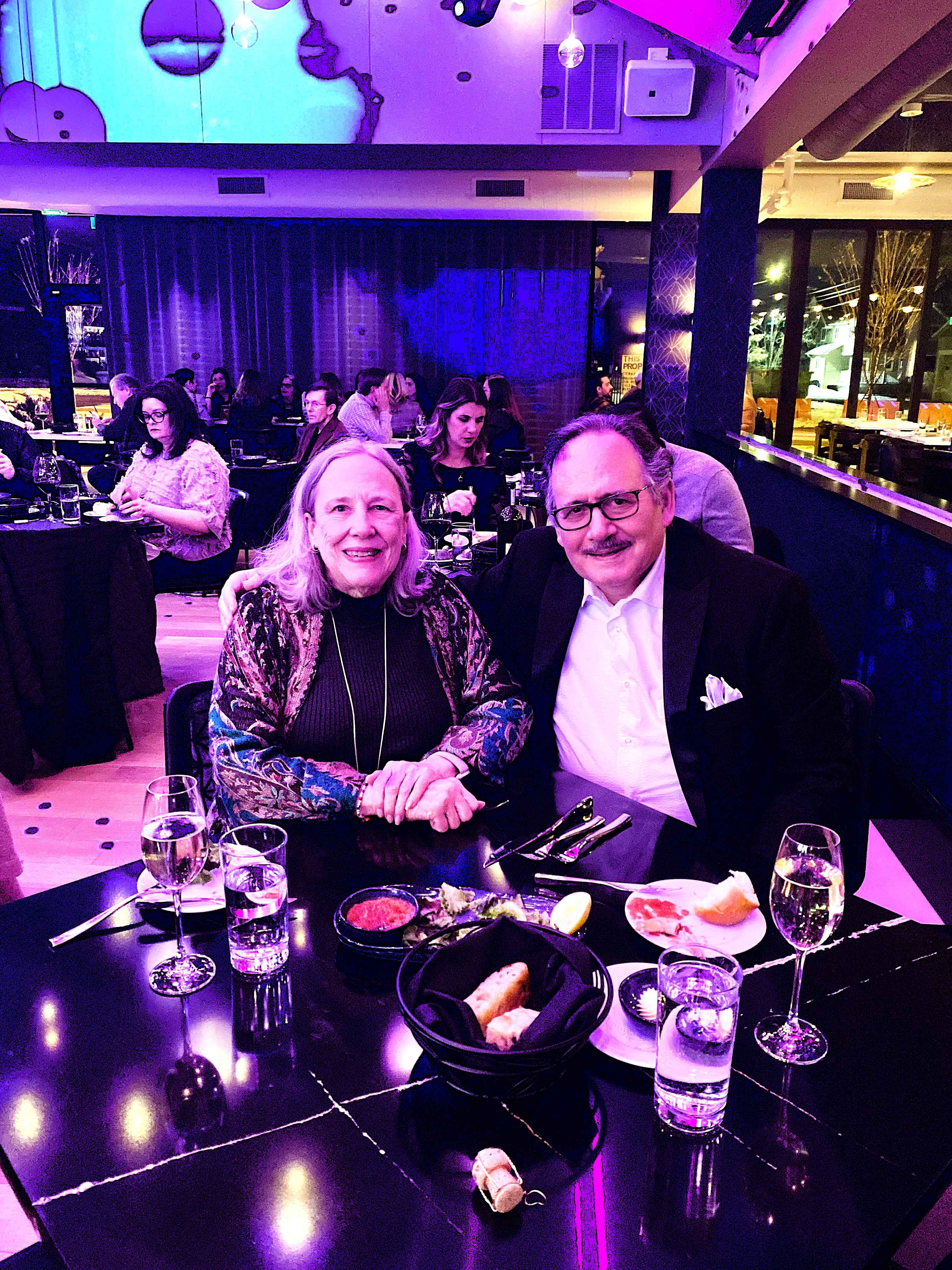
We always have a wonderful time with The Wine Raconteur, Jr. and his Bride and family.  We were also glad that we didn’t have to postpone this dinner, because it was before my operation and I presumed that my diet afterwards would not be of the caliber of this evening.

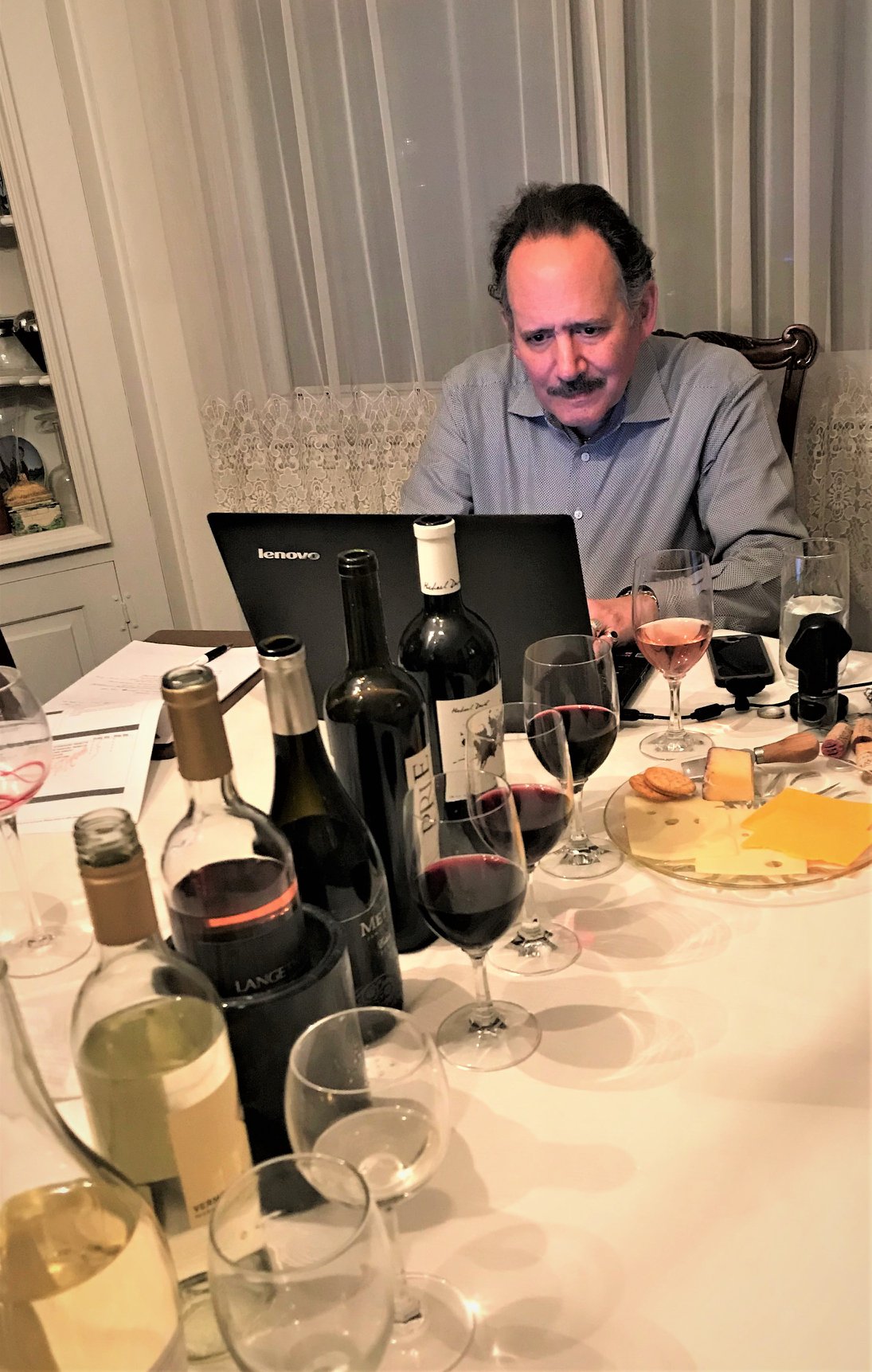
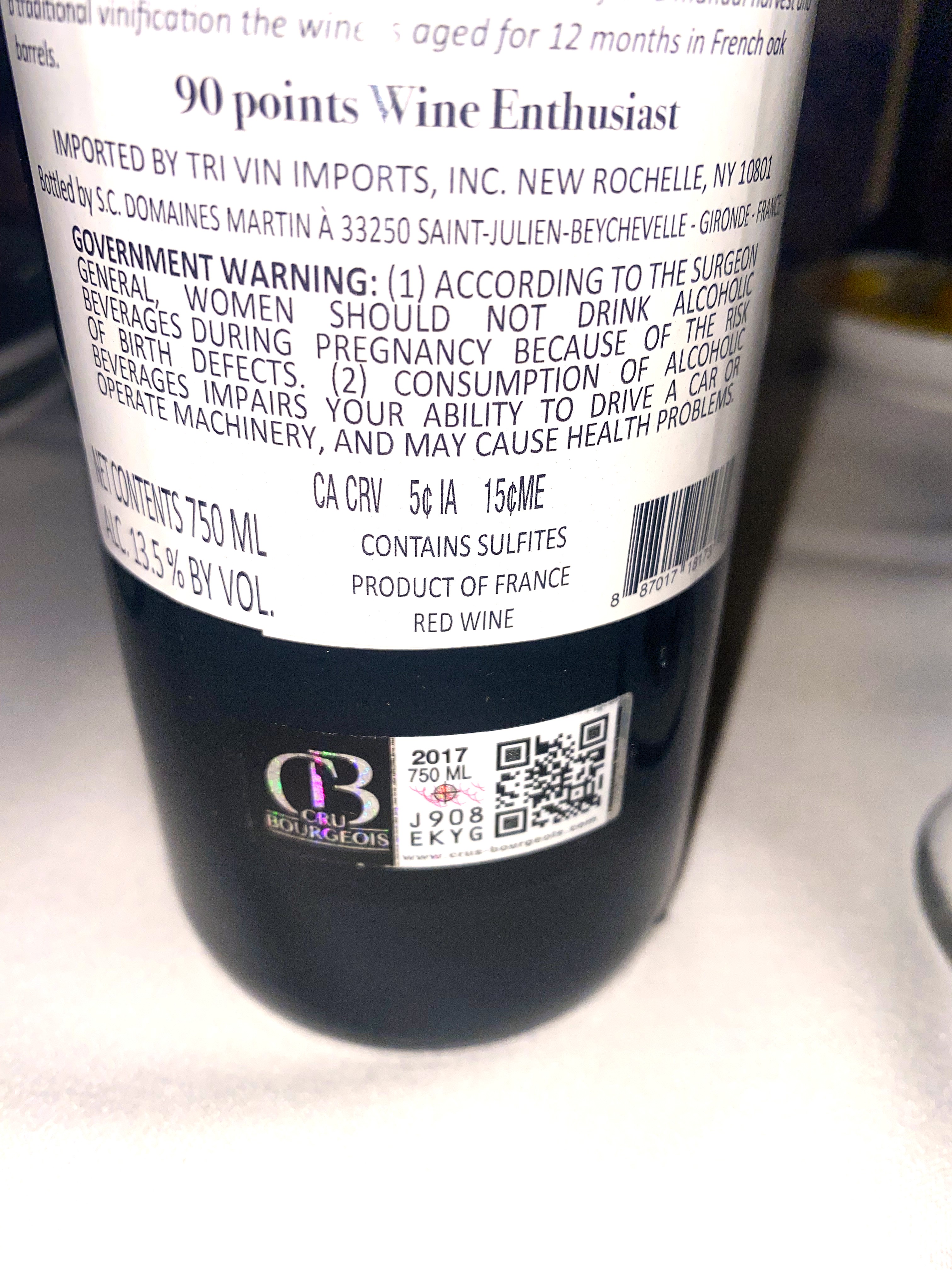
The Wine Raconteur, Jr., really enjoys his time at the stove or the grill and he was doing a great job.  For the sides he prepared Broccoli and “Smashed Potatoes.”  The entrée was a Flank Steak perfectly cooked and then sliced at an angle and I immediately thought of London Broil.  I jokingly apologized to them, that I only had a “Second Label” but that it seems to always get more press than the “First Label.”  I brought a bottle of Chateau Palmer “Alter Ego de Chateau Palmer” Margaux 1999, which originally was known as “La Reserve du General.”  Chateau Palmer is ranked as a Third Growth from the 1855 Classification of the Medoc, and I have to admit that I have a soft spot for Margaux wines as they have always been the most accessible and affordable over the years to me. Chateau Palmer was once part of the d’Issan estate and was bought by Major-General Charles Palmer of the British Army in 1814; since 1938 the Sichel and Mahler-Besse families have been major shareholders. The vineyards cover fifty-five hectares in the Cantenac commune on thin Gironde gravel on the edge of the estuary.  “Alter Ego” was introduced in 1998 with the intent of making a more approachable, earlier drinking wine.  This wine is a blend of seventy-seven percent Merlot and twenty-three percent Cabernet Sauvignon.  Initial Fermentation occurs in Stainless-Steel vats and different plots are vinified separately to assist in blending; and then aged in French Oak for twelve months. We brought plenty of items to their house for the dinner, I wish that I had packed The Durand, the cork broke and I had to bore a hole in the cork, filter the wine through a coffee filter in a funnel and pour into a decanter, one can see all the sediment that had caked on the back side of the bottle while in the cellar.  The deep blackish-red-purple wine offered notes of black cherry, plums and prunes along with some spices and herbs.  On the palate this full-bodied, well-balanced wine displayed tones of dark fruits, with fresh acidity blending with drying tannins with traces of chocolate and ending with a long-count finish of plums, prunes and spices.

The Wine Raconteur, Jr. goes out of his way to try to find some unique wines, and this first wine came with a suggestion that I should write a series of articles about wine and cinema.  He gave me an autographed bottle of San Joaquin Wine Company Chazz Cabernet Sauvignon California 2021.  In case you don’t recognize Chazz as being the author and actor Chazz Palminteri who also dabbles in restaurants, cigars and now wine.  He is famous for films such as “A Bronx Takle,” “Bullets Over Broadway,” and “Usual Suspects.” This wine is dedicated to his Grandfather Calogero and all the hard-working people who came to America looking for a dream.  The wine is made by San Joaquin Wine Company of Madera and the Schafer Family Ranch.  They make their own wines and offer custom wine services for businesses, including wine and wine-based beverages.  The San Joaquin Wine Company is a California Certified Sustainable Winery.  The wine is aged for one year in oak barrels.  I haven’t tried the wine, but I did find some tasting notes.  It is a deep red to purple colored wine that offers notes of cassis, black cherry, plum along with traces of green bell pepper, vanilla, cedar, tobacco and mocha. On the palate the wine displays tones of blackberry, cassis and dark plum, along with eucalyptus, mint, black pepper, graphite, toast, espresso and dark chocolate.‍

The Wine Raconteur, Jr. also surprised me with a gift from a family trip to Japan, as he is always searching for a wine that will test my research abilities and for finding something totally unique.  This wine is Chateau Lumiere “Histoire” Red Yamanashi Prefecture, Japan 2020.  Furiya Winery was established by Tokugi Furiya, a local lord and the current president’s great-great grandfather in 1885 as an industry to compensate for the changes in the silk industry production. The winery has sixteen hectares of vineyards along with long-standing contracts with other local vineyards.  The main property is located off an alluvial fan with decomposed granite rocks. In 1992 the winery was renamed Lumiere (the light).  Chateau Lumiere and Histoire are often vinified in the classic Bordeaux style, using French Oak for aging.  This wine is a blend of Cabernet Franc and Black Queen.  The Black Queen is a hybrid grape, a cross between the Baily and Golden Queen grapes, developed by Zenbei Kawakami in Japan.  It was developed for hot climates, dry summers and mild winters for both table and wine usage.  The grapes are hand-harvested, and hand sorted and then destemmed and then aged for twenty-nine months.  The wine is deep ruby colored and offers notes of sour plums, strawberry and cassis, along with scents of roses and potpourri, mint and licorice.  On the palate this wine is elegant and medium-light bodied with tart fruits, the acidity of pomegranates blending with smooth tannins ending with a medium-count finish of tart fruit, pine, pepper and minerality.  It has been mentioned that even though the wine is made to emulate Bordeaux, it tends to remind one of the finesses of Burgundy; an interesting wine to look forward to, as well as the proper meal to pair with it.    

Posted in Dining, Wine | Tagged , , , , , , , , , , , , , , , | 4 Comments

Christmas Dinner With TWR, Jr. – Part One

Just so that I can keep some of my narratives in sequence, we had a couple of dinners scheduled, before the side trip to the emergency room and before we knew that I was going to have another procedure.

The Wine Raconteur Jr and I go back many years ago, we met, when I was on a campus posted an employment flyer and he responded as I was in the process of getting the notice on the wall.  We have since become family, as my Bride and I have watched him ascent into the business arena.  There was a brief debate about whose house for this Christmas dinner, but I think their new kitchen won the moment.  Of course, my Bride insisted that we bring the appetizers, especially since she took her charcuterie class and our “catering” business now has plenty of chochkas that are “necessary” for the appearance of a great board.  We also brought the wine.  We began with Chateau La Gabarre Bordeaux Rosé 2020 and is in the commune of Galgon on the Right Bank, northwest of Lalande-de-Pomerol. The estate has been in the Gabard family since the 1800’s and the present stewards are Stephane and Paola Gabard.  They use sustainable farming practices and the soil is gravel, clay and sand and the average age of the vines are between fifteen and thirty-five years.  Besides this wine they also produce a Bordeaux Blanc, and a Bordeaux Supereiur; and all three wine types are done both as Chateau La Gabarre and their label “La Gabarre.”   The wine is a blend of forty-five percent Merlot, thirty percent Cabernet Franc and twenty-five percent Cabernet Sauvignon.  They use a direct press method and then age the wine for nine months in Stainless Steel to keep the fruit and crispness and they produced eight-hundred-fifty cases of this wine.  This copper-colored wine offered notes of raspberry and strawberry.  On the palate this medium-bodied, well-balanced wine displayed tones of fresh red fruit with some bright acidity and ends with medium-count finish of fruit and spices.

Our real surprise for appetizers was just revealed, when my Bride brought out this new titanium pan that she bought initially for searing Foie Gras.  I mean this could be a dangerous precedent, as a local chef did us a favor and butchered for us, six perfect medallions, eight bigger medallions and all the scraps and he put them into individual freezer packs; for us, this could be a year’s worth of pampering.  My Bride later told me that it was much easier than she had anticipated, and I think The Wine Raconteur, Jr. was also acting as her Sous-chef for firsthand experience and knowledge.  She also brought with us the proper accoutrements for plating.  The four adults were pleased, the two teenagers tried the dish, and gave the balance to their parents, who did not have a problem with the leftovers.

Fear not, while my Bride was searing the Foie Gras, I was getting the right beverage.  I found this bottle of Chateau Peillon-Claveries Dubourg Sauternes 2010 and frankly, I don’t remember where or when I secured this bottle, but the color of the wine in the bottle was deep gold and that secured my selection.  I could find very little about the estate, even though they are esteemed for having a rich heritage and admired for their craftmanship.  They only make one wine and only for approved vintages, otherwise they sell the wine to blenders for secondary market brands. The wine is a blend of hand-picked Semillon, Sauvignon Blanc and Muscadelle; which are left on the vines until they reach that perfect ripeness and affected by the “Noble Rot” (Botrytis Cinerea).  This natural phenomenon concentrates the sugars and the flavors of the grapes and is what makes Sauternes wines international favorites.  This deep golden colored wine offered notes of honey, acacia, honeysuckle and beeswax.  On the palate the medium-bodied, well-balanced viscous wine displayed tones of honeyed apricots and peaches, creamy sweetness with a burst of natural acidity and ending with a long-count finish of honey, orange crème and toasted almonds. As a side note, the teenagers, while they didn’t respond well to the Foie Gras, they did enjoy the wine.     

Posted in Dining, Wine | Tagged , , , , , , , , , , , | Leave a comment

New Year’s Day 2026

I realize that my holiday narrative has been a bit down, as we didn’t partake of Christmas Eve, Christmas Day or a New Year’s Eve dinner, though I have still other nights of wine to relay, prior to my surgery.

It was on Christmas Eve that I discovered that a hernia procedure that was done this past June, did not take.  Originally, it was decided that I would see the first surgeon again, but one of his other senior partners took the charge and the day before New Year’s Eve, I was back under the scalpel or whatever causes the three small holes that they now use with robotic surgery.  The first surgery, because of complications allowed me to stay at the hospital for four days, this time, I was an “outpatient.”  After the procedure I dined on two graham crackers that I believe were made of saw dust, sand and honey, as even with water I could barely eat it, what a curmudgeon I am.  The following day, I couldn’t keep any food down, even though I was supposed to, because of the meds.  The following day I made it with some oatmeal and later some dry hard-crusted bread.  I guess food and wine people have our own outlook about nutrition.

During the recovery period, we had received this tubular bell ensemble from our older son, that my Bride decided must be kept in the house, as the neighbors might burn our house down from the potential cacophony that could be delivered on high windy days outside, it is very pleasant and soothing under normal situations, but high winds, could be different.  Originally, she wanted me to hang it from a ceiling hook, and I told her that it might be too heavy, so during my convalescence, she found an industrial “Shepherd’s Hook” upon which to dangle the chimes.  Yes, I was awakened by her administration of hanging the chimes, but all I have been basically doing is sleeping. 

Getting back to New Year’s Day, I was bound and determined to eat something, not that I will ever get to skin and bones, but my body was determining some attention.  We had made the dinner plans prior to my medical relapse, and she wanted some real company that I truly could not accomplish for her.  She made a wonderful dinner featuring Braised Short Ribs and Bourbon Marinated Salmon.  I had a single helping of the Short Ribs and a few root vegetables, as I didn’t want to push it, the good news is that I could keep it down, so I am slowly recovering, at least in my mind’s eye.  I also opened a red wine for the guests to have with dinner, as I knew that she would select some good whites.  I know that I shouldn’t have any wine, but I figured that a small glass to make sure that the wine was good, the Gods would allow.  I selected a bottle of Wrath Estate Wines Swan/828 Pinot Noir Monterey County 2018 and is Estate Grown fruit and is part of their Winemakers Series.  Over the years we have received and enjoyed many wines from Wrath.  Wrath Estate Winery is in Soledad, California and they are a winery where production is limited, but not the quality, and since we have been there, they have opened a satellite tasting room in downtown Carmel.  The winery produces Pinot Noir, Chardonnay, Syrah, Falanghina and Sauvignon Blanc from their estate vineyard and some very respected private vineyards in the Santa Lucia Highlands.  This is among the top ten most highly rated Monterey wines by Wine Spectator and based on critic scores and price, this wine represents great value.  It is from their San Saba Vineyards which is just below the Santa Lucia Highlands.  This deep burgundy colored wine offered dark cherry, raspberries and sous-bois.  On the palate this full-bodied, well- balanced wine displayed red berry and cherry cola notes and ending with a long finish with notes of rich fruit, minerals and terroir.

Posted in Dining, Wine | Tagged , , , , , | 6 Comments

Three Beverage Gadgets

Indulge me in this article, as I sometimes write ahead, like this article because I am writing this prior to an operation to correct the prior operation.

I received a leather embossed hip flask akin to what used to be used during The Prohibition, and then later seen especially at Football arenas, until the arenas started getting wise and getting their own beverage licenses.  Now, they have the right to inspect bags for such contraband as this.  It is a cute curio and will join my other flasks that I have received.  Though I did like its theme.

The next is from a company called Monkey Business and it is “Corkers Classics.”  It kind of reminds me of my youth, where we had something called “Mr. Potato Head” where one applied ears, noses, mustaches etc. onto a potato; and there were actually feet to apply, so that the potato could stand erect. I didn’t open the package, but it looks like there are eyes, ears, hat, mustache (sounds like someone I know), arms and legs.  Now, if I can only find a cork in this house.

The last item is from “Songbird Specialties” and it is a Bottle Pourer and the accompanying message on the package is “Hear it SING with Every POUR.” I haven’t tried it out yet, but I guess it is a type of aerator, and it may be very popular at her next Annual Ladie’s Party.  My Bride is very fond of cardinals, birds and not the team. We have several cardinal appearances, both as decorations in the house, as well as outside of the house as well.  

Posted in Uncategorized | Leave a comment

Christmas 2025

Normally at this time of the year, I write about the Christmas Eve and Christmas Day dinners that we attend, and we usually just take a turkey or her famous Caesar Salad, and of course bottles of wine. 

Everything was going great on Christmas Eve, as my Bride was making a turkey and I was carving it and placing it in one of the many electric warm trays, in case we ever go into catering.  Back in June of this year, I had a hernia procedure, and this morning I discovered that it had popped up again.  I told her that I thought I could make it through the holiday season.  Alas, I was wrong, as I couldn’t even make it through the day.  We discovered that our internist was on holiday, and his service recommended I go to an Emergency Care facility, we went and it was not affiliated with my doctors or surgeons, so we ended up going to the Emergency room at our hospital.  I am a terrible patient, but after nausea medication and morphine in the IV, I was calm enough for all the tests, including a visit from one of the associates of the original surgeon, who was corresponding with the Chief Partner, who was my surgeon.  After about six hours, I went home and my Bride took all the Christmas presents for the people that we were going to see that day.

On Christmas day, my Bride went to church without me, as she had to lector and also because of the crowd, she also functioned as a Eucharistic Minister, so she was in the spirit of the Season.  She came home and made Poached Eggs, bacon and Mimosas.  We now have at the house, the same “California Champagne” that most of the restaurants use, as it is strictly for the commercial trade and not sold retail.  We have our version of the “Bottomless Mimosas,” with a bottle of bubbles and a very small carafe of Orange Juice, which is where I came up with the term “a tincture of Orange Juice.” I have finally decided that Orange Juice is dearer, compared to Charmat Method William Wycliff Winery “Brut” “American Champagne” NV, which is now part of Gallo (and they probably bought the winery for the designation).  A wine that was grandfathered in, so that it can claim the “American Champagne” designation and is I believe still made with Pinot Noir, Chardonnay, and Pinot Meunier.  This wine is perfect for making Mimosas and we try to keep a case at home, just for our breakfasts when we feel fancy.

Later, that day, my Bride made us dinner from the turkey, and stuffing that she had made to take to another party, but my trip to the emergency room precluded that trip.  I figured that we make the most of the day, as I may not be able to enjoy any wine if I am on meds.  To pair with the turkey, I chose a bottle of Domaine Gilles Noblet “La Collonge” Pouilly-Fuissé 2022.  Pouilly-Fuissé is known for the famous white wines of the Maconnais, and the appellation was awarded in 1936, but had actually been structured back in 1922.  It is exclusively Chardonnay and grown on limestone-rich clay over a granite base.  Since the 2020 vintage, a Premier Cru appellation level was approved and there are twenty-two Premier Crus.  Domaine Gilles Noblet was founded in the village of Fuissé in 1927 with a current vineyard of twelve hectares.  It was during the fourth generation led by Gilles Noblet, who began bottling their own wines and moved the estate and new cellar to “En Collonge.” They are now in the fifth generation and in 2019 were certified as a high environmental value operation.  At harvest the bunches undergo pneumatic pressing and settled for twenty-four hours at low temperature, then the juice is placed in casks and oak barrels for both Initial Fermentation and Malolactic Fermentation; with aging on fine lees for twelve months.  A soft-golden-yellow wine that offers notes of lemon and citrus, hazelnuts, and spices.  On the palate beautiful tones of fruit, and spices, big and fresh, balanced, and ending with a splash of salinity, perfect for dinner.  

Posted in Dining, Wine | Tagged , , , , , , , , , , , , , , | 4 Comments

Merry Christmas 2025

My Bride and I want to wish you all a very Merry Christmas.

May the Christmas Season bring you plenty of love, luck, health and happiness.

And further adventures with Nick and Nora, as we settle in to being retirees.

Posted in Uncategorized | 6 Comments

Fine Wine Source Club – December 2025

I went back to my local wine shop The Fine Wine Source in Livonia, Michigan the next day after the Lingua Franca tasting, as the shop was wall to wall people with those leaving the tasting and making purchases, and others tasting some different wines prior to going in for the main event.  It was just easier to pick up the wine club selections the next day. 

The first wine representing the Old World was Mas de Daumas Gassac Rosé Frizant Mousse IGP Pays de l’Herault 2021.  IGP Pays de l’Herault is a department of Languedoc-Rousillon on the southern coast of France and well over a hundred varieties are allowed to be used, and the region is so vast that it encompasses plenty of different terrains.  Mas de Daumas Gassac is well known and is nicknamed “the Lafite of the Languedoc.”   The winery cellars were built in the foundations of an ancient Roman mill.  The wines are vinified in Stainless-Steel and kept naturally cool by two springs running under the cellars and slows down fermentation.  The first vines were planted in 1972.  The estate is still family owned and operated.  The wine is a blend of seventy percent Cabernet Sauvignon and thirty percent Mourvedre; all hand-harvested and grown on white clay soil.  They use free-run juice (saignée) at low temperature, followed by fermentation in the Charmat Method.  A coppery-rose colored wine offering strawberry, raspberry, cranberry and violets.  On the palate a charming sparkling wine with tones of watermelon, strawberry, soft mousse and short finish of fruit and terroir.

The second club entry was Three Wine Company Faux Pas Contra Costa County 2024, that is “chillable,” and their sentiments are “the dirt, the micro-climate and don’t screw it up.”  Winemaker Matt Cline’s philosophy is that the dirt, the micro-climate, and sustainable winegrowing form the cornerstone of good winemaking, and he places them in every bottle of wine he produces. He has a passion for preserving and educating on the historic varietals to California, such as Zinfandel, Mataro and Carignane.  He and a like-minded group stood up to the State and saved an historic vineyard.  This wine is a blend in two ways, first the wine is a blend of sixty-three percent Carignane, twenty-nine percent Zinfandel, six percent Petite Sirah and two percent Mataro.  The Carignane is from the Joaquin Jose Vineyard which was planted in the mid-1880’s with an average age of over one-hundred-thirty years.  The Zinfandel came from the Vineyard Lane and Oakley Road Vineyards.  The Petite Sirah is from the Mazzoni-Live Oak Vineyard planted also in the mid-1880’s of which only 1.9 acres remain but is part of the seven-acre portion of the vineyard that is planted to the same varietal.  The other part of the blend of this wine is that it is a blend of rosé and red wine lots fermented in Stainless Steel tanks.  The rosé portion is a blend of mostly Zinfandel with some Carignane with about twenty-two hours of skin contact and fermented for forty-two days.  The red wine portion had the Carignane fermented on its skins for thirty-one days, while the Petite Sirah was fermented for fifteen days.  All the lots were unfined, and once the blending was complete, the wine was aged for four months in Stainless Steel.  This wine is suggested to be lightly chilled before serving.  According to the notes, this light crimson colored wine wine offers notes of Bing cherry, raspberry and pomegranate.  On the palate this medium-bodied, well-balanced wine displays tones of fruit, a touch of minerality and fine acidity, ending with a medium-count finish ending with a dominate finish of cherries. It is suggested that if you drink this wine during the summer months that a slight chill to the wine will make it feel more refreshing.

I thought I would just like to mention a few more facts about Larry Stone that was gleaned from his hour long tasting with nine wines from the day before.  Besides his accolades from being a Master Sommelier and Best International Sommelier, he also managed a couple of restaurants that I know of.  He was in the back room and the front of Charlie Trotter’s in Chicago and for Francis Ford Coppola’s Rubicon. Which is great training for dealing with the public.  He began as a winemaker with the creation of Lingua Franca in 2012 and in 2022 he sold to Constellation Brands, leaving in place his original winemaking team, and he is now their “Brand Ambassador.”

Posted in Wine | Tagged , , , , , , , , , , , , , , | Leave a comment

Larry Stone and Lingua Franca – Part Three

We were coming up to the end of the special wine tasting at The Fine Wine Source in Livonia, Michigan.  Larry Stone was very informative and unfortunately, he had only an hour per session to talk about his wines.  I was very happy that the photos came out well, as I am not a photographer by any stretch of imagination and I had to the photos while one of the assistants was pouring the wines.  I only had time to photograph the glass of wine and the label, but I could not feature the wonderful artwork that was also on each label.  

The next wine that we had was the Lingua Franca “The Plow” Pinot Noir Eola-Amity Hills, Willamette Valley, Oregon 2022.  The fruit for this wine comes from the estate’s Block One which represents “Massal Selection” the traditional French practice of replanting new vineyards with cuttings from exceptional old vines. Block One is planted on Gelderman-Jory soil, moderately deep, well-drained soils found in the foothills of the Willamette Valley.  The soil is comprised of basalt (volcanic lava) and tuff (volcanic ash).  Three other Blocks from the estate are also used, and each features a different Pinot Noir clone.  The fruit was hand-harvested and only four percent of whole cluster fruit was used, the balance was hand sorted and destemmed berries.  Fermentation was spontaneous using wild yeast in concrete and Stainless-Steel tanks, with gentle pump-overs and even some “pigeage” by foot (for fun, think of the episode of Lucy stomping on grapes).  The wine was then aged in French Oak, of which twenty-one percent was new, for twelve months, followed by an additional five months in Stainless-Steel tanks after blending the wines, before bottling.  This ruby-red colored wine offered notes of black cherry, pomegranate, raspberry and plums with violets and roses, and then spices, cocoa, and crushed rocks.  On the palate this medium-bodied, well-balanced wine displayed tones of black cherry, pomegranate, followed by tones of blood orange and vanilla blending with ripe tannins and ending with a medium-count finish of fruit, spice and terroir.

The penultimate wine for this tasting was Lingua Franca Tongue ‘n Cheek Pinot Noir Eola-Amity Hills 2022.  Tongue ‘n Cheek arose from a discussion over the use of whole cluster fermentations; that finer lots would benefit more compared to lighter lots.  This wine is made from two sites on volcanic soils: ninety-two percent in Yamhill-Carlton and eight percent from Dundee Hills.  The fruit was manually and mechanically harvested and sorted, then entirely destemmed and fermented using wild yeast, in a combination of concrete and Stainless-Steel tanks.  After fermentation the wine was racked into French Oak barrels, of which twenty-five percent was new, and aged for twelve months.  Then the wine was assembled in a Stainless-Steel tank and aged for an additional four months prior to bottling.  This ruby-red colored wine offered notes of black cherry and raspberry, roses and violets, and sous-bois and spices.  On the palate this medium-bodied, well-balanced wine displayed tones of black cherry and raspberry, along with traces of licorice and cloves blending with full tannins and ending with a medium-to-long-count finish of fruit, black tea and terroir.

The last wine of the session was Lingua Franca Mimi’s Mind Pinot Noir Eola-Amity Hills 2023.  This wine is an homage to Mimi Casteel and her vineyard that was sold to Lingua Franca and is now their Block Eleven.  She had been a role model for regenerative farming in Oregon with practices to improve the environment. Even though she has sold her vineyard, she appreciated and approved of her name on the cuvée.  The fruit is hand-harvested and sorted in the vineyard and then again, prior to the crush.  The fruit is then destemmed and only whole berries for the fermenters.  Fermentation is spontaneous using wild yeast in Stainless-Steel tanks with gentle pump-overs, followed by traditional pigeage.  After fermentation the wine is placed in French Oak barriques, of which twenty-six percent is new, and aged for twelve months.  Then the barriques are emptied and blended in Stainless-Steel tanks for an additional five months before bottling.  For this tasting the wine was “splash decanted,” a process where the wine is decanted and aerated for about twenty minutes and then poured back into the bottle.  This ruby-red colored wine offered notes of black cherry and blackberry, violets and roses, sous-bois and spices.  On the palate this medium-bodied, well-balanced wine displayed tones of cherry and blackberry, with black tea blending with firm tannins, ending with a medium-count saline finish of fruit, spices and graphite (terroir).         

Posted in Wine | Tagged , , , , , , , , , | 4 Comments

Larry Stone and Lingua Franca – Part Two

Larry Stone, the founder of Lingua Franca, was at The Fine Wine Source in Livonia, Michigan for three wine tasting sessions of his wines.  “Lingua Franca” has been referred to as the universal language used to connect people of diverse backgrounds, which goes back to the days when the French language was the premier language of international diplomacy.

The last white wine that was poured was Lingua Franca Sisters Chardonnay Willamette Valley, Oregon 2022.  Larry Stone named the wine after his sisters who were separated during a war.   Fifty percent of this wine was sourced from the Lynx Hill Vineyard in the Eola-Amity Hills, while the other fifty percent came from the  high-altitude Maple Grove Vineyard in South-West Salem.  The wine is pure Chardonnay and the fruit was all hand-harvested, and whole-cluster pressed and allowed to settle for twenty-four hours in Stainless Steel tanks.  The wine was then transferred to French Oak barrels, of which twenty-five percent was new; Initial Fermentation with wild yeast, and then spontaneous Malolactic Fermentation occurred in the barrels while aging Sur Lie for eleven months.  The wines were then blended in a closed-top Stainless-Steel tank on its lees for an additional five months before bottling. This pale golden-yellow wine offered notes of pineapple, lemon, yellow flowers, ocean spray, terroir and a dash of sulfur.  On the palate, this medium-bodied, well-balanced wine displayed tones of green apples, pears and quince, along with fresh acidity and a touch of butter ending with a medium-count finish of fruit, refreshing salinity and terroir.  

We then tried our first red wine, Franca Lingua “Avni” Pinot Noir Willamette Valley 2023.  This wine, just a week or so before the tasting, was awarded by The Wine Spectator the position of Number 16 in their list of the Top 100 of 2025.  The fruit for this wine comes from several locations, hence the Willamette Valley AVA.  One third of the wine comes from their estate vineyards, and other sites are in the Yamhill-Carlton, Van Duzer Corridor, and from the recently created Mt. Pisgah region with its uplifted marine sedimentary soils.  The fruit is hand-harvested, sorted and destemmed and are fed bin by bin into small tanks and then pumped into larger Stainless-Stee and concrete tanks, where they ferment spontaneously with wild yeasts.  Ten percent of the fruit undergoes Carbonic Maceration in airtight tanks.  After fermentation the wine is aged in French Oak barrels and casks, of which twenty-five percent is new, for eleven months on the lees.  The wines are then blended and aged for an additional three months in a tank before bottling.  This ruby-red colored wine offered notes of cherries, raspberries, and pomegranates along with lavender, sous-bois and spices.  On the palate this medium-bodied, well-balanced wine displayed tones of red fruits, mingling with black tea, graphite and clove with bright acidity and velvety tannins ending with a medium-count finish of fruit, terroir and licorice.

We then had the Lingua Franca Estate Pinot Noir Eola-Amity Hills 2022.  The wine is pure Pinot Noir and most of the fruit for this wine came from two of their finest Blocks (1 and 2), while seventeen percent came from their Block 3 with slightly deeper soil and then thirty-one percent from their higher Blocks planted with a different clone.  The fruit was hand-harvested and sorted, with the use of wild yeast fermentation in medium-sized concrete and Stainless-Steel tanks.  Nineteen percent of the fruit was done in the whole cluster and the balance destemmed and only whole berries.  The Initial Fermentation and the Malolactic Fermentation were both done spontaneously, followed by traditional punch-downs.  The wines were aged for twelve months in French Oak, of which twenty-five percent was new, then the wines were blended for an additional four months in a tank before bottling.  This deep ruby-red wine offered notes of cherry, raspberry, blackberry and pomegranates along with lavender and spices.  On the palate this medium-bodied, well-balanced wine displayed tones of red fruits and citrus with bright acidity and ripe tannins ending with a medium-to long-count finish of fruit and terroir.      

Posted in Wine | Tagged , , , , , , , , , , , , , , | Leave a comment

Larry Stone and Lingua Franca – Part One

There was a special wine tasting event at The Fine Wine Source in Livonia, Michigan with only three one-hour sessions, and it was all booked up.  The tasting was hosted by Larry Stone, the founder of Lingua Franca.  More about his wines is forthcoming, but within months of becoming the ninth Master Sommelier in the United States, he became the first American to win the prestigious Best International Sommelier in French Wines competition in Paris.

The first wine that was poured was Lingua Franca “Avni” Chardonnay Willamette Valley, Oregon 2022.  Larry Stone bought the estate in 2012, was planted in 2013 and the winery was co-founded with Dominique Lafon in 2015. The estate is sixty-six acres in the Eola-Amity Hills district of Willamette Valley.  The wine is pure Chardonnay and sourced from multiple vineyards in the region with the fruit grown on shallow volcanic soils; Eola-Amity Hills Lingua Franca’s Bunker Hill Estate Vineyard, Chehalem Mountains’ Yamhill Carlton and a site in the Van Duzer Corridor with marine sediments. Whole cluster pressing with settling in the tank for twenty-four hours, barrel fermented with wild yeast.  Initial and Malolactic Fermentation were spontaneous and completed in barrels, with French Oak, of which twenty-six percent is new, for eleven months Sur Lie.  The wines were then put back in closed tanks with their lees for another six months prior to bottling.  A soft golden-yellow wine that offered notes of fruit, citrus, white florals, minerals and spice.  On the palate this medium-bodied, well-balanced wine displayed tones of green apple, pears, lemon zest and ending with a medium-count finish of white fruit, spice and terroir.

The second wine that we had was Lingua Franca Estate Chardonnay Eola-Amity Hills, Oregon 2022.  The estate is composed of individual vineyard blocks, which are farmed by organic and regenerative farming principals.  This wine is pure Chardonnay, and eighty percent is sourced from the original plots that were planted in 2012, while the balance is from some new plots planted in 2018 and 2019.  The fruit is manually harvested, with field sorting, resulting in eighty percent whole cluster pressing and the other twenty percent crushed and pressed, then is allowed to settle for twenty-four hours in a tank, barrel fermented with wild yeast in French Oak, of which twenty-seven percent is new.  Initial and Malolactic Fermentation is completed spontaneously in each barrel, and the wine lays on the lees for eleven months, then combined in tanks with the lees for five additional months on the lees, prior to bottling.  This soft golden-yellow wine offered notes of jasmine, gardenia and lemon blossoms.  On the palate this medium-bodied, well balanced wine displayed tones of green apples and lemon cream, chamomile and sea salt; ending with a medium-count finish of while florals, terroir and a salinity that beckons another sip and some more food. 

The penultimate bottle of white was the Lingua Franca Bunker Hill Chardonnay Willamette Valley, Oregon 2022.  Their Bunker Hill Estate Vineyard is in South Salem Hills, and represents the oldest source of fruit, as it was planted in 1995 and is among the earliest of the Dijon-clone plantings in Oregon.  The grapes are hand-harvested, with sixty-seven percent whole cluster pressed and thirty-three percent crushed and pressed, settled in a tank for twenty-four hours, then barrel fermented in French Oak with twenty-six percent new, on fine lees.  Full Malolactic Fermentation occurred spontaneously in each barrel.  After eleven months of aging on the lees, the wines were combined in a tank with their lees for an additional five months prior to bottling.  This pale-yellow-green colored wine offered notes of green apples, yellow flowers, flint, herbs, wet stones and lemon zest.  On the palate this full-bodied, well-balanced wine displayed tones of green apples and thyme, very polished and ended with a medium-to-long count finish of fruit, spice and a mineral salinity that was very refreshing and totally food friendly.   
Posted in Wine | Tagged , , , , , , , , , | Leave a comment