Podere Ciona Chianti Classico Riserva

All good things do come to an end, and wine tastings seem to go by quicker than other events.  Winemaker Lorenzo Gatteschi was representing his family’s Podere Ciona wines from Gaiole in Tuscany.  While we were talking and tasting wines, some of the people there at the same time, were making inquiries about the guesthouses on the property some going back to the 18th Century, but all with modern conveniences for today’s travelers. Since the estate is located between Florence and Siena, it is a perfect location for a vacation.  
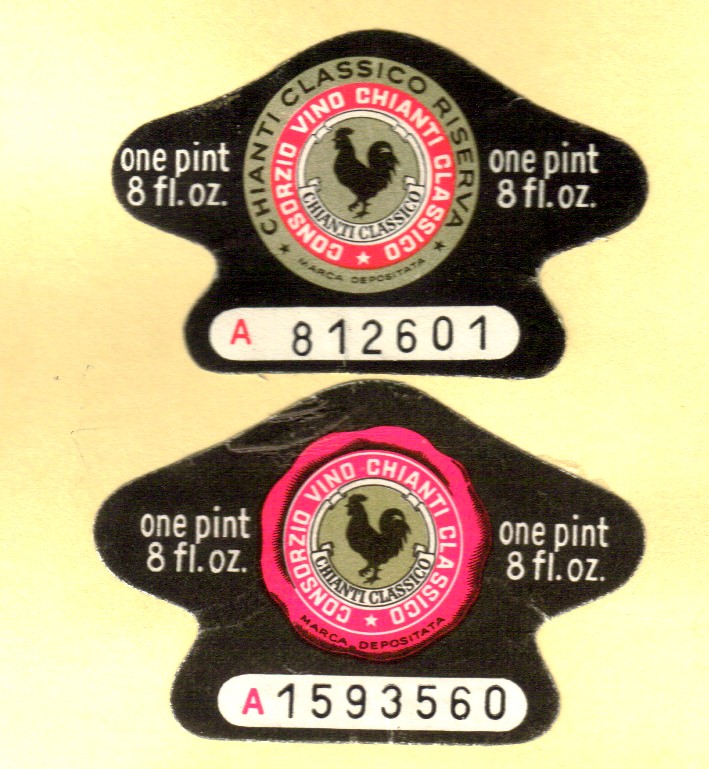
I have often mentioned Chianti and Chianti Classico, as it was one of the first wines that I tasted as a child, when we didn’t have homemade “Dago Red” as gifts. There is a highly romanticized story about how the Chianti area was originally created. The story centers on horse riders with one from Florence and one from Siena and they stopped when the cock crowed, hence the Black Cockrell which is seen on all the bottles of Chianti, except in the USA, because of an international lawsuit by the Gallos.   The area was first marked out in 1716 and significantly enlarged in 1932.  It was legally recognized in 1966 with the DOC laws and in 1984 it became Chianti Classico DOCG.  There are five other demarcated Chianti zones: Colli Aretini, Colline Pisane, Montalbano, Montespertoli and Rufina. The region is so large, with diverse altitudes, microclimate, soils and solar exposures that in 2021, eleven Unita GeoBlackgrafiche Aggiuntive (UGA) or Additional Geographical Units were designated.  The following UGA designations will be allowed on the front label, instead of just being part of the address of the winery on the back label: Castellina, Castelnuovo Berardenga, Gaiole, Greve, Lamole, Montefioralle, Panzano, Radda, San Casciano, San Donato in Poggio and Vagliagi.  
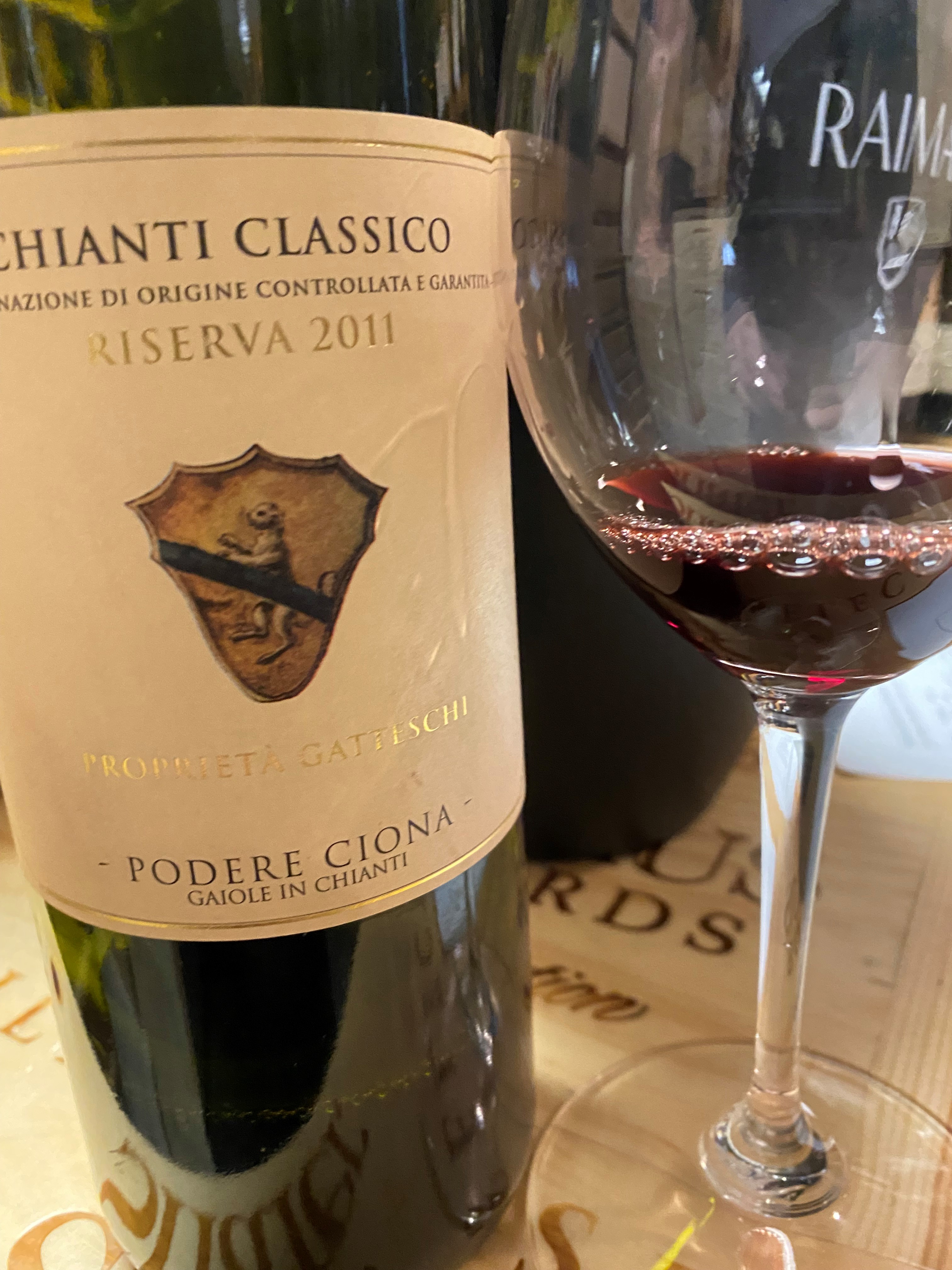
Lorenzo Gatteschi was offering current and some library wines in a vertical tasting of Podere Ciona Chianti Classico Riserva 2011, 2012 and 2015.  Since all of the wine is estate grown, it is all on the same quartz, clay schist and marl soil.  Each vintage had a slightly different blend, but at least ninety percent Sangiovese, then the balance basically Merlot, with only a couple of percentages of Alicante Bouschet.  The production methods were basically the same year after year of manual harvesting, berry by berry selection, initial fermentation for ten days on the skins in French Oak followed by twenty-five to thirty days of Malolactic fermentation on the skins in French Oak. The 2011 and 2012 vintages were then aged for eighteen months in a mix of new and used French Oak, and the 2015 vintage was aged for twenty-four months and then all vintages were aged an additional twelve months in the bottles before distribution. The winery is not huge and I have included the case production for each vintage: 2011 seven-hundred-seventy cases, 2012 six-hundred-seventy-five cases, and 2015 one-thousand-seven-hundred-ninety “six packs.” All of the vintages offered the deep ruby-red color, notes of red fruit, on the palate rich fruit and velvety tannins with a nice deep finish of terroir.  My immediate notes were: 2015 “perfect Chianti Classico,” 2012 “mellow and rich,” and the 2011 “excellent, all Chiantis should taste this great.” My notes for this fine estate, until the next time. 
Posted in Wine | Tagged , , , , , , , | Leave a comment

Four Super Tuscans from Podere Ciona

What could be better than enjoying a wine tasting curated by a winemaker; well, that is what was happening when I was at my local wine shop The Fine Wine Source.  Lorenzo Gatteschi was representing his family through their Podere Ciona wines from Gaiole, Tuscany, Italy.  Toscana IGT is the most famous of the IGT designations and it actually has three sub-regions already, and there are ten provinces that are allowed this designation.  Tuscany is the home of Italy’s most famous IGT category, but it was where this category forced the hands of wine classification for a new designation, because some of the wine makers felt constrained by the current rules, and originally had to use the lowly Vino de Tavola or Table Wine designation for their new wines.  Finally, in 1984, Sassicaia was granted its very own title of DOC Bolgheri Sassicaia and the floodgates were opened.  IGT is Italy’s version of the Common Market’s designation of IGP.

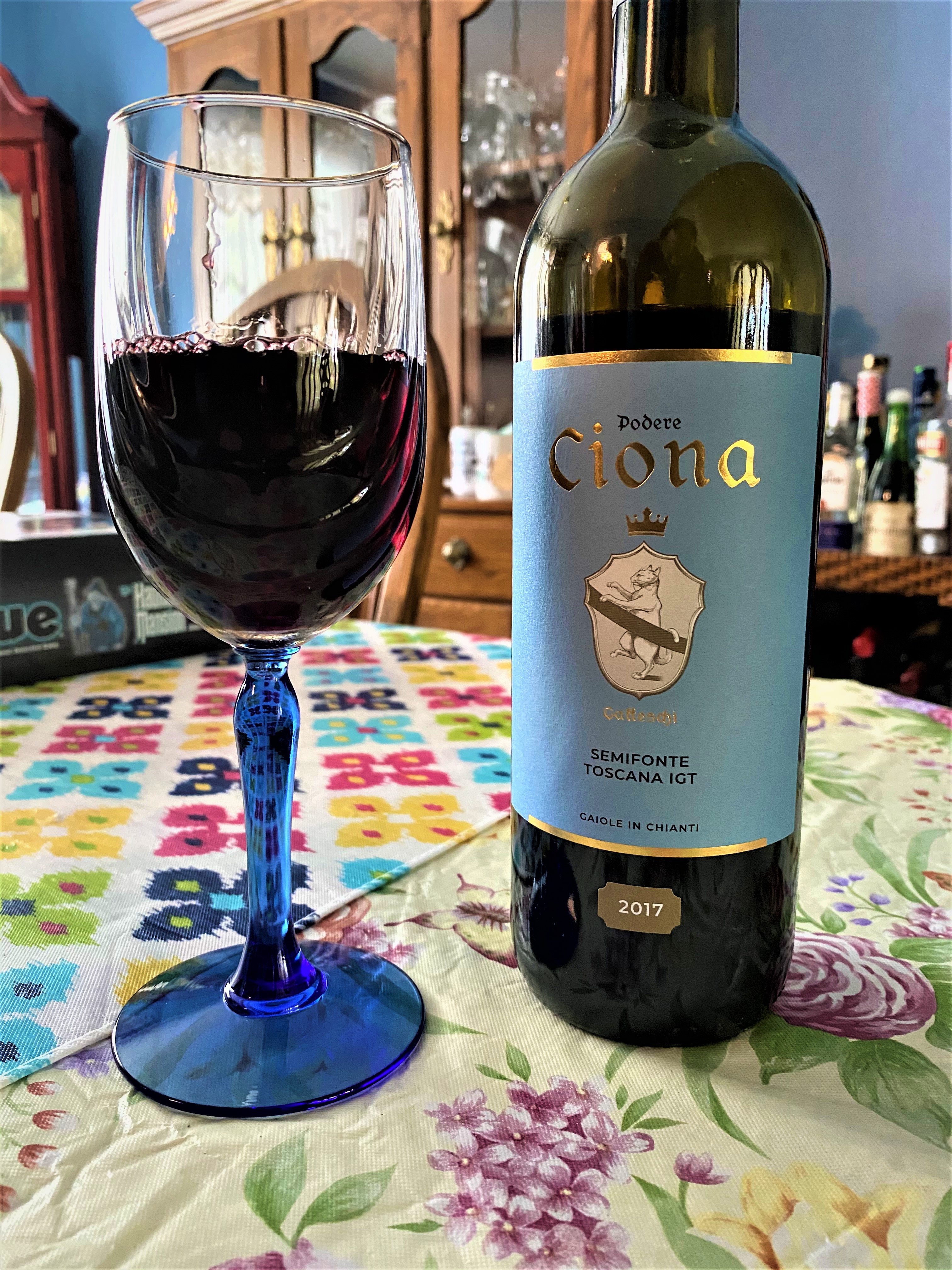
Our first Super Tuscan was Podere Ciona Semifonte Rosso Toscana IGT 2018, and in all the excitement of the moment, I somehow forgot to photograph this bottle, but I have a photo of the 2017 vintage, that we had with dinner one night.  The wine is a blend of seventy-five percent Merlot and twenty-five percent Alicante Bouschet from nineteen-year-old vines planted on their estate of quartz, clay schist and marl. The fruit is hand harvested and the initial fermentation is for ten days on the skins in Stainless Steel vats, with Malolactic fermentation occurring for an additional twenty-five to thirty days still on the skins and still in Stainless Steel. The wines were then aged for twelve months, seventy percent in French Oak barrels and thirty percent in once used French Oak tonneaux.  Afterwards, the wine was fined and did an additional twelve months in bottles before distribution.  There were two-hundred-six cases produced of this wine.  A pretty purplish-red wine with notes of red fruits, spices and nuts.  On the palate the taste of plums, nuts and pepper, on a balanced wine with a nice finish; of course, I have always been a strong advocate of Merlot.

We then had a nice vertical run of Podere Ciona Le Diacce Rosso Toscana IGT 2015, 2012 and 2011. Le Diacce is the estate’s flagship wine featuring their finest Merlot grapes with a touch of Alicante Bouschet.  The 2011 vintage was pure Merlot of twelve-year-old vines planted on quartz, clay schist and marl. Initial fermentation was for ten days in Stainless Steel vats, followed by an extended thirty-thirty-five days of Malolactic fermentation in French Oak barriques.  Aged for eighteen months in French Oak, with an additional twelve months in the bottle.  Two-hundred-fifty cases were produced.  The 2012 vintage was ninety-eight percent Merlot with two percent Alicante Bouschet.  Initial fermentation was ten days in French Oak, followed by thirty to thirty-five days of Malolactic fermentation in French barriques.  Aged for twenty-four months in a mix of new and once and twice French Oak barriques, with an additional twelve months in glass. Three-hundred-thirty cases of wine produced.  The 2015 vintage was ninety-seven percent Merlot and three percent Alicante Bouschet. Initial fermentation for ten days in French Oak, followed by Malolactic fermentation for thirty to thirty-five days in French Oak barriques, and the cellared for twenty-four months in a mix of new and used French Oak barriques, with twelve months in glass.  Three-hundred-thirty-three cases were produced.  The 2015 vintage was a deep purplish-red with notes of red fruit, chocolate and nuts.  On the palate was a feisty intense red berries flavor, balanced with a nice finish; this wine needs some cellaring in my humble opinion, but others were really excited about the fruit forward taste.  The 2012 vintage was deep purplish-red with notes of red fruit, chocolate and nuts.  On the palate the red fruits had mellowed with the tannins offering a great bottle of aged Merlot with a lingering finish.  The 2011 vintage reminded me of the 2012, but even more mellow and my first scribbled note was “excellent,” but then I extremely partial to mature wines, especially Merlot, and I make no bones about it.          

Posted in Wine | Tagged , , , , , , | Leave a comment

A Tasting with Lorenzo Gatteschi

Sometimes all roads lead to The Fine Wine Source in Livonia, Michigan; at least for me.  Lorenzo Gatteschi, winemaker of Podere Ciona in Gaiole, Tuscany was there hosting a tasting of his family’s wines. I was reading the history of the winery on their website “Franca and Franco Gatteschi were looking for a place in the countryside to retire to, after many years of working in Italy and abroad, when they came across a small, beautiful, albeit run down property: 100 acres of land, mostly wooded with 10 acres set aside for cultivation, of which 2.5 acres already had vineyards; a house from the 18th Century, abandoned for more than 40 years; and, above all, a view without equal on the Chianti hills, with Siena in the distance.”  It really sounds idyllic and makes one ponder how this property was neglected and ignored for years.  “They purchased the estate at the beginning of 1990 and they immediately started the reconstruction work on the main house (it took nearly three years). They also set up a small but well- equipped wine cellar for making wine. In 1996 they permanently moved to live on the estate and the following year, the great 1997 vintage, saw the birth of the first “official” wine of Podere Ciona: A Chianti Classico DOCG Riserva.”

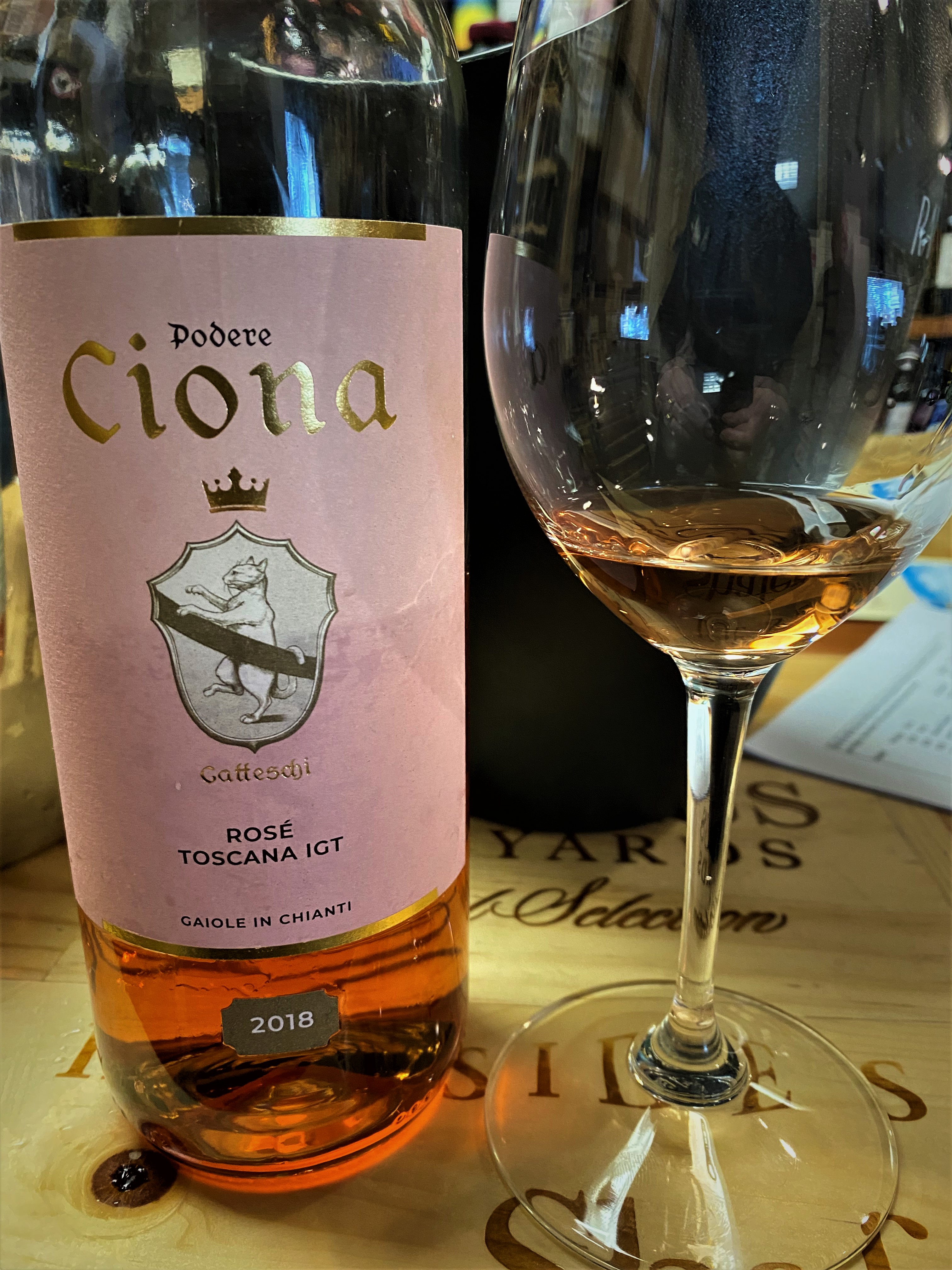
Lorenzo is a fine gentleman of the “Old School” and was very gracious, in fact each time that I have met him, I get the same feelings.  After dealing with the public for fifty years, I think I have developed a keen appreciation for the qualities of a gentleman.  We started off with Podere Ciona Rosé Toscana IGT 2018 made entirely of Sangiovese in the saignée method.  The vines are from six to nineteen years of age and planted on quartz, clay schist and marl.  The fruit is harvested manually in small baskets and then de-stemming, berry by berry for a slight crush in Stainless Steel vats for ten to twelve hours of skin contact and no Malolactic Fermentation. The wine is then aged for about six months in Stainless Steel and then further fined and bottle aged for six months before distribution. There was about one-hundred-eighty cases produced of this wine.  A pretty salmon-pink color with notes of fruit and spices, just a well-balanced light and easy drinking wine with a nice medium count finish offering terroir.

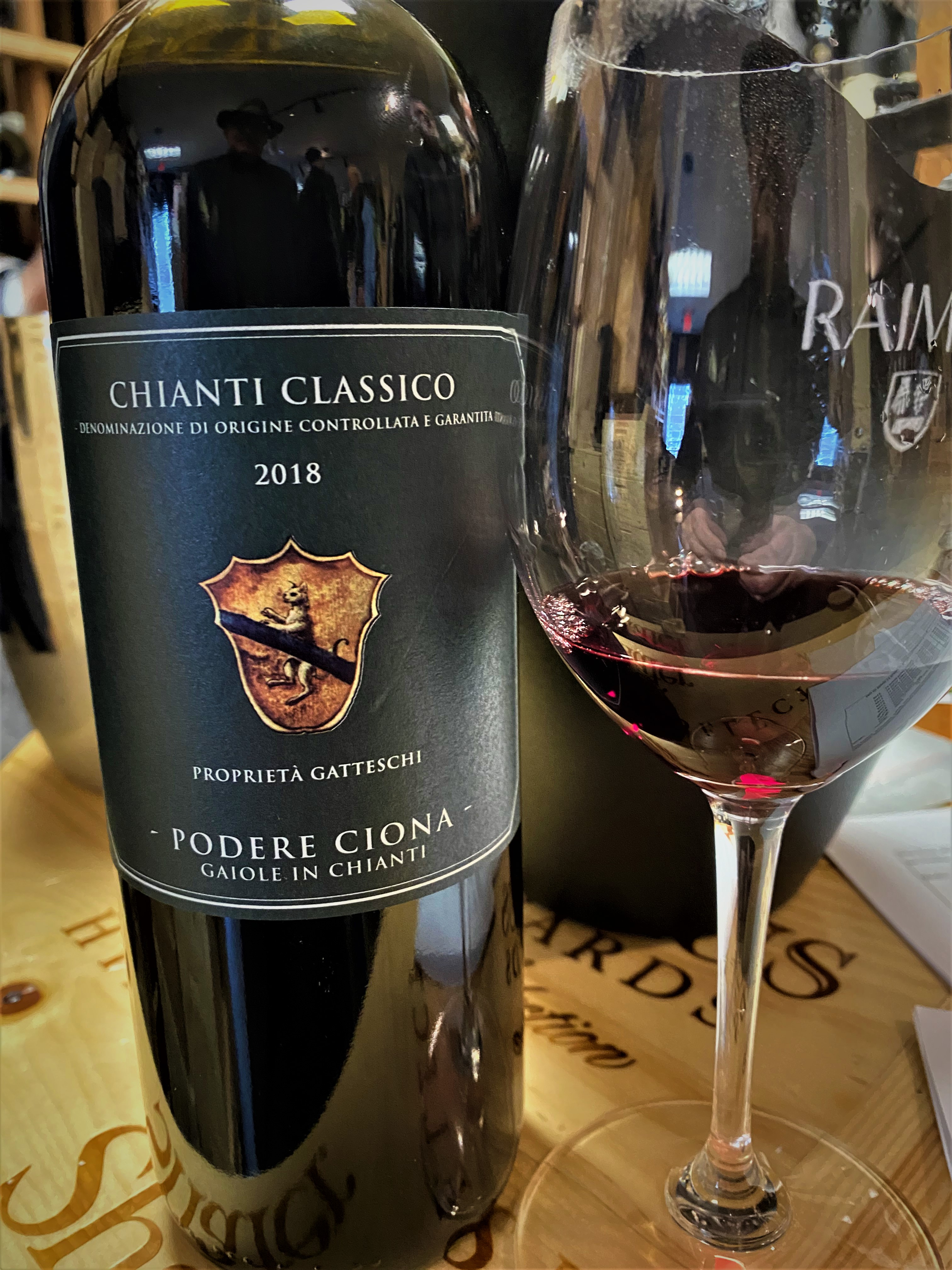
We then had the Podere Ciona Chianti Classico DOCG 2018. This wine is a blend of eighty-eight percent Sangiovese, ten percent Merlot and two percent Alicante Bouschet and planted on their quartz, clay schist and marl.  The ages of the Sangiovese vines are from seven to seventeen years of age, while the Merlot and Alicante Bouschet vines are eighteen years of age.  Once again, the fruit is hand harvested, crushed and initial fermentation is done in Stainless Steel vats for ten days, and then an extended twenty-five days on the skins during the Malolactic fermentation. Seventy percent of the wine is then aged in French Oak barrels, while thirty percent are aged in large French Oak tonneaux for twelve months, with an additional twelve months in the bottle, before distribution.  Three-hundred-fifty cases were made of this wine. The wine was a lighter ruby shade with notes of red fruits and spices, while on the palate notes of cherry, spices, softer tannins and well balanced with a nice medium finish of terroir.  Great for easy drinking or with food.    

Posted in Wine | Tagged , , , , , , , , , | Leave a comment

Thats “Amore”

“When the stars start to shine, like you’ve had too much wine – that’s amore.”  If you are of my age and era, those lyrics are totally recognizable.  One of his trademark songs, in fact, I can’t think of anyone else doing a version of that song, except for his old partner in a film clip from one of their movies.  Dean Martin was singular and did music, radio, film and television and mastered each venue and always made it seem so simple and fun.  When I was a kid in elementary school, my parents would allow me to stay up on Thursday nights only, to watch The Dean Martin Show which broadcasted at 10:00PM when I had to go to sleep at nine, the rest of the week. 

As you know, I tend to ramble on, and all this is because I belong to several different social media sites and one site, periodically I see photos from a page that is a Dean Martin adulation page and I think it is out of Steubenville, Ohio.  Now, I have been to many places in Ohio, but I have never been to Steubenville and maybe in my retirement, we may go there for a weekend to wander around.  If you are a fan, you know that is Dean’s hometown.  Anyway, there was a photo that piqued my interest.  A bottle of “Amore” Dean Martin 80th Birthday wine.  There was nothing else I could learn about the wine, though it would be a great label for my scrapbook.  I will surmise that it is a red wine, but beyond that, I am lost. 

I know that this is a fluff piece, but it would gnaw at me, if I didn’t write about this wine.  I grew up watching the Rat Pack and knew all of their corny jokes, and they are very tame compared to what is considered comedy today.  Las Vegas has been a Siren call to me, since the Seventies.  Before Dean performed at the “Megum” which is how he pronounced the MGM, he and the boys entertained at The Sands, which was also the homebase for their home movie “Ocean’s 11” and to me, it is still entertaining.  My Bride once had to put her foot down and say no, when I saw a full-size movie poster of that film, signed by every star, every co-star, and every cameo actor in the film.  There were only two problems, the poster would have been difficult to display properly in our house, and back in the day, it was about the price of Cadillac Eldorado Biarritz.  Maybe one day, I will find a bottle of the wine or the label, until then I can just admire all of the talent that appeared one week at The Sands. 

Posted in Uncategorized | Leave a comment

Rodney Strong Pinot Noir

Every now and then, you go out with friends for dinner, and with a group, it is fun, but not everyone likes the same stuff.  That is just human nature. On occasion, you also have to make arrangements with the server, if the bar tab is coming to you, or if you want to treat with a special dish or appetizer.  Why, should the server get broadsided with little things.

We went out to eat the other night, and I am glad to see that restaurants are filling up again, even if they are still using abbreviated hours.  We started with a couple of appetizers, they chose Fried Brussel Sprouts with Balsamic Syrup, Bacon and Bleu Cheese (of which I refrained).  So, I also ordered Salmon Pâté with Pickled Eggs and Sesame Crackers.  Three of us had soup, and one had a salad.  The other couple’s wife had Fruit de Mer with Scallops, Mussels, Salmon, Shrimp, Fettuccine with a White Wine and Garlic Provencal Sauce and he had a Grilled New York Strip Filet with Parmesan French Fries, Vegetables, Red Wine Sauce and Casino Butter.  My Bride had Blackened Mahi Mahi with Spinach Fettuccine, Italian Sausage, Bell Peppers, Onion, Baby Kale, with a Roasted Red Pepper Cream Sauce and Parmesan Cheese.  While I had Braised Short Ribs of Beef with Mashed Potatoes, Vegetables, Crispy Onions and a Red Wine Reduction Sauce. 

Many times, people get gun-shy when looking at the wine carte, because there is usually a big gap between the “expense account” wines and the next plateau.  Some get hesitant and fall back and just order a glass of wine from the bar.  I like to find a diamond in the rough, if I may say.  We had a bottle of Rodney Strong Vineyards Pinot Noir Russian River Valley 2018 from Sonoma County.  Rodney Strong was a former professional dancer and founded the winery in 1959 and he is regarded as a pioneer of Sonoma wines.  Originally buying bulk wine to be bottled and sold as Tibouron Vintners.  In 1962 he bought a winery and vines and formed Windsor Vineyards and it was later changed to Rodney Strong Vineyards. In 1989, the Klein family bought the winery and Strong was kept on as a consultant until his retirement in 1995 and he passed away in 2006.  The wine had a pretty ruby color and notes of plums, brown sugar and spices.  On the palate the wine had moderate tannins blended with baked cherries and spices, with a medium finish.  Just a nice pretty and easy to understand wine.     

Posted in Dining, Wine | Tagged , , , , | Leave a comment

Monkey See, Monkey Do

That is an expression that I used to hear when I was child. I came to me, this past month, where all of a sudden people were espousing “Dry January.”  What is with that?  So many businesses have been hurt if not ruined in the last couple of years, and now we have a wave of people that want to put more people out of work. I don’t want to see distilleries, breweries or wineries suffer and not to mention distributors and retailers, because all of a sudden, some new trend appears on social media and everybody thinks that they have to be “cool.” I do everything in moderation, I certainly don’t over drink, and if it wasn’t for the last two years, I hardly ever drank at home, unless we had company.  For a while, we couldn’t even go out, unless we were possibly a governor or a big politician and then they were contrite, only because they were caught.

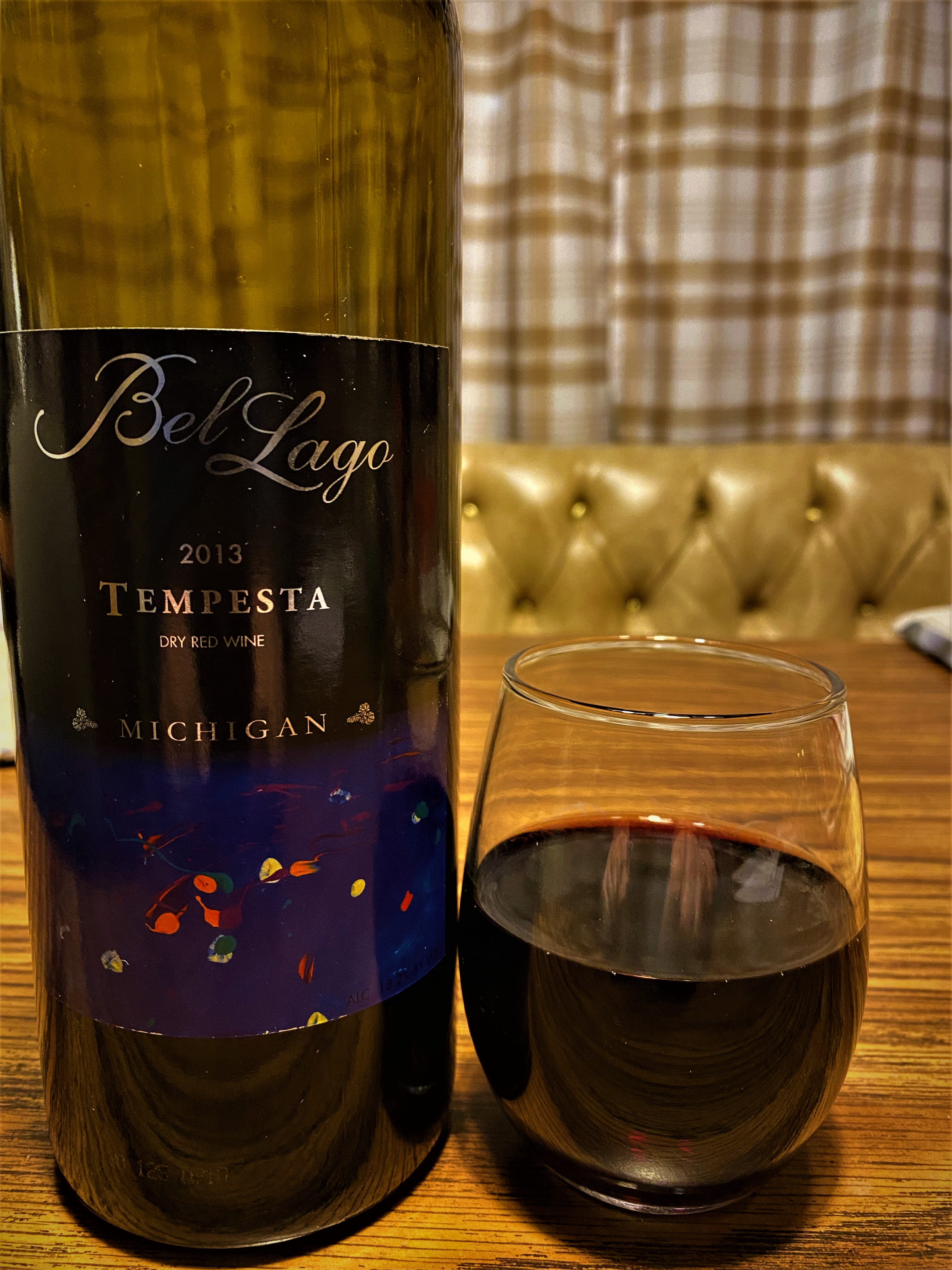
We have not had a “Dry January” as we do most things in moderation.  We have some changes coming up, so we have been continuing with dining in. I mean the wines are much more affordable and most have been curated at Casa Raconteur.  One night from the cellar we had a bottle of Bel Lago Vineyard and Winery Tempesta Michigan 2013, the flagship of the winery, when we did a tasting there.  The winery was founded in 1992, and the winery’s name translates to Beautiful Lake, which is fitting, since Michigan is the Great Lakes State.  The winery is on thirty-seven acres and they grow about a hundred varieties from Cold Hearty to Vinifera.  The winery produces about twenty-thousand cases a year, and they enjoy experimenting with extended barrel aging.  The Tempesta is a blend of predominately Cabernet Franc with Merlot, Regent, Lemberger and Marquette.  Each wine in this blend was fermented on the skins for several weeks before pressing.  After selecting a few barrels of each wine, the wines are blended and returned to the barrels for thirty-two months in a mix of French and American Oak.  For a quiet and private dinner at home, this wine was excellent and the Cabernet Franc really came through.  A beautiful deep wine, with notes of black fruit, floral and spices, and on the palate, a perfectly blended with offerings of fruit, oak, balanced tannins and a medium length finish of terroir. A perfect example of what a Michigan wine can offer and we really didn’t buy enough of this wine when we were at the winery.

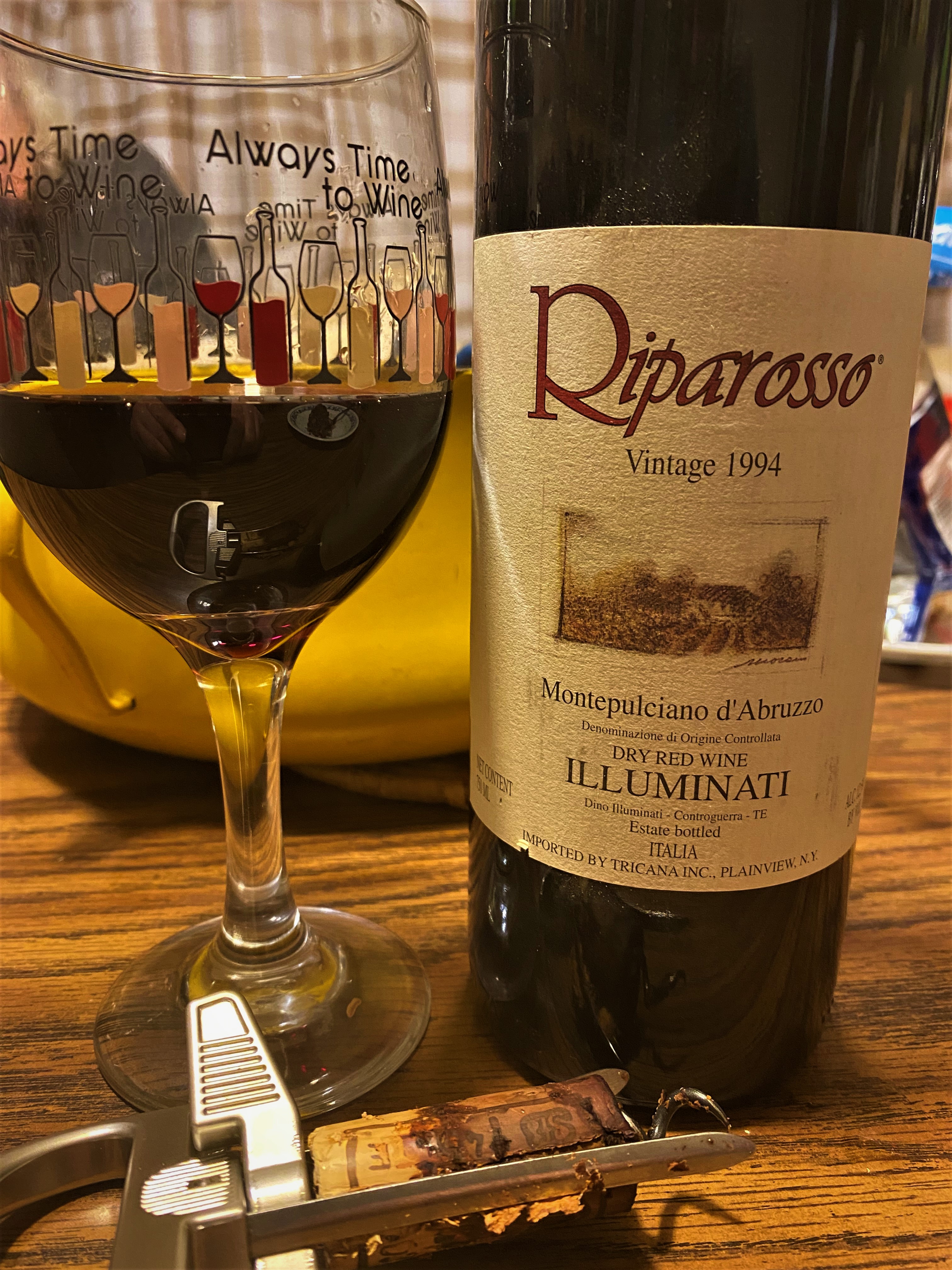
Another night in January, I came up from the cellar with a wine that truly made my Bride smile. It was hardly our most expensive wine, but it has a great spot in our heart and we have an assortment of vintages that I just like to keep to enjoy when the mood hits.  We had a bottle of Illuminati Riparosso Montepulciano d’Abruzzo 1994 from Azienda Aericolo Dino Illuminati and was founded in 1890 and they are famed for their wines.  The wine is pure Montepulciano, and this particular wine is from fruit harvested from one single hillside vineyard.  The wine is aged for eight months in Slavonia Oak and then is aged an additional two to three months in the bottle before release.  For years, this was one of our go-to wines, especially in our favorite restaurant back in the day.  When young the wine is big and fruit flavored and at twenty-eight years of age it offered the elegant charms of a mature wine with layers of complexity of fruit, tannins and terroir and we were both extremely pleased with this wine, as neither of us knew what to expect, as we had never had this wine that old, and it will be a joy to try some of the other vintages that we still have.  As you can see, our “Dry January” was celebrated with dry wines.     

Posted in Wine | Tagged , , , , , , , , , , , , , | Leave a comment

A Couple of Amarone Wines

There I was tasting some wines and offering my lay opinions at The Fine Wine Source in Livonia, Michigan, which sometimes seems to be my home away from home.  I was getting ready to leave and then a couple of Amarone wines were brought out for tasting.  You know that they really had to twist my arm and apply a lot of pressure to have me taste some wines.  I may not be the greatest wine blogger, but I have a good idea that anyone reading this, has an interest in wine. 

All Amarone wines are from the most famous red wine district in Italy’s Veneto wine region Valpolicella.  In the late Sixties, the region was granted DOC status and the region has experienced a see-saw growth in popularity and demand, and quality at times also experienced the same ups and downs.  Some wags have even gone as far as to call Valpolicella the Beaujolais of Italy, because of the trials and tribulations that the region has gone through in the thirty to forty years after the DOC status.  The wines were popular, because they were very easy drinking and, in the summer, they were enjoyed slightly chilled. The big surge in demand and respect came with the growth and acceptance of Amarone and Ripasso wines.  Amarone della Valpolicella is made from dried (passito)grapes. Originally the grapes were dried on straw mats, but modern technology has created special drying rooms and apparatus to achieve this goal now.  The dried grapes are gently pressed and this special must (juice) is fermented to a dry wine.  The high sugar content creates wines with a higher proof of 15 to 16.  Then the wine is aged in barrels for at least two years.  The creation of Amarone wines also created a secondary wine product called Valpolicella Ripasso, where the dried skins and wine go through a secondary fermentation and this has been given DOC status, in 2007 as well. 

The first wine was Fratelli Vogadori Amarone Della Valpolicella Classico DOCG 2016.  Their website seemed to stress hotel accommodations and little about the winery.  The grapes are hand harvested in boxes and allowed to naturally dry in a drying room.  The wine is a blend of Corvina, Corvinone, Rondinella, Oseleta and Negrara.  The fermentation takes place in Stainless Steel and takes about fifty days. The wine is then aged in French Oak for twenty-four months and then an additional twelve months in the bottle before distribution.  The wine is a pretty dark ruby red with notes of raisins, cherries and spices, and a rich complex taste and I would describe it as velvety with a nice finish. The second wine that we had was Azienda Agricola Musella Amarone Della Valpolicella DOCG 2013.  This winery appears to be rather new and they mention that they have three vineyards and hotel accommodations.  The first year of production is 2006, and this wine is a blend of Corvina, Corvinone, Rondinella and Oseleta.  The fruit is harvested from a vineyard of twenty-seven hectares of predominately iron red clay.  The fruit was dried in a special drying room and then a soft pressing and fermentation is done over a period of four days. The wine is aged for twelve months in French Oak in several assorted sized and after bottling remains another eight months before distribution.  This wine had a beautiful ruby color, with notes of raisins and spices, on the palate, it had more layers of complexity, that I attribute to the additional age and a beautiful lingering finish.  I very seldom encounter people that don’t appreciate an Amarone wine.    

Posted in Wine | Tagged , , , , , , , , , , , | 2 Comments

Stufato di Frutti di Mare

One day in one of my enjoyable trips to my local wine shop The Fine Wine Source in Livonia, Michigan, I was just getting ready to leave and I got waylaid.  Now I realize that it sounds peculiar that I would have trouble leaving a wine shop.   A customer came in, and I figured that it would be the perfect time to leave, but he came in with a request for some popular priced wines to go with a dinner that he was going to make “Stufato di Frutti di Mare” or Seafood Stew, but the kicker was that it would be in a tomato base.   Immediately everyone thinks of white wines with seafood, but the tomato base threw a monkey wrench in the discussion. I normally wouldn’t chimed in, but when I was asked, I had to answer, but I try to demur to the professionals.  I thought of years ago when I used to attend a big Italian family Christmas Eve party that was only offering platters of seafood, a tradition.  I and the consultants thought of big and spicy red wines.  So, I was called in for a tasting, imagine that.

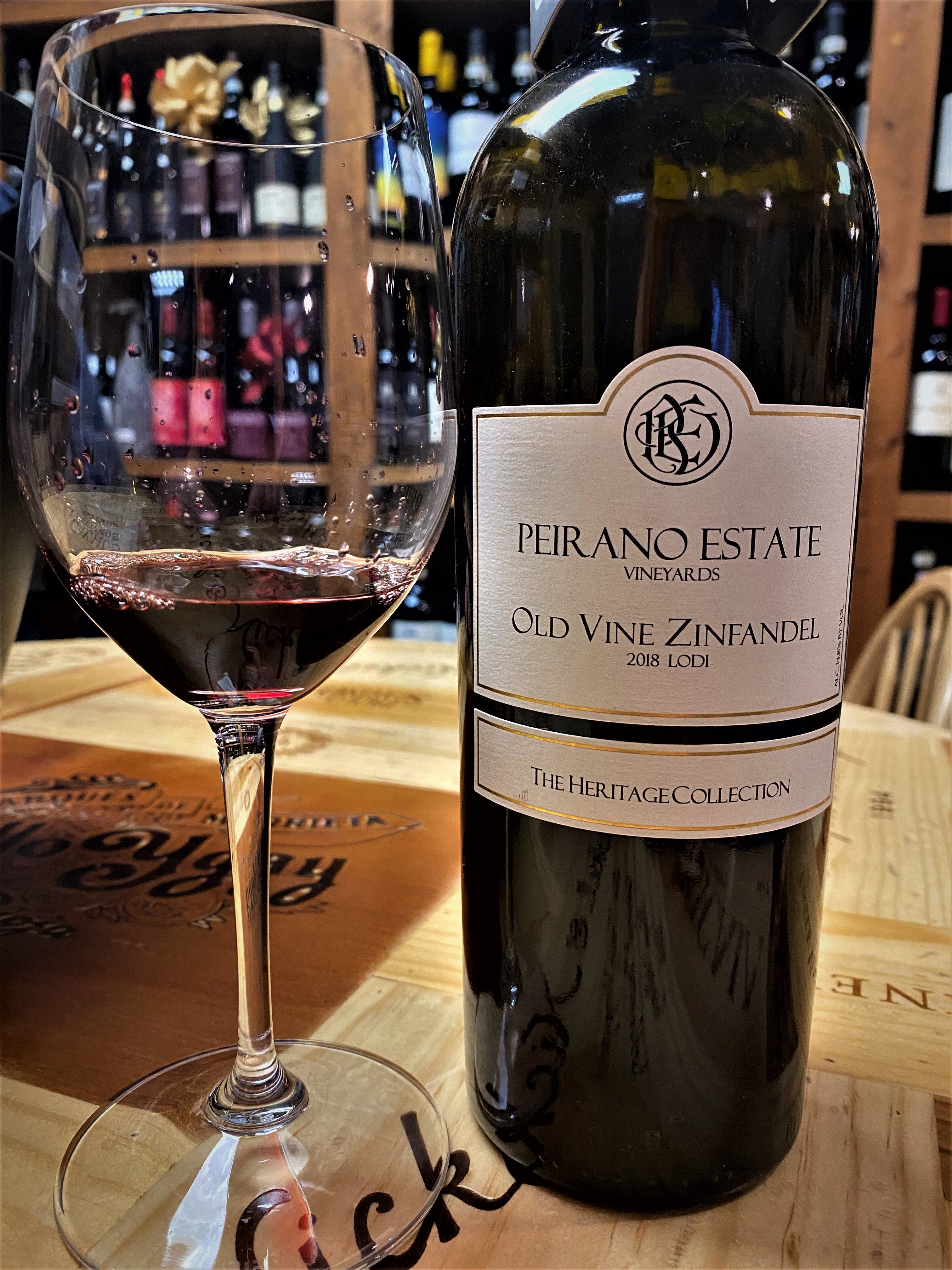
One of the first wines that I thought of was Primitivo, because my brain thinks of matching ethnic cuisine with like wines, but I thought Primitivo might be a bit heavy.  Then someone suggested Zinfandel, which is the American Primitivo, but I think with a bit more fruit and spice, made for the wine critics who like jammy wines.  We all tried some Peirano Estate Vineyards “The Heritage Collection” Old Vine Zinfandel Lodi 2018.  In 1879 Giacomo Peirano, a grape farmer from Genoa, Italy immigrated to San Francisco in hopes of becoming a gold miner, he realized that he was too late and moved to Lodi, home of many mining camps.  He opened up a shop to cater to the miners’ needs, he was successful, and went back to Italy to fetch his wife and brought back Italian Zinfandel cuttings as well.  He bought a three-hundred-acre farm and planted seventy-five acres of vines.  The family has been successful to this day with five generations.  This wine had a long growing season with low yield crops from over one-hundred-twenty-year-old Zinfandel vines.  The fruit was handpicked, lightly crushed in the tanks and fermented on the skins for dryness.  Then aged in a mix of French and American Oak, of which fifteen percent was new, for about eighteen months.  The deep burgundy colored wine offered notes of black fruits and on the palate, there was black cherries, plums, cocoa and spices with moderate tannins and good acidity; with a nice moderate finish beckoning for another glass.  I think we all agreed that this would be perfect with the planned dish.       

Then it was suggested to try a nice Mediterranean style wine as well, Bodegas Alto Moncayo Veraton Garnacha 2018 is a fine example of wine from Campo de Borja DO.  The town of Borja has a long history going back to 5 BC and thought to be from tribes of mixed Iberian and Celtic stock.  The Borgia family, that is famous in Italy, during the Renaissance, and produced two Popes, were of Borjan origin.  The winemaking goes back to the time of the Romans and the Cistercian monks.  Rain is scarce in the region, the low regions are of brown limestone, while the middle elevation offers soil of deposited stones and iron-rich clay, while the highest elevation in the Moncayo foothills offer stones, iron and lime.  I had to show two different views of the label, because the pretty part, doesn’t identify the wine, unless you already know the artwork.  This wine is made from vines that are thirty to fifty years of age.  The wine is barrel aged for sixteen months.  This wine had a nose of dark fruits, and those fruits follow through on the palate along with a touch of chocolate, nice tannins, balanced with a medium count finish with terroir. Another winner for the dish, and the customer wasn’t sure, so he decided to get six of each for the dinner party.                                   

Posted in Dining, Wine | Tagged , , , , , , , , , , , | Leave a comment

Up in the Balcony

Some people may not even know what a balcony is, the multi-plex movie theaters don’t have them, and most local neighborhoods don’t have a movie house either.  When I was a kid, my local neighborhood had two on one block and there were another six or so within a couple of miles. We went to the Redford Theater for a double feature.  First, I have to explain that the Redford was built when movie houses were shrines to the cinematic arts, and now this theater is in an old community in Detroit and is managed and run by an all-volunteer staff; and they even make real popcorn and they have a pipe organ. We sat up in the balcony and watched two films made in 1932 when films were racy and eventually the Hayes Office developed teeth and scripts were censored, before the film was filmed.  Think of the problems that developed because of “Frankly my dear, I don’t give a damn” and the amount of cleavage that Jane Russell could show, because of the Hayes Office.

We started the evening off at John Cowley & Sons Pub in Farmington, Michigan as we both felt like having a burger, and we have frequented this establishment many times, they even have curated wine and food nights, which we have never tried, as it usually conflicts with other planned events.  As we started looking at the menu, my Bride decided that she wanted one of the special menu offerings for the night, a Walleye Dinner with Sweet Potato Fries and Broccoli. I stuck with my guns and had their Downtown Dublin Burger of a half-pound Angus burger with Corned Beef, Caramelized Onions and Thousand Island Dressing.  We also had a Hot Chocolate Lava Cake that we shared afterwards. 

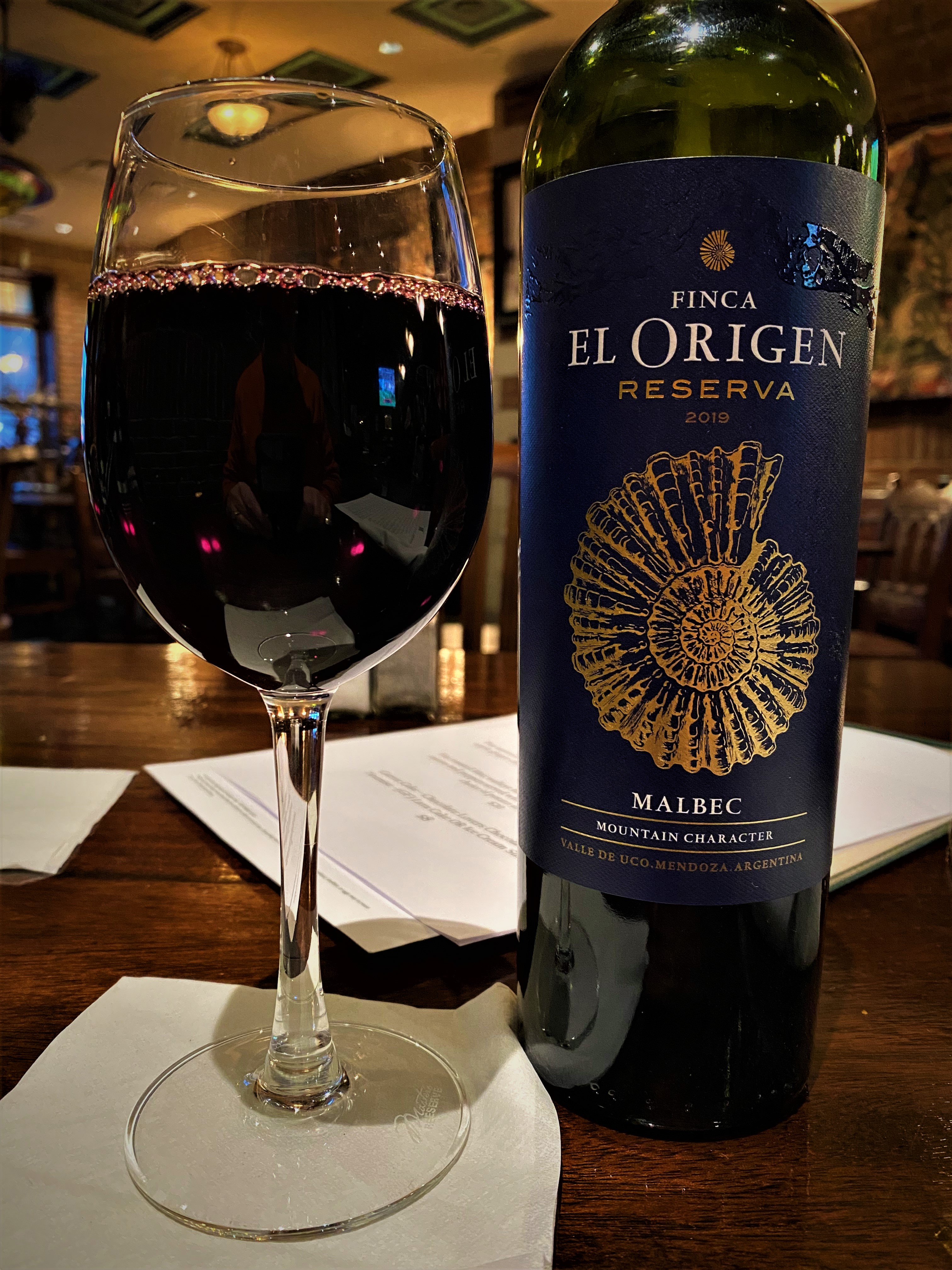
Since my Bride had backed out of the burger, she told me that she was going to have a Spanish Coffee with her fish dinner, especially since it was so chilly outside.  I was undeterred and had a glass of Finca El Origen Reserva Malbec Valle de Uco, Mendoza 2019.  Finca El Origen is a relatively new winery as they were founded in 1996, but located in a great location as they are in the Valle de Uco, which is a defined region in the much larger Mendoza district of Argentina and Malbec is the King there. The winery is owned by Vigna Santa Carolina of Chile.  This wine is from a single vineyard Los Chacayes.  Fermentation was for two weeks and thirty percent of the juice was aged with French Oak contact for six months, and I must surmise that the balance was aged in Stainless Steel.  The wine had notes of red fruits and vanilla, but on the palate, it was more black fruits and spices with full tannins and a medium finish of terroir.  After dinner we were off to enjoy the two titillating films.       

Posted in Dining, Wine | Tagged , , , , , , | Leave a comment

Club Selections – January 2022

This is the time of the year that one wants to cocoon in the house with the cold and snow, but The Fine Wine Source has their monthly Club Selections and that is worth getting all bundled up and braving the elements.  Joining the Club was a no brainer, there was no up-front costs, they just bill the credit card once a month and I go and collect two bottles of wine, one representing the Old World and one representing the New World. 

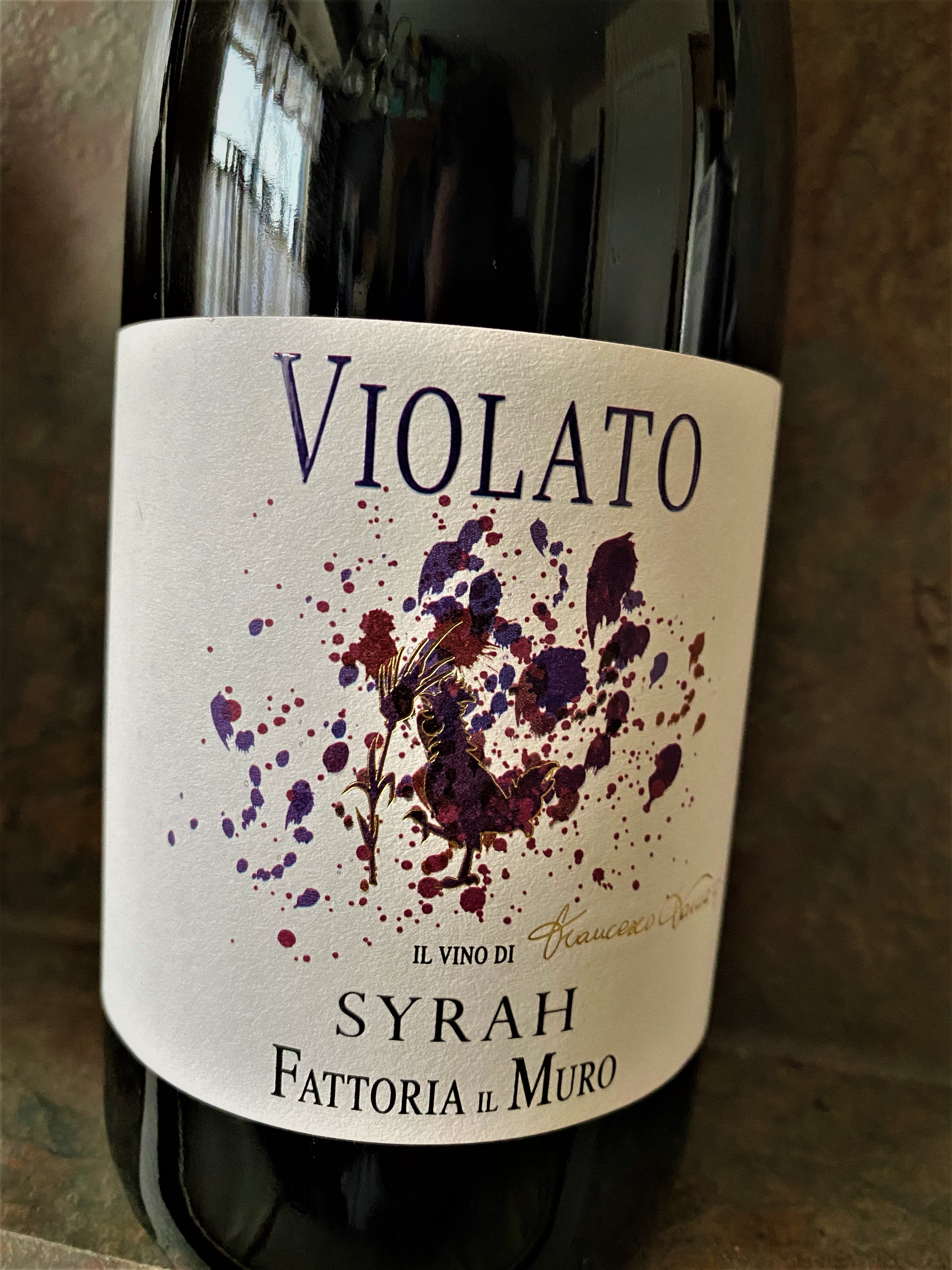
Fattoria il Muro “Violato” Syrah Rosso di Toscana IGT 2016 represents the Old World for this club selection.  The estate of “il Muro” has been in the Pancaro family for over two centuries and has always been for wine cultivation.  The location is perfect as it is the heart of Tuscany with moderate temperate climate and soil of loose marl and limestone; and not far part of the Alpe of Poti, part of the classic bicycle Tour of Italy “Strade Bianchi” held every March.  The estate is sixty-five-hectares of mainly vineyards and olive groves.  Though they have been producing wine for over two hundred years, it was only in 2011 that they labeled their own wine. The name of the wine is for the deep purple of the Syrah wine and the label features splashes and stains of the wine.  The juice was fermented in Stainless Steel and then aged for six month is large chestnut barrels.  The wine is described as having notes of both red and black fruits along with black pepper and violets.  On the palate it is full bodied with silky tannins and a long finish of terroir; and recommended for big, hearty meals and tomato sauce dishes.

The New World is represented by Fess Parker Frontier Red Lot 211 Central Coast NV. Now, you have to understand that when I hear Fess Parker, I immediately think of Walt Disney’s Davy Crockett and later on as Daniel Boone.  He left Hollywood and went into real estate and did extremely well.  In 1988 he purchased the Foxen Canyon Ranch of seven-hundred-fourteen-acres and had originally planned on running cattle and a small vineyard with a potential winery for his children.  He was successful in all his endeavors and his children are both hands on with the winery.  This wine is a blend of thirty-two percent Syrah, twenty-three percent Grenache, sixteen percent Sangiovese, twelve percent Zinfandel, twelve percent Merlot and five percent Alvarelhao (Alvarello).  The wine carries the Central Coast AVA as the fruit is from the Santa Ynez Valley, Santa Barbara County, Paso Robles and Central Coast vineyards.  The wine is not listed by vintage, but the Lot Number does change, I guess after each bottling, and there was just under five-thousand bottles produced of Lot No. 211.  The wine is described as having big, rich fruit flavors and spice.   Notes of black plum, cedar, hickory and blackberry.  While on the palate flavors of red cherry, boysenberry, tobacco and grilled herbs with spicy, earthy tones.  The wine was described as the perfect “Tuesday Wine.”     

Posted in Wine | Tagged , , , , , , , , , , , , , , , | Leave a comment