Fine Wine Source Wine Club Selections December 2022

Well, I did stop at my local wine shop, The Fine Wine Source in Livonia, Michigan, to pick up the wine selections for the month of December.   As you have noticed, I spend some time at this shop, as they have a great selection of wines not normally encountered, as each is curated by the owner and his staff, and they have a great wine club to boot.  It is not uncommon to keep seeing the same faces, stopping by to taste some wines and take some home; some days it is like a family reunion.  While I was getting my wine club selections, they asked me if I wanted to try some wine, it must have been rhetorical, but those wines are for another time.
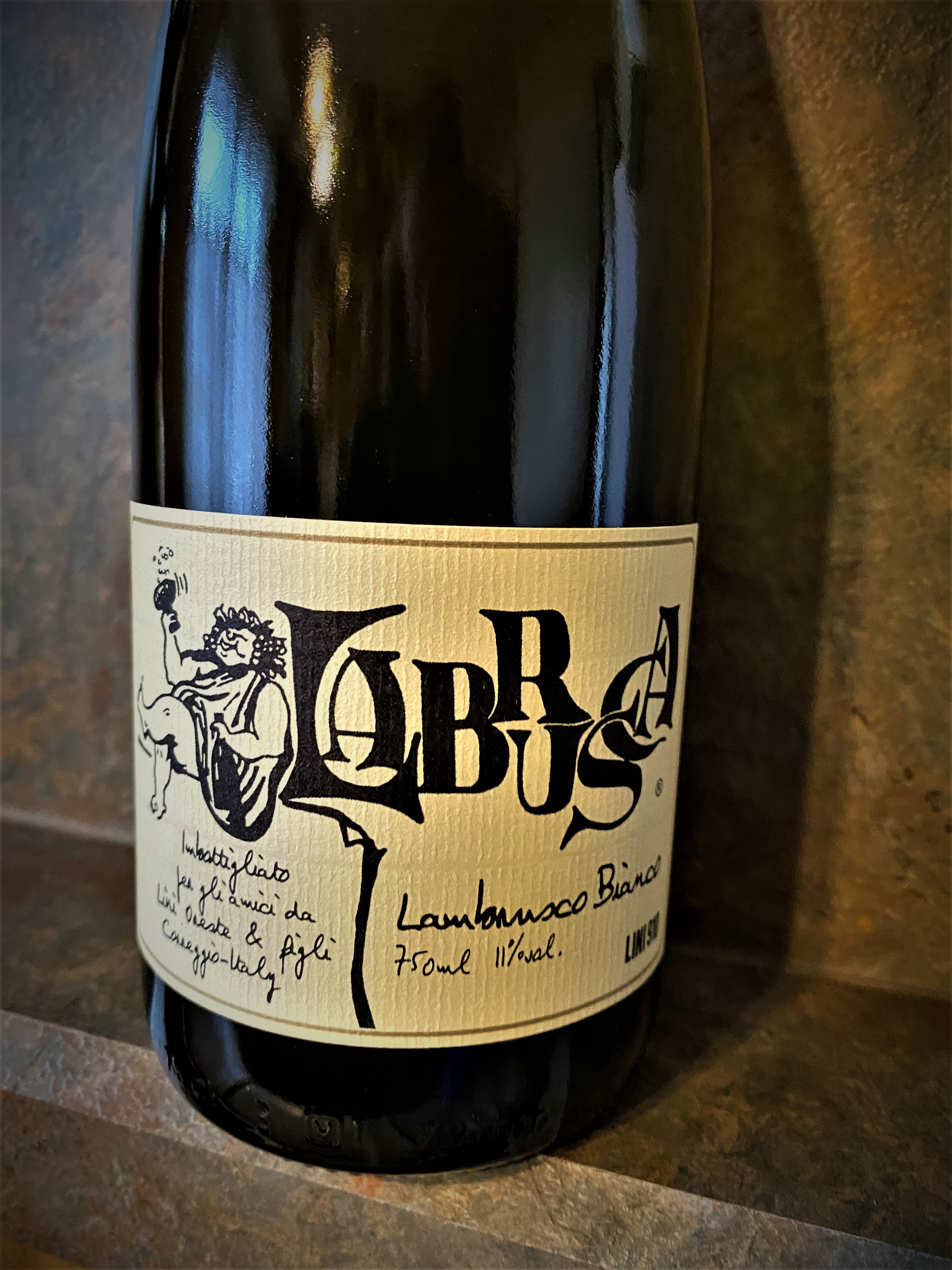
The first club selection was representing the Old World was Lini 910 “Labrusca” Bianco NV from Lini Winery of Correggio, in the heart of Emilia-Romagna and minutes away from Carpi, which is considered the Lambrusco Capital.  Founded in 1910 by Oreste Lini, this family-owned and operated winery is now in its fourth generation.  The current generation has maintained the family tradition of creating a benchmark for artisanal Lambrusco and their trademark of a dry Lambrusco.  For some of their wines they use the Metodo Classico, which is the approved name in the EEC for making a sparkling wine similar to Champagne.  The Lini Winery was also the first Lambrusco to get listed in Wine Spectator’s Top 100 Wines of Italy.  Labrusca is the ancient Roman name for Lambrusco and is considered by many to be the first grapes used to produce wine in the region; and Bianco means white.  Labrusca originally was meant for the “wild vine” grape varieties and their clones and one of these is Salamino, and this wine is pure Lambrusco Salamino vinified white in a sparkling wine.  The wine is from Emilia and was processed using the Charmat Method, which is the bulk production system used for Prosecco and many other sparkling wines world-wide.  The wine spends about three quarters of a month in large pressurized tanks (the Charmat Method).  The wine is said offer a savory and salinity experience with tones of red fruit and berries and juicy minerality with a clean and lingering finish.
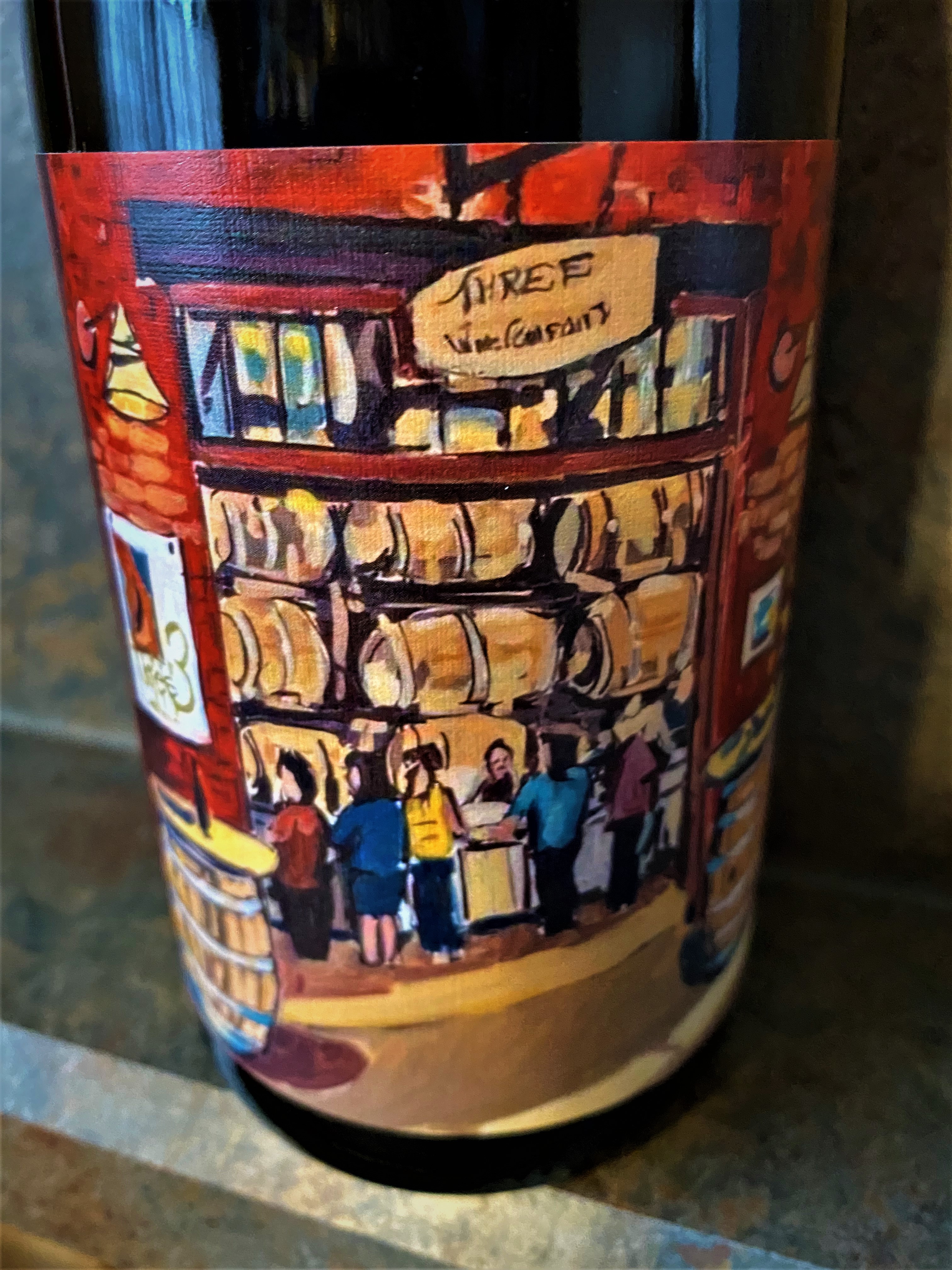
The wine representing the New World is Three Wine Company Gather Red Blend Contra Costa County 2019 and their sentiments are “the dirt, the micro-climate and don’t screw it up.”  Actually, winemaker Matt Cline’s philosophy is that; the dirt, the micro-climate, and sustainable winegrowing form the cornerstone of good winemaking, and he places them in every bottle of wine he produces. He has a passion for preserving and educating on the historic varietals to California, such as Zinfandel, Mataro and Carignane.  The grapes sourced for this wine are from plantings in and around the Bay Area town of Oakley in the north-east corner of Contra Costa County.  All of the grapes come from vineyard blocks with extremely sandy-loam soils called Delhi Loam.  The wine is a blend of sixty-four percent Carignane, twenty-six percent Petite Sirah, four percent Mataro, four percent Black Malvoisie and two percent Alicante Bouschet.  With Carignane as the basis of this wine this deep-dark wine offers notes of black fruits and spices.  On the palate black cherry and pepper (Petite Sirah), balanced with a lingering finish of pepper.  Described as a showstopper.           
Posted in Wine | Tagged , , , , , , , , , , , , , , , , , | Leave a comment

Cabernet Franc Day

In the calendar of holidays devoted to wine days, one of the latest to be entered is Cabernet Franc Day, spearheaded by a winemaking couple in California that fell in love with one of the older grape varietals.  Not only that, but they were finally approved to have a tasting room and fortuitously it was announced by them on Cabernet Franc Day.  It is considered the third grape of Bordeaux and science has proven that it is the father of Cabernet Sauvignon and lately to found also to be part of Merlot; which explains why the grape is so often blended with those grapes.  And as a personal aside, it is the grape for my Bride, which I sometimes take advantageous of, when I am selecting a wine.  My own belief is that, I think it displays terroir the best of all the red wines. 

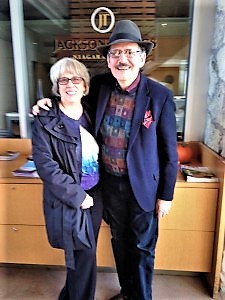
This past Thanksgiving, we were going to have a Cabernet Franc celebration.  One of my Bride’s sisters discovered a Cabernet Franc wine from South America that they poured for my Bride one night and she was ecstatic about the wine and they said that they were going to get another bottle or two for me to try on Thanksgiving.  Her mother-in-law was coming to our house for the American Thanksgiving Day dinner as well, and she went to the Wine Store to get a bottle of Cabernet Franc from a winery in Niagara-on-the-Lake that we totally enjoyed during our trips up there.  In Canada, you basically have to go the Province to buy your wine, beer and liquor, at one time, in Michigan it was the same way, as I can remember as a kid going with my father when he was making a liquor run; it eventually changed to the point where now you can buy alcoholic beverages at grocery stores, corner markets, gas stations and if they could get it cheap enough, even the “Dollar” stores may one day sell the products.  I mean, how can you not like a winery that uses not only my initials, but my Bride’s as well.  We had to take a Kodak moment to memorialize that visit.  Unfortunately, my brother-in-law’s mother slipped and fell at their house and later it was revealed that she broke her pelvis, and understandably none of them came for dinner, but we did send them some food that evening.  So, that evening we only had one bottle of Cabernet Franc from our cellar, along with the other wines we poured. We went to pay a visit to see her, before she made the probably painful return trip to Canada, even with pain medications, but Canada really doesn’t want to pay America for medical services and vice-versa.

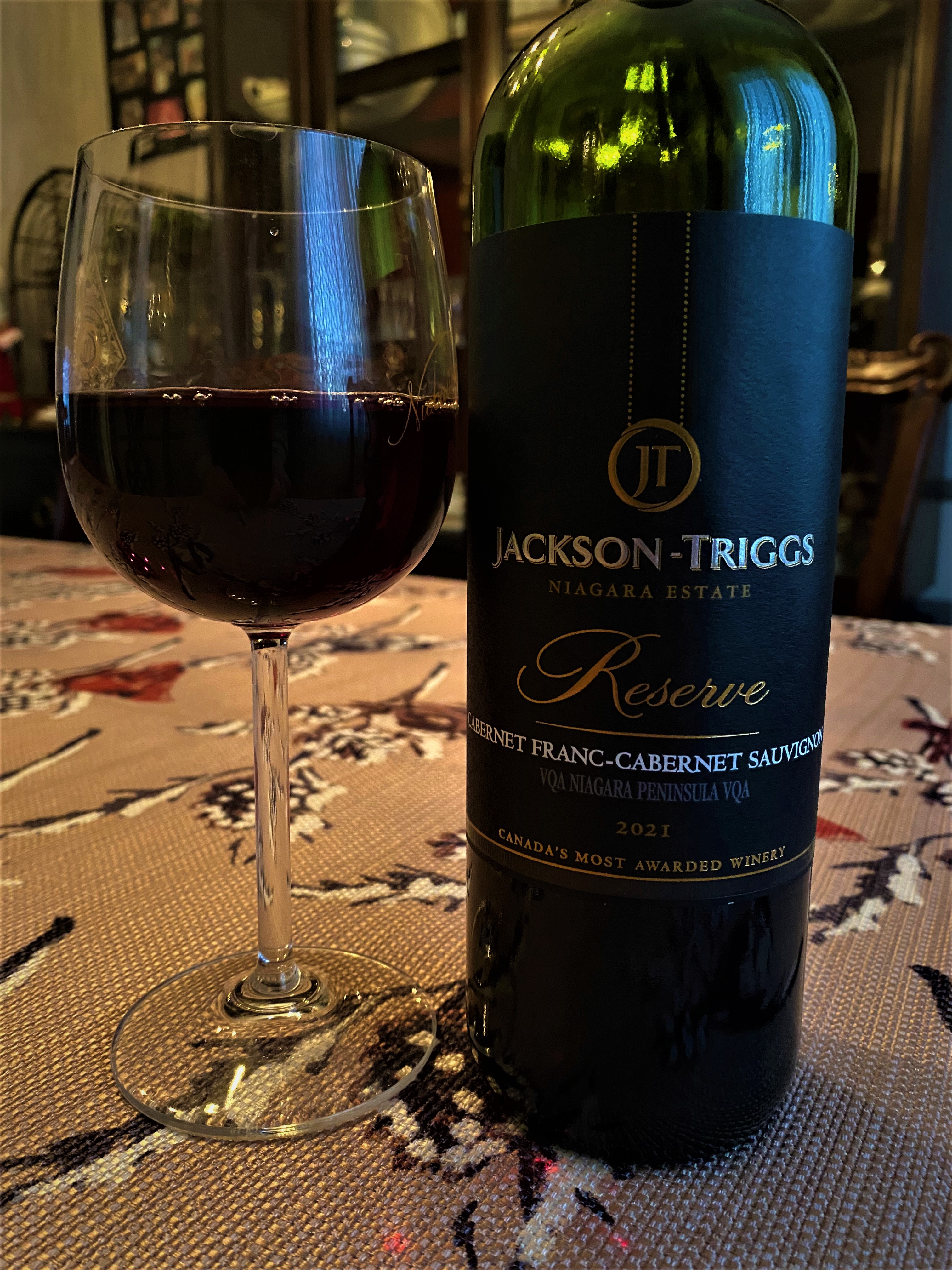
While we were visiting, she gave us our Holiday gift of a bottle of Jackson-Triggs Niagara Estate Reserve Cabernet Franc-Cabernet Sauvignon Niagara Peninsula VQA 2021.  We decided to have Filet Mignon, potatoes and haricot vert for our Cabernet Franc dinner.  Alan Jackson and Don Triggs started the winery in 1993, and they are billed as “Canada’s Most Awarded Winery.” They have vineyards in Ontario and British Columbia.  I am glad that the winery had some information about the wines, because I had to search my articles for any background information, because they only want to tell the world that they are diversified and they must be afraid of the past twenty-nine years, which makes research more difficult.  The grapes were harvested and vinified separately, with cold soaking on the skins for two days. Initial fermentation and malolactic fermentation were done in vats.  Afterwards the juice was aged for six months in oak, and then blended afterwards.  For this wine, it was determined that the Cabernet Franc was the dominate wine.  A nice dark garnet wine with notes of dark fruit, florals and vanilla.  On the palate I thought more red fruit, than dark fruit with some tones of oak, soft tannins and a shorter finish.  While a nice tasting wine, it was by no means a Cabernet Franc wine that we were expecting.        

Posted in Dining, Wine | Tagged , , , , , , | Leave a comment

Annual Ladies’ Christmas Party 2022

Before she was my Bride, she had her Annual Ladies’ Christmas Party and it has been consistent, except for the year the harridan interfered.  It used to be a pot luck dinner, but since the interference, my Bride now orders the food and tries to come up with a reasonable price per participant, but I think she still subsidizes the night.  This year there were several last-minute no-shows because of illness, but there was still a good crowd and one by the power of the internet.  She has scrapbooks of each year with attendees and a list of their goals professed at the party, and she mentions them the next year, at they announce their new goals.   I think that I would plead the fifth. 

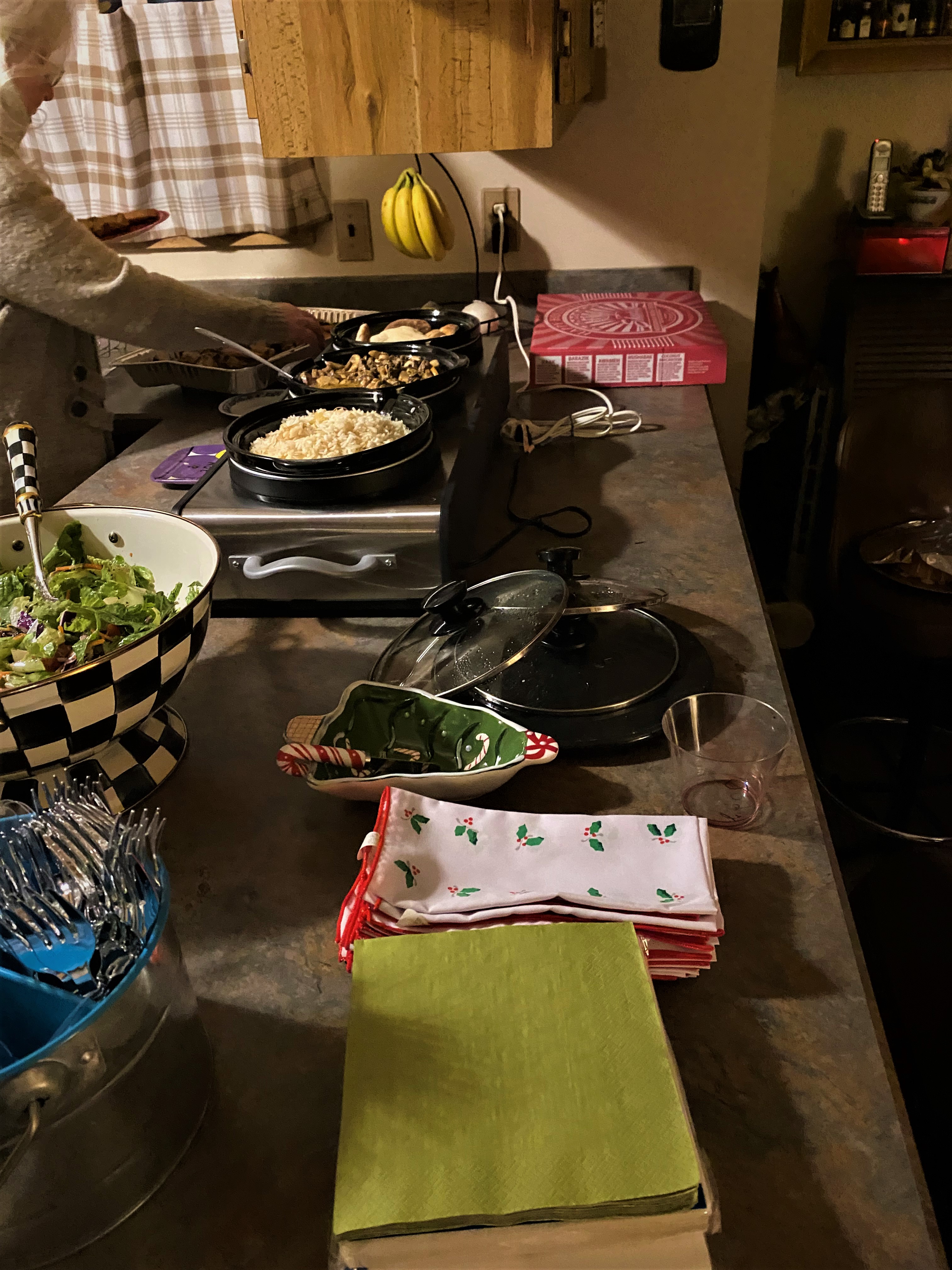
Because all the food was catered in, we had to rearrange the kitchen for all the food and she got fancy with labels for each dish.  There was appetizers of assorted cheese and crackers, Deviled Eggs, baked Brie with Onion Jam and Shrimp Cocktails.  For the entrée orders there was Salad, Hummus, Chicken Tawook, Lamb Sauté, Garlic Sauce and fresh baked Pita.  For dessert there was French and Italian finger cakes and a sheet of assorted Paklavah and of course coffee, both leaded and unleaded.  Of course, I ate, before the guests arrived and then immediately went and hid in my office and only came down, if I had to collect coats from the guests and to return them at the end of the evening.  I also had the dubious job of taking the group photo for the scrap book and I think that I ended up taking about nine shots, until one was approved.

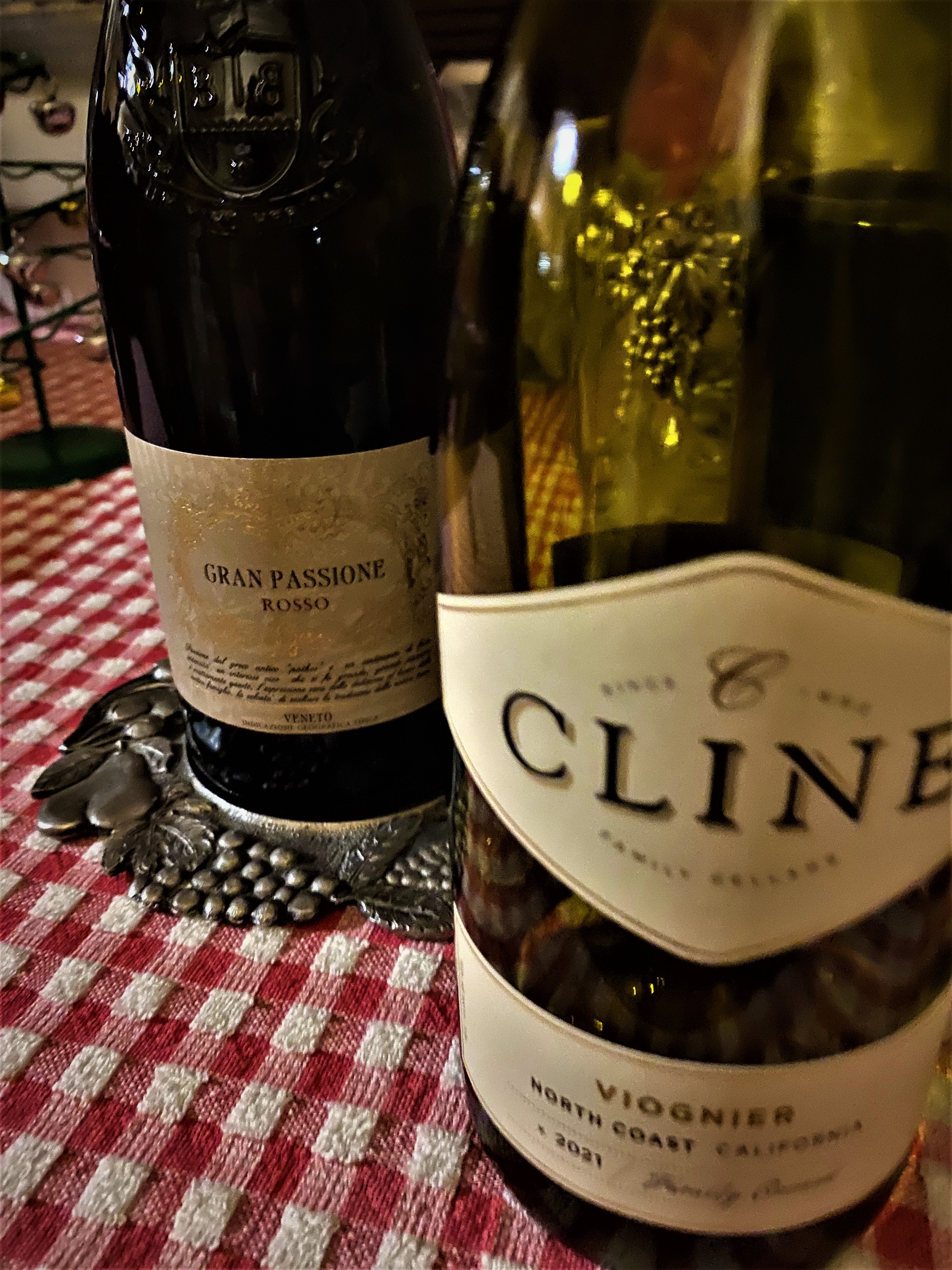
MFor the beverages we went with two of our latest go-to wines to make sure that we had enough, the idea of running out, just sounds terrible.  For the white wine drinkers, we had Cline Family Cellars “Seven Ranchlands” Viognier North Coast 2021.   Cline Family Cellars is a producer based in Carneros and known for Zinfandel and Rhone varieties and established in 1982 in Oakley.  Fred Cline is one of the original Rhone Rangers of California.  The “Seven Ranchlands” is a way of honoring both the seven children of the Cline family, and the seven vineyard ranches.  The fruit for this wine is from the Catapult Ranch Vineyard in the Petaluma Gap, and the balance is from the Diamond Pile Vineyard at the base of the Wild Cat Mountain.  The grapes are handpicked at night, where they are destemmed and pressed, and allowed to settle for forty-eight hours before racking.  The Catapult portion was inoculated with wild yeast, while the Diamond Pile portion was allowed to ferment naturally in barrels.  After fermentation, the wine was aged in neutral French Oak for six months before blending and bottling. The wine offers notes of mango, guava pineapple.  On the palate tones of dried apricots, pears and banana in a full-bodied wine with nice acidity.  And for the red wine drinkers Gran Passione Rosso Veneto 2020 a limited production wine made by Cantine Bertoldi.  Cantine Bertoldi is known for their Valpolicella and Amarone wines.  They were founded in 1932 and several generations later they now own fifty acres of hand-cared vineyards.  They are now part of the larger umbrella wine producer and distributor Casa Vinicola Botter.   They began in 1928 selling local Veneto wines.  After World War II, they moved onto bottled wines and started exporting.  Now in their third generation, ninety percent of their business is done overseas.  The soil of the estate is basically clay, and this wine is a blend of sixty percent Merlot and forty percent Corvina.  The grapes selected for this wine are hand selected and harvested, allowing for the grapes to dry on the vine, reducing the weight by about fifty percent.  This technique is in the tradition of Apassimento (to dry and shrivel), just like how Amarone is made.  After harvest, the over-ripe grapes are destemmed and undergo maceration and fermentation for fifteen days on the skins, and then malolactic fermentation occurs in the barrel aging.  The wine is an intense purple color with notes of black raspberry puree, black cherry, cassis, black tea and dried violet blossoms.  On the palate the wine is a medium-bodied red with intense flavors, medium acidity and medium tannins. 

Posted in Dining, Wine | Tagged , , , , , , , , , , , | Leave a comment

Whiskey and Whisky

“When it rains, it pours” is a very common slogan heard in Michigan, as it was an advertising slogan for a salt company in Detroit.  Under the city and beyond its border is a huge underground salt mine, that in the old days, they even gave tours down there; definitely not as eerie as the catacombs of Paris.  The meaning of the slogan, is that years ago, when it rained, the salt crystals use to attract each other from the moisture in the air, and they would clump up enough to keep from going through the holes in a salt shaker and they found a way to correct that situation.  Today, the slogan has morphed into, when something happens, even more occurs and that is what happened. 

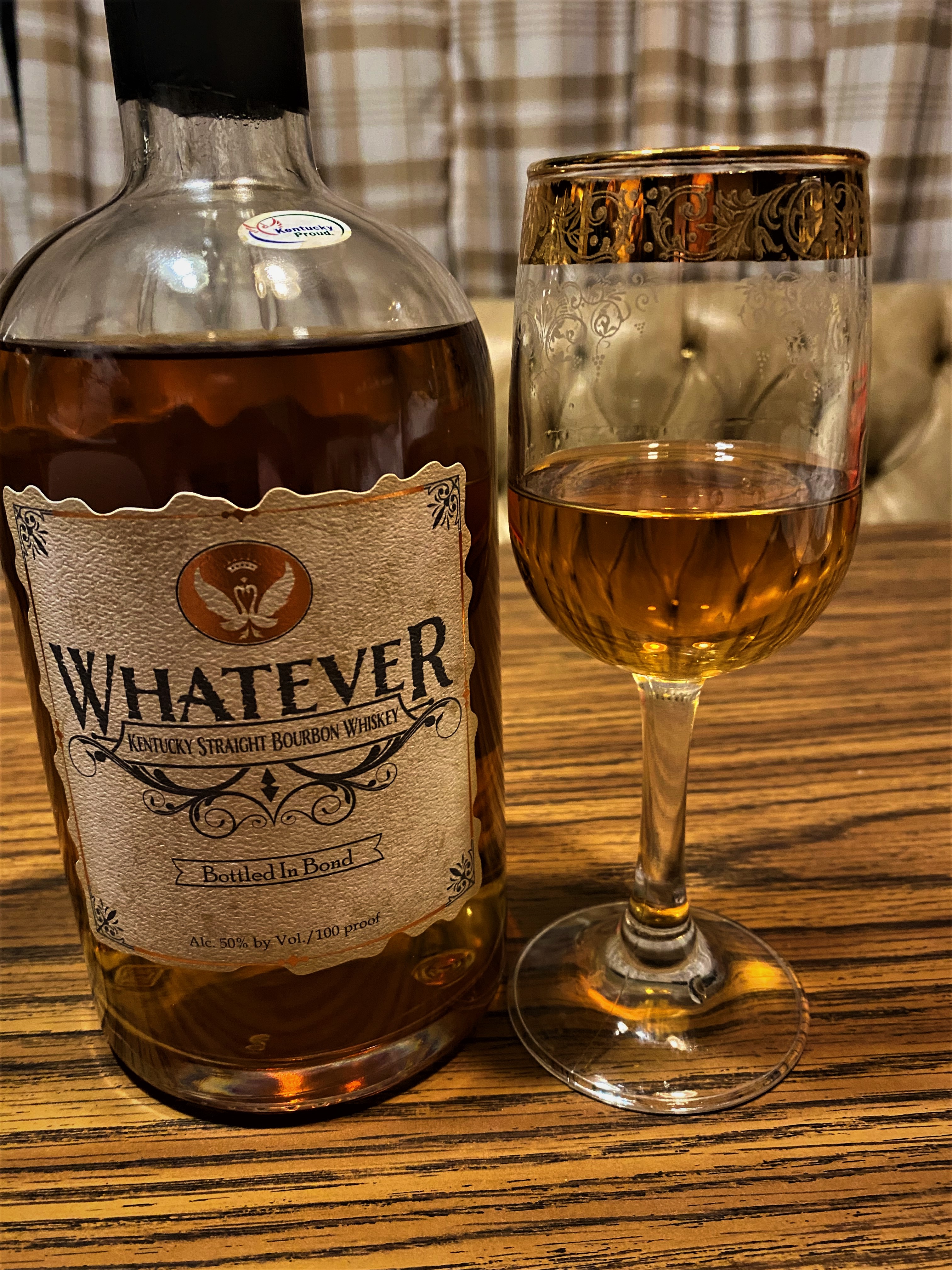
I periodically talk about the family down in Kentucky, well, it turns out that a winery in Malibu, California also has a bonded distillery in Kentucky for Bourbon.  I have a bottle of Whatever Kentucky Straight Bourbon Whiskey Bottled in Bond.  While I usually talk about wines, a little trivia for everyone is that the Commonwealth of Kentucky is in the top ten percent for states making wine in America, and they produce ninety-five percent of all Bourbon in the country as well.  This is a Bourbon made of seventy-eight percent corn, thirteen percent rye and nine percent barley and was issued at 100 Proof.  Made and aged in the Green River Distilling Brickhouses since 2016 and bottled in partnership with Silent Brigade Distillery.  To be labeled as bottled-in bond, Bourbon has to be the product of one distillation season, by one distiller at one distillery. It must have been aged in a Federally bonded warehouse under U.S. government supervision for at least four years and bottled at 100 Proof (50% alcohol by volume).  Straight Bourbon whiskey is a “term-of-art” description that it has been sored at least for two years in new charred oak barrels.  This was a true “sippin’ Bourbon” with a lot heft, behind the punch.  A nice caramel color with notes of dried fruits and brownies.  On the palate a full-bodied torrent of baked fruit and spices with a very long finish.  I went with the first glass neat, but the next glass will get one ice cube in a snifter.

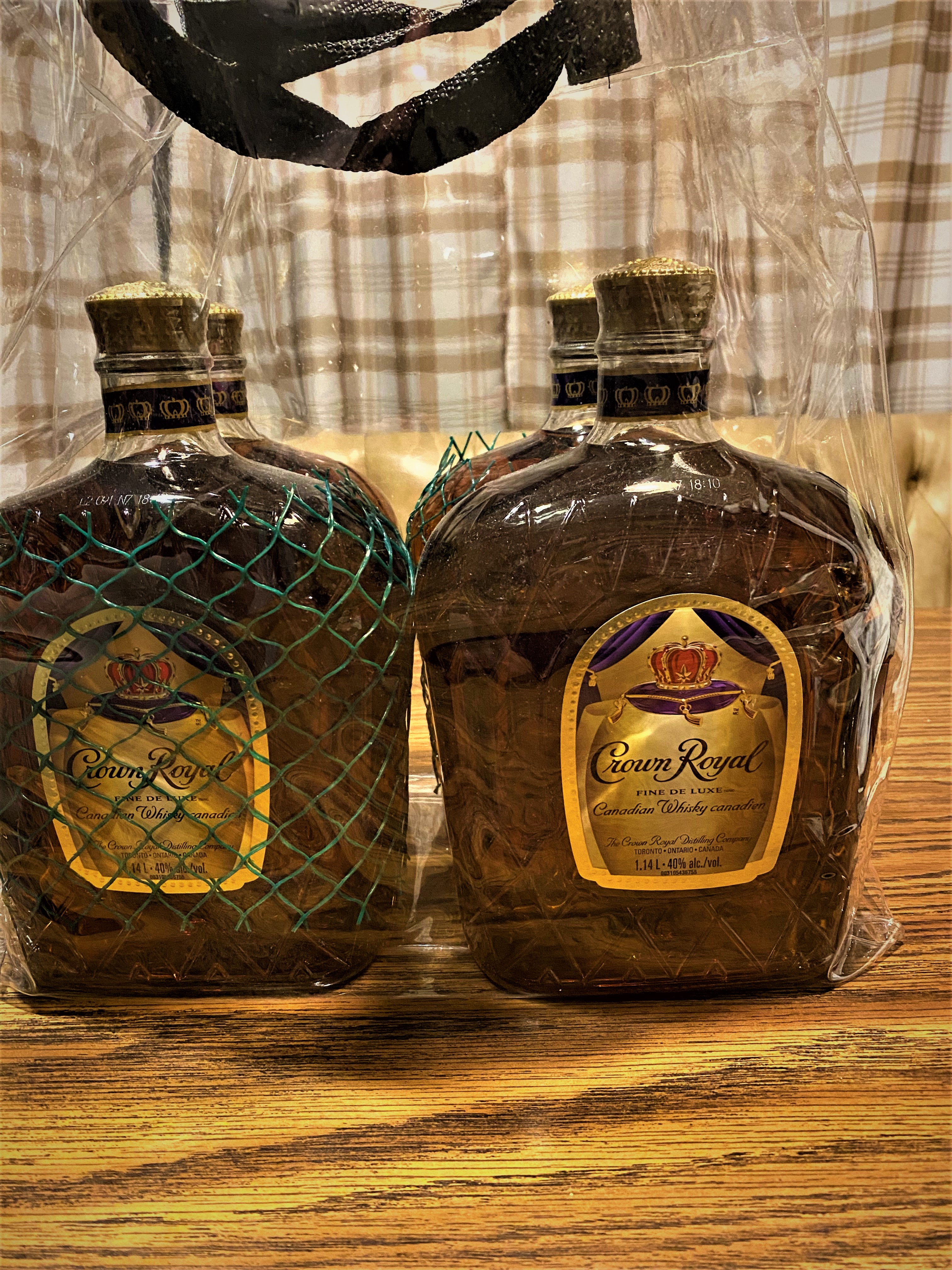
I also got a four-pack of Crown Royal Canadian Whisky of the Crown Royal Distillery Company of Toronto, Ontario though I was disappointed that the distinctive purple bags were not included.  My Bride was going over to Ontario with her sister for a weekend, and I asked her to get a bottle, you know for medicinal purposes and she came back with a four-pack special and all I can say is “Saints Preserved.”  Now, before we go any farther, Whiskey is the American spelling of Whisky, which I have never quite understood, because supposedly Noah Webster attempted to simplify the spelling of words e.g., parlor for parlour.  Crown Royal was created by Seagram in 1939 to mark the visit of King George VI and Queen Elizabeth’s Royal Tour of North America; a major event in Canada, and originally it was only available until 1964.  That has now changed as it is the top-selling Canadian whisky in the United States and the world.  They now have a dedicated distillery in Gimli on the shores of Lake Winnipeg of forty-six warehouses holding two-million-barrels of Crown Royal spread over five acres of land (the air must smell remarkable there). The distillery in Ontario was closed in 1992.  Blended whisky is a blend of one or more whiskies, which may be made from any combination of malted and un-malted grains, and one of the true benefits is that a “house style” can be consistent year after year.  Seagram’s was broken up in 2000 and Crown Royal is run by the multinational Diageo drinks group.  This caramel-colored beverage comes in at 80 Proof, and has been made year after year by the nose of the blenders.  It offers notes of fruits, florals and vanilla.  On the palate a smooth blend of butterscotch, pepper and vanilla and a nice finish.  And medicinally, it is the perfect whisky for my hot toddies when the bug seems to get to me.    

Posted in Uncategorized | Tagged , , , , , , , , , , | Leave a comment

Dinner at Cooper’s Hawk

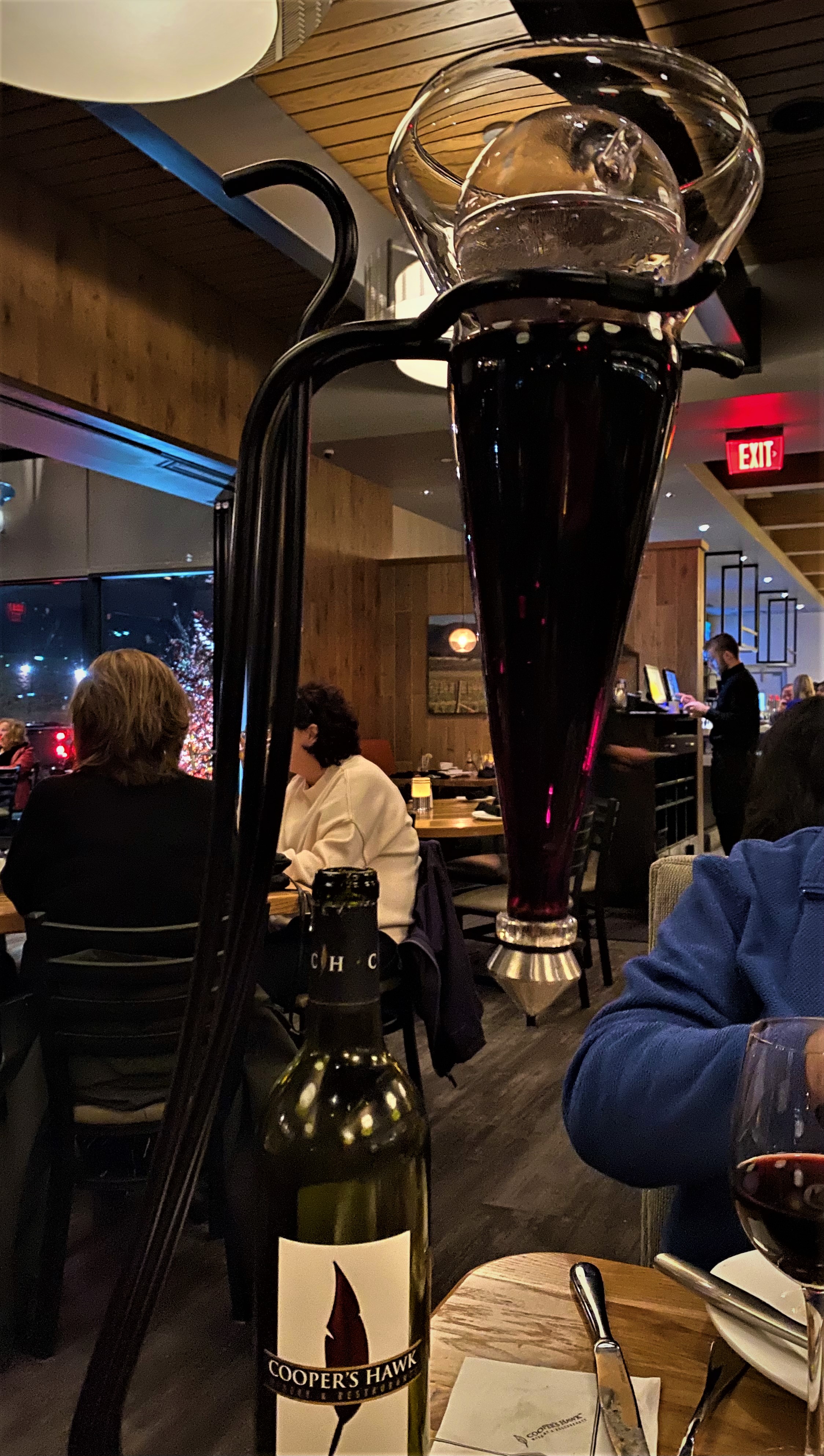
We went for dinner with a couple that had joined the Cooper’s Hawk Wine Club, and we by passed the wine tasting room that is your immediate sight when entering the restaurant.  The tasting room reminded me of some of the spiffier wineries that we have been to, over the years, but with a big crowd.  It reminded me of some of the wineries that we have done tastings at, when the tour busses empty out a crowd that wants to get hammered. A great business plan from a single restaurant that opened in 2005 and started making wines as an adjunct to their business. After rapid growth in non-winery settings, they have been purchased by a private equity group, and I saw an article which stated that at the time of the article that they were the 29th largest wine producer in the country, which is quite a feat since the “winery” is in Illinois.  We were going to try to get the top featured wine as part of the dinner, but the waiter as well as the couple that had the club membership, could not explain the why we couldn’t get the wine with dinner.  The waiter gave some convoluted answer, so I did not want to make an issue of it. While the restaurant did serve cocktails and beer, the only wines and there were about sixty offered, were all house wines and most of the people that I saw were having wines by the bottle and they had elaborate decanter/aerators that they would bring to the table.

We started off with some appetizers, and I went with their “Over the Border Egg Rolls” which were house-made with Southwest Chicken, Corn, Black Beans, Cilantro and Cheese accompanied with a bowl of Tomato Salsa, Cilantro Ranch and Cashew Dipping Sauces. It was actually quite tasty and ample for the table and too much for one person.  We also started off with a Cooper’s Hawk Merlot America NV.  The back label stated “the best wines come from the best fruit.  The grapes used to make this were grown by the top vineyards in the country, where growing conditions have been ideal.”  The wine had a pretty red color and offered notes of dark fruits.  On the palate some black cherry and some spices with balance tannins, but not a long finish. 

For our entrées the other couple both had the Trio of Medallions of Horseradish, Bleu Cheese and Parmesan-Crusted Filet Medallions with Mary’s Potatoes and Asparagus.  My Bride had Blackened Ahi Tuna, seared rare with Wasabi Sauce, Cilantro Citrus Ric and Asian Slaw, while I had the Red Wine Braised Short Ribs with oven-roasted vegetables, Mary’s Potatoes, Grainy Dijon Mustard Butter and Crispy Onion Strings.  The service was very attentive and one of the orders of medallions were over cooked and a new order was brought over as quick as possible.  For this course we had a bottle of Cooper’s Hawk Malbec NV, I forgot to take a photo of the back label, so I am not sure if the wine was from America or not.  A pretty deep purple wine with notes of dark fruit and spices.  On the palate there were tones of black fruit and cassis, a touch of lavender and good tannins.  I am sorry, but the entire time tasting and drinking the two wines, I kept thinking that they were almost perfect specimens.  I was thinking, are these from concentrates, why are there no vintages and were these finely crafted wines courtesy of food coloring, and flavor enhancements? I have tried Merlot and Malbec wines that have not tasted like the wines that they purported to be, and yet both of these wines were perfect as if done by committee.  I can’t explain it, but I felt like this was the “Stepford Wives” of wines.  Though I would go back again to try some different wines, I enjoyed the meal and the experience.    

Posted in Dining, Wine | Tagged , , , | Leave a comment

Arta’s Italian Restaurant

We were finally able to connect with The Caller and his charming wife.  They are retired and almost impossible to get a date with, as they are always on the go.  We finally did connect and then it was where and when.  During the week, worked best for both of us and then to find someplace half way between, and they suggested Arta’s Italian Restaurant in Brighton, they had never been there, and we had never heard of it.  It turns out that it was right off the main road, but not downtown, in fact it was in a medical plaza of offices and the restaurant looked more like a place for breakfast or lunch from the exterior, but we were there. 

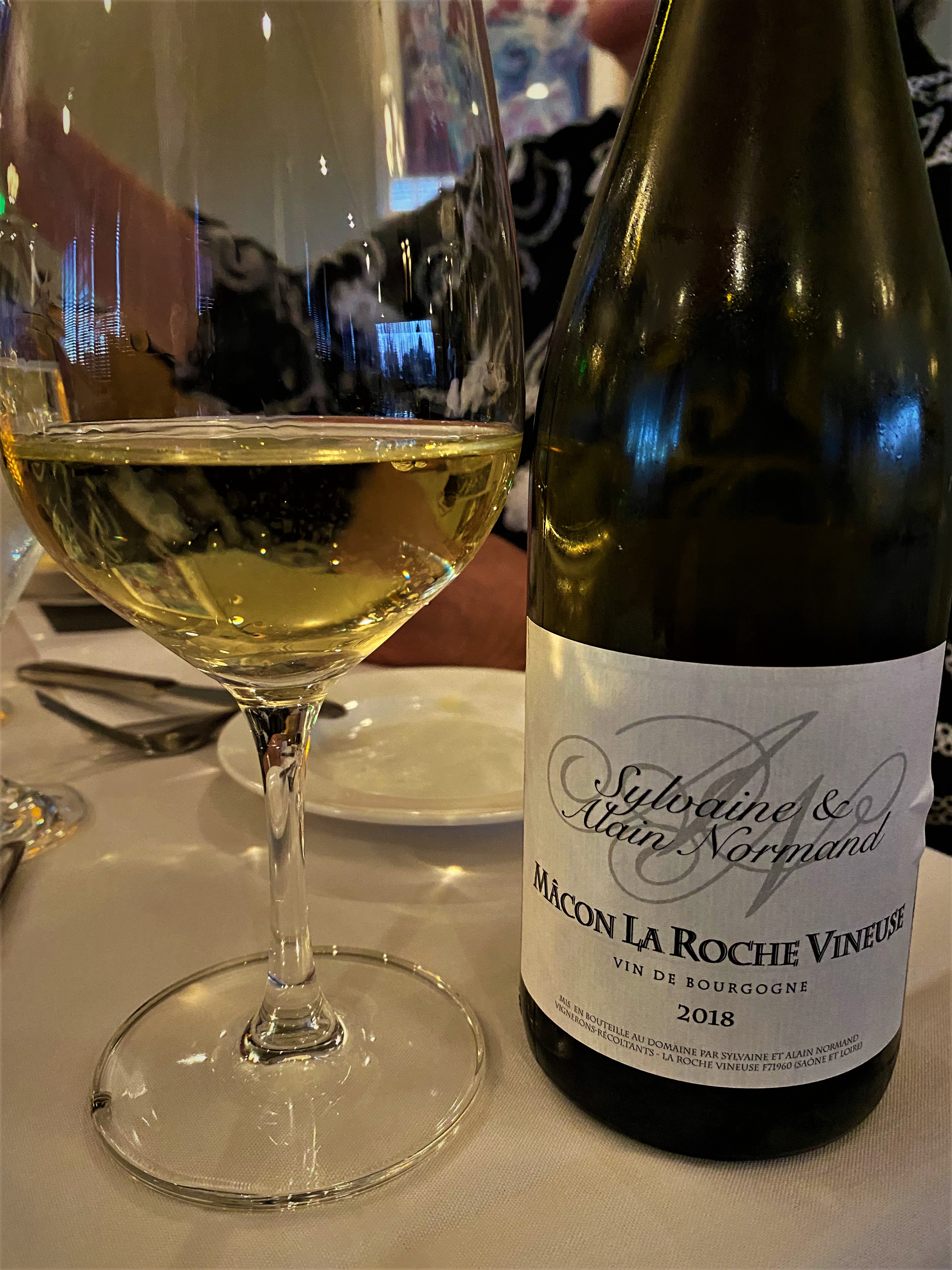
We got there early, after the long drive, you understand, but we found out that the bar opens, before the restaurant, so we were fine, in fact, we even got out table selected, as we were the only ones there.  I got busy right away looking at the menu and the wine list, which had some fine wines on it, and not the type to keep stored above a radiator.  Then The Caller and his wife came in, and we selected some appetizers to start with; by this time a couple of other tables were also occupied.  We ordered a plate of Calamari Fritti Misto with Squid rings, Zucchini Squash, Semolina dusted and fried with Lemon Aioli and Sriracha Mayo.  We also had a plate of Carpaccio di Filetto, thinly sliced Tenderloin, with Pommery Mustard, Arugula and shaved Parmigiano-Reggiano.  We are used to sharing.  We also started with a bottle of Domaine (Sylvaine &) Alain Normand Macon La Roche-Vineuse 2018.  The Domaine is a partnership that was created in 2010 and encompasses thirty-five hectares of vineyards in five communes in Burgundy and the Maconnais and using sustainable farming techniques.  Macon La Roche-Vineuse is an appellation in the Maconnais with sloping vineyards on soils that vary from fossil-rich limestone to heavy marls and is exclusively Chardonnay.  Originally known as Saint-Sorlin with documented records of wines from the late 1600’s, the name was changed to the secular La Roche-Vineuse by the French Revolution and only formally adopted in 1908.  The wine had a “long fermentation with natural yeasts; works on the lees in tank.” The wine was a pale gold and offered notes of white and yellow fruits and exotic florals.  On the palate soft fruit from a big wine, totally balanced and a nice medium count finish of fruit and terroir.

By the time the entrées appeared the restaurant was more than half full, on a Tuesday night, and that was very impressive.  The Caller had “Bocce” a special that was house made sausage crumbled and in pasta purses cooked in a Sage Sauce; while his wife had Frutti di Mare Misto with Grilled Salmon, Scallops and Shrimp with Lemon Butter and a Mushroom Rice Pilaf.  My Bride had the Bronzini, which was also a special for the evening, as she enjoys her Mediterranean Sea Bass which was cooked to perfection and somehow that big piece of fish disappeared; while I had the Ravioli all-Aragosta a dish of Zebra-striped Lobster stuffed Ravioli with a Seafood Saffron Cream. This was followed by a bottle of Domaine Gueneau Sancerre Les Griottes 2018.  The Domaine has sixteen hectares planted on the steep slopes of Sury-en-Vaux, Chavignol and Sancerre.  The Cuvee Les Griottes is a one-hectare plot in Chavignol and the name means cherries, as the vineyard used to be an old Morello Cherry orchard. The Sauvignon Blanc vines were planted about twenty-five years ago on a pebbly-stony soil. The wine is mechanically harvested and pneumatically pressed at low pressure to get the clearest juice and allowed to settle for two days, then fermentation on the lees and estate bottled. The pale-yellow wine offered a soft perfume of florals.  On the palate a rich texture of stone fruit with a finish of terroir.  In hindsight, I should have ordered the Sancerre first, followed by the Maconnais, but they were still great. 

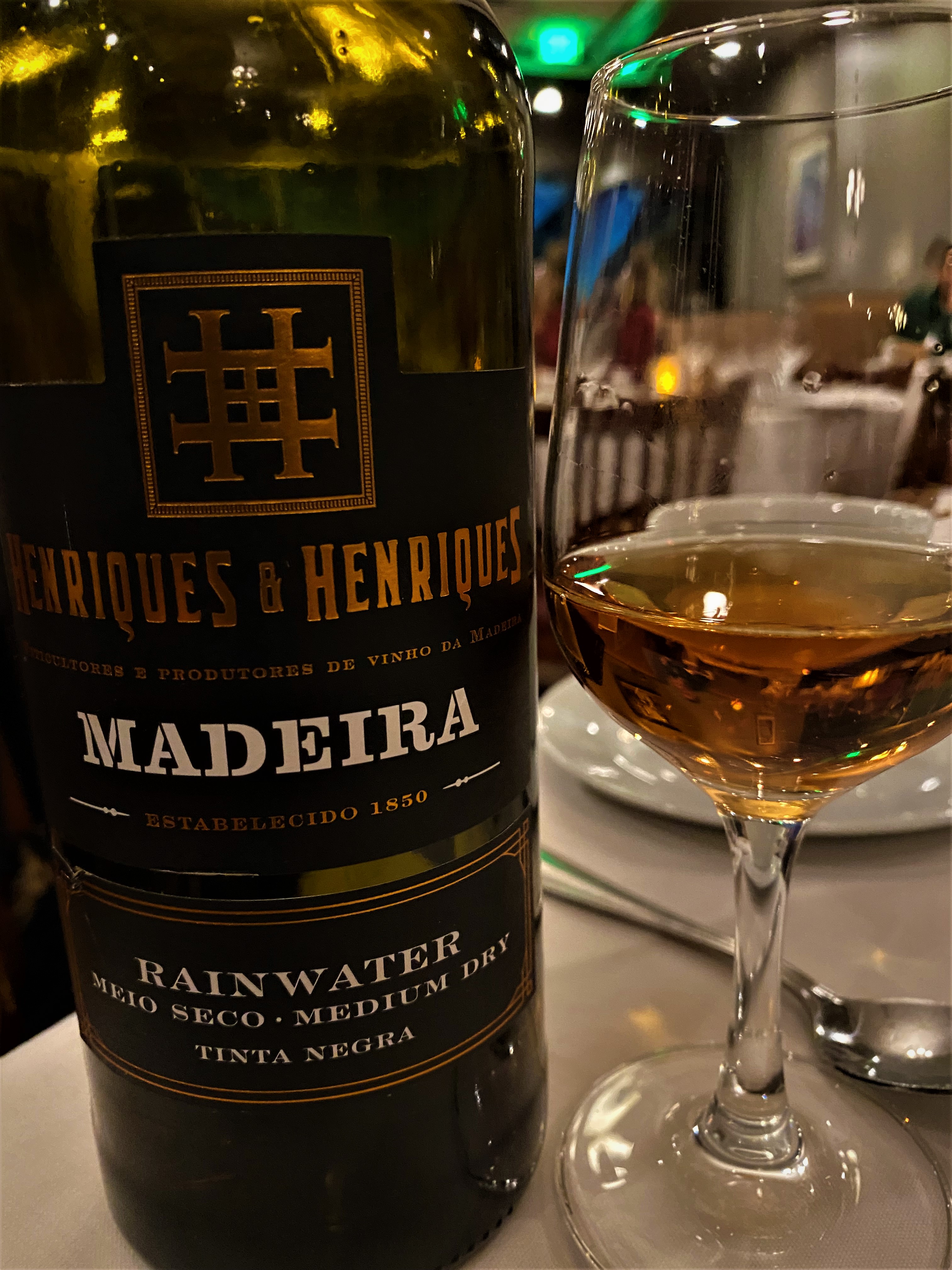
We then shared a Crème Brulee, coffee and a glass of Henriques & Henriques Rainwater Madeira NV.  Henriques & Henriques have been producing wines in Madeira since 1850.  Rainwater Madeira is a lighter, drier style compared to other Madeira wines, though it has a long life and one still hears of 19th Century bottles coming to the market. The slopes are so steep, that it is said that the only water the vines get is from the rains.  The production laws are rather lax about Rainwater and the two most common varietals are Tinta Negra Mole and Verdelho. Because the slopes are so steep, grapes are manually picked and earlier compared to table wines, as they are chosen for high acidity.  After pressing, and maceration, during the fermentation process Brandy is added to the must to stop the fermentation, the later the Brandy is added the drier the wine will be.  The most unique aspect is that the wine is exposed to both heat and oxygen and this is called “Maderization” and there are basically two ways to do it. The Rainwater is aged for about three years.  A beautiful deep golden color with a delightful nose with notes of Crème Brulee, almonds and orange zest.  On the palate the wine is a mix of the notes with a freshness and lightness that is hard for me to verbalize, but whenever I get a chance, I will have a glass.    

Posted in Dining, Wine | Tagged , , , , , , , , , , , , | Leave a comment

Roberts + Rogers Howell Mountain and a Zinfandel

We were getting close to the end for an organized wine tasting at The Fine Wine Source in Livonia, Michigan featuring the wines of Roger Louer of Roberts + Rogers Winery.  Even though, there was blocks of time for groups for tasting, some came early, some stayed later and I am sure that some really didn’t even have an appointment.  It was an event, and Roger has become a favorite of the store.

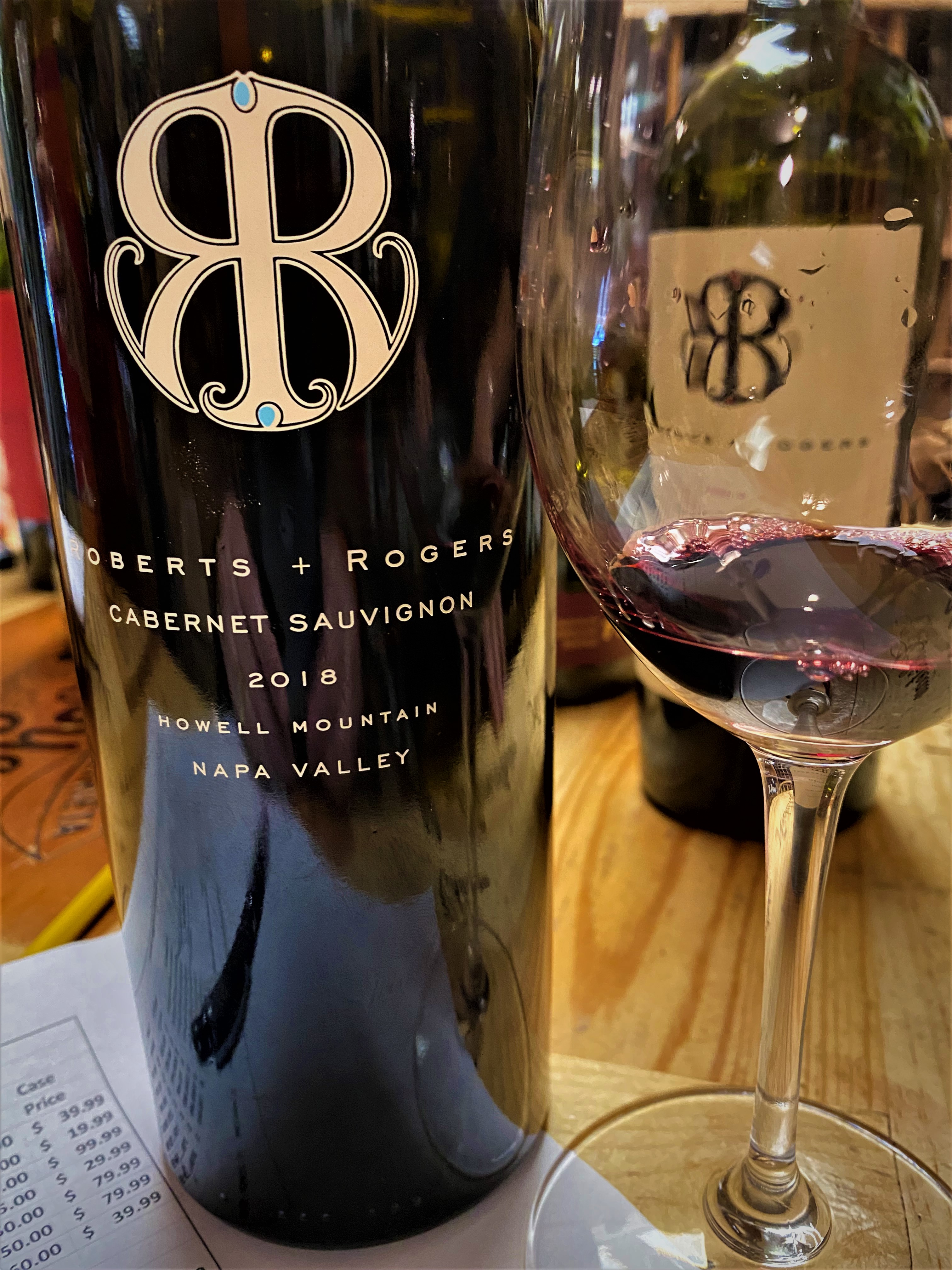
The last of the Cabs that we tasted was the Roberts + Rogers Cabernet Sauvignon, Howell Mountain 2018.  Howell Mountain is one of the most prestigious sub appellations of Napa Valley.  To give you an idea of how important it is, the Napa Valley appellation was awarded in 1981 (and only the second appellation in the country) and the first sub-appellation was Howell Mountain in 1984.  While there is no Howell Mountain peak, the name is derived from Howell Mountain Township which sits above the fog line of 1,400 feet above sea level, and to have the designation, the vineyards must also be above this mark on the Vaca mountain range.  The soil is volcanic, and most of it is iron-rich clay.  This wine was aged for two years in new French Oak.  My words cannot do justice, as I am always tongue tied with Howell Mountain Cabernet Sauvignon wines, as they are always the best examples of what this varietal can achieve.  A deep garnet-purple wine with notes of black fruit and spice.  On the palate tones of rich black cherry and berry with vanilla, and secondary tones of leather, rich tannins and a great long finish of fruit and terroir.  A true expression of a California Cab.

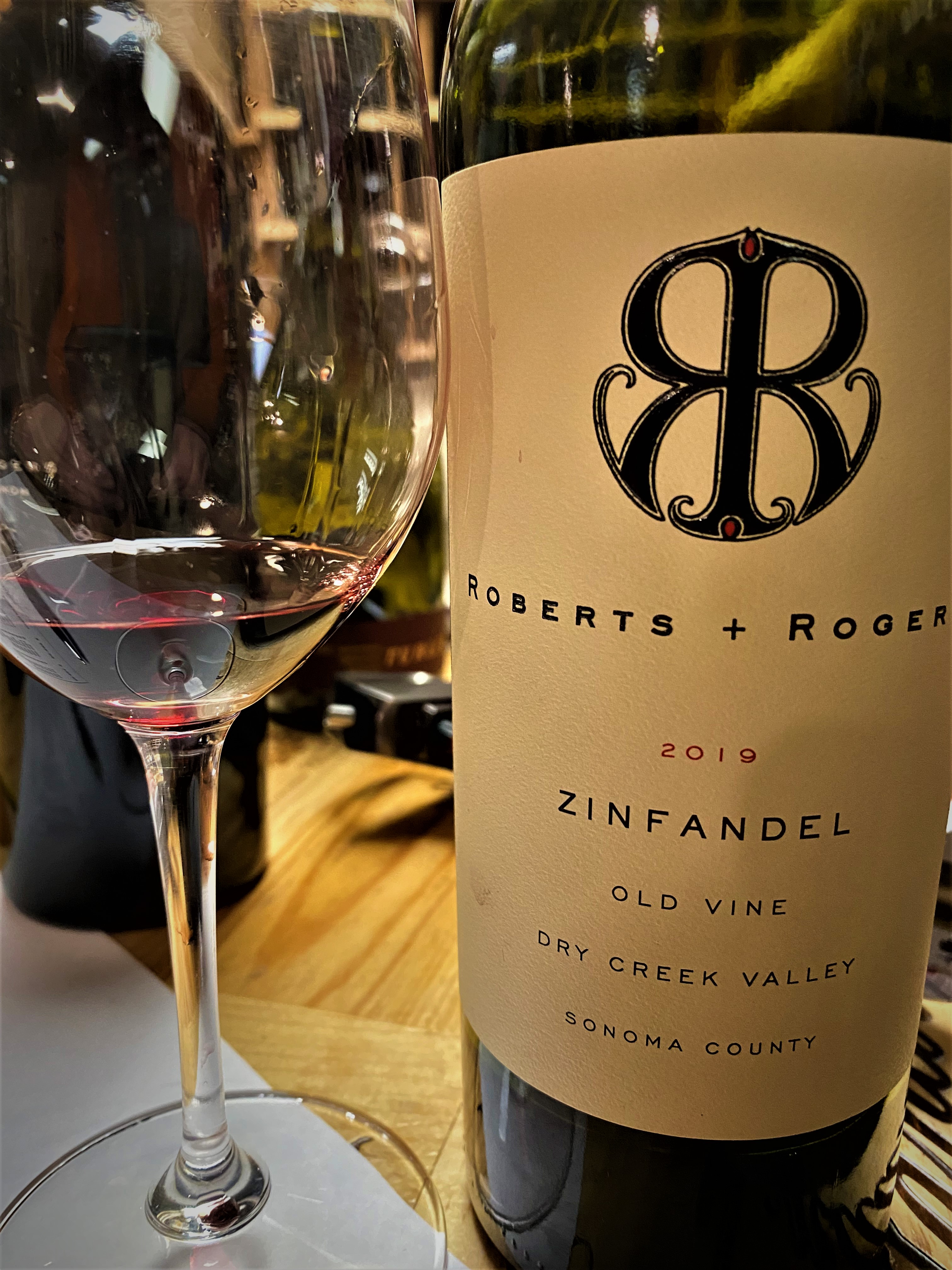
We ended the tasting with a Roberts + Rogers Zinfandel, Old Vine, Dry Creek Valley, Sonoma County 2019.  Dry Creek Valley AVA is in Sonoma County and is considered one of the best terroirs in California for Zinfandel.  Dry Creek Valley is about sixteen miles long and the valley floor has a cooler climate compared to the hillsides.  This wine was aged for eighteen months in French Oak.  This was another Zinfandel that really made me happy, as it was not a big jammy wine, I thought it was almost elegant, with that nice spiciness and a chewy wine with a delightful finish.  A delightful way to spend an hour or so, in the afternoon, and I am glad that they load the car for you, with the cases.

Posted in Wine | Tagged , , , , , , , | Leave a comment

Roberts + Rogers Louer Family and Signature

Myself and everyone else at The Fine Wine Source in Livonia, Michigan was having a grand old time tasting wines.  I mean, how could you not, when Roger Louer was there talking about his wines from Napa Valley, Sonoma County and Mendocino County.  We had just had his Roberts + Rogers Louer Family Cabernet Sauvignon (St. Helena) Napa Valley 2012 and then they were going to pour us the latest offering of the same wine.  Definitely not an everyday occurrence in most wine shops, especially in the big box stores.

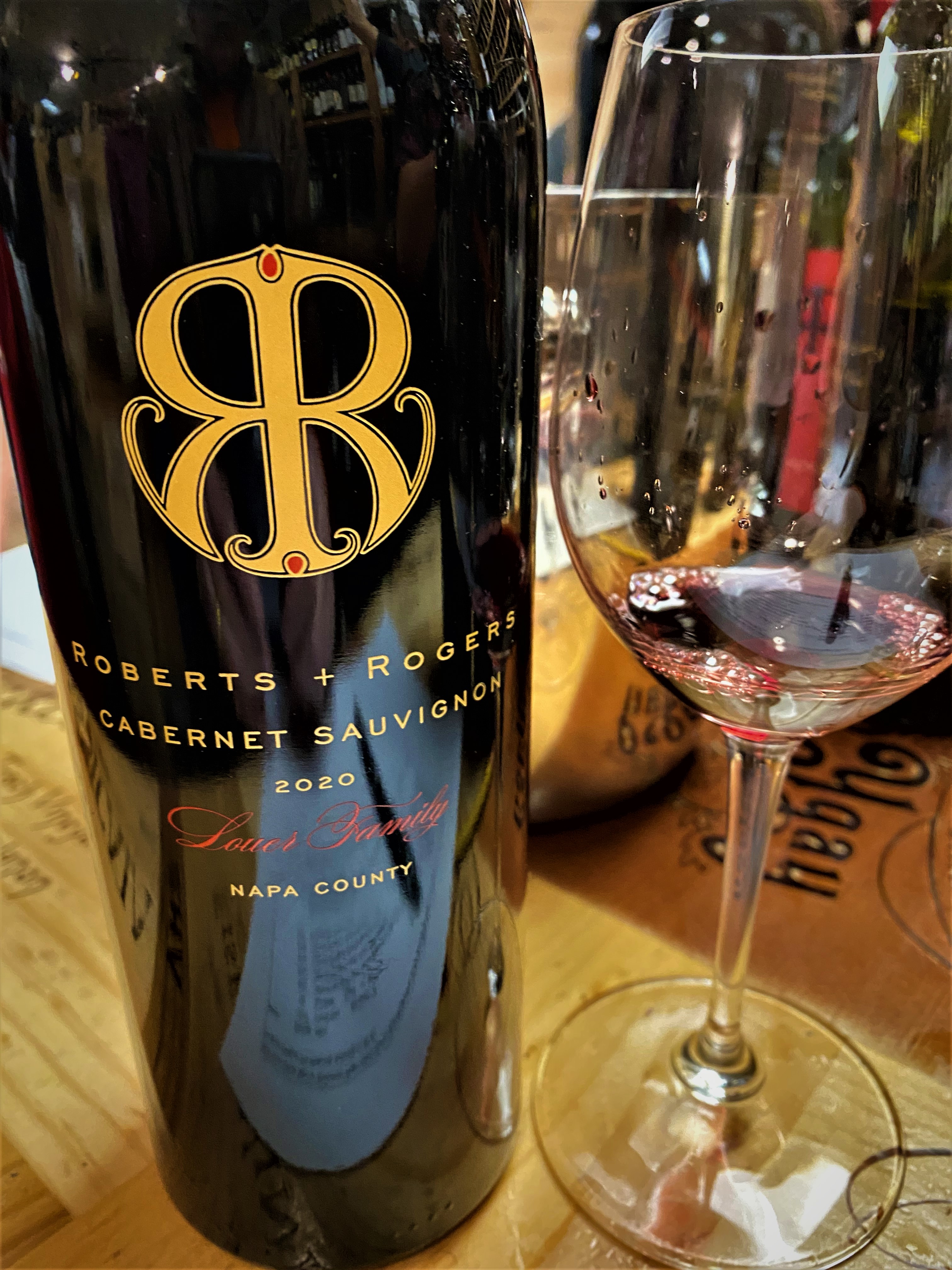
The Roberts + Rogers Louer Family Cabernet Sauvignon (St. Helena) Napa Valley 2020 had just been released and it was available in normal bottle size, and not in magnums.  Out of eight years of vintages, this would be my sixth, so I was quite happy.  Since, this wine has been produced, it has been rated in the Nineties, by the big boys.  This is all estate grapes from his thirty acres in St. Helena, pure Cabernet Sauvignon and bottled in all new French Oak barrels for two years of aging.  This deep garnet colored wine offered notes of dark fruits and vanilla.  On the palate there were tones of black cherries, blackberries and black currents, with traces of oak/vanilla and velvety tannins right from the get go, and a nice solid finish with terroir, to finish the package.  I would have no problems drinking this wine immediately or being patient and allow it to cellar for at least ten years to really have an awesome wine, and this is probably one of the best values in the valley.

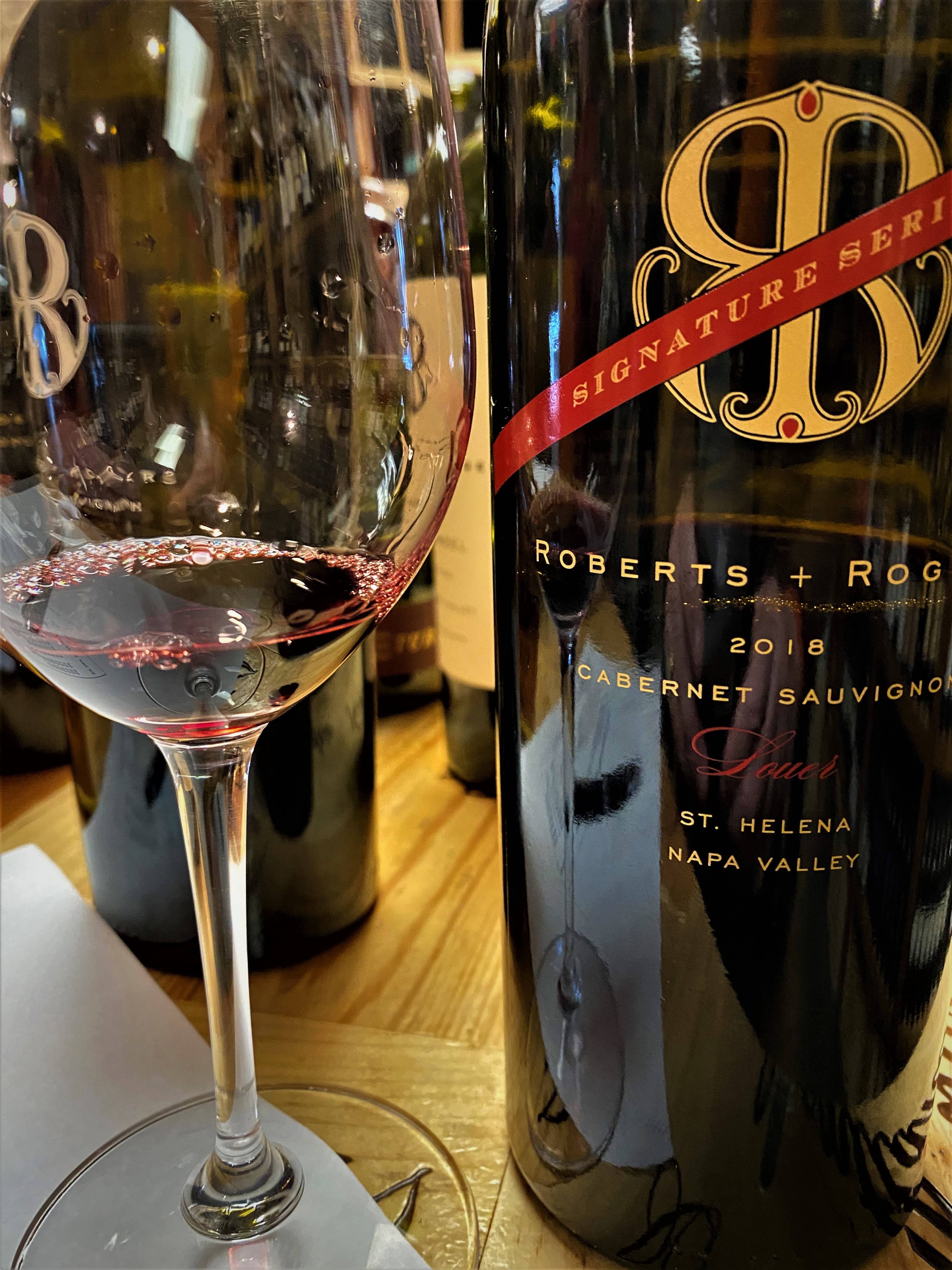
Then immediately following the Louer Family 2020 we tasted the Roberts + Rogers Louer Signature Series Cabernet Sauvignon St. Helena Napa Valley 2018.  Roger Louer has explained that his winemaker that has been with him since the beginning suggested that he needed a “signature” wine.  The first was the 2016, and now onward to the 2018.  Each barrel of the “Louer Family” is tasted, prior to bottling, and a few barrels are put aside after the two years of aging in new French Oak.  It was very interesting to how this limited production wine is even more savory, and it is not just because of the two extra years in the bottle.  This wine has now been made for four vintages to acclaim, because it really is bigger and chewier, as I like to say, as I will never be allowed around the big boys.  It is dearer in price, compared to the Louer Family, but it has to be tasted, to appreciate how those few barrels were recognized for having that something extra.   

Posted in Wine | Tagged , , , , , , , | Leave a comment

Two Exclusive Wines from Roberts + Rogers

Roger Louer was at my local wine shop, The Fine Wine Source in Livonia, Michigan conducting a wine tasting and two of the wines are true exclusives for those that attended the tasting or can get there, if there is any left.  Jim Lufty, the owner of the Fine Wine Source and Roger Louer have become good friends over the years, and not long-ago Jim and his daughter Remy went out to the winery, for business and pleasure and the next two wines are a result of their trip.

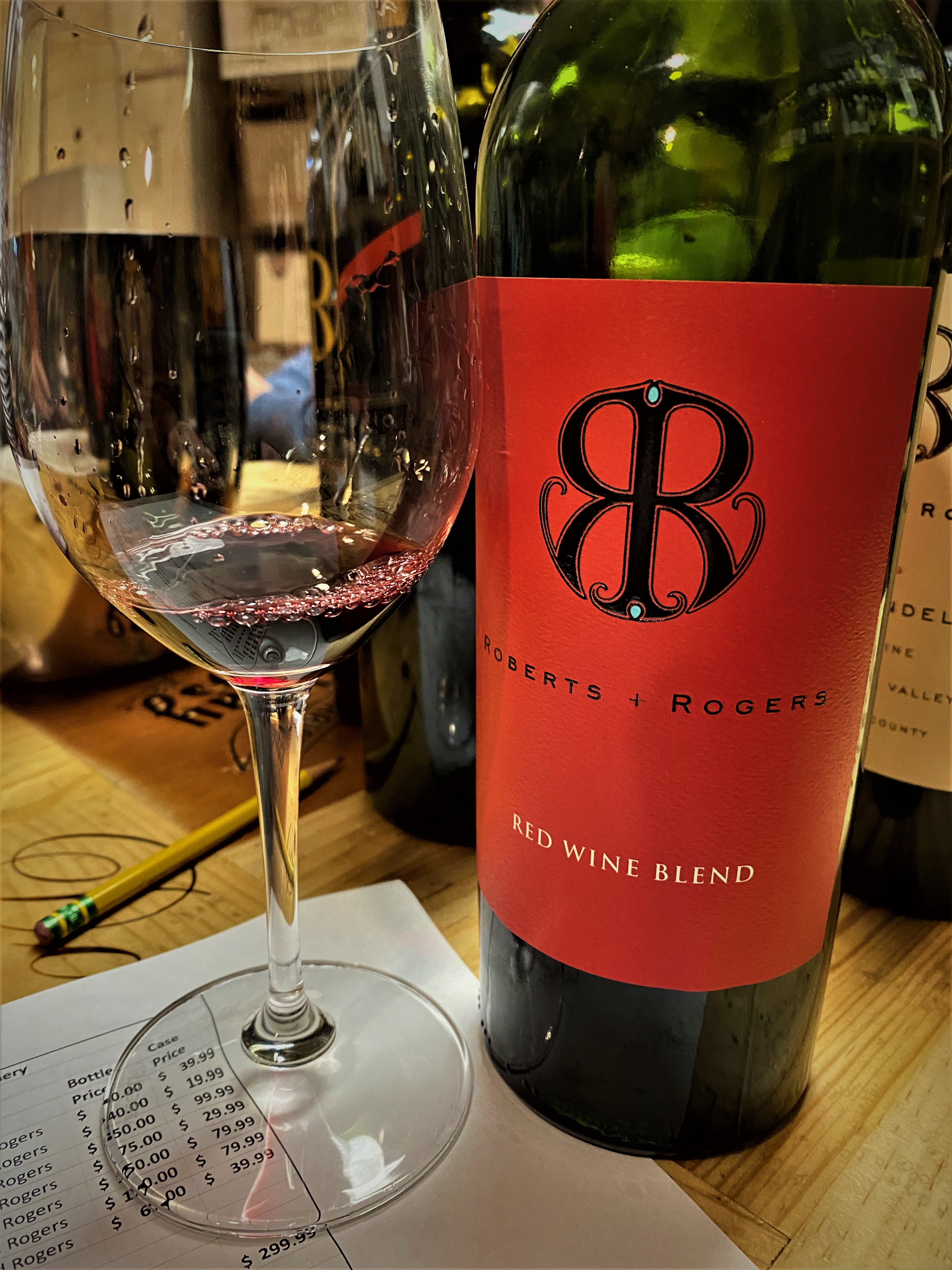
Out of that trip, came Roberts + Rogers Mendocino County Red Wine Blend NV, a special proprietary wine that was blended by Roger Louer, Jim Lufty of The Fine Wine Source and Remy Lufty of the restaurant Vertical Detroit. The juice is a blend of two different years, hence the NV status and a blend of Petite Sirah, Zinfandel and Merlot. As an aside, Jim told me that there is probably about sixty different varieties, as he was referring to all the different clones that have been planted, as well as the “California Blend” that is found in older vineyards, which is a nice way of saying that some of the old vines that were planted have been mis-identified or forgotten about and could almost be anything, but those old vines do add character.  A very pretty garnet color with notes of red fruit and spices.  On the palate a big fruit forward wine of black and red cherries, good tannins, well balance with a finish of terroir. A good solid red with a limited production of two-hundred cases that is affordable.  The only two places that this wine can be found is at the wine shop or at the restaurant.  As a side note, I did play delivery man, as I contacted The Caller, if he wanted any of this wine, and he said yes, on my suggestion.

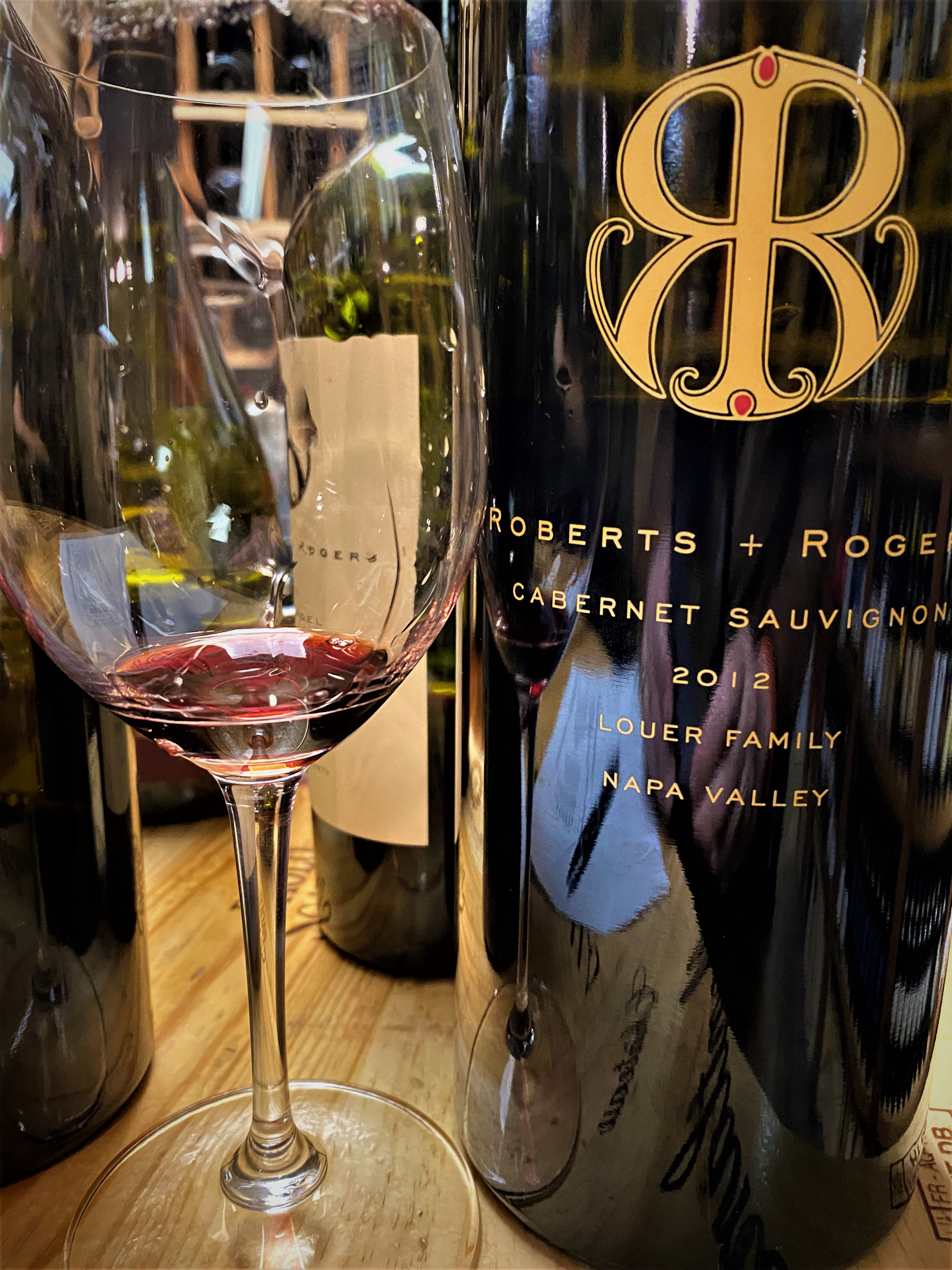
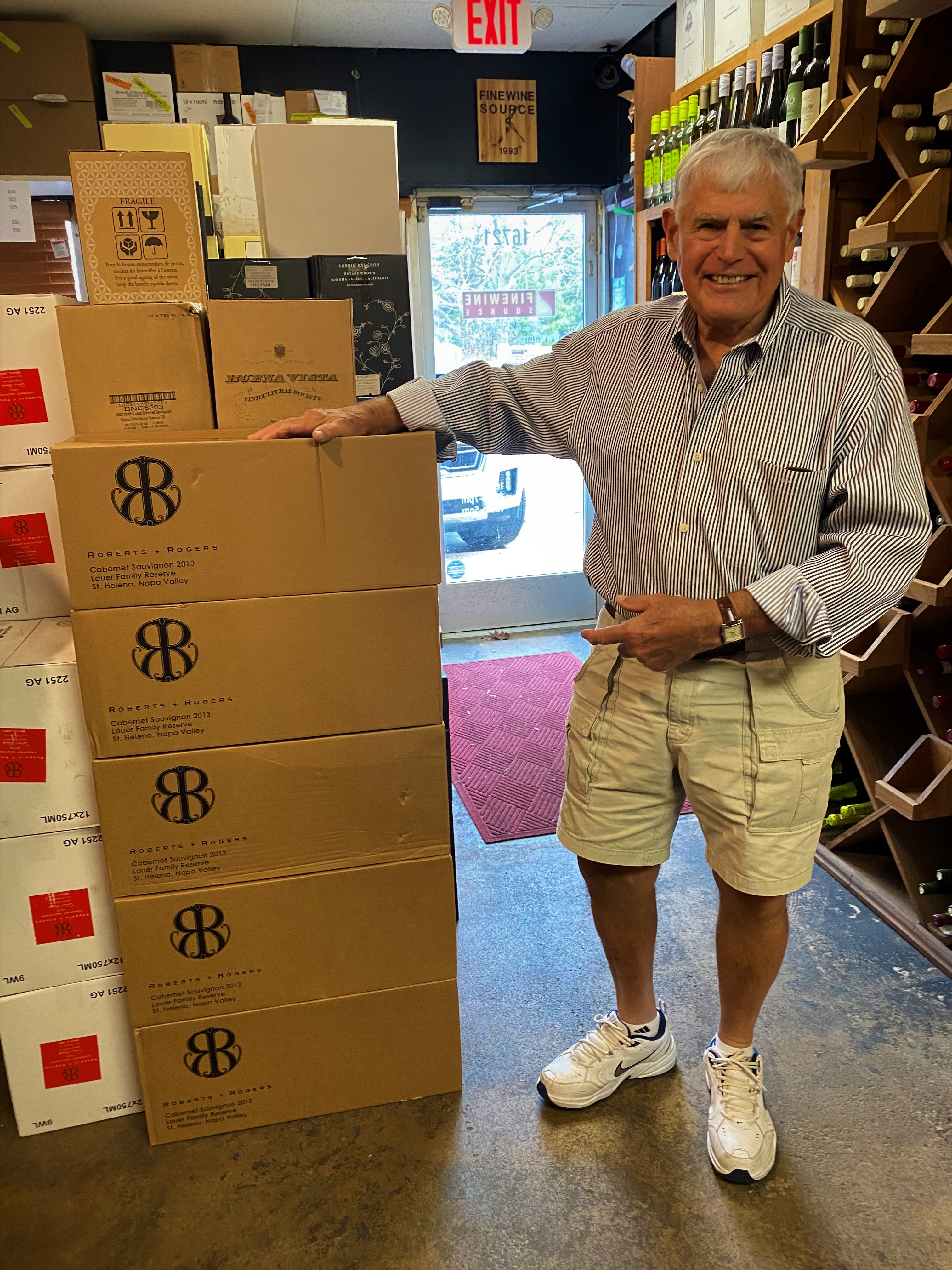
The next bottle, which is also an exclusive, if there is any left by the time, I write this, was all but lost.  When you get a merchant at a winery, the retailer part kicks in, and they start going through the warehouse and storage and he discovered a hidden and forgotten cache of Roberts + Rogers Louer Family Cabernet Sauvignon (St. Helena) Napa Valley 2012 in the handy magnum size.  Originally this wine was made from his personal estate for a select group of friends from his thirty-four-acre estate and was introduced in 2009, and it sold out that year, as well as the next couple of years as well, without any fanfare.  In 2012, it was released under the Roberts + Rogers designation.  I have had the 2014, 2015, 2016 and 2017 vintage, but this was the first time for the 2012.  The wine is aged for two years in new French Oak.  There really is nothing for me to say, this wine is a true delight, it has enough maturity that it hit all the requirements of sensory buttons for me, with dark fruit, spices and terroir.  Ideal for drinking now, or still to be laid down for a while.  I am sure that most of the people at the tasting were thinking it would be perfect for one of the holiday dinners coming up, especially like a Standing Rib Roast.      

Posted in Wine | Tagged , , , , , , , , , , | 2 Comments

Another Tasting with Roger Louer

Since my days of shopping and enjoying my local wine shop and club, The Fine Wine Source in Livonia, Michigan, I think that Roger Louer and his wines have had the most visits and tastings. Roger Louer was holding court at The Fine Wine Source talking about his wines and his winery, as well as regaling the customers.  I would describe him as a “Gentleman Farmer” and one of the benefits that he enjoys when he visits Detroit, is that he also meets his children and families at Lambeau Field in Green Bay, Wisconsin.

To give a brief summary of this winery that is based in St. Helena, so that I won’t have to mention as much background information in the next couple of articles about the wine.  St. Helena s subregion of Napa Valley that received its AVA in 1995, is historic for its red wines, mostly Cabernet Sauvignon, but also some excellent Merlot.  The town and the district are named after Mount Saint Helena and there are nine-thousand acres of densely packed vineyards including Berringer (one of the oldest continuously operating California winery) and Charles Krug (who is often credited as the “father of Napa Valley.” It is one of the warmest appellations in Napa and it has also produced some excellent Zinfandel and some very interesting Sauvignon Blanc.  Longtime friends Roger Louer and Robert Young decided in 1999 to create a “first-class” Cabernet Sauvignon wine brand with fruit from Howell Mountain from a vineyard jointly developed by the two men.  The first vintage was in 2004, and released in 2007 was for three-hundred cases.  The original and still current winemaker Barry Gnekow described the first vintage as “this wine is so big it will be coming into its own in about thirty years, but is drinkable now.” In 2009, Roger Louer produced the Louer Family Reserve Cabernet from his personal estate and sourced from the areas of his thirty-four-acre estate.  It was released for the first vintage under the Roberts + Rogers Winery label in 2012.

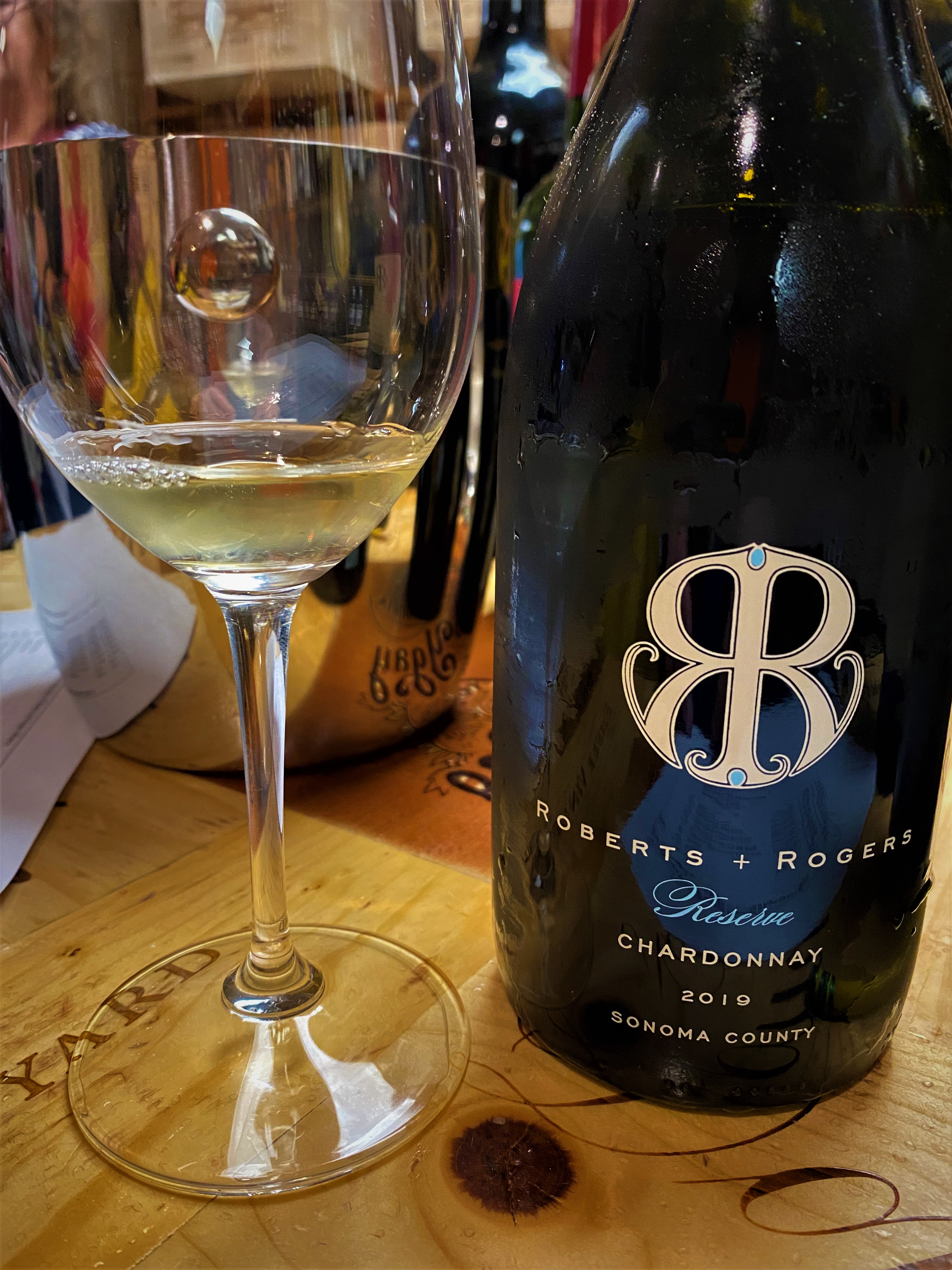
We started off the tasting with a Roberts + Rogers Reserve Chardonnay, Sonoma County 2019.  A great way to start as this wine was aged for almost twelve months.  Sixty percent of the juice was aged in French Oak and forty percent was aged in Stainless Steel and then the two juices were blended and then finally bottled.  It was a stellar example of a California Chardonnay, that would probably fool people in a blind taste test.  A nice golden color with notes of citrous and flowers.  On the palate, tones of yellow apples and citrous, vanilla, crisp and buttery with great acidity that cries out for another taste, and finishes with more fruit and some terroir.  

Posted in Wine | Tagged , , , | Leave a comment