We were getting close to the end for an organized wine tasting at The Fine Wine Source in Livonia, Michigan featuring the wines of Roger Louer of Roberts + Rogers Winery. Even though, there was blocks of time for groups for tasting, some came early, some stayed later and I am sure that some really didn’t even have an appointment. It was an event, and Roger has become a favorite of the store.
The last of the Cabs that we tasted was the Roberts + Rogers Cabernet Sauvignon, Howell Mountain 2018. Howell Mountain is one of the most prestigious sub appellations of Napa Valley. To give you an idea of how important it is, the Napa Valley appellation was awarded in 1981 (and only the second appellation in the country) and the first sub-appellation was Howell Mountain in 1984. While there is no Howell Mountain peak, the name is derived from Howell Mountain Township which sits above the fog line of 1,400 feet above sea level, and to have the designation, the vineyards must also be above this mark on the Vaca mountain range. The soil is volcanic, and most of it is iron-rich clay. This wine was aged for two years in new French Oak. My words cannot do justice, as I am always tongue tied with Howell Mountain Cabernet Sauvignon wines, as they are always the best examples of what this varietal can achieve. A deep garnet-purple wine with notes of black fruit and spice. On the palate tones of rich black cherry and berry with vanilla, and secondary tones of leather, rich tannins and a great long finish of fruit and terroir. A true expression of a California Cab.
We ended the tasting with a Roberts + Rogers Zinfandel, Old Vine, Dry Creek Valley, Sonoma County 2019. Dry Creek Valley AVA is in Sonoma County and is considered one of the best terroirs in California for Zinfandel. Dry Creek Valley is about sixteen miles long and the valley floor has a cooler climate compared to the hillsides. This wine was aged for eighteen months in French Oak. This was another Zinfandel that really made me happy, as it was not a big jammy wine, I thought it was almost elegant, with that nice spiciness and a chewy wine with a delightful finish. A delightful way to spend an hour or so, in the afternoon, and I am glad that they load the car for you, with the cases.
Myself and everyone else at The Fine Wine Source in Livonia, Michigan was having a grand old time tasting wines. I mean, how could you not, when Roger Louer was there talking about his wines from Napa Valley, Sonoma County and Mendocino County. We had just had his Roberts + Rogers Louer Family Cabernet Sauvignon (St. Helena) Napa Valley 2012 and then they were going to pour us the latest offering of the same wine. Definitely not an everyday occurrence in most wine shops, especially in the big box stores.
The Roberts + Rogers Louer Family Cabernet Sauvignon (St. Helena) Napa Valley 2020 had just been released and it was available in normal bottle size, and not in magnums. Out of eight years of vintages, this would be my sixth, so I was quite happy. Since, this wine has been produced, it has been rated in the Nineties, by the big boys. This is all estate grapes from his thirty acres in St. Helena, pure Cabernet Sauvignon and bottled in all new French Oak barrels for two years of aging. This deep garnet colored wine offered notes of dark fruits and vanilla. On the palate there were tones of black cherries, blackberries and black currents, with traces of oak/vanilla and velvety tannins right from the get go, and a nice solid finish with terroir, to finish the package. I would have no problems drinking this wine immediately or being patient and allow it to cellar for at least ten years to really have an awesome wine, and this is probably one of the best values in the valley.
Then immediately following the Louer Family 2020 we tasted the Roberts + Rogers Louer Signature Series Cabernet Sauvignon St. Helena Napa Valley 2018. Roger Louer has explained that his winemaker that has been with him since the beginning suggested that he needed a “signature” wine. The first was the 2016, and now onward to the 2018. Each barrel of the “Louer Family” is tasted, prior to bottling, and a few barrels are put aside after the two years of aging in new French Oak. It was very interesting to how this limited production wine is even more savory, and it is not just because of the two extra years in the bottle. This wine has now been made for four vintages to acclaim, because it really is bigger and chewier, as I like to say, as I will never be allowed around the big boys. It is dearer in price, compared to the Louer Family, but it has to be tasted, to appreciate how those few barrels were recognized for having that something extra.
Roger Louer was at my local wine shop, The Fine Wine Source in Livonia, Michigan conducting a wine tasting and two of the wines are true exclusives for those that attended the tasting or can get there, if there is any left. Jim Lufty, the owner of the Fine Wine Source and Roger Louer have become good friends over the years, and not long-ago Jim and his daughter Remy went out to the winery, for business and pleasure and the next two wines are a result of their trip.
Out of that trip, came Roberts + Rogers Mendocino County Red Wine Blend NV, a special proprietary wine that was blended by Roger Louer, Jim Lufty of The Fine Wine Source and Remy Lufty of the restaurant Vertical Detroit. The juice is a blend of two different years, hence the NV status and a blend of Petite Sirah, Zinfandel and Merlot. As an aside, Jim told me that there is probably about sixty different varieties, as he was referring to all the different clones that have been planted, as well as the “California Blend” that is found in older vineyards, which is a nice way of saying that some of the old vines that were planted have been mis-identified or forgotten about and could almost be anything, but those old vines do add character. A very pretty garnet color with notes of red fruit and spices. On the palate a big fruit forward wine of black and red cherries, good tannins, well balance with a finish of terroir. A good solid red with a limited production of two-hundred cases that is affordable. The only two places that this wine can be found is at the wine shop or at the restaurant. As a side note, I did play delivery man, as I contacted The Caller, if he wanted any of this wine, and he said yes, on my suggestion.
The next bottle, which is also an exclusive, if there is any left by the time, I write this, was all but lost. When you get a merchant at a winery, the retailer part kicks in, and they start going through the warehouse and storage and he discovered a hidden and forgotten cache of Roberts + Rogers Louer Family Cabernet Sauvignon (St. Helena) Napa Valley 2012 in the handy magnum size. Originally this wine was made from his personal estate for a select group of friends from his thirty-four-acre estate and was introduced in 2009, and it sold out that year, as well as the next couple of years as well, without any fanfare. In 2012, it was released under the Roberts + Rogers designation. I have had the 2014, 2015, 2016 and 2017 vintage, but this was the first time for the 2012. The wine is aged for two years in new French Oak. There really is nothing for me to say, this wine is a true delight, it has enough maturity that it hit all the requirements of sensory buttons for me, with dark fruit, spices and terroir. Ideal for drinking now, or still to be laid down for a while. I am sure that most of the people at the tasting were thinking it would be perfect for one of the holiday dinners coming up, especially like a Standing Rib Roast.
Since my days of shopping and enjoying my local wine shop and club, The Fine Wine Source in Livonia, Michigan, I think that Roger Louer and his wines have had the most visits and tastings. Roger Louer was holding court at The Fine Wine Source talking about his wines and his winery, as well as regaling the customers. I would describe him as a “Gentleman Farmer” and one of the benefits that he enjoys when he visits Detroit, is that he also meets his children and families at Lambeau Field in Green Bay, Wisconsin.
To give a brief summary of this winery that is based in St. Helena, so that I won’t have to mention as much background information in the next couple of articles about the wine. St. Helena s subregion of Napa Valley that received its AVA in 1995, is historic for its red wines, mostly Cabernet Sauvignon, but also some excellent Merlot. The town and the district are named after Mount Saint Helena and there are nine-thousand acres of densely packed vineyards including Berringer (one of the oldest continuously operating California winery) and Charles Krug (who is often credited as the “father of Napa Valley.” It is one of the warmest appellations in Napa and it has also produced some excellent Zinfandel and some very interesting Sauvignon Blanc. Longtime friends Roger Louer and Robert Young decided in 1999 to create a “first-class” Cabernet Sauvignon wine brand with fruit from Howell Mountain from a vineyard jointly developed by the two men. The first vintage was in 2004, and released in 2007 was for three-hundred cases. The original and still current winemaker Barry Gnekow described the first vintage as “this wine is so big it will be coming into its own in about thirty years, but is drinkable now.” In 2009, Roger Louer produced the Louer Family Reserve Cabernet from his personal estate and sourced from the areas of his thirty-four-acre estate. It was released for the first vintage under the Roberts + Rogers Winery label in 2012.
We started off the tasting with a Roberts + Rogers Reserve Chardonnay, Sonoma County 2019. A great way to start as this wine was aged for almost twelve months. Sixty percent of the juice was aged in French Oak and forty percent was aged in Stainless Steel and then the two juices were blended and then finally bottled. It was a stellar example of a California Chardonnay, that would probably fool people in a blind taste test. A nice golden color with notes of citrous and flowers. On the palate, tones of yellow apples and citrous, vanilla, crisp and buttery with great acidity that cries out for another taste, and finishes with more fruit and some terroir.
Most people take for granted, the long weekend that Thanksgiving allows, but certain professions don’t and probably never will, and I had one of those jobs. Now, everyday is a holiday, but we still function like I was working and this way, the month of December is not for shopping. Black Friday was supposedly the day, the big Manhattan stores broke even for the year, and then the profit margin exploded for the month that follows. That is why I always laugh when I see other countries talk about Black Friday, as they don’t have our Thanksgiving.
So, my Bride did not get up at the crack of dawn, to enter any of the coliseums and do battle with other shoppers. We were going to go to one sister’s house for dinner on Friday, but something came up and another sister volunteered. Dinner was for four, we arrived at three, so that my Bride could help with the food, we were bringing wine and all the leftovers from Thanksgiving, while my brother-in-Law was making his Lasagna, and he also made his own creation of a Potato Lasagna. Another couple came after us, and they had brought a huge Charcuterie Board. I made a meal from that board, and we started off with a bottle of wine that I had left at their house, and they kept it for another big get-together. Gran Passione Rosso Veneto IGT 2019 is a limited production wine made by Cantine Bertoldi. Cantine Bertoldi is known for their Valpolicella and Amarone wines. They were founded in 1932 and have gone through several generations of the Bertoldi family and they are now in possession of fifty acres of hand cared varietals of Corvina, Rondinella, Molinara, Trebbiano and Cortese, while also adding into the mix they have Merlot, Cabernet Sauvignon and Chardonnay. The grapes selected for their passito wines are sun dried and fermented in Stainless Steel. The Gran Passione is made from some of these passito grapes and is made from a “rare red blend” which is a way to describe a mixture that either the winery wants to keep secret, or they just are not sure of their proprietary blend and then there are some years when this wine is not made. While the wine is not as rich and full bodied as an Amarone de Valpolicella, it is a delightful wine.
About three hours, after we got there, the hordes arrived, expecting to be fed. There was plenty of food beyond the two Lasagnas. There was enough Turkey and Prime Rib and all the side dishes from the day before. I guess my Bride went a bit overboard on her menu, but she did make a fresh Caesar Salad. As for me, I had filled up on the appetizers and didn’t eat anything else that day. I was also upset about another three-hour lag time, and I told my Bride that we will totally abide by her schedule for food, if no one arrives, we will eat, and then put all the food in the refrigerators and the Johnny-come-latelies can have rewarmed leftovers courtesy of a microwave. I opened up a bottle of Scheid Cabernet Sauvignon 2012 and it is listed as being Estate Grown from their San Lucas and Hames Valley Vineyards. The wine was barrel aged for twenty month and was bottled unfiltered to preserve the tannin structure. This wine produced six-hundred-fourteen cases and the aging potential is eight to ten years, though it may have the potential to cellar even longer, in my humble opinion, but at ten years we tried it. The deep garnet wine still had red accents and no traces of brick or brown and offered notes of black fruits and spices. On the palate, tones of dark cherry and ripe plum and vanilla mingled effortlessly with elegant tannins that had mellowed out and a nice finish of fruit, spice and terroir beckoned for another taste.
Count Alfonso Romero: “What time will the guest arrive?”
Butler: “Oh, well, no one arrives first, Sir. They all come in last.”
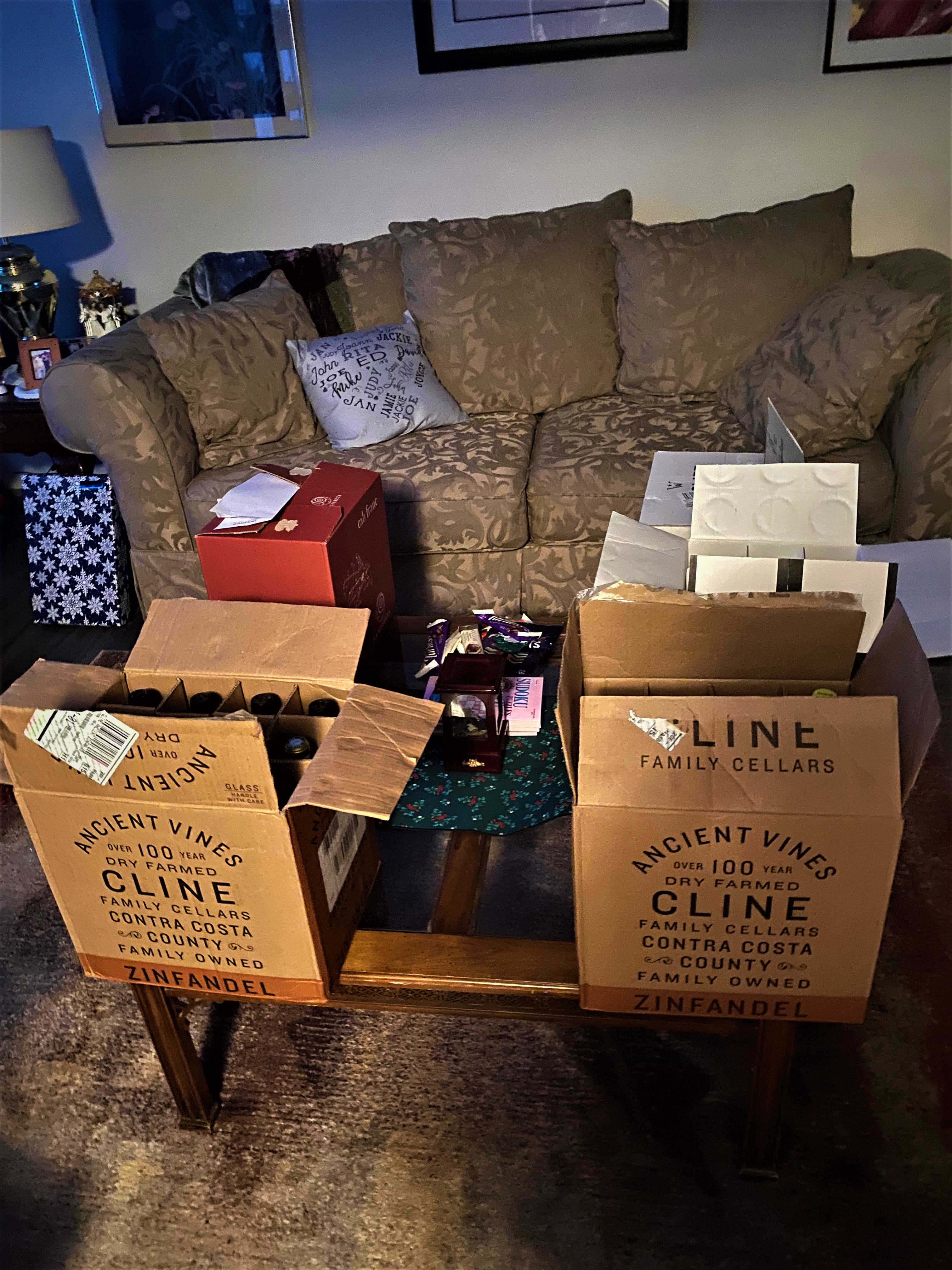
We were planning on having thirty guests for Thanksgiving, which I don’t know about you, but for us, it was a matter of logistics. We were planning on using the dining room, the living room, the breakfast nook and if need be, the library, after we stopped cooking with one of the roasters in there, we were also using a roaster in the family room, which could be commandeered for more seating, as we also had to make room for a dog cage in there as well, while some were watching the traditional Detroit Lions attempt to play football on Thanksgiving.
And so, it is. We told everyone to come between two and three for appetizers. Nothing fancy, we had several hard cheeses and a Baked Brie topped with Onion Jam for a savory finish. And some others added to the cheese selection, like a twelve-year-old Cheddar and a ten-year-old Gouda. We also started with a Liver Mousse with Truffles. I also told my Bride to start the cooking a little later, and it was still chaos. The majority showed up three hours later, and as far as I am concerned, it was in very poor taste and was disrespectful. We started out with a couple of white wines, and I always like to have something a little interesting. The safe white for the evening was Bonterra Vineyards Chardonnay California 2020, here is a wine where the fruit has been harvested from different regions in the state. Seventy percent of the juice is aged in a mix of French and American Oak and only fifteen percent is new, the other thirty is aged in Stainless Steel. When all that juice is blended together there is a delicious bottle of Chardonnay that shows some of the creaminess without hitting you over the head with it. The wine also delivers some crispness, and a touch of minerality and for the price, I think it is a great bargain, especially for crowds. The more daring and interesting wine I thought was the Cline Family Cellars “Seven Ranchlands” Viognier North Coast 2021. Cline Family Cellars is a producer based in Carneros and known for Zinfandel and Rhone varieties and established in 1982 in Oakley. Fred Cline is one of the original Rhone Rangers of California. The “Seven Ranchlands” is a way of honoring both the seven children of the Cline family, and the seven vineyard ranches. The fruit for this wine is from the Catapult Ranch Vineyard in the Petaluma Gap, and the balance is from the Diamond Pile Vineyard at the base of the Wild Cat Mountain. The grapes are handpicked at night, where they are destemmed and pressed, and allowed to settle for forty-eight hours before racking. The Catapult portion was inoculated with wild yeast, while the Diamond Pile portion was allowed to ferment naturally in barrels. After fermentation, the wine was aged in neutral French Oak for six months before blending and bottling. This was a very soft colored white wine with notes of mango, guava and pineapple. On the palate tones of dried apricots, pears and banana in a full-bodied wine with nice acidity and a nice finish.
For main dinner, we were making two turkeys, that is why we had two roasters set up in the house, because we could not a twenty plus pound turkey, so we had to settle for a couple of smaller ones. Also, one of our guests brought us an eighteen-pound Standing Rib Roast, or if you prefer Prime Rib. They made it easy for us, as their butcher had cradled it and tied it, and the night before they had applied a rub. We had the meat dishes covered, we also had Roasted Cauliflower with Garlic and Parmesan, Roasted Brussels Sprouts with Bacon and Balsamic, Armenian Pilaf, Stuffing (there has to be stuffing with Turkey), and Mashed Potatoes. I always knew that I had several interesting wines in the cellar, but I recently had a wine at my local wine shop, that I thought was a real winner, especially with the Standing Rib Roast and I could make it work with the turkey as well. We had Beaucanon Estate Cuvee Louis Cabernet Franc Napa Valley 2012. Beaucanon Estate is located on the historic Longwood Ranch, that originally was part of land that belonged to the founder of Sonoma. It became the Longwood Ranch around 1860, and it was sixty acres owned by a dairyman, in the 1970’s Chardonnay was planted there. It is now ninety-four acres planted with classic Bordeaux grapes with sustainable and organic farming practices. The first winery was built in 1987 and production was for thirty-thousand cases; seven years later that created a state-of-the-art facility to produce twelve-thousand cases. The de Coninck family started this winery in 1987, and the family is a nine-generation wine merchant from the Right Bank of Bordeaux going back to 1740. Louis de Coninck joined his father in Napa Valley after training in Saint Emilion. This wine undergoes fermentation and maceration in open barrel and concrete with skin contact for four to five weeks, followed by fourteen months in a mix of French and American Oak, with thirty percent new. A nice deep ruby/garnet wine with notes of red and black fruit, candied cherries and spice. On the palate black fruit dominates with some cocoa, the tannins were very smooth and elegant, with nice acidity and a finish of terroir. My Bride was very happy with the wine and food, but not with the behavior of the guests.
We try to frequent the restaurant Chartreuse, after every visit to the Detroit Institute of Arts. It is in the legendary Park Shelton, which was originally the Wardell Hotel, named after Fred Wardell of the Eureka Vacuum Company. When Diego Rivera was painting the famed murals at the DIA glorifying the automobile and the assembly line, he lived at the hotel, with Frida Kahlo. Later the hotel became the Wardell-Sheraton, then the Park-Sheraton and went from a residential hotel to condominiums.
Chartreuse Kitchen & Cocktails opened in the corner of the hotel in 2015 and became the Restaurant of the Year in 2016. We got in and started off with a couple of appetizers that the three of us could share. The first was Lamb Tartare with Carrot Puree, Crispy Mushroom, Shallot, Pickled Mustard Seed, Chive, Crema and Grilled Sourdough. The other has become the dish that they get the most raves for, so we tried it. The Twice Cooked Egg with Werp Farms’ Greens, Brussels Sprout, Salty Cheese and Warm Shallot Vinaigrette. The two ladies both had the Linguine with Butternut Squash Puree, Parsnip, Rutabaga, Turnip, Brown Butter, Sage and Chestnut. I went a bit more Old School, if there was any doubt, with the Berkshire Pork Chop with Andouille, Calypso Bean Cassoulet, Corn Bread and Honey Mustard. We then shared the Chocolate Cookie with Raspberry Jan, Chocolate Ganache, Candied Almonds, Cardamon Anglaise, and Toasted Almond Anglaise.
The three of us also enjoyed a bottle of Xavier Courant “Merci La Vie” Bourgueil 2020 from Domaine de L’Oubliee. Bourgueil is an appellation for red wines in the Loire Valley and must be at least ninety percent Cabernet Franc, and most of the time, the wines encountered are pure Cabernet Franc. The local name for Cabernet Franc is Breton, and not a reference to Bretagne, but to the 17th Century monk, Abbot Breton of Bourgueil Abbey who has been credited as the one who brought the variety to the region, planting and tending the vines. The region also is known for the alluvial gravel along the banks of the Loire River. The Domaine is organically farmed. After the harvest the grapes undergo maceration and fermentation in a concrete vat for thirty-one days, and then aged for ten months in concrete and bottled unfiltered. This pretty ruby red wine offered notes of red fruits and spices. On the palate a softer medium-bodied wine with tones of raspberry and cranberry with secondary tones of green pepper and the ethereal quality known as undergrowth, with a nice finish of terroir. The wine I would describe as more like an elegant Beaujolais Cru, instead of a Bordeaux feel. A wonderful way to spend the day.
“Van Gogh in America” celebrates the Detroit Institute of Art’s status as the first American museum to purchase a painting by the artist; and the hundredth anniversary of that purchase. The first American exhibit was in 1913 and not a single piece of art of was purchased. In 1922, the DIA purchased his “Self-Portrait” of 1887, and it was featured along with loans of works by Paul Gauguin and Paul Cezanne. In fact, the next four paintings that were purchased by American museums were all in the Mid-west (Chicago, Kansas City, Saint Louis and Toledo) and they were also in this exhibit.
My Bride and I and one of her girlfriends went to see this once in a lifetime collection of immense proportions of the works of Van Gogh. We had to book a time slot, and then when we go there, the ladies had to check their coats and their purses, they were allowed a clear plastic bag “purse” for their valuables. This was because of the obscene actions of protesting climate activist Nazis that attempted to splatter the “Mona Lisa” with soup and glue themselves to the walls in the gallery at the Louvre. I would venture to say that it almost felt like there were as many guards as there were patrons, but the art was on loan from around the world from both museums and private collections, so security was vital. The exhibit was awesome, and we had to go backwards in the galleries a couple of times to look at some of the pieces several times, as we wouldn’t probably get a chance ever again in our lifetime. At the end of the exhibit there was a gift shop, and my Bride purchased the last copy of a book, that shows a color photograph of every painting done by Van Gogh, and our “Founders Society” membership helped here.
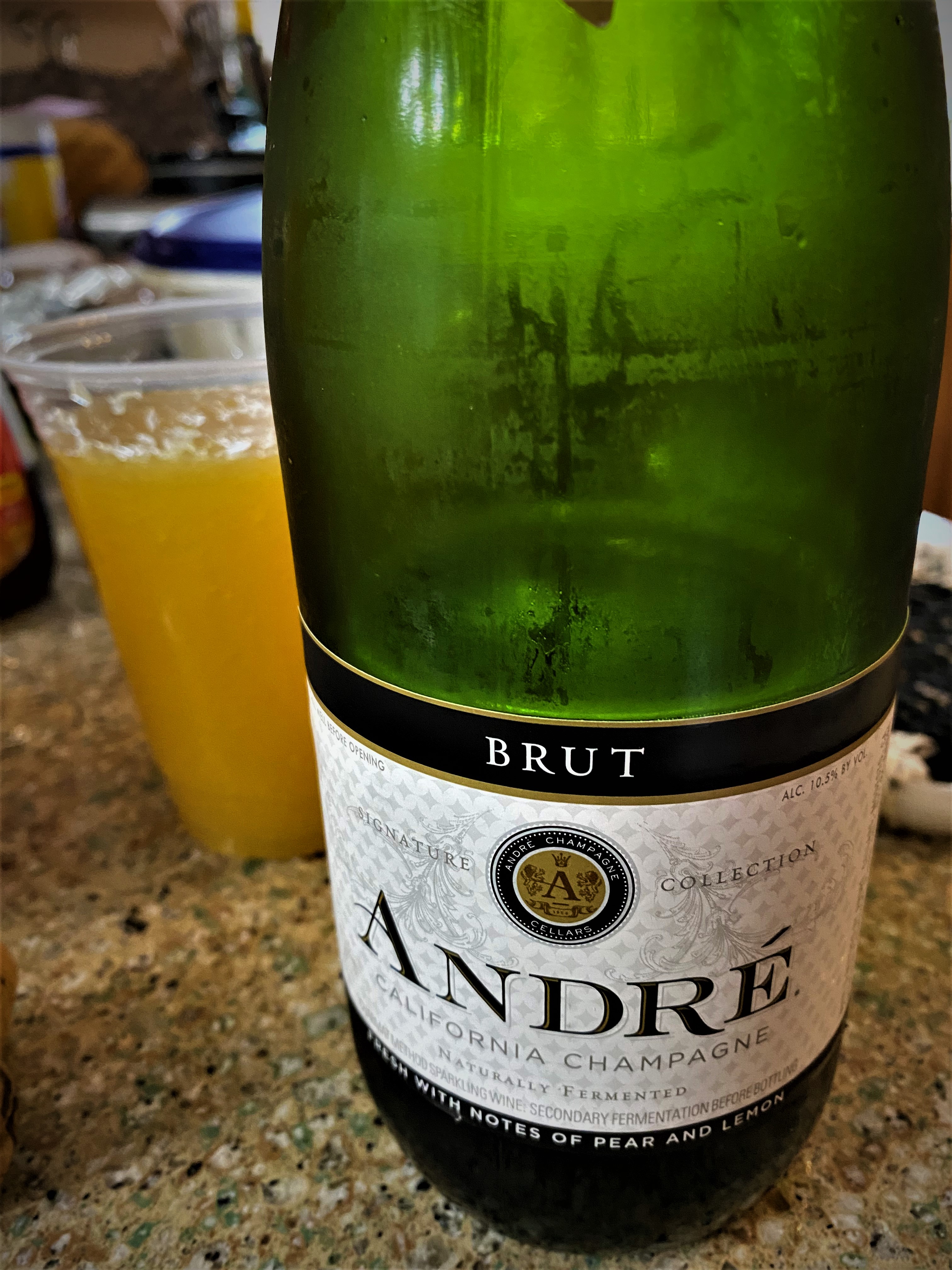
When I was in high school, on occasion there were times when I skipped school, I guess I can admit it now, to go to the DIA to absorb all the different art collections, and we are still enraptured with the collections and we go there periodically for a wonderful day trip. Surprisingly, the DIA had abbreviated hours, we had planned on having some wine in the Kresge Court and then go for dinner afterwards, across the street at Chartreuse. The DIA was closing, except for “Van Gogh in America” ticket holders and Chartreuse wasn’t going to open for another hour. We were told to try a small little café around the corner from Chartreuse and we went in for some wine. Her girlfriend ordered a Bloody Mary and said it was the spiciest concoction that she had ever had, she drank it slowly and she was glad that she also had a glass of water as a chaser. My Bride and I had a glass of Jaume Serra Cristalino Brut Traditional Method Cava NV from J. Garcia Carrion. J. Garcia Carrion is the largest winery and the second largest fruit juice producer in Europe. They were founded in 1890 and produce wines in ten different DO regions of Spain, and also more wines and brandies outside of the DO regions. Their major label is Don Simon was created in 1980 and one of the first box wines in Spain, the label is now used for their Sangria, juices and soft drinks. Jaume Serra is made in the Traditional Method that is required for Cava and is a blend of Macabeo, Parellada and Xarel-lo. There is not much to go glean from the company, but the wine was very refreshing and very tasty and filled in the hour that we had to keep ourselves occupied with.
I would like to think of my Bride and I as romantics, well let me tell you how we spent our last anniversary. We were over-dressed in our gymnasium sweat suit attire at a recycling center, which in my youth would have been part of a scrapyard. Unfortunately, as I have mentioned in a past article, my Bride lost her mother at the age of 96, which is a great milestone to achieve, and few are honored to make it, with sound mind and in good health. Years ago, when both of her parents were alive, my Bride pushed for them to create a trust and it served them well. Of course, I keep asking my Bride, what terrible thing did she do, that she named my Bride as the Executor of the Trust. She is even doing her penance without any renumeration.
All this is because all five sisters got together to try to clear out “stuff” accumulated over the last almost seventy years in their parent’s house and garage. There was a vintage pool table from the Roaring Twenties, not the “Mandated Twenties” of this century, that somewhere along the way, someone attempted to refinish one part, and that part has disappeared in lore, and the table was quite useless. We discovered how to dismantle it, and I am still wondering how they actually got it, into the basement, back in the Fifties. Anyways, as I wander, my Bride had rented a dumpster and most of the sisters, their spouses and children all chipped in for the physical work. You have to remember that the “our” parents survived the “Great Depression” and there was value in almost everything, and there was a method to their madness of making use of stuff. We all became quite adept at learning the value of “scrapping.” We made so much from recycling iron, steel, aluminum, brass, and copper that the dumpster, which we filled to the brim was paid for, which explains why we were so jauntily attired standing in line with the people that we see, who make a living touring neighborhood on trash and garbage day, picking up the stuff, that other people have thrown away.
We got home exhausted, but we had a dinner to celebrate. We had filets, potatoes and broccolini; and we didn’t even bother with a dessert. We were still in a recycling state of being and I went into the cellar to find something and I found a split, which was enough wine for us that evening after the day we had. Splits or half-bottles are always iffy, but there were plenty of other bottles waiting if necessary. I got my Durand, just in case, as well as a funnel and coffee filter. We opened up a bottle of Alain Jaume & Fils Domaine Grand Veneur Chateauneuf-du-Pape 1998. Avignon was the home for the French Pope who did not want to live in Rome, hence the name. The firm was established in 1826 and Domaine Grand Veneur is their flagship wine as well as the base of the firm. Chateauneuf-du-Pape is one of the most famous designations in the Rhone Valley, originally thirteen varieties were allowed, and now it is up to eighteen, but three are the predominate grapes. The original rules were so strict and precise, that they actually were the basis for the Appellation Controlee laws. Years later, the curious law that Chateauneuf-du-Pape banning UFOs went into effect and is still on the books. This wine is made of fifty percent Grenache, twenty percent Syrah and thirty percent Mourvedre. The Syrah and Mourvedre are aged in French Oak and the Grenach is aged in concrete vats for fourteen months. Considering the age, the cork came out in one piece, but I did use the funnel and coffee filter, because of the number of dregs that were visible, and we still got two good glasses of the wine. The wine still had a very deep purple color, without any brown tinges, and offered notes of rich black fruits and spices. It was a big wine, even at twenty-four and offered tones of black cherry and plums, tobacco and cinnamon were secondary and the tannins had mellowed out and were very suave and finished with a nice long count of terroir. A hell of a wine to finish off the day, but especially my Bride’s job will continue for some time, thankfully, she is retired.
I am constantly asked to join wine clubs, I guess there must be a reason, but I am still ecstatic about my local wine shop and club at the Fine Wine Source in Livonia, Michigan. I may sound like a broken record, but this club, is more like a club and when I walk in the door, I am greeted with a barrage of hellos. And it isn’t just me, because I see this occur to almost everyone that I see who enters, and that includes vendors. It is just a comfortable shop, akin to describing your favorite pair of slippers that are just perfect and that you always reach for. Two curated wines every month for under thirty dollars, and it also allows you to get case discounted pricing, even if you just stop in to get a bottle, and even with our cellar, that still happens. I always enjoy my visits there, and I always look forward to the special event wine tastings as well, as some of the impromptu tastings. Sometimes there is just something new that they think a customer should try, especially if it is not the usual suspect.
The wine representing the Old World this month is Franco Serra Dolcetto D’Alba 2022. Franco Serra is produced by the Sperone family who have been making affordable premium wines for four generations. In 1911, Antonio Sperone opened a small wine cellar in Torino where he crafted vermouth and other fortified wines. He then bought a winery in Puglia and eventually built a bottling facility in Torino. They grew wisely and slowly and in 1983 they purchased seventy-five acres in Piedmont and built a new winery and they expanded into more markets not only in Italy, but abroad as well. The winery is named Serra for the region where the vineyards are and Franco for Antonio’s uncle. The wine is pure Dolcetto and named for the district (Alba). The grapes are hand harvested. Three weeks of maceration and then four weeks of fermentation in Stainless Steel; followed with three months of aging in the bottle, before release. The wine is described as having note of violets, red currants and smoke. A medium bodied and dry red wine with moderate acidity with tones of plum and blackberry and finishes with a touch of almond.
The wine representing the New World is Three Wine Company Faux Pas Contra Costa County 2021 and their sentiments are “the dirt, the micro-climate and don’t screw it up.” Actually, winemaker Matt Cline’s philosophy is that; the dirt, the micro-climate, and sustainable winegrowing form the cornerstone of good winemaking, and he places them in every bottle of wine he produces. He has a passion for preserving and educating on the historic varietals to California, such as Zinfandel, Mataro and Carignane. He and a like-minded group stood up to the State and saved an historic vineyard. This wine is blend in two ways, first the wine is a blend of forty-seven percent Carignane, thirty-nine percent Zinfandel and fourteen percent Petite Sirah. The Carignane is from the Joaquin Jose Vineyard which was planted in the mid-1880’s with an average age of over one-hundred-thirty years. The Zinfandel came from the Vineyard Lane and Oakley Road Vineyards. The Petite Sirah is from the Mazzoni-Live Oak Vineyard planted also in the mid-1880’s of which only 1.9 acres remain, but is part of the seven-acre portion of the vineyard that is planted to the same varietal. The other part of the blend of this wine is that it is a blend of rosé and red wine lots fermented in Stainless Steel tanks. The rosé portion is a blend of mostly Zinfandel with some Carignane with about twenty-two hours of skin contact and fermented for forty-two days. The red wine portion had the Carignane fermented on its skins for thirty-one days, while the Petite Sirah was fermented for fifteen days. All the lots were unfined, and once the blending was complete, the wine was aged for four months in Stainless Steel. This wine is suggested to be lightly chilled before serving. According to the notes, the wine begins with notes of pomegranate, berries and candied peaches and ending with a dominate finish of cherries. Strongly touted for fish and fowl.