Mother’s Day 2023

Mother’s Day for those that are fortunate to still have their mothers is a great way to get together for a dinner and a celebration.  This was the first one, for my Bride to do without her mother and I knew that she was feeling anxious and upset, a normal emotion.  She is a rather take charge individual and she wanted to have her immediate family, and I found several options for locations between us and our son and his family that lives in the Detroit area.  She then worked out the arrangements and only two of the local grandchildren could not make it, because of work or school.
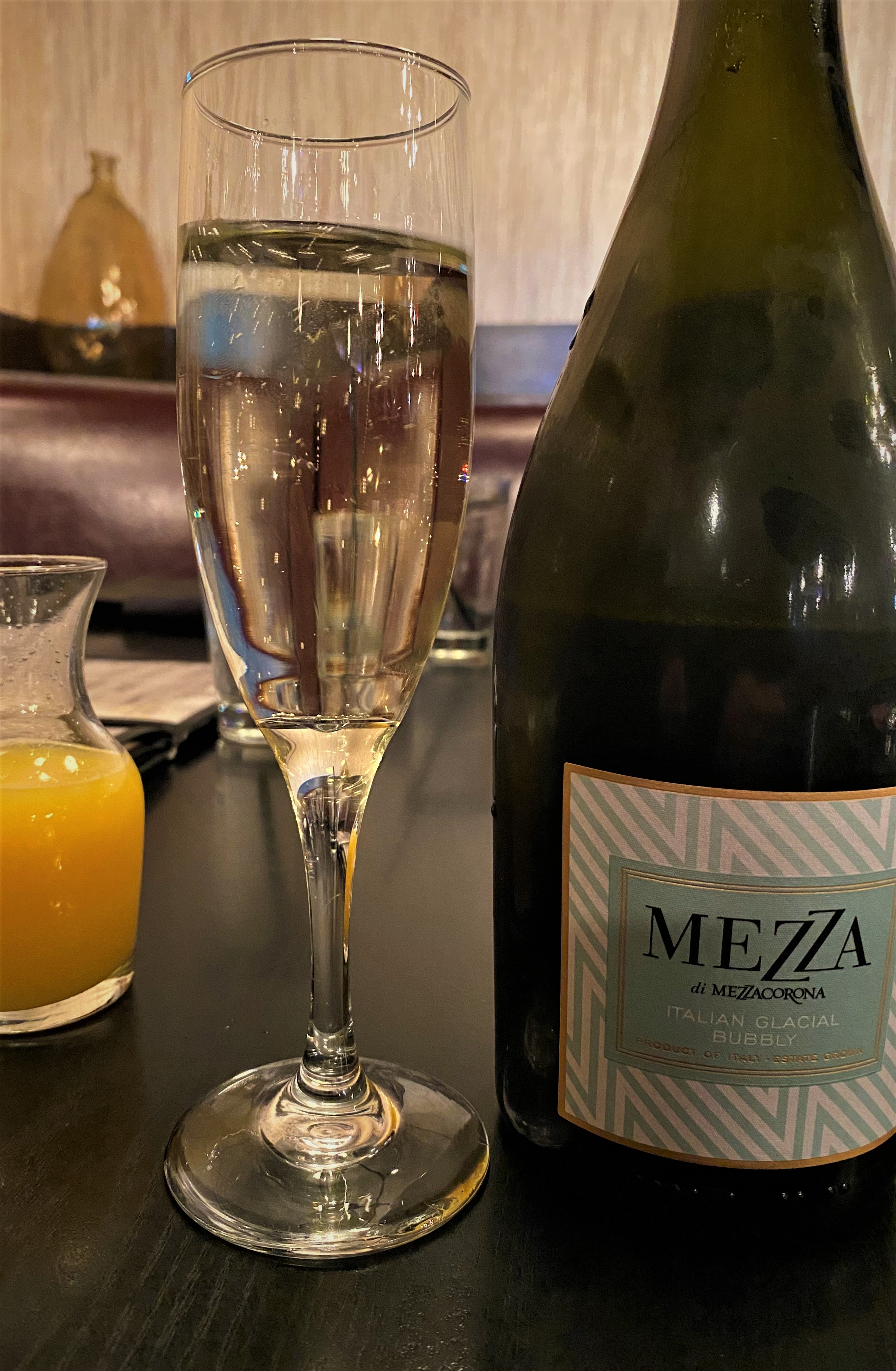
We ended up at a restaurant that we have eaten at before, but our son and his family hadn’t and that is good.  We met for a late brunch or an early dinner and just about everyone needed a doggie-bag, as there was so much food (I actually had another dinner and the following day the balance for lunch).  My Bride had the Sesame Seared Ahi Tuna with an Asian Slaw Salad and Rice Pilaf.  I had their Louisiana Creole Pasta Truffle Mac & Tenderloin with Sautéed Shrimp, Chicken and Andouille Sausage with Red, Green Peppers and Red Onions; tossed with a creamy Creole Sauce and Linguini.  We both agreed that my Bride had the better choice.  We decided to have Mimosas and a bottle of bubbly and a carafe of orange juice was our choice.  Well, it is a drink that doesn’t require top tier Champagne.  We had a bottle of Mezza di Mezzacorona Italian Glacial Bubbly Extra Dry Vigneti delle Dolomiti IGT NV.  Mezzacorona is a group of co-operative wineries and brands based in Trentino.  The winery, is known as the “Citadella del Vino” and they built a state-of-the-art facility of their 1,600 members.  Vigneti delle Dolomit IGT for the far norther reaches of alpine Italy and named after the Dolomite Mountains.  The title was introduced in 1997, and it covers red, white, rosé, varietal or blend, still, sparkling, or sweet.  This wine is sixty percent Chardonnay, thirty percent Pinot Bianco and ten percent Muller Thurgau. After harvest, sorting, destemming and crushed by a soft press, the wine undergoes Initial Fermentation in a controlled environment for ten to eleven days, then the wine matures on the lees.  After filtration the wine is processed using the Charmat Method. I had to try the wine first and it has a nice golden color with consistent, medium size bubbles and offered notes of white fruits, melon, pineapple, and a whiff of roses.  On the palate, apple and pears with a slight mousse finish and pleasant acidity.  It would have been fine without the orange juice, but for proprietary sake.
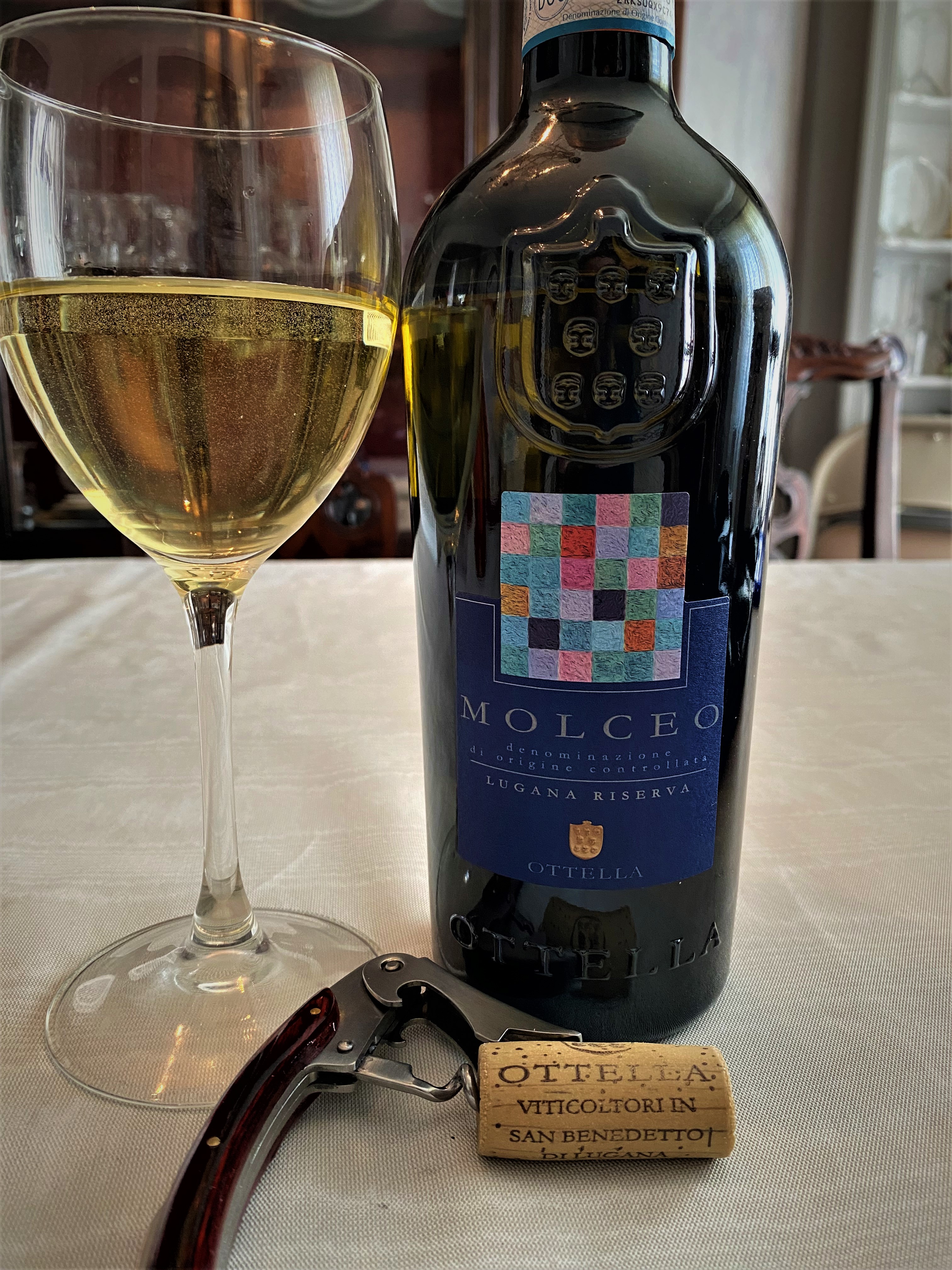
When we got home, my wife had recently tried making one of her favorite dishes, Broiled Whitefish and I suggested that she make it for dinner, just the two of us.  What I didn’t tell her was that I had found a wine during one of my tastings, that I knew she would love, as the regular wine from the winery is one of our to-go wines in our cellar.   I first wrote about the 2015 vintage of this wine, but I had to have her try the Otella “Molceo” Lugano Riserva 2019 from Azienda Agricola Otella.  Lugana is a white wine specific region that straddles Lombardy and Veneto, but is considered part of Lombardy.  There are a couple of different designations for Lugano, but it seems that the wine has to be ninety percent of a locally known varietal known as Turbiana.  I have seen this wine listed as being Verdicchio, and I have seen it listed as Trebbiano di Lugano.  I have also seen where some that study the grapes scientifically have crossed off the possibility of Verdicchio, so I will call it Turbiana.  The Montresor family has been running Ottella for four generation, and it has been attested that the Montresor family was the only ones to produce Lugana in the province of Verona in 1905.  In 1964 the family began delineating the lands and they began working to get a DOC designation.  This particular wine spent eighteen months aging in a combination of Stainless Steel and oak barrels.  A golden-yellow wine offering notes of citrus and white flowers.  On the palate tones of peaches, lemon drops, salinity, and a trace of hazelnuts with bright acidity and a nice lingering finish of terroir.  What was interesting to me, when I first tasted this wine, it reminded me of some of our Sauvignon Blanc wines and I poured the wine for my Bride, without letting her see the label and she thought the same thing, and then I showed her the label, along with a bottle of our regular Ottella Lugana, she was very pleased.

Posted in Dining, Wine | Tagged , , , , , , , , , , , , , , , , | Leave a comment

Rene Leclerc and Chambertin

We were getting close to the closing of the Michael Corso Selections wine tasting at The Fine Wine Source in Livonia, Michigan.  Michael Corso is always on the lookout for smaller vignerons who always have the pulse of the wine under their thumb.  The vignerons usually only have a few wines to offer and their name is on the bottle and so is their reputation.  I really think that this is part of the excitement of wine enjoyment, anyone if they can afford it, can buy the big boys, but to find a stellar wine that is more affordable is a great deed. 

The penultimate wine was Domaine Rene Leclerc Gevrey-Chambertin 2020.  Gevrey-Chambertin is a village in Burgundy’s Cote de Nuits district, and the village is home to nine Grand Cru vineyards, making it the most prestigious of all the villages.  The village was originally Gevrey, but in 1847 the parish council appended their most famous vineyard to their name.  This started a trend along the Cote d’Or villages.  The Cote de Nuits is the northern half of the Cote d’Or and it is predominately Pinot Noir.   Domaine Rene Leclerc was established in 1982, a sustainable winery of thirty- to fifty-year-old vines on a soil of limestone, white marl, and iron; they have 1.5 hectares of the village designation.  The fruit is hand-harvested and sorted, and then pressed using an antique, manual wooden press.  The juice undergoes cold maceration and Initial Fermentation using indigenous yeasts in traditional vats.  After six months the wines are racked into neutral barrels for an aging period of almost eighteen months.  The wines of the village have a solid reputation, because of the Grand Crus located there and village is referred to as the “King” of Burgundy wines.  The common perception of the wines are that they are rustic and not overly sophisticated, but still highly regarded.  A pretty garnet colored wine that offers notes of red fruits, spice, and soft florals.  On the palate raspberries combine with acidity and the natural ullage of the barrels to create a wine of character with a nice medium count finish of fruit and terroir.  Some cellar time will really make this wine wonderful.


The final wine of the tasting was Domaine Rene Leclerc Griotte-Chambertin Grand Cru 2020.  This is a perfect example of the mystery of divining the vineyards.  The Cote d’Or designation usually refers to the hillside slope that usually face east to southeast around the village of Chambertin.  Here Griotte-Chambertin lies on the slopes below Clos de Beze and Chambertin vineyards and faces slightly northeast.  Normally, most of the vineyards that are on the mid-slope or lower are held in lower esteem, except for Griotte-Chambertin; and it is the smallest Grand Cru of the commune at 2.7 hectares.  The soil is well-drained and stony, with a thin layer of pebbles, chalky topsoil over a deep, rocky base and loose limestone further down the slope.  This appellation is considered fresher and more delicate.  There were no production notes available for this wine, but I would surmise longer times for each step of production.  The garnet wine offered notes of candied cherries, leather, and nutmeg.  On the palate the tones of cherries and spices along with the soft tannins made this wine absolutely drinkable now.  I would have polished off the bottle, no matter how I tried to nurse my glass, it just wasn’t going to happen. It may have been the finest example of Pinot Noir that I have had for some time.      

Posted in Wine | Tagged , , , , , , , , , , , , | Leave a comment

Two Red Bourgogne Wines from MCS

A perfect day at my local wine shop, The Fine Wine Source in Livonia, Michigan and tasting wines from the Michael Corso Selections.  We just enjoyed four white Burgundy wines and then onto four red wines from Burgundy as well.  The wine laws of Burgundy are very Byzantine and you almost have to be a Philadelphia lawyer to truly understand it all.  You can be standing on one plot of earth and it can be one appellation, just up the hill is another, down the hill can be another and sometimes, a couple of feet over could be another.  The old monks that tended the vines over the centuries had plenty of time to discover the best nooks and crannies for outstanding wines. 

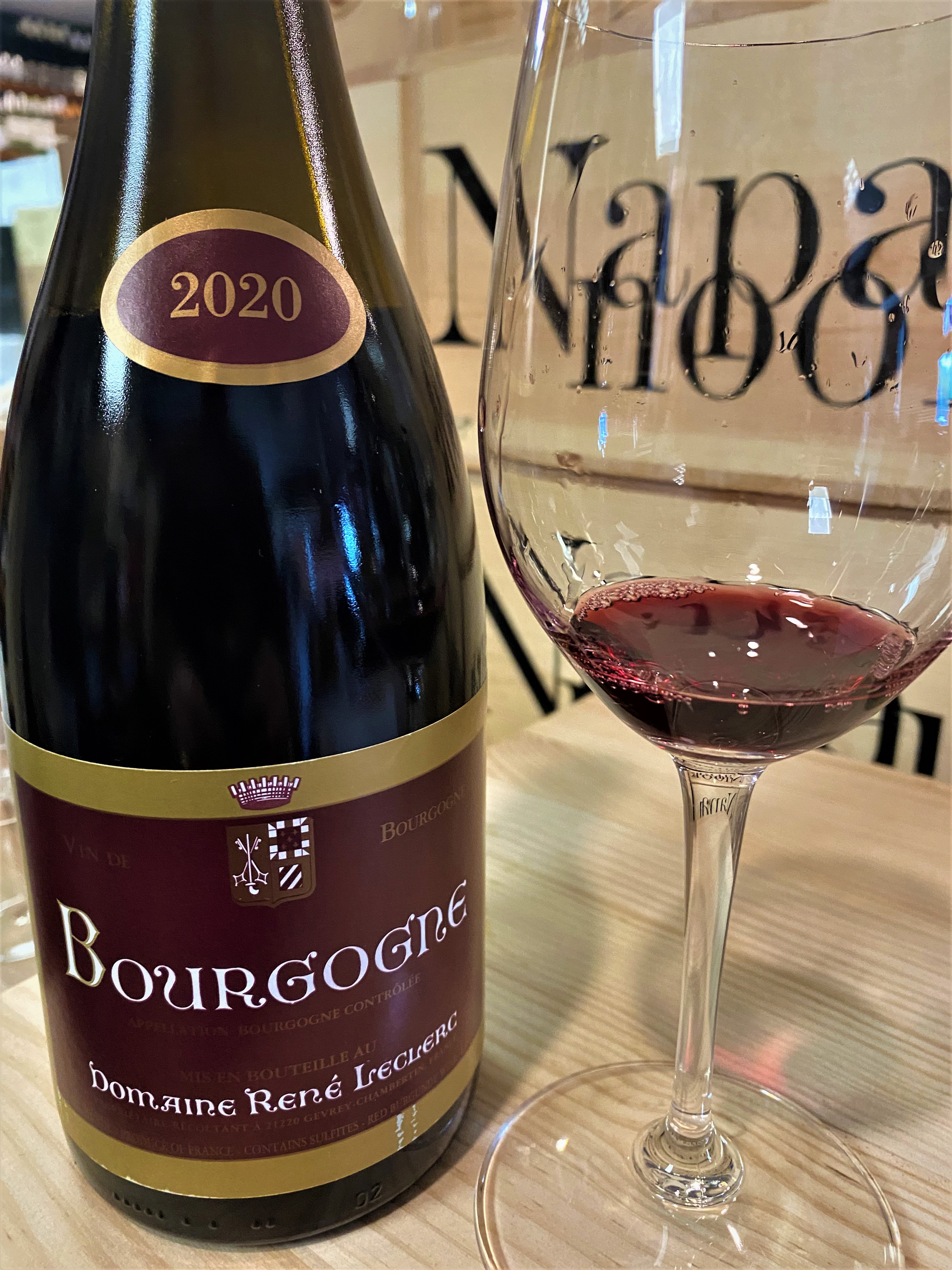
We started of with Domaine Rene Leclerc Bourgogne Rouge 2020, and if you don’t speak French (and that includes me) it just means Red Burgundy.  Bourgogne Rouge wines received an appellation in 1937, the same as most of the major designations there, and covers grapes grown from over three-hundred communes throughout Burgundy.  Rene Leclerc and now his son Francois are the winemakers and management of this sustainably farmed domaine.  The domaine has twelve hectares in and around Gevrey-Chambertin and parts of the domaine fall into the Bourgogne Rouge appellation.  The domaine was founded in 1982 and it is on clay and limestone and the ages of the Pinot Noir vines are from twenty to forty years of age.  The fruit for this wine was just outside of the Gevrey-Chambertin delineation.  After the harvest, the grapes are pressed using an antique, manual wooden press, then the juice undergoes a short cold maceration.  Fermentation is completed using indigenous yeast in traditional vats.  After six months the wines are raked into barrels for aging, all in used French Oak, to minimize the oak, for twelve months.  A pretty bright burgundy colored wine that offered notes of red fruit and very perfumed.  On the palate young red fruit offering a light mouth with a touch of earthiness and a velvety finish with a shorter finish of some fruit and terroir.

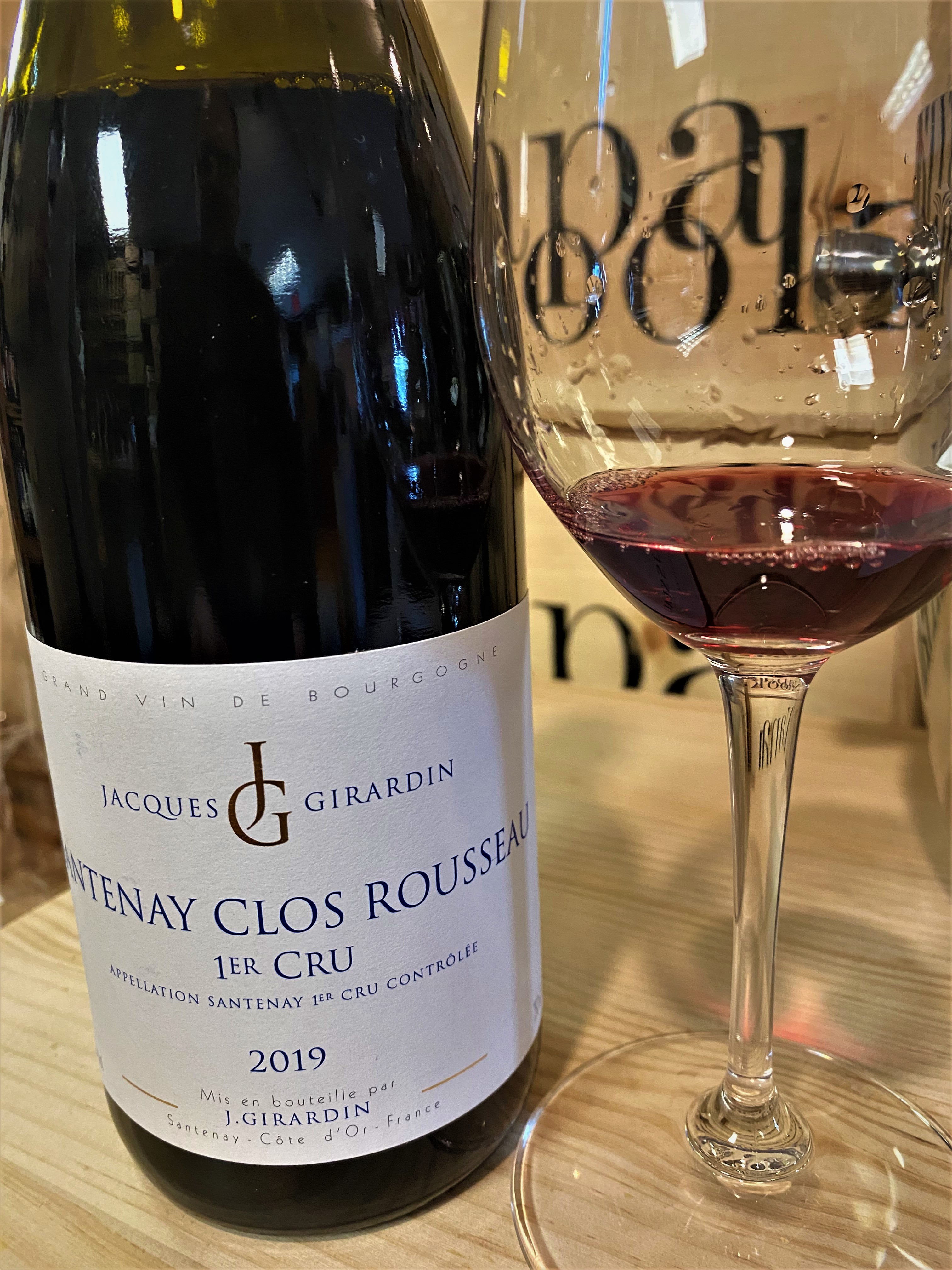
We then had Domaine Jacques Girardin Santenay Premier Cru Clos Rousseau 2019.  There are eleven Premier Cru designations for Santenay and Clos Rousseau is an umbrella for three neighboring vineyards at the western end of Santenay in the Cote de Beaune.  The soil for Clos Rousseau is also considered heavier compared to the other Premier Crus of Santenay.  The Girardin family are renowned winemakers and Jacques has been producing wine from his own domaine since 1978.  They have a seventeen-hectare estate in Santenay.  This estate was established for wine production in 1570.  The domaine has 1.92 hectares in Clos Rousseau of forty-five-year-old Pinot Noir vines planted on limestone and marl.  They produce about eleven-thousand bottles each year.  After the harvest, the grapes are de-stemmed, lightly pressed and go through cool maceration in a Stainless-Steel tank.  Initial Fermentation using indigenous yeast, the wine is then allowed to settle and then racked into barrels.  The Malolactic Fermentation takes place in the barrels while aging on the lees for about eighteen months with twenty percent new French Oak.  A nice deep garnet color offering notes of black fruit with smoky accents.  On the palate there are tones of cherry and plums, with ripe tannins, an elegant wine with a nice finish and very easy drinking.  

Posted in Wine | Tagged , , , , , , , , , | Leave a comment

Two Premier Crus from Chassagne-Montrachet

What a great way to spend an hour or so, but at my favorite wine shop, the Fine Wine Source in Livonia, Michigan and doing a Burgundian wine tasting.  Michael Corso of Michael Corso Selections was taking us in small steps to the Byzantine world of Bourgogne and the demarcation of Crus, by comparing two Premier Crus of the Cote de Beaune from the same domaine and the same vintage.  An interesting treat, that one doesn’t encounter that often, well for sure I am speaking for myself.

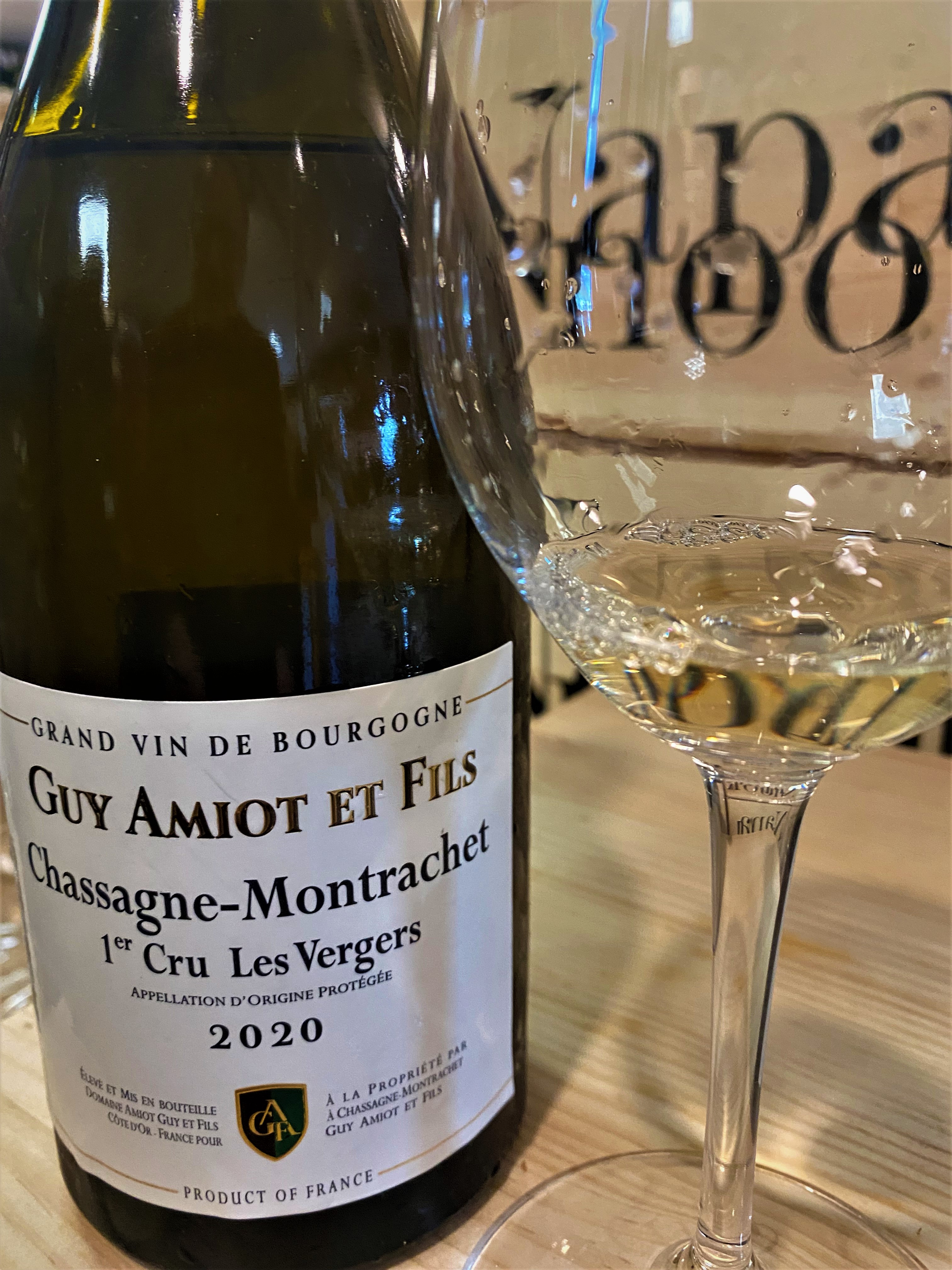
The first wine was Domaine Guy Amiot et Fils Chassagne-Montrachet Premier Cru “Les Vergers” 2020. Chassagne-Montrachet Premier Cru wine are sometimes referred to as the southern limit of Burgundy, because it is the last of a continuous flow of Premier Crus and Grand Cru vineyards.  At the beginning of the last century more red wines were produced, but through the century this trend is now completely the opposite.  The finest of the communes are from the north-east quadrant of the parish with rich limestone soils and full sun.  The white wines age very well from this region and slowly mature in complexity over ten years or so.  Les Vergers, or the orchards was once planted with fruit trees and is in the middle slopes of the Cote d’Or.  Domaine Guy Amiot et Fils is based in the village of Chassagne-Montrachet; Arsene and Flavie Amiot founded the domaine in 1920 with the purchase of three plots which would later form part of Le Montrachet Grand Cru.  The domaine continued through the namesake son and now his children control the estate and responsibilities.  The Chardonnay vines are seventy-years of age planted on limestone, very close to bedrock on a plot that is .55 hectare in size.  Grapes are hand-harvested, carefully sorted and initial fermentation takes place in a Stainless-Steel tank with local yeast, followed by Malolactic Fermentation.  Then aged for twelve months in a mix of new and used French Oak barrels, followed by integration for six months in Stainless-Steel vats before bottling.  A little over four-thousand bottles are produced annually.  A soft golden-yellow wine offering notes of white fruits, honeysuckle, and tea.  On the palate tones of white fruits, a touch of lemon and menthol, and some vanilla in a big, lively wine with a great finish of terroir and a touch of almonds.

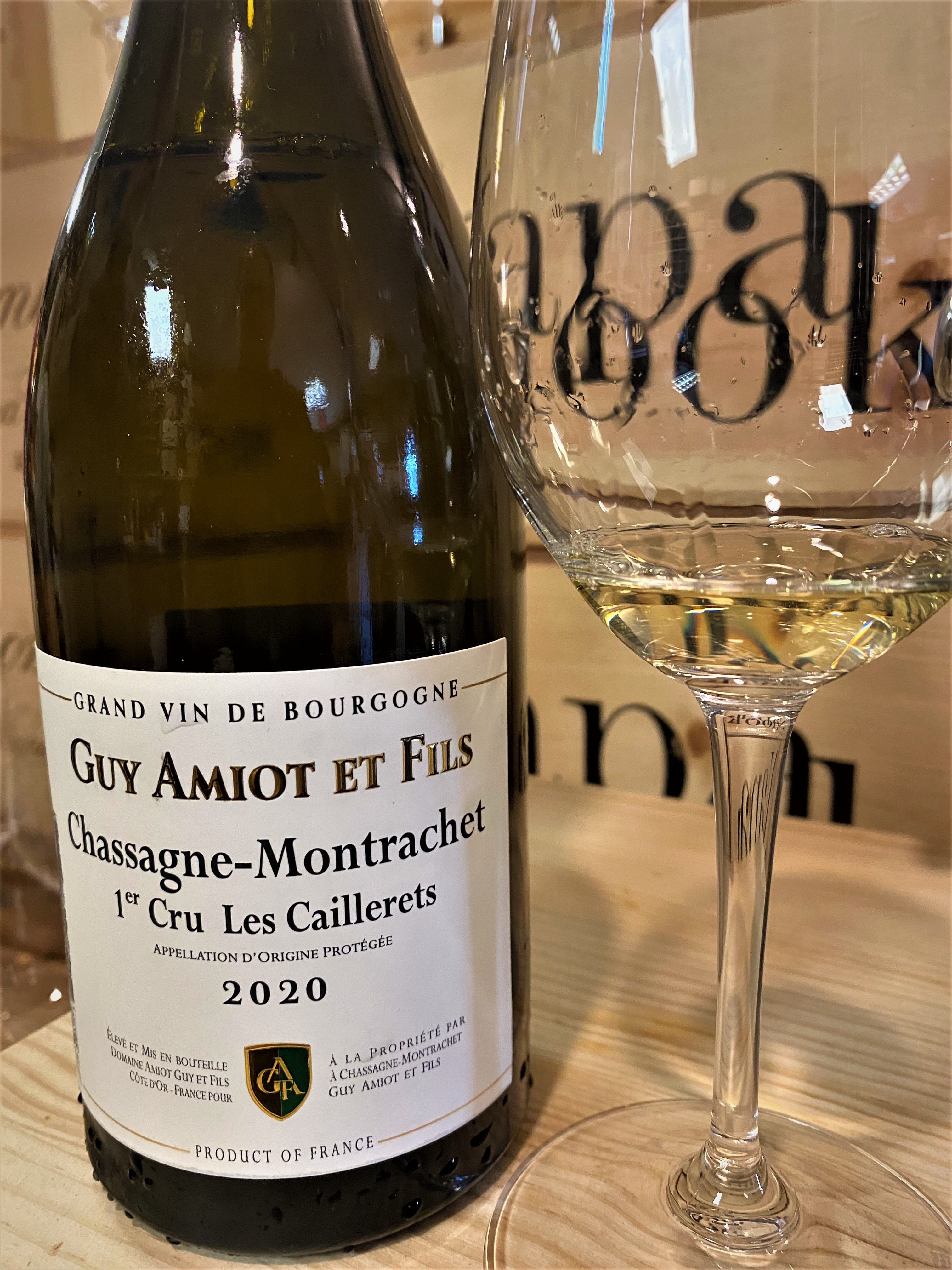
This was followed by Domaine Guy Amiot et Fils Chassagne-Montrachet Premier Cru “Les Caillerets” 2020.  “Les Caillerets” is one of Chassagne-Montrachet Premier Cru vineyards, but it is located south of Chassagne-Montrachet and in the midslope of the Cote d’Or hillside.  This section of Chassagne-Montrachet does not get continuous sun and the mornings are cooler.  Some labels just go by “Cailleret” without the village name.  Cailleret refers to the pebbles “Cailloux” in French, as the soils is shallow and chalky with some clay.  The Domaine has .66 hectares of land in the cru vineyard and the Chardonnay vines are seventy-years of age.  They produce about three-thousand bottles of this wine.  The grapes are hand-harvested and sorted.  Initial Fermentation with native yeast is done in Stainless-Steel vats followed by some stirring of the wine on the lees and then Malolactic Fermentation.  The wine is then aged for twelve months in a mix of new and used French Oak barrels, then assembled in Stainless-Steel vats to integrate for an additional six months, prior to bottling.  A soft golden-yellow wine that offered notes of ripe fruits and lilacs.  On the palate there were tones of peaches, plums, florals and vanilla in a very elegant wine with a dash of butter and a nice medium finish of terroir.              

Posted in Uncategorized | Leave a comment

Domaine Marc Colin Saint-Aubin Luce

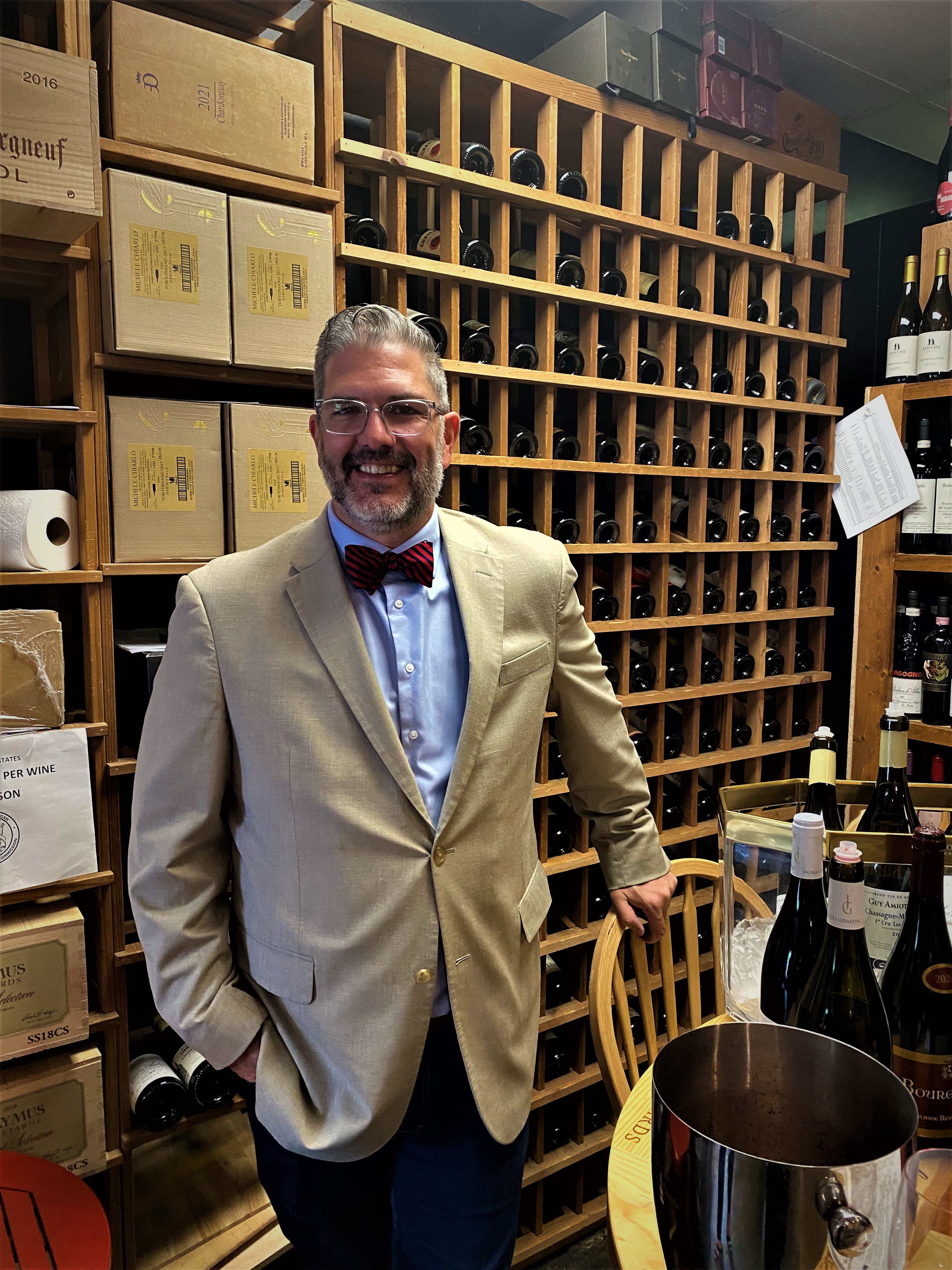
We were off to a great start with a Burgundian wine tasting at The Fine Wine Source in Livonia, Michigan.  Most of the wine tastings that I report on from my local shop have been curated by the owner and his staff.  On this particular occasion the wines all came from Michael Corso Selections and the wines were being discussed by Michael Corso from one of his portfolios of French wines.  He was ably assisted by his Midwest Regional Manager Zach Zilm.

Zach Zilm has been in the distribution and importing side of the wine industry for fourteen years.  He began his knowledge of Michael Corso Selections in the early part of this century.  His training is in Spanish, Italian, and French wines, both in sales and in first hand experiences traveling there.  He has plenty of experience with independent wine merchants and with restaurateurs.  I found him very interesting in some side conversations as well, in a kind of one-on-one tasting.

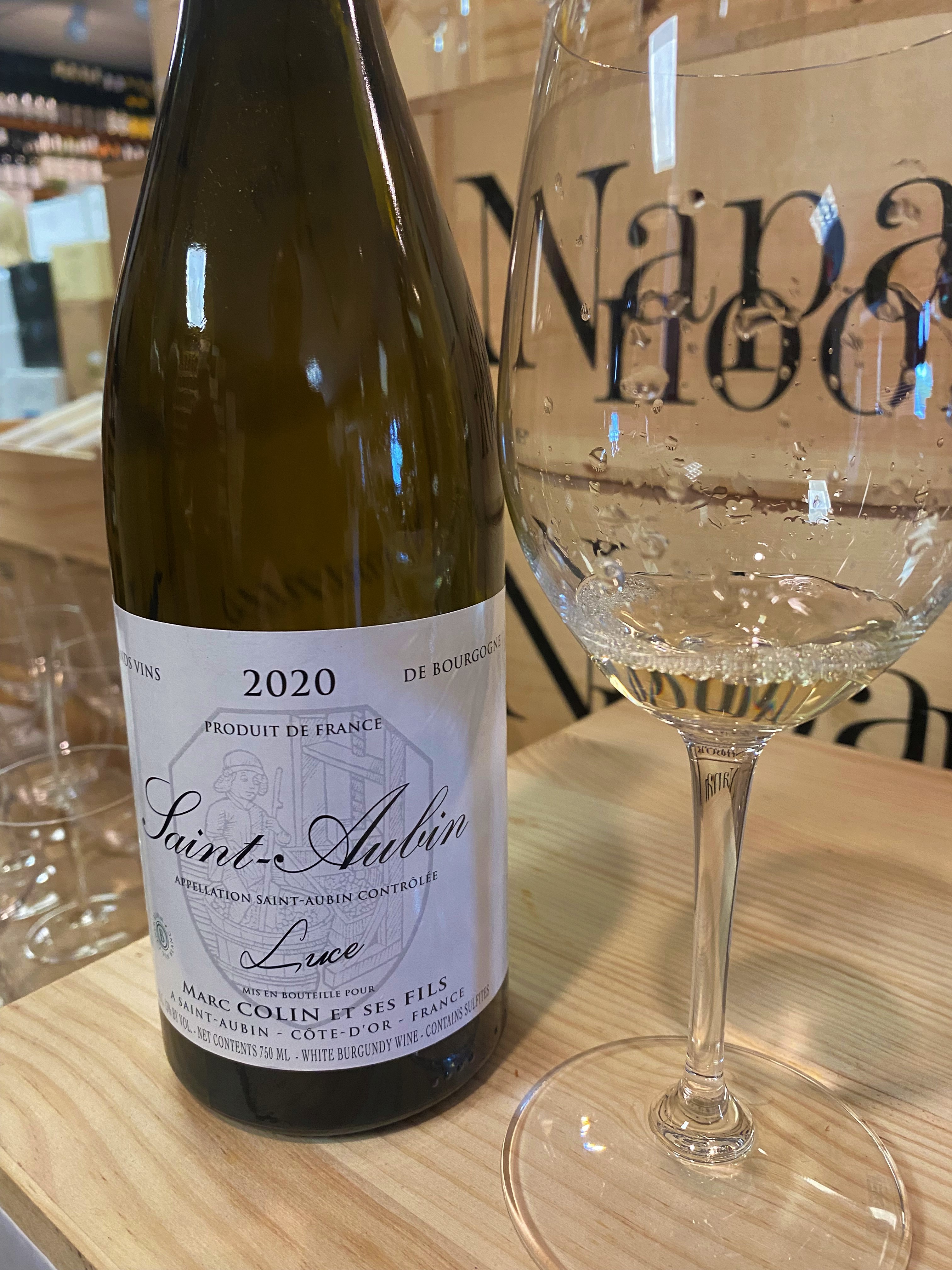
We then had Domaine Marc Colin Saint-Aubin “Luce” 2020.  Saint-Aubin is a village in the Cote de Beaune and known for red and white wines, though white wines are prominent; one-hundred-thirty-seven-hectares of white wines compared to thirty-one-hectares of red.  It is considered one of the top wine communes of the Cote d’Or, both in volume and quality.  The appellation was awarded in 1937, along with most of the other communes.  Domaine Marc Colin was established in 1970, from vineyards inherited by he and his wife Michele, and now the domaine is up to nineteen-hectares.  The winery is now run by three of their four children.  They try to make the wine as organic and sustainable as possible, using wild yeast and there is no stirring of the lees.  The Chardonnay vines are at least twenty-years of age and are grown on a soil of limestone and clay.  The grapes are hand-harvested, sorted, and pneumatically pressed.  Fermentation and aging are for ten months in used French Oak, then the wine is left to settle in Stainless Steel vats for an additional six months.  A very soft straw-yellow colored wine offering notes of baked apples and pear with a trace of vanilla.  On the palate a full wine with tones of white fruit with a drizzle of butterscotch and a medium count finish of terroir and some fruit.             

Posted in Wine | Tagged , , , , , , , , , , | Leave a comment

Michael Corso of Michael Corso Selections

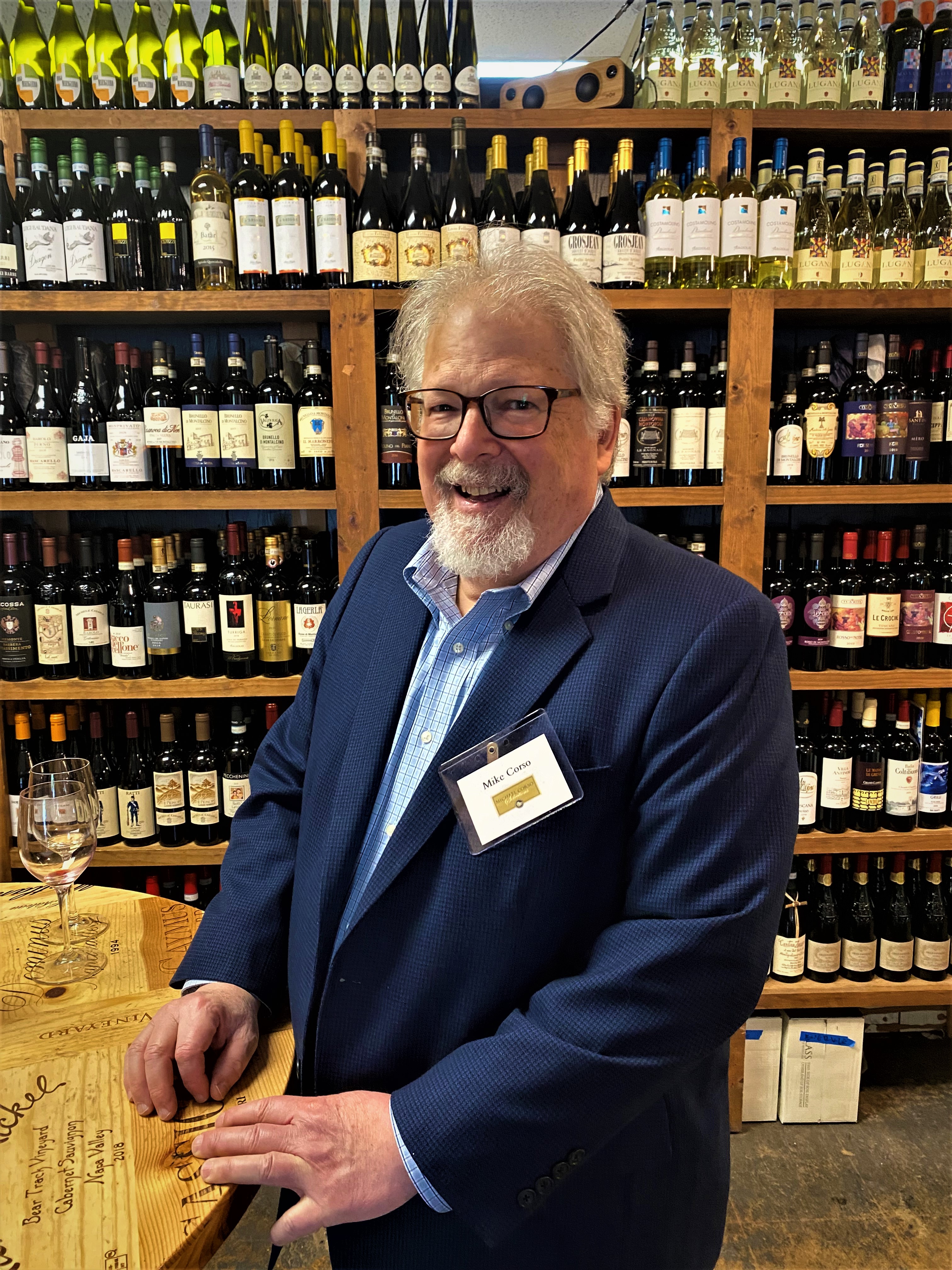
Michael Corso was curating a wine tasting from selections of his inventory at The Fine Wine Source in Livonia, Michigan.  Michael Corso began his wine career in 1972 at The House of Glunz, Chicago’s oldest wine retail shop and since then he has been in wine sales at restaurants, wholesale, distributor, and importer.  He helped create Chicago Wine Merchants, one of the leading fine wine distributors in the United States.  The basis of Michael Corso Selections was formed during this time frame.  In 2008, he established MCS as an independent importer of high-quality estate wines and spirits from France and Italy.

The goal at Michael Corso Selections is simple and that is to import top quality wines at the best possible prices.  He abides by the adage that I have heard often during my fifty years of wine enjoyment that “good growers will always make good wine” and that is true from the garagiste growers to the First Growths.  His focus is on small vignerons who keenly appreciate the land and are great stewards of the land as it is usually passed on the next couple of generations of family growers.  Hence, many of the winemakers that they represent work with the concept of sustainability (before it was a new catch word) and most are organic farmers and don’t want their wines to be disturbed by “interventionist importers.”

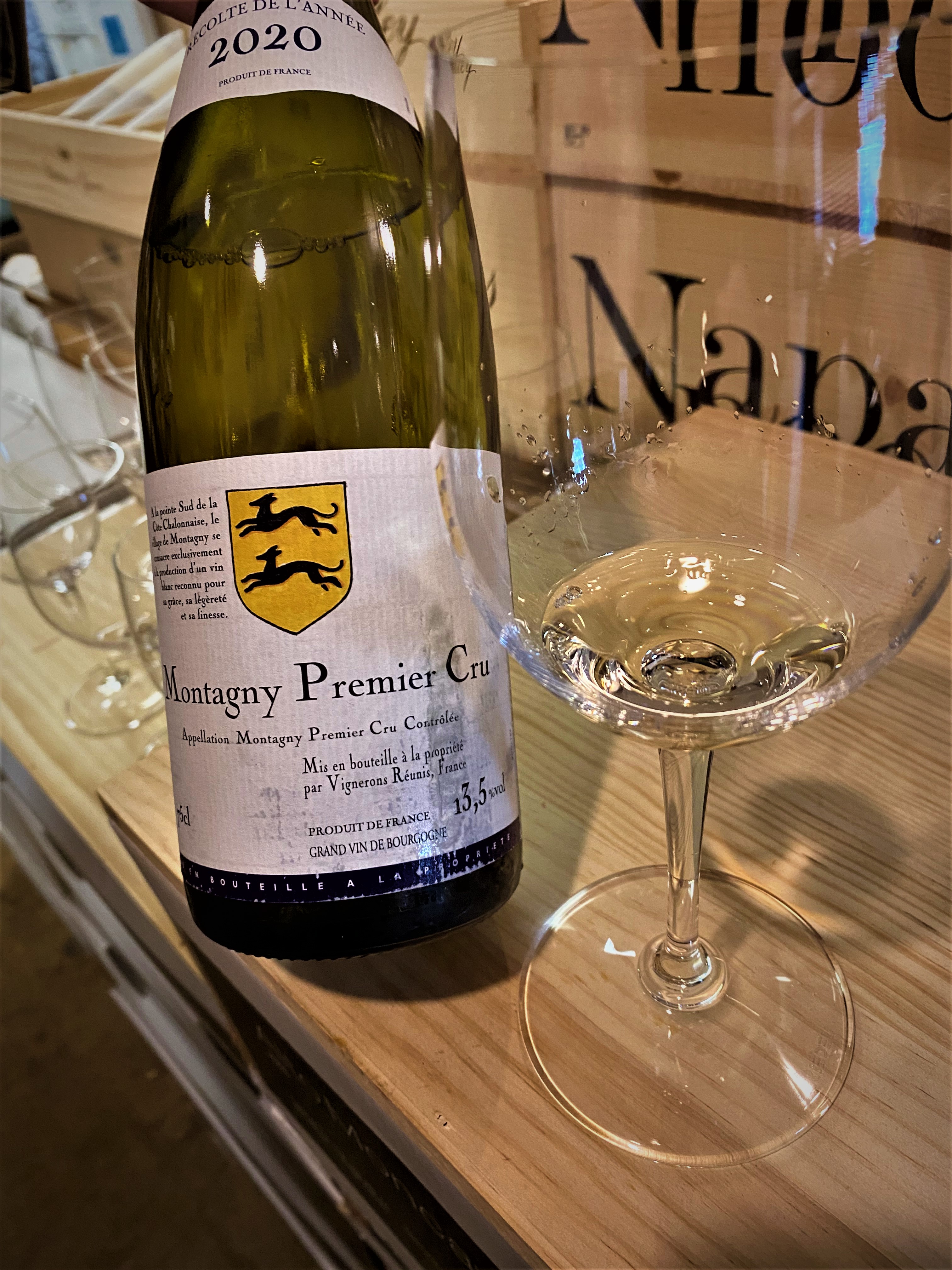
The first wine that we tasted was Les Vignerons Reunis Montagny Premier Cru 2020.  Les Vignerons Reunis is a small cooperative of thirty growers based in Montagny and the Cote Chalonnaise.  They are known for their Bourgogne Blanc “Cuvee Reserve” and their Montagny Premier Cru.  Montagny Premier Cru wines are from classified vineyards in Montagny, and all of the wines are made from Chardonnay.  Years ago, the Premier Cru status was awarded by the alcohol level, but it has since been changed to individual sites in the district.  There are actually over fifty named parcels, but even though they can use the parcel name, they just use the Premier Cru designation.  Of the 306 hectares of Montagny, 202 hectares are classified as Premier Cru.  This particular wine is made from a five-hectare plot of black earth, shallow and stony, and the subsoil is a limestone clay and crumbly limestone.  The fruit is hand harvested and undergoes cold maceration followed by a natural yeast fermentation in Stainless Steel.  The wine is then aged in used French Oak barrels.  Five thousand cases were produced and they feel that it has any aging potential of five to ten years.  This very soft straw-yellow wine offers notes of white florals and honey.  On the palate tones of dried fruits, hazelnuts, and flowers blend into a very full complex white wine with a very nice medium finish of terroir.       

Posted in Wine | Tagged , , , , , | Leave a comment

The Fine Wine Source Wine Club Selections – May 2023

One of my favorite pastimes is to stop at my local wine shop, The Fine Wine Source in Livonia, Michigan to pick up the monthly club selections.  Of course, the great news is that they were having a curated wine tasting from one of their vendors, and I ran into many familiar faces, and it was a most pleasant way to spend a couple of hours. 

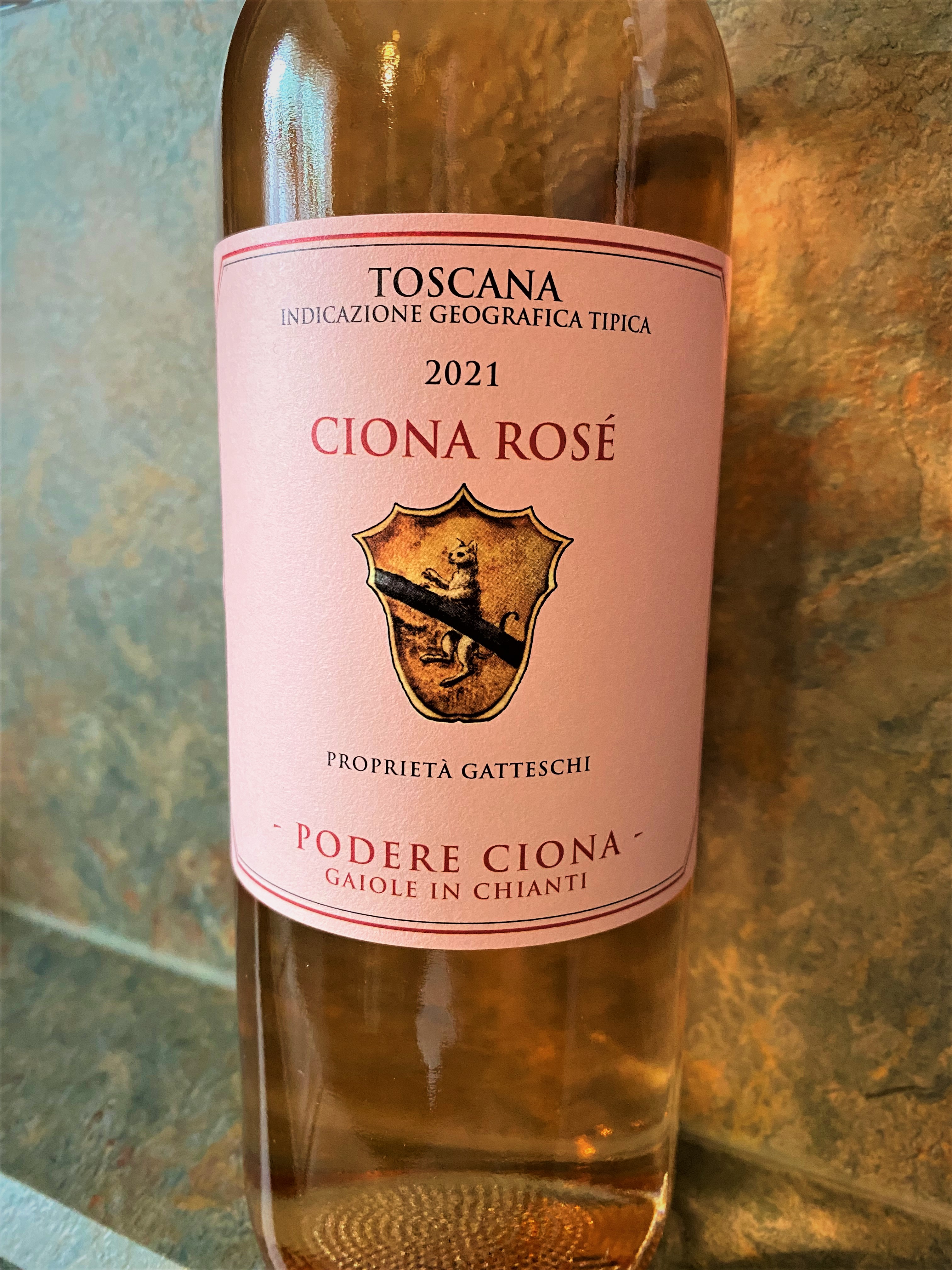
As always, the wine club features one wine from the Old World and this is one that I just recently wrote about from an earlier tasting, but a new vintage, with the winemaker the Podere Ciona “Ciona Rosé” Toscana IGT 2021.  I was reading the history of the winery on their website “Franca and Franco Gatteschi were looking for a place in the countryside to retire to, after many years of working in Italy and abroad, when they came across a small, beautiful, albeit run down property: 100 acres of land, mostly wooded with 10 acres set aside for cultivation, of which 2.5 acres already had vineyards; a house from the 18th Century, abandoned for more than 40 years; and, above all, a view without equal on the Chianti hills, with Siena in the distance.”  It really sounds idyllic and makes one ponder how this property was neglected and ignored for years.  “They purchased the estate at the beginning of 1990 and they immediately started the reconstruction work on the main house (it took nearly three years). They also set up a small but well- equipped wine cellar for making wine. In 1996 they permanently moved to live on the estate and the following year, the great 1997 vintage, saw the birth of the first “official” wine of Podere Ciona: A Chianti Classico DOCG Riserva.” The Rosé was made entirely of Sangiovese in the saignée method.  The vines are from six to nineteen years of age and planted on quartz, clay schist and marl.  The fruit is harvested manually in small baskets and then de-stemming, berry by berry for a slight crush in Stainless Steel vats for ten to twelve hours of skin contact and no Malolactic Fermentation. The wine is then aged for about six months in Stainless Steel and then further fined and bottle aged for six months before distribution. There was about one-hundred-eighty cases produced of this wine.  A pretty salmon-pink color with notes of fruit and spices, just a well-balanced light and easy drinking wine with a nice medium count finish offering terroir.

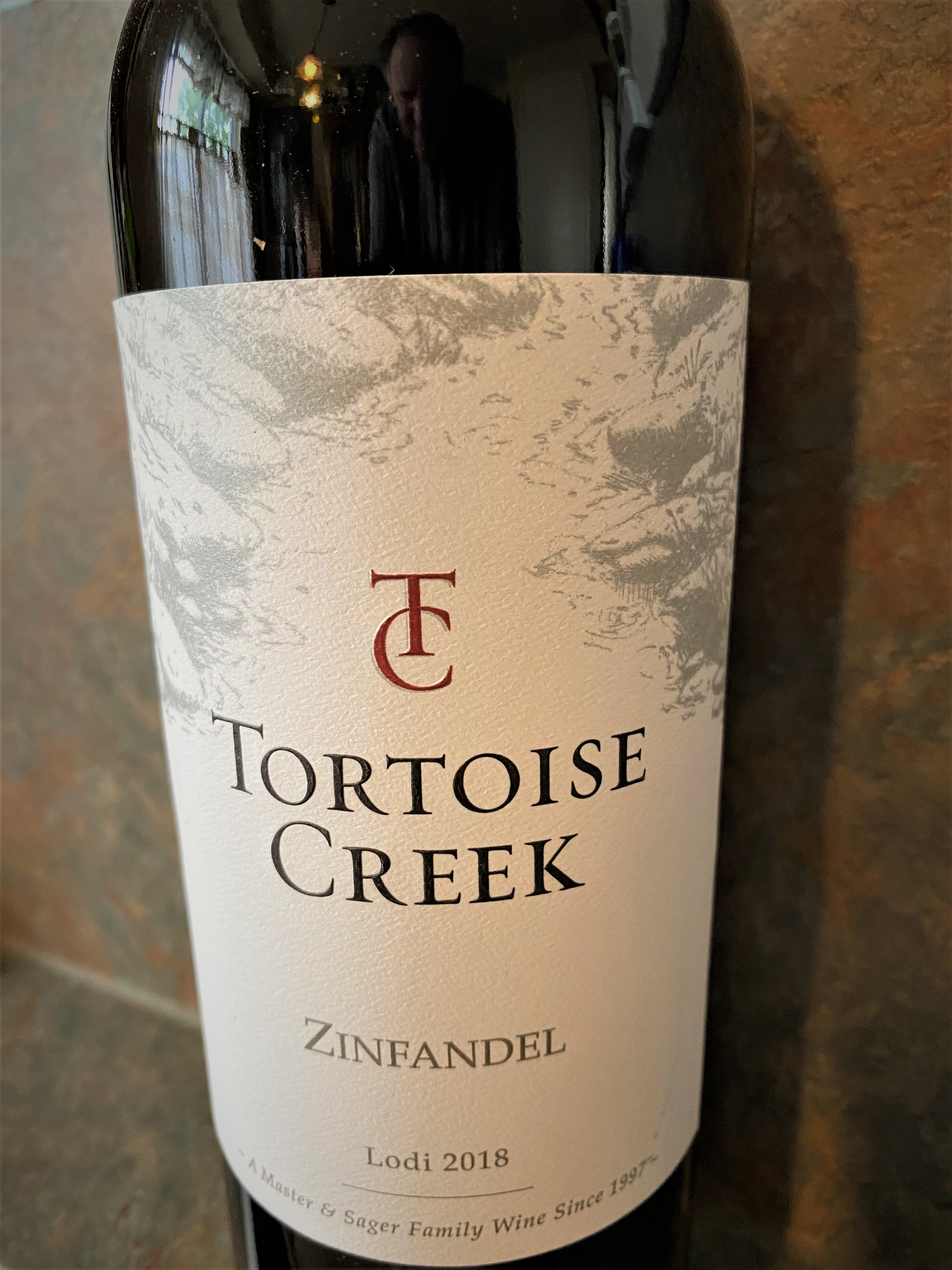
Tortoise Creek Zinfandel Clement Hill Lodi 2018 represents the New World and we have had several wines from this company and they are part of Winesellers Limited.  Winesellers Limited was founded by Yale Sager in 1978 and began as a one-man operation selling wines in the Midwest and over the last forty years has become a recognized importer and marketer of family-owned wineries produced in both well-known and unique regions of the world. The concept of Tortoise Creek is to work with small farmers who focus on sustainable farming in California.  The wine is a blend of eighty-five percent Zinfandel, then percent Petite Sirah and five percent Tannat.  The grapes are sourced from sustainably farmed vineyard in the Clement Hills region of Lodi where the soil is clay and loam of volcanic origin.  The grapes are crushed into Stainless Steel fermentation vats for ten days and then extended maceration for an additional ten days on the skins.  The wine then under goes Malolactic fermentation and then aged for six months in American Oak.  The wine is described as having deep color with notes of spicy aromas of dark berries and plums.  On the palate a big round wine with tones of red fruits and the Petite Sirah and Tannat add additional complexity and nuance to the finished product. 

Posted in Wine | Tagged , , , , , , , , , , , | Leave a comment

It is a Gamble

Some people are very organized that have a cellar, I have to tell you, we are not them people.  Some times we are thinking of a certain wine to go with a dish for dinner, and at the last minute, another wine clicks in.  Other times you think that you are getting organized and will have optimum performance from the cellar, and then it is, I don’t feel like that tonight.  Here are two stories.

I went into the cellar and came back with a bottle that has been kind of a go-to for me since high school and it was a bottle of Domaines Perrin La Vieille Ferme Rhone Valley 1996 which is now called Famille Perrin.  While Famille Perrin, a wine maker and a negocient, is a relatively new company founded in 1997, the Perrin family has been making wine since the early 1900’s when Pierre Perrin inherited the Chateau de Beaucastel estate.  They are now in the fifth generation of a family owned and managed business.  Besides the original estate, they make wines with famous appellations, and regional wines from the Rhone Valley.  Their portfolio also includes the La Vieille Ferme brand which started in the 1970’s and they also have Miraval.  They produce Red, White and Rosé wines and surprisingly the majority of the wines that they produce center around the three famous varietals of the region; Grenache, Syrah and Mourvedre, though there are nine more varietals that are sanctioned, but seldom seen. The Cotes du Rhone appellation was created in 1937 as a catch-all for all the wines not from the more prestigious regions of the Rhone Valley and it is now one of the largest selling districts in France.  The name of the wine translates to “the old farm.”  This old of a wine is not on their site, but it is a blend of Grenache, Syrah, Cinsault and Mourvedre.  The cork was in excellent condition and so was the wine, which was a wonderful surprise for a twenty-six-year-old, which is older than our eldest grandchild who is out of college.  A deep ruby with no browning or foxing and still offered notes of black cherry.  On the palate the wine had traces of fruit, the tannins were all mellow and a short finish.  This wine over performed for its grade level.

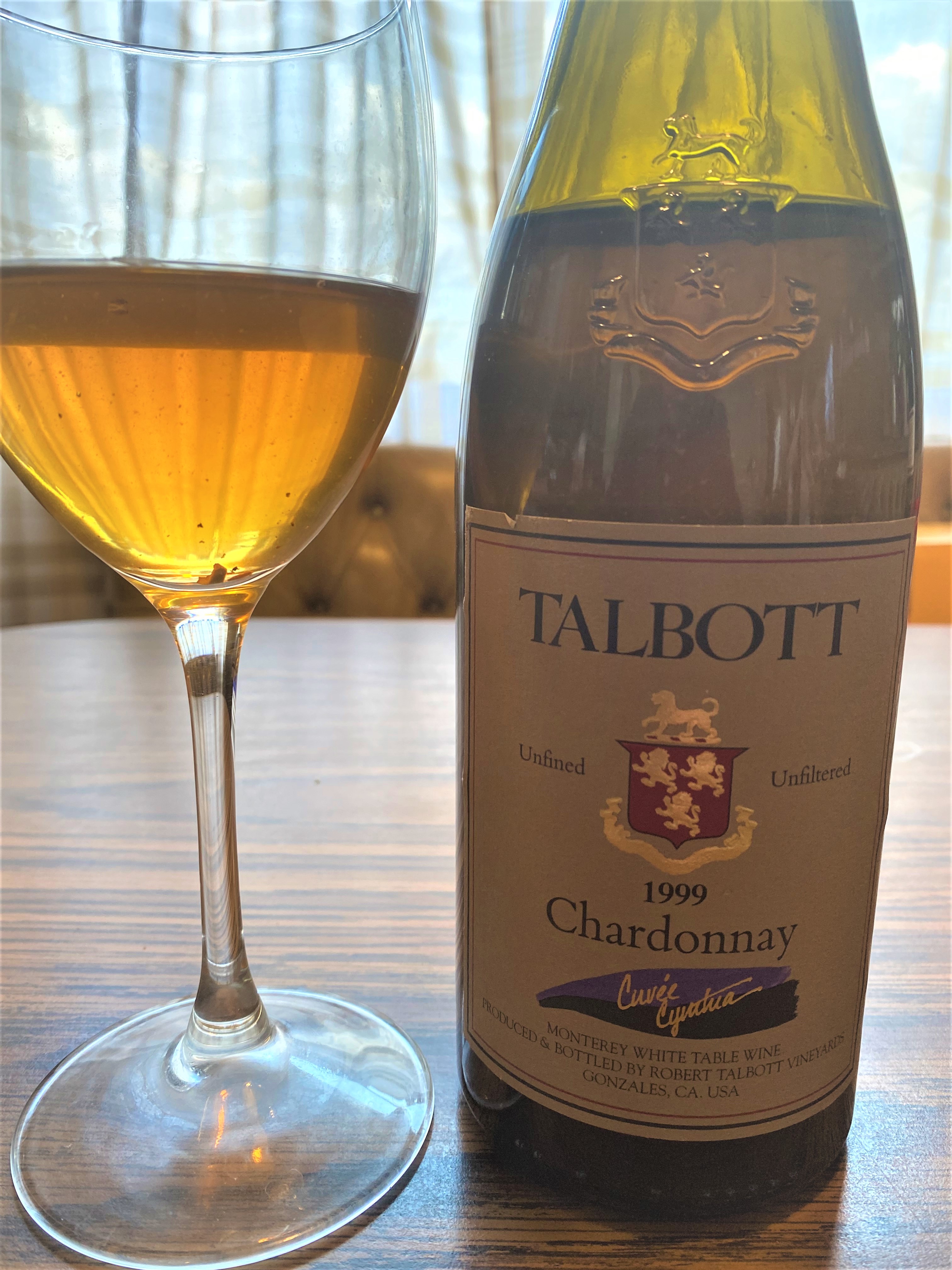
The second wine that we experimented with from the cellar was Robert Talbott Vineyards Chardonnay Monterey Cuvee Cynthia 1999.  Now this winery is near and dear to my heart, as I used to get Christmas Cards from Audrey Talbott (the mother of Robert) for years, because she and her husband back in 1950 moved to Carmel and began making silk ties for men’s stores. Young Robert had no desire for the men’s wear and in 1982, the Diamond T Vineyard was planted and it began.  The Cuvee Cynthia was a small production of less than five-hundred-cases.  I have had this wine in the past, but alas the kitchen sink was the recipient of the wine, as it had stayed too long in the cellar, perhaps forgotten.   

Posted in Wine | Tagged , , , , , , , , , , , , , | Leave a comment

Two Brunello di Montalcino Wines

Had a chance to taste some wonderful wines at my local wine shop, The Fine Wine Source in Livonia, Michigan, and we compared two wines from Brunello di Montalcino.  Brunello di Montalcino is a small district in Tuscany and is considered one of its greatest wines, along with its neighbor Chianti Classico.  It is made only using the Sangiovese Grosso varietal.  In July 1980, it was formally recognized as Italy’s first DOCG designation, and today there are about two hundred winemakers there.  By decree, the wines must be aged for four years (five for Riserva) with at least two years in oak and at least four months in the bottle before the release.  Originally in large Slavonian oak vats, but now some use French Oak barriques.

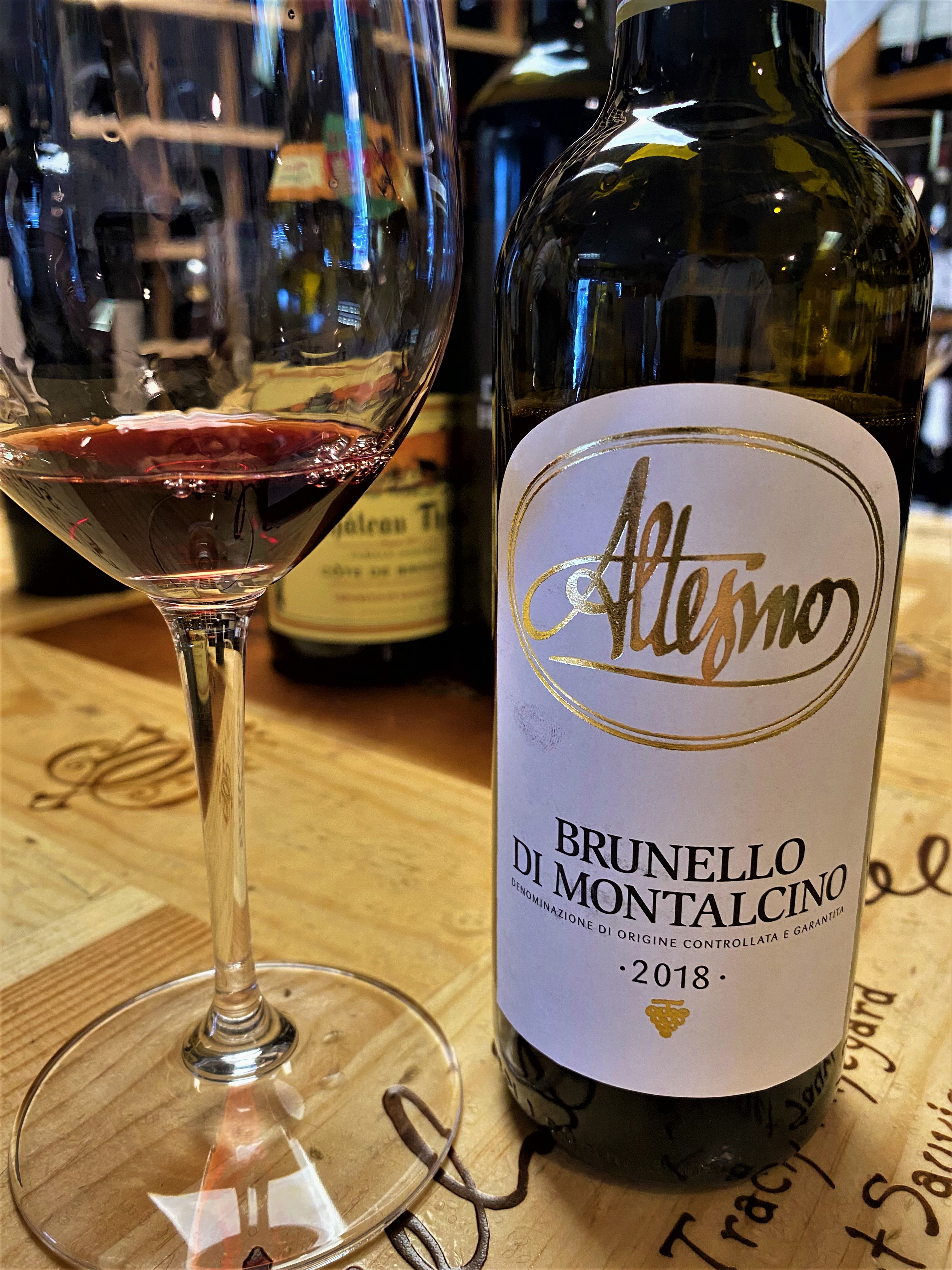
We started with the Societa Agricola Altesino Brunello di Montalcino DOCG 2018, and this wine is usually referred to as Altesino.  The Palazzo Altesi which still overlooks the estate was built in the Fifteenth Century.  In 1975, there were one of the first to introduce a Cru wine, a single vineyard wine.  Altesino has been owned by the Gnudi Angelini family since 2002.   Altesino has about fifty hectares of basically all Sangiovese, the grape of the region, and referred locally as Sangiovese di Montalcino.  This ruby red wine offered notes of red and black fruits, violets, and spices.  On the palate tones of black cherry and plums, and its famed earthiness; the wine is big, with velvety tannins and bright acidity and a nice long finish of terroir and fruit.        

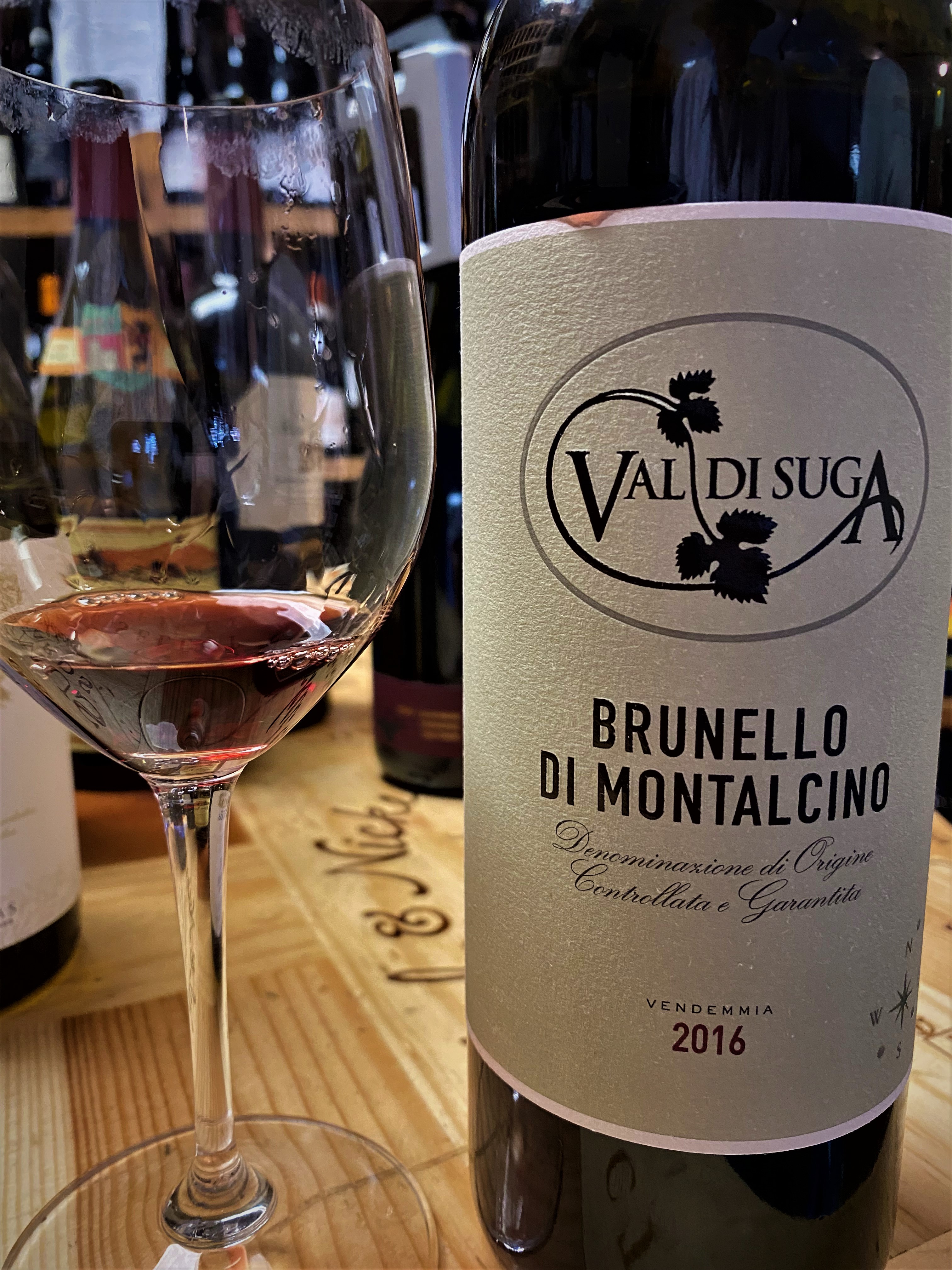
Then we enjoyed Tenimenti Angelini Val di Suga Brunello di Montalcino DOCG 2016 and the parent company is known as Angelini Wines & Estates.  The company’s origins are in the Marche region, where pharmaceutical industrialist Francesco Angelini took over the management of Fazi Battaglia in 1949, best known for their Verdicchio dei Castelli di Jesi Classico.  They really started to expand when they acquired Val di Suga in Montalcino and now they have six properties in Chianti, Montalcino, Le Marche and the Veneto.  All part of Angelini Holding SpA based in Rome.  The wine is a blend from three slopes with diverse soils of limestone and sandstone.  The grapes from the three vineyards are fermented separately and then maceration on the skins for about twenty-five days.  The wine is aged for twenty-four months in Slavonian Oak, then twelve months in concrete vats and at least twelve months of bottle maturation before release.  A ruby/garnet red wine that offered notes of black cherry, violets, and violets.  On the palate tones of cherry, and coffee beans with silky tannins and good acidity and a nice finish of fruit.    

Posted in Wine | Tagged , , , , , , | Leave a comment

C. King & Co. Pizza & Wine

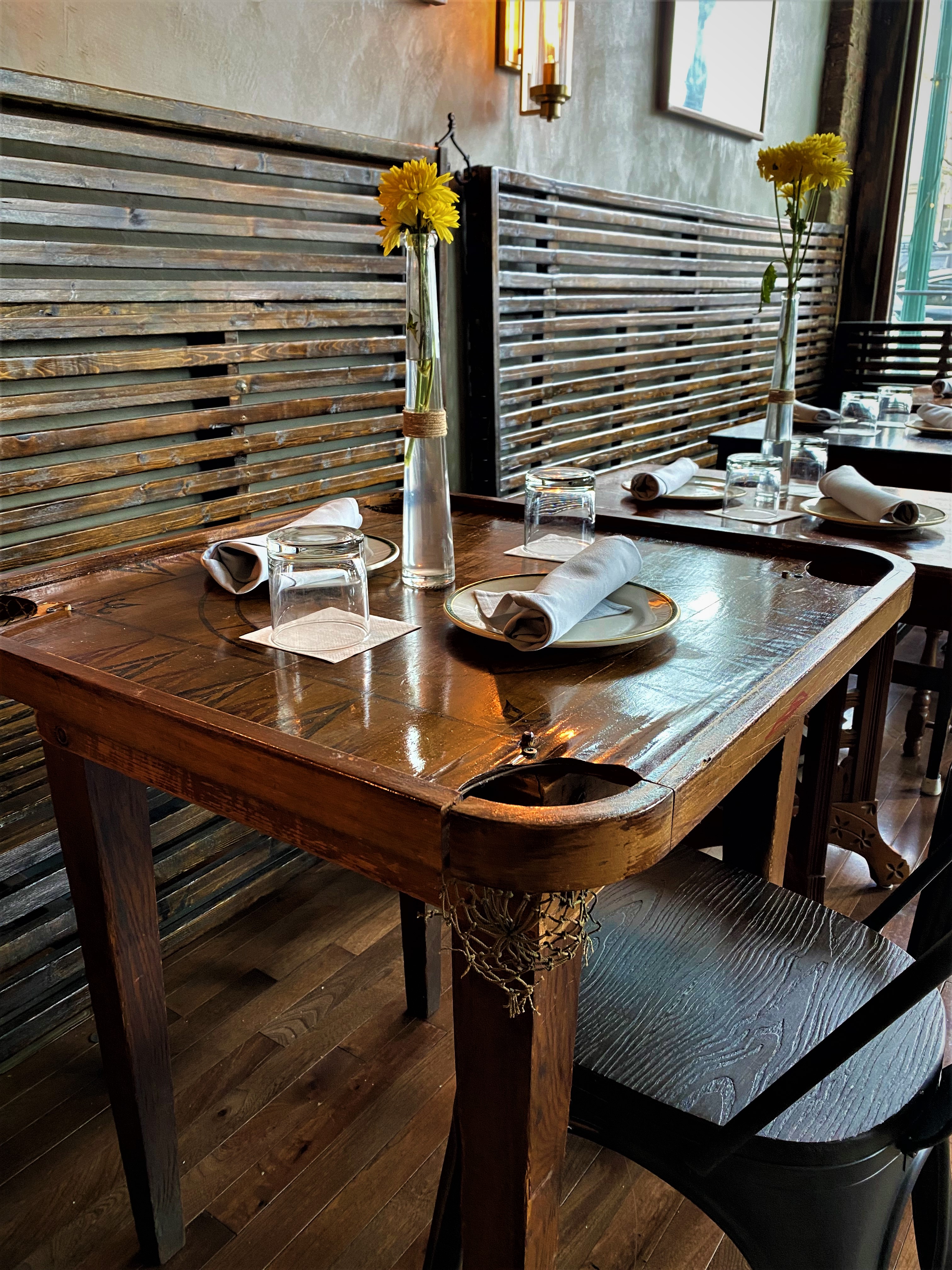
Periodically I find out about a new restaurant by a review or by social media, this time, it was almost simultaneous.  I found out about C. King & Co. the same time as most of the world, some were ahead of the curve.  As I have stated often, I have a soft spot for pizza, especially the old-fashioned type of my youth, and I am always concerned about new takes on pizza.  I am the first to admit that I have a problem with what I call frou-frou pizzas, but I still will give it a go.  C. King & Co. is housed in a building that originally carried that name in 1838, by an English mercantile dealer, just fifteen years after the founding of Ypsilanti, Michigan.  Very eclectic setting with a tin ceiling, cobbled benches and non-matching tables and chairs.  Fun and totally unpretentious and it works.  We got there almost an hour before our reservations, and it is in the downtown district near the City Hall, instead of the trendy Depot Town in Ypsi as well, and our earliness was not a problem. 

The menu was computer printed pages using clipboards.  There were specials, appetizers, salads, desserts, wines, and cocktails.  Very concise and probably ideal for when menus were being tossed after one person touched them.  We relied on our waitress to guide us through. She suggested that we share a pizza and a salad.  We had the Asparagus Vinaigrette Salad of Asparagus, Buffalo Mozzarella, shaved Parmesan, Prosciutto, and an aged Balsamic drizzle.  My Bride loved the Mozzarella and we were both a bit disappointed with the stringy-ness of the Prosciutto.  We also shared a Mushroom Pizza with Ricotta, Bacon, and Truffle Oil.   When she brought out our salad, she also brought out a Clam and Garlic Pizza that she mistakenly ordered for us, and told us to take it home, compliments of the restaurant. The two pizzas were excellent, and the so was the salad as a side.  We also shared a Baked Alaska with Mint-chocolate Ice Cream.

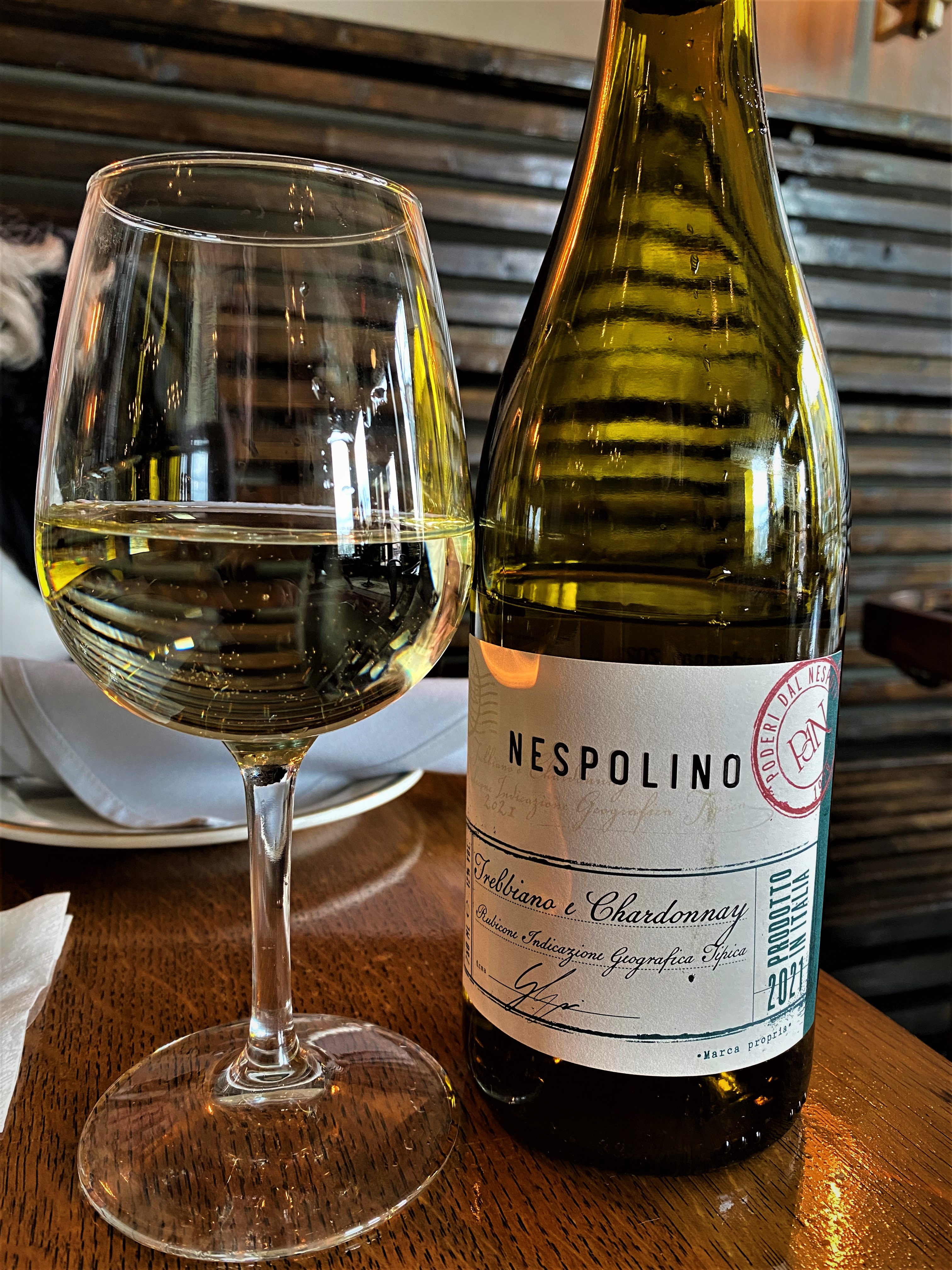
They had a nice neat wine carte, and as par for the course, for this last year or two, my first choice was sold out, an interesting Dry Furmint.  We had a bottle of Poderi dal Nespoli “Nespolino” Bianco Trebbiano-Chardonnay Rubicone IGT 2021.  The history of Poderi dal Nespoli has it roots in four generations of Romagna winemakers and almost ninety years in a mix of hospitality and wine production.  The Rubicone IGT basically covers the entire Romagna region that was blended into the Emilia-Romagna region during the unification of Italy.  It is basically concerned with varietal wines and sanctions almost forty grape varieties, outside of the restrictive DOC implementations.  A single varietal must have at least eighty-five percent of the named varietal and blends listed with two wines, the first variety must be at least fifty percent of the blend.  Trebbiano is the most planted white varietal and gone so far as to annex localities where it is exceptionally memorable, in France it is known as Ugni Blanc and best used in the production of Cognac.  There were no production notes to be found, but I will venture to say that the wine is produced using Stainless Steel.  The wine is a pale straw-yellow color, maybe leaning to a tinge of green and offers notes of pineapple and papaya (more from the Chardonnay as Trebbiano is usually just light and fresh).  On the palate tones of papaya and mango with good acidity and a short finish, but I think this would be best to be drunk young.        

Posted in Dining, Wine | Tagged , , , , , , , , | Leave a comment