Fine Wine Source Club Selections October 2023

I am interrupting my flow of September stories to mention the wine club selections from The Fine Wine Source in Livonia, Michigan.  And no, I do not live there, nor do I work there, but I do enjoy my visits there.  By now, you must realize that I am very unassuming and very quiet when I am in the store, in fact that probably don’t even see me.  That is the farthest from the truth, but if they are busy with customers, I manage to stay low key.  As I wander around admiring some of the new cases of wines, that will probably be gone, by the next time that I am in the shop, as they really understand their customer’s collecting habits.  I was there to pick up the October Wine Club selections that are curated by the owner and his staff; one from the Old World and one from the New World. 
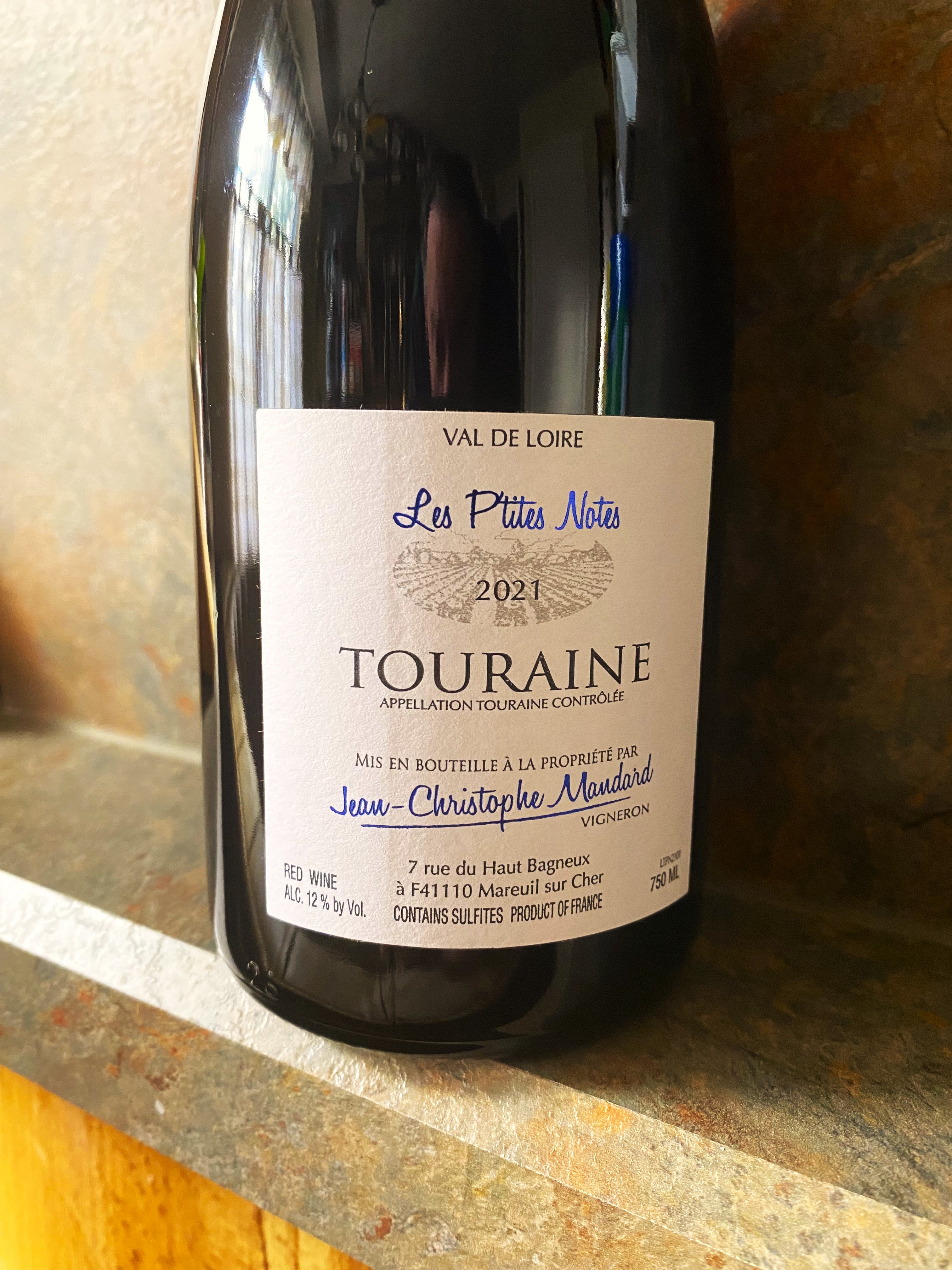
The Old World was represented by Domaine Jean-Christophe Mandard “Les P’tites Notes” Touraine 2020 from the Loire Valley in Mareuil-sur-Cher; located in the heart of the Loire castles, between Chambord and Chenonceaux.  The winery is now into its fifth generation of family control when Jean-Christophe joined with his family in 1993 and managed the Mandard business; and now his son Jean-Baptiste has joined in 2020 to help with the twenty-seven-hectare estate.  The estate produces wines with either the AOP of Touraine or Touraine Chenonceaux on the left bank of the Cher and the estate has two distinct soils.  They grow four white varieties and five red varieties.  This wine is sixty-percent Pinot Noir and forty percent Gamay Noir.  The wine is described as having the finesse of Pinot Noir and the delicacy of Gamay, with velvety tannins mixed with cherry and undergrowth aromas.   
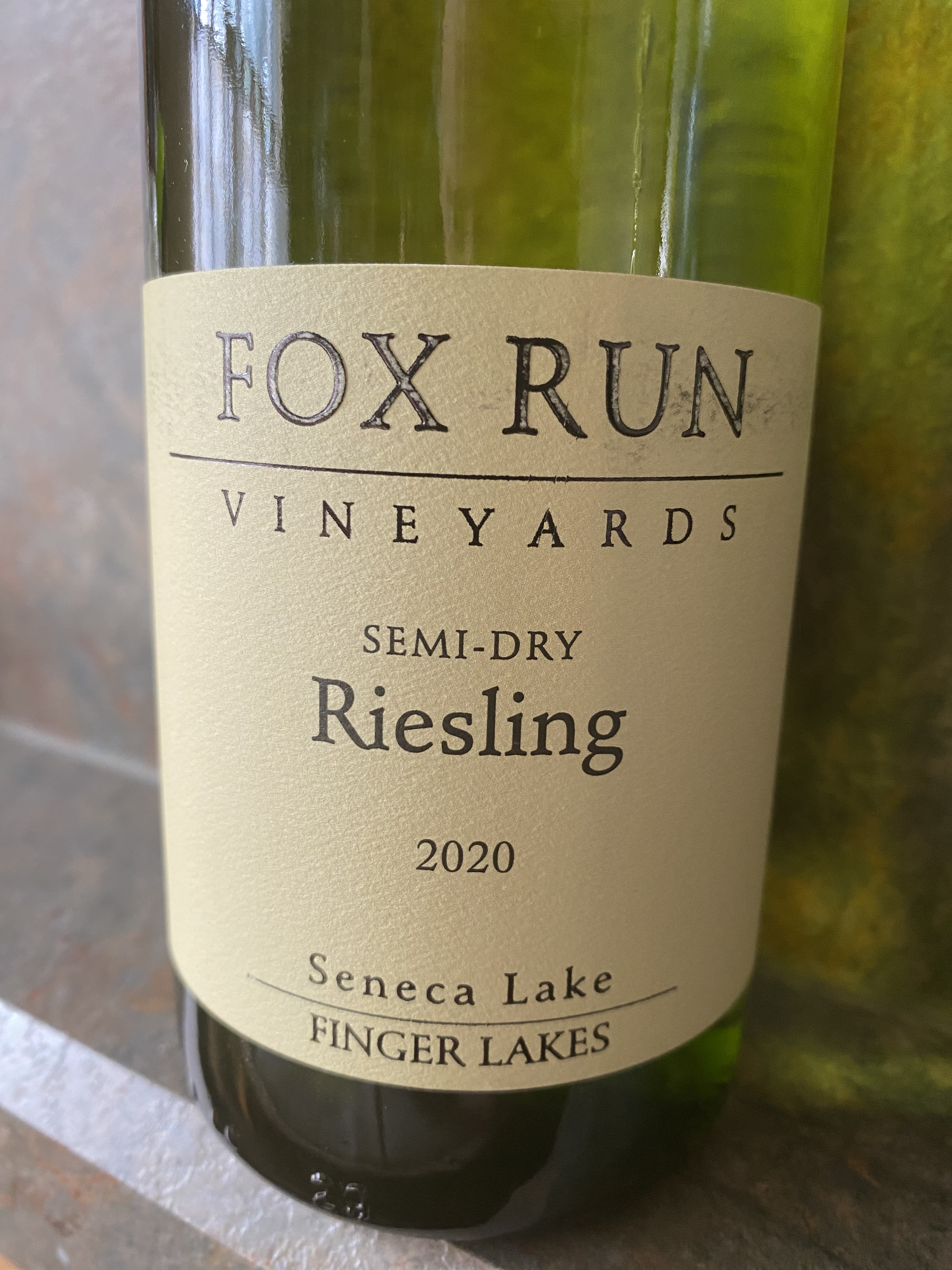
The wine representing the New World is Fox Run Vineyards Dry Riesling Seneca Lake-Finger Lakes 2020.  The Finger Lakes of New York state is probably the best-known wine region of the eastern United States and especially known for their Riesling wines.  There is eleven Finger Lakes in all, carved out by the movement of glaciers during the Ice Age.  Of the eleven lakes Cayuga was given its AVA in 1998 and Seneca in 2003, the entire Finger Lakes AVA was awarded in 1982.  Seneca Lake is the largest and there are thirty-five wineries.  Fox Run Vineyards is located on what was a Civil War era dairy barn and ranch, and the first grapes were planted in 1984 by Larry and Adele Wildrick.  In 1994, it was purchased and expanded to fifty acres of east facing vineyards on glacial soils.  In 2012, the vineyards changed hands again and is now a family owned and run winery.  They focus on non-hybrid European varieties and they are dedicated to being good stewards of the land, by being environmentally sound in their farming practices and sustainable techniques.  The 2020 growing season was considered one of the best in the decade and considered close to perfection; with a mild Spring, lots of sunny weather and just enough rain in the Summer, with a warm, bright, and dry Autumn.   The grapes were picked in the morning with a cool temperature, the fruit was gently crushed and pressed.  Fermentation was conducted at moderated temperature using three different yeast strains, with the wine chilled just before reaching dryness, to leave a small trace of residual sugar.  I will make a presumption that the wine was processed and aged in Stainless-Steel tanks for about eight months, and just under a thousand cases was produced.  Tasting notes furnished by the winery offers notes of citrus with lemongrass and lime zest.  On the palate, a perfectly balanced wine with a focused finish.       

Posted in Wine | Tagged , , , , , , , , , , , | Leave a comment

The Grotto at the Inn at Saint John’s

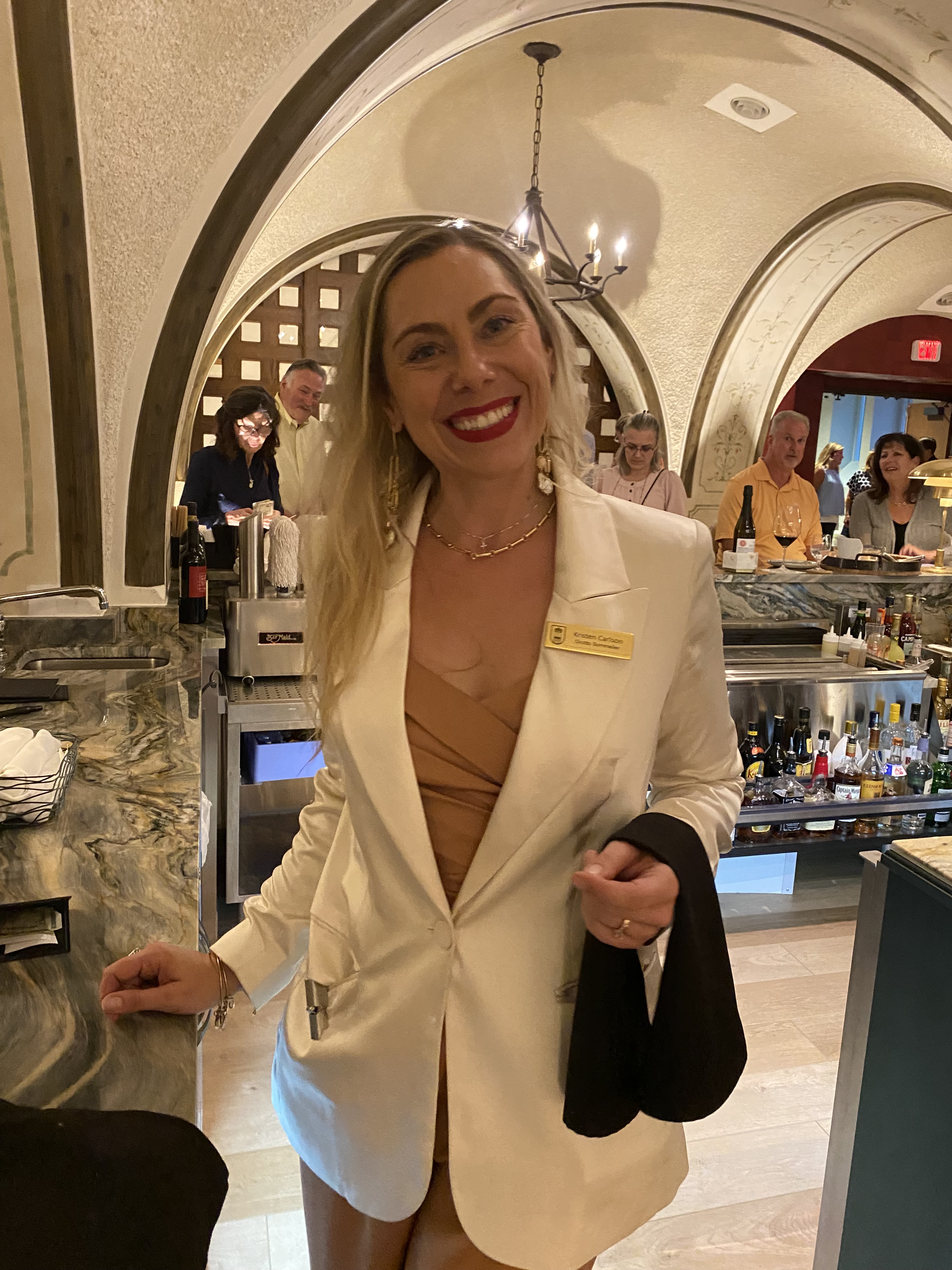
I may have been named after a Saint, but I certainly don’t refer to our home in such lofty terms.  Saint John’s Resort has a history that began in the late Forties when St. John’s Provincial Seminary opened its doors and for over forty years it was an institution of Divine education and learning.  It was created by the Catholic Archdiocese of Detroit, eventually being the retirement home of Cardinal Maida as well. In 1979, a semi-private golf course was built on the two-hundred-acre parcel of land and when the seminary closed, it became the St. John’s Conference Center and eventually added the Grande Ballroom while still maintaining the Romanesque architecture even with all the additional building.  They also created the “5ive Steakhouse” as part of the new hotel and conference center.  In 2021, the entire complex was purchased from the Archdiocese with the proviso, that all profits from the resort go to a charitable foundation.  The latest addition to the complex is The Grotto, which is nestled under the original and still functioning chapel.  This space was a place where the Seminary students could pray in peace, and now is a charming wine bar that is an off shoot of “5ive.” In 2023, the resort received the Wine Spectator award The Award of Excellence which recognizes restaurants with an exceptional wine list.  Somehow, during all of the years of enjoying wines, the new sommelier of The Grotto and I have crossed paths at different wine tastings, and my Bride and I, broke from our usual practice and went to the grand opening of The Grotto.

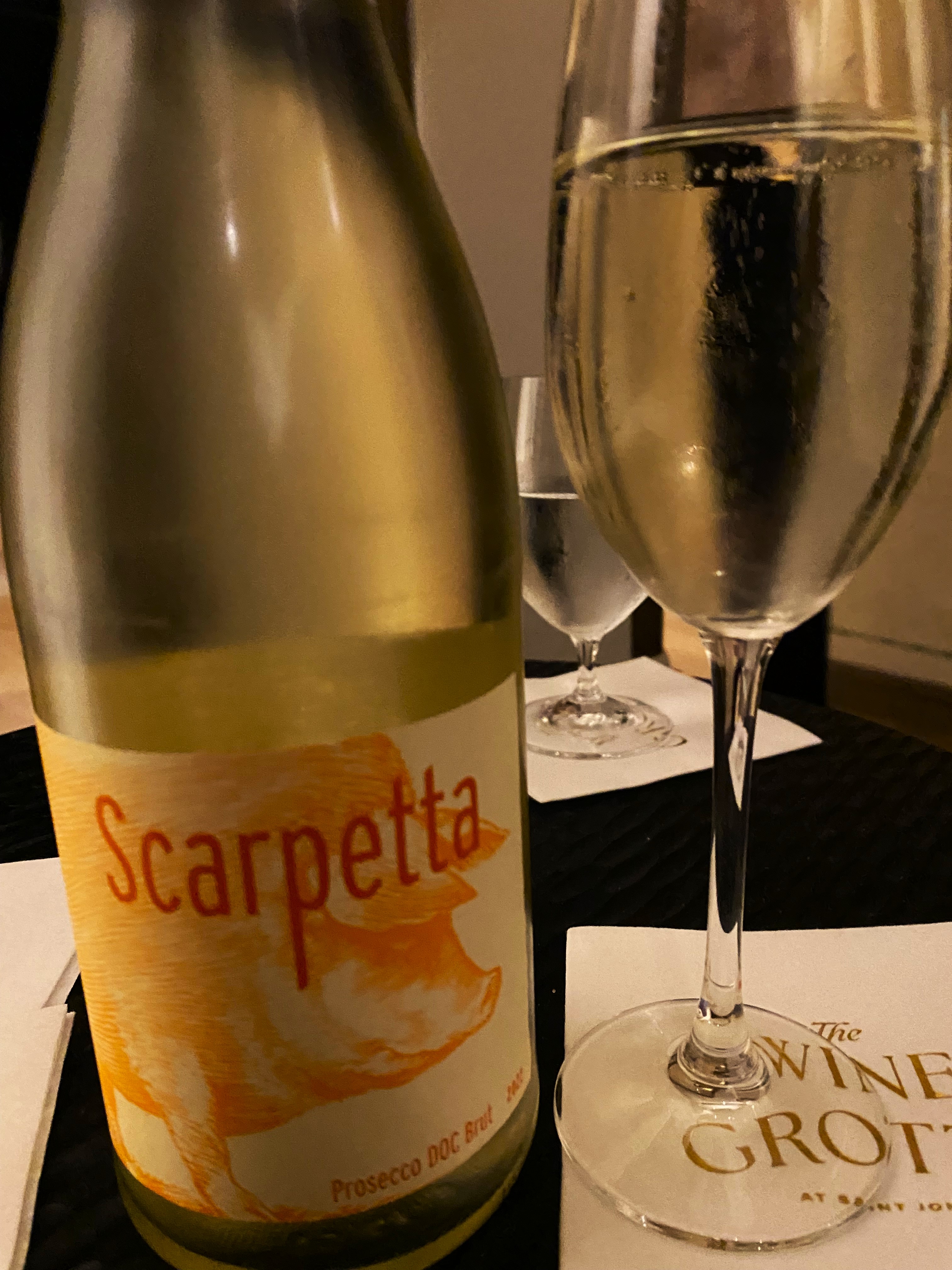
The Grotto features small plate dishes for sharing and for “munchies” and they were certainly not trying to offer “bar food.”  We started off with some Shishito Peppers, with a chili crunch vinaigrette, and honey-citrus zest.  Perfect finger food, as long as one knows that probably one out of ten peppers could have some real zing.  My Bride had a glass of Scarpetta Prosecco DOC Brut NV.  Scarpetta wines began in the Friuli-Venezia Giuli region in 2007 and since then has expanded into other regions of Italy as well.  Scarpetta is an old Italian term for that last piece of bread that is used to soak up the last of the sauce on your dinner plate.  With this wine being Prosecco DOC, the fruit is officially called Glera, for the rest of the world outside of Prosecco DOC, the grape is called Prosecco. Once considered a “poor man’s Champagne” Prosecco has been a work in process, and is now a truly recognized label of its own.  It is made with the Charmat method, also known as the tank method or bulk method, to differentiate it from Methode Traditionelle, but as the years go on, I have to admit that the size of bubbles keeps getting smaller and definitely more numerous and persistent.  This particular wine is a blend of Glera and Chardonnay, and according to the DOC regulations, the wine must be at least eighty-five percent Glera. The pale golden-yellow wine offered notes of fresh fruit, honeysuckle and a tweak of hazelnut.  On the palate there were tones of green apples, honeydew melons and a nice crisp taste and finish, that I would call “sec” instead of the sometimes-overpowering puckering taste of “brut.”

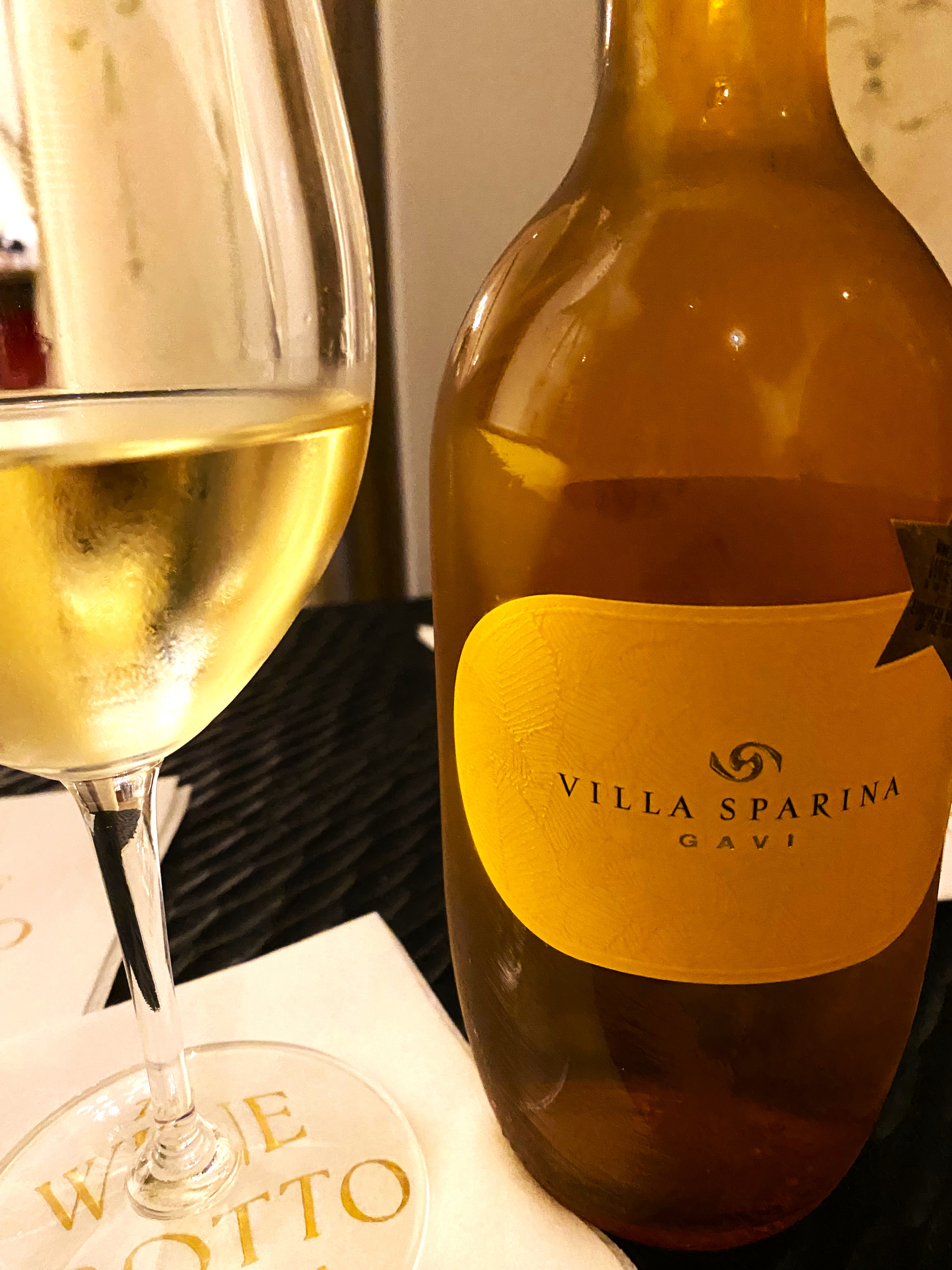
We also shared a Lobster Roll at The Grotto, which was made from claw meat, with spices, micro-sprouts, and a side of potato chips.  I had a glass of Azienda Agricola Villa Sparina Gavi del Commune di Gavi DOCG 2021. This winery was purchased in the Seventies by the Moccagatta family.  Villa Sparina is spread over one-hundred hectares of which seventy are reserved for the native varieties of Gavi (Cortese) and Barbera.  Some of their vineyards are located on the hills of Monterotondo, which is considered a Cru region for Gavi.  For the wines to carry Gavi di Gavi, the fruit must come from vineyards in the township of Gavi.  The winery wishes to stay distinctive and they even created a golden-hued glass bottle based on an ancient vase found during the renovation of the winery.  Gavi is considered the jewel of white wines in the Piedmonte, though it has the feel of Liguria as it is found to be more light and fruity.  The Cortese grape has been recorded in the area since the 1600’s, Gavi di Gavi received its DOCG status in 1998.  The wine is aged in Stainless Steel for about five months to keep its freshness and crispness.  The wine is a straw-yellow color and offers notes of white fruits, white flowers, herbs, and almonds.  On the palate there are tones of green apples, honeydew, citrus, and spices in a very bone-dry, crisp wine with bright acidity with a great finish of mineral-laden terroir.     

Posted in Dining, Wine | Tagged , , , , , , , , , , , , | Leave a comment

September 2023 Birthdays

We had an invitation out to the families to come for a celebration for seven celebrants, including myself.  My Bride as always was intent on getting everything perfect.  Of course, time and schedules for some people is not understood.  If it was me, I would put the food out at the designated time, and for those that consistently arrive late, they can make plates of leftovers and nuke the meal in the microwave, and they can enjoy soggy salads.  My Bride started out the meal in the living room with fruit, vegetables, dips, hard cheese, warmed Brie with a fig topping, and of course a selection of crackers.  We started with Famille Joly Vignobles de la Coulee de Serrant Les Vieux Clos Savennieres AOC 2019. Famille Joly is known for its age-worthy wines made from Chenin Blanc, especially from their monopole Coulee de Serrant vineyard. The area was originally planted by Cistercian monks in the 12th Century, Famille Joly acquired their property in 1961.  The estate is now biodynamic and Nicolas Joly who took over his parent’s winery is a major proponent of this farming technique. The appellation for Savennieres does allow for some sweet wines, Botrytis once defined the region, but not now.  The appellation laws also require low maximum yield restriction; hence the wines are very concentrated and have very long life.  The original appellation laws were written in 1952 and updated in 1996 and standard Savennieres wine is dry.  There are only about thirty winemakers in the area.  The estate is three hectares, and they produce all three of their wines from this property. The vines for this wine are about five to thirty years of age, and they are cuttings from their own vines from the monopole which were planted in the 1920’s.  The vines are planted in slopes ensuring good airflow on schist soil of quartz and sand.  No synthetic chemicals have been used since 1984.  It may take a couple of months for the harvest, as the grapes are picked as ripe.  The winery is basically hands-off in production, no rinsing of the grapes, no temperature control during fermentation and total Malolactic Fermentation, only local yeasts, and even very little racking, and not fining.  The wines are aged in a mix of wood (and very little new oak) and Stainless-Steel tanks.  There is no standard rule for aging and the wine is finished usually in six to eight months, when they decide it is.  The wine is a pretty golden-yellow and offers notes of melons, orange zest, pears, tobacco, and wet slate.  On the palate there are tones of delicate fruit, roasted pineapple, salt and beeswax; very complex a dry savory wine with tinges of sweet fruit and a nice finish of terroir.

For the dinner, the marinated salmon finished first, along with the vegetables.  Those that wanted to have some immediately were encouraged, while the last course was still cooking.  We morphed from one white wine to another at this point and we served Chateau Marjosse Blanc Entre-deux-Mers 2021. Their signature wine is the white, they also produce a red with a Bordeaux AOC.  The chateau is owned by Pierre Lurton, who is also the managing director of Chateau Cheval Blanc and Chateau d’Yquem.  He began winemaking there for the Deleuze family in 1990 when the estate had twelve hectares, and later after some other commitments he bought the estate in 2013 and began upgrading almost immediately.  The estate is now sixty-five hectares, and the white wine vines average over thirty-five years of age.  The wine is a blend of forty-five percent Sauvignon Blanc, forty-five percent Semillon, and a ten percent blend of Sauvignon Gris and Muscadelle.  The grounds are sloping hillsides that rise to about sixty meters on sand with clay and limestone.  The juice in vinified in temperature controlled egg-shaped cement vats and used five-hundred-liter oak barrels.  The wine is a pale straw-yellow colored wine that offers notes of green apple, grapefruit, citrus, and white flowers.  On the palate tones of green apple and grapefruit that are bright and crisp; very youthful and alive and refreshing.  

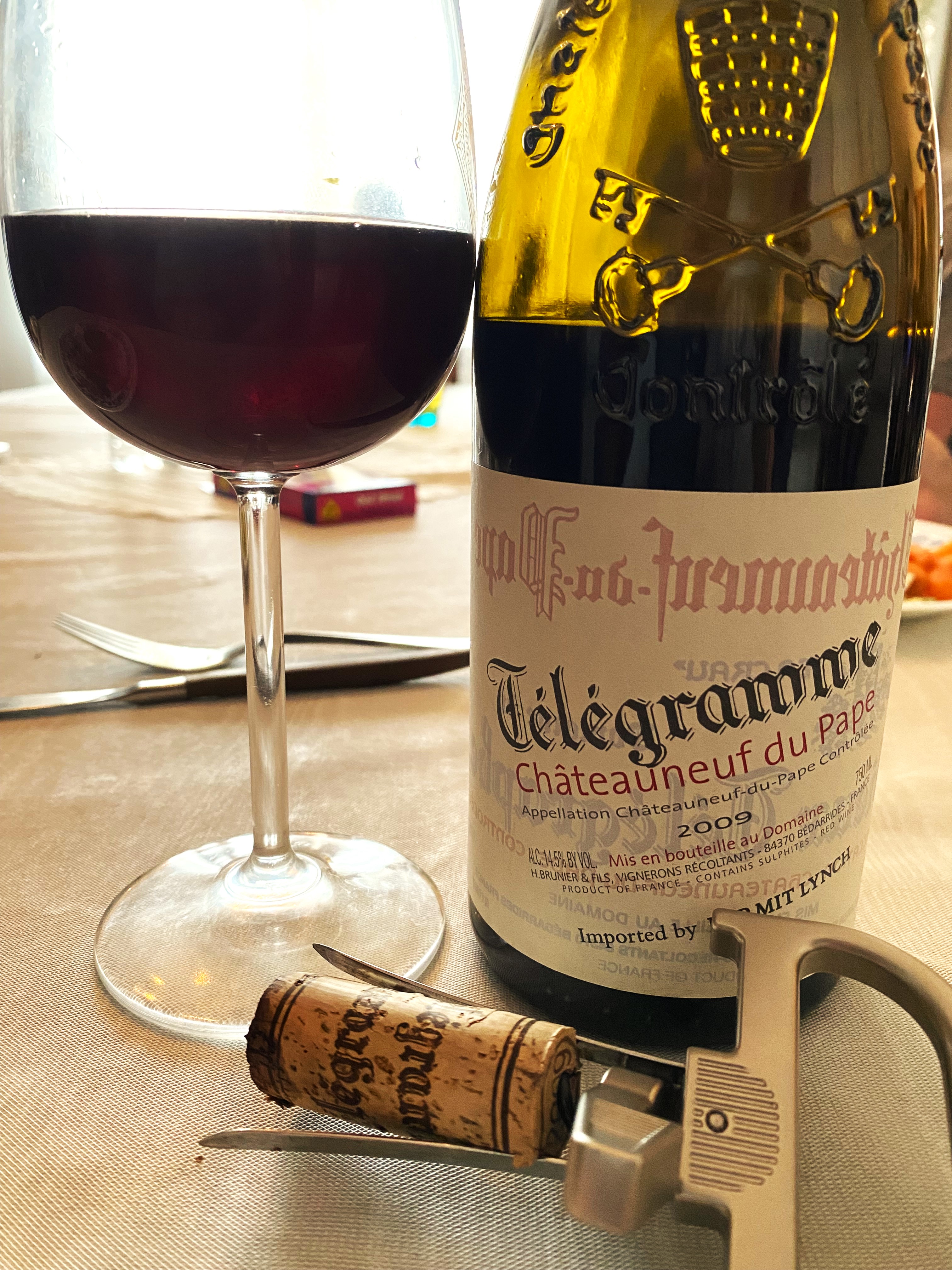
Then the roast tenderloin was finished along with Armenian Pilaf and root vegetables.  I had selected for this part of the dinner a bottle of Vignobles Brunier Domaine du Vieux Telegraphe Telegramme Chateauneuf-du-Pape 2009.  Chateauneuf-du-Pape actually means “new castle of the Pope” and goes back to the Fourteenth Century during the time of Pope Clement V, the same Pope that is honored on the wine from Graves Chateau Pape Clement. Pope Clement chose Avignone as his new seat and the town has been historical ever since.  While the name is drenched in history, up until the early Twentieth Century, the wines were usually lumped into a general Avignon wine.  Baron Le Roy of Chateau Fortia, drafted a document centering on quality wine production conditions, and this document became the precursor of France’s appellation system.  Originally thirteen varieties were approved for production and after a 2009 review, eighteen varieties are now approved. The other unique proviso about Chateauneuf-du-Pape is that they drafted a law forbidding flying saucers from taking off, landing, or flying over the vineyards and it is still enforced to this day.  The domaine was established by Hippolyte Brunier and produced its first wine in 1900. It has grown to become one of the largest land owners in Chateauneuf-du-Pape with almost one-hundred-hectares. There was a real telegraph involved in the Brunier story. In 1898, Hippolyte Brunier had just one hectare of vines to make a bit of family wine, with his vineyard situated at one of the highest points in between Chateauneuf-du-Pape and Bedarrides. Its altitude made it the perfect spot for the communication tower built in 1793 by Claude Chappe to transmit telegraph messages between Marseilles and Paris. Hippolyte’s grandson, Henri, was the first to put the Domaine’s bottlings under the Vieux Telegraphe label. Today, even though the communication tower itself has long gone the name remains.  Vieux Telegraphe’s second-label Telegramme is made with young vines, under thirty-years of age.  The wine is a blend of eighty percent Grenache, ten percent Syrah, six percent Mourvedre Monastrell) and four percent Cinsault. The grapes are hand-harvested, with double-sorting at the vine, and a third sorting at the winery.  They are de-stemmed, with about thirty days for Initial Fermentation in temperature-controlled vats; followed by pneumatic pressing and then Malolactic Fermentation. The wine is aged for about sixteen months in French Oak foudres, bottled without filtration or fining and released after eighteen months. A deep ruby-red offering notes of blackberry, figs, and rose petals.  On the palate there are tones of rich fruit preserves, anise, and tea with a nice long finish of fruit and terroir.  A totally delightful way to enjoy my birthday dinner with the other celebrants.

Posted in Dining, Wine | Tagged , , , , , , , , , , , , , , , , , , , , , , , , , | 2 Comments

Oak & Reel

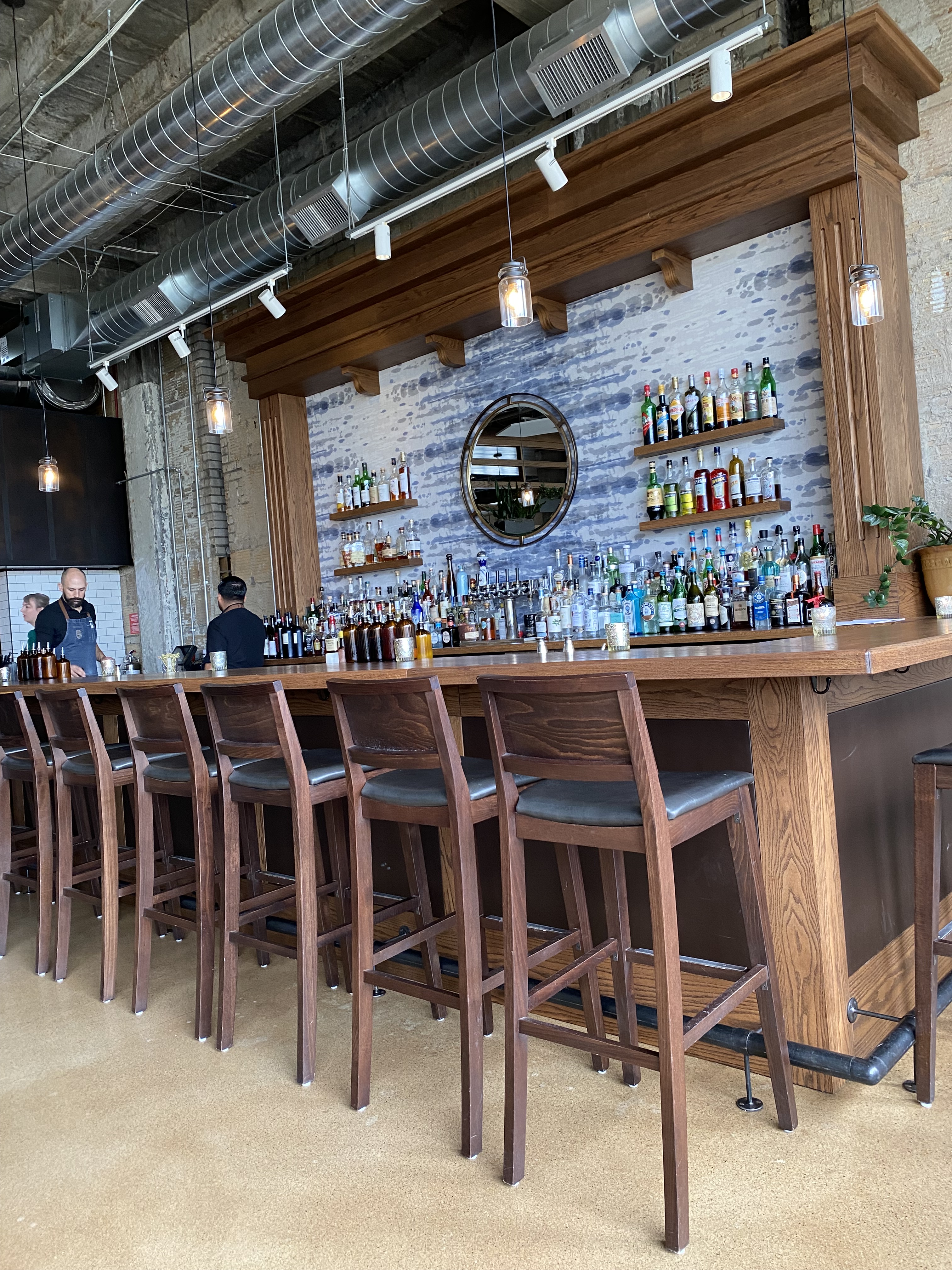
My Bride puts up with me, and sometimes I don’t know how she does it, but she pampers with attention and indulgence, and she is part of why my birthday celebrations get extended longer each year, as the years seem to get shorter.  I had heard about Oak & Reel almost from the time that they opened up.  A local guy who ended up working and then captaining the two Michelin Star restaurant Marea in New York City and it became a destination seafood restaurant.  He wanted to come home, because he heard of all the promise there was in Detroit.  He created a seafood focused Italian restaurant in the Milwaukee Junction district (every area in Detroit now seems to have a name) and I had never been in this part of the city.  He opens up in 2020 and somehow managed to survive everything the governor inflicted on businesses, if you wish to have to remember that year.  In 2022, the glossy periodical of Detroit names it “Restaurant of the Year.”  So, now I wait another year to try it out; and it was worth the wait. 

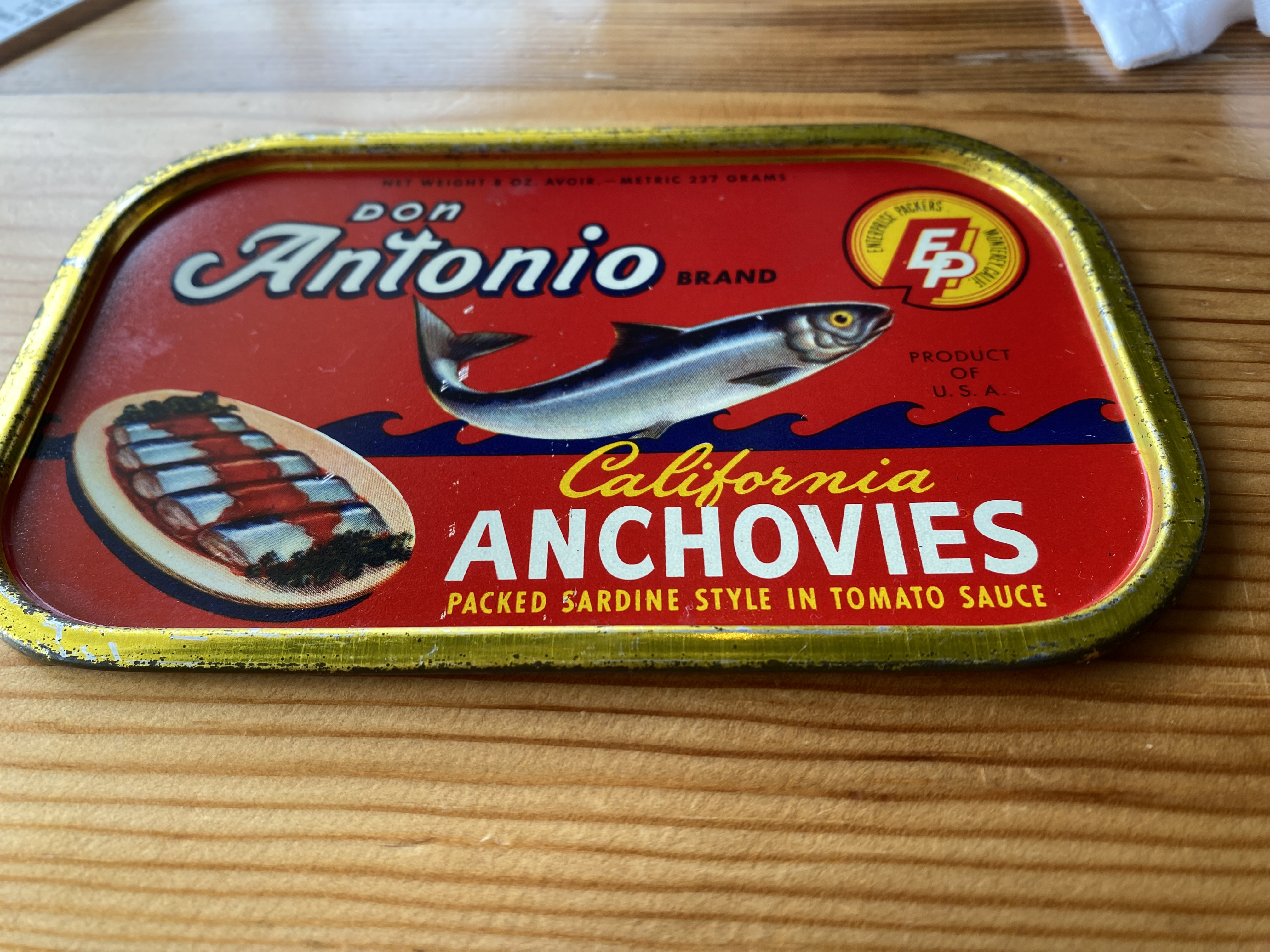
We started out at Oak & Reel with a couple of appetizers after my Bride had her Negroni and I had my Vermouth Cocktail.  She had Frito Misto with delicata squash, shrimp, Calabrian honey, and sage.  While I had Campanelle with lobster, corn, seaweed, and chive.  My Bride had Halibut with rosemary spaetzle, chestnut ragu cabbage, and capers.  I had the New Zealand Langoustine, with arugula, and Salsa Verde.  After all of that, we still had room for our Decaf Cappuccinos and we shared a Panna Cotta with pistachios and Carpano Vermouth granita.  The bill came served on the lid of California Anchovies, which always sounds good.

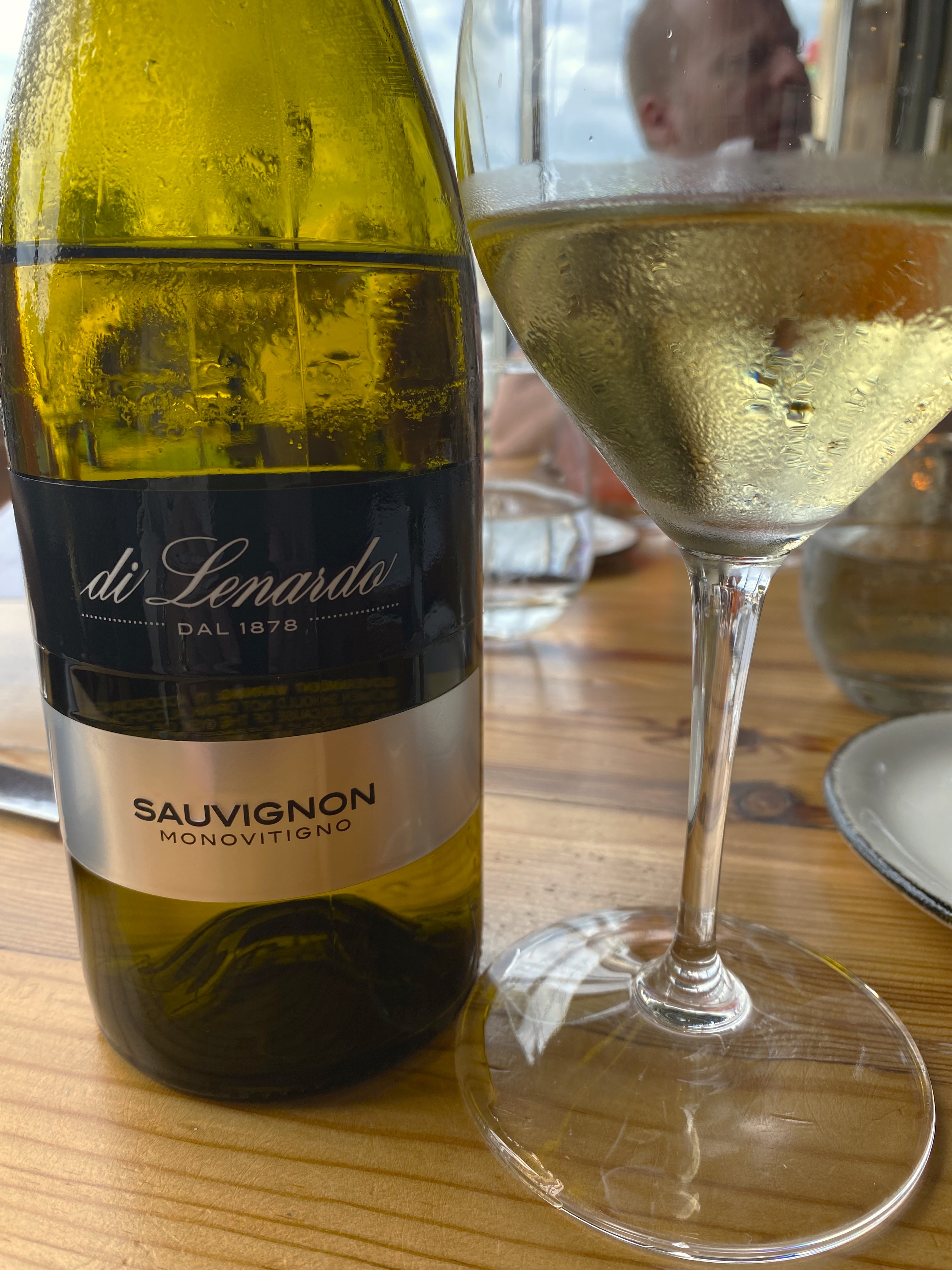
Fear not, that I mentioned the bill prior to the wine.  We enjoyed a bottle of di Lenardo Vineyards “Monovitigno” Sauvignon Venezia Giulia IGT 2021. A family-owned estate, di Lenardo Vineyards began in 1878 cultivating vines.  They own five vineyards, rent one vineyard, and a couple of controlled vineyards.  In 1987 they began producing and bottling their own wines from one-hundred-fifty hectares of vineyards.  The vineyards are in the Friuli DOC region, but this wine carries the Venezia Giullia IGT designation, as it doesn’t match up to what is needed for the DOC designations that are there. The wine is a blend of Sauvignon Blanc and Sancerre clones. The whole berries are pressed gently in a pneumatic press, and after the first racking, the must is transferred to temperature-controlled fermentation still vats (Stainless-Steel) and the wine stayed on the lees until bottling, which was probably only a couple of months.  Clarification of the musts are made with their new “state of the art” “flowtation bio-system” and bottled under vacuum.  A pretty pale straw-yellow with green highlights this wine offered notes of melon, peach and sage.  On the palate there were tones of the melon, peach, and sage with fresh acidity, a slightly oily-textured wine with a finish of figs and tropical fruits. It was a very interesting wine with dinner.     

Posted in Dining, Wine | Tagged , , , , , , , | 2 Comments

Black Star Farms Club Fall 2023

The last of the wine club shipments that I can claim as part of my extended birthday celebration month.  Black Star Farms is rather unique in that it has vineyards and tasting room facilities on both peninsulas, so that they are kind of surrounding Traverse City which is kind of the focal point for all of the wineries in the area.  In 1998 Black Star Farms purchased Sport Valley Farm which was a one-hundred-twenty-acre equestrian facility, and the stylized black star was part of the architectural décor in the main house.  In their Twentieth year, they were honored to receive the 19’th Annual Canberra International Riesling Challenge (CIRC) -Best Wine of the 2018 Challenge and only the second time an American wine came out on top.  There were 567 Rieslings from six countries (Australian, New Zealand, USA, Germany, France’ and the Czech Republic).  The Black Star Farms Arcturos Dry Riesling 2017 scored 98 points, in addition to taking home Best Dry Riesling and Best American Riesling.  In fact, all six of the Riesling wines that Black Star Farms submitted took home medals, showing a consistency across vintages and styles.  The fruit is sourced from both of the proprietor’s vineyards and from local grower partners in both the Old Mission Peninsula and Leelanau Peninsula.  The winery has three series; the premium Arcturos, A Capella and the Leorie Vineyard labels for sparkling and fruit wines.

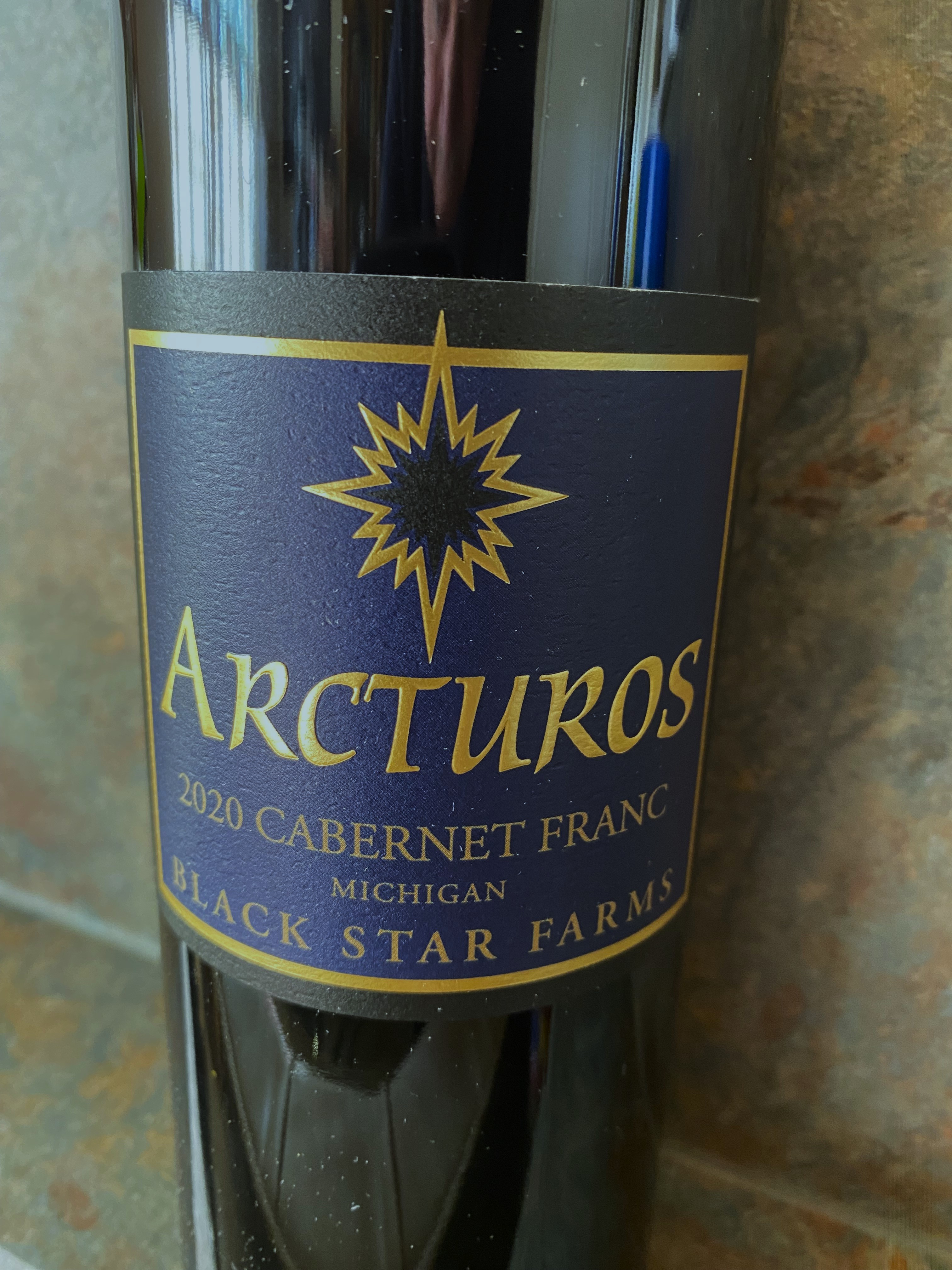
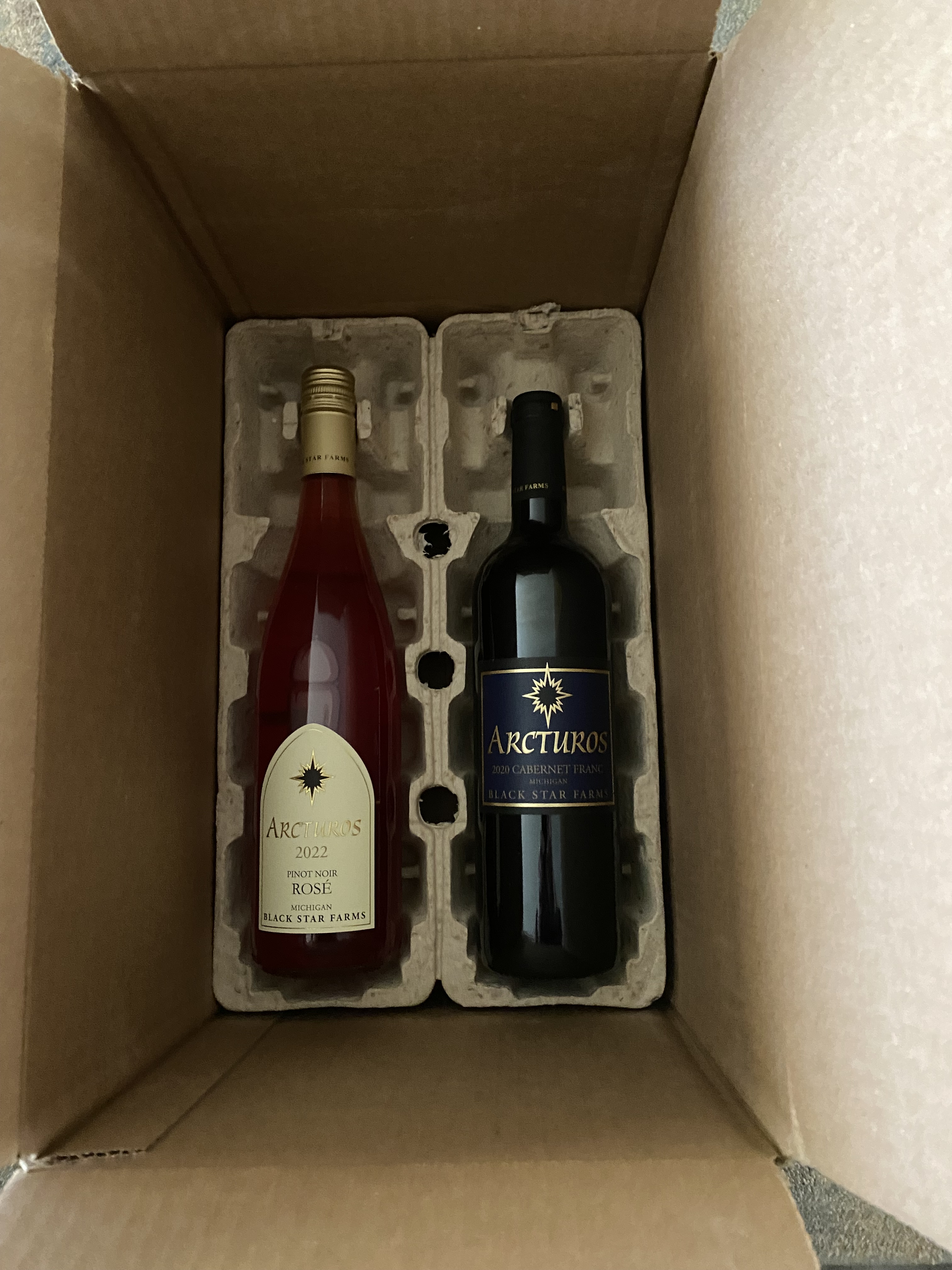
The first wine out of the carton is Black Star Farms Arcturos Cabernet Franc Michigan 2020.  In fact, we had two different bottles of wine with a meal that caused us to drive over to Black Star Farms while we were up in northern Michigan and one of the bottles was Cabernet Franc.  It also is probably my Bride’s favorite varietal, so it is always easy to get her to agree to a bottle or two.  Now the year 2020 is rather ominous for most people’s memories, but it turned out to be an excellent growing season for the region, and a lighter crop, which made it easier for the production team, it also had an earlier bud break, a warmer spring and early summer and a long cool September which was a boon to the smaller crop.  October offered plenty of sunshine which encouraged the ripeness of the grapes.  This wine carries a Michigan designation, because the fruit was harvested with sixty-nine percent from Leelanau Peninsula and thirty-one percent from Old Mission Peninsula.  They were one of the first to have Cabernet Franc, with the first bottling in 1998 and now plenty of the other wineries now grow it as well. This wine is ninety-two percent Cabernet Franc and eight percent Teroldego.  The wine was allowed to mature for almost twenty-two months in a blend of French and American Oak with thirty percent being new; and six-hundred-ninety-cases were produced.  This new wine is described as offering notes of blackberries, plums, oak, and herbs.  On the palate the dark fruit blends well and has soft tannins and a finish of herbaceous notes.

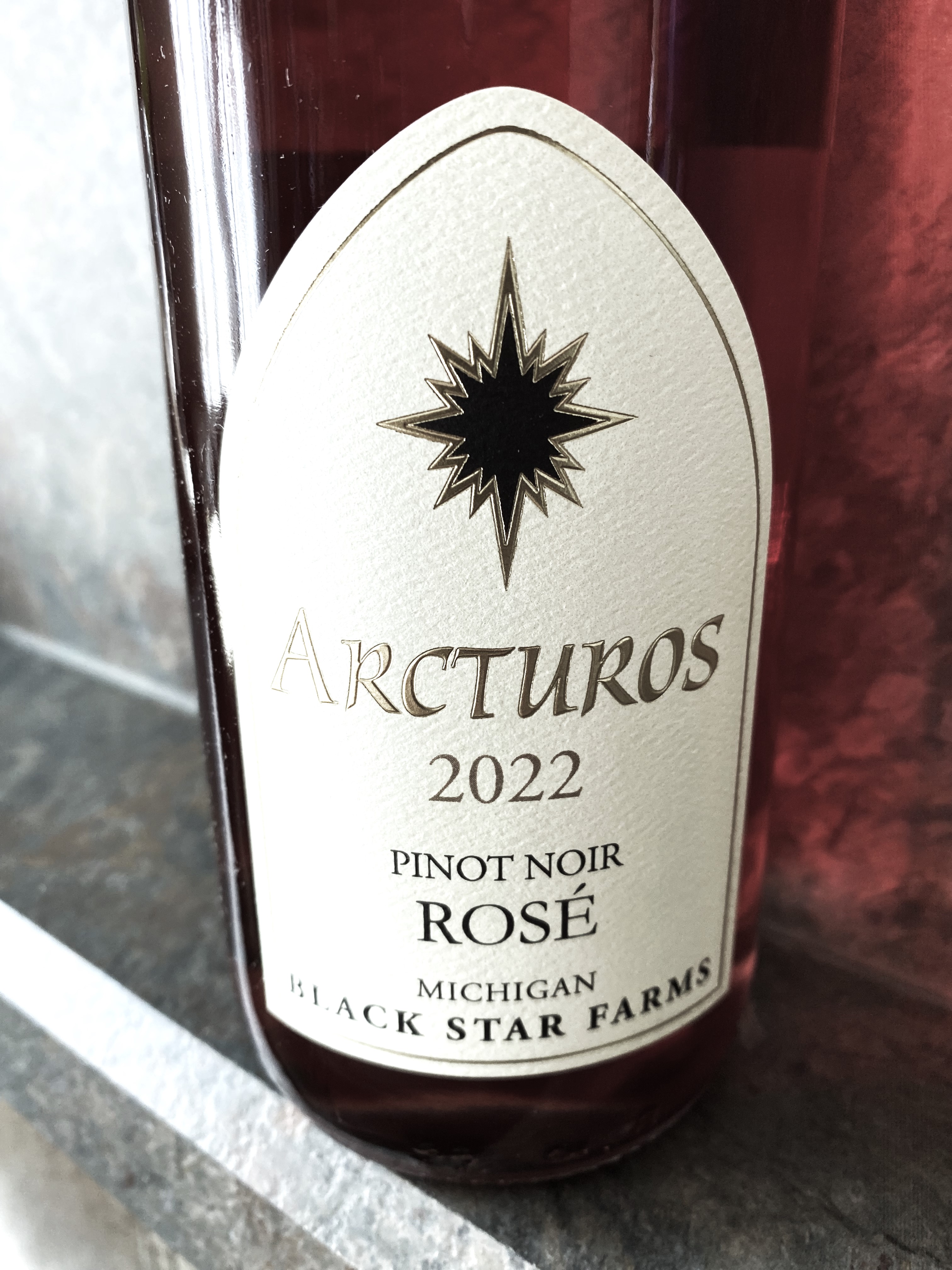
The second wine out of the carton was Black Star Farms Arcturos Pinot Noir Rosé Michigan 2022.  Black Star Farms is located on the 45th Parallel that runs through some of the world’s great wine regions and they also enjoy a “lake effect” climate with helps especially near harvest time.  The fruit for this wine comes from the estate’s vineyards as well as some local grower partners; fifty-two percent from Leelanau Peninsula and forty-eight percent from Old Mission Peninsula, which causes the Michigan designation.  The growing season had a mild, but sunny spring, sun and heat for the summer, and a good drought from mid-June to mid-August, with a little rain in September and October.  The wine is ninety-eight percent Pinot Noir and two percent Pinot Gris.  It is not stated, but I would venture to say that this was a wine that was entirely done with Stainless-Steel for Fermentation and a short maturation period to allow the fresh fruit to be enjoyed; with eighteen-hundred-fifty-two cases produced.  The wine is described as a classic dry style rosé with strawberry aromas, with red fruit on the palate and is complimented by subtle minerality and a clean finish.      

Posted in Wine | Tagged , , , , , , , , | Leave a comment

Amerikatsi

I need to offer some explanations for this article.  Amerikatsi is a name of an Armenian film that is totally unknown and yet it has won seventeen film awards.  The suffix “atsi” is used to define a person’s heritage in the Armenian language, hence Amerikatsi is one from America, and a Germanatsi (with a hard “G”) is from Germany, but it can be used even to identify an Armenian from his state or even his city or village.  Armenians use suffixes on surnames as well, “ian” or “yan” denotes “son of” as in the great Armenian-American author William Saroyan, who’s grandfather probably was named Saro.  All this is to explain why my Bride and I found ourselves seeing a film that was showing in the Detroit area, without any indications or writeups from our local “film critics” as they probably can’t watch a film that doesn’t have comic book superheroes.  With the lack of work by the critics, when we went to see the film, there may have been twenty people in the audience, and I would venture to say all Armenians that were mostly first-generation Americans from parents that survived the Genocide (I am a second-generation).

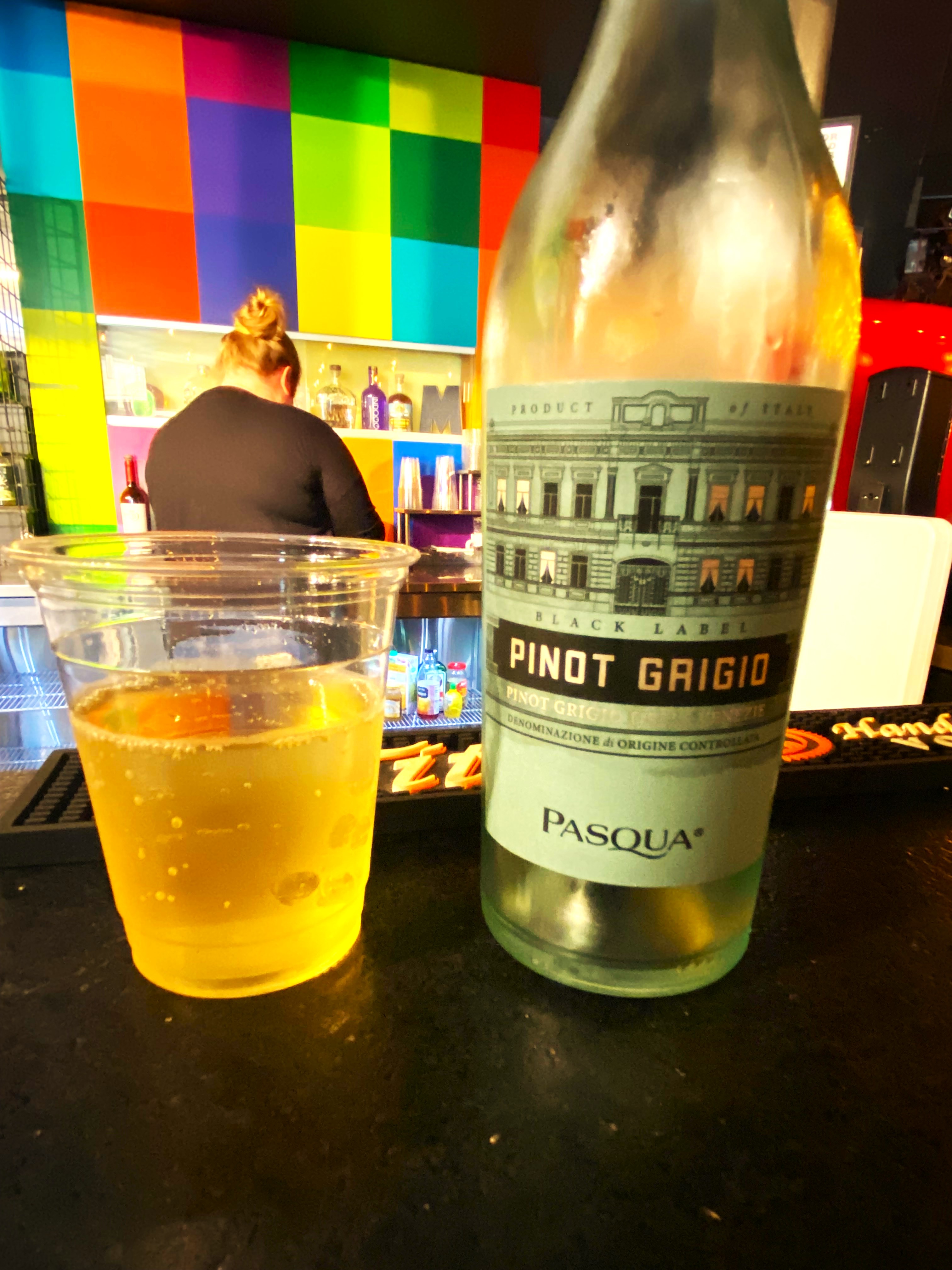
Now I have to explain why I am writing an article about a movie, well some of you by now have noticed that I write about the moment and the wine that is encountered at that moment, be it humble or spectacular, life is the same way.  We go to less movies these days, only because I enjoy the written word, and not a “blue screen” movie. Though one of the features that I have discovered and enjoyed when we do go to the cinema, is that there is a lounge or at least offerings that can wet one’s whistle that isn’t a soft drink.  The “art theatre” as they were called in my youth that we went to not only had a lounge, but there was a wall of wine bottles separating the lounge from the popcorn stand.  We had a couple of glasses of Pasqua Wines Pinot Grigio Delle Venezie DOC 20221. Pasqua Wines was founded in 1925 by the brothers Pasqua with their historic Veronese winery, and in their almost one hundred years have showcased many of the prestigious wines from Veneto. The Venezie in the name, most people think is for Venice, the historic and romantic city of canals, island, bridges and gondolas, but it is actually for Tre Venezie, Triveneto or “Three Venices.”  These three are Venezia Euganea, Venezia Giulia and Venezia Tridentina and they were three Italian administrative regions which existed from 1866 to 1919 and now correspond to Veneto, Friuli-Venezie Gulia and Trentino-Alto Adige; Delle Venezie covers the entire area with the exception of Alto-Adige or Sudtirol. The DOC laws allow that the wine must be at least eighty-five percent Pinot Grigio and then there is a long list of local grapes that may be used to blend in.  This wine is pure Pinot Grigio and the fruit undergoes a soft pressing.  The Initial Fermentation is done cool in Stainless-Steel tanks.  Thirty percent of the juice is aged in French Oak barrels for three months, while the rest remains in the Stainless-Steel tanks.  The wine is a golden colored and offered notes of peaches, pears, and tropical fruit.  On the palate there were tones of the fruits, balanced with a tinge of vanilla and roasted hazelnuts.  Not a complex wine, but it hit the spot while watching the movie, especially in the oversize, plush chairs that had built-in trays.

Now to get back to the film, which was the crux of this article.  The story revolves around Charlie who is smuggled out in a steamer trunk, in the waning days of Western Armenia, in the Ottoman Empire, but not before he gets to be the unfortunate witness of his family being murdered on the side of the street.  He ends up in America, has a wife, who dies young and decides to be repatriated after World War II to his Armenia that he barely remembers.  The Socialist Regime under Stalin, was promising money to the Armenians of the diaspora, but it was basically a way to maintain their forced labor camps of able-bodied men in Siberia.  Due to an act of God, Charlie ends up staying in forced labor in Armenia under the benevolence of the Socialist Puppet government, that curries favor from the Russian overlords.  We also, as the audience get to witness the changing of Armenia from under Stalin to under Khruschev.  Charlie watches an Armenian family from his barred prison cell window to make his own discoveries about a world that he returned to, that attempts to shun religion and art, against the ingrained beliefs of the Armenian people.  The famous Armenia mountain, Mount Ararat, plays a continuous and starring role in the film as well.  I think that this film should be showed in public schools to allow the students to see the true “glories” of socialism, as actually practiced in the real world.      

Posted in Wine | Tagged , , , | Leave a comment

“A Taste of Monterey” Fall 2023

The first club we ever joined was by accident, when we discovered “A Taste of Monterey” just before we were going to eat at the Sardine Factory at Cannery Row.  At that time Michigan was a felony state for having wine shipped to the citizens, until the legendary case of Granholm vs. Heald that changed all of that, and I wish it was the end of Granholm, but she still appears periodically.  “A Taste of Monterey” was the only entity that said that they could ship legally to Michigan back then, as I used to ship everything from California to myself as “olive oil.”

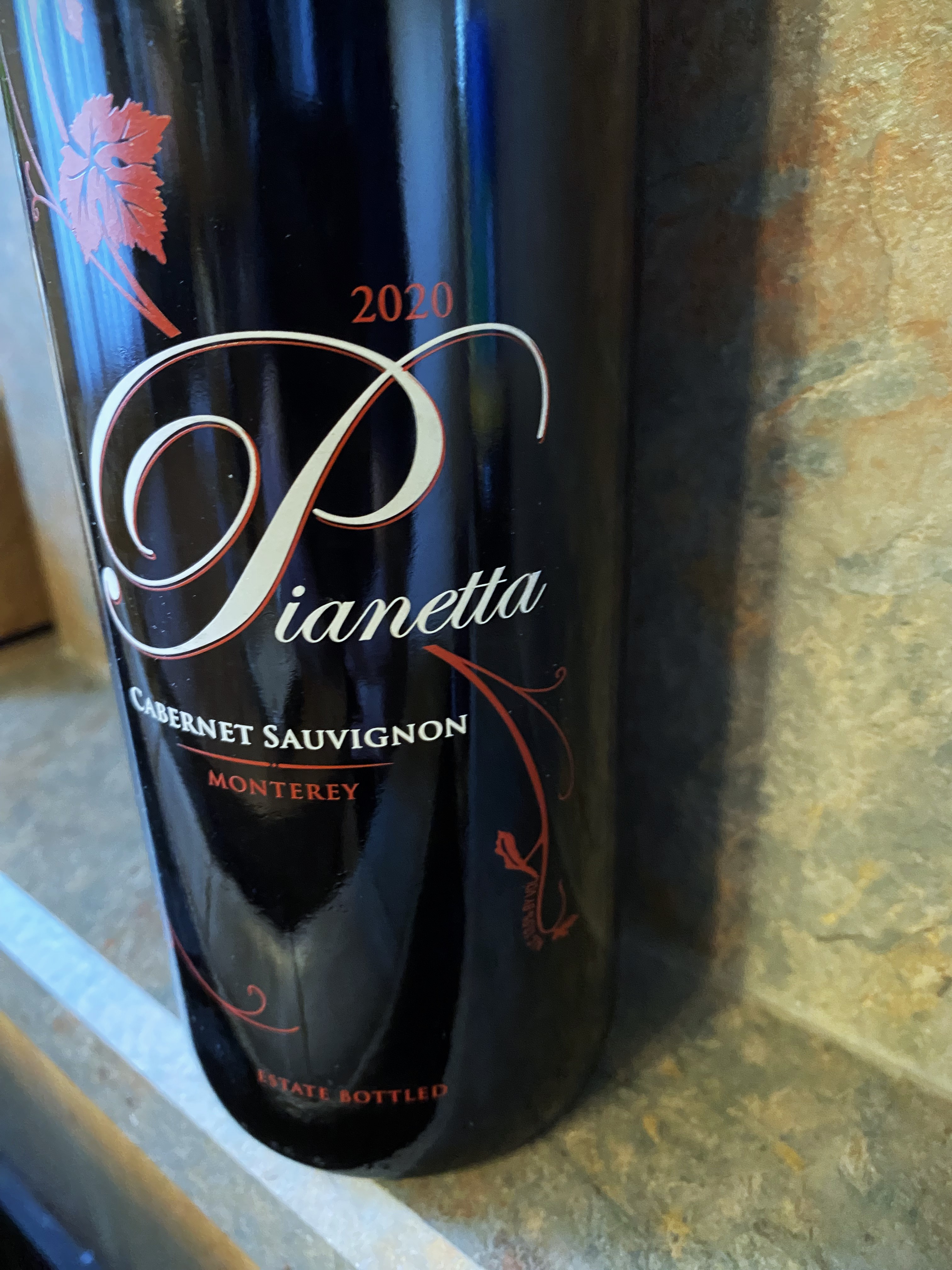
The first wine from the carton was Pianetta Winery and Vineyard Cabernet Sauvignon Monterey 2020.  It is located north of Paso Robles in the hills of Indian Valley.  John Pianetta planted his sixty-five acre estate in 1997 of Cabernet Sauvignon and Syrah, and now the estate offers Cabernet Sauvignon, Petite Sirah, and Petite Verdot.  On terraced slopes, the fruit is hand-harvested and aged in oak.  The wine is described as having bright fruit with raspberry on the nose, bold and velvety with hints of anise, currants, and balance acidity.

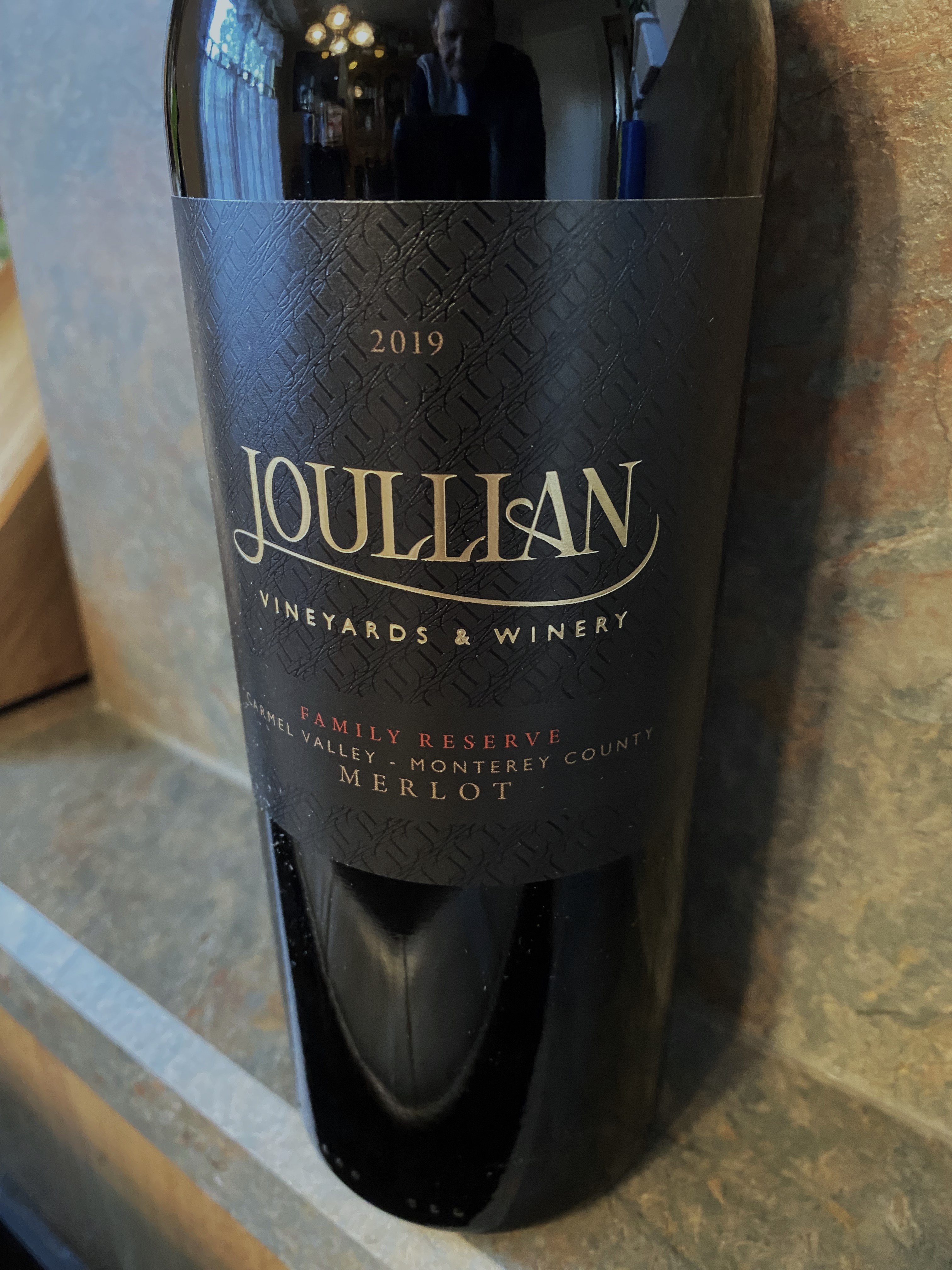
The second wine out of the carton is Joullian Vineyards, Ltd. “Family Reserve Merlot” Carmel Valley 2019. Joullian Vineyards was created by the Joullian and Sias families of Oklahoma City, Oklahoma with the goal of producing world class estate crafted wines and early on engage Ridge Watson for his expertise.   In 1982 they purchased six-hundred-fifty-five acres of hillside benchland at an elevation of 1400 feet in the heart of the Carmel Valley.  After contouring and terracing the land they planted Cabernet Sauvignon, Merlot, Cabernet Franc, Sauvignon Blanc, and Semillon, as well as the first to plant Zinfandel in the valley.  Then they planted various clones of Chardonnay and the winery was completed in 1991. In 2015, Joullian Vineyards, Ltd. was acquired by the Hammler Wine Corporation and are committed to maintaining the brand.  In 2017, Ridge Watson retired after working at the vineyard for thirty-five years.  The wine is a blend of eighty-five percent Merlot and fifteen percent Cabernet Franc.  This wine features two distinct clones of Merlot that are originally kept separate even during the hand-harvested.  Fermentation lasted for eighteen days following a four-day cold soaking of the fruit.  The wine was barreled for twenty months in French Oak, of which forty-five percent is new, and racked quarterly and then bottled unfined and unfiltered for maximum taste value.” layered notes of earthy mushrooms, sandalwood, and butter toffee pecans.  On the palate they report tones of vanilla-spiked dark chocolate and black cherry, with spicy, black pepper.  They call it a “Cab-drinkers Merlot.” The winery also mentions that they think it can cellar for at least ten years.

The last bottle out of the carton was Folktale Winery Le Mistral “White Witch” Arroyo Seco 2021. Folktale Winery and Vineyards was originally founded in 1982 by Bob and Patty Brower, as Chateau Julien Wine Estate and they wanted to replicate their wine experiences in France to the Carmel Valley.  In 1996 they expanded the property and structures to ensure that they were making great wines, and my Bride and I visited Chateau Julien each time we had holidays in Carmel-by-the-Sea.  In 2015, the property was purchased by local winemaker, Gregory Ahn, and renamed Folktale Winery and Vineyards; and as a side note, from what I gather the label Chateau Julien is still property of the Brower family.  The five-acre vineyard at the winery is one-hundred percent organically farmed, and they are working towards this goal in the three-hundred acres in the Arroyo Seco that they maintain.  The name “White Witch” was coined by owner Greg Ahn for Monterey’s daily barrage of coastal fog and wind that moves from the cool Pacific Ocean down the Salinas Valley every afternoon.  The wine is a blend of Viognier, Marsanne, Roussanne, and Grenache Blanc; which some would call a Rhone Ranger’s white blend.  I could find no production notes for this wine.  Their tasting notes are; “Banana runts, coconut, white peach, jasmine, lemon balm, crème pie, fresh grass, and honey.  The wine has a soft sourdough, salty air, and popcorn layer that works well with the brightness that the floral quality brings.  The palate is light, fresh, and pops with brightness form the natural acidity.”


Posted in Wine | Tagged , , , , , , , , , , , , , , , , | Leave a comment

Bos Wine “Wine & Swine Club” Fall 2023

When we stopped at Bos Wine in Elk Rapids, Michigan We first met through his wine, in the ominous year of 2020 my Bride and I were in Louisville, Kentucky having dinner because such niceties disappeared in Michigan and we had as our opening bottle, the Bos Wine Ode to Fume Napa Valley 2015 with their tagline of “Love is a smoke raised with the fume of sighs” by William Shakespeare and an homage to Pouilly-Fume of the Loire.  David Bos who started in Michigan went to California and has now returned to Michigan.  He attended Hope College with dual majors of Religion and English, discovered some quality wines and took off to California without a job, but with determination.  He started with a job at Grgich Hills and eventually became their vineyard manager.  He arrived there at the most opportune time, as they were converting to biodynamic farming and there are over three-hundred-fifty-acres to work.  He said that he considers himself to be a farmer, who makes wine.  The winery began in 2010, in Calistoga, but when he found this building in Elk Rapids, he knew that his boutique wine label had finally found a permanent home, with a garden and a red barn in the back.

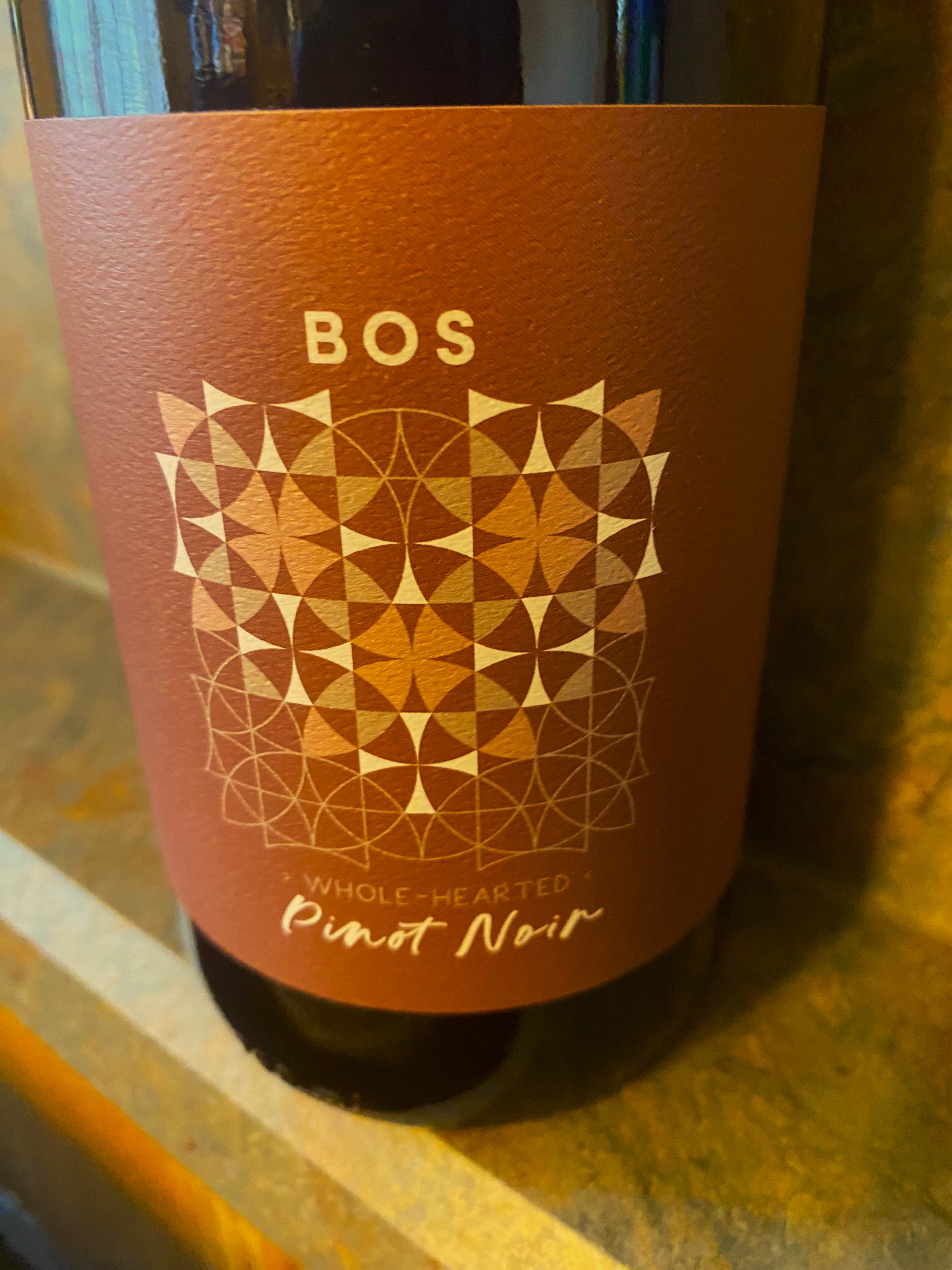
David has a couple of different club memberships and we went all the way with his “Wine & Swine Club.”  In the current wine club shipment, there was his exclusive Bos Pinot Noir Old Mission Peninsula 2022.  It is the first Pinot Noir that he has released and comes from the Devil’s Dive Vineyard on Old Mission Peninsula.  The vineyard is a warmer site, located high on a hill with sandy, loam, limestone soil.  The wine is aged in neutral oak barrels for eight months, then bottled to retain the freshness of its youth.  The wine is ready to be enjoyed or may be cellared for a few years.  Limited production and only offered to the “Wine & Swine Club” members first. The tasting notes mention “cassis and black raspberry.”

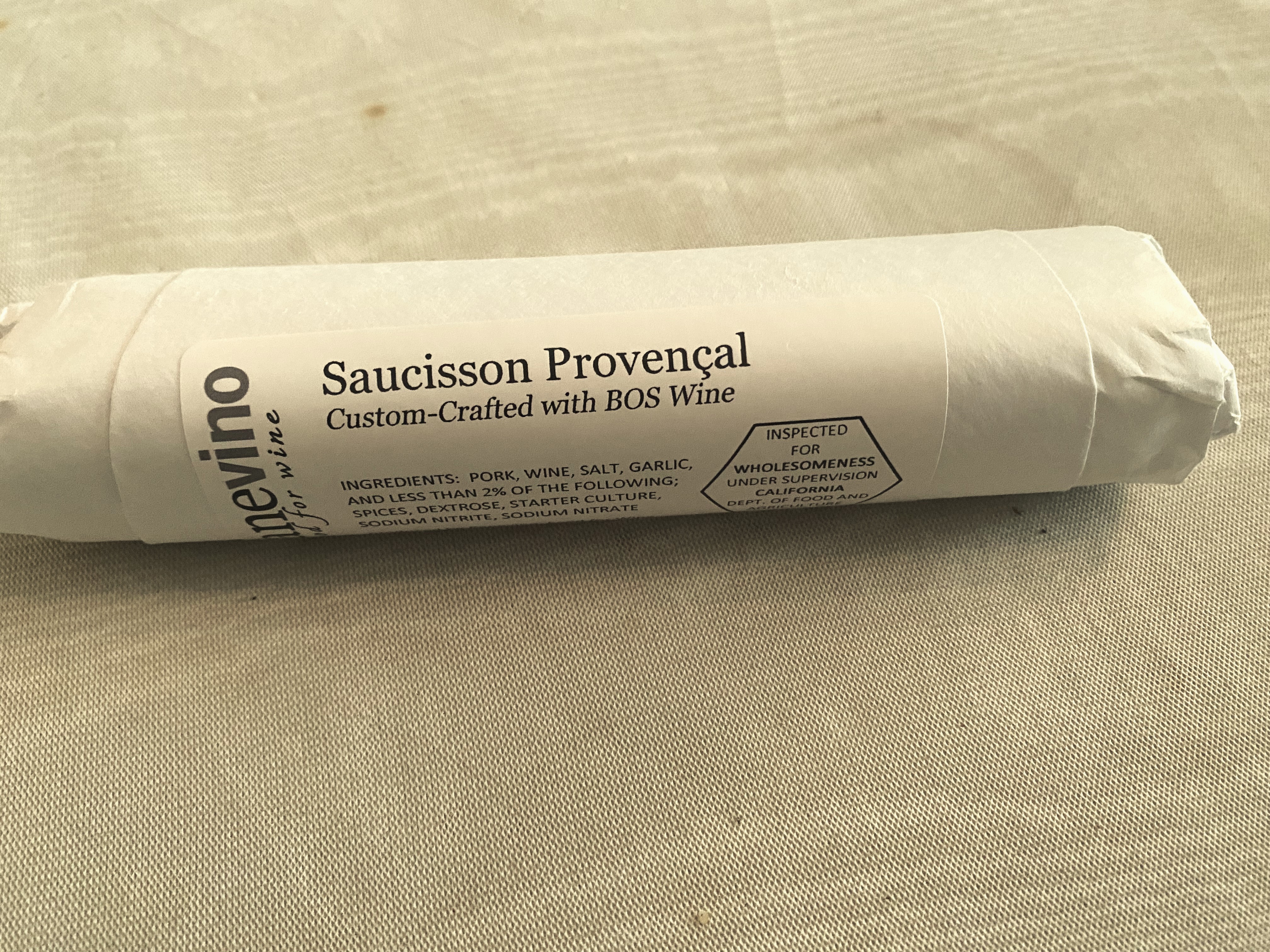
The other part of the “Wine & Swine Club” is the accompanying salumi, their Saucisson Provencal.  The salumi has a subtle blend of dried herbs; basil, thyme, and a touch of aromatic lavender.  Bos Wine, white pepper, and garlic complete the blend.  It is then fermented at a lower temperature compared to Italian or Spanish sausages.  It is aged in a custom curing chamber for weeks, and is shipped in a protective vacuum pack and wrapped in butcher’s paper. All in all, a nice shipment as part of my self-proclaimed on-going birthday celebration. 

Posted in Wine | Tagged , , , , | Leave a comment

Bos Wine Club Fall 2023

We received our first shipment of wines from Bos Wine, a winery that I first discovered at my local wine shop, the Fine Wine Source, then an independent wine tasting, and then my Bride and I made it a point to see the winery in Elk Rapids when we were up “north.” September has been a strong month for wines and I will attribute it to my birthday, as I am going to stretch the day into a month, after all my potential years going forward may be shortening, so the party days should grow.

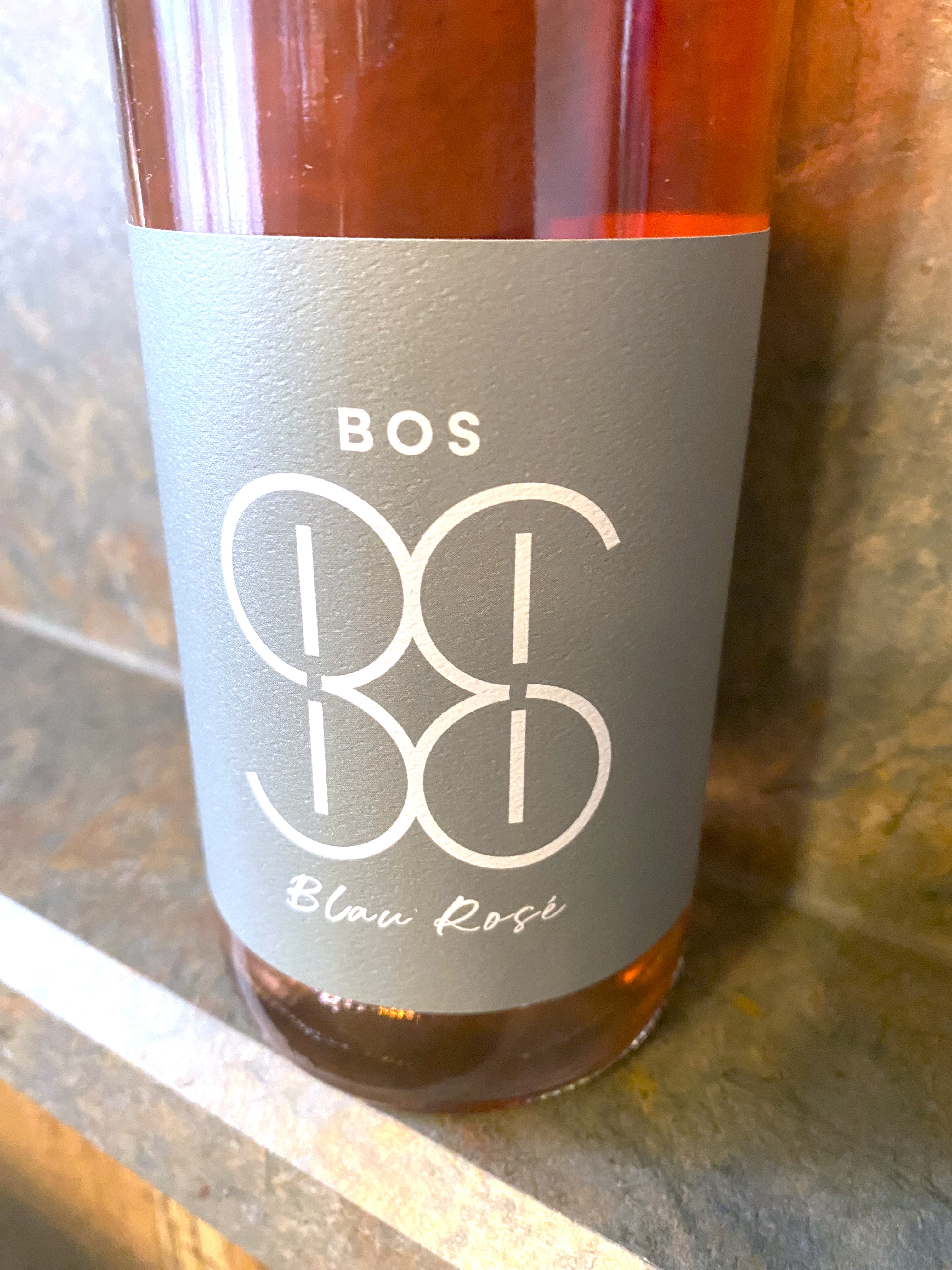
The first wine out of the carton was Bos Wine Blau Rosé Old Mission Peninsula 2022.  The wine is a blend of Blaufrankisch and Pinot Noir and the fruit was harvested from the northern end of Old Mission Peninsula.  The wine is a blend of two distinct methods for making rosé wines; it was part Saignée Method and part direct press.  It was then allowed to undergo Initial Fermentation in Stainless-Steel barrels, and then it sat on the lees for five months giving the wine a creamy mid-palate while still retaining the definitive acid that is found in Northern Michigan fruit.  The wine is ready for drinking now, according to the notes from the winery and they are mentioning in their tasting notes “watermelon rind and dried strawberry.”

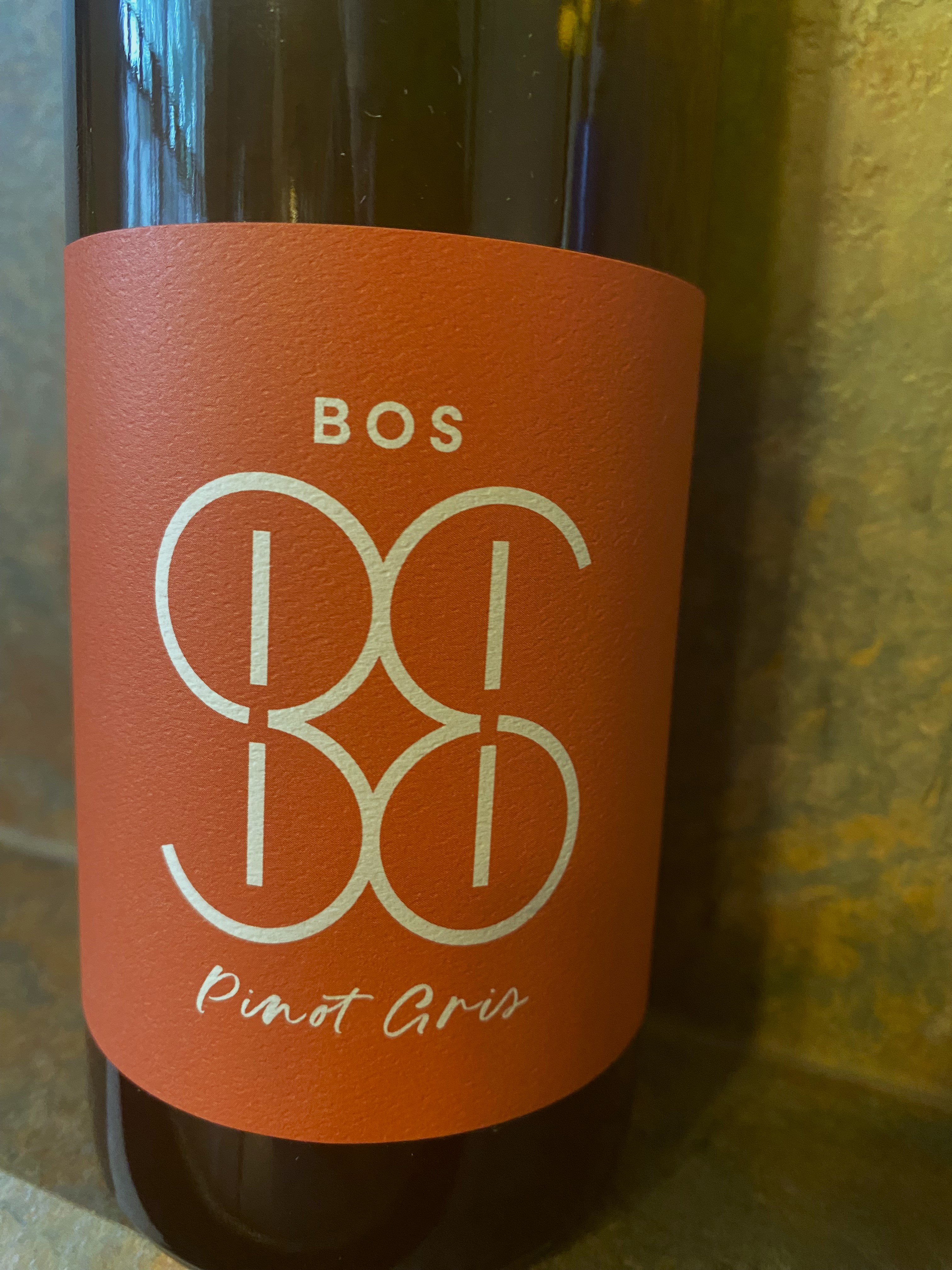
Then I pulled the Bos Wine Pinot Grigio Old Mission Peninsula 2021.  The year of 2021 was warm throughout the growing season, which was a highlight for Pinot Gris.  This varietal is an early ripening grape and is well suited for the potentially iffy Northern Michigan climate and growing season.  The wine underwent Initial Fermentation and then aged with extended lees contact in Stainless Steel barrels.  This allowed the wine to acquire some additional lushness and according to the notes the wine is drinking beautifully with tasting notes of “honey and apricot.”

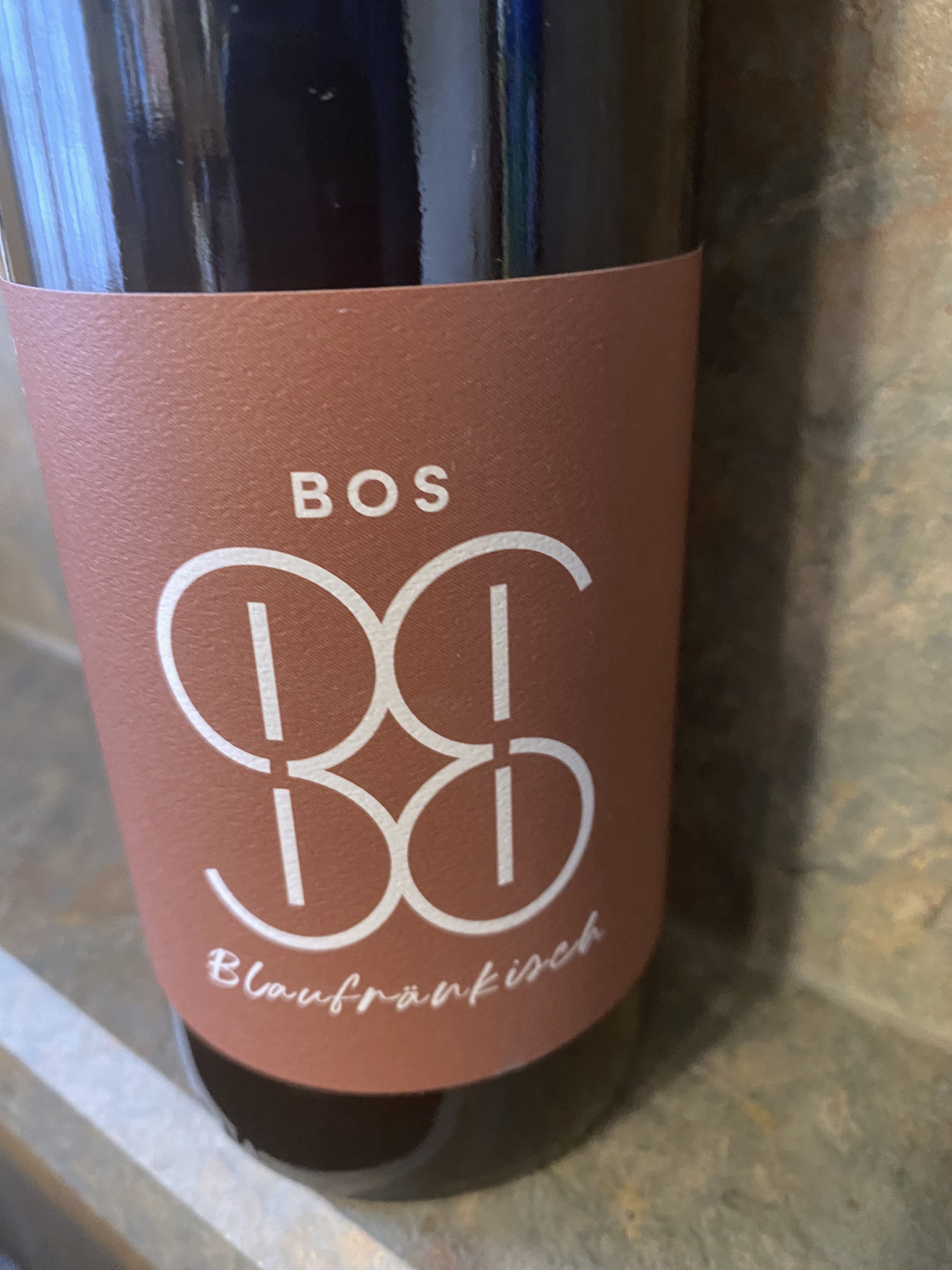
The third wine out of the carton was Bos Blaufrankisch Old Mission Peninsula 2022.  The fruit for this wine came from Vineyard 15 on Old Mission Peninsula and sits on the north end facing the bay with sandy loam limestone soil.  The fruit was harvested quickly after long rains in order to preserve the natural acidity, by not allowing the fruit time to soak up the excess water from the rains.  The wine underwent Initial Fermentation with wild yeast and aged for eight months in used barrels to add some structure to this grape.  The winery suggests that this wine could be enjoyed immediately or allowed several years in the cellar, and the tasting notes mention “allspice and rhubarb.”

Posted in Wine | Tagged , , , , , , , | Leave a comment

The End of the Meal and Tasting at Vertical Detroit

As the courses were finishing, and all great things come to an end, the food and the wines were truly enjoyable at Vertical Detroit, and sponsored by the Fine Wine Source of Livonia, Michigan.  The wines were all from Chateau Gaby and their umbrella group Vignobles Sullivan, and under the watchful eye of Damien Landouar, the winemaker and Directeur General.  We were going into the Third Course of the tasting menu and it was one of my favorite dishes of Braised Short Ribs with Robuchon Potatoes, Roasted Carrots, and a Demi-Glace.

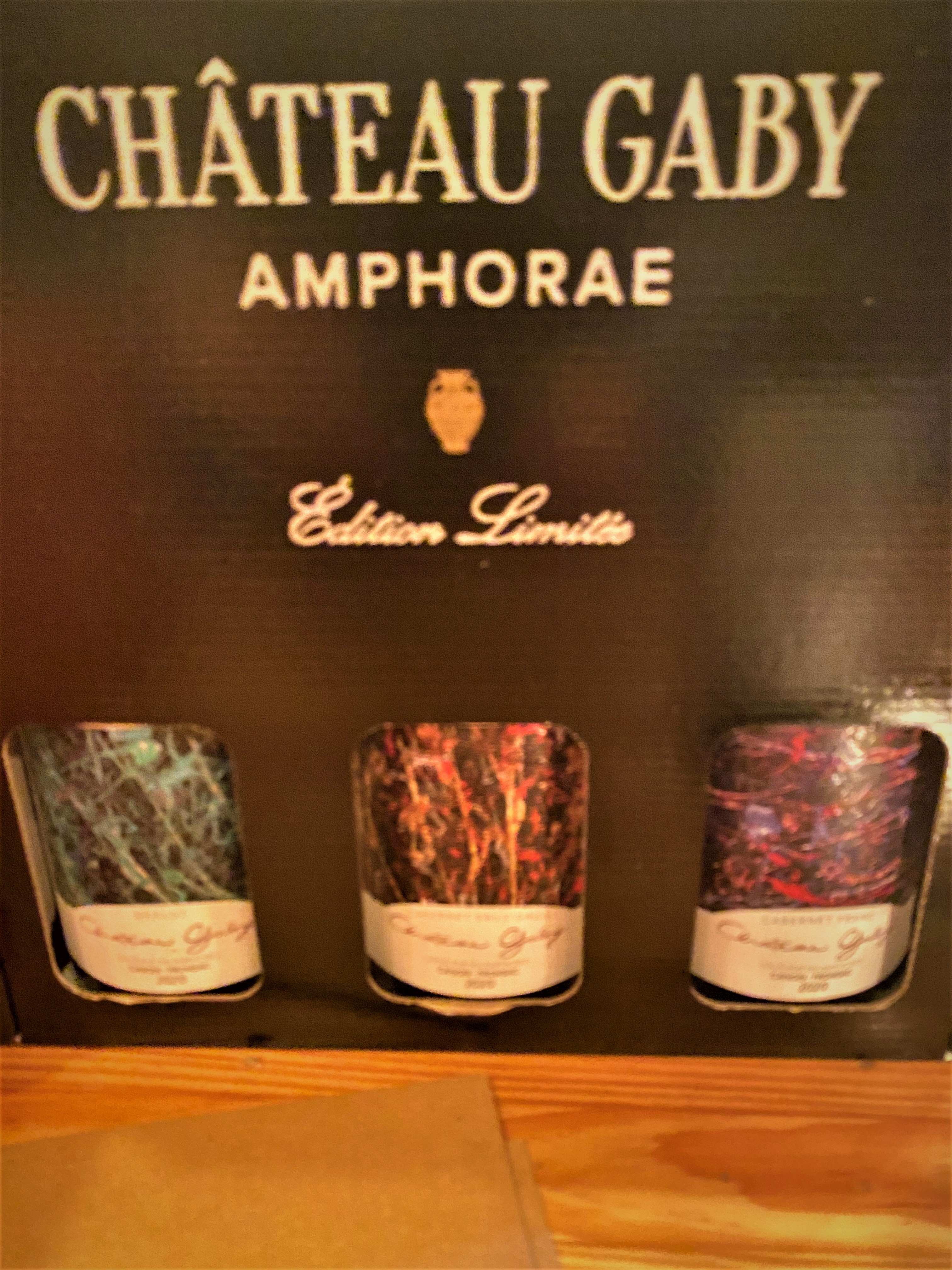
There were three wines that were being served with the Third Course of the meal.  We were being served: Chateau Gaby “Special Edition” Amphorae Cabernet Franc 2020, “Special Edition” Amphorae Cabernet Sauvignon 2020 and “Special Edition” Amphorae Merlot 2020.  All three wines were being offered in a boxed set of three.  This limited edition of wines all came from micro sections of the limestone hillsides of Chateau Gaby, to best feature the terroir of the estate.  The vintage year started with a mild winter, a chaotic spring of harsh weather and a very hot summer.  The vintage ended up so perfect, that the grapes were hand-harvested fifteen days earlier compared to their traditional time.  The three varietals for this collection were vinified separately in wooden vats, with Initial Fermentation and Maceration for one month and additional extractions were done by “punching down” the juice in the vats.  The wine was then transferred to the Amphorae jars for twelve months of aging. The Amphorae jars were Italian sandstone, and were chosen, because traditional terracotta jars are more porous and the stoneware would diminish the oxidation of the wines. There were six-hundred-fifty bottles of each wine made.  The Cabernet Franc had a ruby color and offered notes of black currants and violets.  On the palate the tones of black currants and raspberries were prominent along with silky tannins, and a good medium count finish of chalky terroir.  The Cabernet Sauvignon was a deep garnet color that offered notes of black currants, cedar, and white florals.  On the palate this wine was big, fruit forward with fine tannins and a medium count of chalky terroir.  The Merlot was a deep garnet color and offered notes of strawberry and raspberry.  On the palate the tones of red fruits and silk tannins blended seamlessly and finished with a nice medium count of fruit and chalky terroir.  Of the three “Special Editions” the Merlot were the bottles that found space in our cellar.

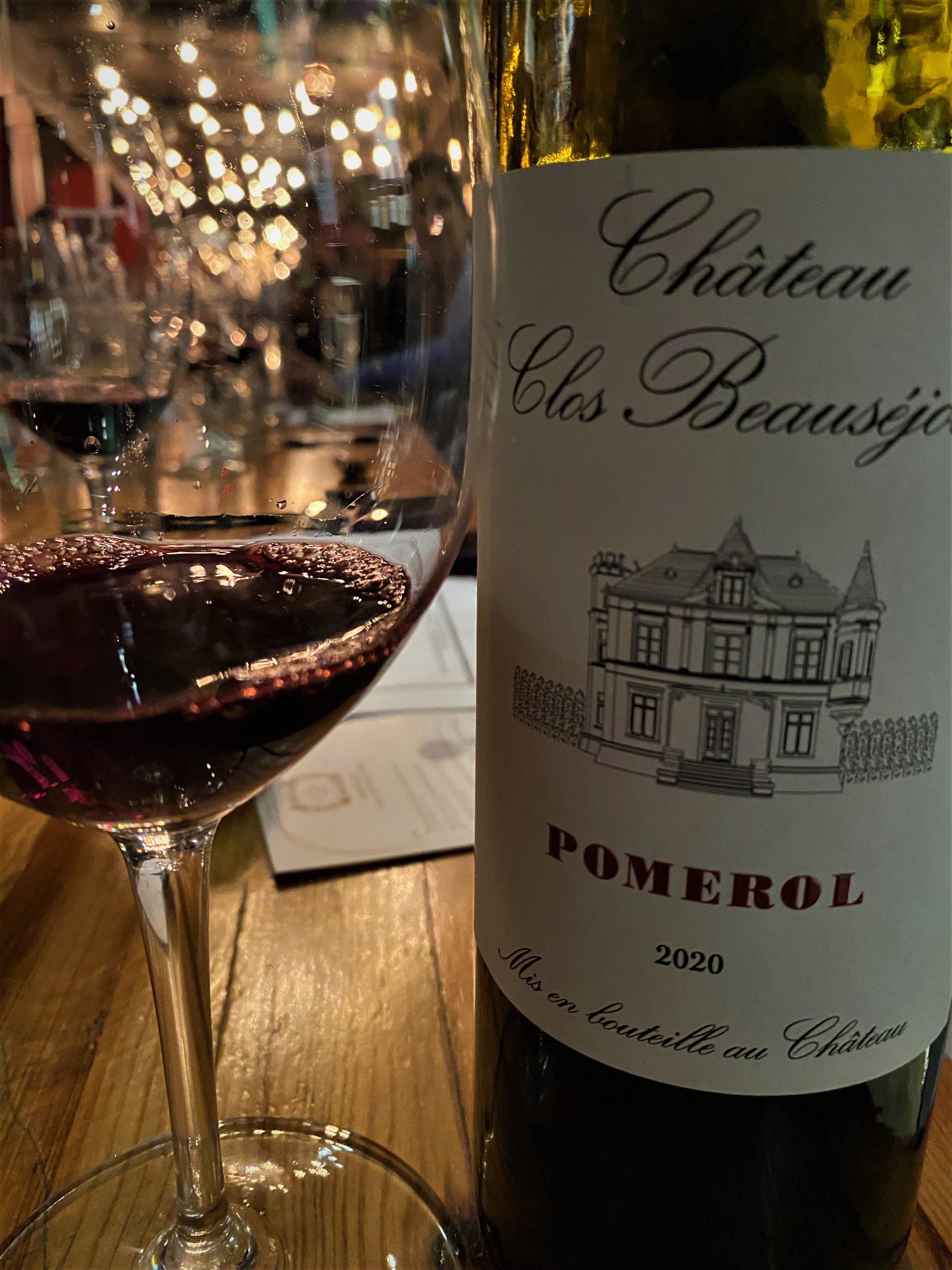
For the Dessert Course was a Cocoa Crème Brulee with homemade Marshmallow and “Snickerdoodle” cookie.  My Bride was quick to announce that she has found a replacement favorite for her esteemed Chocolate Crème Brulee and one that is much more accessible.  The wine that was being paired with dessert, was creating quite a stir, as I had a chance to talk with the importers, before the evening started, while we were in the bar.  This was the official debut of Chateau Clos Beausejour Pomerol 2020 in North America.  Chateau Clos Beausejour is also part of Vignobles Sullivan and under the guidance of winemaker Damien Landouar.  The estate is one of the smallest vineyards in Pomerol and is on clay and sandy terrain.  The wine is a blend of Merlot and Cabernet Franc.  Initial Fermentation and Maceration is done in Stainless Steel vats for about a month.  The wine is aged in oak for about twelve months and one-hundred-sixty-three cases were made.  A nice garnet colored wine that offered notes of red cherries, plums, and spices.  On the palate the tones of red fruit were rich and enticing with silky tannins with a nice long count finish that featured some mocha blending in with the terroir.  A delightful way to end the evening.

It also gave me a great reason to go the Fine Wine Source twice afterwards, just to pick up all the wine that we selected from the evening.  Now, all I need is to find some room, though it is convenient that Chateau Gaby created some custom carrying straps to attach to their wooden cases for ease of lifting, and this Raconteur appreciates this assistance taking the cases out of the car and into the cellar.                      

Posted in Dining, Wine | Tagged , , , , , , , , , , , | Leave a comment