An Araujo and Two from Musar

It really is a joy when I walk into my local wine shop, The Fine Wine Source in Livonia, Michigan, as I never know what I may encounter.  Sometimes it can be very eclectic and from two totally distinct areas of the world.
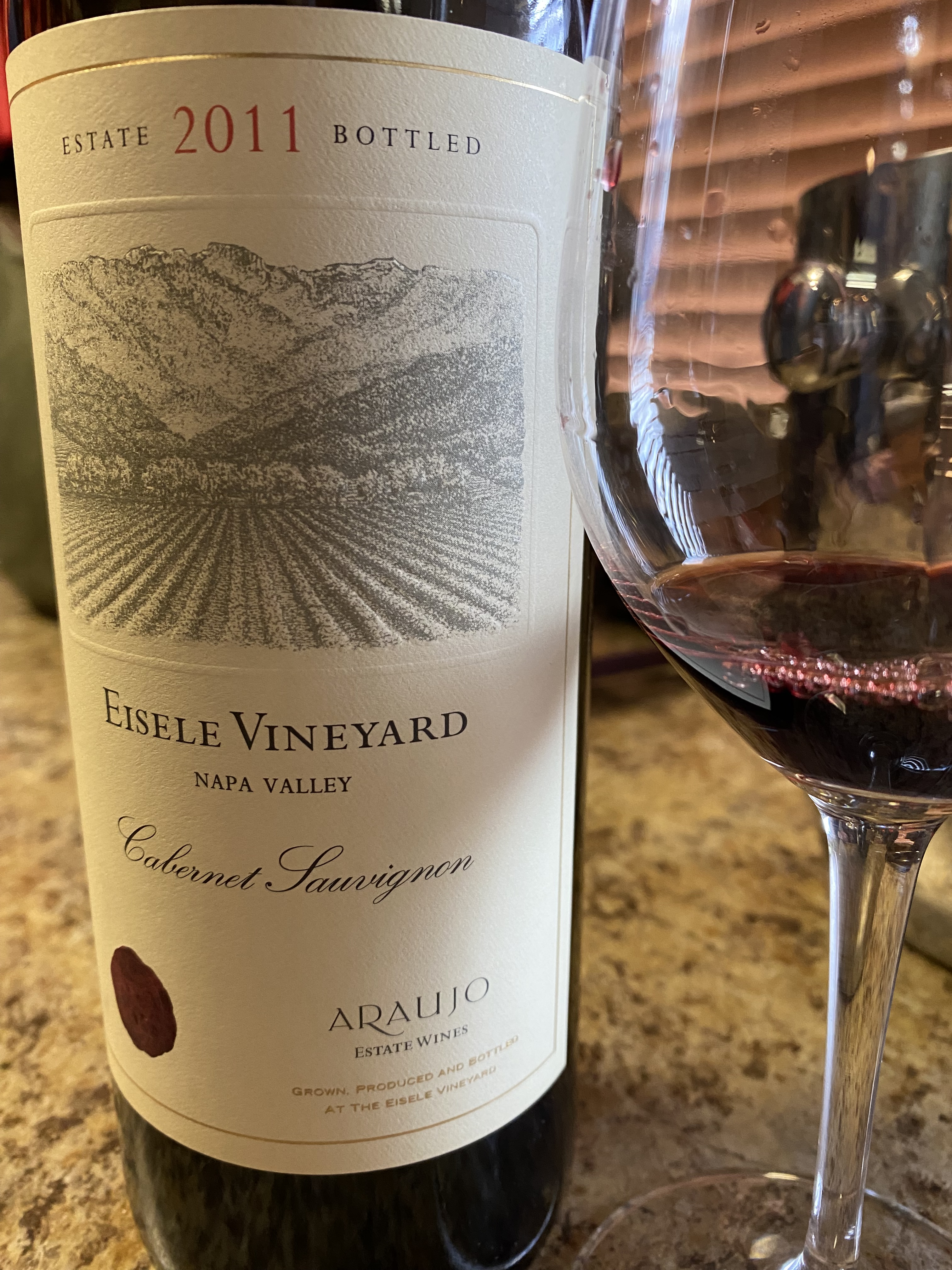
The first wine of this tasting was an Eisele Vineyard “Araujo” Cabernet Sauvignon Napa Valley 2011.  Eisele Vineyard Estate went to Araujo Estate and then back again.  Eisele Vineyard is thirty-eight acres located on an old alluvial fan, near the northern end of Napa Valle, and east of Calistoga, and ground water is very deep underground, on this rocky soil that produces small berries on vines that have very deep roots.  The grounds were originally planted in the 1880s to Zinfandel and Riesling, and the first Cabernet Sauvignon vines were planted in 1964.  The modern history of this famed vineyard begins with the first vintage of Eisele Vineyards in 1971, by Milton and Barbara Eisele became the stewards of the land and winemakers in their retirement years.  The first vintage was overseen by Paul Draper of Ridge Vineyards and it was one of the original vineyard-designated wines in California and there are a few fortunate people that are still enjoying that initial vintage to this day, as it is considered a hallmark in Napa Valley.  The second vintage was produced by Conn Creek Winery in 1974 and continued to 1991 under the aegis of Joseph Phelps.  The 1991 vintage had two bottlings, the second being the first Estate Cabernet Sauvignon.  In 1990 Daphne and Bart Araujo bought the land and the start of the Araujo Estate years which lasted for twenty-three years and they were one of the first to embrace biodynamic farming.  They also constructed the first winery on site with temperature-controlled caves; a barn-like structure built into the hillside..  In 2013, the property was purchased by the Pinault family’s Groupe Artemis which has several prominent estates including Chateau Latour.  Grapes are sorted and transferred without pumping to stainless steel or concrete fermenters. Individual lots are aged in French oak barrels before the final blends are assembled.  This wine is ninety-eight percent Cabernet Sauvignon and two percent Cabernet Franc.  The harvesting by hand entailed several pickings to ensure total ripeness, and they still had secondary sorting of this vintage which required the hiring of an additional fifty trained workers picking cluster by cluster. Fermentation in small tanks, and then the wine was aged in new French Oak for nineteen months.  The Eisel Vineyard pedigree was apparent, but the work of the Araujo family was also acknowledged.  This deep garnet wine offered notes of big black fruit, vanilla, and purple florals.  On the palate tones of rich and elegant black fruit melting and blending beautifully with luscious tannins that were just hitting their stride at the age of twelve, and a long lingering finish of fruit and terroir.  This wine is still so big and rich, that I think easily another ten or more years and it still would not hit its height. 
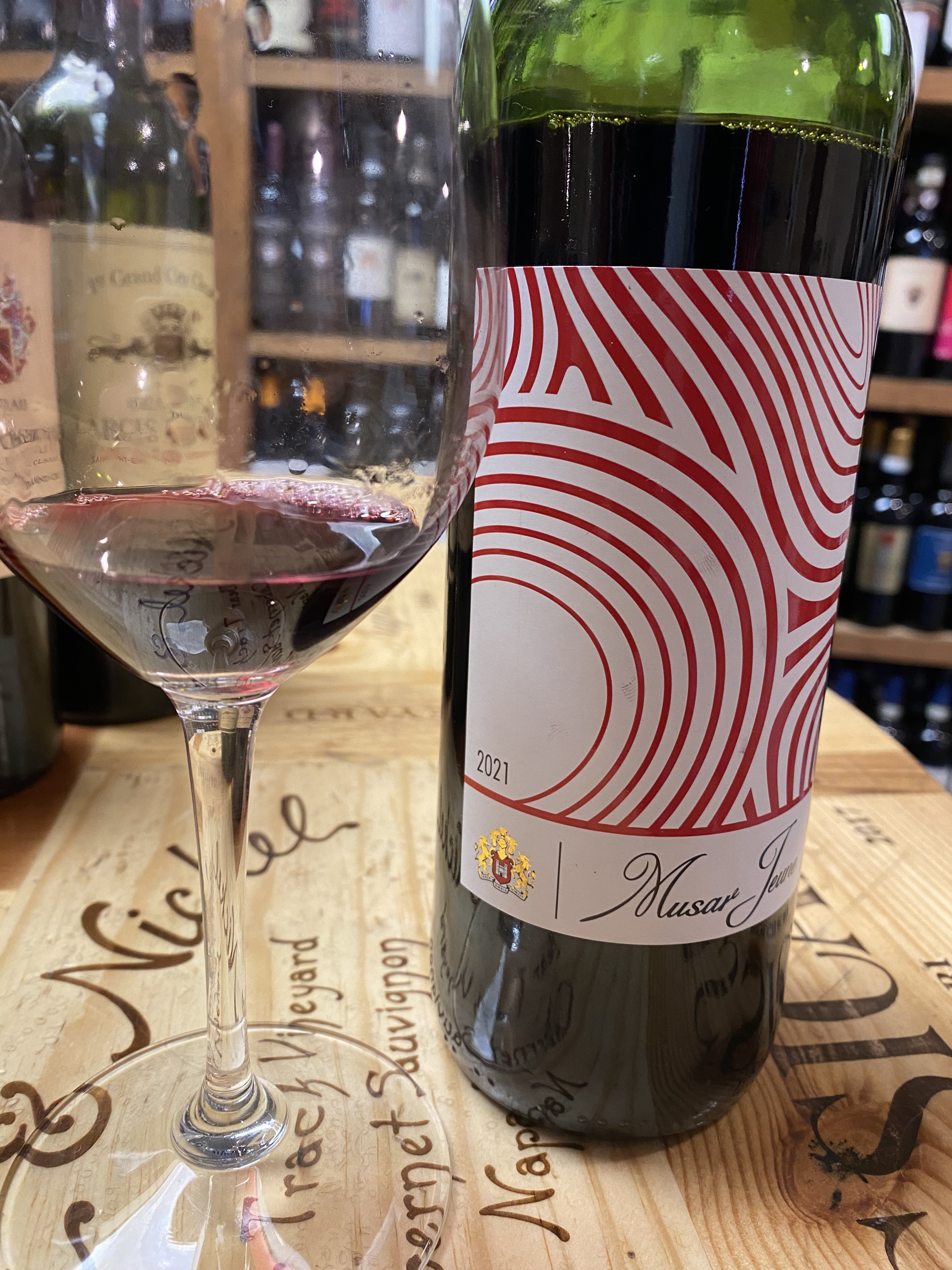
The following two wines that we had were from Chateau Musar, the first being Chateau Musar “Musar Jeune” Red Bekaa Valley, Lebanon 2021.  The Bekaa Valley (Beqaa Valley) is the center of the wine trade, as it accounts for ninety percent and it is also the center for Arak, the lovely, but potentially lethal anise flavored liquor that is the favored drink in the country.  The oldest winery there is Chateau Ksara, which was established by the Jesuits in 1857 with plants brought over from the French colony of Algeria.  Chateau Musar was founded in 1930 by Gaston Hochar and may be the most famous Lebanese winery on the international scene.  Gaston Hochar developed his winery after traveling in Bordeaux.  In 1959, Hochar’s son Serge took control of the vineyards, having returned from Bordeaux where he was studying enology.  The vineyard suffered during the Lebanese Civil War (two vintages were lost or damaged), and Hochar began to look beyond the domestic market.  The wine began to gain recognition after Michael Broadbent MW wrote about them in Decanter magazine in 1979 and by the time the war ended in 1990, just a tiny fraction of Chateau Musar was sold locally.  Musar Jeune is their entry level range and offered as red, white and a rosé.  This wine was first produced in 2007, unoaked, full of fruit, using youthful vines, to meet the demand for “current drinking.” The wine is a blend of fifty percent Cinsault, thirty-five percent Syrah and fifteen percent Cabernet Sauvignon; from vines planted since 2000 at around 1,000m above sea level.  The wine is fermented in cement-lined bats and bottle a year after harvest and released one year later.  A dark inky-black/purple wine that offers notes of red fruits and plums.  On the palate a silky currant, raspberry and cherry jam flavor with soft tannins and a finish offering some spices.
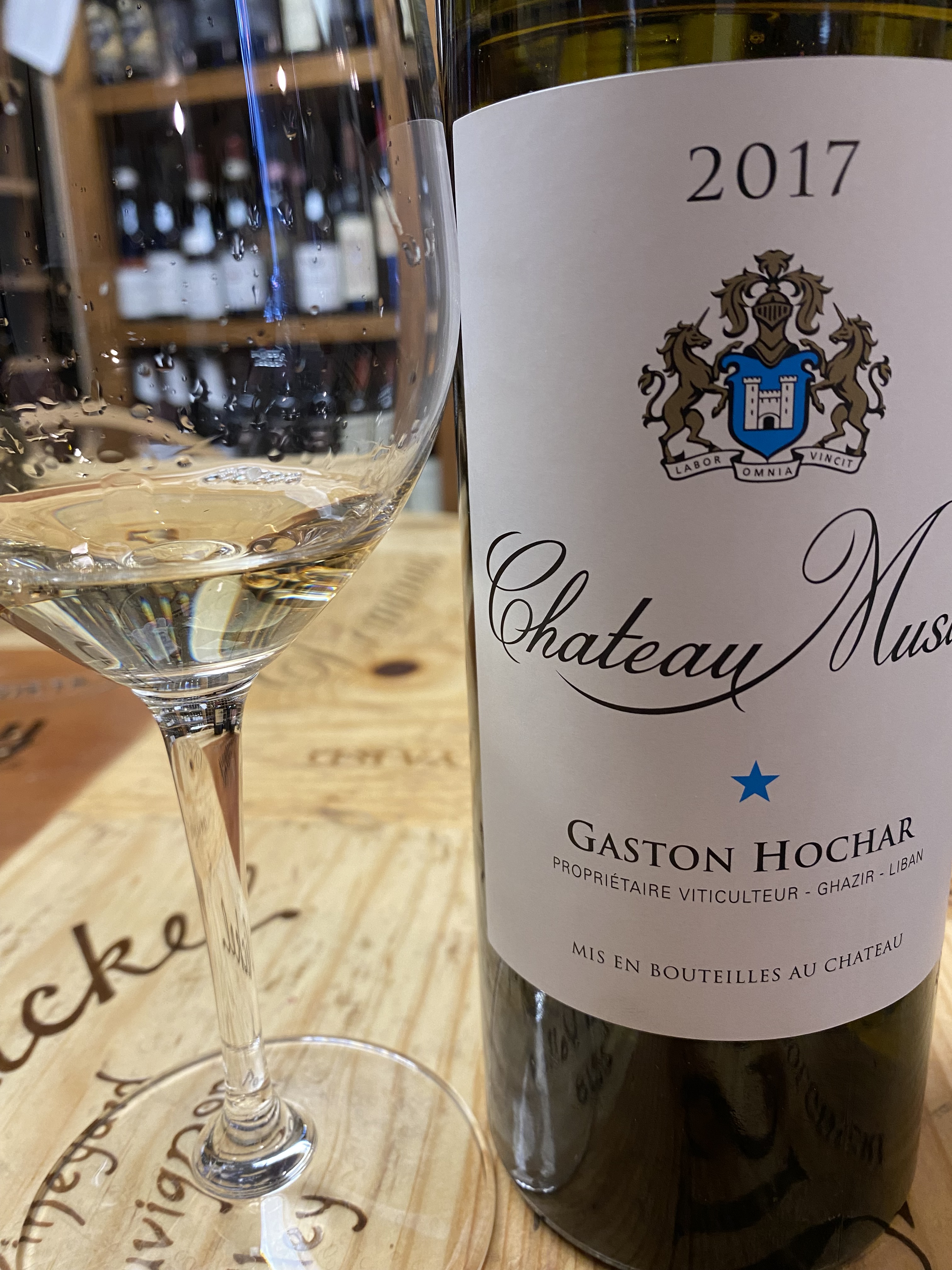
The second wine from this producer was their Chateau Musar Bekaa Valley, Lebanon 2017 continues to be made in their traditional manner, which requires seven years before it sees the light of day in a retail environment. The wine is a blend of Cabernet Sauvignon, Carignan and Cinsault (and this particular vintage the blend was equal for all three varietals) from vines planted from 1930 and later, on gravel soil over limestone, with the average age of the vines around forty years.  The different juices undergo a long fermentation with Initial Fermentation using natural yeasts, followed by Malolactic Fermentation in cement vats for about six months after the harvest. The individual juices are then transferred to French Oak for one year of aging.  After about two years from harvest, the individual juices are then blended and placed in cement tanks for another twelve months.  The wine is then bottled and stored in their deep, dark stone cellars on their sides for four years.  The wine is bottled unfiltered and unfined for maximum flavor.  The winery recommends standing the wine up, the night before serving, to allow the wine to settle.  They also recommend the use of prongs for opening bottles older than fifteen years of age and have even created a YouTube page for their instructions. This was a beautiful drinking wine with a nice ruby color and the Cabernet Sauvignon was the prominent wine of note with cherry, mulberry, and plums, and plenty of spices with cloves, cinnamon, vanilla, tea, and licorice.  With the extended years of production, the tannins were softened and fully integrated; the wine had a very nice long count in the finish with fruit and spices.  Totally drinkable now, or wait another ten or more years and I think the flavors will be totally layered.
Posted in Wine | Tagged , , , , , , , , , , , , , , | 2 Comments

A Great Threesome

I was at The Fine Wine Source in Livonia, Michigan picking up my monthly club selections and I was invited to try three wines proffered by a wine salesman who was trying to sell the wines to either the store, their restaurant or both.  Three Napa Valley Cabernet Sauvignon wines, a great way to start the day.   

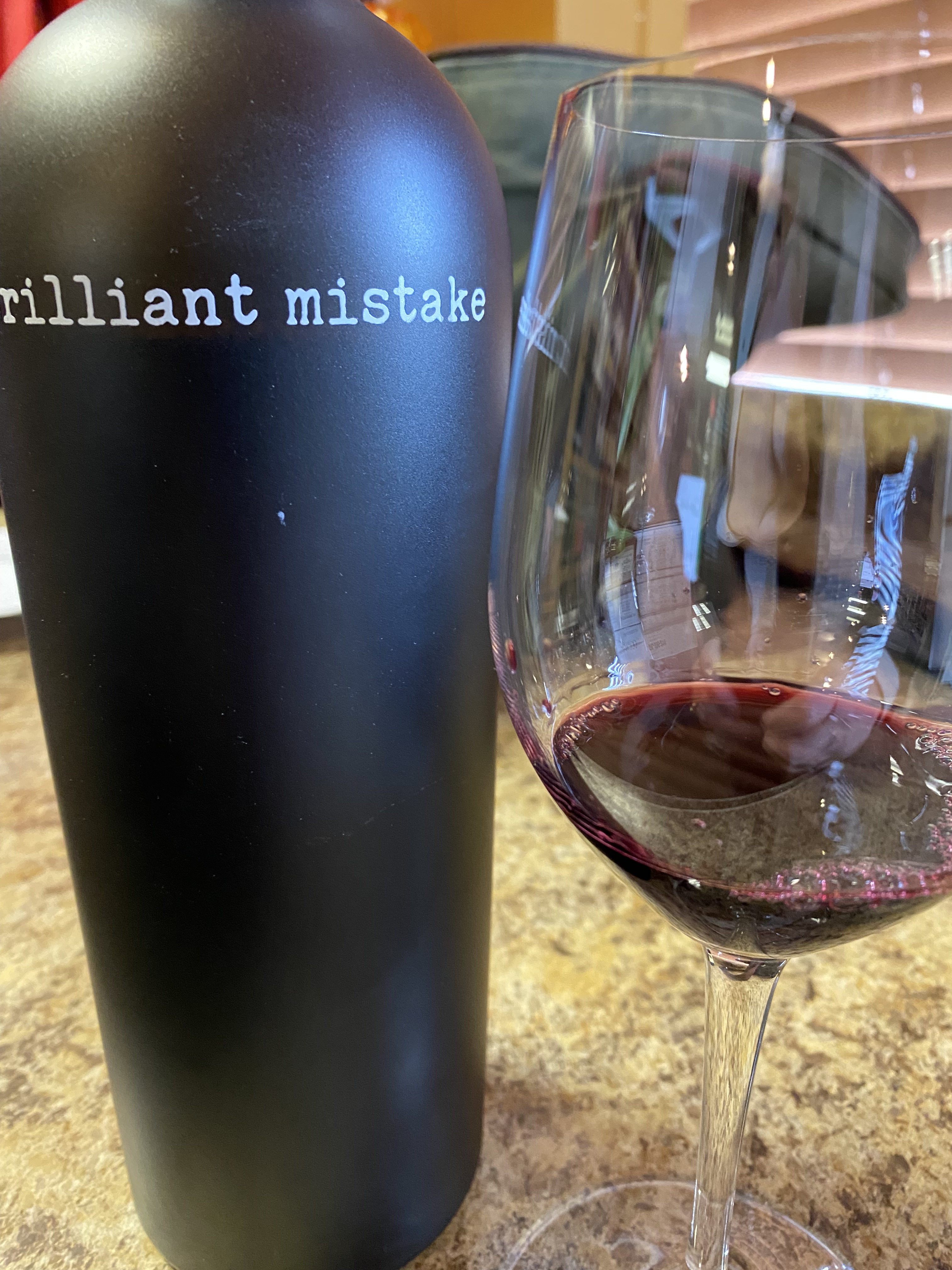
The first wine was Brilliant Mistake Cabernet Sauvignon Napa 2021 in a black bottle that comes from Italy.  John and Stacy Reinert are the founders and proprietors of Brilliant Mistake who came from different backgrounds, but came up with a wine that became a hit in 2014 with fifty-five cases of wine.  They have as their winemaker Maayan Koschitzky, who worked at other cult wineries like Screaming Eagle and Dalle Valle.  There are no production notes, as everything I guess is proprietary.  The 2021 vintage provided them with small yields of high-quality pure Cabernet Sauvignon from their sourced vineyards in Rutherford and Oakville.  The vines took advantage of longer hang times and thinner canopies. A deep garnet/ purple colored wine that offered notes of black fruits, cassis, spices, lead pencil shavings and florals.  On the palate tones of black cherry, cassis, vanilla, and fine-grained tannins finishing with a long finish of fruit and terroir.  This was a big and chewy powerhouse, a truly elegant wine that just stunned me with its majesty and unfortunately, it was the first wine that I tasted, so the other wines didn’t have a chance.  I don’t usually talk prices, but from my conversations, this wine is totally underpriced for the category that it is in, and in blind tastings, this wine would could keep the professionals guessing.  This wine was amazing, as it was jostled in a winemaker’s satchel and poured with a Coravin system, right from the bottle.  With some cellar time, short or extended, and then decanted everyone tasting it, would be in heaven.

The second wine that I had courtesy of the wine salesman was Castiel Estate Cabernet Sauvignon Howell Mountain 2019.  Dave and Kathleen DiCesaris are the owners of Castiel Estate and the eighty-eight acres on Howell Mountain overlooking St. Helena.  While there is no “Howell Mountain” it is named after a small township and it was the first Napa Valley sub-region to get its AVA in 1984.  To be part of appellation, the vineyards must be planted from 1,400 feet to 2,200 feet above sea level.  The first vintage was in 2014 and all harvesting is done manually and requiring several passes to get the fruit at full maturity.  The soil is pumice ash flow and andesite rock.  At the winery, clusters are destemmed, and berries are chosen both by manual and optical sorting methods.  They use four clones of Cabernet Sauvignon that are planted in their own plots.  During fermentation, the wine is left on the skins until complete and then pressed and transferred to French Oak barrels of which sixty-five percent is new.  Each clone was fermented separately and kept apart for the first twelve months.  The wines were then blended and returned to the barrels for an additional eight month.  The wine was then bottled without fining or filtering and five-hundred-twenty cases were produced.  A deep garnet colored wine that offers notes of currants, black cherry, sage, and cloves.  On the palate there were tones of dark fruit and spices, blended with satiny tannins and a nice long finish of black cherry and terroir.

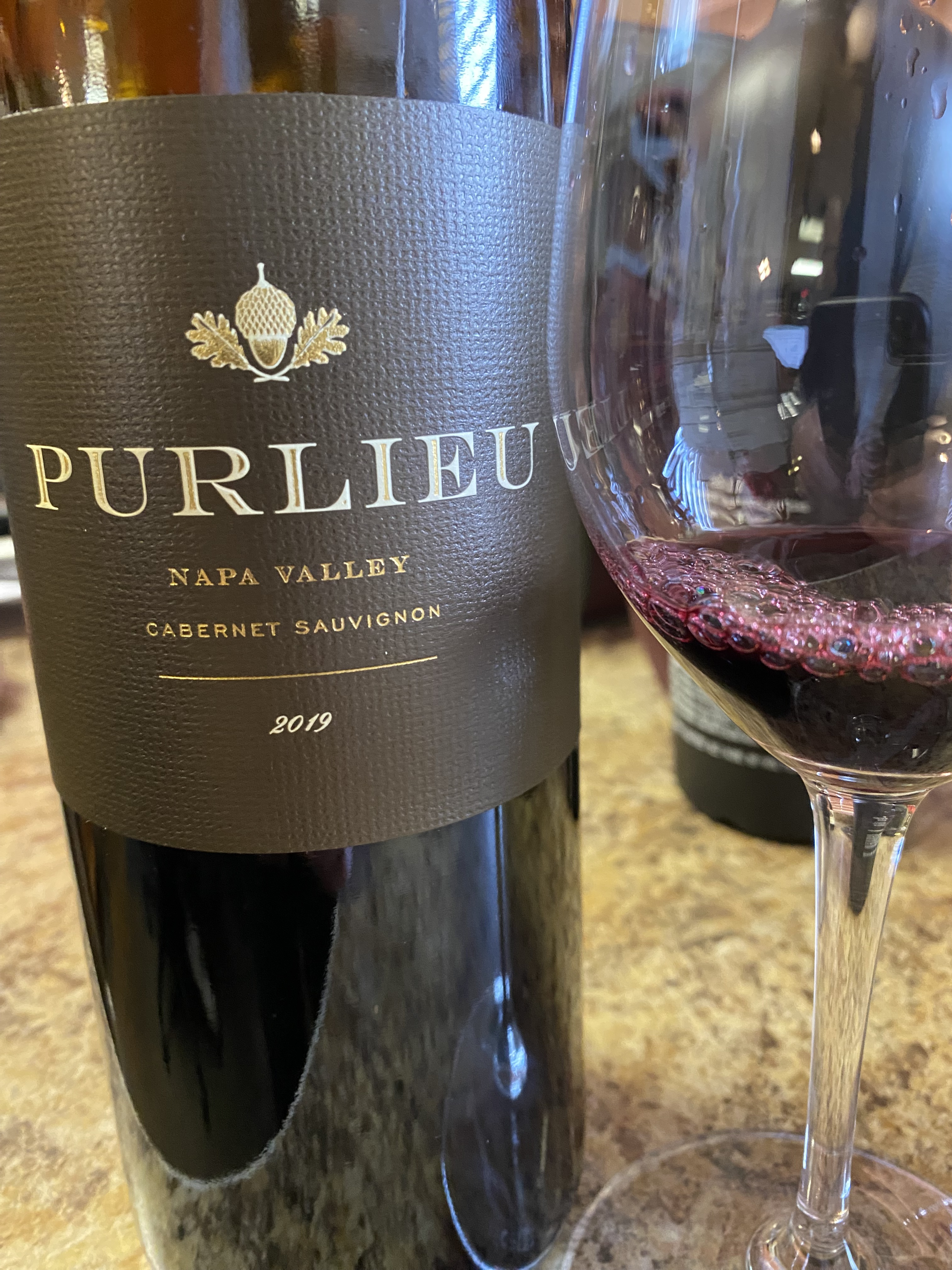
The third wine that I enjoyed from the salesman’s satchel was Purlieu Cabernet Sauvignon Napa Valley 2019.  Purlieu in the literal sense means “the edge of the forest” or “an outlying area.” Symbolically, for the winery it means to explore the outskirts and to navigate the boundaries of what is a Napa Valley Cabernet Sauvignon.  They have contracts with seven different vineyards.  The Teucer Vineyard in Coombsville which is the coolest and longest growing season with its two different soils; one being colluvium deposits and the other being flaky volcanic ash.  To Kalon Vineyard, which some feel should be named a “Grand Cru” is in Oakville with its mostly clay loam.  The Georges III Vineyard in Rutherford.  The Missouri Hopper Vineyard in Oakville, goes back to the 19th Century.  Sugarloaf Vineyard on the rocky slopes of southeaster Napa on dense volcanic rock.  Martinez Vineyard is atop of Pritchard Hill in the Vaca Mountains on soil of iron, red clay, and boulders.  Platt Vineyard on the ridgeline above the Sonoma Coast fog line known for its Goldenridge loam soils from an ancient sea floor.  I couldn’t find any production notes, but there were one-thousand-one-hundred-fifty-four cases of wine produced.  The dark garnet wine offered notes of blueberry, blackberry, and purple florals.  On the palate tones of big blue and red fruits, espresso, vanilla, with soft tannins and a nice medium count finish of berries and a touch of caramel.      

Posted in Wine | Tagged , , , , , , , , , , , , , , , , , | 3 Comments

Fine Wine Source Club Selections for November 2023

I went into The Fine Wine Source in Livonia, Michigan to pick up the November wine club selections.  I always look forward to the choices, because with the myriad of wines that are on the market, I have to trust my local merchant to find something interesting.  Each wine is curated by the owner and his staff, in fact that is the only way a bottle appears on his shelves.  He has no interest in the common wines that are found in gas stations, party stores, drug stores and grocery stores.  In fact, there were two wine salesmen in the shop at the same time along with customers and me.  As the store settled down a bit, a glass was handed to me, to try some of the wines proffered either for his shop, the restaurant or perhaps both establishments.  I gave my two cents on the wines, and it seemed to agree with the others.  More about them at another time.

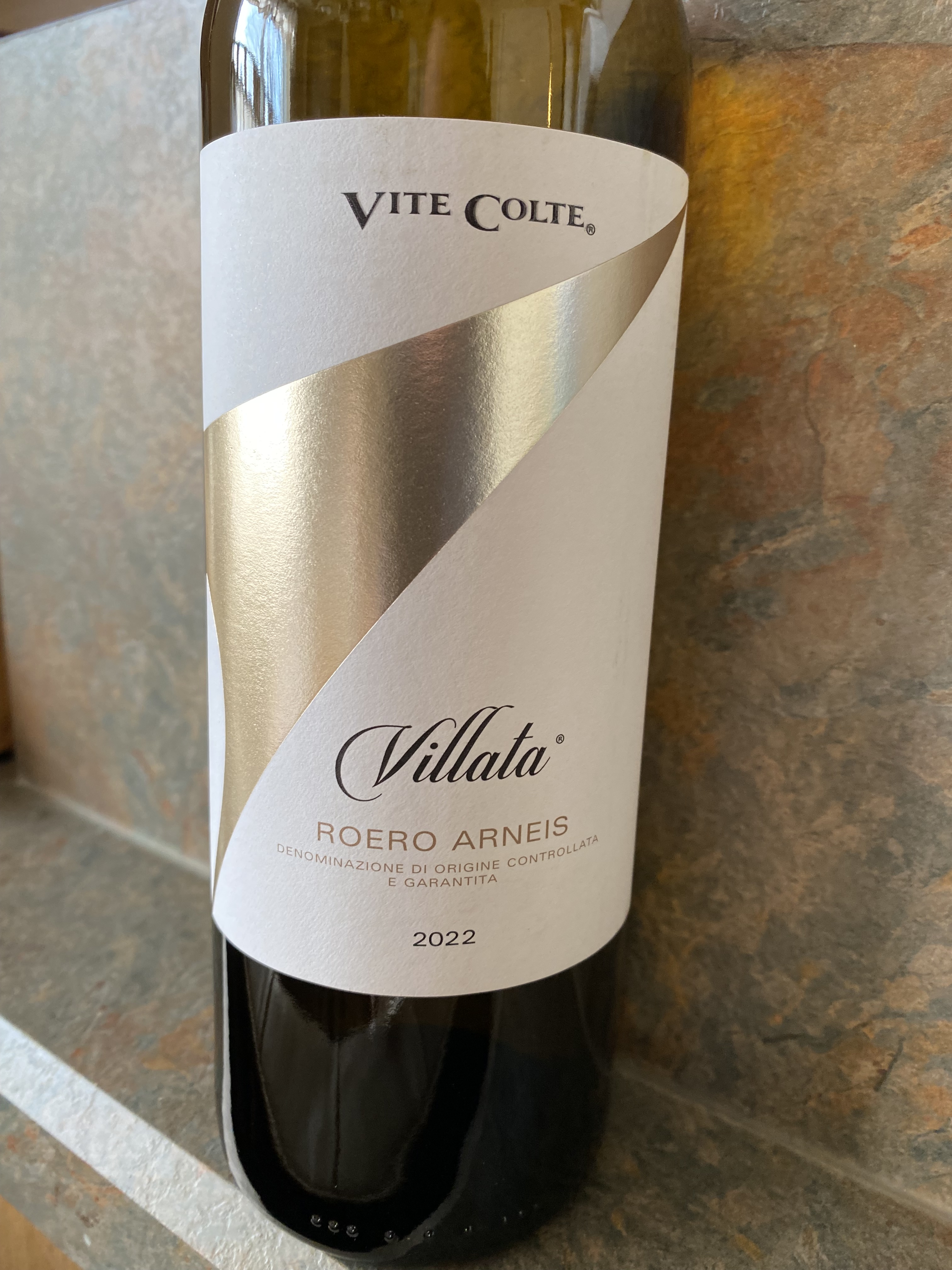
When the club selections are chosen, there is always one from the Old World and one from the New World, and there could be a red and a white, but not necessarily so.  The first wine representing the Old World was Vite Colte “Villata” Roero Arneis DOCG 2023, which is owned by Terre da Vino in the heart of the Piedmont.  Depending on the market this wine can be found either as Vite Colte or as Terre da Vino.  Roero DOCG is a small district in the hills of the Piedmont, known for its refreshing whites made from Arneis, and for their bold red reds made from Nebbiolo. The district is named after the Roero family, who were powerful bankers in the Middle Ages.  The classic Roero Bianco must be at least ninety-five percent Arneis, the other five percent can be any other local white varietal.  They tend to grow the vines on the northern slopes of the hills, while Nebbiolo grows on the southern side on loose soils with a strong presence of silica.  For a while, the grape almost became extinct, as all the interest was in the red wines.  The grape can be difficult to grow and was often grown alongside the Nebbiolo, because its fruit was sweeter and the birds would feed on the white grapes and leave the red grapes alone.  Traditionally a dash of Arneis was added to the Nebbiolo to soften the tannins, similar to how Viognier is used in parts of the Rhone. This wine was made from hand harvested grapes and it undergoes cold maceration and spends ten days on the lees in Stainless Steel.  The wine is a pretty straw color, and the nose offered pears, lime zest, and white florals.  The wine on the palate is very crisp and fresh with the notes of white fruit, a burst of tangerine and a tinge of hazelnut with a touch of minerals, peaches, and honey in the finish.

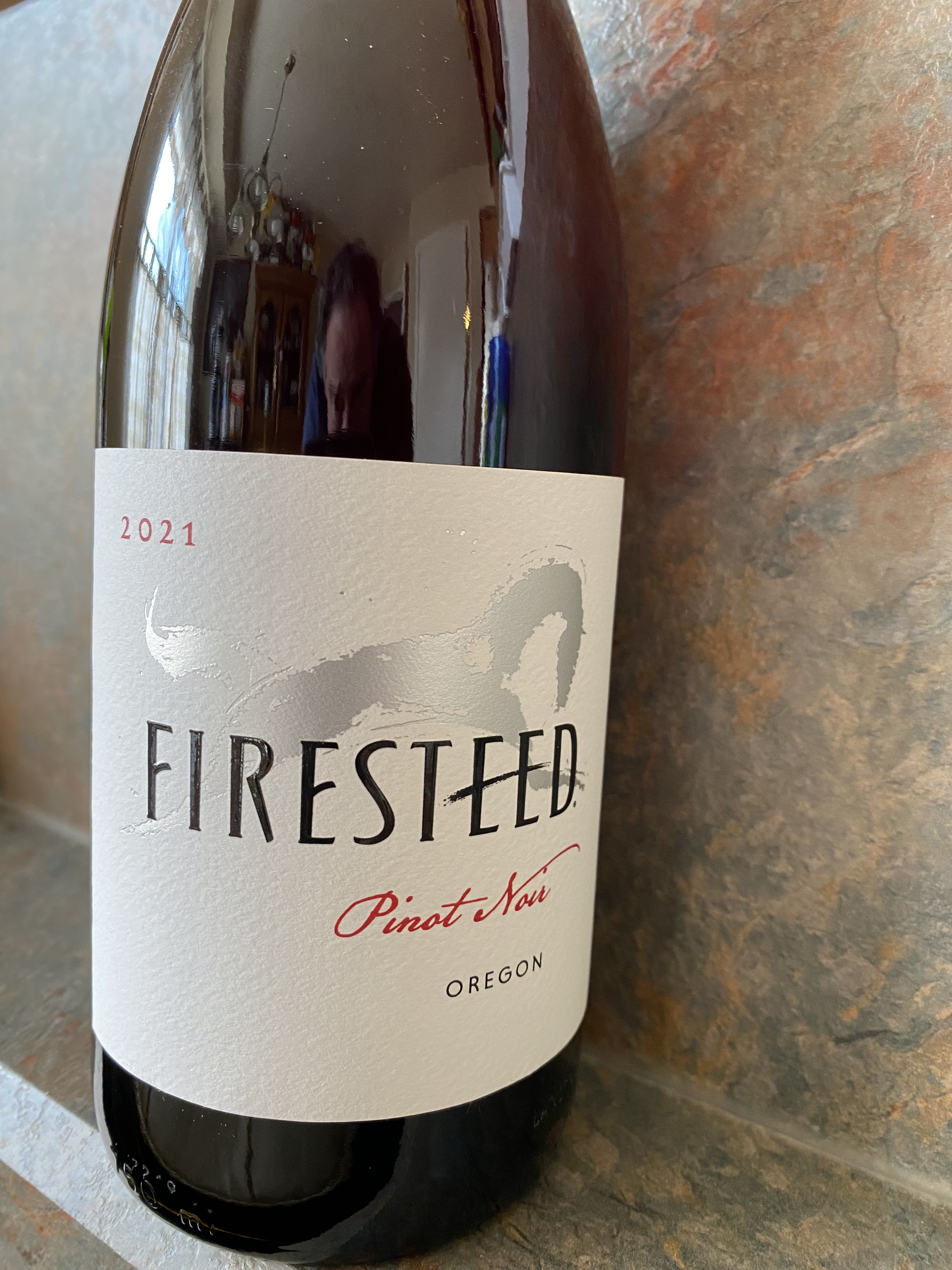
The wine representing the New World is Firesteed Cellars Pinot Noir Oregon 2021.  Oregon appeared on the wine scene in the Sixties and with Pinot Noir has become a great pair.  Firesteed Cellars was founded in 1992 and opened an official tasting room for the winery in 2002 in Rickreall, Oregon. They specialize in Pinot Noir, but they also are known for their Pinot Gris and Riesling; and have begun a series of AVA specific Pinot Noirs as well.  This wine is their basic Pinot Noir with the fruit harvested from different parts of the state.  The 2021 vintage was considered a banner year for Oregon Pinot Noir wines; a cool spring, a hot summer, and then a long cool fall.  The fruit was fermented in deferential treatment to this finicky varietal.  Aging was done in a combination of small French Oak barrels, of which fifteen percent was new and in larger Stainless-Steel tanks.  The wine is describes as being a light ruby red and offering notes of cherry, raspberry, lavender and rose petals.  On the palate tones of “jammy” fruits and soft silky tannins leading to a lingering finish of spice, vanilla, and French Oak.   

Posted in Wine | Tagged , , , , , , , , | Leave a comment

Le Garenne Cremant de Loire

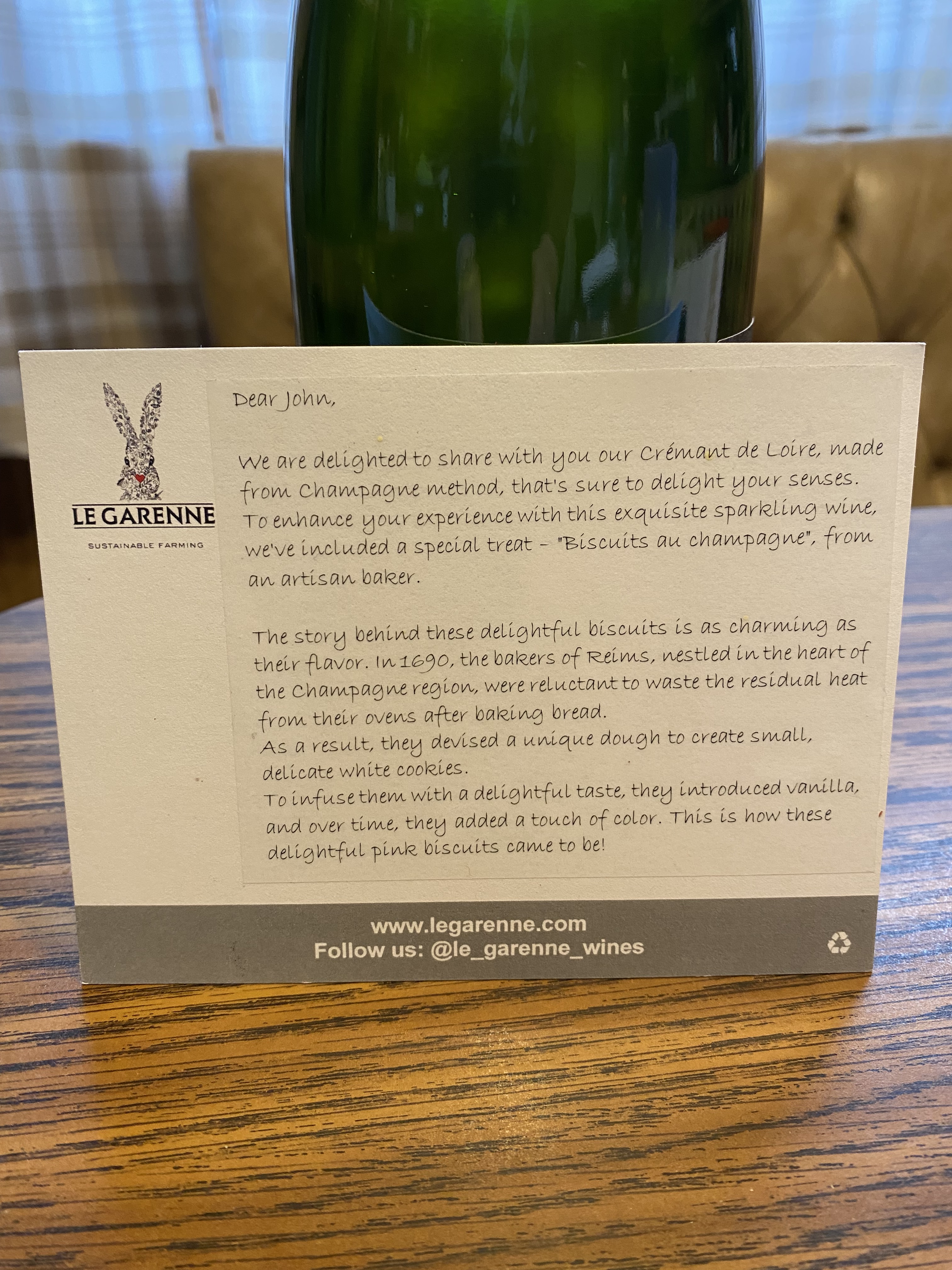
Most people probably think that wine writers are bombarded with samples of wines, that wineries and distributors throw at our feet for a few ounces of ink.  Some writers may solicit wines with promises of rave reviews, I give people every opportunity not to send me wine.  On my front page, I have my statement and belief about getting and reviewing “samples” and I even direct the people to it, to read. Occasionally I encounter a bad bottle of wine, and it could be for a myriad of reasons.  The wine could have been stored improperly (very common years ago), there could be cork issues (occasionally) or it could be a grape or a wine style that I had no appreciation for, or that I wasn’t aware of.  I tend to not write about the wine, because the conceit of my writing is of the moment and how wine enhances that moment.  By complaining or griping about a wine, isn’t really for me, my usual complaint is that I couldn’t find a better wine, because of where we were.  I went through my spiel and Le Garenne Cremant de Loire still decided to send me a bottle and I do think that I need to be up front about it. 

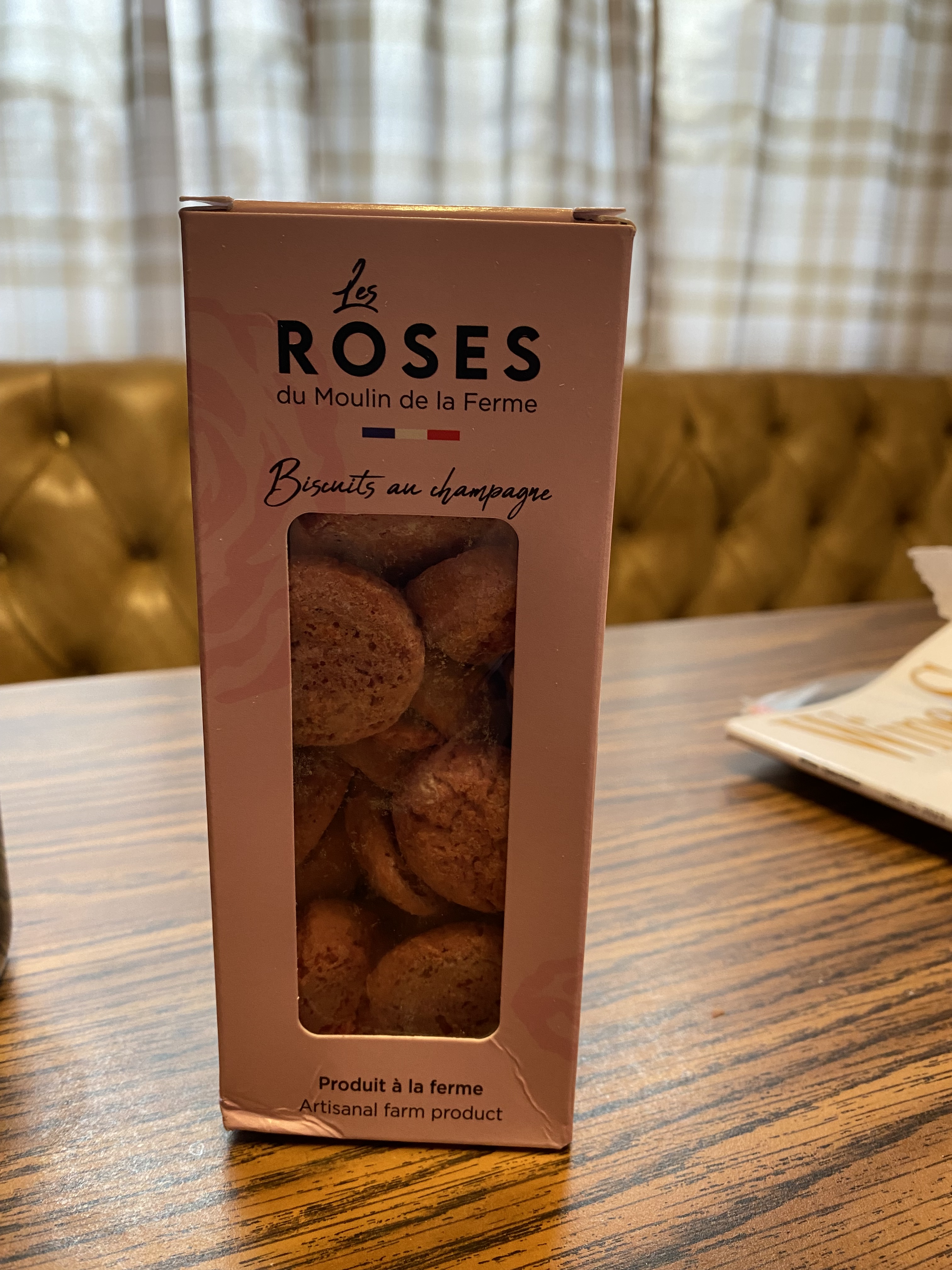
Also in the shipping carton was a box of Les Roses du Moulin de la Ferme Biscuits au Champagne.  In the village of Herpont, in the Marne, back in 1986 Pascal Cotton-Haller took over the family farm and by 1990 he was an advocate of sustainable agriculture, and by 1994, he reduced the use of chemical treatments and fertilizers.  In 2008, he bought his first stone mill, and in 2010 began marketing his first products.  In 2019 he was totally committed to organic farming and in 2021 his son began raising hens on the farm and they now had organic eggs for the production of their biscuits.  In 2023, they began producing shortbread and gingerbread biscuits.  Les Roses, a revival of the pink biscuits of Reims, with a touch of Champagne for a touch of the district.  Very good with the Cremant, crisp, and not too sweet.   

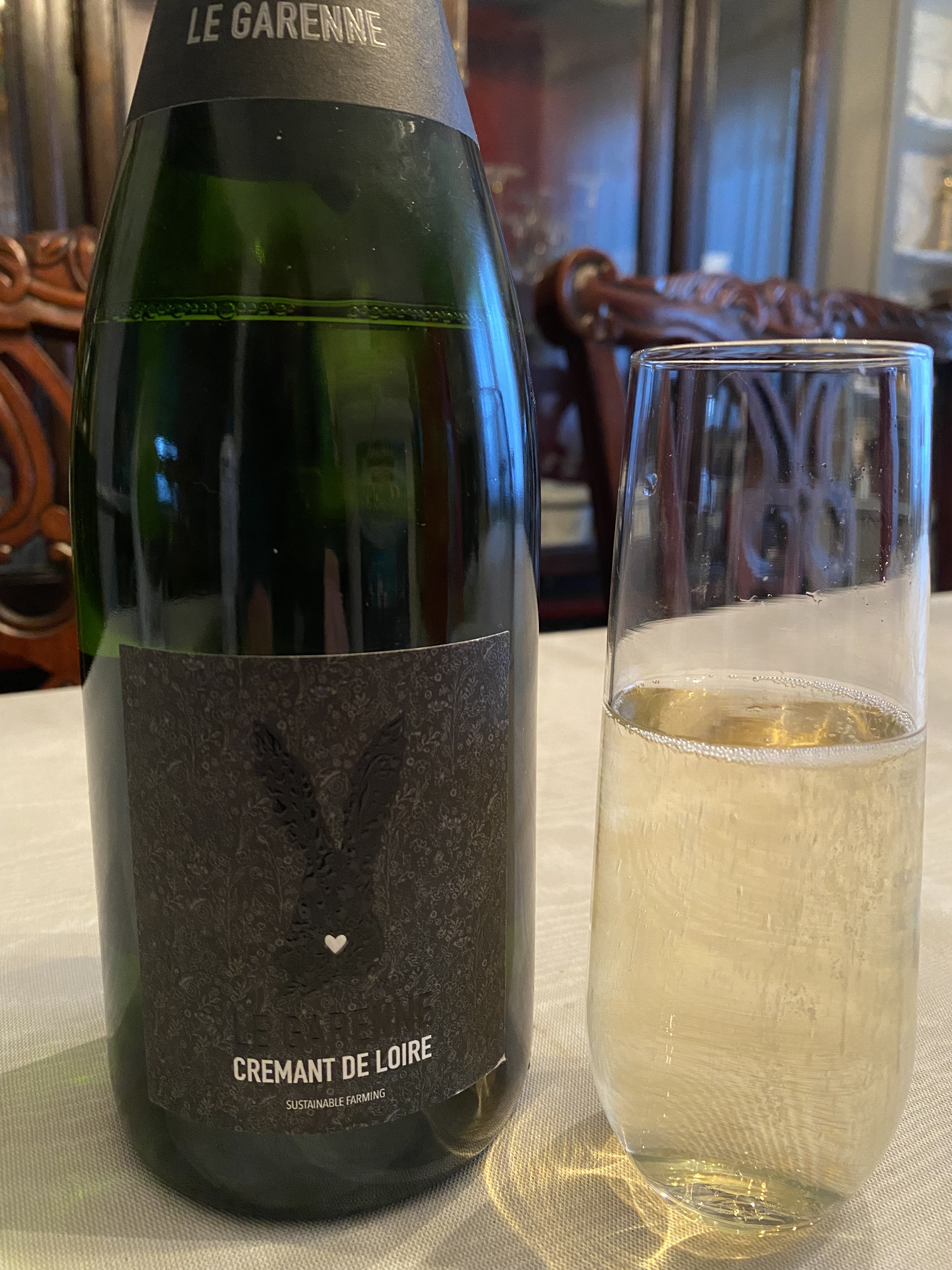
As for the sparkling wine, a bottle of Le Garenne Cremant de Loire NV.  Cremant de Loire is the appellation for sparkling wines from Anjou, Saumur and Touraine, the heartland of the Loire Valley and Chenin Blanc is the principal grape.  They also allow Chardonnay, Pinot Noir, Cabernet Franc, Pineaus d’Aunis, Grolleau Noir, and Cabernet Sauvignon, but not Sauvignon Blanc.  The appellation was introduced in 1975, as an alternative to the wines of Champagne, around the same time the appellations for Cremant de Bourgogne and Cremant d’Alsace were also introduced.  The wine is produced using Methode Traditionelle as opposed to the bulk or tank methods.  The Maison was founded 1859 and is crafted by Meredith Feschotte of the Loire Valley.  Initial Fermentation is done in Stainless Steel using natural yeasts, the wine then spends another nine months in the bottle aging after the second Fermentation.  The wine is a blend of seventy percent Chenin Blanc, twenty percent Chardonnay, and ten percent Cabernet Franc all from plots in Vaudelnay, on the south bank of the Loire, one hundred meters above sea level on Jurassic soil, combining flint and iron oxide. The soft golden wine with good small bubbles offers notes of stone fruit, white florals, honey, and almonds.  On the palate tones of white fruit, citrus, a tinge of honey, and almonds and slightly acidic. 

Posted in Wine | Tagged , , , , , | Leave a comment

Taste Kitchen

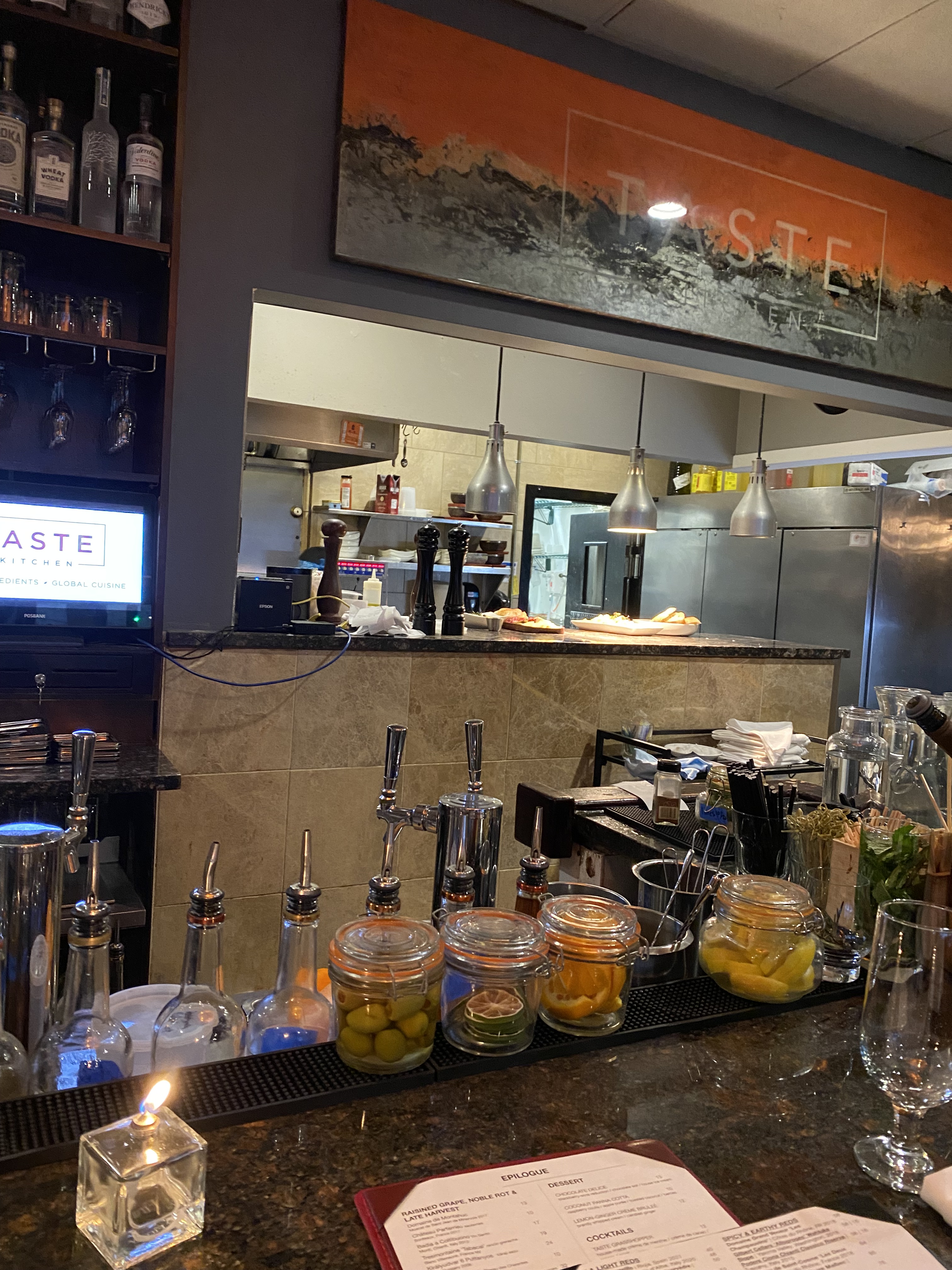
My Bride and I go to Ann Arbor, Michigan often for dinner, but we always are in the same part of the city; as neither of us attended school there.  When we were hunting for a restaurant near the State Theatre, the great search engine along with all of the food sites that can list “Subway” as fine dining showed us restaurants about twenty miles away.  Since, we had an early dinner, because of this, we decided to take a leisurely drive, find a parking spot near the cinema house, and then hopefully find a location to have a Spanish Coffee, the evening drink of choice for my Bride.  Her thinking was that we in a college town, there should be a plethora of watering holes.  There was an abundance of coffee shops, but she couldn’t find someplace for a drink; I guess we are of a different generation, because in our day, we went out for dinner and drinks and if possible, some dancing.  She couldn’t find anything, and she was going to settle for an expensive chain coffee that to me, always tastes bitter.  I told her that she walked by an establishment, and she said, what if they don’t have a bar, and I said that we will worry about that if it occurs.  They had a bar, and they could make a Decaf Spanish Coffee, she was in heaven and that is how we discovered Taste Kitchen.

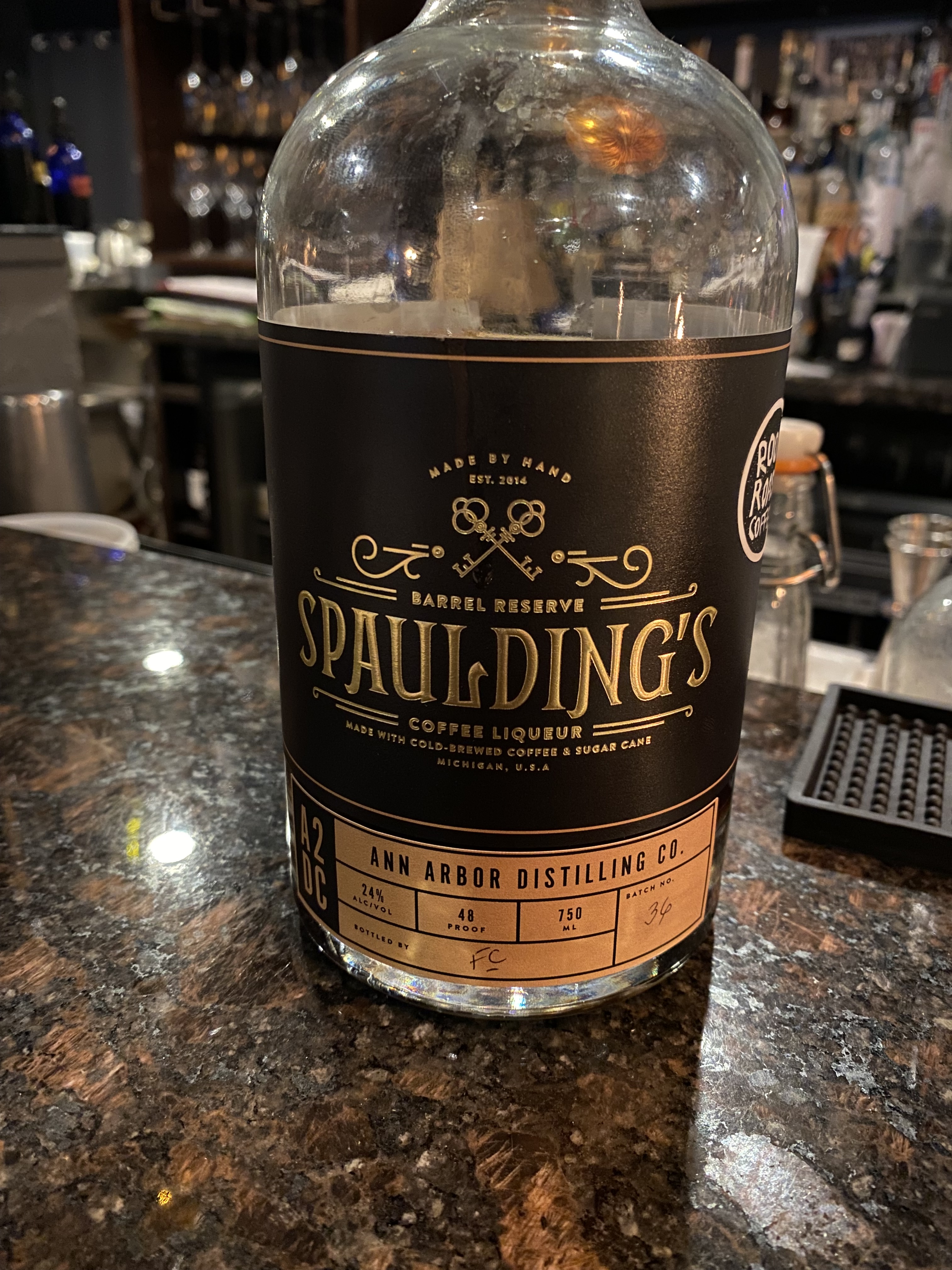
That night they had a Lemon-ginger Crème Brulee that not only sounded delicious, it was and we shared an order; nowadays I really don’t need a full dessert order to make my horizons broader than they are, already.  The Spanish Coffee was so great, that my Bride made the poor bartender get us the name of the coffee and the coffee liqueur that was used in the drink, and both were local brands to Ann Arbor.  Hyperion Coffee Company is located in Ann Arbor and in Ypsilanti, and they do there own roasting and blending.  The other ingredient that the bartender shared with us, was the Barrel Reserve Spaulding’s Coffee Liqueur made from scratch by Ann Arbor Distilling Co., founded in 2014. The liqueur is made from cold-brewed coffee and sugar cane and delivered a taste of roasted coffee, almonds, and creamy vanilla.  I know that in one of our future treks to Ann Arbor, we will be dining at Taste Kitchen, after we buy some fresh roasted coffee and some Spaulding’s.

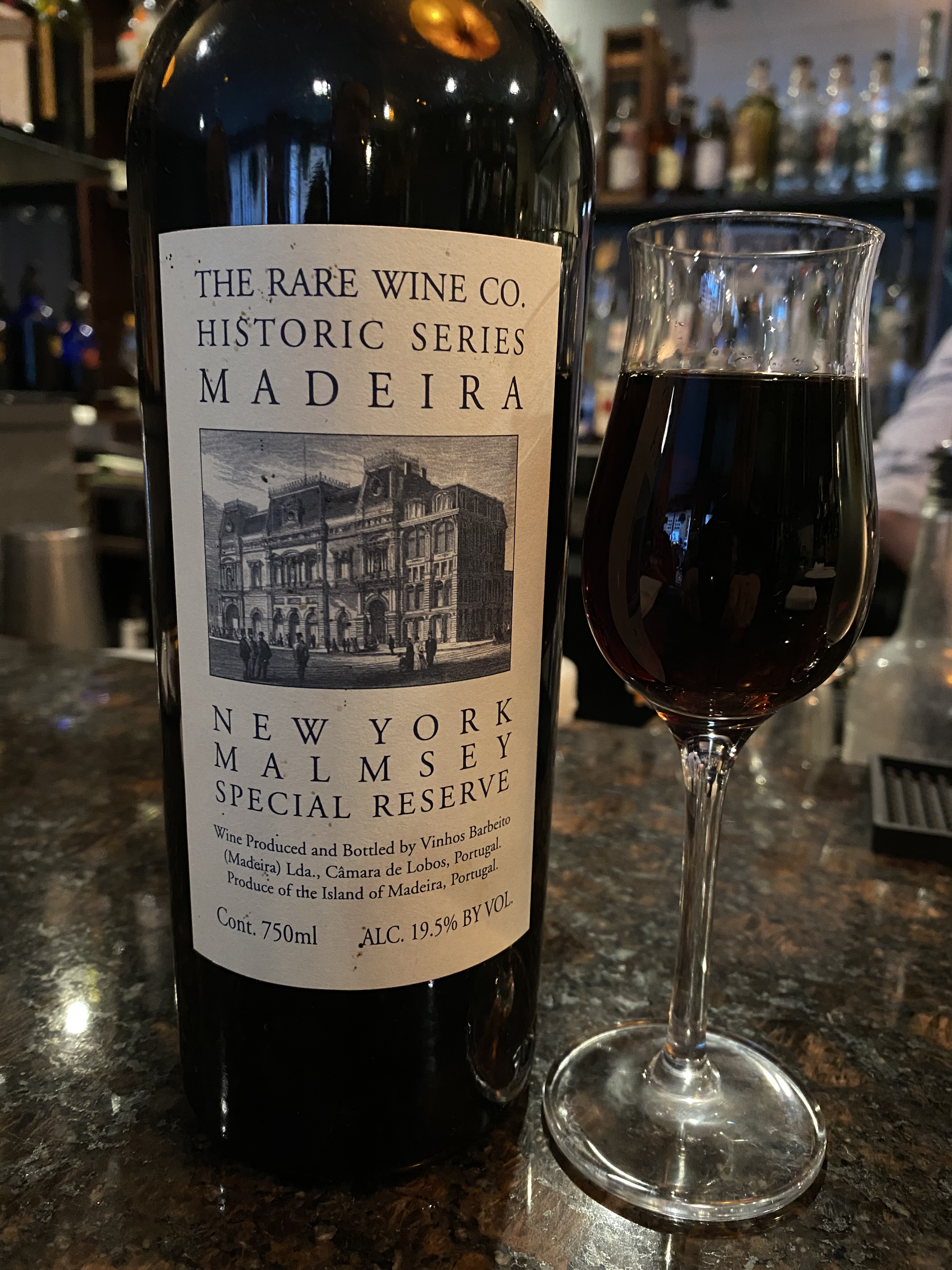
While my Bride was enjoying her Decaf Spanish Coffee with the Lemon-ginger Crème Brulee I had a glass of The Rare Wine Co. Historic Series Madeira New York Malmsey Special Reserve Madeira Malvasia, Portugal NV, produced by Barbeito; and they have the longest brand name known to man or woman. The Rare Wine Co. was founded in 1989 with an emphasis on iconic and traditional producers.  Madeira Malvasia or Malmsey is a fortified wine made from Malvasia family of grapes under Portugal’s Madeira DOC.  It is the sweetest, richest form of Madeira and had twice the residual sugar found in other Madeira styles.  The grape originally came from the Mediterranean, and is thought to be from Monemvasia, a famed Greek port of the old trade routes and the sweet wine was associated with the port.  The name Malmsey is considered to have been a garbled corruptions of Monemvasia which later was known as Malvasia by the British Mariners in the 18th Century.  Malmsey is a varietal expression of Malvasia which undergoes a form of heating to duplicate what the barrels suffered through in storage and in shipping, and it is oxidized after fermentation.  It is one of the longest-lived wines produced in the world. A very deep colored wine offering notes of oxidized aromas, with nuts, sweet tobacco, and chocolate.  On the palate, a rich opulent mouthful with tones of sweetness, tempered with oranges and spices adding to the acidity, lemon peel and perhaps the finest Christmas fruit cake, one will ever encounter with a long finish of the glace fruits.  

Posted in Dining, Wine | Tagged , , , , , , | Leave a comment

We Went to See “Aurora’s Sunrise”

It is amazing, for years I never saw an Armenian film, and now twice in one year.  I use to have to find a way, to make a film Armenian, maybe an actor, a screenwriter, or a director.  “Aurora’s Sunrise” is Armenia’s Official Entry to the 95th Academy Awards and nominated for nineteen different awards and has so far, won some of them.  We made a date, my Bride and I, and made a special day of it.  We drove out to Birmingham, Michigan to our daily walk, as we also had to do some shopping for both of us, as well as picking up some alterations.  I did a “Google” search to see if we could have dinner in Ann Arbor, prior to seeing the movie, and of course we were directed to restaurants twenty miles away.  I guess I am cheap, or shall we say economical, but I dislike having to pay constantly to pay to park my car, so we parked and paid only twice, in stead of three times.

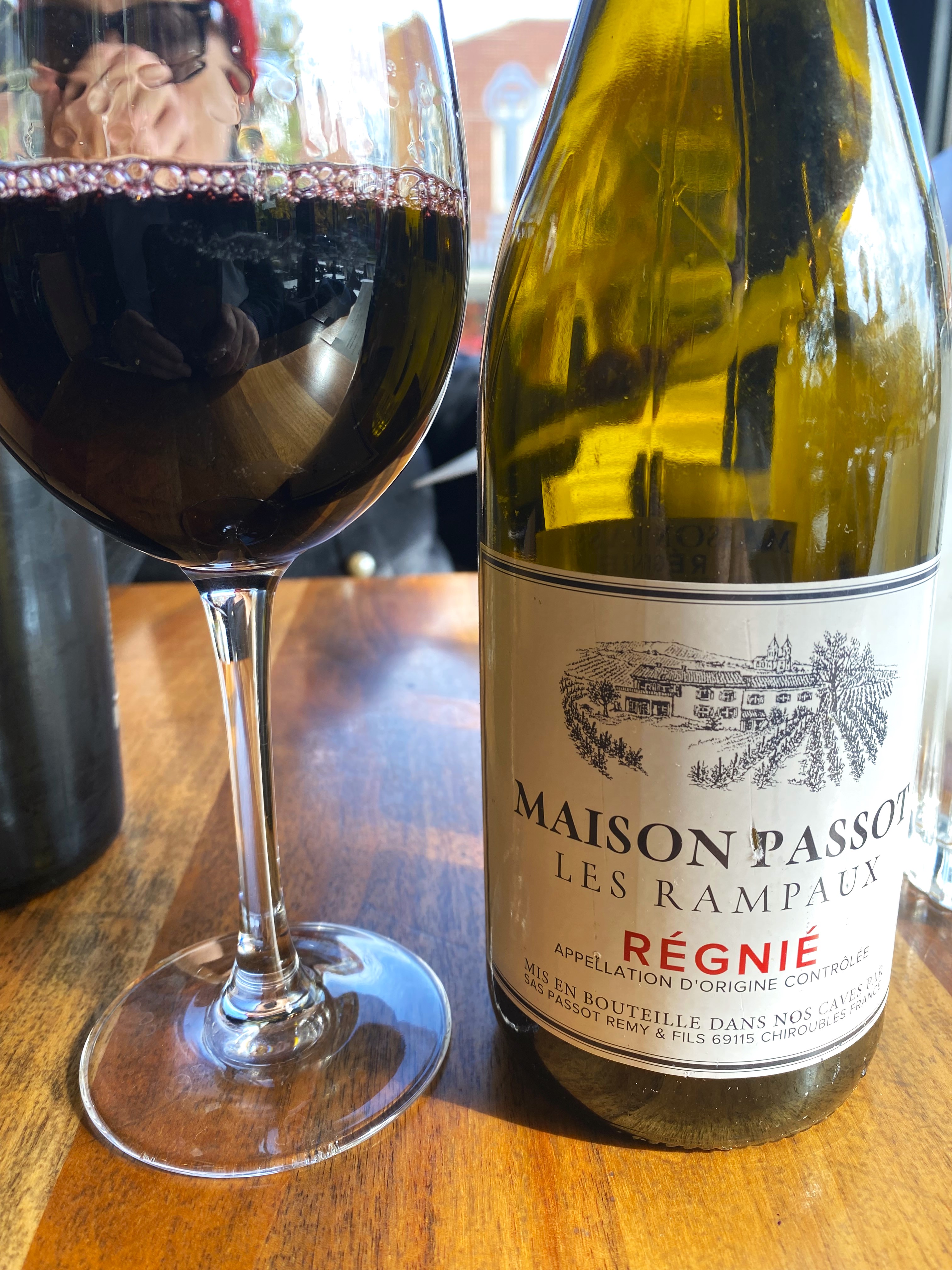
After we did all of our errands in Birmingham, and our shopping endeavors were successful, we decided to have an early dinner in Birmingham, before driving to Ann Arbor.  My Bride had been thinking about the cheeseburger and fries that I had at the Townhouse the last time we were there.  Sometimes, the simpler, the better.  Then there was the wine to choose, and we thought something fun and different on an autumn day.  We had a bottle from Domaine Passot Pere et Fils their Maison Passot Les Rampaux Regnie 2020. Domaine Passot is a family estate of fifteen hectares offering four Beaujolais Cru wines, a Burgundy Gamay, a Rosé wine, and two distinct sparkling wines.  They have recently begun the sixth generation of winegrowers.  Regnie was originally part of the appellation for red wines made from Gamay under the designation of Beaujolais Villages, but in 1988, it became the tenth Beaujolais Cru.  It is adjacent to Crus of Morgon and Brouilly.  Regnie is one of the highest altitudes in the hills of Beaujolais and noted for the pink granite soils.  The region is named after a Gallic-Roman nobleman Reginus who grew vines in the region some two-thousand years ago, and they have been growing there ever since.  This is one of the old-style Beaujolais wines that is made with the Black Gamay, but with the addition of some white juice.  The Cru Les Rampaux is planted with vines that average about forty years of age.  The fruit is hand-harvested and Initial Fermentation is for seven to ten days.  This wine is aged in Stainless Steel or epoxy-coated cement vats for nine to twelve months.  A pretty deep ruby colored wine that offered notes of red and black fruits.  On the palate delightful tones of red fruits, with a hint of prunes, soft tannins and a light finish of fruit and soft terroir of minerality.

We decided to take a very leisurely drive on the back roads from Birmingham to Ann Arbor, since we were not under time constraints and we didn’t need to battle with the road warriors on the freeways.  We arrived at the State Theatre, which is stunning in its own rights, as it still has a huge well-lit marquee evoking another era.  While the exterior is classic, the interior has been cobbled together and is no longer one large theater with a balcony, but several smaller screens, a quaint lobby, and a small bar.  “Aurora’s Sunrise” is based on the Zoryan Institute’s Oral History Archives of Aurora Mardiganian’s odyssey.  A genocide survivor, who originally has her story serialized, about her losing her family, escaping slavery and enduring what most people could not.  From her serialized story, and consequent book that was published, she was raising money for Armenian “Near East Relief” and she eventually went to Hollywood and starred in her story in a silent film, and her additional tales of enduring the greed of Hollywood as she continues to tell the world of the Armenian Genocide.  The film she made was “Auction of Souls” (1919) and for the millions of dollars that the film grossed, amazingly there is not a copy of the film that survived.  After the death of Aurora Mardiganian, some twenty-four minutes of the film was discovered (2009) and along with known stills and title cards, which was interwoven with clips of Aurora as she was recording her memories for the archives, and these snippets were then woven into a dramatic animated film.  A few minutes of watching and the novelty of animation isn’t even noticed.   Beyond wine, I also have as one of my many other hobbies, and is collecting ephemera from this time, and when there were mentions of my grandmother’s village.  The film touched me several times, realizing that it was the background of my own family and the survivors never really spoke of the atrocity and horrors that they lived through as children and young adults.  The film covers a “survivor’s journey from bloodshed to the red carpet” as aptly stated as a press release.  You may not see the film in a theatrical release like we did, but I do hope that you get a chance to see the film “streaming” on the small screen.   

Posted in Uncategorized | Tagged , , , , , , , , | Leave a comment

Dinner at San Chez Bistro

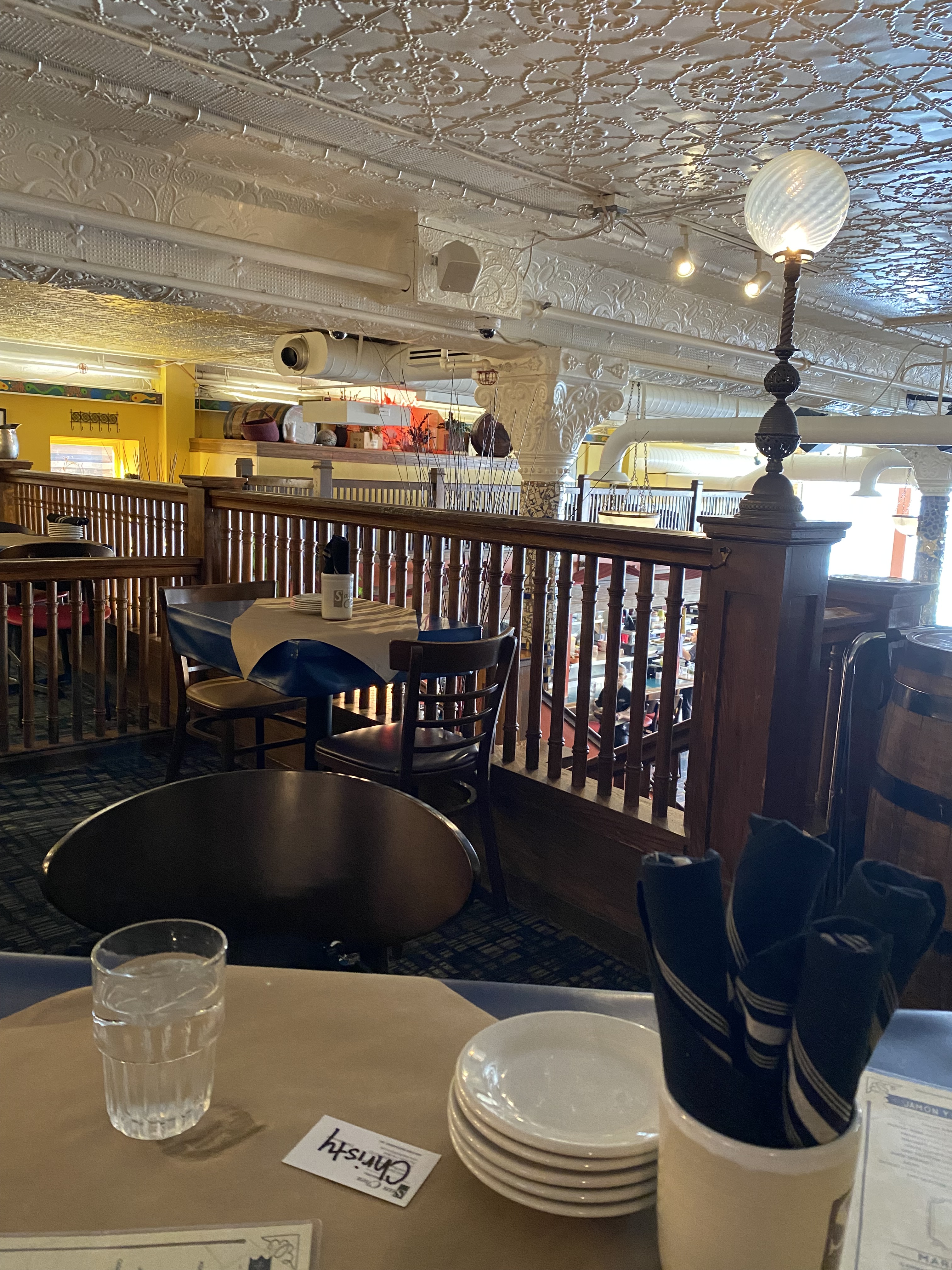
Our last night in Grand Rapids for our little getaway and a chance to be a tourist, we enjoyed a dinner of tapas at San Chez Bistro.   We have been to Grand Rapids several times, but the last time I wrote about this restaurant was in 2012, and truthfully, the concept of tapas style restaurants was very novel at the time.  I am not sure what the original business was, where the restaurant is, but I can tell you from my short life, that we were dining in what used to be called a mezzanine, like in the old J.L. Hudson store in Downtown Detroit.  Nowadays, it would be more vogue to call it a loft, but it is a second floor that doesn’t cover the entire first floor. 

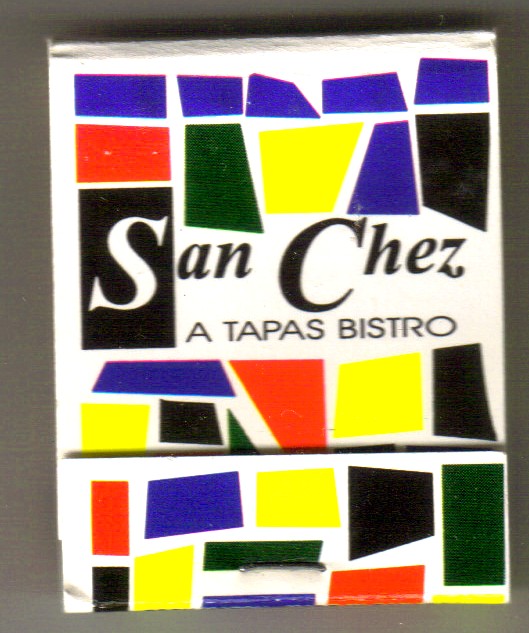
We were seated just off the staircase of the mezzanine and it was a great location for people watching, plus to observe some of the varied dishes that were on the trays carried by the staff.  Tapas are meant to be shared, and my Bride and I have been sharing dishes almost from day one, but the other unique item about tapas, is that they arrive, as they have been prepared; hence what you may have thought was an appetizer might arrive with an entrée, or vice-versa.  We just ordered dishes and they arrived as the kitchen decided.  We hand Champinones, garlic and herb braised Pebble Creek mushrooms, red peppers, and grilled bread.  Alcachofas a la Parilla, sautéed artichoke hearts, bell pepper cream sauce, with red pepper flakes.  Medjooles Rellenos, honey-cardamom goat cheese stuffed date, with a spicy Harissa sauce.  Atún en Escabeche, Jamaican jerk seared Ahí Tuna, carrot ribbons, mango coulis, and salsa verde.  Gambas Asadas al Fuego, spicy fire-roasted shrimp, banana-mustard cream, and white rice (but we up-charged the dish by substituting Scallops.  Langosta en Crema, sautéed Langostino Lobster, roasted red peppers, anisette-mustard cream sauce, and grilled bread.  I also created quite a stir among the staff, by showing them a photo of a matchbook from the restaurant, which no one had ever seen, some didn’t even know what a matchbook was.

The wine list was rather eclectic, and I thought it should have been top-heavy with Spanish wines, but I knew that we were going to have a Spanish wine in keeping with the food selection.  We enjoyed a bottle of La Perla del Priorat Noster Inicial Priorat DOCa 2018.  The Priorat region of Spain is located in Catalonia and is known for having intense, full-bodied wines. Priorat is also known for having low yields: climate, nutrient-poor soils, and vine age.  La Perla del Priorat is one Priorat’s oldest wineries.  It was founded in the Fifteenth Century by the Carthusian monks of Scala Dei under the original name of “Mas Dels Frares” (House of the Friars) and was a very important monastery.  The fame of the wines grew and the winery was renamed La Perla del Priorat in the Eighteenth Century. The wine is a blend of seventy percent Garnacha (Grenache), twenty-five percent Carinena (Carignan) and five percent Cabernet Sauvignon.  This wine is made from old vines that are grown on slate terraces.  Half of the wine is aged in French Oak, and the other half of the wine is aged in Stainless Steel vats, which gives the wine a fresh fruit flavor.  A very deep ruby red wine that offers notes of cherry, plum, currants, figs, and vanilla.  On the palate tones of rich red and black fruits, traces of raisins and prunes, big and chewy (it is how I describe it) with just enough acidity along with some mocha and vanilla hints, with a nice medium finish of terroir.  A great wine to accompany the mélange of dishes that we chose.    

Posted in Dining, Wine | Tagged , , , , , , , , | Leave a comment

Enjoying Some Wine During ArtPrize

We started touring ArtPrize in Grand Rapids, Michigan the night before after having dinner as we wandered about.  In the morning, we drove back downtown, to continue what we hadn’t seen the night before.  We also made an excursion to the Grand Rapids Art Museum, as we always enjoy seeing art museums in other cities when we have the chance and the time.  We also wanted to go back to the JW Marriott hotel to take another look at the display of dresses made from pages of books like from Harry Potter and also from the Princess Bride, among others. While we were there, so was the artist and she was not only helping my Bride, but several other people that were trying to electronically vote and were having difficulty voting.  It seemed that everyone we talked to, had the same problem.  By that time, we had worked up a thirst, and there was a restaurant and wine bar in the hotel called Margaux and a very suitable name for a wine bar.  One of the Grand Cru Communes in Bordeaux is Margaux as well as well as the famous Chateau Margaux; and rumor has it, that Margaux Hemmingway was conceived after her parents had a magnum of Chateau Margaux.

My Bride had worked up a thirst and she wanted something festive and bubbly, so she had a glass of Rivarose Brut Prestige Rosé Mediterranée IGP NV.  Mediterranée IGP is a large area covering Provence and part of the Rhone Valley, Loire, and Corsica; and wines are a major part of the culture and economy of the region.  A large proportion of this designation is rosé wines that are beyond the scope of the AOC wine laws.   This region was previously classified as Vin du Pays, but was changed in 2009, because of a poor consumer image.  The wine was formerly bottled and labeled as Royal Provence Rivarose Brut.  Rivarose is the oldest effervescent wine company in the Mediterranée region, founded in 1909, and they produce alcoholic and non-alcoholic beverages.  Created by Edmond Thery, a famed economist who had a passion for effervescent wines.  For about thirty years, they assisted Champagne houses until the strict delimitation of production areas; and they created their own wines.  The winery has two-hundred-forty-thousand acres under vine and they use the distinctive Provence style bottle, created, and patented back in the 1920’s.  The wine is a blend of Syrah and Grenache and always harvested at night.  The grapes undergo maceration after pressing to extract maximum aromatic intensity.  The juice then undergoes fermentation and then aged for several months using the Charmat MethodL.  A soft coppery-rose colored wine with fine bubbles that offered notes of predominately strawberry and raspberry.  On the palate tones of red fruits, spices, soft and fine mousse.  A delightful and refreshing wine for the day.

I also had a rosé wine of Les Vignerons du Mont-Ventoux Cuvee des 3 Messes Basses Ventoux 2021.  Ventoux is a large district, southeast of the southern Rhone, bordering Provence, and was known as Cotes de Ventoux until 2009 and known for their rosé wines.  Mont-Ventoux towers over the region, and is referred to as the “Giant of Provence” and is part of the Alps Mountain range.  Wine has been recorded from this region since the First Century AD.  In 1924, the winegrower families created a cooperative “Les Vignerons du Mont Ventoux,” and now has one-hundred-twenty winegrowers comprising of one-thousand-hectares of vineyards and certified sustainable.  The wine is a blend of fifty percent Clairette and fifty percent Grenache Blanc.  Cuvee des 3 Messes Basses (3 Low Masses) was named from a short story penned by the Provencal author Alphonse Daudet who wrote about the grapes harvested on the slopes of the mountain.  The grapes are completely de-stemmed, undergo pneumatic pressing and cold settling of the must and an Initial Fermentation for three weeks.  The Malolactic Fermentation is inhibited to retain brightness and freshness.  The juices are aged separately and aged for a couple of months in vats, before blending and bottling.  The pale coppery-rose colored wine offered notes of peaches, citrus, and white florals.  On the palate tones of citrus and peach, with a crisp, supple feel.  Perfect for a summer day.   

Posted in Wine | Tagged , , , , , , , , , , , , , , , | Leave a comment

ArtPrize and Bistro Bella Vita

While we were in Grand Rapids, the other site that we wanted to see was Art Prize.  Art Prize is an annual, international art competition.  As they say it is a celebration of ideas, conversations, and experimentation.  This year, there was $600,000 to be awarded to artists, in the form of grants, juried prizes and public votes.  The grand prize was $125,000; second prize $75,000 and third prize $50,000.  The exhibit was huge and spread over a couple of hundred blocks, so we didn’t see every piece of art, as the art was on sides of businesses, inside of businesses, and in parks.  We had to go to Art Prize headquarters to get a walking map and even then, we realized that it was too much to conquer in a day, so we tried to go to high cluster areas.

The nice thing was, that we ended up passing many watering holes around the city and while one of the monikers for Grand Rapids is “Beer City,” we passed on that sobriquet and looked for wine dispensaries.  The evening after the Meijer Gardens we met some friends and had dinner at Bistro Bella Vita and we have dined there before with them on one of our other trips to Grand Rapids.  Though, since the last time we had dined there, they had moved to a bigger venue and sometimes that can be fatal for a business, but it seemed that they were fine.  My Bride and I started by sharing an appetizer of Sea Scallops with cauliflower gratin, peas, dukkah, dill pistou and lemon agrodolce.  My Bride had Faroe Islands Salmon with potatoes, peas, kale, farm beans and smoked salmon vichyssoise.  I had the Saffron Risotto with shrimp, crab, sausage, broccoli, red pepper, parmesan and Calabrian chili aioli.

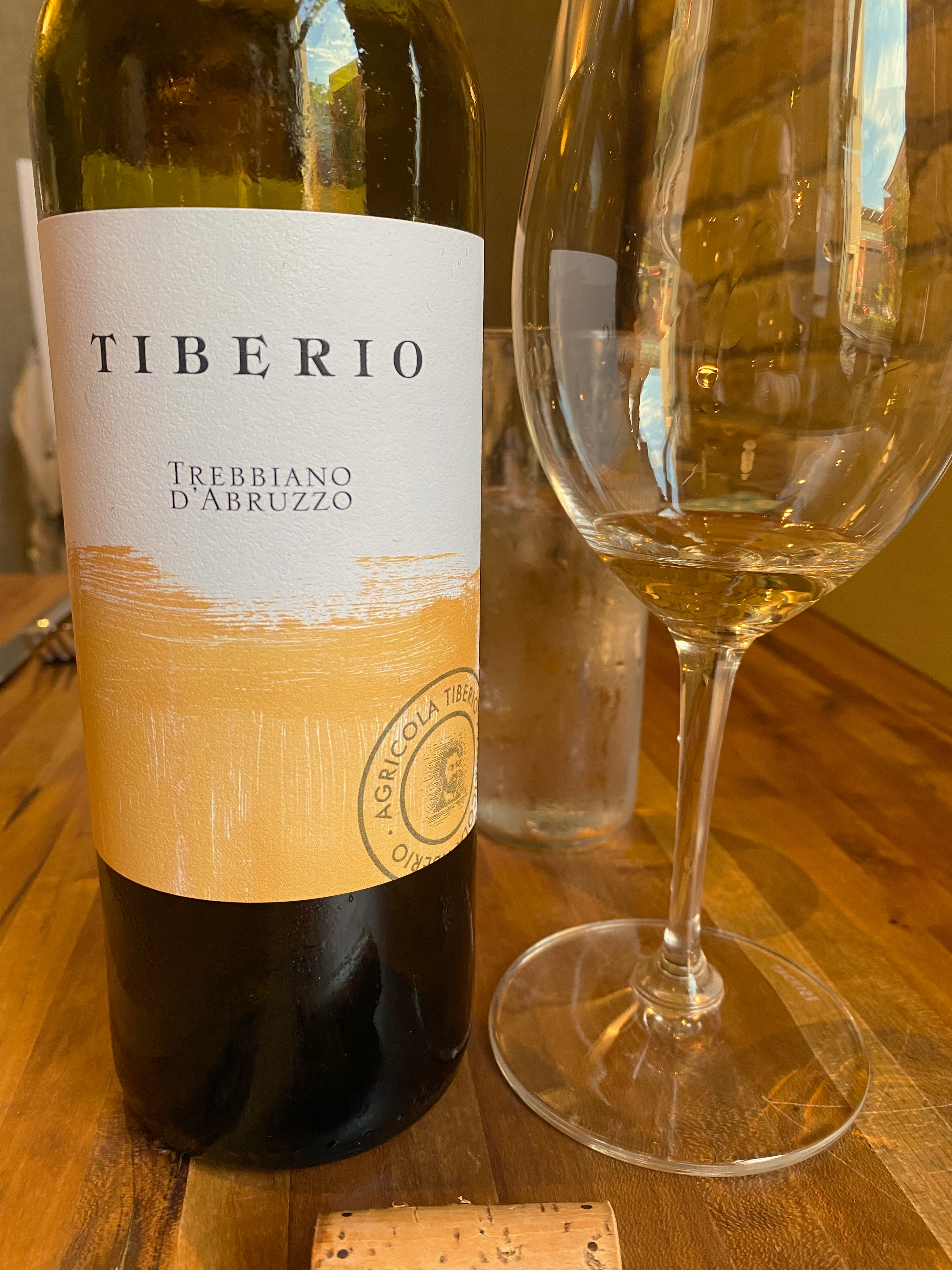
After having cocktails before our meal, we ended up with a bottle of Azienda Vitivinicola Tiberio Trebbiano d’Abruzzo 2020.  Riccardo Tiberio found a very old plot of sixty-year-old Trebbiano Abruzzese vines, which is a rarity and almost forgotten varietal.  In the year 2000, he bought the eight-hectare plot and an additional thirty-one-hectares of land suitable for single estate wines; on property 350 meters above sea level, twenty-three miles inland near the town of Cugnoli. On the thirty-one-hectare property he meticulously planted cuttings of indigenous vines suitable for each soil sample.  His first vintage was in 2004, and his minerally whites and fruit forward reds were immediately appreciated and lauded.  Trebbiano d’Abruzzo is grown mainly on the eastern side of central Italy and is a distinct variety from the other Trebbiano varieties.  There is debate as to whether it is the Bombino Bianco variety, but it hasn’t been proven, so the DOC law hedges a bit, and allows a minimum of eighty-five percent of Trebbiano d’Abruzzo, Bombino Bianco and/or Trebbiano Toscano since 1994.   The wine is a pretty golden-yellow and offers notes of ripe peaches, lemongrass, and chamomile.  On the palate tones of white fruit in a light and balanced wine that had a nice medium count finish of lemons and minerals.  I thought it was perfect with our entrée choices.      

Posted in Dining, Wine | Tagged , , , , , | Leave a comment

Meijer Gardens & Sculpture Park

It was still the month of September and we decided to make a little getaway to Grand Rapids, Michigan; which is also known as Furniture City or Beer City which were always mentioned in the last series of “Pure Michigan” advertising campaigns narrated by Michigan’s own Tim Allen.  We decided to kill two birds with one stone as the old adage goes, because ArtPrize was just starting and I figured we could go see the Meijer Gardens see some old friends and have a couple of different dinners; actually, it was more than two birds, but who is counting.  I am becoming a tourist in my own state late in life, but that is fine, my Bride with her job, was much more immersed in the state, but she is getting to see the state through my eyes as well.  

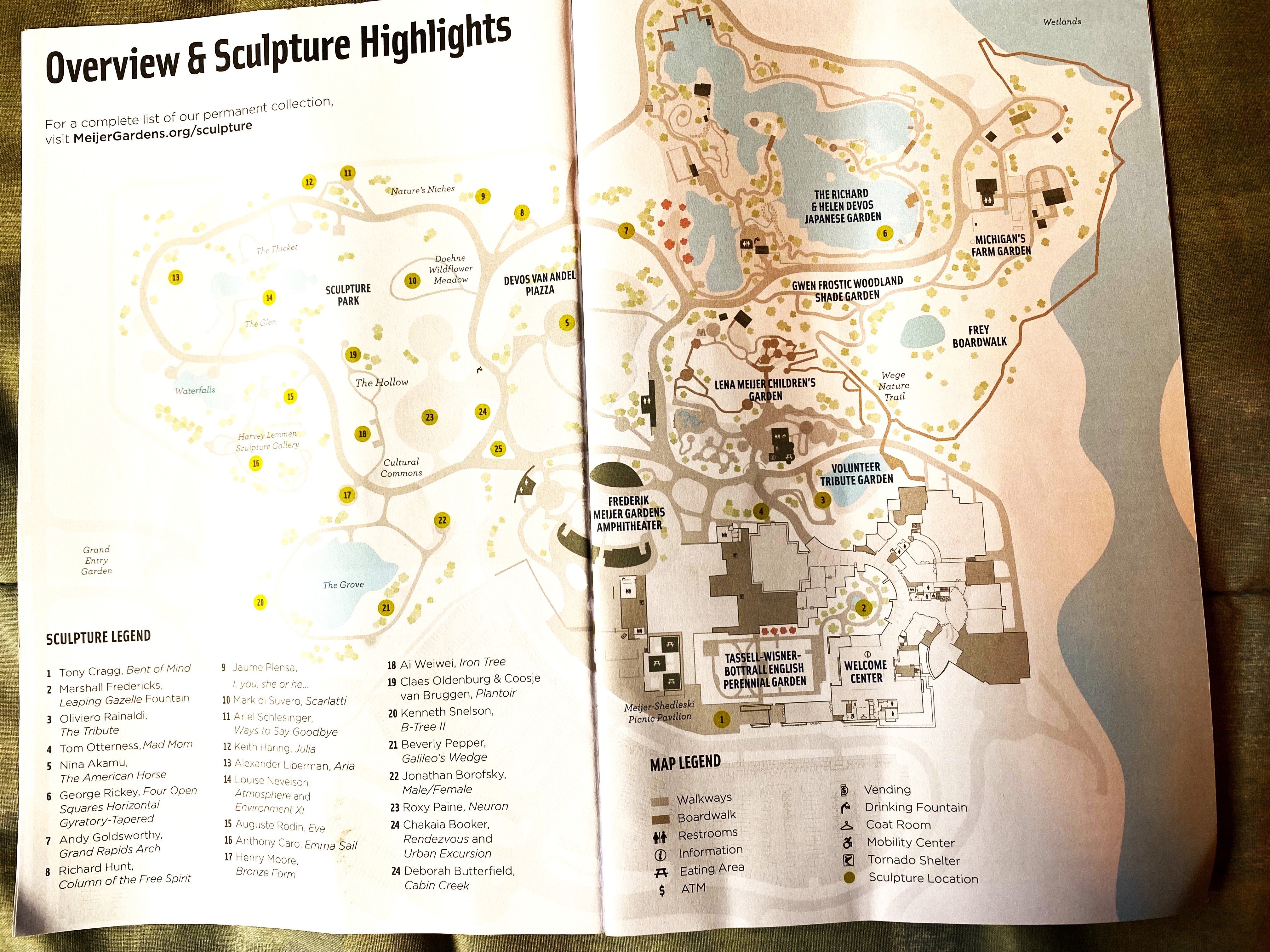
The Frederick Meijer Gardens & Sculpture Park was created in 1995 by the West Michigan Horticultural Society.  It was a fusion of Frederick’s love of sculpture and his wife Lena’s love of flowers.  The park is one-hundred-fifty-eight acres, so make sure that you have a good pair of walking shoes, though there are curated trams that you can take as well.  There are two-hundred sculptures in a permanent display, though while we were there, they were moving some to new locations.  Though I guess the one that is a must-see is Nina Akamu’s “Homage to Leonardo and Leonardo da Vinci’s Horse” in several different sizes, and that photo has no trick photography.  There are many different gardens, some are enclosed like in conservatory settings and museum collections.  It is outside that is amazing.  There is a Children’s Garden, the Sculpture Park, an Amphitheater, a Japanese Garden with its own waterfall and lake, and a Michigan Farm Garden focusing on the horticulture that was prevalent during the Great Depression, and there is a walk way around this working farm.

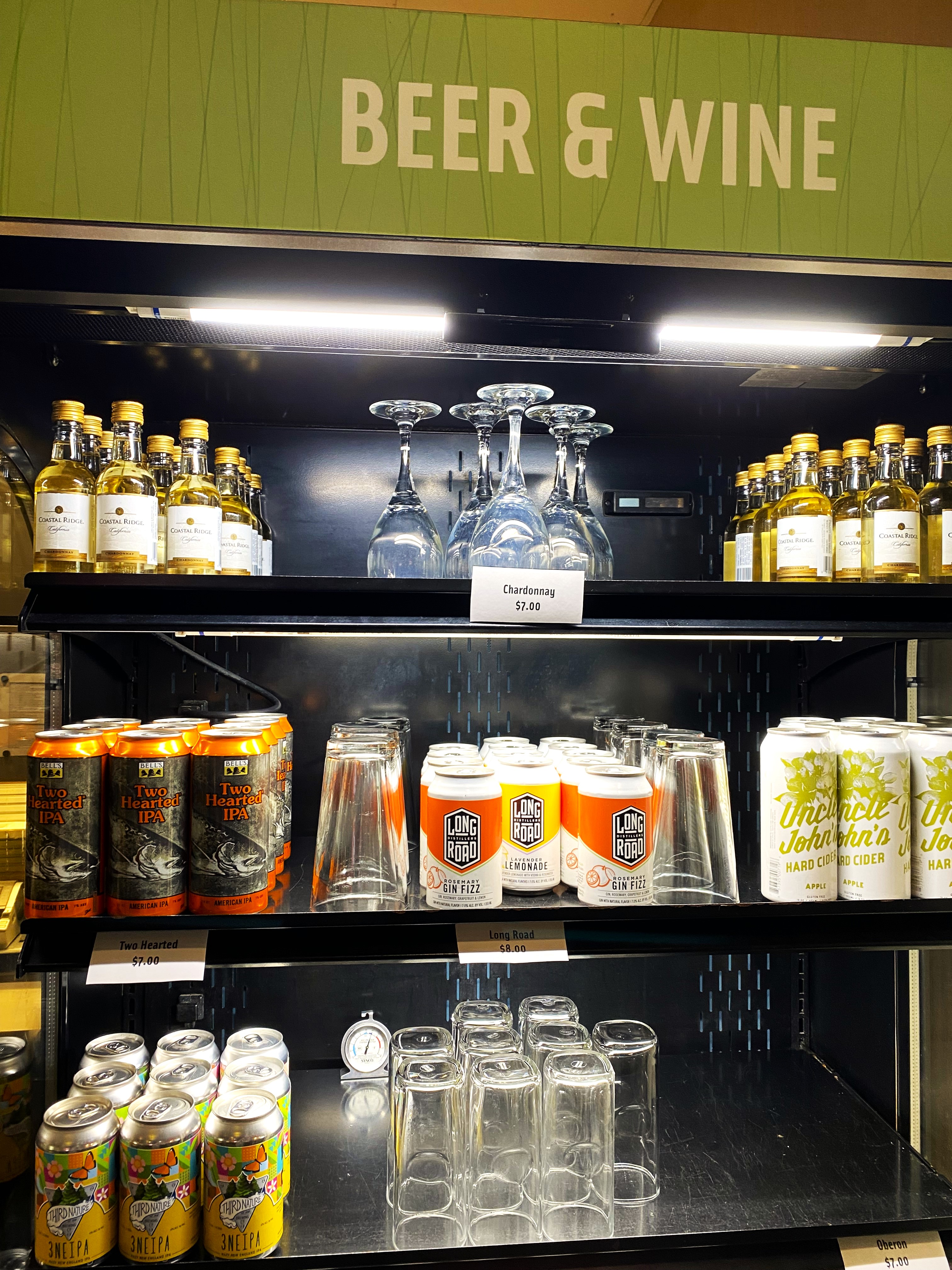
We actually went to the Meijer Gardens as soon as we drove to Grand Rapids to give us a day walking around.  You know that I had to check if they had any beverages to make me happy, and yes, they did, but at the same time, not really happy.  We went to the James & Shirley Balk Café in the main building.  My Bride had the Michigan Maple Salad, with grilled chicken breast, candied pecans, dried Montmorency cherries, goat cheese, heritage greens and a Michigan Maple vinaigrette.   I had the Smoked Brisket Quesadilla with a house-some beef brisket, sweet corn, caramelized onions, mushrooms, Cheddar cheese, chipotle barbecue sauce on a jalapeño cheese tortilla. The restaurant was like a cafeteria and I encountered the Cabernet Sauvignon and then the Chardonnay as we progressed down the lane with our tray going to the checkout register.  I lamented about the wine, only for the reason that I thought that two Michigan wines could be featured, but instead we had two California wines to choose from.  We both had Coastal Ridge Chardonnay California NV in a one-serving glass pour bottle like for an airplane.  I couldn’t find any information about the winery other than they produce about eleven classic wine offerings and did some more detective work and I found out it is part of the Bronco Wine Company.   Bronco Wine Company originally begins with the Franzia Family that started in the wine industry in 1893.  Two brothers and a cousin from the Franzia families began Bronco Wine Company in 1973.  Today they are the largest privately held US vineyard holder with vertical integration and they cover a wide variety of price points and they are especially popular to the food service industry.  I am sure that the wine is totally bulk produced in Stainless-Steel tanks.  The wine is seventy-six percent Chardonnay and twenty-four percent Proprietor’s White Blend.  It was also the first time that I had ever seen a glucose/fructose listing for wine.  The wine had a soft golden-yellow color and offered notes white fruits, oak, and vanilla.  On the palate there were tones of apple, pear, and pineapple, some more oak and crisp acidity.  I have to surmise that they must have a formula for using oak chips in the tanks to get that oak taste.  The only good thing is that I hope that some of these bulk wines actually get people to try other wines, and some will become wine enthusiasts.       

Posted in Dining, Wine | Tagged , , , | Leave a comment