Three Enjoyable Sauvignon Blanc Wines

After having a delightful wine tasting of French red wines at The Fine Wine Source in Livonia, Michigan we walked into the original part of the shop and we had a chance to try three special Sauvignon Blanc wines.

The first wine we tried was Domaine de Chevalier L’Esprit de Chevalier Blanc Pessac-Leognan 2022 from Famille Bernard.  Domaine de Chevalier is a highly-regarded estate and it was classified as a Grand Cru Classé de Graves in 1959 for both its red and white wines. The estate has about sixty hectares on gravel and clay  rich soils, and about a third of the estate is devoted to seventy percent Sauvignon Blanc and thirty percent Semillon. In 1983, the Domaine was purchased by the Famille Bernard and has been maintained by the family ever since. Their second label “L’Esprit de Chevalier” was created in 1989 using fruit from younger planted vines and from lots that did not get approval for the first label.  The fruit is hand-harvested, and this is the second year after the conversion to organic farming.  While the first label is aged for eighteen months, the second label is aged for nine months in French Oak, with fermentation and racking done directly in the barrels.  This pale whitish-green wine offered notes of lemon tart, key lime, freshly cut straw and white florals, with a touch of honeycomb and coriander seed.  On the palate this dry, medium-bodied, well-balanced wine displayed tones of tropical fruits, lychee, lime and ended with a medium-count finish of minerals (terroir), pineapple and caramel.  An excellent second label wine.

The second wine that we had was Stewart Cellars Sauvignon Blanc Oakville, Napa Valley 2022.  Stewart Cellars is now a second-generation family-owned winery since 1999.   Michael Stewart, was a successful Texas businessman who originally thought of this as a post-retirement venture, but when his son and daughter joined he and his wife, the venture took off.  The fruit for this wine came from the Money Lane Vineyard, in a plot surrounded by Cabernet Sauvignon vines in Oakville using sustainable farming techniques and minimal intervention winemaking.  The fruit is pressed whole cluster, fermented and aged in Stainless-Steel tanks at cool temperatures to retain aromatic and bright flavors, with no Malolactic Fermentation.  A pale golden-colored wine that offered notes of tropical fruits, lemon and lime, and green apples.  On the palate this medium-bodied, well-balanced wine displayed notes of honeydew melon, guava, pineapple and lemon and lime zest with a satiny, silky mouthfeel that had a nice medium to long count finish of fruit and citrus.  A very sexy wine and it got most of our attention for our cellar. 

Then we finished the tasting with Chateau d’Yquem “Y” Ygrec Bordeaux 2021, from one of the most legendary wineries in the world (if I may say) and it was stunning; I will offer some background notes, because if you are like me, it is not a wine that one encounters that often.  It was originally made at the end of the harvest with the last bunches of grapes since 1959 and in 1966 the selection of the grapes changed, and the wine is sixty percent Sauvignon Blanc picked at the beginning of the harvest and forty percent of Semillon with Botrytis and in 2004 the brand was to be produced every vintage.  They now have a state-of-the-art vat room just to make this wine and the aging on the lees take place in the barrels, one-third of which are new, and the lees are regularly stirred for ten months. This is a white wine that is considered by many to cellar for twenty years, and while I do like to get multiple bottles of wine, in our retirement we passed on this lovely wine.  A pale-yellow wine offering notes of pears, lime blossoms, vanilla, fennel and almonds.  On the palate this wine displayed tones of white fruits, with traces of pear and lime, chalk and white pepper with refreshing acidity, and a very long finish of saline, pears, almonds, and that chalky terroir. I thought this wine was awesome, this may be the freshest and liveliest white wine that I have ever tasted, and I knew that my Bride would have freaked, if I had added it to the list, but I did think long and hard.  Oh, by the way, if you are curious the “Y” is pronounced “ee-grek” in French.   

Posted in Wine | Tagged , , , , , , , , , , , , | Leave a comment

Another French Wine Tasting

I truly enjoy attending wine tastings, especially at The Fine Wine Source in Livonia, Michigan.  If you are a member of their wine club, you get invitations to attend wine tastings, though you must be flexible, because of the crowds.  I will discuss two different Bordeaux red wines and then a vertical of four wines from Lussac-Saint Emilion. 

The first wine was Chateau Tour de Luchey Bordeaux 2022. This estate is located in the district of Moulon on the banks of the Dordogne River.  On the grounds of the estate is a medieval tower, and years ago, “Luchey” meant the King’s usher who would check the ship’s loading leaving for France’s King, via Bordeaux.  The estate has been in the same family for five generations.  It is a little more that sixteen hectares of forty-year-old vines on silty soil and predominately Merlot.  This vintage is eighty percent Merlot, ten percent Cabernet Franc and ten percent Cabernet Sauvignon.  The fruit is both mechanically and hand harvested.  Each varietal is picked and vinified separately in Stainless-Steel and concrete vats and thermal-regulated for about fifteen days; and then the wine is aged in Stainless-Steel vats.  This deep claret colored wine offered notes of red cherry, raspberry and strawberry.  On the palate this medium-bodied and well-balanced wine displayed tones of fresh red fruits and blackberry blending with ripe tannins with tones of chocolate and coffee and ending with a medium-count finish of fruit.

The next wine was Chateau Rocher-Calon Montagne-Saint-Emilion 2022.  Pierre Lagardere after returning home after The Great War, bought a hectare of land in Pomerol, and over the next four generations the family has acquired twenty-two hectares of vineyards in the Libournais; as well as investing in a temperature-controlled cellar, pneumatic wine press and micro-oxygenation equipment.  The estate is basically Merlot with some Cabernet Franc, and the average age of the vines is about thirty-five years on Calcareous-clay soil.  The fruit is both mechanically and hand-harvested, and this vintage is ninety percent Merlot and ten percent Cabernet Franc.  The fruit undergoes a four-day period of cold-maceration prior to fermentation to extract deeper color and flavor from the skin. The wine is then aged for eighteen months in a mix of Stainless-Steel and concrete vats. A deep ruby-garnet red colored wine that offered notes of cherry and blackberry, leather and sous-bois. On the palate this medium-bodied, well-balanced wine displayed tones of dark and red fruits, and chocolate blending with supple tannins and ending with a medium-count finish of fruit and terroir. 

We then had a special treat of having the chance to experience a vertical tasting of Chateau du Courlat Lussac-Saint-Emilion and is part of the family run business estates of Jean-Baptiste Audy.  The company was founded in 1906 and today it is run by his great-grandson, Jean-Baptiste Bourotte and the fifth generation. Chateau du Courlat has seventeen hectares of vines, of which four hectares are dedicated to the company’s first wine Cuvée Jean-Baptiste.  The estate is planted ninety percent Merlot and ten percent Cabernet Franc and the vines average about twenty-five years in age and planted on a clay-loam soil.  The fruit is mechanically harvested and then is manually sorted on vibrating tables.  Vinification is done plot by plot, with maceration for about twenty-five days, in Stainless-Steel and cement vats then pneumatically pressed.  Aging is done in French Oak barrels and cement vats for about eighteen months.  The 2016 vintage showed a deep ruby wine that offered notes of dark fruit, tobacco and spices.  On the palate this medium-bodied, well-balanced wine displayed tones of red cherry, blackberry, chocolate blending with silky tannins and ending with a medium-count finish of fruit and pepper, almost demanding a second taste.  The 2019 vintage was a deep ruby wine that offered notes of black fruits, violets, camphor and spices.  On the palate this medium-bodied, well-balanced wine displayed tones of blackberry, strawberries blending with rich tannins and ending with a medium-count finish of fruit and spices.  The 2020 vintage was a deep purplish-ruby color that offered notes of dark fruit, leather, licorice, cigars and spices.  On the palate this medium-bodied, well-balanced wine displayed tones of fruit forward blackberry and plums, raisins, tobacco blending with grainy tannins and finishing with a medium-count finish of fruit, smoke and spices.  The 2022 vintage was pure merlot and a dark violet wine that offered notes of plums, blackberries, violets, and spices.  On the palate this medium-bodied, well-balanced wine displayed tones of rich dark fruits, licorice, espresso blending with mellow tannins, a nice “chewy” wine that ended with a medium-count finish of fruit, spices and terroir.

Posted in Wine | Tagged , , , , , , , | Leave a comment

Fine Wine Source Club – October 2025

I feel that I was overdue to pick up my wine club selections from The Fine Wine Source in Livonia, Michigan.  It has been an interesting time the last month or so, and I have plenty of wines, and tastings to write about, and it was a pleasure to just stop by the shop and admire the goods, and I was a good boy, as I had to rush back to the house, as we have been in the midst of updating the outside of our house, as we have been here for thirty years or so.  The wine shop was a pleasant respite.

The first wine represents the Old World, and it is bottle of Vin Schoenheitz Riesling Vin d’Alsace 2020.  During the 1970s, Henri Schoenheitz Sr., who had a passion for the history of his birthplace, undertook the rebirth of an all but forgotten vineyard at Wihr-au-Val in the Munster Valley.  Preparing the soil and replanting the steep hillsides, and this passion and dedication has been maintained by Henri Schoenheitz Jr., and his wife; both are graduates in oenology and viticulture.  The family made a name for themselves as the only independent wine makers in the village.  The wine is pure Riesling, and the vineyard is in the heart of Munster Valley with the first hillsides facing south-southwest.  The vines are ten to thirty years of age planted on granite soils that are very decomposed, rich in micas and silica.  This white wine has been described as having notes of citrus, stone fruits and white florals.  On the palate this off-dry wine is said to display tones of green apples, pears, and hints of fig and kiwi, and ending with a long-count finish of fruit and lemon zest.

The wine representing the New World is Two Mountain Hidden Horse Red Blend 22, Yakima Valley, Washington State NV.  Two Mountain Winery is a family concern, owned and operated by Matthew and Patrick Rawn, their family began farming in 1951, when Schmidt Orchards had forty acres.  The brothers bought the farm from their late uncle in 2006 and began Two Mountain Winery and Estate Vineyard.  Hidden Horse was originally only available in their distribution and retail partners.  It is their work horse and budget friendly.  The wine is a blend of 48% Cabernet Sauvignon, 40% Merlot, 7% Syrah, 3% Cabernet Franc, 2% Malbec.  The wine was aged for twenty months in ninety-four percent French and six percent American Oak.  A deep blackish-purple colored wine that offers notes of dark fruits, dark chocolate, tobacco leaf and vanilla.   On the palate this medium-bodied wine displayed tones of blackberries, plums, raspberries with crisp acidity blending with supple tannins, and a medium-count finish of fruit and spices.  

Posted in Wine | Tagged , , , , , , , , , , , , , , | Leave a comment

Birthday for a 71-Year-Old Curmudgeon

It is hard to believe that my Bride has let me be pampered for over a month of my self-appointed celebrations, and actually there are still more stories to come, but I digress, which is quite often for me.  For my celebration I had posted a cryptic “story” post on social media, that most people did not catch.  

We had a quiet dinner for the two of us at home.  She made some of my favorite dishes and indulged me.  We started off with my new favorite salad (which should be her award winning from scratch Caesar), but we did find a new salad that was just called a Spring Mix Salad and it consisted of a Heart of Romaine Salad with Pomegranate Seeds and Strawberries served with a Champagne Vinaigrette.  She then made Braised Short Ribs with root vegetables.  For part of the braising process, she used a bottle of Sterling Vintner’s Collection Meritage Central Coast 2010 from a stash that I found half forgotten, as I have been reorganizing the cellar.  The wine was still very hardy, and I had to decant it, to eliminate the acquired sediment; we had originally bought about three cases of this wine, after tasting a bottle, as it was being sold by a local grocer for less than ten dollars a bottle plus case discount.  I do ramble when I get going.  She also made Roasted Shishito Peppers and of course Armenian Pilaf.  Then we had a Grand Marnier Soufflé as she wanted to make one, before she had to make it for a dinner party.

I had gone into the cellar to select my birthday wine and of course she was very curious as to what I would select.  I think that she figured that I was going to select another Meritage wine to keep in the theme of the dinner, and in a way I did.  I went and washed out one of our decanters, polished a couple of Riedel Crystal glasses and my Durand Corkscrew, which is one of the best wine tools we have ever bought.  My Bride looking at the bottle that I had brought up earlier to stand erect, before I decanted it, asked what the price of the bottle would be.  I said does it matter, that is why I started the collection when I was in high school, and it was one of my prized wines that I moved from two other basements in my life.  When I removed the capsule seal, the cork was still pristine, with no evidence of ullage seepage, and the fill line was just under the capsule edge.   

I did open my Chateau Mouton Rothschild Pauillac 1964 with a label of distribution by Dourthe Freres, Negociants a Moulis-Medoc (Gironde).  For those old enough, you may notice that there is no indication that Chateau Mouton Rothschild was even part of The Classification of 1855 for the Medoc.  They were listed as the First of the Second Growths, and they felt that because of politics, they weren’t listed as a First Growth, this was later corrected in 1973.  The chateau was originally Brane-Mouton and was among the best of the 18th and 19th Centuries, and then the quality fell in the 1840s.  The property was then bought and renamed in 1853, and the quality was restored, but not in time for The Classification.  Baron Philippe de Rothschild took the reins in 1922 and introduced chateau bottling in 1924.  At the end of World War II, they began commissioning a different artist for each vintage and the 1964 label is by the English artist Henry Moore.  The estate is eighty-four hectares on gravelly soil.  The estate is planted at eighty percent Cabernet Sauvignon, sixteen percent Merlot and small plots of Cabernet Franc and Petit Verdot; the average age of the vines are about forty years of age.  The fruit is hand-harvested, undergoes fermentation in oak vats and then is aged for eighteen months.  I decanted the wine for about two hours prior to dinner, and the wine was still a rich garnet-ruby to dark brick color with no visible foxing and offered notes of dark cherries and blackberries, mushrooms, old leather, earth and spices; though initially hesitant, the nose became much more striking after the first hour and even better at the second hour.  On the palate this full-bodied, well-balanced wine still displayed tones of tart cherries, dried fruit, spices that blended with fully integrated tannins with still some refreshing acidity that ended with a long-count finish of fruit and rich minerally terroir.  I am glad that I had it now, though I am sure that it would have been strong for another five years.   

Posted in Dining, Wine | Tagged , , , , , , , | 5 Comments

Mabel Gray

A couple that we tend to go out for dinner with suggested the restaurant Mabel Gray for an evening out.  My Bride and I first discovered Chef James Rigato when he had a charming restaurant in a strip center years ago called Root in White Lake Township.  He also was in a documentary film with another chef that we have followed Luciano Del Signore called a “Dinner in Abruzzo: A Journey Home with My Culinary Godfather.” I had been hesitant to try the restaurant, not because of the quality, but because there was this veil of mystery involving the menu and the tasting menu.  I have been a fan of tasting menus since my first with Thomas Keller at The French Laundry, followed by the likes of Jean Georges and Daniel Boulud.  The difference being that they published their tasting menu ahead of time, so that one could be concerned if they have food allergies or dislikes.  I sent an email for some clarification and was told that if I had a problem, it could be corrected that evening.    

The other couple and my Bride all went with “Tasting Menu” and I just ordered a couple of dishes from the menu, so I will only discuss my two meals.  When I asked our server what was going to be on the “Tasting Menu” that evening, she just looked at me and sneered “you will have to wait and be surprised, evidently you have never had a ‘tasting menu’ before” and chastised and belittled me at the table.  I was totally humiliated, but I tried not to ruin the evening for everyone else.  So, for my first course I had the Michigan Heirloom Tomato Salad, Nuoc Cham, cucumber, crispy tempura, shishito pepper, and herbs, but I asked not to have whipped tofu.  I had a glass of Bodega Ulacia Blanco Getariako Txakolina DO, Spain 2023.  Bodega Ulacia has been making wines for three generations in Getaria, the birthplace of Getariako Txakolina DO.  In 1989 the regulatory Council was created for the Txakolina DO and in 1990 the Getariako Txakolina DO was approved.  The word txakoli is Basque for wine village. They built a new winery in 2009.  The wine is a blend of ninety-five percent Hondarribi Zuri and five percent Hondarribi Beltza, and the vine are between five and sixty years of age.  The fruit is hand harvested, and pneumatic presses are used to extract the must, which is then fermented in Stainless-Steel temperature-controlled tanks. After a couple of months, the wine is bottled.  The wine is straw colored with natural effervescent sparkle and offers notes of tropical fruits and citrus, herbs and yeast.  On the palate this light-bodied, well-balanced wine displayed tones of fizzy lemon and pineapple, a very crisp wine that ended with a medium-count finish of fruit, yeast and minerals.

In between my two courses, I had the pleasure to meet the Sommelier at the restaurant and she was trying to have me join their Champagne Society, but I was still fuming about the insult that I took, so I really wasn’t interested in future activity with Mabel Gray.  Our “waitress” told us that a lamb entrée was only offered to the Tasting Menu customers, so my Bride offered me that dish, but I also ordered their Griddled Baja Blue Fin Tuna with summer peperonata, crispy potato, arugula and herb salad.  My Bride had also booked the dinner, telling them that I was having a birthday and the restaurant also sent out their version of a Baked Alaska, that we all shared.   The wine list paled in comparison to the Champagne Society selection, but I opted for a red, in anticipation of the lamb entrée, and it was good that my dish was to be shared for two.  I ordered a glass of Paolo Scavino Langhe Nebbiolo DOC 2022.   Paolo Scavino was founded in 1921 in Castiglione Falletto by Lorenzo Sacavino and his son Paolo.  Enrico Scavino has been working at the winery sine 1951, at the age of ten, and he now manages the estate with his daughters, who are now the fourth generation.  The estate has twenty-three hectares entirely in Barolo, including lots in nineteen different Cru Vineyards. The Langhe Nebbiolo is pure Nebbiolo grapes coming from sites that the winery says enhances the more ethereal Nebbiolo aromatics and structure.  The wine undergoes fermentation at a low temperature, to ensure a soft extraction.  The wine then has a short period in neutral oak and then finishes the aging in Stainless-Steel to preserve the freshness of the grapes. The ruby-red wine offered notes of red cherry, raspberry and strawberries along with violets, white pepper and herbs, licorice and sous-bois.  On the palate the medium-bodied, well-balanced wine displayed tones of cherry, raspberry, strawberry, plum, blueberry, and spices blending with supple tannins and ending with a medium-count finish of fruit, florals and terroir.  

Posted in Dining, Wine | Tagged , , , , , , , , | Leave a comment

A Quick Getaway

During my monthlong period of revelry, we made a side trip for a scheduled stop, we also had a night to entertain ourselves.

We ended up having dinner one evening at The Village Anchor, the last time I was there was seven years ago, but my Bride has had a few visits there without me.  We were in the charming village of Anchorage on the east side of Louisville, and the establishment is actually two businesses.  On the lower level, which is better accessed from another parking lot is the Sea Hag which features a thirty-foot copper bar with a built-in ice trough to keep your beverage of choice well chilled. They off sixty-two beers and fifty-five bourbons.  Of course, we entered from the other parking lot and we were in the Village Anchor, which also has the Anchor Bar, a charming place that has incorporated the original crimson red beer taps from Churchill Down’s Silks Bar.  The restaurant has the feel of laid back elegance with an eclectic mix of brick, dark wood, velvet, wrought-iron and beautiful paintings in frames above the dining room on the ceiling.

We started our dinner by getting a couple of appetizers that we could share.  They had a plate of Three Crab Cakes pan seared with Avocado Aioli, as well as an order of hand cut Sweet Potato Fries seasoned with vanilla and brown sugar accompanied with two dipping sauces; one that was light Bourbon and cayenne, while the other was Bourbon-marshmallow crème.  My Bride had the sesame-crusted Yellow-fin Ahi Tuna Salad with spring-mix lettuces, mango, avocado with a Ginger-cilantro Vinagraitte accompanied with Wasabi and Sracha.  I had the Wagyu Burger with caramelized onions, Cheddar Cheese, “Anchor Candied-bacon,” garlic-aioli and a side of Roasted Rainbow Carrots.  We then shared a Crème Broulee, which we probably didn’t need, but it seemed proper.  I also get a kick out of the fact, that the dinner bill is brought out in a well-thumbed paper-back Romance novel.

We also had a bottle of Kysela Pere et Fils Hugues Beaulieu Picpoul de Pinet Les Costieres de Pomerols 2023. Picpoul de Pinet is not seen here that often and the name of the grape translates to “sting the lips” from the highly acidic nature of the wine. Kysele Pere et Fils Ltd was founded in 1994 by Sommelier Fran Kysela, and today he works with two hundred suppliers from fifteen countries.  Les Costieres de Pomerols is a group affair that was started in 1932 and today has about three-hundred-fifty growers in the town of Pomerols in the coastal region of the former Coteaux du Languedoc, now the much larger Languedoc-Roussillon. The average age of the vines from this association is about twenty years planted on clay and limestone and is now into sustainable farming practices.  The fruit is picked at night, pneumatically pressed and the free running juice is under inert gas to maintain freshness.  The juice is allowed to settle for forty-eight hours and then temperature controlled Stainless-Steel tanks for fermentation with no Malolactic Fermentation. This pale-yellow wine offered notes of white fruits, grapefruits, and juniper, rosemary, thyme and sage.  On the palate this medium-bodied, well-balanced wine displays tones of white fruit, citrus (especially grapefruit), herbs and spices with zesty acidity and ending with a medium-count finish of fruit and chalky minerals.  I find it very refreshing and a bit racy.    

Posted in Dining, Wine | Tagged , , , , , , , | Leave a comment

A Night of Dancing

We were having a nice quiet dinner at home and all of a sudden, my Bride said let’s go dancing.  So, who am I to argue, another way to have fun during my month of birthday celebrating, and so we dressed up and away we went. 

We went to Chicane in the Old Village district of Plymouth, Michigan, because we enjoyed our dinner and night out that we had on another occasion.  They did a magnificent job renovating a restaurant that had been empty for several years.  A “chicane” is a serpentine curve, usually added by design, demanding skill and precision to navigate as racers gather speed and propel forward through the faster course that lies ahead.  In the old days, there were many nighteries that had live music and dancing along with food and drinks.  Before we got married, we even took dance lessons, so that we wouldn’t look like rank amateurs, and to this day we  still enjoy watching couples from our parent’s generation as they glide across the dance floor.  The restaurant has a small dance floor just in front of the stage for the band and is adjacent to the bar.

Our plan was to get either a table or sit at the bar and get some munchies and a bottle of wine.  A perfect way to spend a couple of hours.  At one time, we had actually looked at buying a house in Plymouth, but the city is surrounded by train tracks, which are a necessity and a necessary evil, but it can bring everything to a halt.  The restaurant lies right next to railway tracks, thankfully the insulation and structure is totally sound, that one doesn’t vibrate when a train goes by.  I was talking to the beverage manager, and he said that the bar, itself had to be rebuilt to keep the beverages and the glassware from bouncing around and having potential accidents.  In fact, while we were there, two trains passed by the restaurant, and if you look through the window behind the bar, you can see how close the trains are.

We ended up getting a couple of orders of Crab Cakes done in a classic style with lemon, arugula and a Remoulade Sauce and they were really good.  We had a bottle of Bernard Fouquet Domaine des Aubuisieres Vouvray Cuvee de Silex Loire 2023.  Bernard Fouquet took over the reins of the winery in 1980 from his father after getting experience in both Alsace and Burgundy, before returning to the Loire. Domaine des Aubuisieres began in 1982 with a few inherited parcels of vines, and it now spans thirty-three hectares in Vouvray of Chenin Blanc and now the vines are fifty to sixty years of age.  Eighty percent of the vineyard is located on the prime slopes of Vouvray, showcasing two types of soil: seventy-five percent is clay and limestone (on the hillsides) and twenty-five percent is clay and silex (on the edges of the plateau).  The “silex” is the traditional terroir of Vouvray with its distinguishing flint soils.  Chenin Blanc has been referred to as Pinot de Loire.   Since 2023, the estate has begun transitioning to organic farming.  Vinification is done using Stainless-Steel tanks with temperature-control to maintain the wine’s freshness.  This classic off-dry wine is a pale-golden color that offers notes of grapefruit, white fruits, jasmine and honeysuckle, and flint.  On the palate this medium-bodied, well-balanced wine displayed tones of peaches, pears, grapefruit, with traces of melon, lemon, white pepper and anise blending seamlessly with mouthwatering acidity and ending with a nice long-count of fruit and flint (terroir).                                           

Posted in Dining, Wine | Tagged , , , , , , , | Leave a comment

Being a Tourist in Detroit

One of the joys of my month-long birthday celebrations was that my Bride and her friends put up with it.  One day, we had a day trip to Detroit and went to a famed studio and school; and then off to a restaurant that all of hadn’t been to in over thirty years.

We went to see the Pewabic Studio/Gallery/School which the three of us had never visited.  It was founded in 1903 and is one of the oldest continually operating potteries in the country.  The studio is a National Historic Landmark. Pewabic became a leader of the Arts & Crafts movement in Detroit.  They have achieved national acclaim for their unique iridescent glazes that they have formulated. On the second level is a museum of some of their major installations across the country and especially Metro Detroit, including copies of architectural drawings.  It may sound like I have lost my mind and perhaps I have, but I have to mention, and I mentioned it to the two ladies, that they must avail themselves of the facilities while there.  William Randolph Hearst and Shah Jahan would be impressed.  And yes, my Bride and her one friend took turns trying to buy each other special gifts to remember the day.

We also had lunch at Sinbad’s Restaurant & Marina.  For over seventy years, Sinbad’s has been part of the Detroit riverfront, as people arrive there by car and by boat for their hospitality.  Sinbad’s began in 1949 by two brothers-in-law, and it is still in the family.  I first went there when I was in high school and then I have been there by car and boat over the years, but it was so refreshing to revisit the place.  The ladies both decided on the Coconut Shrimp Salad with Michigan dried cherries, toasted almonds and red onions, and of course they both wanted their dressing on the side.  I had the Buster’s Angus Burger with lettuce, tomato, pickles, Cheddar cheese, grilled onions and bacon along with a platter of real French fries for us to nibble on. 

Sinbad’s is not a frou-frou place, so don’t expect anything exotic, as they cater to the boating crowd, who want good food and beverages.  The wine list was short and sweet, and I selected something that we could all enjoy.  We had Les Alliés Sparkling Brut Rosé France NV.  This producer has a wide range of wines and varietals from France, and some of the least expensive series of wines as well.  Crafted through an alliance of passionate winemakers from across France to “celebrate the heritage, mastery, and innovation of French viticulture. I don’t think that I will go to far out on a limb to claim that this wine is made using a bulk method, and the grapes are not listed. Be that, as it may, it was a good and festive drink for the occasion.  A soft golden colored wine with a tint of coral showing medium size bubbles offered notes of white cherries, strawberries, vanilla and rose petals.  On the palate this sparkling wine displayed tones of cherry, strawberries, pomegranate and ended with a nice medium-count finish of pastry rather than brioche, fruit and citrus zest. 

Posted in Dining, Wine | Tagged , | Leave a comment

Another Great Meal at the Walloon Lake Inn

As I continue with how my Bride pampers me, when I am a rightful gent.   I must admit that I always accuse my Bride of being repetitious in her selections, but I totally agreed that we had to have dinner while we were up north at the Walloon Lake Inn.  It began as a quaint country inn on the shores of Walloon Lake, back in 1891.  Originally called Fern Cottage, it was a haven for the travelers, who enjoyed northern Michigan by carriage, train, or steamboat. In 1981, it became the Walloon Lake Inn, as a “bed and breakfast” and a restaurant.  In 2014, there was a total renovation, and it became the current Walloon Lake Inn.  Of course, we were there to take advantage of their early bird (Senior’s Special) which is fine, because going back to almost the earliest days in retail, back in 1972, I was the low man on the totem pole and I was appointed to have my dinner break at 4:30 and to this day, it is a hard habit to break.

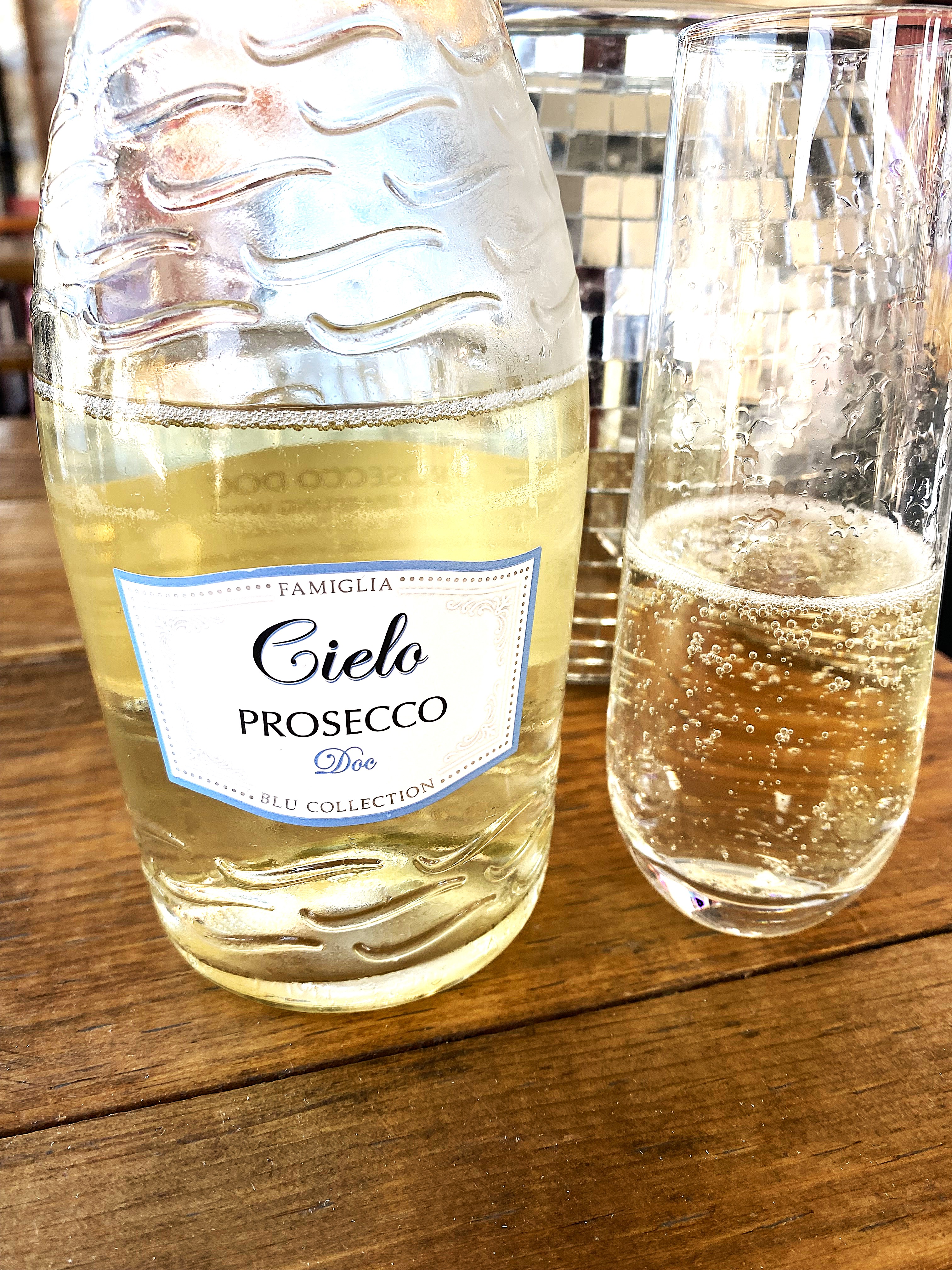
We started off our meal, by having my Bride enjoying their Caesar Salad of Romaine lettuce, croutons, heirloom cherry tomatoes, Parmesan crisp with John Cross smoked whitefish pâté Caesar dressing.  I had their Gnocchi filled with wild mushrooms, roasted garlic, Sherry cream and fresh herbs. We began by enjoying Charles Ninot Methode Traditionelle Brut France NV from Famille Piffaut.  From what I can gather, this wine is made at a young winery in the Languedoc region, in a vineyard with a high altitude.  It is a French alternative to Italian Prosecco, made from Chardonnay grapes that are picked early in the season to maintain freshness and then produced under the classic method compared to the bulk method for sparkling wines.  A soft-golden colored wine with plenty of medium-sized bubbles that offered notes of citrus and exotic fruits.  On the palate this medium-bodied crisp wine displayed tones of citrus, pineapples, lemon zest with a touch of brioche, ending with a medium-count finish of fruit and candied lemon zest. 

For our entrées the menus arrived with a salutation of “Happy Birthday!” as my Bride always tries to see if there is something special done by the house.  My Bride had the Chilean Sea Bass with stir-fried Asian vegetables, Bamboo rice, and a Ginger-Miso citrus Beurre Blanc.  I am becoming a creature of habit also, as I had Braised Short Ribs with Fingerling potato hash, roasted Brussels Sprouts, Butternut squash and a house-made Demi-glace.  Afterwards we had our decaffeinated coffees and shared a Chocolate Tarte with salted caramel and Vanilla bean ice cream.  We then started with Stoller Family Estate Pinot Noir Willamette Valley, Oregon 2023.  Stoller Family Estate began as a second-generation family farm in 1943 to raise turkeys, and in 1993 Bill Stoller acquired the property from his father and uncle with the vision of a winery.  The vineyard is the largest contiguous vineyard in Oregon’s Dundee Hills and comprises 400 acres with 225 acres dedicated to vines with an elevation of 210 to 650 feet. The south-facing vineyard is planted on Jory, a fertile and well-drained red soil that is the Dundee Hills.  The Pinot Noir grapes start as a cluster that are sorted and removed unwanted materials, then destemmed, the whole berries go into tanks at cool temperatures for about ten days.  The Initial Fermentation usually takes five to seven days, and then the wine is pressed.  The wine is then aged for about ten months in French Oak and then bottled.  This deep burgundy colored wine offered notes of black cherry, cassis, cedar and sous-bois.   On the palate this medium-bodied well-balanced wine displayed tones of rich brandied cherries, ethereal tones of soil, blending with supple tannins and ending with a medium to long-count finish of fruit and terroir. 

Posted in Dining, Wine | Tagged , , , , , , , , , , , | Leave a comment

Pepi Lignana

Through social media, I was introduced to Fattoria Il Casalone Pepi Lignana and later, so was my local wine shop The Fine Wine Source in Livonia, Michigan.  Pepi Lignana has been making wine since 1960, and now there is three generations in the winery.  They have twenty hectares of vines in the Tuscan region of Maremma, facing the eastern lagoon of Orbetello.  The staff at The Fine Wine Source and I had a chance to try three of their wines.

The first wine that we had was Fattoria Il Casalone Pepi Lignana “Leopoldino” Tuscan Maremma Vermentino DOC 2022.  This wine is a blend of eighty-five percent Vermentino and fifteen percent Viognier; and of the twenty hectares of vineyards on the estate, eight hectares are devoted to Vermentino which can handle the loamy, sandy and clay terrain as well as the sea air.  The fruit is manually harvested, then gently pressed and Fermentation lasts for twenty day in a temperature-controlled Stainless-Steel tanks and then aged for seven months on fine lees.  The straw-yellow colored wine offered notes of peaches, apricots, golden apples, violets and wisp of salt-air.  On the palate this medium-bodied, well-balanced displayed tones of stone fruits and apples ending with a nice medium-count finish of fruit, spices, honey and saline.  I think the addition of the Viognier adds character and elegance to the Vermentino.

The second wine that we had from Fattoria Il Casalone Pepi Lignana “Poggio Colombi” Cabernet Toscana Maremma DOC 2022.  Tuscana Maremma wines are a brighter and more modern concept of wines from the Tuscan region.  The wines tend to be more varietal driven, and they have a designation for “Cabernet” which may be Cabernet Franc, Cabernet Sauvignon or Carmenere, alone or in combination; this wine was seventy percent Cabernet Sauvignon, twenty percent Cabernet Franc and ten percent Petit Verdot.  The fruit is grown on land that is loamy, sandy and clay terrain and the sea breeze. After the fruit is manually harvested, it undergoes Initial Fermentation and Malolactic Fermentation, then it is aged for twelve months in second-used French oak barriques and then another six months in bottle before release.  A rich ruby colored wine that offered notes of dark fruits, wild berries, spices, tobacco leaf and sous-bois.  On the palate this medium-bodied, well-balanced wine displayed tones of black and red cherry, blackberry, blending with silky tannins and ending with a medium-count finish of fruit, spices, leather and terroir.  

The final wine of the tasting was Fattoria Il Casalone Pepi Lignana “Il Cucchetto” Toscana Maremma DOC 2020.  “Il Cucchetto” was pure Cabernet Sauvignon grown on the estate’s vineyard of loamy, sandy and clay terrain and the sea breezes.  Though looking at their website, perhaps later vintages of this wine had fifteen percent Petit Verdot.  The fruit is manually harvested, pressed and undergoes Initial Fermentation and Malolactic Fermentation, with additional racking for ten days, and then it is aged for eighteen months in French Oak barrels, and then an additional six months of aging in bottle before release.  This deep ruby colored wine offered notes of black and red fruit, wild berries, spices, menthol and sous-bois.  On the palate the full-bodied, well-balanced wine displayed tones of black and red cherries, blackberries, cassis with assorted spices blending seamlessly with mellow tannins and ending with a long-count finish of fruit, tobacco, and terroir.  A delightful red and total consensus by the group that this was the winner.       

Posted in Wine | Tagged , , , , , , , , , , , | Leave a comment