Ciao Italian Bistro in Fenton

We were meeting The Caller and his charming wife at a new location, this time at Ciao Italian Bistro in Fenton for a leisurely lunch.  Now The Caller lives out in the wilds of Michigan, where even the GPS on our phone system, let alone the phones always work.  So, we try to meet somewhere in between and this was a new restaurant for us to try in the city of Fenton.  It was funny, because my Bride and I, both have the same iPhone and the same phone service carrier and our GPS gave us two different routes to get to the restaurant.  Usually, she teases me that my iPhone knows that I like roads, instead of freeways, but the route was the same in the beginning using the freeway, but they diverged when we got on the roads, two different routes, same travel time, and we did get there.  We even got there early before the reservation, so she wanted to go to a bakery, since we had time.  As we started to walk to the bakery, The Caller yelled out to us from the parking lot, to get him a cherry pie, so we became a delivery service as well.  They went in and got the table, and they started with out us with cocktails. 

The restaurant had two parts, a long narrow bar side with booths, and the adjacent restaurant with tables and booths; we sat in the restaurant at a table and commandeered a booth to hold all the stuff we had bought at the bakery.  We are very casual diners and food tends to get shared, so we just ordered a couple of appetizers to start off with, along with the bread.  We had an order of Shrimp Luca, jumbo shrimp lightly breaded and flash-fried topped with a lemon garlic cream sauce and an order of Calamari, flash-fried and served with homemade aioli sauces.  We then all ended up with pasta orders; Pasta Rustica with sautéed Italian sausage, red onions, banana peppers and spinach in a roasted garlic marinara sauce tossed with penne pasta; Lobster Ravioli with claw meat stuffed saffron pasta, tossed with shrimp, spinach, and roasted tomatoes in a Sherry cream sauce; Pasta Primavera, penne pasta sautéed with onions, tri-color peppers, mushrooms, and cherry tomatoes tossed in a garlic, olive oil, fresh herbs and lemon sauce; and Shrimp and Sausage Scampi with sautéed jumbo shrimp and Italian sausage with artichokes, asparagus tips, sliced garlic and fresh herbs in a white wine lemon butter sauce on fettuccine pasta.  All followed by sorbets and “Baked Alaska” with Neapolitan ice cream center.

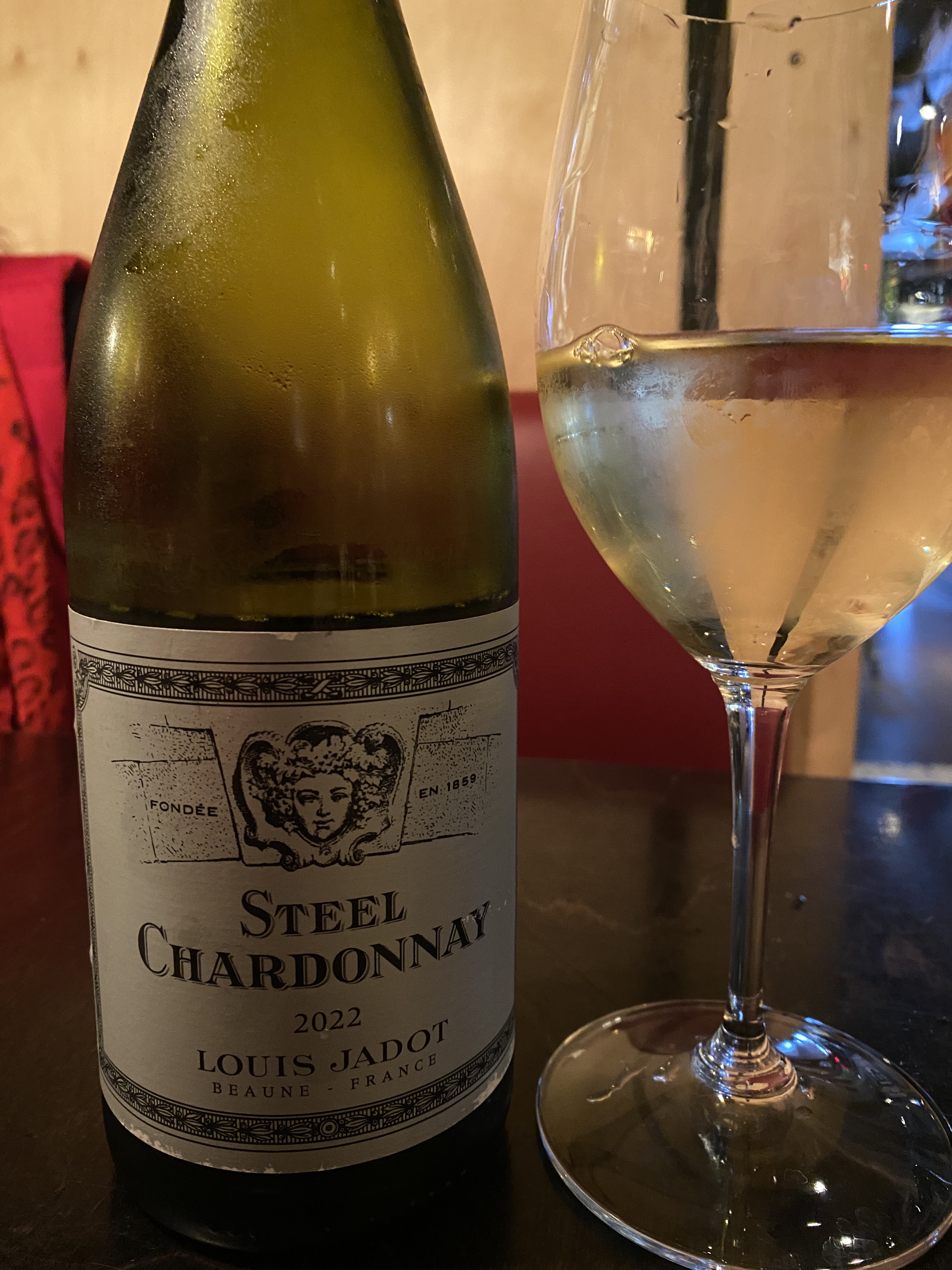
We were going to start with a white wine and then go with a red, but all interest was leaning towards a red and we ended up getting two bottles of Vietti Castiglione Barolo DOCG 2019.  Vietti is a wine producer in Piedmont, known for their Barolo and Barbera wines, along with being one of the proponents of resurrecting the Arneis variety.  The estate began producing its first wines with the family name in 1919 and they were one of the original wineries to ship Barolo to the USA. Most of the Nebbiolo grapes come from the vineyards in the Castiglione Falletto which is a mix of sand, chalk, and clay soils.  The Castiglione Barolo is their traditional Barolo interpretation and the vines are between ten and forty-five years old.  The grapes are hand-harvested, separated by individual cru locations, then gently pressed, and the juice is fermented for almost a month on the lees for about a month in a Stainless-Steel tank.  Malolactic Fermentation takes place in wood, during the thirty months in large barrels and a small portion in barriques.  Each cru is vinified separately and assembled before bottling.  The wine was a dark ruby color that offered notes of plum, black cherries, blackberry, and secondary notes of rose petals and tobacco leaf.  On the palate tones of the black cherry was prominent and blended nicely with smooth tannins and a touch of classic leather, ending with a medium to long count finish of fruit, spices, and terroir.  We look forward to our next meeting with The Caller in the spring.          

Posted in Dining, Wine | Tagged , , , , , , | Leave a comment

A Tasting with Tom Celani Part Two

There I was ready to enjoy four more wines from Tom Celani’s Celani Family Vineyards at The Fine Wine Source in Livonia, Michigan.  Tom had a busy day and while he was autographing wine bottles and regaling the wine tasters, his assistant Vanessa Thomas was pouring the wines at one of the tables in the shop.  The wines are made from estate grown Merlot, Chardonnay and Cabernet Franc and the Cabernet Sauvignon comes from select vineyards in Coombsville and Mount Veeder.  A perfect afternoon for any wine lover, and the shop was full and more people were coming through the doors, even though people were making appointments, others were coming in early, didn’t make an appointment, or some even came in to buy other wines and weren’t even aware of the tasting.  Regardless, I am happy to report that everyone was well taken care of, and having fun.  Now, if they could only get rid of the guy in the sport coat and hat, taking photos and asking arcane questions.

We had a chance to taste two vintages of the Celani Family Vineyards “The Family” Napa Valley 2018 and the Celani Family Vineyards “The Family” Napa Valley 2021.  The production notes for both of these wines were similar.  They were aged for twenty months in French Oak of which ninety percent was new and bottled without fining or filtration.  The 2018 was a classic interpretation of Cabernet Sauvignon with deep garnet coloring and offering notes of black fruit, violets, and graphite.  On the palate the black cherries and blackberries led the parade of flavors, with hints of cardamom, cigar box, dark chocolate, blending with fine tannins and a good finish of fruit and terroir.  This wine was drinking perfectly and still had fifteen to twenty years of cellaring to even get more complex.  The 2021 was just released and we were the lucky recipients of having the first taste.  My notes led off with terroir.  This dark garnet wine offered notes of black and red fruits, violets, and terroir.  On the palate the wine was big and powerful with tones of black cherries, cassis, and then secondary tones of tobacco, almonds, cardamom, and licorice and then finally ending with more terroir and fruit.  It may be that this wine is so young, that the terroir led and really impressed me, not a cookie-cutter Cab, by no means.  It will be interesting to try this wine over the next twenty years to see how the tannins merge with terroir and fruit.

For our last two wines, we once again treated to trying two different versions of the “Ardore” wine, one from a magnum, and one from a standard bottle.  The “Ardore” also evokes Tom Celani’s passion for a great cigar, as the label reminds one immediately of a cigar wrapper.  We tried the Celani Family Vineyards “Ardore” Napa Valley 2018 and the Celani Family Vineyards “Ardore” Napa Valley 2019 and this is their flagship wine.  The production notes are the same for the two vintages.  The wine is made from a careful selection of ten barrels of Cabernet Sauvignon from the most exceptional vineyard sites in the Coombsville AVA.  The wine is aged for twenty-two months in pure new French Oak, and the wine is never fined, nor filtered.  The 2018 vintage which came from a magnum is a dark garnet wine that offered notes of blackberries, strawberries, cassis, black tea with hints of violets, tobacco, mocha, and graphite.  On the palate the tones of the fruits have merged smoothly with the velvety tannins wrapped up in supple oak and finishing with a long count of fruit and terroir.  A powerful wine, that is totally drinkable now and could cellar for twenty-five to thirty years.  The 2019 vintage of “Ardore” immediately caught my fancy, as the first word that I wrote was “spectacular” and then I went back to being my quiet self.  This dark garnet wine offered notes of blackberry, strawberry, currents, raspberries, followed by chocolate, cigar box, leather, bramble, and graphite.  On the palate the dark fruits were elegant and supple, blending with very fine tannins and ending with a very long finish of fruit and terroir.  While easily drinkable now, another twenty years in the cellar would not be out of the question.  After I sneaked in second taste of each, while the 2018 was big, the 2019 really appealed to me, with its more ethereal qualities that truly finished this tasting.             

Posted in Wine | Tagged , , , , , , | Leave a comment

A Tasting with Tom Celani

It was a pleasure to go to my local wine shop, The Fine Wine Source in Livonia, Michigan as I knew that Tom Celani was conducting another wine tasting and he would be autographing bottles while he was there. I joked with him, that it was truly a Tom Celani Day, as I was hearing him being interviewed on the radio for his matching funds for a food drive for two local charities called “Hunger Free in the D,” as I was doing errands, before attending the wine tasting.  Since my earliest days as a clothier, I had stopped listening to music on the radio and listened to the top news radio station in the Detroit area, so that I, as a clothier could speak rather intelligently with the customers, a trait that has been lost, I have noticed among the clerks that I now encounter.  I lead in with this introduction, because for years I had heard Tom Celani and all the philanthropic work he has done in the Detroit area, long before he had a winery.  Tom Celani is lauded in the Detroit area for his largesse for charitable organizations that he helps in a grand manner.  He and his father ended up creating one of the largest Miller distribution companies in the United States along with other beers and wines.  Tom Celani fell in love with wines, first as a drinker and a collector and finally acquiring a Tuscan-style estate with seventeen acres of grapes and one-hundred-twenty olive trees in the foot hills of the Vaca Mountain range in Napa Valley.  As the proprietor of the Celani Family Vineyards he has chosen to bottle wine without costs becoming a consideration, to him wine is about quality and not quantity.  In fact, he was joking that he is not sure if the winery, will ever truly show a profit, because of his concern about getting the best wine each and every time.

The tasting began with Celani Family Vineyards Chardonnay Napa Valley 2022 from the Oak Knoll District.  The Chardonnay comes from estate grown Wente 2A clone grapes and was whole-cluster pressed and fermented on its lees for ten months using thirty percent new French Oak and seventy percent in self-stirring egg-shaped concrete fermenters. To maintain the natural acidity of the Chardonnay, malolactic fermentation was inhibited.  The wine was a nice soft golden color and offered notes of apple, pear, tropical flowers and brioche and some soft notes of spices and jasmine.  On the palate there were tones of fruit and floral flavors with crisp acidity, balanced and with a very decent length finish of oak and roasted nuts.  This Chardonnay was big and impressive and they feel that it will cellar for about ten years. 

The following wine was the Celani Family Vineyards Robusto Napa Valley 2019.  Tom Celani really enjoys a great cigar, and Robusto is a classic shape cigar, and one of his other charities that he hosts is “Cars and Cigars.”  The original Robusto was a Proprietary Red Wine, but it now is pure Merlot and aged for nine months in a mix of French Oak barrels.  I have never denied that Merlot is one of my first loves, back in the Sixties and Seventies when I first started learning about wine.  This estate wine is just a deep inky wine with notes of red and purple fruits, pepper, and secondary traces of new leather, licorice, and a dash of orange peel.  A nice wine with balanced tannins and on the palate tones of cherry, plum, pomegranate, currants with a nice medium finish ending with some fruit and graphite terroir.  Another wine that is touted for ten plus years of cellaring, and I believe it, though I may never know.  I drink Robusto before meals, as well as during meals, it is great with appetizers and conversations, and I like it with pizza, as well as fancy elaborate meals, this is one wine that we try to keep an inventory of in the house, as well as a guaranteed hit when we are dining out.     

Posted in Wine | Tagged , , , , , , | Leave a comment

Post Thanksgiving at Bigalora Cucina

We all decided to get together for dinner at Bigalora Cucina in Royal Oak.  The crowd has met at several of the different locations of this local pizzeria chain over the years, because they can accommodate our crowd.  I think that we had twenty-two show up, which is a great showing.  Two were AWOL who went to see the Michigan State football game (alumni and son).  Also, two spouses of the next generation skipped the festivities as well.  I think that the restaurant had hoped that we would take over the second-floor loft, but the steps were too difficult for a couple of our crowd.  This chain and a couple of other restaurants are owned and managed by a talented chef, that my Bride and I discovered when we first got married, as his first place was near our home.  We basically ate there every Saturday night, as our date night, with the same table and the same waiter.  We still continue going to his other restaurants as well, but they are a bit more dear, compared to the original venue, but life goes on.

Biga, if you do crossword puzzles, refers to the pizza dough.  The chef went to Italy and researched plenty of local pizzerias and small eateries to find the dough that he wanted.  His quest was to find a dough that would not be heavy on the stomach as some could be, he wanted one that would be easily digested.  After trial and error, as he has a complete kitchen in his headquarters, where he can experiment with new dishes or tweak older classics.  The pizzas are perfect for two, or for one hungry individual.  The other caveat is that he feels that the dough, because of its texture should only have a couple of toppings on each pizza.  The other secret ingredient, which is right out in the open in each of his pizzerias is a large wood-fired oven for intense heat and flavor, this oven is so important that he has the same oven installed on two travelling busses that he rents out for parties.  Down at our end of the table, a Pinot Noir was requested to start with.  We had a bottle of Nielson Wines Pinot Noir Santa Barbara County 2021, which originally was called Byron Winery.  Nielson Wines pays homage to Uriel J. Nielson, who in 1964 planted the first commercial vineyard in Santa Barbara County, against the common collective that the region was too cold for grapes; fifty years later, there are about a hundred wineries and thousands of acres of vineyards there.  The vineyard is located eighteen miles from the ocean and is one of the first districts that witness the fog burn-off each morning.  The winery is Certified Sustainable and they use small-lot techniques, such as hand-pruning, block by block harvesting, barrel fermentations and aging on the lees.  A garnet-colored wine that offered notes of red fruit, and a touch of tea leaf.  On the palate tones of red fruit permeate, with a bit of sweet caramel and a soft finish of terroir.      

As we were looking at the menu, my Bride heard that they had a Butternut Squash soup, so that was how she wanted to start off.  I got us a plate of Prosciutto di Parma, Grana Padana, arugula, and Focaccia bread, that we shared.  We then shared a Pepperoni Pizza with House-blend Mozzarella, House-made tomato sauce and Oregano.  There was no “doggie bag” for us.  As we were getting closer to food time, I switched the wine over to something Italian.  We had a bottle of Marramiero Dama Montepulciano d’Abruzzo DOC 2020.  The winery was begun by Dante Marramiero in the early 20th Century and followed by his son Enrico on land from Gran Sasso through the hills of Rosciano to the sea planted with vineyards and olive groves.  The wine is pure Montepulciano, basically from the Rosciano vineyards which are deep, rich, and basically clay.  The first year of production for this wine was in 1994.  Fermentation begins in Stainless Steel vats with a long maceration, the wine goes from Stainless Steel to barriques an then in bottle for a total of eighteen months of aging before being released.  A deep purple wine that offers notes of black fruit, spices, and licorice.  On the palate there were tones of black cherry, oak, soft tannins, and plenty of spiciness with a decent finish of fruit and some leather.      

Posted in Dining, Wine | Tagged , , , , , , , , | Leave a comment

Thanksgiving 2023 Part Two

Since the earliest days when I first met my Bride, Thanksgiving was her holiday, plus whatever other holidays she could get, being one of five sisters.  She always thrived making dinner plans and she was prepared, as she had dishes for twenty-four before I even showed up.  I grew up, where holidays were already brokered among the family, the adults ate in the dining room and the kids ate in the kitchen.  It was kind of a rite-of-passage when we slowly joined the ranks in the dining room.  Of course, back in those days, the food took the prominent position, and we grew up with beer and cocktails as the beverage of choice.  I just remember that everyone thought that I had hollow legs, because I could eat, walk away from the table for a minute and then I was ready to start again.  Back then, all the food would be on platters in the middle of the two tables.  Now, we have all of the food and it is placed on an island and it is like a buffet line, and you hope the kids don’t spill their plates.  I kind of prefer the old way, because it didn’t seem like you were eating that much, and you could keep nibbling, because the food was there in front of you. 

Of course, it would not be Thanksgiving without a turkey.  Evidently this was not a good year for turkeys, because they were all anorexic and the largest turkey, my Bride could find was fourteen pounds, as we usually get one around twenty-four pounds, so she also bought a turkey breast as well.  Then there was a question about stuffing, so we ended up with two; one based on Ritz crackers and the other using bread.  We also had Armenian Pilaf, which was a basic requirement for me, but I think now, they would be an uproar if it was not part of the meal, not to mention that it is one of the hotly debated topics of who is taking the leftover Pilaf.  We started off with a Pinot Noir, as one of the guests, brought one, even though there are plenty downstairs.  We had a Samuel Robert Winery Pinot Noir Vineyard Reserve Willamette Valley, Oregon 2021.  Samuel Coelho was born in Modesto, California and moved to Oregon as a young boy with his family during the early growth years of the Oregon wine industry.  He grew up with hands-on knowledge and went to school for business management.  He helped his family grow Coelho by 400% in five years; during this same period, he began a negociant wine business named Plush Wine Company, and 99% of Plush’s production was sent to the emerging wine market of China.  In 2011 Samuel and his wife Bryn created Samuel Robert Winery, along the same lines as Plush, but by 2014, he realized that he had to purchase his own vineyard, because of the demand for wines of Willamette Valley.  In 2018, the growth was over 500% and he bought additional vineyards, and started another winery Conscious Wines highlighting environmental awareness.  A purple wine with dark pink accents that offered notes of red fruits and a touch of vanilla.  On the palate, a light Pinot Noir with tones of red cherry, strawberry, a hint of vanilla, very smooth with soft tannins and a dry finish. 

We also had Roast Tenderloin with a light marinade of lemon and garlic.  There was also many assorted sides of vegetables and salads.  After dinner we also had about eight cakes and pies for dessert, as we also celebrated three birthdays along with the Thanksgiving festivities.  I went down to the cellar to find something interesting and returned with a St. Supery Merlot Napa Valley 2001, this wine was still one of their main offerings, before they really got into the single vineyard wines.  St. Supery was one of the first wineries that we visited and they are located in Rutherford where they have an estate and they also own another much larger estate in Napa Valley as well.  The original proprietor Robert Skalli came to Napa Valley from Corsica, where his grandparents founded the winery, Terra Vecchi. In 1982, he purchased the Dollarhide estate, a 1500-acre cattle ranch in the northeast corner of Napa Valley. He also purchased 56 acres in Rutherford, where the winery was built and still stands today. The first vintage of wine was produced in 1989 and the wines began to gain acclaim.  The Skalli family sold the winery to the large fashion corporation Chanel in 2015; which makes me wonder if my “Lifetime Pass” will still be honored, but I haven’t thrown it away.  I am glad to report that this wine was far from being over the hill, it was very mellow and drank like a Grand Cru, so no complaints from my Bride or myself or anyone else that tried the wine.  I have always had a soft spot for Merlot from my student days.  This wine was a rich purple with tinges of red and no browning or foxing at all and it offered notes of dark fruits, tobacco, and a trace of anise.  For a twenty-two-year-old this wine was still bright and lively and not ready to roll over, with tones of black cherry, blueberry and still very supple tannins with a nice decent count finish of fruit and terroir. 

Posted in Dining, Wine | Tagged , , , , , , , , | Leave a comment

Thanksgiving 2023 Part One

Thanksgiving was originally created as a holiday in America by Abraham Lincoln to be celebrated on the last Thursday in the month of November, FDR attempted to change the date, but the populace created a backlash and the holiday went back to its original day of celebration.  I mention all of this, because the day before Wednesday is the artificial day that my Bride uses to mark the end of Christmas; not that we celebrate it for eleven months, but she shops eleven months.  The day before Christmas all presents are wrapped, and bundled by family, the Christmas and Chanukah cards are filled out, newsletters enclosed and posted, along with all cartons that are to be shipped to celebrants that we will not see for the season.  This worked great during my years in retailing, because if I had free time, it was not spent shopping, and that by the time Christmas Day occurred, all the bills for the holiday were paid off and we could plan on a well-earned vacation in January or February, depending on business; I might add that she was doing this prior to the Raconteur days, but I whole heartedly accepted her planning.  The house is prepped for the crowd of twenty-four this year, so that requires a table in the dining room, the living room, the breakfast nook, and a few little tables in the family room, because invariably there is a little football game that is historically played in Detroit on Thanksgiving Day, after the annual Thanksgiving Parade, traditions are maintained in Detroit.

There is a snide debate that my Bride and I have on Thanksgiving, during the craziness of food preparation.  She calls for appetizers for two and dinner at three; the debate is always about who the first guests would be and a what time, and when should we expect the last to arrive.  She starts the appetizers after the first guests arrive, and splits the appetizers in half, so that there is something new to pull out when the majority show up, usually just before the scheduled dinner, which we always plan on serving later.  The first bottle of wine that is opened is for my Bride and myself and she adores Sauvignon Blanc, and we tend to buy several brands in the handy-dandy economical multi-case packages.  I would venture to say that over the years, her favorite is from Famille Sichel and we have been buying it vintage after vintage.  This year it is Famile Sichel Sirius Bordeaux 2022.  Famille Sichel is a family owned negocient firm from 1883 in Bordeaux, as they were in the procurement process for their locations in Mainz, London, and New York.  In 1938 they even bought Chateau Palmer, which at the time had fallen on bad times and have since brought it back to all its glory.  The family does not believe in resting on their laurels as in 2001 they even built a completely new bottling and storage facility in the Bordeaux region.  This particular bottle of wine is a blend of the two leading white grapes of Bordeaux, namely Semillon and Sauvignon Blanc.  I don’t think that I would be remiss to opine that this wine was aged in Stainless Steel as there was plenty of fruit and very refreshing.  It starts off with a nose of citrus fruits and finishes with some terroir with a decent finish.  The wine is always fresh and needs a little time for the first glasses to breathe as they are very tight and still quite acidic.

Then as we got more of the crowd in for additional appetizers and there was demand for Chardonnay, I opened a bottle of Domaine Albert Bichot Bourgogne Vielles Vignes de Chardonnay 2020.  Domaine Albert Bichot is a major family-owned and run negociant house and estate owner in Burgundy, that began in 1831 and is now based in Beaune.  Their main focus is Pinot Noir and Chardonnay wines and in their more southern holdings they also produce some Gamay in Beaujolais.  Alberic Bichot took over the reins in 1996 and is the sixth generation of family to run the holdings.  They own more than one-hundred hectares of sustainably farmed vineyards divided among six estates, and the majority are run organically.  The fruit is from the Cote de Beaune and the Haute Cote de Beaune and the vines are from twenty-five to thirty-five years of age hence “old vines.”  The majority of this wine has been aged for five to six weeks in mostly oak barrels.  A pale-golden colored wine that offered notes of pears, apples, and butter.  On the palate tones of white fruits, tinges of pineapple, honey, oak, and terroir with a soft finish of fruit.       

Posted in Dining, Wine | Tagged , , , , , , , , , , , | Leave a comment

Republica

I have to admit that I enjoy eating ribs when dining out.  They may not be the healthiest choice, and neither am I.  I think back in the Old Country, ribs would not have been proper, because they are not listed as proper food in the Bible, and I think that being westernized brought about the other white meat in the diet.  I had discovered a great place to have ribs, courtesy of my dinner club, and over the years I have seen plenty of people that I know, that also don’t eat ribs at home, but enjoy them out.  I am also a pain in the arse, as you have already discovered by now, as I only want my ribs with light sauce and the meat should fall off the bone.  I want to eat my dinner with a knife and fork and not with my hands.  I was upset when my tried-and-true place closed, because of a kitchen fire. I sent out a plea among my friends on social media for a suggestion (not a chain).  Republica is the one that sounded the best and closest to my desires.  Though the restaurant became family owned in 2013, there was a unique display piece featuring businesses and services within the community from another era.

Little did I know, that my Bride decided to have a group dinner with some of her friends and suggested Republica, even though we had not eaten there yet, and we were going on my “say-so.”  One of the other spouses enjoys playing Devil’s Advocate and always finds ways to disagree with me, and frankly I had no desire to go, but the wrath of my Bride would be worse than someone at the other end of the table.  My Bride had the Lexi’s Loaded Caesar with avocado, Parmesan, bacon, tomato, croutons with a Lemony Caesar Dressing topped with Salmon.  I was there for the ribs and they were based on a famous “rib-house” back in the day, so I had the Mitch’s Famous Ribs with Fries and a side order of Onion Rings.  I mean go big or don’t go; but I did miss not having some creamy Cole Slaw.  I will definitely go back there again for the ribs, and my Bride enjoyed her non-classic salad. We were getting a bottle of wine, and we shared a glass with wife of the “advocate” and they had a glass of Bota Box Nighthawk Black Rich Red Wine California NV, the red house wine and owned by Delicato Family Vineyards.  It was a wine that came in a three-liter plastic bladder with a tap, nestled in cardboard box.  I could not find any information about the Rich Red Wine varietals.  Though the wine was written up by the winery on a page as “California-Rich aromas of raspberry, blackberry, caramel, and hints of vanilla.  Extending into lush flavors of fig jam, dark chocolate, toasted marshmallow, and baking spice, this smooth full-bodied wine culminates into a juicy, lingering finish.”

The restaurant had a limited wine carte, so I went with something very basic to go with my ribs, and my Bride could make it work with her salmon.  We ordered a bottle of Daou Vineyards Cabernet Sauvignon Paso Robles 2022, with the intention of sharing the bottle, but we were the only ones enjoying the wine.  Daou Vineyards is famed for their Cabernet Sauvignon, and their Bordeaux-style blends; as well as Rhone styles and Burgundian style wines.  Their wine portfolio is divided into four tiers at different price points.  The top-level is their Estate Collection, which made from estate-grown fruit and “Soul of a Lion” is their flagship wine.  The estate was established in 2007 by brothers George and Daniel Daou, who previously had a successful IT business.  The initial purchase was for part of the Hoffman Mountain Ranch, and in 2012 they purchased the balance of the estate and now have two-hundred-twelve-acres of vineyards.  The Hoffman Ranch was the first modern commercial winery in Paso Robles after Prohibition.  It was established by Stanley Hoffman with the help of winemaker Andre Tchelischeff.  The wine is a blend of seventy-eight percent Cabernet Sauvignon, fifteen percent Petit Verdot, six percent Merlot, and one percent Cabernet Franc.  After the fermentation the wine was aged for eight months in French Oak, of which fifty percent was new.  A pretty ruby colored wine that offered notes of black fruits, sandalwood, tobacco, and spices.  On the palate tones of black fruits, figs, spices blended with light tannins and a medium count finish of fruit and vanilla.

Posted in Dining, Wine | Tagged , , , , , , , , , | Leave a comment

A Recent Dinner Club Adventure

My dinner club that I write about on occasion recently had a “Dutch Treat” meeting, which is an old way of saying that everyone pays their share for the meeting.  Most of the meetings are hosted dinners, and once a year, myself and two other members are the host.  Our newly installed President for the year, tried to get us at a different restaurant, but their private room was taken.  The club is almost one-hundred-fifty years in age, and originally the meetings were held at a member’s home with dinner.  I don’t know about you, but I couldn’t have a formal dinner at my home for thirty plus men, years ago the founders were able to.  The club survived the Great Depression, but by then the meetings were held at a residential hotel’s banquet room in Detroit.  Finally, as the members were mostly living in the suburbs, the hosts began having their meetings at restaurants.  About twenty years ago, there was an upheaval and some of the members objected to paying for the drinks, because they didn’t drink, and nowadays the members pay for their own bar tab.  Of course, it was amazing that members that used to drink “single malt Scotch” now drink “well Scotch.”  I found a silver-lining in that if there was another member that enjoyed wine, we would just share a bottle of wine.

The restaurant that was chosen was what I would graciously call an Italian restaurant for Americans.  The entrée choices were Lasagna, Angel Hair Provençale, Chicken Milano, Fettucine Alfredo, Mama Pasta Boat, and Broiled Salmon with a Dill Sauce.  Instead of a salad, everyone got a cup of “Italian Wedding Soup” and for dessert we had a Hot Fudge Sundae.  There was some grumbling as there was not a steak offering, but since we all receive notification of the menu ahead of time; I made sure that I had a late lunch, as I didn’t expect much from the restaurant, and I almost have to go, as I have a quasi-officer role for the last thirty years.  I guess that I should mention that I have been a member for forty-three years and when I joined, I was definitely the youngest member, as we had a member then, who had joined in 1928. The funny thing is, that age wise, I am still one of the youngest members.  Though I do anticipate that there will be one other change soon, as we have a dress code that requires a coat and tie for dinner.  It has been relaxed for the summer meetings to “Country Club Chic” and I figure the dress code will be abolished soon.  

As for the beverage of choice for the meal, I was by myself as a wine drinker, but there wasn’t anything special of the few choices by the bottle, so I just had a glass of wine.  Alas, the wine hadn’t been poured probably for several days, and they only use the cork, and the wine had turned.  They did open a new bottle.  I was drinking Cantine Melini Borghi D’Elsa Chianti DOCG 2021 from Tuscany.  The estate began in 1705 in Pontassieve, east of Florence.  In 1860, Adolfo Laborel Melini began bottling the estate’s wines in the classic “fiascha” straw-wrapped bottles that eventually became synonymous with Chianti.  Near the end of the 20th Century the winery was purchased by Gruppo Italiano Vini and relocated to Gaggiano in the Chianti Classico region with modern facilities and four stories of production.  Borghi d’Elsa takes its name from the villages that line the Elsa River.  The soil of this region is a blend of albarese limestone, and marl.  The wine is created in a traditional Tuscan style, where the grapes are macerated for ten days with frequent punching down.  Aging take place over a period of six months in a combination of large oak casks and Stainless-Steel tanks.  The wine was a deep ruby in color and offered notes of red fruit, ripe grapes and violets.  On the palate a dry wine with tones of raspberry and cherry, soft tannins, and cloves.  Easy drinking and not made with the concept of cellaring.  It was one of the few Italian wines offered and more mellow compared to the homemade “Dago Red” of my youth.         

Posted in Dining, Wine | Tagged , , , , , , | Leave a comment

An Araujo and Two from Musar

It really is a joy when I walk into my local wine shop, The Fine Wine Source in Livonia, Michigan, as I never know what I may encounter.  Sometimes it can be very eclectic and from two totally distinct areas of the world.

The first wine of this tasting was an Eisele Vineyard “Araujo” Cabernet Sauvignon Napa Valley 2011.  Eisele Vineyard Estate went to Araujo Estate and then back again.  Eisele Vineyard is thirty-eight acres located on an old alluvial fan, near the northern end of Napa Valle, and east of Calistoga, and ground water is very deep underground, on this rocky soil that produces small berries on vines that have very deep roots.  The grounds were originally planted in the 1880s to Zinfandel and Riesling, and the first Cabernet Sauvignon vines were planted in 1964.  The modern history of this famed vineyard begins with the first vintage of Eisele Vineyards in 1971, by Milton and Barbara Eisele became the stewards of the land and winemakers in their retirement years.  The first vintage was overseen by Paul Draper of Ridge Vineyards and it was one of the original vineyard-designated wines in California and there are a few fortunate people that are still enjoying that initial vintage to this day, as it is considered a hallmark in Napa Valley.  The second vintage was produced by Conn Creek Winery in 1974 and continued to 1991 under the aegis of Joseph Phelps.  The 1991 vintage had two bottlings, the second being the first Estate Cabernet Sauvignon.  In 1990 Daphne and Bart Araujo bought the land and the start of the Araujo Estate years which lasted for twenty-three years and they were one of the first to embrace biodynamic farming.  They also constructed the first winery on site with temperature-controlled caves; a barn-like structure built into the hillside..  In 2013, the property was purchased by the Pinault family’s Groupe Artemis which has several prominent estates including Chateau Latour.  Grapes are sorted and transferred without pumping to stainless steel or concrete fermenters. Individual lots are aged in French oak barrels before the final blends are assembled.  This wine is ninety-eight percent Cabernet Sauvignon and two percent Cabernet Franc.  The harvesting by hand entailed several pickings to ensure total ripeness, and they still had secondary sorting of this vintage which required the hiring of an additional fifty trained workers picking cluster by cluster. Fermentation in small tanks, and then the wine was aged in new French Oak for nineteen months.  The Eisel Vineyard pedigree was apparent, but the work of the Araujo family was also acknowledged.  This deep garnet wine offered notes of big black fruit, vanilla, and purple florals.  On the palate tones of rich and elegant black fruit melting and blending beautifully with luscious tannins that were just hitting their stride at the age of twelve, and a long lingering finish of fruit and terroir.  This wine is still so big and rich, that I think easily another ten or more years and it still would not hit its height. 

The following two wines that we had were from Chateau Musar, the first being Chateau Musar “Musar Jeune” Red Bekaa Valley, Lebanon 2021.  The Bekaa Valley (Beqaa Valley) is the center of the wine trade, as it accounts for ninety percent and it is also the center for Arak, the lovely, but potentially lethal anise flavored liquor that is the favored drink in the country.  The oldest winery there is Chateau Ksara, which was established by the Jesuits in 1857 with plants brought over from the French colony of Algeria.  Chateau Musar was founded in 1930 by Gaston Hochar and may be the most famous Lebanese winery on the international scene.  Gaston Hochar developed his winery after traveling in Bordeaux.  In 1959, Hochar’s son Serge took control of the vineyards, having returned from Bordeaux where he was studying enology.  The vineyard suffered during the Lebanese Civil War (two vintages were lost or damaged), and Hochar began to look beyond the domestic market.  The wine began to gain recognition after Michael Broadbent MW wrote about them in Decanter magazine in 1979 and by the time the war ended in 1990, just a tiny fraction of Chateau Musar was sold locally.  Musar Jeune is their entry level range and offered as red, white and a rosé.  This wine was first produced in 2007, unoaked, full of fruit, using youthful vines, to meet the demand for “current drinking.” The wine is a blend of fifty percent Cinsault, thirty-five percent Syrah and fifteen percent Cabernet Sauvignon; from vines planted since 2000 at around 1,000m above sea level.  The wine is fermented in cement-lined bats and bottle a year after harvest and released one year later.  A dark inky-black/purple wine that offers notes of red fruits and plums.  On the palate a silky currant, raspberry and cherry jam flavor with soft tannins and a finish offering some spices.

The second wine from this producer was their Chateau Musar Bekaa Valley, Lebanon 2017 continues to be made in their traditional manner, which requires seven years before it sees the light of day in a retail environment. The wine is a blend of Cabernet Sauvignon, Carignan and Cinsault (and this particular vintage the blend was equal for all three varietals) from vines planted from 1930 and later, on gravel soil over limestone, with the average age of the vines around forty years.  The different juices undergo a long fermentation with Initial Fermentation using natural yeasts, followed by Malolactic Fermentation in cement vats for about six months after the harvest. The individual juices are then transferred to French Oak for one year of aging.  After about two years from harvest, the individual juices are then blended and placed in cement tanks for another twelve months.  The wine is then bottled and stored in their deep, dark stone cellars on their sides for four years.  The wine is bottled unfiltered and unfined for maximum flavor.  The winery recommends standing the wine up, the night before serving, to allow the wine to settle.  They also recommend the use of prongs for opening bottles older than fifteen years of age and have even created a YouTube page for their instructions. This was a beautiful drinking wine with a nice ruby color and the Cabernet Sauvignon was the prominent wine of note with cherry, mulberry, and plums, and plenty of spices with cloves, cinnamon, vanilla, tea, and licorice.  With the extended years of production, the tannins were softened and fully integrated; the wine had a very nice long count in the finish with fruit and spices.  Totally drinkable now, or wait another ten or more years and I think the flavors will be totally layered.

Posted in Wine | Tagged , , , , , , , , , , , , , , | 2 Comments

A Great Threesome

I was at The Fine Wine Source in Livonia, Michigan picking up my monthly club selections and I was invited to try three wines proffered by a wine salesman who was trying to sell the wines to either the store, their restaurant or both.  Three Napa Valley Cabernet Sauvignon wines, a great way to start the day.   

The first wine was Brilliant Mistake Cabernet Sauvignon Napa 2021 in a black bottle that comes from Italy.  John and Stacy Reinert are the founders and proprietors of Brilliant Mistake who came from different backgrounds, but came up with a wine that became a hit in 2014 with fifty-five cases of wine.  They have as their winemaker Maayan Koschitzky, who worked at other cult wineries like Screaming Eagle and Dalle Valle.  There are no production notes, as everything I guess is proprietary.  The 2021 vintage provided them with small yields of high-quality pure Cabernet Sauvignon from their sourced vineyards in Rutherford and Oakville.  The vines took advantage of longer hang times and thinner canopies. A deep garnet/ purple colored wine that offered notes of black fruits, cassis, spices, lead pencil shavings and florals.  On the palate tones of black cherry, cassis, vanilla, and fine-grained tannins finishing with a long finish of fruit and terroir.  This was a big and chewy powerhouse, a truly elegant wine that just stunned me with its majesty and unfortunately, it was the first wine that I tasted, so the other wines didn’t have a chance.  I don’t usually talk prices, but from my conversations, this wine is totally underpriced for the category that it is in, and in blind tastings, this wine would could keep the professionals guessing.  This wine was amazing, as it was jostled in a winemaker’s satchel and poured with a Coravin system, right from the bottle.  With some cellar time, short or extended, and then decanted everyone tasting it, would be in heaven.

The second wine that I had courtesy of the wine salesman was Castiel Estate Cabernet Sauvignon Howell Mountain 2019.  Dave and Kathleen DiCesaris are the owners of Castiel Estate and the eighty-eight acres on Howell Mountain overlooking St. Helena.  While there is no “Howell Mountain” it is named after a small township and it was the first Napa Valley sub-region to get its AVA in 1984.  To be part of appellation, the vineyards must be planted from 1,400 feet to 2,200 feet above sea level.  The first vintage was in 2014 and all harvesting is done manually and requiring several passes to get the fruit at full maturity.  The soil is pumice ash flow and andesite rock.  At the winery, clusters are destemmed, and berries are chosen both by manual and optical sorting methods.  They use four clones of Cabernet Sauvignon that are planted in their own plots.  During fermentation, the wine is left on the skins until complete and then pressed and transferred to French Oak barrels of which sixty-five percent is new.  Each clone was fermented separately and kept apart for the first twelve months.  The wines were then blended and returned to the barrels for an additional eight month.  The wine was then bottled without fining or filtering and five-hundred-twenty cases were produced.  A deep garnet colored wine that offers notes of currants, black cherry, sage, and cloves.  On the palate there were tones of dark fruit and spices, blended with satiny tannins and a nice long finish of black cherry and terroir.

The third wine that I enjoyed from the salesman’s satchel was Purlieu Cabernet Sauvignon Napa Valley 2019.  Purlieu in the literal sense means “the edge of the forest” or “an outlying area.” Symbolically, for the winery it means to explore the outskirts and to navigate the boundaries of what is a Napa Valley Cabernet Sauvignon.  They have contracts with seven different vineyards.  The Teucer Vineyard in Coombsville which is the coolest and longest growing season with its two different soils; one being colluvium deposits and the other being flaky volcanic ash.  To Kalon Vineyard, which some feel should be named a “Grand Cru” is in Oakville with its mostly clay loam.  The Georges III Vineyard in Rutherford.  The Missouri Hopper Vineyard in Oakville, goes back to the 19th Century.  Sugarloaf Vineyard on the rocky slopes of southeaster Napa on dense volcanic rock.  Martinez Vineyard is atop of Pritchard Hill in the Vaca Mountains on soil of iron, red clay, and boulders.  Platt Vineyard on the ridgeline above the Sonoma Coast fog line known for its Goldenridge loam soils from an ancient sea floor.  I couldn’t find any production notes, but there were one-thousand-one-hundred-fifty-four cases of wine produced.  The dark garnet wine offered notes of blueberry, blackberry, and purple florals.  On the palate tones of big blue and red fruits, espresso, vanilla, with soft tannins and a nice medium count finish of berries and a touch of caramel.      

Posted in Wine | Tagged , , , , , , , , , , , , , , , , , | 3 Comments