Thinking of Summer

As I have been shoveling snow, which is normal at this time of the year in Michigan, I am thinking of some wines that we tasted and brought home from The Fine Wine Source in Livonia, Michigan; when the weather was pleasant. The first wine was Jean-Claude Berrouet (Famille Berrouet) “Herri Mina” Blanc Irouleguy 2020.  This winery is the most south-western part of France, in the Basque country and adjacent to the Basque in Spain.  Jean-Claude Berrouet is an Irouleguy native, who left home and worked for three decades as a winemaker at Chateau Petrus.  He went back home and purchased a four-and-a-half-hectare property in 1992, and named the estate “Herri Mina” which in Basque; herri means country and mina means homesick.  Irouleguy was awarded an AOC in 1970.  The estate is on rather a steep slope on the Pyrenees, and is planted with Gros Manseng, Petit Corbu, Petit Manseng, and a small plot of Cabernet Franc.  The region has been planted with vineyards for the last couple of thousand years. This wine is a blend of fifty-five percent Gros Manseng, forty percent Petit Courbu, and five percent Petit Manseng.  The soil of the region is sandstone and limestone. There is a rosé wine made in the region, but it is basically just for local consumption.  The grapes are manually harvested into small crates and sorted.  Petit Manseng and Gros Manseng are vinified together, while Petit Courbu is vinified separately.  The wine is aged on its lees, twenty-five percent in 300-liter barrels (new and used) and the balance in Stainless-Steel for about nine months.  The soft-straw colored wine had notes of tropical fruits, along with pears and green apples.  On the palate, a big full-bodied white wine with tones of mango and pears and tangy and bold acidity, that was very fresh and a good medium count finish of terroir.

Then we tried two wines from Matic Wines of Slovenia.  Matija (Matic) Zerjav is a wine maker who inherited the family business, and he is the third-generation farming in Styria.  The estate is a bit more that nine hectares on marl soil in the mountains, which causes the vines to dig deep in searching for water. He grows nine different varietals using organic, sustainable methods and native yeasts.  Matic Wines’ cellar was built in 1850, he doesn’t have a website, but he is found in a couple of different social media sites.  He has been experimenting with different ideas like orange wines in clay amphora, skin contact wines, some aged in Bourbon barrels. And some single vineyard whites; and perhaps some red wines in the future.

Slovenia is a region that is not readily recognized by most, and I would venture that the wines may even be lesser known.  Stajerska Slovenia (Styrian Slovenia) refers to the historic Duchy of Styria, a former crown land of the Austro-Hungarian Empire.  The region is just south of Austria and north of Croatia and accounts for about forty percent of the wine of Slovenia.  While wine making has been part of the history of the lands since 400 BC, it is home of the “The Old Vine” that is still producing fruit for over four-hundred-fifty-years and is recorded as a Guiness World Record, along with its own museum and national anthem.  The first wine was Matic Wines Pinot Gris Stajerska Slovenia 2022.  This soft-pink colored wine offered notes of pears, apples, stone-fruit, and some smoke.  On the palate there were tones of sweet fruits, bright acidity and a decent finish with some fruit and terroir.  The second wine was Matic Wines Sauvignon Stajerska Slovenia 2022.  This white wine had a slight green cast to it, and offered notes of muted gooseberry and white florals.  On the palate this wine was light bodied with good acidity and what is definitely called green and flinty, reminding one more of a Loire wine compared to a Bordeaux Blanc.  I found both wines to be very fresh and energetic as they were unfined and unfiltered which allowed for a more honest wine to be tasted, if that makes sense to you.  

Posted in Wine | Tagged , , , , , , , , , , , , | Leave a comment

A Birthday Lunch for My Bride’s Bestie

We went out and celebrated one of my Bride’s best friends who is not a relative, but they are perfect together.  They were in the same industry forever, and they kind of worked together in the same companies; but it is how they act together that is great.  She always gets up and helps clean up after a party, as if she is a hostess, and she doesn’t stop, until everything is cleaned and put away.  They get worked up about the bill at a restaurant, as to who will pay the bill, or they also claim that there should be no gifts given for birthdays, but they both find loopholes around that rule, as if they are Philadelphia lawyers. It is fun to watch them, and I sometimes feel like I am a third wheel.

They are always saying that this restaurant is too expensive, or there is something wrong with a different restaurant; as they lose sight of the fact that one or the other is celebrating and treating.  We were going out to her city, as she lives out in the country, or it was country a few years back.  Originally it was planned for an afternoon of shopping and then a late lunch, and we would have cake and coffee at her house.  It was on a day that turned out to have a terrible snowstorm, and we were trying to change the reservations to an earlier hour, in fact, it turned out that it was when the restaurant was opening, and they were answering the phone, until about fifteen minutes before the doors opened.  We cautiously traveled on the highway and allowed all of the clowns to pass us in the storm at the same speed, if it was a summer afternoon, as we marveled at all the cars that have swerved and were in snow banks in the far left or far right lanes.  We got there, just as the doors were being opened and the guest of honor showed up, just a minute or two later, and she suggested that perhaps we could have a cake in the restaurant, as her subdivision was very treacherous for driving.  My twin dates both decided to start with Butternut Squash soup and a Caesar Salad with Salmon.  I was the deviant and had Scallops with a side order of Gnocchi with Bolognese Sauce.  The restaurant allowed us to have the cake that my Bride had brought with us, thinking that we would have it at her house, and we all had Spanish Coffees with the cake.

 My Bride was trying to handicap my selection of wines, as if I was a rookie.  I knew it was early and the Birthday Girl is not a big drinker, so I went with something easy and fun.  I selected a bottle of Santa Margherita Brut Rose Vino Spumante NV.  Santa Margherita is located in northern Italy.  It was founded in 1935 by Gaetano Marzotto and they are famed for their Pinot Grigio wines.  In 1965, he applied traditional white winemaking methods to the Pink Grigio and created the signature light, crisp wine that they are known for, and they are the international market leader for the last fifty years.  In doing some research the winery website on two different platforms, list the three grapes differently; one page it is listed as Glera, Chardonnay and Malbech (Malbec) and on the other as Glera, Chardonnay and Pinot Nero (Noire).  The Pinot Nero or Noire is the more traditional grape found in the sparkling wines.  The base grape is Glera, as it is not from the appellation-controlled regions of Prosecco.  Whichever three grape combination that is used, the fruit comes from the Valle dell ’Adige and eastern Vento and from basically alluvial soils common to the region. The wine is a blend of a base white wine with a rosé produced from a brief maceration of red grapes with their skins.  Second Fermentation takes place in horizontal pressurized tanks for about a month and then the wine is cooled to halt additional fermentation and then aged on the lees in the tank for about three months.  A pinkish-coppery colored wine with decent amount of smaller bubbles offered notes of red fruit and pink florals.  On the palate a crisp delicate wine that would be best described as berries and cream, and very easy drinking with a short finish of fresh fruit and flowers.  As I was attempting to be a pain, taking a photo, the waitress started to remove the cage, cork and muselet; and I asked her to leave the muselet and she knew what I was talking about.  All in all, it was a great lunch and birthday celebration.         

Posted in Dining, Wine | Tagged , , , , , , , , , , | 7 Comments

“That Smells Like Three Bottles”

While I was doing my impromptu wine tasting at The Fine Wine Source in Livonia, Michigan; another regular stopped in to pick up some replenishments for his home, and he just started grabbing some bottles and helping himself.  He asked what I was just starting to taste, they poured him a sample, and as he took a sniff he said “that smells like three bottles” even before he had tasted the wine.  The wine was Domaine les Demoiselles de Pallus Chinon 2016.  The winery began in 2013, when Jacques Demars acquired an estate in Cravant les Coteaux, near Chinon.  He dedicated his wine work to his daughters Helene and Claire. The property has twelve hectares on a soil of sand on calcareous rock (tuffeau) and seventy-five percent is Cabernet Franc and twenty-five percent is Chenin Blanc.  This was a dark garnet wine and offers notes of dark cherries, blackberries, dark plums, traces of green pepper, “Sous-Bois” (the prettier way of saying forest undergrowth) and a touch of tobacco.  On the palate this was a medium bodied wine with a complex blend of dark fruits, with elegant tannins and a nice finish of fruit and pencil shavings (graphite) terroir.  I had to agree with my co-taster that this was worthy of three bottles, just to ponder it more at home, and I knew that my Bride would be happy.

We then had a chance to sample Bodegas Carlos Serres Rioja Reserva 2014 from the Rioja Alta region. Carlos Serres (nee Charles in France) a wine consultant left Bordeaux during the phylloxera period and found Haro (Rioja) to be perfect match for climate and terrain to Bordeaux.  He started business as an export merchant in 1896 and in 1907 helped create the Rioja Wine Exporters Syndicate, a precursor to the DOC board.  The Haro vineyards of the winery is sixty hectares of clay-limestone and gravel and they grow Mazuelo, Graciano, Viura, Maturana Tinta, and Tempranillo.  The grapes are hand-harvested and is ninety percent Tempranillo and ten percent Graciano and the vines are on average of thirty years of age.  After destemming, and gentle-pressing the wine undergoes fermentation on the skins for thirteen days in concrete vats.  They are then transferred to a combination of barrels of both French and American Oak for twenty-four months, followed by an additional twelve months of aging in the bottle, before release.  The wine is a dark-cherry-red color and offers notes of dark fruits, dark chocolate, balsamic and some espresso.  On the palate, a silky wine with tones of cherries, strawberries, pomegranates, chocolate, spices, and a tinge of orange zest with a finish of fruit and terroir.

Afterwards, a fresh glass was brought out for something different and I was intrigued just from the color.  We actually did a couple of tastes of Chateau les Roques Loupiac 2016.  Loupiac is one of three dessert wine appellations on the other side of the Garonne River, from Barsac and Sauternes.  It is part of the much larger, dry white wine Premieres Cotes de Bordeaux appellation.  Loupiac has around three-hundred-forty-four-hectares of vineyards, and the best are from the slopes above the banks of the Garonne; which also has the benefit of night-time and morning mists, that encourage botrytis to develop.  The winery is owned by Vivianne Fertal from Chateau du Pavillon.  The vineyard began in the Thirteenth Century, when two noblemen, the brothers Jean and Guillaume de la Roque planted on the slopes.  The estate has three hectares of forty-year-old vines planted on a clay-limestone soil.  The wine is a blend of eighty percent Semillon, eighteen percent Sauvignon Blanc and two percent Muscadelle and fermentation and aging are done in Stainless Steel vats. The wine had a beautiful amber color and offered notes of candied fruits, figs, honey, and flowers.  On the palate the tones were dominated by tropical fruits, figs, prunes, and currants in a fine honey-textured, full-bodied wine, with good acidity and a nice long finish of fruit and some terroir.      

Posted in Wine | Tagged , , , , , , , , , , , , , , , | Leave a comment

An Impromptu Tasting

One of the true joys is stopping by my local wineshop, The Fine Wine Source in Livonia, Michigan, after getting a message about some new wines.  The first wine that I tried was Domaine Gerard Doreau Monthelie 2020.  Domaine Gerard Doreau has been a family concern since the end of the Nineteenth Century and producing local wines.  Monthelie is a village in the Cote de Beaune, a sub-region of Burgundy and has been awarded an appellation in 1937 for red wines made from Pinot Noir and white wines made from Chardonnay.  There are fifteen Premier Cru climates in Monthelie, mostly bordering the vineyards of Volnay.  The wine is a light burgundy color and offered notes of red cherries and violets.  On the palate this wine had tones of red cherries, medium acidity, and rounder tannins.  It reminded me more of a New World Pinot Noir, instead of an Old-World Style; perhaps geared towards the American market.

The next wine was Source & Sink Petite Sirah Sonoma Valley 2019.  The winery was created in 2018 by two Chicago natives who met during the 2017 wine harvest in Sonoma.  Rande Feldman was in Vineyard Management and Aaron Cherny was in Finance and Business Planning.  The name refers to the positive flow of energy “the source” and how it is sent to the “sinks” (i.e. roots, leaf tips and fruit).  The fruit comes from vines that were retrained to grow from Cordon to Goblet system, which yields large clusters from a single vineyard at the base of Moon Mountain.  Petite Sirah, or Durif produces deep inky-colored wines from the small berries.  The wine is a dark garnet color that offers notes of black fruits, tea, pepper, licorice and assorted herbs and spices, and violets.  On the palate a big wine of “jammy” fruits, chocolate, and full tannins with a medium count finish of fruit.     

The third wine that I tasted was Day Zinfandel Grist Vineyard Dry Creek Valley 2017.  Day is the Zinfandel project of Ehren Jordan, the winemaker behind Turley, Neyers, and Failla.  What he did for Zinfandel in St. Helena back in 2004, he is doing now in Dry Creek Valley in Sonoma County.  Grist Vineyard sits at one-thousand feet elevation on Bradford Mountain.  The area was originally planted around a hundred years ago, and was replanted in the Seventies.  The vineyard is fifty-eight acres and is fifteen miles inland from the Pacific Ocean and basically unspoiled forest between the two.  The soil is iron-rich, red volcanic soil which results in low yield and concentrated fruit. The wine was made using indigenous yeasts and aged in French Oak for eleven months and bottled unfiltered, unsulfured, and unfined.  A dark red wine that offers notes of blueberry, currants, cherry, pepper, cardamom, and violets.  On the palate, a fruit forward wine of cherry, plums, strawberry, spices blended with medium tannins with a touch of smokiness and ending with a medium count finish of fruit and graphite (terroir).         

Posted in Wine | Tagged , , , , , , , , , , , , , , | Leave a comment

Company For Dinner

My Bride enjoys have company over for dinner, but there are dinners that get her crazy, like if she hasn’t ever been in the kitchen before.  Certain situations get her antsy, which is alright, but I don’t want to be part of second guessing.  I will let her pick out the tablecloth and napkins, and the service, since we have multiple selections of most options.  Actually, I think we still have table linens and napkins still in the original packaging and gift boxes, maybe from our marriage.  I am sure that we will use them eventually, we actually even have towel sets from that same affair, still wrapped in tissue, but I digress.  After all these years, she still gets nervous; I mean I understand wanting the evening to go smoothly, but it isn’t like we have multi-million-dollar business venture riding on the success of the meal.

She was getting the appetizers ready, and I told her not to start preparing anything too early.  I mean cheese and crackers are easy.  My job was easy, as well, I only had to find a couple of bottles of wine for the evening.  The cheeses were a bit more esoteric, so I thought I would serve a bottle of Merry Edwards Winery Sauvignon Blanc Russian River Valley 2020; since Sauvignon Blanc has become our go-to white variety, unless we have guests that are adamant that they want Chardonnay, which we also have in abundance.  Merry Edwards Winery specializes in Pinot Noir, Chardonnay and Sauvignon Blanc.  Merry Edwards started her career in 1974 at Mount Eden Vineyards, she then helped establish Matanzas Creek in 1977 and founded her own winery in 1997.  She added fifty-four acres of Sauvignon Blanc in 2010.  The fruit is hand-picked and hand sorted in the field and she uses Clones Shenandoah and Sauvignon Musque.  They use whole cluster pressing and barrel fermenting age the wine sur lie for five months with eighteen percent new French Oak.  A golden-yellow colored wine that offers notes of Meyer Lemon, pineapple, line zest and white florals.  On the palate yellow stone fruit, lemon grass, melon and a touch of marzipan, with bright acidity and very refreshing.

Once we entered the dining room, we started off with my Bride’s Caesar Salad, in fact our guests called for dibs on the leftover salad to take home.  For the main course, we had Salmon marinated in Bourbon, and Armenian Pilaf.  I was told that our guests like “big red wines” which made me pause in the cellar, trying to make everyone happy.  I chose a bottle of Cima Collina Private Reserve Pinot Noir Hilltop Ranch Monterey County 2007.  Cima Collina produces “artisan wines from small Monterey vineyards, it is a partnership with growers who cultivate their vineyards and the wines are created barrel-by-barrel.  Winemaker Annette Hoff Danzer’s commitment is to create wines represented by the terroir of each vineyard. The first harvest was in 2005 and this was their third venture.  The fruit is hand-harvested and aged in French Oak, of which forty percent is new, for eleven months.  The wine was bottled unfined and unfiltered which gives the wine additional body and flavor and they produced two-hundred-thirty-three cases.  The wine was a deep burgundy color with no foxing noticeable and offered notes of black cherries, leather, forest floor, and violets.  On the palate the tones of black cherry were still prominent reminding me of a much younger wine, still very chewy, but with teasing aspect of aged leather underlying the fruit, mellow tannins and finishing with a nice medium count of fruit and violets. The joys of long-term cellaring at a constant temperature, I think has made plenty of wines last much longer and that makes me happy.  

Posted in Dining, Wine | Tagged , , , , , , , , | 2 Comments

Fine Wine Source – January 2024

I decided to go to my favorite wine shop, The Fine Wine Source in Livonia, Michigan, between snowfalls.  We had finally got our real first shot of winter, and all I can say is “a big whoopee.” The first snow was heavy and wet, and useless to try using a snowblower, then each successive snow fall was enough for a shovel, but not for the snowblower.  I have had bonus cardio workouts.  I went into the shop to get my wine club selections and I could readily recognize the retail doldrums of the staff, when the stock work is done, and the snow is not making it conducive for the customers.  I don’t miss those days.

The wine representing the Old World was Tenuta Monteti Caburnio, Toscana IGT 2016.  Tenuta Monteti began in 1998 when Gemma and Paolo Baratta found a parcel in the southern Maremma area (15km from the sea and 145m above the sea) protected by the Monteti hill.  The Barattas with their consultant Carlo Ferrini took some old grazing land with a ruined home and created their vineyard estate.  As they were preparing the land, huge boulders were discovered and now act as guardians to the vineyards and a symbol of the winery.  Since, it was new vineyards, they were not required to abide by the DOC classifications and the three wines that they make are all Toscana IGT, which allows them free rein to produce their own wines.  Construction was completed in 2004 and the first vintage was released in 2007.  In 2010, their daughter Eva and her husband took over the estate, and Carlo Ferrini is still assisting.  In 2017 they have been granted “Sustainable Wine.” Caburnio is not a second wine and it is named after a mistake in legendary history of the area, and has been used ever since. The fruit is all hand-harvested, they use gravity feeds, instead of mechanical pumping and indigenous yeasts.  The wine is fifty-five percent Cabernet Sauvignon, twenty-five percent Alicante Bouschet and twenty percent Merlot.  The vinification of each varietal is done in their own Stainless-Steel vat, up to the time of blending; Maceration was up to twenty-one days depending on the variety.  After blending the wines age for twelve months, fifty percent in Stainless-Steel and fifty percent in French Oak (thirty percent new).  Then an additional twelve months of bottle ageing with no fining or filtering.  The wine is described as a bright ruby red and offers notes of strawberry jam, myrtle, wet grass, pepper and plum.  On the palate the wine offers juicy tannins and tones of wild strawberry, black tea, linden flowers, and juniper. 

The wine representing the New World is Dove and Stone Chalk Hill Red Blend Sonoma 2019.  I could find no information on Dove & Stone Cellars, which was interesting because the wine is bottled in those distinct heavy bottles that tend to cry out, that I am not an ordinary wine. The wine is from Chalk Hill AVA which is one of the thirteen sub-appellations in Sonoma County and was awarded the designation in November 1983, at the same time as Russian River Valley.  Chalk Hill’s terroir is not chalk, but powdery white volcanic ash, less fertile compared to alluvial soils and the more difficult, the better for vines, to make them struggle.  The climate of Chalk Hill is considered to be warmer compared to the Russian River Valley.  The wine is fifty-four percent Merlot and sixty-two percent Petit Verdot.  This is one of those inky-dark, glass and tooth staining wines that offers notes of chocolate covered raisins, boysenberry, cocoa, leather, and under-growth.  On the palate there are tones of dark fruit, macerated plums, roasted espresso, cacao nibs with a long finish of terroir and graphite. An earthy wine that is suggested for grilled meats and any chocolate dessert.     

Posted in Wine | Tagged , , , , , , , , , , , | Leave a comment

I Guess Jack Benny Started It All

Granted that today, many people may not recognize the name Jack Benny, but if you do, you remember a great comedian, who created two images of himself that will be forever etched in one’s memory.  One is that he was the most frugal men in show business, and as a kid I can still remember when he picked up his trousers and realized that his slacks were missing a quarter, and it took almost a half hour to get to that punch-line.  The other image was that he was always thirty-nine years of age, which considering that he was a star or a head-liner (back then) when my parents were children; even I as a kid knew something was wrong.  Well, we had a niece that was in town for the holidays and they threw her a surprise “Thirty-nine and Holding Birthday Party.”  And no, she was not born in Waukegan. 

Her mother and her aunts were the co-conspirators of this plot, and it fell apart a day or two before, but that does happen.  We were all meeting at a pub, that is a local chain, and it was near the university that she received her doctorate; so, there were some of her former schoolmates as well.  As Jack Benny used to say “Age is strictly a case of mind over matter.  If you don’t mind, it doesn’t matter” and that was a logical theme for the night, where the majority were past the demarcation line.  The party was a casual affair of pizzas and salads.  As soon as we got there, ahead of the guest of honor, I went over to the bar, as we were in a private room, off to the side, and I ordered a bottle of wine and some wine glasses for whoever wanted a glass of wine at our table.  I went with something safe that everyone would know Kendall-Jackson Vintner’s Reserve Chardonnay California 2022.  We use to always have it at the house for company, because sometimes it is easier to go from strength, instead of trying to explain the virtue of the wine being poured.  The late Jess Jackson started the winery in 1974 and his first vintage was in 1982.  I once heard a statement that I will paraphrase that “people tend to talk about dry wines, but that they prefer some sweetness.”  From what I have read his first vintage under his own label was not a true dry Chardonnay, so he labeled it a “vintner’s reserve” and it took off from there.  He was an attorney, but he was a marketing genius.  The fruit for the Chardonnay comes for the cool, coastal regions of California.  The wine is aged in oak barrel, which adds note of vanilla and butter to a fruit forward wine.  It is probably the first wine that people in America think of when they think of Chardonnay.  A pretty golden-yellow wine that offers notes of tropical and citrus fruits.  On the palate the tones of pineapple, mango, honey, vanilla, and butter with a decent finish of toasted oak; all blend into an easy drinking wine that is very food-friendly.

While I was holding down our table, my Bride, one of the co-conspirators was flitting around all the tables and taking her camera, she is rather a self-appointed historian for the entire clan and she produces DVDs of events to give out at later dates, plus she is big on creating photo albums filled with her photography that she gives to the honoree.  While she was out and about, she stopped at the bar, and purchased another bottle of wine, but she thought she would try a different wine at our table, so we had Carmenet Reserve Vintner’s Collection Chardonnay California 2021.  Carmenet Reserve is based at the family-owned Forest Lake Vineyard in Lodi and they began making their wines in 1983; they are marketed by the Bronco Wine Company.  There slogan is “half the price, yet twice as nice.” The wine is a blend of eighty-eighty percent Chardonnay, six percent Sauvignon Blanc and six percent “Proprietary Blend.”  A pretty golden-yellow wine that offered notes of apple, banana and vanilla bean.  On the palate a crisp balanced wine that offered tones of melon, citrus and buttered popcorn.  This wine proved to be a hit at our table, as another one appeared a short time later.  Since, I started with Jack Benny, I shall end with one of my favorite hallmarks of what a man he was, because he arranged to have a rose delivered to his wife each day after his death, until her death, almost nine years later; not bad for a stingy guy that was always thirty-nine and billed himself as the “Original ‘Old Blue Eyes.’”

Posted in Dining, Wine | Tagged , , , , , , , | Leave a comment

A Taste of Monterey – Winter 2023

The first wine club that we ever joined was “A Taste of Monterey” and the big plus, was that they could ship wine to Michigan, as we were considered a felony state.  The famous case of Heald vs. Granholm changed Michigan’s status, and suffice it to say, that wine lovers did not have to ship wine home listed as olive oil any more.  Granholm is now trying to eliminate natural gas stoves now; she just likes to make things difficult for consumers.

The first wine in the carton was Folktale Winery Sparkling Brut Monterey NV. Folktale Winery and Vineyards was originally founded in 1982 by Bob and Patty Brower, as Chateau Julien Wine Estate and they wanted to replicate their wine experiences in France to the Carmel Valley.  In 1996 they expanded the property and structures to ensure that they were making great wines, and my Bride and I visited Chateau Julien each time we had holidays in Carmel-by-the-Sea.  In 2015, the property was purchased by local winemaker, Gregory Ahn, and renamed Folktale Winery and Vineyards; and as a side note, from what I gather the label Chateau Julien is still property of the Brower family.  The five-acre vineyard at the winery is one-hundred percent organically farmed, and they are working towards this goal in the three-hundred acres in the Arroyo Seco that they maintain.  This wine is pure Chardonnay and the grapes were harvested three weeks prior to the harvesting of the balance of their Chardonnay vineyards, so that the grapes would have a lower sugar level, compared to their still wines. Then the juice was put into a Stainless-Steel tank and bubbles were added through a forced carbonation method. They were going for a softer, less aggressive style, and wanted more of a texture of a Prosecco or Frizzante wine.  The wine is described as opening with notes of green apple, banana, and kiwi, and developing into flavors of peach and tart strawberry on the palate.

The second wine in the carton was Scott Family Estate Pinot Noir Arroyo Seco 2021.  The funny thing is that Scott Family Estate is from Carneros in Napa Valley and is actually part of the much larger Rutherford Ranch Winery of Napa Valley, and they actually have a total of nine different labels and the wines can be tasted at their tasting room in Rutherford, Napa Valley.  The winery is named after the owner’s grandfather, and this wine is produced from Pinot Noir Dijon clones grown on the Arroyo Seco estate.  The estate has gravely soil, with hot days and cool evenings and almost a month longer growing season that is found in Napa Valley, so the region is perfect both for Chardonnay and Pinot Noir. This vineyard was planted fifty years ago, and Scott Family Estate was founded 2008.  The wine is described as having notes of cherry, sage, raspberries, and earthy notes.  On the palate a richly textured and medium-bodied with balanced acidity creating a smooth, lingering finish.   

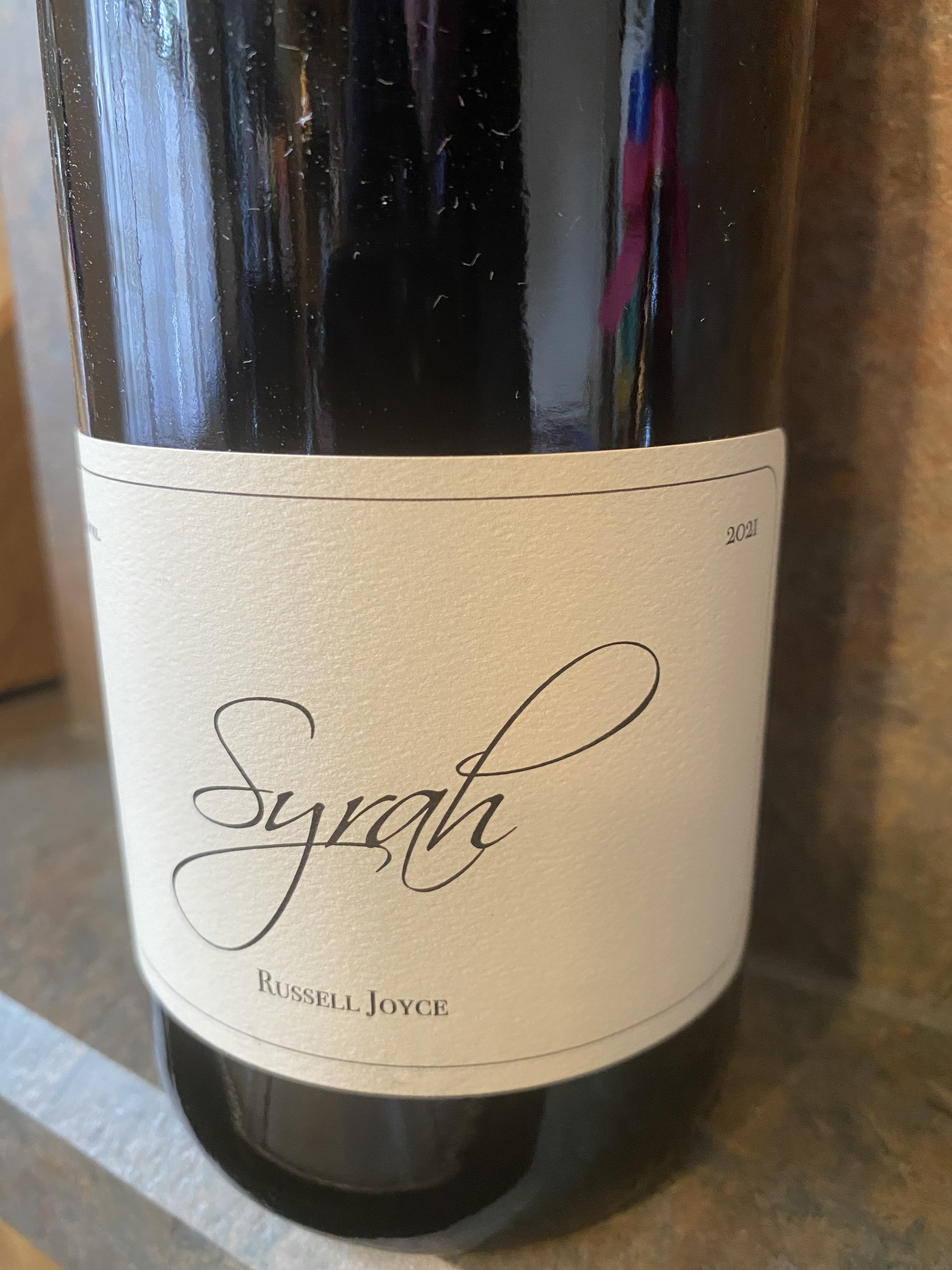
The third wine in the carton was Russell Joyce Wine Mourvedre Antle Vineyard Chalone 2021. Joyce Vineyards began in 1986 when Francis Joyce planted a vineyard on a steep hillside on his property in Carmel Valley, and was the start of the original six-acre estate.  Joyce Wine Company is now under the supervision of second-generation winemaker Russel Joyce.  Russell Joyce, as well as his father that he worked with, were self-winemakers, and now with wife Charlotte they are now into their third generation of winemakers.  They are basically focused on Burgundian style wines and they produce about ten-thousand cases each year.  This wine is made high in the Gabilan Mountains within the Chalone AVA near Pinnacles National Park is Antle Vineyard that is organically farmed and managed by Bill Brosseau, whose family has been farming Brosseau Vineyard since 1980.  Antle Vineyard grows on a block of decomposed granite and limestone at 1700 feet on top of a rocky slope; the heat being perfect for Mourvedre.  The grapes are hand-harvest, and sixty percent of the grapes are processed whole-cluster; fermented with native yeast at cool temperatures in a small open-top temperature-controlled tank.  The wine was aged on the lees for ten months in neutral oak barrels, racked to tank and allowed to settle for one-month prior to bottling unfined and unfiltered.  There was one-hundred-fifty cases produced.  The wine is described as having notes of blueberry, raspberry, Tuscan salami, white pepper and dried herbs.  On the palate there are tones of cherry jam, black plum, fresh thyme, cracked pepper, and violets.     

Posted in Wine | Tagged , , , , , , , , , , , , , , , | 1 Comment

Le Petit Smith Haut Lafitte

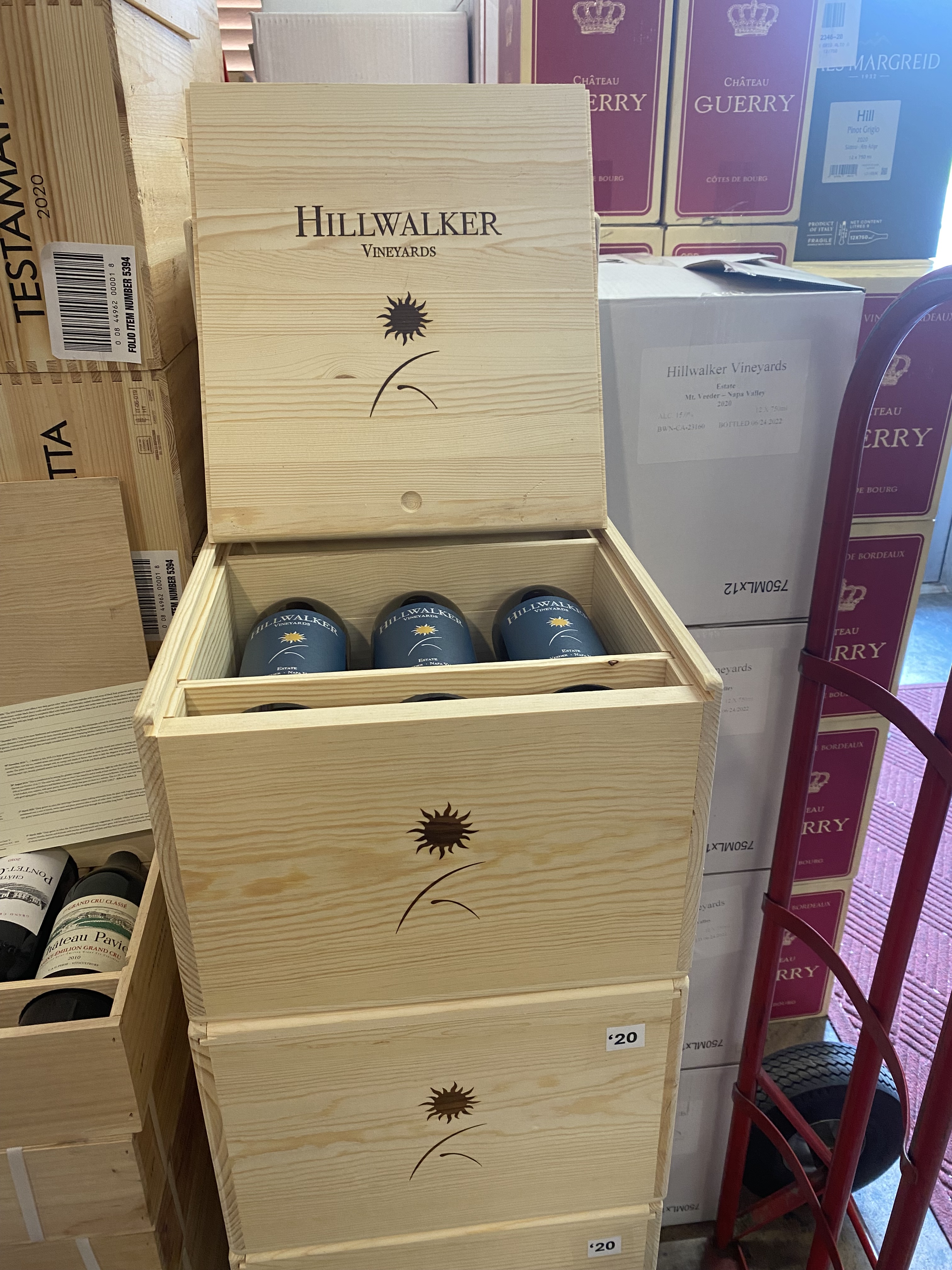
We were doing some tasting at The Fine Wine Source in Livonia, Michigan and little did I know that my Bride thought she needed a few more presents under the tree for me.  So, she had an ulterior motive, but we also know that she enjoys tasting wines.  Chateau Smith Haut Lafitte in the Pessac-Leognan region was rated a Grand Cru Classé during the 1959 Classification of the Graves for its red wine; today it is also considered one of the finest examples of white Bordeaux. The second wines are labeled as Le Petit Smith Haut Lafitte; the red was introduced in 2010 and the white in 2013; and the juice is selected from lots identified during the blending of the Grand Vins.  The estate is seventy-eight hectares of organic vineyard on a low hill of stones and pebbles, which offers great drainage and reflects sunshine to the vines as well.  The vineyard is farmed organically, and produces its own compost, even using a horse to plow the white wine vineyard; they also maintain their own apiary system, a vine nursery and inhouse cooperage.  Grapes have been grown and cultivated on the property since 1365 on a gravel plateau that was termed as a Lafitte back then.  The current name comes from a Scottish wine merchant George Smith that built his manor house on the grounds.  In 1958 the estate was purchased by the Louis Eschenauer company who invested in the property.  Since 1990, the property has been owned by Florence and Daniel Cathiard and besides the estate they also own Caudalie company, whose beauty care products are made from grape seeds and vine cuttings.  Les Sources de Caudalie is a well-known “Spa Vinotherapy” set among the vineyards, and a similar facility is in the Cheverny region of the Loire Valley.

We started off tasting Chateau Smith Haut Lafitte Le Petit Smith Haut Lafitte Blanc Pessac-Leognan 2020 and was originally labeled as Le Petit Haut Lafitte Blanc.  The Stealth Cellar is their energy-plus facility and they do all the winemaking for the estate, using the same process for all of their wines.  The yield for the white wines comes from twenty-nine hectares and three white wines are produced from this lot.  The wine is a blend of eighty percent Sauvignon Blanc and twenty percent Semillon.  The fruit is hand picked into small crates and pressed in an oxygen-free environment, to preserve the aromatic potential of the grapes and fermentation takes place in French Oak barrels of which fifty percent is new after a cold settling of the juices.  The wine is aged for ten months on the lees with constant batonnage.  The wine is a light golden-yellow wine and offered notes of grapefruit, orange rind, honeysuckle, vanilla, and almonds.  On the palate the tones of citrus, honeysuckle, vanilla, and almonds blended in a medium body wine that was rich and creamy and finished with a minerally terroir.  The estate makes this wine to the same standards as their Grand Vin, but with less barrel aging.

Then we followed with a tasting of Chateau Smith Haut Lafitte Le Petit Smith Haut Lafitte Rouge Pessac-Leognan 2020 and this wine was originally labeled as Le Petit Haut Lafitte Rouge.  The estate uses more than one-hundred hand pickers to select the grapes, and the picking dates are influenced by a row-by-row imaging from the Oenoview satellite system.  The also employ a Vistalysis optical scan for each berry, to remove lesser-quality fruit. The estate is famed for having one of the largest underground cellars in Bordeaux.  The fruit is from a thirty-hectare lot, that furnishes all the red wines produced for the estate.  The wine is a blend of sixty percent Cabernet Sauvignon and forty percent Merlot.  The grapes are sorted twice, before and after destemming; and are not pressed before undergoing fermentation in vats.  Tannins and color are extracted by punching down and/or pumping over for a period of fourteen months, with twenty percent new barrels.  A deep garnet colored wine offering notes of black fruits, licorice, and dark chocolate.  On the palate there were tones of plums, cherries, currants, chocolate, licorice with a sense of smoky, silky tannins and a nice medium count finish.  Even though this wine was medium-bodied it was so lush and rich, easy to see it in the cellar for twenty years.  We ended up with a nice wooden six-pack of each.         

Posted in Wine | Tagged , , , , , , , , , | Leave a comment

Christmas 2023

We had a very busy morning on Christmas, not only did we open our presents and she sneaks a couple that I didn’t know about; she also lectors at her church, and then she did a Christmas Mass and delivered communion as a Eucharistic Minister at a senior citizen home.  We then drove to the other side of the world, or at least it seems, to have a Christmas brunch at the home of another sister.  At first, because of my Bride’s volunteer work, it didn’t seem if we would have time to get there, as they had somewhere to go, later that day, but it was later, than originally thought. 

My sister-in-law has a husband that enjoys being in the kitchen, and he also can bake up a storm.  So, when we got there, now you have to understand that the greater Detroit area is huge and it can take an hour or so, to get from one community to another using the highways.  One group of relatives had already dined and there was plenty still waiting for us, as there was a fresh Quiche Lorraine just coming out of the oven, along with bacon, pancakes, and French Toast.  And we were having Mimosas.  I gave our one nephew a lesson in the fine art of making a Mimosa.  Fill the glass with your choice of sparkling wine and then add a tincture of orange juice.  They were using La Marca Prosecco DOC NV. The company was founded in 1968 as a cooperative of wine growers in the Veneto and Friuli-Venezia Giulia region of Italy.  Since its beginning it has now grown and comprises nine cooperative wineries predominately in the Prosecco DOC region. These wine growers comprise some nine-thousand hectares of vineyards of mainly Prosecco (or Glera when the grape is not from the DOC district) as well as a few other grape varietals for some of the other wines that they produce. La Marca uses the Charmat Method and they do a great job with it.  In 2007, Wine Spectator magazine listed La Marca as being one of the “Top 100 Wines of the Year.” The wine is an easy crowd pleaser and never disappoints.

When we got there, another bottle was opened and it was Mawby Vineyards and Winery now known as Mawby Sparkling Us Brut Michigan NV. You can find Mawby out near Suttons Bay and whether you know it as L. Mawby Vineyards or M. Lawrence, one thing is for sure you will have a fun time visiting the winery and tasting/drinking the wines.  I have probably written about Mawby the most of all the wineries in Michigan and part of that is because my Bride has fallen in love with their products.   In 1973 Larry Mawby founded Mawby Vineyards with a small parcel of land.  He had a passion to make wine and that passion led him to now only making sparkling wines from the Nineties on to date.  In 2009, he began a partnership with the Laing Family; but I have often heard with respect from the other wineries that Larry Mawby is considered the “Godfather” or the “Dean” on winemaking in the region.  The Us NV was a classic blend of Chardonnay, Pinot Noir, and Chambourcin aged in Stainless Steel.  The grapes are hand-harvested, and whole-cluster pressed, using only the initial pressed juice and the three juices are blended before Initial Fermentation.  The wines then are produced in the Charmat Method then later blended with some reserve wine, aged and with an added dosage to maintain a certain finish and bottled.  A soft golden color that offered notes of red fruit, and on the palate the notes of ripe fruit was apparent.   I would recommend this wine to anyone that likes a nice traditional tasting sparkler with some fruit in the finish, but dry and crisp.

We eventually got home and it was just the two of us to rest and enjoy the evening.  My Bride wanted to make one of our favorite dishes when we go out, and though she will admit that it isn’t as fine as from the restaurant, it was still delicious and hit the spot.  She made for the two of us her interpretation of Coquilles St. Jacques al crème de Xeres, or Sea Scallops sautéed with mushrooms and garlic, pan-sauced with Sherry and cream with rice.  I had also selected a wine the day before to make sure it was chilled Le G de Chateau Guiraud Bordeaux Blanc Sec 2018.  Chateau Guiraud is classified as a Premier Cru in the 1855 Classification of Sauternes and Barsac.  It was originally known as the Noble House of Bayle, but it was bought by Pierre Guiraud in 1766 and passed through many generations of the family until it was bought by a group of French winemakers in 2006.  The Chateau has two-hundred-ten-acres, of which the majority of the land is planted with Semillon and the balance is Sauvignon Blanc. While most Bordeaux Blanc Sec wines are predominately Sauvignon Blanc, Le G de Chateau Guiraud is fifty/fifty.   The fruit is manually harvested using small baskets and fermentation is for about three weeks.  Eighty percent of the wine is aged in the barrels from the last vintage of Chateau Guiraud and twenty percent is done in Stainless Steel. The average aging in the barrels is seven months with regular stirring of the lees.  This is a very lush and full-bodied white wine with a delicate gold tinge, a very refreshing wine that leaves one chewing the wine to appreciate the suppleness of the fruit and the terroir that lingers and beckons for another taste.  The perfect way to end our Christmas Day.

Posted in Dining, Wine | Tagged , , , , , , , , , , , , , , , , , , , | Leave a comment