An Italian Pinot Noir

I don’t usually think of Italy and Pinot Noir in the same sentence.  This memory changed that thought.  I used to go to Chicago for business twice a year, and I would buy an extra ticket for my Bride (she could not be expensed, but I figured the hotel would be, and who wants to be alone in another city).  I also would not expense my dinners, as they would far surpass any per diem that I would be allowed (so why look for problems).

One trip, we decided to go to a noted restaurant in Chicago, Italian Village Restaurant.  We were dressed to the nines for dinner and when we arrived at the lobby of the restaurant we saw some couples coming down the stairs from another restaurant in denim shorts and t-shirts.  I thought, did I make a mistake, was this a “big-bowl pasta joint?”  Then they took us to our table in the restaurant behind the lobby.  As soon as we walked in, I knew that we had made the right decision.  This was an “old school” Italian restaurant with narrow aisles and booths, with dim lighting.  I felt at home immediately.

They brought us our menu and the wine list.  The wine list was a misnomer; it should have been a wine book.  They advertised that they carried a selection of about 1700 wines.  At that point in my life, it was the largest listing of wines, I had ever encountered.  Page after page of wines that I would have loved to have ordered, but my wallet would not allow it.  I was totally humbled.  The sommelier came by, and we started to talk about the vast selection listed.  He was a true gentleman, came to the realization that I was not going to pop for a sacred selection.  We were going to order some classic Italian dishes and after discussing our menu choices, he inquired if I would like to try something more unique that would be harmonious with our meal.  I agreed and felt that the wine should be fun and adventurous.

Since we were not having “heavy” Italian cuisine, he asked if I had ever had an Italian Pinot Noir.  I replied that I had not, as I thought of Pinot as the choice of Burgundy in France, and of Northern California.  He smiled and assured me, that we would enjoy the wine.  The wine was a Concilio Pinot Noir Trentino Riserva 1993.  It had great color and body; was a perfect pairing for our dinner.  We actually lingered after dinner to enjoy the wine by itself, until we had finished the bottle.  Then we ordered dessert, cappuccino and Black Sambucca.  I asked if we could have the empty bottle as a remembrance, when they found out that we were from out-of-town, they went and removed the label from the bottle and put it in a keepsake folder.  They said that it would be easier than packing an empty bottle in our luggage.  What a wonderful way to end an evening.

Posted in Wine | 2 Comments

Screaming Eagle Wine – My Favorite Story

“Screaming Eagle Wines are not for mere mortals” was my answer to a query, but this question actually arises in the middle of one of my greatest wine stories.  Some of my friends may be tired of this story, but I do enjoy retelling it.


First a little background for mere mortals like me.  Screaming Eagle is one of the legendary cult wines of California.  You cannot visit the winery, there is no tasting room and the wines are sold by subscription.  There is even a waiting list to get onto the subscription list.  What a terrible situation for a business to be in, the wine is pre-sold each vintage.  The winery does donate some wine for the big Napa charity auctions, because the proceeds go back to the area.  From all conversations I have had, there is a little cottage industry of people who have been on the subscription list, pay for the wine and then proceed to give their allotment to the prestigious auction houses.  They make a profit on their purchase, wait for the following year and repeat the cycle.  Through the auction houses are how most restaurants (from what I gather) get the wine to proudly place on their wine list.  I am sure that most restaurants like the honor of having the wine on the list, and price it, so that they don’t have to go through the rigors of getting more.


The story that I am going to relate has been sanitized to protect everyone.  My Bride and I were on holidays in Carmel-by-the-Sea, California.  This community is a quaint, charming community known for their artists, restaurants and wineries.  It may be the only quaint community that has a Tiffany’s on the main drag.  You may see celebrities there, and celebrities own businesses there as well.  I do digress.


I resume; my Bride and I like to dress for dinner when we are on holidays to make it even more festive and memorable.  I tend to make dinner reservations months in advance of our trips, because there are certain restaurants that are imperative that we visit.  We were at such a hallowed institution.  I remember ordering my customary vermouth cocktail, while I studied the menu and the wine list, one cannot be hasty.  We finally decided on all of the courses, and ordered two wonderful splits of Carmel wines to go with some of the courses.  We started off with a Talbott Sleepy Hollow Vineyard Chardonnay and then would finish off with a Marinus Meritage.  We were looking forward to a great meal.


Immediately after our waiter left with all of our requests, two gentlemen were seated at the next table.  They called for the sommelier, and he went to their table, soon after an argument ensued and the sommelier left the table.  The wait staff came to our table to start setting the different wine glasses for the different wines that we had ordered.  Just before our first course, one of the two men looked at our table of stemware and asked if I knew anything about wine.  I replied that I knew a little, and then he proceeded to interview me as if I was in a courtroom, this continued through the first course and the salad course.  During this conversation the men were drinking cocktails.  I guess he was satisfied with my grilling, because all of this was a prelude to what was occurred next.


These two gentlemen were business partners and had around $3000.00 of company money that had to be spent by the end of the trip, or they would lose the amount to spend.  We presumed it had more to do with business expenses; my Bride and I were both appalled, but we could not chastise them (it wasn’t our business).  They wanted to order the bottle of Screaming Eagle for dinner, and the sommelier did not want to serve it.  I told the two men, that the sommelier was probably doing them a favor, because I felt that the wine was much too young to be poured.  I explained that a bottle of this quality was made to be cellared, to mature and to become more complex.  I said that many of the wines on the list would be perfect to drink this evening.  The other man, looked at me, and said that is what the sommelier had told him.  That is when he asked me, if I had ever had Screaming Eagle, and that is when I gave him my reply (from above).


This went on through our entrée, and while we were waiting for our dessert, some vintage port and a cognac, the gentlemen asked if I could talk to the sommelier, as he wasn’t returning to their table.  I asked our server, to ask if the sommelier would come to our table, when he did, I recounted all that had occurred during our dinner.  I spoke loud enough that there would be no question at the next table about my discussion.  I said that I concurred with the sommelier that they were wasting good money on an immature body of wine (albeit a stellar one).  I also said that because of my years in retailing, if I did my due diligence and told a customer the negative aspects of an item and they still wanted the item, that I had no choice but to honor the request.  I repeated the old adage,” that a bird in the hand, is worth two in the bush.”


We had finally come to the end of a great meal, in spite of the two gentlemen who kept us from our own private conversation and good company.  As I was calling for our bill, the sommelier was walking to our table with a tray with a single, most perfectly shaped wine glass with the longest stem I had ever seen.  I told the sommelier that we had received everything that we had ordered for the night.  He looked at me and smiled, and told me the gentlemen thought that I should have the honor of having the first glass and taste of the wine after it had been decanted.  I gamely accepted, asked if I could have a piece of bread and a fresh glass of water to cleanse my palate after a wonderful dinner.


I felt like every eye in the restaurant was watching this event unfold, though I am sure that this was not the case.  I asked my Bride if she would like the first taste, and she said that I had spoiled her taste buds enough and this was all for me.  As I swirled the wine in the glass, marveled at the rich color, inhaled the nose that was for me, I finally placed the first sip on my tongue, almost slurping as I whistled in that last breath of air for the wine, and chewed that first taste, then swallowed.  I waited for and studied the after taste or kiss of the wine and smiled.  I looked at my Bride, the sommelier and the two gentlemen and said that the wine was delicious, but it would have been monumental and awe-inspiring in about ten years.


I did nurse that glass of wine, and realized that this was one of the great wine stories in my life.  As they used to say on Dragnet, the names and places have been changed to protect the innocent.

Posted in Wine | 7 Comments

A Wine To Insure Male Heirs

A wine to insure that a groom would have a male heir was one of the medicinal beliefs about Tokay wines.  A glass of it was to be consumed the evening of the nuptials.  Another tradition was that doctors would prescribe this famous wine to dying patients, because it would invigorate them to live longer.  Two great reasons to always stock this wine in your cellar, and for years, no cellar was considered complete without a couple of bottles of Tokay.


This is probably the famous and noted wine from Hungary and comes from the village and surrounding area of Tokay (Tokaj) at the foothills of the Carpathian Mountains.  They plant the Furmint grape there in a very volcanic soil, which lends a taste of the earth (terroir, as the French say).  They allow the some of the grapes to stay on the vine to achieve the Noble Rot, a process that is also found in the great dessert wines of France and Germany.  It is the bundling of these super sweet grapes that account for sweetness of Tokay.  These bundles of the sweetest grapes are put into containers called “puttonos” and they are added to the regular wine from the basic harvested grapes.


One can buy basic Tokay wine called Szamorodi, or they can buy Tokaji Aszu with the designated Puttonos from one to five.  Aszu is Hungarian for sweet.  I guess that you can liken the numbering system to Germany’s Auslese, Beerenauslese, Trockenbeerenauslese and Eiswein.  There is lore, and it probably was so, years ago that there was also a Tokaji Essence that was made entirely of “puttonos” grapes.  It is legendary, though I have never talked to anyone that has or had a bottle of it.  Perhaps after the Austro-Hungarian Empire, this was lost to Hungary as well as their nobility class.


As one would imagine, the bottles are smaller, sixteen ounces, and a very unique shape, and have a higher alcohol count.  One or two glasses per person after a feast will be more than adequate for everyone.  The wines that I have had are of a pretty golden color, with a nose of sugar or honey for a lack of a better description, but with the underlying taste of the soil that differentiates it from the other great dessert wines.  I have always been on the lookout for the one and two “puttonos” designations.  I have only found the three, four and five.  I will continue to look though.

Posted in Wine | Leave a comment

Tasting Rooms

Outside of having wine with great friends and a great dinner, the next most enjoyable taste fest one can have is by going to a tasting room.

There is no way to describe the electricity of trying a wine at its home.  We have been to Napa Valley, Carmel by the Sea, Monterey, the Central Coast of California and in the northern lower peninsula of Michigan around Traverse City; just to taste wines.  Each of these areas require several pages each to discus the wines and fun encountered.  If you are going to a wine area, you may even call or email some of them to see if they have special tasting events while you are there, or if you have an appointment, they may even offer some of their premium wines that are not normally poured to the public.  Then there have been wine clubs, some which we have joined, wine bars and even some wine shops have tasting specials.  Never miss a chance to go to any in your travels, because you may meet by accident wine representatives who can give you extensive information about certain wines, and sometimes by happenstance you even get invited to wine tasting dinners, that you would never have known about.

The only caveat that I may mention, is do expect to pay for a tasting, if it is free, consider that a bonus.  On the times where the tasting is gratis, I have always made it a point of courtesy to buy a couple of bottles, and sometimes a case or two.

As strange as it may seem, there is a routine one should get into when doing a tasting.  Start by having a cracker or two and then a glass of wine to cleanse your taste buds.  Look at the glass of wine that has been poured, study the color, is it deep or pale.  Swirl the wine in the glass; this will aerate the wine more, which adds to the tasting.  Now stick your nose into the bell of the glass and smell, you do want to use all of your sensory powers.  You will be surprised what you may smell; it can be a sensory overload.  Take a sip of the first wine, and lay it on your tongue, do not swallow (even though that is your first inclination).  Purse your lips as if you are going to whistle, but inhale air (when you whistle you are exhaling air), this sudden rush of air just before tasting can make the wine explode in taste.  I know if sounds silly, but it works wonders for the moment.  Then proceed to chew this nectar that has been on your tongue (you may feel silly the first couple of times that you do this), then pause and wait to experience the after taste.  Discus what just occurred with your friends, strangers and the servers.  Write your immediate thoughts, if that will help.  Then reach for the crackers and another glass of water, and pour some water into your wine glass and rinse it before getting the next glass of wine.

If you are fortunate to be in an area, where you may be going to several wineries in one day there is a trick you must learn, otherwise you may be useless by the third winery.  You must learn to spit out wine; there will always be some decanter or jug around for this purpose.  Also there may be a wine that you just do not enjoy, free feel to spit it out.  You will not hurt the server’s feelings, as this is common practice.

Occasionally you may see, usually as a decoration on a wall, a silver shallow cup called a tastevin, and it may look line a fancy ashtray.  This cup is used by some in the profession to taste wines out of the barrels before bottling.  You sometimes see a sommelier in a fine restaurant having one dangling on a chain around his neck.  I am not a sommelier, but after seeing one, I wanted one, not that I would use it, but because I thought it would be cool.  I searched several years for one, and then in an antique shop in Calistoga I found one.  I did have to listen to the obligatory, “what do you need that for?” and then I bought it.  It is a great conversation piece in our house.

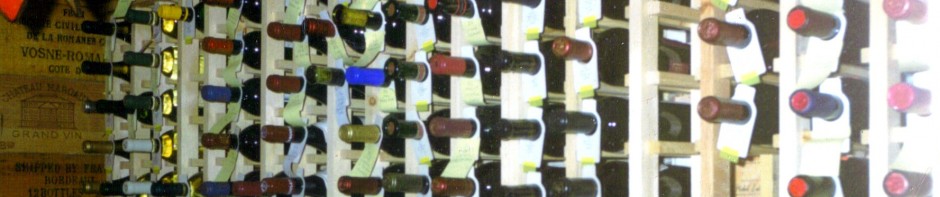
Below is a picture of my tastevin, next to a corkscrew that has been mounted in an antique wine root.  For background I grabbed a few bottles of wine from my cellar.  If you are interested in the labels they are from left to right: Ch. Mouton-Rothschild ’73, Ch. Cheval Blanc ’92, Dominus ’97, Gaja Barbaresco ’82, Ch. Mouton-Rothschild ’64 and Cain Five ’92.  Please excuse me for some bragging rights.

Posted in Wine | 5 Comments

Mother’s Day

To celebrate Mother’s Day this year, one of our sons took my Bride and me to the second location of Pizzeria Biga.  This is a very fine gourmet style pizzeria started by a stellar chef named Luciano Del Signore.  We have followed Luciano and his great approach to the culinary arts since the days of Fonte D’Amore in Livonia.  As far as I was concerned this was one of the best kept secrets in the Metropolitan Area for Italian food.  Luciano would take time to talk about food, and wine, passions for both of us.  Luciano introduced me to many Italian wines that he thought that I might miss off of his wine list.


Fonte D’Amore was closed, so that he could open an even finer dining experience called Bacco Ristorante.  This restaurant will be a subject all to itself, and if you ever get the chance to go there, go there.  It is an experience for the food and one of the best selections of Italian wines you will ever encounter under one roof.


Now back to Pizzeria Biga, the first location is about two blocks away from Bacco, and on occasion you might even catch Luciano on a Segway going back and forth.  Luciano came up with one of the lightest pizza crusts you will ever have, and that is the start of his pizza, not to mention the finest of toppings, including his own charcuterie.  He also brought back, much to my Bride’s happiness his Roasted Garlic and Eggplant soup.  We would go to Fonte D’Amore and buy a half-gallon of this soup along with his bread, put it into a chafing dish, and just let people dunk the bread into the soup, as a casual appetizer.


We tried two different wines, while we were there.  One as a MarrraMiero “Dama” Montepulciano Di Abruzzo.  This is a fine district in Italy, which is underplayed compared to the more famous areas. We also had a Mendoza “Carelli” Malbec from Argentina that was very full bodied.  These two wines were good choices for our pies.


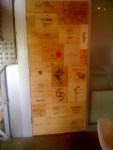
I would also be remiss, not to mention a door that was upstairs in a loft area that caught my fancy.  I had discussed using wine crates as siding in my cellar, well at Pizzeria Biga they had a door that was paneled with the wood from shipping crates.

Posted in Wine | 4 Comments

Breakfast and Wine

“Breakfast at Brennan’s” is not only music to the ear; it is a serenade to all that is gastronomical.  In New Orleans the Brennan family, it seems is everywhere, and every chef seems to mention one of the Brennan family of restaurants on his resume if he is from the area.  Mimosas are everywhere when you are having breakfast there.  The menu may suggest Sauvignon Blanc, but all I have ever seen was Mimosas.  As you sit there, the business person inside of you, says boy if only I had the egg or champagne franchise to this restaurant.


Go extremely hungry, but make sure that you have a reservation, and  some space on your credit card.  We stay kitty-corner from Brennan’s at the Royal Orleans Hotel, which is to my liking; as all of the great places are within walking distance, a short street car ride, or a short cab fare.  Today though we are talking about Brennan’s and the finest breakfast you will ever have.


Breakfast at Brennan’s is a three course prix-fixe affair (some dishes also require extra, but it isn’t like you do this everyday).  Start off with a Mimosa, some may want to start with Sazerac or a Bloody Mary (but we tend to focus on wine) because you have to study the menu, and its eye awakening choice of dishes.  For me the first course has to be the Turtle Soup, it just sets the tone for all the richness that will follow.  You hear people around you saying things like “I don’t know if I have room for anything else, that soup was just so superb” rich, filling, sumptuous etc.  Now it is time for another Mimosa to calm the soul, and to enjoy the brio of the room.  For me, I always want the Eggs Hussarde, a Brennan’s original, and it is Eggs Benedict on steroids.  Eggs Hussarde is Egg Benedict with Marchand de Vin Sauce and Hollandaise Sauce, the daily double.  Now at this point, one is ready to breathe a little heavy, so order another Mimosa in preparation for the third course.  To finish this diet/heart friendly meal you have to order the dish that was created at Brennan’s and still done table side, as crowded as the room gets.  Bananas Foster finishes off this breakfast and I may suggest instead of another Mimosa get a New Orleans coffee made with Chicory.


Now that you have an enjoyed your Mimosa and a light breakfast, you may spend the rest of the day, walking around the French Quarter site-seeing and shopping.  It just dawned on me that you may not have had a Mimosa, which is very easy to make and easier to enjoy.  Take a champagne flute, fill it about half way with champagne and the fill the other half with fresh orange juice.

Posted in Wine | Leave a comment

What Wine Do You Recommend?

Through out my years of enjoying wines, this may be the most common question I get asked.  For years I was a professional clothier, and one of the best adjuncts to this profession was becoming an independent concierge.  People would discuss different restaurants, different vacation destinations and would look for new places to dine.  Everybody, it seems in the last twenty years have evolved in to some form of a “foodie.” As I say “What wine do you recommend?” is the question that always pops up in a conversation.


Then I have to make queries to what the person likes.  Do you like red wines, do you like white wines, do you dry or sweet, do you like robust or subtle tastes?  There is a whole litany of questions that have to be pondered to make a suggestion.  Then there is always the question, “well what is a good wine to look for?”


It is always safe to answer this question, by suggesting a high-powered name and be considered a “wine snob.”  I pondered how to make a suggestion that would be a great affordable wine, allow them a little bit of a search for the wine (which will add to the allure of the wine and enjoyment) and to suggest a wine that is off the beaten track from the real safe responses.


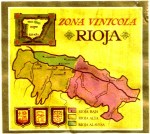
Have you ever tried a wine from Spain?  This remark startles people, because when they think of wine, the think of France, Italy and the United States.  Spain is the third largest producer of wine in Europe, and the Rioja district is one of the oldest areas, and one of the first to protect their good name.  Today all of the Rioja wines usually have a back label showing a map of the different zones of Rioja, and on the front label will be a small emblem with Rioja diagonally across it.  Rioja’s name came from the Rio Oja.  There was a terrible blight that affected Bordeaux when phylloxera hit.  Several wine making families moved to the Rioja district and started new business there, as phylloxera never seemed to cross the Pyrenees.


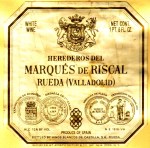
All of this discussion leads to getting a bottle of Marques de Riscal as my suggestion. I tell them to look for the wines of Spain, and then look for a bottle that has brass “chicken-wire” around the bottle (though a couple of other Rioja’s also have this embellishment as well).  Then the question arises about what vintage year should they look for, and I will smile and say that they don’t have to.  Most Rioja’s will have a vintage year on the label, but in reality most of them will blend different vintages together to maintain a steady taste from year to year, which explains why you may see a very old vintage year and it will still be very affordable in price.


I have never had a bad bottle of Marques de Riscal and I have enjoyed many a bottle throughout the years.  They also have a white that is pleasant, not seen as often, but it is the red that I suggest for a new taste sensation.  The color of the wine is deep, from the extra years required to make a classic Rioja, the nose is always fresh which adds to the soon to be appreciated taste.  My Bride tends to complain that I tend to always suggest this wine, claiming that if I get enough people hooked on the wine, that there will be a tremendous increase in the price.  I just laugh and tell her that there is no way, that I have that much of an influence in the world of wines.


Posted in Wine | Leave a comment

Brights Canadian Champagne

I was putting away some new wine purchases in storage, when I looked at the fixture that I was filling with bottles and smiled.  There on the top of this fixture I have a couple of empty wine bottles that I just kept for the ambiance of the room.  I know that they are there, but normally I don’t think of them as I am either putting bottles away or fetching some wine for dinner or a party.

The bottle that caught my eye and imagination today was a bottle of Brights Canadian Champagne in a magnum.   I was very young when that bottle entered into my life.  My family is from Canada, my Father was born in Hamilton, Ontario and we have relatives all around that area.

An uncle of mine came to our house in Detroit and I do believe he was celebrating some very good news.  He had started the first pizzeria in St. Catherines in the 1950’s, sold that business and was going to start a fast-food venture.  Each time when he would come to Detroit, he would study and observe trends, hence first the pizza business and then the fast-food concept.  He was one of the most personable men, you would ever meet, and quite an entrepreneur.  Excuse my haziness of memory, but I am sure this was the reason for the celebration and the champagne.  The house was full of company and the bottles were popping, some were opened improperly and champagne would erupt like a volcano when the cork popped.  Very exciting scene for a young man to observe, and I remember someone even handing me a glass of champagne so that I could join in the festivities.

My first tasting of real wine (prior to that I had tasted what was referred to in pre-PC times as “Dago Red” the wines that some of the older immigrant men would make in their basements).  I remember that the wine tickled from the bubbles and it was just a little sweet, but the occasion was heady and it was fun, and I was part of the “boys.”

T.G. Bright & Co. Ltd. of Niagara Falls was or is the largest winery in Canada; they survived the aftermath of Prohibition in the States, the Depression, and World War II.  They were the first company to plant French wine grapes in the area and they were successful.  The company is still in existence and still making wines.  My Bride and I are going to Niagara-on-the-Lake this summer for a wedding, so I am going to make some time from the nuptials of my cousin to go to some of the wineries.  There is always more to learn and more to taste.

As I am writing this, I think back about my uncle, who later on sold his fast-food enterprise and created a steak and lobster restaurant.  He was very eclectic in his businesses, but always successful and had the pulse of the public.  I mention this, because on one of my many trips to St. Catherines my uncle gave me one of his extra swag light fixtures with leaded glass.  I had this fixture for years safely packed in a carton, not quite sure what to do with it, as it had more of a tavern appearance or maybe it was just my pre-conceived thought about it.  When I built my wine cellar, I remembered the lamp and placed in the cellar as the sole illumination.

Now that I reflect, it is a small but honoured salute to my late uncle, who may be gone, but not forgotten.

Posted in Wine | 10 Comments

Chateau Margaux

Chateau Margaux is one of the four, then five Premier Crus (First Growths) of the 1855 classification of the Medoc.  The Medoc is the glorious part of the Bordeaux region that makes everyone think of wine.  Chateau Margaux had a rather famous omniscient advertiser for a while; the late Margaux Hemingway.  Legend had it, that she was conceived after her parents had enjoyed a magnum of Château Margaux (true or not, it does make for a great story).

Margaux is the name of the commune in the district of the Medoc which is in the Department of the Gironde.  I may talk about this classification system during another chat, which is the joy of being a raconteur.  Margaux is one of the areas that is really known as Claret as any good Anglophile would say.  There are several important chateaus in the commune of Margaux, but there is only one Chateau Margaux.  A very happy point for all the other chateaus in Margaux, because none of the other great communes have a world-class winery with the commune’s name so prominently linked like Chateau Margaux.  There is no First Growth called Chateau Pauillac.  This is why even a generic blended bottle of Margaux gets to share the sunshine and prestige of this famous château.

I have had the good fortune of having tried three different vintages of this famed château. One was from the outstanding vintage of 1961, but that will be a story to be told at another time, because of the unique situation that I enjoyed it.  The bottles that I will reference today are from the 1967 and 1976 vintages.  The 1967 vintage year was an abundant and very dependable year from the Medoc.  Unfortunately I do not recall the dinner party or the dinner that accompanied this storied wine, but I do recall the wine.  It had a deep color, a wonderful bouquet or nose and a taste that is still recorded in some back remote corner of my brain.  This was actually one of the first Margaux wines that I had ever had, by good fortune, and ever since then my “taste memory” will remind me that the other Margaux wines that I have had don’t measure up to my ’67 Chateau Margaux.  It really is not fair to the other wines, but that is what tasting does to you.  As for the 1976 Chateau Margaux we had that at dinner at The English Grill in The Brown Hotel in Louisville, Kentucky.  The 1976 vintage was not a great year, but my brother-in-law brought it to the restaurant as he wanted to see how it would fare, as he had a couple more bottles in his cellar.  It had good color and a decent nose, but for me, it did not compare to the 1967.  It did enhance a wonderful meal, which was a joy in its own right.  That was the case until I did have the ’61 Chateau Margaux.

For a working man of modest means to have had three bottles of this wine is just pure heaven on Earth.

Posted in Wine | Leave a comment

An Early Wine Search

After reading the Bespaloff book, I decided that I wanted to try some of the more esoteric wines of France.  I knew that I would have no problems finding wines from the popular regions like Bordeaux or Burgundy.  Every restaurant and wine shop with any self-respect would carry a fine assortment from these areas, so that would be easy.

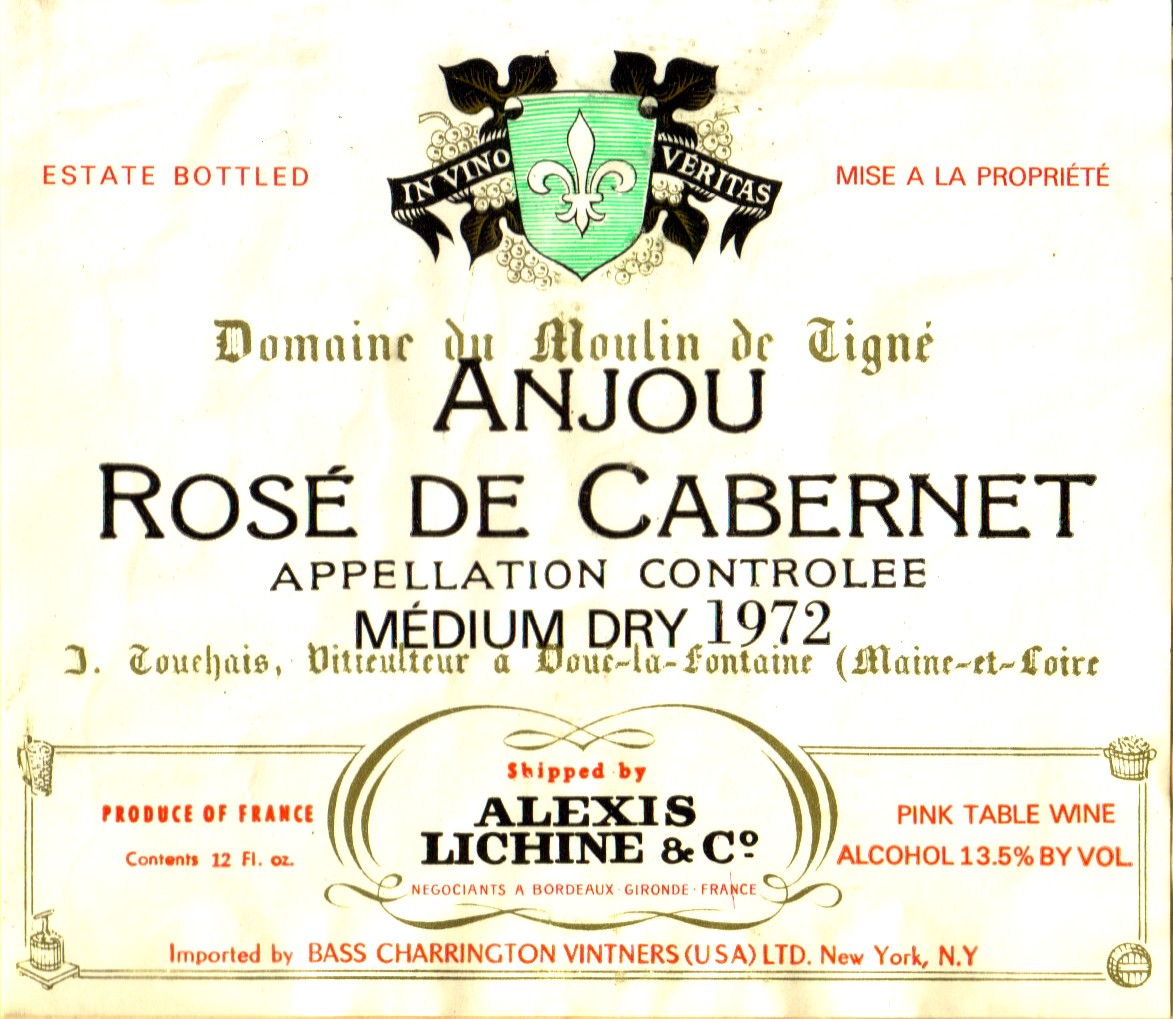
One area the tickled my fancy immediately was Anjou in the Loire Valley of France.  After all, in literature a famous quartet would have picnics on the ramparts, prior to or after a military maneuver.  If the wine was good enough for Athos, Porthos, Aramis and D”Artagnan, I should endeavor to try it.  You see in my youth, I had high aspirations and colorful role models.

Several shopping trips led to no success.  In the early seventies when I started my wine education, the selection of wines even in better shops was limited.  I am sure that a lot of the distributors were more interested in securing the rights to sure-sellers.  Also you really couldn’t blame a retailer for wanting to carry wines that would sell on their own, with a song and dance by the owner.  It would be easier to wax poetic for fifty dollar wine, then to exert time and energy for a ten-dollar wine.  Business is business.  I finally found a bottle of Anjou, not only an Anjou, but a more unique one.  A Rose de Cabernet made from the Cabernet grape and not the Groslot grape.

Since it was a rose wine, I waited until the weather turned warmer, which was very soon.  I chilled it, and tried it with cheese and some deli cuts.  My first reaction (from the time I bought the bottle) was the unique color of the wine.  It had an orange shade to the red and the nose was very soft and as they say unassuming.  On the warm day, that I had it, it was refreshing.  Alas, I knew that I would not join the ranks of the famed quartet of Frenchmen, but my curiosity had been sated.


Posted in Wine | Leave a comment