Bernadette Peters and Vin Santo

My Bride needs to gets plenty of support and praise from me, because I am, and will always be a pain in the arse about certain things.  While I know that she carries a torch for Jimmy Stewart and for Sam Elliot, she has put up with my crush for Sophia Loren and for Bernadette Peters.  Sophia came understandably from the years of going to “art films” with my parents as a child, and Sophia was a star, already by then; and for my 62nd birthday she took me to see a live session with Sophia, after a dinner downtown.  Now for Bernadette, in another life, I was sitting at a private table for two with my elbow that could rest on the main theater stage at the Riviera Casino and Hotel, to see the star Rich Little (from Windsor, Ontario, Canada) and his opening act was Bernadette, and there was a small set of stairs from the stage to the theater floor, and she came down those steps and leaned over my table and was singing only to me (at least that is how it felt at the moment); the second crush began that moment.  All of this is to set the stage, because we were having dinner at a restaurant that had changed hands, and while my Bride was away, I was checking on social media, and there was an ad for a one night only performance in Ann Arbor with Bernadette Peters.  I guess I have been a good boy, because we tried calling to get tickets, because the online process was rather convoluted, and we were told that if we got to the theater, before they closed that evening, we should be able to get the tickets.  It also gave us the reason to go have a wonderful after dinner drink that was not available, where we were at.

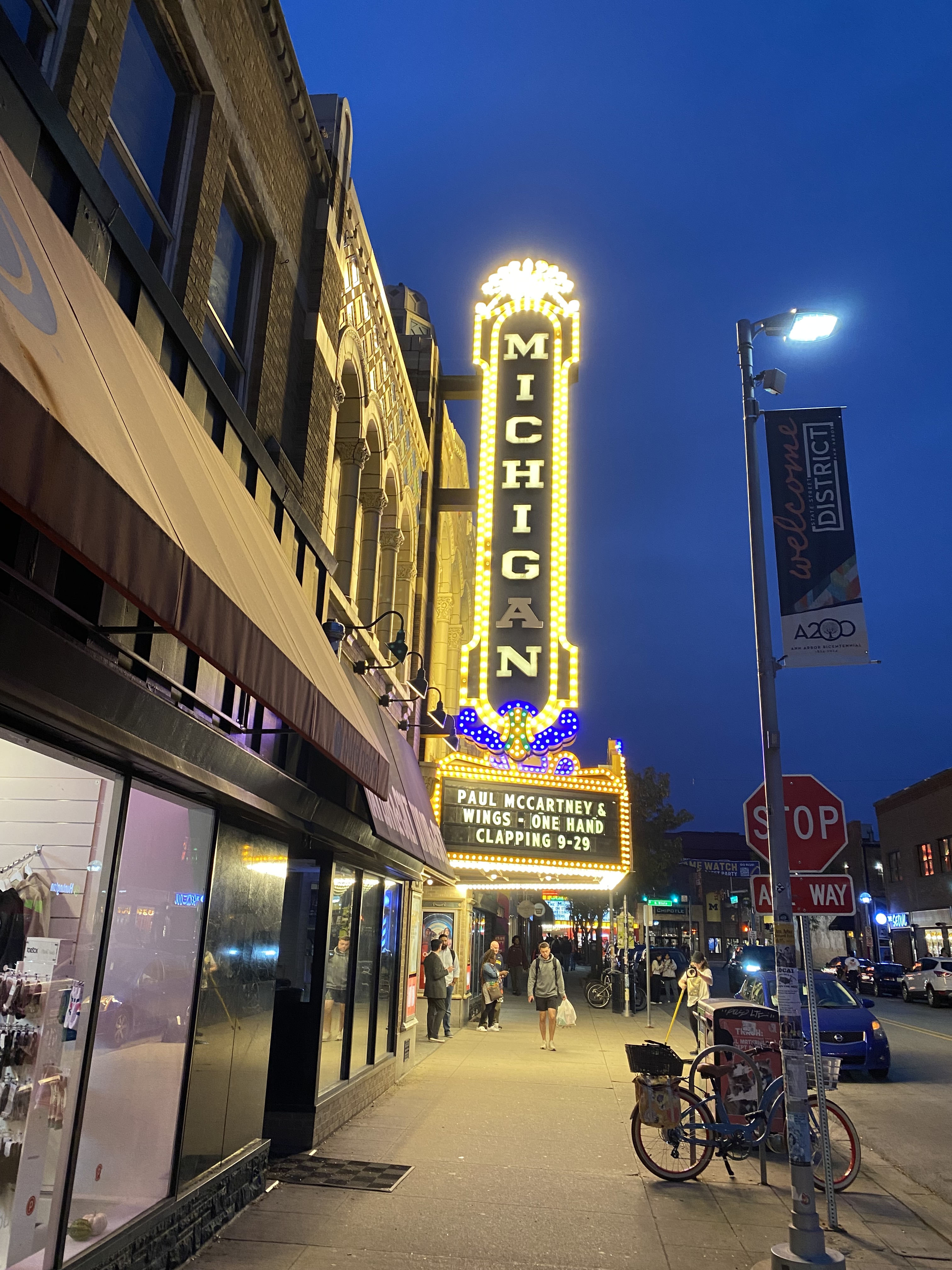
So, Nick and Nora, left after dinner and drove to Ann Arbor to go to the Michigan Theater, and our date night was getting more interesting and fun.  The Michigan Theater was designed by Detroit architect, Maurice Finkel, originally designed to show silent movies in 1928.  It has a fully operational stage, orchestra pit and a Barton Theater Pipe organ and can comfortably seat seventeen-hundred ticket holders.  It also makes me smile, as it has a sweeping staircase for seating in the balcony, shades of my youth.  The organ was built in 1927 and is almost played daily, preceding most events that are held there.  The theater was restored in 1979 and has been named an Outstanding Historic Theater in North America by the League of Historic Theaters.  And they have a movie marquee like I remember, and it was a pleasure watching one of the employees changing the wording, one letter at a time.  The presentation of films is very eclectic, from silents, to nights of classic cartoons, classic films, and even modern films and documentaries.  The theater also has a small selection of drinks, including wines, and for some of you who can appreciate it, a real movie-house popcorn maker, as compared to the pre-popped popcorn that is heated up, that is found in most cineplexes these days.
Now that we had a future date, we had to book dinner, and just about seven doors down is Taste Kitchen, which we found one night by accident, and gets my Bride glowing over the thought of sitting at the bar and having one of their versions of a Spanish Coffee, she didn’t even think of having anything else.  The restaurant has a nicely curated wine carte, including some after-dinner selections.  I think that as I have mellowed and matured (?) I have developed more of an appreciation for this type of wine as well.  So, while Nora had her hot drink, Nick had a chilled glass of Badia a Coltibuono Vin Santo del Chianti Classico DOC 2014.  Vin Santo (Holy Wine) has been made since the Middle Ages, and was recognized by the DOC in 1997, prior it was Vini da Tavola.  Badia a Coltibuono is a wine estate located in the (Gaiole) Chianti Classico zone.  It was founded in 1051 by an offshoot of the Benedictine order, however under Napoleonic rule, the monks were forced to leave in 1810, and by a lottery it was purchased by Guido Giuntini and is still managed by his direct descendants the Stucchi Prinetti family.  The estate is seventy-four-hectares of organically farmed vineyards on clay and limestone soil.  The wine is made from a blend of Trebbiano (Ugni Blanc) and Malvasia, hand harvested and then carefully selected and left to dry on straw mats in well-ventilated rooms during the winter, up to about six months.  The dried grapes are then pressed and the must is placed in small oak casks and they use indigenous yeasts for fermentation; after fermentation is complete the casks are sealed and placed in the attic for seven years of aging.  A deep amber colored wine that offers notes of honey, dried fruits, and toasted almonds.  On the palate a very rich and sweet wine, totally balanced by bright acidity, with tones of apricots, orange blossoms, dried figs; followed by caramel, nuts, raisins and ending with a very long count of honey and cream.  

Posted in Wine | Tagged , , , , , , , , | 2 Comments

Some Bargain Odds and Ends

After the Chanel themed wine tasting, there was a bit of a surprise going on at my local wine shop The Fine Wine Source in Livonia, Michigan.  The wholesaler that arranged for the Chanel tasting, brought some of his odds and ends from his warehouse, we got there late, and people were taking advantage of the bargains, and besides buying wines from the tasting, we also picked up some of these as well, in fact, some of them were being poured, so that helped as well. 

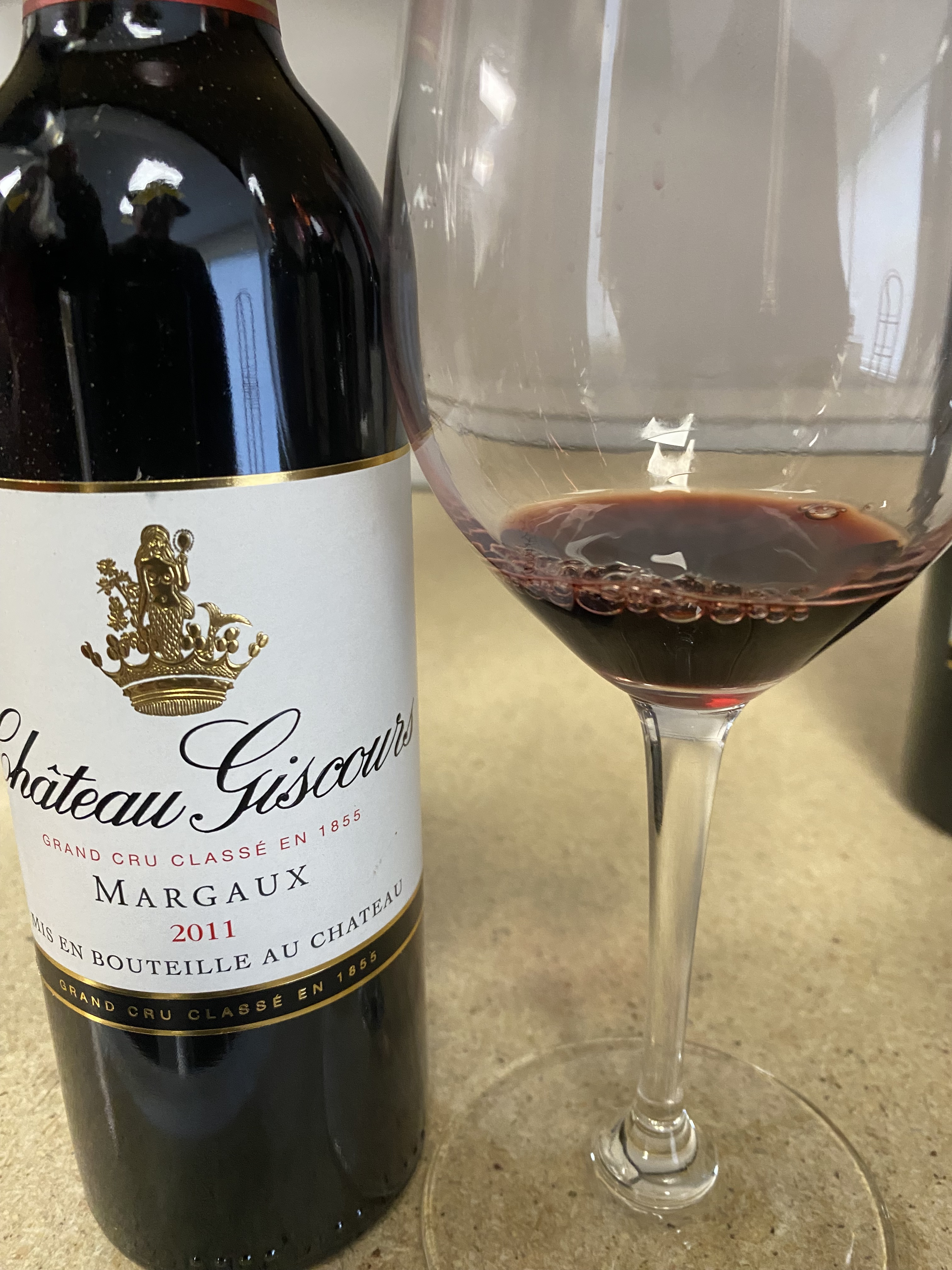
The first wine that was poured for us was Chateau Giscours Margaux 2011, in half-bottles, and the wine is a Troisiemes Crus (Third Growths).  A little side note is that Margaux is probably my favorite commune in the Medoc and the wines from there are the most easily to encounter; and there are twenty-one Grands Crus Classes wine from this one commune.  Over the years it has been described as “an iron fist in a velvet glove.” Chateau Giscours dates to 1552, when Pierre de Lhomme bought a house called Guyscoutz, enlarged the property and planted the first vines.  The vineyard is one of the largest on the Left Bank with 165 hectares, of which 102 hectares is in the Margaux appellation.  The wine is a blend of seventy-five percent Cabernet Sauvignon, twenty percent Merlot, and five percent Petit Verdot.  The fruit is manually and optically scanned, and Initial Fermentation, and Maceration occurs in both Concrete and Stainless-Steel vats for a period of thirty-five days.  Then the wine is aged for seventeen months in French Oak, of which half is new barrels.  The dark ruby-red wine offers notes of black cherry, blueberry, currants, and traces of cocoa.  On the palate, this medium-bodied wine offered tones of black fruits, cedar, chocolate, well-balanced with silky and velvety tannins; it ends with a good medium-count finish of fruit and cedar.  

2003

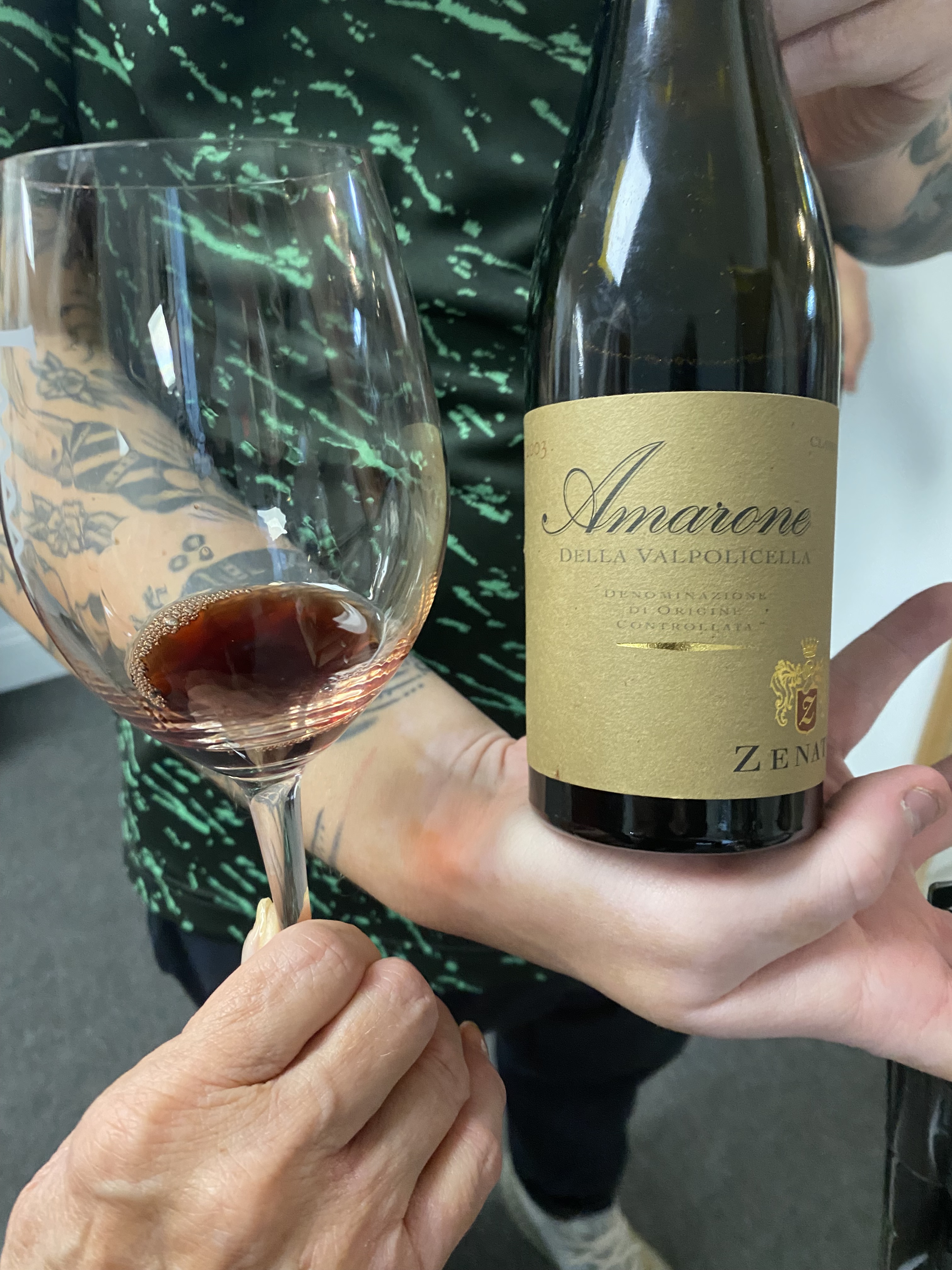
Another wine that was poured was Zenato Amarone della Valpolicella DOCG 2003.  Zenato is an important producer in the Veneto, with estates in Lugana and Valpolicella.  The Amarone wine is grown and made at their Costalunga estate at Sant’Ambrogio di Valpolicella.  On the estate they grow Corvina, Rondinella, Oseleta, and Croatina and this wine is eighty percent Corvina and twenty percent Rondinella; and I guess a wink and a nod of Oseleta and Croatina.  After harvest, the grapes are dried for three to four months, then crush in January and then aged for thirty-six months in Slovenian Oak barrels.  This deep ruby-red wine offered notes of black cherry, figs, plums, cassis, florals, cinnamon, and almonds.  On the palate this full bodied-wine had abundant tones of black ripe fruit, some strawberry jam, Christmas spices, grippy tannins, high acidity, with an ending of a good medium-count of ripe fruit, licorice, and a touch of bitter almonds and chestnuts.

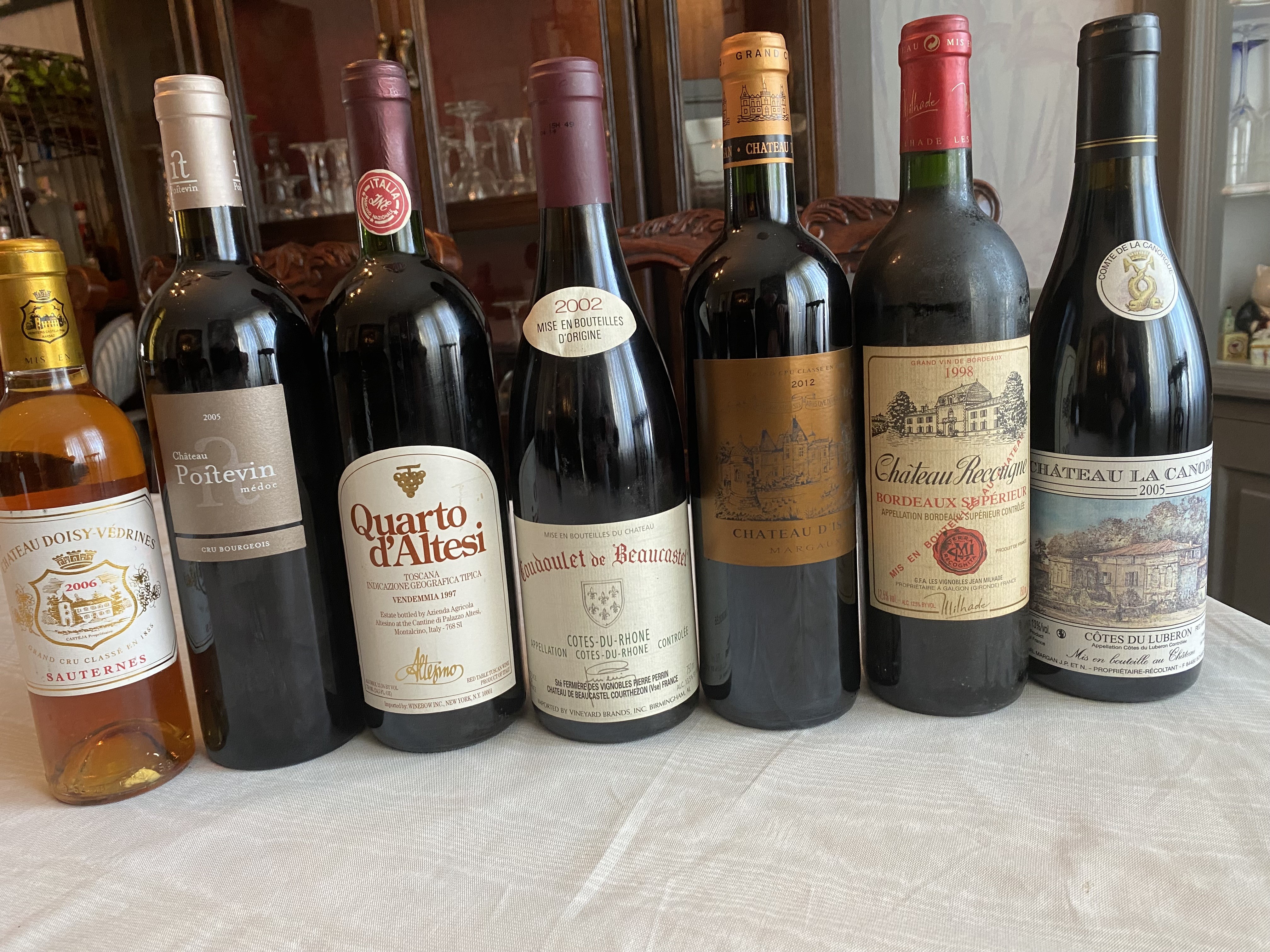
The other wines that we didn’t taste, but we added to our purchases were kind of a hodgepodge of interesting wines.  I anticipate that I will be writing about these wines in the next couple of years and I look forward to the challenge.  Chateau Doisy-Vedrines Grand Cru Classe Sauternes 2006.  Chateau Poitevin Medoc Cru Bourgeois 2005.  Altesino Quarto d’Altesi Toscana IGT 1997.   Coudoulet de Beaucastel Cotes du Rhone 2002.  Chateau D’Issan Grand Cru Classe Margaux 2012. Chateau Recougne Bordeaux Superieur 1998. Chateau La Canorgue Cotes du Luberon 2005.      

Posted in Uncategorized | Leave a comment

Chanel and Chateau Rauzen-Segla

The wine tasting was still proceeding at The Fine Wine Source in Livonia, Michigan and Juliette Allegre, the Brand Ambassador for the Chanel Wine Group was doing a wonderful job.  Chanel is a luxury fashion house founded in 1910 by “Coco” Chanel in Paris.  It is privately owned by French brothers, Alain and Gerard Wertheimer, through the holding company Chanel Limited, established in 2018 and based in London.  It goes to reason that they would venture into the wine industry.

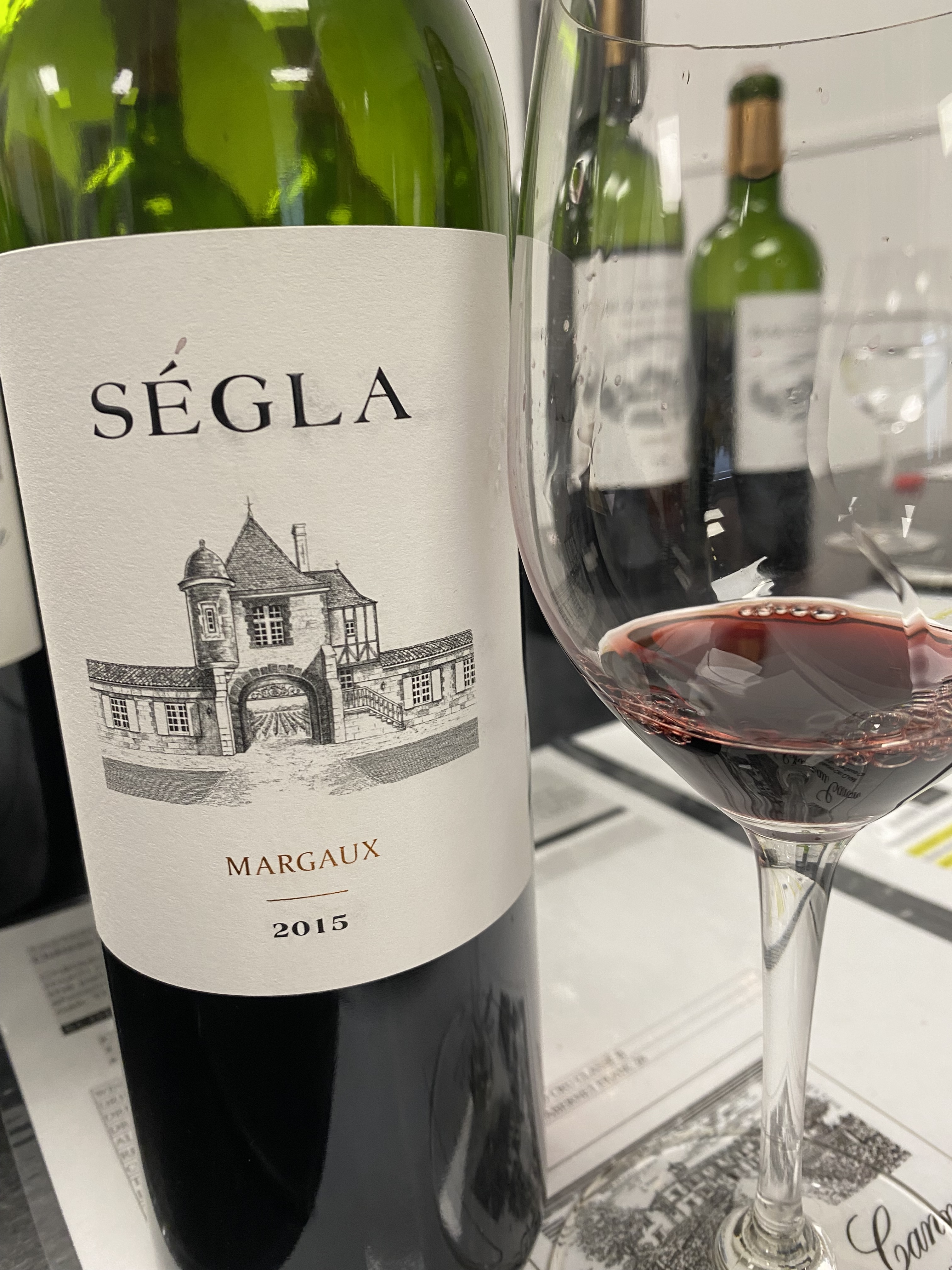
One of the most esteemed vineyards on the Left Bank of Bordeaux is Chateau Rauzen-Segla.  The chateau was founded under the name Domaine de Rauzan in 1661 by Pierre Desmezures, an important figure in Bordeauq’s history, as back then he also owned Chateau Margaux and Chateau Latour. During the history of the property, it came under the ownership of the Baroness of Segla, Catherin de Rauzan, who named it Rauzan-Segla for herself.  They estate has been famous almost from the beginning and in the Classification of the Medoc of 1855, it earned the title of Deuxiemes Grand Cru Classe (Second Growth) following Chateau Mouton-Rothschild, which since has been elevated to Premiers Cru, so now the estate leads the grouping.  In 1994, it was purchased by Chanel, and the wineries are under the guidance of Nicolas Audebert.  We started with Chateau Rauzan-Segla “Segla” Margaux 2015, their second label.  The soils are clay gravels on a Quaternary River terrace with areas of deeper fine gravel.  The wine is a blend of fifty-five percent Cabernet Sauvignon, forty-three percent Merlot, one percent Petit Verdot and one percent Cabernet Franc.  The wine is aged for fifteen months in French Oak, of which twenty-five percent is new barrels.  The ruby-red wine offered notes of blueberry, blackberry, a hint of licorice, and oak.  On the palate a medium-bodied wine with tones of black fruit, cassis, cedar, tobacco, and velvety tannins, well-balanced and ending with a medium-count finish of fruit and terroir.

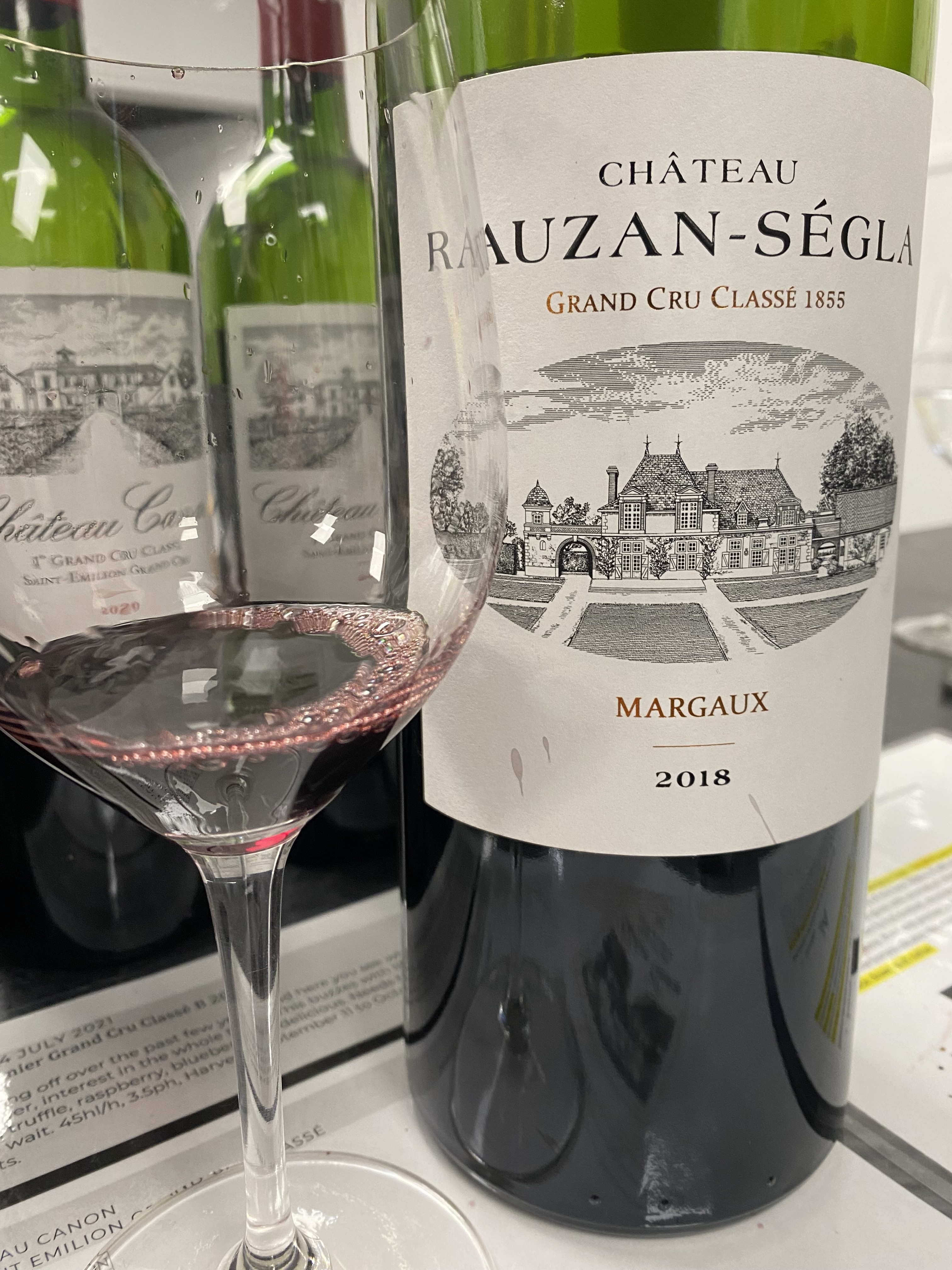
We then had our first wine from a magnum pour of Chateau Rauzan-Segla Margaux 2018.  The estate is seventy-hectares, with sixty-two percent planted to Cabernet Sauvignon, thirty-six percent planted with Merlot and a small amount devoted to Cabernet Franc and Petit Verdot.  Since being acquired by Chanel, machine harvesting has been eliminated and are now classified as organic.  This wine is a blend of fifty-six percent Cabernet Sauvignon, forty percent Merlot, two percent Cabernet Sauvignon, and two percent Petit Verdot.  Individual parcels are vinified, into Stainless Steel vats using gravity flow.  This wine was aged for eighteen months in French Oak, of which sixty-five percent was new barrels.  A very deep-dense garnet colored wine that offered notes of black cherry, strawberries, violets, sous-bois, tobacco, and smoke.  On the palate this big wine leads with tones of black cherry, plums, blend harmoniously with velvety tannins and ending with a nice long-count finish of fruit and terroir.

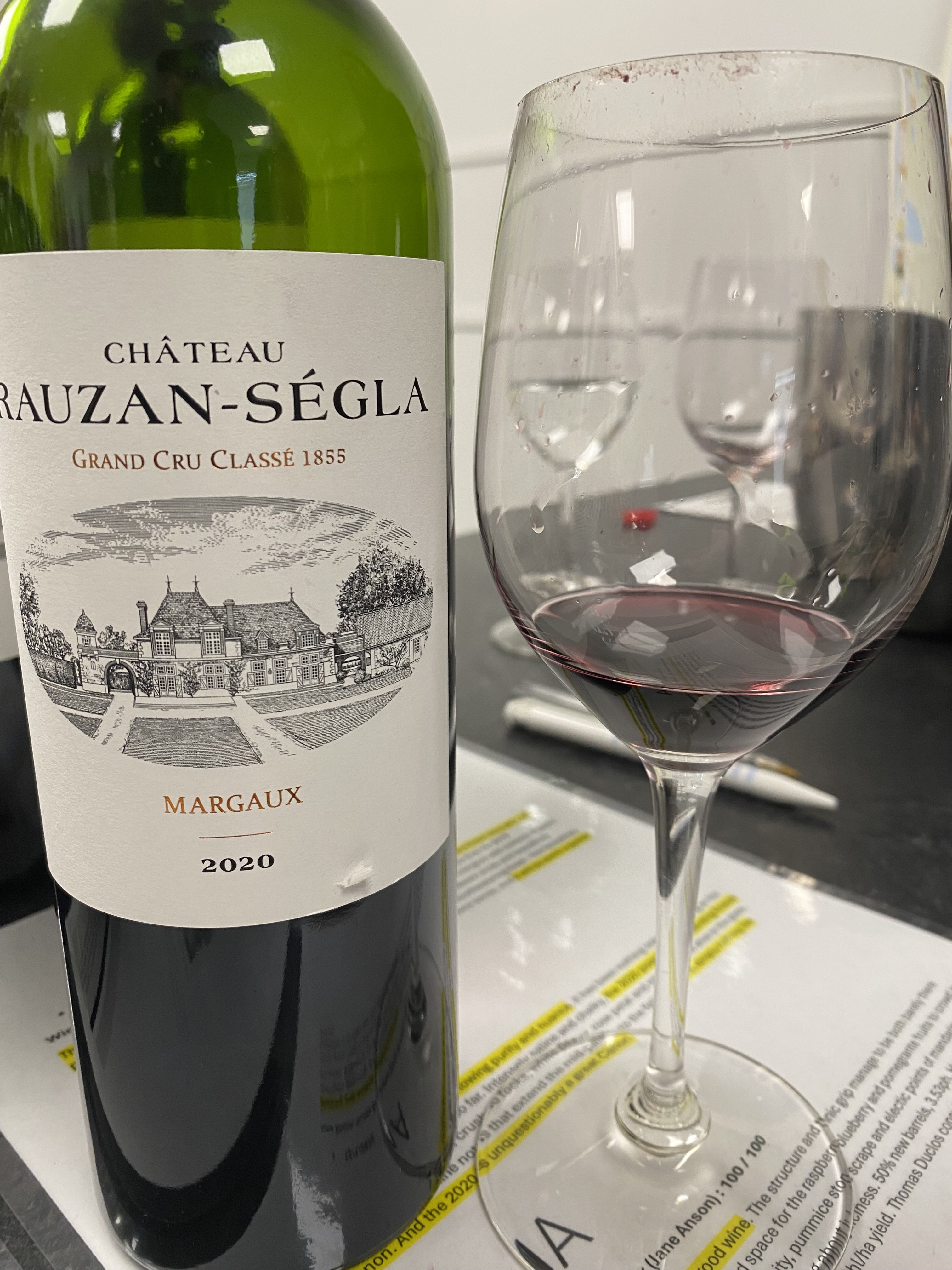
We finished off the Chanel wine tasting with Chateau Rauzan-Segla Margaux 2020.  Another major change since Chanel bought the property was that the large tanks were replaced by smaller capacity Stainless Steel vats that matched the number of parcels in the vineyards.  The wine is a blend of sixty percent Cabernet Sauvignon, thirty-six percent Merlot, three percent Petit Verdot, and one percent Cabernet Franc.  Initial Fermentation and Malolactic Fermentation are done in the vats.  The wine is then aged for eighteen months in French Oak, of which sixty percent is with new barrels.  A very deep inky-garnet colored wine that offered notes of black cherry, currants, violets, cigar box and tobacco, and spices.  On the palate this full-bodied wine offered tones of dark and black fruits, cinnamon, espresso, and dark cocoa, blend perfectly and balance with velvety tannins and ending with a nice long finish of fruit, cocoa, and terroir.    

Posted in Wine | Tagged , , , , , , , , | Leave a comment

Chanel and Chateau Canon

In the cosmic world there is usually a normal schedule in life for wine tastings at The Fine Wine Source, but I received an invitation for a Friday afternoon tasting featuring two estates from France under the Chanel umbrella.  The tasting was being led by Juliette Allegre the Brand Ambassador for the Chanel Wine Group.  Juliette had an interesting route from the Languedoc to Bordeaux and now to New York City.  Gabrielle Bonheur “Coco” Chanel was the famed French designer of post-World War I, who created a new style in couture clothing, jewelry, handbags, and fragrance, not to mention her signature monogram logo.  She will always be endeared to wine lovers with her famous quote “I only drink Champagne on two occasions, when I am in love, and when I am not.”  In 1994 the Chanel organization bought Chateau Rauzan-Segla in Margaux, in 1996 they bought Chateau Canon in Saint-Emilion, and then in 2015 they purchased St. Supery Estate Vineyards & Winery in Napa Valley; and after that announcement I was in communications with them, as I have a Lifetime Tasting Pass, which they assured me would be honored by the new owners.

At the tasting we started with five wines from Chateau Canon of Saint-Emilion.  A Jacques Kanon with associations with Quebec was recorded as purchasing the vineyard in 1760, and then the vineyard and later the estate has changed hands, and even the origins of the name may not have been based on Kanon.  Chateau Canon is a Premier Grand Cru Classe chateau with a large core parcel abutting the town of Saint-Emilion, and the parcel is almost entirely walled in, hand-harvested and ploughed by horses. The estate has also been established as organic.  The main vineyard is planted with Merlot, and some of their other vineyards have been planted with Cabernet Franc.  The estate is thirty-two hectares of vineyards on a limestone plateau with clay veins.  Their second label is Croix Canon an eleven-hectare vineyard that border Chateau Canon.  We began with Chateau Canon Croix Canon Saint-Emilion Grand Cru 2016.  This wine was formerly called “Clos Canon.” The wine is a blend of seventy-six percent Merlot and twenty-four percent Cabernet Franc.  The wine was aged for eighteen months in French Oak with twenty-five percent new barrels.  A deep reddish-purple wine that offers notes of red and black cherry and baking spices.  On the palate this medium-bodied wine offered tones of cherry fruit, vanilla, cinnamon, blended with supple tannins, well balanced and ending with a good medium count finish of dark fruit and terroir.  

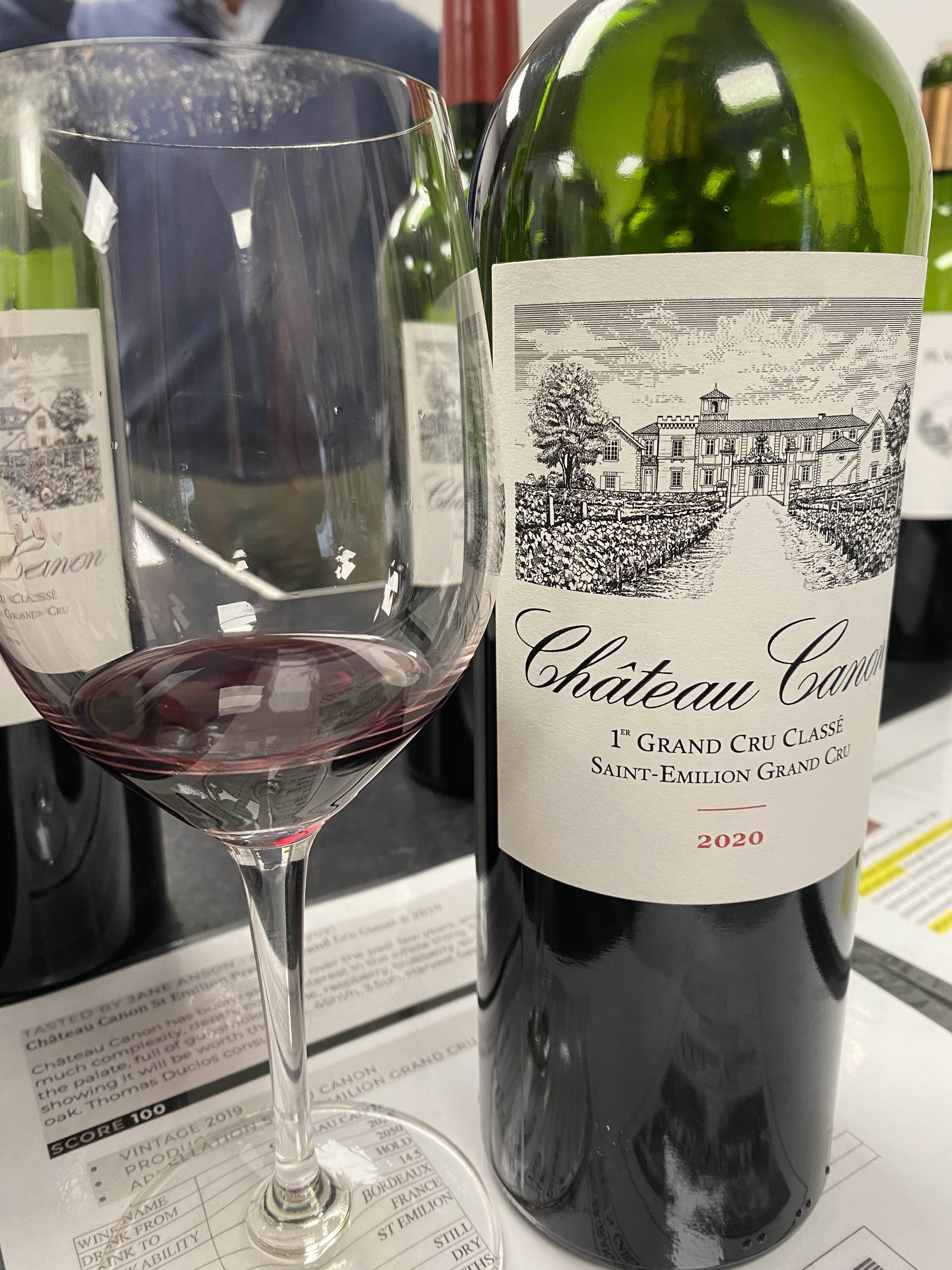
We then had the good fortune to try a vertical of four wines from Chateau Canon Premier Grand Cru Saint-Emilion.  The first was Chateau Canon Premier Grand Cru Saint-Emilion 2017.  This wine was seventy-seven percent Merlot and twenty-three percent Cabernet Franc.  The wine was aged for eighteen months in French Oak with fifty-six percent new barrels. A deep reddish-purple wine that offered notes of black currants, blueberries, and black cherries, with additional notes of straw, florals, spices, eucalyptus, and sous-bois.  On the palate, a full range of dark fruit, harmoniously blended with firm tannins, vanilla, and rosemary, well balanced and ending with a nice long count of dark fruit and chalk (terroir).  We then had Chateau Canon Premier Grand Cru Saint-Emilion 2019.  This wine was a blend of seventy-six percent Merlot and twenty-four percent Cabernet Franc.  The wine was aged for eighteen months in French Oak, of which fifty percent was new barrels.  A deep reddish-purple wine that offers notes of red ripe fruits, florals, and crushed rocks.  A very refreshing medium-bodied wine on the palate that had tones of strawberries, raspberries, and red cherries, sweet spices, and vanilla, in a well-balanced blend with silky tannins and ending with a long finish of juicy fruit and terroir.  We then enjoyed the Chateau Canon Premier Grand Cru Saint-Emilion 2020.  This wine was a blend of sixty-eight percent Merlot and thirty-two percent Cabernet Franc.  The wine was aged for eighteen months in French Oak of which fifty-percent were new barrels.  This deep reddish-purple wine offered notes of red fruits, florals, peat, and cedar.  On the palate, this was a big wine, with creamy qualities of raspberries and cherries, very elegant, with richness accentuated with a delightful salinity and ending with a nice long count finish of fresh fruit and terroir, and a desire for another taste.  We finished with a Chateau Canon Premier Grand Cru Saint-Emilion 2021 that wasn’t even going to be arriving at the shop until a week later for pre-orders.  This wine is a blend of seventy-one percent Merlot and twenty-nine percent Cabernet Franc.  The wine was aged for eighteen months in French Oak with fifty percent new barrels.  A very dark ruby-red wine that offers notes of raspberry, strawberry, and cherry with florals, smokiness, herbs, and spices.  On the palate a heady medium-bodied wine with red fruits, with tinges of orange blossom, almond, a dash of honey (without any sweetness), coffee; all well balance with firm tannins and ending with a long finish of juicy fruit and terroir.  My picks would be 2020, 2019, 2021, and then the 2017.        

Posted in Wine | Tagged , , , , , , | Leave a comment

Durfort-Vivens and Trinite Estate

The afternoon session with Stanislas (Stan) O’Byrne was coming to an end at The Fine Wine Source in Livonia, Michigan.  He was showing some of the wines from his company Jubilee Wine Selections, that he introduced to the owner of the shop at last year’s En Premiere in Bordeaux.

The last of the French wines that we were tasting was Chateau Durfort-Vivens Margaux 2016, a Deuxiemes Crus (Second Growths) from the 1855 Classification of the Medoc.  The estate was one that was visited by Ambassador Thomas Jefferson, before he became the President of the United States who rated the chateau just under Lafite, Latour, and Margaux. Similar to many other estates after the French Revolution, the chateau had many different owners until it was purchased by the Lurton family in 1937, who also at the time had a stake in Chateau Margaux.  In 1962, Lucien Lurton bought the estate and in 1992, his son Gonzague took over, who revamped the cellars and converted the estate to organics and biodynamics.  They now have a range of wooden and concrete vats sized to specific vineyard parcels.  The estate is fifty-five-hectares of vineyards planted on deep gravel soils over a sand and clay base.  This wine is a blend of ninety-four percent Cabernet Sauvignon and six percent Merlot.  It was aged for eighteen months in French Oak, of which sixty percent was new.  A deep ruby-purple wine that offers notes of plums, blueberries, violets, lavender, and cedar.  On the palate there were tones of plums, cassis, black cherry, tinges of cinnamon and vanilla, with a nice long count of fruit and terroir.          

We then went and discovered Trinite Estate “Amaino” Sonoma County 2016, a California venture from Claire and Gonzague Lurton, which began in 2012.  They found a ten-hectare vineyard in the heart of Sonoma County, in Chalk Hill, at the intersection of three appellations: Russian River, Knight’s Valley, and Alexander Valley.  They had to basically start from scratch as there were no winemaking facilities on the estate, and the vineyard had to be partially replanted.  Amaino, refers to the volcanic stone or volcanic ash found in the soils in the foothills of Mount St. Helena, derived from the Pomo language of a local native American tribe.  The wine is a blend of sixty-three percent Merlot, twenty-nine percent Cabernet Sauvignon, and eight percent Petite Sirah.  A deep garnet colored wine that offered notes of cassis, black cherry, graphite, and minerals.  On the palate black cherry, plums, chocolate, almonds, black pepper, and pencil shavings, blending with good acidity, firm tannins, and a good medium count finish of fruit and terroir. 

The final wine of the set was Trinite Estate “Acaibo” Sonoma County 2016, a project that had G&C Lurton emigrate to California with their children for three years.  The “Acaibo” project, was Gonzague and Claire’s desire to create a great California terroir wine.  The soil is clay loam, on compacted volcanic ashes, since they are on the base of Mount St. Helena.  They also had to learn and to adjust to the different climate in Sonoma County compared to Bordeaux.  “Acaibo” is a created word combining California and France; in the native American Pomo language ACA refers to fish and water, and IBO means three and refers to the Lurton’s Bordeaux roots, the Bordeaux arms are three intertwined crescent moons, their three children, their three Classified Growths and the three Bordeaux varieties chosen for the blend.  The wine is a blend of seventy-two percent Cabernet Sauvignon, eighteen percent Cabernet Franc and ten percent Merlot.  All vinification methods are the same as practiced in Bordeaux and the wine is aged for sixteen months in French Oak, of which eighty percent is new.  A very deep garnet colored wine that offered notes of black fruits, florals, cinnamon, licorice, and minerals.  On the palate, a medium to full bodied wine that offered red and black fruits, harmoniously blended with chewy tannins, tinged with vanilla, cinnamon, espresso; and ending with a long count finish of fruit, and a saline terroir that calls for another taste.  Not that I am such a mavin, but in a blind tasting, I might think this wine was Bordelais.

Posted in Wine | Tagged , , , , , , , , , , , , | Leave a comment

Three More Reds from Jubilee Wine Selections

It was a wonderful afternoon of tasting wines at The Fine Wine Source in Livonia, Michigan.  The new addition was just officially opened for business and Stanislas O’Byrne the founder of Jubilee Wine Selections was pouring some of his wine offerings.  This group of three were from Pessac-Leognan, Pauillac, and Margaux.  Some days, being a wine blogger is very tough.

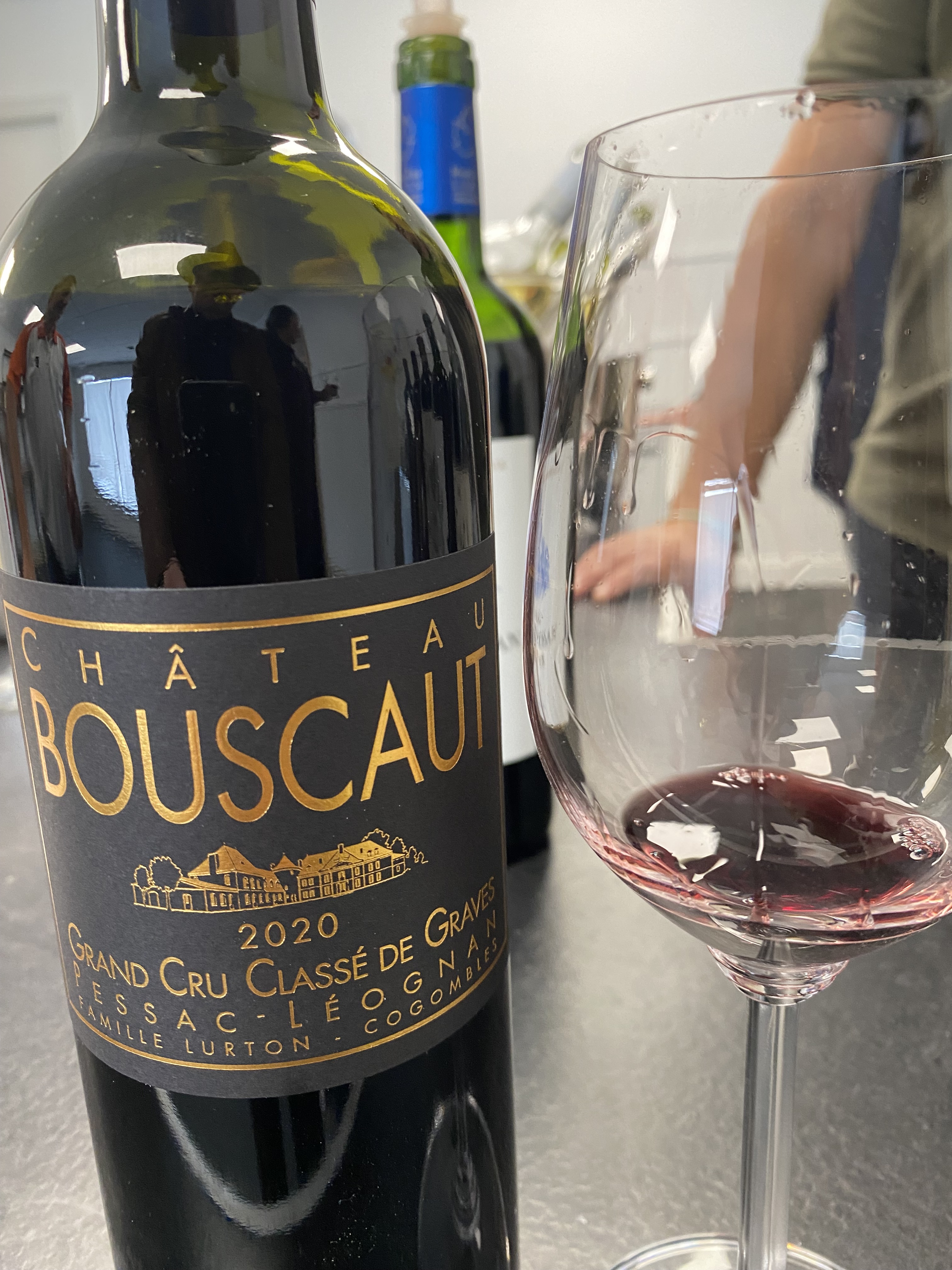
We started this set with Famille Lurton Chateau Bouscaut Rouge Grand Cru Classe de Graves Pessac-Leognan 2020.  The estate is known as a Grand Cru Classé de Graves for both their white and their red wines.  The vineyard dates to the 1600s, while the estate was originally known as Haut Truchon, but by 1881it had become Chateau Bouscaut.  The chateau was burned to the ground in 1962, the cellars were unharmed, and the chateau was rebuilt according to its original architectural plans. In 1979, Lucien Lurton purchased the estate and then added an additional nine-hectares that was Chateau Lamothe-Bouscaut.  The vines on average are thirty-five-years of age and planted on clay on limestone soil.  The vinification process begins in Stainless Steel and Concrete tanks, and then aged for eighteen months in French Oak, of which forty percent is new.   The wine is a blend of sixty-one percent Merlot, thirty-three percent Cabernet Sauvignon and six percent Malbec.  The wine was a deep ruby/purple color and offered notes of black fruits, mocha, and cedar.  On the palate this medium-bodied silky wine offered tones of black cherries, and berries, plums, with good secondary tones of licorice; blended with good acidity, firm tannins and then ending with a nice long-count finish of spices and a salty-mineral terroir finish.

We then had Chateau Haut-Bages Liberal Pauillac 2021, which is a Cinquieme Grand Cru Classe in 1855 (a Fifth Growth).  The property is adjacent to Chateau Latour and the other half is behind Chateau Pichon Baron, with a third plot adjacent to Chateau Grand-Puy-Lacoste; and Haut-Bages refers to the upper part of the “Bages,” a large plateau between Pauillac and Saint-Julien.  The “Liberal” is an homage to the Liberal family that ran the property in the 18th Century.  For years the property was owned by the Cruse family and the wine was produced at Chateau Pontet-Canet.  The property was sold to the Taillan Group, headed by Jacques Merlaut, and his granddaughter Claire Villars-Lurton has owned and managed the estate since 2000, along with her husband under the G&C Lurton group.  The estate is thirty hectares and is certified organic and biodynamic in 2019, and is planted on deep gravel over a limestone base. The wine is ninety percent Cabernet Sauvignon and ten percent Merlot.  The fruit is hand-harvested and then vinification begins using Stainless-Steel tanks and concrete vats.  The wine is aged in French Oak, of which forty percent is new, but since 2018, twenty percent of the vintage is placed in amphorae and is all aged for sixteen months.  The deep, dark ruby colored wine offers notes of currants, cassis, black cherry.  On the palate, this elegant full-bodied wine offered tones of dark fruits, good acidity, fine tannins and ended with a long-count finish of dark fruit, and a desire for a second taste. Probably a good four to seven years, to achieve the start of its sweet spot, so a very good investment for the cellar.

The last wine of this group was Chateau Ferriere Margaux 2019, a Troisiemes Grand Cru Classe of 1855 (a Third Growth).  The estate is eighteen hectares, almost entirely within the village of Margaux itself, and one of the smallest of the classed growths.  The estate was founded by Gabriel Ferriere, a member of the court of King Louis XV and a wine broker.  The Ferriere family owned the property until 1914, after which it changed hands a number of times; and for several years the wine was vinified at Chateau Lascombes.  In 1988, it was bought by the Villars family and is now under the guidance of Clair Villars Lurton and G&C Lurton group.  The estate is planted on soils of gravel deposits above limestone marl.  The estate is now certified organic and biodynamic since 2019.  This wine is a blend of seventy-five percent Cabernet Sauvignon, twenty-five percent Merlot, and five percent Petit Verdot. After initial vinification, the wine is aged for eighteen months in French Oak, of which forty percent is new, but twenty percent of the wine is aged in amphorae for the same period.  The dark ruby wine offers notes of cassis and licorice.  On the palate this full-bodied wine showed great tones of dark fruits, blended seamlessly with tinges of licorice, toasted oak, firm tannins, great acidity and a nice long-count finish of dark fruit and terroir. 

Posted in Wine | Tagged , , , , , , , , , , , , , , | Leave a comment

First Three Reds from Jubilee Wine Selections

There is hardly anything more relaxing than having an afternoon wine tasting, unless you are like me and trying to be unobtrusive and taking photos.  We were being regaled with anecdotes and photos while Stanislas (Stan) O’Byrne of Jubilee Wine Selections was pouring wines and christening the new wine counter and wine annex at The Fine Wine Source in Livonia, Michigan and we all were having a great time.

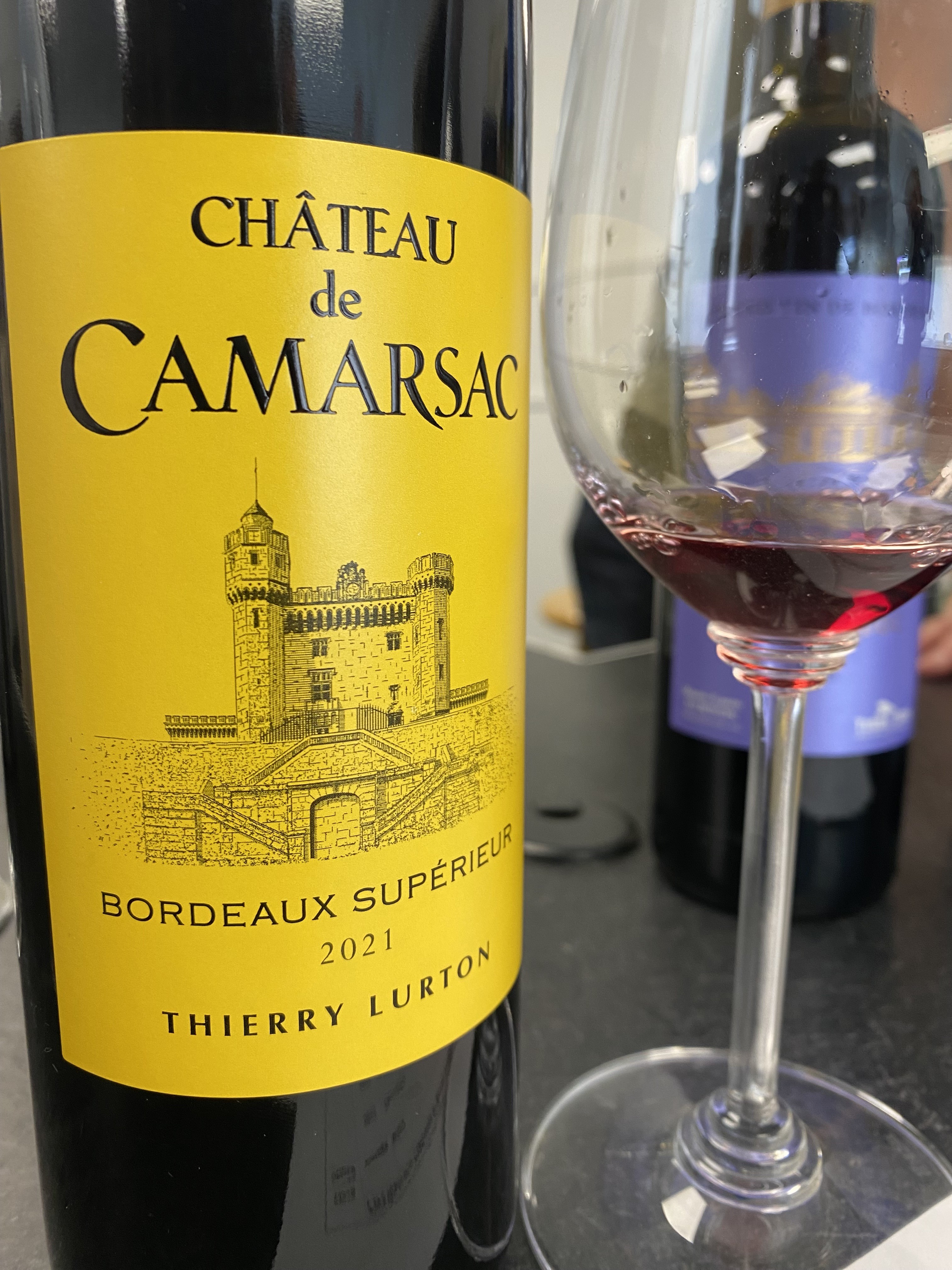
The first red was Thierry Lurton Chateau de Camarsac Bordeaux Superior 2021.  The estate has over seven-hundred years of history located in the Entre-Deux-Mares region close to Bordeaux and Saint-Emilion, with parts of the chateau built in the 14th Century and during permittable weather, one can go on the roof and get a sweeping panoramic view of the vineyards and landscape of the district.  Solange and Thierry Lurton have been there since 2007.  They even offer a workshop where one can assemble a personalized wine as they teach the art of wine-blending and one can create a personalized souvenir bottle.  The wine is a blend of seventy percent Merlot and thirty percent Cabernet Sauvignon planted on clay and clay-gravel soils.  The wine is vinified and aged at average temperatures in oak vats to promote aromatic potential and for the extraction of color.  The deep red-purple wine offers notes of red currants and raspberry, along with baking spices.  On the palate the medium-bodied wine offered raspberry and red currant tones, well balanced with good acidity and firm tannins.

We then had Chateau de Villegeorge Haut-Medoc 2018 by Marie-Laure Lurton.  Marie-Laure Lurton is a Medoc based wine company founded in 1992 with two properties: Chateau La Tour de Bassan in Margaux and Chateau de Villegeorge in the Haut-Medoc.  The two properties were originally under the ownership of her father, Lucien Lurton; when he purchased the properties in the early 1970s from the Clauzel family.  Chateau de Villegeorge dates back to the 18th Century and has been respected for ages and was awarded Cru Bourgeois Exceptional Growth status in 1932 and 1966; the status was original created in 1932, and then re-confirmed in 1966.  Located in Avensan, the estate consists of twelve hectares planted on deep gravel and is sixty-three percent Cabernet Sauvignon and thirty-seven percent Merlot.  The fruit is mechanically harvested, with cold pre-fermentation, then traditional vinification and maceration for forty days, followed with maturing for nine months in oak barrels.  A deep ruby-red wine that offered notes of black cherries, currants, and chocolate.  On the palate this medium-bodied wine offered tones of dark fruit, with good acidity, well balanced with secondary tones of pepper and a nice medium count finish of more fruit; a nice “chewy” wine.

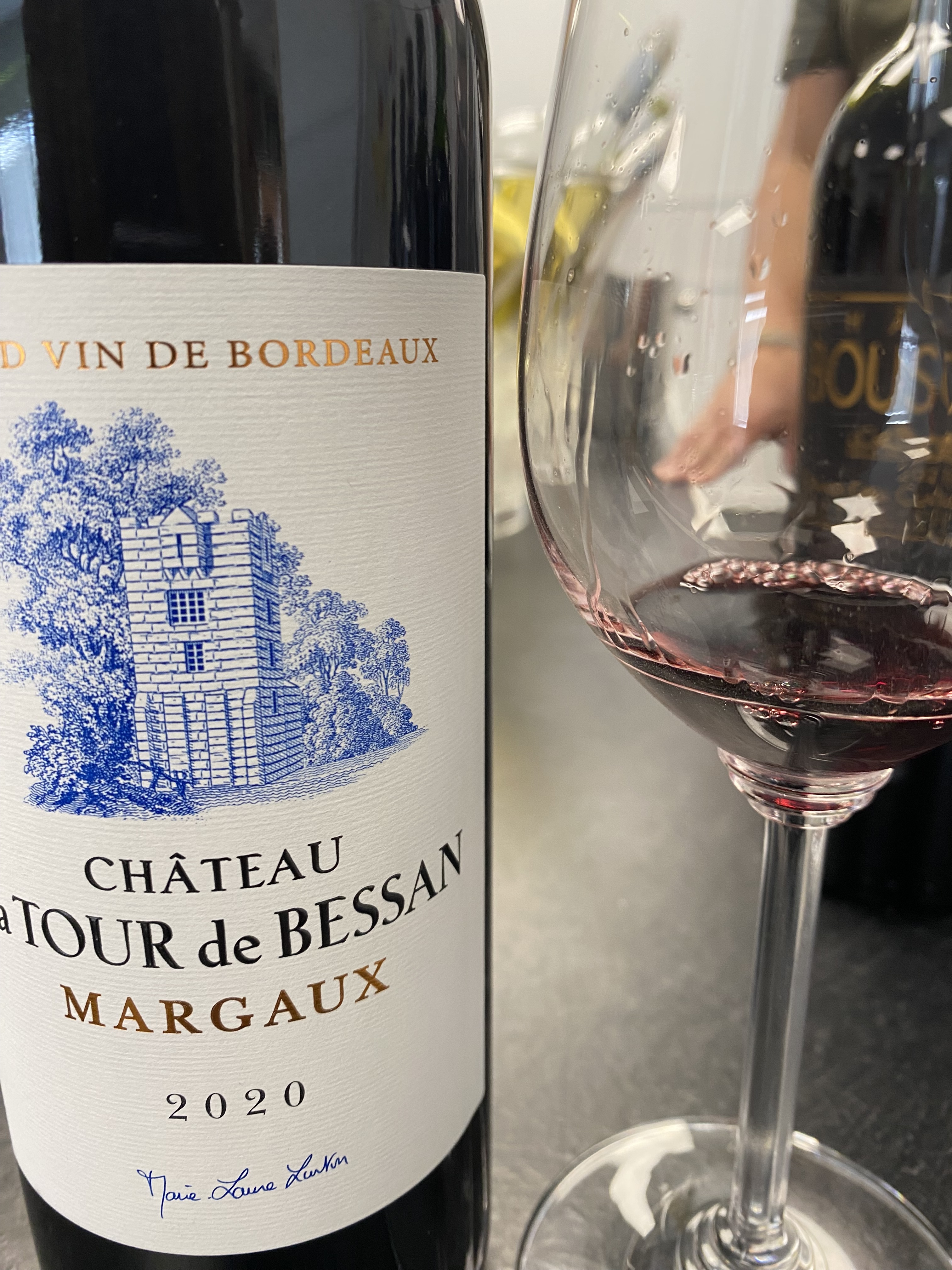
The third wine that we had was Chateau La Tour de Bessan Margaux 2020 by Marie-Laure Lurton.  Chateau La Tour de Bessan goes back to the construction of a 13th Century fortified tower in Soussans.  Marie-Laure Lurton took control of this estate in 1992 from her father Lucien Lurton and is thirty-five hectares and earned its Cru Bourgeois classification in 2003.  The blocks of plots are spread over three communes within the Margaux zone of Soussans, Arsac and Cantenac on Pyrenean gravel soils with varying quantities of clay in each location.  The wine is a blend of sixty-one percent Merlot, thirty-three percent Cabernet Sauvignon, and six percent Petit Verdot.  The wine is aged in French Oak barrels for twelve months.  The deep ruby-red wine offered notes of red fruits, tobacco, mocha, and spices.  On the palate this medium-bodied wine showed tones of cherries, strawberries, almonds blended with good acidity, firm tannins, and a nice medium count finish of fruit and terroir.  A solid value and introduction to Margaux wines.  

Posted in Wine | Tagged , , , , , , , , , , , , | Leave a comment

Jubilee Wine Selections

It was the first dedicated wine tasting in the new annex room at The Fine Wine Source in Livonia, Michigan.  The tasting was on Saturday, and the city gave permission to use the new room the day before.  Stanislas (Stan) O’Byrne is the owner and founder of Jubilee Wine and he and the owner of the shop met the year before at En Premiere.

The first wine was Vignoble Ollivier-Cottenceau Muscadet Sevre et Maine Sur Lie 2022.  This domaine is located on the hills between the Sevre and Maine Rivers, with twenty-two hectares of vineyards with south-west exposure on sandy, gravely granite soil.  This is a family estate that has been handed down since the 17th Century, and the prized grape of the region is the Melon de Bourgogne (Melon) or simply known as by the appellation of Muscadet of the western Loire Valley.  Planted in 1709 after a severe winter; it had been expelled from the Burgundy region for being of little interest there, was a cold-resistant answer to the Loire region.  The finest winemakers avail themselves to having extended lees contact during maturation (sur lie).  The estate uses mechanical harvesting, with pressing within twelve to twenty-four hours after harvest.  Fermentation occurs during the first seventeen days and then aged in the same Stainless-Steel vats with batonnage while still on the lees, and the wine is bottled and released in April following the harvest.  The wine is a pale yellow-gold and offers notes of green apples, citrus, iodine, and minerals.  On the palate there are tones green apples, lemons, and limes, with high acidity and tinged with maritime salt, and ending with a medium count finish of fruit, terroir, and iodine.  A very easy drinking wine.

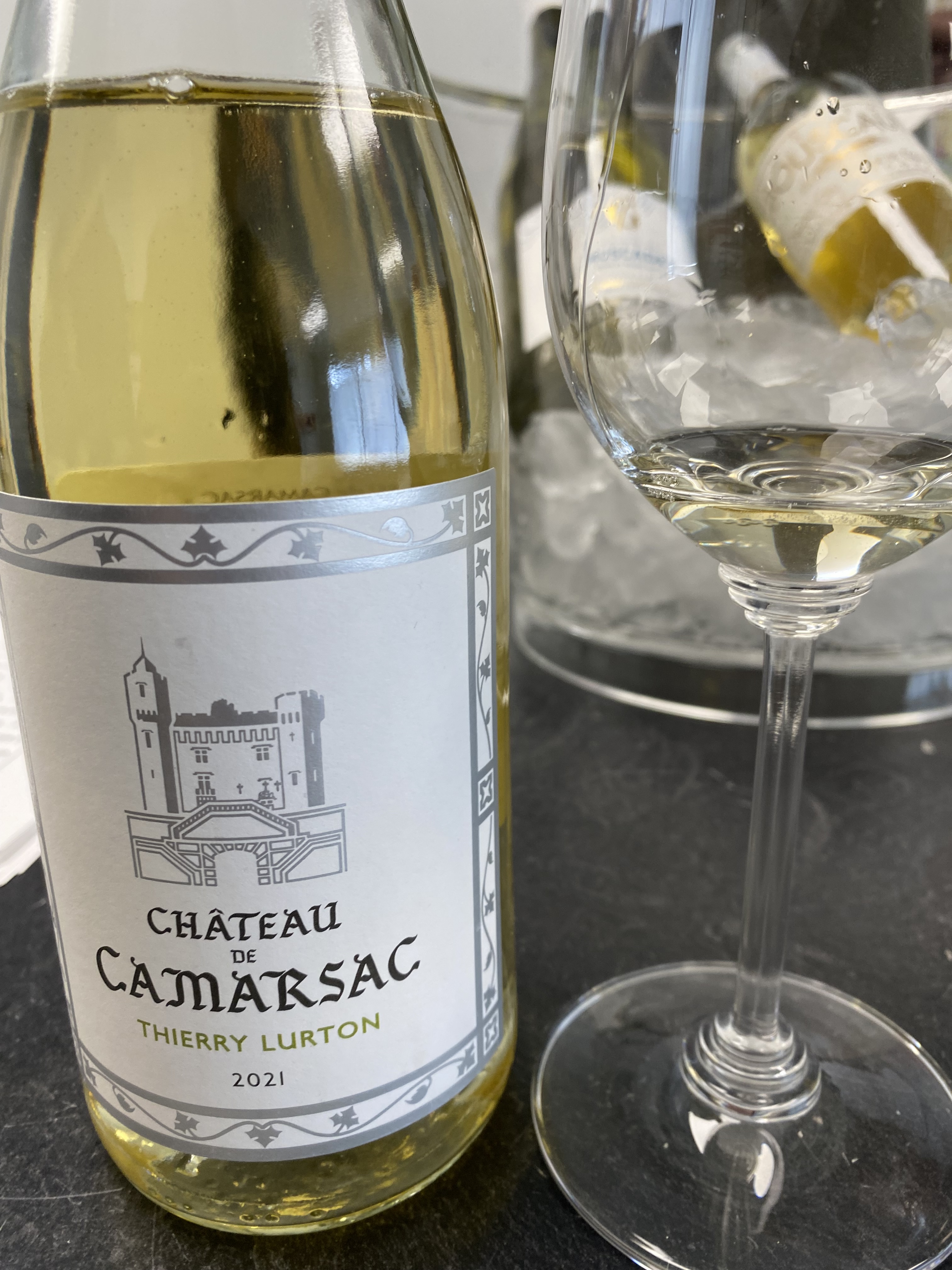
We then had Thierry Lurton Chateau de Camarsac Bordeaux Blanc 2021.  The estate has over seven-hundred years of history located in the Entre-Deux-Mares region close to Bordeaux and Saint-Emilion, with parts of the chateau built in the 14th Century and during permittable weather, one can go on the roof and get a sweeping panoramic view of the vineyards and landscape of the district.  Solange and Thierry Lurton have been there since 2007.  They even offer a workshop where one can assemble a personalized wine as they teach the art of wine-blending and one can create a personalized souvenir bottle.  The estate has clay-gravel soils that is used for growing Semillon, and clay-limestone soil that they grow the other white varieties on.  The Blanc is a blend of forty-five percent Semillon, forty percent Sauvignon Blanc, ten percent Sauvignon Gris, and five percent Muscadelle.  The different grapes harvested, crushed, fermented, and matured separately with some in Stainless Steel and some in oak, until blending. The wine is a pale gold in color and offers notes of citrus fruits, exotic fruits, and white florals.  On the palate a medium-bodied wine with tones of grapefruit, pineapples, good acidity, and a medium count finish of fruit and minerals.  

The final white wine of the tasting was Famille Lurton Chateau Bouscaut Pessac-Leognan 2020, and the estate is known as a Grand Cru Classé de Graves for both their white and their red wines.  The vineyard dates to the 1600s, while the estate was originally known as Haut Truchon, but by 1881it had become Chateau Bouscaut.  The chateau was burned to the ground in 1962, the cellars were unharmed, and the chateau was rebuilt according to its original architectural plans. In 1979, Lucien Lurton purchased the estate and then added an additional nine-hectares that was Chateau Lamothe-Bouscaut.  The wine is a blend of seventy percent Sauvignon Blanc and thirty percent Semillon and these grapes are grown on soils of clay on limestone gravel.  The wine is a light greenish-yellow and offered notes of tropical fruits, honey, herbs, and oak.  On the palate a dry nice medium-bodied wine with creamy tones of pears, passionfruit, and currants with good acidity and a good medium count finish of passionfruit and terroir.     

Posted in Wine | Tagged , , , , , , , , , , , , , , , , , | Leave a comment

Fine Wine Source Club Selections – October 2024

We had a busy day this morning, even finished all of the Christmas shopping and then we stopped to pick up our wine club selections from The Fine Wine Source in Livonia, Michigan; plus, we wanted to be nosy and check out the addition to the store.  One of the key lessons that I learned years ago, is that if you moved your initial location, even by a block, you end up losing customers. I know it sounds crazy, but it was an axiom that I heard constantly for all the years I was in business.  They were able to acquire the store adjacent to them and expand with an internal arch from store to store, and still maintain the original address.  More selling space and even a dedicated tasting area and counter, instead of everyone huddled around a barrel. 

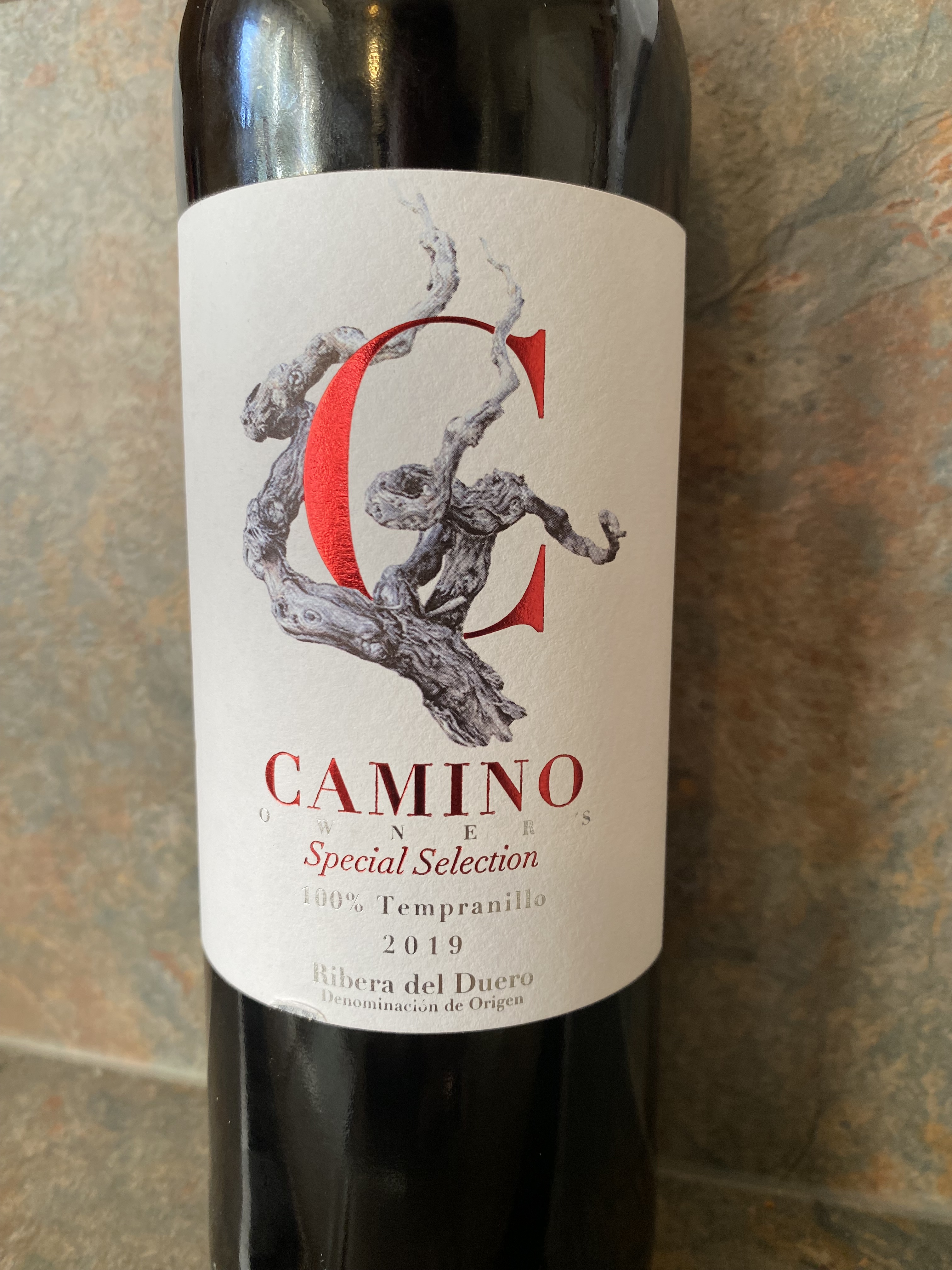
The first wine representing the Old World is Bodegas Nexus & Frontaura Camino Owner’s Special Selection Ribera del Duero 2019.  Nexus & Frontaura was established in 1840 by the Gonzalez family, when the first vineyards were planted in the Toro region.  Bodegas Frontaura and Nexus Bodegas produce wines from the prestigious appellations in Castilla y Leon: Toro, Ribera del Duero, and Rueda.  Camino Pardo Alvarez is from the original Gonzalez family, a union of a Castilian father and an Asturian mother.  Sine 1999, she has been active in production, viticulture, and enology, and in the international marketing of the wines.  Bodegas Nexus was established in 2000.  In 2004 she became the General Manager of Marques de Valdelecasas, Bodegas Frontaura and Nexus.  Ribera del Duero rose from basic obscurity in the 1980’s to one of the most important wine regions.  For red wines Tempranillo is the main varietal, though some blending is allowed.  The region uses the same aging rules as found in Rioja. The vineyards are planted on sandy-clay and loam soils.   The vineyard is sixty-five-hectares, forty in full production and twenty-five with new, and young vines.   This wine is made exclusively from Tempranillo grapes, aged for three months in French Oak.  The wine offers notes of blackberries and other dark fruits, with hints of chocolate, oakiness, smoke, and sous-bois.  On the palate this medium-bodied wine offers tones of blackberry, plum, prune, blended with soft tannins, good acidity, and a juicy finish with some terroir.

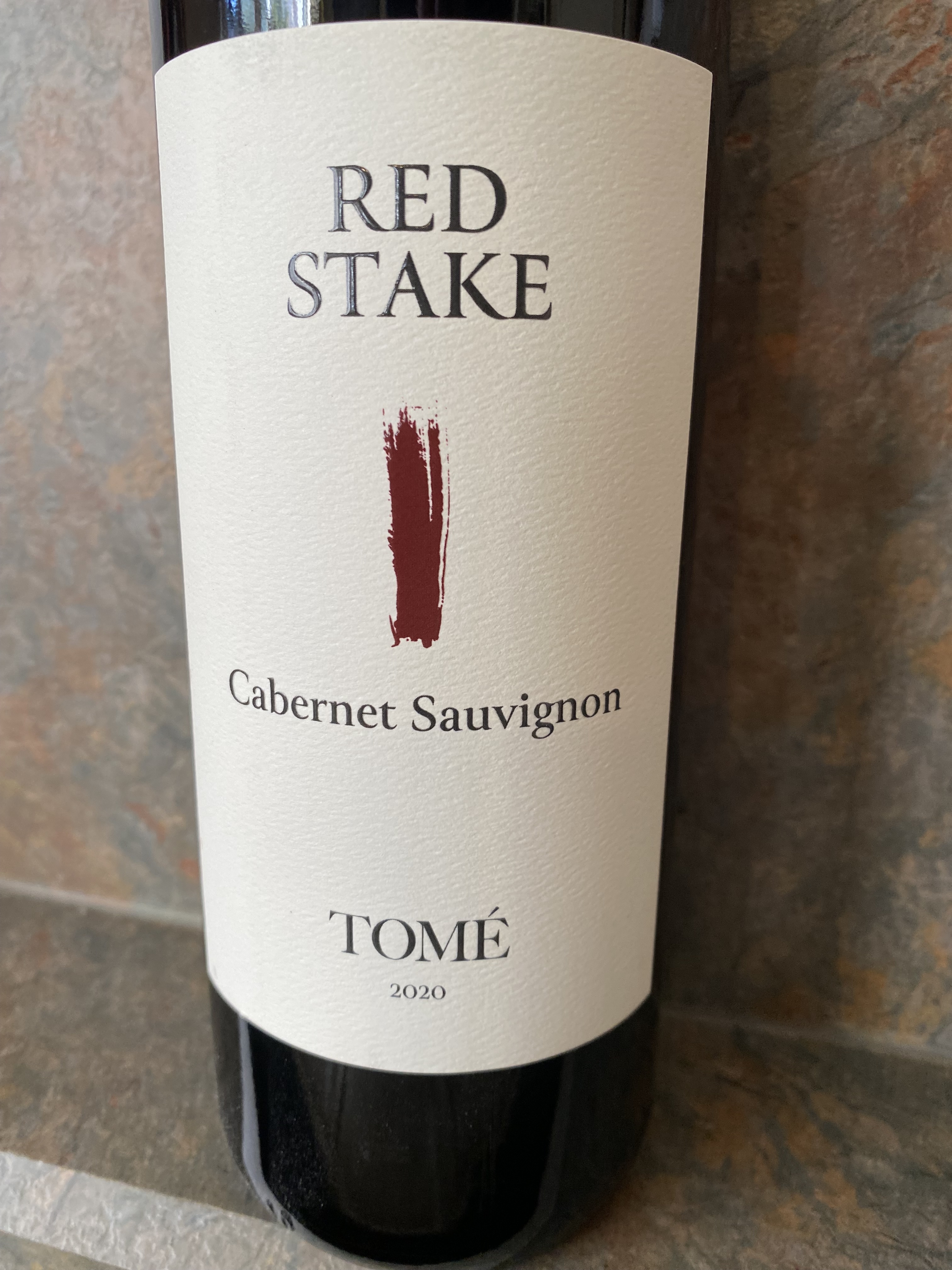
The wine representing the New World is Tomé “Red Stake” Cabernet Sauvignon Columbia Valley 2020.  Robert Tomé is the founder and CEO of Tomebrands. Robert was born in Toronto, Ontario, Canada; his father was an immigrant from Friuli Venezia Giulia home of some of his favorite vineyards, and his mother is a third-generation Canadian of Scottish descent, from where he learned to love golf. His earliest memories of wine are the wines made in his family’s garage by his father and uncles.  Years later he found himself working at a golf club, where he developed a passion for the game, as well as the hospitality industry, where he eventually received a full scholarship and then a degree in hospitality and tourism.  By the nineties he was working full time in the wine industry, and in 2004 he launched his own wine importing agency in Canada.  In 2017, he sold his interest in the agency and fulfilled his dream and created Tomé Group of Brands, making wines from Washington State and in Italy.  The fruit came from the Frenchman Hills of Columbia Valley and was a smaller crop of smaller berries which boded well for the vintage. They began with whole berry fermentation, with manual batonnage about three times a day; and the Initial Fermentation lasted for fourteen days for maximum extraction. The wine was then gently pressed and then aged on the lees for twenty-four months in French Oak, of which twenty-five percent was new; nine-thousand bottles were produced.  The wine is described as having note of black cherry, cassis, and new leather.  On the palate, the wine is described as having tones of dark cherry, blackberry, dark currants, and baking spices; “an elegant Old World style with a nod the New World.  For you non-golfers, a “Red Stake” refers to the stake on a golf course that delineates a water hazard.    

Posted in Wine | Tagged , , , , , , , , , , , , | Leave a comment

Marvin’s Marvelous Mechanical and Greenfield Village

My Bride and I like to visit museums, I know for a fact that I just can lose myself wandering around and some times we even rack up some points on her “fit-bit watch.” There was and is a unique museum that I have wanted to visit for ages, and recently I heard that the people that own the building, want to tear everything down and rebuild, with no concern for the museum.  I am talking about Marvin’s Marvelous Mechanical Museum, which is one man’s interest and collection of all types of mechanical amusements, and they all work. In 1932 Sam Yagoda and his wife, opened their first family friendly drug store and in 1937 bought a larger store, and still in business and run by there son Marvin.  The museum outgrew the store and is now housed in a 5,000 square foot building with vintage coin-operated machines, from the earliest to brand new incarnations.  Everywhere you look there is chachkas, on the ceilings, the walls, in nooks, even a child size carousel.  The big draw is that they cater birthday parties for children, and the parents probably have as much fun as we did.  You can even take selfies, in the original setting with a photo booth.  And did I mention that admission is free, and they are open every day.  After so much entertainment, I wanted a hot Pastrami on Twice-baked Corn Rye and a Selzer.  So, you will get a photo of the ongepatchkit instead.

Another day, we went to Greenfield Village to take our daily walk.  Greenfield Village is part of “The Henry Ford” which when I was a kid there was Greenfield Village and the Henry Ford Museum, which is now the Museum of American Innovation. The two of them on together must be among the top ten museums and tourist destinations in the country.  When I was a kid, we would ride our bikes from Detroit to the grounds and tour one of the two museums each trip.  It got to the point where I could have become a docent there. Now my Bride and I have year-round passes and we probably get there at least once a month for a date.  I mean there is eighty acres of a grand outdoor museum, with a steam-engine train ride around the circumference, a steamboat on their own lake, and even rides on Model T cars, that zip around the streets.  Henry Ford bought historic buildings of all types, had them meticulously taken apart and rebuilt on the streets of his village.  Thomas Edison’s Menlo Park laboratory and grounds from New Jersey, along with his laboratory from Fort Myers, Florida.  The Wright Brothers Bicycle Shop, the homes of writers, poets, musicians, schools, machine shops, and artisan shops; there is even a working farm.   

Since the weather was great, we wanted to walk outside, as the Village is suspended during the winter months.  They are still adding to the collection of structures, as a few years ago they added the outdoor Detroit Central Market, and then they recently added a new restaurant adjacent to the market called Stand 44, where the celebrated local huckster Mary Judge sold her goods.  My Bride had the Grilled Chicken Salad with Romaine lettuce, grape tomatoes, cucumbers, garbanzo beans, pickled red onion, Kalamata olives, and a creamy Asiago dressing. I had a Shaved Roast Beef, Jack horseradish cheese, arugula, roasted red peppers, horseradish sauce on an onion roll. Everything in the restaurant was recyclable.  We also had cans of wine, which I think was my first ever and both made by Leelanau Cellars in Michigan.  My Bride had the Leelanau Cellars Summer Sunset Rose Bubbly MI NV “this semi-sweet Rosé seamlessly merges strawberry, melon and rose flavors for an airy taste of summer in a bright fizzy finish.”  While I had the Leelanau Cellars Great Lakes Red Bubbly MI NV “the concord grape you grew up with in its pure, rich flavor blended into a sweet, vibrant and juicy red wine all wrapped up in a delightfully carbonated bubbly drink.”  These wines are made for quaffing, and I couldn’t finish my selection.  I hope that the next time I encounter a can of wine, it will be more craft-like and less like soda-pop. 

Posted in Dining, Wine | Tagged , , , , | Leave a comment