Elia On the River

We were getting closer to the wedding and more people were meeting up, and at least the majority of our crowd ended up at the same hotel, through the arrangements of the cruise line.  The hand steamer that my Bride bought was really put through the paces and everyone was happy with the results.  The Louisville crowd selected a restaurant using one of their phone apps and everyone agreed.  Of course, whatever transportation service that was chosen, the driver had no knowledge of the restaurant, and yes, I miss the moxie of taxis and their finger on the pulse of the city. 

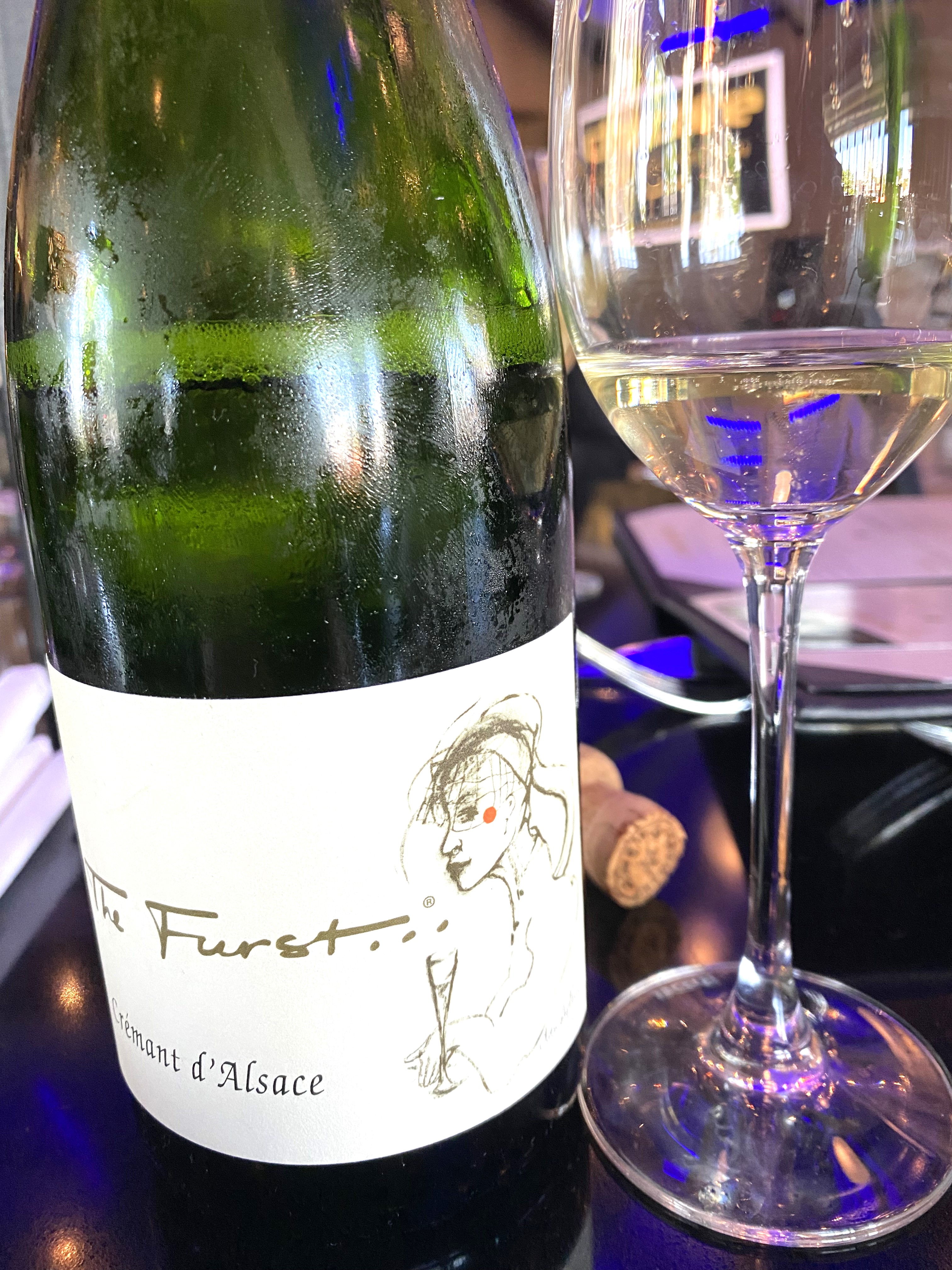
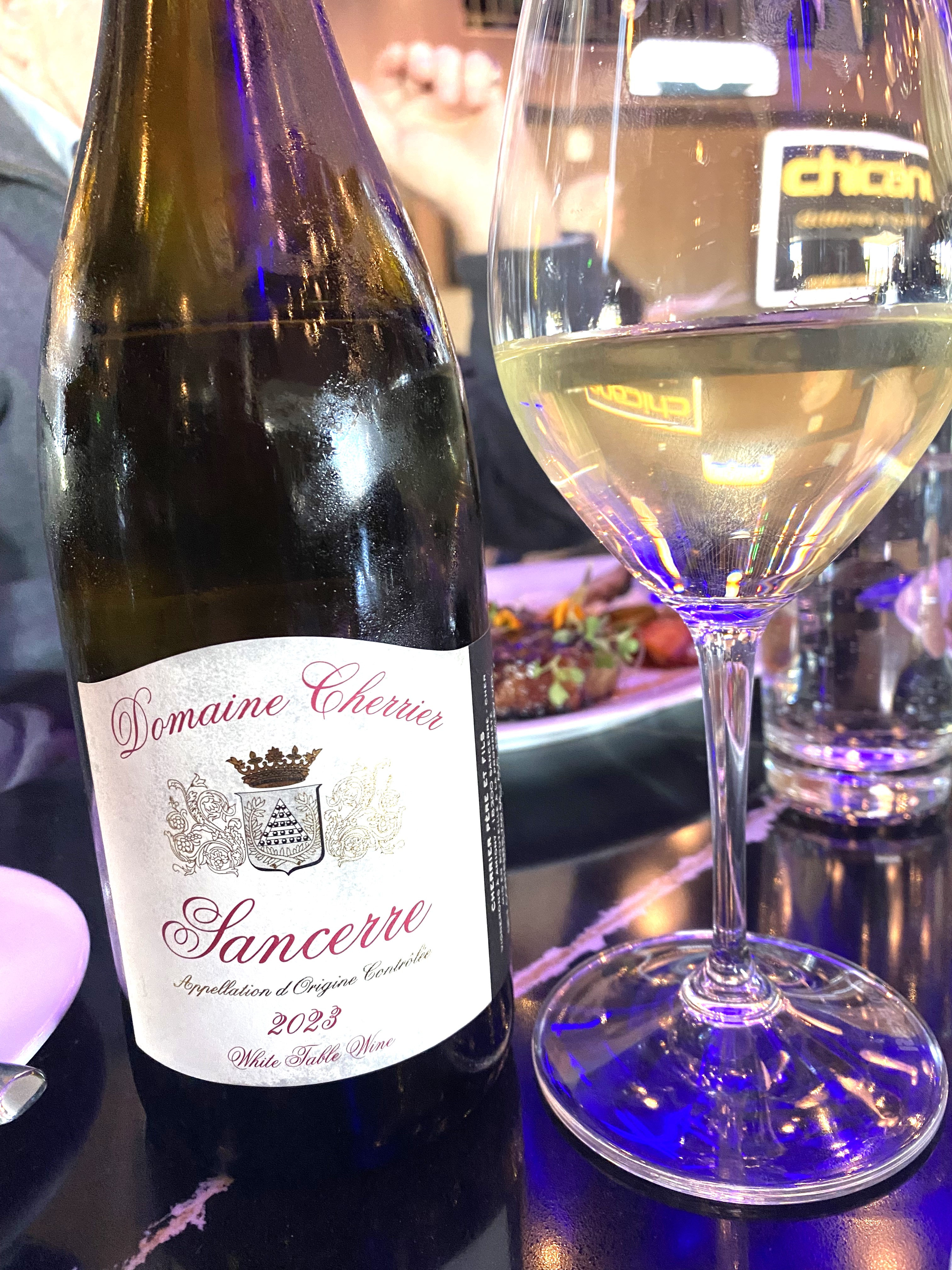
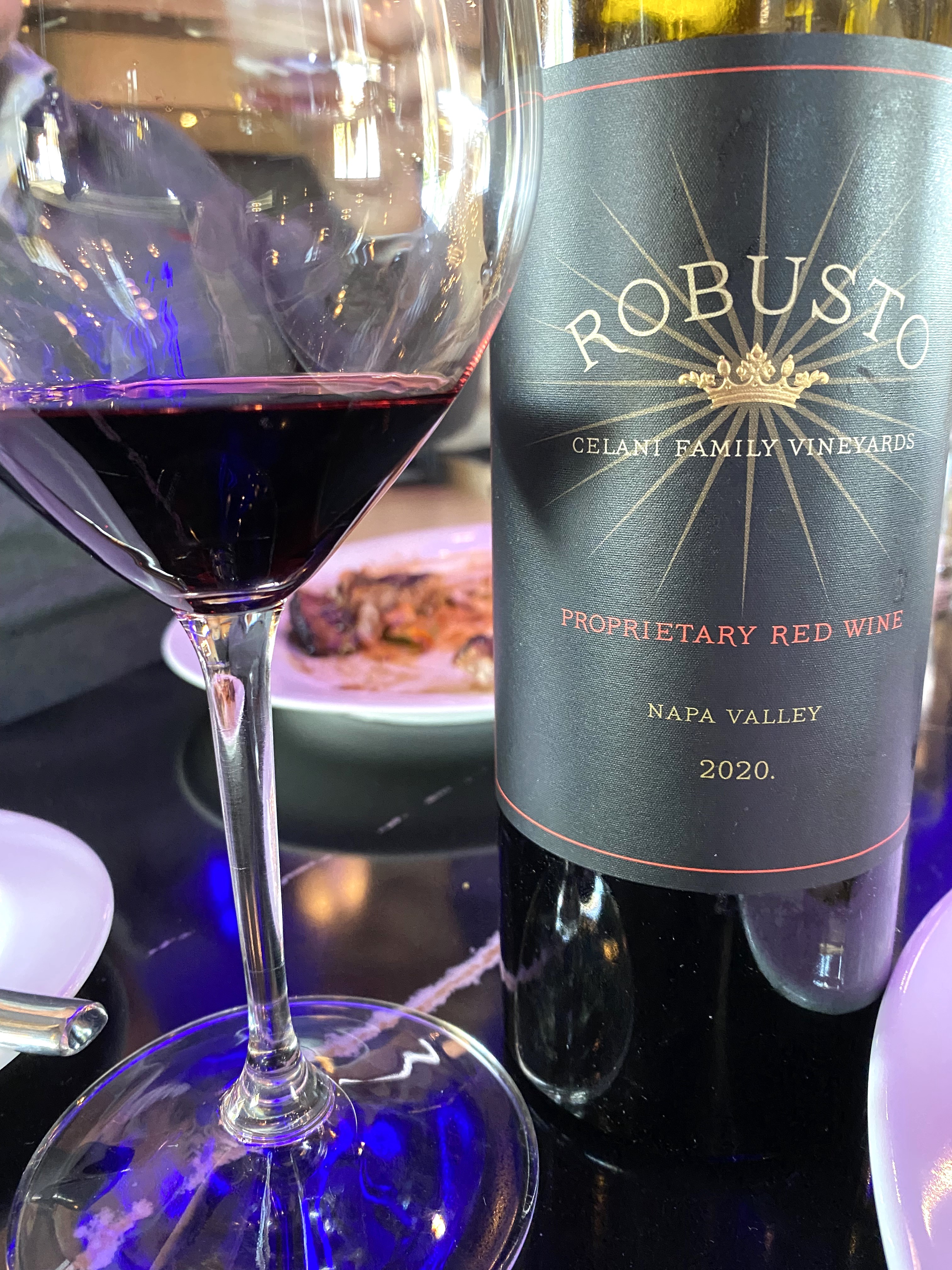
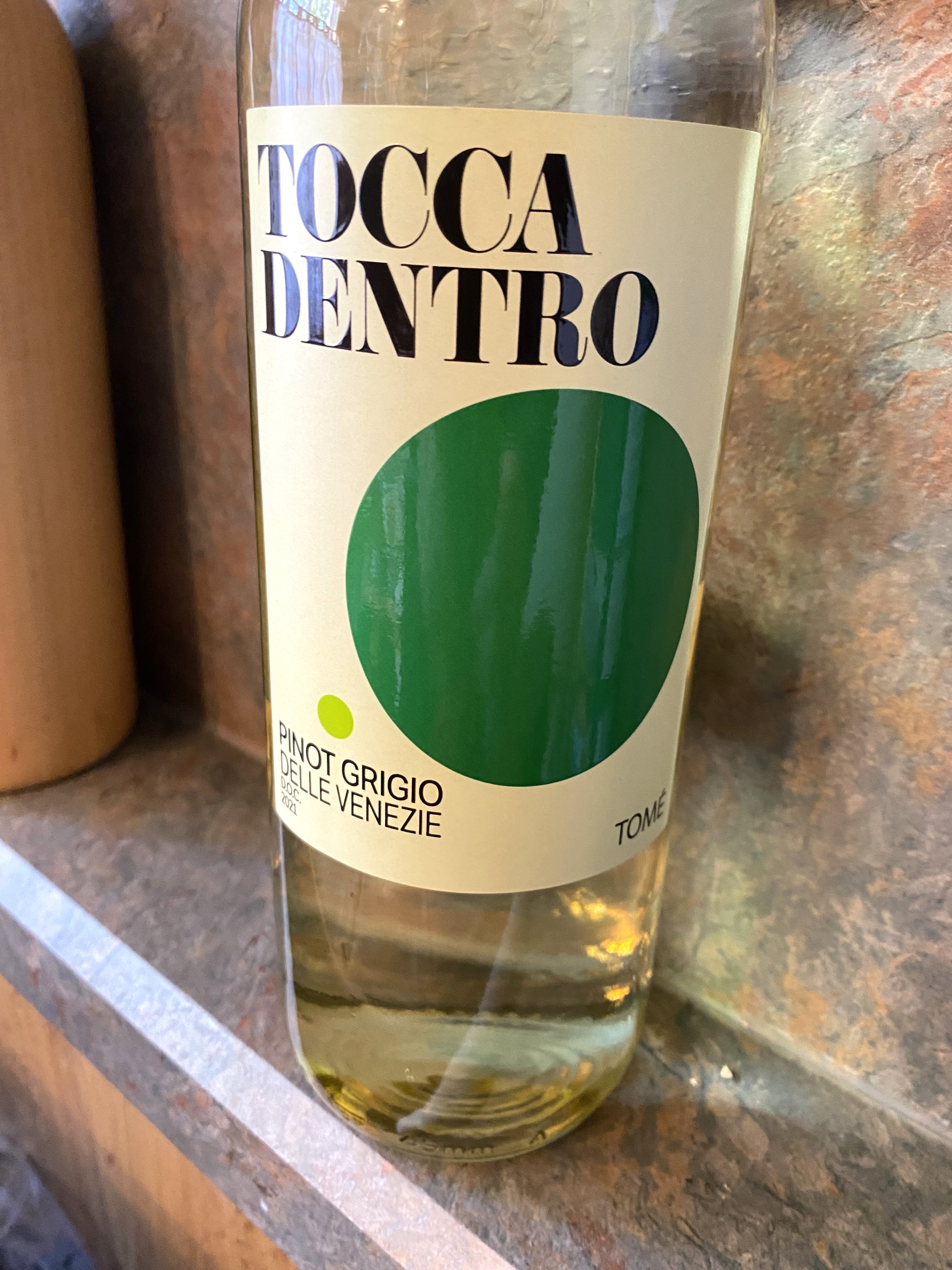
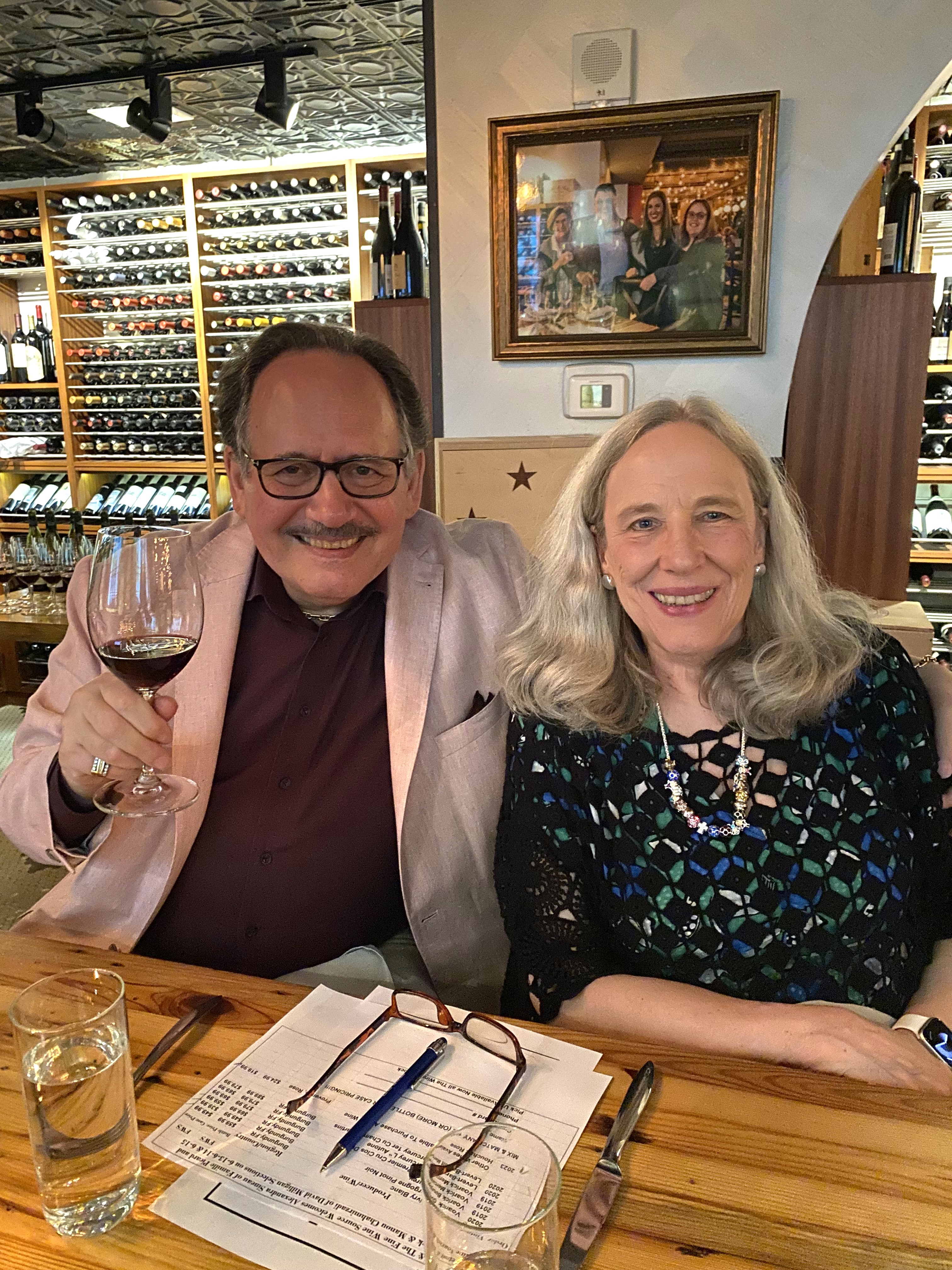
Elia on the River is listed as a Greek restaurant, though the owner is Turkish and the food was more Mediterranean. Part of the glamour of the restaurant was that they were on the river, but we saw no waterways and our driver could not help us.  Elia on the River was on a waterway, but from the street, one had to walk through an open mall like-structure, and the water was at the backside of the complex, a complete secret from the street, and basically even from Google Maps.  My Bride and I decided to share two appetizers, as she had the “Elia Caesar” with crispy chickpeas, radishes, avocado and shaved Reggiano, while I ordered the Truffle Carpaccio with warm creamy potatoes and arugula and there was a dearth of truffles.  We started with Terrazas de los Andes Reserva Malbec 2022 from Chandon Argentina of Moet & Chandon (Moet & Hennessy).  Chandon Argentina created Terrazas de los Andes and partnered with Chateau Cheval Blanc to create Cheval des Andes in an 1898 Spanish-style winery in the heart of Mendoza, with vineyards in Lujan de Cuyo, Uco Valley.  This wine was pure Malbec and aged for almost fourteen months in French Oak.  A deep purple-red wine that offered notes of fresh strawberries  and red fruit.  On the palate, this was a low-key wine with tones of red and black and fruit, herbs and spices blended with medium tannins and moderate acidity and a medium count finish of fruit.  

My Bride and I decided to share a Whole Branzino with a side of Charred Broccolini. I found a wine that made her smile, as she missed it on the wine carte, but I think that is the reason she keeps me around.  We had a bottle of Tenuta la Ghiaia Vermentino Colli di Luni DOC 2023.  Colli di Luni DOC is for the coastal hills representing a transition between Liguria and Tuscany and is for both red and white wines.  Tenuta La Ghiaia is a winery estate and resort of five hectares of organic vineyards in Colli di Luni DOC and is located and named for any ancient riverbed.  The fruit is hand-harvested and undergoes a soft-pressing before fermentation in temperature-controlled Stainless-Steel tanks.  The wine rested on fine lees for about four months before bottling.  The straw-yellow colored wine and offered notes of citrus, lemon and bergamot, white florals, thyme and eucalyptus.  On the palate the citrus tones were bright and crisp, along with the natural salinity and minerality of this wine was a perfect pairing with the Branzino.

For dessert we shared a Pistachio Bliss which sounded more interesting than it was.  My Bride and I had our backs to the water (canal) that ran along the restaurant and there were boats moored, and the owners were enjoying dinner.  We also shared a glass of Warre’s Otima 20 Tawny Porto NV. Warre’s is one of Portugal’s most famous Port houses and it began in 1670.  William Warre became a partner in 1729 and then it was known as Clark, Thorton and Warre.   The house stayed exclusively in the Warren family until 1905, when Andrew James Symington was admitted as a partner of Warre and Co.  Warre’s is managed by the 13th generation of the Symington family, who also own the Dow’s and Graham’s Port houses.  The Otima 10 and Otima 20 Year Old Tawny was developed about twenty-five years ago aimed at a younger demographic group, than what is usually associated with Port drinkers.    While there are over eighty sanctioned grapes allowed in the production of Port, most have been forgotten, lost, and intermingled over the centuries.  The five main grapes used are: Touriga Nacional, Touriga Franca, Tinto Barroca, Tinta Roriz (Tempranillo), and Tinto Cao; and some other relatively common varieties are Sousao, Tinta Amarela and Mourisco Tinto.   Port wines are what is known as fortified wines, and is achieved by adding high proof grape spirit during the fermentation process as the spirit kills of the yeast before all the sugars have fermented, then it is aged in barrel, where the coloring comes from.  The wine is a golden red color and offers notes of dried oranges,figs, caramel, and salted nuts.  On the palate there are tones of dried apricots, orange marmalade blending perfectly with raisins, figs, butterscotch and caramelized sugar extremely complex with enough acidity to keep the wine fresh and not cloying, and the finish is a nice long count of dried fruit and pepper.

Posted in Dining, Wine | Tagged , , , , , , , , , , , , , , , , , , , , , , , , | Leave a comment

94’th Aero Squadron Restaurant

Not only did we arrive early for our flight, but we were also actually two days early prior to the wedding.  Of course, I had no idea who else was going to be in Miami so early and it was really hard to make plans.  One of the odd things was that my Bride bought and brought a special steamer, so that she could make sure that the woman of the day, could have her gown fully steamed for that morning, as well as the mother (my Bride’s sister, plus all of her other sisters).  As I say, my Bride plans for all sorts of situations, and I guess no one else realized that there was a wedding to attend.  We also found out that steamers and irons were “verboten” and when we finally got on the ship, I was allowed the use of an ironing board and and iron for an hour, and housekeeping was very punctual.  One of the sisters was only attending the “wedding” and not the honeymoon, so we made arrangements for her to carry the illegal contraband back to Detroit.   We also had no rental car, so we were basically stuck at the airport hotel, which is where the cruise line made the arrangements and getting straight answers from them was difficult.  I contacted an Instagram wine blogger that lives in Miami for a suggestion for somewhere of quality to eat, I would have actually liked to have invited her and her fiancé out for dinner, but I couldn’t make actual plans.

The 94’th Aero Squadron was very accommodating, as I made the original plans in Detroit and then it was modified twice while we were in Miami.  The Squadron goes back to World War One and was affiliated with the Lafayette Escadrille.  Being from Detroit, I don’t understand this ersatz cab companies, but I was out voted, the Uber driver had no idea, where we were going, but I had to address on my phone, to make sure that we were going to the right place, and the restaurant was right across the street from some of the fields of the airport, and I might add the restaurant was a considerable size, and later I could observe that it was well operated.  Even with a good crowd, the waiter was able to break the group down to couples, but we did find out later that he charged us a group tip rate, the food was good, he was mediocre.  My Bride had Mahi-Mahi and topped with Shrimp Scampi on a bed of Jasmine Rice, while I had the Mediterranean Branzino baked in olive oil and lemon juice on a bed of Jasmine Rice. I found an interesting bottle of Bouza do Rei Lagar de Bouza Albarino Rias Baixas 2023. The bodega began in the Twenties and today they now have one hundred hectares. This wine is only made from vines at least twenty-years of age, and they use pneumatic presses, cold filtration and aging of three weeks in Stainless-Steel tanks for maximum freshness.  A soft yellow wine that offers notes of lemons, limes and ginger.  On the palate tones of green apple, yellow plums and honeysuckle with bright acidity and a short finish of lemon zest.

I could have enjoyed wandering around the restaurant admiring the different military and aeronautical décor.  I guess, I get into stuff like that, while everyone was deciding on desserts, I decided on a glass of Sandeman Twenty Year Old Tawny Porto NV.  The house was founded in 1790 by George Sandeman who originally sold Port and Sherry in London, until moving to Vila Nove de Gaia in Porto in 1811, and is now managed by the seventh-generation family director. They still have the original location and their vineyards are in the Douro Valley, and in the 19th century they also acquired a Sherry bodegas in Spain. Recently I have been enjoying Port Wines more and more, and have discussed the truly unknown varieties that have evolved over the centuries, not to mention the unique way that the wines are aged in wooden casks which concentrate the fruits and flavors.  The deep ruby red wine offered notes of dried apricots, honey, nuts, vanilla and finishing with a nice long count of fruits and nuts. 

Posted in Dining, Wine | Tagged , , , , , , , , , | Leave a comment

The Fine Wine Source Club – February 2025

Over the years, my Bride and I have joined several local wine clubs and we now just maintain our membership at The Fine Wine Source in Livonia, Michigan and for thirty dollars a month, it is well worth the investment, not to mention the camaraderie that we experience and enjoy.  Besides the great perks, we also receive two wines, one representing the Old World and one from the New World.

The Old World is represented this month by Decugnano dei Barbi “Villa Barbi” Umbria Rosso IGT 2019.  Decugnano dei Barbi dates to 1212, two clerics were entrusted to maintain the lands and Santa Maria di Decugnano was owned by the Cathedral of Orvieto.  In 1973 Claudio Barbi discovered the property in abandonment and in 1978 the first wines were born.  Claudio’s son Enzo continues his father’s work and dedication,  Umbria is considered the middle of Italy and is the only Italian region with neither a coastline or an international border. The property is one-hundred-fifty acres and a little over half has been planted.  This wine is a blend of Sangiovese, Montepulciano and Cabernet Sauvignon.  The wine begins with Stainless Steel tanks and finishes with some brief oak aging.  The garnet wine is described as having notes of red and black fruits, spice, saddle wood, tobacco and sous-bois.  On the palate there are tones of blackberry, cherry and currants blended with soft and supple tannins ending with a nice medium to long finish of fruit, sous-bois and tobacco.      

Representing the New World for wines  this month is Forlorn Hope Queen of the Sierra Red -Rorick Heritage Vineyards Calaveras County 2020.  When I saw Calaveras County I immediately thought of the short story by Mark Twain written in 1865 called “The Celebrated Jumping Frog of Calaveras County” that I probably read in Elementary School when literature and reading were promoted and is probably all but forgotten except perhaps for the named county.  Calaveras County is on of California’s original counties from the time of the Gold Rush of the 1850s and for wine is part of the Sierra Foothills AVA.  The original property was ranched by the Shaw family in 1844, and eventually acquired by Barden Stevenot in the Sixties, and he is deemed the “godfather” of modern Calaveras County winegrowers, when he planted original heritage Wente Chardonnay roots in the Seventies.  Barden eventually grew the property to seventy-five acres and in 2013 Matthew Rorick purchased the property and converted it to organic farming practices.  The estate is at 2000 feet in elevation on limestone soil beneath a top layer of schist. The Queen of the Sierra wines is a celebration of the soils, the elevation and the vineyard.  The wines are pure estate grown fruit, hand-harvested, indigenous yeasts, unfiltered and unfined.  The wine is a blend of Zinfandel, Barbera, Tempranillo, Trousseau Noir and Mondeuse.  Trousseau Noir is native to the Jura, but is known in the Douro region in Portugal as Bastardo.   Mondeuse is an ancient red grape from the Savoie region and with DNA testing and is related to Syrah. The fruits are pressed at dryness and allow two to three weeks total time on the skins and then placed in neutral barrique, after racking the wine remains in a combination of neutral oak and Stainless-Steel until bottling.  The wine is considered an honest and pure representation of this region.  This red wine offers notes of ripe strawberry, cherry and bright florals.  On the palate, a fruit forward wine, very juicy with smooth tannins, and high acidity.    

The other thing that I am happy to mention is that not only has the expanded retail space doubled, The Fine Wine Source has been discovered by a local  morning television show, where the owner has been featured pouring some outstanding wines like Chateau d’Yquem “Y” Ygrec,  Chateau Cheval-Blanc and Chateau Petrus. Watching morning television like this, sure beats a cup of coffee to start the day off.  I know that from the patrons at his Vertical Restaurant and this morning show, I will be encountering many new and happy customers.   

Posted in Wine | Tagged , , , , , , , , , , , , , , , , , , | Leave a comment

Some Odds and Ends

You may have noticed that I have been posting “story” entries labeled “From My Cellar” and certainly not for bragging rights, though there are a couple of interesting wines that I have acquired over the years. It has been an aid to remind me what I have down there and what should be drank first, because I am not that organized. And everyone recommends different apps that they use, but then it starts feeling like a business. Since the forced sequestering of about five years ago, I have been quite fortunate, as I have been trying to keep abreast of the situation, as we only lost about nine bottles from neglect, which is not bad at all.

I am kind of picking and choosing, thinking which wines may not age as well. I will start with Chateau Paradis Casseuil Bordeaux 2003 from the Domaines Barons de Rothschild (Lafite). The Chateau is located in the Entre-Deux-Mers (between two seas) where the Dordogne and Garonne Rivers meet. The “Vines of Paradise” derives its name from the terroir, a distinctive geological formation of sandstone, limestone, marls , claystone with lime nodules and multi-colored magnesium sandstone as well as being rich in calcium. The porous structure of the terroir is what allows the vines to stay cool during the hot summer season. The DBR Lafite family purchased the fourteen-hectare property in 1984, and in 1989 the estate grew by nine hectares, and in 2013 they acquired another thirty hectares. In 2024 they acquired another twenty hectares and its own winery and cellar. The original name of the vineyard is lost in lore, but they are pleased with the name. Using modern technology, fermentation occurs in temperature-controlled Stainless-Steel tanks for the gentle extraction of tannins. The berries are small, and the skins are concentrated with tannins and the fruit has a short maceration period. A small percentage of the wine is aged in oak, and the wine is predominately Merlot, Cabernet Sauvignon and a small amount of Cabernet Franc. The wine was deep purple with no foxing and offered notes of black fruit, cassis, oak and terroir. On the palate the fruit and the tannins had blended, but I was impressed that there was still some solid fruit for its age and a good medium count of terroir in the finish.

Another wine that we had one night at the house was Domaine Sainte-Anne Cotes du Rhone 2001. This is a low-key winery that is considered special in the southern Rhone. The Stenmaiers, originally from Burgundy were considered pioneers for introducing both Syrah and Mourvèdre to the area which was already famed for Grenache, which seems odd now, as The Rhone Rangers of California have made GSM almost a household blend. The winery also makes a Cotes du Rhone Blanc and their vines average about forty years in age. The wines are made in Stainless-Steel tanks as they use no oak. The color of this wine was still a deep purple with no foxing, but I am glad that we opened it up as the nose was starting to soften the notes of blueberry, raspberry and plums. On the palate the aging of the wine had softened the tannins and fruit, both were still present, but not a full-flavored and full-bodied for this higher proof wine.

The last of the wines that I will mention today is also from the southern Rhone from a well respected house. We had opened an E Guigal Cotes du Rhone 2000. E. Guigal is one of the more popular and important producers in the Rhone Valley. Etienne Guigal founded the company in 1946 in town of Ampuis near the fabled slopes of Cote Rotie. The main focus has been on wines featuring Grenache, Mourvèdre, Viognier, Roussanne and Syrah. The company has holdings in Saint-Joseph, Hermitage, Gigondas, Condrieu, Chateauneuf-du-Pape, as well as a couple of Cote du Rhone wines. The company also has four notable wines from Cote Rotie, the latest acquisition being Chateau d’Ampuis in 1995. While the bottle of wine did not list the varietals, I don’t think that I would be going out much on a limb to say that it is the classic GSM blend of Grenache, Syrah and Mourvèdre, the classic trio of the Southern Rhone wines. I am happy to say that the color, nose and taste would have reminded one of perhaps a five-year-old and not a twenty-four-year-old, so the others are still safe and totally drinkable. The deep purple wine offered notes of blackberry, raspberry, pepper, smoke and sous-bois. On the palate nice tones of blackberry and raspberry, roasted peppers, and smoky spices.

Posted in Wine | Tagged , , , , , , , , , , , , , | Leave a comment

A Taste of Monterey – Winter 2025

By happenstance, back in 2003, my Bride and I were on holidays at having lunch at the famed Sardine Factory and in the Cannery Row district, that was written about by John Steinbeck.  We walked into “A Taste of Monterey” and they could ship local wines to Michigan, when others could not, that was until our governor at the time was sued and she lost.  We signed up for their Private Reserve Club, with the concept of getting limited released wines that would probably never make it to the shelves in Michigan.

Four times a year, we receive three bottles of wine, and the first wine out of the carton was Shale Canyon Estate Grown Tempranillo Arroyo Seco 2019.  In 2008 Shale Canyon Wines began creating hand-crafted estate-grown varietal wines.  The wines are hand-harvested and fermented in small batches and their current production is about a thousand cases of wines featuring about seven different estate grown grapes.  The winery is entirely “off grid,” a solar-powered facility, and they use well water for their water supply.  They also source fruit from other vineyards that maintain the same farming practices as they do for another four varietal offerings.  There were one hundred-twelve cases produced.  The tasting notes furnished state that the wine is a classic bold Tempranillo with dark berry fruit on the nose.  On the palate this medium-bodied wine offers tones of blackberry, cherry and fig, firm tannins, and a long finish of vanilla and leather 

The second wine from the carton was Scratch Pinot Noir KW Ranch Santa Lucia Highlands 2020.  Scratch is a project of winemaker Sabrine Rodems who produces small-lot single varietal wines from Monterey, Arroyo Seco, Santa Lucia Highlands and the Santa Cruz Mountains AVA’s.  She started in the theater, film and television and then went and earned a Masters in Viticulture from UC Davis.  The fruit is from Kirk Williams’ KW Ranch in Santa Lucia Highlands who has forty acres of Pinot Noir and Syrah.  The tasting notes furnished relate that the wine offers notes of dark raspberry and cherry, cola and geraniums.  On the palate the wine offers tones of roasted plum, light oak, spices and lively acidity. 

The final wine in the shipment was Folktale Winery Sparkling Rosé Monterey NV.  Folktale Winery and Vineyards was originally founded in 1982 by Bob and Patty Brower, as Chateau Julien Wine Estate and they wanted to replicate their wine experiences in France to the Carmel Valley.  In 1996 they expanded the property and structures to ensure that they were making great wines, and my Bride and I visited Chateau Julien each time we had holidays in Carmel-by-the-Sea.  In 2015, the property was purchased by local winemaker, Gregory Ahn, and renamed Folktale Winery and Vineyards; and as a side note, from what I gather the label Chateau Julien is still property of the Brower family.  The five-acre vineyard at the winery is one hundred percent organically farmed, and they are working towards this goal in the three-hundred acres in the Arroyo Seco that they maintain.  This wine is a blend of eighty percent Pinot Noir and twenty percent Chardonnay.   The grapes are picked about three weeks early so that they can harvest the grapes at a lower sugar level compared to their still wines.  After the Initial Fermentation the juice is then placed in a Stainless-Steel tank for the secondary fermentation similar to a Prosecco or a frizzante wine.  The tasting notes describe the wine as having aromas and flavors of watermelon, kiwi and yeasty notes with a mouthfeel of a soft Prosecco-like texture.   

Posted in Wine | Tagged , , , , , , , , , , , | Leave a comment

Dinner After the Play

When my Bride and her friend were planning to go see “A Beautiful Noise” they were also deciding where to go for dinner.  Her friend had said a couple of times that she would like to try Le Supreme, since my Bride and I have gone there a couple of times.  And once we had a confirmed reservation we were “In Like Flynn” or “In Like Flint” depending on your era.  What wasn’t considered during all of this time, is that there was a team called the Lions who were on fire, and there was another game that evening, and as we got closer from Uptown to Downtown, we could see the price of parking escalating.

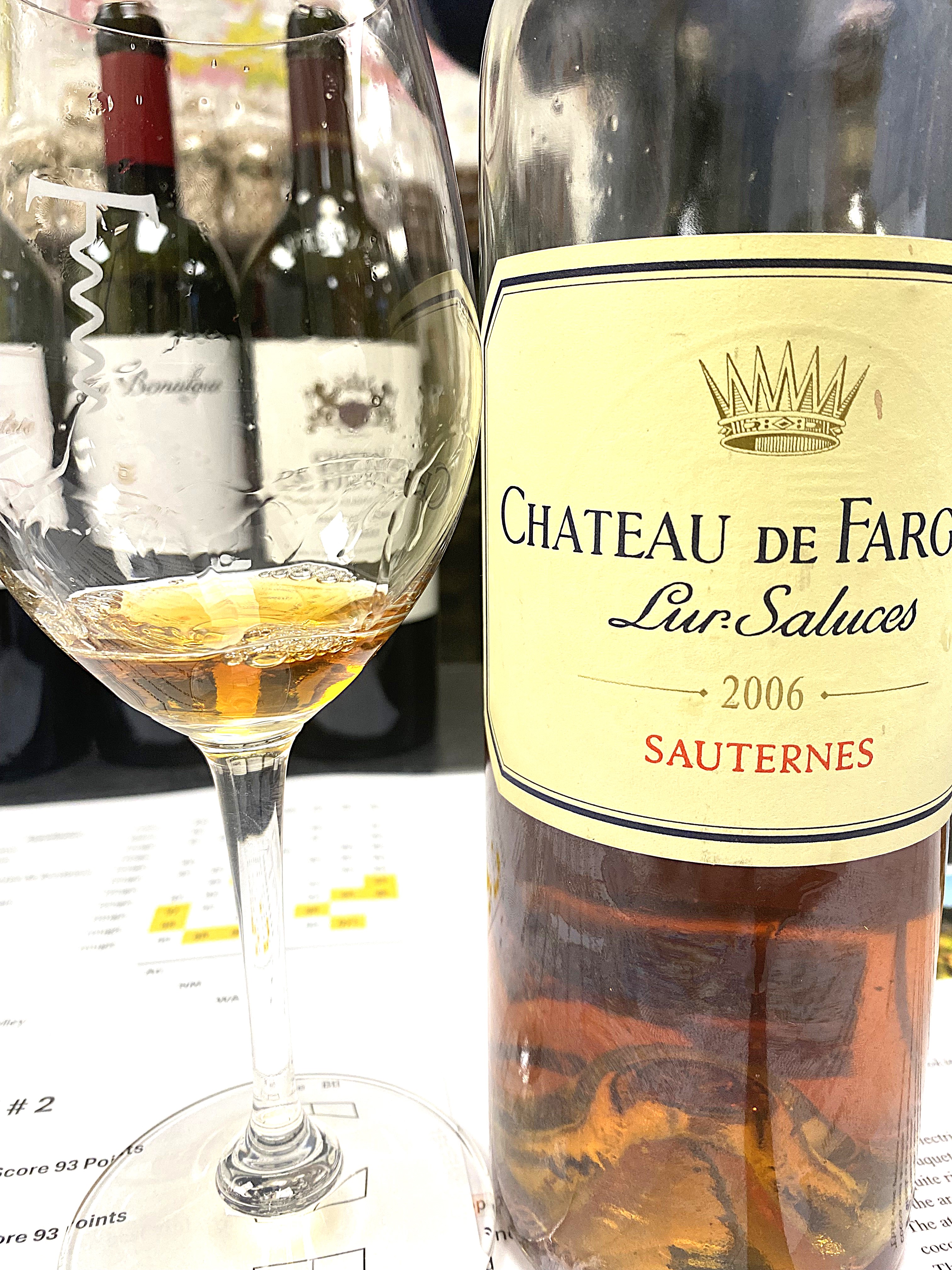
When we got to the restaurant, we saw that they had valet parking and it was only twenty dollars, which was a bargain compared to the signs that had one hundred dollars posted.  I always like to mention to the wait staff about my early memories, when I was a student as I would walk past this building when it housed the booking offices for the airlines that were available in Detroit.  I guess I am one of the old geezers that likes to remember the days gone past.  Our friend ordered the Soupe a L’oignon Gratinee or the French Onion Soup, rustic croutons, and Gruyere cheese.   My Bride and I shared the Foie Gras Torchon with pickled blueberries, mustard frills and toasted brioche.  We also shared a glass of Domaine de L’Alliance Sauternes 2020.  Daniel Alibrand was a fisherman and his wife inherited a few hectares in the region of Fargues, already planted in different plots and different soils.  So, in 2005 they established their winery using organic farming techniques.  This is considered an artisanal Sauternes, picked berry by berry during seven passes.  The wine is a blend of eighty-five percent Semillon, twelve percent Sauvignon Blanc and Gris, and three percent Muscadelle; the vines average about fifty years of age and planted on a mix of gravel, clay and sand.  The fruit is pneumatically pressed, they use indigenous yeasts, and the wine is aged for eighteen months in French Oak, of which twenty percent is new.  A nice deep yellow in color, the wine offered notes of tropical fruits, saffron, and almonds.  On the palate this medium-bodied wine showed  tones of candied fruit, especially pineapple, papaya, mango, and melon, good acidity with sweetness, but not cloying and a medium count finish of layered fruit.

We had a rather intriguing mix of dishes for the dinner course.  Our friend had the Omelet Francaise with local farm eggs, fine herbs and Gruyere cheese.  My Bride surprised me and had the Gnocchi a La Parisienne with Autumn Squash and Maitake mushrooms.  While I had the Mediterranean Sea Bass fillet with Saffron-braised potatoes and Sauce Vierge (or Virgin Sauce of olive oil, tomatoes, herbs, lemon and anchovies).  We shared a bottle of Domaine Regis Minet Pouilly-Fume Vieilles Vignes Loire 2023.  The estate is family-owned since Pierre Minet in 1627, and in 2022 Lucia took over from her father and she is the first woman in the field.  The estate is a twelve-hectare winery with sixteen plots and vines aged up to eighty years, and on average thirty-five years.  Sauvignon Blanc is planted in plots of clay and limestone.  The fruit is gently pressed pneumatically, and Initial Fermentation is done in Stainless-Steel tanks, with no Malolactic Fermentation, and is aged in the tanks on fine lees for eight months with batonage.  The pale-yellow gold wine offered notes of white fruit, while florals, chamomile and minerals.  On the palate this medium-bodied wine offered tones of pears, peaches, grapefruit, lemon zest; a crisp dry wine that ends with a long-count finish of subtle fruit and chalky terroir. 

The ladies finished sharing an order of Profiteroles, coffee, and I went with a glass of dessert wine, and yes, I am enjoying then more and more.  I had a glass of Arnaud de Villeneuve Tresmontaine “Tabacal Dos” Rancio IGP Cotes Catalanes NV, The Arnaud de Villeneuve Cooperative was established in 2007 in Rivesaltes, when the Caves de Salses (1909) and Cellars de Rivesaltes (1932) merged, with a membership of over three hundred vignerons.   This is the last wine produced by the legendary Roussillon winemaker Fernand Baixas, who claimed it was the perfect foil to enjoy with a cigar.   Rancio wines are a Catalan tradition as it predates modern wine viticulture.  The wine is made with Grenache Blanc and is initially fermented in glass demijohns for eighteen months often in sunlight, then returned to the cellars to rest in old foudres (very large barrels) and barriques for an additional ten years.  This is an oxidative wine with plenty of foxiness expressions, similar to some wines from the Jura and Sherry styles.  A coppery-amber colored wine that offers a mixed bag of notes like dried figs and fruits, apricots, caramel, smoke, mushrooms and sous-bois.  On the palate, with the sweet nose, one is surprised to encounter a rather bone-dry wine with dried stone fruits, cinnamon, and a rich nutty taste, high acidity, saline and a long count finish of dried fruit and sous-bois.  It didn’t appeal to the women, but I know that my Bride is not partial to oxidated wines.      

Posted in Dining, Wine | Tagged , , , , , , , , , , , , , , , , | Leave a comment

“A Beautiful Noise”

You may have noticed over the years that my Bride is a planner, and she often plans things with her one of her former work associates.  I joke because sometimes, I am the afterthought, as they were going to see the play “The Neil Diamond Musical A Beautiful Noise” and it was going to be at the Fisher Theatre in an area, that historically was referred to as “Uptown.”  Uptown was where General Motors built there high-rise and sprawling two block headquarters, they have since moved to the Renaissance Center, and as they downsize again to the new Hudson block that is being built at the moment.  I ramble, as I am prone to do.  As I am writing this, it is appropo, that yesterday was Neil Diamond’s 84th birthday.  He has been writing songs since my youth back in the Sixties, and I must say that it was a lovely outing for the three of us. 

Way back in the last year, when the two conspirators were making plans, the play was almost completely sold out, as they plotted possible dates and times.  Her friend actually worked in the building where the Fisher Theatre is, but she was not in the automotive industry.  As for us, we had season tickets there for years, but eventually there was a dearth of new plays offered, just repeats; and I have to admit that I have lost interest in “musicals” where the music is the same dirge played with different lyrics and tempos.  I am old fashioned, but I do enjoy leaving a theater with a bounce to my step and singing the lyrics that I had just heard.  I think the last time that happened was “West Side Story” and “Fiddler on the Roof.”  So, these musical medleys that tie a series of songs with a story line is appreciated. The only tickets available two months prior for the three of us was up in the nose bleed section and we had never been this high up before, but for this theatrical production they were fine.

It had been a while since we had been to the Fisher Theatre, and I was surprised at the security system that was in place to see a play.  It was like going to catch an flight, as we had to go through a metal detector, and the women’s purses were inspected, and it was like we were in a police state; I guess they were after domestic terrorists who didn’t appreciated pop music from the Sixties and later.  After going through Checkpoint Charley, we then had to stand in another line to get a drink and I may have created a riot, if I tried to get a photo of my wine glass and a bottle of wine, so I cheated and got an official photo from the winery; but the good news is that they actually used a glass flute, instead of plastic, so a bit of civility.  We had Marques de Caceres Cava Brut NV from Catalunya.  Marques de Caceres is a large wine producer, predominately known for their Rioja wines and more than half of their production is exported.  The estate was founded in 1970 by Enrique Forner, whose family had been in the Spanish Wine industry to the 20th Century.  The winery is still family-owned and currently managed by his daughter.  Originally the wine was called “Champana” as it was made in the Methode Traditionelle, but in the Sixties Champagne authorities objected and in 1970 Cava DOC was introduced.  The wine is a blend of Xarel-lo, Macabeo and Parellada.  The vineyards are more than twenty-five years old and planted in a clay-calcareous soil, and hand-harvested.  The fruit is chilled before pressing to obtain the flower must, and the Initial Fermentation in oak barrels.  The Second Fermentation is achieved in the bottle, and the wine sits on the lees for eleven months before the disgorgement.  The pale-yellow wine displayed fine bubbles and offered notes of apples, white flowers and flaky pastry dough.  On the palate there were tones of apricot, honeydew, almonds and orange zest ending with short count finish of brioche and fruit.

Posted in Uncategorized, Wine | Tagged , , , , , , , , , | Leave a comment

A Casual Dinner with Our Son’s Family

One of the unique things, is that our son and his family have moved back from Las Vegas and my Bride is trying to get them into the social whirl.  I enjoy it immensely, because I don’t have to factor in time differences, plus wondering what his work schedule is like, as right now, he is fixing up his new home while he gets a new profession lined up,  We will just have to get him to appreciate wine, as we always try to make arrangements for dinners here or out.  My Bride enjoys it when her social calendar is full.  And she always enjoys being a social director.

We had another dinner with the family, before they get too settled in their new environment and new routines.  We are also trying to introduce them to some different foods as they are not that adventurous, without getting carried away, I mean they do come by it naturally, just look at who they have for a grandfather,  Appetizers before dinner is a great way for them to check out cheeses, dips, and pate dishes without a lot of fanfare.  It is also a sly way to let them try some potentially unique wines that they won’t automatically encounter.  We started out with Cline Family Cellars “Seven Ranchlands” Viognier North Coast 2021, which I have found to have a long life and can be perfect with spicier dishes.    Cline Family Cellars is a producer based in Carneros and known for Zinfandel and Rhone varieties and established in 1982 in Oakley.  Fred Cline is one of the original Rhone Rangers of California.  The “Seven Ranchlands” is a way of honoring both the seven children of the Cline family, and the seven vineyard ranches.  The fruit for this wine is from the Catapult Ranch Vineyard in the Petaluma Gap, and the balance is from the Diamond Pile Vineyard at the base of the Wild Cat Mountain.  The grapes are handpicked at night, where they are destemmed and pressed, and allowed to settle for forty-eight hours before racking.  The Catapult portion was inoculated with wild yeast, while the Diamond Pile portion was allowed to ferment naturally in barrels.  After fermentation, the wine was aged in neutral French Oak for six months before blending and bottling.  This was a very soft colored white wine with notes of mango, guava, and pineapple. On the palate tones of dried apricots, pears, and banana in a full-bodied wine with nice acidity and a nice finish.

We then went and had dinner with a choice of tenderloin, salmon and chicken, because of the food preferences of our grandchildren; sometimes it is like having a restaurant, but that is fine, as I can remember times sitting at the dining room table all alone, until I finished eating a dish that I couldn’t stand and to this day, I still won’t even allow it in my house.  I also tried another wine that is off the beaten track, even for plenty of wine drinkers.  We enjoyed a bottle of Familia Fernandez Condado de Haza (Crianza) Ribera del Duero 1997 by Alejandro Fernandez. He began with Tinto Pesquera which was founded in 1972, and the first harvest was 1975.  Ribera del Duero received DO Status in 1982 from the prominence of estates like Vega Sicile and the work of individuals like Alejandro Fernandez and his Tinto Pesquera.  Condado de Haza was the second estate, and the first vineyards were planted in 1987 and there is now two-hundred hectares planted of Tempranillo on heterogenous soils with a high content of clay and the presence of sand.  He also built and dug into the hillside a bottle cellar that is almost thirty meters underground.  The aging requirements for Ribera del Duero is the same as Rioja, and that is how I was able to ascertain that this bottle was a Crianza, though it was not labeled as such, but it was aged for fifteen month in (American) oak, minimum aging is twelve months.  The wines are bottled unfined and unfiltered to enhance the full flavor of the wine.  Twenty-seven years later the wine still had a deep black cherry color with no signs of foxing and offered notes of black fruits, licorice, coffee beans and vanilla.  On the palate there were tones of the black fruit, some oak and vanilla, blended with now muted silk tannins and ending with a medium to long finish of fruit and terroir.  


Posted in Dining, Wine | Tagged , , , , , , , , , | Leave a comment

New Year’s Eve 2024

We had a very quiet New Year’s Eve celebration, as the weather was terrible, and we live on the opposite side of the city from everyone else.  So, we had just a small gathering and my Bride was still a Whirling Dervish of activity.  She was enjoying herself, as she later told me, that she could relax and enjoy her company, because it was a quiet evening. 

My Bride loves to have cheese boards, and plenty of dips to nosh on.  She is not a fancy gourmet-style chef, but she enjoys good food.  She enjoys her whitefish pate, her shrimp cocktails, and she enjoys liver pate and mousse, and we have fine specialty markets where she can shop to her heart’s content.  For our guests, they prefer Chardonnay, and we have been drinking more Sauvignon Blanc lately, but we had no problem opening up some Dunning Vineyards Chardonnay Willow Creek District Paso Robles 2018.  Bob and Jo-Ann Dunning are the winemakers and owners of this forty-acre estate which was established in 1991 on the west side of Paso Robles.  The winery produces about fifteen-hundred cases a year using several different varietals.  This Chardonnay wine is produced in the classic Burgundian style with full oak barrel fermentation and sur-lees aged for one year.  It was a delightful wine with notes of pear and citrus, nutmeg and vanilla.  The wine had a nice creamy taste with balance acidity and layers of flavor that opened up and finished with a nice medium finish of terroir.

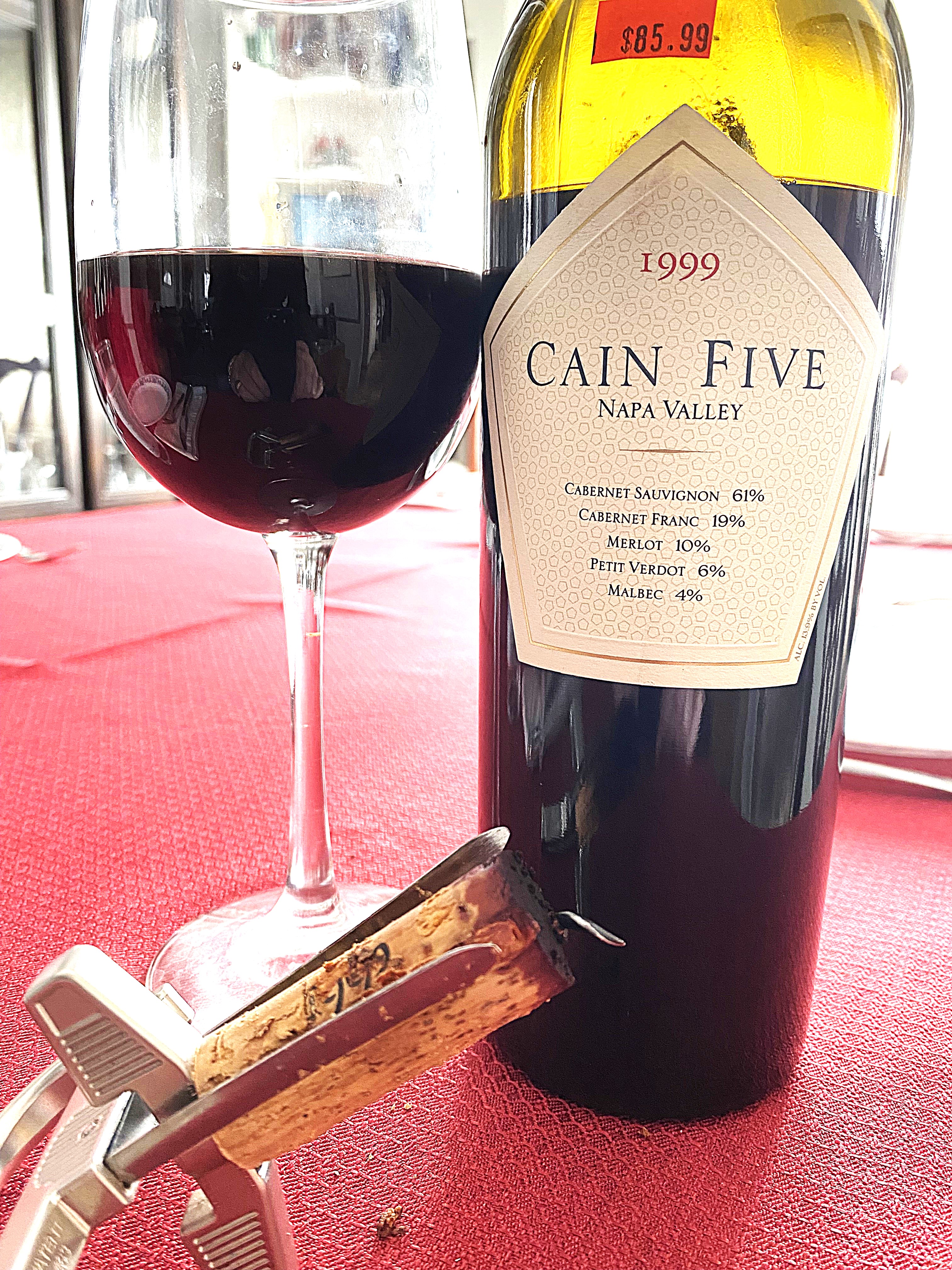
For our dinner my Bride prepared her Caesar Salad, Armenian Pilaf, a couple of side vegetables, a simple New York Strip Steak for one of the guests that has a certain food regimen, and a whole tenderloin for the rest of us.  We then had one of my Bride’s favorite wines, that she likes to save, but I went with one anyways.  We had Cain Vineyard and Winery Cain Cuvée Napa Valley  NV12.  Over the years I have called Cain Cuvée, Cain-Lite because it is made with the same loving attention, and with the same five grapes, but from two vineyards and much more affordable.  I still have in the cellar some of the original Cain Cuvée wines that have an actual vintage year.  I mention this because now the wine is a blend of two vintages and the date on the label refers to the year of the blending.  I think that it is a rather clever play on the term NV, as most of the time I use NV to mean Non-Vintage, some may think of Napa Valley and in some sort of texting language is can be read as eN-Vy or envy.  A great way to create interest, especially the first year that they did it.  Each blending year is a different blend and the wines are not a cookie-cutter duplicate of the year before and neither is the taste of wine, as compared to the Champagne houses that strive to have every batch of Non-Vintage taste like the last year for continuity and market appeal.  The labels are now a diamond shape and the back label now reads “harvested, vinified and blended for freshness, lightness, complexity and balance.” The wines also carry a Napa Valley designation as the fruit can be from their Spring Mountain estate and from their Benchland vineyards.   NV12 Cain Cuvee Napa Valley is a blend of fifty percent Merlot, thirty-two percent Cabernet Sauvignon, ten percent Cabernet Franc, four percent Petit Verdot and four percent Malbec.  A deep garnet red wine that offered a slightly funky nose when I first opened it, but about two hours later when we had it with dinner it showed a rich Medoc style wine and offered notes of black fruits, old leather, coffee, herbs and sous-bois.  On the palate a medium-bodied wine with striking tones of black cherry, plums, cedar, elegant tannins and a nice medium-count finish of fruit and forest floor terroir.  This is a totally pleasant wine that definitely is not a typical Napa Red Wine. 

After an assortment of desserts, they got ready to watch to watch a modern version of Dick Clark, and some entertainers that were all shivering from the cold weather in Manhattan.  For the count-down we had Andre Clouet “Spiritum 96” Rose Champagne NV. Today the estate is owned by Jean-Francois Clouet, a Bouzy native with a family history dating prior to the 17th Century.  The house of Andre Clouet was established in 1741, and over the years the family had built it up to the present portfolio and status.  The estate now has eight hectares of vineyards on the mid-slopes of Bouzy and Ambonnay in the Montagne de Reims, on the famous chalk soils of Champagne. The desire to make this wine was to have a Rosé that offered freshness and youth with the essence of a great vintage.  This wine is a blend of ninety percent of a white Pinot Noir base, seven percent Bouzy red and for the dosage three percent of a liqueur made from their 1996 Grand Cru Bouzy Pinot Noir.  A pinkish orange/salmon colored wine with tiny bubbles and fine mousse that offered notes of red cherries, strawberries, raspberry, blood orange, brioche, florals and minerals.  On the palate a medium-bodied, high acidic wine that offered tones of cherries, strawberries, raspberries, some grapefruit with toasted yeasts and a nice long finish.  My Bride and I are both not major sparkling wine drinkers, but we both really enjoyed this wine and looking forward to other wines from this house.  

Posted in Dining, Wine | Tagged , , , , , , , , , , , , , , , , , , , , , | Leave a comment

Christmas Dinner 2024

I don’t know how it is in your family structure, but certain families have certain holidays booked, basically for life.  Which is great, as it makes sense and much easier to make plans.  One of my cousins has had a lock on Christmas dinner for ages, and I was looking forward to having our son’s family join in, as they had just moved back and bought a house.  It would be the first time that all second cousins could meet each other. 

We were asked to bring my Bride’s now famous and requested Caesar Salad, and a half tray of paklavah (the Armenian pronunciation), as none of us eat as much sweets as we used to. I also brought four bottles of wine to add for the festivities.  The first one is one of our go-to wines at our house Otella Lugano DOC 2021 from Azienda Agricola Otella.  The second wine was Domaine Houchart Rosé Cotes de Provence 2023 from Vignobles Famille Quiot.  The third wine was Close du Clocher Pomerol 2020 from Heritiers Bourotte-Audy.  While the fourth bottle was Highlands 41 Cabernet Sauvignon Paso Robles 2021.  I figured that group of four would accommodate any of the wine drinkers attending.

I figure that I will discuss two of the wines along with the meal.  There was Cheese Boereg, a flaky pastry stuffed with a white brick cheese.  There was Lahmajoon, the Armenian individual pizza for a lack of a better description, topped with sauteed ground lamb, onions, garlic and parsley.  Another cousin brought this huge irregular long board that was finished and was a Charcuterie Board with several versions of olives, peppers, Armenian String Cheese and of course the cherished shavings of Basturmah.  Now Basturmah is an acquired taste, because it is a dried beef that has been covered in spices and allowed to age and dry (as there was no refrigerators back then) and the meat is then cut paper thin.  It sounds pleasant enough, but the spices make the meat deadly lethal in spicy hot tastes and then to boot, the spices emanate out of your pores for a couple of days after digesting the Basturmah.  Needless to say, since I was in retail, I abstained for my customer’s sake.  I will start with Famille Quiot Domaine Houchart Cotes de Provence Rosé 2023.  Famille Quiot is a wine producer with numerous estates in southern France.  They have been making wine since 1748, starting in Vaucluse in Chateauneuf-du-Pape at Domaine du Vieux Lazaret.  The Domaine is run by the thirteenth-generation member Jerome Quiot and what was originally a few hectares is now one-hundred-ten hectares.  In 1890, they acquired the sixty-hectare estate of Domaine Houchart near Aix-en-Provence.  The family estate has its roots and was farmed during the Roman era and is located in the plain between Sainte Victoire and Aurelien mountains, and has its own climate.  The land is clay and limestone soils, from the decomposition of the scree from the surrounding mountains.  The wine is a blend of Cinsault, Grenache Noir, Syrah, and Tibouren; with the average age of the vines being thirty-five-years.  The fruit is harvested in September, with direct pressing for most of the varieties, with vatting for almost two weeks in I surmise Stainless-Steel to maintain freshness; the wines are bottled in December.  This salmon-pink colored wine offers notes of citrus and strawberries.  On the palate the wine offers tones of red currants, watermelon, with great acidity and ending with a nice medium count finish of fruit and terroir.  And as a side note, with all of the festivities, I forgot to take a photo of this wine, so I had to get another photo from a prior article, thankfully, we buy many of these wines by the case.   

Now you have to understand that at an Armenian dinner after the appetizers, everyone says “I could have stopped after the appetizers,” but that never happens.  My cousin had made as the centerpiece of the dinner this huge beef tenderloin that actually fed the troops, cooked with onions and garlic and other spices.  There was Clams Spaghetti, my uncle’s favorite dish that is still served in his honor.  There were several assorted sides of vegetables, and I have to say, that she still makes the best roasted peppers I have ever encountered.   For the main course, I made sure that my Bride and I had the Clos du Clocher Pomerol 2020.  Jean-Baptiste Bourotte was front and center, as the great-grandson of Jean-Baptiste Audy the founder of Clos du Clocher.  The first vintage for this small, but consistent estate in Pomerol was in 1924.  The winery is just shy of six hectares and is home to some truly ancient vines.  The estate is set in four parcels and seventy percent of these parcels are dedicated to Merlot, and the balance is planted with Cabernet Franc.  The average age for the vines is forty years and they are planted on clay and gravel parcels on the Pomerol plateau.  No herbicides are used and organic treatments are implemented where possible.  The fruit is hand harvested, double-sorted with a density bath, de-stemmed to create a homogenous final crop.  Fermentation is done in small Stainless Steel and concrete tanks by parcel; hence the wines reflect the percentages of the grapes grown.  The wine then is aged for eighteen months in French Oak, of which two-thirds are new.  This was the first year that Organic conversion began and was officially instituted in 2021.  This vintage must be indicative of what should be expected from the entire plateau as well as the rest of Pomerol.  Another deep garnet-purple colored wine that offered big notes of black currants, black cherries, violets, and graphite.  On the palette, this was a big wine of black fruits, bold tannins and a great finish emphasizing fruit and terroir.  Then we all had to make room for the myriad of desserts, and the paklavah was only a small part of the selection.

Posted in Dining, Wine | Tagged , , , , , , , , , , , , , , , , , , , , | Leave a comment