I don’t know about you, but when I see a new winery to me, and that almost occurs daily, my brain tends to do free association links. While I was at Fine Wine Source in Livonia, Michigan picking up my June wine selections, I also did a few tastings; which I think is a great promotion concept. Two of the wines that I tasted were from Bos Wines, and my brain went into overdrive, because I actually had a teacher in Junior High School whose last name was Bos. It is funny how that works.
David Bos has been a vineyard manager in the Napa Valley for ten years and was immersed in the now lauded biodynamic/organic farming practices since day one. He gets intimately involved with the vineyards to try and nurture all of the best from the vineyard. David and Jackie Bos, along with their winemaker Jillian Johnson are striving to create an affordable cult-wine from Napa Valley. Bos Wines got its beginning with the Napa Valley Phoenix Ranch single vineyard Syrah, and they have since added a Napa Valley Soda Creek Vineyards Sauvignon Blanc.
They have also started a Moon BOS blend program consisting of a red, white and a rosé and the fruits are from David’s connections in Napa Valley, Sonoma, Clarksburg and East Bay. The first wine that I tasted was the Bos Wine Moon BOS Harvest Red 2015. I didn’t take a photo of the back label, and there is no listing of the grapes that were used to make this wine or any winemaker’s notes as well. My notes on this wine was that it had a softer nose and a medium finish. The newest addition to the wines being produced and offered is the DEO collection and so far, that is the Bos Wine DEO Cabernet Sauvignon Napa Valley 2015. My notes said “unique nose” as I did not pick up immediate Cabernet Sauvignon aromas, but it was an easy drinking wine with a nice finish. I just wish that wineries would make better use of their sites, as the world does seem interested in learning more, or is it just wine lovers?
While I was at my wine club picking up my selections for June, I thought I would ask if there was anything I should try. If they are busy with sales, when I venture in, I do not even ask about wine tasting, because I always figure that there is another day. There were some wines that I have already talked about, so that would be too repetitive. The first two wines that I tried were both from the states, but one was from the Santa Lucia Highlands, California and the other was from Columbia Valley, Washington.
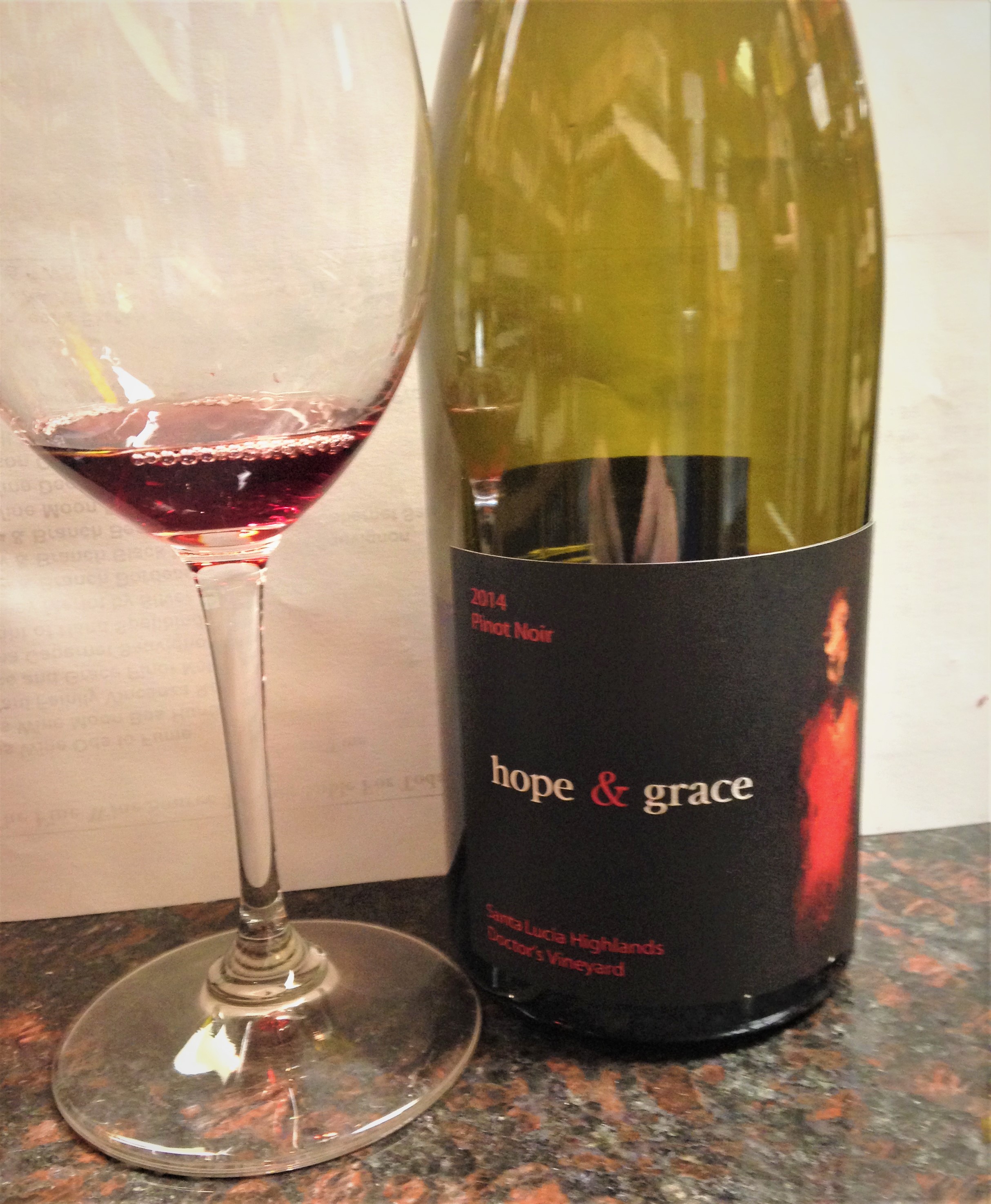
I think that my ears actually perk up when I hear Santa Lucia Highlands mentioned. Not that I am the end all, when it comes to wine, but I have opined more than a few times that I think that particular AVA is as close to Burgundy as I have found for both Pinot Noir and Chardonnay. That is not to say that I haven’t had other varietals from the region, but those two seem to be prevalent and for the most part awesome. The first wine that I tasted was Hope and Grace Doctor’s Vineyard Pinot Noir Santa Lucia Highland 2014. Hope and Grace began in 2001 with the focus of single vineyard, single varietal artisan wine and their first wine was a Pinot Noir from Santa Lucia Highland. The winemaker has some thirty years’ experience in the industry and he and his partner are now up to three thousand cases of wine of assorted varietals and vineyards; and they have not strayed from their original goal. Doctor’s Vineyard I have mentioned in the past is known for its east facing sweeping shelf of eroded sandy loam soil, which is buffeted by cool, semi foggy winds every afternoon. This wine was aged for sixteen months in French Oak and two Pinot Noir clones were used. There were forty barrels produced and while the winemaker suggests 2020 for this wine, I think it will age beyond that, as I didn’t notice any signs of aging. The nose offered red fruits, some rose petals and some spice. I notice a bit of heat in the initial taste which went into red cherries, a trace of terroir and a nice finish. I think it would be excellent with Roasted Duck.
The second
was Sleight of Hand Cellar “The Spellbinder” Red Blend 2016 from Columbia
Valley, Washington. Sleight of Hand
Cellars began in 2007 and in the past twelve years they have received plenty of
accolades from within the industry and wine writers. “The Spellbinder” is their
proprietary Red Blend of Cabernet Sauvignon, Cabernet Franc, Syrah and
Merlot. The fruit came from four
different vineyards and while there were no winemaking notes about production,
it did say that there twenty-five-hundred cases produced. The nose was pure Cabernet Sauvignon and
Cabernet Franc and the taste was dark fruit with some nice terroir and tannins
with a nice long finish. This wine would
work well with most meat dishes and I think it would be a nice wine with cheese
and crackers and friends as well.
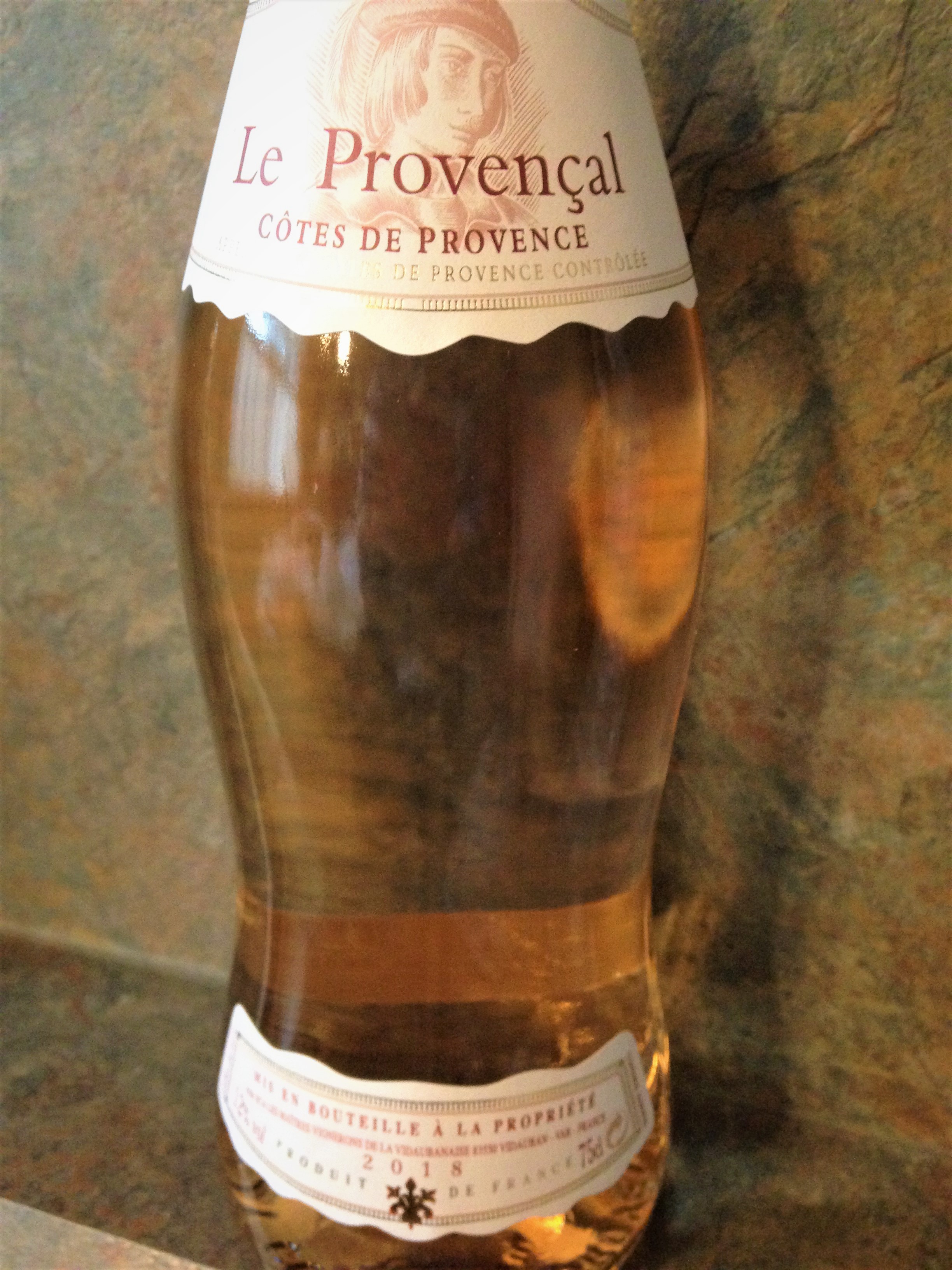
This is the second bottle of wine for the month of June from my local wine club Fine Wine Source of Livonia, Michigan. The official name of this wine is Les Maîtres Vignerons de la Vidaubanaise, Le Provencal Rosé, Cotes de Provence 2018. Les Maîtres Vignerons de la Vidaubanaise translates in English to The Master Winemakers of the Vidaubanaise. This a wine cooperative that was formed in 1922 and today is now in control of six-hundred hectares in the heart of the Appellation Cotes de Provence. The vineyards are located on the limestone foothills of the Maures massif, between the Mediterranean Sea and the Alps. This cooperative historically wins annual awards and rave reviews from the French Wine Trade and the Press. Le Provencal is from the highest quality cuvees produced by the Maîtres Vignerons.
The Cotes de Provence is the largest appellation in Provence and it has a few sub-regions as well. The entire region is famed for their Rosé wines, as well as a Red wine made from the Tibouren. The Rosé Wines are made from a blend of Grenache, Cinsault, Carignan, Syrah and Mourvedre. The Cotes de Provence originally was first established as a VDQS in 1951 and in 1977 it attained AOC status.
The grapes for Les Maîtres Vignerons de la Vidaubanaise are grown on sandy
soils on ancient limestone terraces and the vines now average from ten to
thirty years of age. After the harvest,
a portion of the grapes undergo a cold maceration at various temperatures and
lengths of time according to the grape variety, which produce an array of
aromas. The remaining grapes are
processed in the traditional method of direct pressing. Then all the wines are blended and aged in
Stainless Steel until early February, and then bottled for maximum freshness. Aromas of red fruits like currants,
strawberries and melon are perceived. A
delicate wine with crisp acidity and promising a long finish. The perfect wine for a hot summer day with
lighter foods and seafood. I will have
to try it soon; in case I need to get some more for the season.
The first wine that I picked up from my local wine club Fine Wine Source of Livonia, Michigan is Purple Star Syrah 2014 from the Columbia Valley in the State of Washington. In 2008 Kyle and Amy Johnson began a winery and to embody the soul of the wine from vineyard to the bottle to the table. Their philosophy and goal were to make wine accessible, approachable and affordable. They had already acquired ten years of viticulture and winemaking experience in Washington State. They also decided that since they had the good fortune to be blessed with good health that they would donate fifteen percent of the proceeds to Seattle Children’s Hospital to help those that had uncompensated medical expenses. They believe in the concept of “paying it forward.”
The wine is pure Syrah and sourced from three of Washington State’s best vineyards; seventy-five percent is Weinbau-Wahluke Slope, sixteen percent Red-Heaven-Red Mountain and nine percent is Kiona-Red Mountain. With the fruit growing in a longer and cooler environment, the tannins are softer. The grapes were destemmed and lightly crushed, retaining sixty percent whole berries. The punch downs and pump-overs were done by hand for almost two weeks depending on the lot. The wine was aged for fourteen months in pure French Oak. The finished wine produced five hundred cases.
The tasting notes for the wines mentions black fruit, smoke and pepper
with fine tannins and moderate acidity.
The Wine Spectator gave this wine a 90 rating and listed lively black
cherry and smoky pepper. The wine is
expected to age for a few years, but is considered drinkable immediately as
well. A full-bodied Syrah works well
with big red meats, and game and holds its own alongside of dishes like Braised
Short Ribs. I think we can find some
dishes that will pair with this wine in the future.
The last bottle that I pulled out of the carton from my wine club “A Taste of Monterey” made me smile. On one of our trips to Carmel-by-the-Sea we had the pleasure of going to Bernardus Lodge and Spa in Carmel Valley. We were treated like royalty while we were there, especially in the wine tasting room and at the Marinus Restaurant. We stocked up that day, and we have since bought more courtesy of our wine club.
Bernardus Winery and Vineyards was founded by Ben Marinus Pon about twenty-five years ago with the intention of creating premier wines in the Carmel Valley. His intent was to produce single vineyard designated wines and a Bordeaux blended wine. Bernardus has three estate vineyards: Marinus planted with Cabernet Sauvignon, Merlot, Cabernet Franc, Petit Verdot and Malbec; Featherbow planted with Petit Verdot and Cabernet Sauvignon; and Ingrid’s Vineyard planted with Chardonnay and Pinot Noir. All fifty-four acres of estate vineyards are in the Carmel Valley AVA. To compliment the estate vineyards Bernardus also has contracts with vineyards the Arroyo Seco, Santa Lucia Highlands and others in the Monterey County.
The Bernardus Soberanes Vineyard Chardonnay 2016 is a single vineyard
designated wine from the Santa Lucia Highlands, which in my humble opinion is
one of the best Burgundian districts in California and to date, I haven’t had a
mediocre Chardonnay or Pinot Noir from this AVA. Soberanes Vineyard is a joint venture of two
famed growers Gary Pisoni and Gary Franscioni in the Santa Lucia Highlands. There were no winemaker’s notes about this
wine or production numbers, other than an aging potential of five to six
years. The tasting notes state “fresh,
ripe white fruits along with subtle toasty oak notes. Typical of this fine vineyard, the palate is
very intense, with bright ripe fruit flavors supported by a rich, crisp finish.”
I feel confident that we will be extremely happy with this wine, when it comes
time to open it.
It is fun to open up the carton of wine from “A Taste of Monterey” and then to try to do some research beyond what the brochure that they send with the wines. This wine club that we discovered has not yet disappointed us and we have been with them for around twenty years. I think what originally sold us on the club, was that they could legitimately ship us wines to Michigan, back when we were considered a “felony state” and our governor at the time was sued and the state lost, and that former governor left the state, hopefully for good.
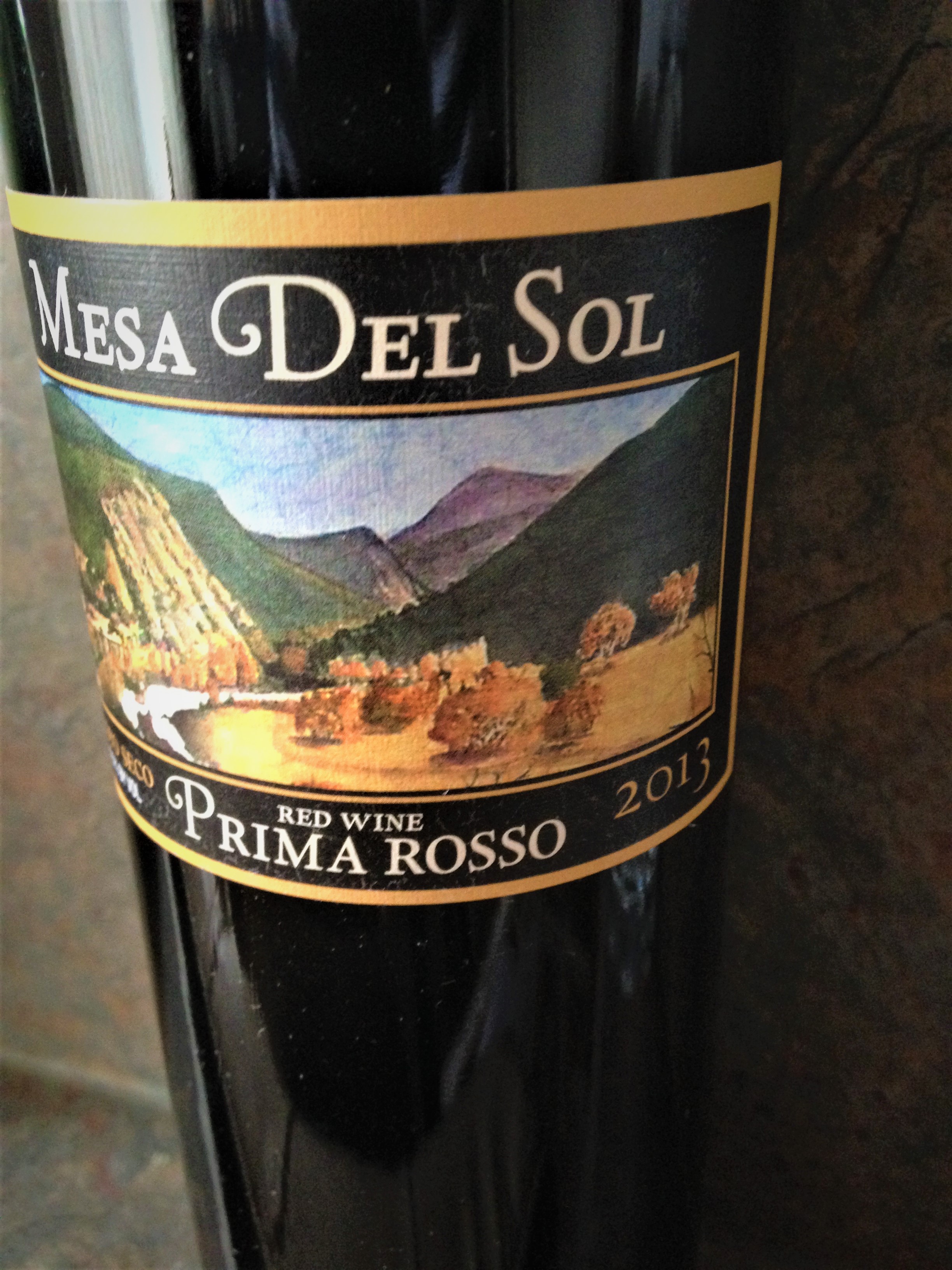
The second bottle that I pulled out of the carton was Mesa Del Sol Prima Rosso Arroyo Seco 2013. Mesa Del Sol is located on an upland promontory at the junction of three major watersheds. A couple of the buildings on the property date back to the 1800’s when it was believed to be a stage stop to Carmel Valley. It became a health center, because of the hot dry air of the Arroyo Seco Highlands, and was a haven for patients suffering from tuberculosis and other similar diseases, and Teddy Roosevelt stayed there at one time. After a cure for tuberculosis was discovered, most sanitoriums and spas suffered, and this location was purchased by a California Senator for his family and the family stayed there until 1945. It has changed hands a few times and has now been fully restored as well as the fourteen-acre vineyard. The estate also grows Provence Lavender that is now used for lotions, oils and sachets.
The estate
practices organic farming techniques and the land is irrigated by an onsite thriving
trout pond. This wine is made for the
resort by Chualar Canyon Winery in Salinas, California. The wine is a blend of fifty percent
Zinfandel, twenty-five percent Syrah and the balance are twenty-five percent Sangiovese
and all are estate grown. There is no
winemaking information given, nor production quantities, though the wine is
also distributed through a tasting room in downtown Carmel-by-the-Sea. The wine is described as having “an intricate structure, full-bodied,
fun nose; with notes of pepper earthiness, anise, pomegranate and chocolate. Great with barbecued meats and spicy Asian
food.” There is a suggested aging potential for this
wine of eight to ten years.
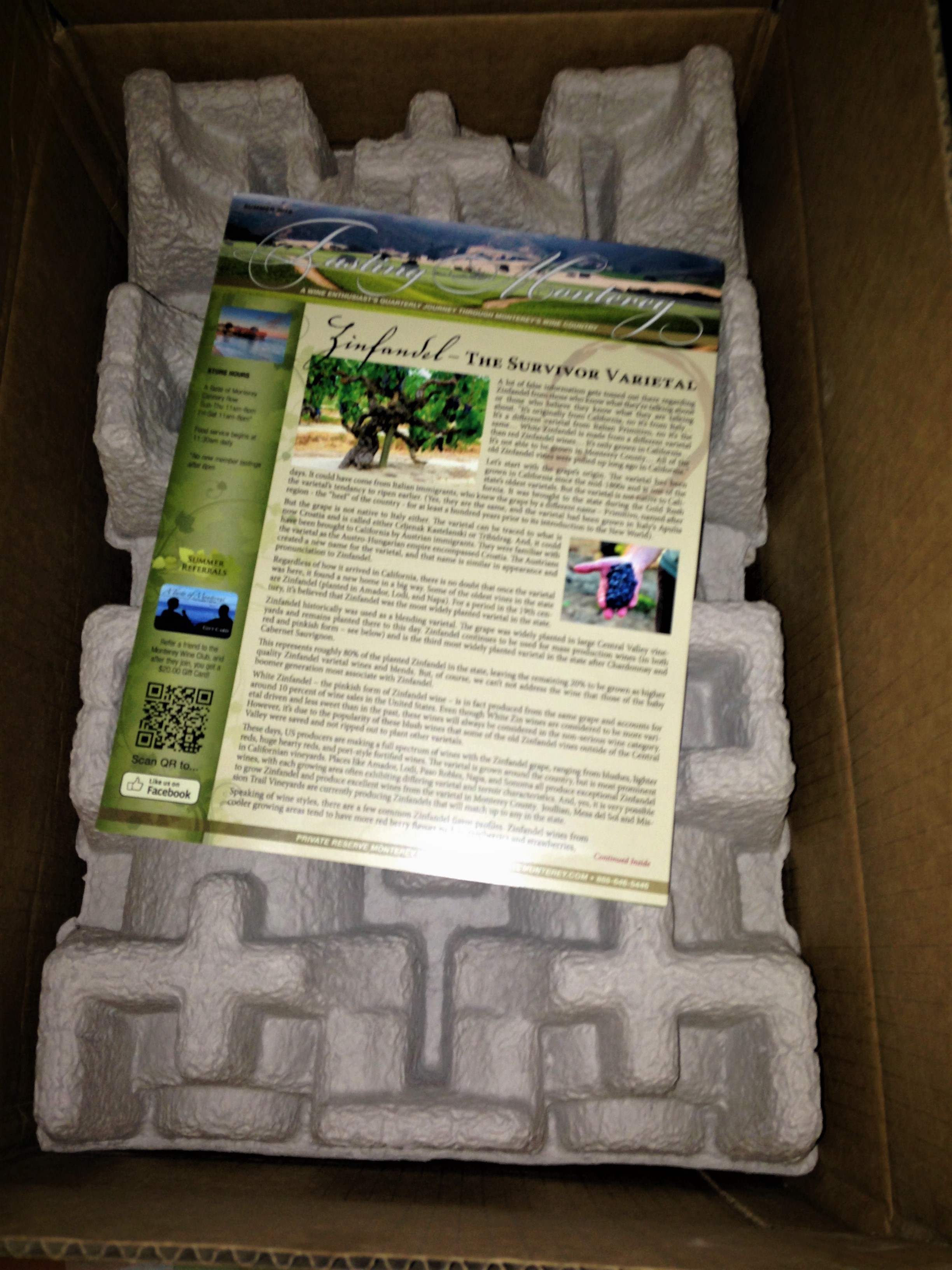
It is that time of the year again, when I get to be like a little kid and open up the carton from my wine club “A Taste of Monterey.” I was upstairs doing some Raconteur work, when I heard a pounding on the front door, and I guess United Parcel Service feels that knocking is better than using the doorbell, either way I went down to see who was at the door. After signing for the parcel, since there wasn’t an adult around to sign for it, I hastily went and got a razor knife to open the package to see what treasures awaited me. There on top of the engineered pressed cardboard to keep the bottles from bouncing and breaking was the pamphlet and the lead article was “Zinfandel – the Survivor Varietal.” There was also a recipe for making steak sandwiches, a discussion on the varietal Pinot Blanc and an article on Camembert cheese.
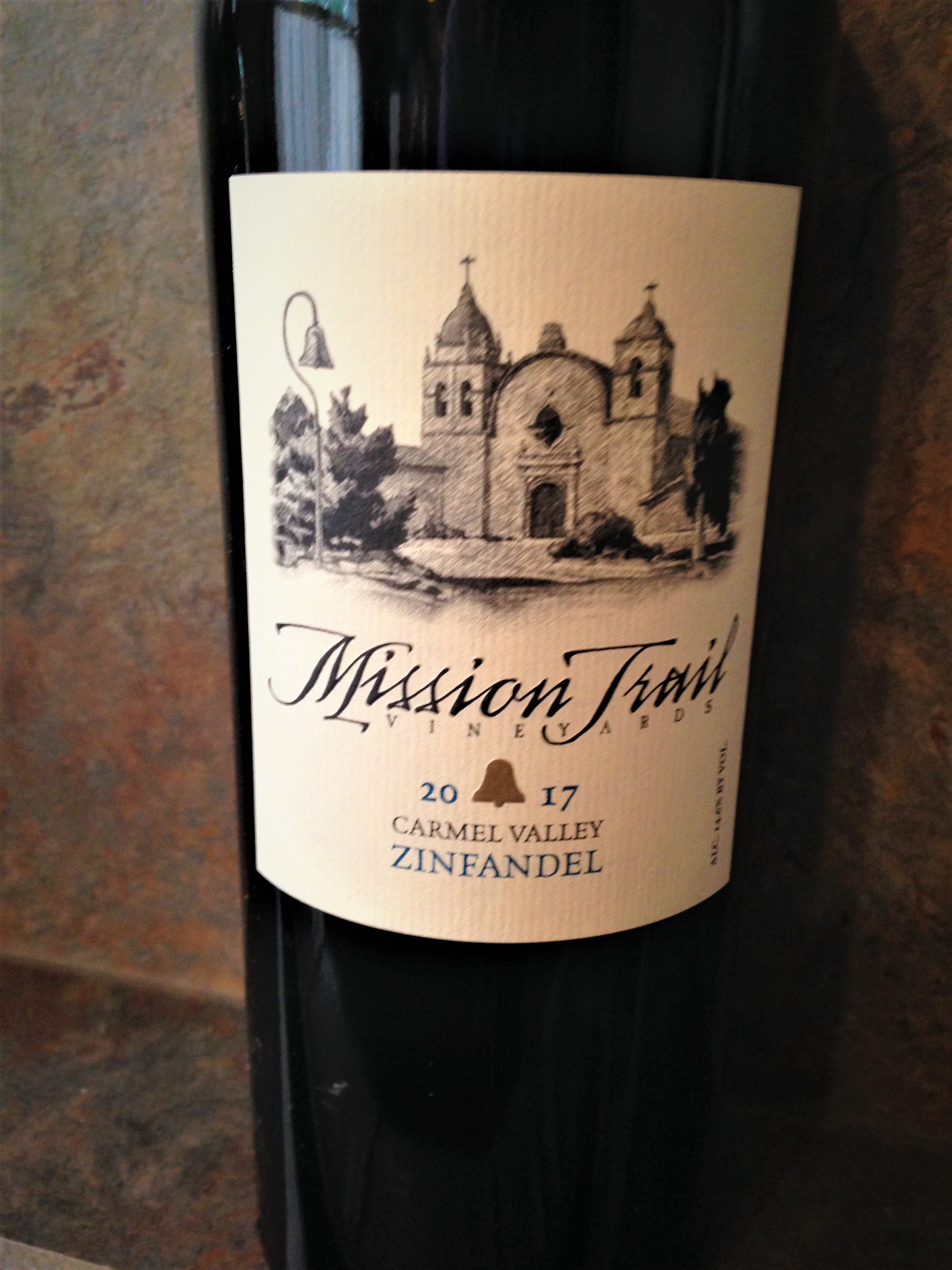
The first wine that I picked up was Mission Trail Vineyards Zinfandel Carmel Valley 2017. This is now the third wine from the club that I have received from this winery and the first red wine from them. Mission Trail Vineyards takes their name from the Mustard plants that can still be found, as the seeds were spread out by the Franciscan Friars around two-hundred-thirty years ago as they planted the original vineyards in the area. Those original vineyards are long gone, but there are plenty of vineyards in Monterey, so those Friars recognized good land back then. In Monterey County there are about forty different varieties of grapes being grown. Ken and Robyn Rauh created Mission Trail Vineyards on the premise of featuring small lots of hand-crafted wines, from different locations throughout the county. There goal is to produce robust and fruit forward wines featuring Chardonnay, Gewurztraminer, Marsanne, Sauvignon Blanc, Cabernet Franc, Pinot Noir, Merlot, Grenache, Syrah, Zinfandel and a Meritage.
There was
very little information about the winemaking procedure for this wine. They stated that extended barrel aging and
cellar time has transformed this medium-to full bodied wine that is “elegant and silky.” The wine is promised to have aromas
of black cherry, rhubarb, leather and both black and white pepper, while
delivering black cherry, dark plum, cloves and cocoa. The tannins are said to be refined, making
for a well-balance wine with aging potential of eight to ten years. With a high proof rating, I have a couple of
people that I think would be potential guests with us to try it.
I am part of the Social Media craze, and I enjoy it. I have met many people over the years, some that I would enjoy meeting some day and others, just in the real world, I am not crazy about. My “friends” list is relatively low in numbers, part of which is because I do not ask people to be “friends” and yet people find me. Then I started writing The Wine Raconteur and I slowly went to other sites of Social Media to advertise my writing. Then my “friend” list began to grow, especially internationally. Some people I have become “friends” with on multiple platforms, and others probably wonder what I am doing. One of the many people that I have encountered and that I enjoy, because she understands the concept of quid pro quo is Nathalie Coipel Cordonnier.
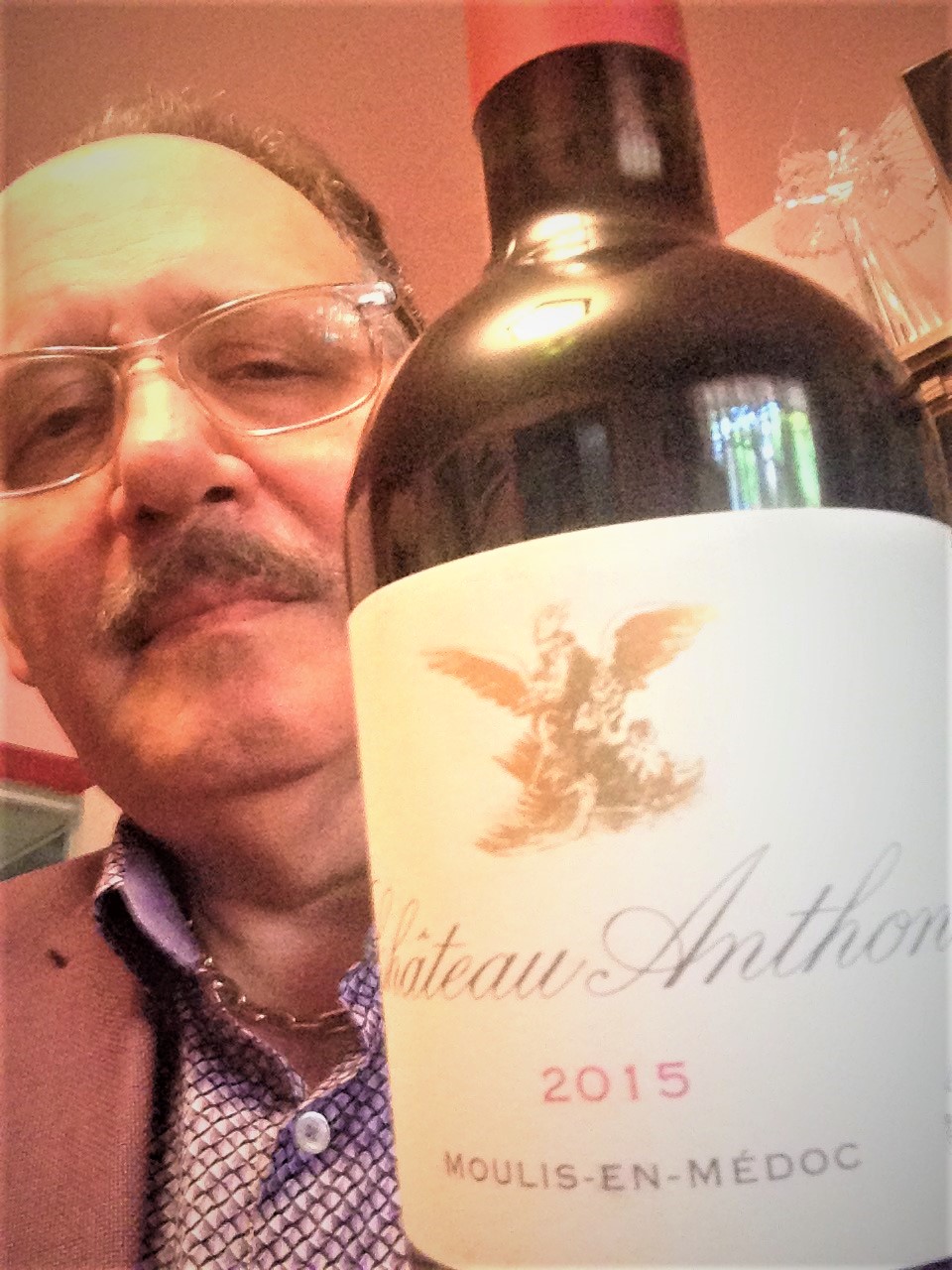
Nathalie along with John-Baptiste Cordonnier manage Chateau Anthonic located in Moulis-en-Medoc a Commune located next to Listrac and both of these are between two Communes that are famous from the 1855 Classification and that is Margaux and Saint Julien. Chateau Anthonic is one of the oldest estates in Moulis and were first recorded in 1850 in Guide Feret, then known as Puy de Minjon (Hugon). It has continued to be esteemed and in the 1932 classification of the Crus Bourgeois of the Medoc is was granted “Cru Bourgeois Supereiur.” The Chateau is now some thirty hectares in size and has two unique soils that add to the terroir of the Commune, one is the clay-limestone of the Moulis plateau and the other is the Garonne gravel. The estate has had several names since Puy de Minjon, and then Graves de Queytignan, Le Maliney and then Chateau Antonic in the 1920’s under the stewardship of Antonic Hugon and his son Andre; and then it became Chateau Anthonic, with the addition of the “h” to make it more Anglicized for their largest market at the time. The logo of two eagles fighting over a cluster of grapes, is considered an allegory of the enmity between négociants and the vine growers. The estate also has a second label “Les Aigles d’Anthonic” or the Wings of Anthonic. Pierre Cordonnier bought Chateau Anthonic from the Hugon family in 1977, and John-Baptiste Cordonnier took over in 1993. The estate grows Merlot, Cabernet Sauvignon, Cabernet Franc and Petit Verdot. In 2016 they became organic and sustainable and a natural haven for bees, butterflies, reptiles and mammals that are common for the area, they also have orchids growing along the vines and waterways, which make it very unique and picturesque.
By now, some of you are probably scratching
your heads and wondering why I am writing all of this, and it is because
Nathalie one day asked me, if I had ever had their wine, and I told her that I
had never encountered it, so I had presumed that it may not be imported in
Michigan, with the Byzantium structure of wine importation here. I didn’t hear anything more about it, so I
had presumed that I was right, but actually I was wrong and she sent me the
name of the importer that they deal with in Michigan. I could not just call the importer, because I
do not have a license, so I asked my local wine shop, The Fine Wine Source and
they knew the owner of the house and the winery itself and they did it as a
favor to me. I had to send a selfie to
Nathalie to show her that I had the wine, and a reminder to myself that I take the
world’s worst
selfies, in fact I may have to start wondering about men that can take good
selfies. So, I now have Chateau Anthonic
Moulis en Medoc 2015, blend of seventy-one percent Merlot, twenty-seven percent
Cabernet Sauvignon and two percent Cabernet Franc. The winery does a soft press and allow twelve
months in barrel, and over years they have discovered that around thirty
percent new oak works best for them for maintaining the taste that they are
after. They also suggest three hours of
decanting especially for their young wines.
I am looking forward to trying this wine out soon, so I can give my own
notes for this wine.
Here we are attending another graduation party and it was way out in the country, well at least it was the country when I was young. With the Orange Cone Season underway in Michigan, Federal projects, not the promised State ones, it was like driving in the old days prior to having freeways. I must say, it was very scenic and rather peaceful, except for the jerks who try to make two lanes out of one, because some people are too important to respect traffic signs. Here we were driving all over the country, and my poor Bride had just gotten back from a business trip where she had to cover all of the Upper Peninsula of Michigan after getting there, and then the drive back. She is one of those “road warriors” you hear about, now and then. Actually, where the party was, is no longer considered out in the country or the boondocks, because of urban migration, but at one time, a huge outdoor arena was built out there, when there was nothing else there, and it was called Pine Knob, I think it is still Pine Knob to my generation, though I think that it just had its third name change and we actually drove past two of the roads to get to the arena, including the one that was recently changed to Bob Seger Road, which I thought was cool and deferential.
I am surprised at the punctuality of most of
the guests that arrive for the graduation parties of today. There was a crowd almost immediately and they
had a big pavilion style tent installed on the front yard, and the garage was
set up as a buffet line. Somewhere along
the way, and I may have missed it, the world became Gluten Free and when I see
those two words, I immediately know that I can sidestep that food and it was
all salads, so that was easy for me, though my Bride went on and on about the
salads. There was an assortment of
dishes that were catered in by a Middle Eastern restaurant, but more Persian
than Lebanese. There was also a tray of
homemade Pulled-Barbecued Pork and I thought it was the winner of the day. There were also plenty of desserts, a very
nice way to spend the afternoon.
Our leather wine bag is getting a good work out
this season. Actually, the day of the
party was also Rosé Day and one
year I tried to write about all of the wine days, but it just felt like me
trying to emulate other writers, so I just write in my own manner. Though, the first wine of the day was a Rosé, but we have been drinking more
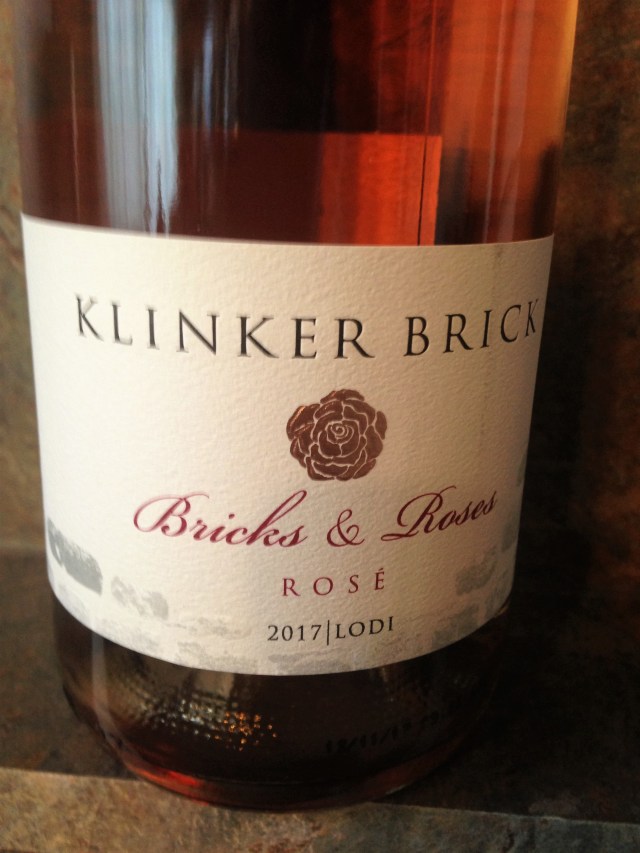
wines like that, and the weather was going to be in the eighties. The first wine is Klinker Brick Winery “Bricks & Roses” 2017 from the sub district of
Lodi-Mokelumne River of Lodi AVA. I have become a great fan of Lodi and Klinker
Brick Winery is one that I have actually tried seven of their wines and all
were winners. Klinker Brick Winery is into its Sixth Generation, but they began
as grape farmers and would sell their fruit originally to the home wine makers
and Zinfandel was the main crop in this area. Eventually they began selling the
crops in the latter part of the 1900’s to other wine makers and eventually they took the plunge themselves as
there was a strong demand for their crops. They have about sixteen plots of
land mostly along what is known as the Lodi-Mokelumne River as well as some in
the Clements Foothills. They produced their first bottle of Zinfandel in 2000,
and their first Syrah in 2001. This wine
is a blend of Grenache, Carignane, Syrah and Mourvedre and while I could not
find any production notes, I will venture to say that it was done in Stainless
Steel to maintain the freshness and crispness of the grapes. While I did not do a tasting of
either wine from the club, I noticed that this wine has a beautiful salmon
color, and the nose harkened summer fruits, and the wine had a clean taste with
light acidity, an excellent Rosé. The second wine that we opened up was a
Michigan wine, and I am very impressed with the quality and dedication of the
wines here, as I have been observing over the decades. Verterra Winery we have
been to in the Leelanau Peninsula and Verterra is a named cobbled together by
the owner meaning “True to the
Land.” The winery started in 2006 with an acre and a
half and the winemaking fever took hold and now they have forty plus acres of
land, cultivated on the slopes and undulations of the Leelanau Peninsula. The Leelanau Peninsula AVA
basically encompasses the entire Leelanau County and the peninsula takes
advantage of the lake effects to keep the grounds cool during the hot summers,
and allows the snow to cover the vines and for the most part prevents them from
freezing, because this is Michigan. The
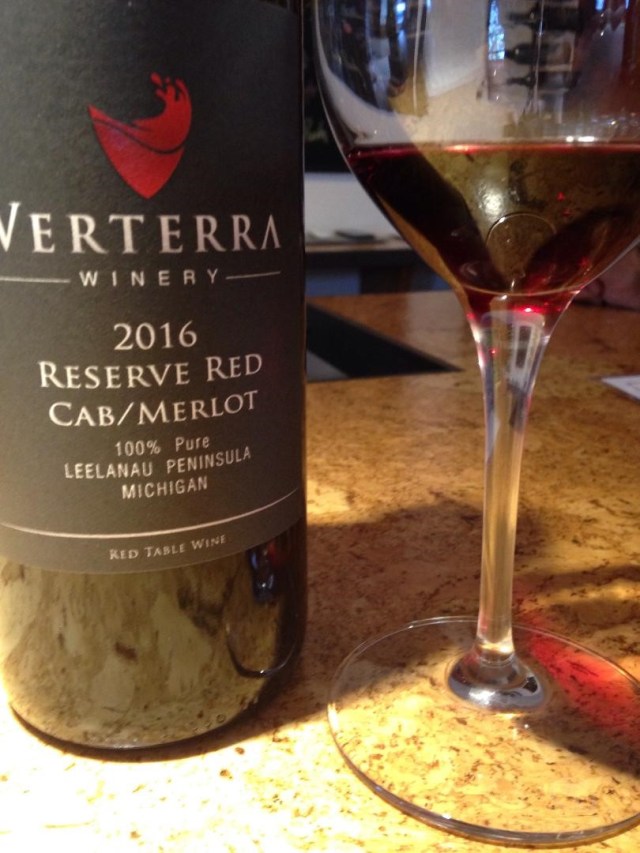
Verterra Reserve Red 2016 is a blend of Cabernet Sauvignon and Merlot. It had a “smoky” finish to it, and I think a few
years in the cellar will bring out this wine, at least this is what we said to
ourselves while we were making our purchases and after the initial
tasting. After being in the cellar, most
of the smokiness and the tannins have softened and it was just an easy drinking
wine that worked especially in this casual setting. There will be more parties of this nature
coming.
Most restaurants have multiple entrée choices, but what happens when you go some place where they offer two distinct gourmet ethnic concepts. I mean when you go to a steak house, you only have to choose from the different cuts of meat. You go to a nice bistro and you choose from some French dishes that they are preparing. My Bride wanted to go to El Barzon for dinner after we saw the Star Trek exhibit at The Henry Ford. I had no problem with her choice, the problem was which menu should we choose from. The owner and chef at El Barzon is steeped in the culinary arts of his region in Mexico, but he was also a chef at a lauded Italian restaurant Il Posto that I have written an article about. You see when you go to El Barzon half of the menu has Mexican dishes, and not the typical Tex-Mex choices that most people associate as being Mexican, and the other half is Italian, and not just a pasta-house. First you have to decide which menu and then you have to decide on the one of the tempting choices. Trust me, I know how eclectic it sounds. I was telling our waiter that I grew up just a few miles from El Barzon and he said that he gets quite a few diners that were originally from the area. He told me how he had moved his family to the area near the restaurant as they were from Chicago, and I told him how the area at one time was all Polish-Americans, way back when the immigrants came to America to find a job and a new life, they settled in pockets around Detroit, where the soon to become second language was their first language. He was telling me that the church his family attends in the neighborhood performs a mass in English, a mass in Spanish and still a mass in Polish. El Barzon is in the perfect setting.
I am not sure what the building the restaurant is in, was originally designed for, but they have taken advantage of it, and have a perfect semi-enclosed large patio area which is also great for the barbecue and for some big parties. We were taken into the main restaurant and once seated we were given a bowl of freshly prepared nacho chips with two distinct bowls of salsa. So maybe for the neighborhood, the one menu takes precedence. We both decided that we wanted to choose from the Italian menu, especially since they had some interesting wines on the carte, that tickled our fancy over the unique selection of Tequila that they offered. My Bride had an Italian version of Surf & Turf, a Filet with Prawns in a Red-wine reduction sauce. I had one of the specials of the evening veal done in a Barolo Sauce. Both of our dishes came with Broccoli and Parmesan Roasted Potatoes. How many fancy restaurants, let alone neighborhood eateries also offer fresh truffles to compliment the dishes? I was in heaven. We finished with some Cappuccino and a very rich slice of Chocolate cake that we shared.
I had already mentioned that we had passed on
the exotic Tequila drinks and had settled on having wine with our dinner. We went with a bottle from Masi Agricola a
wine producer of note in the Veneto region of northern Italy. They are known for their Valpolicella and
especially their Amarone wines. The
Boscaini family named the estate after the Vaio de Masi valley that was part of
the original holdings. They now own
property in several different districts and an assortment of different wine
styles. They also began in the 1950’s of creating single “cru” vineyards for some of their Amarone
wines. They are also known to be
experimental with fermentation, oak barrels and different clones, just to see
what they can do. We had the Masi
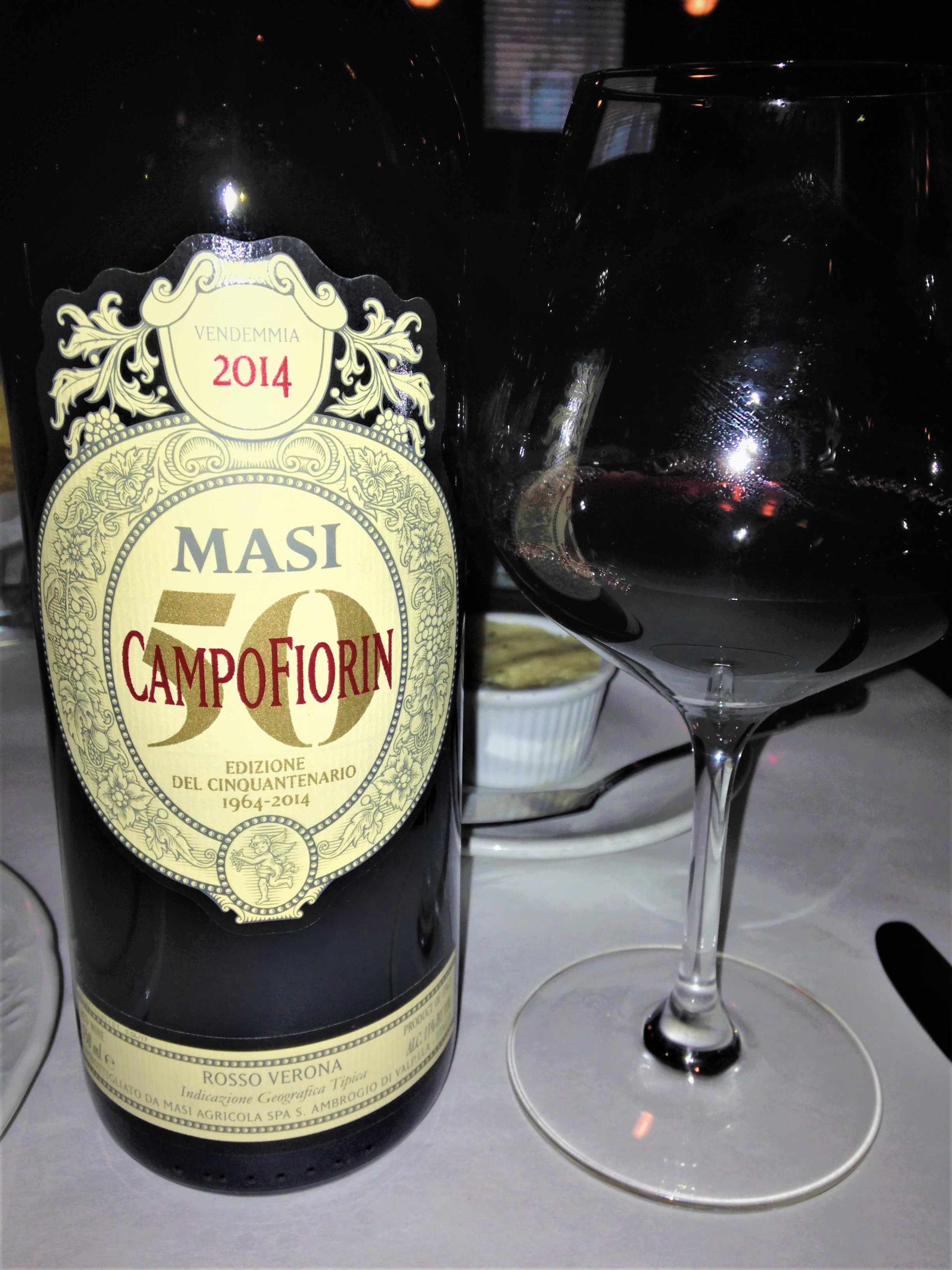
Campofiorin Rosso del Veronese IGT 2014, this wine is usually listed as Ripasso,
but this was their special Fiftieth Anniversary. This wine was originally created as a “Supervenetian” in 1964, inspired by the same
production methods used for Amarone. The wine is a blend of Corvina, Rondinella
and Molinara. A pretty dark red wine
that offered cherries and spice and then delivered the same with soft tannins
and a nice long finish; a perfect wine for both of our dinners.








 The Wine Raconteur