This is the last of my notes on the Armenian wines that I tasted at a charity event and the evening was fun. I have also had time to think about the affair and the wines a bit more and I will get to my additional thoughts in a while. Armenia for those that do not know the country, is predominately mountains and basically over 1,000 meters above Sea Level. The climate encompasses very hot summers and freezing winters. The soil is basically volcanic and limestone with ground waters located very deep below the ground, which makes all plants struggle for growth. Grapes have grown historically over the bulk of the country, but not in a serious winemaking structure. There are currently about forty wineries now in Armenia and the almost ninety percent of the concerns are located in the Ararat, Armavir, Aragatsotn and Vayots Dzor regions and not surprisingly these are historically known for viticulture.
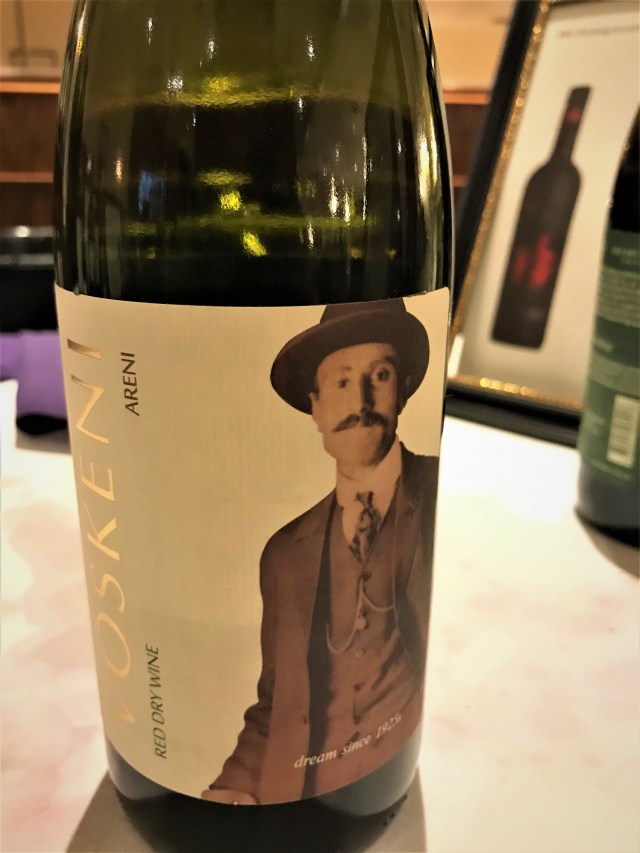
Voskeni Wines are located at Sardarapat, Ararat Valley and is a family owned and managed winery. The vineyard was founded by the elder family forefather Smbat Mateossian, a businessman from Boston who moved to Armenia in the early 1920’s. He dreamed of having his own winery, but his property was confiscated by the Bolsheviks. His family in 2008 has come full circle and bought the vineyard and are intent on creating the wine that Smbat Mateossian dreamed of. Voskeni Wines Dry Red Areni Noir Vayots Dzor 2016 was very light in the tannins and my initial notes refer to this wine as “off.”
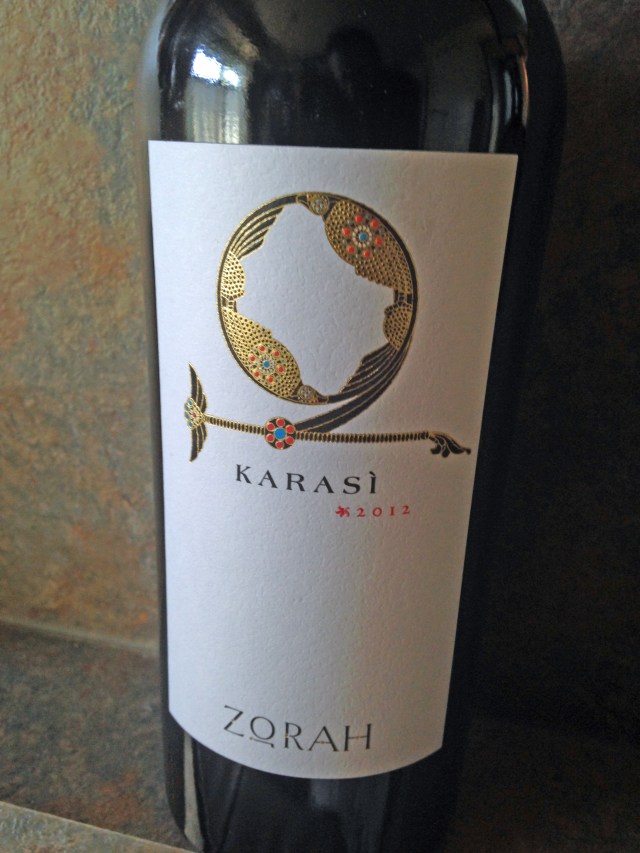
As I have had time to ponder my notes and to reassess the reactions of the people that I talked to, I am going to say that my notes of “off” were from trying to compare the wines to the known varietals that I and most of the other wine tasters were used to. This was the first time for one of the wineries and for the others, if it wasn’t the debut, it was close and these are very young vines, so by nature the wines will be lighter in taste and texture. Also because of the archaic structure of the wine industry in Michigan, most of these wines were expedited at the last minute for this tasting and that is never good for wines. As I looked back at my impromptu tasting table, it was not as organized, nor were the wines offered in a curated manner. I think that as I get a chance to taste more wines from Armenia and not in such an impromptu manner, and as the vines mature, the wines will get better marks and notes and more universal acceptance. I went in, with great expectations and left with some hesitations, and I remember my first time trying wines in Michigan thirty or forty years ago, I think I was in the same position, and now I am an avid fan of the winemaking in this state, and I am sure that Armenia will reach that same plateau soon enough, and it gives me a reason to try the celebrated Zorah Karasi, not to mention that I will eventually catch up with my cousin and hear her reviews.
When I got the mailer for the Armenian wine tasting “A Toast to the Vine” I originally thought that there was only going to be wines from one winery. I knew that it was going to be a charity event to raise money for The Armenian Home for the Aged and one never knows if one will need a service like that. I also knew that they were going to have a raffle ticket for an Armenian Wine Trip, which sounds glamorous, but I declined, because I don’t think that I could get around with the scant Armenian that I know, and that most of it was an almost hundred year dialect of Western Armenia and the wine country is in what was known as Eastern Armenia. I probably could have survived, but I knew that there were others that would truly enjoy that trip.
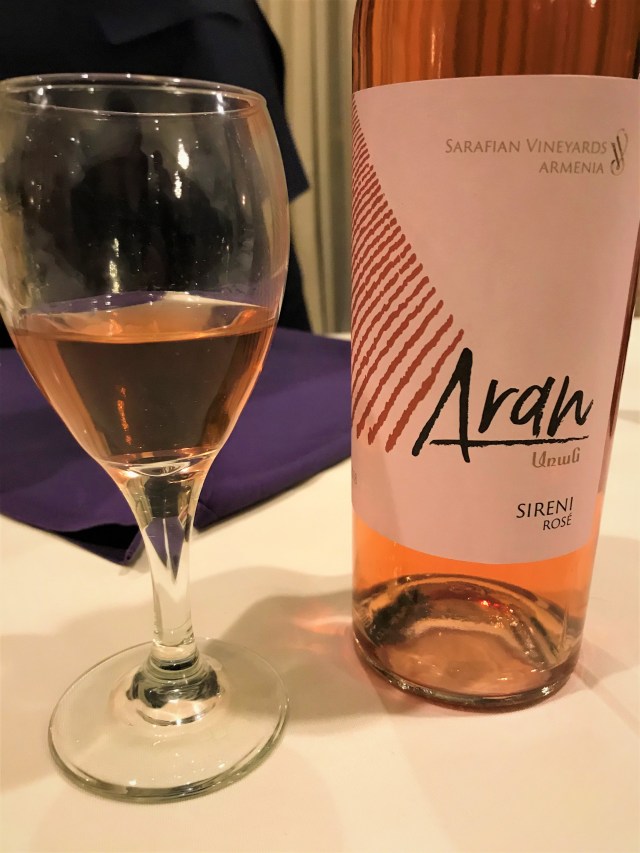
The reason that I thought only one winery would be featured was because the mailer said “Alex and Talar Sarafian of Sarafian Vineyards, Armenia will talk about wines of Armenia and the upcoming launch of Aran Wines this Fall.” They were a charming couple to talk to and they were so fortunate to have their two wines on the same table. The Sarafians have been in viticulture in the developing region of Artsakh since 2005 and the have planted fifteen acres in the Askeran plains. According to legend the two river valleys Kur and Arax in Artsakh were among the first to be settled by the descendants of Noah. A local chieftain named Aran was appointed by the Second Century (AD) Armenian King Vagharsh I to be governor of the land. Folk etymology holds that the name Artsakh is derived from “Ar” (Aran) and “tsakh” (woods or garden).
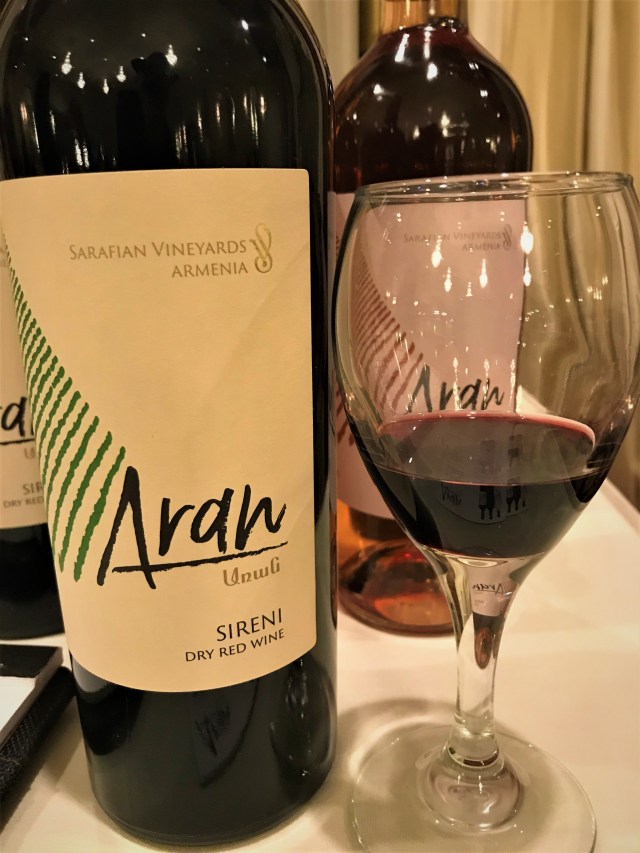
The Sarafians brought with them two of the three wines that will be making their debut. The first wine was the Aran Rosé Sireni 2018. The Sarafian Vineyard only grows one varietal at the time and it is the Sireni or Kndoghni grape. The Sireni grape is indigenous to Armenia in the Artsakh region and is deep in color and richness and is used for wines and Brandies. This wine was aged for twelve months in Stainless Steel and I found it refreshing with a pinkish-salmon color with a soft nose. The Aran Dry Red Sireni 2018 was also aged for twelve months in Stainless Steel, it had a very deep color, but the nose and finish were surprisingly on the soft side, as I expected a bit more fruit, but it did sound like they had rushed the wines to Detroit, so perhaps they had not settled down from their flight. There is a third Aran wine that was not at the tasting and it may still be in the finishing stages and that is the Aran Dry Red Reserve Sireni 2018 that was aged in Caucasian Oak for twelve months and perhaps the oak may bring out some of the complexity of the Sireni grape.
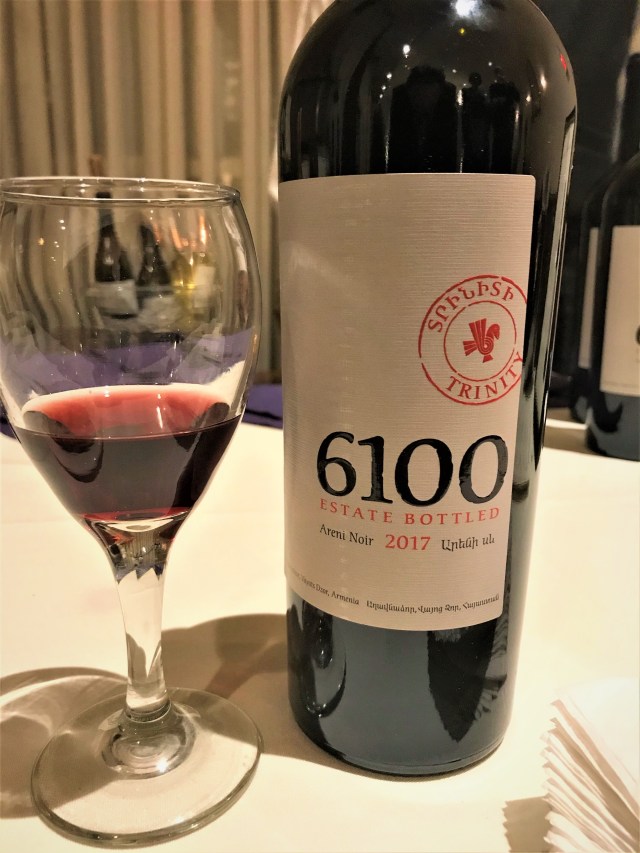
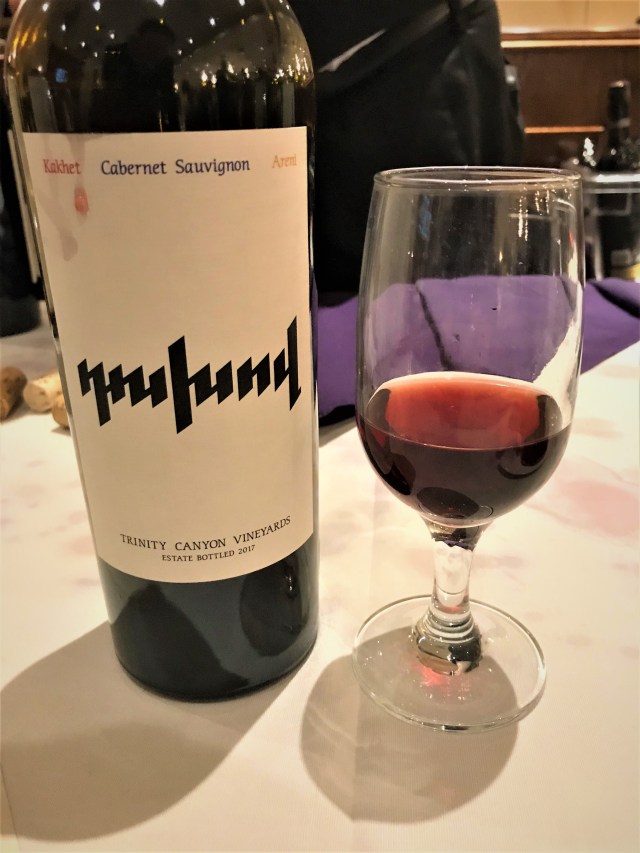
When you are tasting Armenian wines and you see the name Trinity, it doesn’t conjure up images of an Armenian winery. Sure, Armenia was the first Christian nation in the history of the world, but Trinity is very American (English) sounding and almost religious in nature. Then I eventually found out that while the winery was referred to as Trinity, it was really Trinity Canyon Vineyards and that sounds like it should be on the west coast of America, but there are in reality three holy mountains of Armenia, and the family that lived around the block from my Grandparents where my Father and his Brother and Sisters grew up knew the three sons of that family who were named for the three mountains; Ararat, Christopher and Masis, and that is how I was always able to remember the names of the mountains, not to mention, back when I was a kid, growing up in Detroit, the old lady that lived next door to us, went back to the old country once, and when she returned, she brought back a painting on velvet of the three mountains and that is in my house, stored away, back when velvet paintings was a world-wide rage.
Trinity Canyon Vineyards was founded in 2009 by three wine lovers and associated themselves with some winegrowers and winemakers in the Vayots Dzor Highlands, near the oldest established wine producing site in the world. The Executive Director at Trinity is Hovakim Saghatelyan is a civil engineer, a poet and an entrepreneur. Levon Hakobyan is the Vineyard Manager and his father also grew grapes before him, and has planted more than thirty hectares of vineyards and has acted as a consultant since 1981. The Winemaker is Artem Pareghyan who joined Trinity in 2013 and holds degrees in Oenology and Viticulture from France and Germany. They also have a Consultant Winemaker in Jean Luc Isnard, who with his wife have Domain Solence in Ventoux, France, as well as the Director of Organic Winegrowers of Rhone Valley.
Trinity Canyon Vineyards had four wines represented at the tasting, and the winery actually has eleven wines on their web site. Alas, somehow, I only tasted two of the four wines that were present. The two wines that I missed were the Trinity Canyon Vineyards 6100 Rosé 2016 made from the Areni Noir grape and the Trinity Canyon Vineyards Areni Noir 2015. The first wine that I did find and have was the Trinity Canyons Vineyards 6100 Eh Reserve Areni Noir Vayots Dzor 2017. The wine underwent fermentation in Stainless Steel and then was aged for fourteen months in Caucasian Oak barrels. This was one of the first red wines that I enjoyed as there was some terroir and tannins and it gave me a reason to go get a couple more lamb chops to enjoy with the wine. The other red from them also caused me to get a few more lamb chops and this was the Trinity Canyon Vineyards Dukhov 2017, that was not on their website. Dukhov is one of the slogans of the Armenian Velvet Revolution, a peaceful Anti-Government Movement that raised hopes for a free election in the country. This wine was a blend of ten percent Areni Noir, sixty-five percent Kakhet and twenty-five percent Cabernet Sauvignon. While this wine was good, I preferred the 6100 Eh Reserve better.
The chance to taste many Armenian wines at one time, is an offer that is hard to refuse. It was a charity event and all the food offered was Armenian. It was a delightful evening. If I had a complaint, it would be that it was not organized as a wine tasting, the evening was a fund raiser with the ability to graze on different foods and as a bonus they were pouring wines from Armenia. I think that I would have liked a more formal wine tasting, but that is just me.
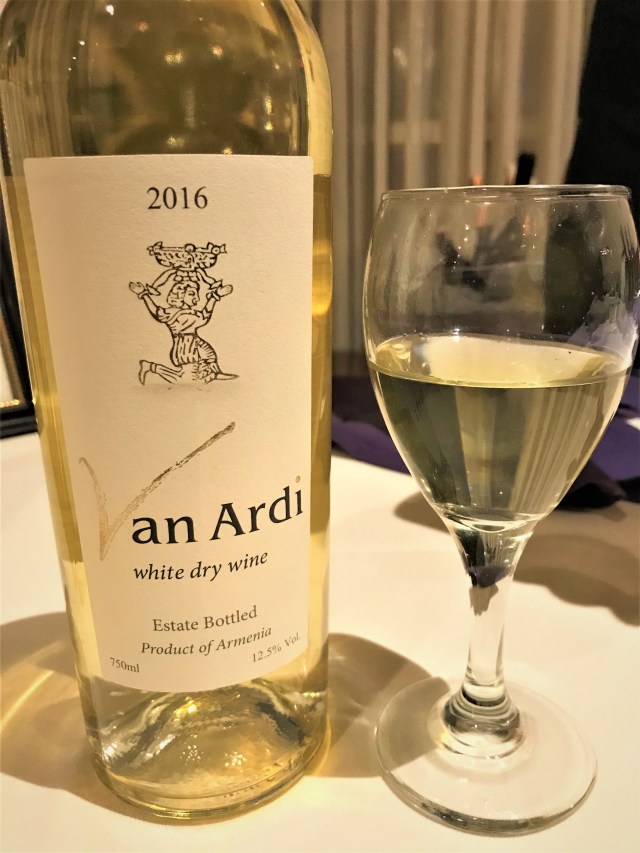
One of the featured wineries with three different wines for the evening was Van Ardi Wines from the Aragatsotn region of Armenia. I am going to guess that they are relatively new, as their website started in 2014. Van Ardi Wines is a self-proclaimed family run boutique winery located in one of the ancient wine making regions of Armenia, nestled between the mountains of Ararat, Aragats and Ara. They only use estate grown grapes; Areni Noir, Kakhet, Haghtanak and Kangun which are indigenous to Armenia and they also grow Syrah; and they are planning to grow some other almost forgotten, but indigenous varietals in the future.
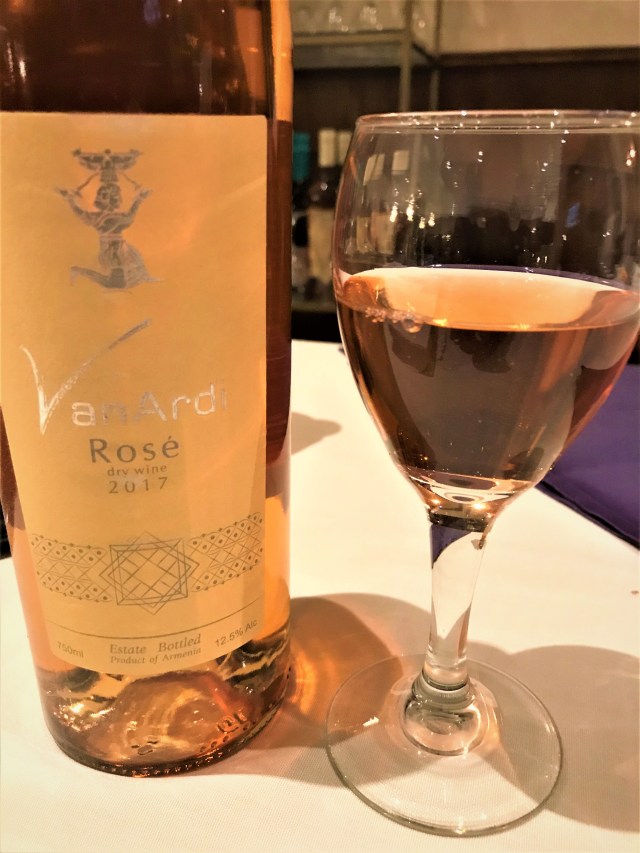
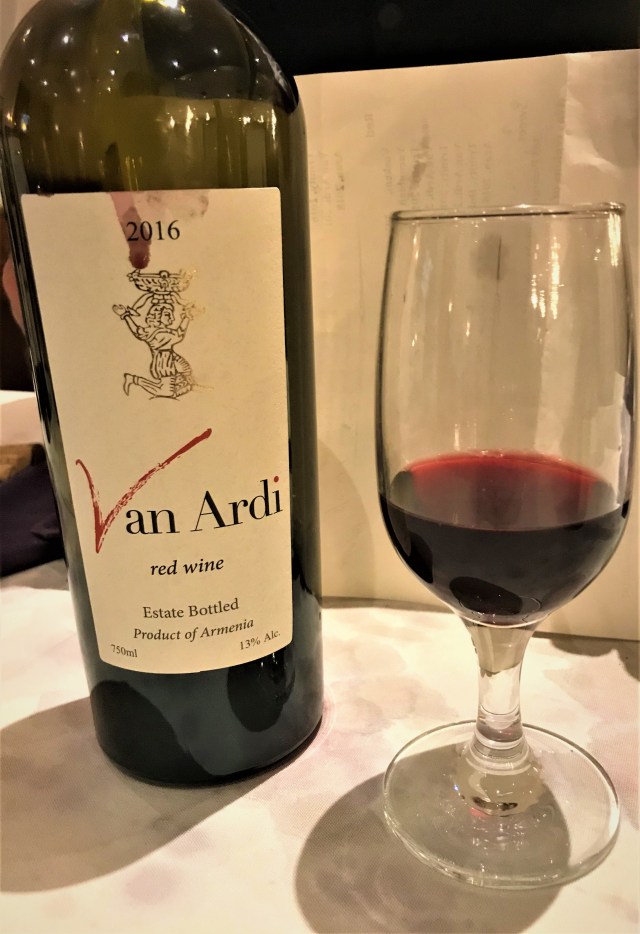
At the event there were three Van Ardi wines being offered, a white, a rosé and a red. The first wine that I tried was the Van Ardi White Dry Wine Ashtarak 2016. The soil of most of Armenia is volcanic and limestone. The wine is a blend of seventy percent Kangun and thirty percent Rkatsiteli. Kangun is an Armenian varietal that is originally a Soviet era hybrid crossing local Armenian indigenous grapes (?) and the Georgian grape Rkatsiteli, and even the name means “sturdy” as what is required from the severe winters in Armenia and the surrounding countries, and the grape is used both for wine and for the famed Armenian Brandy. Rkatsiteli is another white wine grape that is found in the Trans-Caucasian region and is most know in Georgia and is one of their famed varietals. The grape is very popular in the region because it can survive the winters, maintains good acidity and since it is a rather balanced, it is used for table wines, sparkling wines, dessert wines, fortified wines and Brandy. This particular wine was interesting in that it was dry with hints of pear and a finish showcasing the terroir of the region. I would like this wine with nuts, cheese and charcuterie and especially with company in the living room, before we go into the dining room to eat. I then tried the Van Ardi Ashtarak Rosé 2017 which was a blend of Areni Noir and Kakhet. The Areni Noir is the most prominent varietal of Armenia and has become popular internationally only recently when Bloomberg’s “Top 10 Wines of 2012” listed Zorah Karasi Areni Noir 2010 was listed alongside of Chateau Haut-Brion 1989 and Quinta do Noval Nacional Port NV. I found the wine to be a rather disconcerting murky dark pink, with no noticeable nose and my only description as I was writing my notes was “off” and while I would like to be more of a cheer leader for these wines, I have to be honest and say that I would not buy this wine. The next wine that I had was the Van Ardi Red Wine Ashtarak 2016 and the wine is a blend of forty percent Areni Noir, thirty percent Kakhet and thirty percent Haghtanak. The Kakhet grape, alas I can find no information, other than it imparts good acidity to a wine when blended, and it could possibly be from Georgia, as the main growing region there, especially for the famed Saperavi grape is from Kakheti. Haghtanak is Armenian for “victory” and is a modern Soviet period hybrid of Armenian varietals (?) and Georgian Saperavi which produces dark colored juice with black fruit flavors and a high sugar content. This wine was also described in my notes at the tasting as “off” as it reminded me of some of the early Cold Hardy Red wines that were first popular in Michigan forty years ago. The last wine would have been interesting to try, but I saw it in the handouts, but I must have missed it on the assorted tables was the Van Ardi Areni Reserve 2016 which was a blend of Syrah and Kakhet.
I had the pleasure of tasting several different Armenian wines the other night at a charity event and two wineries were represented at the tasting with only one wine apiece. During the last forty plus years that I can account for, there has been a dearth of wines from Armenia, recently we have seen some Brandy, but in one evening I had a wonderful chance to try some wines that were under the radar. I am sure that part of the reason is that Armenia since their ill-fated period of independence, found themselves under the heavy oppression of the Communists in the Soviet Union. The Socialist structure was against the concept of any form of capitalism, unless the proper individuals could get more comfortable while those around them maintained their suffering. Thankfully Communism and or Socialism failed even in Russia and all the smaller entities were given their “independence” and left for the wolves. Armenia for the most part has struggled to start life anew and to grasp onto business as a way to make the country great and to prosper. Viniculture is one of the avenues that have seen success, and it is understandable as this is the part of the world where wine making began.
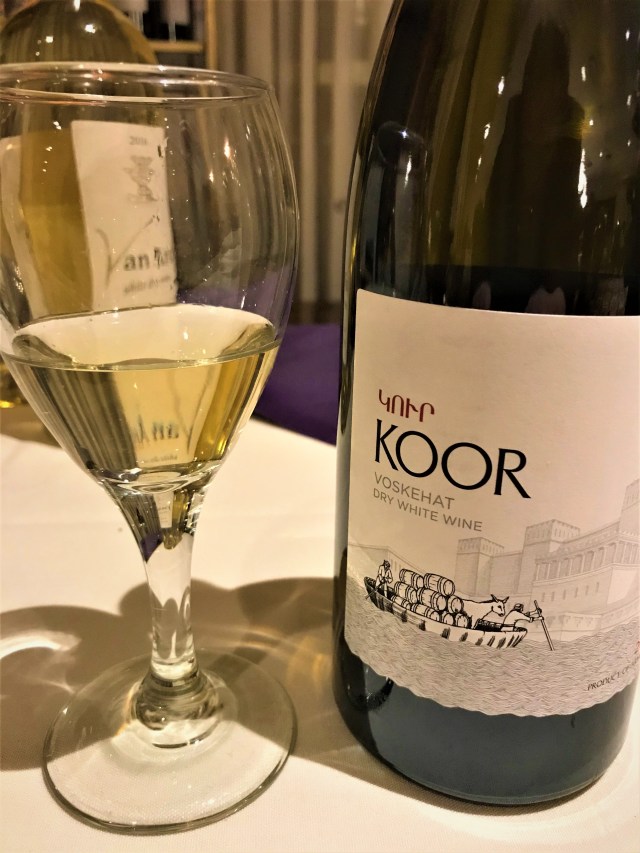
Koor by Highland Cellars was formed in 2014 when a group of Armenian friends, that returned to the homeland from other lands met and climbed Mount Ararat. From this endeavor they decided to stay and join the reviving wine making industry in Armenia and to only use indigenous grapes. The name Koor is an homage to the ancient Armenian riverboats that aided in the commerce of merchants from Armenia to Babylon down the Euphrates River. Koor Wines at the moment offers two red wines, a regular and a reserve and one white wine, and it was the white wine that I tasted. I can only speak for the Highland Cellars “Koor” Vosketehat Vayots Dzor 2017. The grape varietal Vosketehat translates from Classic Armenian as “the golden seed” and has been in the area since history began. The grape is floral with a natural acidity that makes it work well with foods, more savory than sweet. There are four major regions for Armenian wines and Vayots Dzor is one of them. The wine was very interesting with a subtle floral nose and delivered very soft traces of stone fruit, but the terroir of volcanic soil and limestone had the most pronounced impact on the finish. I was listening to several people that thought it was a terrible Chardonnay, but I did try to explain to some that it was not a Chardonnay at all, but so many people see a white wine and think of that grape. I would have it again, at the beginning of a meal, especially with cheese and charcuterie and even Armenian Toorshee, which is usually a mixture of pickles, cabbage, peppers and carrots, as I think the spiciness of the different pickled entities would be a great compliment.
The other
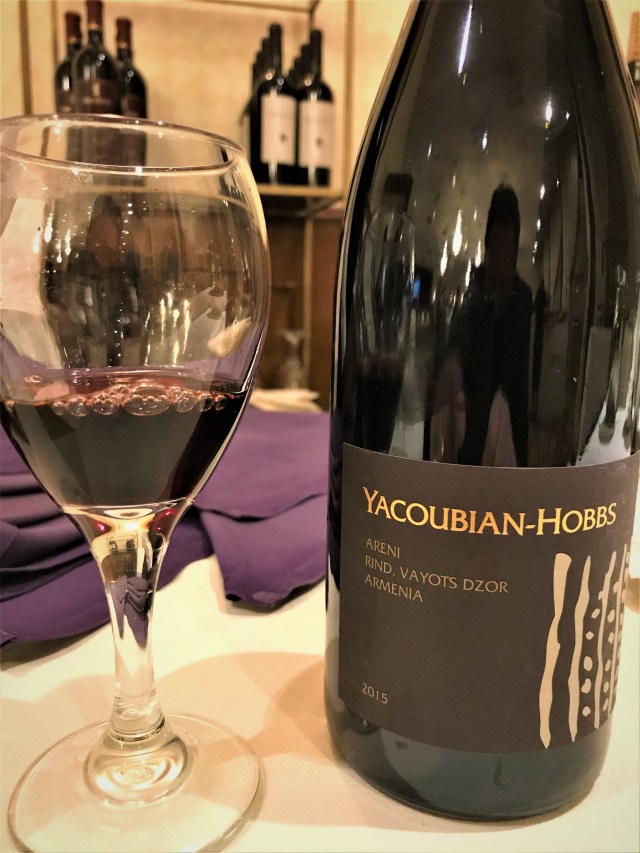
wine that I will discuss is the Yacoubian Hobbs Areni Noir Vayots Dzor 2015
that I had actually read about and was glad to see its presence and I was
looking forward to trying it. Paul Hobbs
of California has been partnered with at least two wineries outside of the
United States and here with the Yacoubian family. The partnership began in 2008 and a new
vineyard was planted in 2014 near the Areni – 1 Cave, the site of the world’s first commercial winery. The Areni Noir grape is ancient in Armenia,
but a fresh newcomer to the international wine community; it is a dark, thick
skin grape that is perfectly adapted to the major temperature swings in the
high elevation plateau where the grapes grow best. This wine is also from the Vayots Dzor
region. The wine was fermented and aged
in Stainless Steel and eleven-hundred cases were produced. As I stood in line to get a taste of the
wine, the couple in front of me, took one sip, poured the balance of the wine
into the spittoon, and immediately rinsed the glass with water, looked at me,
and told me not to bother, but I had to try it.
They were absolutely right, I could find no redeeming qualities to the
wine, and I really would prefer not to say that. The entire wine was off, the nose was non-existent
and the wine had nothing worth noting, I could not even find any words to describe
what I was tasting. That was a disappointment,
but there were still other wines to try, and I don’t stop, just because of one wine.
I had the pleasure to attend a wine tasting featuring wines from Armenia. The event was to raise money in the celebration of the Seventieth Anniversary of The Michigan Home for the Armenian Aged and it was held the Banquet and Conference Center at St. John Armenian Church. There are four Armenian churches in the metropolitan Detroit area to handle most of the Armenians that have settled here after the years of genocide and forced displacements. Armenia may be a small country, but they are a proud nation, after all, it was Armenia where Noah’s Ark landed at Mount Ararat. They are the first nation to become Christian in the annals of mankind and they have suffered ever since, because they are the only Christian country surrounded by people that believe it is proper to kill men, women and children that are of a different religion, and they all feel that enslaving people is just. In spite of a long history of determination and strife, they are considered one of the first, if not first people to make wine, some of the adjoining countries try to make that claim, but if your religion does not allow drinking, how much wine can be made and enjoyed? My Favorite Daughter a little while ago, found the perfect gift for me, bottle of Zorah Karasi 2012 from Rind in Armenia. Karasi means “from amphora” the way that beverages were stored and aged centuries ago in large clay vessels (amphorae). Zorah Karasi and their first wine was a tribute to 6,100-year wine tradition in Armenia. During excavations of “Karmir Blur” or Red Hill near the capital city of Yerevan in Armenia four hundred ancient wine barrels were found. The other more interesting find was in the excavations of Areni-1 cave in the Yeghegnadzor region they found the world’s oldest winery and the first historical evidence of wine making on an industrial scale. The vineyards of Zorah in the small village of Rind are in the heart of Yeghegnadzor region and continue the tradition of the earlier vintners of antiquity.
Now as I leave my soap box and go back to discussing the wine tasting. It was an Armenian affair and it was a fun event. There was live music to keep everyone festive and it gave me a chance to actually see some of my Social Media friends. The food was from an outside caterer for the event and there were tables arranged around the room with different Armenian delicacies. There was a Vegetarian table, there was a Cheese and Charcuterie table, there was a table of appetizers, a table of assorted entrée dishes and of course a Sweet Table with coffee. By happen-chance, I ended up seated almost adjacent to the table with the Entrée selections, and it takes a lot of will power, not to just keep taking a plate and loading it up with stacks of lamb chops, and of course there were no doggie bags in sight.
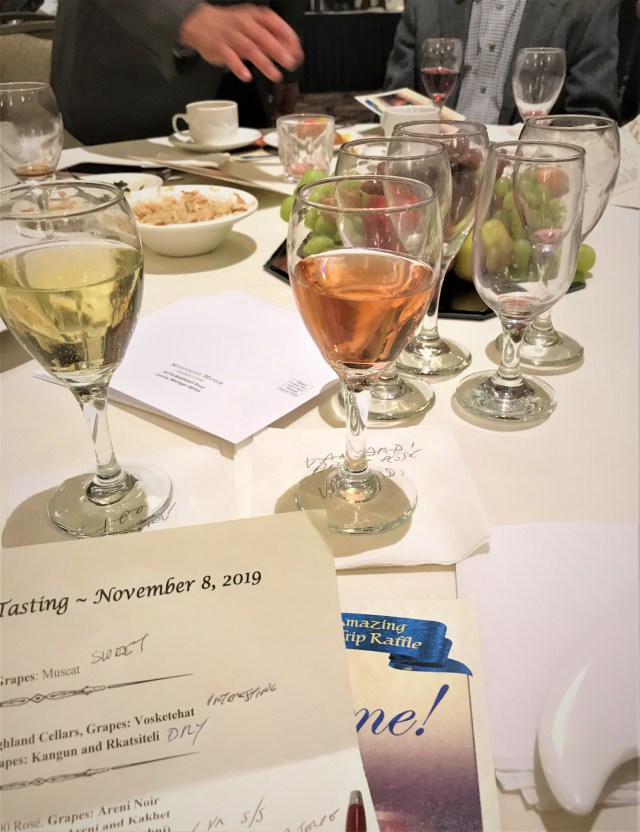
From the original brochure that we received by post, I thought that there was going to be one winemaker featured, of course, it is not the first time that I had been wrong and it won’t be the last either. There were eight winemakers featured and Zorah was not one of them. There were sixteen wines being featured. My only complaint was that there was not a formalized wine tasting, there were several tables intermingled between the food tables featuring two to four different wines. Alas in this setting, it was easy to miss a wine, as you forgot which table you had finished and which table was not finished. I also realized too late that I could have done the tasting in a more logical (wine approved) sequence. Fear not, as The Wine Raconteur maintained his eccentric behavior in front of his relatives (there were a few), friends (there were a few) and strangers (there were plenty of new people to meet) as I was arranging a glass of wine and a bottle wine for a photograph. We were given a wine glass for tasting, but somehow I acquired several and my seat at a dinner table kind of had a wine tasting appearance to it, because I was writing the name of the wine on a napkin and then placing a glass of the wine on the napkin, so that I could go back and forth, between water and crackers to taste the wines several times.
I will start off with two wines, where the winemaker is only represented once at the tasting. I will start with sparkling wine, as that is usually the first wine that one that I usually encounter at a tasting. I will discuss Karas Wines Dyuitich Ararat Valley NV; the Armenian diaspora took the Eurnekian family to Argentina and wine making in the Patagonia region. They have four-hundred hectares devoted to vineyards in Armavir on volcanic soil. The wine is pure Muscat and hand harvested and pressed and after a twenty-four period of fermentation, the fermentation is stopped by cold refrigeration and then the juice is placed in special pressure tanks for thirty days. The color was golden with bubbles, but not a steady stream, and the nose belied how sweet this wine was. It was not my preferred glass of bubbly, but I could see a market for it. Since I started with the first, I will finish with the last, not in wine tasting procedure, but last for after dinner, a dessert wine. The 365 Wines Pomegranate NV was a natural fruit wine from the Edvag Group located in Yerevan, the capital of Armenia. 365 Wines produce a couple of more different natural fruit wines and they also produce a couple of wines made from grapes. When I got my first bottle of Armenian wine, I was doing some research and discovered that beyond the local varietals that are Armenian, Pomegranate wine is very popular among the populace. I saw and heard some grimacing and complaints about this wine, but I think the individuals were thinking that it was a grape wine, but it was lighter and the nose did not remind me of fresh pomegranates either. The color alone should have been an indication, because it was kind of a rusty brown to my eye and not the color I would have expected, as I know that Pomegranate Juice is what is used to dye Maraschino Cherries. Actually, as a dessert wine it was not that bad, as it was not as sweet as the sparkling wine from Karas. There are more wines to be discussed from the tasting.
It was going to be the last night that we would see My Favorite Daughter, as all good things come to an end. She was able to see some of the weather that she misses, since she lives in the dessert, like rain and gray skies. We have never had that problem since we actually get to experience all four seasons, though some seasons like to last longer than others.
We were going to meet for dinner at Andiamo Ristorante in Dearborn, which was the old Chicago Road House for ever, if you were a local in that part of the Metropolitan Detroit area. I was surprised that My Favorite Daughter said that she had never been to either location, and I don’t know how I missed that. We started off the meal with the House Salad, and I have always been partial to when there is more than just lettuce, kind of like what we always had at home and a Creamy Garlic dressing, and my Bride went with Pasta Fagioli and a heaping helping of freshly grated Parmesan cheese. My Bride had a plate of Agnolotti, a handmade pasta filled with ground veal, beef and pork in a wild mushroom-basil crème sauce. My Favorite Daughter and I both had a special version of Gnocchi with Black Squid Ink and lobster meat, it was very tasty, but it was a dry dish, meaning that it had no sauce, which surprised us, and she quickly requested a side of Sauce Alfredo and if I had thought about it quicker, I would have probably asked for a side of Aglio e Olio, but I didn’t and I survived and the dish was still very filling and savory. We then kind of picked at her Chocolate cake for dessert.
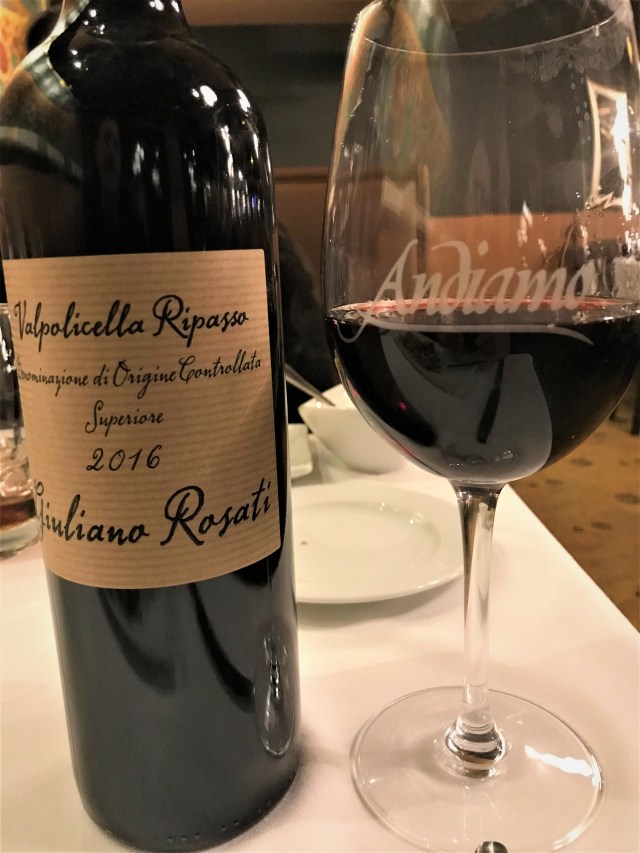
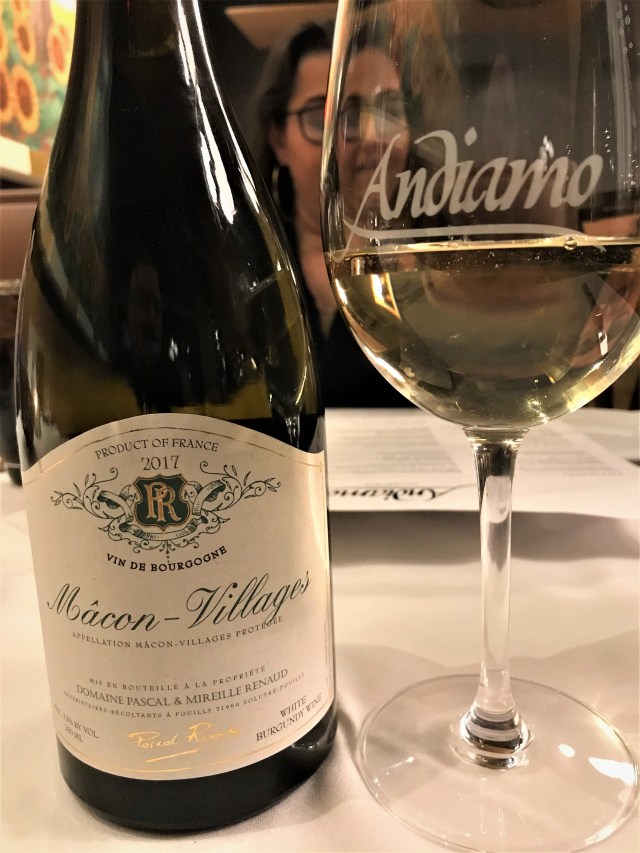
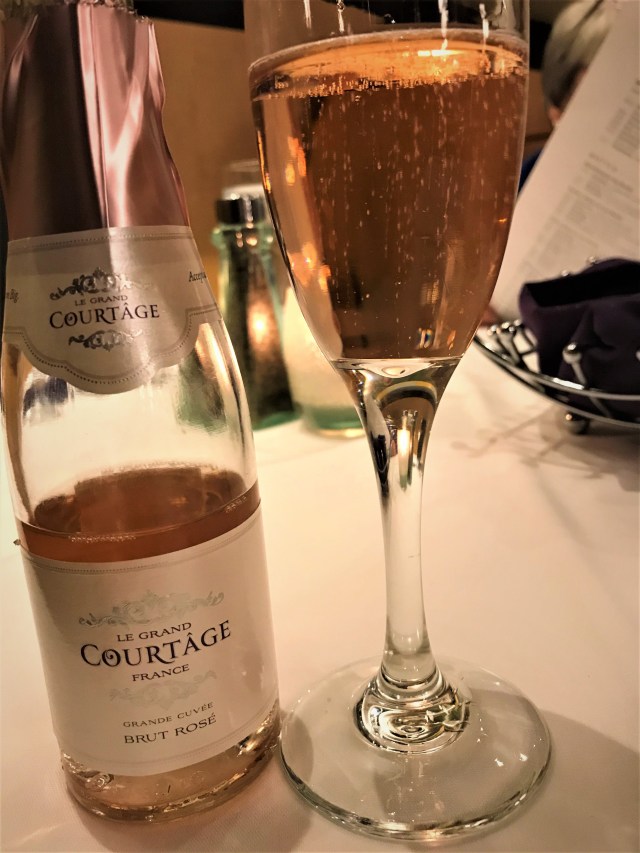
My Bride started off with a split of Le Grand Courtage Grande Cuvee Brut Rosé NV a pretty pinkish salmon colored sparkling wine and very refreshing. The winery is owned and managed entirely by women with the intent of making affordable and quality sparkling wine. The wine is produced in Nuits-Saint-Georges and the fruit is harvested from the Burgundy, Beaujolais the Loire Valley regions. The wine is a blend of Chardonnay, Gamay and Ugni Blanc and produced in Stainless Steel and this split has a screw cap, so there was no “pop” when the bottle was opened. I started off with Domaine Pascal & Mireille Renaud Macon-Villages 2017. The appellation Macon-Villages is for the white wines of the Maconnais located around Macon. This particular Domaine has twenty-five acres scattered through the villages of Pouilly, Solutre and Davaye and this wine is made in Stainless Steel for a crisp Chardonnay. The appellation Macon-Villages is a step above the basic Macon appellation. After the whites came Giuliano Rosati Valpolicella Ripasso Superiore 2016, what some like to call a baby Amarone, because they both use the Ripasso method of laying certain overripe grapes to dry almost like a raisin to concentrate the sugar and then later added to the mix. The wine is a blend of Carvinone, Corvina and Rondinella and aged in oak. It had a good color, great nose with some dark fruit, and some licorice and ended with a good finish of spices. A nice affordable wine, that I think I would like better with food as I think it complimented the meal so well. I did see My Favorite Daughter one more time, but just for a quick visit, as she went with my Bride for Sushi and Thai for dinner, the next evening and as I had a different evening planned, so it will be awhile before we see her again.
Royale with Cheese, Delray and Cariera’s all in one day. I guess I was trying to make the most of seeing My Favorite Daughter while she was in town. I picked her up and we decided to have lunch first and we went to a popular place that is relatively new in the gentrified section of Midtown Detroit called Royale with Cheese, and I thought the name would slip by her, but she is a fan of Quentin Tarantino and she knew the reason behind the name of the restaurant that we went to and why it is called that. The area all around the restaurant was packed and we finally found a parking spot, thankfully I grew up in the city and could remember how to parallel park, which is kind of a lost art in the suburbs. In case you don’t know in France, McDonald’s calls their Big Mac, the Royal with Cheese. While my daughter was admiring the architecture of the old homes and apartments, I was remembering how this was not even a nice area during daylight, when I was in High School and College, and how things have changed. I rather stuck out like a sore thumb, as I did not have the required lumberjack beard and it was obvious that I was not a local. We shared a Southwest Royale Wrap that was marinated free-range grilled chicken, Arcadian Harvest Mix, Southwest Corn Relish, avocado, Cajon Aioli in a flour tortilla. We also split an order of Royal Fries that had a fresh herb and garlic-Parmesan pesto drizzle with Cajun, sea salt, cracked pepper and smoky barbecue spices. That with a couple of pops (sodas if you are not a Detroiter) was enough to hold us until dinner. One places the order for the food and pays at one counter and then they give you a numbered sign to take with you and they will bring the order out, and the curious thing was that they told us to ignore the “Reserved” table signs that were on every table. We also sat under a large mural that was painted, in case one did not relate to the name of the restaurant.
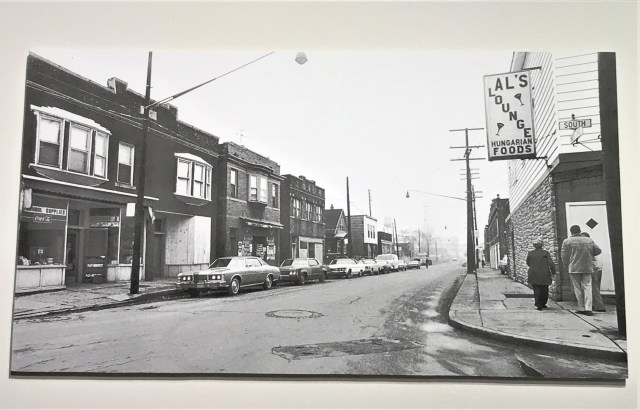
The reason we were in the Midtown section of Detroit, is that I wanted to take My Favorite Daughter to see a new exhibit at the Detroit Historical Museum about Delray and Southwest Detroit, the borough that was absorbed into Detroit and where I was born and that my children heard countless stories about from all of their relatives and not just Dear Old Dad. Somewhere along the way, the museum stopped being funded by the City of Detroit and was now run by a charitable organization for the benefit of the museum. The museum really had not changed that much from the days when I would visit it on a more frequent schedule, as it is next to the Main Library and across the street from the Detroit Institute of Arts. I was a little disappointed in the special exhibit, as I thought that they had expanded the geographical boundaries of Southwest Detroit from when I was a kid, and that they also neglected to mention some of the other nationalities that were found in the real “melting pot” known as Delray. It was fun and interesting, but I did mention my complaints to one of the workers at a desk, who seemed interested in my observations. We then left and took a scenic tour of Midtown to Downtown and then through Detroit as we were going to meet my Bride for dinner.
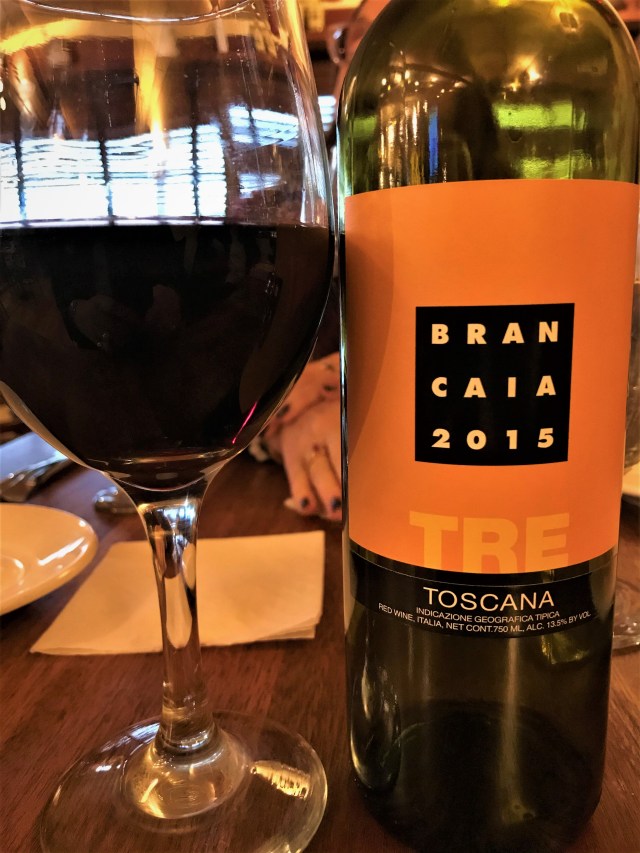
We all met up at Cariera’s just as they were opening up the doors. My Bride started off with soup, while we had the house salad. My Favorite Daughter had the Lobster Ravioli, the ravioli was stuffed with lobster and cheese with a Parmesan cream sauce. My Bride surprised me and wanted a Deep-Dish Pizza with several toppings. I went with the Vitello Aragosta, Veal Scaloppini sautéed with asparagus, roasted red pepper and lobster meat in a blush cream sauce. The birthday girl finished off with a dessert, that we just kind of nibbled off of. We had a bottle of Brancaia Tre Toscana IGT 2015, which usually on a wine carte will be called a Super Tuscany. In the Tuscany region of Italy, Brancaia is a new kid on the block as it was founded in 1981 and it has three vineyards, two in the Chianti Classico zone and one in the Maremma area, and they are known for their modern looking labels instead of the more traditional ones that is expected from the region and this wine carries the Toscana IGT designation, while the two vineyards in the Chianti Classico zone is devoted to Sangiovese, the vineyard in Maremma is planted with Bordeaux varietals and some Sangiovese as well. The Brancaia Tre is a blend, of which eighty percent is Sangiovese and ten percent is Merlot and ten percent is Cabernet Sauvignon. Two thirds of the wine are aged in oak, while the other third is aged in concrete for a period of twelve months and then an additional two months in the bottle before release. For a moderate priced wine, even in a restaurant, this wine really delivers a nice experience and pairs very well with food. The perfect way to end a nice day and all the activities.
Asiatic in today’s Politically Correct society is probably not acceptable, but it is a word that I remember from the great theatrical play and then film called “Mr. Roberts” starring Henry Fonda. It is just a word that has kind of found a hiding spot in some recess of my brain and keeps other words from getting a toehold in my gray matter. Over the years I have written many times that I do not usually go to Asian restaurants, because of the heavy reliance on Monosodium Glutamate (MSG), a food enhancer, that makes me ill, it is also a reason that I seldom eat at weddings, because so many caterers use it as well, and this always drives my Bride crazy; of course there are plenty of things that I do that can drive her crazy. Well to her credit, she has found a couple of restaurants that do not use MSG, and I will go along, though it is not in the realm of my comfort food. With Ms. Yoga in town, I met the two of them in the afternoon, after they had gone shopping at P.F. Chang’s. In the 1960’s Cecilia Chiang had two restaurants, and the second one was in Beverly Hills, California and it was successful. Her son Philip took over the administration of the business and continued with success. The first one in Los Angeles was called Mandarette and the newer one was called Mandarin. Mandarette was a special treat for an Arizona restauranteur named Paul Fleming and he and Philip Chiang created a new restaurant called P.F. Chang’s in 1993 and today there is over three-hundred restaurants across the United States and in twenty-five countries around the globe. The wok is the star in the kitchen, but the food is all fresh and their credo is “Farm to Wok.”
We were ordering all sorts of food, and I guess before America was doing Tapas, they were doing Chinese food sharing, as it seems that sharing is the norm. The other thing that really gets my Bride excited, is that she can show the world that she can use chop sticks, and don’t look at me, as I prefer a knife, fork and spoon. The first dish that I will mention was an appetizer plate, as they didn’t offer it as an entrée, but I did share, and that was Rick’s Northern-Style Spare Ribs dry rubbed with Chang’s five-spice seasoning. There was an order of Hand-folded Crab Wontons with a creamy crab filling, bell pepper and green onions. Orange Peel Shrimp with a Hunan chili sauce and fresh orange slices, which I have to admit tasted better than it sounds. Miso Glazed Grilled Salmon with Asian mushrooms, wok-seared spinach, bok choy and garlic-ginger aromatics along with sides of Shrimp-fried rice and brown rice. There was enough food to satisfy the three of us.
I can
assure you, that we also had a bottle of wine to quench our thirsts, and we
knew that there really was an unlimited supply at home afterwards, in case
anyone was still thirsty. The P.F. part
of the association assured that there would be some interesting popular priced
wines. We
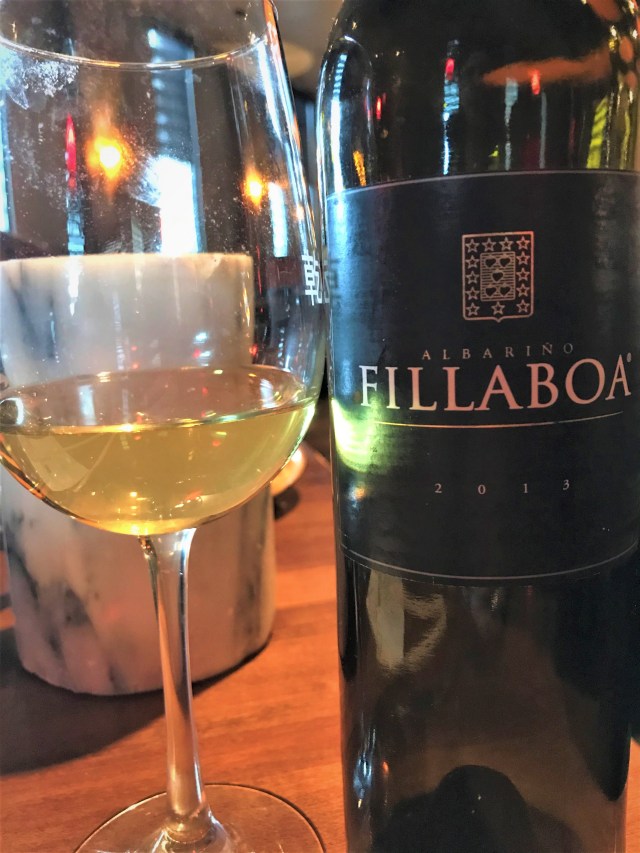
started with Bodegas Fillaboa Albarino 2013 from Rias Baixas DO in the Galicia
region of Spain. Rias
Baixas is a relatively new DO in Spain as it was granted in 1988 and it focuses
on Albarino. Bodegas
Fillaboa is one of the oldest estates in Galicia and they have seventy-four
hectares devoted to Albarino in twelve separate plots. Bodegas Fillaboa also produces
liquors based on their Albarino that has been converted and distilled into
three different brandies. The wine had a pretty golden color
with a good nose and complimented the assorted foods on the table. It is always fun to go out, and I am trying
to expand what I eat, the exploring new wines is the easy part.
If any of you are Scrabble players or Crossword Puzzles, the word “meze” is probably a word that you have encountered. The words origin is lost in the annals of the world, but to the Armenians it means to eat multiple small plates of food and usually accompanied by wine or beer. The Armenian nation was the first Christian nation and that truly differentiates them from the surrounding countries where they only drink secretively. The Armenians have enjoyed their lives even under the constant threat of death and beheadings. So, why do I bring this up? One of the days Ms. Yoga was staying with us, my Bride had to attend a conference for one of the charitable groups that she belongs to in her church, and I was going to go to my church for their annual bazaar to get some Armenian dishes that we normally don’t have.
I ended up sitting with Ms. Yoga in the breakfast nook and we began noshing on chips and salsa and stuff like that. We also started reminiscing about “penny candies” and all the different brands, and some are still on the market, and supposedly one is going to return to the market. I mean it is great to be nostalgic especially with people that have common memories. We even started talking about the days of real black licorice, and then, because we were from Canada, I remembered boxes of assorted licorice candies called “Allsorts” from England, but I haven’t seen them in years, but Ms. Yoga says she has seen them down her way, which got me excited. Well, then my Bride called and found that we were having fun and that I never got to the bazaar, so she went and bought the Armenian dishes that I was supposed to get like Lahmajoon, a delicate thin dough individual size “pizza” that is topped with ground lamb, tomato paste, garlic, onions and parsley, Katah, a breakfast roll that I remember my Grandmother making that was totally labor intensive and was basically butter and flour (though I am sure that there is more to the ingredients, I am just too lazy to look up the recipe), Paklava (the Armenian spelling of Baklava), and Dolma or stuffed grape leaves. After my Bride brought all of those goodies home, we all got in the car and went to the Cheese Lady that I talked about before and we loaded up on some more cheeses, and I found some Peppadew Dip, and we mentioned that we used to buy stuffed Peppadew peppers in Las Vegas, but then that store closed that we used to go to. The lady that was helping us, told us that we could get the peppers prepped for stuffing at a specialty market in the same complex that we were in, we were in Seventh Heaven, because my Bride stuffed them as soon as we got home. By the way, we were all stuffed just from all of this food for the meze, and just a lot of laughing and having a good time.
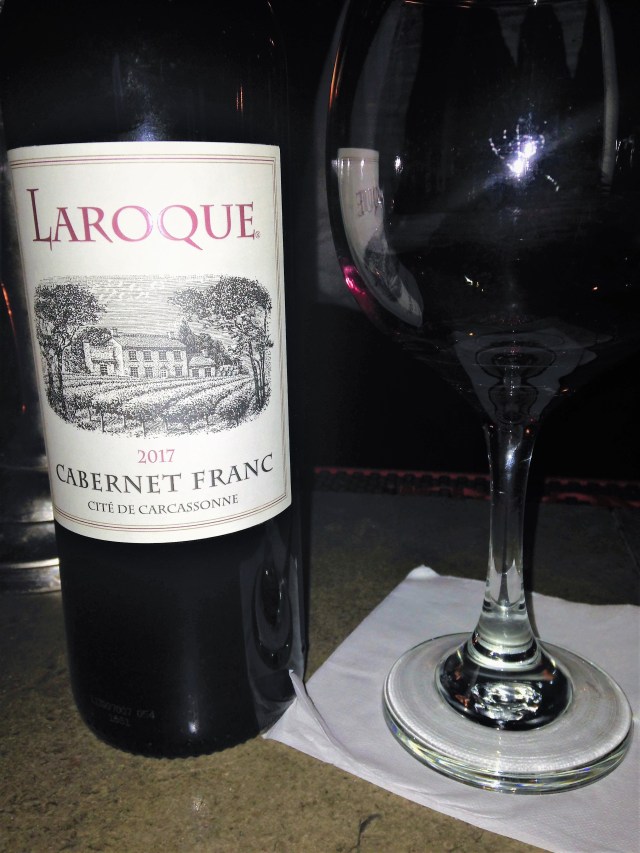
It would
not be a night of meze, if we didn’t have wine and this would be a terrible article. We had a few wines that evening and one of
them we have had before in a restaurant and then got some more from our wine
club was Domaine Laroque Cabernet Franc, IGP Cite de Carcassonne 2017. The IGP classification replaced the
old Vin de Pays to make France align to the other members of the Common Market. The IGP Cite de Carcassonne is a
large area in the Languedoc region and encompasses eighteen communes and allows
all three colors of wines. The
average age of the vines for this wine is twenty-five years, and this area has
been producing wines from the Sixth Century. The soil in this area is clay and
limestone and hillside vineyards. The wine is a very pretty red very easy to
drink, and it really opened up after the second glass was poured. The other wine that I will discuss from that
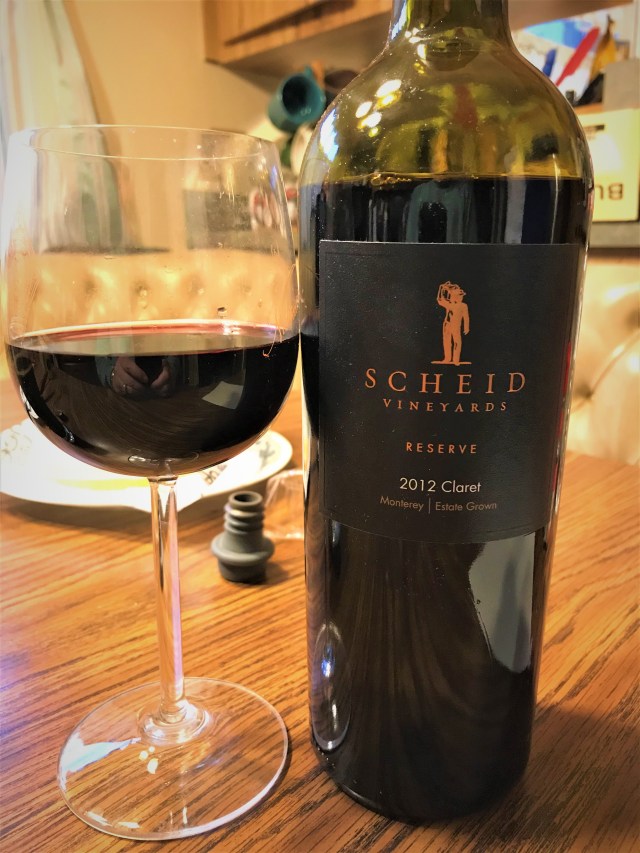
evening was from my other wine club and it was Scheid Vineyards Reserve Claret
2012. I enjoy the fact that they refer
to their wine as a Claret and thus avoid the term “Meritage” though I often wonder which word
works better in the marketing world. This Reserve Claret is fifty percent Cabernet
Sauvignon, twenty-three percent Petit Verdot, twenty-two percent Malbec and
five percent Cabernet Franc. Each
varietal is handpicked and destemmed as they mature to ripening and then each
varietal spends two weeks in an open top fermenter. Each varietal is then aged for
thirty-four months in a mix of sixty-three percent American Oak and the balance
in French Oak. The final
selection of the wines is then blended and bottled unfiltered and laid to rest
for an additional twenty-six months. There were three-hundred-fifteen cases
produced of this wine with a suggested aging potential of an additional ten to
fifteen years. This was an excellent
bottle of wine with a nice long finish of dark fruits and a nice balanced
offering of tannins that was just awesome with all the small plates. Just a very fun and lazy day, except for my
Bride who was rather busy and hectic.





 The Wine Raconteur