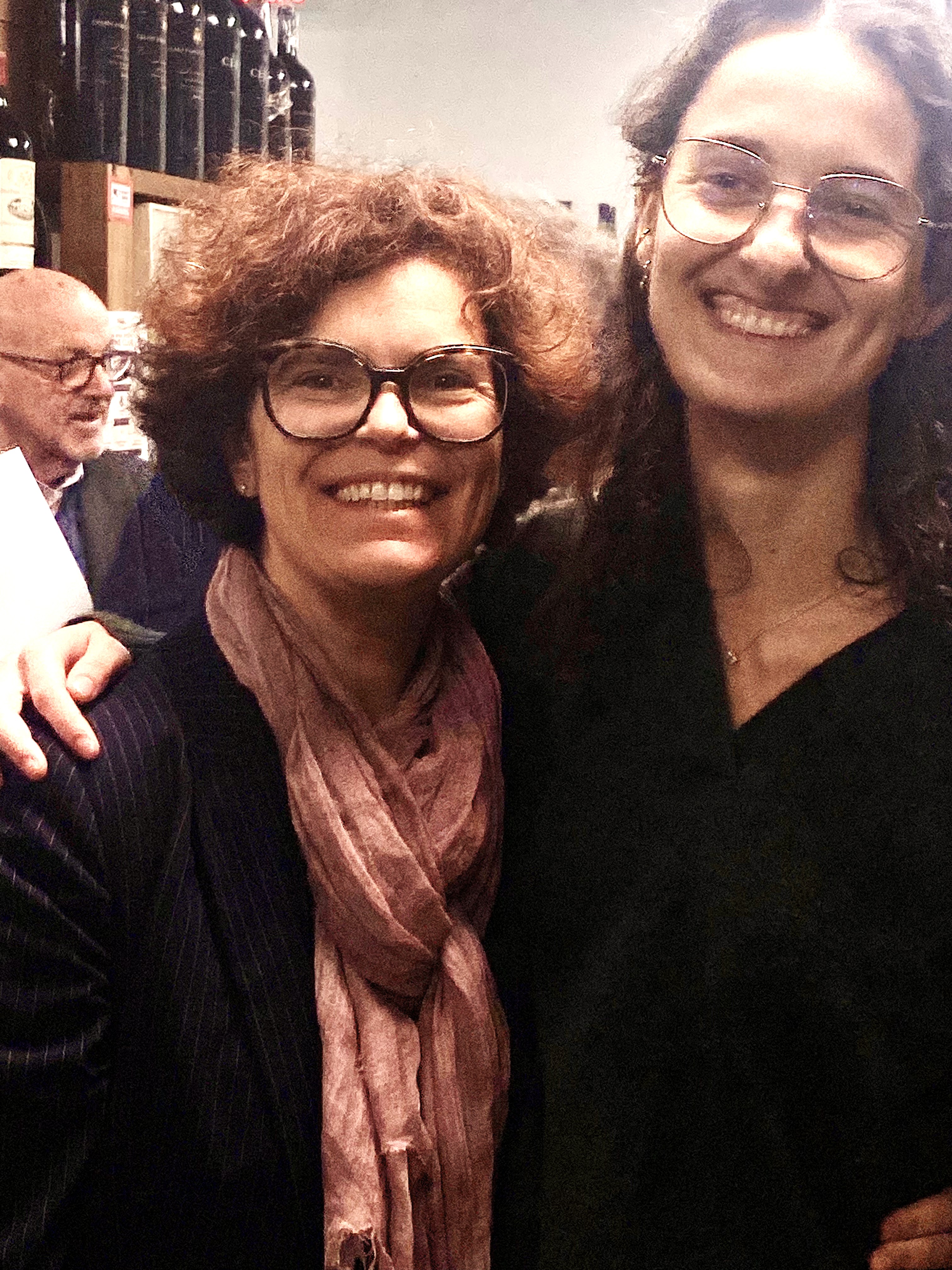
After three years Anne Charlotte has returned to The Fine Wine Source in Livonia, Michigan to host another tasting of her family’s wines Chateau de la Font, du Loup of Chateauneuf du Pape and the Rhone Valley. She also brought her daughter Mathilde who assisted in pouring the wines for the event.
Anne Charlotte Melia Bachas likes to claim that she was born under a foudre (a large wine cask). The Melia family acquired Chateau de la Font, du Loup (the fountain of the wolf) in 1942, is the name of a natural spring in the center of the estate, and legend held that wolves from Mount Ventoux would stop to drink from the spring. Today Anne Charlotte the granddaughter of the founder and her husband oversee the estate and the winemaking. The estate is within the commune of Courthezon and part of the legendary Chateauneuf-du-Pape, or the “the Pope’s new castle;” when Pope Clement V moved his papacy to Avignon in 1308. In 1936 Chateauneuf-du-Pape was the first AOC in the Rhone, as well as one of the first in France. A unique wine that can be made using up to thirteen grape varieties, though the main grape is Grenache, followed by Syrah, Mourvèdre, and Cinsault.
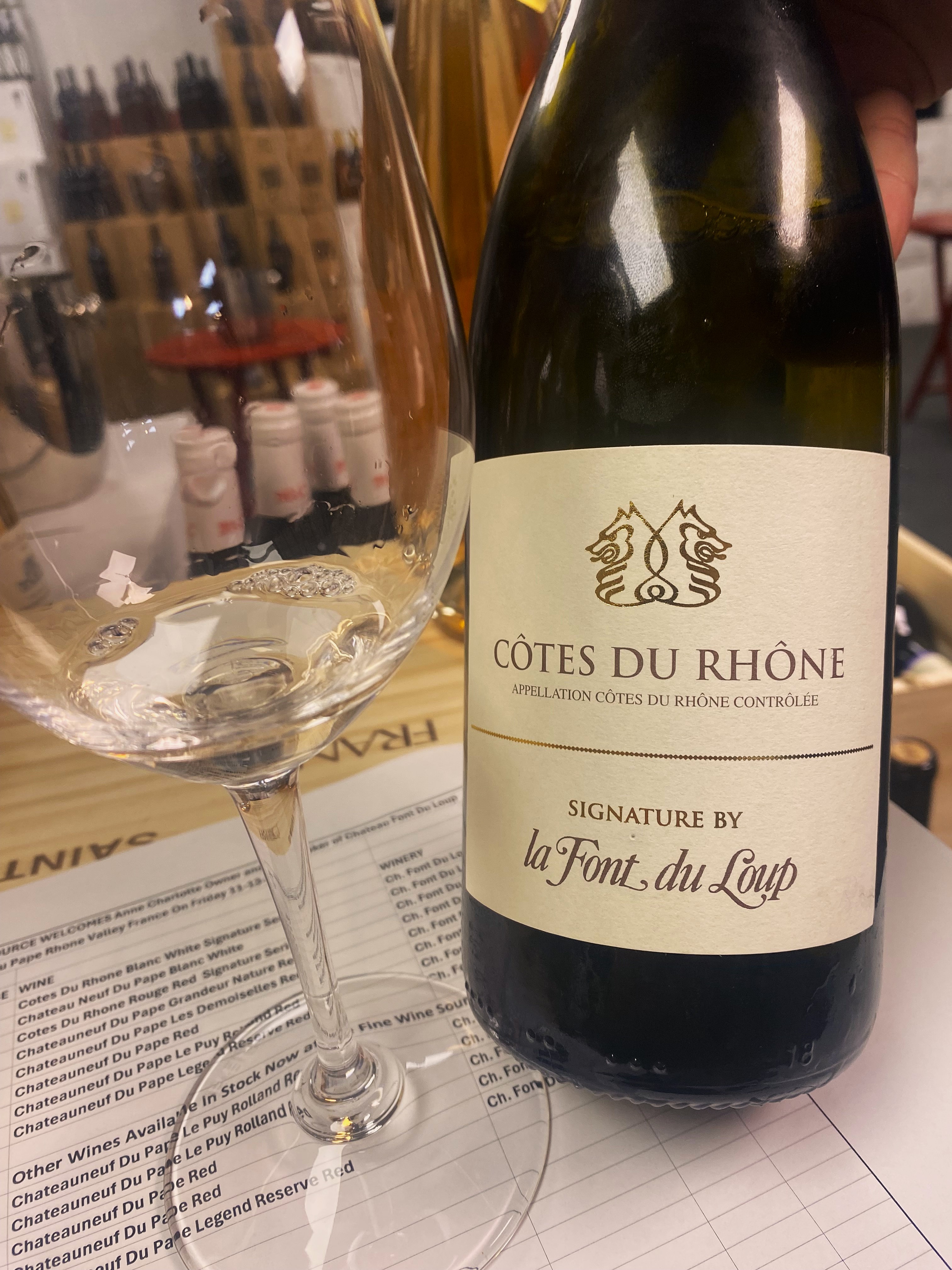
The first wine that we had was Chateau de la Font, du Loup Signature by la Font, du Loup Cotes du Rhone 2025. They offer two wines under the label “Signature by” as the properties are leased and not owned by the winery. Signature by la Font, du Loup Cotes du Rhone Blanc 2021 comes from a one-hectare parcel of forty-year-old vines on sandy soil. The vines are tended and nurtured per the Chateau’s requests of responsible farming, hand-harvesting and meticulous selection of the grapes. The wine is a mix of thirty-five percent Grenache Blanc, thirty-five percent Roussanne, fifteen percent Clairette and fifteen percent Bourboulenc. The fruit is fully destemmed, and grapes are vinified separately and blended just before bottling. The juice was aged in new French Oak for nine months. Malolactic Fermentation is prevented during aging. A very pale straw-yellow wine offering notes of white peach and pear, white flowers, and a touch of honey and spices. On the palate this medium-bodied, well-balanced wine displayed tones of ripe pear and peach, a little spice, and a little honey blending with some bright acidity and ending with a good medium-count finish of fruit, spice and minerality.
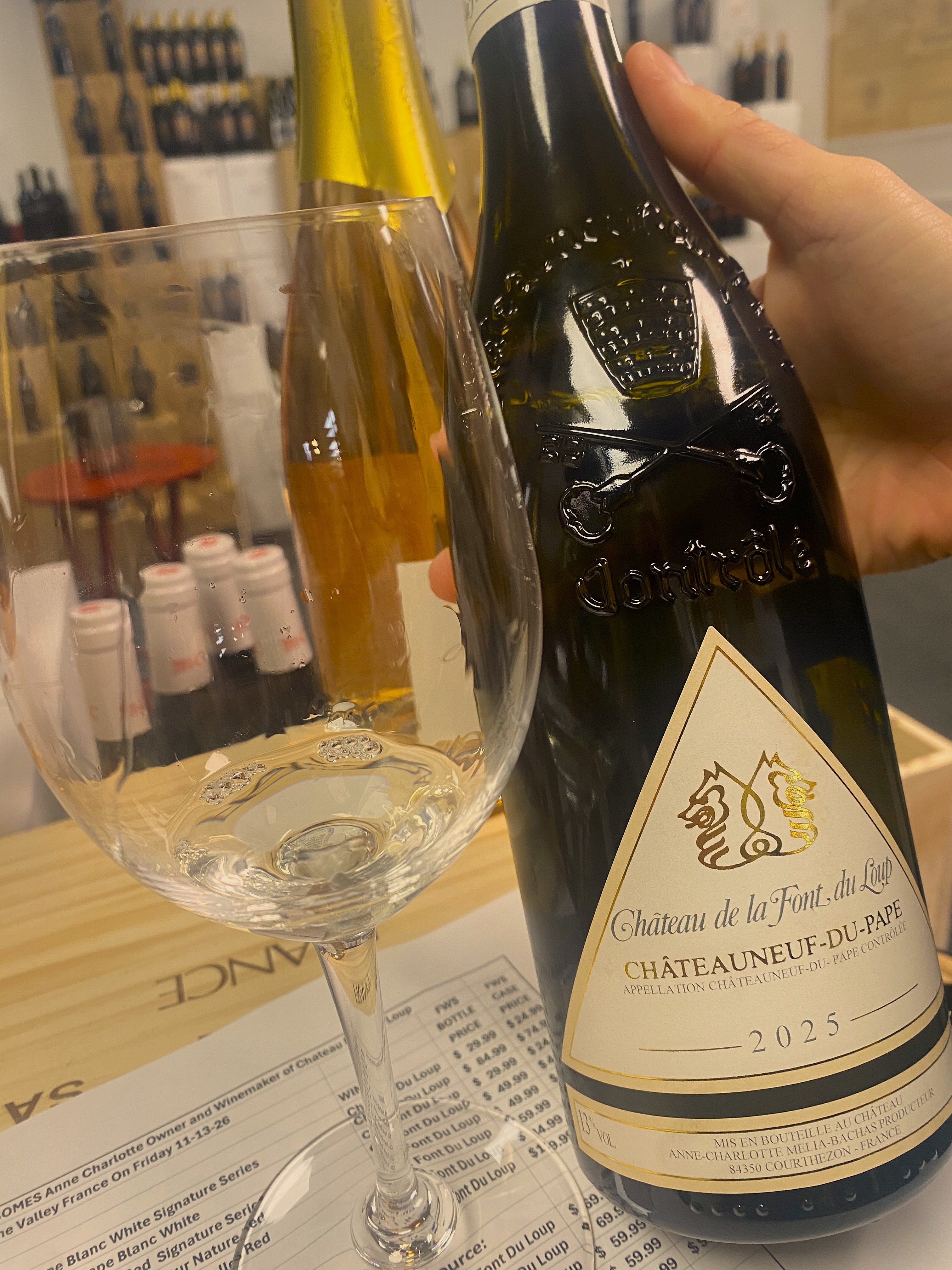
We then had our second white wine of the tasting Chateau de la Font, du Loup Chateauneuf-Du-Pape Blanc 2025, which is a bit rarer, at least to me. The estate is one of the highest points of the region. The estate is basically on sand, but because of the natural spring, the vines stay hydrated naturally and some of the vines on the estate are at least a hundred-years old. The white Chateauneuf-Du-Pape can be made using at least nine grapes: Grenache Blanc, Roussanne, Clairette, Bourboulenc and occasionally with Clairette Rosé, Grenache Gris, Picardin, Picpoul Blanc and Picpoul Gris. This wine is a blend of thirty-five percent Grenache Blanc, thirty-five percent Roussanne, fifteen percent Clairette and fifteen percent Bourboulenc. Hand-harvested, the grapes are vinified separately and blended just before bottling. Malolactic Fermentation is prevented. The wines are aged for nine months in a mix of forty percent new French Oak, forty percent used French Oak and twenty percent in concrete vats. A very light-straw-yellow wine that offers notes of white peach and apricot, white flowers, spices, honey and almonds. On the palate this medium-to-full bodied, well-balanced silky textured wine displayed tones of apricot, nectarine, citrus, followed by a rich brioche with toasted almonds blending with a dash of acidity and ending with a long-count finish of fruit, spices, almonds and rich minerality.


