It was a pleasant trip to go visit The Fine Wine Source in Livonia, Michigan and pick up the Wine Club selections that are curated by the owner and his staff. It is always a trip to look forward to, because one never knows what to expect. This time there were two white wines.
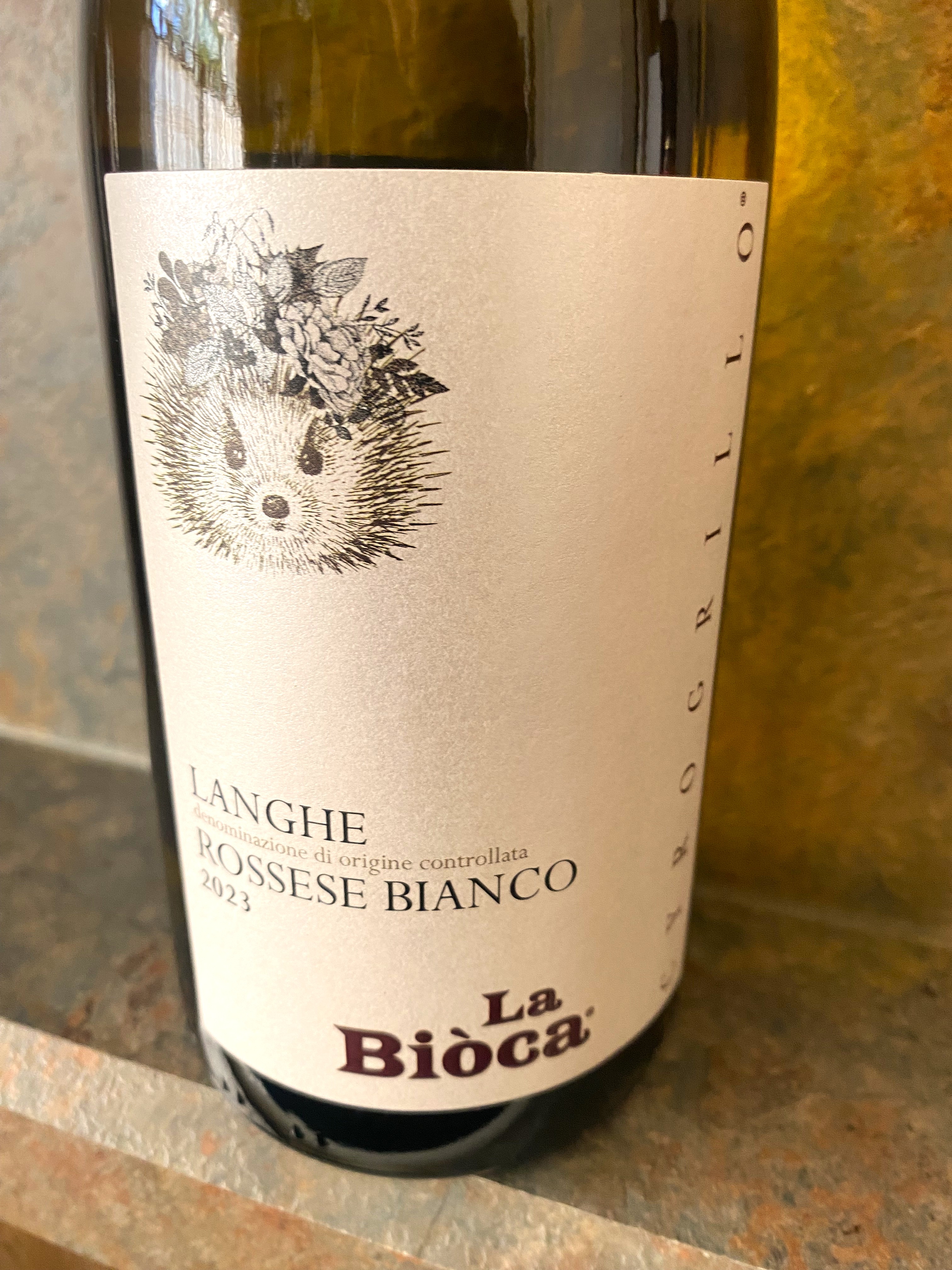
Representing the Old World was La Bioca “Cyrogrillo” Langhe Rossese Bianco 2023. La Bioca is a small winery in the Langhe near Serralunga d’Alba. The winery has eight hectares of vineyards located in Monforte d’Alba, Novello, La Morra and Barbaresco. The word “Bioca” is a Piedmontese local word to describe a decisive person with a “tough head.” Their first vintage was in 2012. Rossese is a mildly aromatic red grape variety found in Liguria, and along the Riviera in southern France to the Franco-Italian border. It is rather rare to be seen on its own, and is often blended with Sangiovese, though a few wineries are staunch supporters of this grape. There is a mutation of this grape known as Rossese Bianco, the most famous being Rossese di Dolceacqua. This wine is a blend of eighty-five percent Rossese Bianco and fifteen percent Manzoni Bianco. The fruit is manually harvested, destemmed, and softly pressed without maceration. The wine is fermented in temperature-controlled Stainless-Steel tanks, and the two juices are vinified separately on the lees for about five months, and then the two wines are blended about two months prior to bottling. This straw-yellow wine offered notes of lemon, chamomile, white florals, herbs, cut grass and minerals. On the palate this light-bodied wine displayed tones of lemon-lime citrus, white pepper, traces of vanilla, good acidity with an oily-like texture and ending with a medium-count finish citrus and terroir.
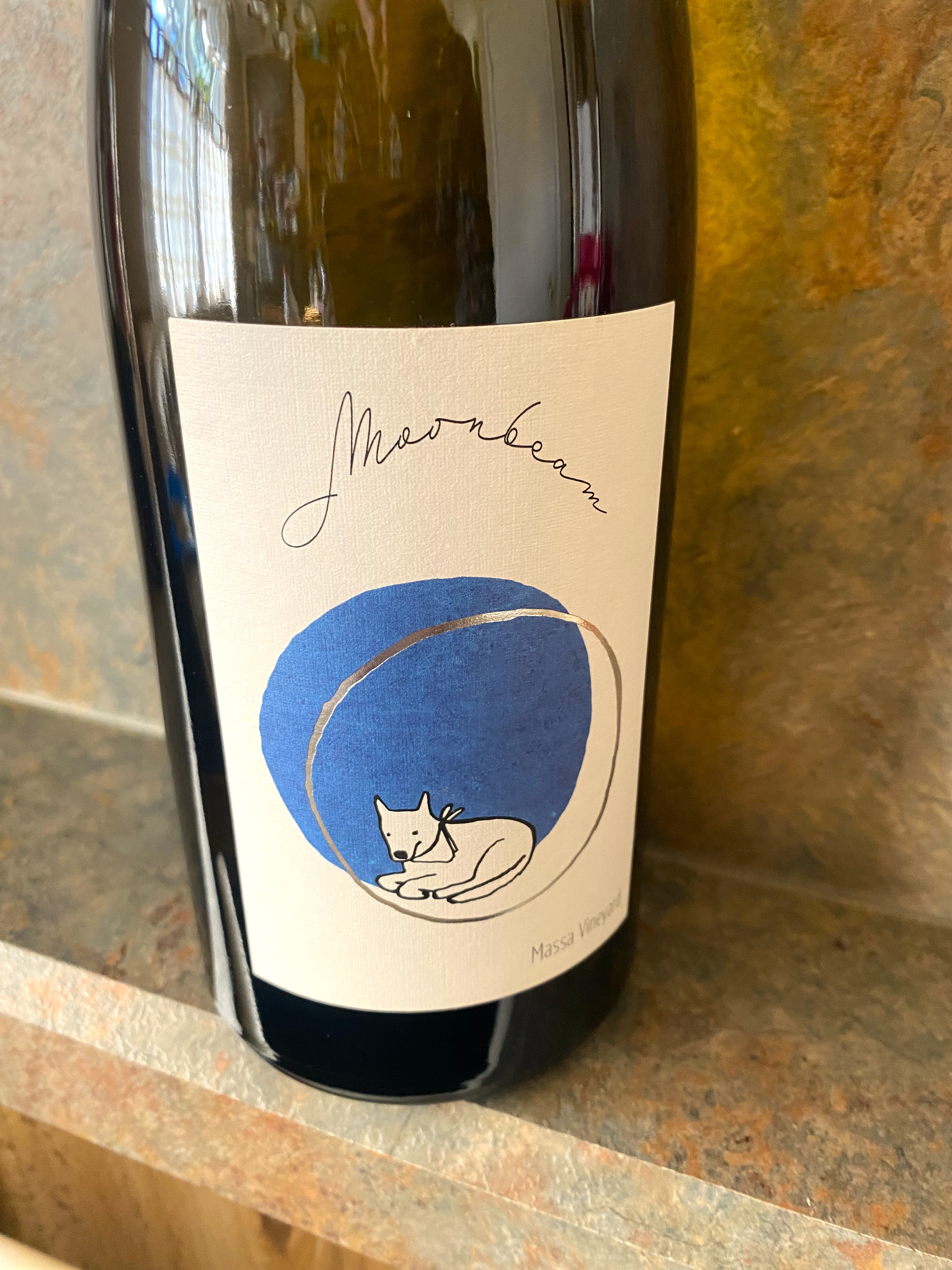
The club selection representing the New World is from an old friend of the shop Korbin Ming who began producing Moonbeam Chardonnay Massa Vineyard Carmel Valley 2023, which is produced by Moonridge Vineyard, the parent company and estate of Korbin Kameron Winery. Even the labeling is different and depicts a line drawing of Korbin’s dog Kiera. While the wines of Korbin Kameron are from the family estate on Mount Veeder, this is a completely new venture, using the Massa Vineyard in Carmel Valley, with an elevation of 1,500 feet and ten miles from the Pacific Ocean. Massa Vineyard was formerly Heller Estate and was a very early champion of dry farming and organic farming. The Chardonnay rootstock was planted in the 1970s of unknown Chardonnay clones. This wine was produced using an Oxidative Fermentation, with SO2 after fermentation to bring color back and to block Malolactic Fermentation. The wine was aged for eighteen months on gross lees in Neutral Oak and Stainless-Steel drums with no lees stirring and racked to tank for bottling. Oxidative Fermentation is like a controlled process found in Sherry or Vin Juane. This initial wine created seventy-five cases produced and The Fine Wine Source purchased the entire lot. This pale golden colored wine offered subtle notes of caramel and toasted almonds. On the palate this light-to-medium bodied, well-balanced wine displayed tones of muted green apples and melons, with astringency and ending with a medium-count finish of soft fruit and nuts. A very low-key and interesting Chardonnay.
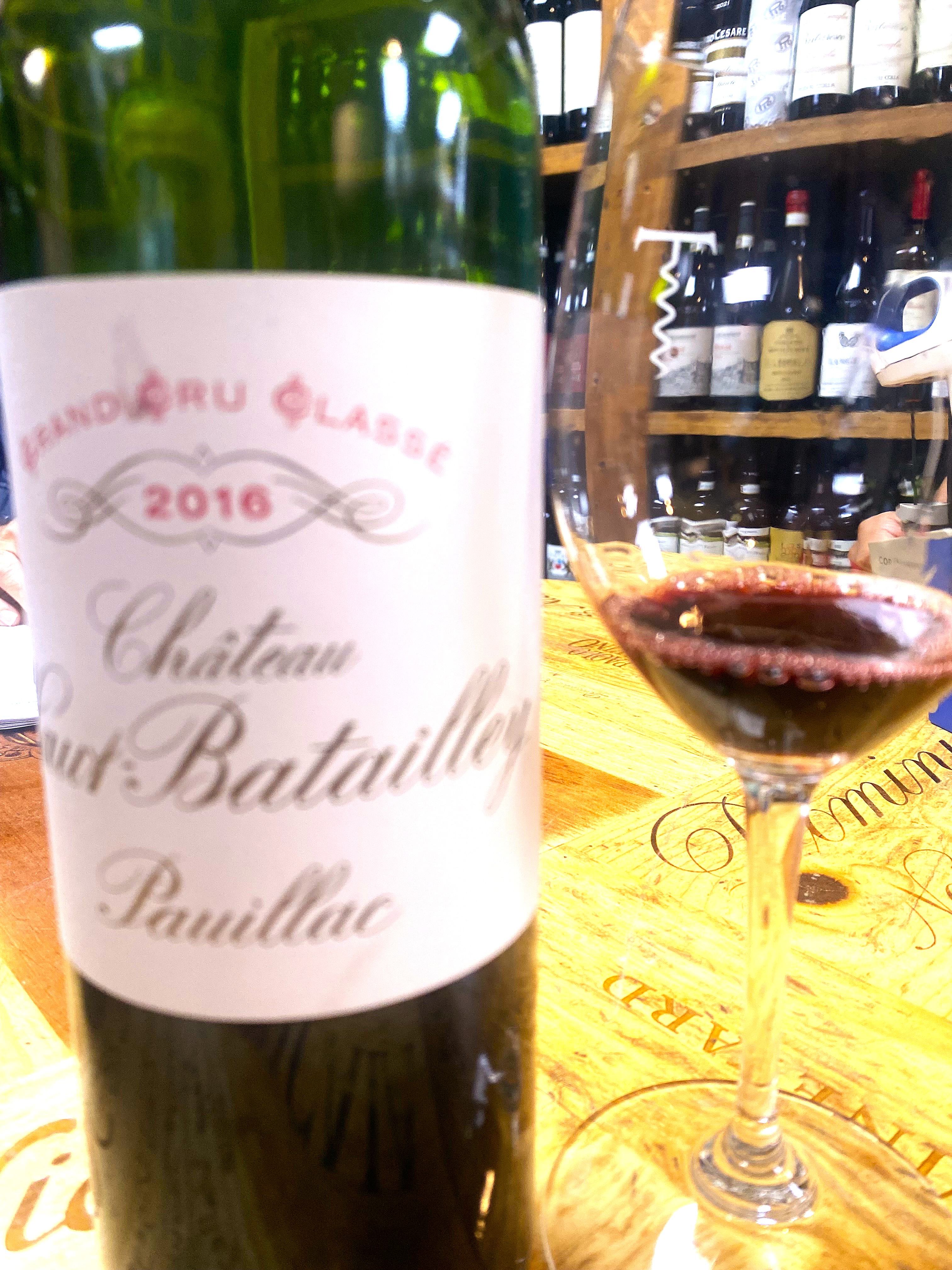
I will now mention the other wine that I tasted after I had picked up the September wine club selection. We gathered around a table and tasted Chateau Haut-Batailley Pauillac 2016. Chateau Haut-Batailley has the status of a Fifth Growth from the 1855 Classification of Bordeaux. It was once part of the larger Chateau Batailley, and it was bought in 1932 by the Borie brothers, who divided the property in two, for inheritance reasons. The smaller estate without a physical chateau was named Haut-Batailley and later added purchased plots from Chateau Duhart-Milon. The estate is now twenty-two hectares, and the Borie family also owns Chateau Ducru-Beaucaillou and Chateau Grand-Puy-Lacoste. In 2017 it was purchased by the Cazes family. According to my research this was a blend of seventy percent Cabernet Sauvignon, thirty percent Merlot with a small percentage of Cabernet Franc (about five percent) (sic). The wine began its fermentation process in thermoregulated Stainless-Steel vats and then aged for sixteen months in French Oak, of which sixty-five percent was new. A deep garnet colored wine that offered notes of black and red fruit, cedar and graphite. On the palate this full-bodied, well-balanced wine displayed tones of red cherry, currant, blueberry and cassis followed by cedar, graphite and crushed stones blending with firm tannins and ending with a nice long-count finish of fruit, a touch of tobacco and terroir; this wine is ready to drink or will still hold for more cellaring.


