I belong to a dinner club that began in the late 1800s, the date is questioned because it began and then reorganized in another year. In the early years, the members were the titans of industry and retail in the beginning of the glory years of Detroit, and the members names were on buildings and major streets. The club has, by charter, a membership of forty-four, as the members felt that a larger number would tax even the house staffs back then. Later, after the Great Depression, the meetings were then held at one of the residential hotels in the downtown area.
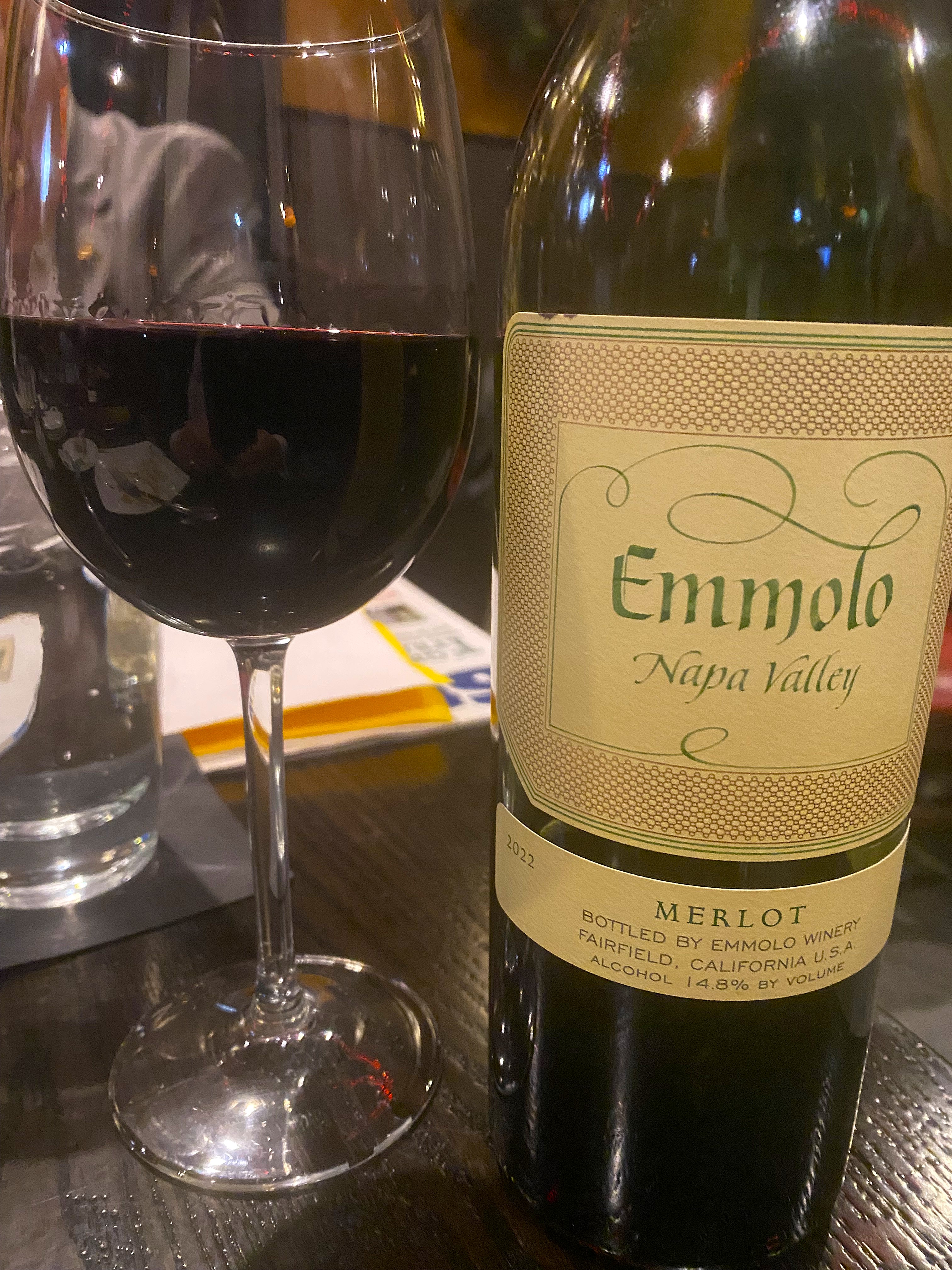
When I joined in 1989, we had three members as hosts, except for the Christmas meeting which required five, and I was part of the latter. Hosts not only picked up the dinners, but the drinks as well. Eventually some of the members complained about picking up drinks, because they did not drink, so now the members are on their own dime to imbibe. I have since found a partner and we buy a bottle, instead of the “well” selections. Depending on the quality of the venue, the wine selection can be rather slim for something interesting. The wine we shared was Emmolo Winery Merlot Napa Valley 2022 and came from the Wagner Family of Wine group. Emmolo Wines is managed and operated by Jenny Wagner, the daughter of Chuck and Cheryl Wagner and named after her Great-Grandfather who bought the property in 1923. Emmolo Wines was started by Cheryl Emmolo Wagner in 1994 and now by the daughter. The fruit is from the family vineyards and other vineyards in Napa Valley, especially the gravely soil of the Oak Knoll District. The wine is aged in oak. A nice deep garnet wine that offered notes of plums and dried cranberries, followed by a touch of smokiness and vanilla. On the palate the medium-bodied, well-balanced wine displayed tones of red fruit mixing with dry tannins and ending with a medium-count finish of fruit and terroir.

Sometimes at venues, the “well” drinks are the only wines available, and then the saving grace is that the “bottle” tends to be a bargain, compared to the “glass” price. What a surprise to find that this was not a generic California wine, that the menu listed it as Rodney Strong Pinot Noir California, when in fact it was Rodney Strong Estate Collection Pinot Noir Russian River Valley Sonoma County 2024. Rodney Strong is considered a pioneer of Sonoma wines with many regional firsts and was one of the earliest to plant Pinot Noir there. He was a professional dancer and founded the winery in 1959, initially buying bulk wine under the label Tiburon Vintners. In 1962 he bought a winery and vines and started with Windsor Vineyards, which eventually became Rodney Strong Vineyards. It has changed hands over the years but has been maintained and was the winery of the year by Wine Enthusiast magazine in 2013. The wine spent seven days in a Fermentation tank and then was aged for eight months in French Oak, of which thirty-five percent was new. The deep ruby-red colored wine offered notes of raspberry and cherry, with vanilla and baking spices. On the palate this medium-bodied, well-balanced wine displayed notes of raspberry and tart cherries blending with silky tannins and ending with a medium-count finish of tart cherries and dusty oak flavors.
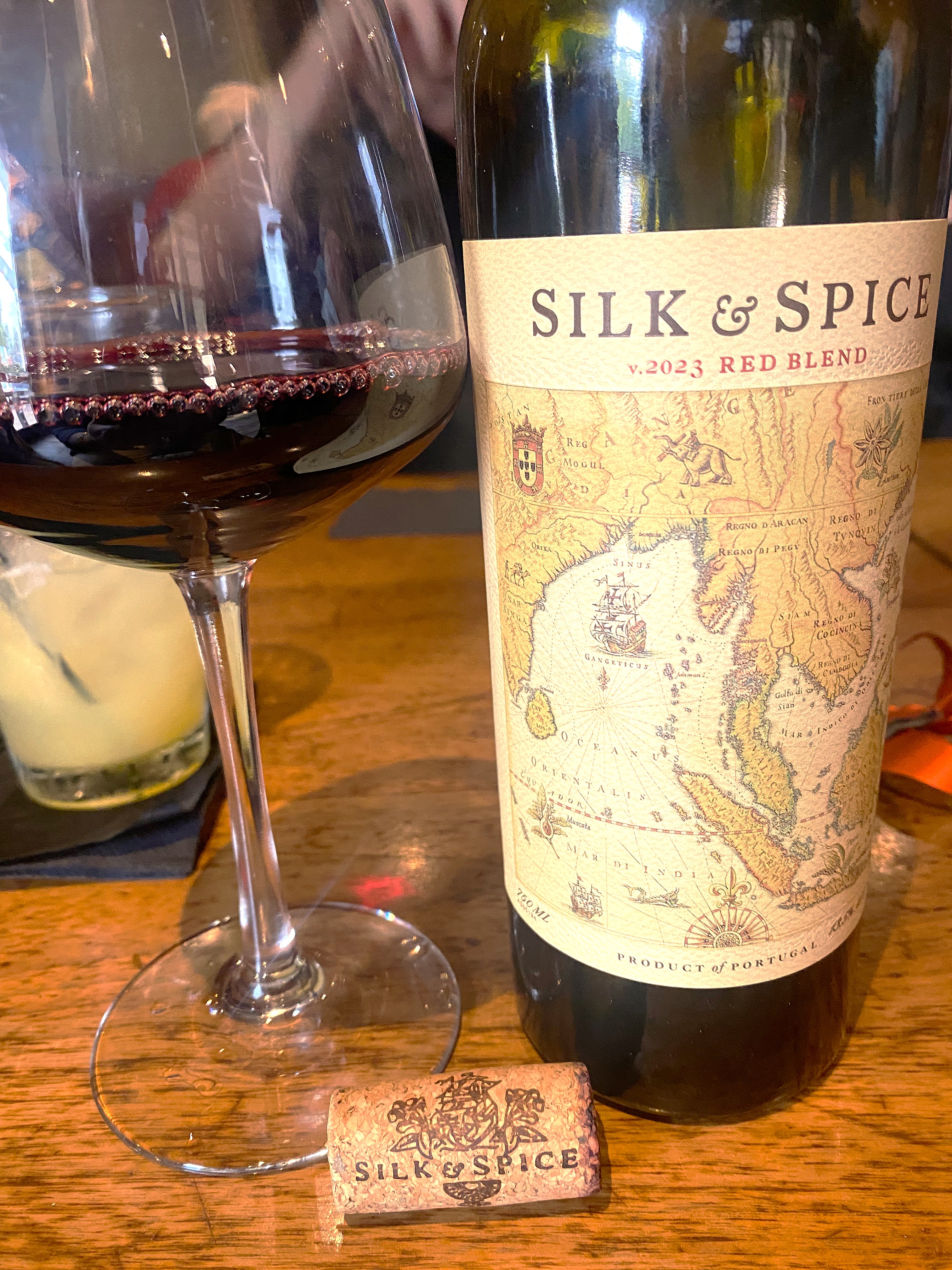
One never quit knows what to expect, especially at popular priced bar-food establishments. We tried a bottle of Silk & Spice Red Blend Portugal 2023 from Sogrape Vinhos, S.A. Avintas, Portugal. In 1942, Fernando van Zeller Guedes and fifteen friends co-found “Sociedade Comercial dos Vinhos de Mesa de Portugal,” now Sogrape and Mateus wine was born. In 1962, they built their first winery with the capacity of producing nine million liters. In 2010 the fourth generation of the Guedes Family began working at Sogrape. The wine is a blend of thirty percent Touriga Nacional, thirty percent Syrah, twenty-five percent Alicante Bouschet and fifteen percent Tinta Roriz. The grapes were harvested and vinified separately by variety. On arrival at the winery, the grapes were destemmed, and cooled for twenty-four hours, followed by Initial Fermentation for eight days, then almost simultaneously underwent Malolactic Fermentation. The different wines were kept separated and aged for about twelve months, before blending. A deep ruby red colored wine that offered notes of ripe, cooked black fruit followed by traces of vanilla and mocha. On the palate this medium-bodied, well-balanced wine displayed tones of rich fruit, blended with acidity and deep tannins, ending with a short-to-medium count finish of fruit, herbs and spices.


