It was quite a lively tasting event at The Fine Wine Source in Livonia, Michigan. I had got to the tasting early and was looking for a good place to put my hat, when I ran into The Wine Raconteur, Jr. and his Bride, so I began the tasting early and it worked out well.
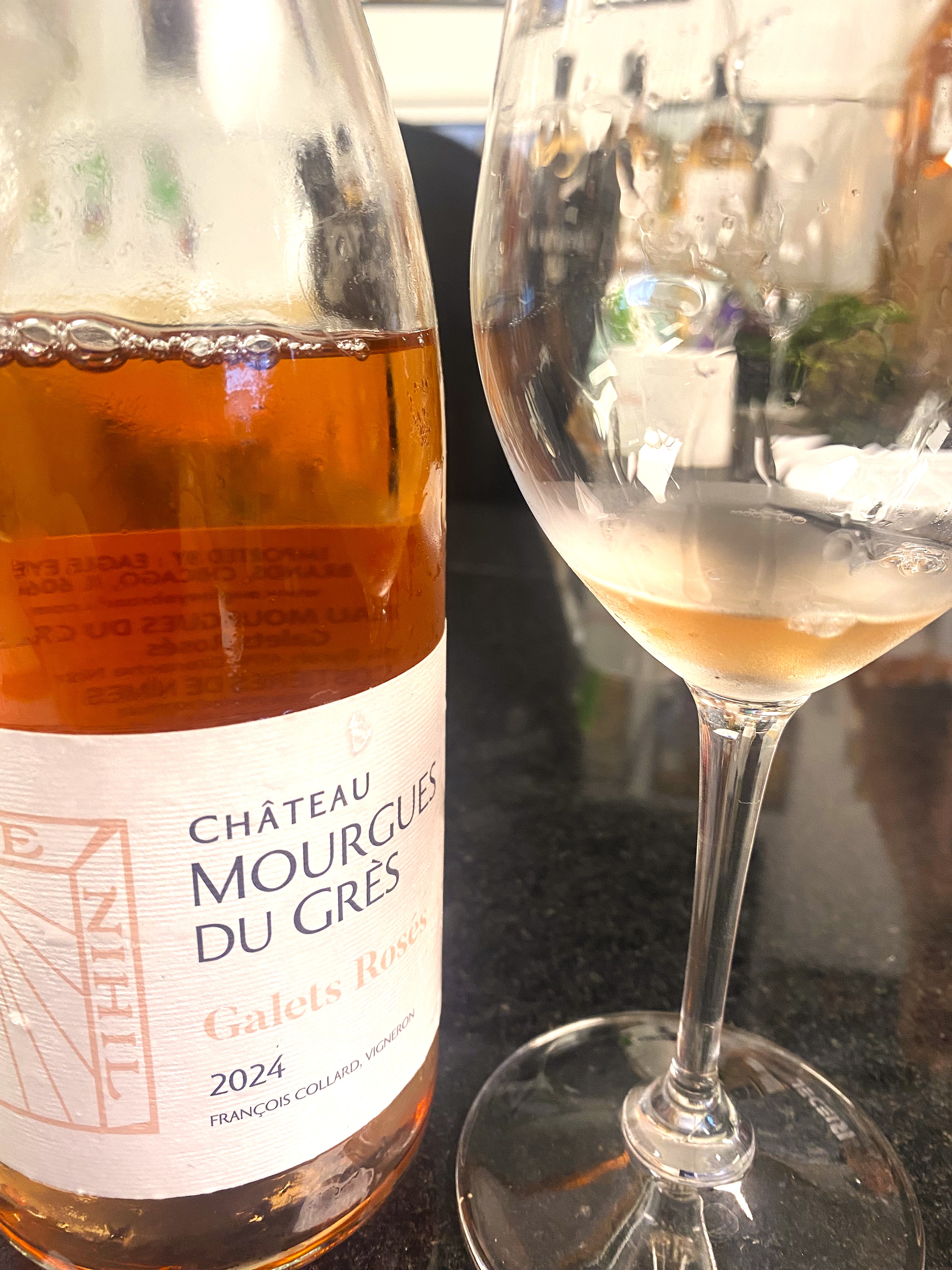
We were beginning with the Rosé wines, and we had Chateau Mourgues du Gres “Fleur d’Eglantine” Rosé Costieres de Nimes 2024. A former agricultural estate of the Ursulines de Beaucaire since the Sixteenth Century. “Mourgues” is the word for nuns in the Provencal dialect and “Gres” refers to the round rocks that is part of the defining part of the soil of the Costieres de Nimes. Francois Collard returned to his family estate in 1990, confident of the terroir and the newborn Costieres de Nimes AOP and his first bottling was 1993. The estate has forty hectares of vineyards. Costieres de Nimes is the southernmost region of the Rhone appellations, and the entire region is based on the round rocks. The wine is a blend of sixty percent Grenache Noir, thirty percent Mourvèdre and ten percent Syrah. After the crush, the varietals are blended prior to fermentation. The wine stays on the fine lees for a month and then is aged for two months in Stainless Steel, and there was no Malolactic Fermentation involved. This is a rose-petal colored wine offering notes of red fruit and florals. On the palate this light-bodied, well-balanced wine displayed tones of cherry, strawberry, and raspberry, ending with a short-to-medium count finish of fruit, subtle spices and terroir.
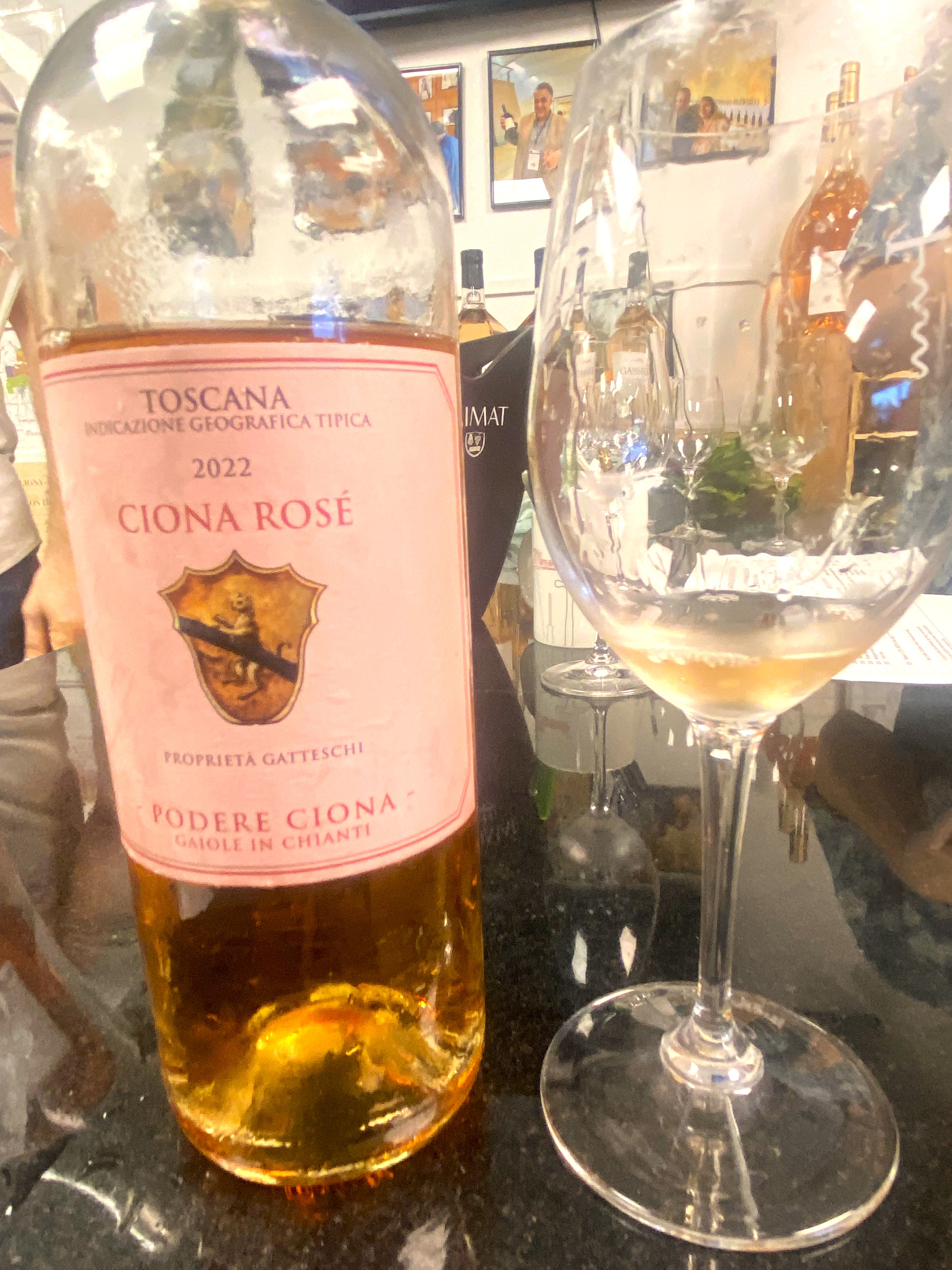
The next wine was Podere Ciona Rosé Toscana IGT 2022. Franca and Franco Gatteschi were looking for a place in the countryside to retire to, after many years of working in Italy and abroad, when they came across a small, beautiful, albeit run down property: 100 acres of land, mostly wooded with 10 acres set aside for cultivation, of which 2.5 acres already had vineyards; a house from the 18th Century, abandoned for more than 40 years; and, above all, a view without equal on the Chianti hills, with Siena in the distance. It really sounds idyllic and makes one ponder how this property was neglected and ignored for years. “They purchased the estate at the beginning of 1990, and they immediately started the reconstruction work on the main house (it took nearly three years). They also set up a small but well-equipped wine cellar for making wine. The Rosé was made entirely of Sangiovese in the saignée method. The vines are from six to nineteen years of age and planted on quartz, clay schist and marl. The fruit is manually harvested in small baskets and then de-stemming, berry by berry for a slight crush in Stainless Steel vats for ten to twelve hours of skin contact and no Malolactic Fermentation. The wine is then aged for about six months in Stainless Steel and then further fined and bottle-aged for six months before distribution. There were about one hundred-eighty cases produced of this wine. A pretty salmon-pink color wine that offered notes of red fruits and herbs and spices. This light-to-medium bodied, well-balanced wine displayed tones of raspberry, peach and lychee nut with herbal qualities and ended with a short-to-medium count finish of fruit, spices and terroir.
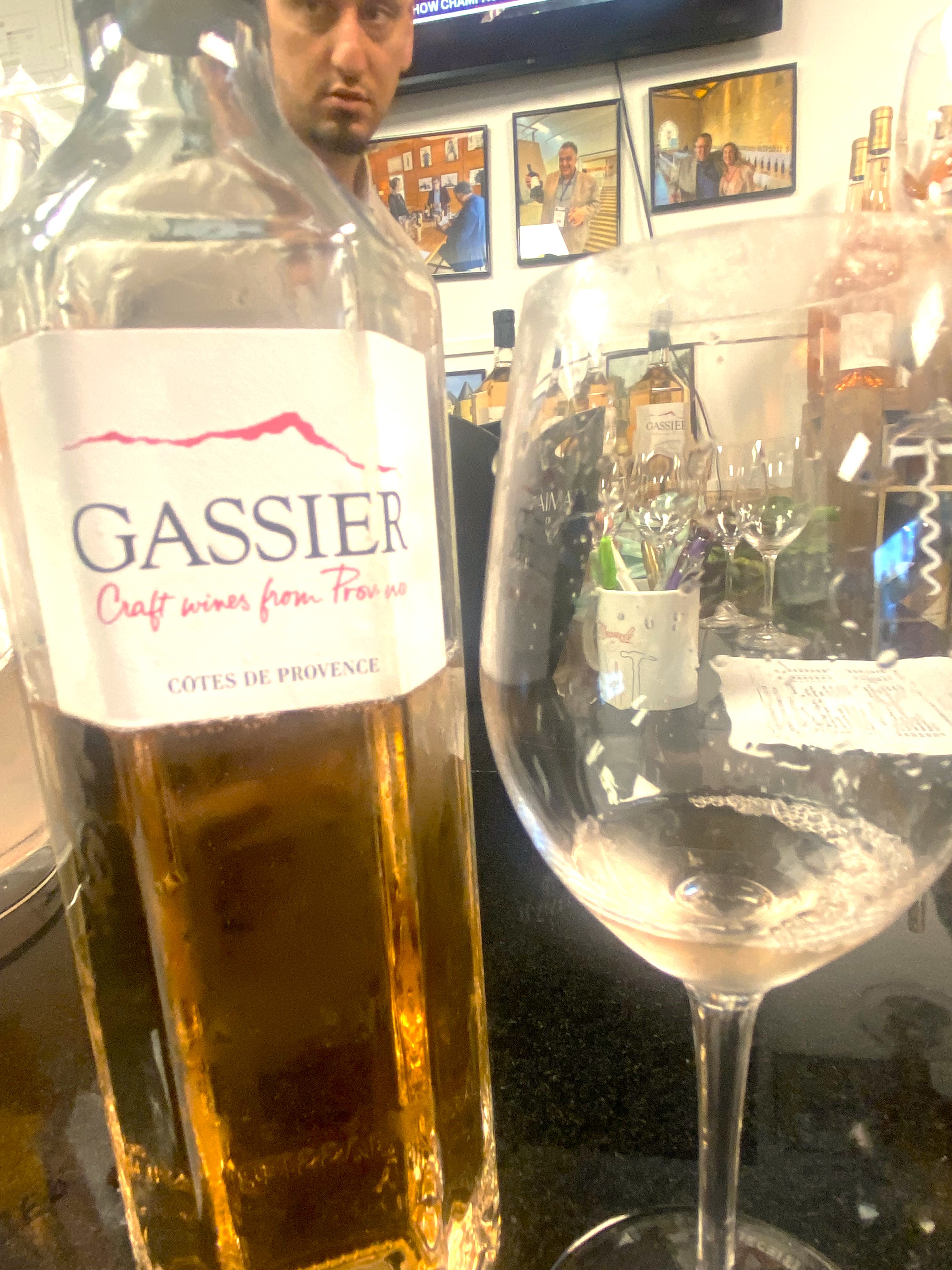
We followed with Chateau Gassier Rosé Cotes de Provence 2025. Georges Gassier represents six generations of winemakers in the Provence region. The estate sits at the foot of the Sainte-Victoire that has been immortalized in over eighty paintings by Paul Cezanne. In 1982, Antoni Gassier, the owner of an estate in the Var region, acquired the Gassier property in Puyloubier, along with its forty hectares of vines on red clay and limestone soil and using organic farming methods. The wine is a blend of Grenache, Cinsault, Syrah and Vermentino. The grapes are harvested at night, allowing the berries to be picked at a cool temperature and limiting the risk of oxidation. This is followed by direct, slow and gentle pressing, to reduce the excessive coloring of the juice. The juice is then kept at a low temperature to preserve the fresh aromas, before fermentation begins in Stainless Steel tanks and limited aging time to keep the wine youthful. A pale peach colored wine that offered notes of strawberries, currants and peaches. On the palate this light-to-medium bodied, well-balanced wine displayed tones of strawberry, cranberries and currants and ended with a medium-count finish of strawberries and cranberries.


