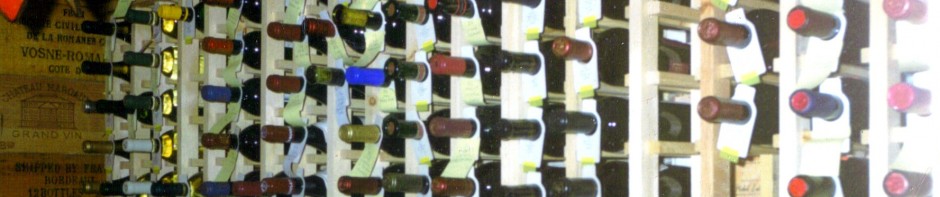
My Bride and I had a great time at this first wine tasting and I got back to the swing of things quite quickly, and that the wines at The Fine Wine Source in Livonia, Michigan were so agreeable, that I am glad that they had help to carry the cases to our car.
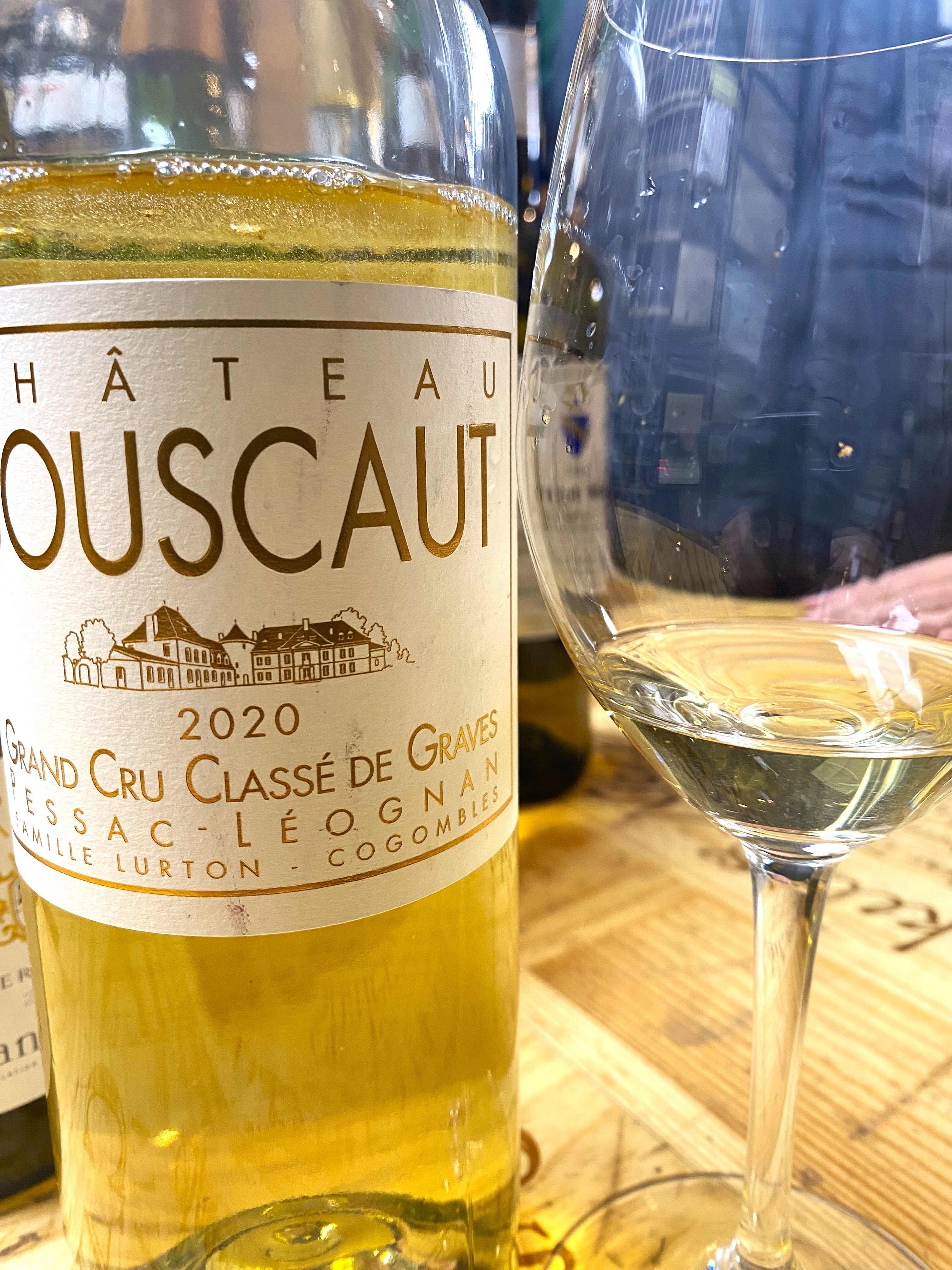
We also enjoyed Chateau Bouscaut Blanc Grand Cru Classé de Graves Pessac-Leognan 2020 from Famille Lurton- Cogombles. Chateau Bouscaut was classified as a Grand Cru Classé de Graves in 1959, for both its red and white wines. Originally known as Haut Truchon, but by 1881 it was known as Chateau Bouscaut. In 1979, it was purchased by Lucien Lurton, and since 1992 has been managed by Sophie Lurton. The soil is clay on a limestone base, and the vines average thirty-five years of age. This vintage is a blend of sixty-eight percent Sauvignon Blanc and thirty-two percent Semillon (of which there is a plot of hundred-year-old ungrafted vines). The wine is fermented and aged with batonage for ten months in French Oak, of which forty percent is new. This pale greenish-yellow colored wine offered notes of passionfruit and gooseberries. On the palate this medium-bodied, well-balanced wine displayed tones of exotic fruits and a creamy texture with good acidity that ends with a strong-medium count finish of fruit, flint and baking spices. We bought the balance and they even tossed in the tasting bottle.
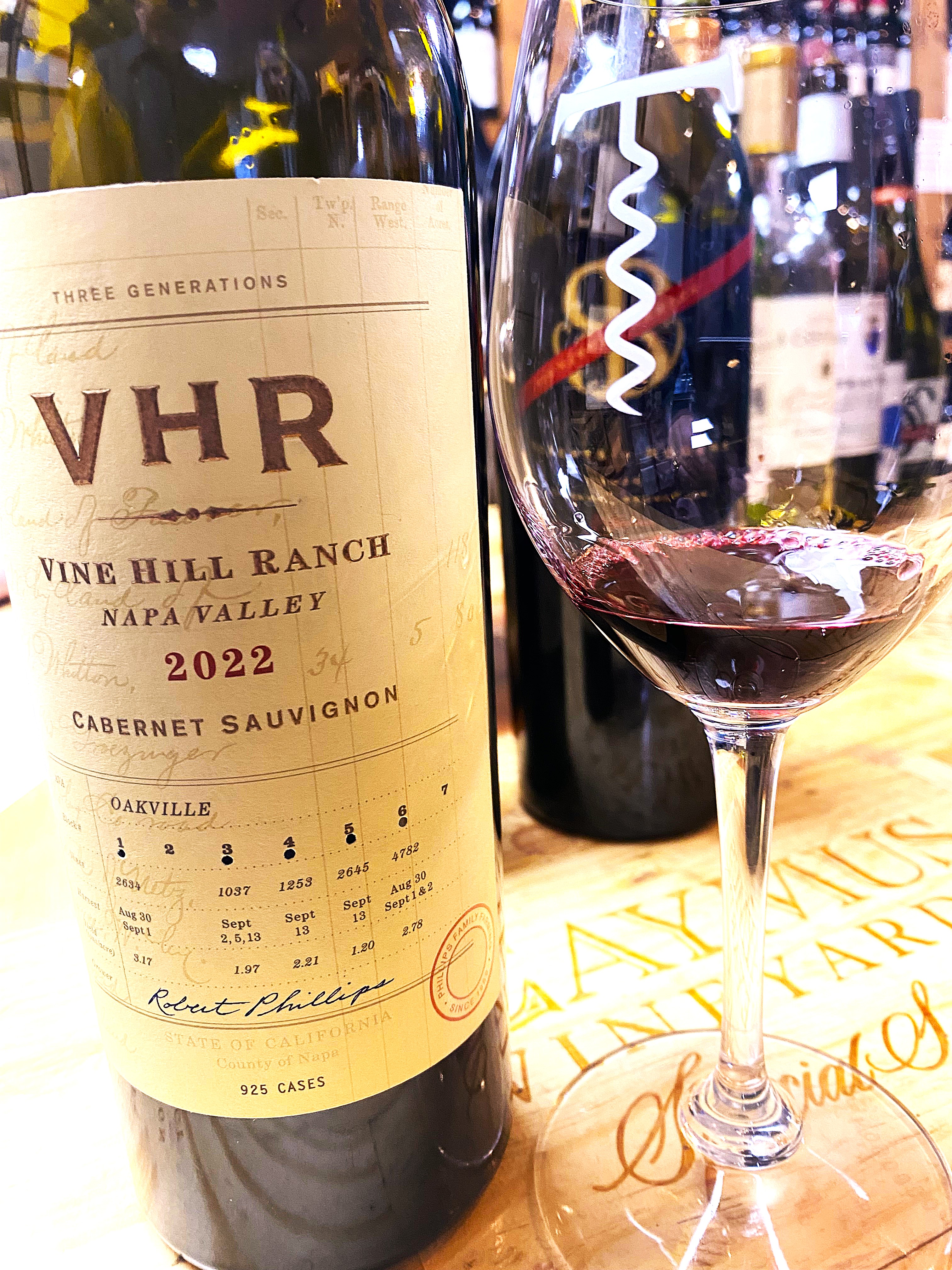
We then had a couple of reds starting with Vine Hill Ranch VHR Cabernet Sauvignon Oakville 2022, a family-owned farming estate from the last century. Alexandra and Robert Phillips in 1978 moved to the family ranch that their grandfather had purchased about twenty years earlier and named it Vine Hill Ranch. They not only farmed the land but also dedicated to land preservation and assorted community services, and the tradition continues with the third generation. The estate had been listed as a vineyard and with other crops since 1884. They still maintain the old ledger style of documenting the crops in their seven blocks. This wine made from twenty-five-year-old vines that began with three weeks of being on the skins for fermentation and post-fermentation using wild indigenous yeast. The juice was then aged for twenty months in French Oak, then bottled without fining or filtration. They produced eight barrels with careful allotments to special restaurants and hence not a lot to spread around after. A dark garnet color wine that offered lilacs and violets, followed by black cherries, raspberries and a trace of orange zest. On the palate this full-bodied, well-balanced wine displayed tones of dark fruits, black olives, and spices with great tannins ending with a long finish of fruit, oak, and terroir. Even fresh from a Coravin pour this wine promises to be wonderful fifteen to twenty-five years down the road, though I doubt there will be many bottles around that far in the future, the wine is that delicious even now.
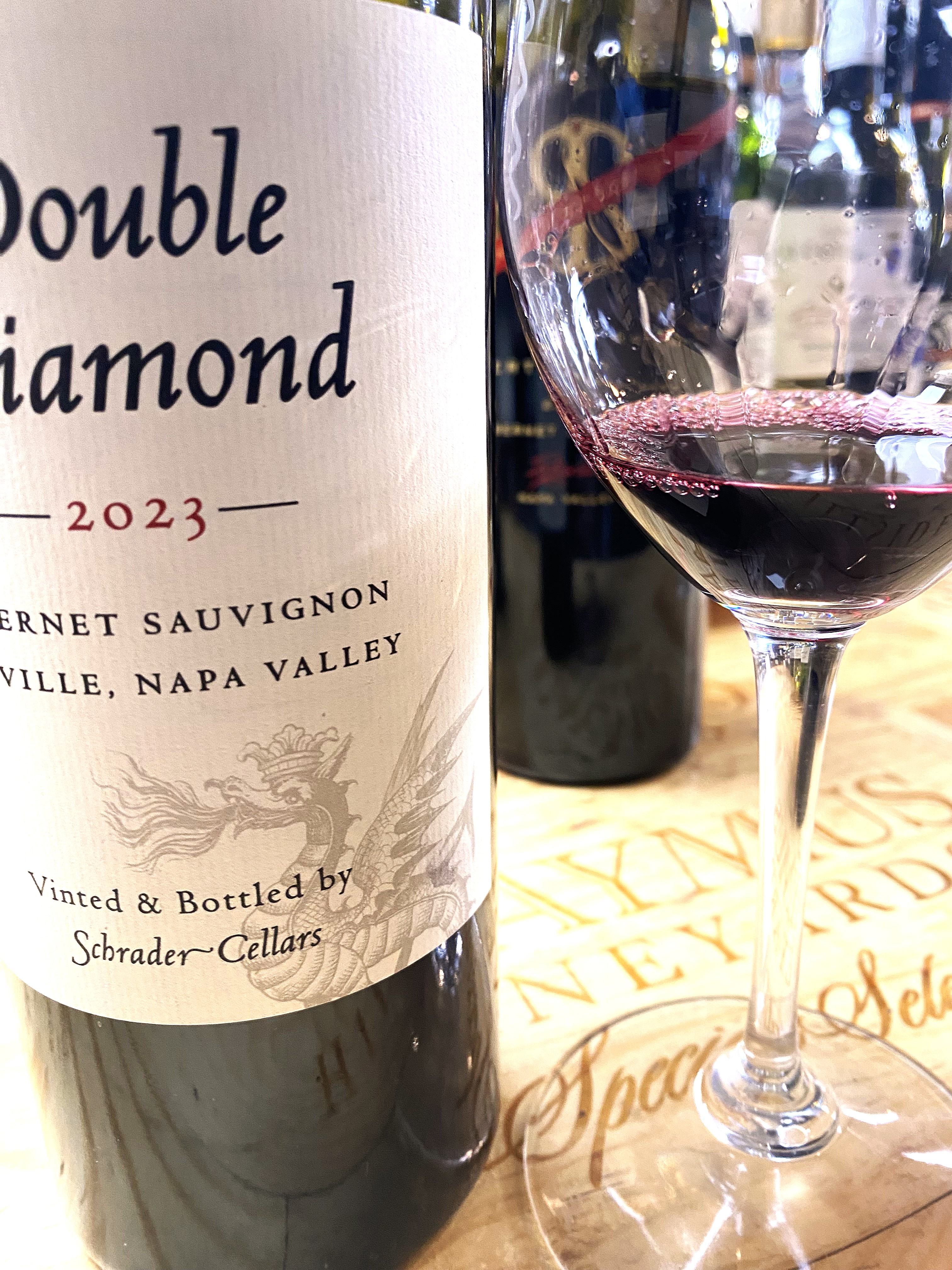
Then we finished the tasting with Schrader Cellars Double Diamond Cabernet Sauvignon Oakville 2023. Schrader Cellars is a “cult” Napa Valley winery founded by former antiques dealer Fred Schrader. Its focus is Cabernet Sauvignon from single parcels and single vineyards. He began in 1992 with Colgin Schrader Cellars with his then wife Ann Colgin, who went on to found Colgin Cellars. In 1998, he started his own label along with winemaker Thomas River Brown and grape grower W. Andrew Beckstoffer. They were the first winery to receive 100-point reviews from Robert Parker for four consecutive vintages for two of his labels “Schrader CCS” and “Old Sparky.” In 2017 Constellation Brands bought the winery for a reported $60 Million deal. As is common in Bordeaux, many of the leading chateaux have created a “second wine,” that tends to mirror the grand vin only with younger vines at a more modest price. “Double Diamond” follows this tradition sourcing younger aged fruit from To Kalon, which is Napa Valley’s most famous vineyard. All the wines are vinified the same as the flagship labels, but this wine only uses fifty-four percent new French Oak compared to all new. The Cabernet Sauvignon grapes sourced from the Beckstoffer To Kalon Vineyard and Beckstoffer George III Vineyard. This deep ruby-purple colored wine offered notes of dark fruits, roses, lavender, ivy along with bay leaf, menthol, and vanilla bean. On the palate this full-bodied, well-balanced wine displayed tones of black cherry, dark plums, cassis, blackberry along with black tea, nutmeg, dark chocolate and toasted cedar blending with silky textured tannins and ending with a long-count finish of cassis, flint, and lavender. I guess, I was a good boy, as my Bride wanted a bottle of this as a St. Valentine’s Day gift.

 The Wine Raconteur
A wonderfully detailed account of the tasting—it really conveys both the pleasure of the wines and the joy of sharing the experience. Thank you for taking us along.
Livora,
Thank you very much and I really like these special unscripted, spur of the moment tastings, where there is a one on one experience.
– John