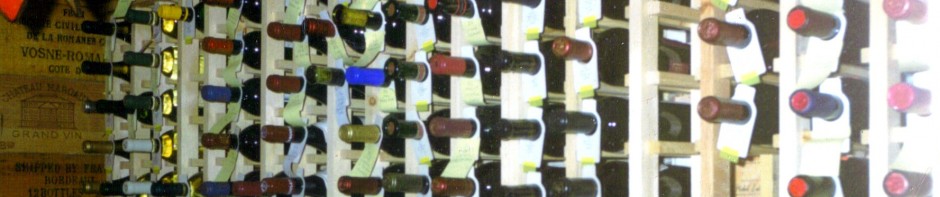
While we were officially done with the scheduled tastings at The Fine Wine Source, my Bride asked about some Sauternes wines, as the holidays will soon be upon us, and she has some ideas. And naturally this region is famous for the development of Botrytis Cinerea, or “Noble Rot” which is central to Sauternes and Barsac.
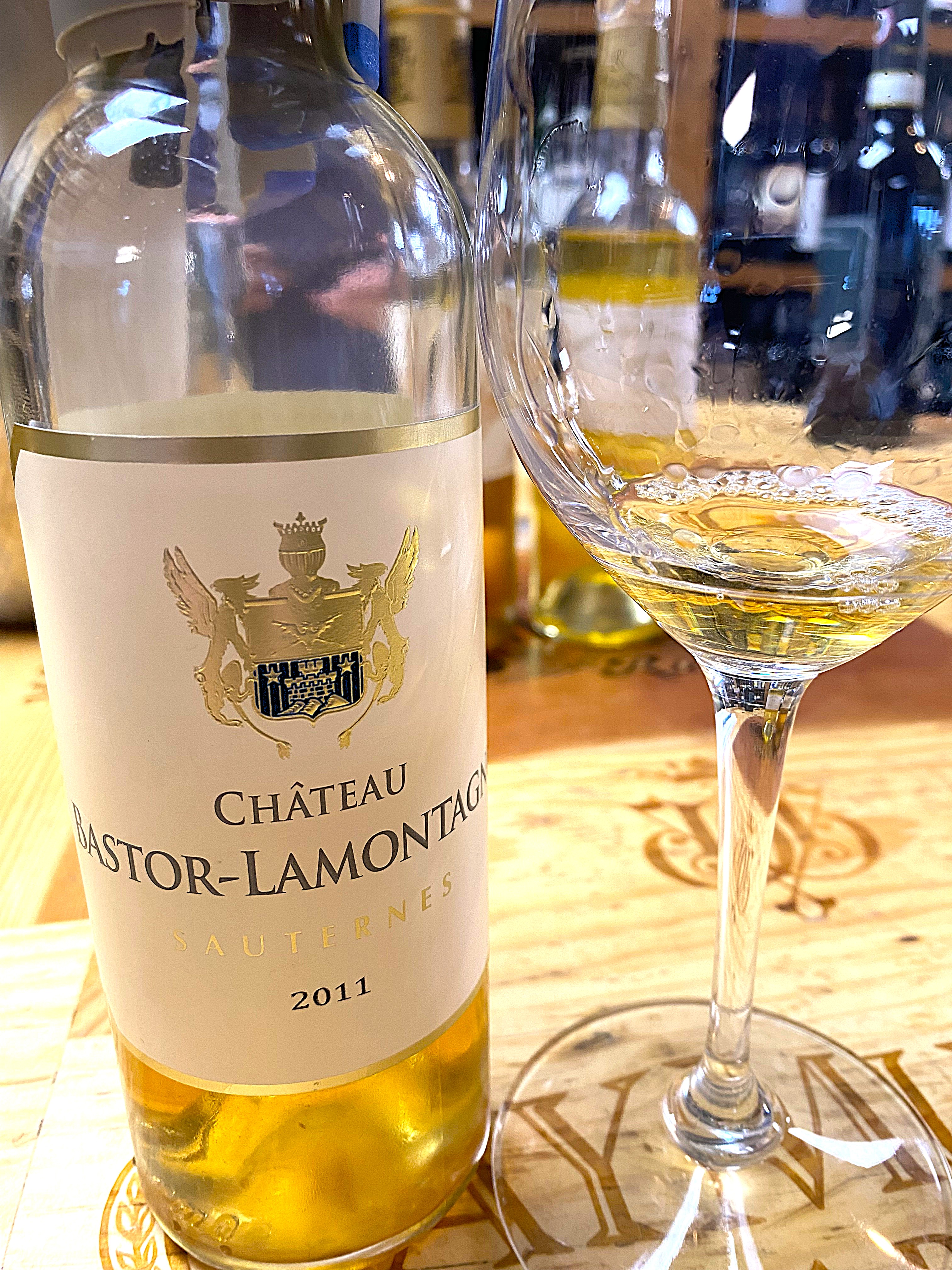
The staff had no problem in getting us some fresh glasses and selected three bottles from one of the three wine refrigerators in the shop. The first wine that they poured was Chateau Bastor-Lamontagne Sauternes 2011. Chateau Bastor-Lamontagne is in the commune of Preignac in the Sauternes region of Bordeaux. The estate is fifty-three hectares of vineyards. The estate goes back to the Middle Ages, when the Domaine de Bastor, was owned by the French crown. In 1711, it was sod to the LaMontaigne family and eventually it became Lamontagne. Over the years the estate has changed hands and is now part of the Grands Chais de France (a wine group) based in Alsace. The estate converted to organic viticulture in 2016. The soil is sandy-gravelly of clay and limestone. The wine is predominately Semillon with Sauvignon Blanc and Sauvignon Gris. The fruit is hand-harvested, sorted by plot, with Initial Fermentation done in Stainless-Steel vats, and then is aged in French Oak (about thirty percent new) for about eighteen months. A deep yellow colored wine that offered notes of peaches, mango, lychee, honey, cardamom, with a whiff of mushrooms and almonds. On the palate this medium-bodied, well-balanced wine displayed tones of tropical fruits, honey, marzipan with an ending of a medium-count finish of fruit, honey, spices and minerality.

We then had Chateau Coutet Barsac 2020 which is a First Grand Cru Classé of 1855 of Sauternes and Barsac. Chateau Coutet is one of the oldest producers in Sauternes and they are known for having the longest cellar in the region. The word “coutet” is a Gascon term for “knife” and suggests the wine’s crisp acidity. The chateau is an English fortress that was built in the 13th Century. In 1787, Thomas Jefferson proclaimed that it was the best Sauternes from Barsac. During the French Revolution, the estate was seized by the state, and the owner was beheaded. It has changed hands many times over the years and is now owned by the Baly family since 1977. The wine is a blend of ninety-five percent Semillon, four percent Sauvignon Blanc and one percent Muscadelle; planted on clay and limestone soils. The fruit is hand-harvested over a forty-day period to ensure the grapes are at their maximum desirability. The wine is aged for eighteen months in French Oak of which at least seventy percent is new. A deep golden colored wine that offered notes of tropical fruits, white florals, spices and honey. On the palate this full-bodied, bell balanced wine displayed tones of peach, mango and apricots and spices, that ended with a long-count finish of fruit, vanilla and honey.
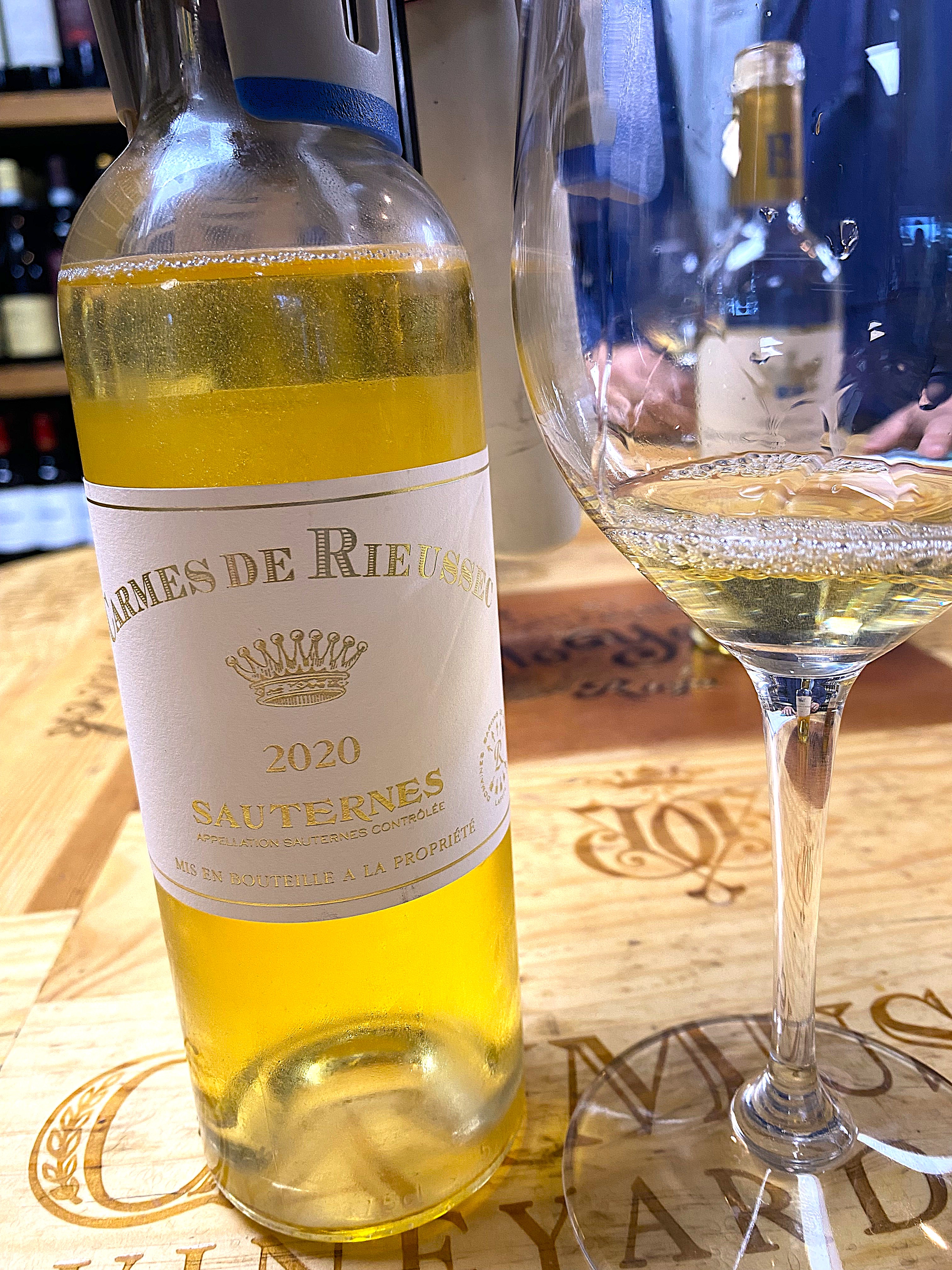
The last dessert wine that we tried was Chateau Rieussec “Les Carmes de Rieussec” Sauternes 2020; Chateau Rieussec is a first growth in the 1855 Classification of Sauternes and Barsac, but Les Carmes de Rieussec is their second label. In the 18th Century, the estate was tended to by Carmelite monks, before being confiscated during the French Revolution; since then it has changed ownership many times and is now owned by Barons de Rothschild, in partnership with Albert Frere of LVMH. The estate is ninety-three hectares of gravel, sand, clay and limestone soil, and is adjacent to Chateau d’Yquem and Chateau de Fargues, with vines that average twenty-five years of age. This wine is a blend of eighty-two percent Semillon, sixteen percent Sauvignon Blanc and two percent Muscadelle. The fruit is hand-harvested and lasts for almost eight weeks to get the grapes at the peak of desirability. After Initial Fermentation in French Oak, the best juice is selected for the grand vin, and the balance goes to Les Carmes de Rieussec, and that wine is aged for eighteen months in a mix of new and used French Oak, the used coming from Chateau Lafite Rothschild. The pale gold-yellow colored wine offered notes of peach, rhubarb, apricots and white florals. On the palate this medium-bodied, well-balanced wine displayed tones of fresh, rich tropical fruit, with some light tones of lemon and ending with a long-count finish of fruit, with buttery accents and smoothness.

 The Wine Raconteur
It’s been a while since I’ve tasted golden Bordeaux. Thanks for the reminder that I need to change that!
Lauren, I understand, and I am enjoying them more and more each year.
– John
👏Every wine has a different flair!🥂
Absolutely, and from vintage to vintage, the joy of wines.
– John
Happy holidays!