We were coming up to the end of the Bordeaux Wine Tasting at The Fine Wine Source in Livonia, Michigan, as I looked at the printout furnished for the tasting. As I always count the wine selections to figure out how I will write my blog for these events.

The last wine on the printed list was for Chateau Gruaud Larose Saint-Julien 2022 and is a Second Growth from the 1855 Classification. Saint-Julian commune has no First Growth wines but has eleven classed growths and is located between Pauillac and Margaux. Chateau Gruaud Larose was formed from three merged estates in1757 by Joseph Gruaud, who left the property to a Monsieur de Larose in 1771. From 1865, the property was split into separate estates, as a result of inheritance, but reunited in 1935. It was bought by the current owners, the Merlaut family, in 1997; and their Groupe Taillan owns numerous other Bordeaux properties. The estate is eighty-two hectares and the vines are planted on a soil that is a mix of gravel, pebbles, sand, clay and humus over a subsoil of assorted clays, sand and pebbles; and the vines average forty-six years of age. The estate is 100% managed according to the principles of Organic and Biodynamic Agriculture; they even maintain a herd of three-hundred sheep to keep the grass under control in the winter, as well as a source of compost. The fruit is hand harvested and undergoes a double selection process while still in the field and the tanks are initially by plot and varietal, of which fifty percent is oak, and fifty percent is concrete for Initial Fermentation and maceration; the wine is then aged for eighteen months in French Oak. The wine is a blend of eighty-three percent Cabernet Sauvignon, fourteen percent Merlot and three percent Cabernet Franc. The black-purple colored wine offered notes of cassis, black fruits, licorice and cedar. On the palate this full-bodied wine displayed tones of cassis, black cherry and other dark fruits, well balanced and featuring tight tannins and a long-count finish of fruit and graphite (terroir). This wine probably needs ten to twenty years in the cellar to truly open.
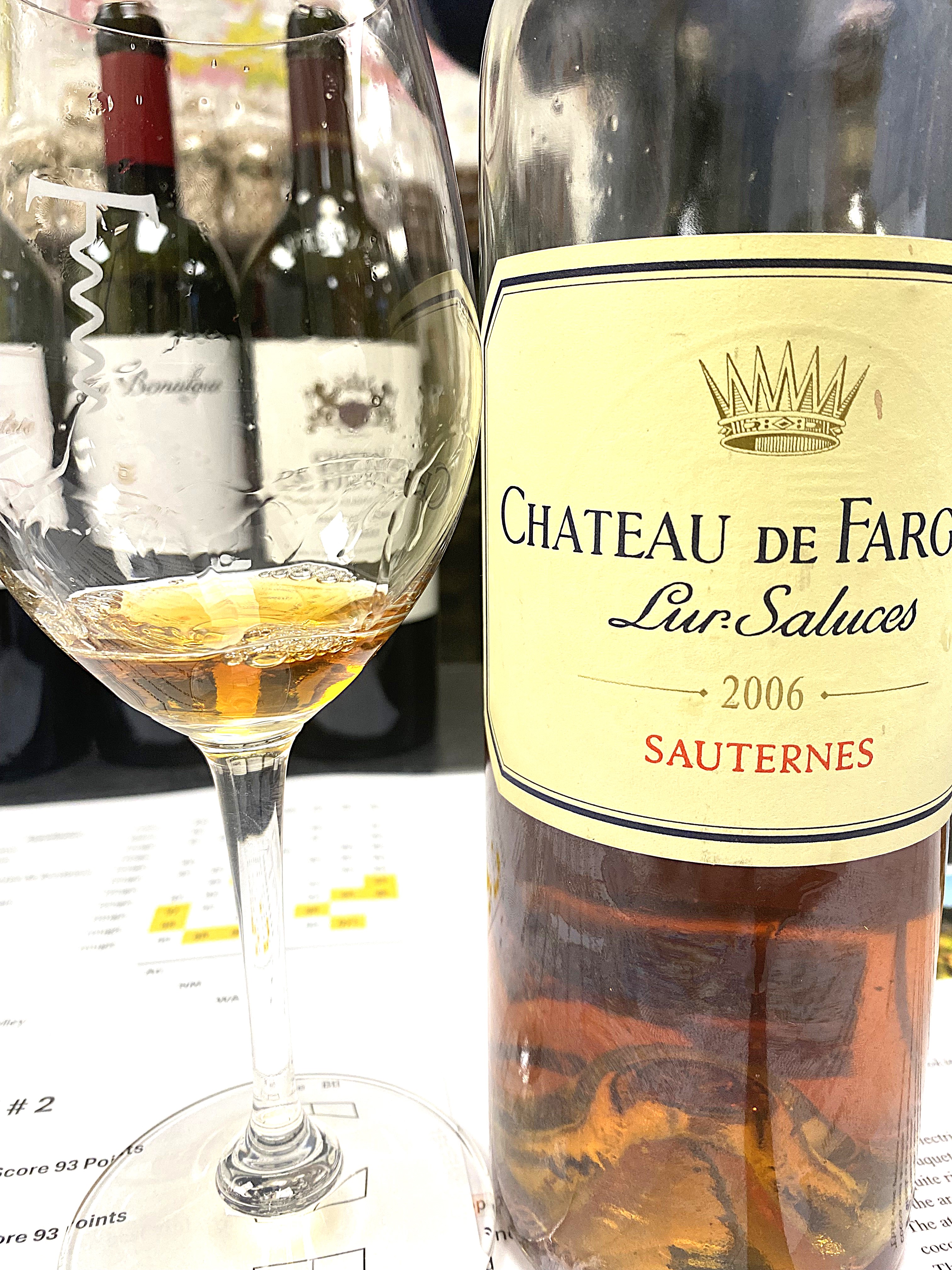
While there were ten wines on the printed sheet featured in the tasting, there was an eleventh wine that was served and the was Chateau de Fargues Sauternes 2006 from Chateau d’Yquem and I heard it referred to as “d’Yquem Jr.” Chateau de Fargues has been with the Lur Saluces since 1472 and today they only produce one wine, a classic interpretation of Semillon and Sauvignon Blanc from its vineyards around the village of Fargues at the center of the appellation. Originally, they produced both red and white wines at the twenty-five-hectare estate, but in 1928, they replanted for only white on clay-gravel soils over a layer of clay and hardpan soil. The first vintage was produced in 1943 and released in 1964. The fruit is hand-harvested and sorted to separate the “noble rot” from the “gray rot” and each day’s selection is pressed and fermented in oak barrels, with about thirty percent new). Racking takes place four times a year and the wine is tasted to see if they have a vintage year, and if so, the wine continues aging in oak for thirty months, with an additional six in the bottle. There were no vintages for 1972, 1974, 1992, and 2012. While Chateau d’Yquem was the only and still only Grand Premiere Cru, Chateau de Fargues was absent from the 1855 classification for Sauternes and Barsac, since they only started producing in 1943. While the Lur Saluces family had the chateau for three-hundred-years before they bought Chateau d’Yquem, and then recently sold it in 1999, the two estates were always under the same strict quality standards hence the “d’Yquem Jr.” This beautiful amber colored wine offered notes of sweet tropical fruits, florals, jasmine, saffron, and some “sous-bois.” On the palate a full-bodied wine with layers of candied fruits, quince, figs, saffron, and honey, beautiful acidity and a nice long finish caramel and terroir.
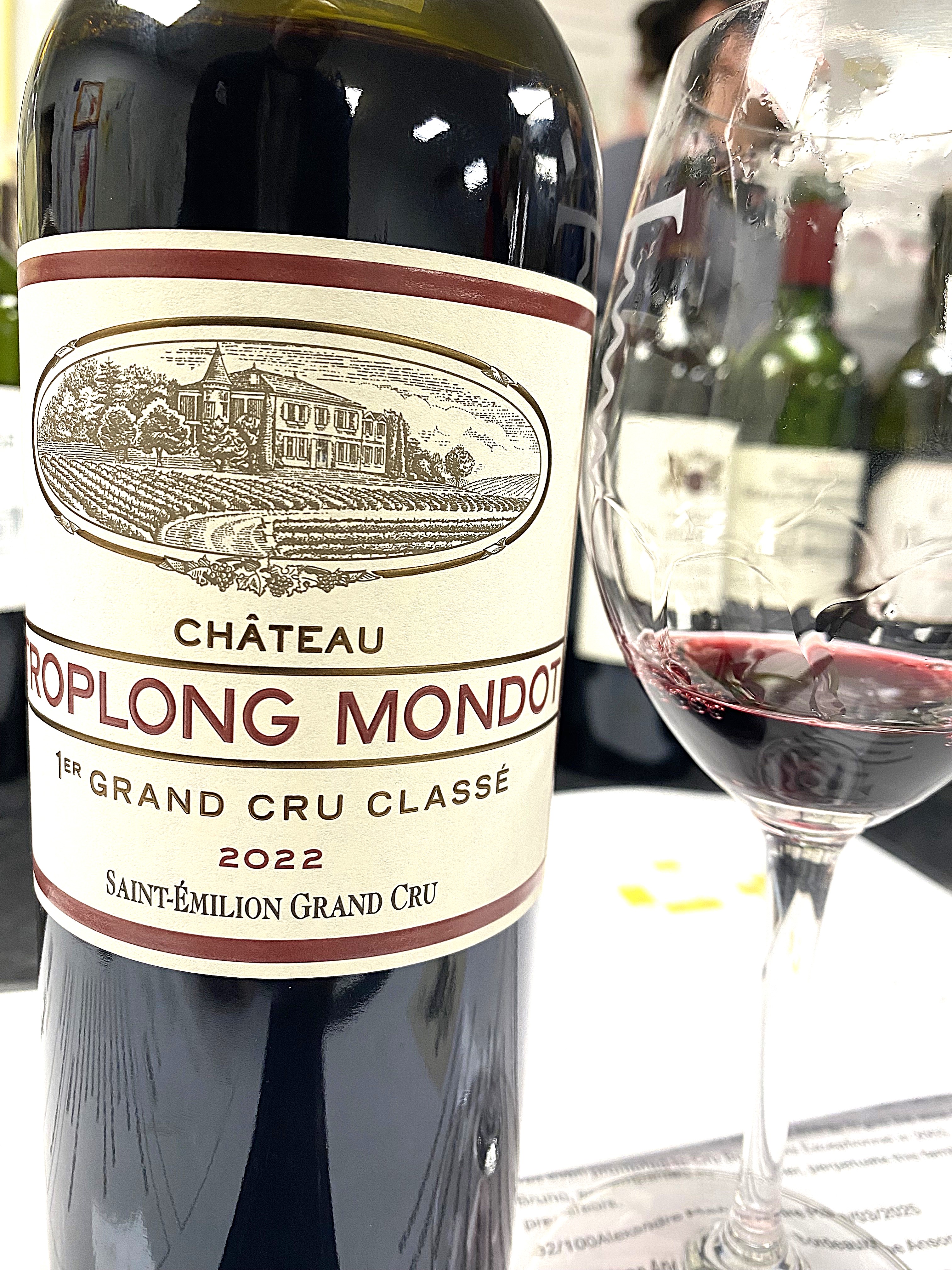
Then as a special bonus a twelfth wine was poured and it was Chateau Troplong Mondot Premier Grand Cru Classe Saint-Emilion Grand Cru 2022. Chateau Troplong Mondot was established in the late 1800s when Raymond-Theodore Troplong bought and expanded the Mondot estate. The estate was classified as Premier Grand Cru Classe B in Saint-Emilion in 2012. Over the course of years, ownership and management has changed and Michel Rolland was the consultant winemaker and the wine was known for its deep color and full-bodied style. IN 2017, the estate was sold to the French Insurance Group SOCR and they brought in Aymeric de Gironde formerly at Pichon Baron and Cos d’Estournel to manage the estate, as well as many other changes with no owners. The original estate had thirty-three hectares and they have since increased the holdings by another ten hectares. The property is situated on well-draining limestone and clay soil, interspersed with chalk and flint; and is located on a higher elelvation compared to most of the region. The new wine making team is returning to more classic winemaking and less manipulation. This wine is a blend of eighty-five percent Merlot, thirteen percent Cabernet Sauvignon and two percent Cabernet Franc. The fruit is hand-harvested and stored in a cold room before the gentle winemaking procedure begins, and the wine is aged for eighteen months in French Oak. The blackish-ruby colored wine offered notes of dark cherries, plums, hibiscus, cedar and vanilla. On the palate this full-bodied wine displayed tones of rich dark fruits, silky tannins and ending with a nice long-count finish of fruit and chalky minerals (terroir).

 The Wine Raconteur
Great post!
Thank you very much, and it was a wonderful tasting event.
– John
I don’t know the taste of wine 😔 well shared
It is an on going learning experience, that I started back in the Sixties, and I am still learning and enjoying the wines. I hope you start tasting some wines as well. I write about all categories and price ranges, all predicated on the moment.
– John
Thank you so much 🙏