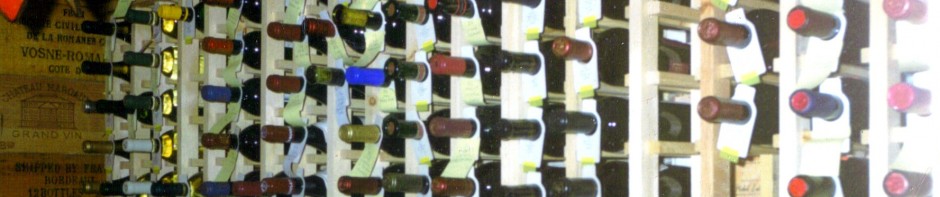
The turnout for this Italian Wine Tasting was getting more jovial at The Fine Wine Source in Livonia, Michigan as the crowds increased. They were trying to have people come in at certain times of the day, but I think the word leaked out and it was definitely standing room only.
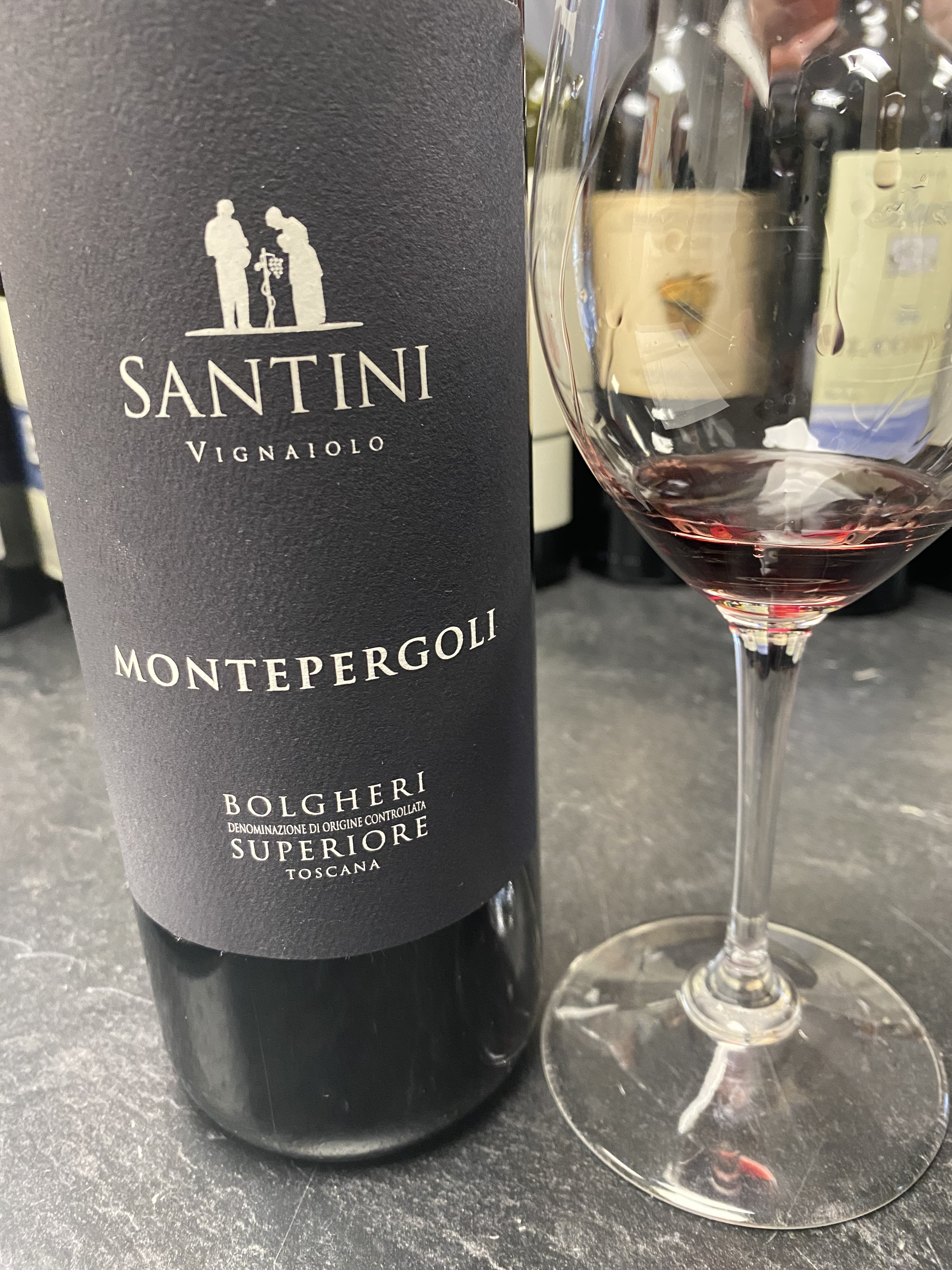
We next had a wine by Enrico Santini “Montepergoli” Bolgheri Superiore DOC Toscana IGT 2018. The winery was founded in 1998 and is now a family-run business with fourteen hectares of vineyards in the heart of the Bolgheri district. This wine is a blend of twenty-five percent Merlot, forty percent Cabernet Sauvignon, twenty percent Syrah and fifteen percent Sangiovese. The vineyards have an East/Southwest exposure. The fruit is manually harvested with careful selection of bunches. The grapes go through the vinification process separately. The Initial Fermentation takes place in a controlled temperature with indigenous yeasts and m the maceration process is for about twenty-eight days. The wine then ages for a minimum of eighteen months in oak barrels, of which forty percent is new. Then the wine is aged in bottles for an additional eighteen months before being released. A deep red wine with notes of blackberries, currants, plums with smoky aromas, tanned leather, cloves, black pepper and toasted oak. On the palate this medium-bodied wine displays tones of the dark fruits, spices and rich tannins and then a medium count finish of fruit and spices.
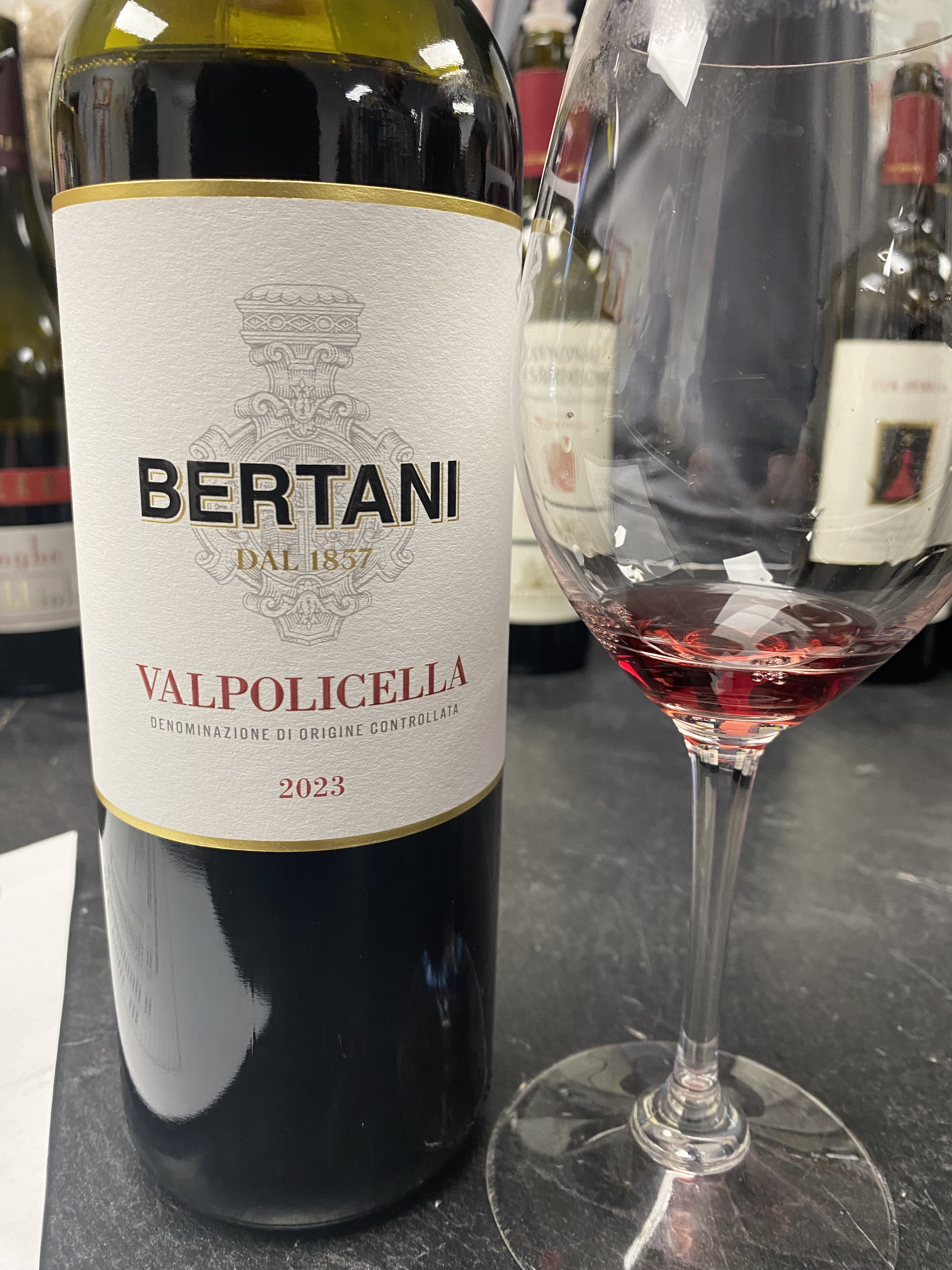
And the last four wines were all from the Valpolicella region of the Veneto district. First we had the Bertani Valpolicella 2023. Bertani was founded by two brothers in 1857 with a winery in Grezzana, Valpolicella Valpantena. They now have more than 200 hectares across the Verona region. The wine is a blend of eighty percent Corvina Veronese and twenty percent Rondinella. The fruit comes from the Tenuta Novare vineyards in the heart of the Valpolicella Classico area and from the Valpantena vineyards near Grezzana. There is two distinct soils, one of white limestone and the other of red limestone with Iron and Manganese. After destemming and crushing the must is fermented in wide and shallow Stainless-Steel tanks while on the skins. The wine is then aged in concrete vats covered with glass bricks, which allows constant temperature and micro-oxygenation. The wine is aged for about eight months, followed by an additional three months in bottles, before distribution. This was a red colored wine that offered notes of redcurrants plums, raspberries and sour cherries and some pepper and cinnamon. On the palate this medium-bodied wine displayed tones of red fruit blended with soft tannins and a short finish of fruit and spices.
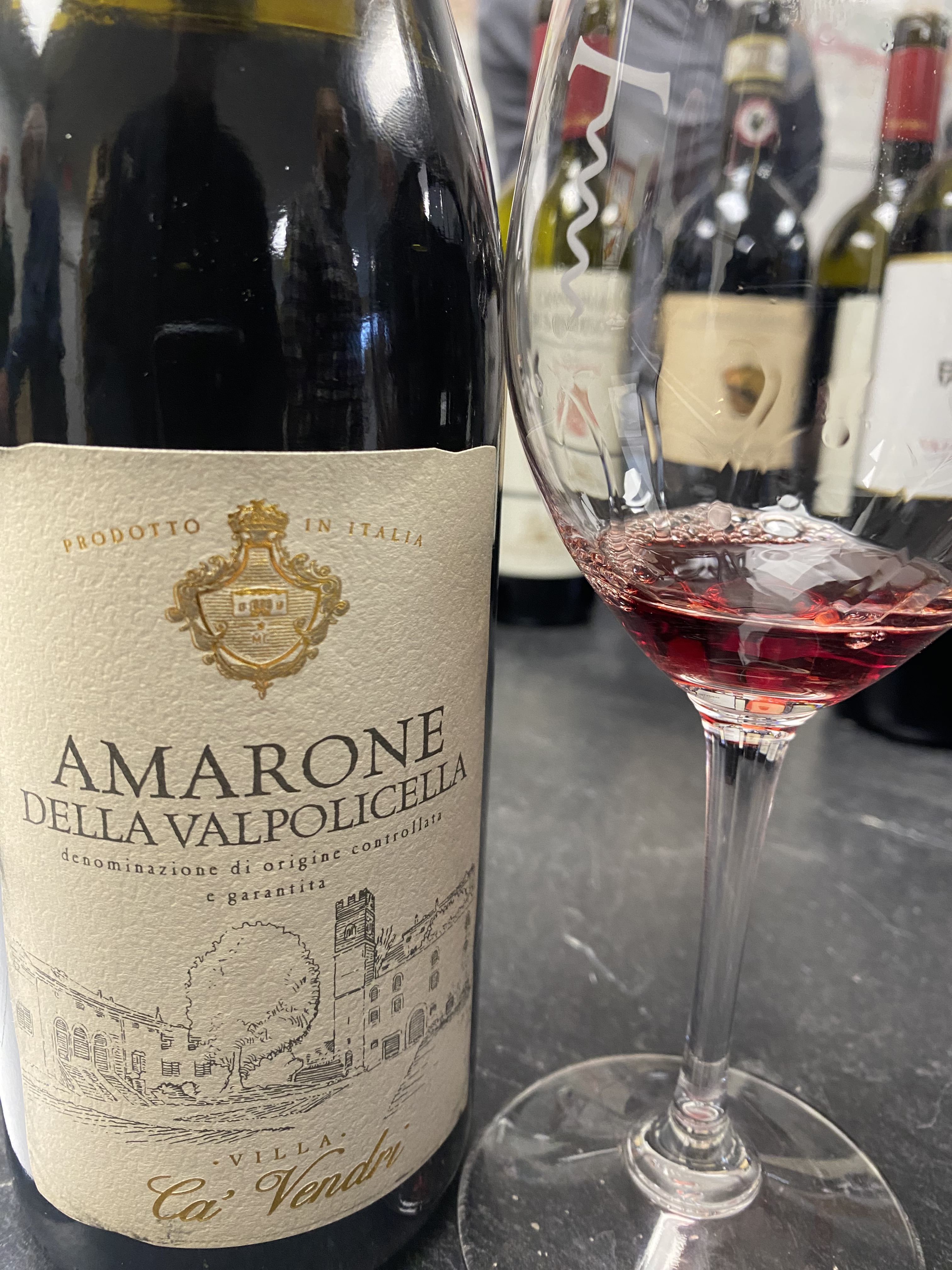
We then followed with a tasting of Villa Ca Vendri Amarone Della Valpolicella DOCG 2021 by Ville di Antane. In a revered wine region that is rooted in the last century, or longer, three young spirits lived their dream and about ten years ago began their winery in the Valpantena valley of the Verona region. They have twenty hectares of vineyards surrounding the winery, with slopes that face east to west. The wine is a blend of Corvina Veronese, Corvinone and Rondinella. The fruit is harvested manually into small boxes where they dry for a period of three to four months. This Appasimento Method is unique to the Amarone Della Valpolicella wines, and results in very concentrated raisiny full-bodied wines with low acidity. The fruit then undergoes a slow fermentation and then Malolactic Fermentation before being aged in small barrels for twelve to eighteen months. A deep garnet red wine that offered notes of plums, cherries and raspberries. This is a full-bodied wine that on the palate displayed tones of soft and rich fruits with velvety tannins and a nice lingering finish of fruit.

 The Wine Raconteur