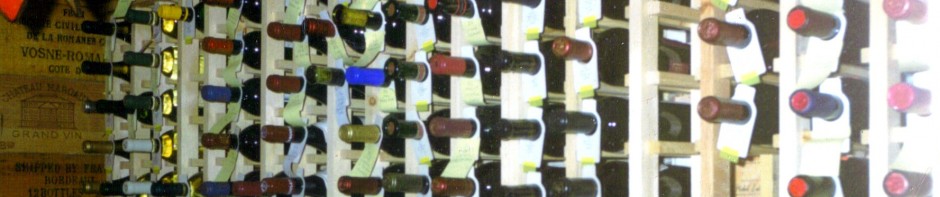
As the crowds increased around the latest structured wine tasting at The Fine Wine Source in Livonia, Michigan; I was still slowing everything down with my need to take photographs.
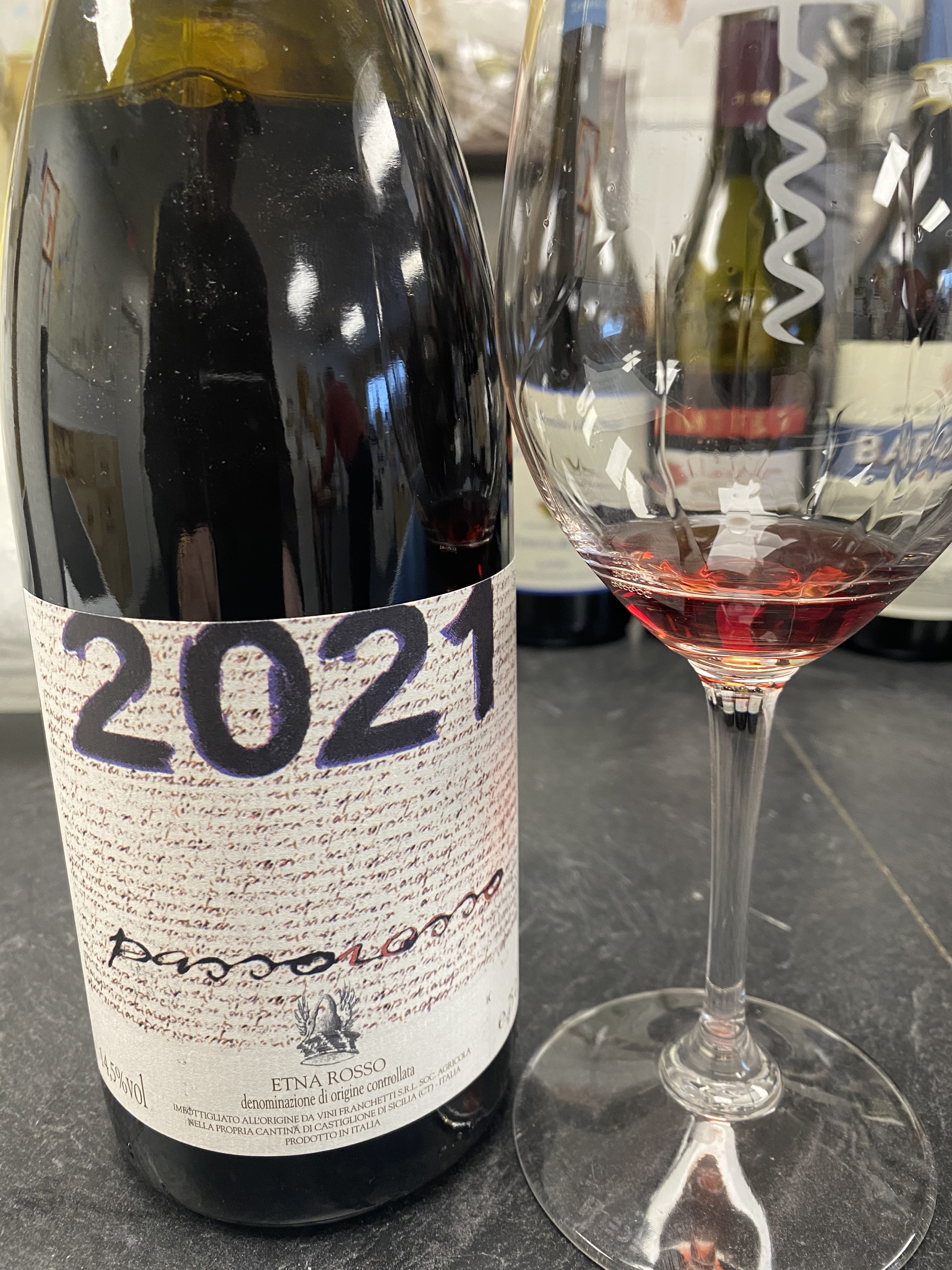
The next wine featured the island of Sicily. We were tasting Passopisciaro Passorosso Etna Rosso DOC Terre Siciliane IGT 2021, and until 2012 this wine was labeled Passopisciaro Rosso. Passopisciaro is a wine producer with vineyards on the lower northern slopes of Mount Etna and owned by the Tuscan winemaker Andrea Franchetti. Etna’s unique terroir is characterized by volcanic soils made from old lava flows, in combination with the high altitudes (up to 1,000m) above sea level, provides perfect growing conditions for Nerello Mascalese, the most popular varietal on the island. Passorosso is made exclusively with Nerello Mascalese blending across different altitudes and soil types (the higher altitudes have more gravelly soil, while the lower altitudes have deeper powder made from more oxidized, older lavas). The wine is vinified originally in Stainless-Steel vats for fifteen days, and then aged for eighteen months between a mix of cement vats and large oak barrels, and the wine is then bottled unfiltered. The ruby-red wine offered notes of red currants, juniper, cloves, camphor and sandalwood. On the palate this medium-bodied wine displayed tones of juicy ripe red fruit, a touch of smoke, dry tannins and a nice finish of fruit and terroir.
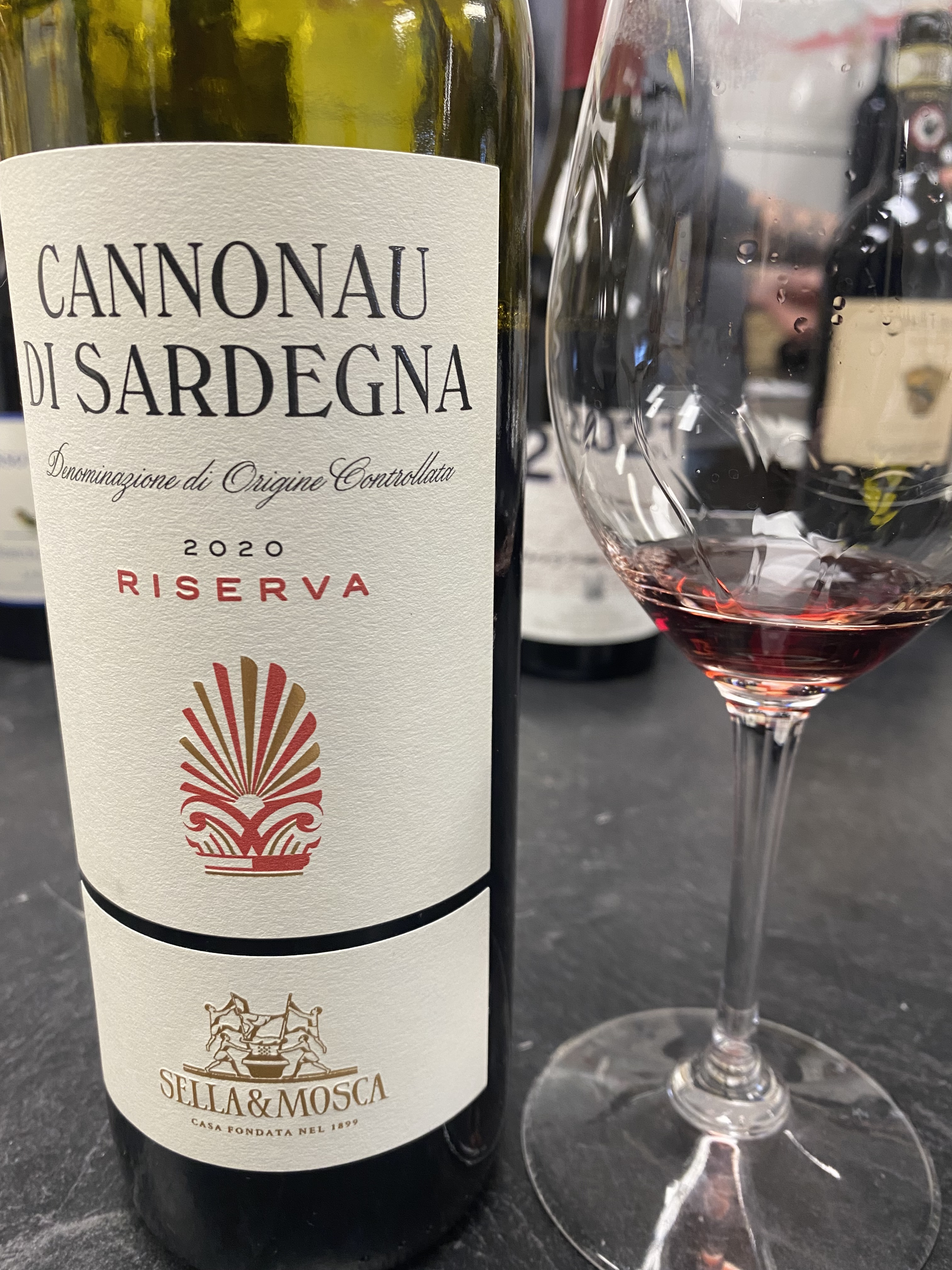
From Sicily, we then went to another island, the island of Sardinia where we enjoyed Sella & Mosca Cannonau di Sardegna DOC Riserva 2020. Sella & Mosca (Sella e Mosca) is the largest wine producer in Sardinia, featuring local varieties and “international” varieties. The winery was founded in 1899 by two Piedmontese businessmen. Their I Piani estate is one of the largest wine estates in Europe with five hundred-twenty hectares of contiguous vineyards. Cannonau is the link of wine making and Sardinia and featuring Grenache, which originally was thought to be brought by the Aragonese but now may be indigenous to the island and then spread from there. It is grown both on the warm and sandy seaside vineyards and the harsh and rocky inland soils of the hills. Fermentation begins in temperature-controlled Stainless-Steel tanks and then aged for twenty-four months in big oaken barrels for the Riserva wines. The ruby-red wine offered notes of plums, black currents, violets and hibiscus, tobacco and spices. On the palate this medium-bodied wine displayed tones of plums and dark fruits with traces of flowers, balsam, chocolate and vanilla with a medium-count finish of fruit and spices.
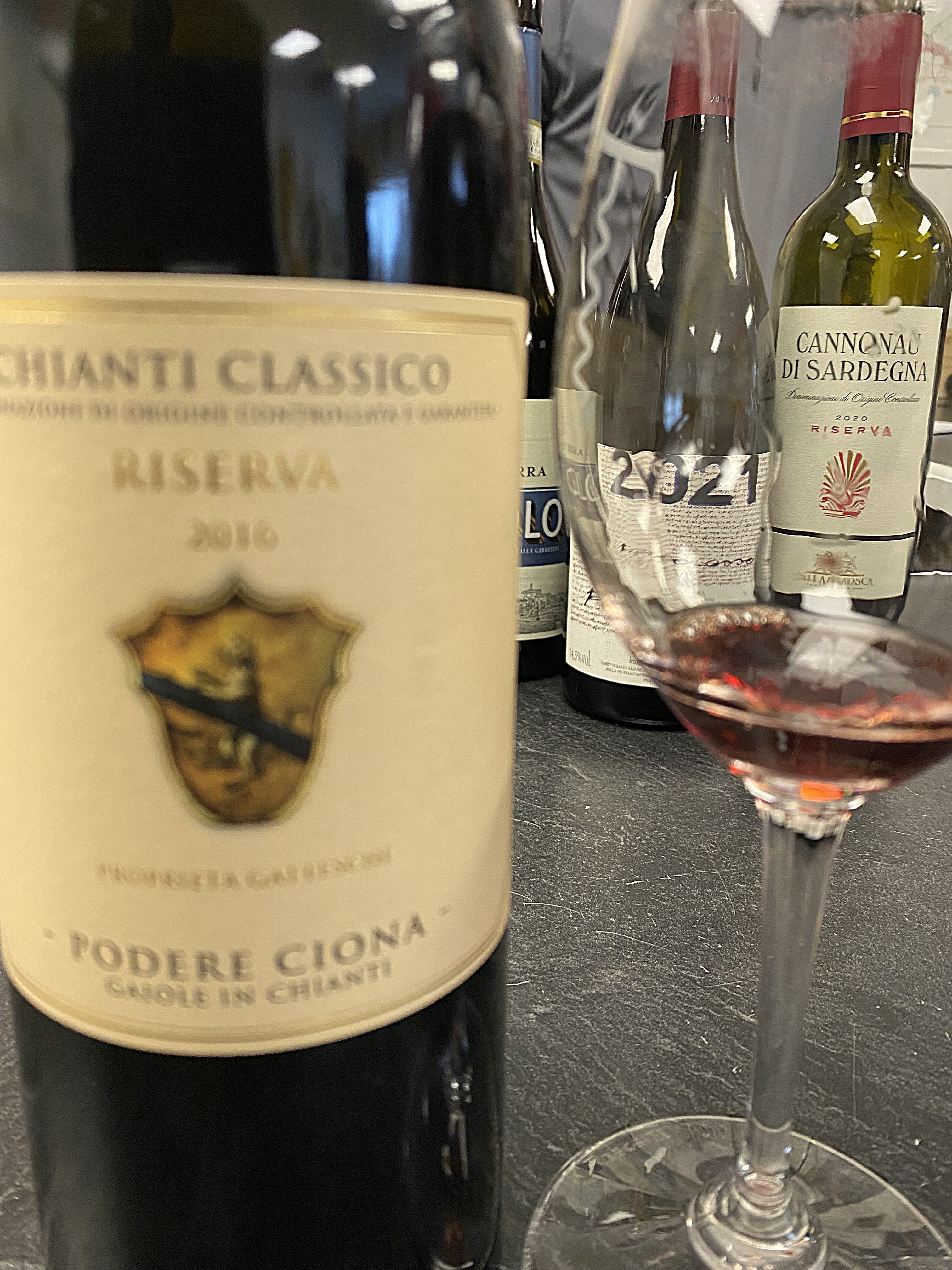
The tasting then returned to the mainland of Italy with Podere Cioni Chianti Classico Riserva DOCG 2016 and based in Gaiole in Chianti. The estate is forty hectares and was established in the nineties, and they currently have twelve acres of vines and two acres of olive groves. The wine is a blend of ninety percent Sangiovese, eight percent Merlot and two percent Alicante Bouschet; and the vines are about seventeen years of age. The fruit is hand-harvested, and the Initial Fermentation is for about ten days in Stainless Steel vats. Then Malolactic Fermentation of the juice on the skins, is for about a month in French Oak. With this being a Riserva wine, the wine then aged for twenty-four months in a mix of French Oak of which ten percent is new; followed by an additional twelve months in bottles, before being released. A ruby-red wine that offered notes of plenty of red fruit, blood orange, baking spices and some chalky terrain. On the palate this medium-bodied wine displayed tones of rich red fruits, velvety tannins and a nice lingering finish of fruit and terroir.

 The Wine Raconteur