While my Bride was getting the main course prepared, she also had made her Caesar Salad, and vegetables. The main course of the meal, she started preparing the night before, as she was making two different types of Ribs in Molé, a dark and a red sauce; according to our participants, the red sauce was the hit.
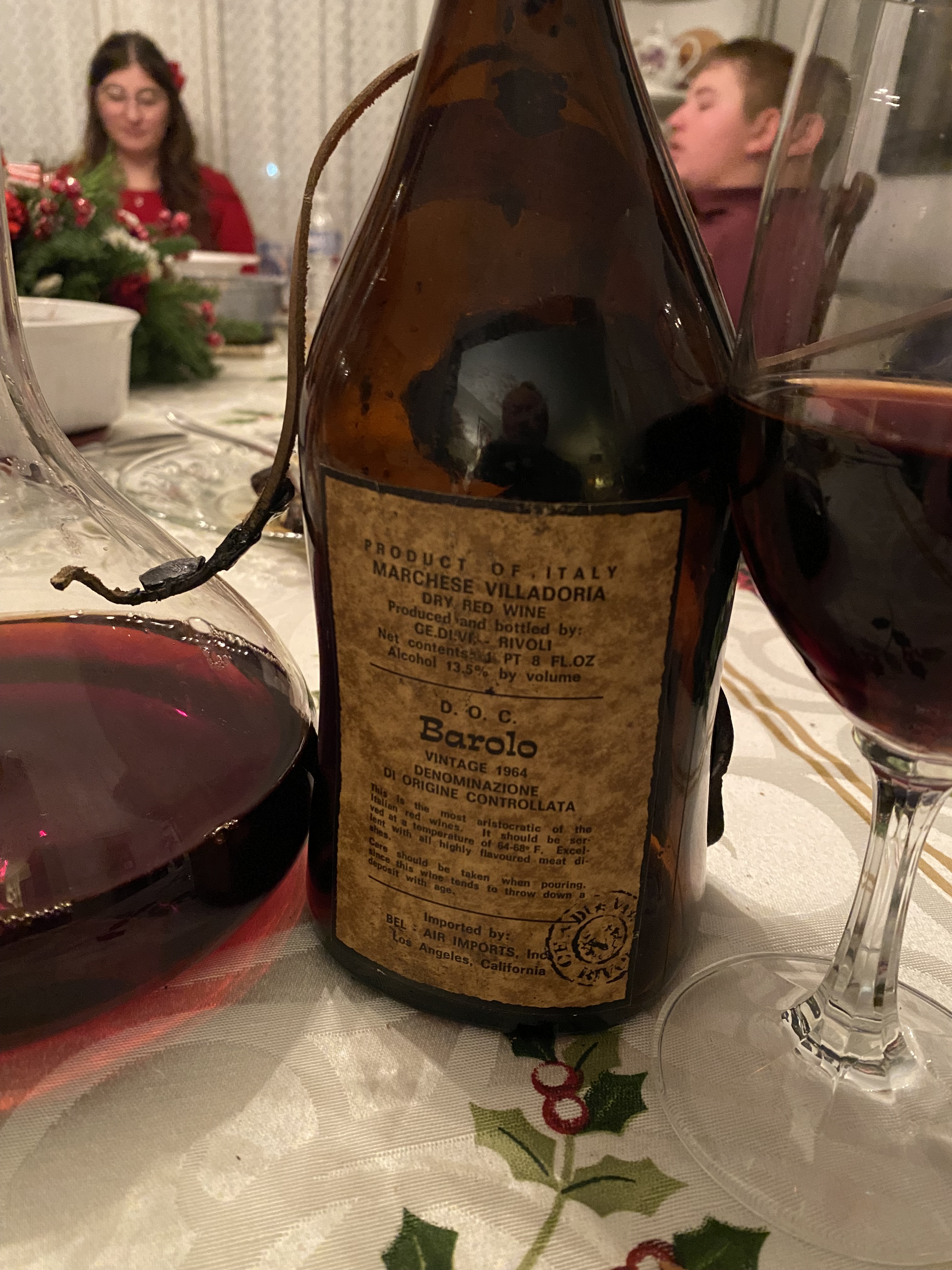
The dinner was a night to enjoy wines from the Sixties. The Wine Raconteur Jr. was excited as he brought a bottle of Marchesi Villadoria Barola DOCG 1964 from the Cascine Rivette e Marena Vineyard in the Piedmont. It began with Daniele Lanzavecchia (Sr.) who began a vine plant nursery with the dream of eventually making wine. He then had a son, who shared his passion and in 1959, the Villadoria Estate was established in the Serralunga hills; and now the third generation is assisting. Besides growing Nebbiolo for Barolo, they also grow Merlot and Muscat, as well as having a hazelnut grove. Serralunga is one of the eleven best known towns producing Barolo and known for their famed terroir of limestone and sandstone soil. The fruit is hand-harvested, destemmed and crushed gently, and Initial Fermentation occurs in Stainless-Steel tanks on the skins for about twenty-eight days, and Malolactic Fermentation follows. The wine is aged for a total of five years, the first twenty months in Slavonian Oak; followed by time in concrete and steel tanks to tamper the strong tannins of the Nebbiolo grape. The bottle came with a candle mounted on it, to allow for decanting illumination, but directly in line with the candle was the old Italian Export label that is no longer used, and the bottle had a wax closure over the bottle, try as I could, even with my Durand, the cork crumbled and I used a funnel and coffee filter to drain and decant the wine before dinner. For a sixty-year-old wine the color was still a deep garnet with no foxing or browning. The wine was still offering notes of cherries, roses, tobacco, truffles, old leather and tar. On the palate the tones of cherries and tannins were finally tamed and tempered with secondary notes of truffles and licorice and ending with a finish of subtle fruit and terroir.
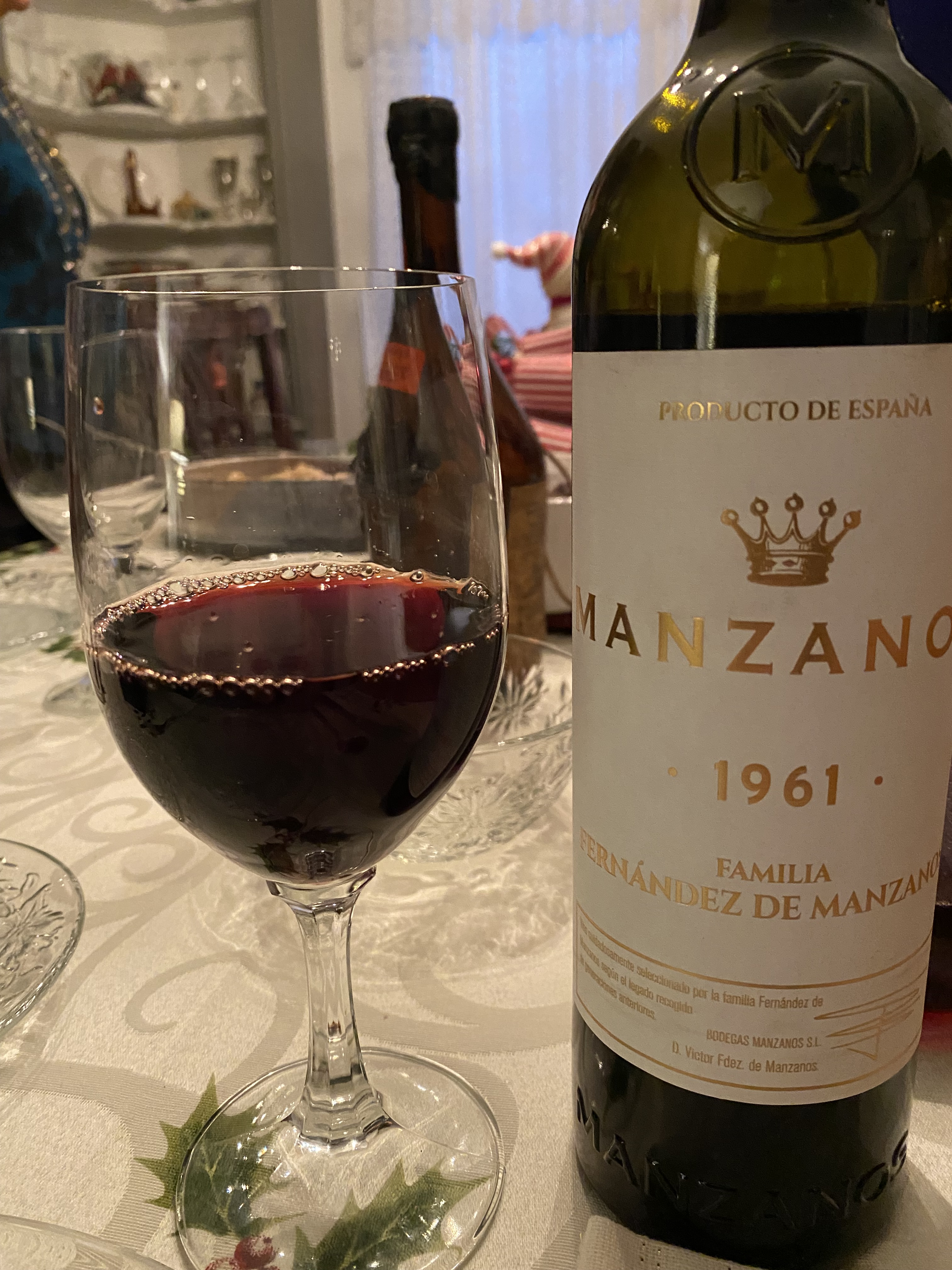
While we continued with the dinner choices, we enjoyed a second bottle of wine, this time from Familia Fernandez de Manzanos 1961. Bodegas Manzanos is a large wine producer in Spain, founded in 1890 and is now run by the fifth generation of the Fernandez de Manzanos family. They are in the top three of Navarra and the top five in Rioja for production and they own ten wineries. The original winery for the family is in the Rioja Alta zone back in 1890. A cache of bottles was discovered in the cellar of the winery by Victor Manzanos. After trying a bottle of wine, the decision was made to rebottle, recork and relabel the wine. After spending three years in French Oak, this wine was bottled in the mid-Sixties and has been untouched since then, until two years ago. Familia Fernandez de Manzanos “Manzanos Red Wine 1961 Spain” was the relabeled wine that was reissued. The designation of Rioja was not as well known internationally, and it was not always indicated on the labels of wines from the region. The wine is a blend of Tempranillo and Grenache (Garnacha) and was considered a Vino Tinto at the time. The fruit was hand-harvested (automated wasn’t available then). The wine on the first time was aged for three years in French Oak. This wine was originally listed as a lighter wine at the time, and perhaps that is why it was left to age longer and then forgotten, as it was stored in a hillside cellar. There was six-hundred bottles of the original cache, every bottle was opened and four-hundred bottles were selected. The four-hundred bottles were emptied into vat and re-blended together, prior to re-bottling and re-labeling. The wine was a deep garnet with notes of dark fruit, cigar box and spices. On the palate there were tones of dark cherry, plums, licorice, soft tannins with secondary tones of coffee, vanilla and balsamic tastes. The wine had a medium-count finish fruit with a touch of terroir. It was definitely a Rioja, even without being identified as one, and a very interesting wine to chew on and I needed to use one word, it would be elegant and at sixty-three, it held its own.
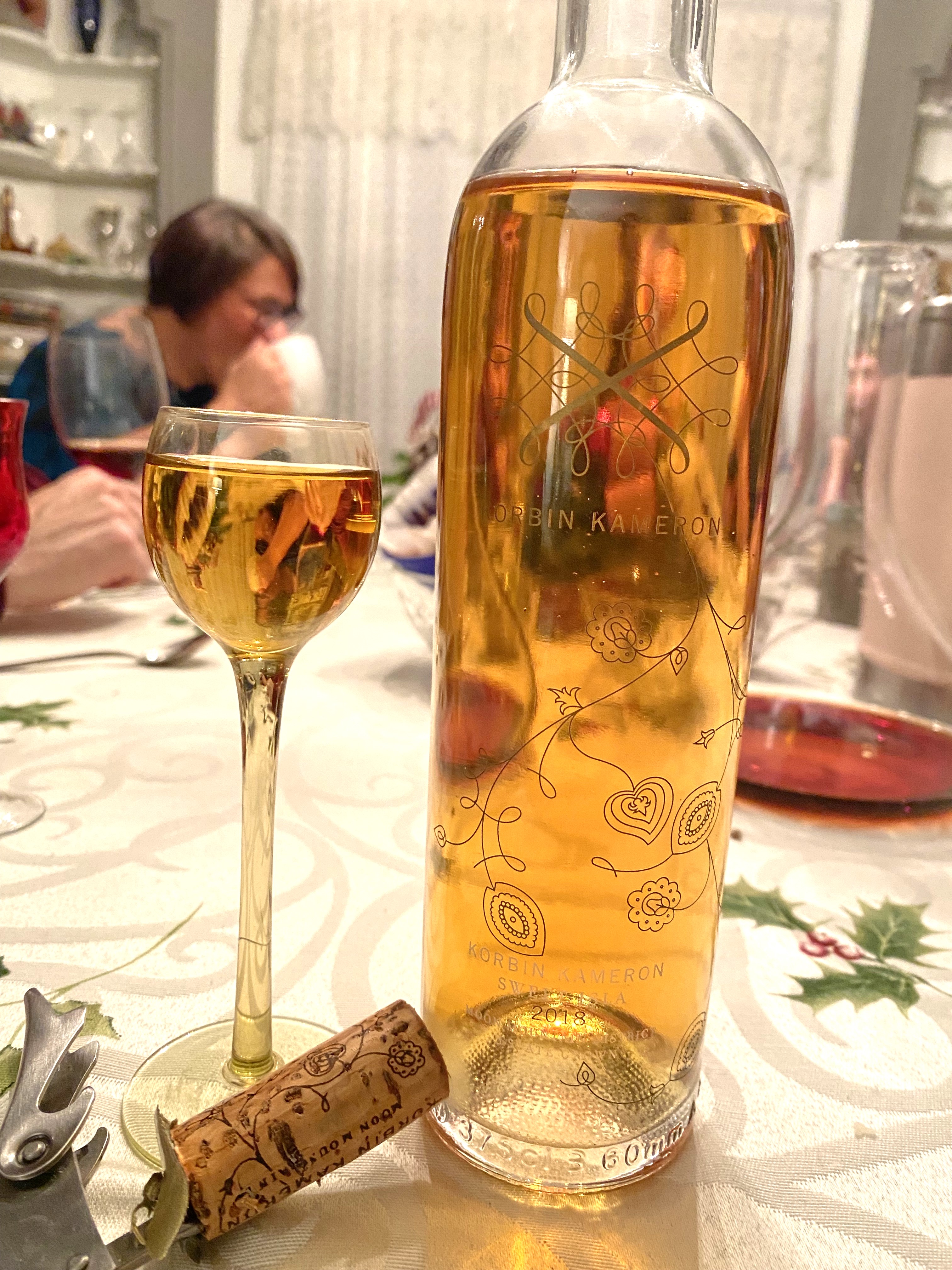
For dessert we had several choices of pastries and cookies and coffee. Then we had Korbin Kameron Late Harvest “Sweet Isla” Moon Mountain District 2018 from Moonridge Vineyards in Sonoma County and it is Estate Grown. I was able to get in touch with Korbin Ming and he was able to give me some information. The wine is late harvested Sauvignon Blanc with an addition of fifteen percent Botrytised Semillon. One week cold soak and fermented on the skins for an additional two weeks to pick up extra color and flavors, called phenolics, which was a really long and cool fermentation for intense aromatics. The wine was aged for eight months in neutral oak. . A beautiful wine that was just magnificent and reminded me of a French Sauternes with a nose of honeysuckle, a silky texture offering notes of sweet lemons, apricots and marmalade with a nice long count in the finish. If I must say, we had a wonderful dinner until the next time we get together

 The Wine Raconteur
Some very interesting wines. Jealous..
I have found that the older Spanish wines are more reliable, better corks I think.
Glad you had two good bottles, though it sounds like the Spanish cheated 😂
I am not sure if they cheated, but it was a delightful experience.
– John