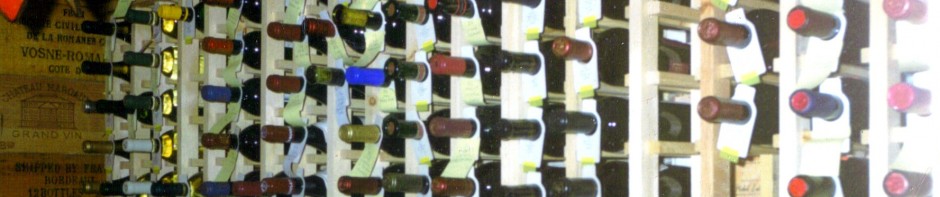
As I have been told over the years “It is better to be seen, than viewed.” I heartily agree and though the brain may not agree, the body does feel the years at times. There is not much that I can do about it, other than extend the revelry longer every year and look forward to the next one. I am still trying to enjoy every day and have a good time. We have one son that has lived here, his entire life along with his family, though he is talking more and more about warm weather. Another son and his family have just moved back to the area, and that leaves my Favorite Daughter, who would move back, I think, predicated on colleges for her sons. The joys of fatherhood. And lest you think it was just me, the party was still designed to celebrate the September celebrants.
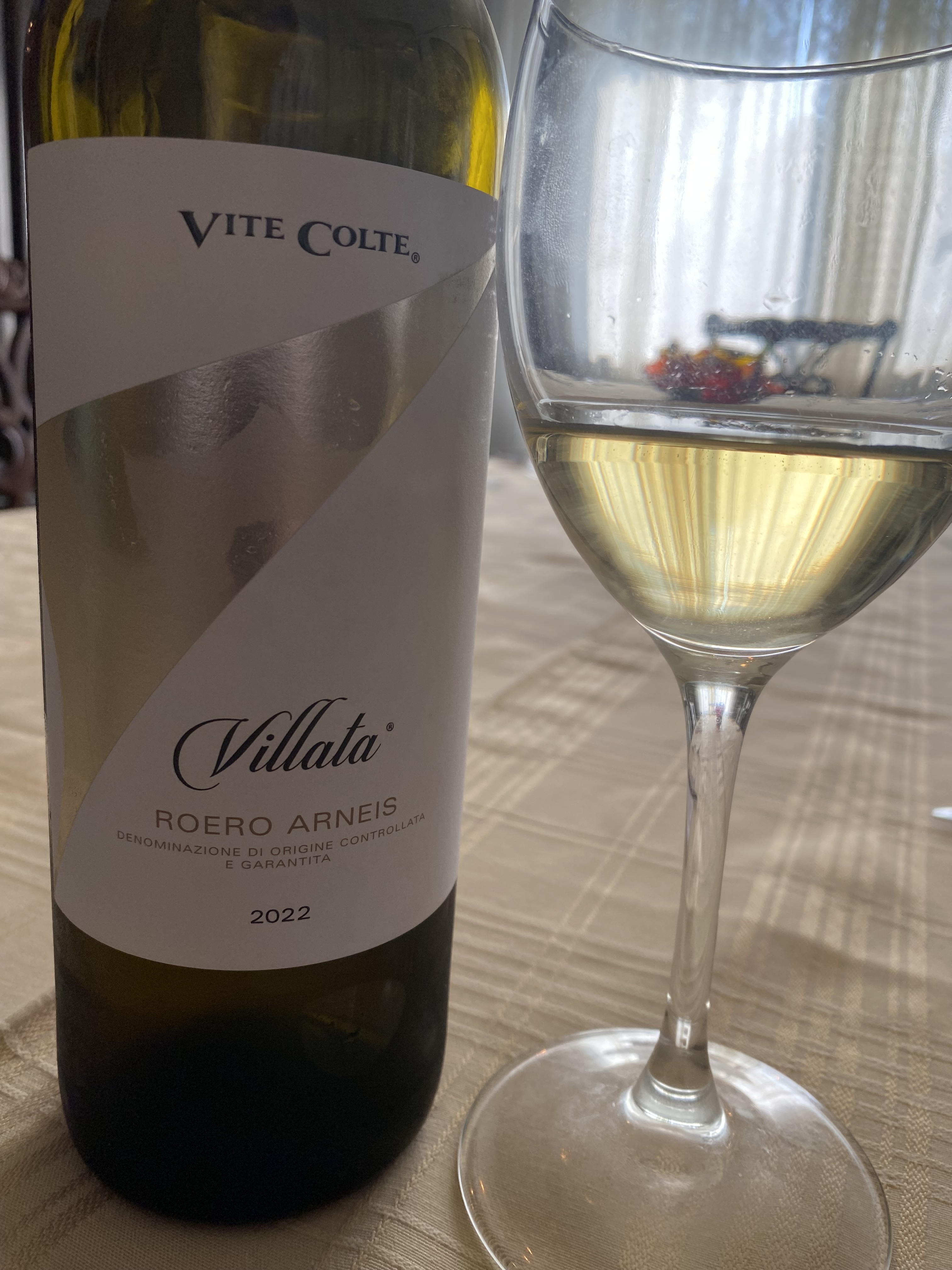
My Bride was getting the whole house ready for the party, of course we did have to replace the chairs in the breakfast nook, and she overdid the seats, I am not sure if First Class on Trans-Atlantic flights are this wide. Oh well, we have the living room and the family room for spreads of munchies and it keeps everyone from trying to squeeze into the nook. We had gone to a local cheese purveyor and she got a little carried away, but it was all good, but she did corner the market on the chocolate-cheese; she doesn’t like fudge, but she adores the cheese and to me, they taste so similar. She also had several other munchies to enjoy as well. We began with one of her favorite whites before dinner, Vite Colte Villata Roero Arneis DOCG 2022; which is owned by Terre da Vino in the heart of the Piedmont. Depending on the market this wine can be found either as Vite Colte or as Terre da Vino. Roero DOCG is a small district in the hills of the Piedmont, known for its refreshing whites made from Arneis, and for their bold red reds made from Nebbiolo. The district is named after the Roero family, who were powerful bankers in the Middle Ages. The classic Roero Bianco must be at least ninety-five percent Arneis, the other five percent can be any other local white varietal. They tend to grow the vines on the northern slopes of the hills, while Nebbiolo grows on the southern side on loose soils with a strong presence of silica. For a while, the grape almost became extinct, as all the interest was in the red wines. The grape can be difficult to grow and was often grown alongside the Nebbiolo, because its fruit was sweeter and the birds would feed on the white grapes and leave the red grapes alone. Traditionally a dash of Arneis was added to the Nebbiolo to soften the tannins, similar to how Viognier is used in parts of the Rhone. This wine was made from hand harvested grapes and it undergoes cold maceration and spends ten days on the lees in Stainless Steel. The wine is a pretty straw color, and the nose offered pears, lime zest, and white florals. The wine on the palate is very crisp and fresh with the notes of white fruit, a burst of tangerine and a tinge of hazelnut with a touch of minerals, peaches, and honey in the finish.
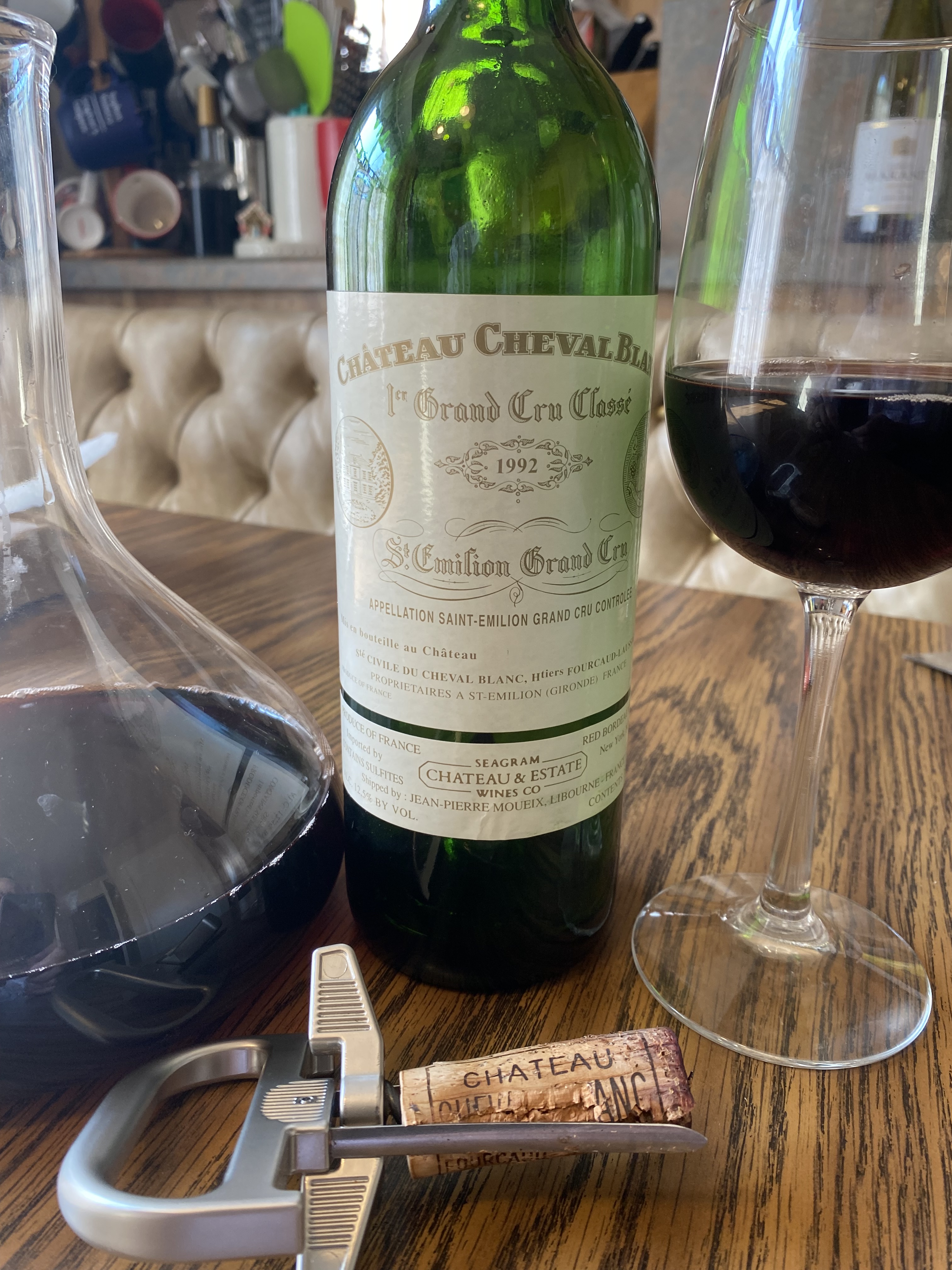
The main course of the dinner, besides the cakes and desserts was Lamb sautéed with Mushrooms and Armenian Pilaf. I went into the cellar and did a very substantial raid, for the occasion and chose a wine that I have never had, so it was my first. I opened and decanted Chateau Cheval Blanc 1’er Grand Cru Classé Saint-Emilion Grand Cru 1992. Vines have been recorded as planted since the 14th Century, but really took place in the 19th Century when core plots were added from purchases from the nearby Figeac estate, and eventually with replanting plans the wine is known for being about half Merlot and half Cabernet Franc. The estate began after gaining its first medal at the 1862 Universal Exhibition in London, and that was just the start, and thus paved the way for the chateau to be built. The estate is in the northwest sector of the region, bordering Pomerol and had thirty-nine hectares, divided into forty-five plots; of which fifty-two percent is Cabernet Franc, forty-three percent Merlot and five percent Cabernet Sauvignon. The plantings are based on the patchwork of soils (about half and half) of either clay or gravel over sedimentary rock. In the first classification of Saint-Emilion in 1955, it was awarded the highest possible rating – Premier Grand Cru Classé A. After 166 years of continuous family ownership, Bernard Arnault (LVMH) and the late Baron Albert Frere jointly purchased the estate. In 2022, the estate famously withdrew from the listing; though it is still regarded as one of the greatest wines of the Bordeaux region. After a small harvest in 1991, the 1992 harvest was considered quite generous. It was the first year for the winery employed small crates for the manual harvesting and sorting of the fruit. The wine was aged from sixteen to eighteen months in new French Oak. I used my Durant to uncork the wine, and the cork was in very good condition, and decanting the wine for its age was necessary as I could visually see sediment in the bottle. The wine had a beautiful deep ruby color with no evidence of foxing or browning. The nose offered mild notes of dark fruits, florals, espresso, and tobacco. On the palate the fruit and tannins had merged, and there was a muted taste and finish, and in hind-sight, I probably should have opened the wine five years earlier, and the fruits would have been lusher. I still savored it, knowing that it will probably be the last and only wine from this estate that I will ever encounter.


 The Wine Raconteur
Happy birthday! 🥳
Thank you very much
– John