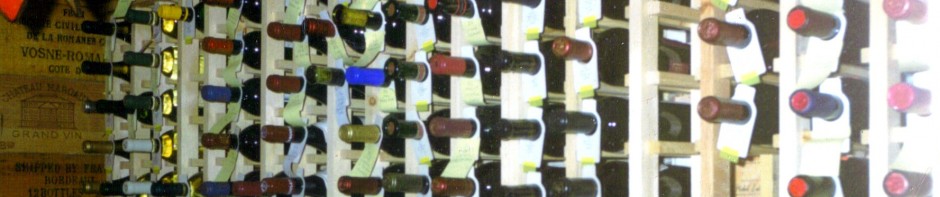
It really is a joy when I walk into my local wine shop, The Fine Wine Source in Livonia, Michigan, as I never know what I may encounter. Sometimes it can be very eclectic and from two totally distinct areas of the world.
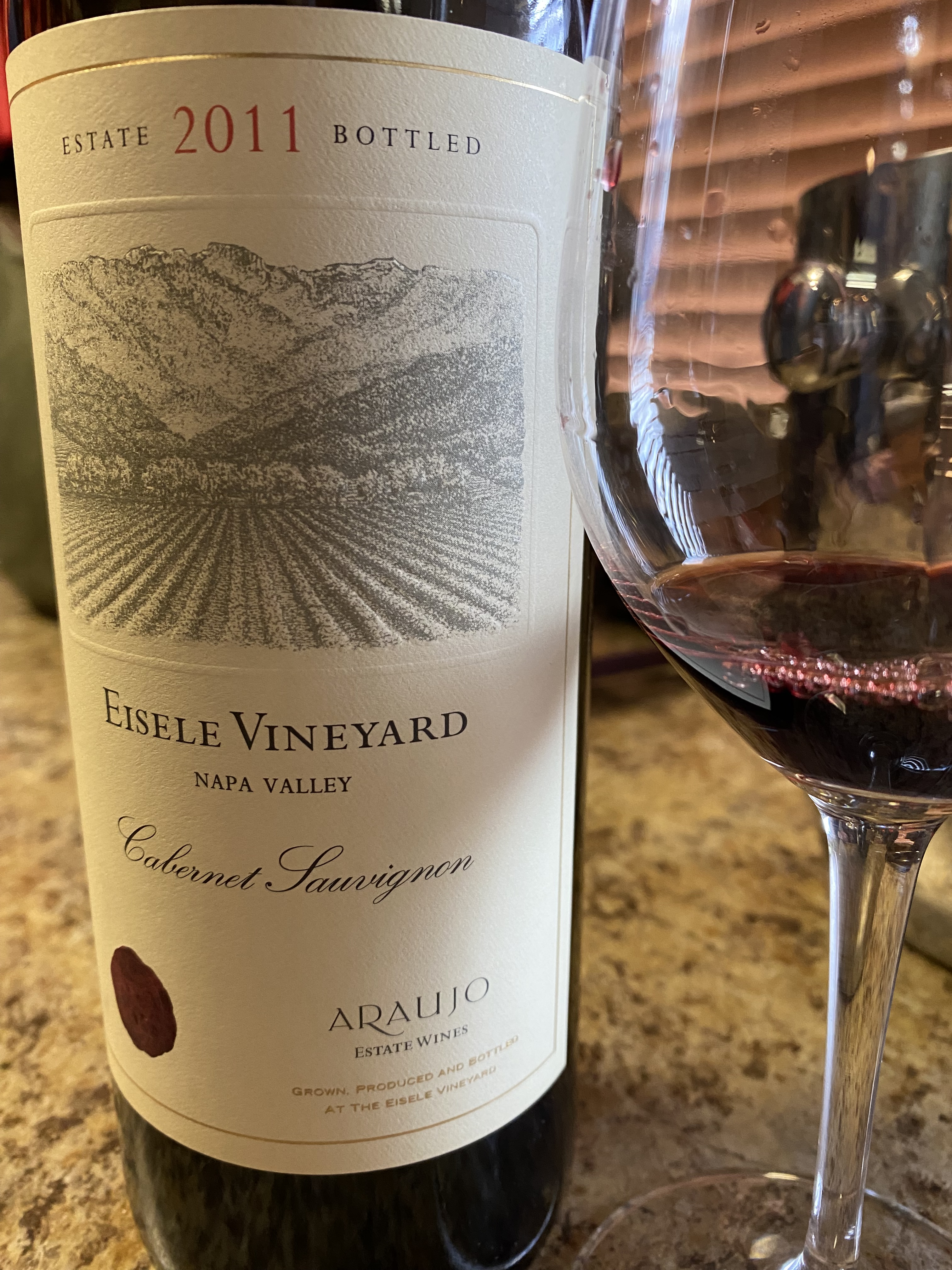
The first wine of this tasting was an Eisele Vineyard “Araujo” Cabernet Sauvignon Napa Valley 2011. Eisele Vineyard Estate went to Araujo Estate and then back again. Eisele Vineyard is thirty-eight acres located on an old alluvial fan, near the northern end of Napa Valle, and east of Calistoga, and ground water is very deep underground, on this rocky soil that produces small berries on vines that have very deep roots. The grounds were originally planted in the 1880s to Zinfandel and Riesling, and the first Cabernet Sauvignon vines were planted in 1964. The modern history of this famed vineyard begins with the first vintage of Eisele Vineyards in 1971, by Milton and Barbara Eisele became the stewards of the land and winemakers in their retirement years. The first vintage was overseen by Paul Draper of Ridge Vineyards and it was one of the original vineyard-designated wines in California and there are a few fortunate people that are still enjoying that initial vintage to this day, as it is considered a hallmark in Napa Valley. The second vintage was produced by Conn Creek Winery in 1974 and continued to 1991 under the aegis of Joseph Phelps. The 1991 vintage had two bottlings, the second being the first Estate Cabernet Sauvignon. In 1990 Daphne and Bart Araujo bought the land and the start of the Araujo Estate years which lasted for twenty-three years and they were one of the first to embrace biodynamic farming. They also constructed the first winery on site with temperature-controlled caves; a barn-like structure built into the hillside.. In 2013, the property was purchased by the Pinault family’s Groupe Artemis which has several prominent estates including Chateau Latour. Grapes are sorted and transferred without pumping to stainless steel or concrete fermenters. Individual lots are aged in French oak barrels before the final blends are assembled. This wine is ninety-eight percent Cabernet Sauvignon and two percent Cabernet Franc. The harvesting by hand entailed several pickings to ensure total ripeness, and they still had secondary sorting of this vintage which required the hiring of an additional fifty trained workers picking cluster by cluster. Fermentation in small tanks, and then the wine was aged in new French Oak for nineteen months. The Eisel Vineyard pedigree was apparent, but the work of the Araujo family was also acknowledged. This deep garnet wine offered notes of big black fruit, vanilla, and purple florals. On the palate tones of rich and elegant black fruit melting and blending beautifully with luscious tannins that were just hitting their stride at the age of twelve, and a long lingering finish of fruit and terroir. This wine is still so big and rich, that I think easily another ten or more years and it still would not hit its height.
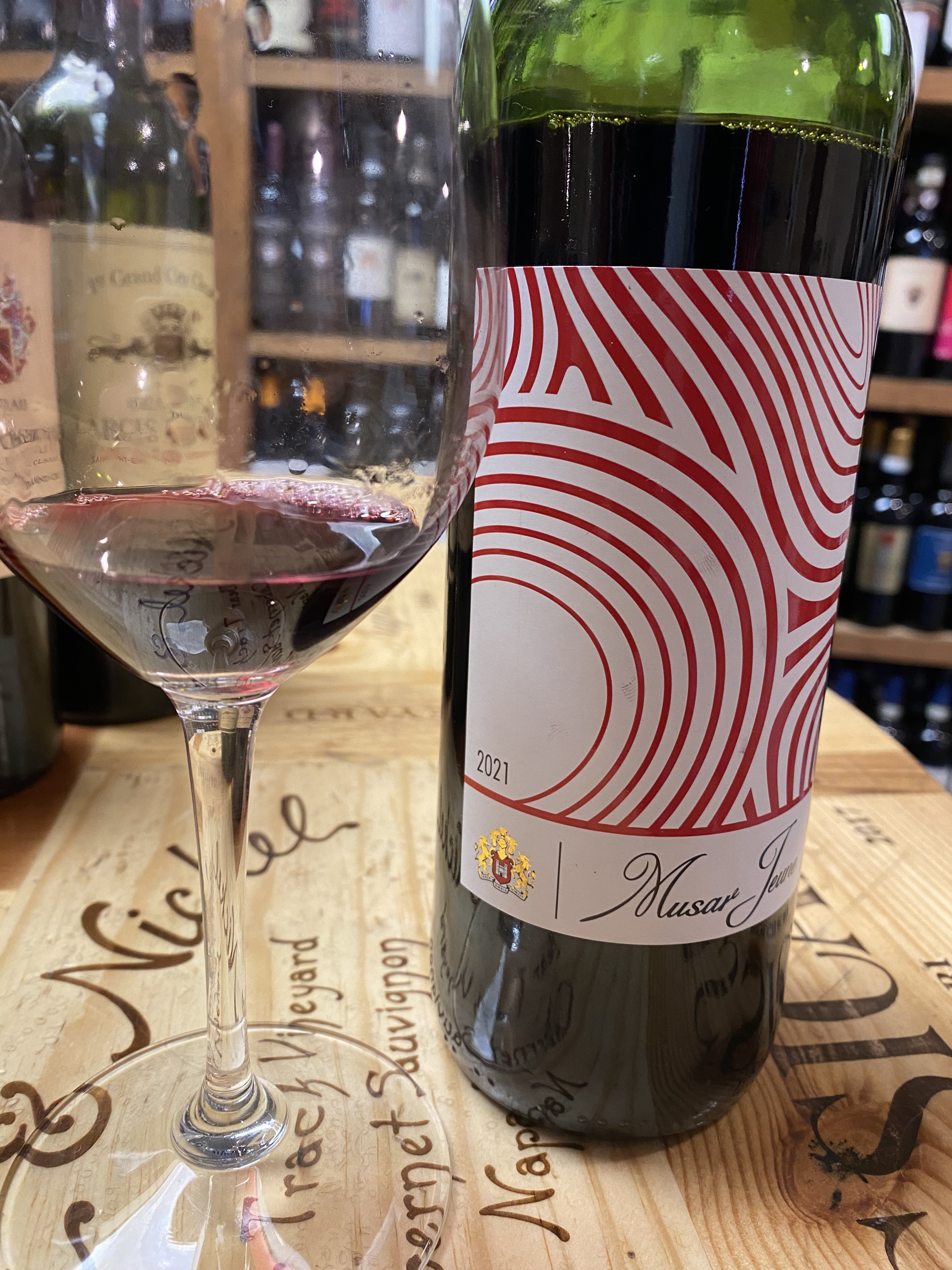
The following two wines that we had were from Chateau Musar, the first being Chateau Musar “Musar Jeune” Red Bekaa Valley, Lebanon 2021. The Bekaa Valley (Beqaa Valley) is the center of the wine trade, as it accounts for ninety percent and it is also the center for Arak, the lovely, but potentially lethal anise flavored liquor that is the favored drink in the country. The oldest winery there is Chateau Ksara, which was established by the Jesuits in 1857 with plants brought over from the French colony of Algeria. Chateau Musar was founded in 1930 by Gaston Hochar and may be the most famous Lebanese winery on the international scene. Gaston Hochar developed his winery after traveling in Bordeaux. In 1959, Hochar’s son Serge took control of the vineyards, having returned from Bordeaux where he was studying enology. The vineyard suffered during the Lebanese Civil War (two vintages were lost or damaged), and Hochar began to look beyond the domestic market. The wine began to gain recognition after Michael Broadbent MW wrote about them in Decanter magazine in 1979 and by the time the war ended in 1990, just a tiny fraction of Chateau Musar was sold locally. Musar Jeune is their entry level range and offered as red, white and a rosé. This wine was first produced in 2007, unoaked, full of fruit, using youthful vines, to meet the demand for “current drinking.” The wine is a blend of fifty percent Cinsault, thirty-five percent Syrah and fifteen percent Cabernet Sauvignon; from vines planted since 2000 at around 1,000m above sea level. The wine is fermented in cement-lined bats and bottle a year after harvest and released one year later. A dark inky-black/purple wine that offers notes of red fruits and plums. On the palate a silky currant, raspberry and cherry jam flavor with soft tannins and a finish offering some spices.
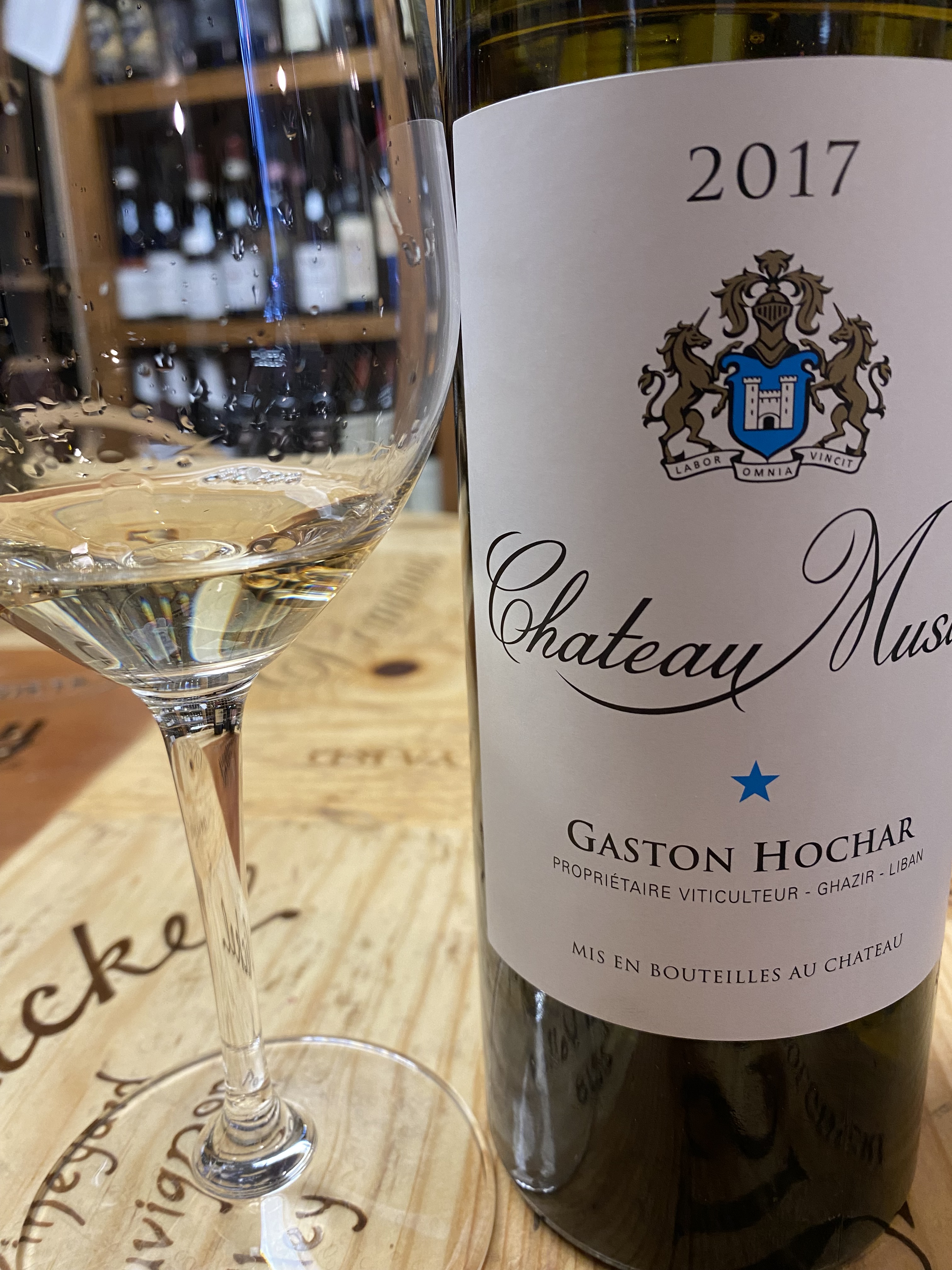
The second wine from this producer was their Chateau Musar Bekaa Valley, Lebanon 2017 continues to be made in their traditional manner, which requires seven years before it sees the light of day in a retail environment. The wine is a blend of Cabernet Sauvignon, Carignan and Cinsault (and this particular vintage the blend was equal for all three varietals) from vines planted from 1930 and later, on gravel soil over limestone, with the average age of the vines around forty years. The different juices undergo a long fermentation with Initial Fermentation using natural yeasts, followed by Malolactic Fermentation in cement vats for about six months after the harvest. The individual juices are then transferred to French Oak for one year of aging. After about two years from harvest, the individual juices are then blended and placed in cement tanks for another twelve months. The wine is then bottled and stored in their deep, dark stone cellars on their sides for four years. The wine is bottled unfiltered and unfined for maximum flavor. The winery recommends standing the wine up, the night before serving, to allow the wine to settle. They also recommend the use of prongs for opening bottles older than fifteen years of age and have even created a YouTube page for their instructions. This was a beautiful drinking wine with a nice ruby color and the Cabernet Sauvignon was the prominent wine of note with cherry, mulberry, and plums, and plenty of spices with cloves, cinnamon, vanilla, tea, and licorice. With the extended years of production, the tannins were softened and fully integrated; the wine had a very nice long count in the finish with fruit and spices. Totally drinkable now, or wait another ten or more years and I think the flavors will be totally layered.

 The Wine Raconteur
Sounds delightful with the notes of cherry, mulberry, and plums, and plenty of spices with cloves, cinnamon, vanilla, tea, and licorice. Nice for a holiday event!
Thank you very much and Chateau Musar is a splendid wine, and I think that you would find it complimentary for many entree choices.
– John