The Gods were smiling down on us, a we were enjoying wines from Chateau de la Font, du Loup along with winemaker and owner Anne Charlotte at my local wine shop, The Fine Wine Source in Livonia, Michigan. Over the years, I have had the pleasure of enjoying Chateauneuf-du-Pape wines, but never multiples in a tasting, it was such a treat. While the name is drenched in history, up until the early Twentieth Century, the wines were usually lumped into a general Avignon wine. Baron Le Roy of Chateau Fortia, drafted a document centering on quality wine production conditions, and this document became the precursor of France’s appellation system. Originally thirteen varieties were approved for production and after a 2009 review, eighteen varieties are now approved. The other unique proviso about Chateauneuf-du-Pape is that they drafted a law forbidding flying saucers from taking off, landing, or flying over the vineyards and it is still enforced to this day.
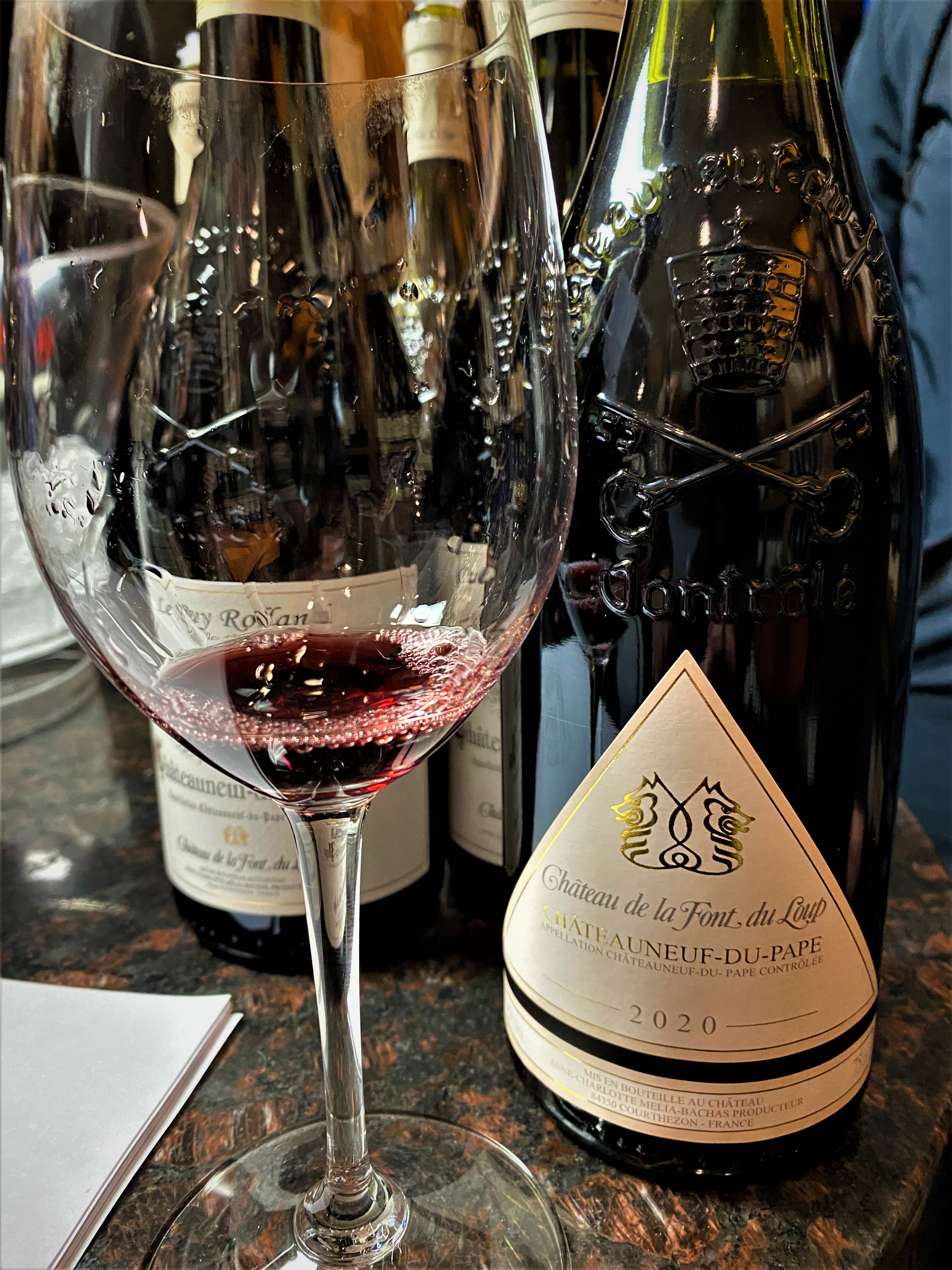
We then tasted Chateau de la Font, du Loup Chateauneuf-du-Pape 2020 and an estate wine. The estate is located on one of the highest points in the area, and the soil is mostly sand with rocks. While sand is not good for the vines normally, because it won’t keep enough water, the land is naturally hydrated by the natural spring on the property that it is named for. It is also one of coolest places in the appellation and hence slow ripening grapes. The wine is a blend of sixty-five percent Grenache, twenty percent Syrah, ten percent Mourvedre and five percent Cinsault, and these vines average about forty-five-years of age. The fruit is hand-harvested, destemmed, and meticulously inspected. The grapes are fermented separately. Initial Fermentation and Maceration lasts for three weeks in Concrete tanks with daily pumping for soft extraction and they use indigenous yeasts. The grapes are fermented separately: the Grenache is aged in a combination of tanks and foudres, the Syrah is aged in used French Oak barrels and half-muids, and the Mourvedre is aged in demi-muids (and not cataloguing for the Cinsault). The different wines are aged for sixteen to eighteen months, then racked and blended in concrete tanks for an additional six months. They average two-thousand cases annually of this wine. A nice garnet colored wine offering notes of red fruits, herbs, and florals. On the palate a good medium bodied wine offering tones of cherries, spices, a tinge of mint with ripe tannins and very well balanced with a medium length finish with a bit of terroir.
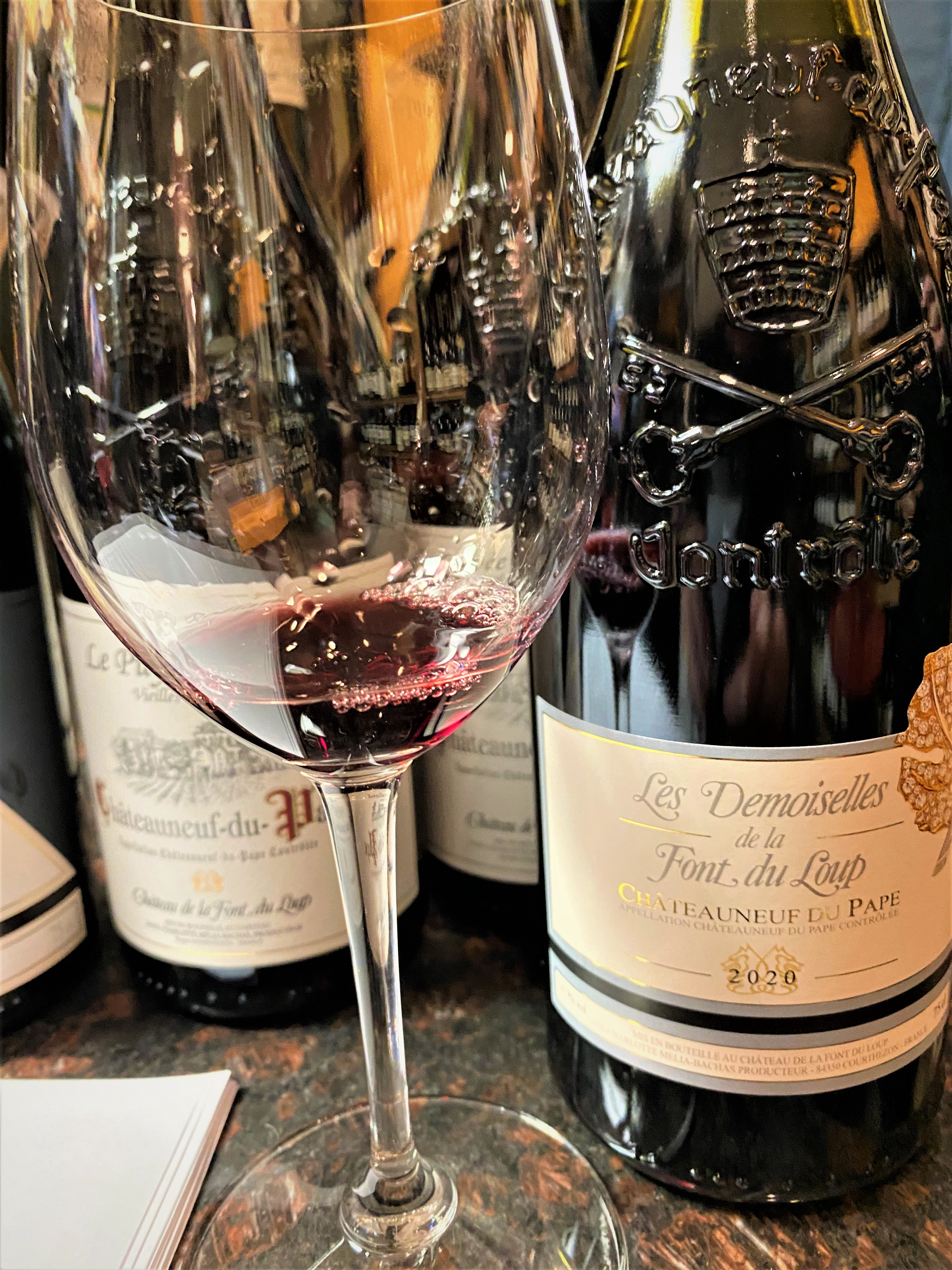
We then had Les Demoiselles de la Font, du Loup Chateauneuf-du-Pape 2020 another estate wine. Since they are located on one of the highest points of the appellation, the soil is sandy with stones. The fruit is hand-harvested, destemmed, meticulously inspected, and it is eighty percent Grenache and twenty percent Syrah. Initial Fermentation and Maceration for three weeks using indigenous yeasts in a Concrete tank. The wine is then aged for nine months in Concrete tanks. The wine is called Les Demoiselles, or in English, The Ladies and I concur, as this is the most elegant and feminine wine of the tasting; and when I say feminine, it goes back to my earliest years of learning about wines, when wines that were delicate and with finesse were described as feminine, as compared to in-your-face big jammy wines. This garnet-red wine with violet accents offered an excellent nose that required a couple of pauses as it offered notes of cherries and strawberries, orange zest, some smokiness and dried tobacco. On the palate, a medium-bodied wine with cherries and strawberries, soft tannins and a nice finish of fruit and smoky herbs. A very pleasant and pleasurable wine to have with friends and a good jovial chat.

 The Wine Raconteur
Thanks for this discovery
You are welcome and keep enjoying your wines.
– John