My Club Night at Rocky’s

Every now and then I speak of an evening with food and wine with my dinner club.  My club is now about one-hundred-thirty years or more old and counting.  The founders of this group, if one knew history, especially the history of Detroit would recognize their names as there are streets, buildings and businesses of those men, not to mention the immediate family of presidents, governors and mayors.  It is or was quite a lofty club in the early days, and by charter, there are only forty-four members allowed, and I think that was because of the size of the homes back then.  Originally the members would meet for dinner at a member’s home and that included dinner and drinks, and today I really don’t know of too many people that have a home to accommodate that crowd, let alone a spouse that would agree to cook for that large of a group.  The group survived the Great Depression by being dynamic for the times.  The meetings were moved to a residential hotel, that had a large dining/assembly room and three men were assigned to be hosts for the evening, of course they then ate on someone else’s dime for the rest of the year.  Eventually more and more of the members had moved out from the city into the suburbs and then the three man teams started selecting a restaurant that had a private dining room and that still worked out great, a method that we still use today, though there are fewer restaurants that still have private dining rooms.  I joined this august group of men in 1989, and I was assigned with two other men, one of who had joined in 1928.  Through all of the years, we have seen men who have had to leave from moving out of state, illnesses and death, but only once did we have a member who quit just prior to his turn to be host and the club had to pick up his third of the tab; and then he petitioned the club to be reinstated, was told that he would have to pay of his debt and he refused, and he is still not a member.  The only other unique case was a member that quit the year before his cycle of membership years would have made him the president of the group again, and as you can surmise he was up in the years, so he quit for a year and then rejoined as a new member; he never saw the cycle of membership to make him president before he made the big trip. 
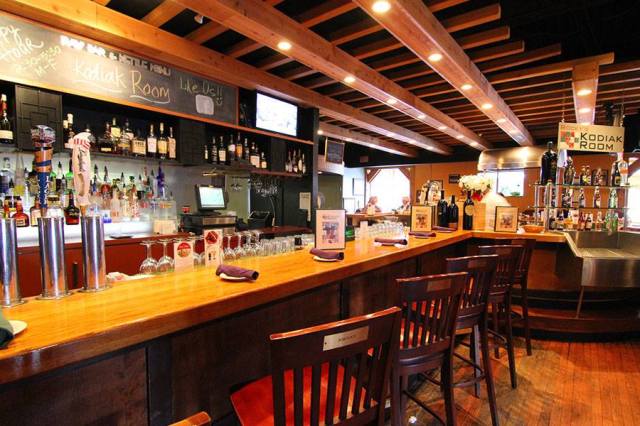
As you can see, I have been host many times over the years and at different venues, for a very long run, I was part of the group that had the Christmas meeting at a private yacht club, that several of our members belonged to (not me) and for that dinner we actually went from three to four and finally to five members because of the differential of cost, and  then we lost our members that belonged there.  My group has tried several different locations and I think Rocky’s will be the way for us.  We meet in the room in the back of the restaurants and we do stick out like a sore thumb these days, as we still require a coat and tie for dinner, and while one may see some gentlemen with sport coats on for dinner, there are few ties to be seen, outside of our group and I think it is still a nice touch.  The group had their choice of a New York Strip Steak, Chicken Piccata and Broiled Salmon.  There were also fresh baked dinner rolls, a nice tossed salad and a hot fudge sundae for dessert. 
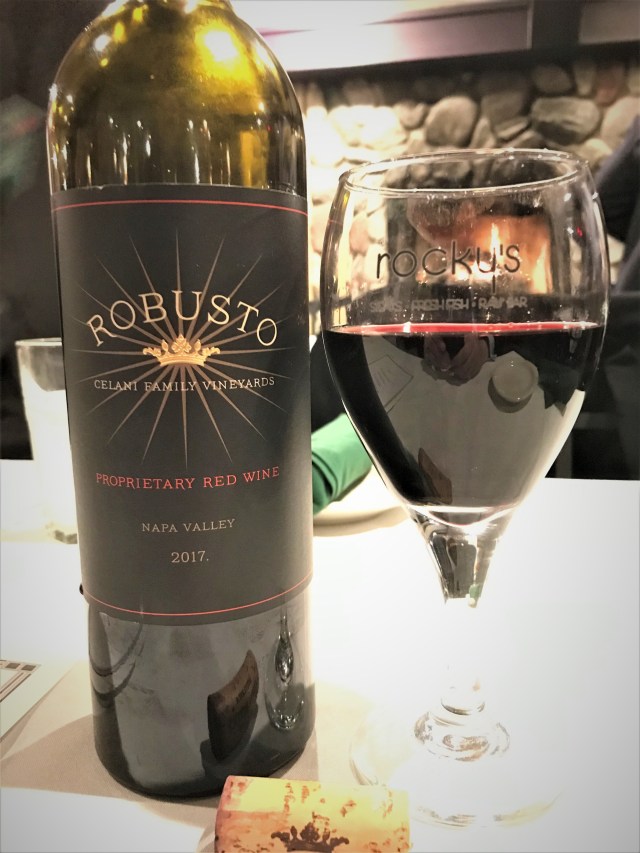
For the beverage selection of the meal, one of my other members and I get together and buy a bottle of wine to split, so that we can have a wine that is much more interesting than what is offered by the glass.  The other member is a real Pinot Noir enthusiast and he went on the restaurant’s web site and saw a Pinot from Willamette that he thought was interesting and I could see that, but they were sold out of his suggestion.  Then I saw a Red Blend that sounded good, and a third member asked if he could get into the wine selection, but when I told him that it was a Red Blend, he backed off, and may I say, it was his loss.  The last time, I had him stretch with a Merlot, and now he was going to trust me with a Blend.  We ordered a bottle of Celani Family Vineyards Robusto Proprietary Red Wine Napa Valley 2017.   I have gone to a Celani Family Vineyards wine tasting and I have some wines resting in my cellar from that event.  This was a new wine for me, but Tom Celani is lauded in the Detroit area for his largesse for charitable organizations that he helps in a grand manner.  He and his father ended up creating one of the largest Miller distribution companies in the United States along with other beers and wines.  Tom Celani fell in love with wines, first as a drinker and a collector and finally acquiring a Tuscan-style estate with seventeen acres of grapes and one-hundred-twenty olive trees in the foot hills of the Vaca Mountain range in Napa Valley.  As the proprietor of the Celani Family Vineyards he has chosen to bottle wine without costs becoming a consideration, to him wine is about quality and not quantity.  This is truly a Proprietary Red Blend, as there is no information even on the trade notes, but the winery grows Cabernet Sauvignon, Merlot and Cabernet Franc and they are partial to new French Oak.  This wine has been made to be enjoyed young and it truly is, with a fruit forward taste, but not a jammy Napa Cab, and softer tannins.  We were literally chewing this wine to get all the flavor and the finish was excellent, the perfect wine with our steaks.  I know that I will be booking Rocky’s for next year.    
Posted in Dining, Wine | Tagged , , , , , , , | Leave a comment

A Couple of Burgers

There are some nights when no one wants to cook, and at the same time, no one wants a real heavy meal.  There are even times when my Bride doesn’t want to be totally healthy and have a salad and I can appreciate that.  She suggested a burger, and I could go for that, now and then as well.  There used to be a bar that had the greatest burgers, the father was a customer of mine, and he would tell me, how he would go into the cellar of the bar and he had a formula for mixing so much ground sirloin, ground chuck, ground veal and either duck or goose fat (and each was different) for a truly wonderful ground round and a slice of cheese sometimes was overkill.  The sad news is that the father has passed away and his son, uses premade burgers and people still flock there to have them, but the father was proud of his mixture.  My Bride and I, alas, can no longer do “sliders” and they have been kind of resurrected.  When I was a kid after a night out of drinking, one could get ten for like a buck and a half and I used to joke that they would spray “essence of meat” on the buns while they were on the grill, before they put cheese and onions on the buns. 

Nowadays, when we think of a burger, we go to a steakhouse and have a burger in the bar area.  One has to trust that a steakhouse will have some great cuts of meat, even down to the meat that they grind up.  We went to Fleming’s Prime Steakhouse & Wine Bar.  We sat down and they brought us, a bowl of their house-made potato chips, and I am not a chip eater, but I enjoy theirs.  We also nibbled on an order of their Crispy Castelvetrano Olives.   We each went with an order of their Prime Burger, with Wisconsin Cheddar Cheese and Peppered Bacon, and instead of French Fries they substituted a couple of jumbo onion rings and it was more than enough to sate us. 

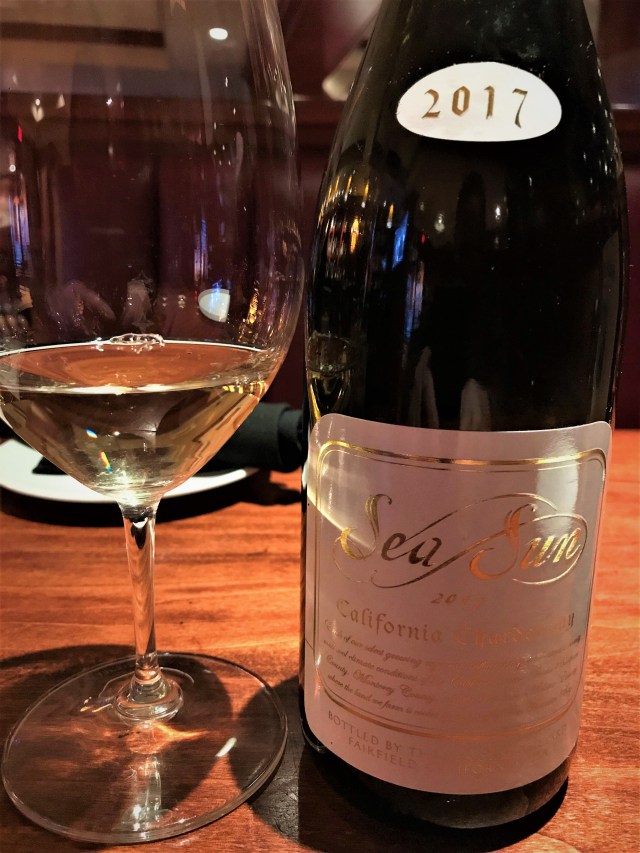
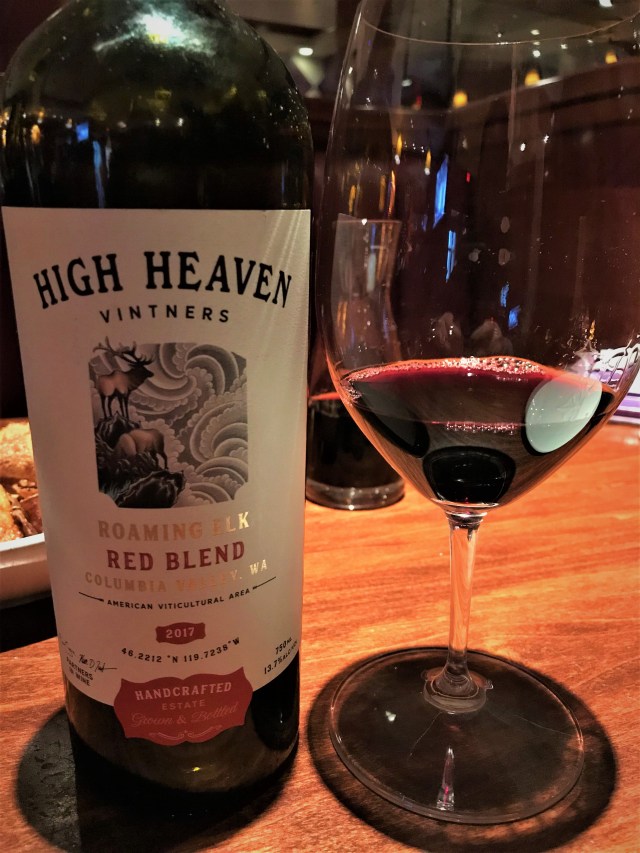
Of course, man and woman do not live on bread alone.  My Bride ordered a glass of Sea Sun California Chardonnay 2017.   She enjoys a glass of Chardonnay and that is usually her first choice, as it is chilled and should be refreshing.  I had never heard of this wine, but it is from the Wagner Family of Wines, and I would venture that most of the steakhouses across this country carry Caymus.  Sea Sun a new wine and the fruit is harvested from Santa Barbara, Monterey and Solano Counties.  It was a nice balanced white wine featuring some fruit, some acidity and some oak, an easy drinking wine.  I went with a glass of High Heaven Vintners Roaming Elk Red Blend Columbia Valley 2017 that is from Palm Bay International, A Taub Family Company.  All of the grapes are grown or controlled by the winery from family-owned vineyards and the winery was established in 1980.  High Heavens Vintners is owned by the Zirkle Fruit Company and they have been farming apples, pears, cherries and wine grapes since the 1880’s.  They are in the fifth generation of a family run business.   The wine is sixty percent Syrah and forty percent Merlot and was aged for eighteen months in Stainless Steel.  The wine had a soft floral nose and fruit forward with some nice tannins to compliment the finish.  It was a nice wine for the burgers and many other meat dishes.  One of the best parts of the evening was there was nothing to clean up afterwards.

Posted in Dining, Wine | Tagged , , , , , , , , , , , , | 1 Comment

Les Vignobles Foncalieu

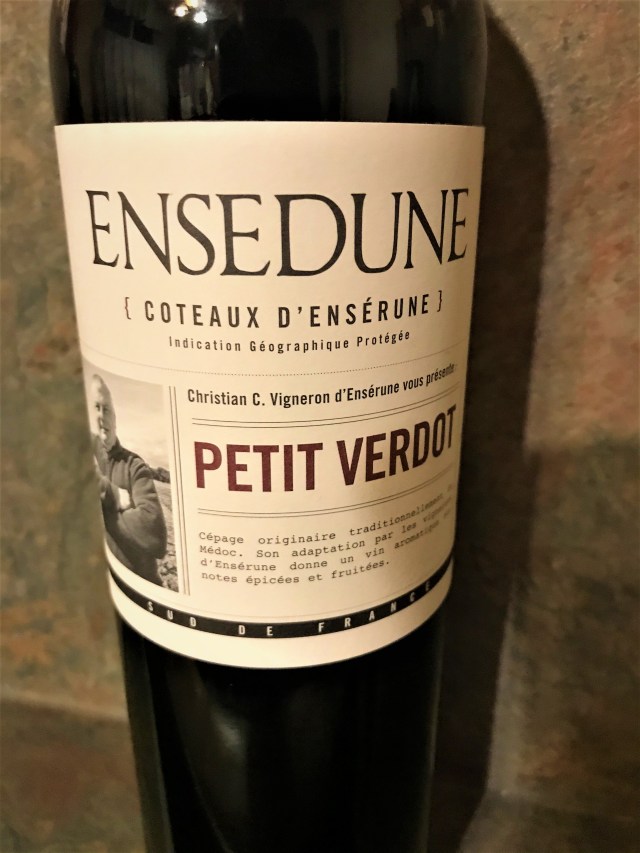
One of the best things for me when I get the monthly wine club specials from the Fine Wine Source is the education that I get from these wines.  In 1993 they opened up the doors in Livonia, Michigan and they are really the only wine store that I have been in that only sells wine, though it took me to be retired to discover the shop, because they are closed on Sundays and Mondays, which always coincided with the days that I had off in retailing. 

The origins of the Vignerons du Pays d’Enserune date back to the beginning of organized winegrowing with the construction of the first cooperative winery in France in the village of Maraussan in 1901. Les Vignobles Foncalieu is a union of cooperatives in the heart of Languedoc.  The regions encompass plenty of land and soils from the mountains to the ocean, with four-thousand hectares of vineyards and over 650 winegrowers.  In 2017, the trade periodical Drinks International listed Foncalieu to be included in their list of the fifty most well-known brands of wine in the world.  They have developed twelve different collections to take advantage of the assorted terroirs of their association of growers.

At the edge of the Mediterranean Sea, the Oppidum Romain d’Enserune dominates the terroir of the Enserune wines.  It is the warmest and driest climate of France.  Created by teamwork of the varied growers is how they can create singular grape varietal wines as in the Les Vignobles Foncalieu Ensedune Petit Verdot Coteaux d’Enserune 2017 of the Languedoc.  The Coteaux d’Enserune IGP was originally called Vin de Pays des Coteaux d’Enserune, but in 2009 the term Vin de Pays was phased out for the IGP designation to make the wine regions of France coincide more with the Common Market, and to eliminate the poor image that was associated with Vin de Pays.  Petit Verdot is one of the grapes found in the “Bordeaux Blend” and is a thick skin grape with small berries that produces an inky dark juice high in tannins.  The wine promises to have a nose of red fruits and floral spices, with a taste evoking peppers and spices.  It might be my first encounter with a wine that is strictly Petit Verdot.

Posted in Wine | Tagged , , , | Leave a comment

Rabble Wine Red Blend

It is that time of the year when I get to pick up the monthly club wines from Fine Wine Source in Livonia, Michigan.  I can’t even tell you what the cost is each month, but it is just charged on a card and then we get a notice to come by and pick up the two bottles.   One of the perks of joining is to get notice of special wine tastings either through a distributor or directly by the winery.  I also like the perk, where for the club members there are two prices, one is retail and the other is a case discount price, even if you don’t purchase a case or a mixed case, though I am sure that they appreciate it when we do.

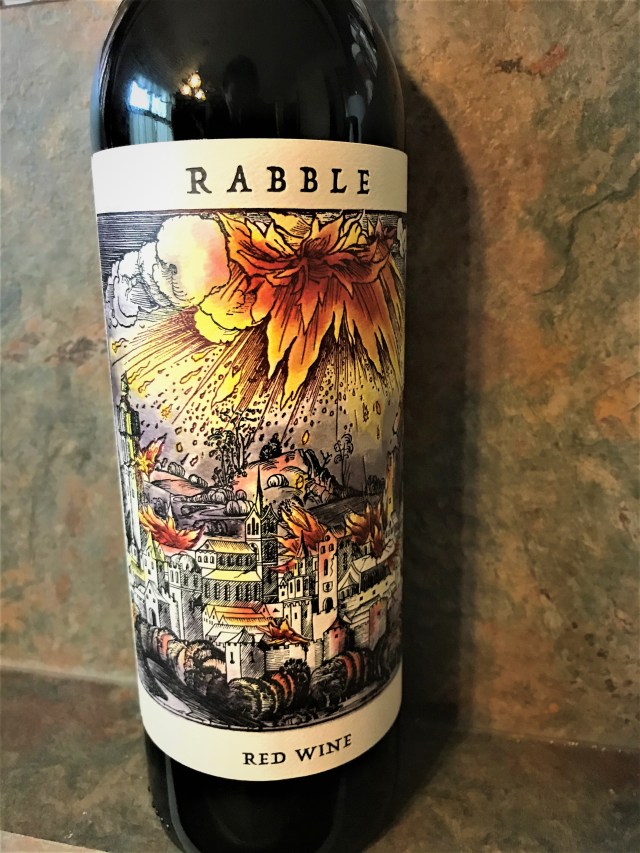
Rabble Wine Company of Paso Robles was founded by Rob Murray and it was originally known as Rob Murray Vineyards and then it became Force of Nature, before settling into its current name.  The Rabble Wine Company has four distinct brands under its umbrella: Rabble, Tooth & Nail, Amor Fati and Stasis.  The Winemaker Jeremy Leffert is philosophical about his word and feels that he is a shepherd guiding the final product.  He is partial to using wild yeast strains suitable for each vineyard and believes on using all types of vessels for aging the wines from a mix of oak barrels, foudres (very large wooden vats that are bigger than the average barrel and some actually will hold a thousand liters of wine), concrete tanks and what ever else he has decided on, to evoke the full flavor of the juice.

The Rabble Wine Red Blend 2017 is immediately noteworthy just from the selection of the wine label which is a rendition of an historical wood block print from the Nuremberg Chronicle (late 1400’s) that is textured and tactile depicting Nature’s wrath, illustrating the apocalyptic comet falling upon Florence with the Unicorn and Phoenix. The wine is a blend of seventy-seven percent Merlot, fourteen percent Cabernet Sauvignon and nine percent Petite Sirah and barrel aged for ten months and a potential cellar aging of three to seven years.  The fruit all came from their Mossfire Ranch Vineyard which is one of their flagship vineyards for red wine varietals.  The winemaker recommends decanting the wine one or two hours early for maximum taste enjoyment.  The tasting notes promise a nose of dark cherries and blackberries with some coffee and chocolate.  With a taste featuring silky tannins, a touch of oak and a finish of dried dark berries.  As for food pairing, a good Merlot will pair with most dishes, including oily and meaty fish.  I am looking forward to trying this wine.

Posted in Wine | Tagged , , , , , , , , | Leave a comment

Ford, Ferrari and Iococca

We went out to see Ford v. Ferrari the first weekend it came out.  It is hard anymore for us to agree on a film to go see as most of the films are directed to an audience that thinks a blue screen with computer generated action is the epitome of cinematography.  Also, I do believe that my Bride and I are not in the proper demographics for a successful film, which according to some film critics must be from ages 5 to 19, and that would explain some of their poorly written reviews.  We went to see a film, that I thought would have no commercial acceptance, except perhaps for the Detroit area, and according to some of the financial figures I have seen, I was wrong.  Who would have thought that a film with dialogue and no superheroes would do well at the box office?  Thankfully, we got to the cineplex early to get a decent seat, because the room filled up.

I was afraid that my Bride would be bored and fall asleep, like I have done, on some of her choices.  She found the film captivating, and to use a racing term, she did not make a “pit stop” during the entire film.  The research and the recreations of the different stretches and turns of what the Le Mans track was like back then was incredible, plus each car was choreographed to be in the proper sequence at all times.   The film was filled with names like Shelby, Miles, McLaren, Ford, Ferrari and Iacocca.  These were names that I heard most of my professional life, as I sold and managed a ten-thousand square foot clothing store in Dearborn, which is where Ford Motor Company is headquartered, back in the day, when men dressed for success in business.  I also remember waiting on the men that actually worked for “Ford Racing” back in the day and they were not of the same bolt of cloth that most of FoMoCo was made of.  It was the heady days and these men were Mavericks in the corporate world and they kind of got away with it.  They were politically incorrect when that term hadn’t even been thought of, they were just men that liked cars and adrenaline rushes.

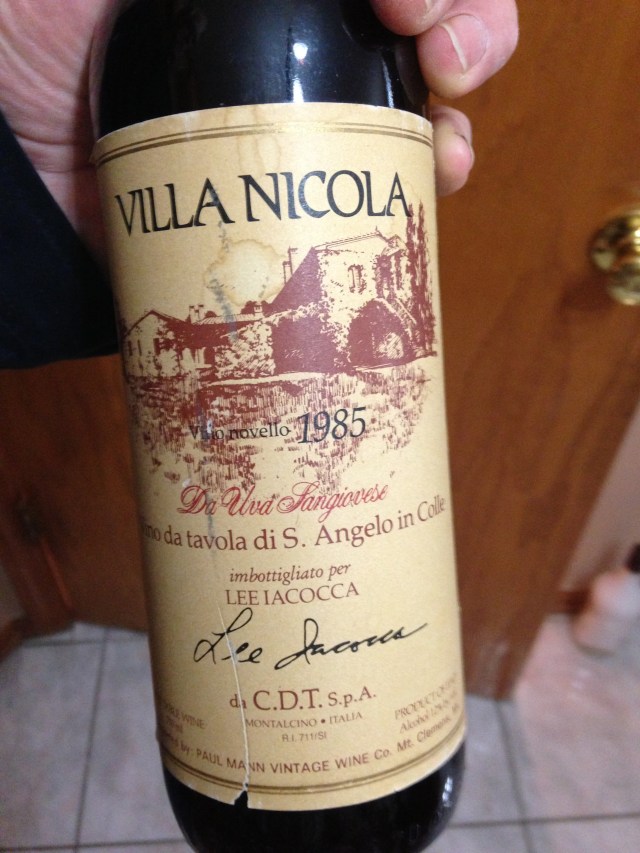
Lee Iacocca was one of the suits at headquarters, but he was a car-guy, a concept that I think is lost on a lot of auto-execs these days.  He had a rather colorful career at Fords and then he went to Chrysler.  This is all a segue to introduce Lee Iacocca into a wine article.  When the restaurant industry started to make changes in staid Detroit, with the introduction of some national steak houses, one of the novelties that started making an appearance was private lock boxes that would contain special liquors or wine for the people who made arrangements to have a lock box.  Lee Iacocca was a name that I saw several times around the city, in some of the finest places, back when a cigar was the perfect way to end a grand meal.  Lee Iacocca also dabbled in wine making, in all likelihood he did some investing and got his name on the wine label and it was probably a great marketing tool as well.  I have found two wines in my search for his wines that carried “vino da tavola sangiovese di S. Angelo in Colle” and the Villa Nicola name with the legend “imbotigliato per Lee Iacocca.”  One of the wines was a Rosso di Montalcino and the other one that I encountered was “Da Uva Sangiovese” and they were both from Montalcino.  Alas the bottle I had was brought to a party and it had been stored improperly and it was over the hill, which is a shame, because I have found Sangiovese wines to be quite long lived and the wine was from 1985 and the party was 2013.  This is an example of how my brain works, seeing one subject and connecting it to another subject, and for me it works.  We also give the film two thumbs up, if you are curious and we would have no problem seeing the film again.

Posted in Wine | Tagged , , , , , | 1 Comment

Voskeni Red and Some More Thoughts

This is the last of my notes on the Armenian wines that I tasted at a charity event and the evening was fun.  I have also had time to think about the affair and the wines a bit more and I will get to my additional thoughts in a while.  Armenia for those that do not know the country, is predominately mountains and basically over 1,000 meters above Sea Level.  The climate encompasses very hot summers and freezing winters.  The soil is basically volcanic and limestone with ground waters located very deep below the ground, which makes all plants struggle for growth.  Grapes have grown historically over the bulk of the country, but not in a serious winemaking structure.  There are currently about forty wineries now in Armenia and the almost ninety percent of the concerns are located in the Ararat, Armavir, Aragatsotn and Vayots Dzor regions and not surprisingly these are historically known for viticulture.

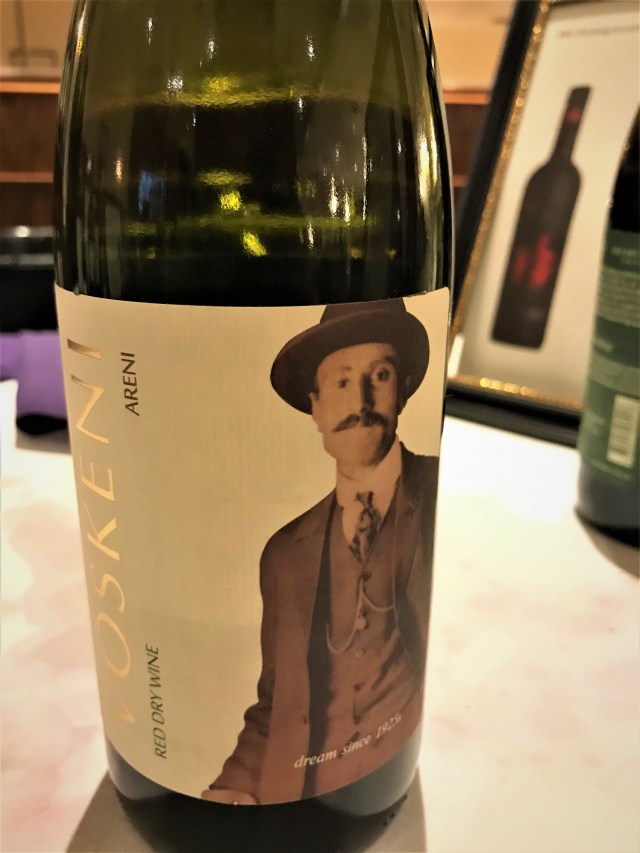
 Voskeni Wines are located at Sardarapat, Ararat Valley and is a family owned and managed winery.  The vineyard was founded by the elder family forefather Smbat Mateossian, a businessman from Boston who moved to Armenia in the early 1920’s.  He dreamed of having his own winery, but his property was confiscated by the Bolsheviks.  His family in 2008 has come full circle and bought the vineyard and are intent on creating the wine that Smbat Mateossian dreamed of.   Voskeni Wines Dry Red Areni Noir Vayots Dzor 2016 was very light in the tannins and my initial notes refer to this wine as “off.”

As I have had time to ponder my notes and to reassess the reactions of the people that I talked to, I am going to say that my notes of “off” were from trying to compare the wines to the known varietals that I and most of the other wine tasters were used to.  This was the first time for one of the wineries and for the others, if it wasn’t the debut, it was close and these are very young vines, so by nature the wines will be lighter in taste and texture.  Also because of the archaic structure of the wine industry in Michigan, most of these wines were expedited at the last minute for this tasting and that is never good for wines.  As I looked back at my impromptu tasting table, it was not as organized, nor were the wines offered in a curated manner.  I think that as I get a chance to taste more wines from Armenia and not in such an impromptu manner, and as the vines mature, the wines will get better marks and notes and more universal acceptance.  I went in, with great expectations and left with some hesitations, and I remember my first time trying wines in Michigan thirty or forty years ago, I think I was in the same position, and now I am an avid fan of the winemaking in this state, and I am sure that Armenia will reach that same plateau soon enough, and it gives me a reason to try the celebrated Zorah Karasi, not to mention that I will eventually catch up with my cousin and hear her reviews.

Posted in Wine | Tagged , , , | 1 Comment

Sarafian Vineyards Aran Wines

When I got the mailer for the Armenian wine tasting “A Toast to the Vine” I originally thought that there was only going to be wines from one winery.  I knew that it was going to be a charity event to raise money for The Armenian Home for the Aged and one never knows if one will need a service like that.  I also knew that they were going to have a raffle ticket for an Armenian Wine Trip, which sounds glamorous, but I declined, because I don’t think that I could get around with the scant Armenian that I know, and that most of it was an almost hundred year dialect of Western Armenia and the wine country is in what was known as Eastern Armenia.  I probably could have survived, but I knew that there were others that would truly enjoy that trip. 

The reason that I thought only one winery would be featured was because the mailer said “Alex and Talar Sarafian of Sarafian Vineyards, Armenia will talk about wines of Armenia and the upcoming launch of Aran Wines this Fall.” They were a charming couple to talk to and they were so fortunate to have their two wines on the same table.  The Sarafians have been in viticulture in the developing region of Artsakh since 2005 and the have planted fifteen acres in the Askeran plains.  According to legend the two river valleys Kur and Arax in Artsakh were among the first to be settled by the descendants of Noah.  A local chieftain named Aran was appointed by the Second Century (AD) Armenian King Vagharsh I to be governor of the land.  Folk etymology holds that the name Artsakh is derived from “Ar” (Aran) and “tsakh” (woods or garden).

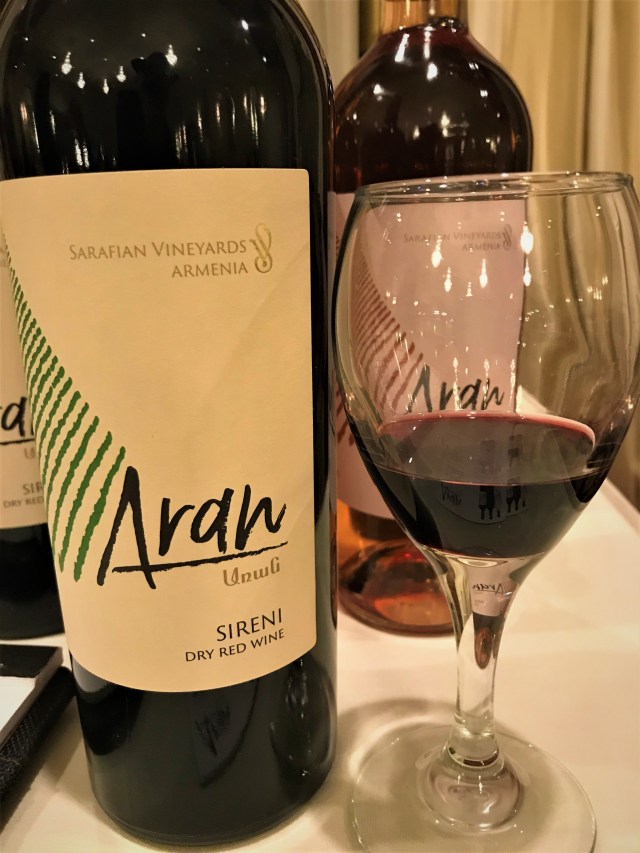
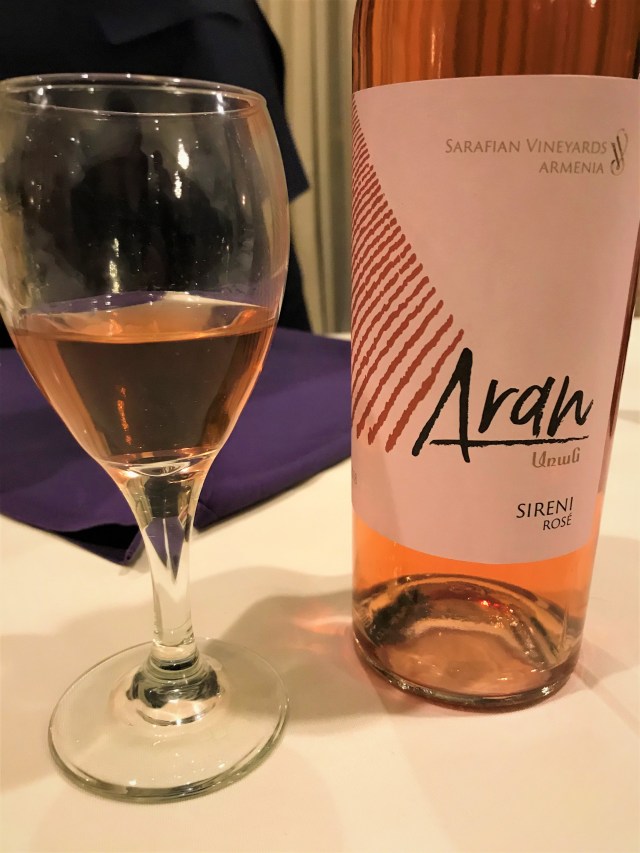
The Sarafians brought with them two of the three wines that will be making their debut.  The first wine was the Aran Rosé Sireni 2018.  The Sarafian Vineyard only grows one varietal at the time and it is the Sireni or Kndoghni grape. The Sireni grape is indigenous to Armenia in the Artsakh region and is deep in color and richness and is used for wines and Brandies.   This wine was aged for twelve months in Stainless Steel and I found it refreshing with a pinkish-salmon color with a soft nose.  The Aran Dry Red Sireni 2018 was also aged for twelve months in Stainless Steel, it had a very deep color, but the nose and finish were surprisingly on the soft side, as I expected a bit more fruit, but it did sound like they had rushed the wines to Detroit, so perhaps they had not settled down from their flight.  There is a third Aran wine that was not at the tasting and it may still be in the finishing stages and that is the Aran Dry Red Reserve Sireni 2018 that was aged in Caucasian Oak for twelve months and perhaps the oak may bring out some of the complexity of the Sireni grape. 

Posted in Wine | Tagged , , , , , , | 2 Comments

Trinity Canyon Vineyards

When you are tasting Armenian wines and you see the name Trinity, it doesn’t conjure up images of an Armenian winery.  Sure, Armenia was the first Christian nation in the history of the world, but Trinity is very American (English) sounding and almost religious in nature.  Then I eventually found out that while the winery was referred to as Trinity, it was really Trinity Canyon Vineyards and that sounds like it should be on the west coast of America, but there are in reality three holy mountains of Armenia, and the family that lived around the block from my Grandparents where my  Father and his Brother and Sisters grew up knew the three sons of that family who were named for the three mountains; Ararat, Christopher and Masis, and that is how I was always able to remember the names of the mountains, not to mention, back when I was a kid, growing up in Detroit, the old lady that lived next door to us, went back to the old country once, and when she returned, she brought back a painting on velvet of the three mountains and that is in my house, stored away, back when velvet paintings was a world-wide rage.

Trinity Canyon Vineyards was founded in 2009 by three wine lovers and associated themselves with some winegrowers and winemakers in the Vayots Dzor Highlands, near the oldest established wine producing site in the world.  The Executive Director at Trinity is Hovakim Saghatelyan is a civil engineer, a poet and an entrepreneur.  Levon Hakobyan is the Vineyard Manager and his father also grew grapes before him, and has planted more than thirty hectares of vineyards and has acted as a consultant since 1981.  The Winemaker is Artem Pareghyan who joined Trinity in 2013 and holds degrees in Oenology and Viticulture from France and Germany.  They also have a Consultant Winemaker in Jean Luc Isnard, who with his wife have Domain Solence in Ventoux, France, as well as the Director of Organic Winegrowers of Rhone Valley. 

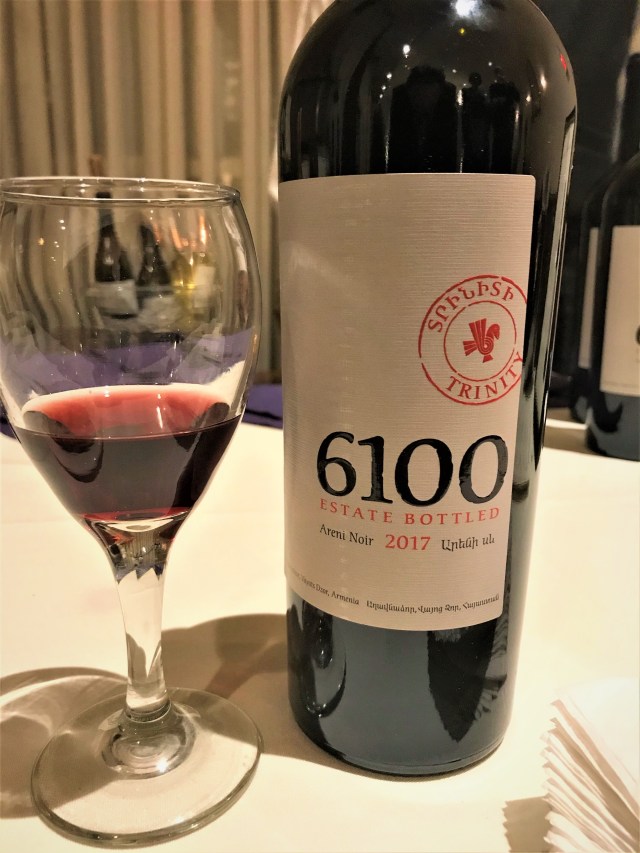
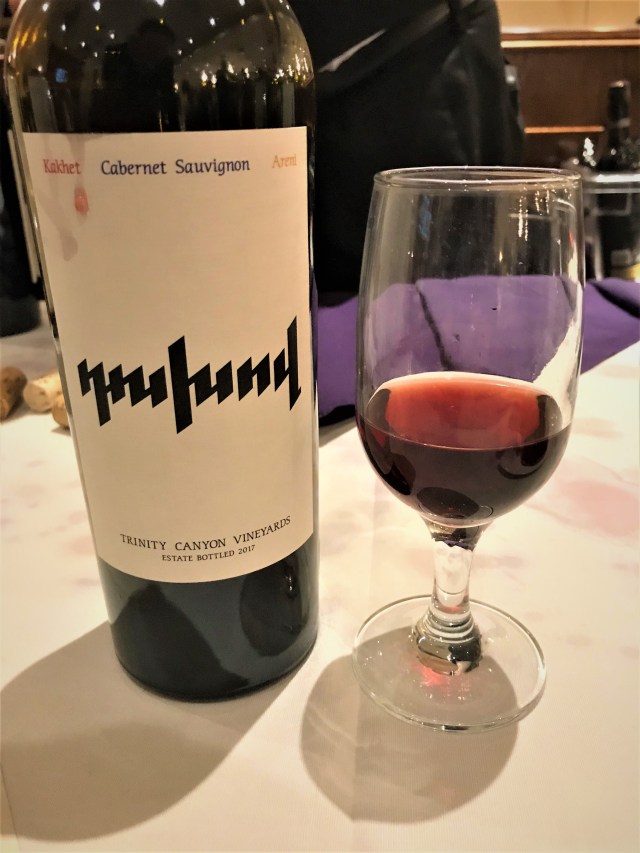
Trinity Canyon Vineyards had four wines represented at the tasting, and the winery actually has eleven wines on their web site.  Alas, somehow, I only tasted two of the four wines that were present.  The two wines that I missed were the Trinity Canyon Vineyards 6100 Rosé 2016 made from the Areni Noir grape and the Trinity Canyon Vineyards Areni Noir 2015.  The first wine that I did find and have was the Trinity Canyons Vineyards 6100 Eh Reserve Areni Noir Vayots Dzor 2017.  The wine underwent fermentation in Stainless Steel and then was aged for fourteen months in Caucasian Oak barrels.  This was one of the first red wines that I enjoyed as there was some terroir and tannins and it gave me a reason to go get a couple more lamb chops to enjoy with the wine.  The other red from them also caused me to get a few more lamb chops and this was the Trinity Canyon Vineyards Dukhov 2017, that was not on their website.  Dukhov is one of the slogans of the Armenian Velvet Revolution, a peaceful Anti-Government Movement that raised hopes for a free election in the country.  This wine was a blend of ten percent Areni Noir, sixty-five percent Kakhet and twenty-five percent Cabernet Sauvignon.  While this wine was good, I preferred the 6100 Eh Reserve better. 

Posted in Wine | Tagged , , , , , , , | Leave a comment

Van Ardi Wines

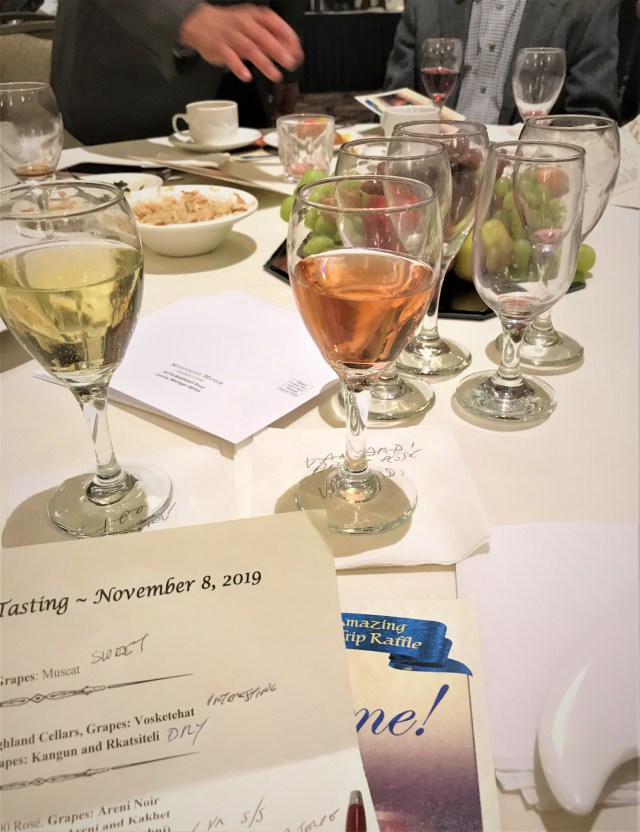
The chance to taste many Armenian wines at one time, is an offer that is hard to refuse.  It was a charity event and all the food offered was Armenian.  It was a delightful evening.  If I had a complaint, it would be that it was not organized as a wine tasting, the evening was a fund raiser with the ability to graze on different foods and as a bonus they were pouring wines from Armenia.  I think that I would have liked a more formal wine tasting, but that is just me. 

One of the featured wineries with three different wines for the evening was Van Ardi Wines from the Aragatsotn region of Armenia.  I am going to guess that they are relatively new, as their website started in 2014. Van Ardi Wines is a self-proclaimed family run boutique winery located in one of the ancient wine making regions of Armenia, nestled between the mountains of Ararat, Aragats and Ara.  They only use estate grown grapes; Areni Noir, Kakhet, Haghtanak and Kangun which are indigenous to Armenia and they also grow Syrah; and they are planning to grow some other almost forgotten, but indigenous varietals in the future.

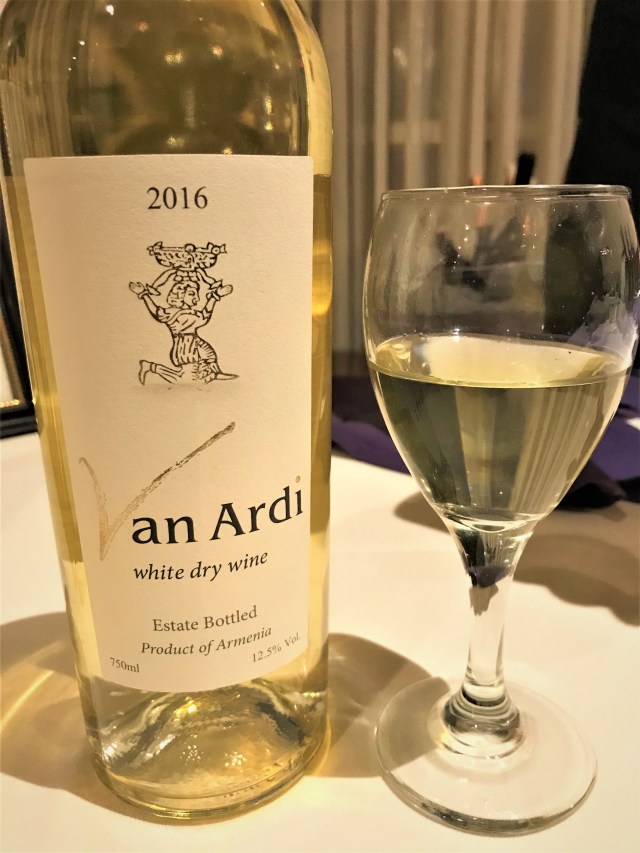
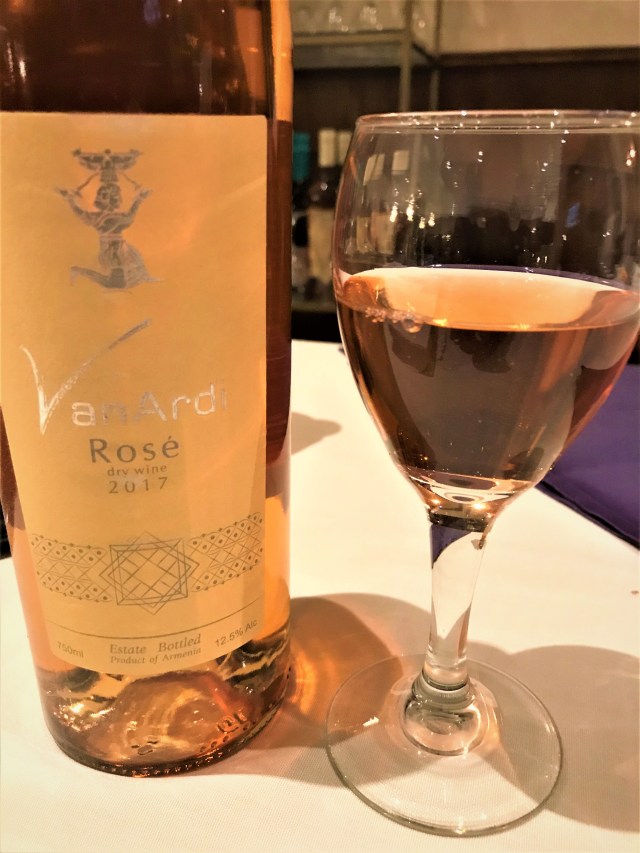
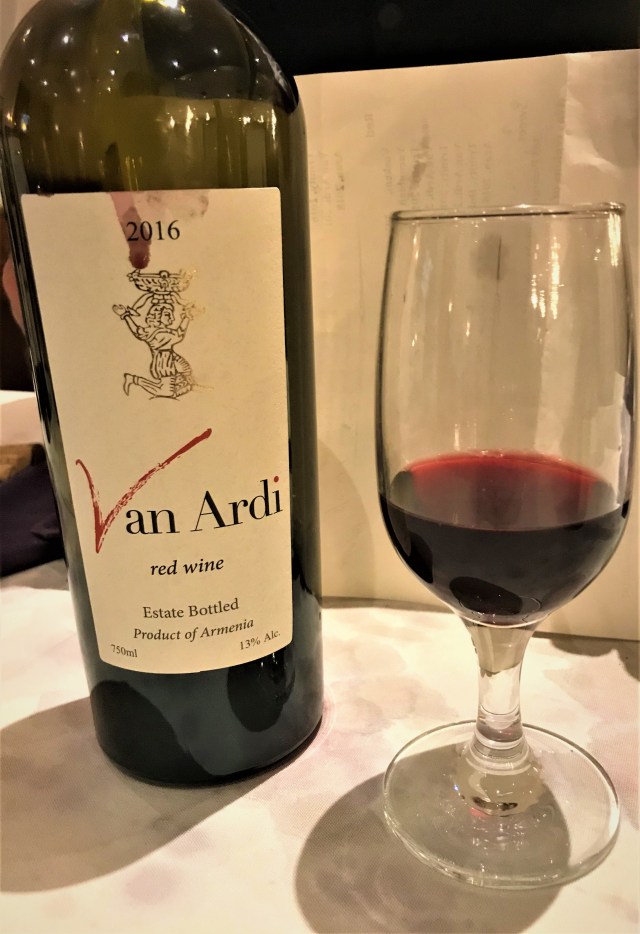
At the event there were three Van Ardi wines being offered, a white, a rosé and a red.  The first wine that I tried was the Van Ardi White Dry Wine Ashtarak 2016.  The soil of most of Armenia is volcanic and limestone.  The wine is a blend of seventy percent Kangun and thirty percent Rkatsiteli.  Kangun is an Armenian varietal that is originally a Soviet era hybrid crossing local Armenian indigenous grapes (?) and the Georgian grape Rkatsiteli, and even the name means “sturdy” as what is required from the severe winters in Armenia and the surrounding countries, and the grape is used both for wine and for the famed Armenian Brandy.   Rkatsiteli is another white wine grape that is found in the Trans-Caucasian region and is most know in Georgia and is one of their famed varietals.  The grape is very popular in the region because it can survive the winters, maintains good acidity and since it is a rather balanced, it is used for table wines, sparkling wines, dessert wines, fortified wines and Brandy.  This particular wine was interesting in that it was dry with hints of pear and a finish showcasing the terroir of the region.  I would like this wine with nuts, cheese and charcuterie and especially with company in the living room, before we go into the dining room to eat.  I then tried the Van Ardi Ashtarak Rosé 2017 which was a blend of Areni Noir and Kakhet.  The Areni Noir is the most prominent varietal of Armenia and has become popular internationally only recently when Bloomberg’s “Top 10 Wines of 2012” listed Zorah Karasi Areni Noir 2010 was listed alongside of Chateau Haut-Brion 1989 and Quinta do Noval Nacional Port NV.  I found the wine to be a rather disconcerting murky dark pink, with no noticeable nose and my only description as I was writing my notes was “off” and while I would like to be more of a cheer leader for these wines, I have to be honest and say that I would not buy this wine.  The next wine that I had was the Van Ardi Red Wine Ashtarak 2016 and the wine is a blend of forty percent Areni Noir, thirty percent Kakhet and thirty percent Haghtanak.  The Kakhet grape, alas I can find no information, other than it imparts good acidity to a wine when blended, and it could possibly be from Georgia, as the main growing region there, especially for the famed Saperavi grape is from Kakheti.  Haghtanak is Armenian for “victory” and is a modern Soviet period hybrid of Armenian varietals (?) and Georgian Saperavi which produces dark colored juice with black fruit flavors and a high sugar content.  This wine was also described in my notes at the tasting as “off” as it reminded me of some of the early Cold Hardy Red wines that were first popular in Michigan forty years ago.  The last wine would have been interesting to try, but I saw it in the handouts, but I must have missed it on the assorted tables was the Van Ardi Areni Reserve 2016 which was a blend of Syrah and Kakhet.   

Posted in Wine | Tagged , , , , , , , , , | Leave a comment

Koor and Yacoubian Hobbs

I had the pleasure of tasting several different Armenian wines the other night at a charity event and two wineries were represented at the tasting with only one wine apiece.  During the last forty plus years that I can account for, there has been a dearth of wines from Armenia, recently we have seen some Brandy, but in one evening I had a wonderful chance to try some wines that were under the radar.  I am sure that part of the reason is that Armenia since their ill-fated period of independence, found themselves under the heavy oppression of the Communists in the Soviet Union.  The Socialist structure was against the concept of any form of capitalism, unless the proper individuals could get more comfortable while those around them maintained their suffering.  Thankfully Communism and or Socialism failed even in Russia and all the smaller entities were given their “independence” and left for the wolves.  Armenia for the most part has struggled to start life anew and to grasp onto business as a way to make the country great and to prosper.  Viniculture is one of the avenues that have seen success, and it is understandable as this is the part of the world where wine making began. 

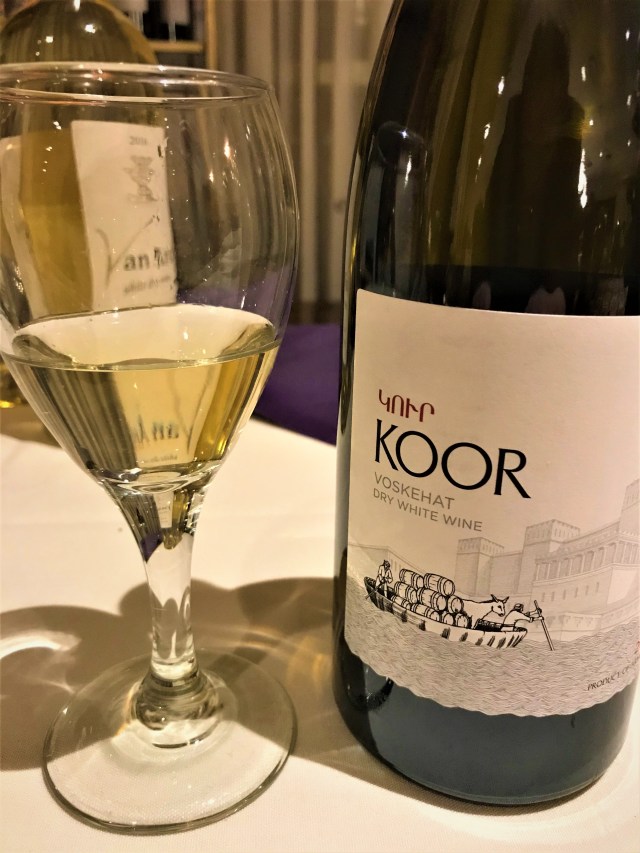
Koor by Highland Cellars was formed in 2014 when a group of Armenian friends, that returned to the homeland from other lands met and climbed Mount Ararat.  From this endeavor they decided to stay and join the reviving wine making industry in Armenia and to only use indigenous grapes.  The name Koor is an homage to the ancient Armenian riverboats that aided in the commerce of merchants from Armenia to Babylon down the Euphrates River.  Koor Wines at the moment offers two red wines, a regular and a reserve and one white wine, and it was the white wine that I tasted.  I can only speak for the Highland Cellars “Koor” Vosketehat Vayots Dzor 2017.  The grape varietal Vosketehat translates from Classic Armenian as “the golden seed” and has been in the area since history began.  The grape is floral with a natural acidity that makes it work well with foods, more savory than sweet.  There are four major regions for Armenian wines and Vayots Dzor is one of them.  The wine was very interesting with a subtle floral nose and delivered very soft traces of stone fruit, but the terroir of volcanic soil and limestone had the most pronounced impact on the finish.  I was listening to several people that thought it was a terrible Chardonnay, but I did try to explain to some that it was not a Chardonnay at all, but so many people see a white wine and think of that grape.  I would have it again, at the beginning of a meal, especially with cheese and charcuterie and even Armenian Toorshee, which is usually a mixture of pickles, cabbage, peppers and carrots, as I think the spiciness of the different pickled entities would be a great compliment.  

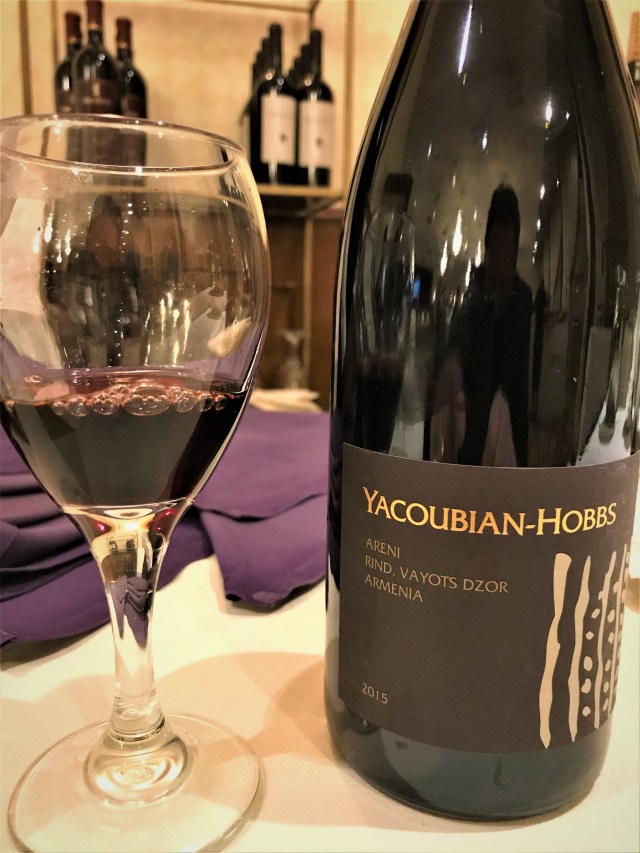
The other wine that I will discuss is the Yacoubian Hobbs Areni Noir Vayots Dzor 2015 that I had actually read about and was glad to see its presence and I was looking forward to trying it.  Paul Hobbs of California has been partnered with at least two wineries outside of the United States and here with the Yacoubian family.  The partnership began in 2008 and a new vineyard was planted in 2014 near the Areni – 1 Cave, the site of the world’s first commercial winery.  The Areni Noir grape is ancient in Armenia, but a fresh newcomer to the international wine community; it is a dark, thick skin grape that is perfectly adapted to the major temperature swings in the high elevation plateau where the grapes grow best.  This wine is also from the Vayots Dzor region.  The wine was fermented and aged in Stainless Steel and eleven-hundred cases were produced.  As I stood in line to get a taste of the wine, the couple in front of me, took one sip, poured the balance of the wine into the spittoon, and immediately rinsed the glass with water, looked at me, and told me not to bother, but I had to try it.  They were absolutely right, I could find no redeeming qualities to the wine, and I really would prefer not to say that.  The entire wine was off, the nose was non-existent and the wine had nothing worth noting, I could not even find any words to describe what I was tasting.  That was a disappointment, but there were still other wines to try, and I don’t stop, just because of one wine.

Posted in Wine | Tagged , , , , , , | Leave a comment