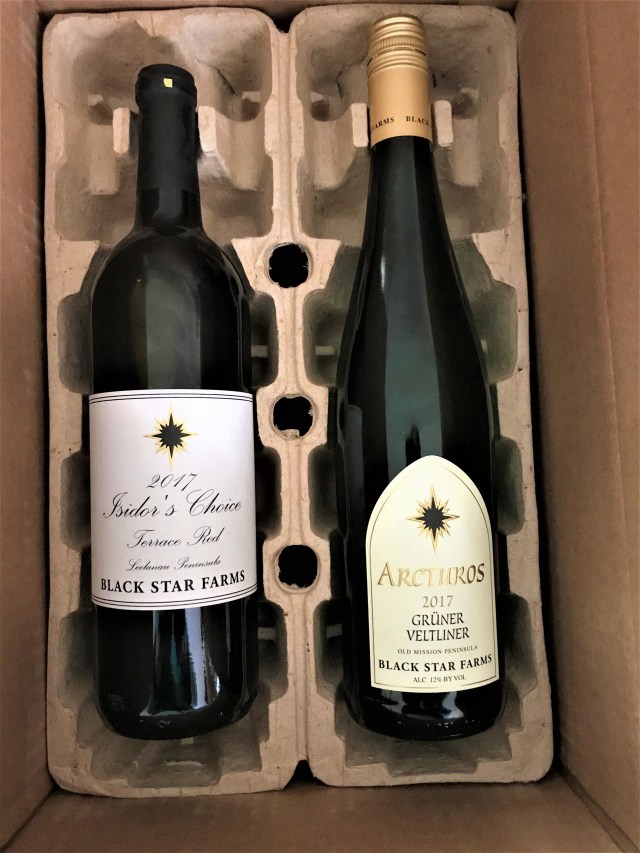
I guess there is joy that is hard to explain, unless you really enjoy wines, when you open up the new carton from your wine club. This particular club is Black Star Farms near Traverse City in the northern part of the lower peninsula. Black Star Farms is rather unique in that they now have vineyards, facilities and tasting rooms on both peninsulas surrounding Traverse City, that is Leelanau Peninsula and Old Mission Peninsula; and both have their own AVA.
Leelanau Peninsula is having two different events one in March and one in May to entice wine lovers to come and join the participating wineries for both events. Old Mission Peninsula is celebrating Blossom Day on May 16, where they welcome Spring and they release the new wines all along the trail and the participating wineries there. The good news is that they are feeling Spring Fever up in the wine country, as they had a relatively mild winter and they note that there is only six to eight inches of snow in the vineyards, which is good, as the ground stays cold for a little while longer and there is not even snow to cause in-row flooding during the thaw.
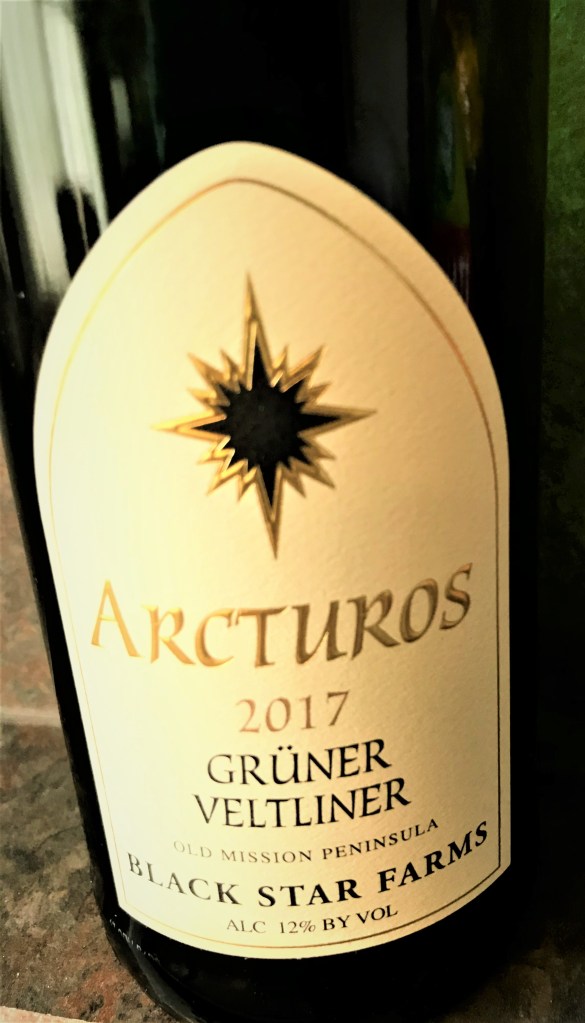
Black Star Farms Arcturos Gruner Veltliner 2017 is the other wine that we have received. The Arcturos label is their designation of their premium wines. Gruner Veltliner is by far the signature grape of Austria and it is the most planted varietal there. The wine is noted for its citrus nose, most notably lemon peel and grapefruit, complimented by tastes of stone fruits and a finish that evokes green and white pepper. The wine tends to deliver freshness, crispness and the local terroir, some of the wineries in Austria also show some “spritz” as the wine is bottled so quickly. This particular wine according to the winery is promising some notes of golden delicious apples and yellow plums, with some traces of grassiness and white pepper. They suggest that it will be great with fish and white meats, but I think it sounds like it will be better with appetizers and great conversations.
It is that time of the year when we received another club shipment from Black Star Farms. We have been stopping by there constantly over the years when we are up North in the Lower Peninsula of Michigan and if you looked at the back of your left hand, it would be near your pinkie fingernail, and voila, you are now a Michigander. We are hoping that the end of the snow season is coming, but when you live in Michigan, one never knows and this weather phenomenon has been going on, since they have been recording history in the state and long before weather was politicized. Later on, this year, we are looking forward to at least one trip to that area and to do some wining and dining.
In 1998 Black Star Farms purchased Sport Valley Farm which was a one-hundred-twenty-acre equestrian facility, and the stylized black star was part of the architectural décor in the main house. In their Twentieth year, they were honored to receive the 19’th Annual Canberra International Riesling Challenge (CIRC) -Best Wine of the 2018 Challenge and only the second time an American wine came out on top. There were 567 Rieslings from six countries (Australian, New Zealand, USA, Germany, France and the Czech Republic). The Black Star Farms Arcturos Dry Riesling 2017 scored 98 points, in addition to taking home Best Dry Riesling and Best American Riesling. In fact, all six of the Riesling wines that Black Star Farms submitted took home medals, showing a consistency across vintages and styles. The fruit is sourced from both of the proprietor’s vineyards and from local grower partners in both the Old Mission Peninsula and Leelanau Peninsula. The winery has three series; the premium Arcturos, A Capella and the Leorie Vineyard labels for sparkling and fruit wines.
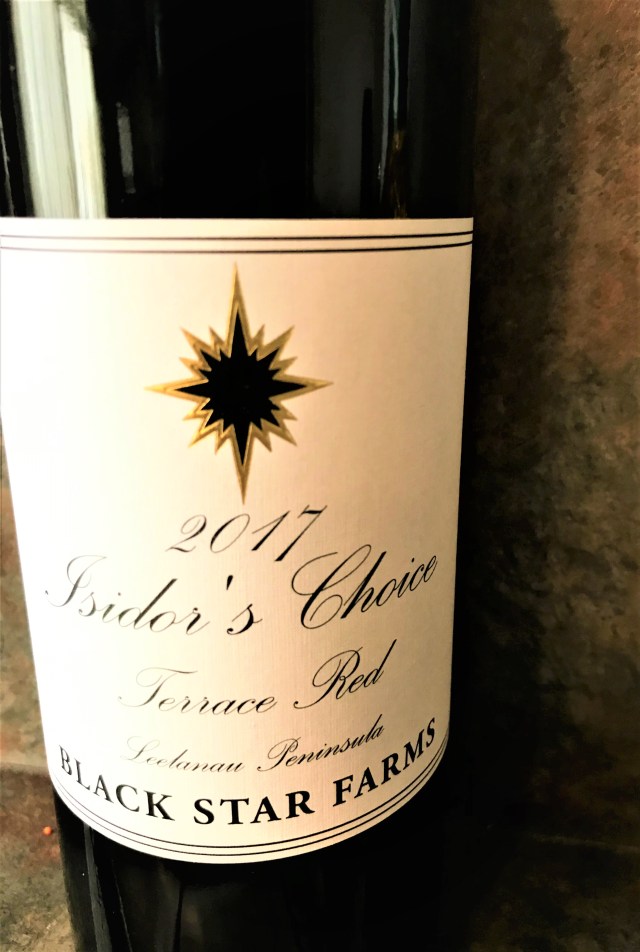
The first bottle that I pulled out of the carton was Black Star Farms Isidor’s Choice Terrace Red 2017. This is a single vineyard wine from one of their partner-growers in the Leelanau Peninsula. The original wine of this name was a blend of two Italian varietals that were brought here; the Teroldego and the Lagrein. The Teroldego is a deep red wine grape mostly found in the Trentino region of northern Italy. It is known for being fruity and making a very soft and mellow wine that is easily drank within three years, but also has the ability to age for ten years or so. It is considered an ancient grape in that region. Of course, with DNA testing it has been revealed that it a parent of Lagrein and a sibling to Dureza, and a parent of Syrah, and potentially related to Pinot Noir. Lagrein is another ancient grape that is found in the Trentino region. Its wines are deep and full-bodied with dark fruit notes, freshly acidic and slightly astringent in finish which makes it a good match for food. It is known to have a harsh tannic structure, but when blended and barrel aged the wine is tamed. This new version has also been blended with Cabernet Franc and Merlot, with the claim that the “savage” has been tamed and softened and giving the wine additional depth. The wine has been touted to age gracefully for about ten years in a cellar. It sounds like an interesting wine.
I grew up with movies and I used to love going to see them. If you think about it, my parents survived the Great Depression and films were a way for the public to escape the doldrums of the time. They in turn discovered all of their old movies when television invaded their living rooms and of course their children also discovered those movies, plus all the movies that were continually being made after World War II. There was a glamor to the old films and Movie Stars were distinct and they were emulated and immortalized. We stayed up to watch the Academy Awards and they were fun and enjoyable. Somewhere and somehow the films lost their glamor, maybe because acting has taken a back seat to special effects, films were good overcoming evil and now movies and even cartoons have agendas. Is it any wonder that the Academy Awards has such dismal viewership? My Bride and I no longer just go to see a movie, and she will pick one movie and I will pick the next, sometimes one of us falls asleep, sometimes both of us fall asleep and if we are really lucky, we both actually watch the movie.
I guess it was my turn to select a movie, truth be told my first choice she had already seen with our grandson and then she saw it again with one of her girlfriends, so I went with what sounded like a decent movie. The so-called critics did not pan it, nor did they make a fuss about it, but it had a couple of actors that can act, if the script requires it. We went to see The Gentlemen, a film about an American marijuana dealer in Great Britain who has decided on retiring and is attempting to sell his business. One of the great revelations is how the Gentleman has set up his marijuana farms in Great Britain where all of the land is basically accounted for; it shows how the socialists have basically attempted to ruin the old guard families. The brutal scenes were done very stylistically compared to the old days of realism in film. The clothing which always interests me, from my past life, struck me as what a millennial would think an Englishman would wear and patterns and coordination and colors be damned. The film was fun though and we did enjoy it and then we went out for dinner. My Bride went for her usual Thai Crunch Salad of veggies, cilantro and chicken with peanuts, wontons and rice sticks tossed in a peanut dressing. I stayed true to form, and had the Jambalaya Linguini with blackened chicken and shrimp, crawfish, Andouille sausage and Tasso ham in a creamy Cajun sauce.
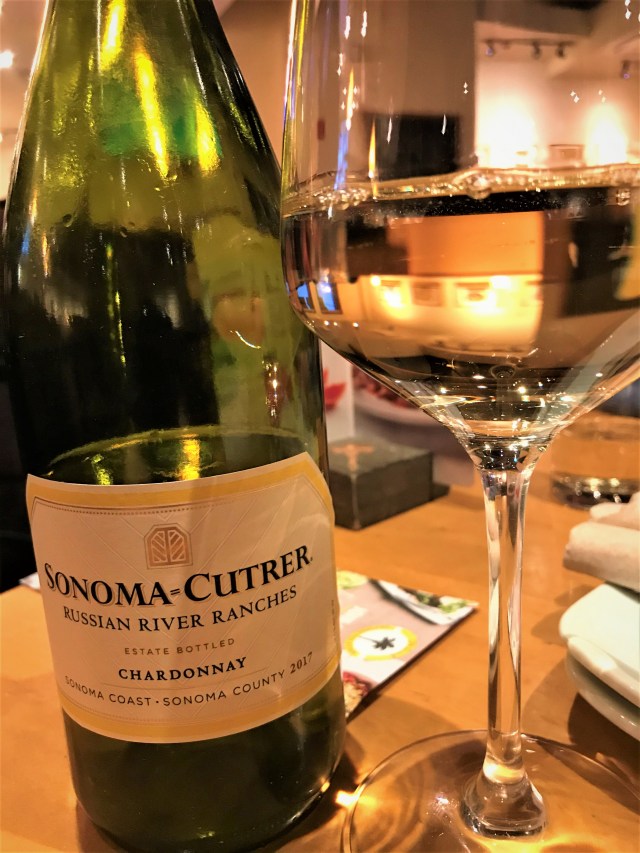
I ordered the Sonoma-Cutrer Vineyards Russian River Ranches Chardonnay 2017 from the Sonoma Coast and that is a far and away better than what is normally offered in most popular priced restaurants of this nature. Sonoma-Cutrer Vineyards was founded in 1973 by Brice Cutrer Jones and the main estate vineyard is two-hundred-fifty acres planted with Pinot Noir and Chardonnay. They have several other vineyards in the Sonoma region and they produce five different Chardonnay and four different Pinot Noir wines, all in the Continental style. This particular wine is a blend of maybe a dozen different vineyards. The wine is pressed whole-cluster and the juice is free-run and stored in a tank for a few days, before being aged in either new French Oak and neutral French Oak sur-lie and Stainless Steel for the balance; and aged for eight months. We are partial to this wine and this vintage offered aromas of pear and apple, with some balanced acidity and a nice finish mixing in some smooth buttery notes without being overpowering. We always try to make the most of our dates.
I once tried doing themed stories and it just didn’t feel comfortable running with the pack, and not from the standpoint that I am different, but the writing felt forced and not flowing from my voice. There are many “days” and themes that occur, and I would venture to say that there might be several happening on the same day. I was just thinking last night about women in wine. As I have said often, and I am rather proud to say that I learned about wine in the dark ages in a city that was not known for wine, but not proud of how women were treated in business per se. Detroit back in the Sixties was really an automotive town and there really was not much frou-frou, as I always like to call it.
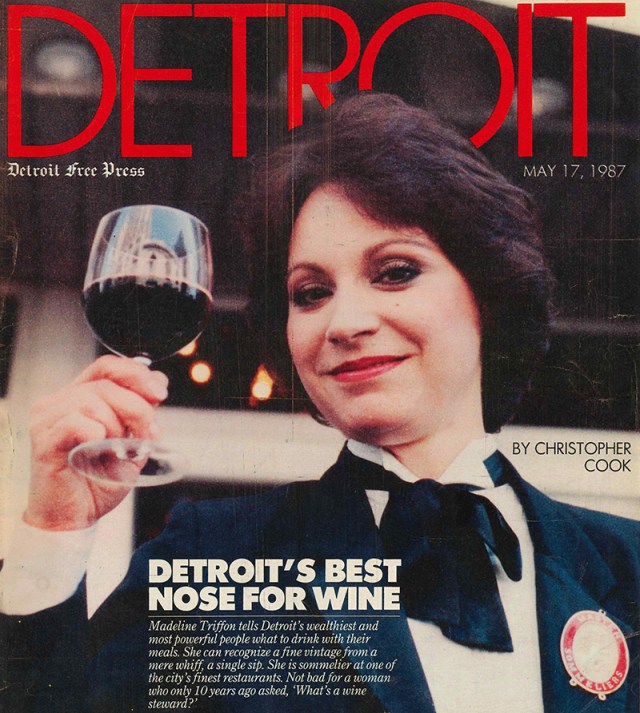
What I have learned about wine, is next to nothing compared to a woman in the Detroit area that I have met a few times, in the course of her business, but she would not say that she knows me, because she doesn’t, but she is very spectacular in her what she has achieved. Madeline Triffon was born in Connecticut, lived in Greece, but is known best for her accomplishments in Michigan. She attended and graduated from the University of Michigan and worked for the Westin Corporation. There used to be a restaurant in the Renaissance Center called La Fontaine and Madeline was named Sommelier there, which was very impressive, and as I seem to recall, she was the first female with that title in Michigan. Later she became the Sommelier at the London Chop House, the most famous of the Old Guard restaurants and known across the country. In 1987, she passed the exam, the first time she tried for the title of Master Sommelier. At that time, she was only one of nine Americans to hold that title and she was the first woman in America to have that title, and she was only the second woman in the world. I had met her a couple of times at the London Chop House, as a diner. She eventually left and became the wine director for a couple of different restaurant chains after that. I had met her a couple times a during these points in her career, at different wine tastings that she would conduct at restaurants. She is now the Master Sommelier for the Plum Market chain and I have even attended a couple of wine tastings that she had conducted there. I might also add that she serves on the board for the United States chapter of the Court of Master Sommeliers.
The other woman that I am always proud to see at anything that has a wine connection is my Bride, and between the two of us, what we may know, maybe less than Madeline Triffon has forgotten. I mention my Bride for all of her personal accomplishments that she has persevered at, and has struggled as she has always worked in what for years was a “good old boy” industry and it wasn’t automotive. When we first met, she only drank white wines and basically only ate fish. We had actually gone to a lot of the same restaurants and clubs and never met each other back then. After we met, she discovered that she could enjoy red meat and that she could really enjoy red wine. It has been fun to watch her evolve both in her professional career and in her wine experiences. I sometimes think that she has more of a stance on some wines than I do, but it is fun. I also know that she is the one, that all the merchants enjoy to see, and I sometimes think that they just endure me. As for me, I just want to salute all of the women that are in the wine industry and I will also like to acknowledge all the women that enjoy a well-made bottle of wine.
As I slowly try to get reorganized and create a new routine and make time to do things properly, now that the government thinks that I am officially a senior citizen, even though I don’t feel any change. While I was trying to get some things (wine) ready to restock the cellar, I found that I was remiss and forgot to mention about a gift that I received, and it is in bad form , not to be thankful for a gift, of which I have done privately, but I also think that this gift deserves a public thank you and recognition.
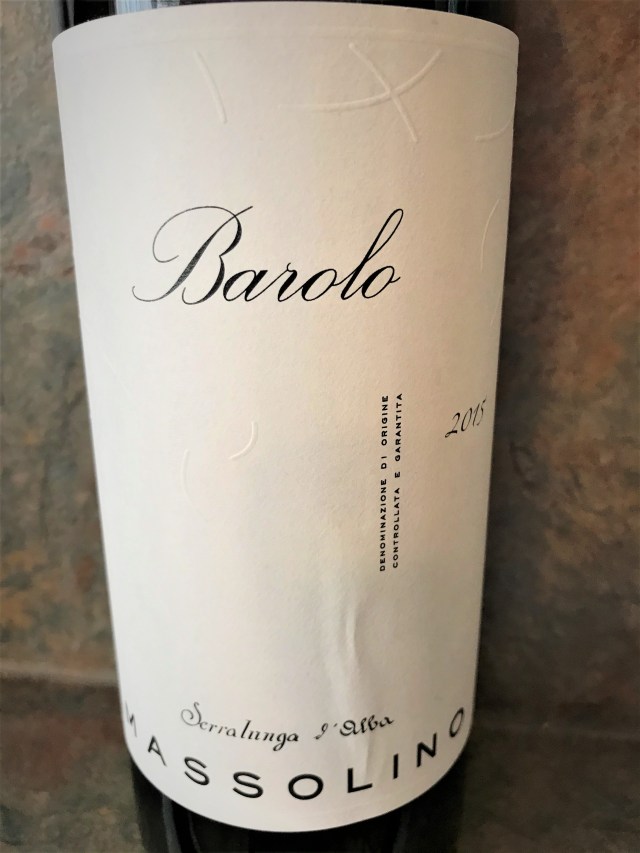
Massolino is a winery in the Piedmont known for its production of Nebbiolo grapes and its Barolo DOCG wines, and that is a good thing. The winery was founded by Giovanno Massolino in 1896 and has been family owned and operated ever since. His son and daughter built the first cellar in the 1930’s and were involved in the foundation of the Consorzio di Tutela Barolo Barbaresco Alba Langhe e Dogliano, an organization that promoted the regional vinicultural areas, before the present-day formal designations. The estate has twenty-three hectares of vines and all basically in the Barolo sub-region of Serralunga d’Alba. While Nebbiolo is the most important varietal that is grown there, they also harvest Barbera, Dolcetto, Chardonnay and Moscato Bianco. The most prestigious wines of Massolino come from their three unofficial cru vineyards of Barolo; which are Margheria, Parfad and Vigna Rionda Riserva. They also own a one plus hectare vineyard in the neighboring commune of Castiglione Falletto that grows Nebbiolo, but this fruit is used for the single vineyard bottling of their Parussi Barolo.
The Massolino Barolo 2015 is their flagship Barolo wine that they have been producing since 1911 that comes from multiple vineyards of their land, which is their prime seven hectares that has made them famous. The land that this wine comes from is known for its chalky or limestone soil, and the age of the vines is from ten to fifty-five years. The fruit is manually harvested and the traditional rules of making Barolo are observed with fermentation and maceration lasting about fifteen days. The wine is then aged in large oak barrels for at least thirty months and then aged in bottle for an additional year, before it is released. As I stated this is their flagship wine, and what they have made their name from, so it is their pride and joy, and I look forward to opening this bottle, because after all, who doesn’t enjoy an aged Barolo?
Periodically I may mention my Armenian nationality, and I am excited that there is new interest in the wines of Armenia. An Armenian will tell you that it is the Cradle of Civilization, and on a more hedonistic level, the first mention of beer is by the Xerxes as he marched his soldiers from one location to another and mentioned in his memoirs of a great draught he had in Armenia. There is much bandying about as to where the wine was first made, but in Areni they have excavated what is considered the oldest winery known to man. While some of the neighboring countries are trying to make the claim, I find it odd that countries that forbid their people to drink, are trying to claim ownership of early wine production. I am not going to start a wine war, but I think you can decipher my belief on the subject.
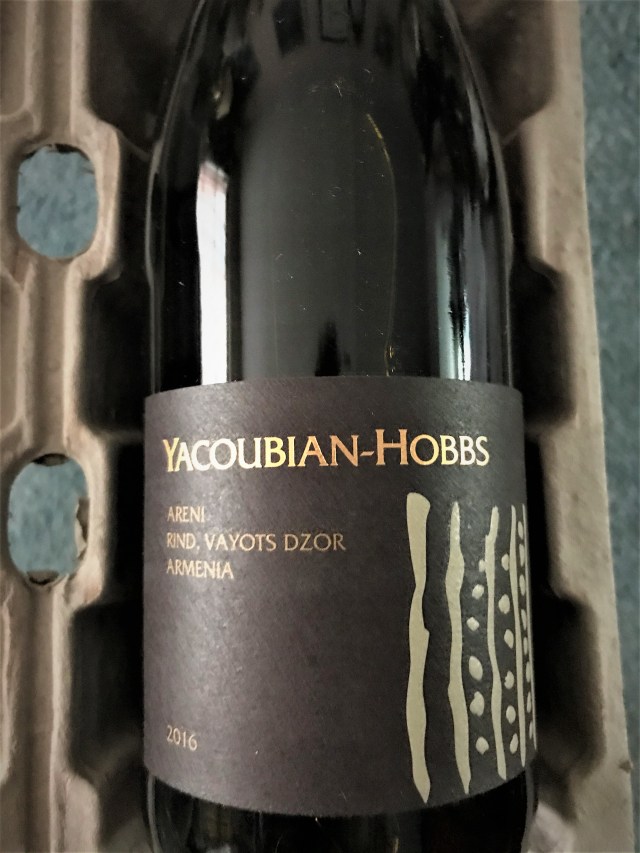
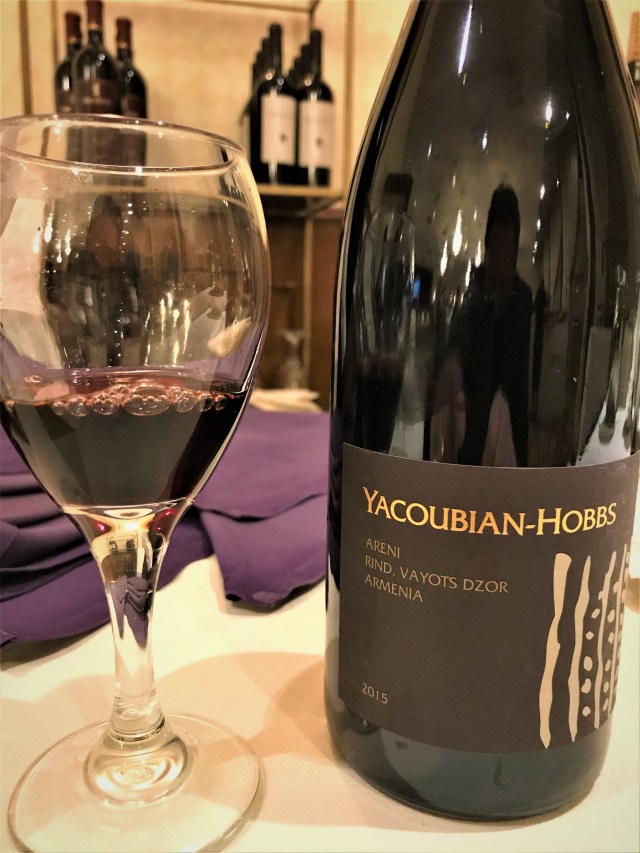
Now, I bring all of this up, because I recently was approached by the winery, if I would try their wine a second time. Several months ago, I went to a special wine tasting event at one of the Armenian churches in the Detroit area and had a chance to try many different Armenian wines along with some great Armenian food, and the event was a fund raiser. I did not give the wine a glowing review, much to my sadness, but I feel that I must be true, in what I write. I went back and copied what I wrote, to save you the effort “The other wine that I will discuss is the Yacoubian Hobbs Areni Noir Vayots Dzor 2015 that I had actually read about and was glad to see its presence and I was looking forward to trying it. Paul Hobbs of California has been partnered with at least two wineries outside of the United States and here with the Yacoubian family. The partnership began in 2008 and a new vineyard was planted in 2014 near the Areni – 1 Cave, the site of the world’s first commercial winery. The Areni Noir grape is ancient in Armenia, but a fresh newcomer to the international wine community; it is a dark, thick skin grape that is perfectly adapted to the major temperature swings in the high elevation plateau where the grapes grow best. This wine is also from the Vayots Dzor region. The wine was fermented and aged in Stainless Steel and eleven-hundred cases were produced. As I stood in line to get a taste of the wine, the couple in front of me, took one sip, poured the balance of the wine into the spittoon, and immediately rinsed the glass with water, looked at me, and told me not to bother, but I had to try it. They were absolutely right, I could find no redeeming qualities to the wine, and I really would prefer not to say that. The entire wine was off, the nose was non-existent and the wine had nothing worth noting, I could not even find any words to describe what I was tasting.” After all of the wines and reviews I did mention that I felt that the tasting event was not well handled, the wines may have been rushed in, and in perhaps not the best manner. I also mentioned that a lot of the vineyards were young, and there is something to be said about old vines, or so many labels would not mention that fact. I also said that I would not let that one night deter me from trying more wines from Armenia.
I was amazed that I was approached by Yacoubian- Hobbs, as I was surprised that they even found my article, let alone would even offer to let me write about their wines again; I feel that reveals the integrity of the winery to look past a poor review and try again. I would say that with ten days of being contacted by Paul Hobbs of California, I was in possession of Yacoubian-Hobbs Areni Rind, Vayots Dzor 2016. Everything I have read about this new wine, is consistent with the 2015 vintage, so I am hoping the extra year for the vines and my cellaring will produce a different review. I will let the wine settle a bit in the cellar and then I will coax my Bride into making a nice Armenian dinner and will try this wine in the proper setting, and even though I seldom get samples, I treat all my wine reviews in the same vein. Actually, as I look back, there have been some wines that I have just never wrote about, since they were on my dime and not worth the dime, and this is from a man who even writes about wines that are found being used by catering companies.
Bar Louie is a restaurant that normally my Bride and one of her former coworkers go to, for get-togethers about once a month. She actually has a couple of different places that she uses for different coworkers as she does like to maintain contact with her friends over the years. Since her assorted dinner arrangements are just with the girls, I don’t attend, and she does try to plan these dinners on nights that I have something going on. She is much more open about the different places that she will go to, and I am a bit of a fuss budget, because I normally think of bar food as salty, by design, so that one will order more drinks. I have made this observation from many years of experience. We were out shopping and mall walking, a common practice among Senior Citizens and she decided that we should have a fast dinner at Bar Louie. We were there, so I let her lead the way.
The menu had a much bigger selection of choices compared to what I expected, which was a good way to start off. There was a large selection of appetizers and finger foods that my Bride kind of steered me through and we settled on a dish of Chicken Wings, a mixture of bone-in and boneless wings with an assortment of sauces and we went with the Jalapeno Honey which had some zest to it. Of course, not that I can ever get her to try something else she ordered their Charred Lemon Caesar Salad with pretzel crumbs and she had it with a slab of Salmon atop of the salad. I thought I was going to have to have a Cheeseburger, but then I saw that they had boneless Braised Short Rib with a Red Wine Reduction, roasted carrots and radishes and crispy potato wedges. She was already sold on the food, and I have to admit, that the food was not what I was anticipating, so all was good.
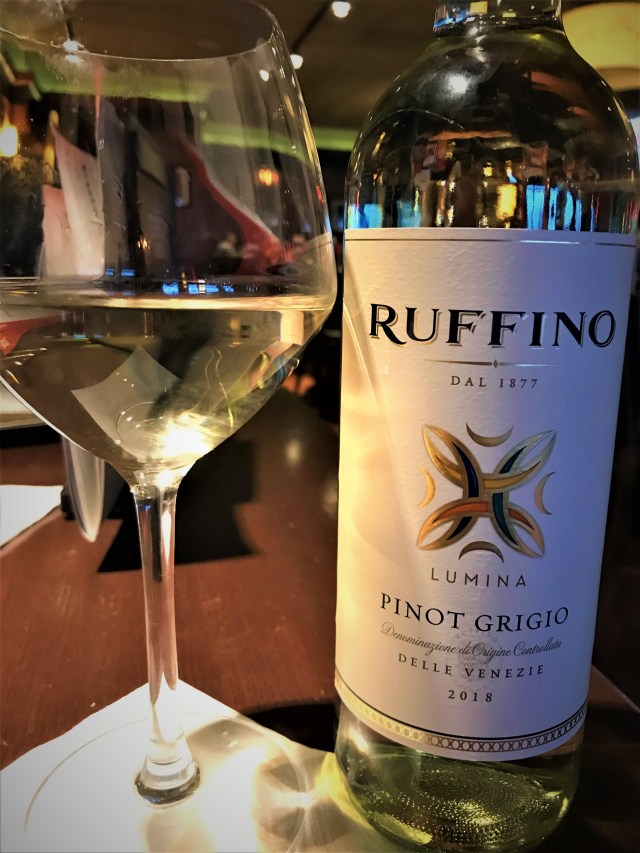
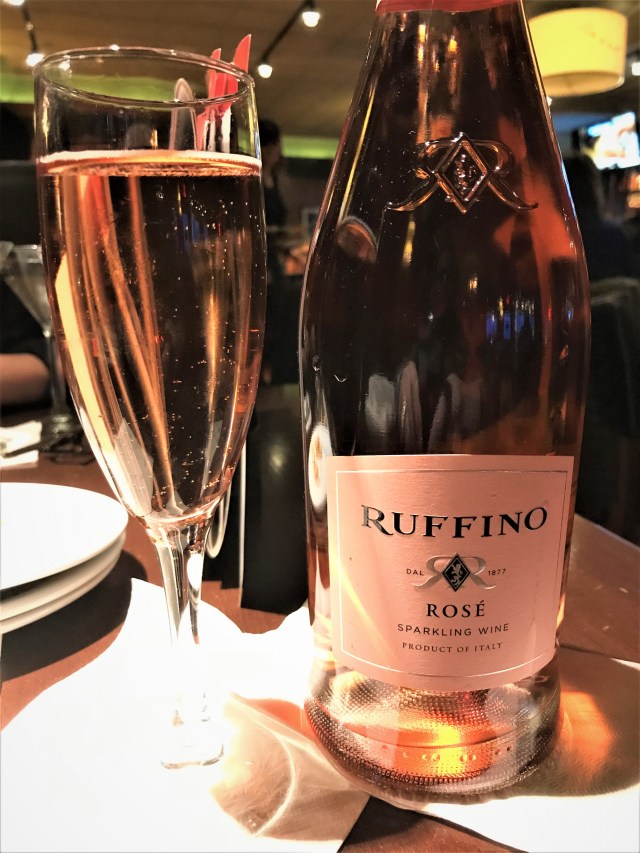
The wine list was concise, but I saw an old name that goes back with me probably to day one, if not earlier, because it was a winery that was often brought to the house when I was a kid. Ruffino is an Italian brand that even non-wine drinkers probably recognize. Ruffino is a very large wine house based in Tuscany, but is also found in Central and Northern Italy. The company was founded in 1877 when two Ruffino cousins established a small winery near Florence. In the 1880’s the winery was already an established international award-winning winery and in 1890 it became an official supplier to the Italian Royal Family. They bought their first estate after the Second World War and became the first to own estates in Chianti Classico, Montepulciano and Montalcino. The Gretole estate is almost entirely used for their Chianti Classico Riserva Ducale Oro, while the Greppone Mazzi estate is where their Brunello is grown. They now farm around six-hundred hectares across six Tuscan properties, a basic Chianti, and Toscana IGT in, all three colors. Outside of Tuscany they have Orvieto Classico, Moscato D’Asti and several Prosecco wines. Constellation Brands fully acquired the company in 2011. My Bride always goes safe and predictable and ordered the Ruffino Lumina Pinot Grigio Delle Venezie IGT 2018. The fruit is harvested from Veneto, Friuli-Venezia Giulia and Trentino; the top regions for Pinot Grigio. The fermentation takes place in Stainless Steel tanks, as well as the aging for ten months. The wine is crisp, with some mineral terroir and a touch of lemon in the finish. Even though I was going with a heavier dinner, I felt like having something totally different and had the Ruffino Sparkling Rosé NV and the fruit came from vineyards in northeastern Italy. This wine is made from two still wines, a white wine made from Glera grapes and a second wine made from Pinot Noir grapes, and then the two wines are blended in the second phase using the Charmat method. The wine had a very pretty color and I immediately thought of a pink Prosecco with a little finish of strawberry. It was tasty and I was always taught through the years that a sparkling wine can enhance any dinner. This old curmudgeon was won over by the food and the service, so I can see my Bride suggesting this location again.
I am going to talk about the imported wine that was the second selection from my local wine club, the Fine Wine Source. As they like to offer one domestic and one imported wine each month. I think the best part of a good wine club, is that you receive some wines that one may not even notice on the shelf, or one might refrain from grabbing because of where the wine originates from. With a wine club, you don’t have that option and all you can do, is hope that the wines will be interesting and fun. This particular wine is from Sicily, where I have had wines from before, but it is made from two grape varietals that I have never encountered before. One of these days, since I am supposed to have all of this extra time being retired, and I don’t know where the time goes, I am going to have to fill out and submit for membership for the Century Club, that is, if I have actually had one-hundred different grape varietals. One day eventually.
Caruso & Minini is to be found on the western most coast of Sicily near the town of Marsala. Antonio Caruso back in the late 1800’s was buying the grapes for the nearby firms in Marsala. The family owned operation continued and one of the later members, Nino Caruso decided to be the winery and the bottler in the mid 1900’s. In 2004, Stefano Caruso and Mario Minini of Lombardy began the present winery featuring the indigenous Sicilian varietals. Now, it is Stefano’s daughter Giovanna that is working closely with her father. The winery is twelve-hundred hectares and between 200-400 meters above sea level; and that includes five hectares that are being farmed organically under Giovanna’s guidance. An interesting fact about the land is that it was once underwater, and the soil is an alluvial soil, rich with water and organic substances. Also the area is known for having large stones, locally called cuti, which are about the size of a softball, that not only impart a noticeable minerality that adds to the terroir of the land, but the cuti also soak up the sun’s heat and transfer the heat to the vines, allowing for an earlier ripening season and higher acidity to the wine.
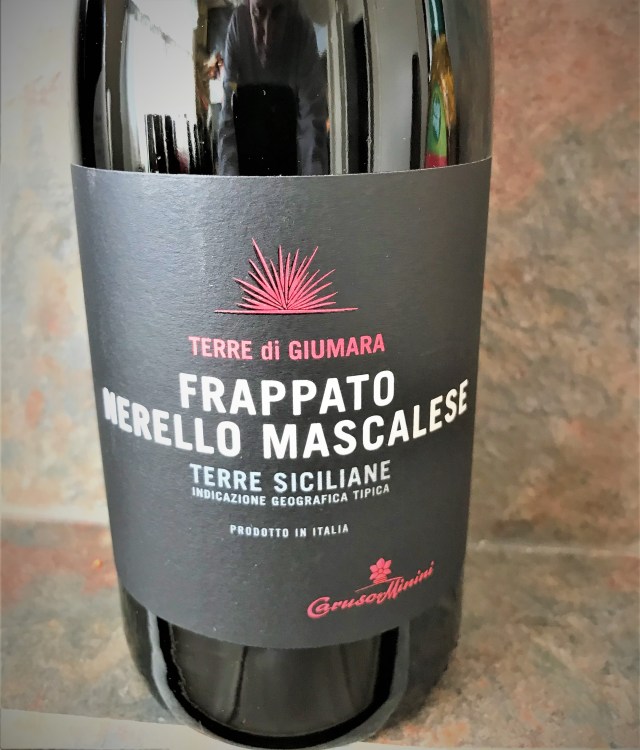
The Caruso & Minini Terre di Giumara, Frappato Nerello Mascalese IGT Terre Siciliane 2018 is rather unique in many ways. IGT Terre Siciliane which means Sicilian Land was created in 2011 and is just under Sicilia DOC, and the new designation basically covers the entire island outside of a few designations that get the DOC. The IGT Terre Siciliane also allows a broad spectrum of wine styles, colors and varietals. Frappato is a light-bodied red grape that is a mainstay on the island, it is cherry colored, aromatic and low in tannins and likened to Beaujolais, is favored for its ability to blend well with other grapes. The other grape Nerello Mascalese is also a popular grape in Sicily and it is a dark-skinned grape, that produces a tight, fresh red wine with fruity and spicy flavors and its ability to express terroir in its finish. Its DNA shows that it is probably a child of Sangiovese, and this grape is also known for its blending qualities. The fruit is hand harvested; the destemmed grapes undergo maceration and fermentation in Stainless Steel for about twenty days, and then the malolactic fermentation is also done in Stainless Steel. Thirty percent of the wine is aged in large barriques for four months and the balance is aged in Stainless Steel for eight months. Then the two juices are blended together to take advantage of the big tannins of the Nerello Mascalese and the lower tannins found in the Frappato. The wine is described as a light refreshing wine with a full bouquet, with notes of spices and berries and notable acidity. From the notes that I have read, this wine is intense and is a perfect pairing for the spicy dishes of Sicily and Southern Italy.
I may have been away from my local wine club for almost two months, but at The Fine Wine Source, it was no problem for me to get my monthly wine selections. I guess that is the beauty of belonging to the club, is that they know that eventually I would show up. The help was busy helping a couple of couples do some wine tasting, and my timing there would have been detrimental to the tastings that were going on, so naturally, I made some conversation, and I am pretty good at it.
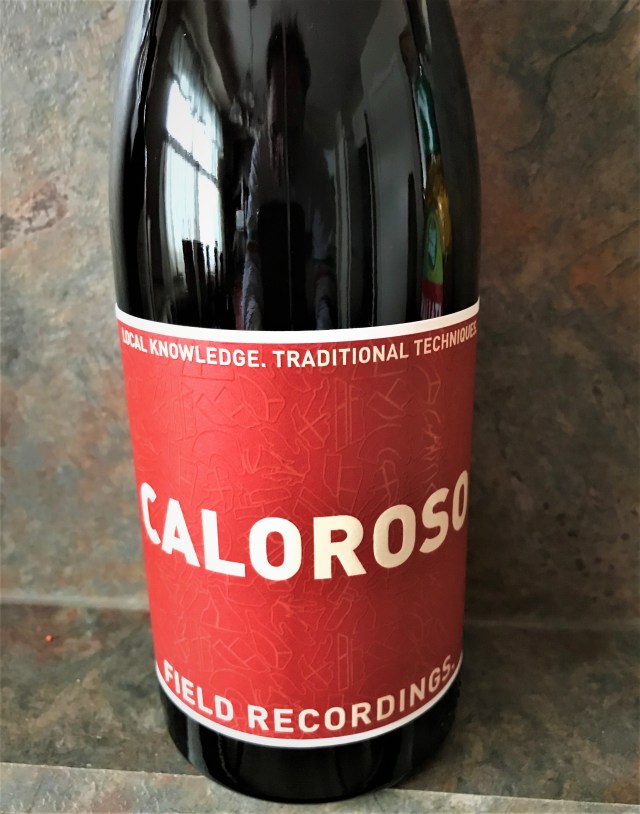
The domestic selection for the wine club in February was Field Recordings “Caloroso” Red Blend, Paso Robles 2018. Some people might think that I am a maven, but probably ninety-five percent of the wineries in California, I have never heard of, nor tasted. I am not embarrassed to admit that, as there are wineries all over that state and I can only go by what I have tasted at wineries, wine bars, tasting galleries and restaurants. This was a winery that I had not heard of, but that can be rectified very easily. Field Recordings is winemaker Andrew Jones’ personal catalogue of the people and places that matter to him in the world of wine. He spends his days as a vine nursery fieldsman planning and planting vineyards for farmers all over California. Andrew in the course of his activities is sometimes offered small lots of fruit on the side, and since he has been all over the state, he has developed a keen eye for vineyard land. He sometimes sees undeveloped tracts that are overlooked that he feels may have untapped potential in the world of wines. As friendships in the industry are made and opportunities are discovered and offered. Field Recordings is his catalogue of single vineyard sites that he produces with a sense of the area, terroir and personality of these quiet vineyards. His first venture in winemaking was in 2007 with some Chenin Blanc from the Firestone Jurassic Park Vineyards. Since that first vintage he has continued with single vineyards, and some multi-vineyard blends and using some of the more esoteric varietals, that make his wines unique. He is also looking into the concept of using cans instead of the traditional bottles.
The Field Recording “Caloroso” Red Blend 2018 is from grapes that were sourced from the Guglielmo Giovanni Vineyard in Paso Robles AVA, part of the much larger Central Coast. The wine is a blend of sixty percent Corvina, twenty percent Cabernet Sauvignon and twenty percent Rondinella. Eighty-five percent of the grapes were destemmed, and fifteen percent were air-dried for twenty-one days with open top fermentation. The wine is then aged for eleven months in French Oak, of which forty percent were new. The notes I have read say that this wine is Old World meets New World with great body and an elegant finish. The notes promise Kirsch Cherry and rose petals on the nose with a deep garnet color in the glass with cherry, chocolate and licorice and a touch of orange peel at the end. You know that is not how I describe wine, but it sounds very interesting and I am looking forward for the right moment to try it.
One of the great things about finally getting out, was going to my wine shop, it had been about two months since I had set foot into The Fine Wine Source. Rest assured, I did not have to reintroduce myself to everyone there. While my Bride went to a birthday party for a one-year-old, I decided to go and get the monthly club wines. Once a month, they charge our credit card at a special rate for two bottles of wine that they are featuring and feel is a great value. I also have to mention that they do not carry any popular brands of wine that one can find at supermarkets, convenience stores or gas stations.
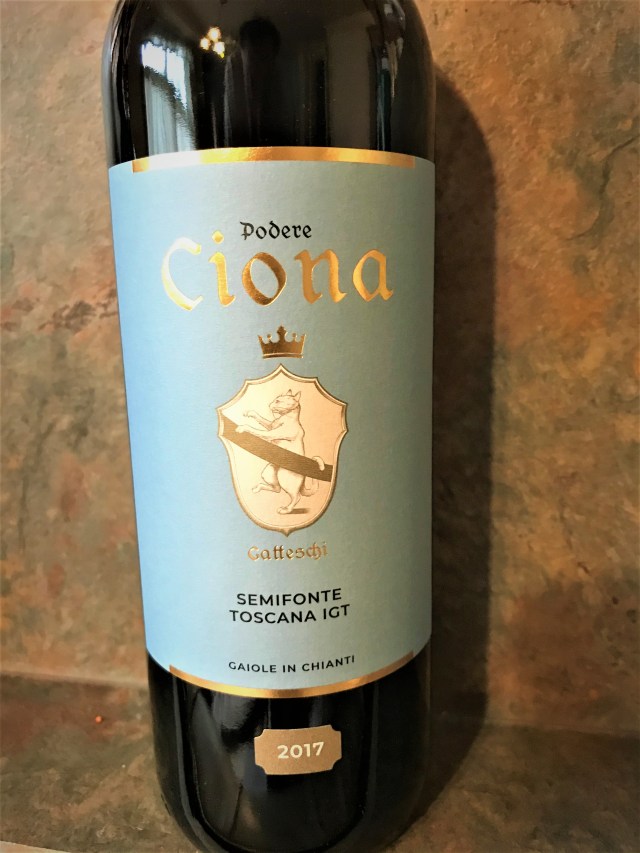
The second wine that was selected for the month of January was Podere Ciona Semifonte 2017 and I have tried many of the wines made by this winery. I was reading the history of the winery on their website “Franca and Franco Gatteschi were looking for a place in the countryside to retire to, after many years of working in Italy and abroad, when they came across a small, beautiful, albeit run down property: 100 acres of land, mostly wooded with 10 acres set aside for cultivation, of which 2.5 acres already had vineyards; a house from the 18th Century, abandoned for more than 40 years; and, above all, a view without equal on the Chianti hills, with Siena in the distance.” It really sounds idyllic and makes one ponder how this property was neglected and ignored for years. “They purchased the estate at the beginning of 1990 and they immediately started the reconstruction work on the main house (it took nearly three years). They also set up a small but well- equipped wine cellar for making wine. In 1996 they permanently moved to live on the estate and the following year, the great 1997 vintage, saw the birth of the first “official” wine of Podere Ciona: A Chianti Classico DOCG Riserva.”
The Podere Ciona Semifonte Gaiole in Chianti IGT 2017 and is termed a Tuscan Rosso wine. Toscana IGT is the most famous of the IGT designations and it actually has three sub-regions already, and there are ten provinces that are allowed this designation. Tuscany is the home of Italy’s most famous IGT category, but it was where this category forced the hands of wine classification for a new designation, because some of the wine makers felt constrained by the current rules, and originally had to use the lowly Vino de Tavola or Table Wine designation for their new wines. Finally, in 1984, Sassicaia was granted its very own title of DOC Bolgheri Sassicaia and the floodgates were opened. IGT is Italy’s version of the Common Market’s designation of IGP. This particular wine is eighty-five percent Merlot and fifteen percent Alicante Bouschet, the same varietal that they add to their Chianti Classico. This is a high-altitude Merlot planted on a mix of quartz and clay of vines that average about fifteen years of age. The wine has been aged for twelve months in French Oak and then cellared for eight months in the bottle, before being released. There were about five-hundred cases produced and according to The Fine Wine Source they have the lion’s share of the production. The wine is described as being a bright purple-red with aromas of plums, herbs offering layers of flavors with spices in the finish. Since, I always mention how much I enjoy Merlot, I guess this will be a no-brainer for me.




 The Wine Raconteur