Two from the Right Bank

For ages the wines from the Medoc and Graves were the center of the world in Bordeaux.  I recently had a chance to get some wines from the Fine Wine Source as one can now book a private tasting time from the region across the river in what is historically known as Saint-Emilion and Pomerol, but both have become well respected on the own.  Saint-Emilion probably produces the same amount of wine as the entire Medoc region of Bordeaux and Pomerol probably produces about fifteen percent of Saint-Emilion.  These were two districts that I immediately gravitated towards in my youth, because they were so affordable compared to the Medoc, and they were more supple and matured somewhat earlier.  These two districts were referred to as the feminine side of Bordeaux, because the wines were softer and they tended to rely more on Merlot and Cabernet Franc, instead of Cabernet Sauvignon.  They were some of my first loves and even back then, I was not ashamed to state that, though nowadays, I think that stigma has long been forgotten, as the prices commanded can be just as dear as the classified Medoc listings.
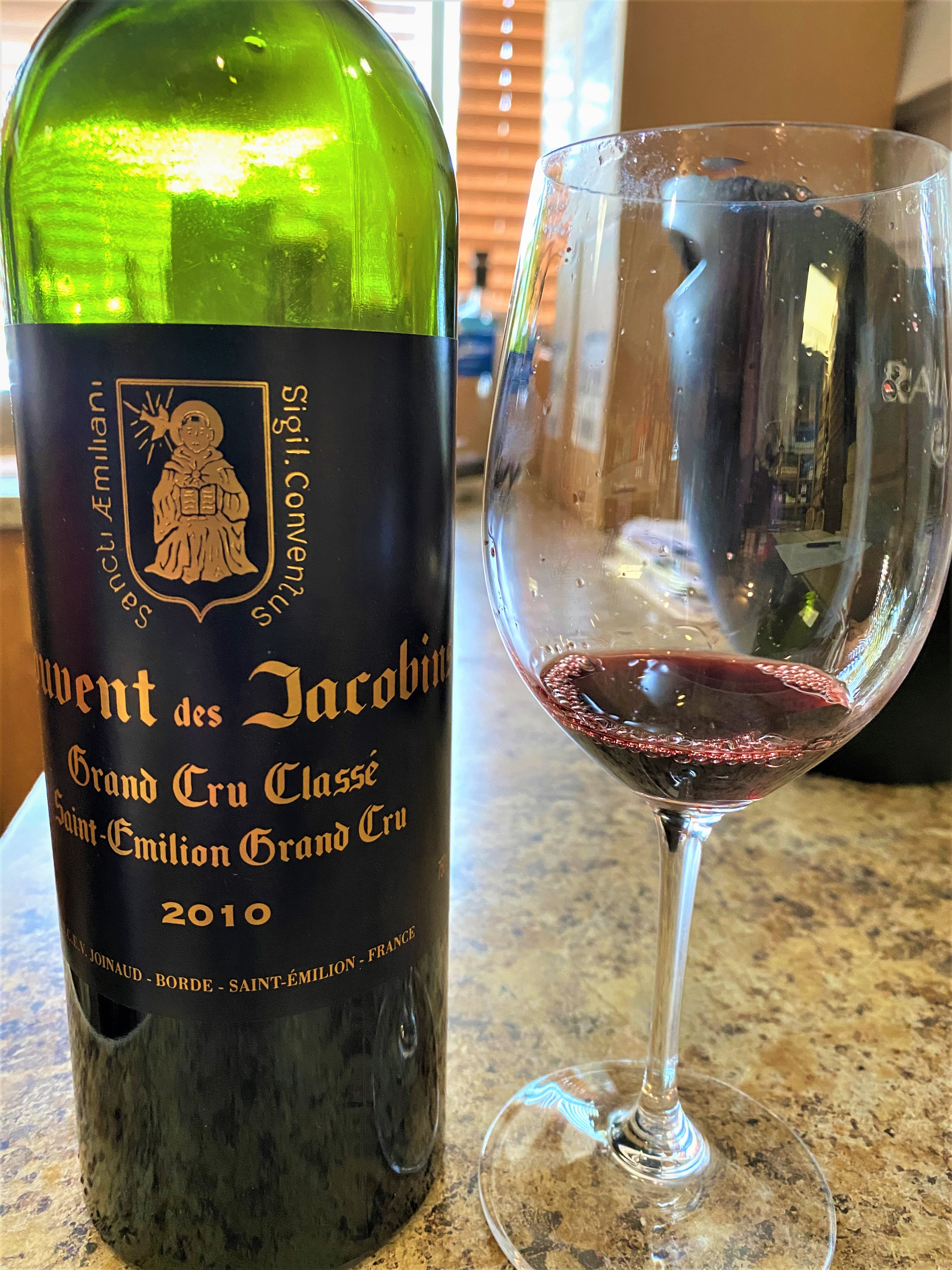
Couvent (Convent) des Jacobins Saint-Emilion Grand Cru 2010 is a delightful wine that took me back to my youth, with its full flavor and of course excellent pricing.  The Convent has been celebrating seven centuries of winemaking, famed terroir and since 2020 they have been certified “organic farming.”  A blend of eighty-five percent Merlot and fifteen percent Cabernet Franc from vines that are ten to fifty years old. The wine had twelve months of aging in a mix of forty-five percent new oak barrels and a production of about twenty-two-hundred cases. There was plenty of black fruit, some vanilla and silky tannins and probably another good ten to twenty years for cellaring.  Just a charming wine.  The Grand Cru designation began in 1954 and has been updated a couple of times.  I have heard some people remark that there is more Grand Cru wine, then there is basic Saint-Emilion wine, but I have never seen it in print.
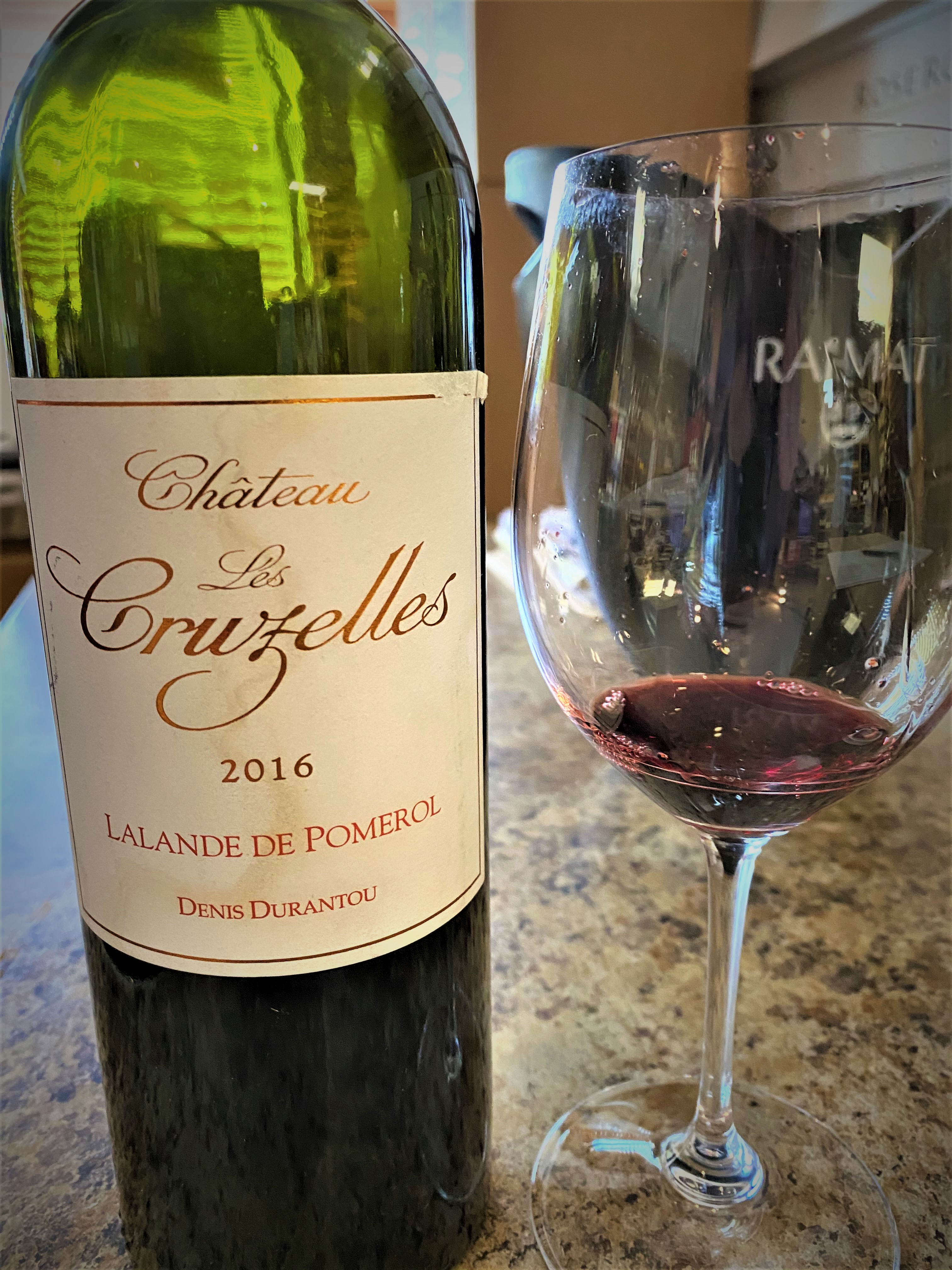
Chateau Les Cruzelles Lalande de Pomerol 2016 is owned by Denis Durantou who rebuilt Chateau L’Eglise-Clinet in Pomerol and his is a firm believer that terroir is a guiding influence in creating fine wine. Since taking over Chateau L’Eglise-Clinet he has also acquired another piece of property further up the “Right Bank” in Lalande de Pomerol and he calls it the “golden triangle” and he can actually see his original chateau from Chateau Les Cruzelles.  This wine is ninety percent Merlot and ten percent Cabernet Franc and aged in oak, of which forty-five percent is new.  I will estimate that the wine was aged for about a year, I can not find an actual report, but I have read that he thought the wine needed at least another month in the barrel, and he thought that it needed at least a couple of years in the bottle.  I was clearly impressed with the wine and I wrote in my quick hieroglyphic notes “Cabernet Franc,” “licorice,” and “wonderful.”  I was actually surprised to discover later that it only had ten percent Cabernet Franc, as it really caught my attention, even after tasting several other wines that day.   It had all the black cherry and other black fruits one could wish for and the tannins were still feisty a couple years later after bottling.  I was totally impressed with this wine and realize that it may be at its peak around 2030, which I think is remarkable as Lalande de Pomerol is not held as in high esteem as Pomerol, but it certainly passed my test. 
Posted in Wine | Tagged , , , , , , , | 5 Comments

The Annual Ladies Christmas Party 2020

My Bride has had a Christmas Party for her lady friend’s way before I was on the scene and it is a given.  Before she even does the Christmas Card list and Newsletter, she is planning the party.  She had to get the scrap book out, so that she would have hopes and aspirations of the attendees from last year, and it there are some who may have missed a year or two, she would even have it from the last time that they attended.  There is a gift exchange, where everyone brings a wrapped present and it is assigned a number, and when the guests arrive, they pick a number for another bowl.  Come Hell or high water, the party must go on, after all it is a tradition.  The party was also going to be part of a Zoom session, with presents that had been purchased ahead of time for the Zoom attendees, and they were also assigned a number, and they could watch as someone would unwrap their present while being filmed.   

Of course, this is 2020 and the world has been jostled and some people are more paranoid compared to others, but the ones that wanted to continue the tradition showed up.  I on the other hand, go up to my office and hide, there is way too much estrogen present and they need to let their hair down.  Normally, is that still a word?  Normally, the dinner would be a pot luck, but that was tossed out the window.  She went to a local Lebanese restaurant and ordered trays of food, and she was going to be the only one in the kitchen and she was going to plate everyone’s dinner, so that there would only be one food handler and she went so far as to even don a pair of gloves while she was doing it.  There was a house salad with a couple of different dressings, hummus, pita bread, rice pilaf, chicken kebab and lamb sauteed with mushrooms.  For dessert she had assorted macaroons and individual ramekins of Crème Brulee.   You should have seen the fun earlier, as we were trying to load Butane into the new kitchen torch that she had bought, because she was not sure where the old torch was and every kitchen should have at least two torches, anyways.

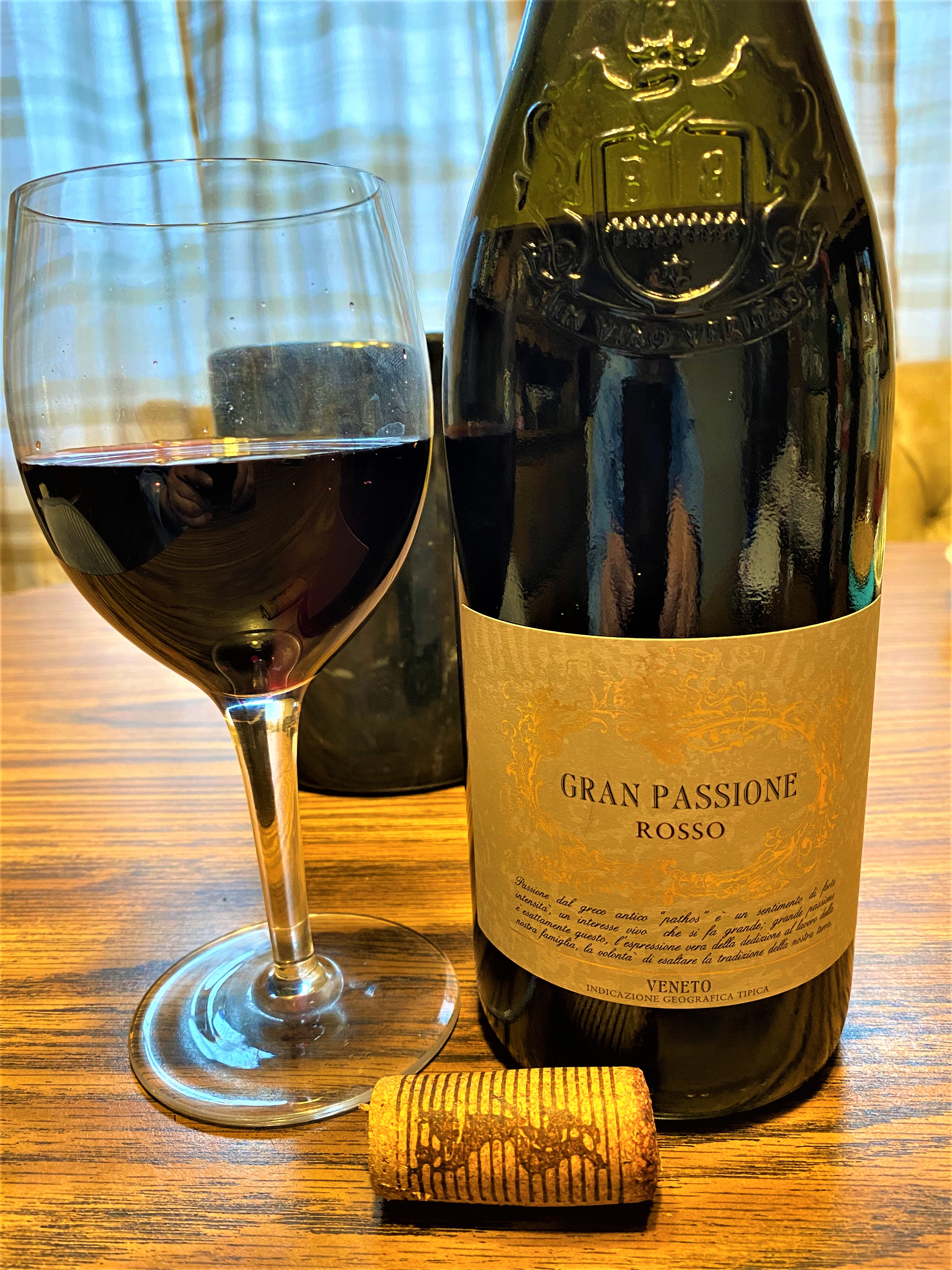
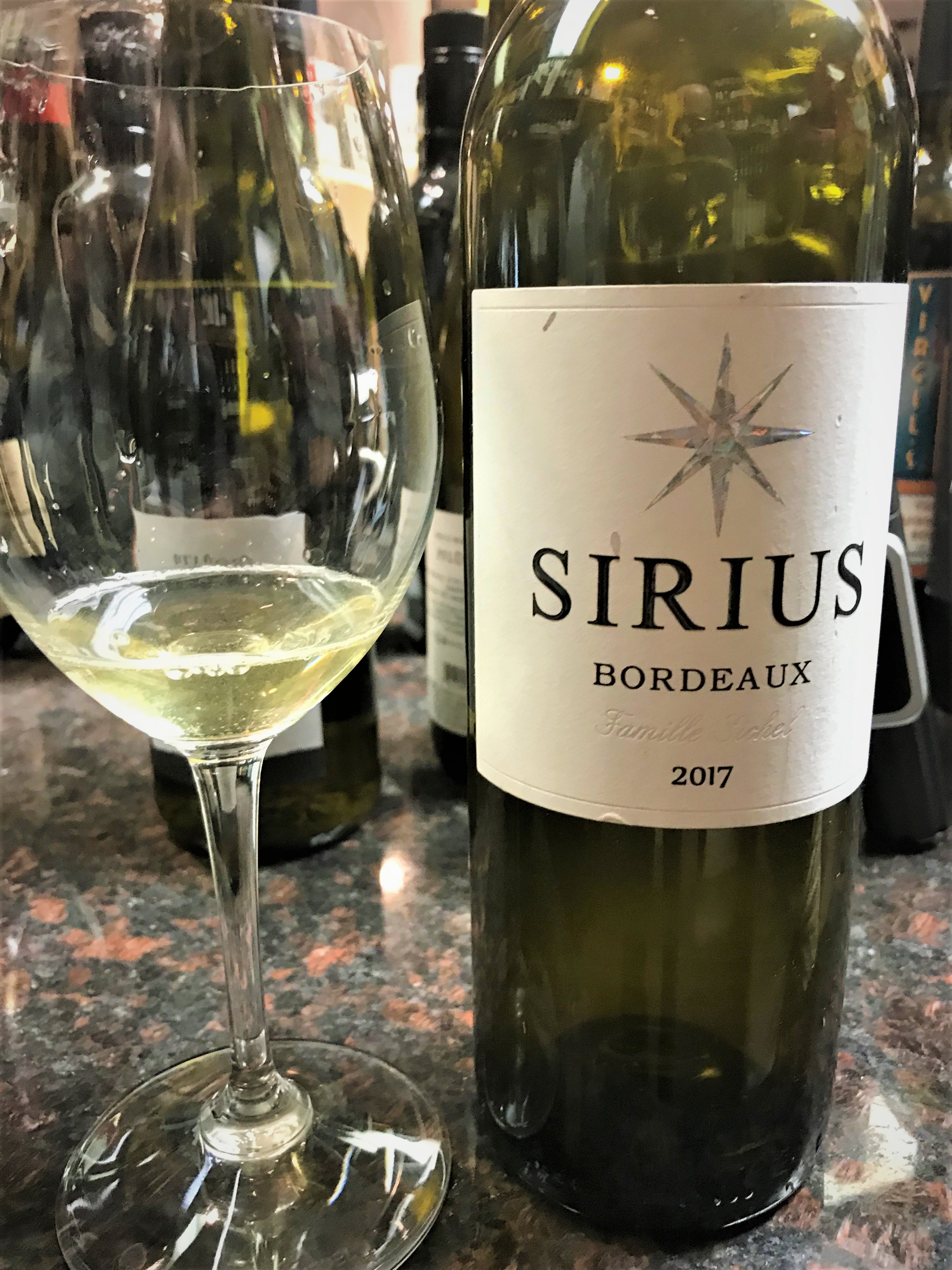
The wine selection for the evening was going to feature our two latest go-to wines as selected by my Bride.  The white wine was not a bone-dry wine and everyone that had it, was enjoying the selection.  Famille Sichel Bordeaux Blanc 2017 was the wine that was poured.  Famille Sichel is a family owned negocient firm from 1883 in Bordeaux, as they were in the procurement process for their locations in Mainz, London and New York.  In 1938 they even bought Chateau Palmer, which at the time had fallen on bad times and have since brought it back to all of its glory.  The family does not believe in resting on their laurels as in 2001 they even built a completely new bottling and storage facility in the Bordeaux region.  This particular bottle of wine is a blend of the two leading white grapes of Bordeaux, namely Semillon and Sauvignon Blanc.  I don’t think that I would be amiss to opine that this wine was aged in Stainless Steel as there was plenty of fruit and very refreshing.  It starts off with a nose of citrus fruits and finishes with some terroir with a decent finish.  The red wine was also chosen for its fruit and suppleness.  Gran Passione Rosso Veneto IGT 2019 is a limited production wine made by Cantine Bertoldi.  Cantine Bertoldi is known for their Valpolicella and Amarone wines.  They were founded in 1932 and have gone through several generations of the Bertoldi family and they are now in possession of fifty acres of hand cared varietals of Corvina, Rondinella, Molinara, Garganega, Trebbiano and Cortese, while also adding into the mix they have Merlot, Cabernet Sauvignon and Chardonnay.  The grapes selected for their passito wines are sun dried and fermented in Stainless Steel.  The Gran Passione is made from some of these passito grapes and is made from a “rare red blend” which is a way to describe a mixture that either the winery wants to keep secret, or they just are not sure of their proprietary blend and then there are some years when this wine is not made.  While the wine is not as rich and full bodied as an Amarone de Valpolicella, it is a delightful wine.  In case there are some Gladys Kravitz individuals out there, the guest count will not be revealed, all went well and there was no need for a quarantine period for anyone afterwards.  I pray that next year, the party will not be as clandestine and Victor Lazlo’s work will be done.

Posted in Dining, Wine | Tagged , , , , , , , , | Leave a comment

A Red and a Dry Riesling from Black Star Farms

Black Star Farms is rather unique in that it has vineyards and tasting room facilities on both peninsulas, so that they are kind of surrounding Traverse City which is kind of the focal point for all of the wineries in the area.  In 1998 Black Star Farms purchased Sport Valley Farm which was a one-hundred-twenty-acre equestrian facility, and the stylized black star was part of the architectural décor in the main house.  In their Twentieth year, they were honored to receive the 19’th Annual Canberra International Riesling Challenge (CIRC) -Best Wine of the 2018 Challenge and only the second time an American wine came out on top.  There were 567 Rieslings from six countries (Australian, New Zealand, USA, Germany, France and the Czech Republic).  The Black Star Farms Arcturos Dry Riesling 2017 scored 98 points, in addition to taking home Best Dry Riesling and Best American Riesling.  In fact, all six of the Riesling wines that Black Star Farms submitted took home medals, showing a consistency across vintages and styles.  The fruit is sourced from both of the proprietor’s vineyards and from local grower partners in both the Old Mission Peninsula and Leelanau Peninsula.  The winery has three series; the premium Arcturos, A Capella and the Leorie Vineyard labels for sparkling and fruit wines.

We just received our December Wine Club shipment from Black Star Farms and there was a short newsletter from Lee Lutes, the Winemaker and Manager.  He reminded us all that the year 2020 was not a great year, and I do believe that everyone is aware of it and he was still wishing everyone a good holiday season and a happy new year.  If there is good news from 2020, Mother Nature was good to Michigan for the growing season, the early ripening grapes were harvested without a problem and the longer to ripen varietals also had a full season to mature; and it even kind of spaced itself out for the pickers, so there was little stress and a smooth harvest.  The crops had a better year, and the winery is in the midst of dealing with 2019 wines. 

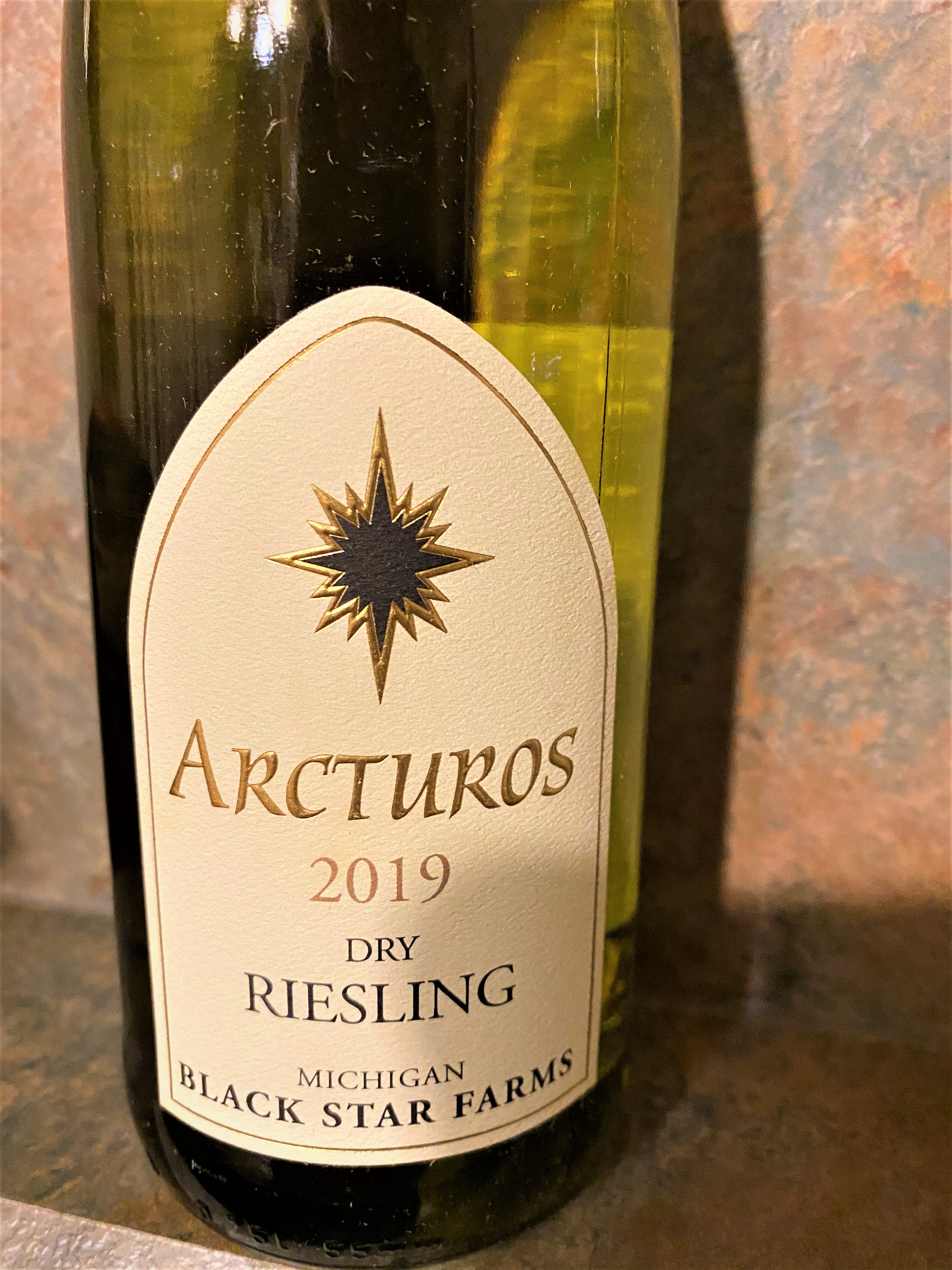
The first selection for this shipment was the Black Star Farms Vintners Select Red Table Wine Michigan NV.  This wine is a blend of different vintages, and they describe it as each vintage yields small lots with unique characteristics, and this bottling is a blend of these special selections.  The wine is a blend of fifty percent Cabernet Franc, thirty-four percent Merlot, four percent Pinot Noir and a blend of red hybrids.  The wine was aged in newer French, European and American Oak barrels and seven-hundred-sixty-one cases of this wine was produced.  It has been described as a full-bodied, dry red with rich dark fruit flavors that are complimented by hints of cocoa and spice.  It is ready to be enjoyed or to be cellared for three to five more years.  The second selection is their Black Star Farms Arcturos Dry Riesling Michigan 2019 and all of their ensuing Dry Riesling offerings will have to compete with their legendary 2017.  They describe this wine as being aromatic and full of flavor, but not sweet.  They produced seven-hundred cases of this wine and tout that it is vibrant, fresh citrus and stone fruit favors followed by a crisp finish.  They suggest a potential five to ten years of cellaring if one wishes.  We were very impressed the last time we had their wines at a resort with dinner, that we had to stop at the winery, bought more wine and joined their wine club.  Michigan wines are just getting better year after year, and this is from someone that started learning when the world was only focused on the Old World.

Posted in Wine | Tagged , , , , , , , | Leave a comment

Trius Red Shale Cabernet Franc

“#CabFrancDay” is upon us.  I have many reasons to enjoy this national wine day, but I guess the most important reason is that I have liked the varietal, even before I knew that it was Cabernet Franc, and it is not a new grape, actually in the pecking order of grapes, it is the father of the Cabernet Sauvignon grape.  The purpose of the “day” is to remind people that this grape is great on its own and I have always thought that it is the best grape to feature the terroir; and enhances other wines when it is blended.  I also enjoy this day, because I watched how it slowly evolved during my early days of writing this blog, when my writing was even more simplistic and juvenile compared to today.  When people ask me what I am going to be drinking for a party, I usually don’t have an idea, until I am in my cellar or at a restaurant and I have studied the wine carte. I actually thought about the wine that I was selecting for this day, but I didn’t reveal it, during any wine discussions on Social Media, until this moment.

My Bride puts up with me, and my craziness at times, especially since I told her it was Cabernet Franc Day.  Then she liked the idea, even though during the week, since she is considered an essential worker, she has less time to spend in the kitchen, and I can probably dirty every pot and pan, and all the dishes, if I start to cook, it is just my nature.  We had lamb chops and we had a couple of filets.  She decided to marinate the chops for the next day and we would have the filets with the opening of the bottle, and then finish the bottle the next day with the chops.  At home, even great wine, usually lasts two days.  She made some simple sides of garlic mashed potatoes and steamed carrots.

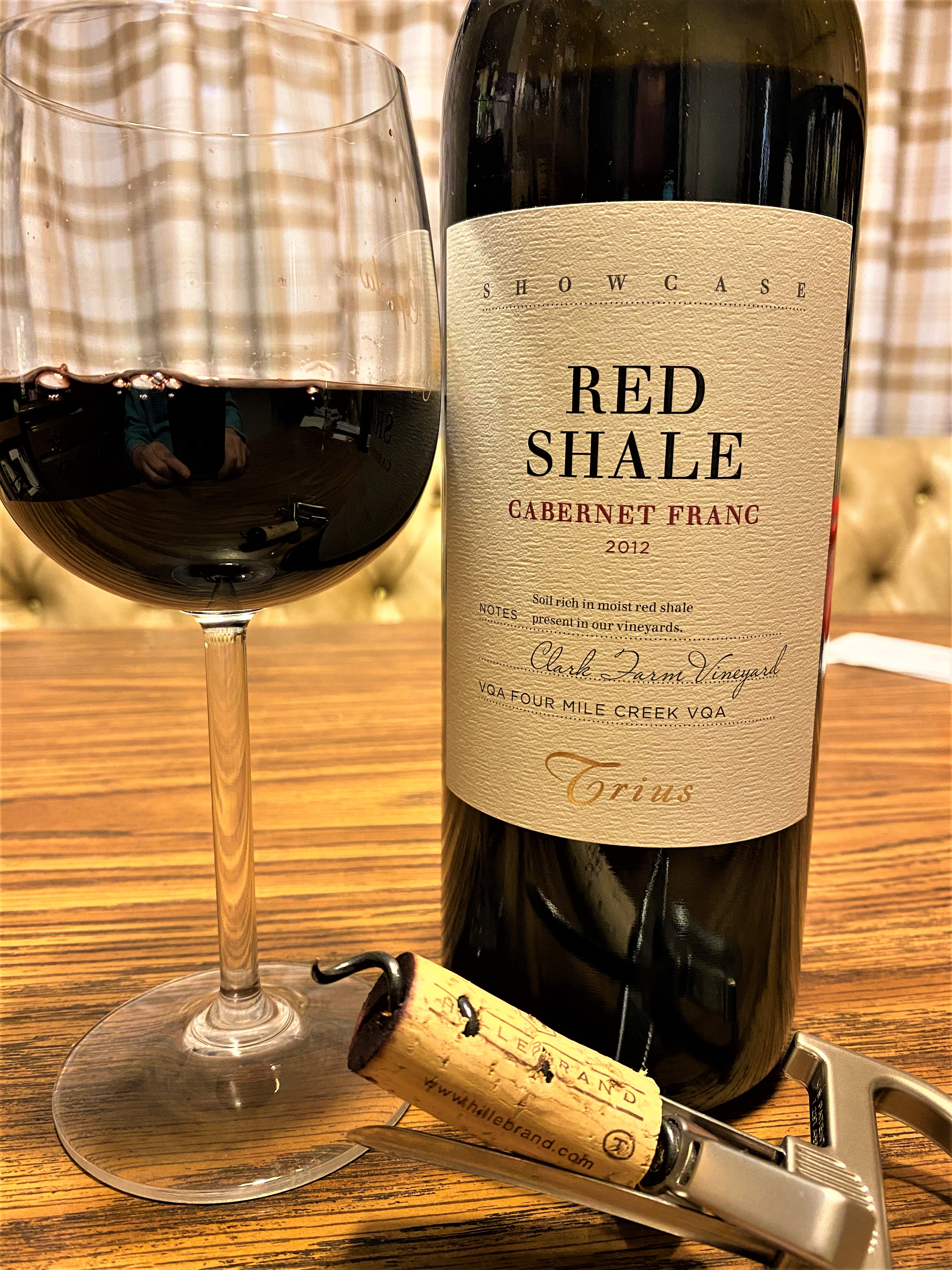
I kept the wine a secret, until I brought it upstairs and then my Bride relived the second time, we visited Hillebrand and of course Trius Winery and their restaurant.  We were taken to a private tasting room in a loft setting, just to taste the special Trius wines and their Showcase collection, and we were having such a great time tasting and buying, that our concierge had to contact their restaurant in the same structure that we were running late for our reservation.  We got a chance to remember that passed moment as we had a bottle of Trius Showcase Red Shale Cabernet Franc, Clark Farm Vineyards Four Mile Creek VQA 2012.  A little history is needed for this wine from the Niagara-on-the-Lake winery and NOTL reminds me of the Traverse City region of Michigan, as I had family in Saint Catherines, Ontario (basically next door) and both regions were originally cherry orchards and now both regions are great wine regions.  The original Hillebrand Winery about a quarter of a century ago, created their Trius Red Wine, and it took the country by storm that they were making a Bordeaux Blend that was acclaimed and brought new interest to the region.  Eventually, there were more Trius wines being created instead of the Hillebrand and in 2012, Trius Winery was created.  Four Mile Creek VQA is the largest sub-region of the Niagara-on-the-Lake VQA and Clark Farm Vineyards is famed for their red shale soil, which adds to the terroir of the land.  The extra long name for this particular wine is that the “Showcase” collection only features single vineyard wines, similar to the concept of a “cru.” After aging for eighteen months, the best barrels were saved for this wine and four-hundred-seventy-five cases were, and the balance of the barrels were used for blending in other wines at the winery.  It was a beautiful deep wine with a nose that opened up as I was pouring it into the glasses, the aroma of dark stone fruit was competing with the filets as they were cooking.  Black cherry, black raisins and blackberry were the initial tastes, the tannins were still elegant and offered some notes of vanilla and spices at the long finish emphasizing the terroir, which is always my favorite part of a wine.  There is something special that Cabernet Franc does for the “dirt” as it mellows in aging.  Here was the first Trius Cabernet Franc wine and at eight years of age, it was still so youthful, and a very special way to enjoy a middle of the week meal and a celebration.

Posted in Dining, Wine | Tagged , , , , , , , , , | Leave a comment

One Spanish, One French

The joys of wine are that there is always something new to discover, you don’t have to go to the market and keep buying the same wine every week.  At my local wine shop and wine club The Fine Wine Source in Livonia, I know that I am not going to get a run of the mill bottle of wine, found in every gas station, grocery store, drug store and party store; and even some of the big names make wines for this niche as well.  I am not trying to be a snob, but I think that I may as well try another wine, that is how we find our “house wines” and they can change when something new is discovered. 

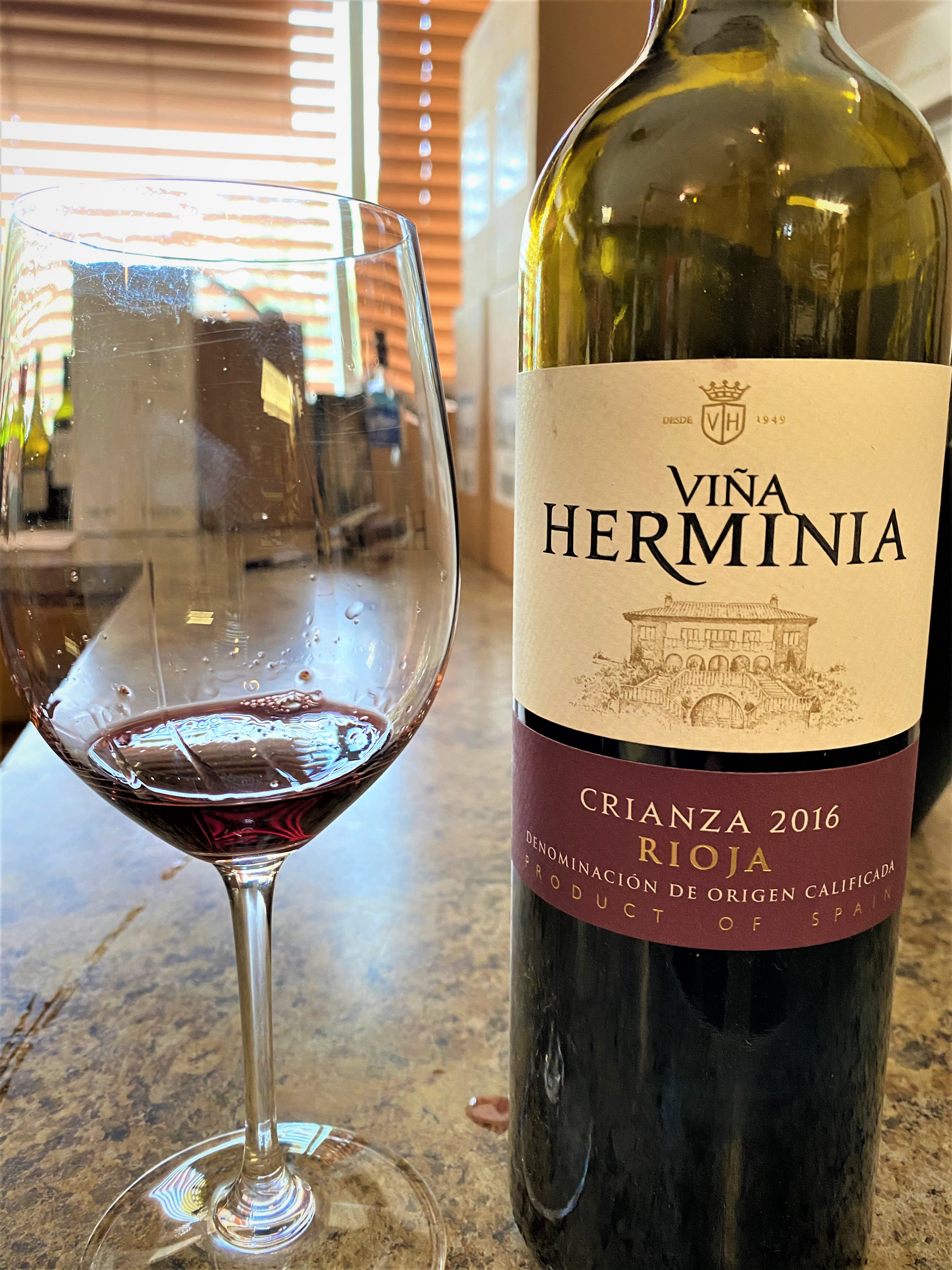
Bodegas Vina Hermenia Rioja Crianza DOCa 2016 was an excellent find.  Vina Hermenia was established in 1949.  The winery was named as an homage to the memory of his wife.  The winery is located in the largest sub region of Rioja and is now named Rioja Orientale (Eastern Rioja) since 2018, since the region was historically known as Rioja Baja, but not in lower of quality, but because Rioja Alta is on an elevated altitude.  The wine is a blend of eighty-five percent Tempranillo and fifteen percent Grenache.  It is aged in a mix of American and French Oak casks for twelve months and then another six months in the bottle before it is released.  It has a garnet color with red fruit for the nose with a touch of vanilla.  The taste offered cherries and nuts, with a nice finish, just a well-balanced Rioja from the old school and my erudite scribbled note says “tasty.”

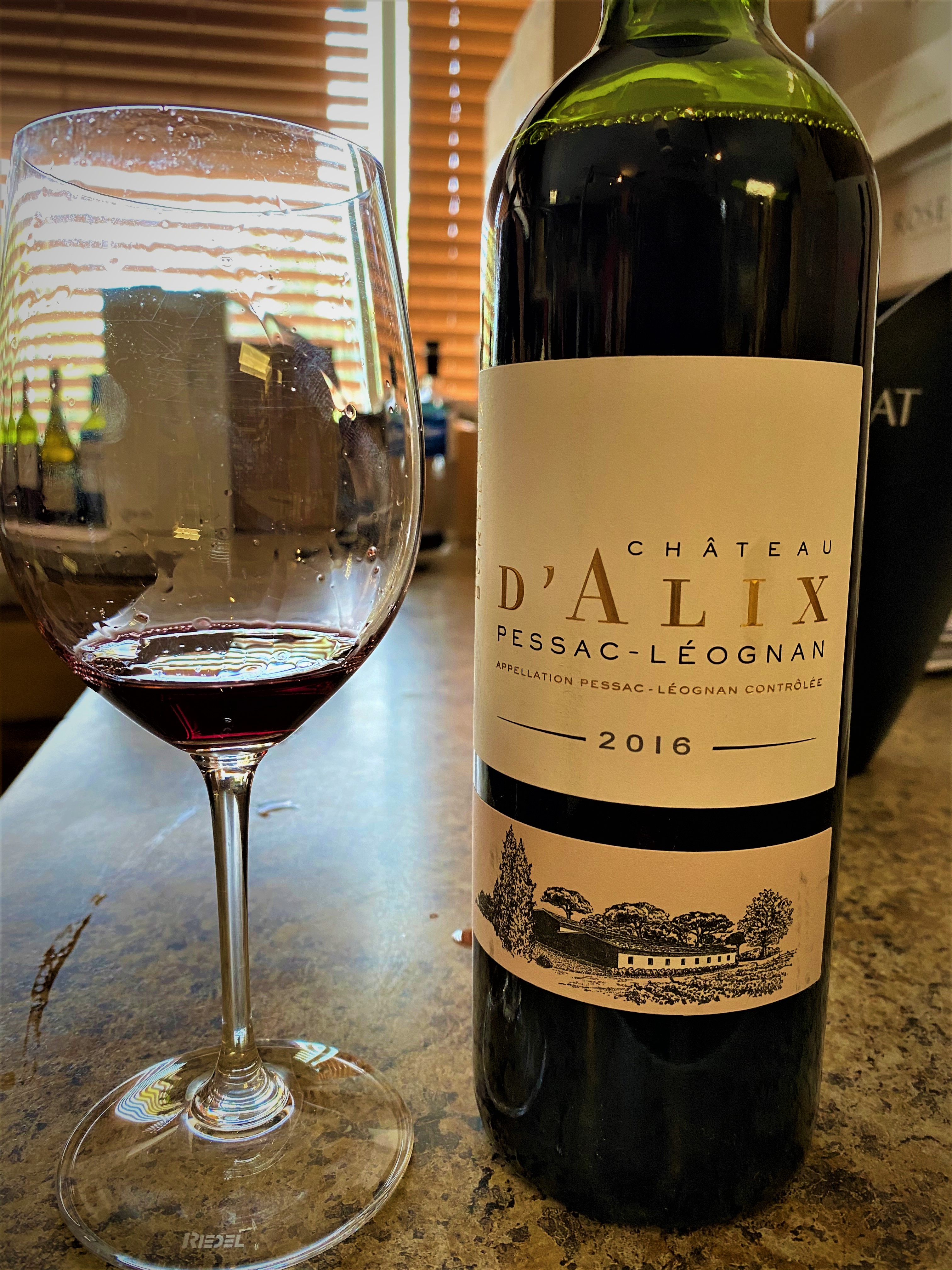
Chateau d’Alix Pessac-Leognan Rouge 2016 and Pessac-Leognan is an appellation for red wines of Bordeaux that was carved out of the Graves district in 1987, including some of the chateaus there were listed in the Graves Classification of 1959.  Chateau d’Alix is a joint venture of Muriel Belloc, a third generation wine-grower and her husband Jean Noel who is also a wine grower.  In 2008, they began with a clean slate of sixty hectares, of which twenty-one hectares were planted in the AOC delineation.  In 2012 they had their first vintage in a brand-new cellar.  The average age of the vines are five years, so it is a young tasting and fresh wine and an equal blend of Cabernet Sauvignon and Merlot.  The fruit is harvested both mechanically and manually.  Fermentation and maceration are done in Stainless Steel for about a month and then the juice is aged in oak for twelve months. The wine offers red fruits in both the nose and the taste with some nice gravelly terroir in a medium finish. I think the winery will definitely show promise for the future, if this young wine is an indication.

Posted in Wine | Tagged , , , , , , , , , , , , , , , | Leave a comment

Thanksgiving 2020

Christmas cards and newsletters mailed.  Christmas gifts wrapped and shipped for the out of towners.  Christmas gifts for the locals wrapped and bundled by family.  All of these accomplishments are achieved by my Bride the day before Thanksgiving.  For the last twenty-five years we have been having the families congregate here for dinner and drinks. We even made plans to have four families sit in four different rooms in case we were invaded by hobnail booted Gestapos, because of snitches.  The concern was for my ninety-four-year-old Mother-in-Law, who has lived through plenty of unique situations, but not a lockdown.  In her youth, a house was quarantined if a member of the family had an infectious and deadly disease, now the whole state is penalized and her family continues to see her and make sure that she is good.  Alas, the propaganda machine was so fierce this time, that slowly every family canceled, so instead of four families dining on one turkey, multiple turkeys had to be bought and prepared, so more people could venture out to be with other potentially ill people at the grocery stores.

We actually had decided to have just a very fancy dinner for the two of us, but then another sister invited us to join her family of five, so that only seven would be in the house and even Gladys Kravitz could not scream for Abner.  So, my Bride switched gears again and made Armenian Pilaf, Stuffing and her Caesar Salad to take to her sister’s house, and we made a side trip to drop off allotments of those three dishes to her Mother’s house and to leave some for one of her other sisters, who was bringing an apple pie, that we were going to take to the sister that we were going to dine with.  Confused yet?  Don’t worry, then we found out that the sister and her husband that basically live with my Mother-in-Law had not planned on a Thanksgiving dinner, so besides the sides, my Bride stopped and got an order of turkey and a slab of ribs to take to her Mother’s house.   While this was going on, the sister that we were going to join decided that she wanted enough food to also send to her Mother, so they made a turkey, a standing rib roast and a glazed ham, plus more sides.  The day began with some wonderful cheeses; cranberry and amaretto and a mango and apricot paired with some delightful artisan crackers and we could have made a whole meal from that.  Finally, besides the mentioned apple pie, our host made a pumpkin/cheese cake pie and my Bride made for the first time a Lemon Meringue pie and all the desserts were great.

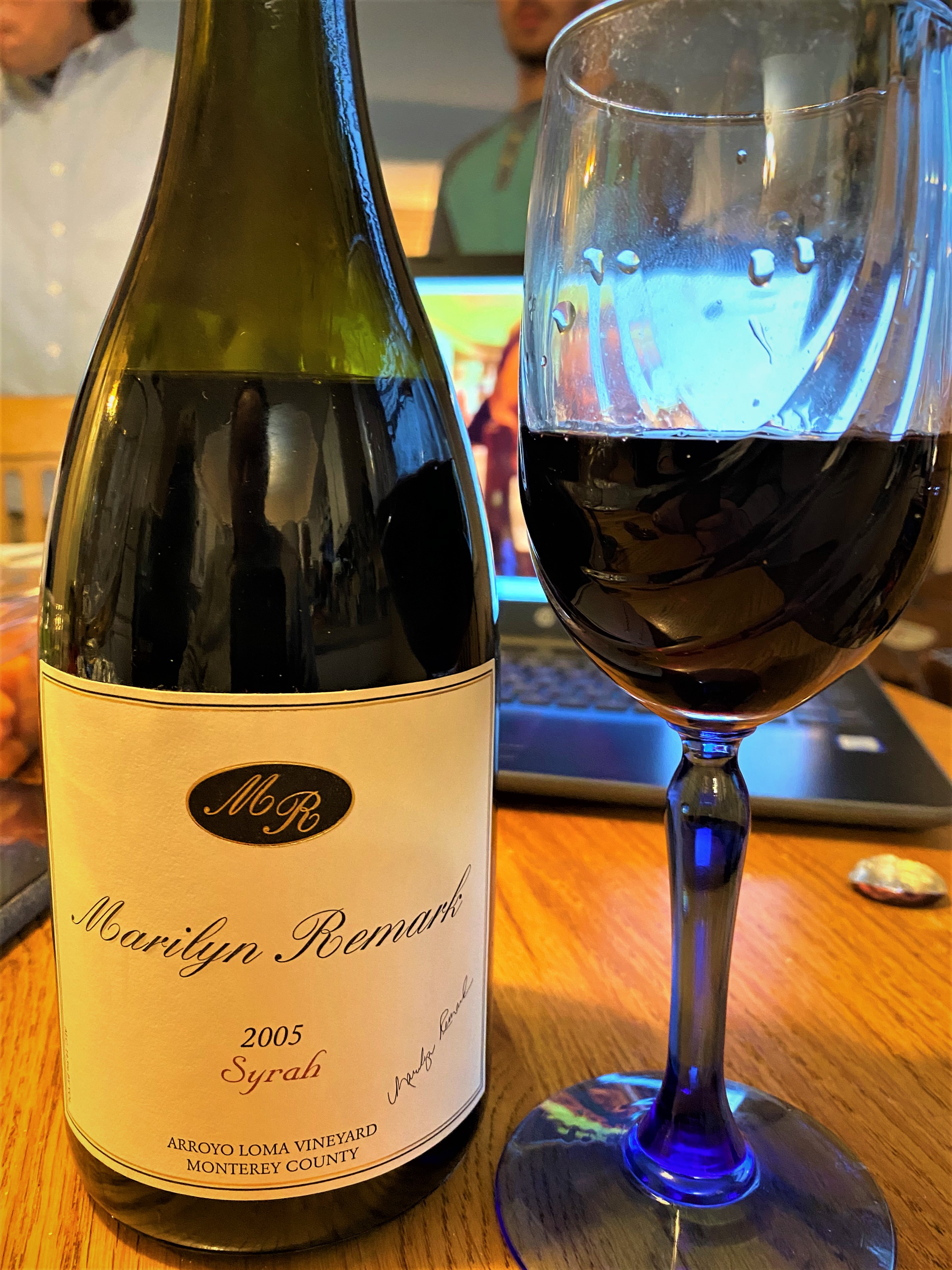
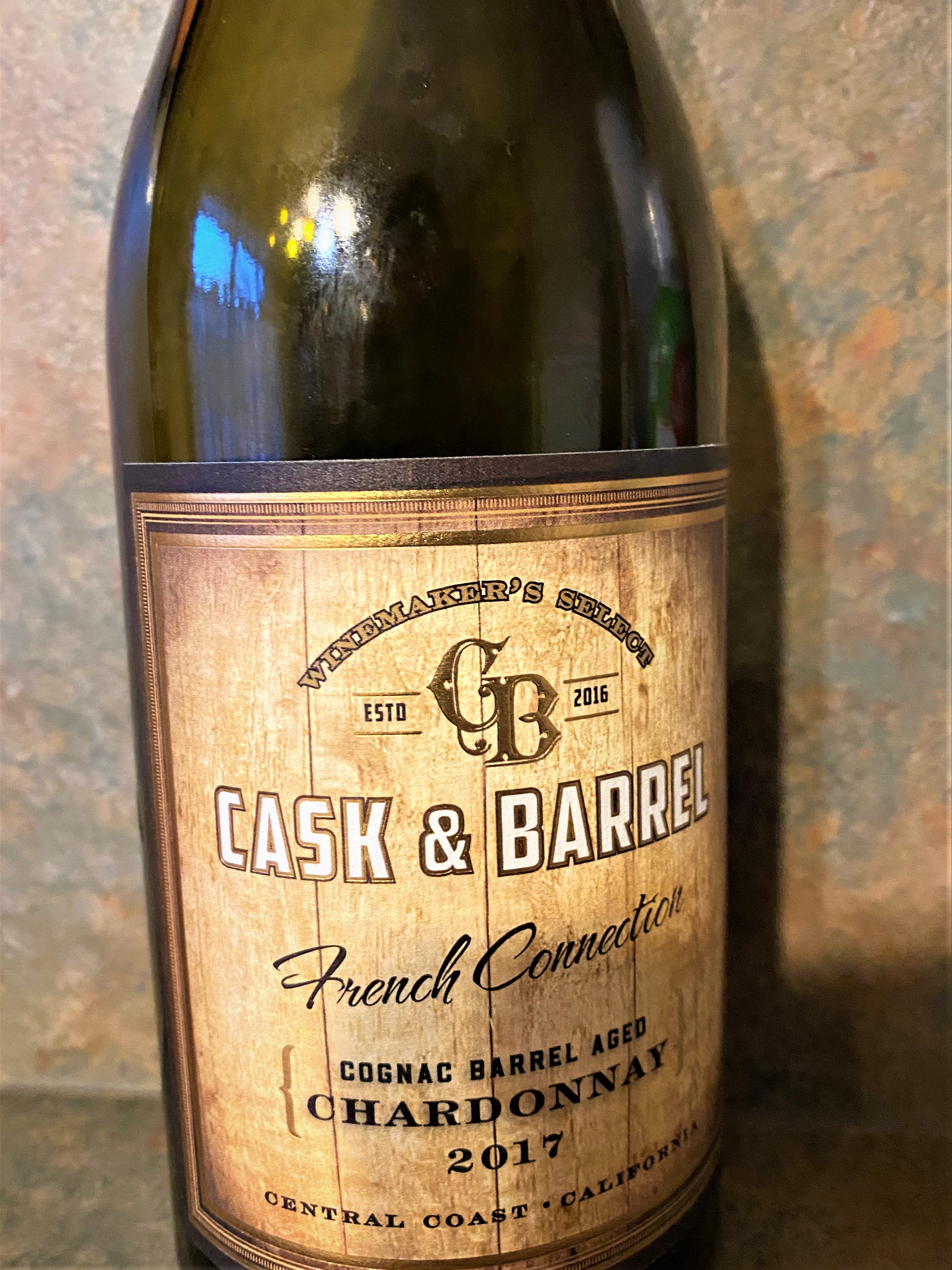
My Brother-in-Law besides manning the helm on the turkey and the standing rib roast opened up the first bottle of wine.  A new wine to me, but the concept I tend to see more often and I have read both pros and cons towards it, but if it brings new wine drinkers into the fold, I think it is all for the best.  We had Cask & Barrel “French Connection Chardonnay Central Coast 2017.  The wine is produced under the umbrella company of American Vintners offering forty-five wines.  They source wines from Napa Valley, Paso Robles, Lodi, Monterey and Russian River as well as from Italy, France and Spain.  The production is based in Monterey County, California and the Sales and Marketing offices are in Rochester, Michigan. This particular wine was aged in French Cognac barrels for three months, and offered a nose of pineapple, coconut with some vanilla and had a nice finish of oak and spice.  The first wine that I opened for the evening was one that we had discovered on our last trip to Petoskey.  We had an estate produced and bottled Mackinaw Trail Winery, Inc. Unrestricted As-cen=sion 2017.  The winery was founded in 2004 and they now have a second generation working as a winemaker.  The winery owns thirty acres, but presently grows on fifteen acres.   The Unrestricted As-cen-sion 2017 was an interesting little blend of thirty-four percent Sauvignon Blanc, twenty-five percent Chardonnay, twenty-two percent Riesling and nineteen percent Pinot Blanc.  This had a sweeter nose and was a nice balanced wine and it was an easy drinking wine for the all to enjoy.  The second bottle that I opened and it is becoming kind of a tradition for me was a bottle of Syrah, and I really like Syrah with turkey, maybe it helps that I like the dark meat and I also like it with beef.  The Marilyn Remark Syrah, Arroyo Loma Vineyard Monterey County 2005.  I have very little information about the winery as my early paperwork, has, I guess been filed permanently away.  After a trip to the Rhone Valley, the Marilyn Remark Winery has begun producing Rhone style wines since 2003, but alas the owner retired and sold in 2016.  This wine was delightful and still had a nice deep color and a nose, and finish that betrayed its age. It was a pleasure having a wine that was so well made.  Here is hoping that Thanksgiving 2021 will be more joyous and families and friends will be able to gather again in peace.   

Posted in Dining, Wine | Tagged , , , , , , , , , , , , , , , | 2 Comments

Two Different Sangiovese Wines

Imagine having two different wines from Tuscany, both pure Sangiovese and totally different from each other.  That happened when I picked up these two wines from my local wine shop The Fine Wine Source, and it can get fun when I wander in there, especially these days, when shopping local.  Tuscany may be the most romantic of all the wine regions of Italy, even made famous by the cinema and famed for some forty odd sub-regions of wine making.  The three most famed sub-regions of Tuscany are Chianti, Brunello di Montalcino and Vino Nobile de Montepulciano and all use the Sangiovese grape, though it has many local names for the same grape, in fact forty-one percent of Tuscany uses Sangiovese, even with the invasion of the French varietals that have been making inroads in Tuscany and Italy.  The dark berries of Sangiovese are known to be prized for its high acidity, firm tannins and generally well balanced, in fact it probably is the most grown varietal in all of Italy.

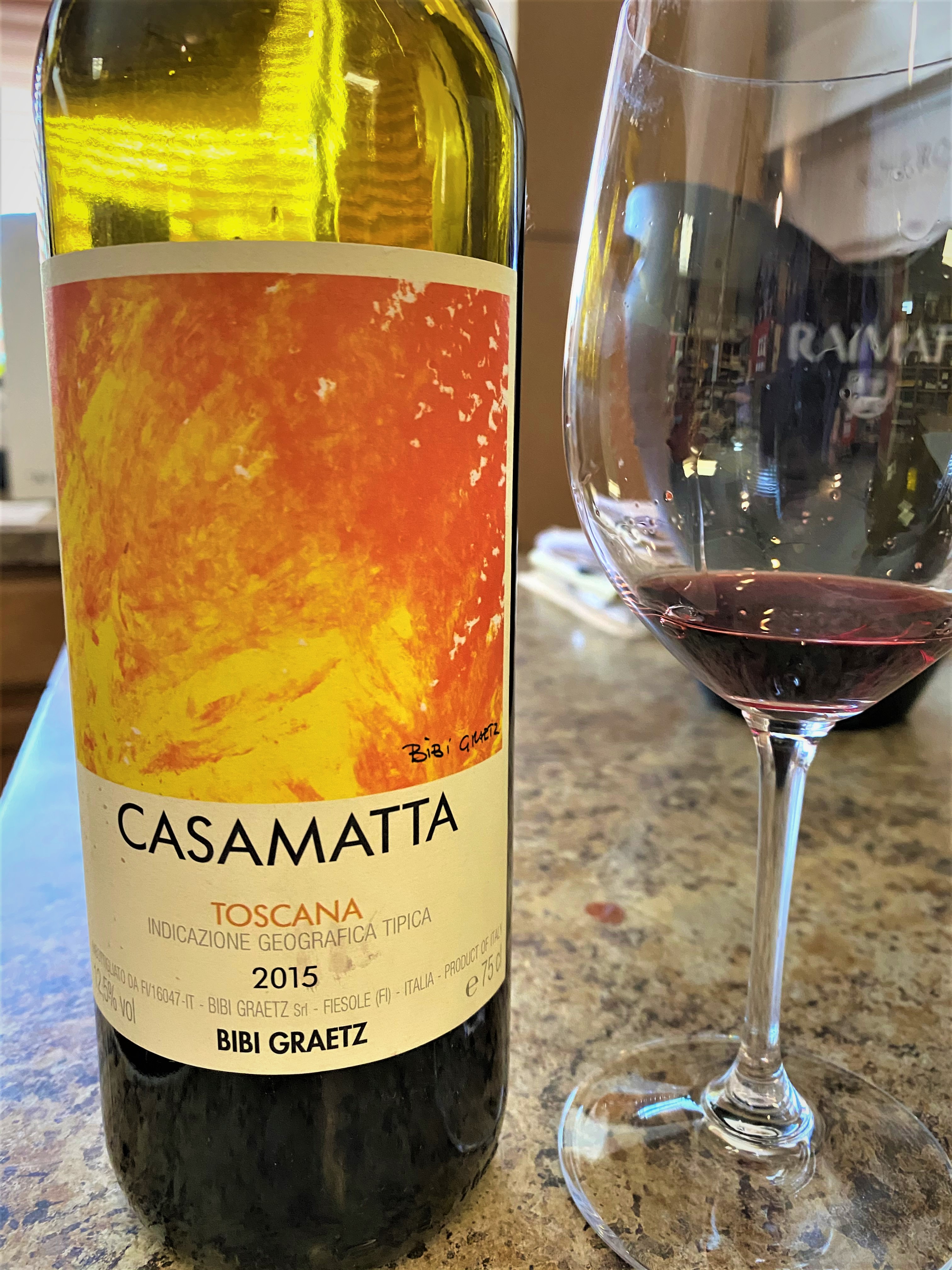
The Bibi Graetz Casamatta Rosso 2015 was a new wine for me.  Bibi Graetz was an artist first and finally fell in love with his family’s vineyard that originally only produced wine for the family and in the mid 1990’s he began making changes and with his family estate and another twenty small organically farmed plots, he now manages seventy-five-acres to produce his wines.  Casamatta is considered his house wine, and like some of his other wines, it has a unique name as it means “Crazy House.” 2015 was a great vintage year across Italy and it was excellent in Tuscany.  Casamatta uses the youngest fruit grown from his estates around Florence and Sienna.  The fermentation is less than a week in Stainless Steel and then all the juice was the different plots are then blended together and aged for six months in Stainless Steel to maintain the freshness of the fruit.  It was a very fun wine with cherries and raspberries and some notes of chocolate to me.  It was a very different glass of Sangiovese and better with lighter dishes instead of big heavy Italian dishes, actually great to start the dinner off, in my book and would get the taste buds requesting more.

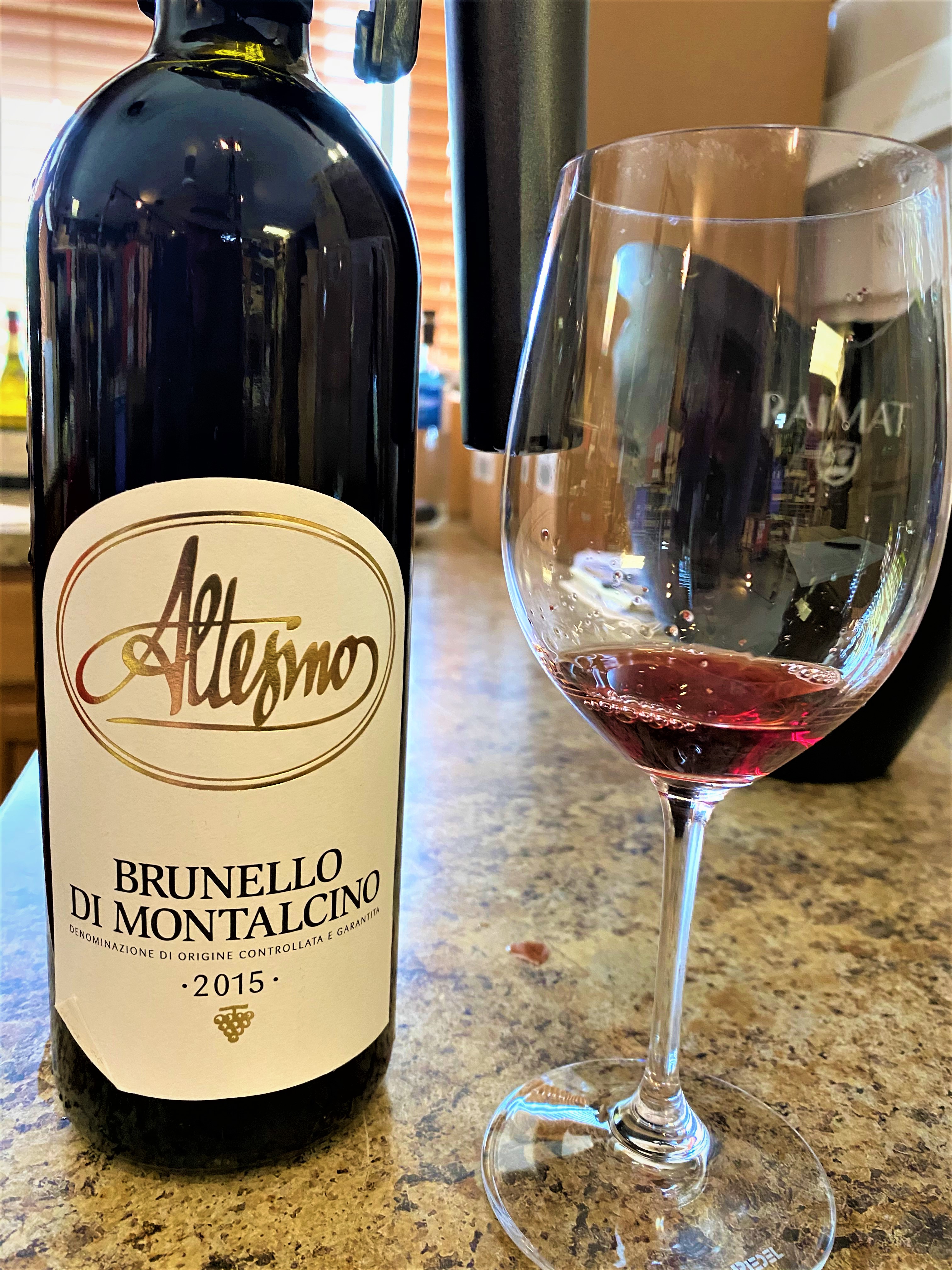
Altesino Brunello di Montalcino DOCG 2015 is the perfect way to finish a big Italian dinner with the big plates of food.  The original Palazzo goes back to the 15th Century, and run by the Tuscan family Tircerchi.  The Gnudi Angelini family has owned the estate since 2002. Societa Agricola Altesino is one of the leading estates in Montalcino and was the first to introduce a “cru” single vineyard wine in its Montosoli label.  Brunello di Montalcino was the first region to get the DOCG designation.  They have over a hundred acres planted with vineyards on the estate and the majority is Sangiovese.  The basic Brunello di Montalcino is aged for four years, with a minimum of two years in large Slavonian Oak casks.  The wine is a beautiful garnet color and an enticing nose of cherries, red fruit, and lavender.  A big chewy wine, is the best way for me to describe it, and it will hold its own for a good twenty years.  A really solid wine, but over the years, I have learned to expect the best from Altesino. 

Posted in Wine | Tagged , , , , , , , | 2 Comments

Le G de Chateau Guiraud

In the old days, some of the grand houses in Sauternes used to make a Bordeaux Blanc Sec for themselves and some of their friends, because all the interest was in the Sauternes and the Noble Rot that they successfully nurtured.  Sauvignon Blanc has been discovered the world over for its refreshing taste.  The combination of Sauvignon Blanc with Semillon for ages was just a Graves and Sauternes “secret” and now it is going great guns in parts of Australia as well.  Bordeaux Blanc Sec used to be a hodgepodge of varietals in Graves and in other parts of Bordeaux that bottles white wines in a dominate red wine region.  Sauternes historically used Semillon and especially the Noble Rot grapes and tempered the juice with Sauvignon Blanc, whereas the Bordeaux Blanc Sec is predominately the acidic Sauvignon Blanc and tempered with the addition of the palate pleasing Semillon. 

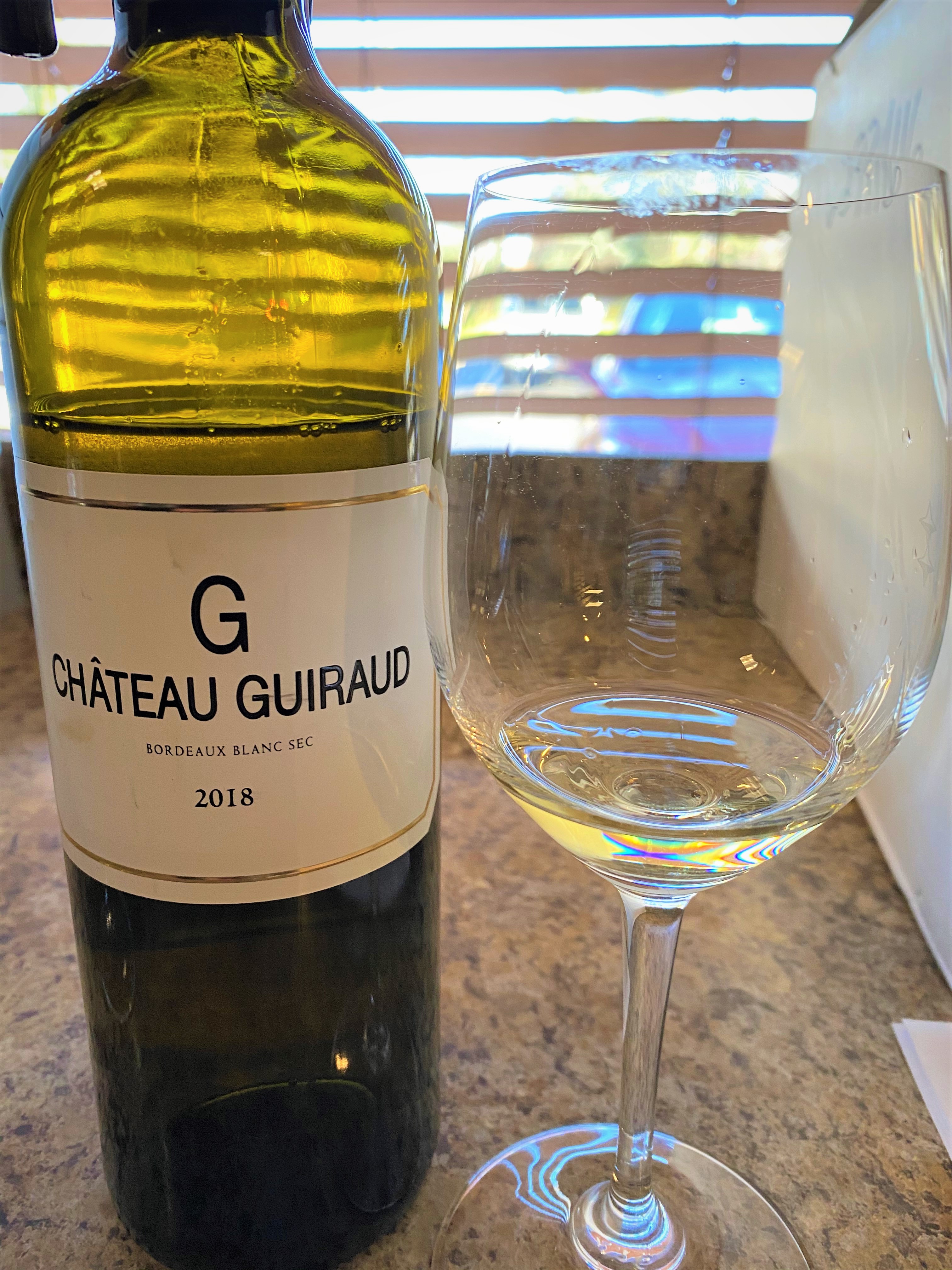
Chateau Guiraud is classified as a Premier Cru in the 1855 Classification of Sauternes and Barsac.  It was originally known as the Noble House of Bayle, but it was bought by Pierre Guiraud in 1766 and passed through many generations of the family until it was bought by a group of French winemakers in 2006.  The Chateau has two-hundred-ten-acres, of which the majority of the land is planted with Semillon and the balance is Sauvignon Blanc.  Along with the famed Chateau Guiraud, their second wine label is Petit Guiraud which is made from younger vines.  They also produce Le Dauphine de Guiraud (Sauternes) and Chateau Guiraud Pavillon Rouge (Bordeaux).   Then there is Le G de Chateau Guiraud their Bordeaux Blanc Sec or Dry White Bordeaux wine.  Over the years the winery has been rather independent even in their labels, what started out very Napoleonic in Black and Gold, like many of the other houses, ended up continuing with the colors, but softening the look with simple Helvetic font, instead of floral scripts.  They were also rather innovative by opening up a Bistro La Chapelle in the most sacred part of the estate in the chapel. 

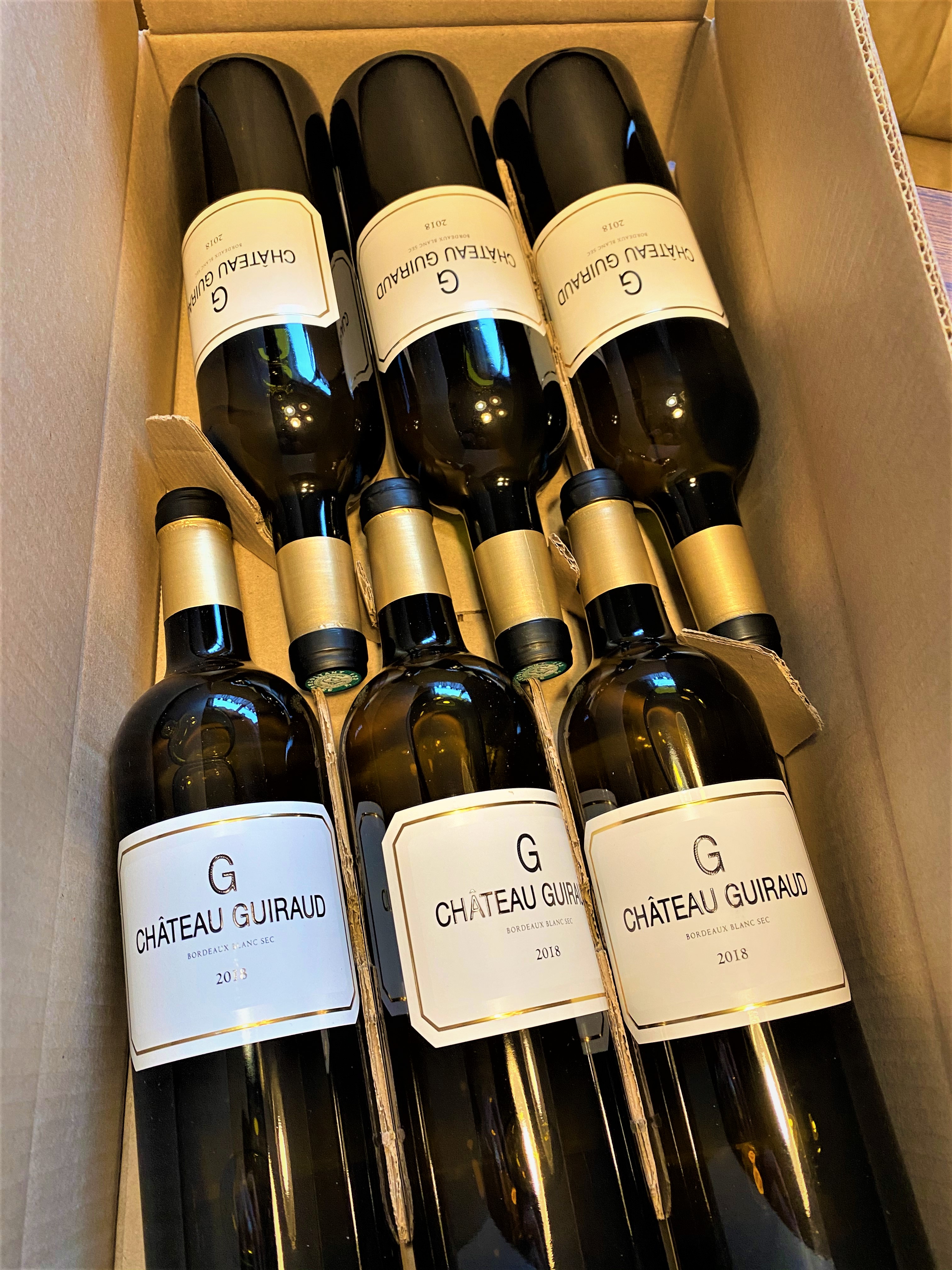
While most Bordeaux Blanc Sec wines are predominately Sauvignon Blanc, Le G de Chateau Guiraud is fifty/fifty.   The fruit is manually harvested using small baskets and fermentation is for about three weeks.  Eighty percent of the wine is aged in the barrels from the last vintage of Chateau Guiraud and twenty percent is done in Stainless Steel. The average aging in the barrels is seven months with regular stirring of the lees.  This is a very lush and full-bodied white wine with a delicate gold tinge, a very refreshing wine that leaves one chewing the wine to appreciate the suppleness of the fruit and the terroir that lingers and beckons for another taste.  It most assuredly passed the Bride’s test for desirability and it comes in a handy easy to carry six pack. 

Posted in Wine | Tagged , , , , , , | Leave a comment

Another Raid on the Cellar

I keep trying to raid the cellar, especially for one of a kinds and potential old wines, both of which can be iffy.  So far, we have had five bottles that had seen better days, so that is not too bad of a ratio.  I am also trying to make some room, because new wines are already creeping in and creating a back log in the basement again.  I guess there are worse problems to have in the world, but slowly, but surely, we are making headway and cleaning house. 

It was going to be one of our Sundays at home, actually for a while it will be every day at home, as we are in quasi-lockdown again, only this time it was mandated by a department as an end run around our Supreme Court.  Oh, the joys of jurisprudence and scofflaws.  We were having a nice breakfast of eggs, bacon, cheese, toast and coffee; and to finish it off properly some Mimosas.  Later on, our dinner was going to be Roast Beef, Mashed Potatoes and Mixed Asian Vegetables.  We are skipping desserts at home, since she has had a successful time with weight reduction and I have had a rather lackluster result, but I think I still have the concept of finishing food, if there really isn’t enough to use as leftovers for another meal.  I have lost almost twenty pounds and I would like to double that loss if possible, but with the winter arriving and gymnasiums and spas basically closed, it will be more of a challenge. 

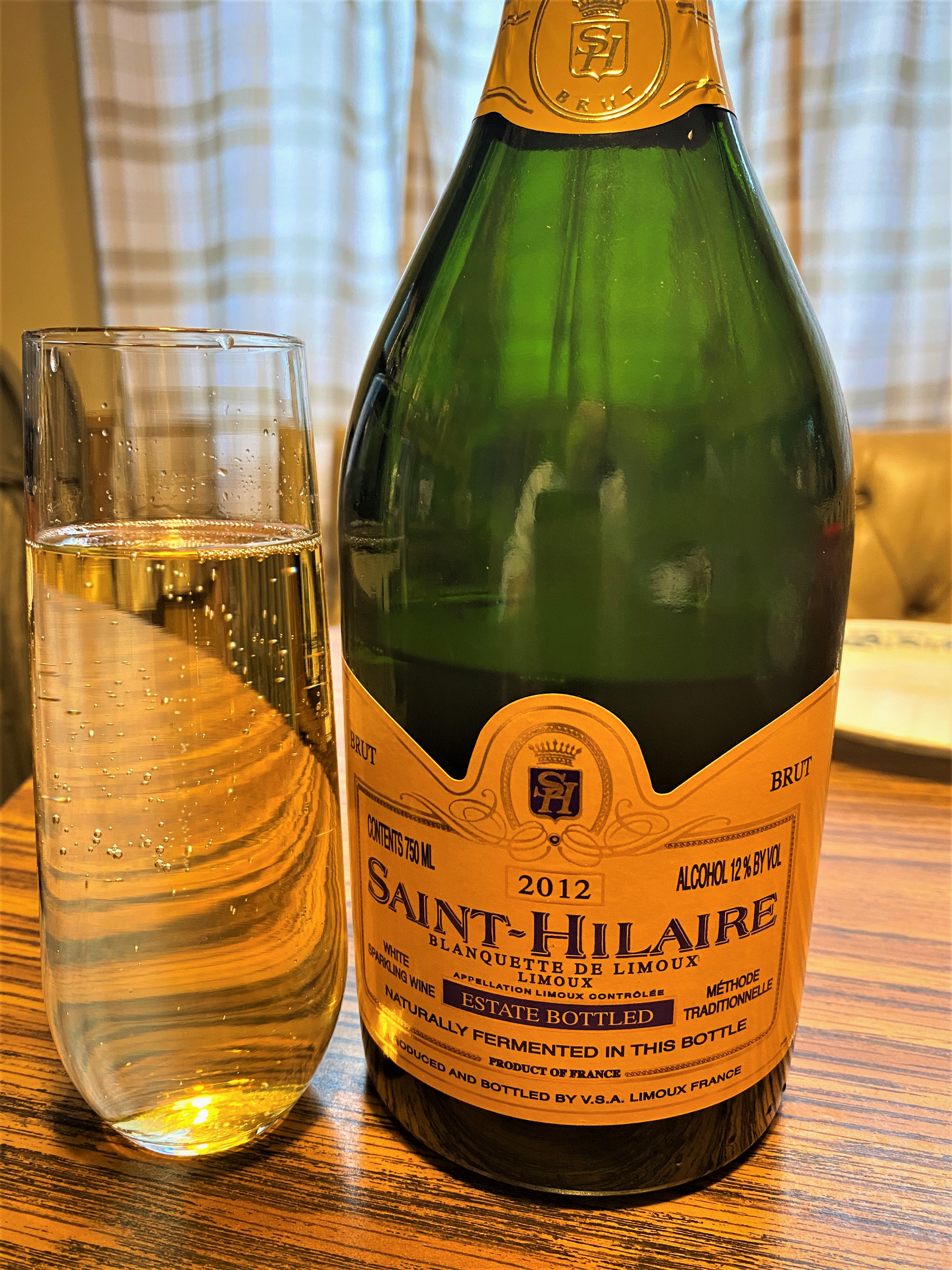
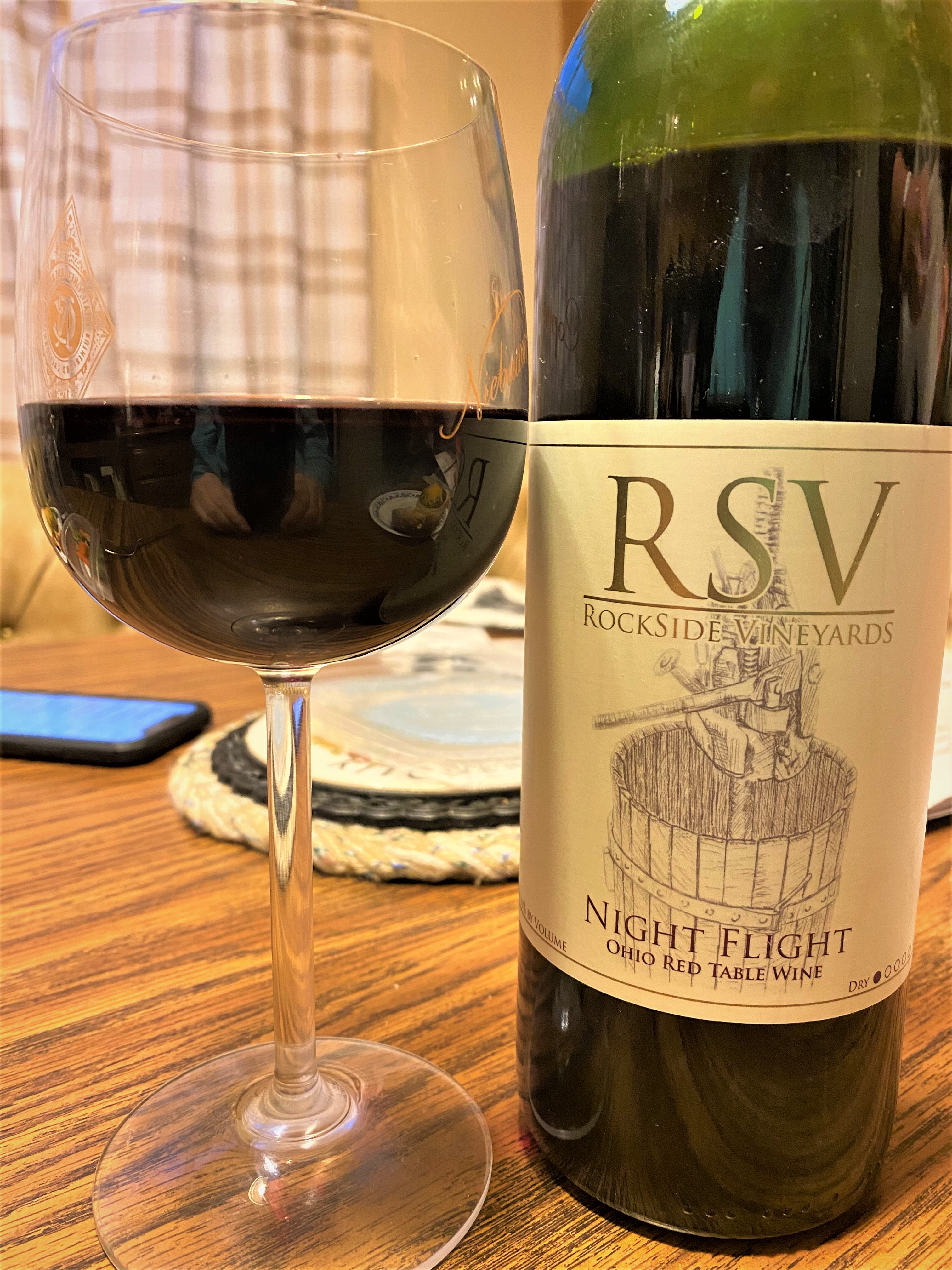
We probably drink fewer bubbly wines, but we seem to still an accumulation anyways.  I grabbed a bottle of Sieur d’Arques Saint-Hilaire Blanquette de Limoux Methode Traditionelle 2012.  Limoux is in the Languedoc wine region and wine was introduced to the area by the Greeks in the 5th Century BC, but it was in 1531 when the Benedictine monks from the Abbey of Saint Hilaire, a town near Limoux allegedly produced the first sparkling wine.  The claim of the sparkling wine discovery has proponents in Champagne that argue who was first and that is not for me to decide (thank God).  The Lord of the region at the time, the Sieur d’Arques was a huge fan of this wine and when the local wine growers decided to rename their winery after him.  The AOC Blanquette de Limoux is the first AOC in the Languedoc and one of the first appellations in France.  The association of wine growers created the Société des Producteurs de Blanquette de Limoux in 1946 and in the 1990’s changed the name to Sieur d’Arques.  The Traditional Method, which has a second fermentation in the bottle is used for the Blanquette de Limoux wines.  Blanquette is a local name for the Mauzac grape variety, and to confuse matters three other local varieties are also known as Blanquette and they have nothing to do with this famed wine.  Originally by regulation this wine was totally Mauzac, but lately the regulation has been softened to appeal to new generations of wine drinkers, and the wine has to be ninety percent Mauzac and the balance can be Chardonnay and/or Chenin Blanc.  The grape is known for its high acidity and low alcohol and delivers flavors of honey and green apples.  I am very happy to say that this wine was very fresh after eight years and it was almost a sin to add the tincture of orange juice.  The wine that I grabbed from the cellar for the roast beef was Rockside Vineyards Night Flight NV, an Ohio Red Table Wine.  We bought the wine along with some other wines at the winery in 2014 and it was actually an enjoyable trip and visit.  We had been to a winery earlier that day and we were touted to go here, because we told that they had some great Cabernet Franc wines, and that was all that my Bride needed to here as we loaded the information into our GPS.  At the tasting room, we had the good fortune to meet the owner Ron Rutter, who handled the tasting room duties. He told us a little bit about himself, that he was a retired Air Force officer, and then had been an executive with a company, but the desire to be a wine maker took him from California to Ohio for the next stage of his life. He explained that because there was no appellation and the grapes all came from Ohio, there was no vintage year, per the rules and he joked that it saved him having to have new labels reprinted each year.  Night Flight was a red blend wine of Cabernet Franc, Chambourcin and Noiret which was a very easy drinking wine.  Chambourcin and Noiret are Cold Hardy hybrids that are found in the Mid-West and Northern States.  Here was another wine that I wasn’t sure what to expect, we really enjoyed it at the winery, and it was great with dinner and it did not show any signs of having peaked.  Two more in the plus column from having been stored properly and a great reason to have a cellar. 

Posted in Dining, Wine | Tagged , , , , , , , , , , , , , , | 2 Comments

Two Interesting Italian Wines

I may not get out as much as I used to this year, I still enjoy going to my wine shop The Fine Wine Source.  There are times that I need to place an order, times to just shop and buy and most of the time I get to discover some new wines.   There is always wine to discover, especially without the need to break the bank.  Anyone can just go and buy the classics, or the hot new trendy wines, and then there are times to take the word of the professionals that taste wines for a living and they discover interesting wines, that for one reason or another, you might pass on, just walking up and down the aisles or scanning the shelves. I also have to admit that I have a soft spot for Italian wines, as they are among some of my earliest memories growing up and getting a glass of wine with dinner as a kid.

A new wine for me is Caruso e Manini “Naturalmente Bio” Perricone Terre Siciliane IGT 2017.  Caruso & Minini is a joint Venture between Stefano Caruso, a third-generation winemaker and Mario Manini, owner of a marketing firm in Northern Italy.  In 2004 they started a winery in Marsala, in the extreme western edge of Sicily, and they have an old Marsala wine structure called a Baglio as the home of the winery. They have one-hundred-twenty-hectares which is composed of their two vineyards; Giumarella and Cutaja.  They grow local varieties like Grillo, Catarratto, Grecanico, Inzolia, Zibibbo, Nero d’Avola, Frappato and Perricone as well as some international ones like Cabernet Sauvignon, Chardonnay, Syrah and Merlot.  Perricone is basically grown now on the western side of Sicily, though at one time, it was grown throughout the island.  Highly aromatic with strong tannins, it is usually blended.  The grape was almost wiped out by phylloxera and basically replaced by Nero d’Avola.  Terre Siciliane IGT encompasses the island of Sicily and was created in 2011, to replace the old Sicilia IGT and to be under the Sicilia DOC, and Terre Siciliane means Sicilian lands.  The wine is made entirely in Stainless Steel from its twenty days in fermentation and then another six months in aging.  The wine is then let to age in the bottle for at least three months before it is sold.  It is quite vibrant and earthy with some notes of licorice that I noticed, but I have always been a fan of terroir. 

The other wine that I am going to discuss is Allegrini La Grola Veronese IGT 2014, what a lot of restaurants are calling a “Baby Amarone.” Allegrini is a family business located in the Valpolicella Classico zone of the Veneto and famed for their Amarone della Valpolicella. They have been in the wine growing business since the 16th Century, but it was in the 1960’s that they really carved out a reputation for their fine wines.  All of their wines are from their ninety hectares of vineyards and all with southeast-facing slopes.  While they are famed for their Amarone, they also produce wines with the Veronese IGT that stray from the rigid rules of Valpolicella.  La Grola is a premium single vineyard cuvee that is ninety percent Corvina Veronese and ten percent Oseleta.  Initial fermentation is done in Stainless Steel, Malolactic fermentation in barriques and then aged for sixteen months in oak, then blended for another two months, followed by ten-month aging in the bottle.  This was a nice big wine and a lot of bang for the buck, as far as I am concerned with some notes of vanilla as a bonus with the dark fruit and a nice long finish.   

Posted in Wine | Tagged , , , , , , , , , , , | Leave a comment