Boyne Valley Vineyards

We went to another new winery while we were up in Petoskey, and the winery was Boyne Valley Vineyards.  I mean they are really a new winery, because by the time this article is published, it will be before their Second Anniversary.  Now, if you are thinking that I am pulling a fast one on you, let me explain that I have mentioned Boyne before.  There is a Boyne, Boyne Highlands, Boyne Mountain and Boyne Falls in Michigan and while I have mentioned a couple, we have not been to them all. The winery backs up to a scenic one-hundred-thirteen-acre nature preserve. They have a beautiful tasting room, but they offer wine tastings, except on Friday afternoons and Saturday, where their wine and cider are only offered by the glass. Perhaps this is done to curtail the roving bus-loads of bachelor and bachelorette parts and group tours that at times seem to arrive en masse. They also have music concerts on the grounds, as they have a patio, lawn and a treehouse, we forgot to checkout the treehouse (a long story on its own).  Another nice feature is that they offer a few plates of assorted noshes to accompany the tastings or the concerts, or if you just want to sit out with a glass of wine on the patio and enjoy the day.
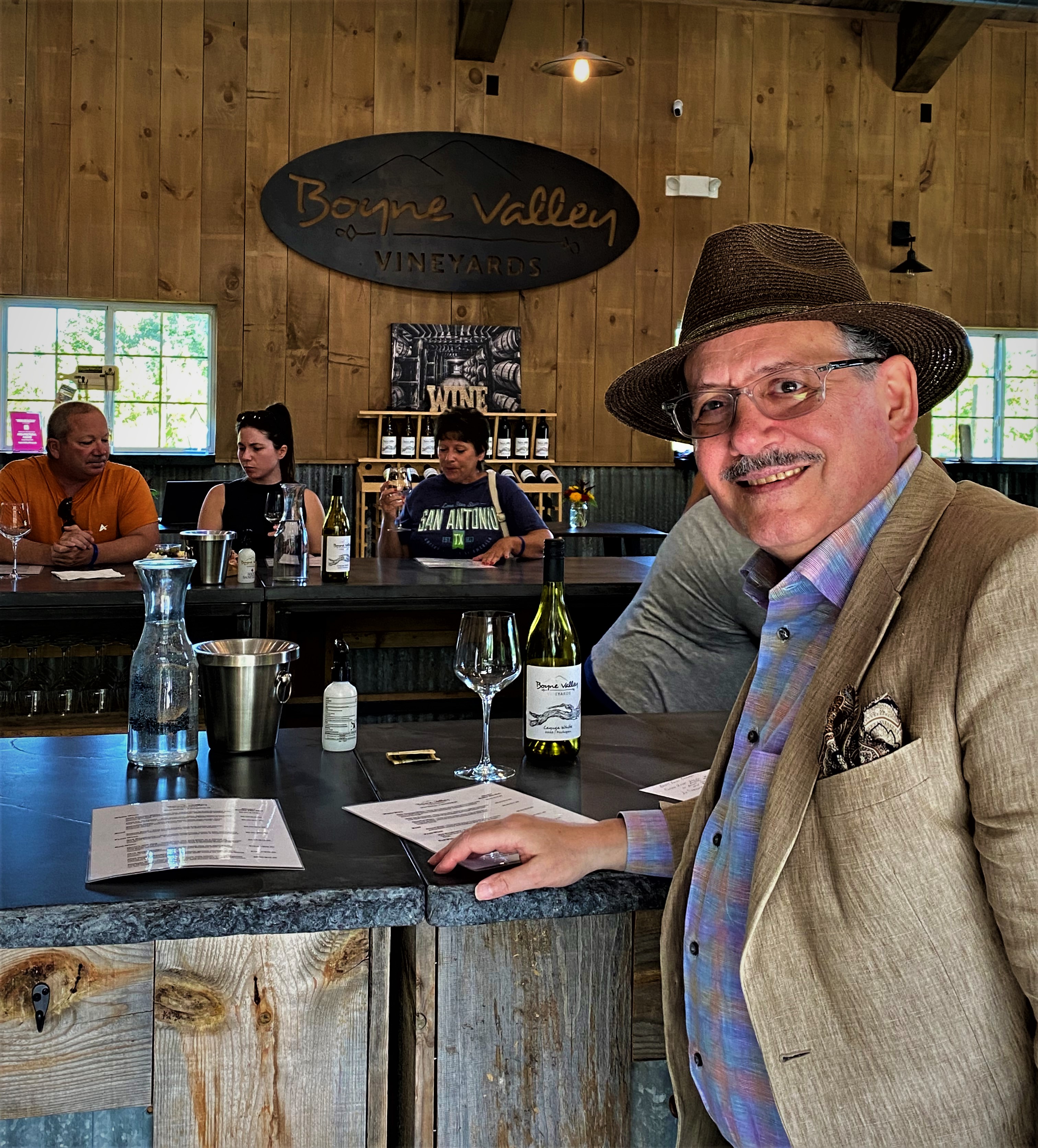
We did enjoy a wine tasting and by happenchance, we had our tasting with the owner and she was enjoyable to be with. We started the tasting with the Boyne Valley Vineyards Cayuga White Michigan AVA 2020.  Cayuga is a French-American hybrid that is a Cold-Hardy variety.  A crossing of Schuyler and Seyval Blanc back in 1945, but not released commercially until 1972; first developed on the shores of Seneca Lake in New York, but was named after the nearby Cayuga Lake. The wine was aged for eight months in plastic vats.  It was a nice soft yellow, with a nose of green melons and some foxiness, and on the palate, it was slightly sweet with a tinge of lemon zest and light acidity.  We then had La Crescent Michigan AVA 2020.  La Crescent is another hybrid developed by the University of Minnesota and released in 2002 and is another Cold-Hardy variety.  The wine was aged for eight months in plastic vats.  This wine offered notes of stone fruits, pineapple and lemon zest in an off-dry wine with some acidity.  The third white wine was “Snow Cat White” Briana Michigan AVA 2020. Brianna is another relatively new hybrid developed in Wisconsin in 1983.  Initially it was grown as a table grape, but has had success as a Cold-Hardy variety in several of the Upper-Midwest States.  The wine was aged for eight months in plastic vats.  A pretty wine that offered notes of honeysuckle, and tropical citrus fruits.
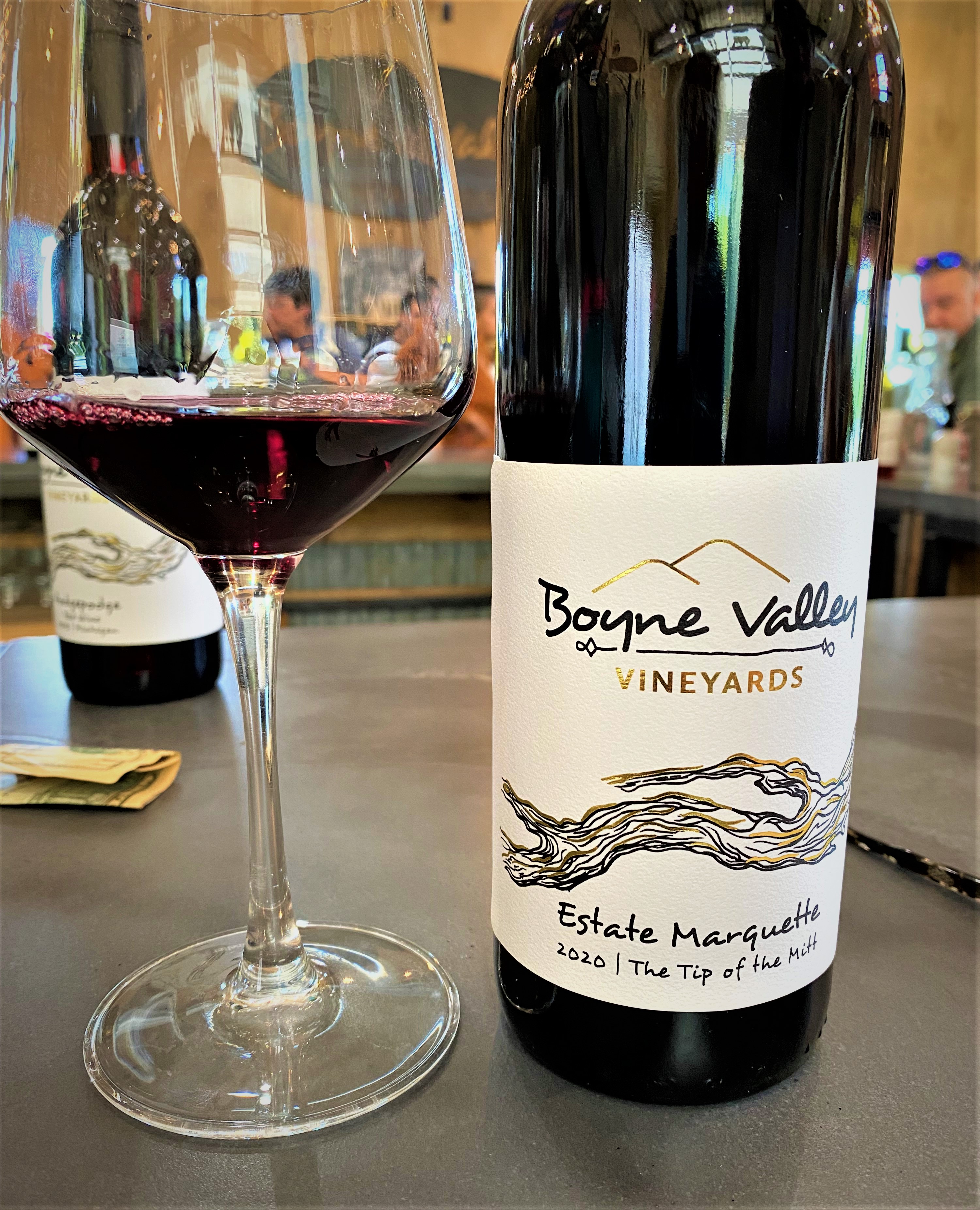
We enjoyed two red wines while we were at the winery.  The first was Boyne Valley Vineyards Hodgepodge Red Wine Michigan AVA 2018.  This wine is a blend of Petite Perle, Cabernet Franc, Cabernet Sauvignon, Marquette, Shiraz and Merlot; these varietals were from three different Michigan AVA regions, The Tip of the Mitt AVA, Traverse CityAVA and Lake Michigan Shore AVA.  The wine was aged for two years in oak. An interesting wine that offered notes of blackberry and plum, with light tannins and a medium finish.  The final wine of the tasting was their Estate Marquette The Tip of the Mitt AVA 2020 and was aged for three months in oak. This wine offered notes of Black Cherry, Currants and Blackberries with a medium body and a medium finish.  We had an enjoyable visit and they helped us decide on our last dinner while in the Petoskey area. 
Posted in Wine | Tagged , , , , , , , , , , , , , , , , , , , | Leave a comment

Spare Key Winery

While we were up north in Michigan, I had to get some free time to visit a few wineries, after all Michigan is in the top ten for production of wine in the country.  We decided to visit some new wineries, instead of revisiting some past locations.  I think of new wineries as dreams that have come to fruition for individuals.  I am not talking about Rock stars, or movie stars that can just buy into an existing winery or to let them expand.  I am talking about people that want to make wine and have to start somehow.  The average person might be able to pay for a tasting in Napa Valley, but the average person could not buy a vineyard or a winery there.  In Michigan, it is doable and affordable, especially if you can keep your day job, until the dream starts coming into shape.

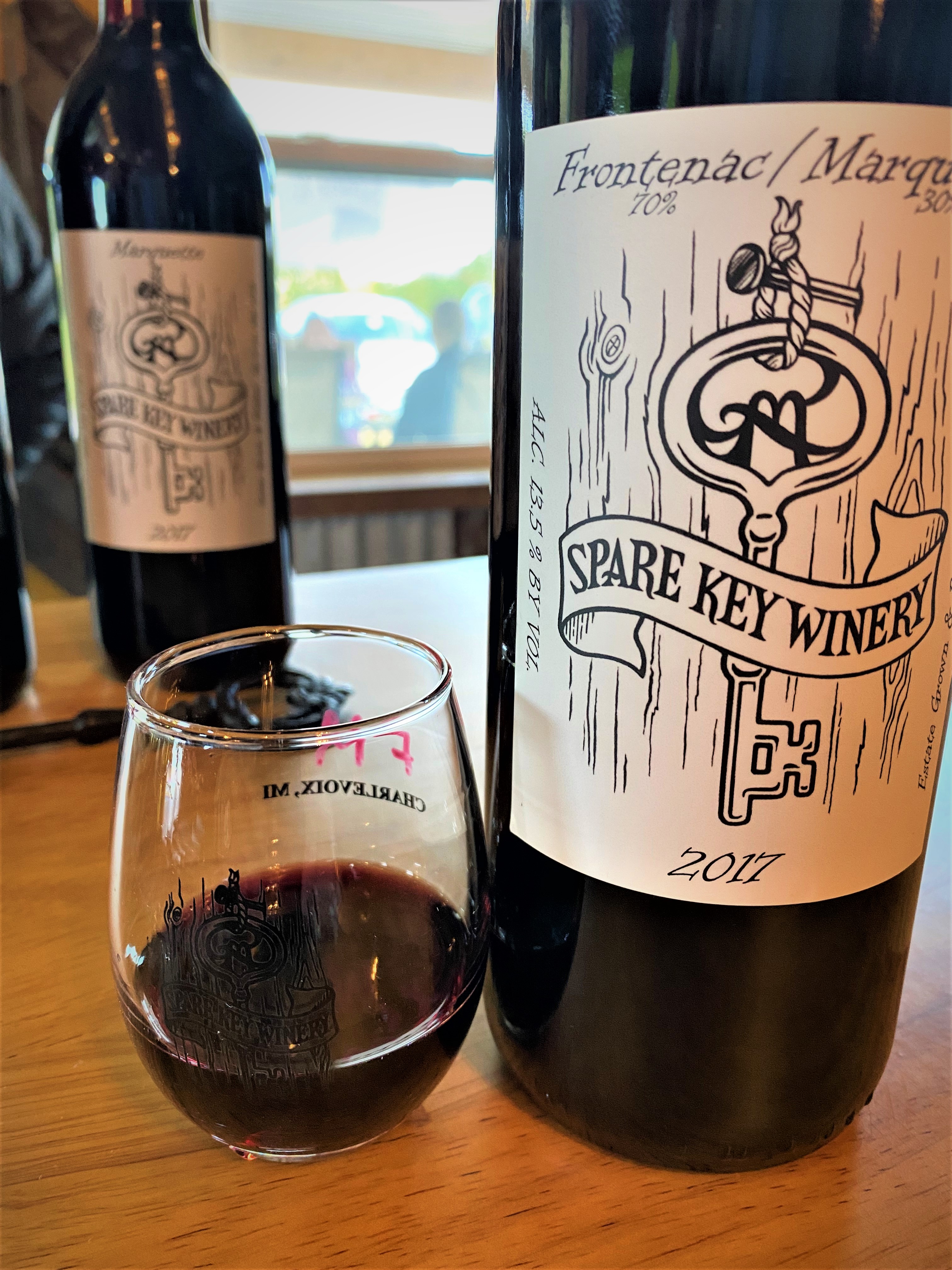
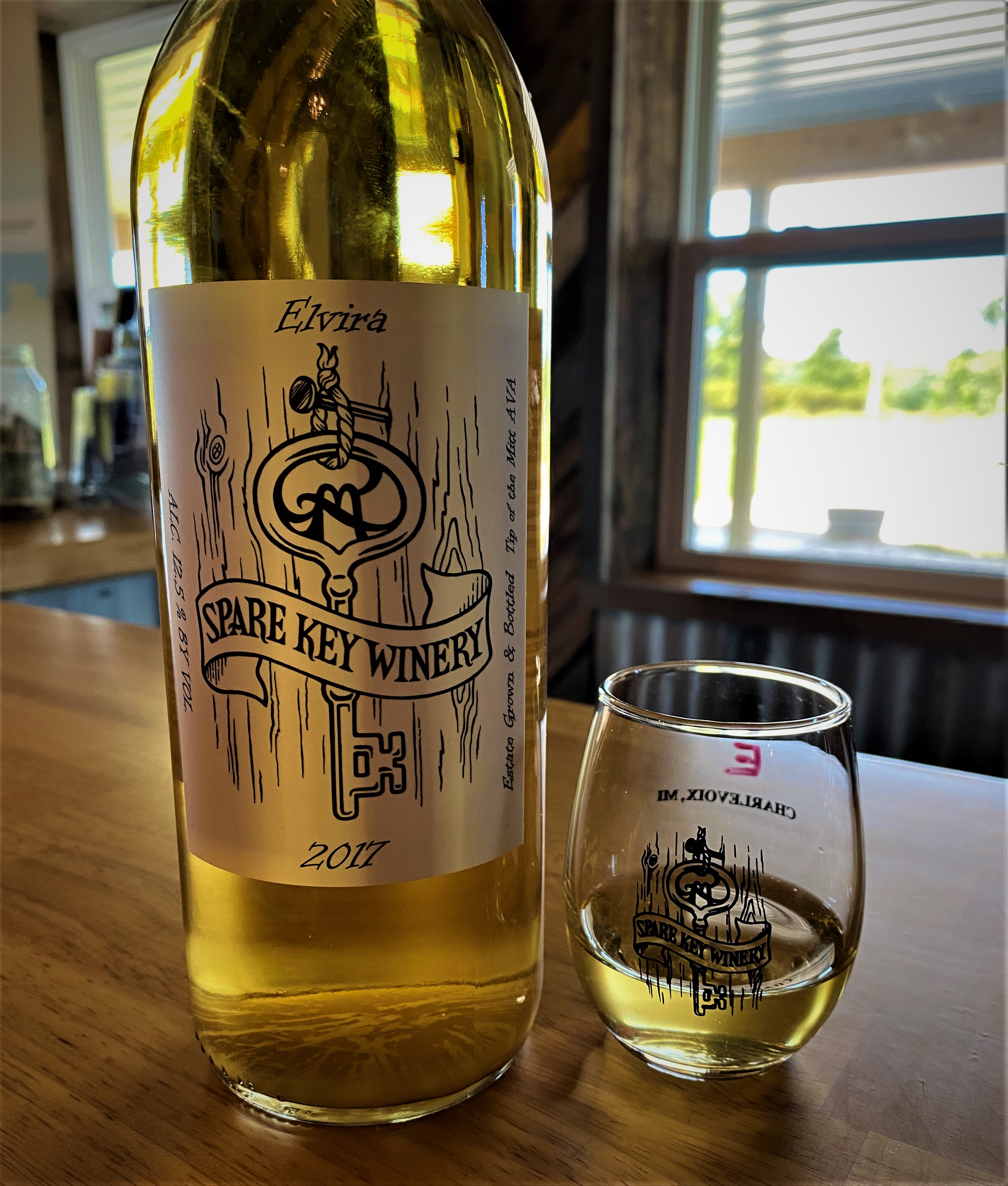
Spare Key Winery in Charlevoix, the next resort town over from Petoskey and part of the Petoskey Wine Region is where we visited first.  The family is a Seventh generation of Michigan farmers.  The winery views family and friends as the Key to the winery.  In 2011, they planted four-hundred vines with their family and friends, who also helped with additional planting, trimming and harvesting. Each successive year they have planted more and expanded.  We started with the Spare Key Winery Elvira 2017 which spent    nine months in Stainless Steel.  Elvira is an American hybrid known for its high yield and can be grown as a table grape or for commercial wineries.  It is one of the “Cold-Hardy” grapes and is believed to be developed in the Nineteenth Century Missouri. The wine offered some notes of ripe fruit and foxiness, with an agreeable crisp and balanced acidic wine with a finish that was on the oily side to me.

We then tried some red wines.  I will also mention that all the Spare Key Winery wines have the new Tip of the Mitt AVA (because the lower peninsula of Michigan looks like a hand or a mitten) and they are one of the few wineries that can claim Estate Grown and Estate Bottled.  As they are still very young and starting out, all of the red wines were aged in plastic vats, which I have observed over the years in our travels.  We started with the Spare Key Winery Frontenac 2017 which spent seven days on the lees and one year aging.  Frontenac is a hybrid French-American Cold-Hardy variety developed in 1978 at the University of Minnesota and released in 1996. The wine offered some dark fruit and pepper and it was on the tart side.  We then had the Marquette 2017 which was also aged for one year in plastic.  Marquette was created in 1989 and released in 2006 also by the University of Minnesota and is another French-American Cold-Hardy hybrid.  The wine offered dark fruits and pepper and easy drinking.  We then tried the Frontenac/Marquette 2017 and this was the most enjoyable of the four wines that we tried.  It was much fuller than the two as separate wines with nice tannins and very mellow and a nice medium finish.  Afterwards our server, reached under the counter and poured us a taste of the Marquette 2018 and it offered nice dark fruit, well balanced and a nice finish.  What a difference a year makes, and I think we got to taste it, because of my taking notes and photos, but it was delightful.   

Posted in Wine | Tagged , , , , , , , , | Leave a comment

Dinner at Stafford’s Perry Hotel

We not only had dinner there, but we stayed there for several days. We were up in Petoskey, Michigan on a business trip, actually my Bride was on a business trip and I just went along, thankfully I did not have to attend any of the board meetings, as I am sure that I would have been lost.  I didn’t look for any Petoskey stones, and if I had, it would have been much easier to go into any of a number of shops that sell them.  Petoskey had a long history of fur trapping and trading, lumber and limestone and is now a year-round destination for all the charms of the state.  The Civil War historian Bruce Catton is from there.  The actor Hal Smith also hails from there, and through the wonders of perpetual reruns, most of you would know him as the inebriated and self-jailing Otis from the Andy Griffith show.  The Perry Hotel was built in 1899 during the infancy of tourism for the entire region. And was one of some twenty luxury hotels that were built to capitalize on the new-found reputation of tourism.  The Perry Hotel was really the luxury hotel and the only one that is still in existence.  While some of the rooms have views of the water, the real luxury of the hotel was that it was built of brick, unlike most of the other hotels, and it was considered fire proof, and it survived.  The hotel has been added on and reconfigured to adapt to the modern tourist and it is a very enjoyable place to stay, and one that is not a cookie-cutter type of operation.

One night we had dinner at the hotel with all the other board members, families, and people that work as support.  As crazy as everything is, in the hospitality industry, we had to select our entrée choices maybe two months earlier.  There was a nice appetizer table set up, on one side of the room, I went in and noshed on a few items, but I was busy schmoozing with the group, as it was the first physical meeting in almost two years.  When it was finally time to sit down for dinner, it went pretty smoothly, except for the one fellow that just wanted a plain salad with Italian dressing, which they actually were able to get for him (my Bride may stop taking me out).  My Bride had an entrée of Whitefish and a Filet along with vegetables and a potato.  I had the entrée of Chicken in a Morel Sauce and a Filet with the same sides.  Everyone was told that because of the size of the group, that all of the Filets would be served Medium-Rare to Medium, which was fine for me, and I have to say that everyone enjoyed the entrées.

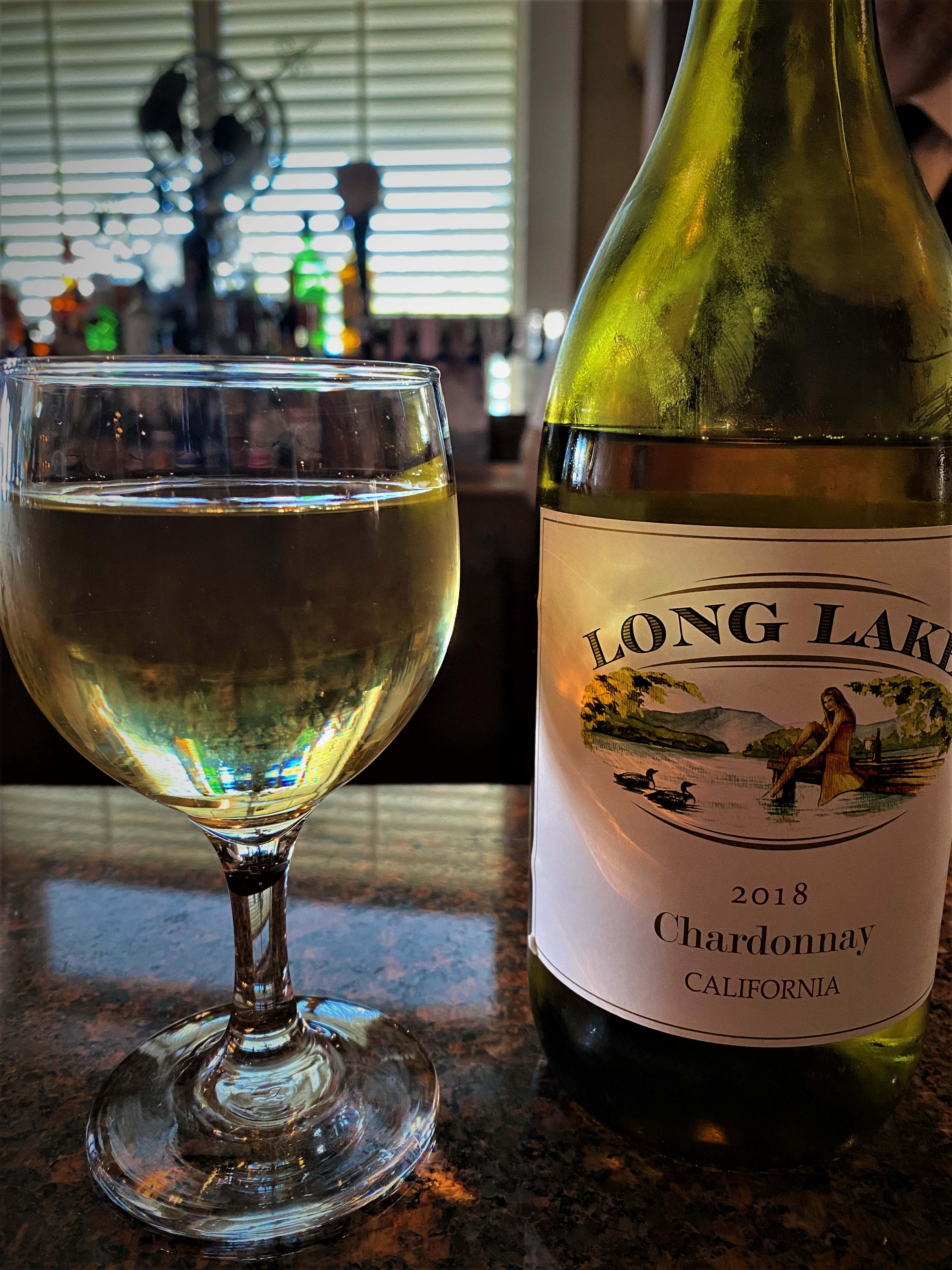
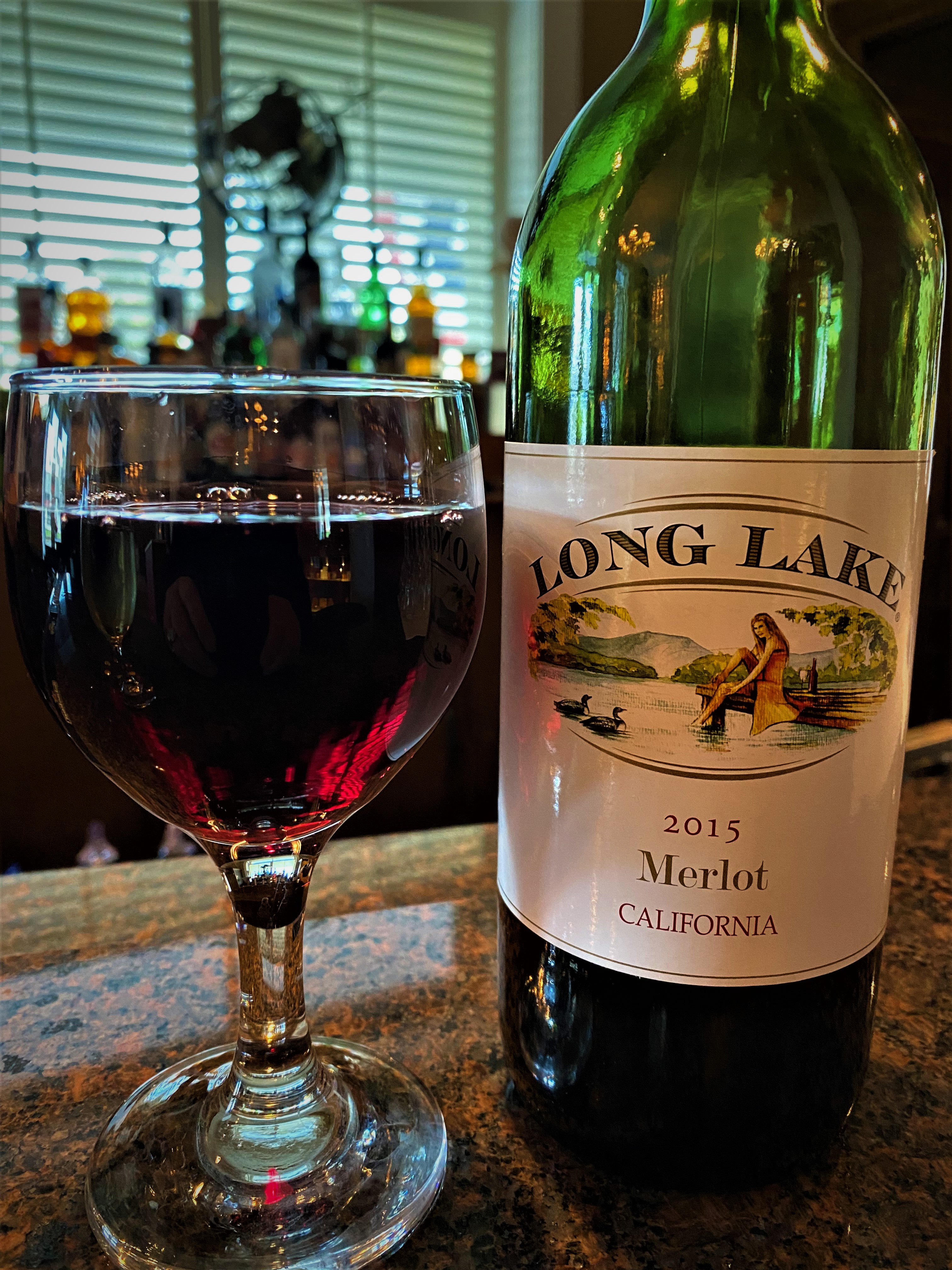
For the libations, the liquor selection was excellent, and so was the beers, including a nice collection of craft beers.  The wine selection was not in the same league, but we survived, as I am not the Liquor Raconteur, though I have been known to imbibe.  They had several different wines from Long Lake of California, which is under the umbrella of Bronco Wine Company.  Bronco Wine Company originally begins with the Franzia Family that started in the wine industry in 1893.  Two brothers and a cousin from the Franzia families began Bronco Wine Company in 1973.  Today they are the largest privately held US vineyard holder with vertical integration and they cover a wide variety of price points and they are especially popular to the food service industry.  I ran into a brick wall to find anything about Long Lake wines.  We started the evening with Long Lake Chardonnay California 2018 and it was a nice basic wine with nothing objectionable about it.  It was easy drinking and it tasted like a California Chardonnay with no pedigree.  When we sat down for dinner, we had the Long Lake Merlot California 2015 and this was a nice wine and I even went back for seconds, as it offered some true notes of Merlot, to make me happy.  I would not go looking for this wine, but I would get the Merlot, over the Chardonnay in a heart-beat.  After dinner, my Bride went off with some of her traditional friends of these meetings and they went and played Euchre in the library of the hotel, and I went online, until she came back.   

Posted in Dining, Wine | Tagged , , , , , | Leave a comment

Back to Chandler’s

The chronology of September is a bit off, but we also squeezed in a trip up to the northern part of the Lower Peninsula of Michigan.  When you talk to Michiganders, you get many different answers for where to go, as Traverse City, Charlevoix, Petoskey and Harbor Springs are often bandied as the proper place.  Ernest Hemmingway’s Nick Adams stories were set in Walloon Lake, and people from Indiana, Ohio and Chicago are all crazy about their favorite haunts as well; and I would be remiss if I didn’t mention the Connecticut crowds that we have met during our trips up north.  The area is beautiful, and slowly, but surely it has also become a “foodie” paradise.  The Spring and Summer are for the golfers, campers, and boaters, Autumn is a great time to observe the color change of the leaves, and yes there are some that like the cold Winters for skiing, snowmobiling and snowshoeing.  As I said, the area is also becoming a haven for food and wine, because my Bride and I don’t fit into the other categories.  We actually went up for business, and we stretched out the trip a bit, because a four-to-five-hour drive is plenty, without having to do it twice in two days. 

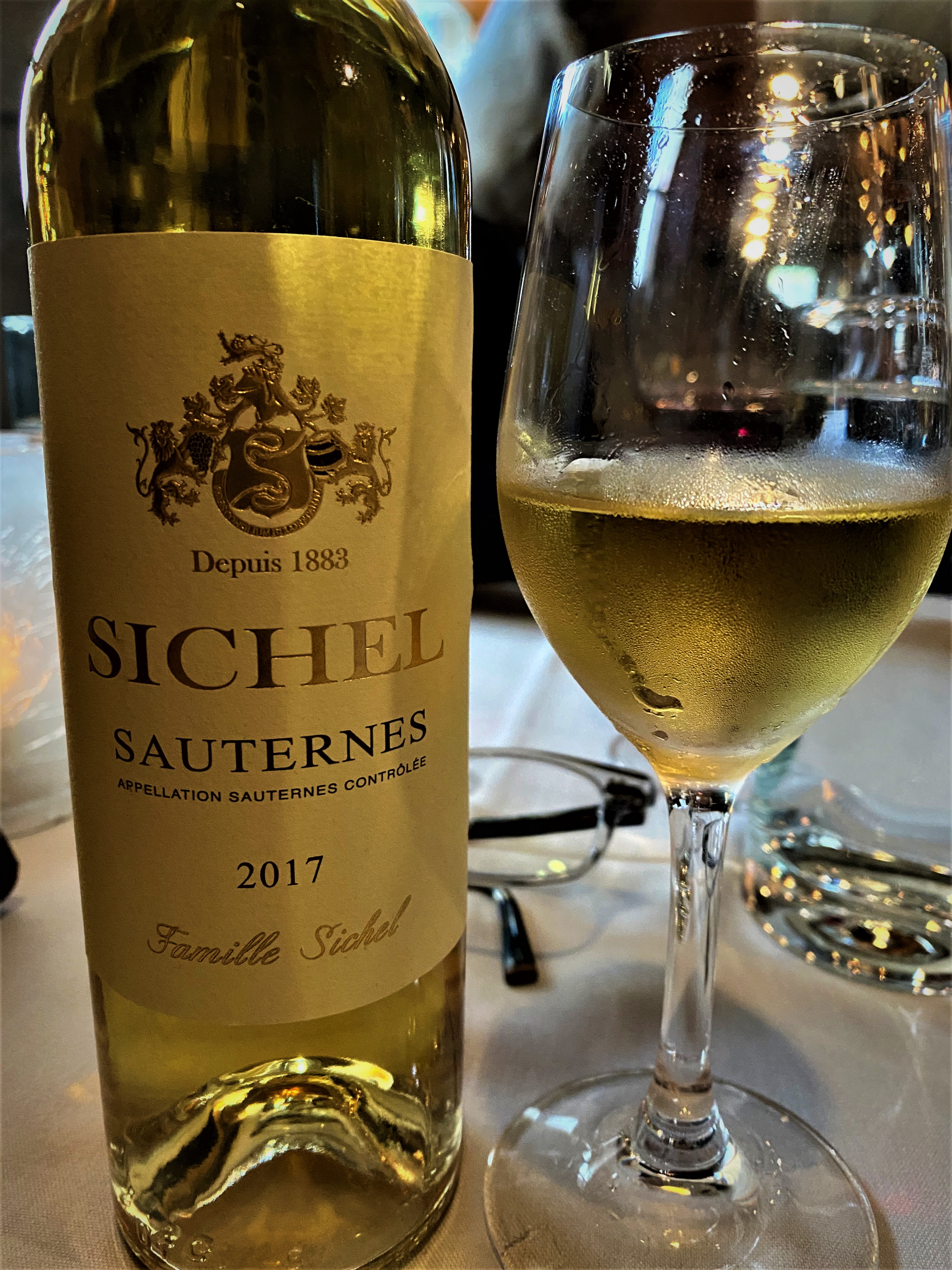
We were going to Petoskey, which is an historic town and once famed for all of the hotels that were congregated there.  They are also famed for the Petoskey stone, which people like to hunt for, on the water fronts and beaches, and it is the State Stone.  As soon as we knew the dates for Petoskey, we booked a dinner reservation at Chandler’s, as dinner reservations are now almost mandatory, because there are still all the people that wish to eat, but most of the restaurants have shorter hours and less staff working.  We did get into Chandler’s and we requested a table in the wine cellar.  Chandler’s is a restaurant that has been cobbled out of the basement and backside of Symons General Store, which is worth a visit on its own merits. We shared a plate, an appetizer of seared Hudson Valley Foie Gras and it came with Cinnamon Brioche, Strawberry Compote and Fresh Basil.  A unique combination and the basil and the strawberry was a great touch, the brioche was a bit strong of a flavor, but it all melded together.  We had a glass of Maison Sichel Sauternes 2017 from Famille Sichel to pair with the Foie Gras.   The Maison Sichel collection is from their negocient side of the business.  The wine is a blend of ninety-five percent Semillon and five percent Sauvignon Blanc from vines that are about fifty years of age.  The wine is aged for ten to twelve months and they recommend that eight to ten years of cellar time before drinking, and that did not happen here.  The wine is very balanced and was rather refreshing, which was excellent for pairing and it had a beautiful nose and color, what one would expect from a Sauternes. 

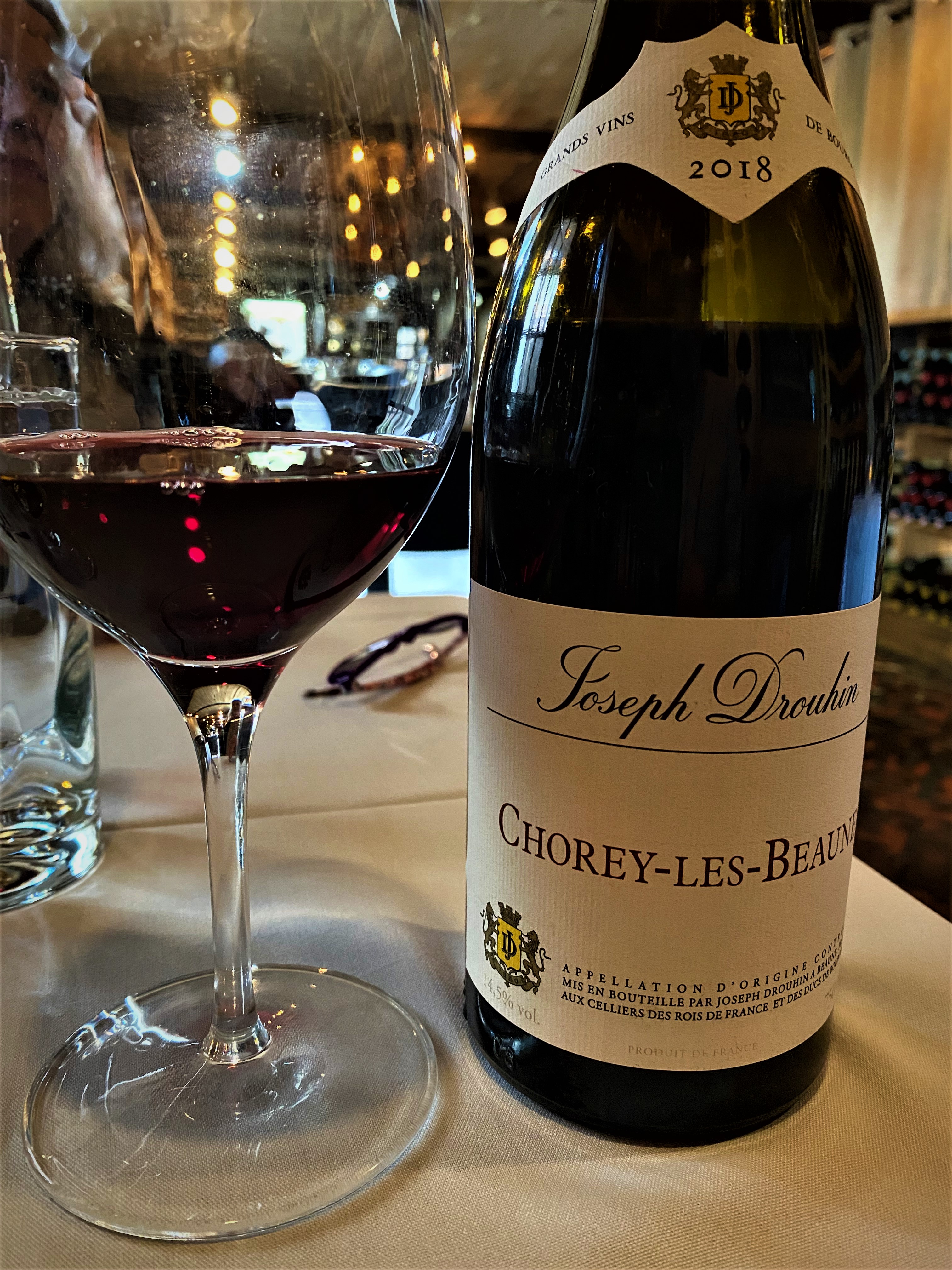
For our dinner entrée selections, my Bride had the Roasted Bay of Fundy Salmon with Refried Black Beans, Pineapple-Red Pepper Salsa and a Mango Lime Emulsion.  I went with the Maple Leaf Farms Duck Breast with Crispy Spätzle, Broccoli, Bacon, Mushrooms and a Sweet and Sour Pomegranate Glaze.   We had a bottle of Joseph Drouhin Chorey-Les-Beaune 2018, as I adore Pinot Noir with duck and my Bride prefers a softer Red with Salmon.  Joseph Drouhin was founded in 1880 in Beaune and over the years they have expanded to owning vineyards as well as a negocient and they produce wines from village-level cuvees to Grand Cru and Premier Cru wines with both Chardonnay and Pinot Noir. Chorey-Les- Beaune is about one-hundred-twenty-five hectares of predominately Pinot Noir vines, but the appellation also allows for some Chardonnay as well. The land is all at the base of the escarpment and hence there is no Premier Cru vineyards, though part of it, though it is very close to the slopes of Corton. Even though it has an appellation, most of the wine is offered under the Cote de Beaune-Villages appellation.  The grapes are hand harvested, and the maceration and fermentation take about three weeks with indigenous yeasts.  The wine is aged for about fifteen months, with ten percent new oak.  They clarify and evaluate each barrel, choosing some for the appellation and others for a broader appellation.  It was a very nice soft Burgundy wine, with a nose of blackberries, and the blackberries are there on the palate as well, with a nice medium count finish.  I am sure that with a few more years in the cellar, the wine would pick up some secondary layers, that aged Burgundy wines excel at. Our trip in Petoskey was looking very nice.

Posted in Dining, Wine | Tagged , , , , , , , , , , , | Leave a comment

The Birthday Dinners Keep Coming

I agree that I have no shame and that I am like a little kid, but I guess if you get this many birthdays, it is alright, because so many are denied that privilege.  My Bride asked me, where I would like to dine on my birthday, which can be a rather dangerous question, but I kind of knew where I was being led to, and it was alright.  Our last birthday celebrations that we had, when the world was naïve and innocent was at The Earle, and they had a celebration gift that was not advertised, but they gave you basically a free dinner when you celebrated with at least one other person, drinks not included.  Well, since that time, there was a movement that basically ruined the restaurant industry, and many did not survive.  We have since learned that politicians could dine in, at a crowded table without the use of masks and they could live to continue making life miserable in the gulag. We were still going to support an independent restaurant with or without the wonderful incentive. 

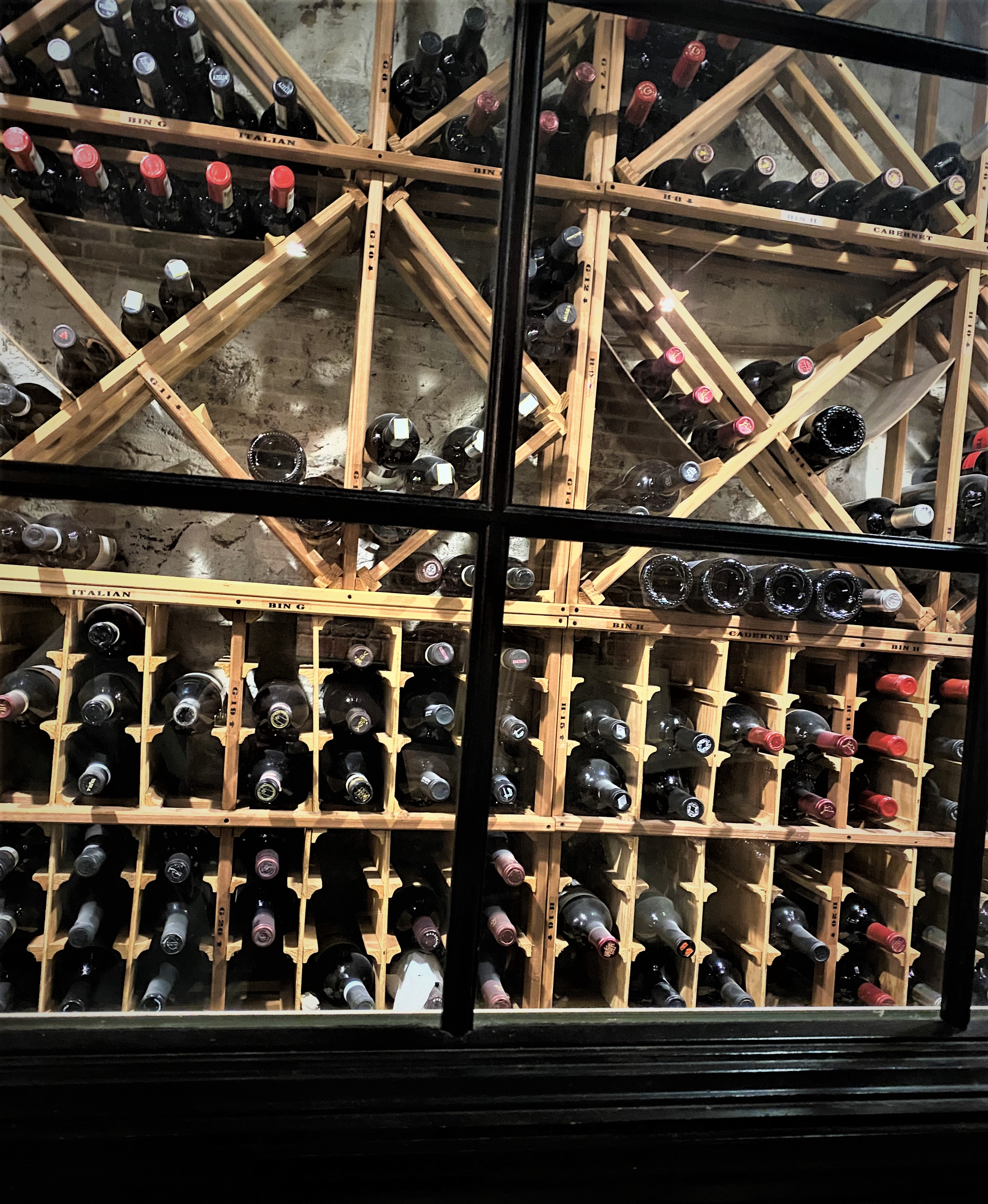
It was amazing, we always sat in the French Room, which I guess most people didn’t want, perhaps because it was a bit claustrophobic and totally cluttered with the dead remains of elegant wine bottles from days gone past; the room was being used by a private party.  We elected to have dinner in the long narrow corridor that is adjacent to their glass enclosed, temperature and humidity-controlled wine cellar.  Since 1983, The Earle has been recognized by Wine Spectator magazine for their selection of over twelve-hundred unique wines and they have been awarded the Best of Award of Excellence for thirty-five years in a row and still going.  The room was long that we were in.  My Bride and I split two opening dishes and that really works out well for us.  One was a simple plate of Roasted Garlic, with side condiments and Crostini.  The other was a salad, and it wasn’t a Caesar Salad, it was a Panzanella with Cucumber, onion, tomatoes and Tuscan-style bread, olive oil and vinegar, with basil, capers, and anchovies and it may be our new go-to salad.  My Bride had her usual Coquilles St. Jacques al crème de Xeres, or Sea Scallops sautéed with mushrooms and garlic, pan-sauced with Sherry and cream with rice.  I almost had a Duck entrée, but at the last minute I switched to Veal Scallopini lightly breaded and sautéed with garlic and mushrooms; deglazed with Marsala and finished with cream, served with orzo. 

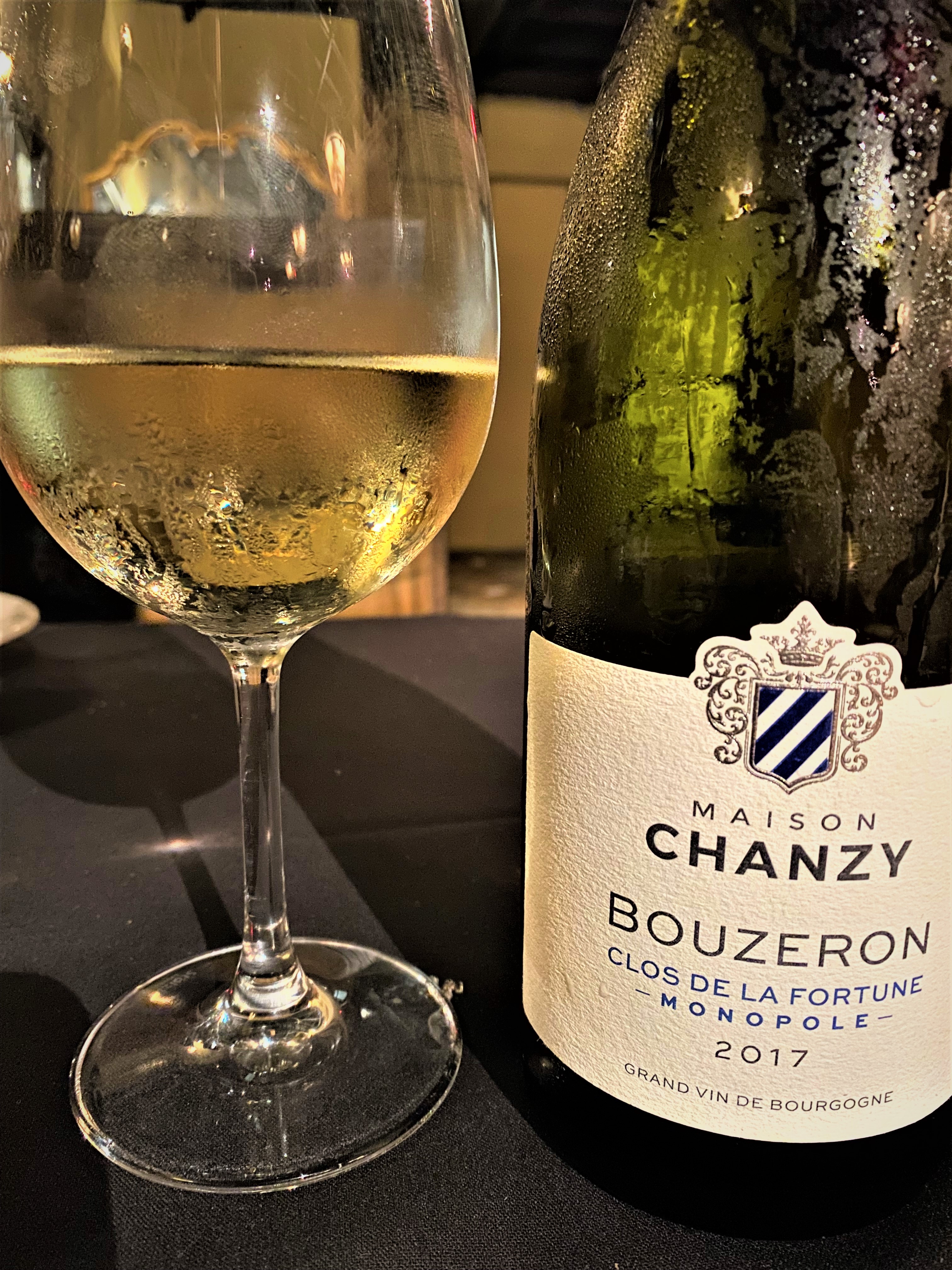
I ordered a bottle of Maison Chanzy Bouzeron Clos de la Fortune Monopole 2017, and the Sommelier arrived with the bottle, because she was very curious to see who had ordered this wine, and I have to admit that it happened the same way the last time we ordered the wine, but it had been a vintage 2015.  Maison Chanzy used to be known as Domaine Chanzy and they own eight hectares spread across three Burgundy Cotes, with the majority of the plantings in the Cote Chalonnaise and with an historical presence in Bouzeron, and it is Bouzeron that they are most proud of, and willing to tell the world about it.  Bouzeron is a small village that now has its own appellation since 1998, but only for white wines made from the Aligoté grape, and for years it was listed under a sub-division title of Bourgogne-Aligoté.  Bouzeron is in the northern Saone-et-Loire region of the Cote Chalonnaise, in the valley and the Dheune River separates it from Santenay and it is very close to Rully and Chassagne-Montrachet.  Eighty percent of the juice is done on the lees in Stainless Steel and the balance in oak and it is bottled in the summer, to maintain the fruit and youthfulness of the Aligoté grape.  As you may have noticed Maison Chanzy owns the entire Clos de la Fortune and they are very proud of it, as part of their domain.  The wine offered nice herbal notes, and some great terroir (flinty from all of the limestone soil of the area) with a nice refreshing finish.  We did have a dessert and when the bill came, the restaurant gave us a gift certificate to be used on our next trip, and I know that we will.

Posted in Dining, Wine | Tagged , , , , , , | Leave a comment

Monterey Club September 2021

It was a festive time for me, to receive all of these wine club selections in the week of my birthday.  Even though we pay for all of these clubs, it is just fun to open the packages to see what is there. The last carton was from “A Taste of Monterey,” a club that we joined on our first trip to Carmel-by-the-Sea.  Some people go to Pebble Beach, we went to the wine country.  We went with their Private Reserve Club, which is three bottles delivered four times a year.  At the shop in Monterey at Cannery Row, they have a tasting room, as well as a wine shop.  Each delivery they enclose a four-page booklet, usually spotlighting a winery, a discussion about a varietal, a discussion about a cheese and sometimes a recipe, as well as a write-up about the wines that were sent.

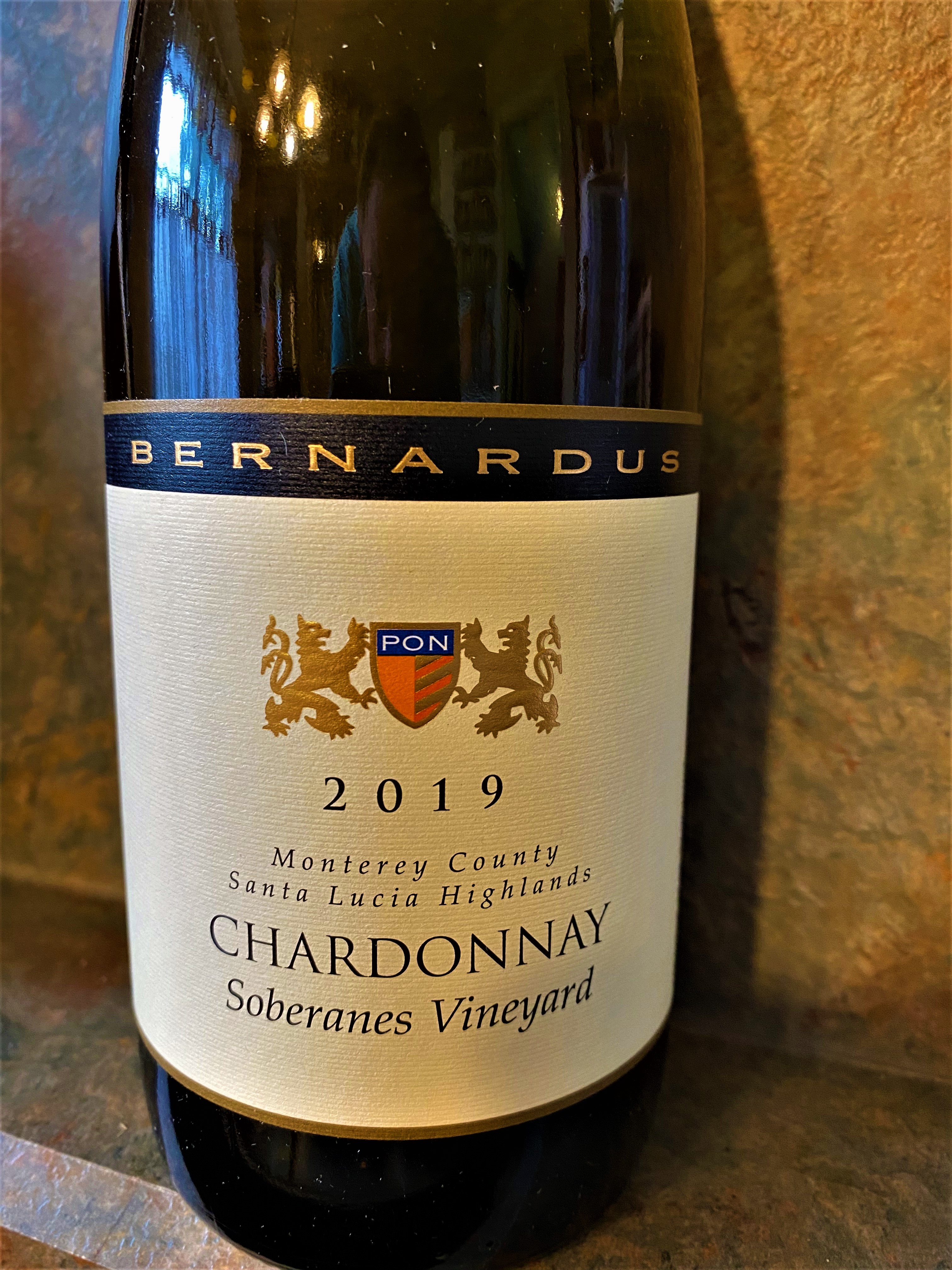
Bernardus Winery Chardonnay, Soberanes Vineyard, Santa Lucia Highlands 2019 was the first bottled I pulled out of the carton. Bernardus Winery and Vineyards was founded by Ben Marinus Pon about twenty-seven years ago with the intention of creating premier wines in the Carmel Valley.  His intent was to produce single vineyard designated wines and a Bordeaux blended wine.  Soberanes Vineyard is a joint venture of two famed growers Gary Pisoni and Gary Franscioni in the Santa Lucia Highlands.  This wine is made in the “Burgundian tradition” and it is almost twelve months between harvest and bottling.  The wine is aged in French Oak, of which forty-three percent is new.  According to the write-up, this wine has a nose of baked apple and crème fraiche, exhibiting white fruit on the palate along with buttery oak notes and a full finish.

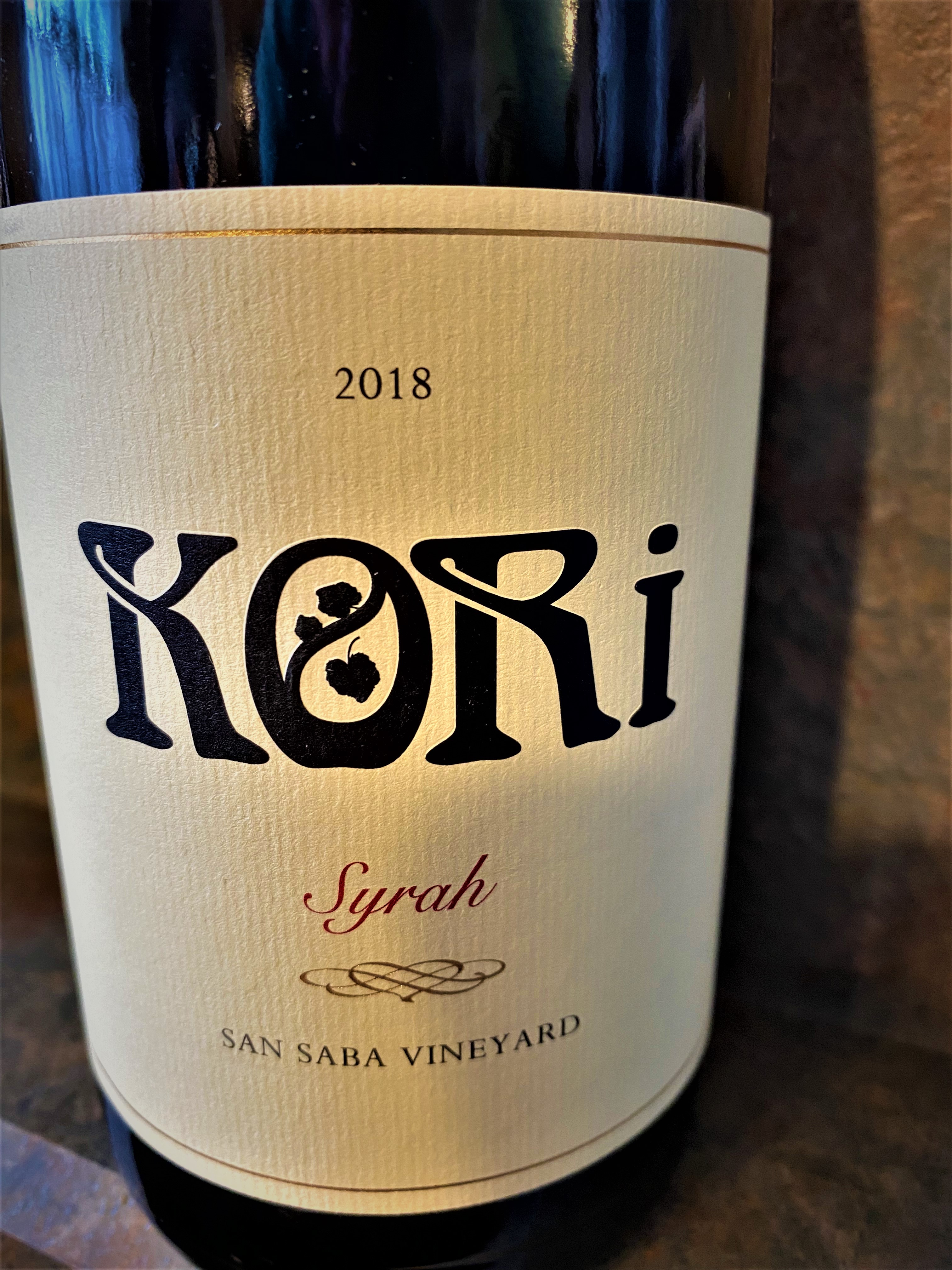
Kori Wines Syrah, San Saba Vineyard, Monterey 2018 was the second bottle that I unpacked.  This winery is a partnership that started in 2007 between grower Kirk Williams and his step-daughter Kori Violini. The initial launch was their Pinot Noir from the KW Ranch Vineyard.  In 2018, they opened up a tasting room in Carmel-by-the-Sea. The San Saba Vineyard is in a sheltered nook just below the Santa Lucia Highlands AVA, and hence the much larger Monterey AVA. The site is known for having little rain, cool and one of the longest growing seasons to produce concentrated and ripe fruit.  There are no production notes available, outside of suggesting an aging potential of six to eight years.  The tasting notes offer black fruit, plums and baking spice.

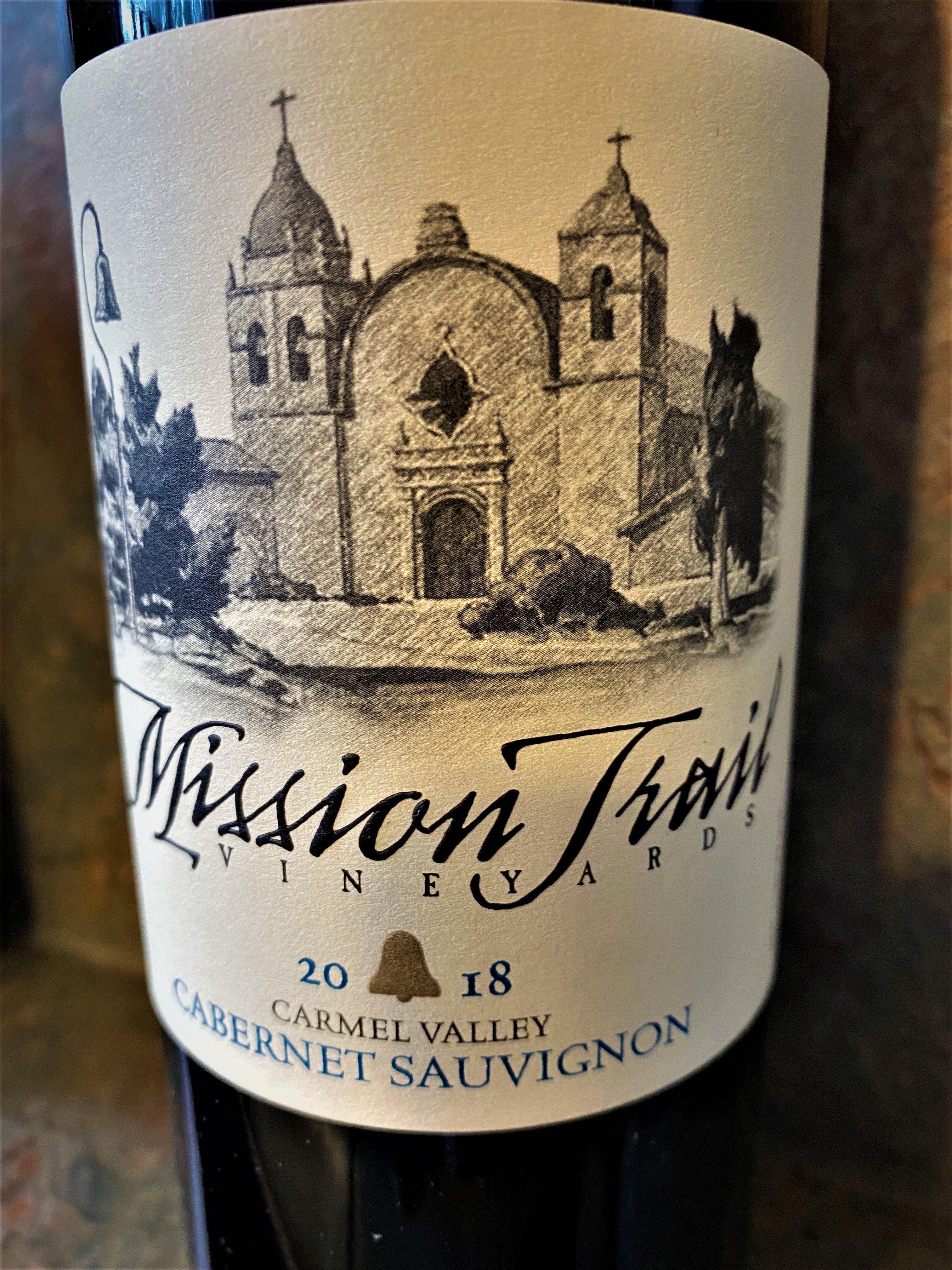
Mission Trail Vineyards Cabernet Sauvignon, Carmel Valley 2018 was the third bottle in the carton.  Mission Trail Vineyards takes their name from the Mustard plants that can still be found, as the seeds were spread out by the Franciscan Friars around two-hundred-thirty years ago as they planted the original vineyards in the area.  Those original vineyards are long gone, but there are plenty of vineyards in Monterey, so those Friars recognized good land back then.  In Monterey County there are about forty different varieties of grapes being grown.  Ken and Robyn Rauh created Mission Trail Vineyards on the premise of featuring small lots of hand-crafted wines, from different locations throughout the county.  Their goal is to produce robust and fruit forward wines featuring Chardonnay, Gewurztraminer, Marsanne, Sauvignon Blanc, Cabernet Franc, Pinot Noir, Merlot, Grenache, Syrah, Zinfandel and a Meritage.  There were no production notes available.  The wine is described as deep Garnet with a nose of blackberry, cassis and oak.  The palate will appreciate first flavors of plum and blackberry that layer into chocolate and cassis, with a finish of terroir and cedar. 

Posted in Wine | Tagged , , , , , , , , , , , | Leave a comment

Black Star Club September 2021

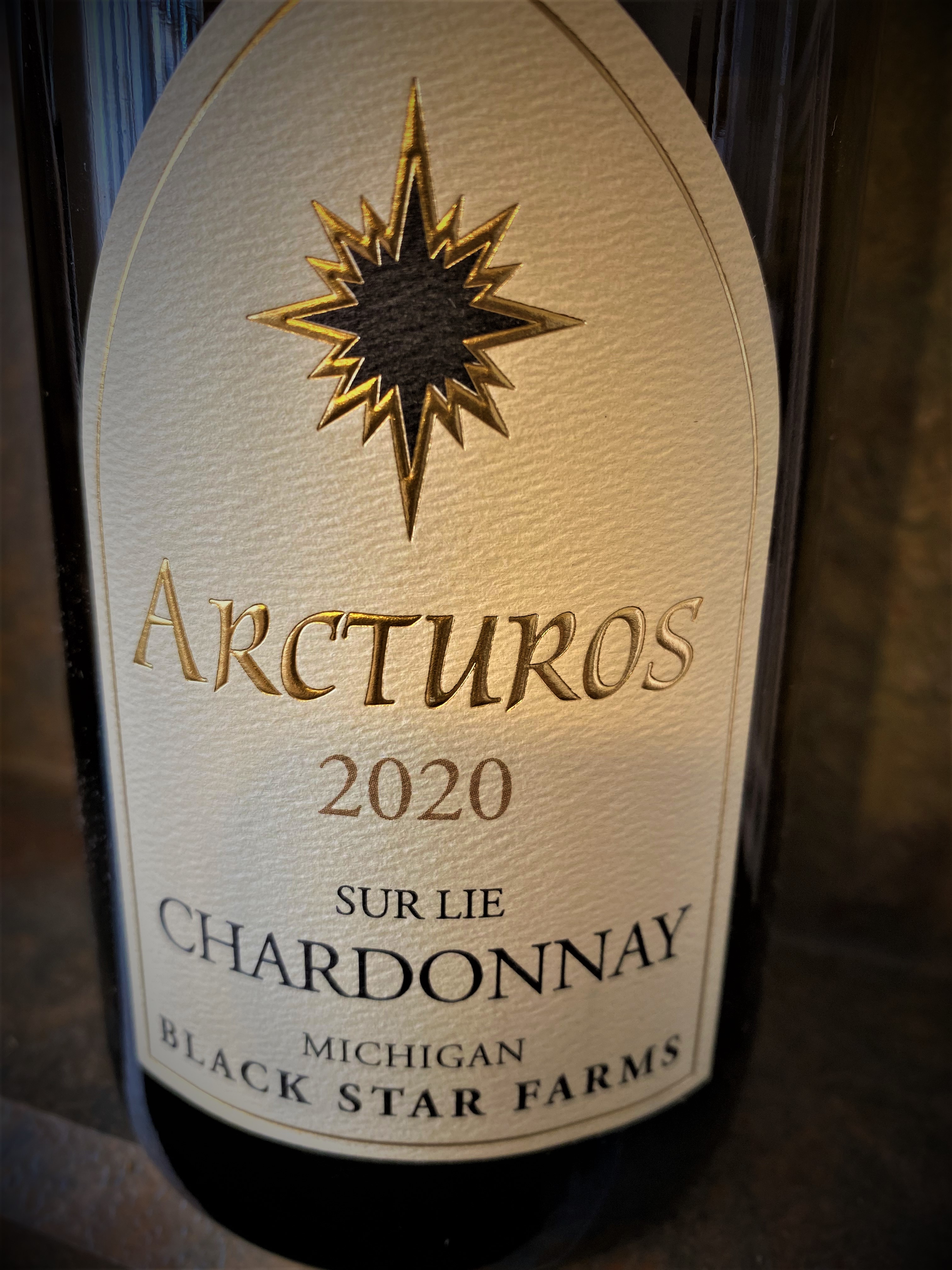
I am like a little kid with all of these wine club selections all arriving in time for my birthday.  Yes, I am spoiled.  Black Star Farms is rather unique in that it has vineyards and tasting room facilities on both peninsulas, so that they are kind of surrounding Traverse City which is kind of the focal point for all of the wineries in the area.  In 1998 Black Star Farms purchased Sport Valley Farm which was a one-hundred-twenty-acre equestrian facility, and the stylized black star was part of the architectural décor in the main house.  In their Twentieth year, they were honored to receive the 19’th Annual Canberra International Riesling Challenge (CIRC) -Best Wine of the 2018 Challenge and only the second time an American wine came out on top.  There were 567 Rieslings from six countries (Australian, New Zealand, USA, Germany, France and the Czech Republic).  The Black Star Farms Arcturos Dry Riesling 2017 scored 98 points, in addition to taking home Best Dry Riesling and Best American Riesling.  In fact, all six of the Riesling wines that Black Star Farms submitted took home medals, showing a consistency across vintages and styles.  The fruit is sourced from both of the proprietor’s vineyards and from local grower partners in both the Old Mission Peninsula and Leelanau Peninsula.  The winery has three series; the premium Arcturos, A Capella and the Leorie Vineyard labels for sparkling and fruit wines.  So, we do look forward to the club deliveries.

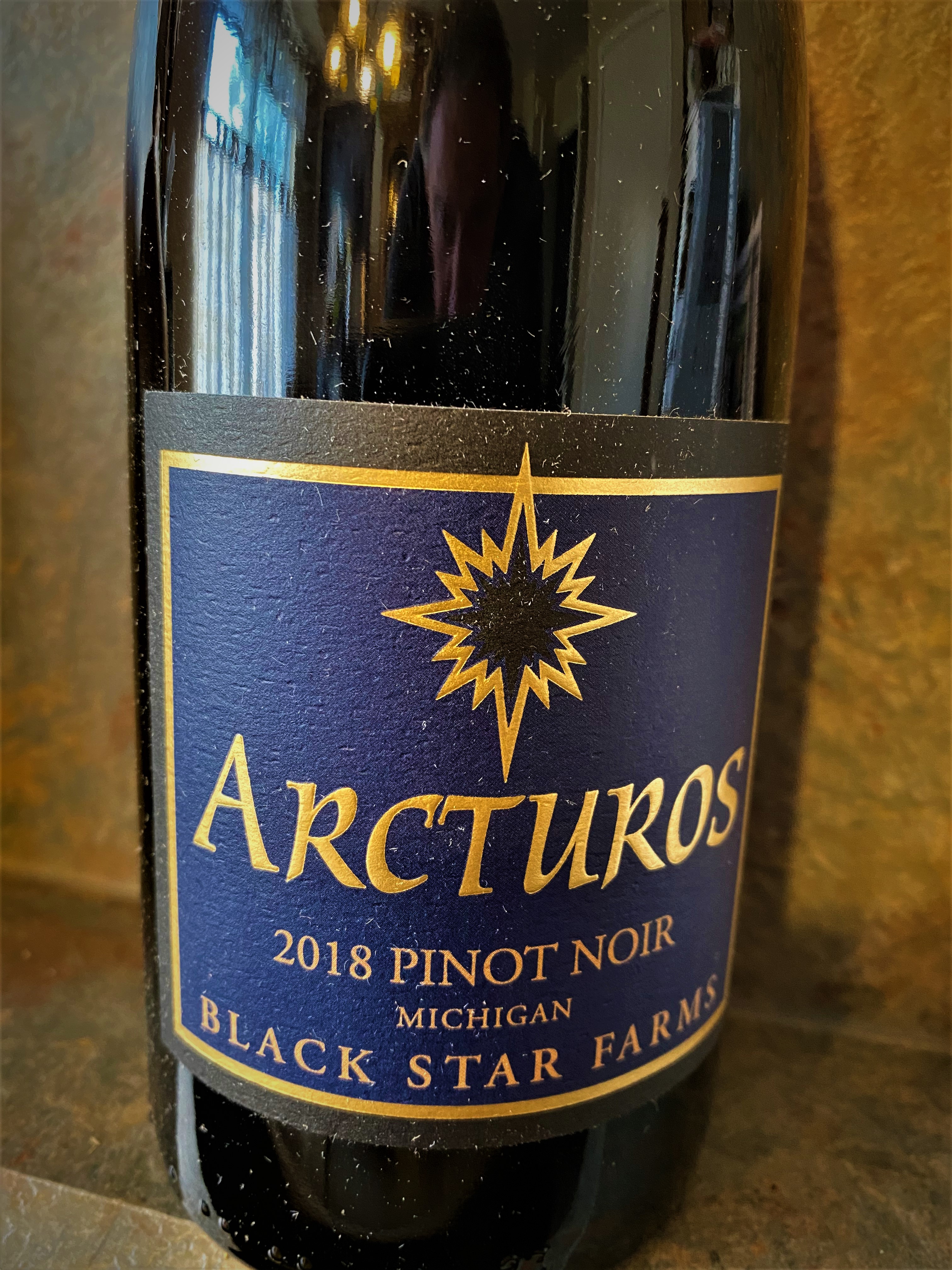
The first bottle that came out of the shipping carton is the Black Star Farms Arcturos Pinot Noir Michigan 2018.  According to the notes, the fruit for this wine came from five different vineyards and hence the Michigan AVA.  The wine was aged in French Oak, with around fifteen percent new.  The notes from the winery say that the wine is a balance of vibrant fruit and spicey complexity that comes from time the barrel.

The second bottle was the Black Star Farms Arcturos Sur Lie Chardonnay Michigan 2020.  There is no explanation of where the fruit was harvested, and it could actually be from two of their own vineyards which are located in different AVA designations, but it is not stated.  This is a non-oaked style wine, which I presume to mean that it is Stainless Steel.  The winery notes call for floral notes, a medium-bodied wine with tastes of ripe citrus, apple and pear with a subtle mineral finish.

Posted in Wine | Tagged , , , , | Leave a comment

September 2021 Club Selections

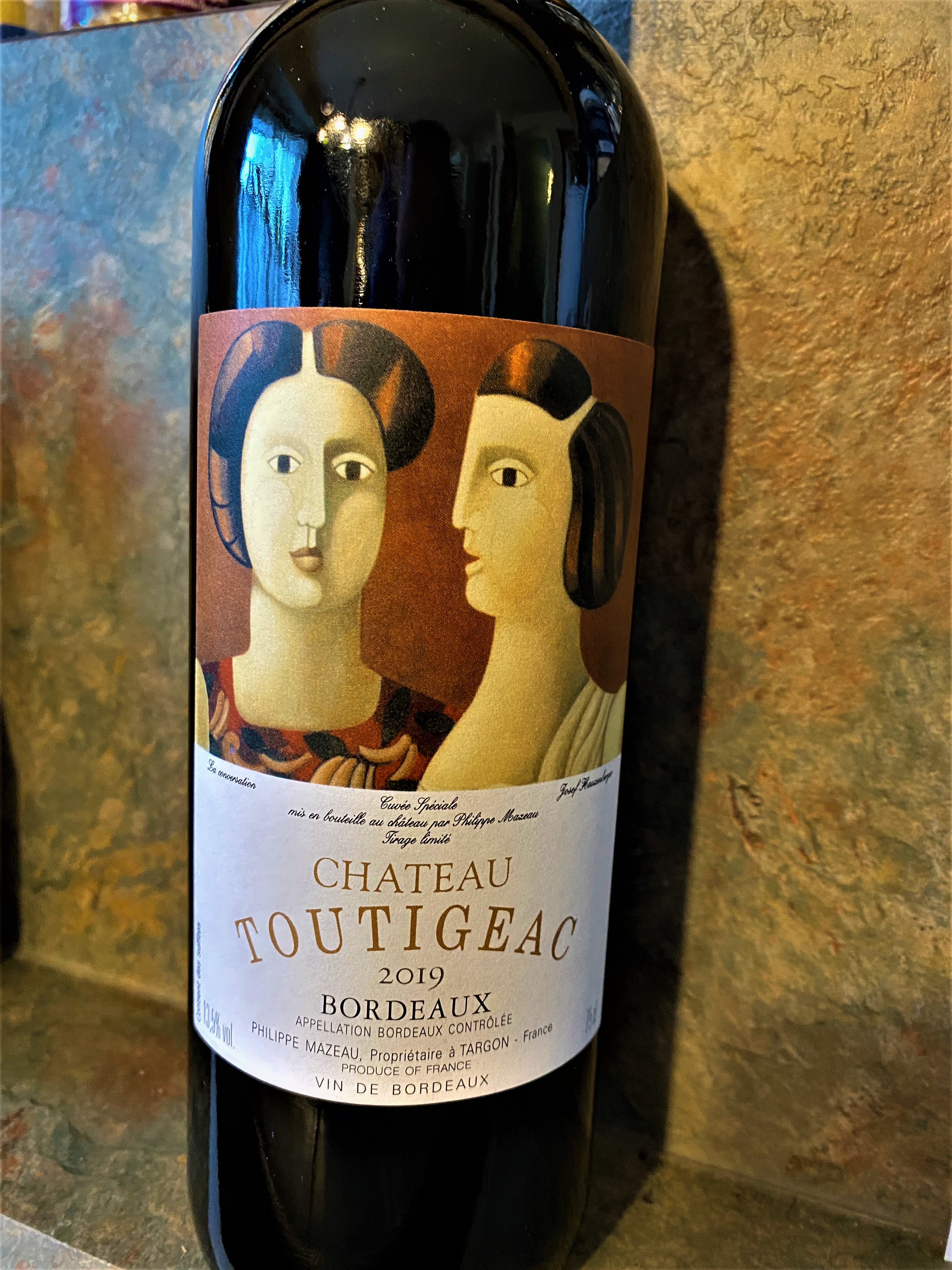
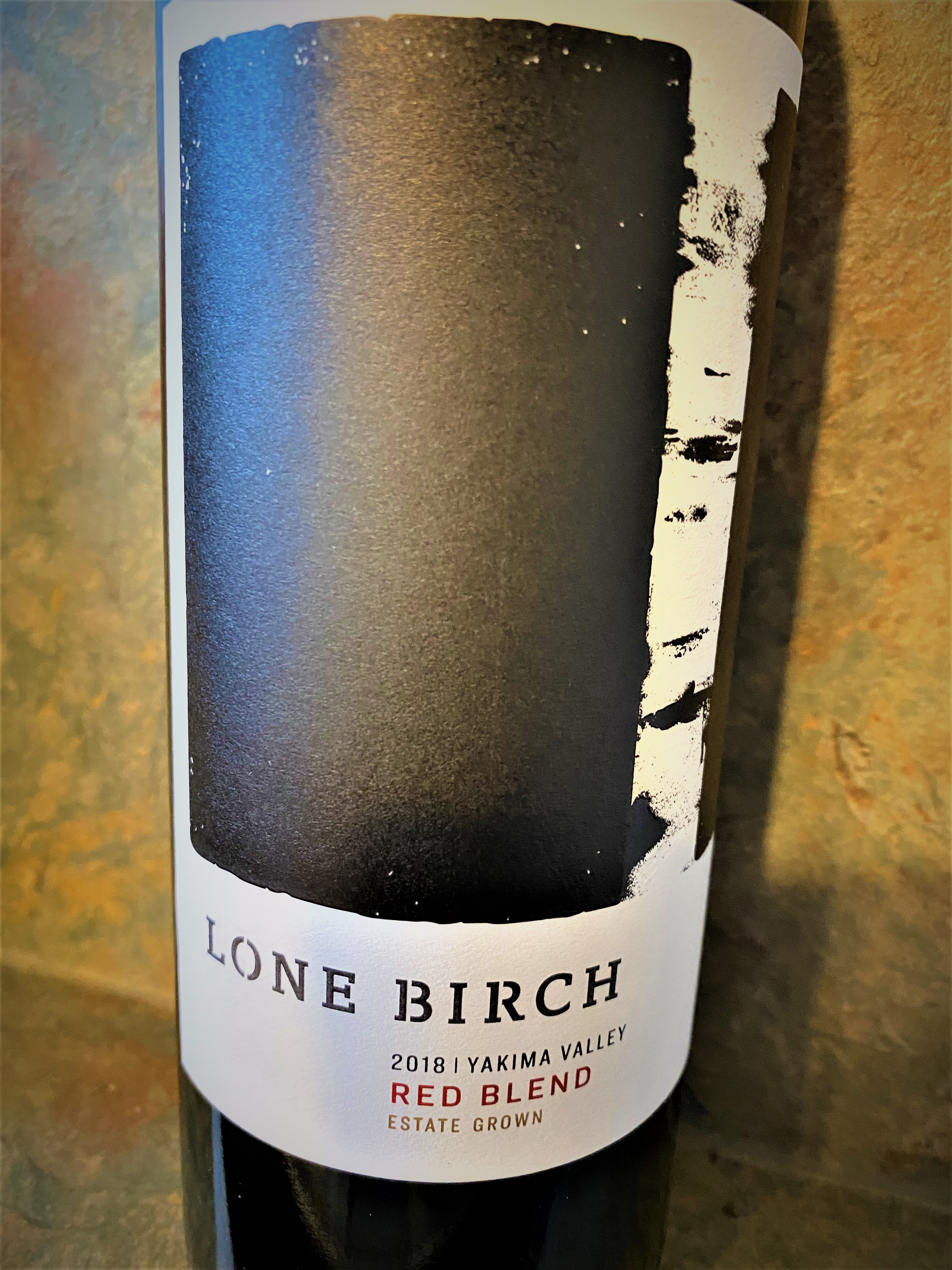
I may end up claiming the entire month for my birthday, as I am having so much fun and I had to stop at my local wine shop The Fine Wine Source in Livonia to get the selections.  I am sure that I tend at times to sound like a broken record, but it is a great place for me to spend some time tasting and talking about wines, not to mention buying some wine.  Of course, they are always looking for my better half, and who can blame them?  They survived the last year, when so many businesses were driven to ruin by the draconian mandates of our local satrap.  I and all of their patrons are pleased that they did.  The owner selects two wines each month for his club members, one Old-World and one New-World and by belonging to the club, one gets case pricing, each time one buys wines, whether by the bottle or by the case.

The Old-World selection was Chateau Toutigeac Rouge Bordeaux 2019.  After studying genealogical charts by Rene Mazeau, the Mazeau family has an uninterrupted history of being winemakers since the Fifteenth Century.  Charles Mallet, a wine merchant in Paris and Castillon la Bataille, purchased the estate in 1928.  His great, great grand-daughter, Oriane Mazeau, has continued the tradition as the fifth generation to make wines at Chateau Toutigeac.  The estate which is thirty-five hectares is located in Entre-Deux-Mers on silica clay, with vines from three to fifty years of age.   The wine is fifty percent Merlot, thirty-five percent Cabernet Franc and fifteen percent Cabernet Sauvignon.  The entire harvest is completed in one week and the initial fermentation is for fifteen to eighteen days in Stainless Steel, and then it is transferred to subterranean, glassed vats for twelve months.  According to the notes the wine is a deep red with a nose of red fruits (currants and plums), which continue on the palate with soft tannins and a finish of more soft fruits.

The New-World selection is Lone Birch Red Blend Yakima Valley 2018 in Washington State.  The family has been farming in the Yakima Valley for over four generations and has eight-hundred-thirty acres.  The landmark of the estate is the seventy-year-old Lone Birch that resides in the vineyard that was planted by the great-great-grandfather who was the initial steward of the land for the family.  They have continued the concept of being an environmental steward and they also maintain sustainable practices for the vineyards and the winery.  The wine is a blend of forty-five percent Merlot, thirty percent Syrah and twenty-five percent Cabernet Sauvignon.  The harvesting was finished by hand by block, and each block was cold soaked for forty-eight hours and then inoculated with yeast strains.  The wine was then aged for eleven months in French Oak, of which twenty percent was new and forty percent was neutral.  The wine is described as having a nose of dark currants, blackberry, cola and sweet plums with a palate offering some fruit forward notes along with sandalwood, espresso, malt-chocolate and smoked spices (from the mix of barrels), with balance acidity and a medium finish.  September just keeps making me happy, and I am so bad.       

Posted in Wine | Tagged , , , , , , , , , , | Leave a comment

And a Duckhorn Migration 1996

We were celebrating the August and September birthdays at one of the sister’s homes, as they have an inground swimming pool and the weekend might be the last hurrah for the season.  Since, my Bride is one of five daughters and each has a husband, plus children and now some grandchildren, you can see how if we celebrated each birthday individually, that is the entire social calendar for the year, so it is much easier and saner to bundle the honorees together; though the names on the cake can get pretty crowded at certain months. 

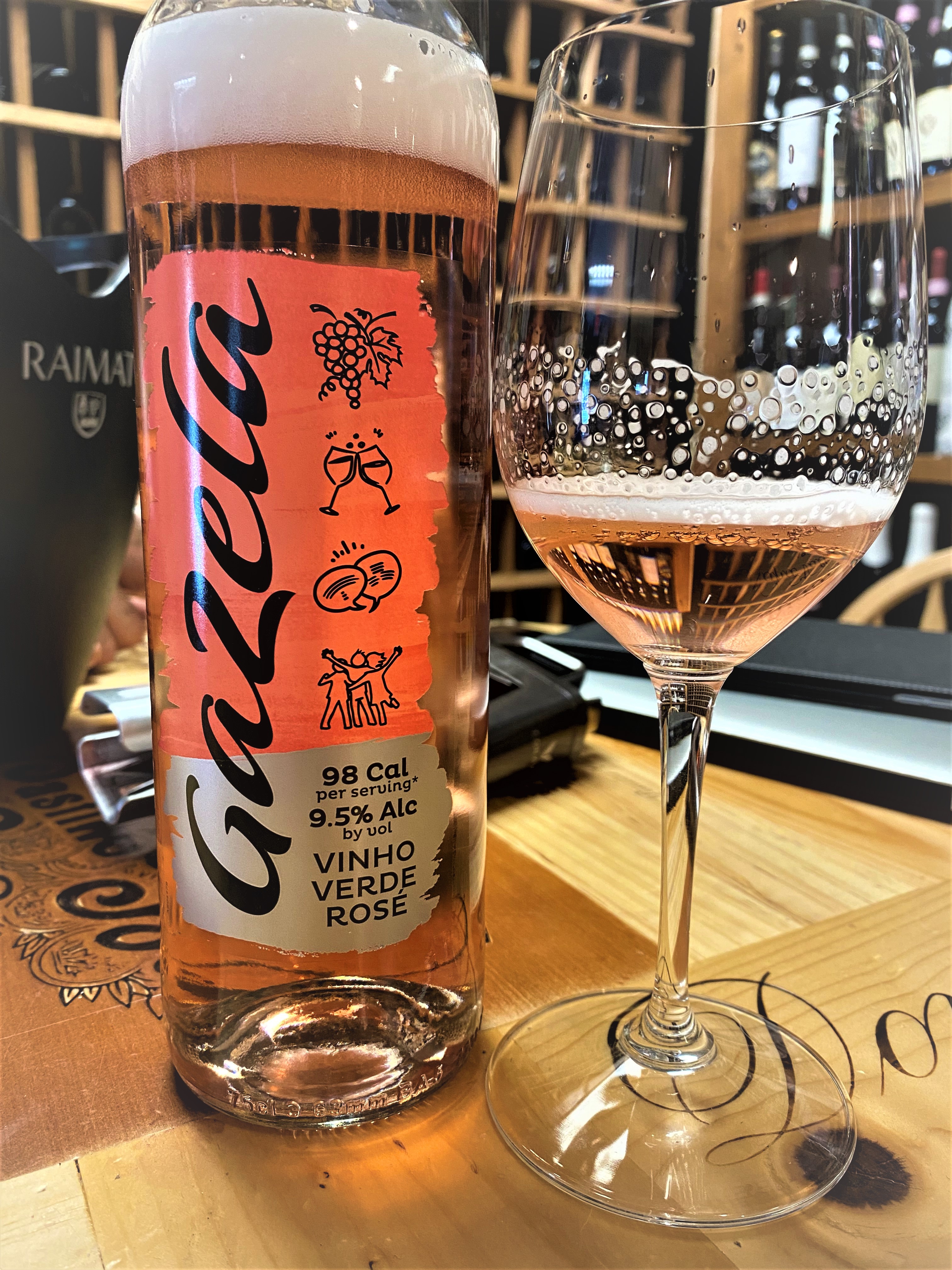
With the party, being a pool party, the food selection was more casual, though the appetizers remained about the same.  There were fruits and vegetables, dips, and assorted cheeses and crackers.  There are times when I can literally make a meal just from the munchies and I am sure that holds true for some of the others at the party as well.  To start off the revelry, we brought Gazela Vinho Verde Rosé NV which is made by Sogrape Vinhos of Portugal, and it appears as if in the future this wine will also be labeled as “Aire.” Vinho Verde has developed its own coterie of followers and I think the group gets larger every year, as it is just an easy wine that is perfect for hot weather and with water nearby, either a pool, lake or ocean.  Portugal, it is often said, has had a rather foot-loose and fancy free about grape varieties in certain areas, as even the winemakers cannot state for sure what has been planted over the decades, if not centuries.  In the Vinho Verde region there are over fifteen thousand hectares planted and seventy percent is white.  Most of the Vinho Verde Tinto is for domestic consumption, but I guess they are exporting more, since the white has become so popular.  To give you an idea about the grape varieties that may be encountered just for the Tinto, the ones recommended are: Azal-Tinto, Borracal, Brancelho, Espadeiro, Padeiro-de-Basto, Pedral, Rabo-de-Ovelha and Vinhao.  Other permitted varieties are: Alicante-Bouschet, Docal, Espadeiro-Mole, Grand-Noir, Labrusco, Pical, Touriga-Nacional, Trincadeira-Preta and Verdelho-Tinto. The wines are made in Stainless Steel and the malolactic fermentation takes place in the bottle, which causes the natural petillance or effervescence of the wine.  This wine was frothy and plenty of big bubbles appearing in the glass after pouring.  The wine had a nose and a taste of watermelon and strawberries in a raspberry color.  Very easy and definitely quaffable, in fact my Bride said that she likes this wine even more than the white. 

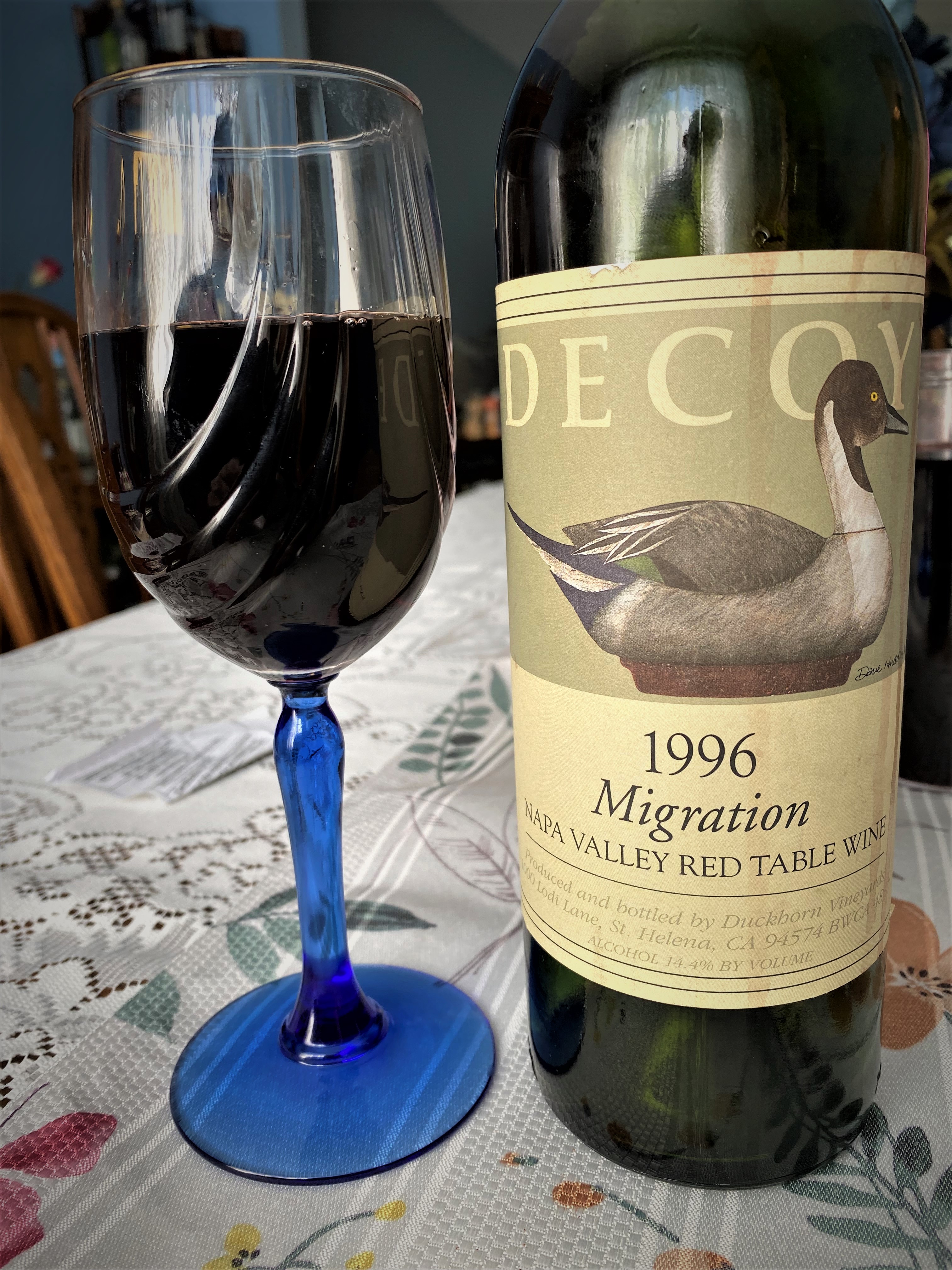
The dinner segment was just a casual, as it was a barbecue of bratwursts and hamburgers, along with the classic sides that one would encounter at a cookout like this.  Later on, there was the sweet table and the obligatory birthday cake.  Since I was one of the honorees, I did bring a special bottle from our cellar, just to see how the wine was progressing as we have some more of the wine resting.  We had a bottle of Duckhorn Vineyards Decoy Migration Napa Valley Red Table Wine 1996, which we bought at the winery.  Years ago, we had the good fortune to have a private tour and tasting during harvest with one of the Duckhorn sons and at that time, the wine was a blending of different varieties and different contract and owner properties, back when Duckhorn Vineyards produced all of their wines in Napa Valley, now Duckhorn is one subsidiary and Migration is another subsidiary.  The original concept for Migration is that the wine could change from year to year.  This wine was produced from fruit harvested from seven different vineyards within the appellation.  The wine was fifty-one percent Cabernet Franc, twenty-six percent Merlot, thirteen percent Cabernet Sauvignon and ten percent Petit Verdot.  The wine was aged for eighteen months in a blend of sixty percent French Oak (ten percent new, sixty percent second and thirty neutral) and forty percent American Oak (all second use).  Silly me, I forgot to pack my Durand and of course the cork broke and I had to use a coffee filter and a funnel to decant.  This wine was just beginning to show its age, but the nose was vintage Right Bank, the nose and the tannins were soft, but it was still a chewy wine with a good long finish.  For a twenty-five-year-old, it behaved very nicely and a pleasure to drink.

Posted in Dining, Wine | Tagged , , , , , , , , , , , , , , , , , , , , , , , , , , , , , , , | Leave a comment

Louis’ Chop House

There were the four of us continuing a birthday celebration, that I tagged along on, as we know that I have no shame.  We were going to Louis, but not Louis in the Bronx.  We were going to an old-fashioned chop house or steak house, to me, they are both interchangeable.  Growing up for me, as a kid, this was the type of restaurant that I frequented the most, and hence the most comfortable of places to be.  Nothing frou-frou or “new age” or any other contemporary wording. 

We had a classic dinner for the four of us, since we just had a lobster roll about an hour before dinner, we had a lighter appetizer to share, and that was Crab Stuffed Mushrooms in a Lobster Cream Sauce.  You know, something light.  Since the restaurant was fifty years in the making and kept evolving from the original, but not a major evolves, just some elegant fine tuning and tweaks.  We had a bottle of Barone Fini Pinot Grigio Valdadige DOC 2020, a wine that is under the corporate umbrella of The Deutsch Family of Wine & Spirits.  The Bonmartini-Fini family began making wine in 1497 when the two noble families merged in a wedding up in Northern Italy.  It is still family owned.  This wine is their flagship showcasing the grapes of the Valdadige DOC.  The fruit is hand-harvested and I will go out on a limb, though not a long limb and presume that the wine was fermented and aged in Stainless Steel, though it is not revealed by the winery.  It was a great way to start the meal, as the wine had a nice floral nose of citrus and lemon, with a palate of melon and apples in a balanced acidity with a touch of mineral terroir at the finish.  It just made it easy to enjoy another sip of wine.

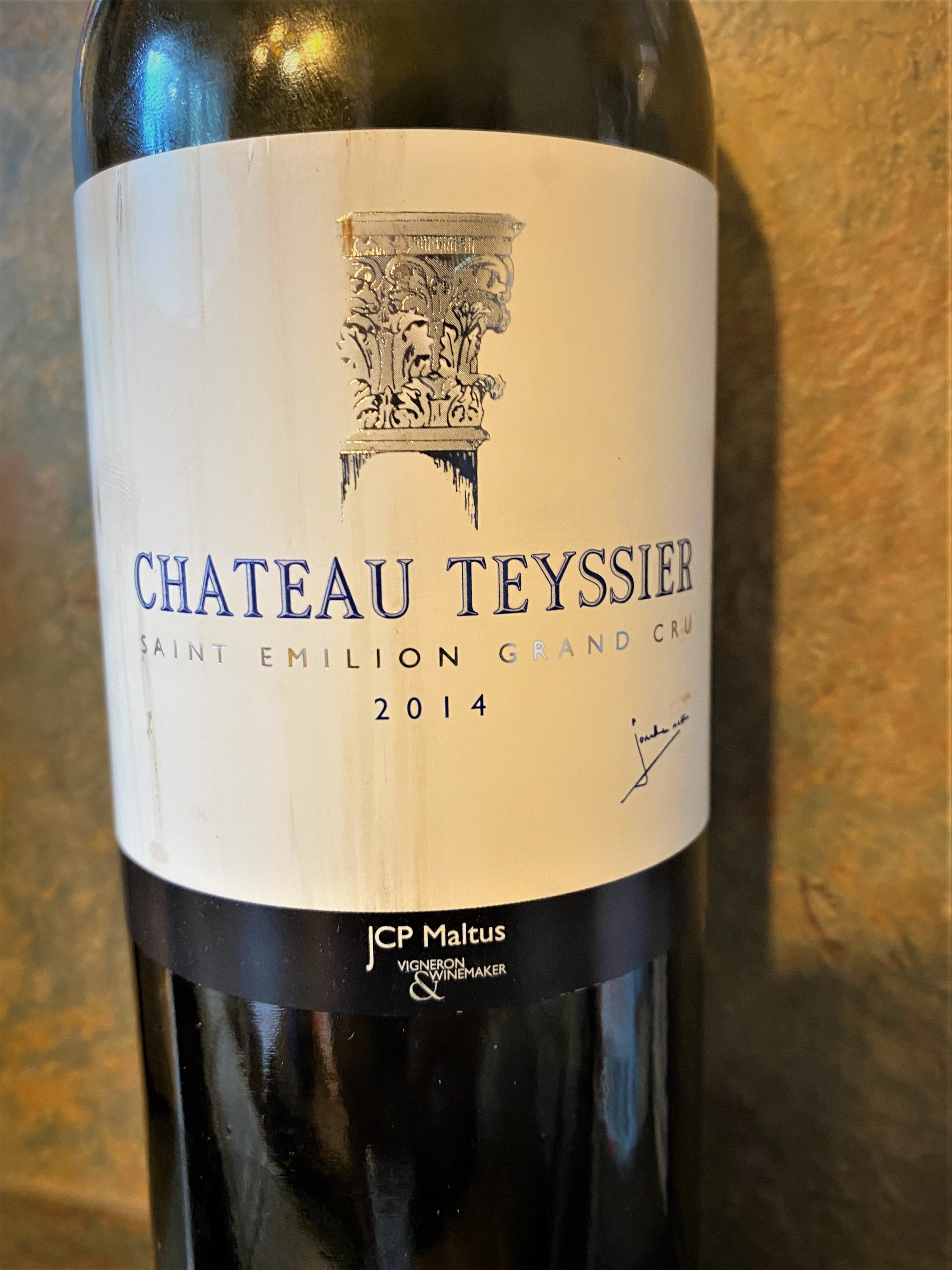
For our entrées we went with some classic dishes, my Bride did Surf & Turf, which was really nostalgic, as it seems to have disappeared from most menus or they have tried to update and modify a simple combination of a Filet Mignon and a Lobster Tail.  I also went with another classic nostalgic dish of Veal Oscar, medallions of sautéed veal topped with crab, asparagus and Sauce Bearnaise (and you know that I am on a diet).  I actually had to go through five choices from a rather large wine list to select the two wines that we had, and the red wine, they came out with was an up-sale, but that was fine, by that time. My complaint is that wine lists are computer printed lists, so there is not a need to have that many wines listed that they can’t supply, and they blamed it on what is going on in the world, though my wine shop doesn’t seem to have problems getting great wines, but I digress and I was a bit agitated and forgot to take a photo of the bottle, until I got home.  We had a bottle of Chateau Teyssier Saint-Emilion Grand Cru 2014 part of the JCP Maltus group.  It was a charming classic interpretation of a Saint-Emilion wine that is eighty-five percent Cabernet Sauvignon, and fifteen percent Cabernet Franc.  Aged in French Oak, of which a third is new, the wine was delicious with a nose of dark fruits, and it had soft tannins with great black cherry, smoke, spices and a nice medium finish of terroir.  What we called in the old days, a nice Saint-Emilion.

The other problem and it is rampant in our state, is that there are plenty of jobs, but no takers, so with a dearth of employees there was no tableside offerings of salads, steaks or desserts.  We all shared a classic Detroit dessert of a Hot Fudge Cream Puff and I had a taste, but I went with a glass of Dow’s 10-Year-Old Tawny Porto, a Port Wine from Oporto in Portugal and from one of the great Port makers there.  Instead of a cordial glass of Port, I was given a six ounce pour, and it took a little longer to nurse it. The wine must spend a minimum of six years in casks and it is blended with other wines and that is how they get the 10 Years on the label. The Port Wineries have casks of wines that are of many different years and they blend the different casks to maintain the taste that they are known for. The grapes that are used and there is no way of knowing the percentages of each, because of the process of making Port wines are: Touriga Nacional, Touriga Franca, Tinta Barroca, Tinta Roriz, Tinto Cao and perhaps Souzao, Tinta Amarela and Mourisco Tinto.  It was just a beautiful glass of Port, as I think a Tawny is the easiest drinking and understandable for most people, and a great nightcap.   It was an excellent way to end the day with a fellow birthday honoree.

Posted in Dining, Wine | Tagged , , , , , , , , , , , , , , , , , , , , | Leave a comment