The Wines of Piedmont – Part Four

While I was having this wonderful wine tasting at The Fine Wine Source in Livonia, Michigan. It was a pleasure hearing our moderator asking The Wine Raconteur Jr.’s Bride her opinion on the wines as we were going.  I find it always fascinating to hear discussions about wines from others.  All the while the shop was slowly filling up for the next hour’s tasters. 

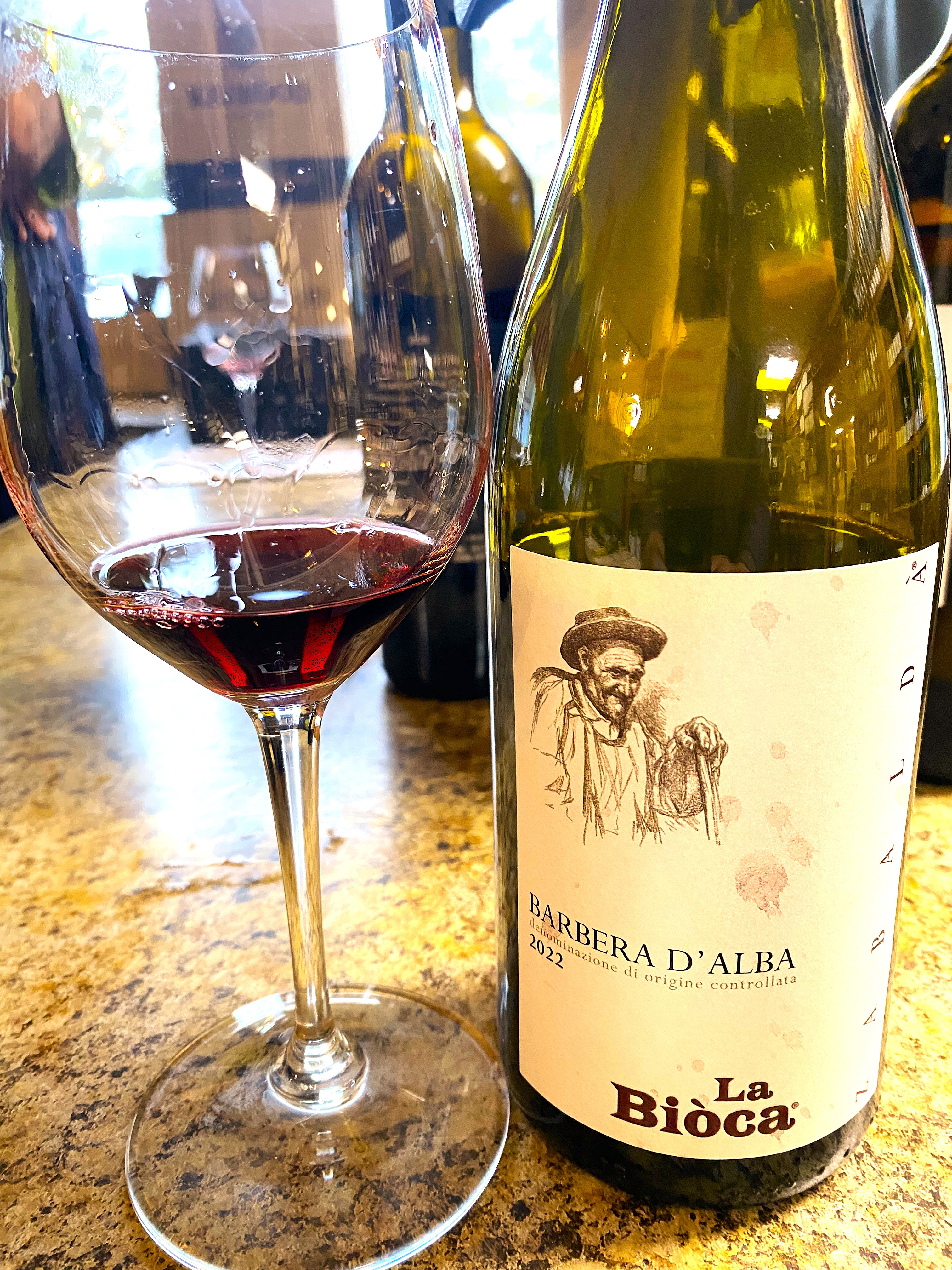
The next grouping began with La Bioca “Zabalda” Barbera d’Alba DOC 2022.  La Bioca is a small vineyard estate comprised of nine hectares located in the hills of Langhe, in the municipalities of Monforte d’Alba, Novello, La Morra and Barbaresco.  Zabalda is named after the prior owner of the vineyard and is pure Barbera.  Barbera is usually thought of after Barolo and Barbaresco and is thought of as an alternative to the other two.  All around Alba are rolling hills and Barbera vines thrive on the chalky, limestone-rich clay soils, and the best vineyards are sites closest to Barolo.  This wine is pure Barbera, the fruit is manually harvested, destemmed and cool fermented in temperature-controlled Stainless-Steel tanks for about eight days and then an additional maturation for six months. A reddish-purple wine that offered notes of cherries, raspberries, and blueberries with additional notes of lavender and roses.  On the palate this dry, medium-bodied wine displayed tones of the fruits, juicy acidity with fine tannins and ending with a medium-count finish of fruit and spices.

We then had Azienda Agricola Tintero Langhe Nebbiolo 2021 in Piedmont.  Elvio Tintero Piedmont estate is in the steep hills of Mango in the province of Cuneo, and it is now represented by the second and third generation.  The vineyards are planted in the optimal position of south and southwest on the hills.  Langhe Nebbiolo is considered as a “junior” version of Barolo and Barbaresco and does not have the same stringent requirements as those designations.  The wine is pure Nebbiolo, and the maceration and fermentation occur in Stainless-Steel tanks and then is aged in Slavonian Oak for six months.  The deep garnet colored wine offered notes of dark cherry and plum, scented with violets and roses and a wisp of graphite.  On the palate this medium-bodied wine had tones of dark fruit blended with soft tannins, fresh acidity and a medium-count finish of fruit.

We followed up with Vite Colte “La Casa in Collina” Barbaresco DOCG 2021 from Azienda Agricola Terra da Vino.  In 2010, a new cellar complex was built, that is temperature and humidity controlled and can hold up to two-thousand barrels, and also large oak barrels for Barolo wines, as well as accommodating temperature-controlled Stainless-Steel tanks.   Barbaresco was awarded the DOCG classification in 1980. Barbaresco wines must be aged for a minimum of twenty-six months, of which a minimum of nine months must be spent aging in oak barrels.   This wine is pure Nebbiolo.  Historical production techniques are used, blending batches from plots in different areas and microclimates.  Initial Fermentation lasts for about twenty days, followed by Malolactic Fermentation while aging in large oak barrels, for about one year.  This garnet red wine offered notes of black cherry, strawberry, and plums, along with violets, coffee, tobacco, herbs and spices, and sous-bois.  On the palate this full-bodied and well-balanced wine displayed tones of black and red fruits, blending with firm and taut tannins with great secondary tones of herbs and spices, bitter orange and hazelnuts; finally ending with a long-count finish of black cherry, vanilla, cinnamon and sous-bois.

Posted in Wine | Tagged , , , , , , , , , , , , , | 3 Comments

The Wines of Piedmont – Part Three

We were getting to the half-way point of fifteen Piedmontese wines at The Fine Wine Source in Livonia, Michigan and not only were the two Raconteurs having fun, but so were all the other patrons that were coming in for the tasting and being treated to some unique wines from the region.

We were poured La Bioca “Daje Mach” Verduno Pelaverga DOC 2021.  This was the second wine from La Bioca which is a small winery in Serralunga d’Alba in the Langhe zone.  The word “Bioca” is a Piedmontese local word to describe a decisive person with a “tough head.”  “Daje Mach” is also a local Piedmontese idiom which translates to “Go for It,” or in today’s parlance “May the force be with you.”  The winery began in 2012 and now has two spacious warehouses, an underground cellar, a large tasting room and terrace and an “agriturismo” with six rooms, along with their large production facility.  Verduno Pelaverga DOC was elevated in the 1990s to promote Piedmont’s lesser-known varietals.  The entire area is tiny acreage at the northern edge of Barolo DOCG.  Pelaverga is a rare red grape, also known as Pelaverga Piccolo, Carola, Cari, Fra Germano and Taddone.  This wine is pure Pelaverga Piccolo and is manually harvested, destemmed and undergoes cold maceration for seventy-two hours with two pump-overs daily in a temperature-controlled Stainless-Steel tank.  Ther fermentation lasts for about nine days, followed by fifteen days of maceration, followed by Malolactic Fermentation and aging in Stainless-Steel for six months.  This light red colored wine offered notes of red currants, violets, and freshly ground black and white peppers.  On the palate this dry medium-bodied wine displayed savory tones of fruit, spices with velvety tannins, and ends with a medium-count finish of fruit and spicy peppers; this wine served slightly chilled, could easily be an aperitif with a charcuterie board.

We then had Ercole Barbera del Monferrato DOC 2023 by Angelo Negro.  Monferrato is a triangular shaped region in the middle of Turin, Milan and Genoa, and the vineyards are designated as a UNESCO World Heritage Site.  An historically significant winery whose origins date back to 1670, with the planting of two vineyards: Perdaudin and Prachiosso.  Ercole is derived from Hercules and is a cooperative of local growers in the Monferrato region, committed to sustainable farming. The vineyards on average have thirty- to fifty-year-old vines.  This wine is pure Barbera typically planted with southern exposures.  This deep red wine offered notes of cherry and leather.  On the palate this full-bodied dry wine displayed tones of cherry, plum, blueberry and leather with medium acidity and medium tannins and ended with a medium-count finish of fruit.

We followed with a Vite Colte “La Lune e I Falo” Barbera d’Asti DOCG Superiore 2021 from Terre da Vino and the brand name translates to “The Moon and the Bonfires.”  They created the subsidiary Vite Colte to create a distinction and to focus on the company’s top lines in terms of content.  There are one hundred and eighty wine growers cultivating three hundred hectares, with each wine grower devoting only part of his harvest to the Vite Colte project.  Barbera d’Asti became a DOC in 1970 and was upgraded to its DOCG classification in 2008. The DOCG requirements are that the wine must be at least ninety percent Barbera, and the Superiore designation requires 12.5% proof, and needs fourteen months of aging.  This wine is pure Barbera, and the fruit comes from over sixty hectares of vineyards, with blending fruit from different soils and microclimates.  The wine begins with Initial Fermentation during ten days of maceration, followed my Malolactic Fermentation and twelve months in French oak barriques.  This deep ruby red wine offered notes of cherries, strawberries, blueberries, violets, licorice and vanilla.  On the palate this medium-bodied dry and crisp wine displayed tones of red berries, vanilla, spices with silky tannins and ending with a medium-count finish of fruit and spices.       

Posted in Wine | Tagged , , , , , , , , , , , , , , , , , , , , | 2 Comments

The Wines of Piedmont – Part Two

There were fifteen wines to be tasted from the Piedmont region at The Fine Wine Source in Livonia, Michigan and we will look at the next three wines.  I had a bonus, as The Wine Raconteur, Jr. and his Bride was also at the tasting.  I did notice that there must have been a couple of customers that were having the same tasting at other locations, as I watched some of the staff, grabbing a bottle of wine at times to take into the original room, which had two tasting tables as well.

The next wine was Fabio Oberto La Collina di Dioniso Roero Arneis DOCG 2021.  Paolo Oberto had a few hectares of vineyards in La Morra, one of the principle towns of Barolo.  He died suddenly and his son Andrea left his career to take over the family farm.  In 1978, he began bottling the family production instead of selling it to the local cantina sociale.  Eventually the estate grew to eighteen hectares, including the famed Giada Vineyard with its eighty-year-old vines, as well as almost one hectare of Barolo’s true Grand Cru vineyards – Rocche del Annunziata.  His son Fabio worked along side of his father for twenty-two years.  In 2017, Fabio created his own company “La Collina di Dioniso da Fabio Oberto” which was employing his grandfather and father’s vineyards but producing wines in his own ideas.  His vineyards are included in the list of heroic vineyards of the Piedmont region, as the average slope of the terrain is more than thirty percent.  This wine is pure Arneis grapes from the Montaldo Roero region and was planted in 2001.  The fruit is manually harvested, destemmed, pressed and the juice is in temperature-controlled Stainless-Steel tanks, including Initial Fermentation and Malolactic Fermentation on the lees, for three months, followed by another three months in the bottle before release.  A straw-yellow colored wine that offered notes of pears, apricots, acacia flowers and honey.  On the palate this medium-bodied wine is a dry wine with crisp acidity and displaying tones of white fruit and ending with a medium-count finish of fruit, a touch of hazelnuts and minerals.

Our next wine was Vite Colte “Derthona Timorasso” Colli Tortonesi 2022 from Az. Agr. Terre da Vino.  Terre da Vino represents 5,000 hectares of vineyards, by more than 2,500 wine growers.  They are a major player in Piedmont for decades, and the growers must abide by the requirements demanded by Terre da Vino.  Timorasso is an ancient Piedmontese grape variety that was almost extinct by the 1980s. Originally revived by Walter Massa of Vigneti Massa and has been rediscovered and witnessing a resurgence for dry white wines and for grappa production. Timorasso is a native to the Colli Tortonesi region and this region was awarded a DOC in 1973, just prior to Gavi. There are thirty communes in the province of Alessandria that can use this name.  The wine must be at least eighty-five percent Timorasso, and the balance can be Moscato Bianco and Favorita (Vermentino).  Colli Tortonesi is often labeled as “Derthona,” which is the local traditional name, and Derthona has also been proposed for a DOC.  This wine is pure Timorasso, and after a soft crush and a short cold maceration period, the free run must is fermented in temperature-controlled Stainless-Steel vats, followed by twelve months on the lees.  A deep straw-yellow colored wine that offered notes of peaches, honey, acacia and minerals.  On the palate, this medium-bodied dry wine offers a complex texture of peaches, honey, with hints of nuts, good acidity and ending with a good medium-count finish of fruit, flint and minerals.

We then had our first red wine with Alessandro Rivetto Langhe Rosso 2022.  A winery started in 2012 by Alessandro Rivetto and Alessandro Bonello, who grew up as friends and had gone to school together.  The wine is a blend of seventy percent Nebbiolo, twenty-five percent Barbera and five percent Merlot from different Rivetto estate vineyards near the township of Sinio, Alba County on soil that is a combination of limestone and clay.  The fruit is manually harvested, destemmed and crushed, the must is left with peels at cold temperature-controlled Stainless-Steel tanks for thirty hours, then the whole maceration and Initial Fermentation process lasts for twelve days with frequent punch-downs to extract extra color.  The wine is then refined in wooden barrels and after Malolactic Fermentation the wine is aged for an additional six months, then bottled and cellared for an additional six months, the wine is aged for a minimum of one year before being released.  This deep ruby-red colored wine offered notes of black cherries, raspberries, violets, orange peel, herbs and vanilla.  On the palate, this medium-bodied, well balanced wine displays tones of cherries, raspberries, rosemary blending with soft velvety tannins and ending with a medium-count finish of fruit, cocoa and limestone.    

Posted in Wine | Tagged , , , , , , , , , , , , , , , | Leave a comment

The Wines of Piedmont – Part One

Who wouldn’t be excited about a wine tasting labeled as “The Wines of Piedmont” especially when it is hosted and curated by The Fine Wine Source in Livonia, Michigan.  It was also a tasting where all the wines were affordable, OK, maybe one would need some arm-twisting.  And even as a bonus, I was doing the tasting along with The Wine Raconteur, Jr. and his Bride, though they had started a little before me.

We started the session off with Vite Colte “Aureliana” Gavi 2024; and depending on the market the wine could be labeled as Terre da Vino brand.  The winery was founded in 1980 and is situated below the most prestigious Barolo cru vineyards and the architectural design has been reviewed by many modern architecture periodicals.  The wine is pure Cortese grape and comes from vineyards with alluvial soils with silty clay sediments and interspersed with reddish brown grit.  The grapes are soft pressed, and the must ferments in temperature controlled Stainless-Steel vats, followed by a short aging period on the lees, also in Stainless-Steel vats to maintain the freshness and the fruit.  The soft straw-yellow wine offered notes of green apples, ripe pears, white florals, freshly cut hay and a touch of anise.  On the palate this medium-bodied wine displayed tones of the green apples and pears, well-balanced with crisp acidity and ending with a medium-count finish of fruit and subtle minerality.

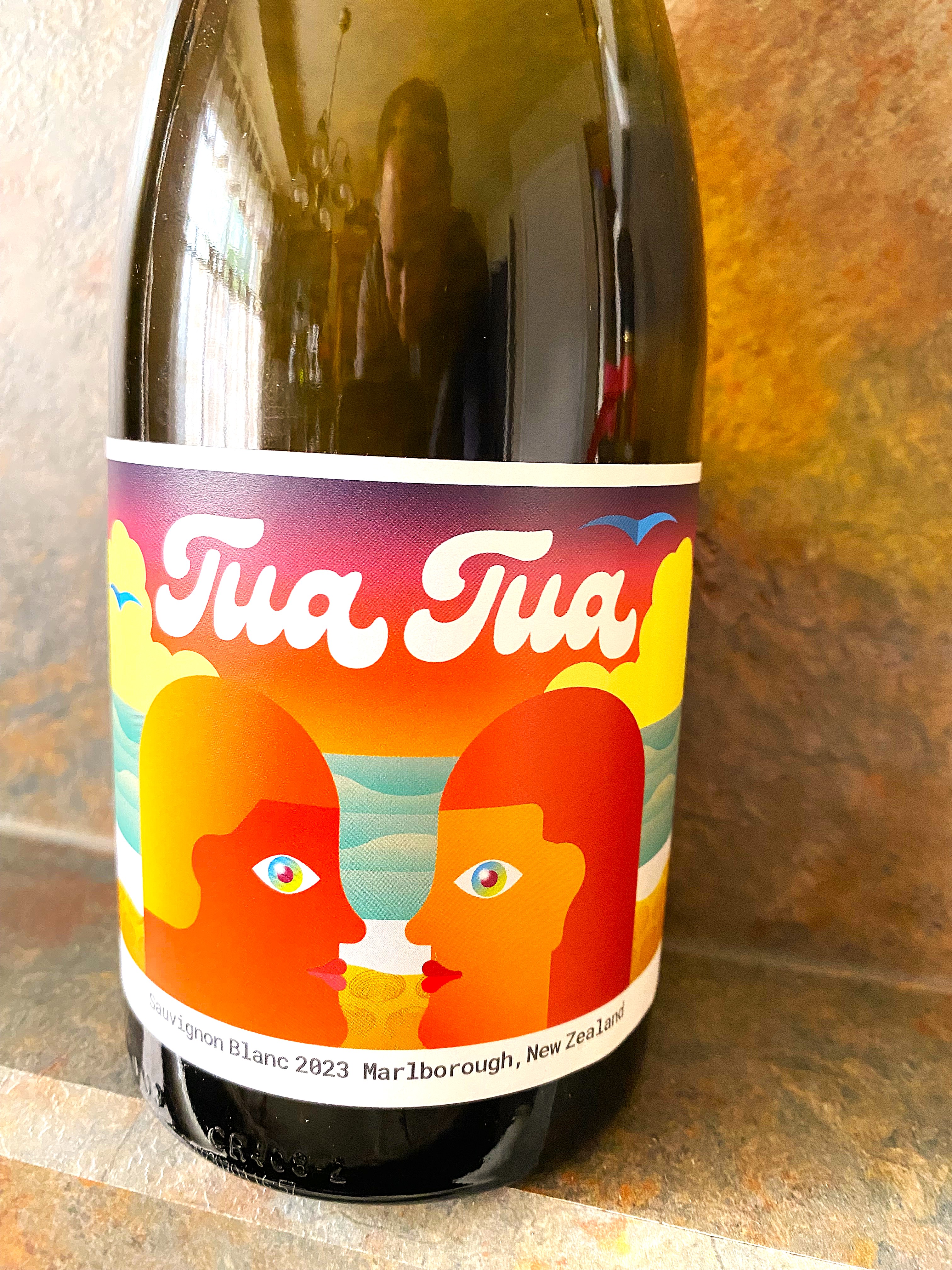
We then went with the Vite Colte “Tra Donne Sole” Sauvignon (Blanc) Piedmont 2023 and over the years this wine has carried both the Monferrato DOC and Piemonte DOC.  The wine “Tra Donne Sole” (The Lonely Woman) is named after a work by Cesare Pavese.  The members of Vite Colte ad their families, partners and winegrowers are the cornerstone of a modern winery with a combined goal to maintain the high standards that are part of the Piedmont tradition.  The vineyards for this wine are located in two different areas with different soils and microclimates, and also low yields, and these points are used to create a complex and balanced wine, as the regions ripen at different times.  The earlier vineyard have grapes that are higher in acidity and have class aromas of Sauvignon, while the later vineyard displays tropical fruit.  Ater the grapes are pressed, the juice is allowed to ferment in temperature-controlled Stainless-Steel vats and then the wine rests on the lees for three months until bottled.  A straw-yellow colored wine offered notes of pears, apples, passion fruit, gooseberry, citrus and white florals and grass.  On the palate this medium-bodied, well-balanced wine displayed tones of grapefruit, baked apples, vanilla with a touch of mint and licorice in an unfussy and very easy drinking wine that ended with a medium-count finish of fruit and terroir.

We then tried La Bioca “Cyrogrillo” Rossese Bianco Langhe DOC 2023.  La Bioca is a small winery in the Langhe near Serralunga d’Alba.  The winery has eight hectares of vineyards located in Monforte d’Alba, Novello, La Morra and Barbaresco.   Their first vintage was in 2012.  Rossese is a mildly aromatic red grape variety found in Liguria, and along the Riviera in southern France to the Franco-Italian border.  It is rather rare to be seen on its own, and is often blended with Sangiovese, though a few wineries are staunch supporters of this grape.  There is a mutation of this grape known as Rossese Bianco, the most famous being Rossese di Dolceacqua.  This wine is a blend of eighty-five percent Rossese Bianco and fifteen percent Manzoni Bianco.  The fruit is manually harvested, destemmed, and softly pressed without maceration.  The wine is fermented in temperature-controlled Stainless-Steel tanks, and the two juices are vinified separately on the lees for about five months, and then the two wines are blended about two months prior to bottling.  This straw-yellow wine offered notes of lemon, chamomile, white florals, herbs, cut grass and minerals.  On the palate this light-bodied wine displayed tones of lemon-lime citrus, white pepper, traces of vanilla, good acidity with an oily-like texture and ending with a medium-count finish citrus and terroir.    

Posted in Wine | Tagged , , , , , , , , , , , , , , | 2 Comments

Fine Wine Source Club – July 2025

I went to The Fine Wine Source in Livonia, Michigan and I was on a mission.  I had to pick up the monthly club wine selections and there was another wine tasting to attend. The wine club not only introduces the members to a wine from the Old World and one wine from the New World.  Also as a member it allows me entry to the myriad of special wine tastings that are offered at the shop.   And as a very happy bonus, I ran into The Wine Raconteur, Jr. and his charming Bride, as they were picking up the club wines and attending the tasting as well. 

The first wine that represents the Old World is from Chateau La Grande Metairie Bordeaux Rouge 2022 from Vignobles Buffeteau.  Vignobles Buffeteau has two estates and has continued growing with four generations in neighboring villages.  They use traditional vinification methods and go out the day before harvest to eliminate unripe or rotten fruit, and then the next day the fruit is mechanically harvested, separating the grapes from the vines while in the plots and done at night to maintain the freshness and aromatics of the fruit.  They installed a new cellar in 2015 with thermos-regulated Stainless-Steel vats, and with a semi-underground ageing cellar with both concrete vats and traditional oak barrels.  The wine is ninety percent Merlot and ten percent Cabernet Sauvignon.  This wine underwent Initial Fermentation and Malolactic Fermentation and aging for one year in Stainless- Steel vats with periodic stirring with fining and filtering.  This dark claret wine offered notes of ripe red fruits, spices and herbs.  On the palate this medium-bodied wine displayed tones of black and red cherry, blackberry and currants, with good acidity blended with medium tannins and a medium-count finish of fruit and herbs.

The second bottle represents the New World and is Pisoni Family Vineyards “Lucy” Rosé of Pinot Noir Santa Lucia Highlands Monterey County 2022.  Jane and Eddie Pisoni started farming in the Salinas Valley in 1952; and their pride in being stewards of the land has been taken up by their son Gary and his sons Jeff and Mark.  In 1982, Gary began planting grape vines, Pinot Noir, Chardonnay and Syrah on the family’s forty acres in three vineyards in the Santa Lucia Highlands.  Gary created the “Lucy” label and raises funds to support breast cancer research, ocean conservancy and the Big Sur Fire Department.  Rosé wines are either produced through whole cluster pressing or by Saignée, a practice which a proportion of the juice from pressed grapes is bled away in order to concentrate color and tannins.  “Lucy” is produced by combining both processes and is then cellared and aged in neutral barrels for three months, prior to bottling.  Since they began making this wine, they have contributed one dollar from each bottle sold and they have generated over $250,000 for Breast Cancer Research.  The wine is described as being a light salmon in color and offers notes of fresh strawberry, honey dew melon, raspberry, tangerine, lemon and rose petals.  On the palate the wine displays tones of grapefruit, raspberry and minerality in a completely dry and fermented wine with fresh acidity and ending with a medium-count finish of fruit and terroir.    

Posted in Wine | Tagged , , , , , , , , , , | Leave a comment

And Another Round of Reds

After the special wine tasting of Maison Trimbach at The Fine Wine Source in Livonia Michigan, we went back to the original shop and we were presented with a total of seven red wines.  I wrote about the first three, the fourth will appear when I write about that wine, when we pour it at home, and now for the final three California wines. I know that it is hard work, what I do, for the sake of my continuing education.

We started the next wine with Silver Oak Cellars Cabernet Sauvignon Alexander Valley 2020, which on earlier vintages was labeled North Coast AVA.  Silver Oak Cellars is known for their Cabernet Sauvignon wines.  The winery was founded in 1972 by Raymond Twomey Duncan and winemaker Justin Meyer; and they make two keys wines, one in Alexander Valley of Sonoma, and the other one in Napa Valley, The Alexander Valley wine traditionally was a varietal, and the Napa Valley wine may have some blending with Merlot, Cabernet Franc and Petit Verdot; but both now have some blending.  Each has its own dedicated winery, and each location has three vineyards in each valley; and they also have long term grower partnerships in each valley as well.  Silver Oak Cellars is also unique as they own their own cooperage.  The estate vineyards are all located above the fertile valley floor.  Wines undergo an initial blending, according to the vineyard source, into lots which are then aged separately for a year, before being re-tasted.  The wine is aged in a fifty/fifty split of new and once used American Oak barrels and see about twenty-four months in oak, then bottled and they are then cellared for an additional eighteen months before release.  A deep garnet-red wine that offered notes of black cherry, strawberry, raspberry, plums and distinctive notes of sage and thyme.  On the palate, this savory medium-bodied wine displays great textured tones of the black and red fruits, with fresh acidity and tight tannins, ending with a long count finish of fruit and spices.

The next wine was Far Niente Cabernet Winery Sauvignon Napa Valley 2022.  Far Niente Winery began in 1885 by John Benson and is one of the most storied California wineries. Benson was the uncle of the American impressionist painter Winslow Homer and a “forty-niner” during the Gold Rush.  He bought land in Oakville and had a gravity-flow winery built and vineyards planted.  The winery was successful until Prohibition and the winery was abandoned.  In 1979, Gil Nickel bought the winery and adjacent vineyard and began to refurbish them.  Originally the Benson name was kept, until they found a stone inscribed “far niente” from the Italian expression il dolce far niente or “without a care.”  The wine is a blend of ninety-two percent Cabernet Sauvignon, six percent Malbec, two percent Cabernet Franc, two percent Petite Sirah and one percent Petit Verdot.  The wine had skin contact for fifteen days, and after fermentation it was aged for seventeen months in French Oak (sixty-five percent new and thirty-five percent once-used).  The deep garnet wine offered notes of dark cherries, currants, violets, lavender, thyme, baking spices, black tea and toasted oak.  On the palate this full-bodied wine displayed tones of black fruits, mocha, herbs and spices, with rich-balance acidity, firm tannins and ending with a silky, long-count finish of fruit, spices and graphite terroir.   

The final wine of the evening was Opus One Overture Red Wine Napa Valley 2021.  Opus One is one of the world’s most famous wines, and one of the original cult wines of Napa Valley.  The concept began in the Seventies, and the first vintage was released in 1979, between Baron Philippe de Rothschild of Chateau Mouton Rothschild and Robert Mondavi of Napa Valley.  Its fame was sealed when a single case sold for $24,000 at the first Napa Valley Wine Auction in 1981.  In 2004, when Robert Mondavi Winery was acquired by Constellation Brands, Opus One also became part-owned by this multi-national company.  Opus One was the only wine produced by the winery, until 1993, following the tradition of Bordeaux’s famous houses and created a second wine from fruit that didn’t make the cut for Opus One.  Opus One Overture was this second wine and for years, it was a blend of grapes and vintages and was only sold at the winery.  The 2021 vintage was the first year that a single vintage was released.  The wine is eighty-nine percent Cabernet Sauvignon, four percent Cabernet Franc, four percent Petit Verdot and three percent Merlot.  The wine had skin contact for nineteen days and then was barrel aged for nineteen and a half months in new French Oak.  This deep garnet wine offered complex notes of blackberry, cassis, black cherry, currants, rose petals, sous-bois and earthy minerals.  On the palate this full-bodied wine displayed tones of the black fruits, great acidity blended with a velvety texture of tannins and ending with a rich and long-count finish of fruit, with tones of coffee and dark chocolate and terroir.    

Posted in Wine | Tagged , , , , , , , , , , , , , , | Leave a comment

And Then There Were More Reds to Try

After the Maison Trimbach wine tasting at The Fine Wine Source in Livonia, Michigan in the new addition, we walked back into the original store to be greeted with more wines to taste,  Red wines from both the Old World and the New World.

We started of with Domaine Rene Leclerc Bourgogne Rouge 2022, and if you don’t speak French (and that includes me) it just means Red Burgundy.  Bourgogne Rouge wines received an appellation in 1937, the same as most of the major designations there, and covers grapes grown from over three-hundred communes throughout Burgundy.  Rene Leclerc and now his son Francois are the winemakers and management of this sustainably farmed Domaine.  The Domaine has twelve hectares in and around Gevrey-Chambertin and parts of the Domaine fall into the Bourgogne Rouge appellation.  The Domaine was founded in 1982 and it is on clay and limestone and the ages of the Pinot Noir vines are from twenty to forty years of age.  The fruit for this wine was just outside of the Gevrey-Chambertin delineation.  After the harvest, the grapes are pressed using an antique, manual wooden press, then the juice undergoes a short cold maceration.  Fermentation is completed using indigenous yeast in traditional vats.  After six months the wines are raked into barrels for aging, all in used French Oak, to minimize the oak, for twelve months.  A bright burgundy colored wine that offered notes of red and black fruit, sous-bois, licorice and tobacco.  On the palate this medium-bodied wine displayed tones of young red fruit offering a light mouth with a touch of earthiness, soft tannins and velvety finish with a short to medium count finish of some fruit, some smokiness and terroir.

The next wine we tried was La Bioca Bussia Barolo 2019.  La Bioca is a small winery in the Langhe near Serralunga d’Alba.  The winery has eight hectares of vineyards located in Monforte d’Alba, Novello, La Morra and Barbaresco.  This wine is pure Nebbiolo, and the fruit is hand-harvested, destemmed and cold maceration for a few days.  The wine undergoes fermentation in Stainless-Steel tanks without temperature control for seven days with regular punching down and pumping over: with secondary maceration for twenty-five days.  The wine is then aged for a minimum of eighteen months in oak casks.  A deep garnet colored wine that offered notes of black cherries, blood oranges, violets and a whiff of cinnamon.  On the palate this full-bodied wine displayed tones of black cherries and other black fruit, citrus, and spices blended with velvety tannins, bright acidity and ending with a long count finish of fruit, spices and terroir.    

We then tried Proprieta Sperino ‘L Franc ****** Vino d’Italia-Vino da Tavola 2018 and critics have scored this as one of the top five Italian table wines.  Proprieta Sperino is a winery near the town of Lessona in Piedmont, and most of their focus is on Nebbiolo.  The estate is owned by Paolo de Marchi who inherited the wine from his grandfather, he also owns Isole e Olena, the famed Chianti Classico brand.  Paolo with the help of his elder son, Luca began restoring Proprieta Sperino back to a fully functioning wine estate.  They began in 1999, and by 2006, they released their first vintage, a 2004 release.  This wine is pure Cabernet Franc, from Bordeaux clones, and is grown on a 0.4-hectare Castagnola vineyard, 290 meters above sea level on volcanic soil which at one time was covered by sea and then rose after glacier displacements which created the Alps. The soil is rich in minerals with trace elements including iron, manganese, aluminum and zinc. The fruit is manually harvested, destemmed and gently pressed and gravity fed to fermentation tanks.  Fermentation took place with indigenous yeasts, in open topped wooden fermenters, with maceration lasting for thirty days with regular punching down.  The wine remained sur lie for eighteen months before aging in French Oak (half new) prior to bottling, with additional cellaring of the bottles before release.   This deep garnet colored wine offered notes of black cherry, cassis, raspberry, plum, violets, chocolate, tobacco, graphite and some white pepper.  On the palate this medium-bodied wine with bright acidity displayed tones of dark fruits blended with silky tannins and ending with a long-count finish of dark cherry, herbs and spices, tobacco and terroir.   

Posted in Wine | Tagged , , , , , , , , , , , , | 2 Comments

The Last Three from Trimbach

All good things come to an end, and wine tastings always seem to end to quickly, including this special evening at The Fine Wine Source with Anne Trimbach curating her family’s wines. And this tasting didn’t even get close to all of the offerings from Trimbach.  

The final white wine of the evening was Maison Trimbach Gewurztraminer Alsace 2020.  The fruit for this wine comes from both Trimbach’s estate vineyards and from their partner winegrowers.  The soils date from the Triassic period, on Muschelkalk (shell limestone, dolomite and marl) and from the Jurassic period with limestone and marl; and both vineyards have south to southeast exposure.  The fruit is selected at maturity, manually harvested, then crushed delicately in a pneumatic press.  The juice is then fermented in temperature-controlled Stainless-Steel and concrete vats, with no secondary Malolactic Fermentation or long aging on the lees to maintain the natural acidity, freshness and fruity aromas.  The wine is then bottled in the Spring and then a minimum of two years cellaring before being released.  A soft golden colored wine that offered rich notes of lychee, tropical fruits, rose petals and spices.  On the palate this medium-bodied wine displayed elegant tones of tropical fruits, citrus, ginger, honey in a rather complex and textured wine with crisp acidity that ends with a medium-count finish of sweet and savory along with terroir.

We then had our first red wine, a Maison Trimbach Pinot Noir “Cuve 7” Alsace 2020.  “Cuve 7” owes it name to the number of the vat in which it was first produced and is only produced in exceptional years and comes from the best parcels of the Rotenberg Vineyard in Ribeauvillé.  The soil of the Rotenberg Vineyard is “red irony clay” and calcareous sandstone which is more Burgundian and the Pinot Noir clones are from a selection of Pommard Clos de Epenots and noted for having a lower yield.  The fruit is hand-harvested with a ten day maceration period for the Initial Fermentation and then undergoes Malolactic Fermentation in old casks with six months aging on the lees, bottled and followed by four years in the cellar prior to release.  This garnet-colored wine which was served slightly chilled offered notes of sour cherry, strawberries, blackberries, violets, sous-bois and stones.  On the palate this medium to full-bodied wine displayed tones of red and black fruits, with silky and understated light tannins and a medium to long finish of currants, licorice, pepper and terroir.

The last wine of the evening was the Maison Trimbach Pinot Noir Reserve Alsace 2021.  Pinot Noir Reserve is from Trimbach’s own vineyards and those from their grower partners with the average age of the vines being over forty years of age.  The vineyards are located in the southern part of Alsace: Rodern and St. Hippolyte, some based on granite, some on sandstone, and some from marl and limestone soils.  Grapes are hand-harvested at maturity and after destemming, they undergo a gentle crush by pneumatic pressing followed by an eight-day cold maceration to extract color and fruit in Stainless-Steel vats for Initial Fermentation.  The juices are then blended in the cellar in Stainless-Steel vats and old casks for Malolactic Fermentation.  There is no long ageing on the lees, as the wine is bottled after three months and then aged in cellar for a couple of years.   The garnet colored wine offered notes of red and black cherries, blackberries, strawberries, red beets, sous-bois, licorice and spices.  On the palate this medium-bodied wine with good acidity displayed tones of red and black fruits, kirsch blending with soft velvety tannins and ending with a medium-count finish of fruit, smokiness, terroir and a whiff of iron oxide.   

Posted in Wine | Tagged , , , , , , , , , | Leave a comment

Three Grand Crus from Trimbach

We were getting to the last of the Riesling wines being offered from Maison Trimbach at The Fine Wine Source in Livonia, Michigan and being curated by Anne Trimbach.  We had already had one Grand Cru and now there were three more Grand Cru wines to be tasted and appreciated.

We were then poured Maison Trimbach Riesling Grand Cru Geisberg Vineyard du Couvent de Ribeauvillé Alsace 2018.  Pierre Trimbach and his team have been working the Grand Cru Geisberg behind the Domaine for years; this parcel previously was dedicated to being assembled with Grand Cru Osterberg into the famous Cuvée Frederic Emile.  In 2009, it was the first time that Grand Cru Geisberg was produced; and it is one of the three smaller Grand Crus in Alsace at only 8.53 hectares.  The Trimbach estate has a 2.6-hectare plot that is on limestone and dolomite marl soi, with old vines over fifty years old, on small terraces with steep slopes facing south.  The fruit is manually harvested and selected at maturity, then crushed and delicately pressed by a pneumatic press.  The wine is vinified in a dry style in Stainless-Steel vats, with no Malolactic Fermentation or long aging on the lees to preserve freshness and fruity aromas.  A pale golden color wine that offered notes of citrus, candied fruit, honey, dried sage, petrol and bergamot.  On the palate this full-bodied wine displayed tones of being well-balanced with ripe fruit, and strong notes of fresh lemon and ending with a long-count finish of stony terroir and a saline minerality.  It was mentioned that while delicious in its youth, it is expected to offer great richness and complexity of its terroir if kept for twenty years in the cellar.  

The next wine poured was Maison Trimbach Riesling Grand Cru Mandelberg Vineyard Alsace 2020.  Grand Cru Mandelberg in Mittelwihr is situated on an almond tree grove slope with a south to southeast hill planted on brown limestone-marl soil.  The vineyard has an altitude of 690 to 755 feet, with the vines averaging forty-five plus years.  Twenty years after cultivating the vineyard th family decided to integrate this Grand Cru in their collection.  The grapes are manually harvested at maturity and delicately crushed in a pneumatic press.  The wine is vinified in a dry style in Stainless-Steel vats, with no Malolactic Fermentation or long aging on the lees to preserve freshness and fruity aromas.  The wine is bottled in the following spring and cellared for a minimum of three years maturation before release.  The pale golden colored wine offered notes of citrus, pineapples, lemon, orange and grapefruit zest and smoky limestone.  On the palate this full-bodied wine displayed tones of peaches and dried apricots with crisp acidity, a rich texture and a long-count finish of fruit, smokiness and terroir.

The last of the Riesling wines poured was the Maison Trimbach Riesling Grand Cru Schlossberg Vineyard Alsace 2021.  In 2012, the Trimbach family acquired about five acres of the Grand Cru Schlossberg and their first vintage was in 2014.  Grand Cru Schlossberg has granite terroir; granite from Thannenkirch above Ribeauvillé and granite migmatite from Kaysersberg.  Planted in horizontal terrasses, with south facing, located next to the castle, just under the forest, the vineyard benefits from a cooler microcosm.  The average age of the vines is around forty years of age.  The grapes were hand harvested to ensure optimal maturity, which allows for depth of flavor and complexity.  After a gentle crush in a pneumatic press, the juice ferments in temperature-controlled Stainless-Steel vats for three to four weeks.  The wine is bottled in the Spring and then cellared for a minimum of three years before release.  A pale golden color wine that offers notes of lemon, pears, candied oranges, pineapple and flint.  The palate of the full-bodied wine displays tones of lemons and ripe peaches, with lively acidity and ends with a long-count finish of fruit, citrus and terroir.

Posted in Wine | Tagged , , , , , , , , | Leave a comment

A Cuvée and a Grand Cru from Trimbach

There were still many more wines to taste from Maison Trimbach and discussed and curated by Anne Trimbach at The Fine Wine Source in Livonia, Michigan.  Besides the great staff at the store, they were being assisted by members of Palm Beach International the importer of the wines.  With the additional help, plus all of the loyal  wine lovers that frequent the shop, plus the special tastings, even with the new addition the shop was still crowded, which to a retired retailer is always a great sign.  I also will show you the pamphlet that accompanied the carte of wines being offered, plus I had the pamphlet autographed.  

We next enjoyed a tasting of Maison Trimbach Riesling Cuvée Frederic Emile Alsace 2015.  Frederic Emile Trimbach was born in 1839 and it was during his term that the winery moved to Hunawihr and he eventually took over the helm of the estate.  In 1875, the Diploma of Honour at the Brussels International Fair was awarded to Frederic Emile Trimbach and in 1898 at the International Wine Fair in Brussels received the highest distinctions for his wines; this was a pivotal point for success and notoriety for the brand.  It so enhanced the estate, that his son Frederic Theodore Trimbach moved the family business to Ribeauvillé to make way for the expansion.  The house is still located there and under the continued leadership of later generations.  This wine is from a single plot that straddles Grands Crus Osterberg and Geisberg in Ribeauvillé, overlooking the winery.  The plot has marl calcareous-sandstone soils, south to southeast exposure on a steep slope and the vines are at least fifty-five years in age.  The fruit is hand-harvested, gently crushed by a pneumatic press and then vinified to dryness in Stainless-Steel vats and old casks.  No Malolactic Fermentation, or long aging on the lees; to preserve freshness and fruity aromas.  The wine is bottled in the following Spring and after seven years of aging in the cellar to develop its expression of terroir and an aging potential of an additional twenty plus years.  A soft golden color wine that offered notes of citrus, apricots, peaches, plums, white florals, and concentrated whiffs of lemon and smokiness.  On the palate this full bodied and well-balanced wine displayed tones of stone fruits, citrus with a very refined blend of a touch of sweetness and a touch of saltiness that ended with a long-count finish of fruit, limestone and smoke.

We then followed with Maison Trimbach Riesling Grand Cru Brand Vineyard Alsace 2020.  The Brand Vineyard located in Turckheim is one of the most reputed Grand Cru of Alsace and it is fifty-eight hectares of south to southeastern exposures on warm terroir based on two micas granite fields.  Trimbach’s parcel is almost one hectare in size and the vines average about seventy-years of age.  Brand Vineyard sits on the steep slopes at the beginning of the Vallée de Munster, its name from Old German for fire, a reference to the legend that a dragon and the sun once did battle there and how the sun warms its fine granite soils quickly.  The fruit is hand-harvested, then delicately crushed in a pneumatic press; vinified in a dry style in Stainless-Steel vats and old casks.  No Malolactic Fermentation or long aging on lees, in order to preserve freshness and fruity aromas.  The wine is then bottled in the following spring, and then a minimum of three years of aging in the cellar before releasing.  This pale golden colored wine offered notes of grapefruit, lemon, pears, green apples, flint, white florals, minerals and whiffs of petrol.  On the palate this medium-bodied wine with racy acidity displayed tones of lemons, green apples, pears, apricots and honey blending to end with a long finish of fruit, lemon zest and wet slate.  

Posted in Wine | Tagged , , , , , , , , | Leave a comment